9 Ancient Spear Hunting Techniques Adapted for Modern Predators
Roughly 500,000 years ago, early humans at Schöningen, Germany, crafted balanced throwing spears from spruce wood, tools so aerodynamically sound that modern engineers have confirmed they would outperform many recreational javelins today. That fact alone dismantles the assumption that ancient hunters were improvising. They were engineering. The 9 ancient spear hunting techniques adapted for modern predators explored in this article draw directly from that legacy, translating millennia of field-tested wisdom into practical strategies for today’s hunters pursuing wild boar, elk, mountain lion, and other demanding quarry.
Disclosure: This post contains affiliate links. As an Amazon Associate, we earn from qualifying purchases, and at no extra cost to you.
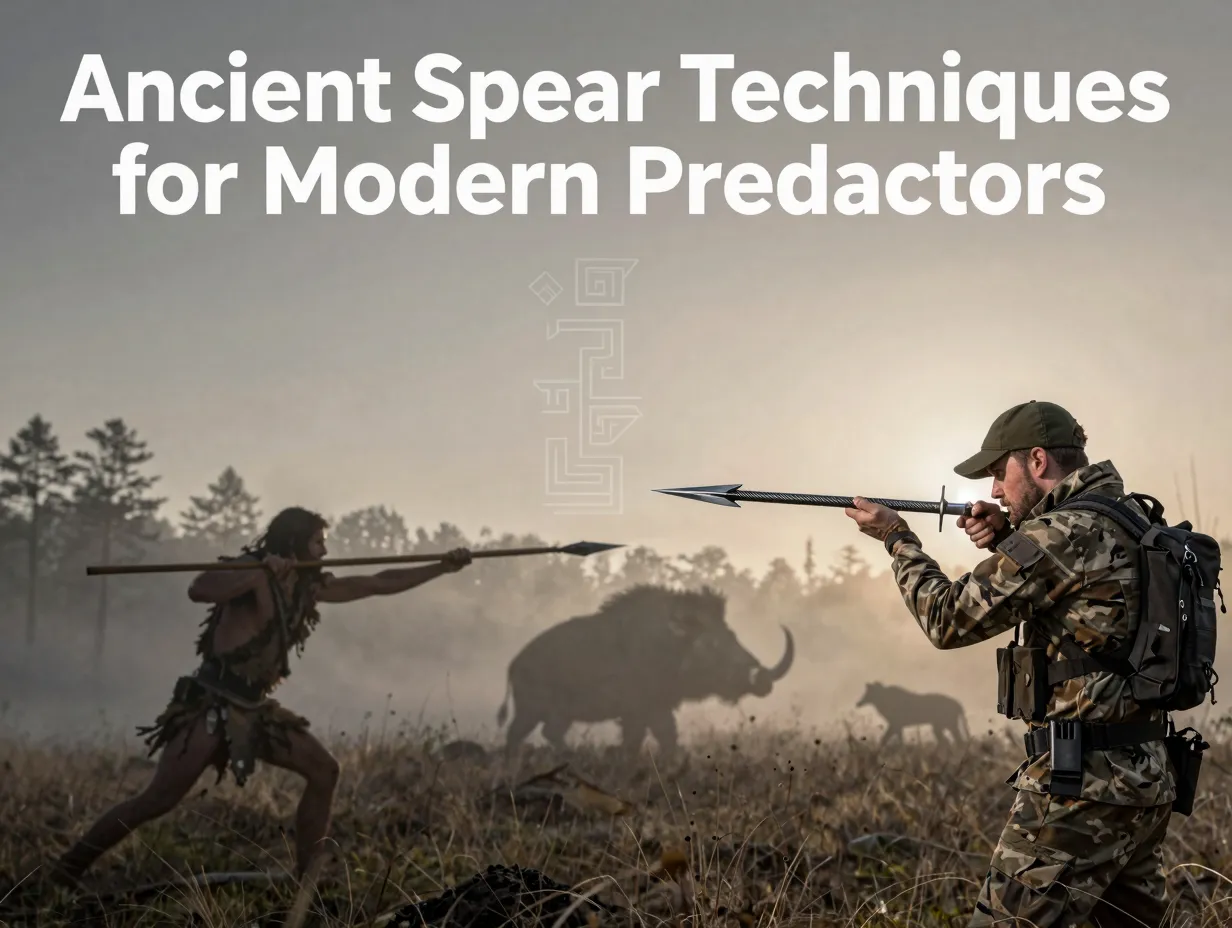
Whether a hunter is pursuing large game in dense woodland or tracking feral hogs across open scrubland, these time-honored methods offer biomechanical efficiency, stealth advantages, and situational control that modern firearms-only hunters often overlook. Understanding how these techniques were developed, and how they translate to contemporary predator hunting, can sharpen fieldcraft, improve safety, and deepen the connection between hunter and environment.
Key Takeaways
- Ancient spear techniques were not primitive guesswork; they were refined systems of biomechanics, terrain reading, and animal behavior analysis.
- The 9 ancient spear hunting techniques adapted for modern predators span close-quarters thrusting, long-range throwing, ambush trapping, water hunting, and coordinated group drives.
- Modern materials such as carbon fiber, titanium, and advanced blade alloys make these techniques more effective and safer than their original forms.
- Each technique requires a different combination of physical skill, terrain preparation, and knowledge of target species behavior.
- Legal and ethical compliance is essential; hunters must verify local regulations before employing spear-based methods.
The Historical Foundation Behind These Techniques
Before examining the 9 ancient spear hunting techniques adapted for modern predators in detail, it is worth understanding why these methods persisted across cultures and continents for hundreds of thousands of years. The spear was not merely a weapon, it was a system. Its effectiveness depended on the integration of tool design, body mechanics, terrain selection, animal behavior knowledge, and group coordination.
Archaeological evidence from sites in South Africa, Germany, and the Levant shows that spear-hunting cultures independently developed remarkably similar solutions to the same problems: how to close distance on dangerous prey, how to deliver lethal force with minimal risk to the hunter, and how to succeed consistently rather than opportunistically.
Three core principles underpin all ancient spear techniques:
- Distance management, controlling how close or far the hunter is from the target at the moment of engagement.
- Force multiplication, using leverage, velocity, or mechanical advantage to maximize penetrating power.
- Behavioral exploitation, using the animal’s own instincts, movement patterns, and sensory limitations against it.
These principles remain just as relevant in 2026 as they were half a million years ago. Modern hunters who internalize them gain a decisive edge over those who rely on equipment alone.
The 9 Ancient Spear Hunting Techniques Adapted for Modern Predators
1. The Thrusting Lunge
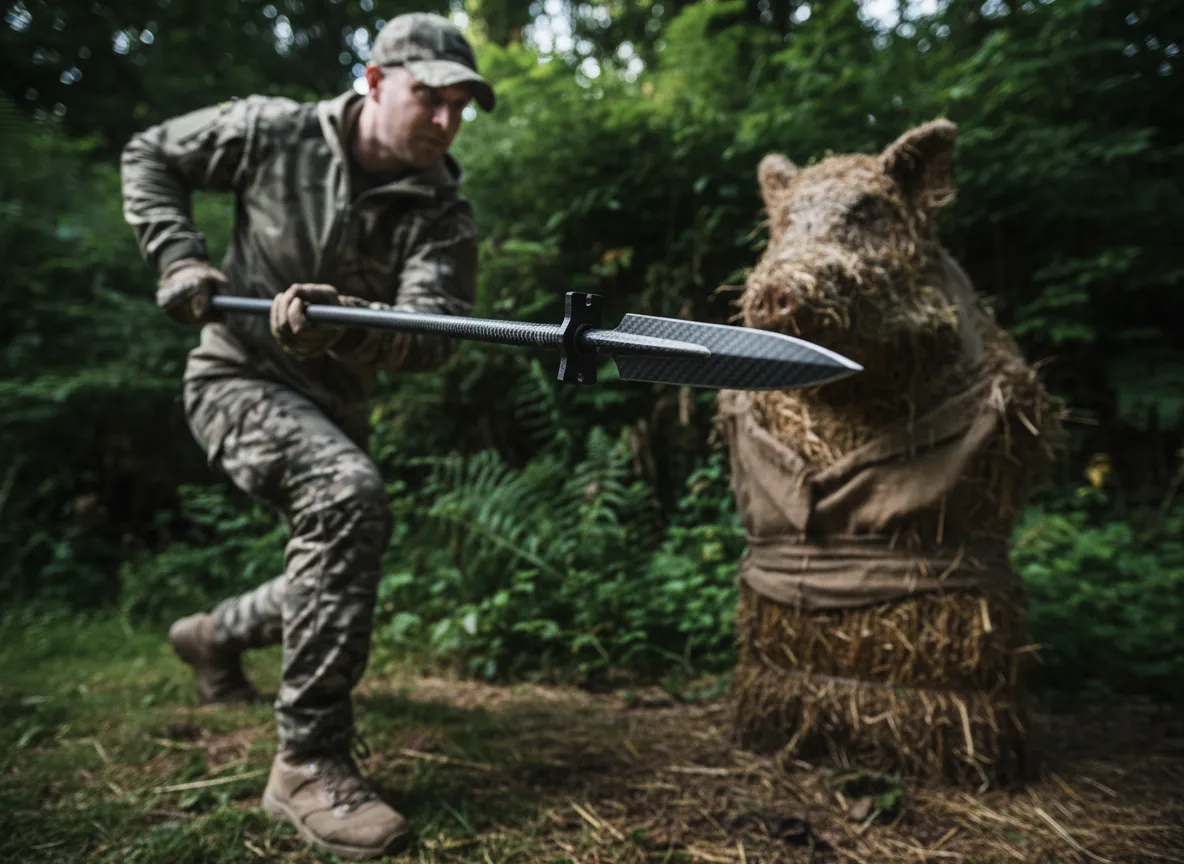
The thrusting lunge is the most direct of all ancient spear techniques. A hunter closes to within arm’s reach of the animal and drives the spear forward using the full weight of the body behind a low, controlled lunge. Historical accounts from Zulu hunters and European boar hunters both describe this technique as the backbone of close-quarters spear work.
Modern adaptation: Today’s boar hunters using carbon-fiber or ash-shaft boar spears employ a crossguard (lug) just behind the blade to prevent a wounded animal from running up the shaft. The lunge is executed from a braced, low stance, feet shoulder-width apart, dominant foot forward, with the spear angled slightly downward toward the vitals. The technique is most effective in dense brush where firearm use is impractical or legally restricted.
Key equipment: A short spear (6-7 feet), a broad fixed blade, and a crossguard are non-negotiable for safety.
2. The Overhead Throw
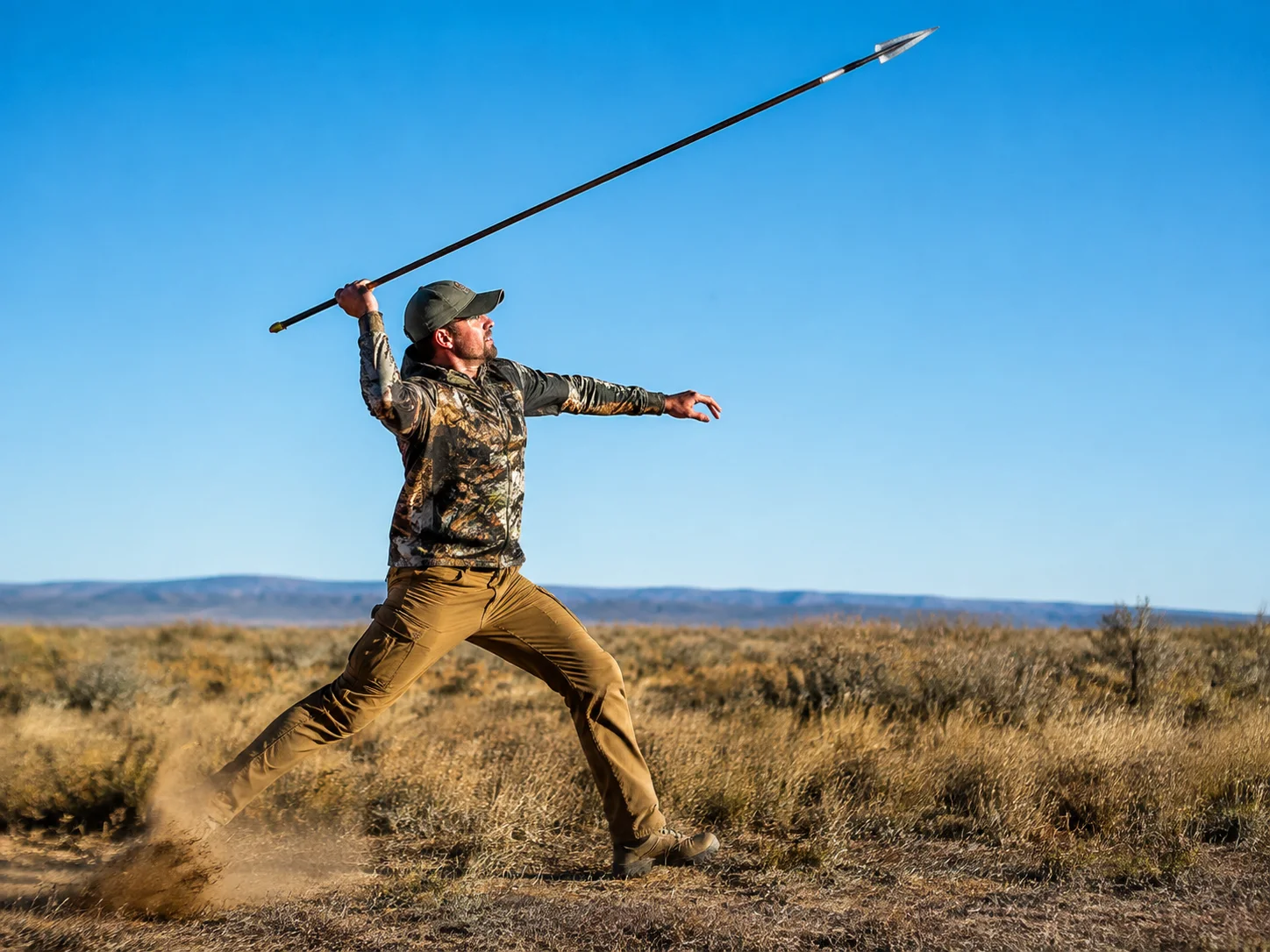
Throwing spears, or javelins, represent one of humanity’s oldest ranged hunting tools. The Schöningen spears mentioned above were designed for exactly this technique: a full-body rotational throw that generates significant velocity over distances of 20-30 meters.
Modern adaptation: Modern spear hunters competing in primitive skills competitions or hunting feral hogs in open terrain use balanced throwing spears weighing between 1.5 and 3 pounds. The throw begins with a full run-up or a planted-foot rotation, releasing the spear at a 30-45 degree upward angle for maximum range, or flat for close targets. Carbon-fiber shafts reduce weight while maintaining rigidity, improving both distance and accuracy compared to wood alone.
Biomechanical note: The elbow leads the throw, not the wrist. Wrist snap adds spin and stability, but the power comes from hip rotation and shoulder extension.
3. The Ambush Thrust from Concealment
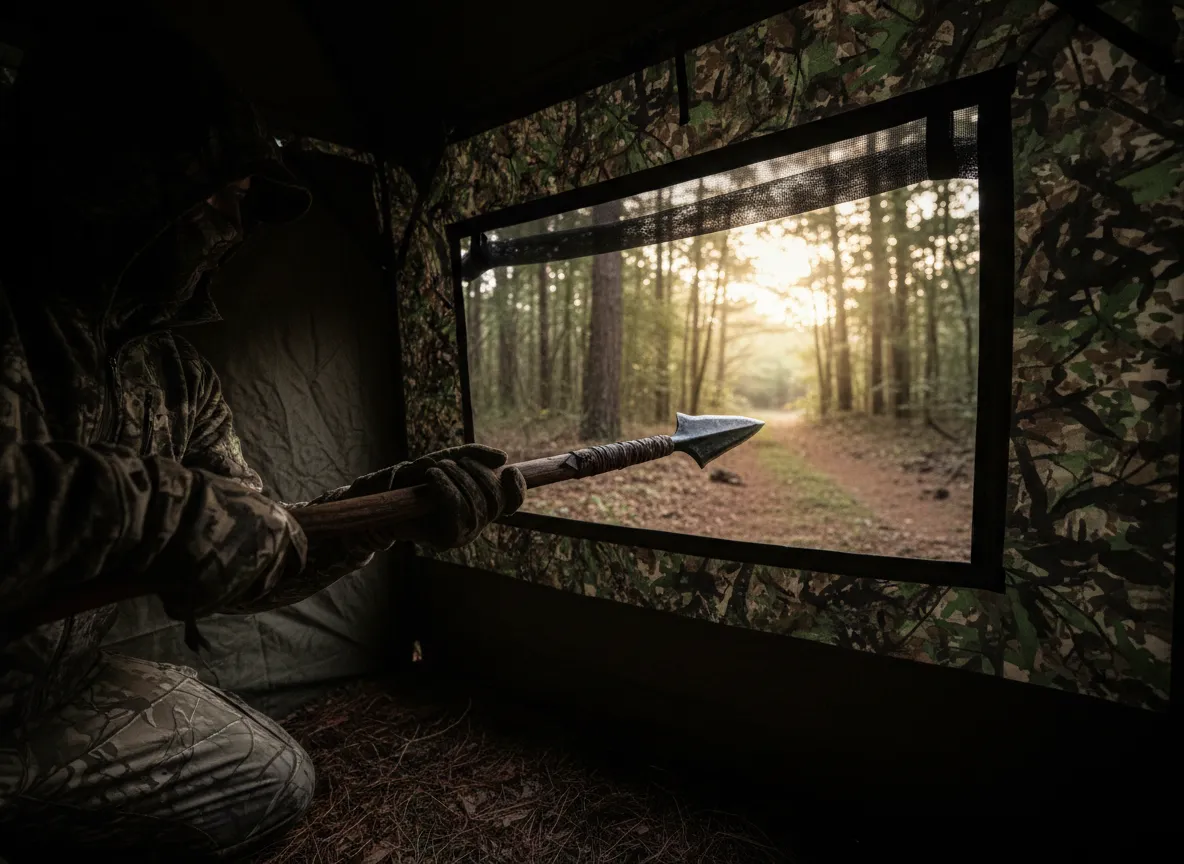
This technique combines the thrusting lunge with a prepared hide. Hunters in sub-Saharan Africa and pre-Columbian North America dug shallow pits or constructed brush blinds along game trails, then waited for an animal to pass within striking distance before delivering a surprise thrust.
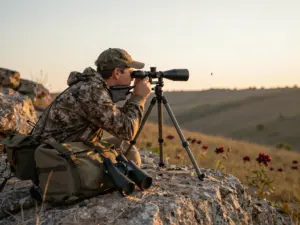
Modern adaptation: Modern predator hunters set up ground blinds along confirmed travel corridors, typically identified through trail cameras and track analysis. The hunter positions the spear tip just outside the blind’s shooting window, minimizing movement at the moment of engagement. This technique is particularly effective for mountain lion and wild boar, both of which follow predictable routes between water sources and feeding areas.
Critical advantage: The element of surprise reduces the animal’s reaction time, making a clean, lethal thrust significantly more likely.
4. The Atlatl-Assisted Launch
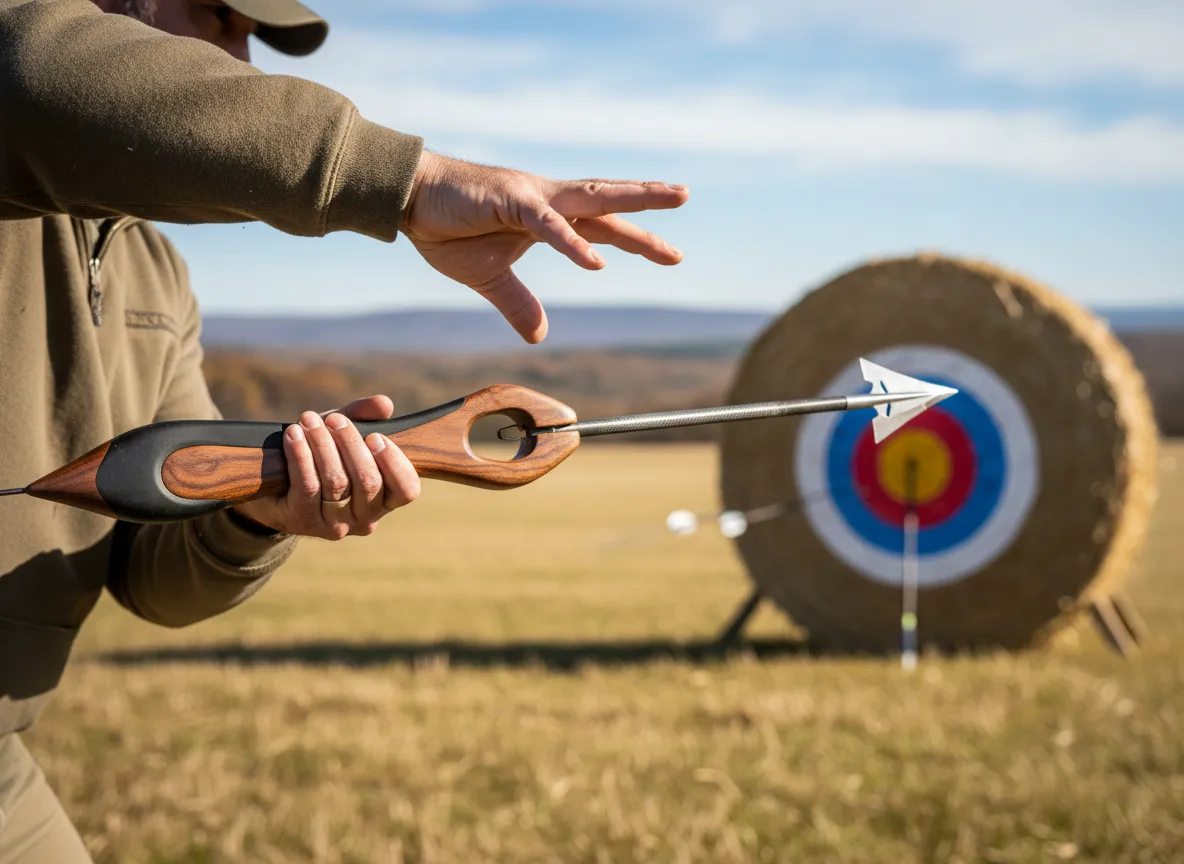
The atlatl, a spear-throwing board that effectively lengthens the hunter’s arm, was used across every inhabited continent before the bow. It can increase throwing velocity by 150-300% compared to an unaided throw, launching a dart-spear at speeds approaching 90 miles per hour.
Modern adaptation: Atlatl hunting is legal for deer and other game in several U.S. states, including Alabama, Missouri, and others, as of 2026. Modern atlatls are crafted from hardwood, antler, or molded polymer, and the darts (lightweight spears) often use commercial broadheads. Mastery requires significant practice, most experienced atlatl hunters report needing 200-400 throws before achieving consistent accuracy at 20 meters.
Recommended practice drill: Set a 12-inch target at 15 meters. Work on smooth wrist-extension follow-through before increasing distance.
5. The Deadfall Spear Trap
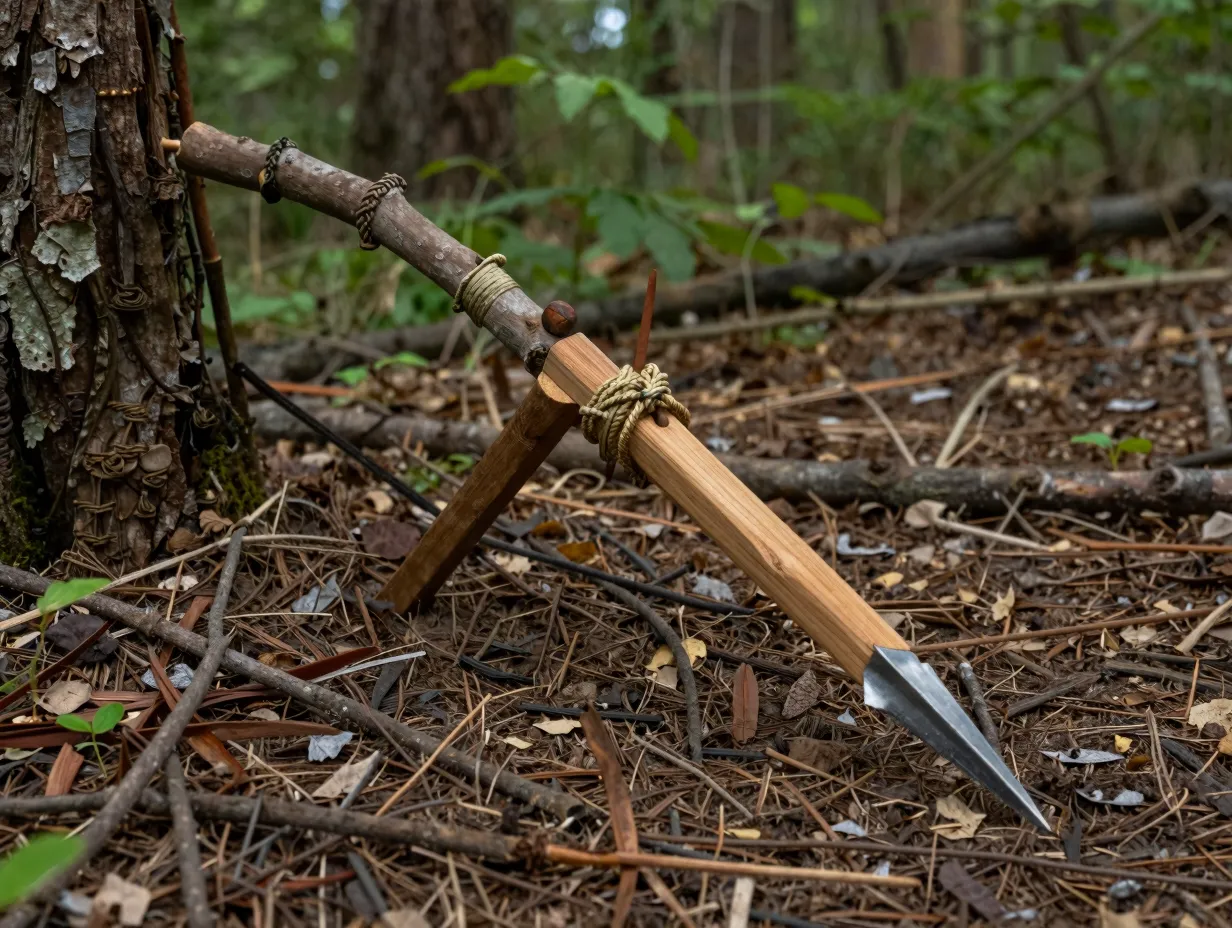
Not all ancient spear techniques required the hunter to be present at the moment of kill. Deadfall spear traps, weighted spear assemblies triggered by an animal disturbing a bait line or pressure plate, were used extensively in Southeast Asia, Polynesia, and parts of Africa.
Modern adaptation: Where legally permitted (regulations vary significantly by jurisdiction), modern hunters construct spring-pole or gravity-drop spear traps for feral hogs and invasive predators. The mechanism uses a bent sapling or weighted lever to drive a sharpened stake downward when the trigger is disturbed. These traps require careful placement, secure anchoring, and mandatory signage in most jurisdictions.
Safety warning: Spear traps are indiscriminate and must be placed far from trails used by humans and domestic animals. Always consult local wildlife regulations before constructing any trap.
6. The Water-Edge Harpoon Strike
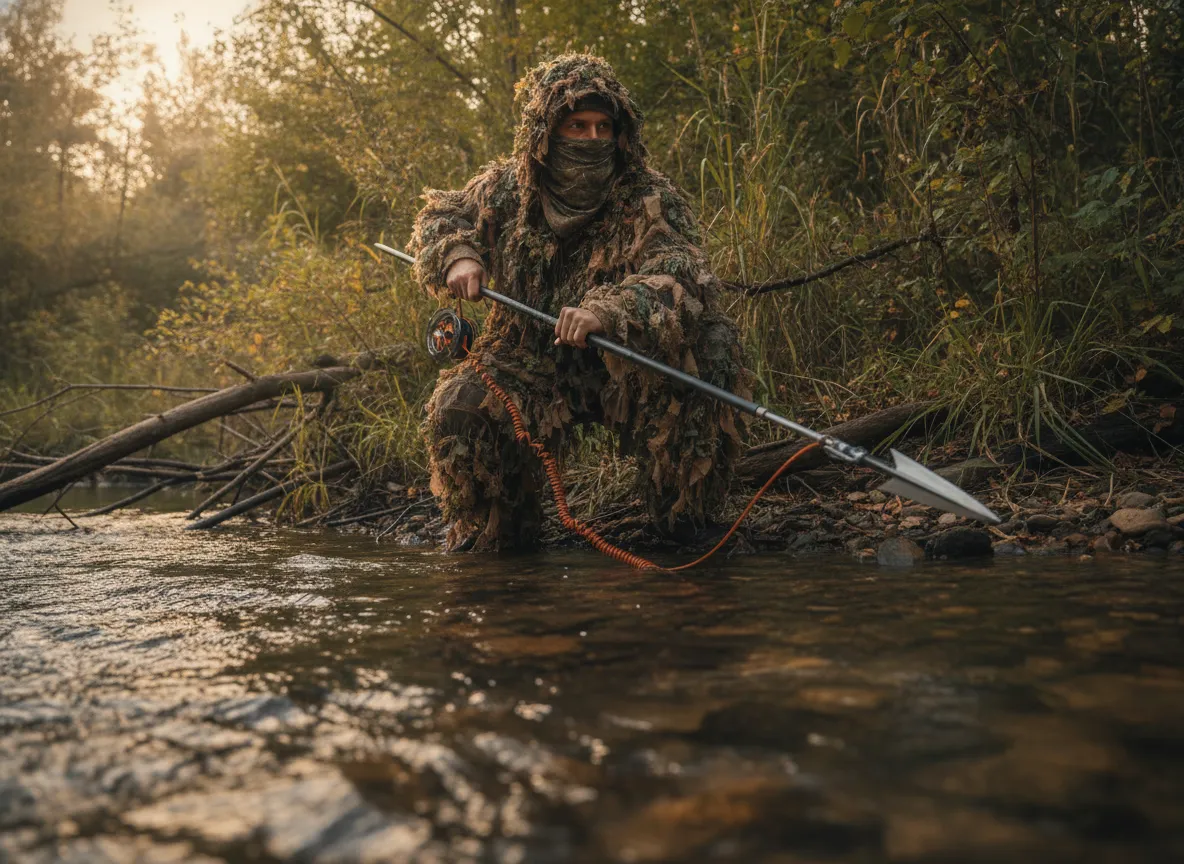
Coastal and riverine cultures worldwide, from Pacific Northwest indigenous peoples to ancient Egyptians, developed harpoon-style spear techniques for hunting large animals at water crossings. Animals are slower and more predictable when wading or drinking, making them vulnerable to a fast, powerful thrust or throw.
Modern adaptation: Hunters pursuing feral hogs near creek crossings or elk at river fords can exploit this behavioral window. A lightweight harpoon-style spear with a detachable, barbed head connected to a retrieval line ensures the point stays embedded even if the animal bolts. The hunter positions downwind and downstream, using the sound of moving water to mask approach noise.
Behavioral insight: Most large mammals lower their heads and reduce vigilance for 3-5 seconds when first beginning to drink, this is the optimal engagement window.
7. The Two-Hunter Relay Drive
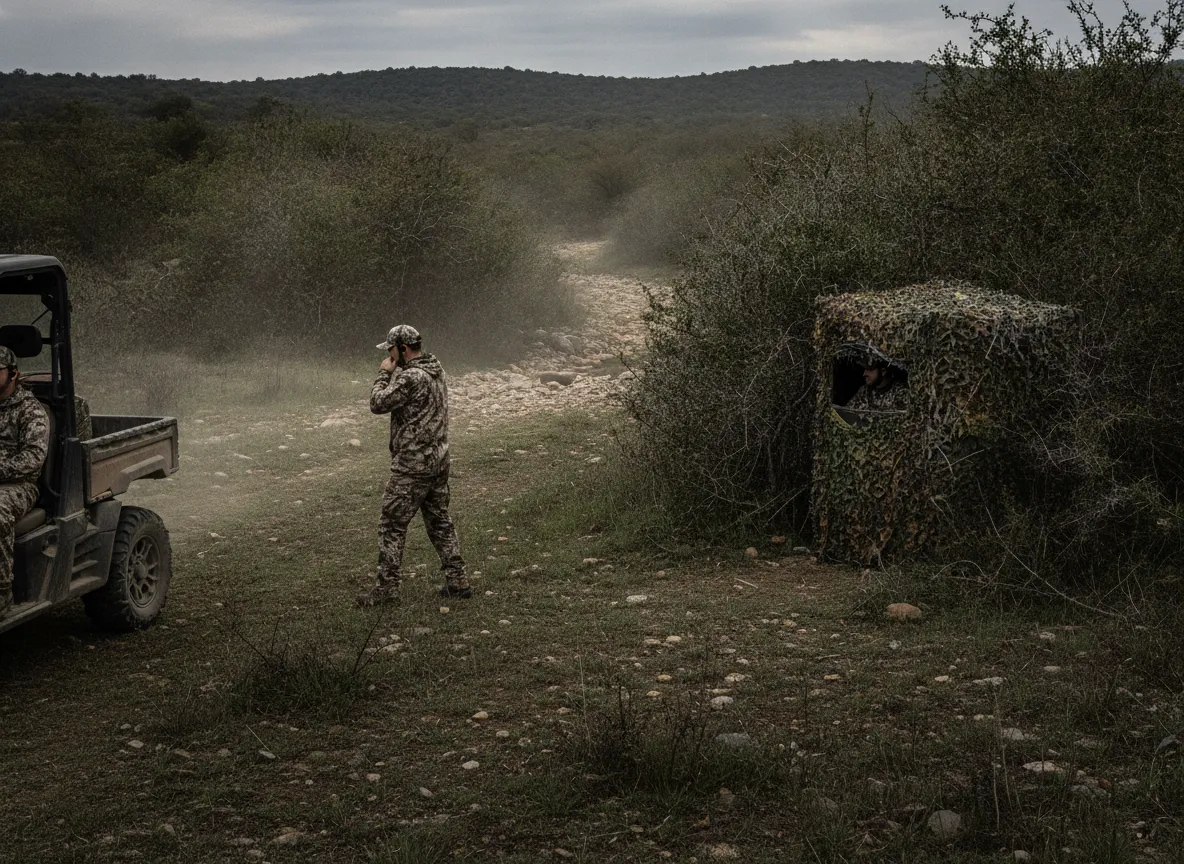
Group hunting with spears is documented in virtually every ancient culture that left archaeological evidence. The relay drive involves one hunter driving prey toward a second hunter positioned ahead in concealment. The driving hunter uses noise, fire, or movement to push the animal along a predictable corridor.
Modern adaptation: Two-person spear hunting teams use radio communication (earpieces) to coordinate the drive without alerting the target. The driver moves upwind, deliberately creating noise and scent pressure. The waiting hunter crouches in a ground blind at a natural funnel point, a gap in dense brush, a dry creek crossing, or a saddle between two ridges. This technique is especially productive for wild boar, which tend to run in straight lines when pressured.
Coordination tip: Agree on a clear abort signal before the drive begins. If the animal changes direction unexpectedly, the waiting hunter must know when to stand down.
8. The Fire-Hardened Tip Technique
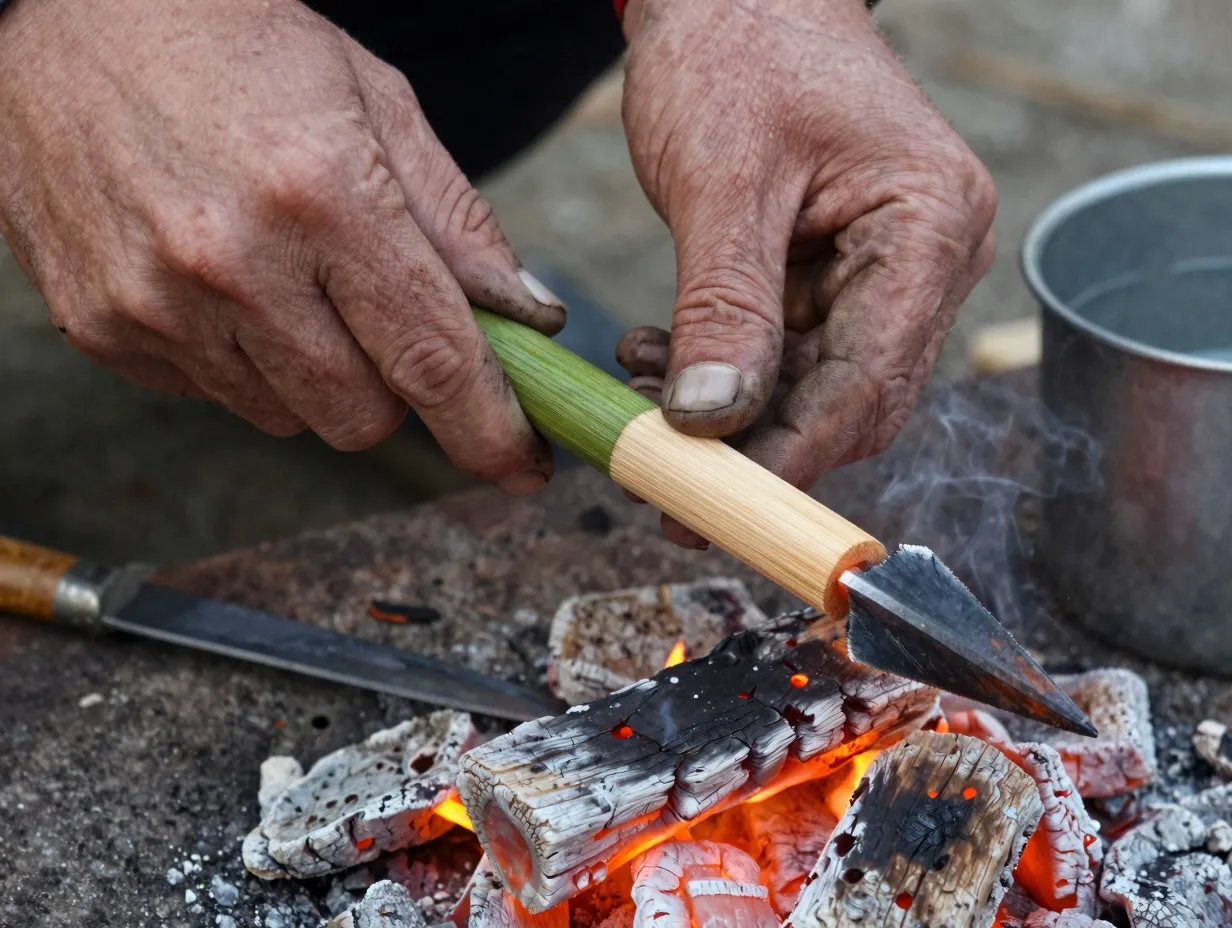
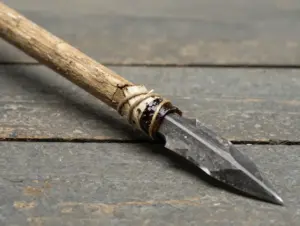
This entry differs from the others in that it focuses on tool preparation rather than a specific hunting movement. Ancient hunters worldwide discovered that heating a wooden spear tip in low, smokeless coals and then cooling it rapidly compresses and hardens the wood fibers, creating a point that can penetrate hide and bone without a stone or metal tip.
Modern adaptation: Primitive skills practitioners and bushcraft hunters who craft their own spears from green ash, yew, or hazel still use this technique. The shaft is rotated slowly over coals at roughly 300-400 degrees Fahrenheit until the wood darkens slightly, then cooled and shaped with a knife. The resulting tip is significantly harder than untreated wood and holds an edge longer.
Practical value in 2026: While most hunters use metal broadheads, understanding fire-hardening is valuable for survival scenarios and primitive hunting competitions where manufactured points are prohibited.
9. The Baited Pit Approach
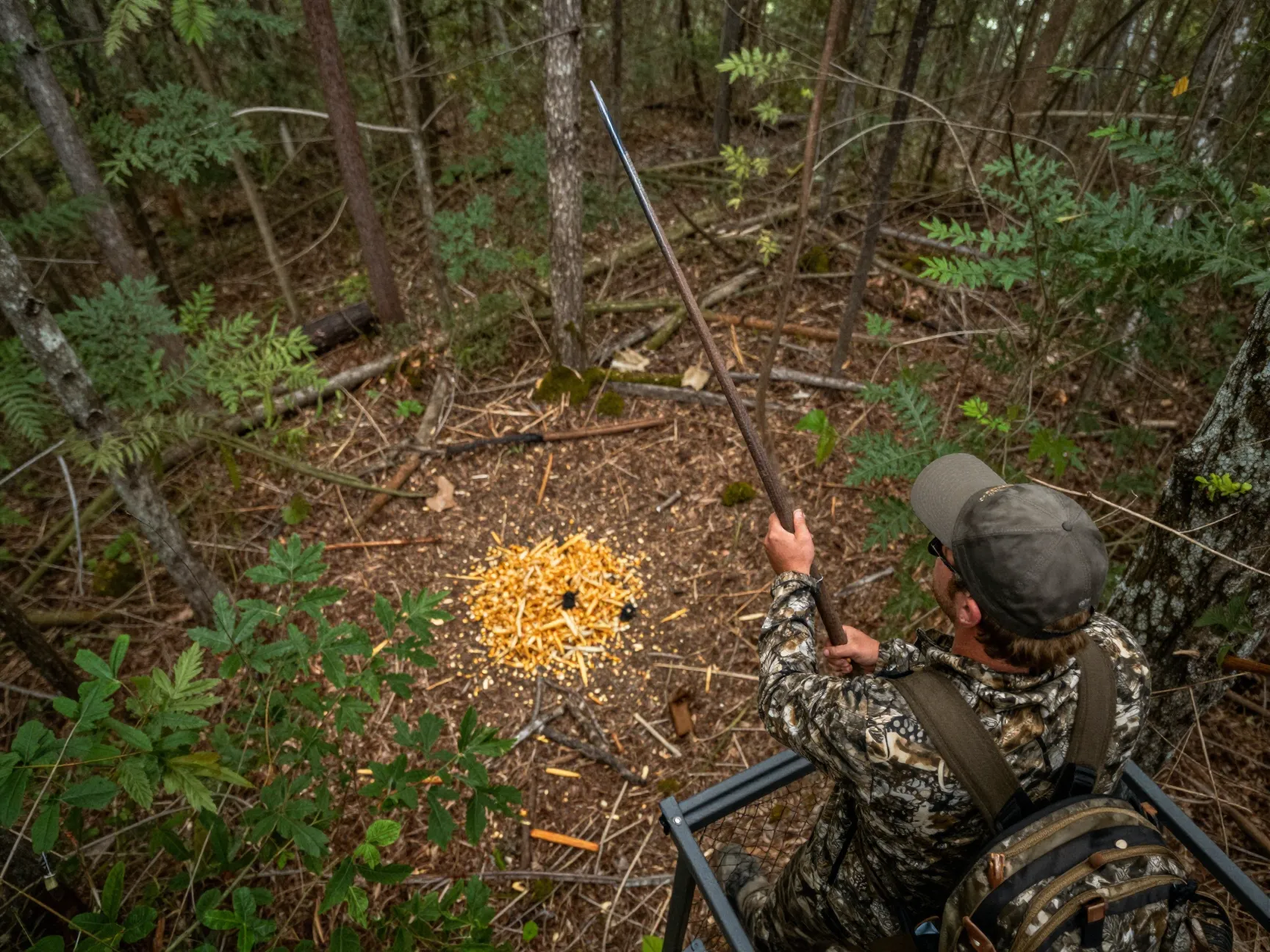
The baited pit is among the oldest and most widespread hunting strategies in human history, documented from ancient Mesopotamia to pre-contact North America. A concealed pit is dug along a game trail and baited with food or scent attractant. Sharpened stakes or a spear assembly at the pit bottom deliver the lethal blow when the animal falls in.
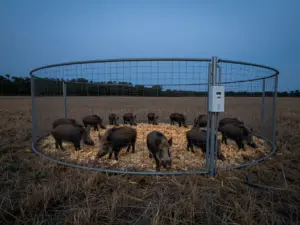
Modern adaptation: Modern feral hog management programs in some southern U.S. states permit pit-style trapping on private land. While fully spiked pits are rarely legal for sport hunting, the underlying principle, using bait to draw an animal to a controlled kill zone, is widely applied. Hunters position themselves in elevated stands directly over a bait site, using a long thrusting spear or a drop-spear mechanism to deliver the kill from above when the animal is stationary and focused on the bait.
Ethical consideration: Baited approaches require the hunter to ensure a clean, immediate kill. A wounded animal that escapes a bait site is both an ethical failure and a practical problem, as it will likely avoid that location in the future.
Matching Technique to Target Species
Not every technique suits every predator or large game animal. The table below provides a quick reference for matching the 9 ancient spear hunting techniques adapted for modern predators to common target species.
| Technique | Best For | Skill Level |
|---|---|---|
| 1. Thrusting Lunge | Wild boar, bear | Advanced |
| 2. Overhead Throw | Feral hogs, deer | Intermediate |
| 3. Ambush Thrust | Mountain lion, boar | Advanced |
| 4. Atlatl Launch | Deer, elk | Intermediate |
| 5. Deadfall Trap | Feral hogs, invasive species | Intermediate |
| 6. Water-Edge Harpoon | Elk, feral hogs | Intermediate |
| 7. Relay Drive | Wild boar, deer | Beginner-Intermediate |
| 8. Fire-Hardened Tip | Survival/primitive competitions | Beginner |
| 9. Baited Pit Approach | Feral hogs, predator management | Intermediate |
Legal and Safety Considerations for Modern Spear Hunters
Spear hunting occupies a complex legal space in 2026. In the United States, spear hunting regulations vary by state, species, and season. Several states explicitly permit spear hunting for feral hogs as part of invasive species management programs. Atlatl hunting has expanded its legal footprint in recent years, with growing acceptance among wildlife management agencies who recognize its role in primitive skills preservation.
Before attempting any of the 9 ancient spear hunting techniques adapted for modern predators, hunters should:
- Verify state and county regulations for the specific species and method.
- Complete a spear-hunting safety course if available in their region.
- Hunt with a partner when using close-quarters techniques such as the thrusting lunge or ambush thrust.
- Carry a backup firearm or sidearm when pursuing dangerous game such as wild boar or mountain lion.
- Inform a third party of their location and expected return time.
“The most dangerous moment in spear hunting is not the throw or the thrust, it is the wounded animal at close range. Preparation and a clear exit strategy prevent most serious injuries.”
This principle, repeated consistently by experienced spear hunters and primitive skills instructors, underscores why technique mastery must be paired with safety discipline.
Building a Progressive Training Program
Adopting the 9 ancient spear hunting techniques adapted for modern predators is not a weekend project. Each technique demands a specific physical skill set and a deep understanding of the target animal’s behavior. The following progression is recommended for hunters new to spear-based methods.
Phase 1, Foundation (Months 1-3)
- Practice the overhead throw at stationary targets, beginning at 10 meters and extending to 25 meters.
- Study fire-hardening and basic spear construction to develop an intuitive understanding of shaft flex and tip weight.
- Begin atlatl practice with a commercial kit.
Phase 2, Technique Refinement (Months 4-6)
- Introduce the thrusting lunge with a padded practice target, focusing on body mechanics and crossguard use.
- Practice the relay drive with a partner using non-lethal training spears in open terrain.
- Study local game trails and identify natural ambush positions for the ambush thrust technique.
Phase 3, Field Application (Month 7 onward)
- Begin field hunts with low-risk targets such as feral hogs on private land where regulations permit.
- Introduce the water-edge harpoon technique during scouted water crossing opportunities.
- Evaluate and refine technique based on field outcomes, keeping a written log of each engagement.
Conclusion
The 9 ancient spear hunting techniques adapted for modern predators are not relics of a less sophisticated era, they are a distilled record of what works when a human being must close the gap between intention and lethal efficiency in the field. From the explosive thrusting lunge to the patient geometry of the baited pit approach, each technique encodes specific knowledge about animal behavior, human biomechanics, and terrain exploitation that remains fully applicable in 2026.
Actionable next steps for hunters ready to integrate these methods:
- Select one technique that matches your target species and terrain, and commit to a 90-day practice program before taking it into the field.
- Research your state’s specific regulations for spear and atlatl hunting, the legal landscape has evolved significantly and continues to expand.
- Connect with a primitive skills or spear hunting organization to access structured training, mentorship, and a community of experienced practitioners.
- Invest in quality equipment, a properly balanced spear with the correct shaft length and blade geometry for your chosen technique is not optional; it is a safety requirement.
- Always hunt with a partner when using close-quarters techniques, and carry a backup tool for dangerous game situations.
Ancient hunters did not survive by being reckless. They survived by being precise, patient, and deeply knowledgeable about the world they moved through. Those qualities are just as decisive today.