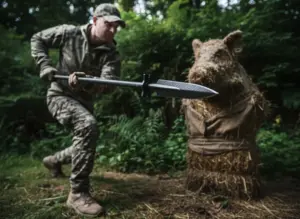
9 Effective Predator Spear Designs and Tactics for Survival Hunting
Archaeologists have recovered spear tips dating back 500,000 years, making the spear the oldest purpose-built hunting weapon in human history. That fact alone tells you something critical: when every modern tool fails, the spear remains. The 9 effective predator spear designs and tactics for survival hunting covered in this guide draw on that deep history while incorporating modern materials knowledge and field-tested technique. Whether you are preparing a wilderness survival kit or studying primitive skills, understanding how to build, choose, and deploy a survival spear can be the difference between eating and going hungry.
Disclosure: This post contains affiliate links. As an Amazon Associate, we earn from qualifying purchases, and at no extra cost to you.
Key Takeaways
- The right spear design depends on the target animal, available materials, and whether you are thrusting or throwing.
- Fire hardening and proper tip geometry dramatically increase penetration and durability.
- Lashing technique is as important as tip material — a poorly secured tip fails at the worst moment.
- Tactical awareness — approach angle, terrain use, and patience — matters as much as the spear itself.
- Practicing these designs and tactics before an emergency is the only reliable way to make them work under stress.
Why Spear Hunting Remains a Core Survival Skill in 2026
Modern survivalists often focus on fire-starting and water purification, but food procurement gets less attention. Snares and traps are passive, but they require time to produce results. A well-made spear gives you an active, immediate option for securing protein from small game, fish, and medium-sized predators that threaten your camp.
The spear also requires no manufactured components. Every material you need exists in most wilderness environments. That self-sufficiency is what makes mastering the 9 effective predator spear designs and tactics for survival hunting a foundational skill rather than a niche hobby.
“The spear is not a primitive tool. It is a precision instrument that rewards knowledge, patience, and practiced technique.”
Understanding the Core Components of Any Survival Spear
Before diving into specific designs, it helps to understand what every effective spear shares.
The shaft provides reach, leverage, and control. Hardwoods like ash, hickory, and oak are ideal. Bamboo works well in tropical environments. The shaft should be straight, dry, and roughly 6 to 8 feet long for most hunting applications.
The tip delivers the lethal force. Tips can be made from flint, obsidian, bone, hardened wood, metal, or lashed stone.
The binding holds the tip to the shaft. Sinew, rawhide, plant cordage, and paracord all work. The binding must be tight, dry, and reinforced with natural adhesives like pine pitch when possible.
The balance point affects throw distance and accuracy. A spear balanced at roughly one-third of its length from the butt end performs well for both thrusting and throwing.
The 9 Effective Predator Spear Designs and Tactics for Survival Hunting
The following nine designs and tactics are organized from the most basic to the most specialized. Each one addresses a specific hunting scenario you may face in a survival situation.
1. The Fire-Hardened Wooden Spear
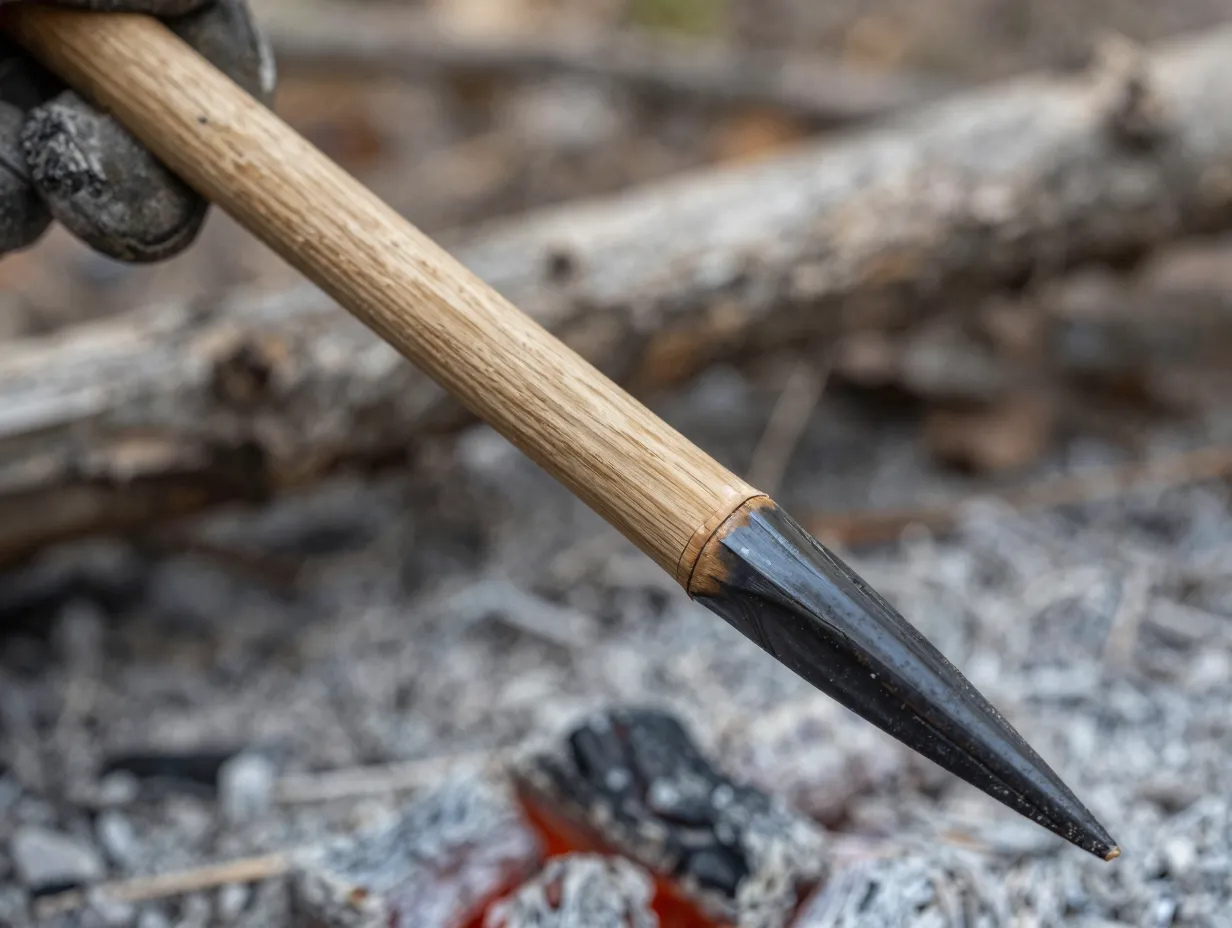
The simplest and most accessible design, the fire-hardened wooden spear requires nothing more than a straight hardwood branch and a fire. Select a branch approximately 1.5 to 2 inches in diameter. Carve the tip to a gradual point over 6 to 8 inches, keeping the taper long rather than steep. A steep taper creates a fragile tip that snaps on impact.
Hold the carved tip 6 to 8 inches above hot coals — never in direct flame — and rotate it slowly for 10 to 15 minutes. The heat drives moisture from the wood and hardens the outer fibers. The tip should darken slightly but never char or crack.
Best used for: Small game, fish, and defensive use against small predators.
Key advantage: Zero additional materials required.
2. The Flint-Knapped Stone Tip Spear
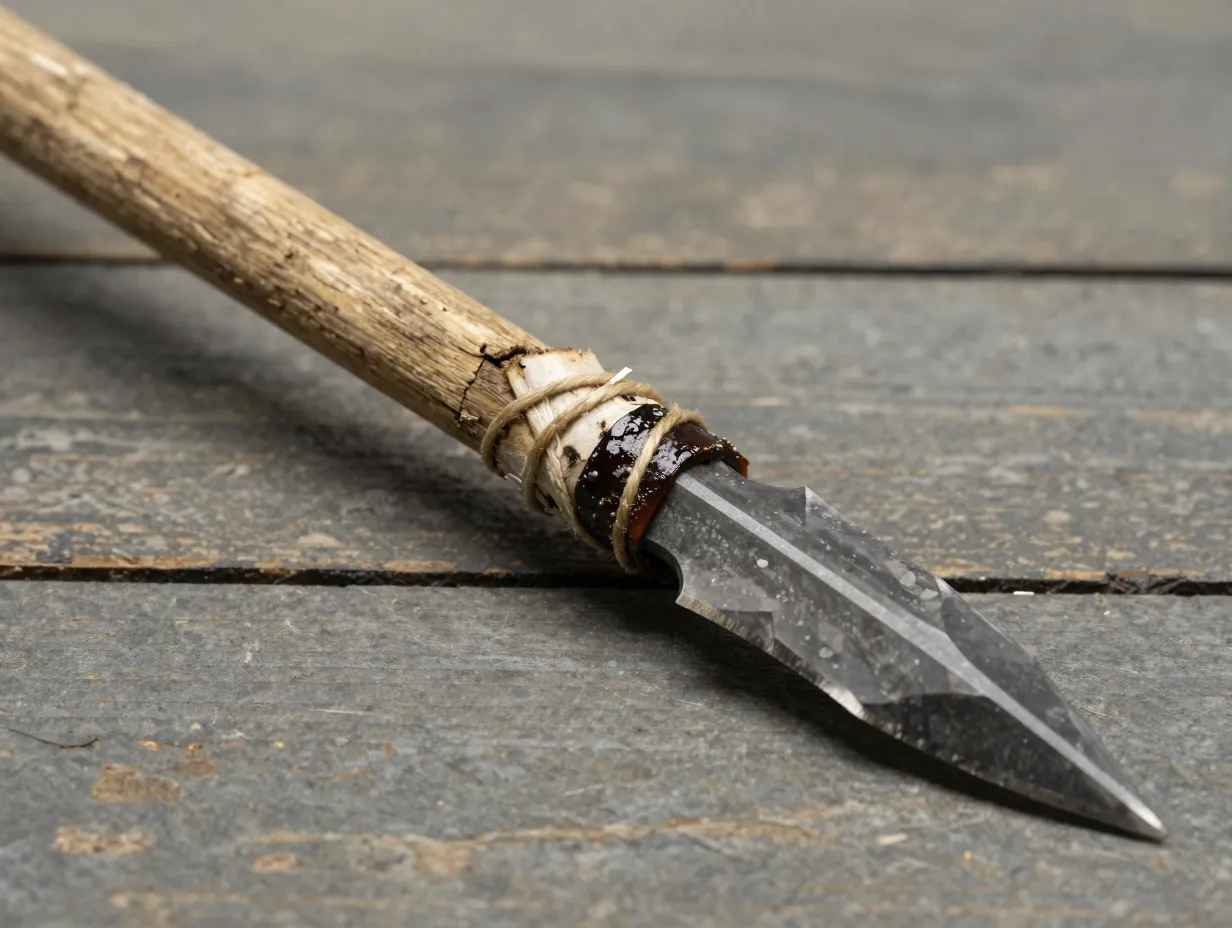
Flint knapping is the art of shaping flint, chert, or obsidian into a sharp tip by striking and pressing the stone to remove flakes. A properly knapped tip is sharper than surgical steel at the microscopic level, though it is brittle.
To attach the tip, split the end of the shaft 2 to 3 inches deep, insert the base of the stone tip, and lash tightly with wet sinew or rawhide. As the binding dries, it contracts and locks the tip in place. Apply pine pitch or birch tar over the lashing to weatherproof and reinforce the joint.
Best used for: Medium game, penetrating thick hide.
Key advantage: Exceptional sharpness from natural materials.
| Component | Best Material | Backup Option |
|---|---|---|
| Shaft | Ash or hickory | Bamboo |
| Tip | Flint or obsidian | Bone |
| Binding | Wet sinew | Paracord |
| Adhesive | Pine pitch | Birch tar |
3. The Bone-Tipped Spear
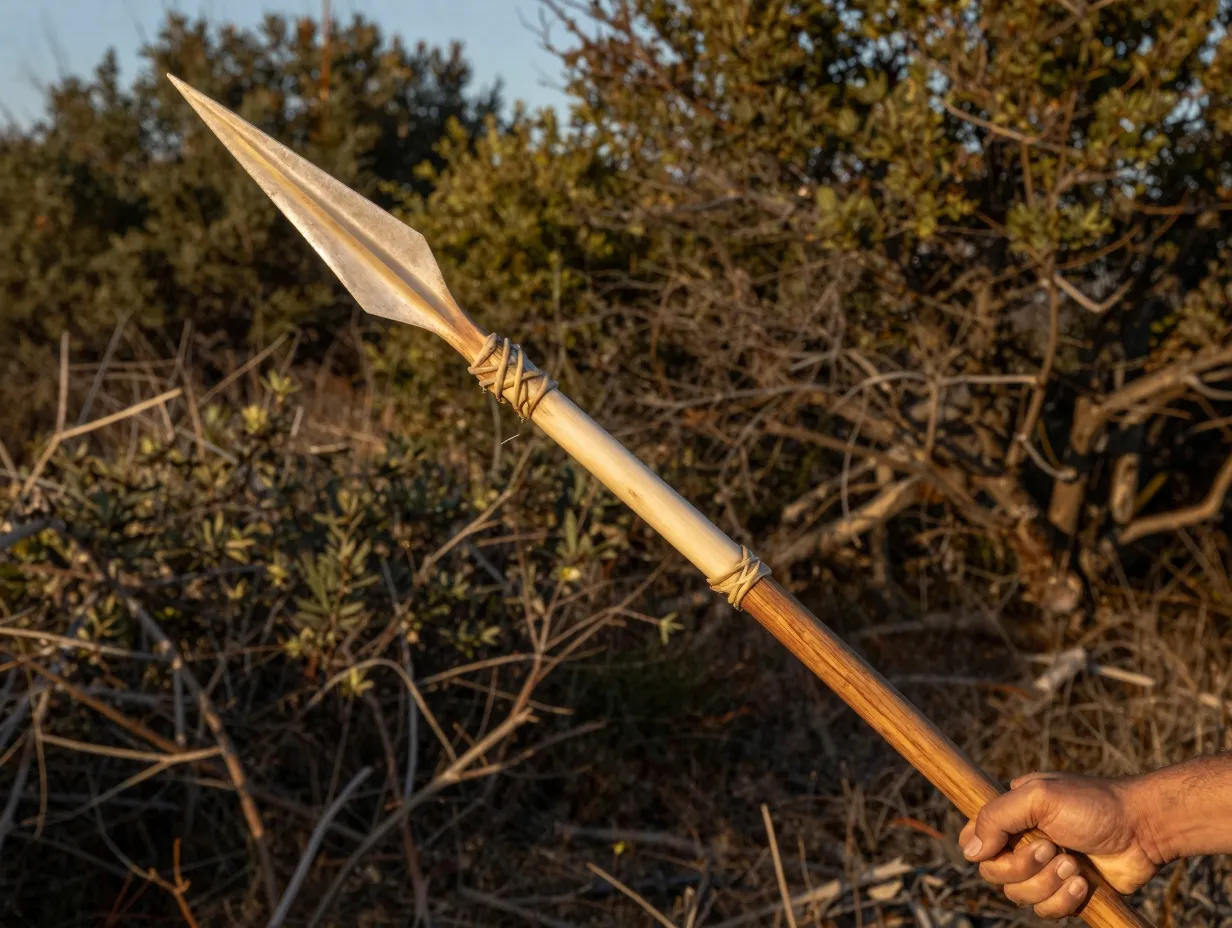
Bone tips are carved from the leg bones of large animals. Split the bone lengthwise, then grind the tip against a rough stone to shape a sharp point. Bone is more flexible than stone, which means it absorbs impact rather than shattering. This makes it a better choice for thrusting into animals that may thrash.
The tip is attached using the same split-shaft and lashing method as the stone tip. Bone tips can be resharpened repeatedly by grinding, giving them a longer service life in extended survival situations.
Best used for: Thrusting attacks on medium game, fish spearing.
Key advantage: Durability and resharpening potential.
4. The Bamboo Multi-Pronged Fishing Spear
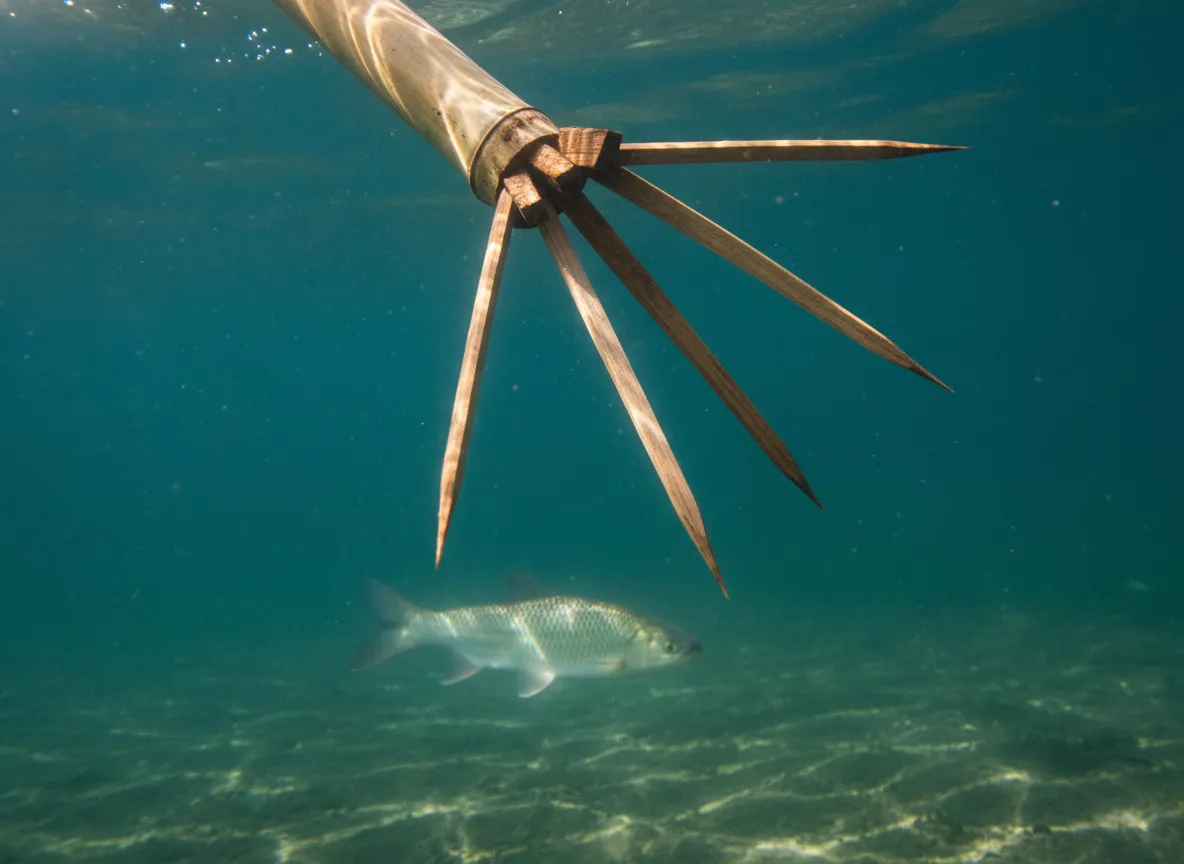
Also called a leister or gig, this design splits the end of a bamboo shaft into three or four prongs, each carved to a point. Small wedges of wood or stone are inserted between the prongs to spread them outward. The spread increases the strike zone, which is critical when spearing fish in moving water.
To make the prongs, cut four longitudinal slits 8 to 10 inches deep into the end of the bamboo shaft. Carve each prong to a sharp inward-angling point. The inward angle helps trap fish between the prongs rather than deflecting them.
Best used for: Fish, frogs, and small aquatic prey.
Key advantage: Larger effective strike zone dramatically increases success rate.
5. The Socketed Metal-Tipped Spear
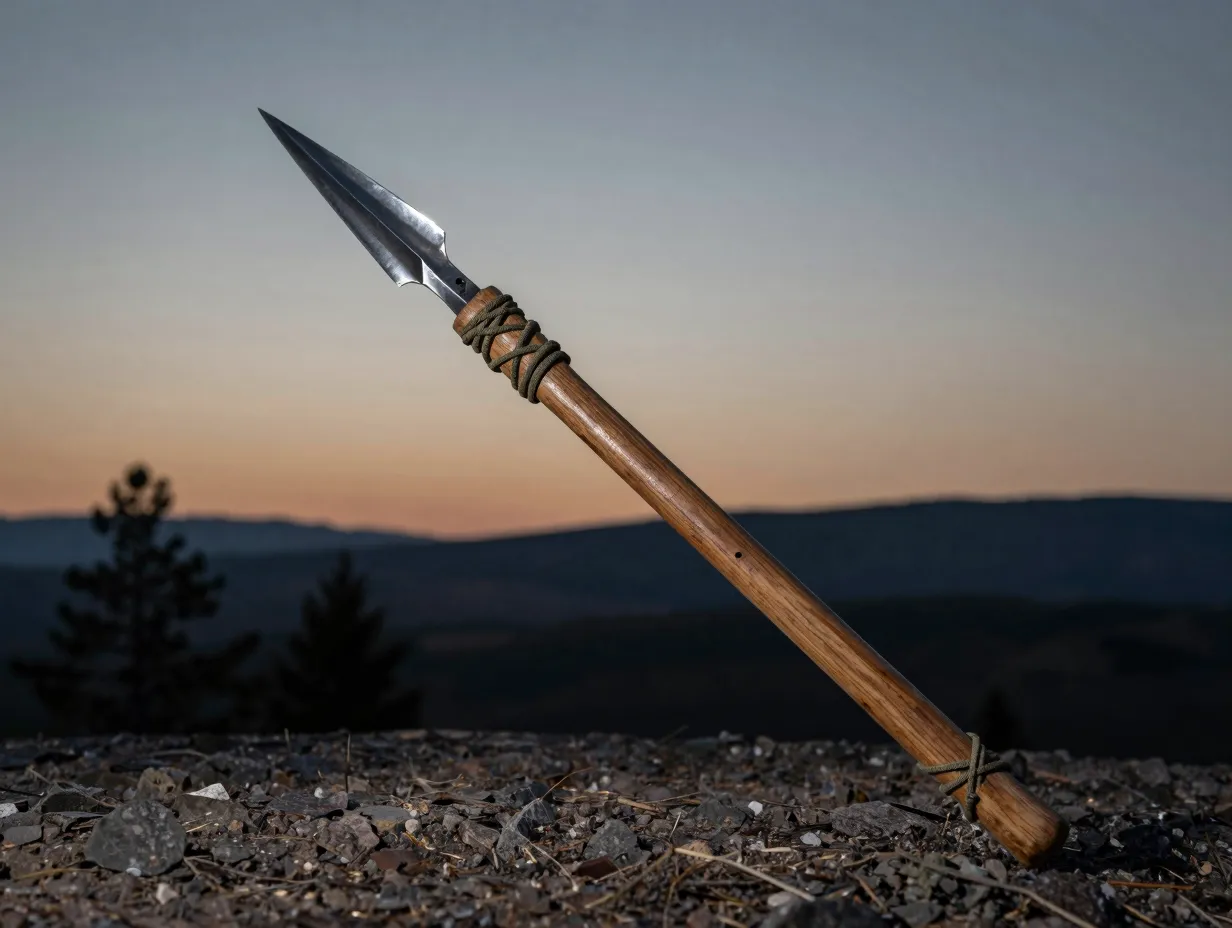
When a manufactured metal component is available — a knife blade, a large nail, a piece of rebar sharpened on stone — it can be converted into a highly effective spear tip. The socketed attachment method is stronger than the split-shaft method.
Drill or burn a socket hole into the end of the shaft matching the diameter of the metal component’s tang or base. Insert the metal piece and lash tightly. If the metal has a flat tang, flatten the shaft end with a knife and bind the tang flat against it before wrapping.
Best used for: Large game, defensive use against large predators.
Key advantage: Metal edges hold sharpness far longer than stone or bone.
6. The Weighted Throwing Spear
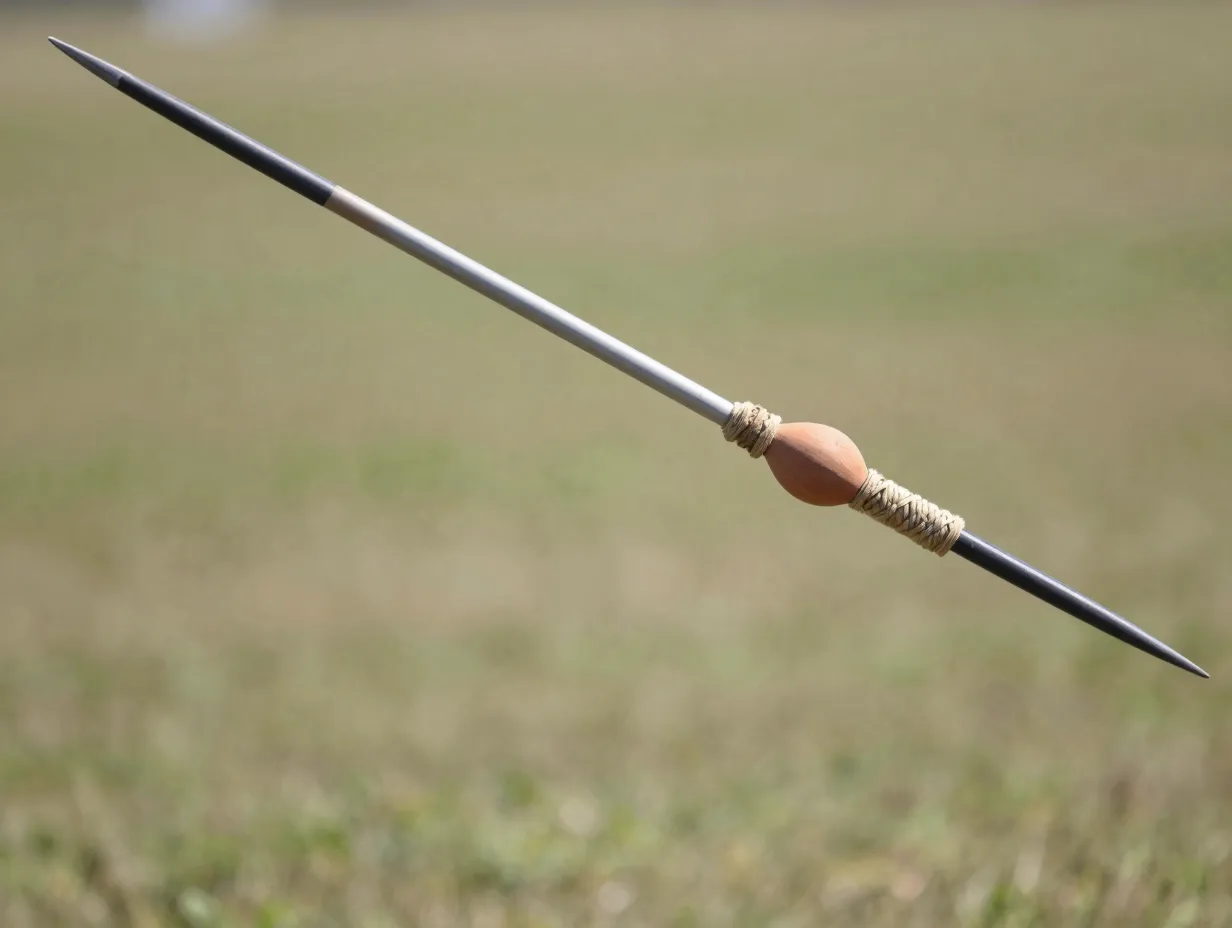
Throwing accuracy and distance both improve with a properly weighted spear. Add a weighted collar of clay, tightly wound cordage, or a natural wood knob approximately 12 to 18 inches from the butt end. This shifts the balance point rearward, which stabilizes the spear in flight and allows a more powerful release.
The optimal throwing weight is approximately 10 to 15 percent of the total spear weight. Too much weight and the spear arcs downward early. Too little and it tumbles in flight.
Best used for: Throwing at birds, rabbits, and small to medium game from a distance.
Key advantage: Improved range and accuracy without additional tip materials.
7. The Spear-Thrower (Atlatl) System
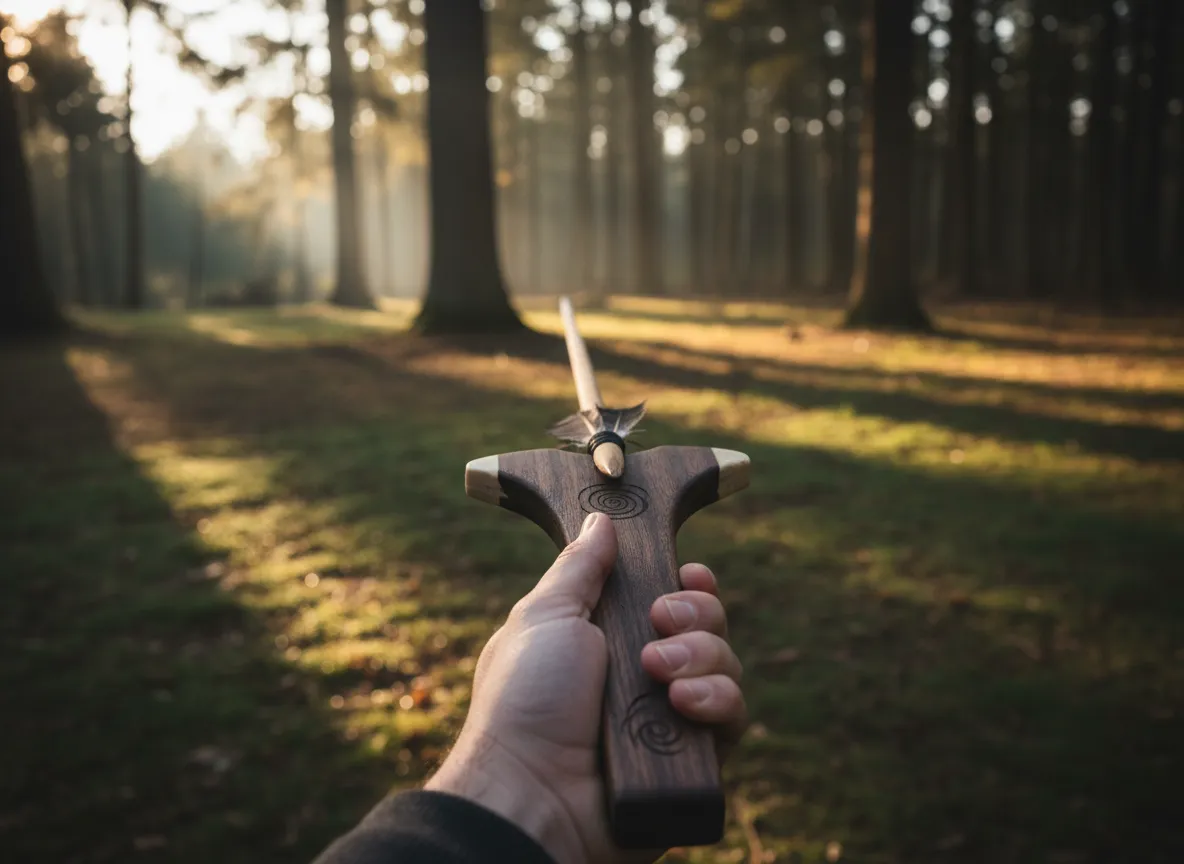
The atlatl is a short board or stick with a hook or cup at one end that holds the butt of a dart-spear. It effectively extends the length of the throwing arm, multiplying velocity by a factor of two to three. Archaeological evidence shows atlatls were used across every inhabited continent.
A functional atlatl can be carved from a single piece of hardwood in under an hour. The dart-spear used with an atlatl is lighter and shorter than a standard spear — typically 4 to 5 feet long — and must be perfectly straight for accurate flight.
Best used for: Hunting medium to large game from a distance of 20 to 60 yards.
Key advantage: Dramatically increases throwing power without requiring a bow or arrows.
8. The Defensive Camp Perimeter Stake Spear
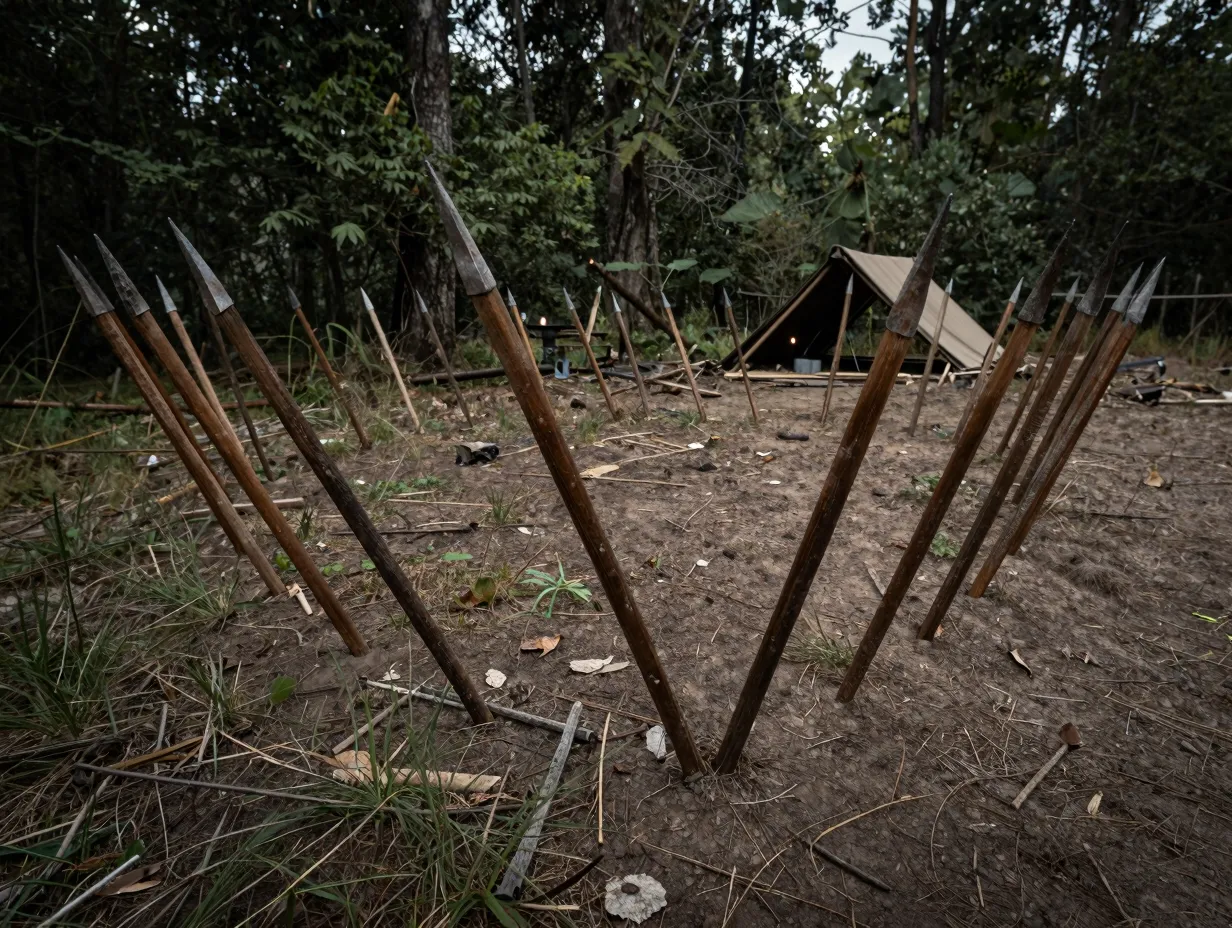
This design is less a handheld weapon and more a tactical installation. Sharpen multiple stakes to fire-hardened points and angle them outward at 45 degrees around a camp perimeter or along a game trail. These fixed spears deter predators from approaching camp and can be used to create a funnel that directs game into a kill zone.
Stakes should be 3 to 4 feet long, driven 12 inches into the ground, and angled toward the expected approach direction. In a predator defense scenario, the stakes slow and injure an attacking animal, giving you time to respond with a handheld weapon.
Best used for: Camp defense against wolves, coyotes, and large cats.
Key advantage: Passive defense that requires no active engagement.
9. The Two-Handed Thrusting Spear with Cross-Guard

For direct confrontation with large predators, a two-handed thrusting spear with a cross-guard is the most reliable design. The cross-guard is a short perpendicular piece of hardwood or bone lashed 12 to 18 inches behind the tip. Its purpose is to prevent an impaled animal from driving itself further up the shaft toward you.
Without a cross-guard, a large animal in its death throes can push itself all the way to your hands along the spear shaft. The cross-guard stops that movement, keeping the animal at a safe distance.
Best used for: Bears, wild boar, large feral dogs, and other dangerous predators.
Key advantage: The cross-guard is a critical safety feature that can save your life.
Core Tactics for Deploying the 9 Effective Predator Spear Designs and Tactics for Survival Hunting
Having the right spear design is only half the equation. The tactics you use to deploy it determine whether you eat or go home empty-handed. The following tactical principles apply across all nine designs.
Approach and Positioning
Always approach prey from downwind. Human scent travels far and alerts animals well before you are in range. Move slowly, use available cover, and stop frequently to allow the animal to settle. A slow, patient approach within 10 to 15 feet is far more effective than a fast charge from 30 feet.
The Low Crouch and Freeze Technique
Animals detect movement before they detect shape. A low crouch reduces your profile and slows your perceived movement. Freeze completely when an animal looks in your direction. Most prey animals will return to feeding within 30 to 60 seconds if you remain still.
Targeting the Vital Zone
For a clean, humane kill and maximum effectiveness, aim for the area behind the front shoulder. This zone contains the heart and lungs. A spear driven into this zone at a slight forward angle penetrates both organs. Avoid head shots — the skull is dense and deflects spear tips. Avoid neck shots on moving animals — the target is too small.
The Drive Hunt Tactic
When hunting in a group, one person acts as a driver and moves through brush to push game toward a second person waiting in ambush with a spear. The ambush position should be downwind and at a natural choke point such as a gap in brush, a stream crossing, or a trail bend.
Water Hunting Strategy
Fish and frogs are easiest to spear in shallow, clear water during early morning or late evening when they are most active near the surface. Wade slowly to avoid disturbing sediment. Hold the spear tip just below the water surface before striking to eliminate the refraction error that causes most misses. Aim slightly below and ahead of the fish’s apparent position.
Patience as a Tactical Tool
The single most common failure in spear hunting is moving too soon. Wait until the animal is within reliable range and presenting a broadside profile before committing to a thrust or throw. A missed throw alerts every animal in the area and wastes energy you cannot afford to lose in a survival situation.
Maintaining and Improving Your Survival Spear
A spear that breaks at the moment of use is worse than no spear at all. Regular maintenance extends the life of any design.
- Inspect lashings daily and re-tighten or replace them when they show wear or loosening.
- Re-sharpen stone and bone tips on a rough flat rock using a grinding motion.
- Check the shaft for cracks, especially near the tip attachment point.
- Store the spear horizontally or hang it vertically by the butt end to prevent warping.
- Reapply pine pitch or natural adhesive to lashings after wet conditions.
A well-maintained spear built from quality materials and properly lashed will outlast weeks of hard use in the field.
Matching Spear Design to Target Animal
Choosing the wrong design for a specific target wastes time and materials. Use this quick reference to match design to scenario.
| Target Animal | Recommended Design | Key Tactic |
|---|---|---|
| Fish | Bamboo multi-pronged gig (4) | Shallow water, aim below apparent position |
| Rabbit / squirrel | Fire-hardened point (1) or weighted throw (6) | Low crouch, freeze, close approach |
| Deer / medium game | Flint-tipped (2) or atlatl system (7) | Drive hunt, broadside vital zone |
| Wild boar | Two-handed cross-guard spear (9) | Stand firm, aim behind shoulder |
| Bear / large predator | Two-handed cross-guard spear (9) | Defensive stance, cross-guard essential |
| Birds | Weighted throwing spear (6) | Roost approach at dawn or dusk |
| Camp defense | Perimeter stake design (8) | Angled outward, funnel approach paths |
Common Mistakes That Reduce Spear Effectiveness
Even experienced survivalists make these errors. Avoiding them dramatically improves results.
Using green wood for the shaft. Green wood is heavy, flexible, and prone to warping. Always select dry, seasoned wood when possible. If only green wood is available, remove the bark and allow it to dry for 24 to 48 hours before use.
Making the tip taper too steep. A steep point looks sharp but snaps on impact. A gradual taper over 6 to 8 inches is far stronger.
Neglecting the balance point. A front-heavy spear is hard to throw accurately. A rear-heavy spear tumbles in flight. Test balance by resting the shaft on one finger and adjusting weight distribution until it balances at roughly one-third from the butt.
Throwing at moving targets beyond 15 feet. Unless you have practiced extensively with an atlatl, limit throws to stationary or slow-moving targets within 15 feet. Beyond that range, accuracy drops sharply without dedicated training.
Ignoring wind direction. No spear design compensates for human scent. Always position yourself downwind of the target.
Conclusion
The 9 effective predator spear designs and tactics for survival hunting outlined in this guide represent a complete toolkit for wilderness food procurement and predator defense. From the simplest fire-hardened point to the sophisticated atlatl system and the life-saving cross-guard thrusting spear, each design serves a specific purpose that no other tool in a survival kit can fully replace.
Actionable next steps to take right now:
- Practice fire hardening a wooden tip this weekend using a campfire or backyard fire pit. Develop a feel for the heat and timing before you need the skill under pressure.
- Source a straight 6-foot hardwood shaft and practice the lashing technique using paracord before attempting sinew or rawhide.
- Study basic flint knapping from a reputable primitive skills instructor or video resource. Even basic proficiency opens up a wide range of tip options.
- Run a dry-run drive hunt with a partner in a safe outdoor area to develop communication and positioning instincts.
- Build a perimeter stake installation around a practice campsite to understand spacing, angle, and ground conditions.
Survival skills atrophy without practice. The time to learn these designs and tactics is before an emergency, not during one. Start with the simplest design, master it completely, then move to the next. That progression — methodical, patient, and deliberate — mirrors the same mindset that makes a skilled spear hunter effective in the field.