9 Must-Have Elk Hunting Gear Items for Spotting and Stalking Predators
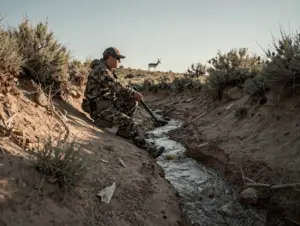
Only about 20% of elk hunters fill their tags in any given season, a sobering number that separates casual outings from calculated, well-equipped pursuits. The difference between a successful stalk and an empty pack-out rarely comes down to luck. It comes down to preparation, and more specifically, the right gear. Understanding the 9 Must-Have Elk Hunting Gear Items for Spotting and Stalking Predators is the first step toward closing that gap between the field and the freezer. Whether hunting the steep backcountry of Colorado or the timbered draws of Idaho, each piece of equipment on this list serves a precise purpose in a spot-and-stalk strategy.
Disclosure: This post contains affiliate links. As an Amazon Associate, we earn from qualifying purchases, and at no extra cost to you.
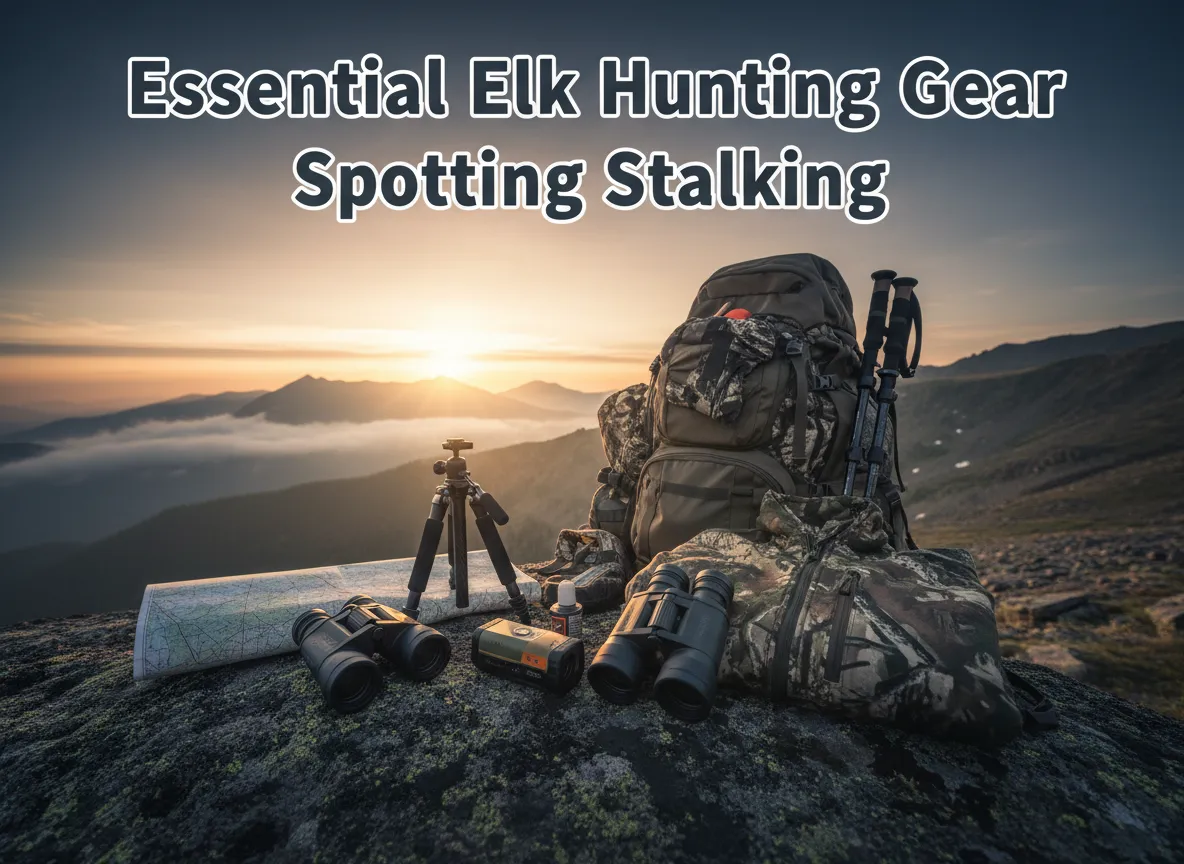
Key Takeaways
- Quality optics are the single most impactful investment a spot-and-stalk elk hunter can make
- Scent control and wind management determine whether a stalk succeeds or collapses at the final 50 yards
- Lightweight, silent clothing allows hunters to move through terrain without alerting elk
- A laser rangefinder removes guesswork and improves shot placement at extended distances
- Navigation tools and physical conditioning gear extend a hunter’s effective range deep into elk country
The Core Philosophy Behind Spot-and-Stalk Elk Hunting Gear
Spot-and-stalk hunting demands a fundamentally different gear philosophy than stand hunting or guided drives. Every ounce matters. Every sound matters. Every scent molecule matters. The 9 Must-Have Elk Hunting Gear Items for Spotting and Stalking Predators covered in this article were selected based on three criteria: functional necessity, impact on success rate, and adaptability across diverse terrain.
Elk are among the most perceptive big game animals in North America. Their eyesight detects movement at distance, their hearing picks up unnatural sounds at close range, and their nose, arguably their greatest defense, can detect human scent from hundreds of yards away under the right wind conditions. Gear that addresses all three sensory defenses gives hunters a measurable advantage.
“The hunter who sees first, smells least, and moves quietest wins the stalk.”
This principle drives every recommendation below.
9 Must-Have Elk Hunting Gear Items for Spotting and Stalking Predators: The Complete List
1. High-Quality Binoculars
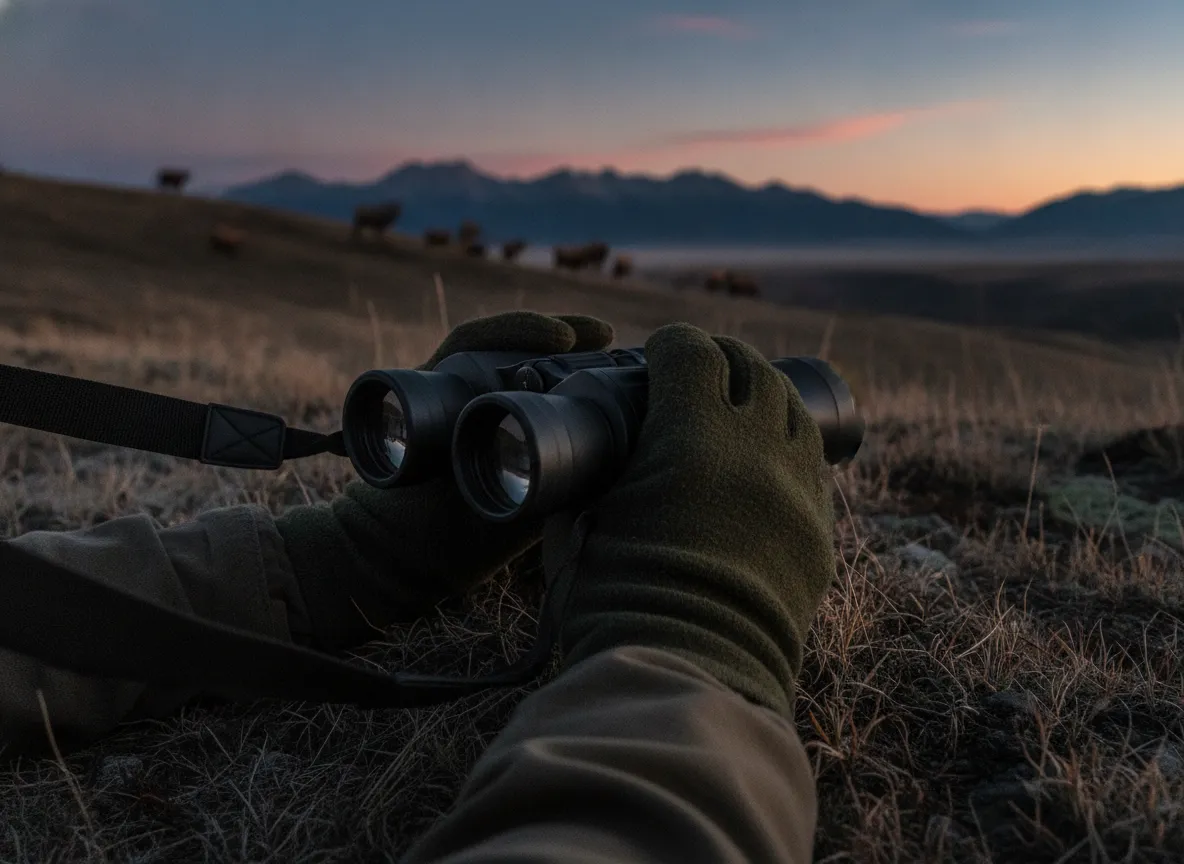
No single piece of equipment defines a spot-and-stalk hunter’s effectiveness more than binoculars. Hunters who spend hours behind quality glass locate more elk, identify shooter bulls earlier, and plan better approach routes.
What to look for:
- Magnification range of 8x to 10x for most terrain
- Objective lens diameter of 42mm to 50mm for low-light performance
- ED (extra-low dispersion) glass for edge-to-edge clarity
- Roof prism design for compact, durable construction
- Waterproof and fog-proof certification
The difference between budget binoculars and premium glass is most apparent at dawn and dusk, exactly when elk are most active. Hunters who invest in quality optics spend less time straining their eyes and more time reading animal behavior.
Pro tip: Use a binocular harness instead of a neck strap. It keeps glass accessible, reduces neck fatigue during long glassing sessions, and prevents the optics from swinging and striking rocks during a stalk.
2. Spotting Scope and Tripod
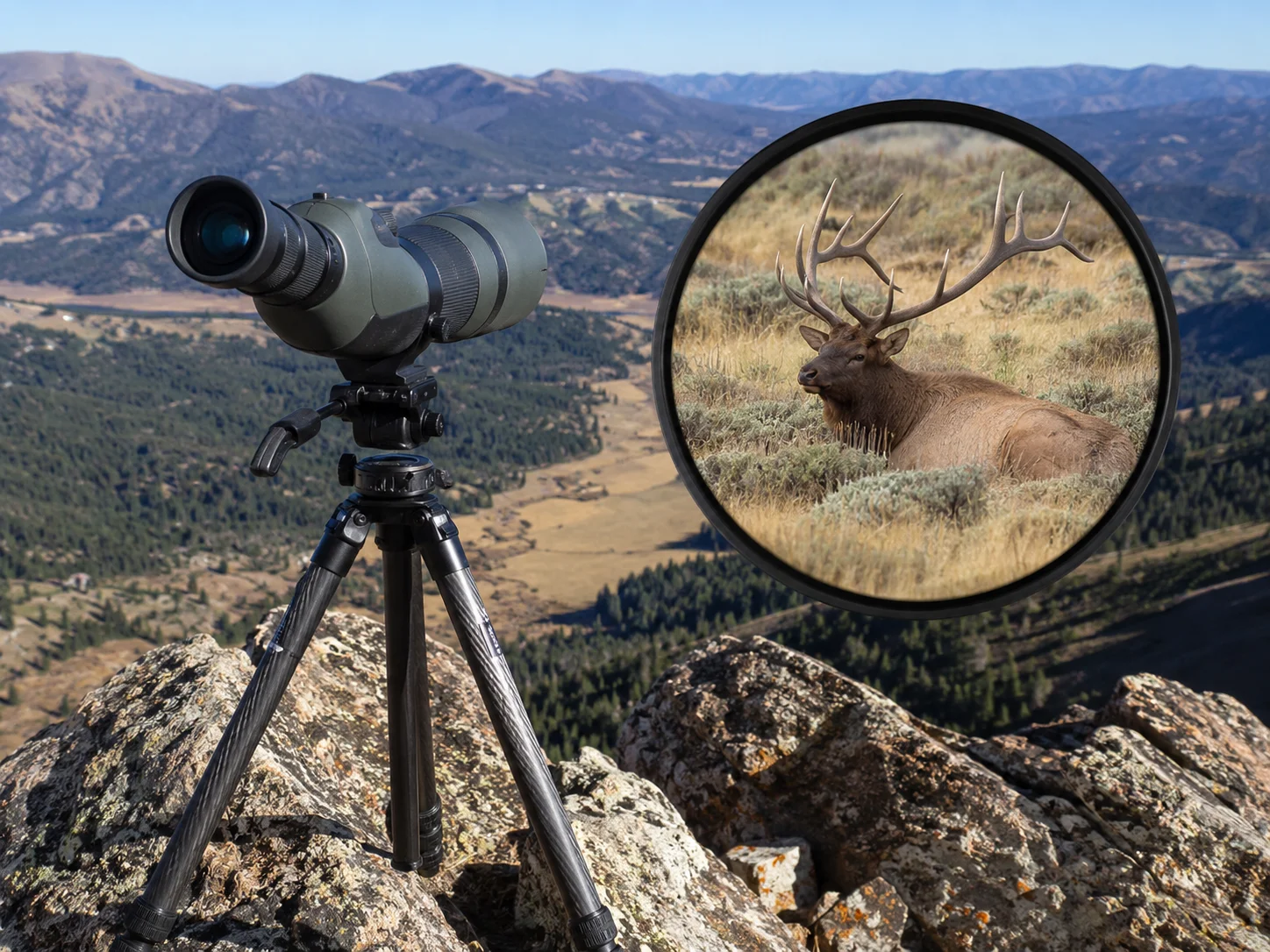
Binoculars find elk. A spotting scope evaluates them. For hunters covering open country, basins, clear-cuts, or high alpine meadows, a quality spotting scope mounted on a stable tripod is non-negotiable.
Key specifications:
| Feature | Recommended Spec |
|---|---|
| Magnification | 20-60x zoom eyepiece |
| Objective lens | 80mm to 85mm |
| Weight | Under 50 oz for backcountry |
| Tripod | Carbon fiber for weight savings |
Spotting scopes allow hunters to count tines, assess antler mass, and determine a bull’s age class from distances exceeding a mile. This prevents wasted stalks on immature animals and helps hunters prioritize targets before committing to a long approach.
A carbon fiber tripod is worth the investment. It reduces pack weight significantly compared to aluminum alternatives while absorbing vibration better, critical for steady viewing at high magnification.
3. Laser Rangefinder
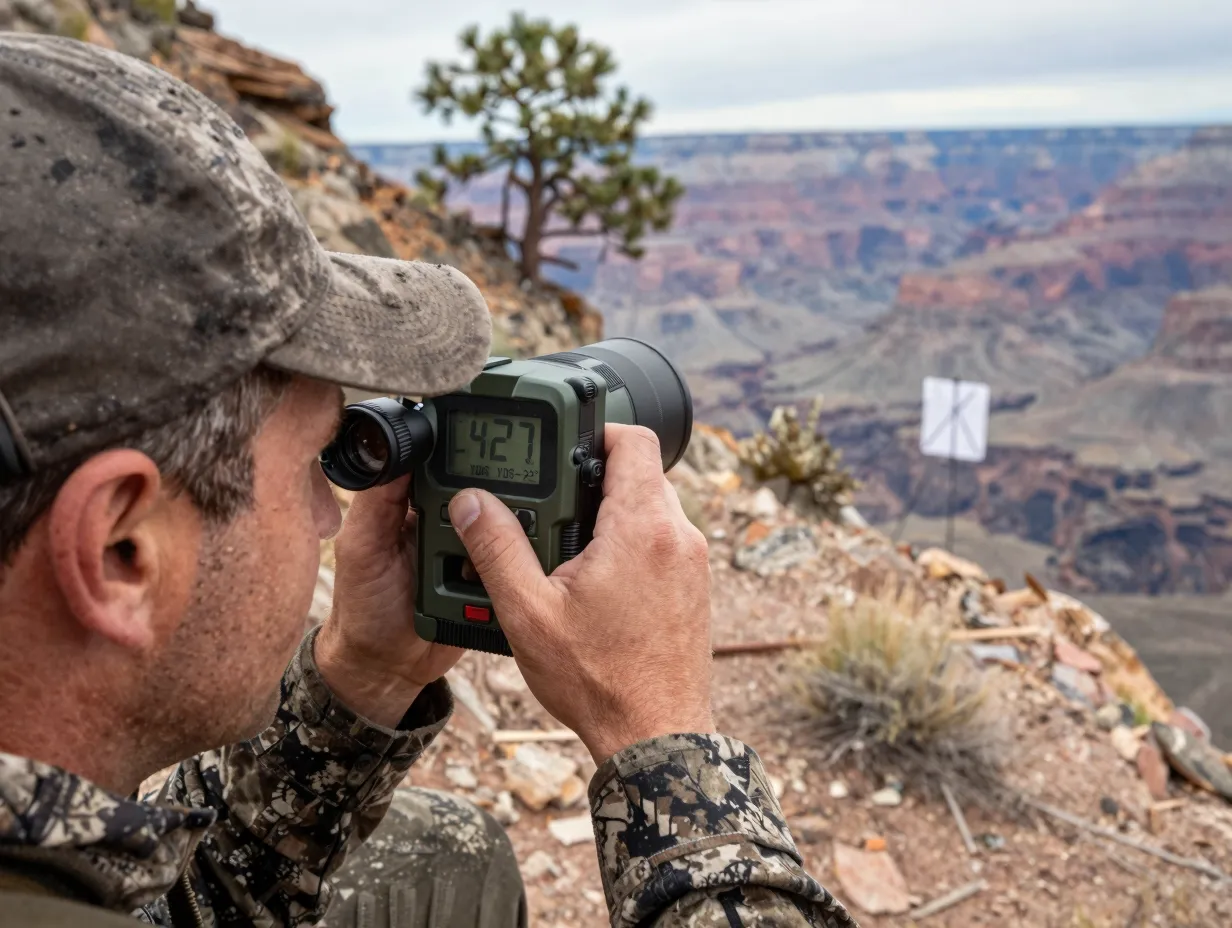
Modern elk hunting at any distance beyond 200 yards demands a laser rangefinder. Misjudging distance by even 50 yards at 300 yards or more leads to misses or, worse, wounded animals.
Features that matter:
- Maximum ranging distance of at least 1,000 yards on reflective targets
- Angle-compensating technology (ARC or equivalent) for steep terrain
- Compact, one-hand operation
- Scan mode for ranging multiple objects quickly
Angle compensation is particularly important in mountain hunting. A shot at a bull standing 400 yards away on a 30-degree downhill slope has an actual ballistic equivalent closer to 345 yards. Without angle compensation, a hunter who holds for 400 yards will shoot over the animal.
Many modern rangefinders also integrate with ballistic apps, allowing hunters to dial precise turret adjustments in the field.
4. Wind Indicator and Scent Elimination System
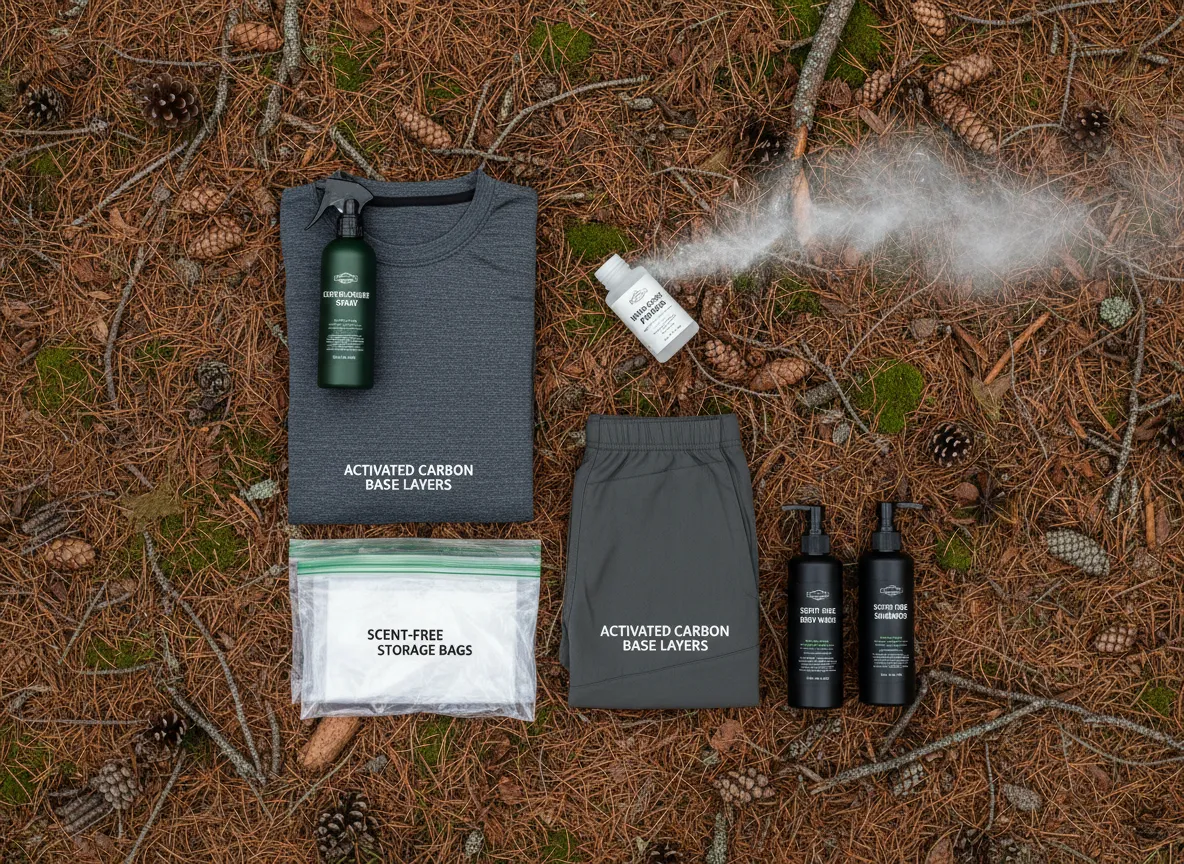
A stalk can be perfect in every way, right approach, right terrain, right light, and still fail the moment wind swirls and carries human scent to an elk’s nose. Managing scent is not optional in spot-and-stalk hunting; it is the foundation of every successful close-range approach.
A complete scent management system includes:
- Wind indicator powder or smoke bottle for real-time wind reading
- Scent-eliminating body wash and shampoo
- Scent-eliminating spray for clothing and gear
- Activated carbon or ozone-treated base layers
- Scent-free storage bags for clothing
Wind indicators, small squeeze bottles filled with fine powder or smoke, show subtle thermal currents invisible to the naked eye. In mountain terrain, thermals rise during warming morning hours and fall during evening cooling. Understanding and exploiting these patterns is a skill that separates experienced elk hunters from beginners.
Ozone-generating devices have gained significant traction in the hunting community. Used correctly in enclosed spaces like vehicles or tents, they can reduce odor on clothing and gear before a hunt.
5. Silent, Scent-Controlled Hunting Clothing
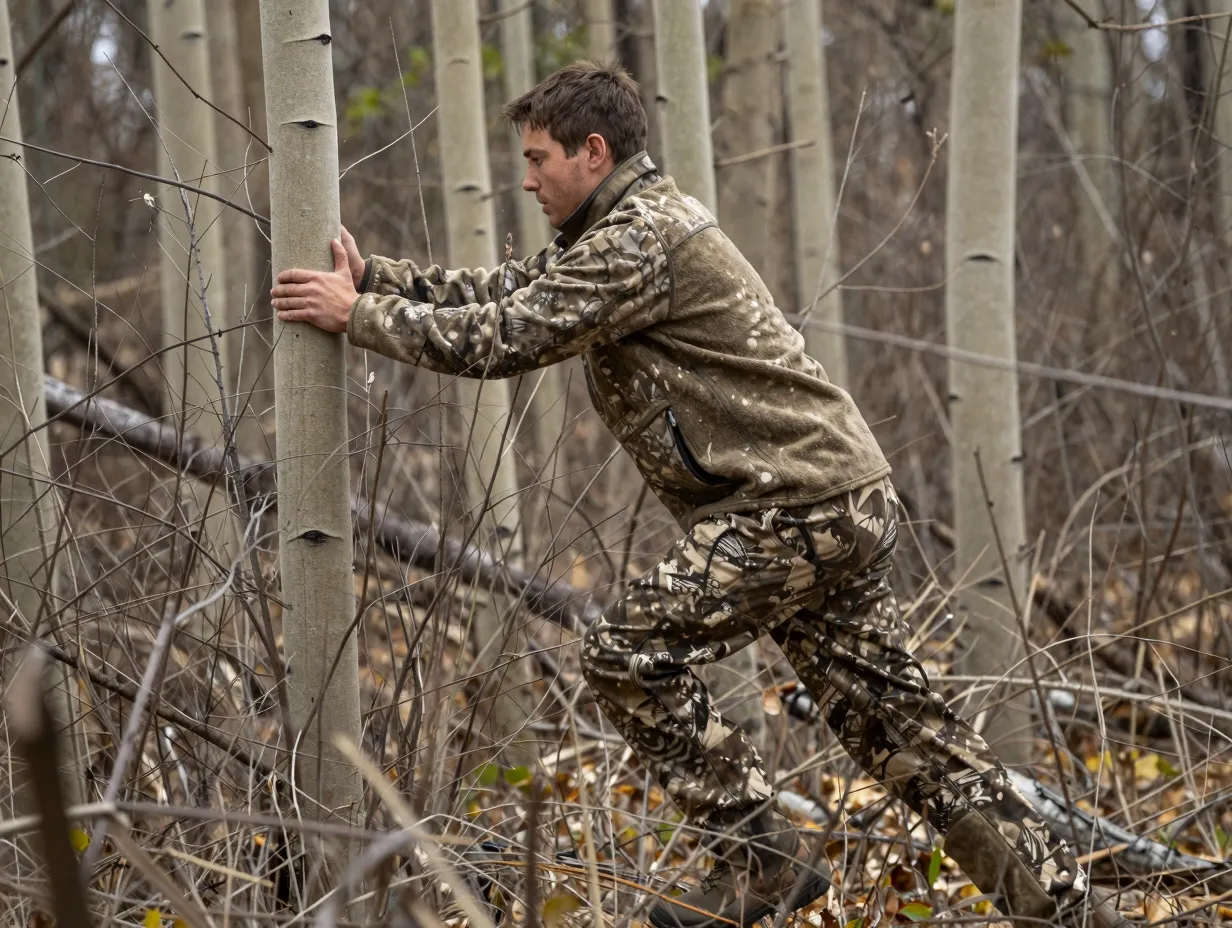
Clothing is both a scent management tool and a noise management tool. In elk country, a single branch brushing against a loud synthetic jacket can end a stalk at 80 yards.
The layering system for spot-and-stalk elk hunting:
- Base layer: Merino wool or scent-treated synthetic for moisture management
- Mid layer: Fleece or insulated panel jacket for warmth during glassing
- Outer layer: Soft-shell or brushed fabric that moves silently through brush
Merino wool has become a staple of serious elk hunters for good reason. It is naturally odor-resistant, temperature-regulating, and nearly silent when brushing against vegetation. It also retains warmth when wet, a critical safety feature in unpredictable mountain weather.
Avoid stiff, crinkly outer shells during the stalk itself. Many hunters carry a dedicated “stalk jacket” made from fleece or brushed fabric that they switch into during the final approach.
Camo pattern selection should match the dominant terrain. Open country hunters benefit from lighter, broken patterns, while timber hunters do better with darker, denser patterns.
6. Quality Pack System
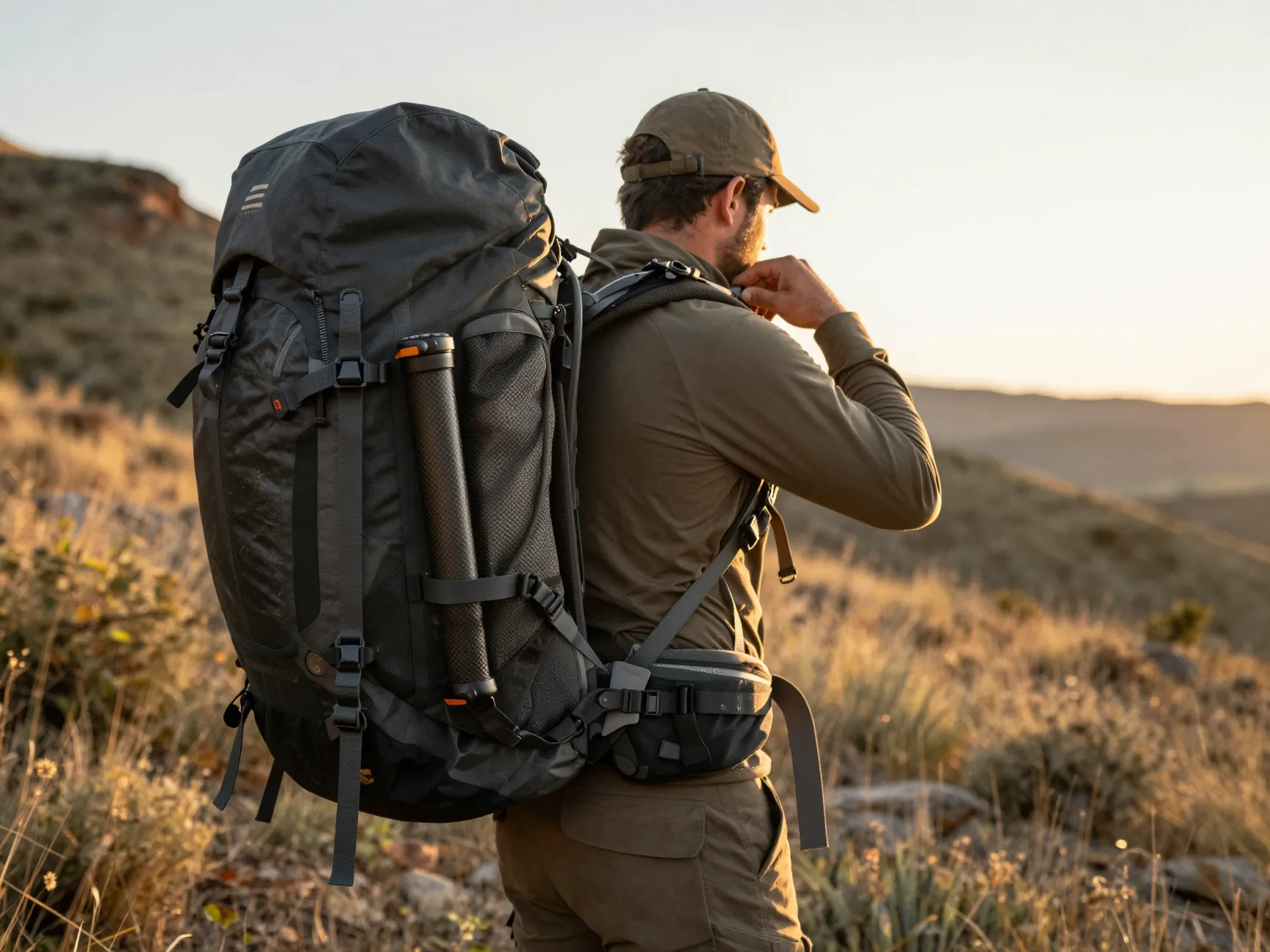
Elk hunting in serious backcountry requires a pack system designed for the specific demands of the hunt. A spot-and-stalk setup demands a pack that balances load-carrying capacity with low profile and silent movement.
Pack considerations by hunt type:
- Day hunts: 2,500 to 3,500 cubic inch capacity
- Multi-day backcountry: 4,500 to 6,000+ cubic inch capacity
- Frame type: Internal frame for agility in tight terrain
Key features to prioritize include silent zipper pulls, external attachment points for spotting scope tripods, a dedicated meat shelf or meat hauling capability, and a hydration reservoir compartment.
The pack should fit the hunter’s torso length precisely. An ill-fitting pack causes fatigue, shifts during movement, and creates unnecessary noise, all of which undermine a stalk.
7. Trekking Poles
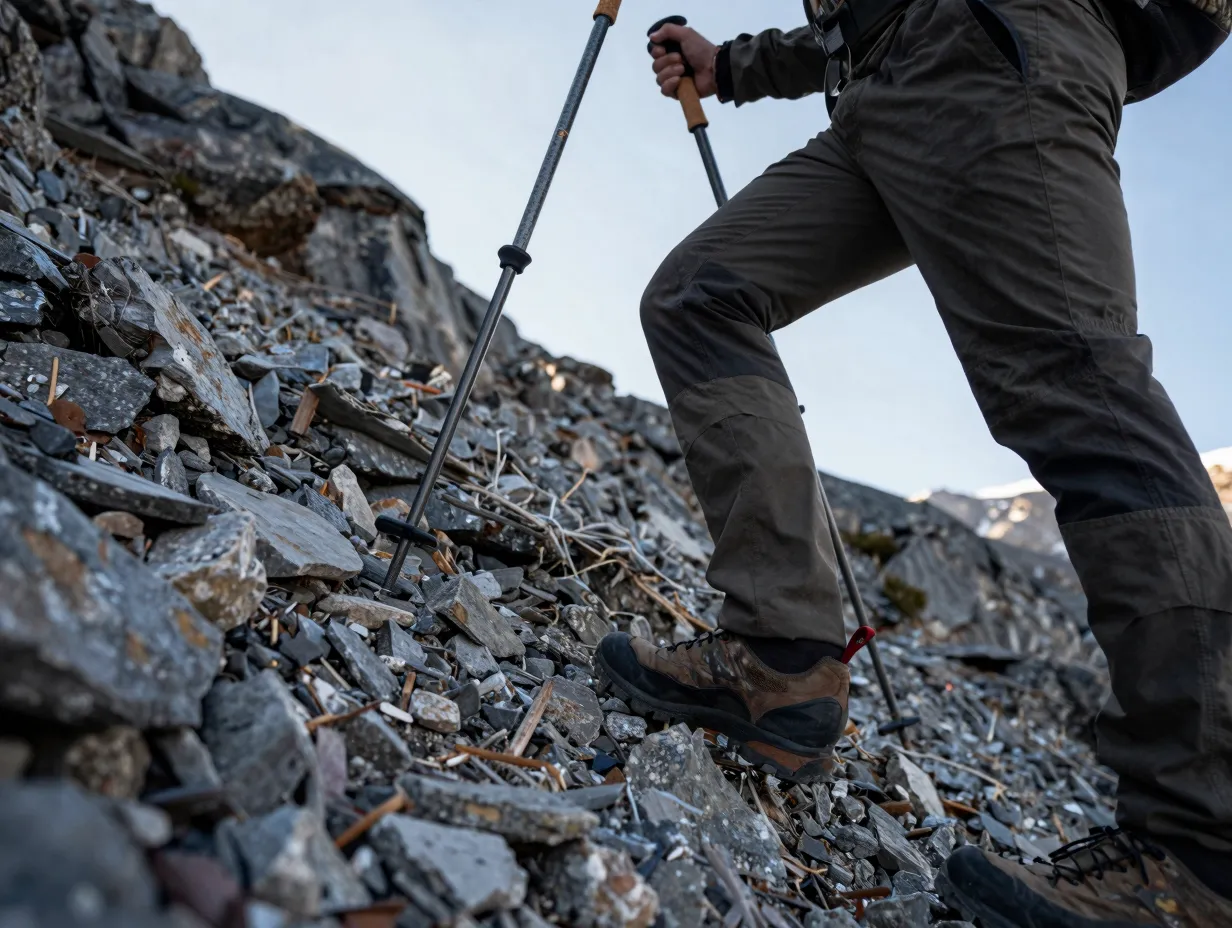
Trekking poles may seem like a comfort item, but in steep elk country, they are a functional hunting tool. They reduce knee stress on descents by up to 25%, improve balance on loose scree, and serve as a shooting support platform during a stalk.
How trekking poles support the stalk:
- Reduce fatigue over long miles, keeping hunters fresher for the critical final approach
- Provide a stable shooting rest when used with a shooting sling or bipod adapter
- Aid in crossing streams and navigating steep sidehills quietly
- Can be used to probe for solid footing in snow or mud without making noise
Collapsible carbon fiber poles are preferred for their light weight and packability. Look for poles with foam or cork grips rather than rubber, which can become slippery with sweat and gloves.
8. Navigation Tools: GPS and Topographic Maps
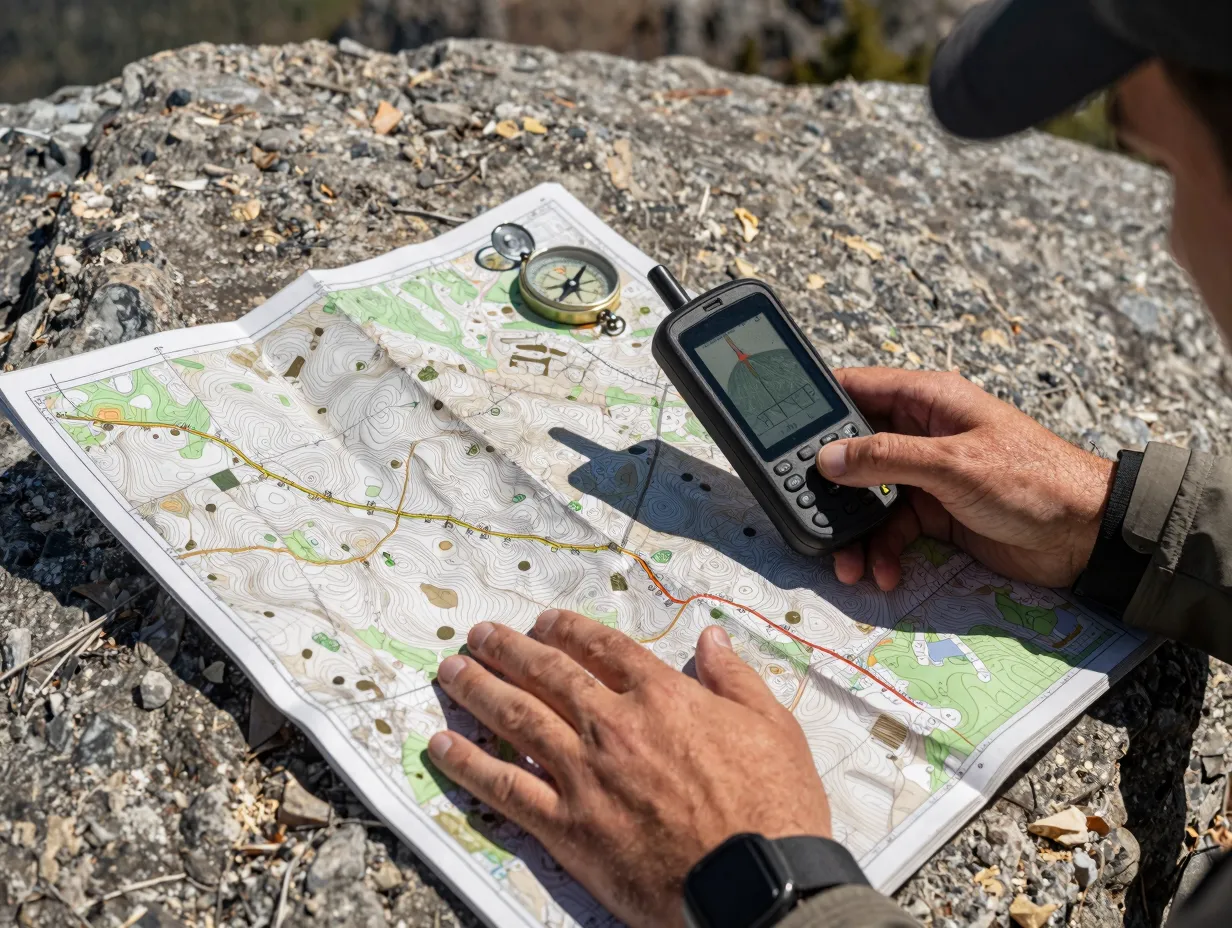
Elk country is unforgiving terrain. Hunters who rely solely on memory or a single device risk getting turned around in dense timber, disoriented in low-visibility weather, or simply unable to locate a downed animal in unfamiliar country.
A reliable navigation system includes:
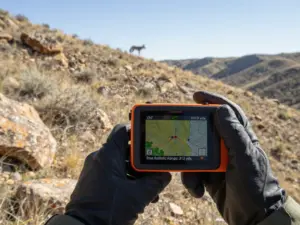
- Dedicated GPS unit with preloaded topographic maps
- Printed topographic maps as a backup
- Compass (baseplate style for land navigation)
- Satellite communicator for emergency contact in areas without cell service
Topographic maps are not just safety tools, they are hunting tools. Reading contour lines to identify saddles, benches, and drainages helps hunters predict where elk will travel, bed, and feed. Many experienced spot-and-stalk hunters spend as much time studying maps before a hunt as they do scouting in the field.
Satellite communicators like the Garmin inReach series have become standard equipment for solo backcountry hunters. They allow two-way messaging and SOS capability regardless of cell coverage.
9. Shooting Support System
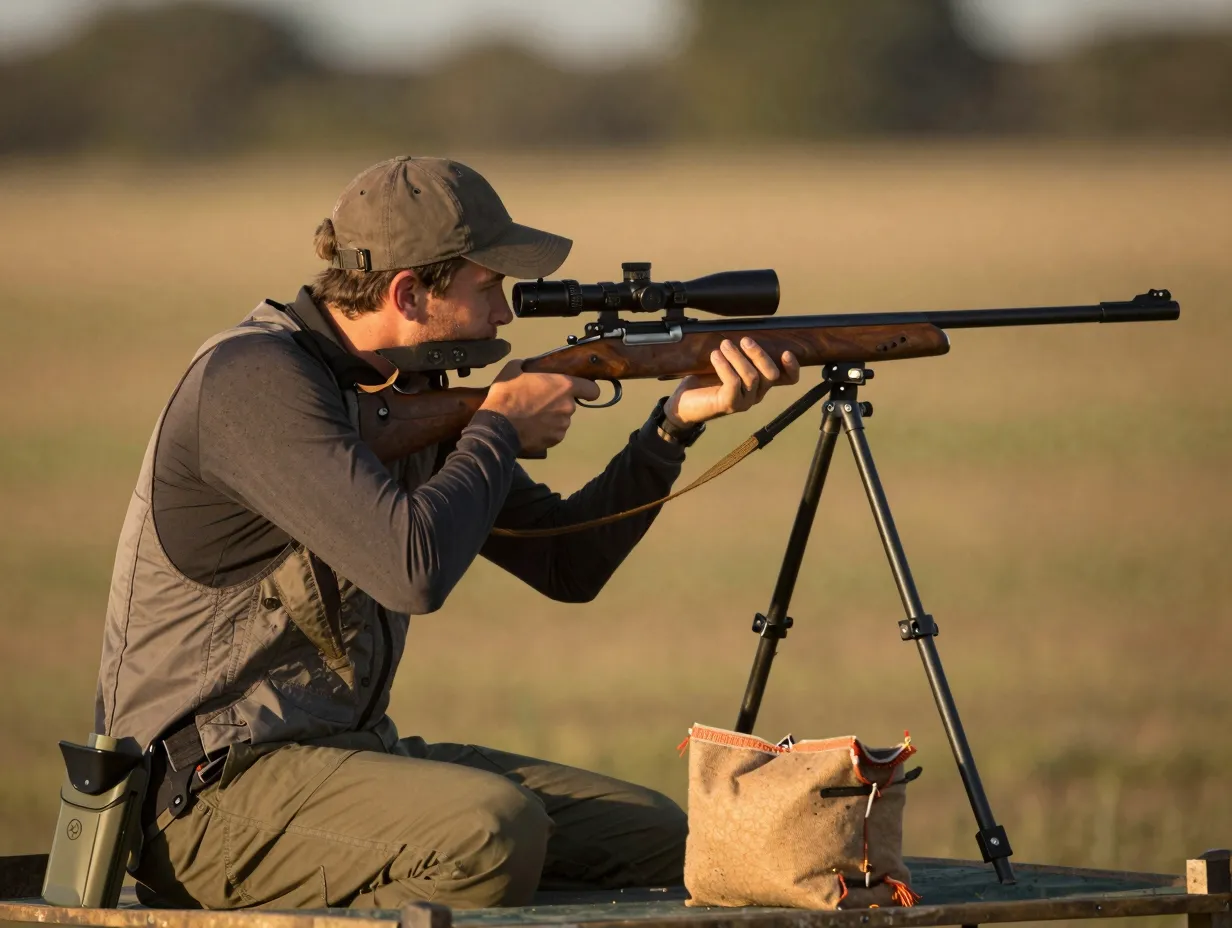
The final item in the 9 Must-Have Elk Hunting Gear Items for Spotting and Stalking Predators list is the one that converts a successful stalk into a filled tag: a reliable shooting support system.
Spot-and-stalk hunting often presents shots from unconventional positions, kneeling on a hillside, sitting behind a bush, or prone on uneven ground. A shooting support system must be adaptable to these realities.
Options for field shooting support:
- Bipod: Attaches to the rifle’s fore-end, ideal for prone shots
- Shooting sticks: Adjustable height, works for sitting and kneeling positions
- Trekking pole sling: Uses poles already in the pack for improvised support
- Rear bag: Stabilizes the stock during prone or seated shots
Consistency is the goal. Hunters who practice from field positions with their support system in place shoot more accurately under pressure than those who only practice from benches. A supported shot at 300 yards is significantly more reliable than an unsupported shot at 150 yards for most hunters.
Trigger control, breathing, and follow-through remain the fundamentals regardless of support system. No piece of gear replaces the hours of practice required to execute a clean shot on a mature bull.
How to Prioritize These Items on a Budget
Not every hunter can invest in all nine items simultaneously. Prioritizing based on impact-per-dollar is a practical approach.
Recommended investment order:
- Binoculars (highest impact on locating elk)
- Wind management system (lowest cost, highest stalk-saving value)
- Silent hunting clothing (directly affects close-range success)
- Laser rangefinder (critical for ethical shot placement)
- Navigation tools (safety and scouting value)
- Spotting scope and tripod (high value in open country)
- Quality pack system (comfort and load management)
- Trekking poles (fatigue reduction and shooting support)
- Dedicated shooting support (refine after fundamentals are covered)
Budget hunters should focus first on optics and scent control. A hunter with excellent binoculars and disciplined scent management will outperform a hunter with mediocre glass and expensive clothing every time.
Common Mistakes When Assembling Elk Hunting Gear
Even experienced hunters make gear selection errors that cost them opportunities. Awareness of these pitfalls improves decision-making before the season opens.
Mistake 1: Overloading the pack. Extra weight slows movement, increases noise, and causes fatigue. Every item in the pack should serve a defined purpose.
Mistake 2: Buying cheap optics. Budget binoculars and spotting scopes cause eye fatigue and miss detail at critical distances. This is the single area where spending more money delivers the most direct return.
Mistake 3: Ignoring clothing noise. Hunters who glass carefully and manage scent perfectly can still blow a stalk with a loud outer layer. Test clothing by rubbing it against brush before the season.
Mistake 4: Skipping wind indicators. Experienced hunters check wind constantly during a stalk. A single thermal shift without a wind indicator can go undetected until it is too late.
Mistake 5: Neglecting shooting practice from field positions. Gear supports skill; it does not replace it. Regular practice from kneeling, sitting, and prone positions with actual field support systems is essential.
Conclusion
The 9 Must-Have Elk Hunting Gear Items for Spotting and Stalking Predators outlined in this article represent a system, not a collection of independent tools. Binoculars locate elk. A spotting scope evaluates them. A rangefinder calculates the shot. Scent control and silent clothing allow hunters to close the distance. Navigation tools keep hunters safe and strategic. A shooting support system delivers the final, ethical shot.
Actionable next steps for the 2026 elk season:
- Audit current gear against this list and identify gaps
- Prioritize optics upgrades if binoculars or spotting scope are below par
- Build a complete scent management kit before the season opens
- Practice shooting from field positions using actual support equipment
- Study topographic maps of the hunt area and identify likely elk travel corridors
- Test all clothing for noise by walking through brush before the opener
Elk hunting success in 2026 and beyond rewards preparation. The hunters who consistently fill tags are not the most fortunate, they are the most equipped, the most practiced, and the most deliberate in how they approach the mountain.