8 Perfect Oven-Baked Venison Backstrap Recipes for Tender Meat Every Time
Fewer than 30% of home cooks who process their own deer ever achieve consistently tender backstrap, not because the meat is difficult, but because most recipes ignore two non-negotiable rules: internal temperature and resting time. This guide to 8 Perfect Oven-Baked Venison Backstrap Recipes for Tender Meat Every Time breaks down exactly what separates rubbery, overcooked venison from melt-in-your-mouth results, then delivers eight proven methods that work in any home oven.
Disclosure: This post contains affiliate links. As an Amazon Associate, we earn from qualifying purchases, and at no extra cost to you.
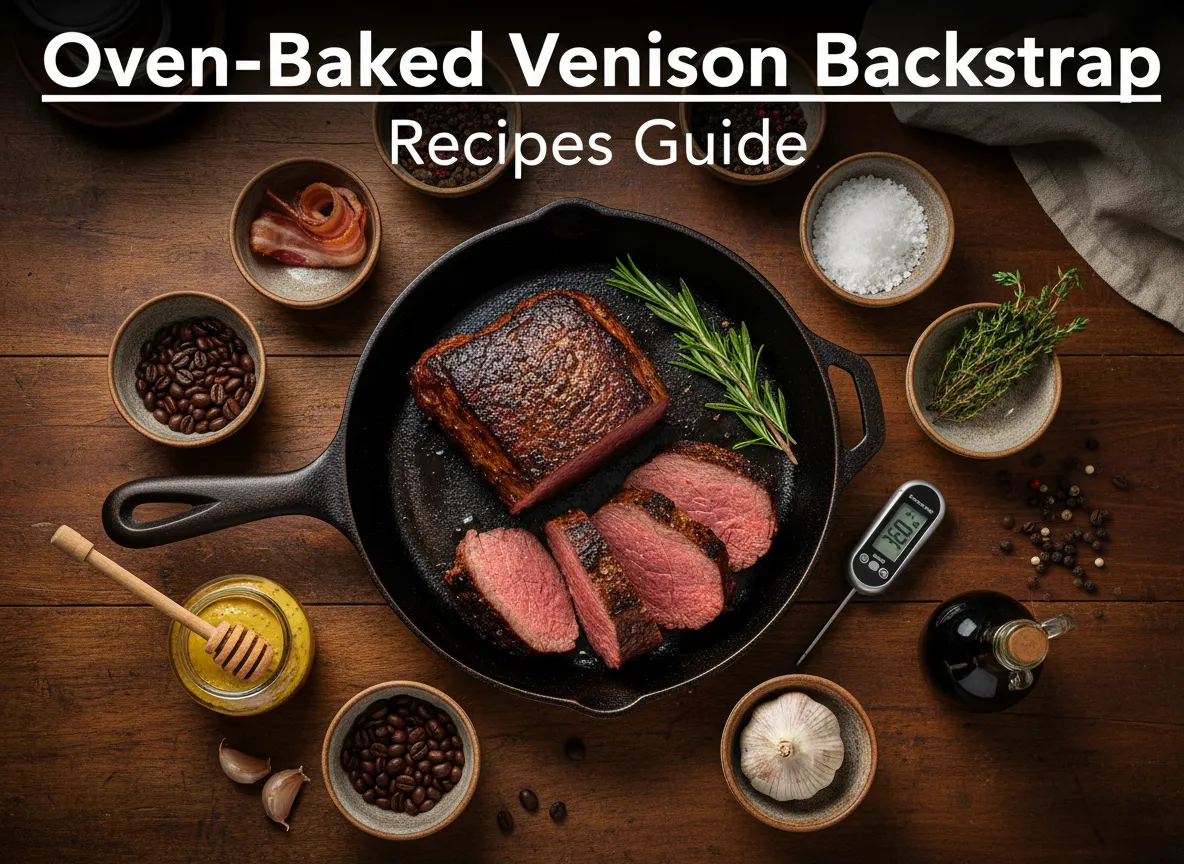
Venison backstrap is the long, lean muscle that runs along the spine of a deer. It is the most prized cut on the animal, comparable to a beef tenderloin, but it has almost no intramuscular fat. That leanness is what makes it so easy to ruin with high heat and so spectacular when cooked correctly.
Key Takeaways
- Pull venison backstrap from the oven at 125-130°F internal temperature; carryover cooking will bring it to the ideal medium-rare range of 130-135°F [1][5]
- Always sear the backstrap in a cast iron skillet before finishing in the oven to lock in surface flavor and color [1][2]
- Rest the meat for at least 5-10 minutes after cooking, skipping this step causes juice loss and toughness [5][10]
- Oven temperature choices (350°F, 375°F, 400°F, or 450°F) depend on the specific recipe method and whether bacon, marinades, or heavy rubs are used [3][6]
- Marinating for 2-8 hours before cooking removes gamey flavor and adds moisture to this very lean cut [7][9]
Why Oven-Baked Venison Backstrap Demands a Different Approach
Beef has enough marbling to forgive overcooking. Venison does not. The backstrap contains almost no fat, which means moisture escapes rapidly once internal temperature climbs past 140°F. The result is dry, chewy meat that no amount of sauce can rescue.
The solution that professional wild game cooks and experienced hunters rely on is a two-stage method: a hard pan sear followed by a short oven finish. Searing in a cast iron skillet over high heat creates the Maillard reaction, the complex browning that builds flavor on the surface, while the oven provides even, controlled heat that brings the interior to the correct temperature without shocking the outer layers [1][2].
The target internal temperature for tender venison backstrap is 130-135°F (medium-rare). At this range, the muscle fibers remain relaxed, moisture stays locked inside, and the texture is silky rather than fibrous [5][10]. A reliable instant-read thermometer is not optional, it is the single most important tool for any of the eight recipes below.
“The difference between perfect venison backstrap and a ruined one is often just five degrees of internal temperature.”
Resting time matters equally. When meat comes out of the oven, the muscle fibers are contracted and the juices are pushed toward the center. A 5-10 minute rest on a cutting board allows those fibers to relax and the juices to redistribute evenly throughout the loin [5][10]. Cutting too early turns a cutting board into a puddle and the meat into cardboard.
8 Perfect Oven-Baked Venison Backstrap Recipes for Tender Meat Every Time
The following eight recipes are organized from simplest to most complex. Each one uses the oven as the finishing environment, though the preparation, temperature, and flavor profiles vary significantly. All recipes assume a cleaned, silver-skin-removed backstrap loin of approximately 1.5 to 2 pounds.
1. Classic Cast Iron Sear and Oven Finish
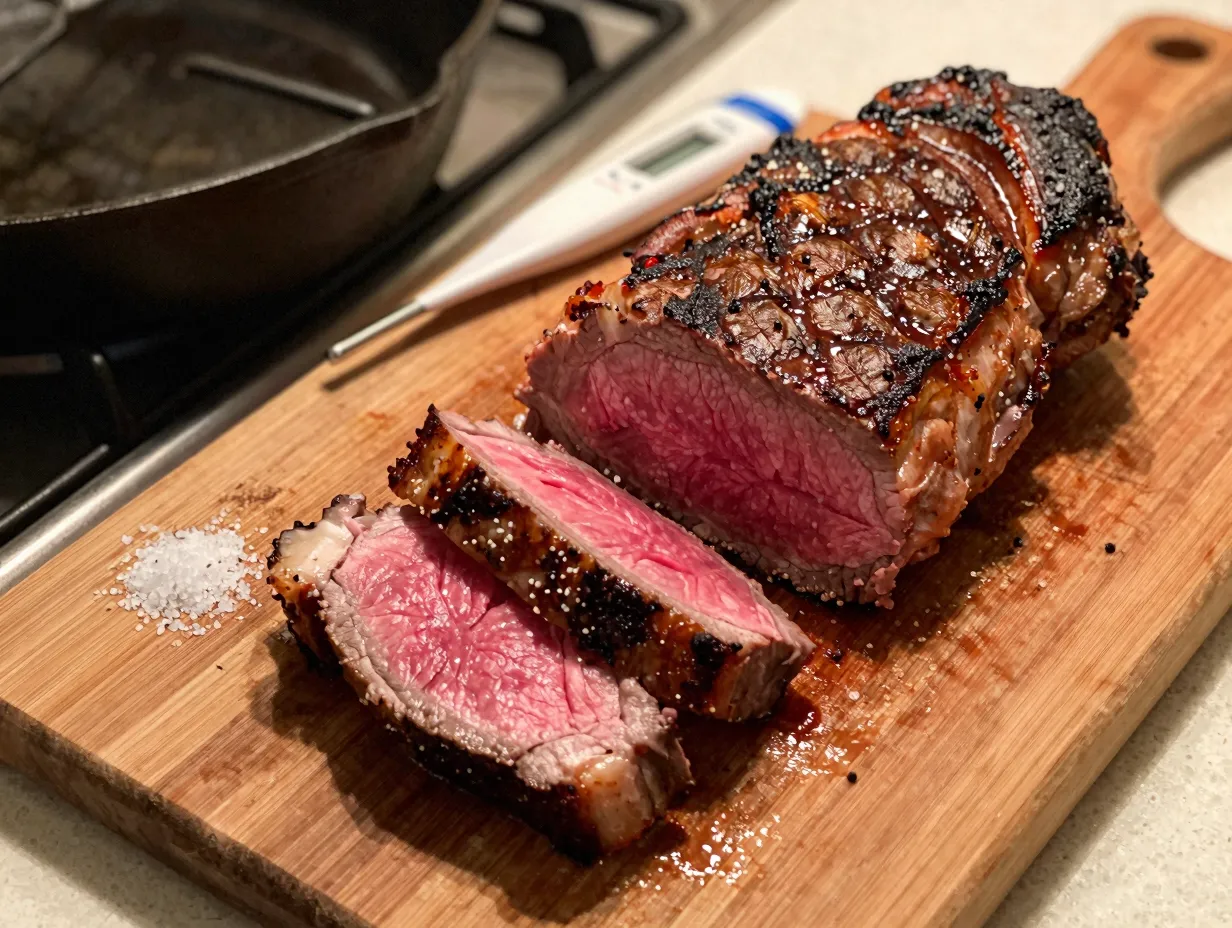
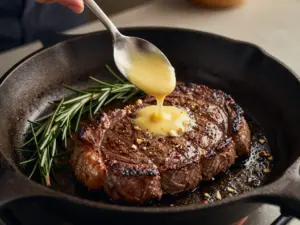
This is the foundational recipe, the one that every other method builds on. Season the backstrap generously with kosher salt, cracked black pepper, and garlic powder. Heat a cast iron skillet over high heat until it begins to smoke. Add one tablespoon of high-smoke-point oil such as avocado or grapeseed oil, then sear the backstrap for 2 minutes per side until a dark crust forms on all surfaces.
Transfer the skillet directly to a 375°F oven and roast for 7-10 minutes, checking internal temperature at the 7-minute mark [1][2]. Pull at 125-130°F, tent loosely with foil, and rest for 8 minutes before slicing against the grain into medallions.
Why it works: The cast iron retains heat evenly, the 375°F oven is forgiving enough to allow temperature monitoring without rushing, and the simple seasoning lets the natural flavor of the venison lead [1].
2. Garlic Butter Basted Backstrap
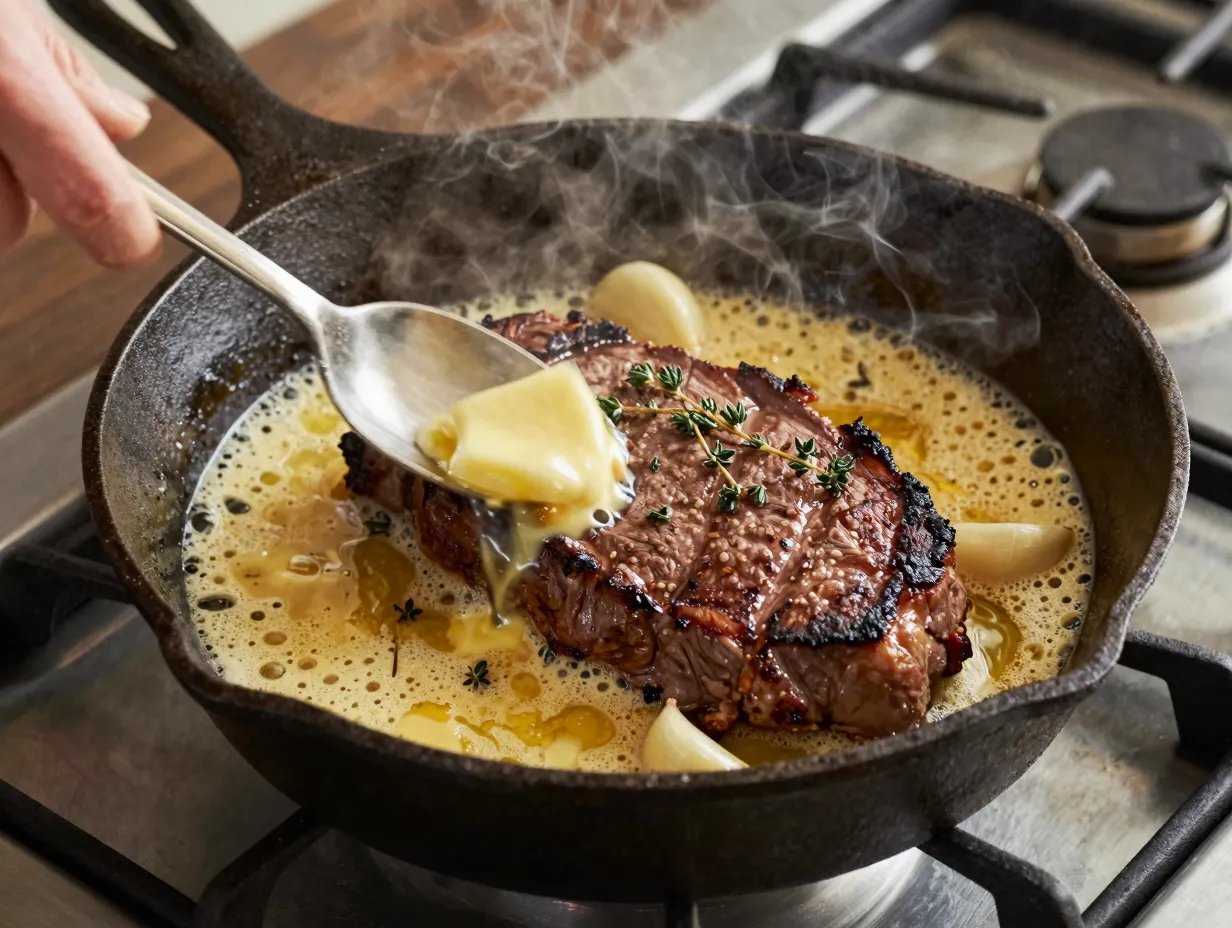
This recipe adds a basting step during the sear that dramatically increases richness without adding complexity. After the initial sear, reduce the skillet heat to medium and add three tablespoons of unsalted butter, four crushed garlic cloves, and two fresh thyme sprigs. Tilt the pan and use a spoon to continuously baste the backstrap with the foaming butter for 90 seconds before transferring to a 375°F oven.
Roast for 6-8 minutes, basting once more halfway through if the skillet can safely return to the stovetop [2][5]. The butter solids brown during basting, adding a nutty, aromatic layer that complements the mild iron notes of venison.
Pull at 128°F internal temperature, rest for 8 minutes, and finish with a pinch of flaky sea salt. This method pairs well with roasted root vegetables or a simple arugula salad.
3. Bacon-Wrapped Venison Backstrap
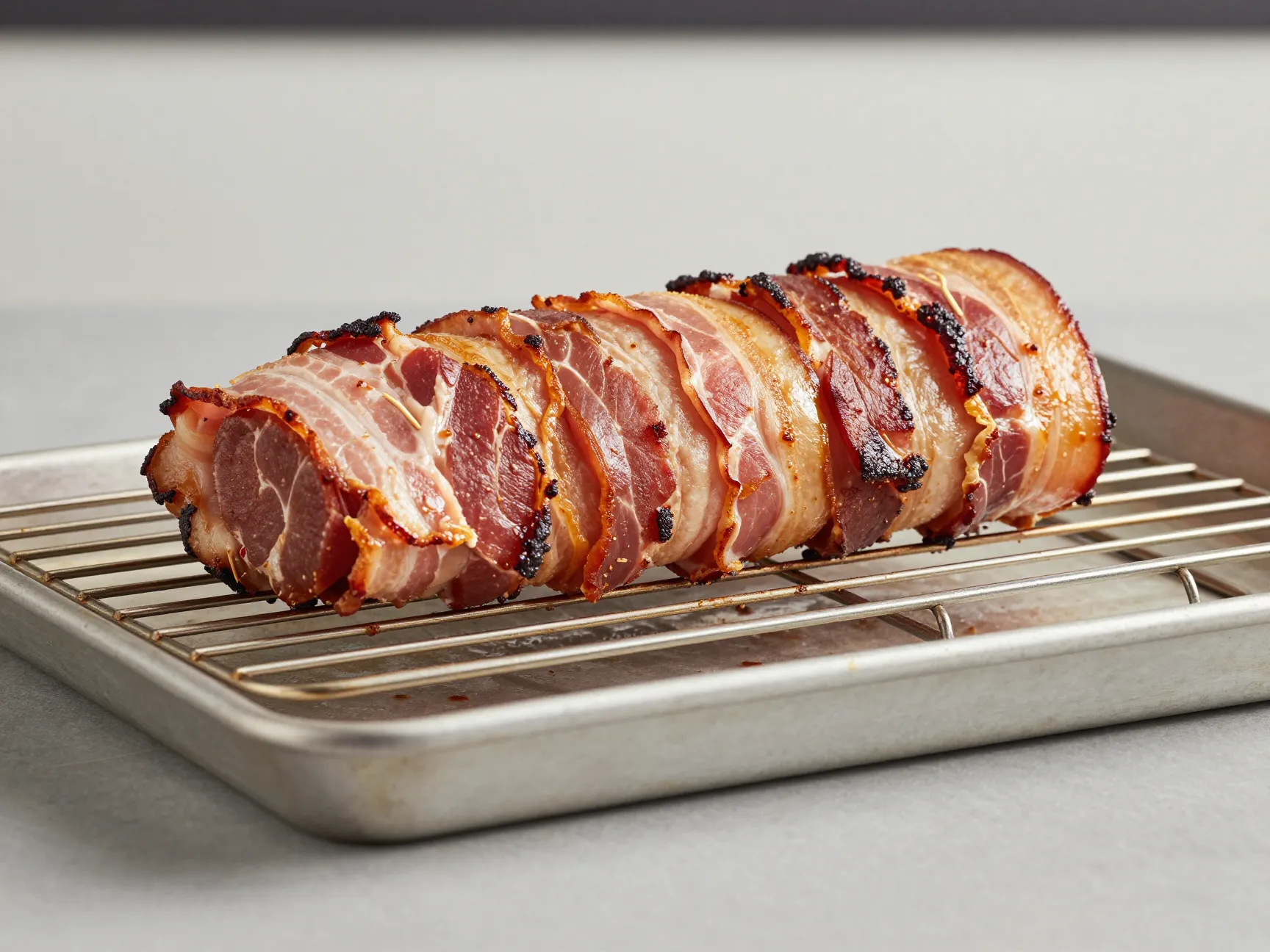
Bacon wrapping serves a specific technical purpose: it introduces fat to a cut that has almost none, basting the exterior continuously as the bacon renders during roasting. This method uses a slightly lower oven temperature of 350°F to allow the bacon to crisp fully without overcooking the lean loin beneath [6][8].
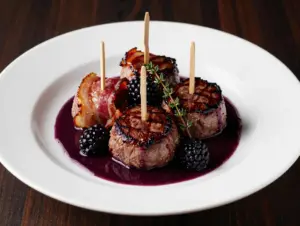
Lay out 6-8 strips of thin-cut bacon on a cutting board, overlapping slightly. Place the seasoned backstrap at one end and roll it tightly, securing with toothpicks every two inches. Sear the wrapped loin in a cast iron skillet over medium-high heat, turning carefully to brown the bacon on all sides, approximately 3 minutes total.
Transfer to a wire rack set inside a baking sheet and roast at 350°F for 15-20 minutes [8]. The wire rack allows hot air to circulate under the bacon, promoting even crisping. Pull at 130°F internal temperature and rest for 10 minutes before removing toothpicks and slicing.
Pro tip: Use applewood-smoked bacon for a flavor that complements wild game without overpowering it [8].
4. Herb-Crusted Venison Backstrap Roast
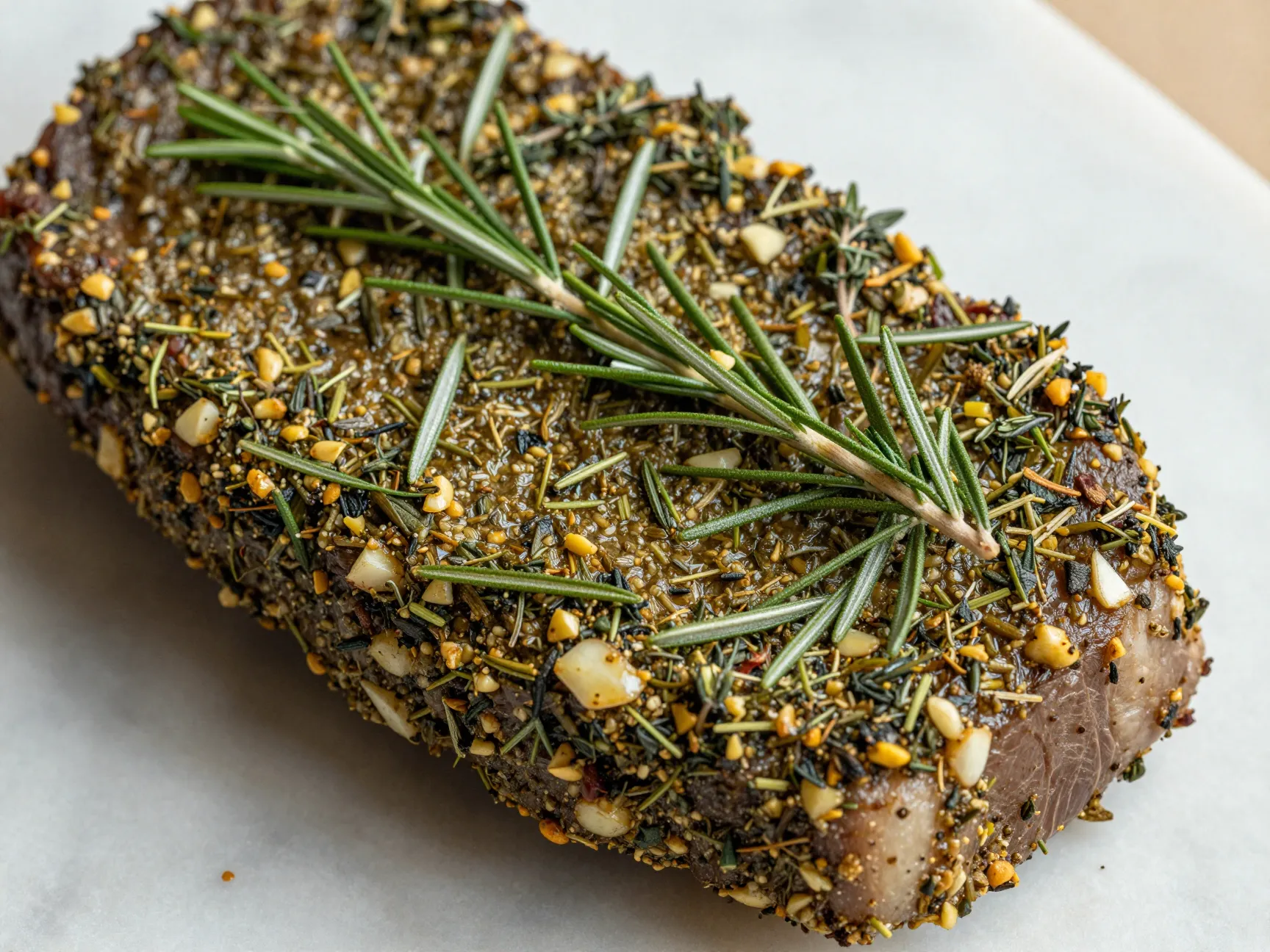
A dry herb crust adds texture and aromatic complexity while forming a protective barrier that slows moisture loss during roasting. Combine two tablespoons of finely chopped fresh rosemary, one tablespoon of fresh thyme, one tablespoon of Dijon mustard, two minced garlic cloves, one teaspoon of kosher salt, and half a teaspoon of black pepper into a paste.
Pat the backstrap dry with paper towels, moisture on the surface prevents crust adhesion. Coat all sides evenly with the herb paste and allow it to rest at room temperature for 20 minutes before cooking. Sear briefly in a hot cast iron skillet for 90 seconds per side (the crust will brown quickly), then transfer to a 375°F oven [3][7].
Roast for 8-12 minutes depending on thickness, pulling at 128°F. The mustard acts as both a binder and a flavor bridge between the herbs and the venison. Rest for 8 minutes before slicing.
5. Marinated and High-Heat Roasted Backstrap
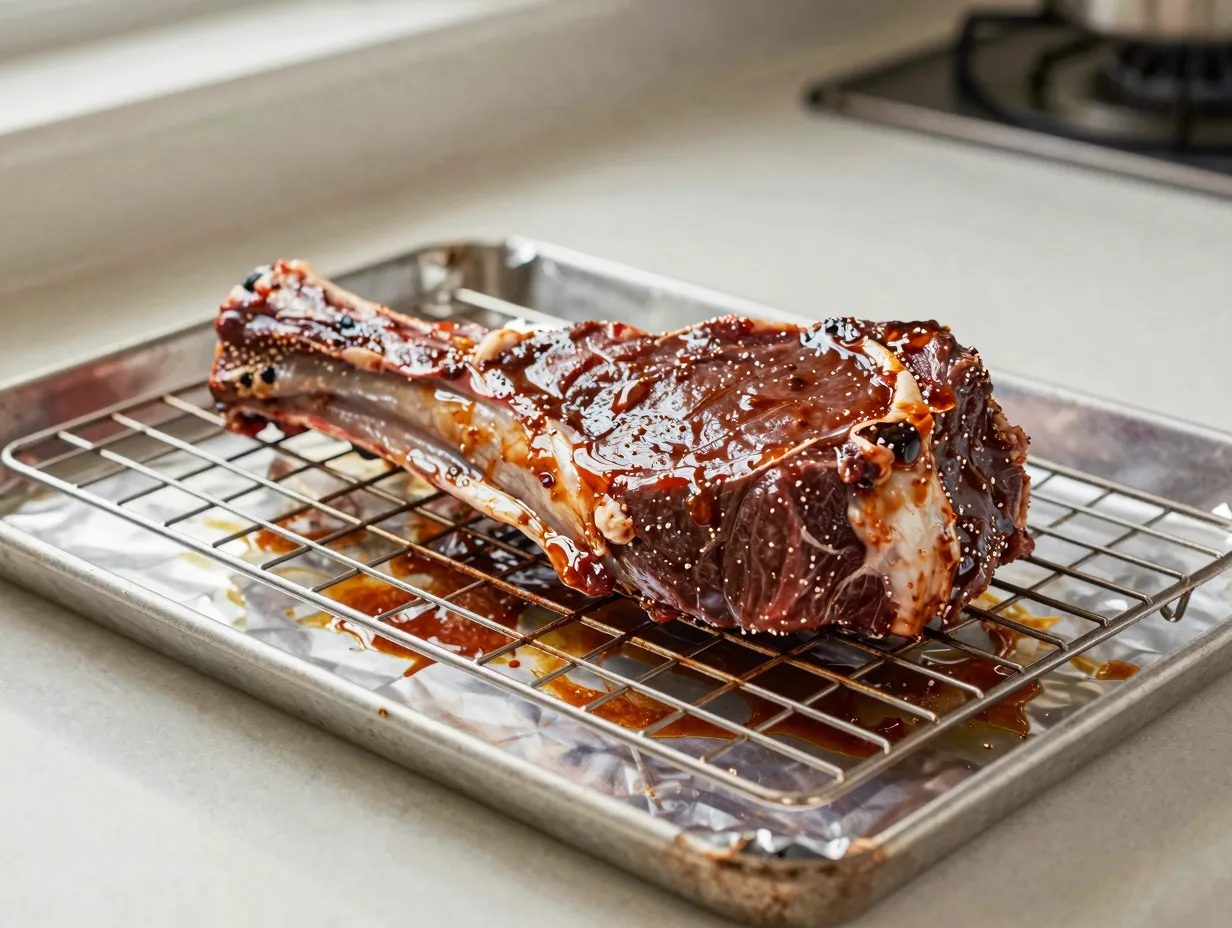
For hunters dealing with older deer or any backstrap that has a stronger gamey note, an acidic marinade is the most effective pre-treatment. Combine half a cup of soy sauce, two tablespoons of Worcestershire sauce, two tablespoons of olive oil, one tablespoon of brown sugar, three minced garlic cloves, and one teaspoon of black pepper. Submerge the backstrap in the marinade and refrigerate for 4-8 hours [7][9].
Pat completely dry before cooking, residual marinade on the surface will steam rather than sear. This recipe skips the initial stovetop sear and instead uses a high oven temperature of 400-450°F to develop surface color quickly [3][5][9]. Place the marinated backstrap on a wire rack over a foil-lined baking sheet and roast at 425°F for 12-16 minutes, monitoring temperature closely.
Pull at 125°F, the higher ambient heat means carryover cooking is more aggressive, and the final resting temperature will reach 132-135°F within 5-7 minutes of resting.
6. Stuffed Venison Backstrap Roll
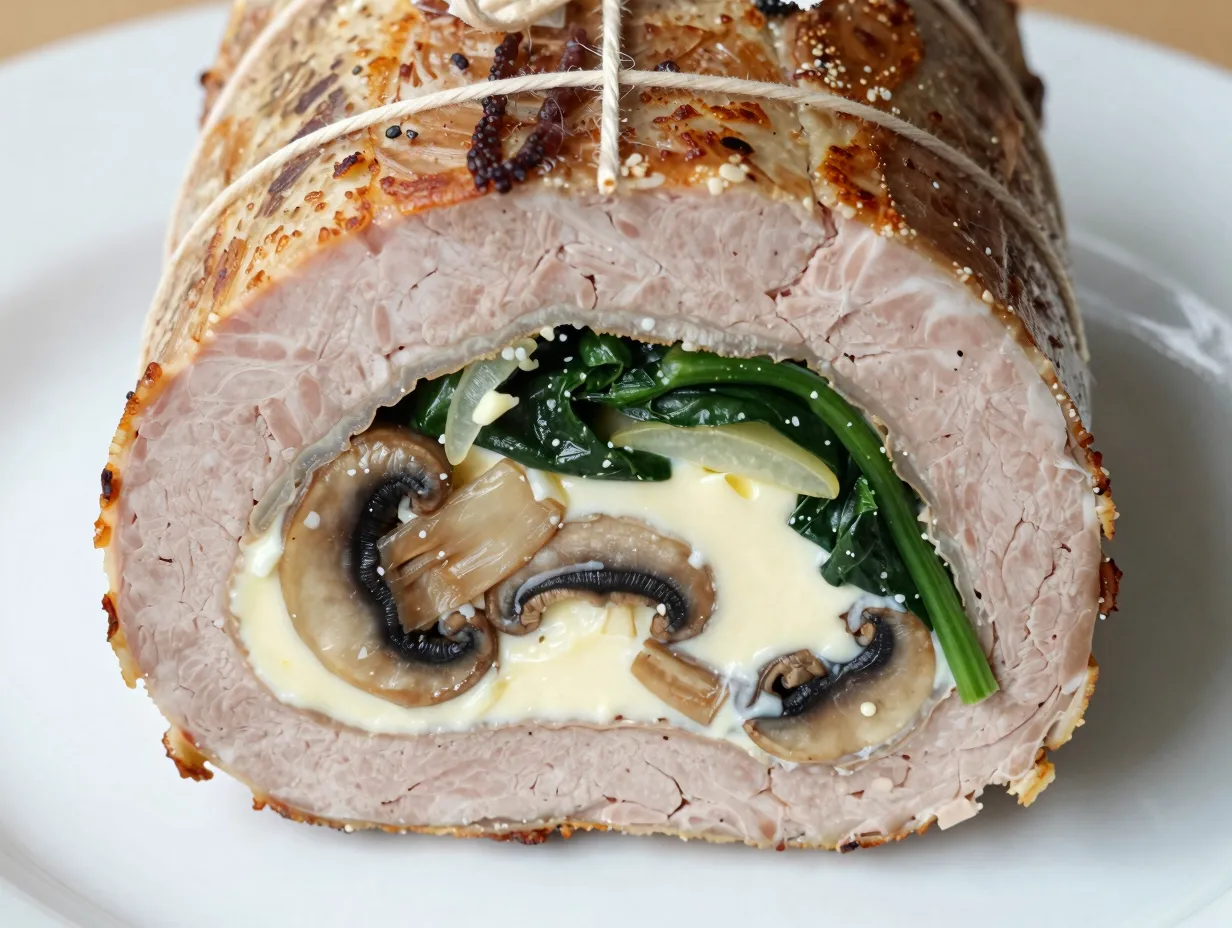
This visually impressive recipe is ideal for special occasions and requires a butterfly cut. Lay the backstrap flat and use a sharp knife to cut lengthwise through the center without cutting all the way through, then open it like a book. Pound gently to an even thickness of about half an inch.
Spread a filling of sauteed mushrooms, minced shallots, fresh spinach, and cream cheese across the surface, leaving a half-inch border. Roll the backstrap tightly lengthwise and tie with butcher’s twine at one-inch intervals. Season the exterior with salt, pepper, and smoked paprika.
Sear the roll in a cast iron skillet over high heat, turning to brown all sides, approximately 4 minutes total. Transfer to a 350°F oven and roast for 18-22 minutes [6][10]. The lower temperature is necessary here because the stuffing adds thermal mass that slows internal heat penetration. Pull at 130°F, rest for 10 minutes, then remove twine and slice into pinwheels.
7. Coffee and Brown Sugar Rubbed Backstrap
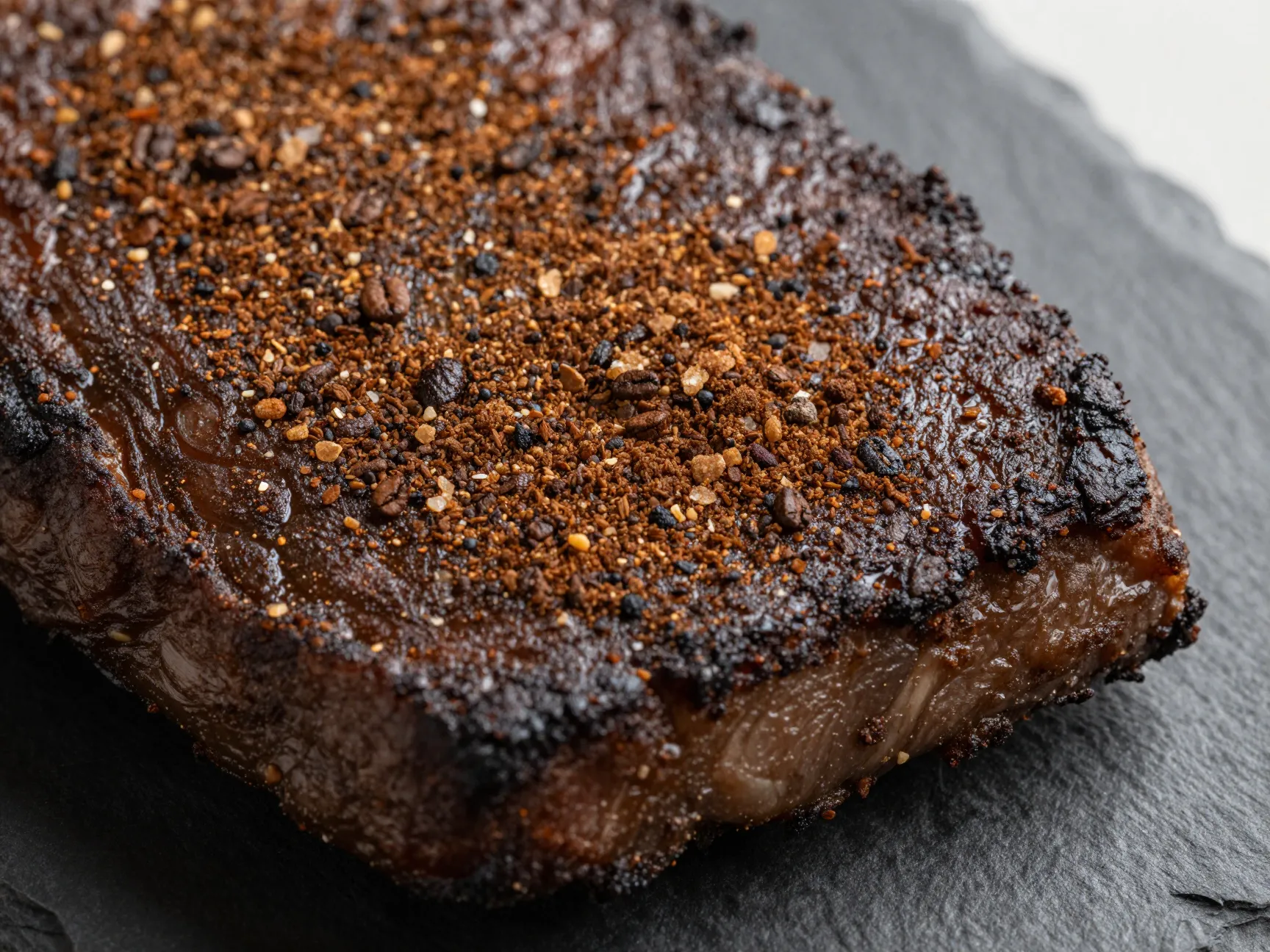
Dark roast coffee grounds act as a tenderizing agent and create an exceptionally deep, complex crust on venison. Combine two tablespoons of finely ground dark roast coffee, one tablespoon of brown sugar, one teaspoon of smoked paprika, one teaspoon of garlic powder, half a teaspoon of cayenne pepper, and one teaspoon of kosher salt.
Press the rub firmly onto all surfaces of the dry backstrap and allow it to sit uncovered in the refrigerator for one hour. The sugar will begin to draw surface moisture, which then reabsorbs into the meat along with the coffee aromatics.
Sear in a cast iron skillet over high heat for 2 minutes per side, the sugar will caramelize rapidly, so watch carefully to avoid burning. Transfer to a 375°F oven and roast for 7-10 minutes [1][9]. The resulting crust is dark, slightly sweet, and smoky, with a clean finish that pairs well with a red wine reduction or a simple pan sauce made from the drippings.
Pull at 128°F and rest for 8 minutes. Slice thinly and serve immediately.
8. Honey Dijon Glazed Venison Backstrap
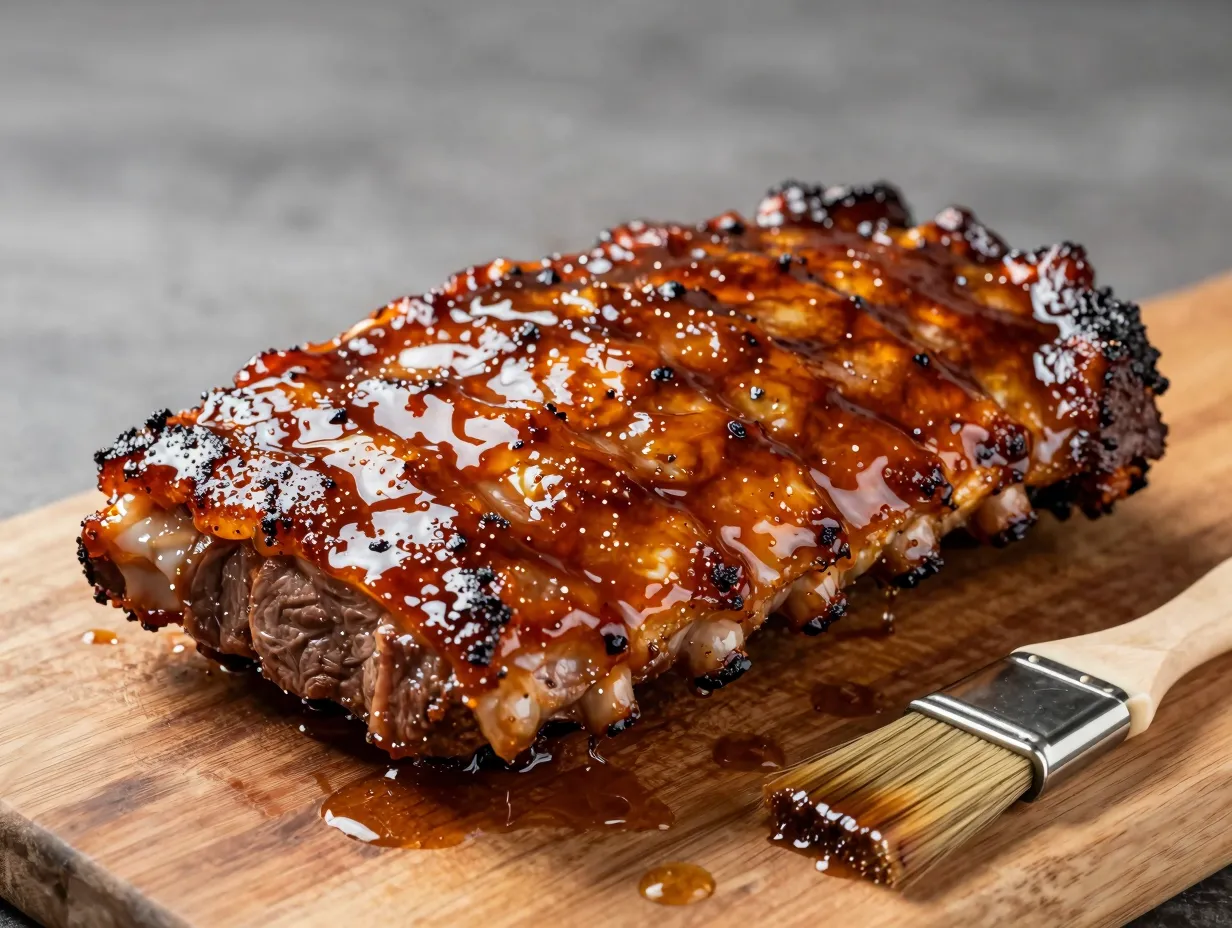
The final recipe in this collection of 8 perfect oven-baked venison backstrap recipes uses a glaze applied in layers during roasting to build a lacquered, glossy exterior. Whisk together three tablespoons of honey, two tablespoons of Dijon mustard, one tablespoon of apple cider vinegar, one minced garlic clove, and a pinch of red pepper flakes.
Sear the seasoned backstrap in a hot cast iron skillet for 90 seconds per side. Transfer to a 375°F oven and brush the top surface generously with the honey Dijon glaze [2][7]. Roast for 4 minutes, apply a second coat of glaze, then roast for another 4-6 minutes. The layering process builds a caramelized coating that seals in moisture while adding sweet, tangy complexity.
Pull at 128°F, apply one final thin coat of glaze, and rest for 8 minutes before slicing. The glaze continues to set during the rest period, creating a coating that holds even after cutting.
Temperature and Timing Reference Table
The table below summarizes the key variables for each of the eight recipes. Use this as a quick reference during cooking.
| # | Recipe | Oven Temp | Oven Time | Pull Temp | Rest Time |
|---|---|---|---|---|---|
| 1 | Classic Cast Iron Finish | 375°F | 7-10 min | 125-130°F | 8 min |
| 2 | Garlic Butter Basted | 375°F | 6-8 min | 128°F | 8 min |
| 3 | Bacon-Wrapped | 350°F | 15-20 min | 130°F | 10 min |
| 4 | Herb-Crusted Roast | 375°F | 8-12 min | 128°F | 8 min |
| 5 | Marinated High-Heat | 425°F | 12-16 min | 125°F | 7 min |
| 6 | Stuffed Roll | 350°F | 18-22 min | 130°F | 10 min |
| 7 | Coffee Brown Sugar Rub | 375°F | 7-10 min | 128°F | 8 min |
| 8 | Honey Dijon Glazed | 375°F | 8-10 min | 128°F | 8 min |
Common Mistakes That Ruin Venison Backstrap
Even with excellent recipes, a few consistent errors account for the majority of failed venison backstrap attempts.
Skipping silver skin removal. The thin, shiny connective tissue that runs along the backstrap does not break down during cooking. It contracts under heat and squeezes moisture out of the meat. Always remove it completely with a flexible boning knife before cooking [10].
Cooking straight from the refrigerator. Cold meat placed in a hot oven creates uneven cooking, the exterior overcooks while the interior struggles to reach temperature. Allow the backstrap to rest at room temperature for 20-30 minutes before cooking [5].
Not drying the surface before searing. Surface moisture turns to steam in the pan, which prevents the Maillard reaction and produces a gray, steamed exterior instead of a proper sear [3][7].
Using a thin or nonstick pan for searing. Thin pans lose heat the moment cold meat hits them. Cast iron retains heat and delivers the consistent, intense surface temperature needed for a proper crust [1][2].
Cutting immediately after cooking. This is the most common mistake. Juices pool at the center of the meat while it is hot. Cutting before a proper rest releases those juices onto the cutting board rather than keeping them in the meat [5][10].
Choosing the Right Oven Temperature for Each Situation
The four common oven temperature ranges each serve a specific purpose in the context of these 8 perfect oven-baked venison backstrap recipes.
350°F (177°C) is the gentlest option and works best for bacon-wrapped preparations or stuffed rolls where additional mass slows heat penetration. The lower temperature gives the cook more time to monitor internal temperature without the risk of rapid overcooking [6][8].
375°F (190°C) is the most versatile temperature and the best default choice for any seared backstrap being finished in the oven. It provides enough heat to continue cooking the interior efficiently while giving a 3-5 minute window for temperature monitoring [1][2].
400°F (204°C) and 425-450°F (204-232°C) are reserved for situations where a preliminary sear was minimal or skipped entirely, or where a marinated backstrap needs rapid surface caramelization. These temperatures require close attention because the margin between properly cooked and overcooked narrows significantly [3][5][9].
Conclusion
Mastering oven-baked venison backstrap comes down to three principles that apply across all eight recipes: remove the silver skin before cooking, use a thermometer rather than timing alone, and never skip the rest period. These are not suggestions, they are the technical requirements for consistently tender results.
The eight recipes in this guide cover the full range of flavor profiles and preparation styles, from the straightforward cast iron finish to the visually striking stuffed roll. Each one is designed to highlight the natural quality of the backstrap rather than mask it.
Actionable next steps for 2026:
- Invest in a reliable instant-read thermometer rated to at least 500°F, this single tool will improve results more than any recipe change
- Practice the classic cast iron sear and oven finish (Recipe 1) at least twice before attempting the more complex preparations
- Try the marinated high-heat method (Recipe 5) on any backstrap with a stronger gamey flavor before deciding the cut is not to your taste
- Keep the temperature and timing reference table accessible during cooking until the pull temperatures become second nature
Every deer season produces a finite amount of backstrap. These eight methods ensure that none of it goes to waste on an overcooked, disappointing meal.
References
[1] Easy Venison Backstrap – https://castironrecipes.com/easy-venison-backstrap/
[2] Venison Backstrap – https://fooddoodles.com/venison-backstrap/
[3] Venison Backstrap Recipe – https://www.missallieskitchen.com/venison-backstrap-recipe/
[5] How To Cook Venison Backstrap – https://seasonandthyme.com/how-to-cook-venison-backstrap/
[6] Venison Backstrap Recipes – https://www.outdoorlife.com/hunting/venison-backstrap-recipes/
[7] Venison Backstrap Recipes – https://goodhealthrecipes.com/venison-backstrap-recipes/
[8] Bacon Wrapped Venison Backstrap – https://thewildgamegourmet.com/post/bacon-wrapped-venison-backstrap/
[9] Best Venison Backstrap Recipes – https://chefsbliss.com/best-venison-backstrap-recipes/
[10] Venison Backstrap – https://venisonfordinner.com/venison-backstrap/