8 Must-Have Features for the Ultimate Angler Kayak Setup
Only about 10 percent of kayak anglers who hit the water in 2026 have a truly optimized rig, the other 90 percent are leaving fish, comfort, and safety on the table because of overlooked gear choices. Whether someone is chasing largemouth bass on a local reservoir or targeting redfish in a coastal flat, the difference between a frustrating day and a productive one almost always comes down to how the kayak is set up. Understanding the 8 Must-Have Features for the Ultimate Angler Kayak Setup is the fastest way to close that gap.
Disclosure: This post contains affiliate links. As an Amazon Associate, we earn from qualifying purchases, and at no extra cost to you.
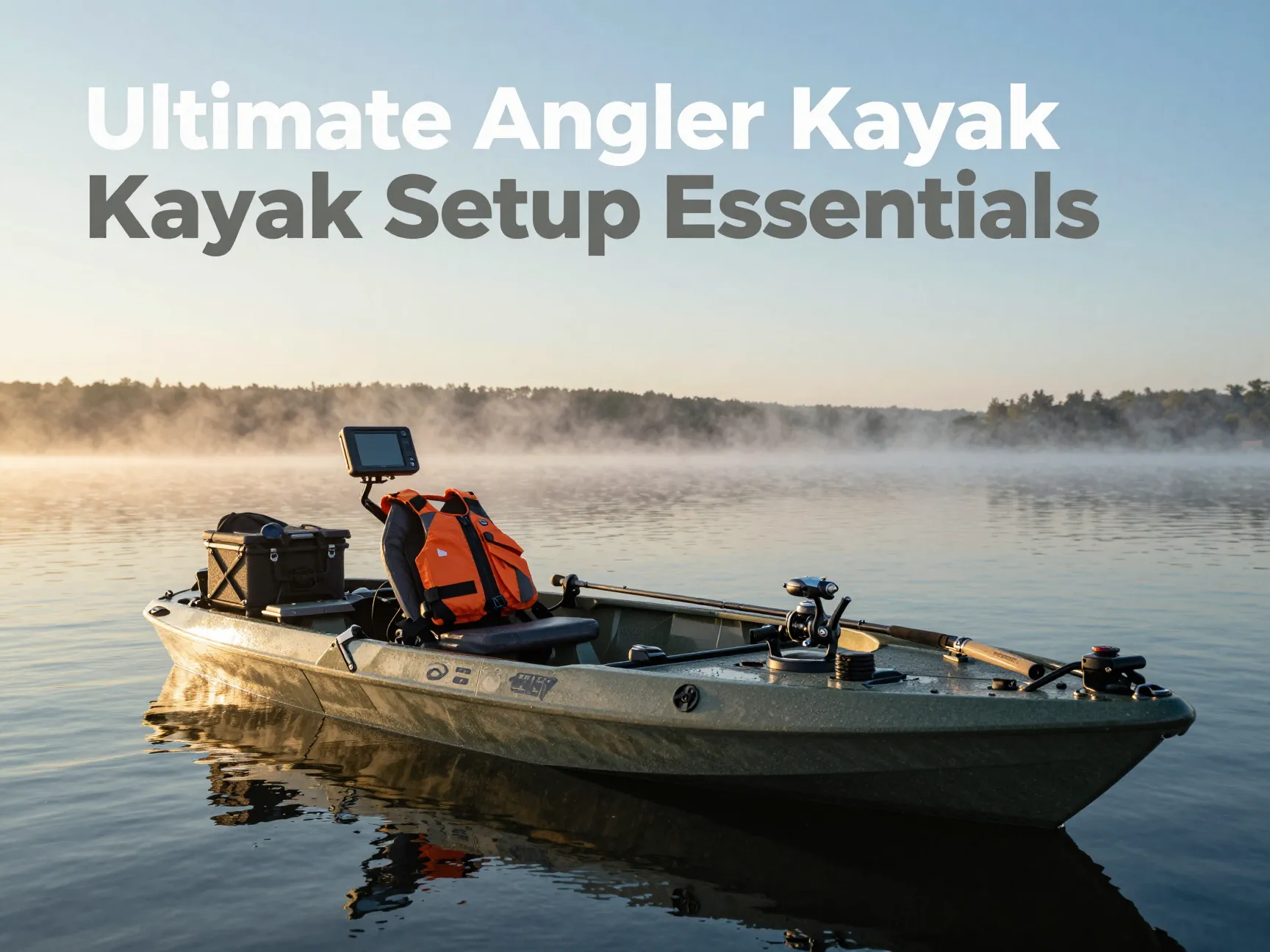
This guide breaks down each essential feature with practical detail, current product context, and the reasoning behind every recommendation, so anglers at any experience level can build a rig that performs.
Key Takeaways
- A fishing-specific PFD is the single most important piece of gear on any angler kayak and should never be skipped.
- Rod holders, gear tracks, and a riggable hull separate true fishing kayaks from recreational models.
- Organized storage, crates, hatches, and staging areas, directly impacts fishing efficiency on the water.
- An anchor trolley system gives anglers precise boat positioning that cannot be achieved by drifting alone.
- A compact fish finder paired with a reliable battery is the top electronics upgrade for serious kayak anglers.
Why the Right Setup Defines Your Time on the Water
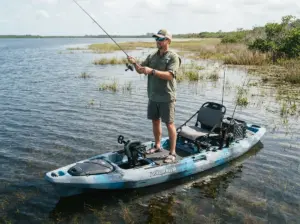
Before diving into the numbered list, it is worth understanding what separates a purpose-built angler kayak setup from a recreational kayak that someone happens to fish from. The distinction is not just about price, it is about function. A well-configured fishing kayak keeps critical gear within arm’s reach, holds the boat in position against wind and current, and provides the stability needed to cast, fight, and land fish without tipping.
The 8 Must-Have Features for the Ultimate Angler Kayak Setup covered in this article address every one of those performance demands. Each feature has been selected based on consistent recommendations from 2026 gear guides, expert reviews, and hands-on fishing kayak roundups. [4][5][6][7]
“The best fishing kayak is not necessarily the most expensive one, it is the one that has been thoughtfully rigged for the way you fish.”
The Complete List: 8 Must-Have Features for the Ultimate Angler Kayak Setup
1. A Fishing-Specific Personal Flotation Device
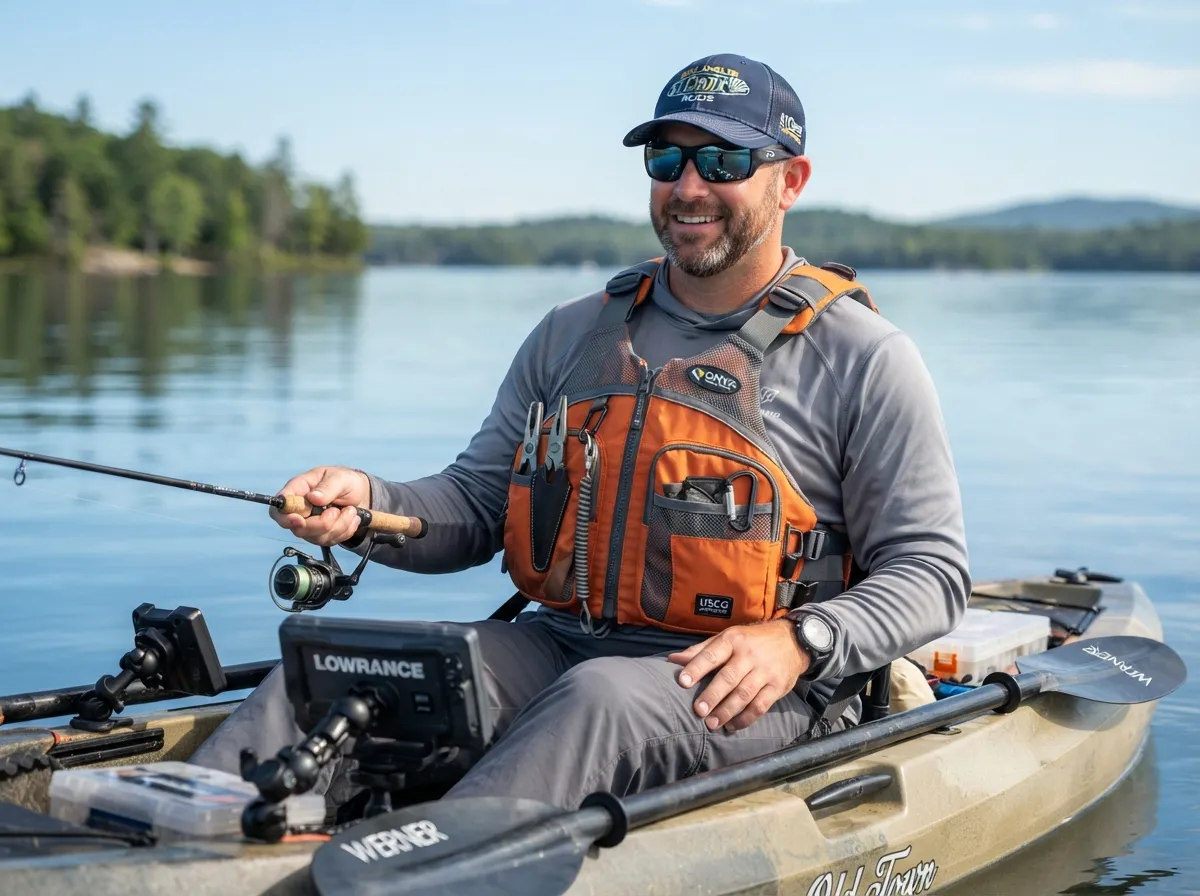
No feature on this list outranks the PFD in importance. A fishing-specific personal flotation device is not optional, it is the foundation of every safe and legal kayak angler setup. [3][7]
What makes a fishing PFD different from a standard one:
- High-back design that clears the kayak seat back for all-day comfort
- Multiple tool pockets for storing pliers, line cutters, and small tackle
- Type III or Type V classification for open-water and moving-water use
- Mesh panels for ventilation during warm-weather fishing
Popular models in 2026 include the Stohlquist Fisherman and the Onyx MoveVent Dynamic, with price points ranging from approximately $40 to $120 depending on pocket count and construction. [7] Pair the PFD with a whistle and a waterproof safety light, these three items together form the core safety kit that every checklist in 2026 places at the top. [3][7]
Why it matters: Capsizing can happen on flat water without warning. A properly fitted fishing PFD keeps an angler afloat and functional, not just compliant with regulations.
2. A Stable, Riggable Fishing Kayak Hull
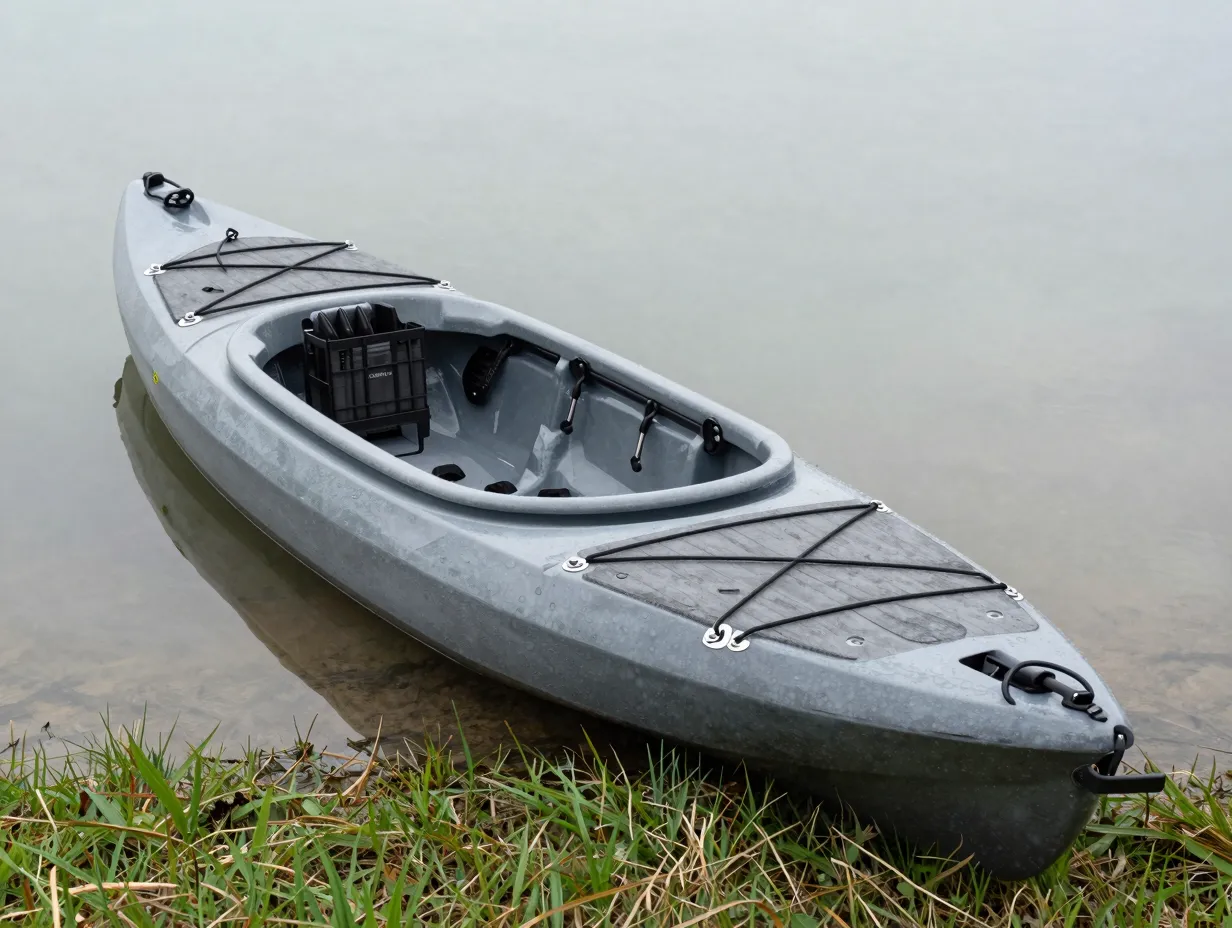
The hull itself is the platform everything else depends on. Not every kayak is suitable for fishing, and the difference shows up quickly once an angler tries to stand, cast, or fight a large fish from an unstable platform.
Key hull characteristics for fishing:
- Primary stability wide enough to allow standing or shifting weight during a cast
- Flat or pontoon hull shape for maximum lateral stability in calm to moderate conditions
- Sufficient length (typically 12-14 feet) to track well and carry gear weight
- Dedicated rigging points including gear tracks, molded-in rod holders, and a transducer mount
Expert reviewers in 2026 consistently emphasize riggability, the presence of sufficient deck space and mounting points, as a primary criterion when ranking the best fishing kayaks of the year. [5][6][8] A kayak that cannot accept aftermarket accessories will limit the setup long before the angler runs out of ideas.
3. Rod Holders, Flush-Mount, Articulating, and Horizontal
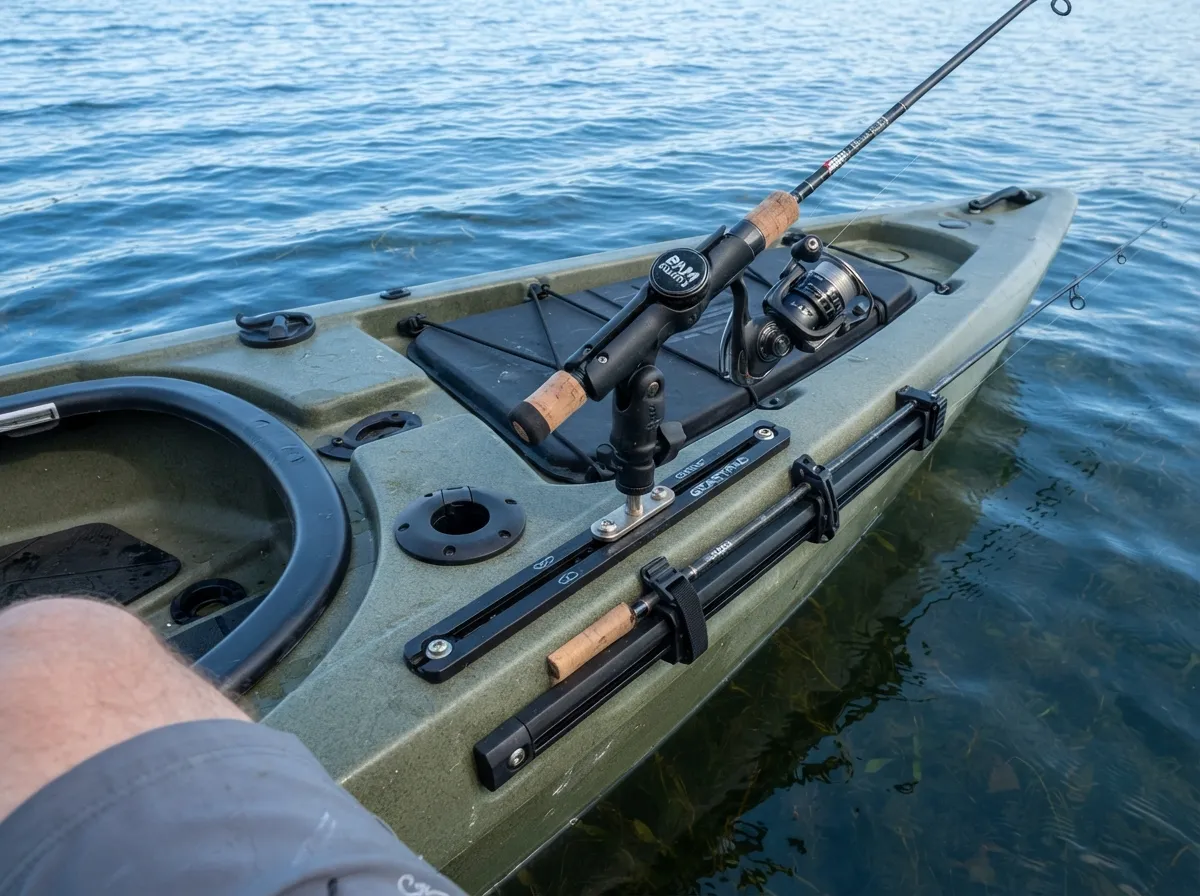
Rod holders are the most visible sign that a kayak has been set up for fishing rather than paddling. But not all rod holders serve the same purpose, and a complete angler setup typically includes more than one type. [4]
The four main types:
- Flush-mount rod holders, recessed into the hull, ideal for trolling or storing rods while paddling between spots
- Articulating rod holders, adjustable angle, mounted on gear tracks, best for positioning rods during active fishing
- Horizontal rod holders, keep rods flat and out of the way during transport or paddling
- Molded-in rod holders, factory-installed, usually located at the stern, durable and maintenance-free
A well-rigged fishing kayak in 2026 typically carries at least two to four rod holders in different configurations. [4] This allows an angler to have one rod rigged and ready while paddling with another, or to run multiple lines during trolling.
4. Gear Tracks and Accessory Mounting Systems
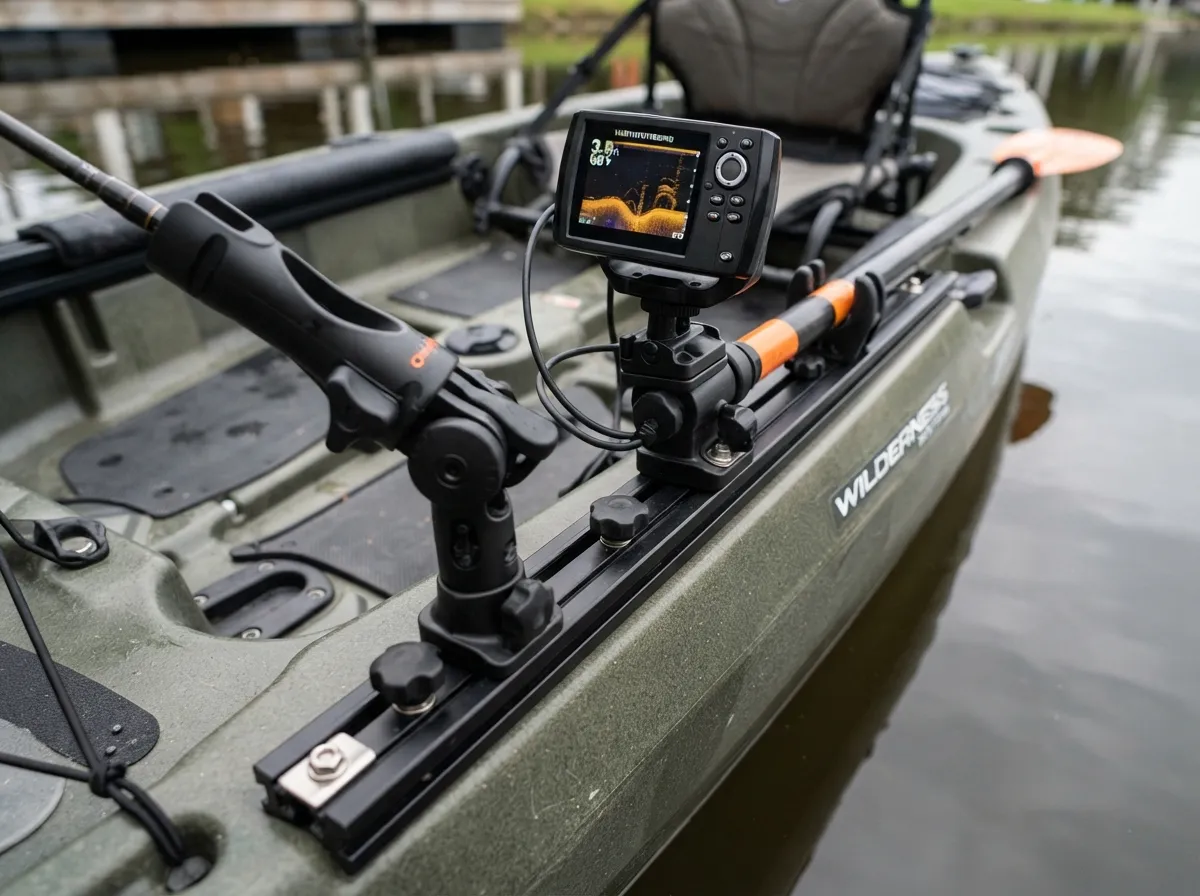
Gear tracks are the backbone of a customizable kayak setup. Without them, every accessory requires drilling new holes or using unreliable clip-on solutions. With them, the entire cockpit layout can be reconfigured in minutes.
Standard gear track systems, such as the YakAttack MightyMount or Scotty’s mounting rails, accept a wide range of accessories including:
- Fish finder mounts
- Camera arms
- Cup and bottle holders
- Rod holders (articulating)
- Paddle clips and parks
- Anchor trolley guides
Bonfire Bob’s 2026 fishing kayak guide lists gear tracks alongside rod holders as core “fishing-friendly” features that distinguish angler kayaks from recreational models. [4] Anglers who invest in a kayak with factory-installed gear tracks, or who add aftermarket tracks early, avoid the frustration of running out of mounting options as their rig evolves.
5. Smart Tackle and Gear Storage
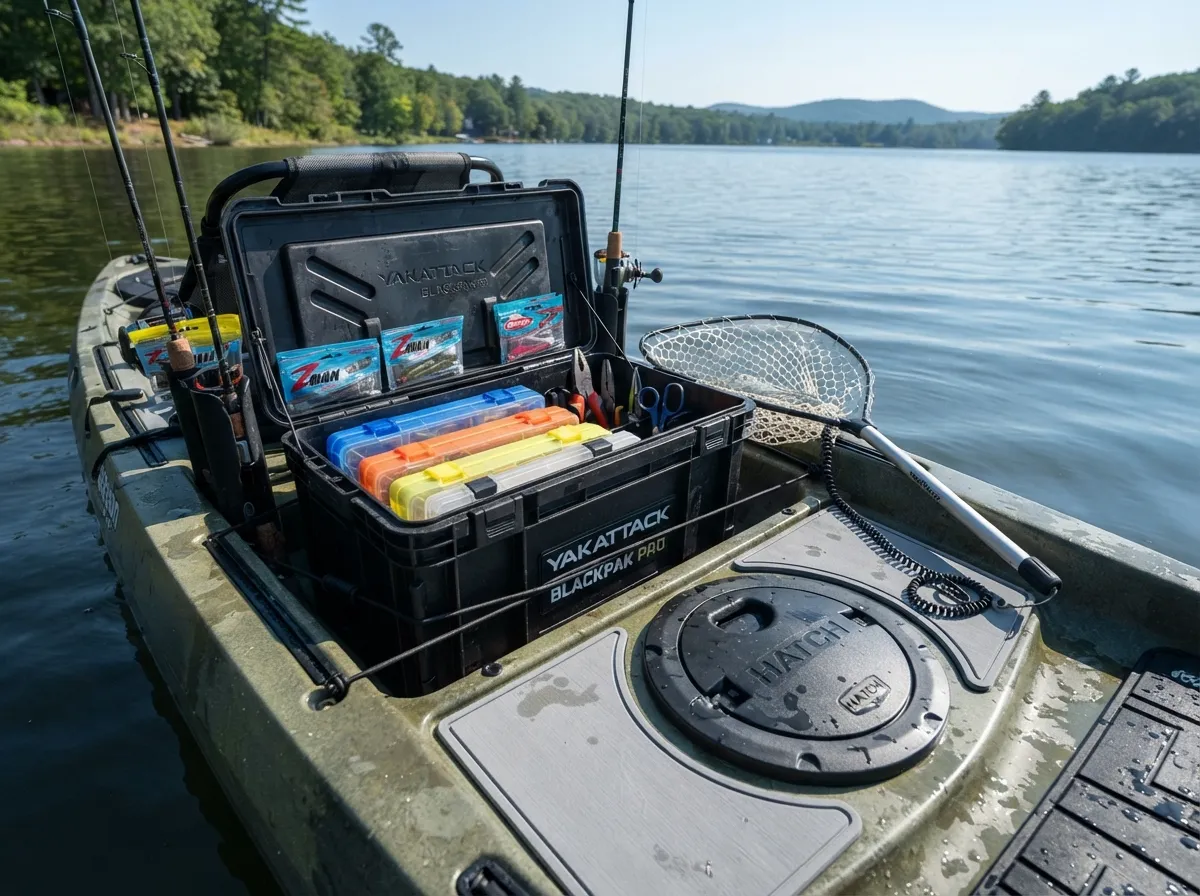
Efficient storage is what separates an angler who spends time fishing from one who spends time searching for gear. The best fishing kayak setups in 2026 use a layered storage approach that keeps frequently used items accessible and everything else protected. [4][7][13][14]
The three-layer storage system:
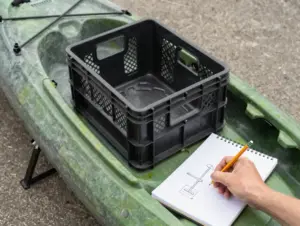
Layer 1, Rear tankwell crate: A gear crate or BlackPak-style box sits in the rear tankwell and holds tackle trays, pliers, bait, and tools. DIY milk crate solutions start around $20, while premium options like the YakAttack BlackPak Pro run $120,$150. [7]
Layer 2, Dry storage hatches: Sealed hatches protect electronics, food, dry clothes, and valuables from water. These are a factory feature on most purpose-built fishing kayaks.
Layer 3, Deck staging area: A flat, non-slip area in front of the seat allows quick access to the items used most often, a net, a tackle tray, or a landing tool.
| Storage Type | Best For | Typical Cost |
|---|---|---|
| DIY Milk Crate | Budget builds, rod staging | $5,$20 |
| YakAttack BlackPak Pro | Organized tackle, gear tracks | $120,$150 |
| Factory Dry Hatch | Electronics, valuables, food | Included on most fishing kayaks |
| Deck Bag / Pouch | Quick-access small items | $15,$40 |
6. Anchoring and Boat Positioning System
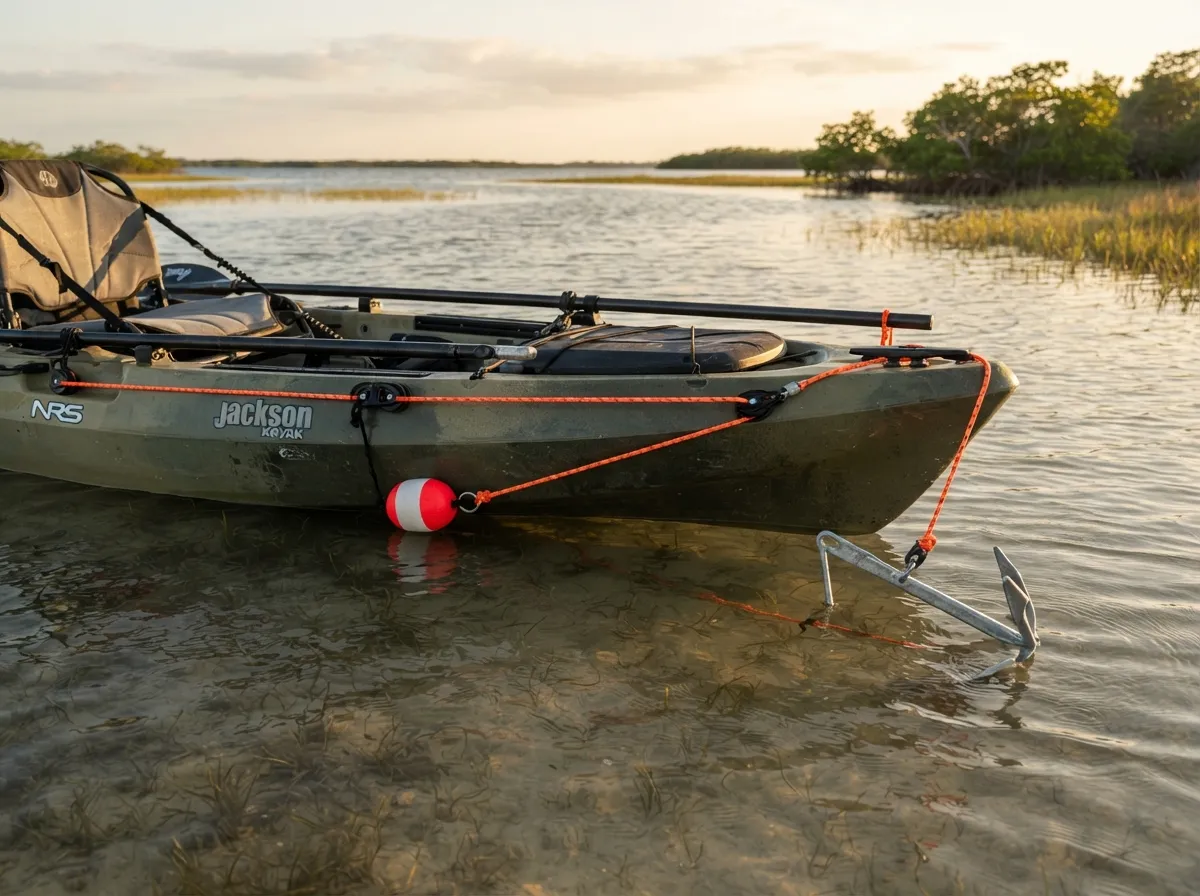
One of the most underrated features in any angler kayak setup is the ability to hold position. Wind, current, and tidal movement constantly push a kayak off the target zone, and without an anchoring system, an angler spends more time repositioning than fishing.
The three-component anchoring system recommended across 2026 gear guides:
- Folding grapnel anchor (3-5 lb): Compact, effective in most bottom types, priced around $15,$25. [7][14]
- Anchor trolley kit: A line-and-pulley system running along the side of the kayak that allows the anchor to be moved from bow to stern without re-rigging. Trolley kits run approximately $35,$50. [14]
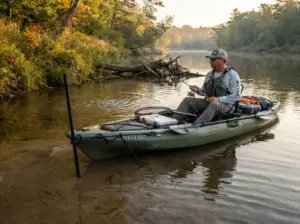
- Stakeout pole: A fiberglass or carbon pole pushed into soft bottom for precise, silent positioning in shallow water, ideal for sight fishing and flats work. [7]
The anchor trolley is particularly valuable because it allows the angler to adjust the angle at which the kayak sits relative to the wind or current, optimizing casting angles without moving the anchor. This is a detail that separates experienced kayak anglers from beginners, and it costs less than $50 to implement. [14]
“An anchor trolley is the single best value-to-performance upgrade on a fishing kayak. Nothing else at that price point improves fishing time as dramatically.”
7. Electronics and Power Integration
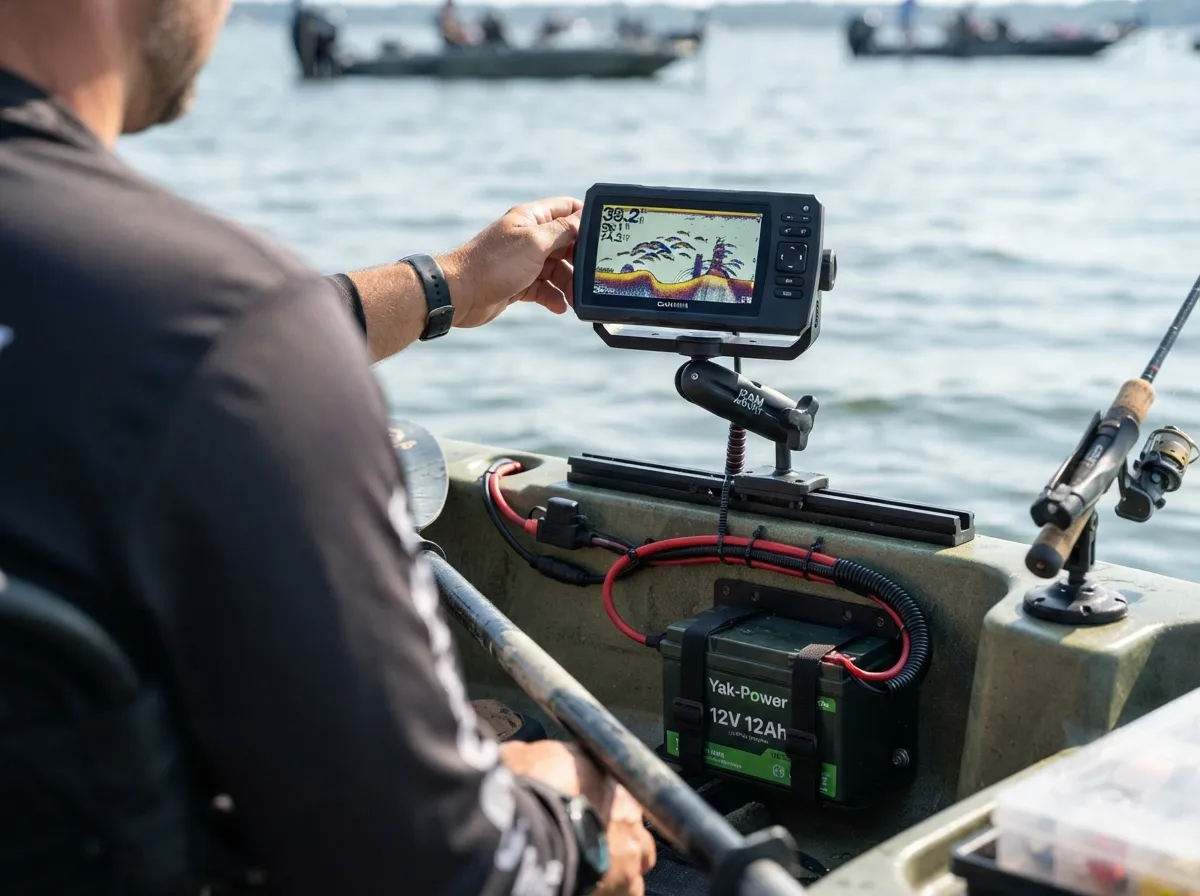
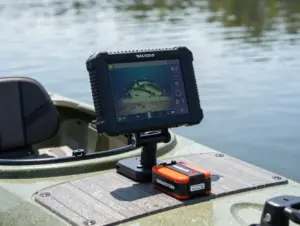
Once safety and core fishing features are in place, electronics represent the highest-impact upgrade for finding and catching more fish. A compact fish finder transforms a kayak angler’s ability to locate structure, read depth, and identify fish-holding areas that are invisible from the surface. [6][7]
Recommended entry-level units in 2026:
- Garmin Striker Vivid 4, compact, bright display, GPS chartplotting, approximately $90,$110
- Humminbird PiranhaMAX 4, reliable sonar, simple interface, approximately $90,$130
- Lowrance Hook Reveal 5, DownScan imaging, GPS, approximately $130,$160 [7][14]
Mounting the fish finder correctly is just as important as the unit itself. Gear tracks allow a RAM Mount or similar arm to position the screen at eye level without drilling into the hull. The transducer, the sonar element that reads the water, can be mounted in a scupper hole, a dedicated transducer well, or on a side-arm mount depending on the kayak’s design. [4][6]
Power requirements: A 10Ah LiFePO4 (lithium iron phosphate) battery is sufficient to run a small fish finder for a full fishing day. These batteries are compact, lightweight, and available for $20,$80 depending on brand and capacity. [7] Storing the battery in a dry hatch or a waterproof case protects the investment and keeps the wiring clean.
Key electronics integration checklist:
- Fish finder unit with transducer
- RAM Mount or gear-track arm for the display
- Waterproof battery in a sealed case
- Fused wiring harness to prevent shorts
- Transducer mount matched to hull type
8. Paddle, Paddle Leash, and Paddle Park
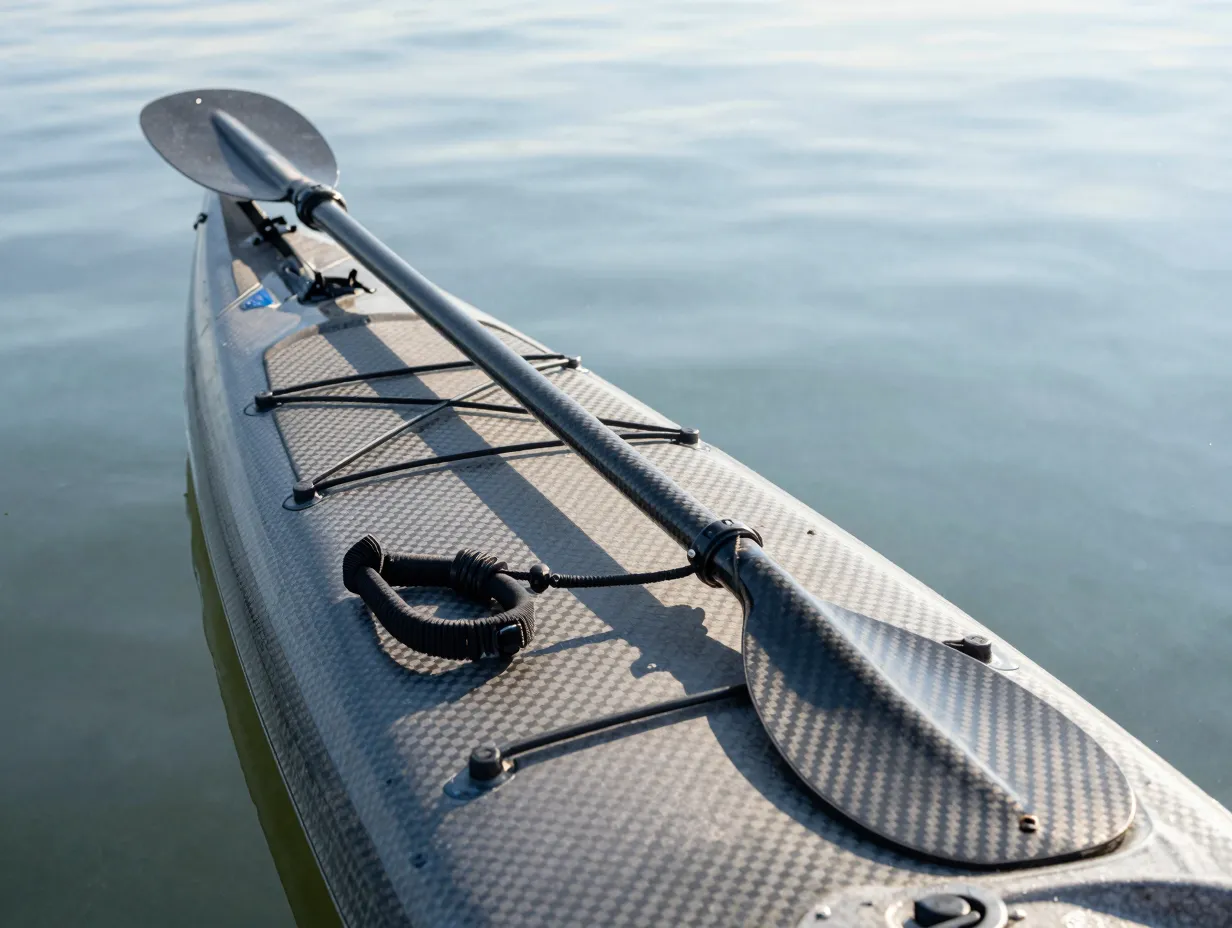
The paddle is the kayak’s primary propulsion system, and yet it is frequently treated as an afterthought in fishing setups. A poorly chosen paddle wastes energy on every stroke. A paddle without a leash becomes a liability the moment both hands are needed to fight a fish.
Paddle selection for fishing kayaks:
- Blade shape: A low-angle, wider blade is better for relaxed, all-day paddling on flat water. A high-angle, narrower blade suits faster-moving water or anglers who want more speed.
- Shaft material: Fiberglass and carbon shafts are lighter than aluminum, reducing fatigue over long days. Carbon paddles start around $150,$200 but pay dividends in comfort.
- Length: Typically 230-250 cm for fishing kayaks, depending on kayak width and paddler height.
Paddle leash: A coiled paddle leash clips the paddle to the kayak or the angler’s wrist, preventing it from drifting away during a cast or a fish fight. These cost $10,$20 and prevent a scenario that ends fishing days prematurely.
Paddle park: A clip or bungee system mounted on the deck holds the paddle flat and out of the way when both hands are needed for fishing. Bonfire Bob’s 2026 guide lists paddle parks as one of the core fishing-friendly features that distinguish purpose-built angler kayaks from recreational models. [4]
Together, these three paddle-related features keep the angler mobile, safe, and hands-free when it matters most.
How to Prioritize These Features When Building a Setup
Not every angler has the budget to implement all eight features at once, and that is perfectly fine. The smart approach is to build in order of safety, then function, then performance enhancement.
Phase 1, Safety and legal compliance:
- Fishing-specific PFD
- Whistle and safety light
- Paddle leash
Phase 2, Core fishing function:
- Stable, riggable hull (or assess current kayak for riggability)
- Rod holders (flush-mount minimum)
- Gear crate with tackle storage
Phase 3, Positioning and efficiency:
- Anchor trolley and grapnel anchor
- Stakeout pole for shallow-water work
Phase 4, Performance and fish-finding:
- Compact fish finder with transducer mount
- Battery and wiring system
- Gear tracks for full accessory integration
This phased approach ensures that every dollar spent improves the fishing experience in a meaningful, logical sequence. [3][7]
Common Mistakes Anglers Make When Setting Up a Fishing Kayak
Even experienced paddlers make avoidable errors when rigging a fishing kayak for the first time. Knowing these pitfalls in advance saves money and frustration.
- Overloading the bow: Placing too much weight forward raises the stern and makes the kayak difficult to track straight. Keep heavy gear centered or slightly aft.
- Skipping the anchor trolley: Many anglers drop anchor from the bow or stern without a trolley, which locks the kayak in one orientation regardless of wind. The trolley solves this completely.
- Mounting electronics without a fused circuit: A short circuit in a wet environment can damage a fish finder instantly. Always use an inline fuse near the battery terminal.
- Using a recreational PFD: High-back kayak seats make standard PFDs uncomfortable to the point where anglers stop wearing them. A fishing-specific PFD with a high-back cut removes this excuse entirely. [3][7]
- Ignoring paddle quality: Upgrading from an aluminum paddle to a fiberglass shaft is one of the highest comfort-to-cost improvements available, yet it is frequently skipped.
Conclusion
The gap between a frustrating day on the water and a genuinely productive one is almost always a setup problem, not a fishing skill problem. The 8 Must-Have Features for the Ultimate Angler Kayak Setup, a fishing-specific PFD, a stable and riggable hull, rod holders, gear tracks, organized storage, an anchoring system, integrated electronics, and a proper paddle system, work together as a complete platform rather than a collection of individual upgrades.
Actionable next steps for anglers at every level:
- Audit the current setup against all eight features and identify the gaps.
- Start with Phase 1 (safety) if any item is missing, no other upgrade matters more.
- Add the anchor trolley system before investing in electronics, it improves fishing time more per dollar than any other single upgrade.
- Research fish finder options in the $90,$160 range once the foundation is solid, and pair the unit with a LiFePO4 battery for reliable all-day power.
- Revisit the setup every season, fishing needs evolve, and the best rigs are refined over time, not built in a single purchase.
A well-built angler kayak setup does not require the most expensive gear on the market. It requires the right gear, installed in the right order, for the way the angler actually fishes.
References
[3] Best Kayak Fishing Accessories 5 Must Haves For 2026 – https://www.whiskeyriff.com/2026/04/29/best-kayak-fishing-accessories-5-must-haves-for-2026/
[4] Best Fishing Kayaks – https://bonfirebob.com/best-fishing-kayaks/
[5] Best Fishing Kayaks – https://kayakanglermag.com/boats/kayaks/best-fishing-kayaks/
[6] Best Fishing Kayaks – https://paddlingmag.com/boats/kayaks/best-fishing-kayaks/
[7] Best Kayak Fishing Gear – https://knots.fish/gear/best-kayak-fishing-gear/
[8] Watch – https://www.youtube.com/watch?v=ZId2IzoKyS4