9 Hog Hunting Techniques for Effective Predator Management
Feral hogs cause an estimated $2.5 billion in agricultural damage across the United States every year, and their population continues to expand into new states despite decades of control efforts. That staggering figure is not a forecast, it is the current reality driving federal agencies, state wildlife departments, and private landowners to treat feral swine as one of the most destructive invasive predators in North American history. Understanding the full range of 9 hog hunting techniques for effective predator management is no longer optional for serious land managers; it is a practical necessity backed by federal funding, science-based protocols, and rapidly improving technology.
Disclosure: This post contains affiliate links. As an Amazon Associate, we earn from qualifying purchases, and at no extra cost to you.
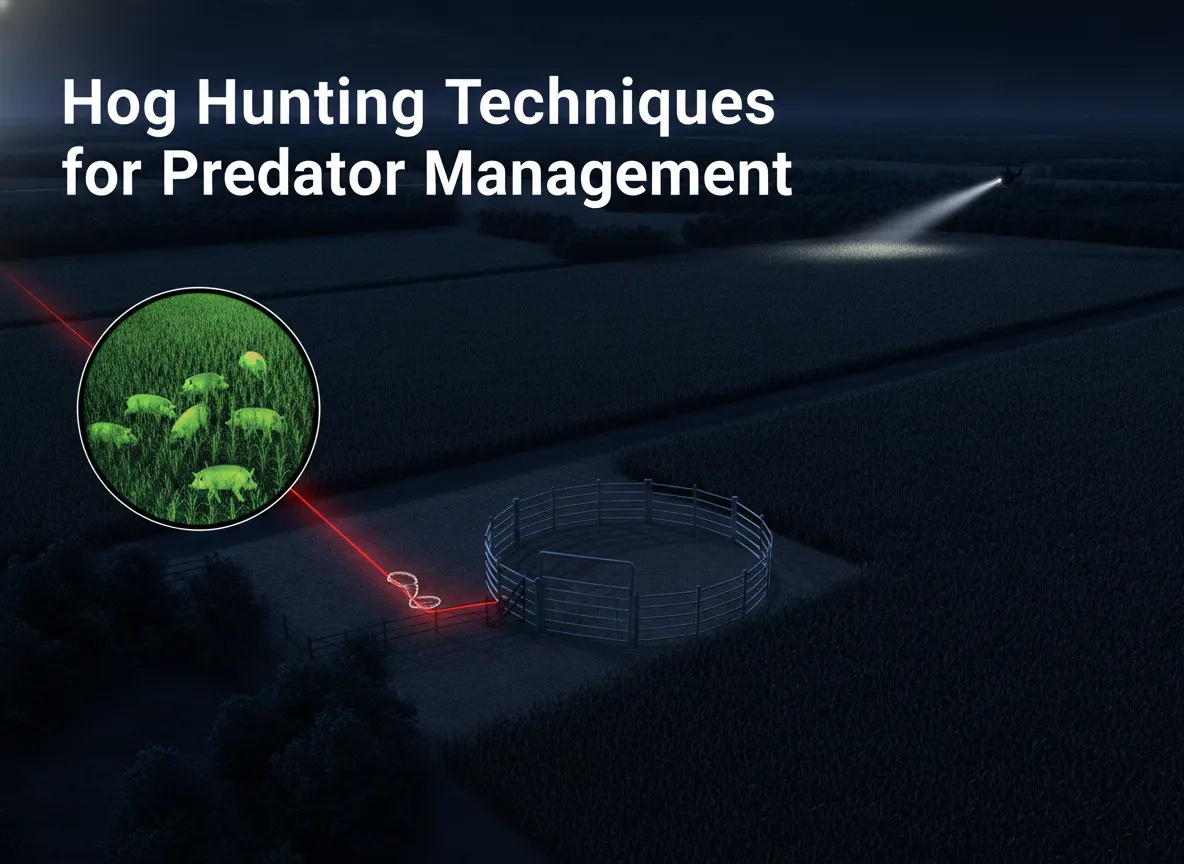
The current Farm Bill framework allocates approximately $150 million for feral swine management for fiscal years 2025 through 2031, with 60% directed to APHIS for large-scale control operations and 40% to NRCS for on-farm trapping and mitigation [2]. On July 23, 2026, USDA NRCS announced an additional $35 million specifically to combat feral swine on agricultural lands, further cementing hunting and trapping as the primary damage-control strategies recognized at the federal level [4]. This article breaks down each of the 9 hog hunting techniques for effective predator management in detail, providing landowners, hunters, and wildlife professionals with the knowledge to deploy the right method for every situation.
Key Takeaways
- Feral swine cause billions in annual agricultural damage, making systematic removal a national priority with significant federal cost-share funding available in 2026.
- No single technique eliminates a sounder; combining multiple methods from the 9 hog hunting techniques for effective predator management framework produces the best long-term results.
- Whole-sounder removal strategies, particularly corral traps with remote triggers, consistently outperform spot-removal methods in reducing local populations.
- Night hunting with thermal and night-vision optics and aerial operations are among the highest-yield techniques available to licensed operators.
- Federal programs through USDA NRCS and APHIS can cover up to 75% of program costs, making professional-grade trapping and hunting equipment accessible to more producers [2][4].
Understanding the Scale of the Problem Before Choosing a Technique
Before selecting any approach from the 9 hog hunting techniques for effective predator management, land managers must assess the size and behavior of the local sounder, the family group that forms the core social unit of feral hog populations. A sounder typically consists of one or more adult sows and their offspring, ranging from 3 to 30 or more animals. Boars generally travel alone or in small bachelor groups and join sounders only during breeding.
Why sounder behavior matters:
- Removing only a few animals from a sounder often causes the group to split, scatter, and become trap-shy.
- A single sow can produce two litters per year with 4 to 8 piglets each, meaning partial removal is quickly offset by reproduction.
- Sounders establish home ranges of 1 to 5 square miles, so pressure in one area pushes damage into neighboring properties.
APHIS planning documents for FY-2027 emphasize data-driven targeting of high-damage areas and the integration of hunting with trap-based sounder removal as the scientific standard for population management [1]. The USDA Feral Swine Eradication and Control Pilot Program final report reinforces that coordinated, landscape-level removal, not opportunistic hunting alone, produces measurable population reductions [5].
“Whole-sounder removal is the cornerstone of any science-based feral swine management program. Taking one or two animals at a time is the equivalent of bailing out a flooding boat with a teaspoon.”
The 9 Hog Hunting Techniques for Effective Predator Management
1. Corral Trapping for Whole-Sounder Removal
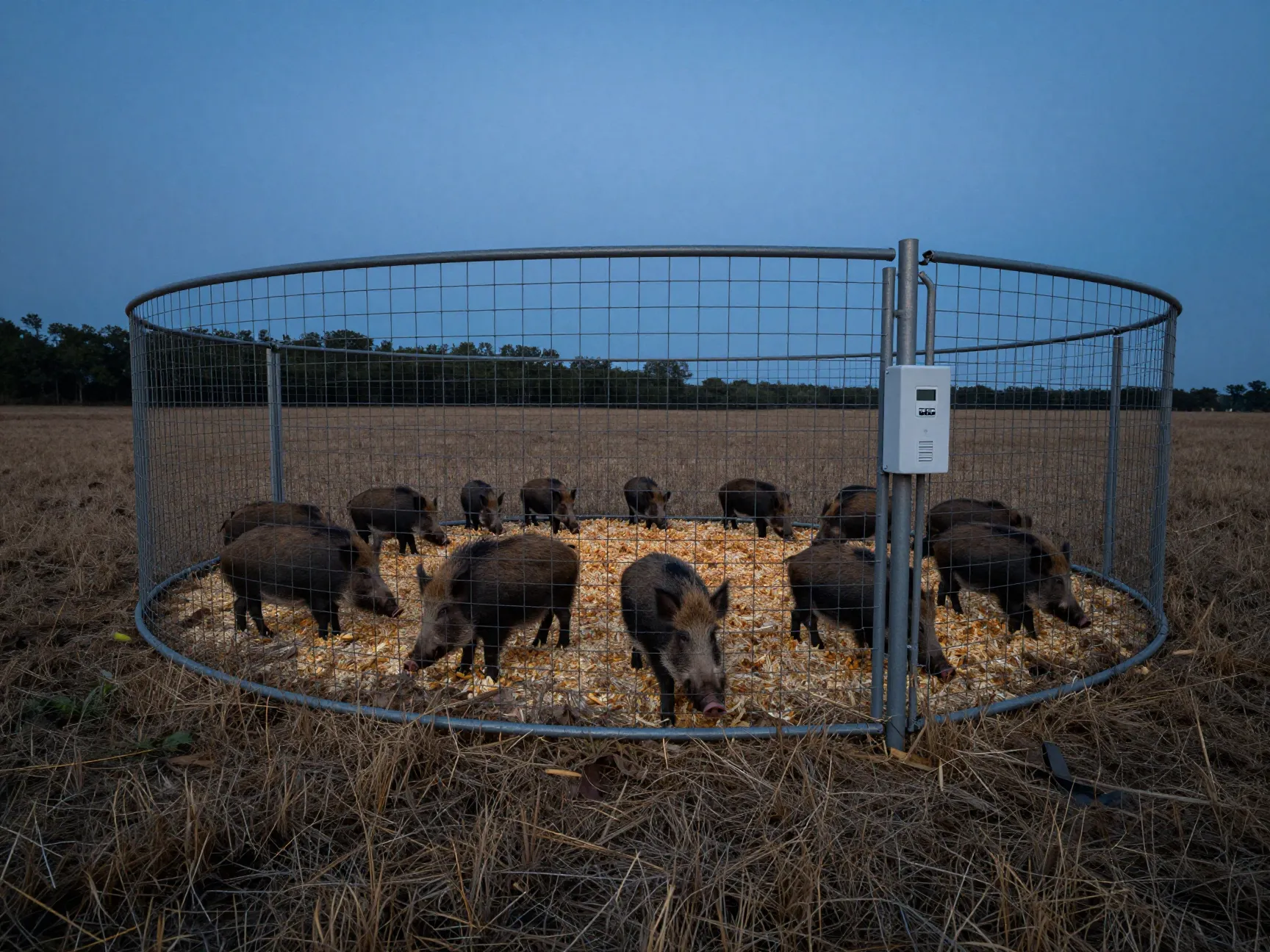
Corral trapping is widely considered the single most effective technique for removing entire sounders in one operation. A large-panel corral trap, typically 30 to 60 feet in diameter, is constructed near a feeding or watering site and pre-baited for 7 to 14 days before the trigger is set. The gate is controlled remotely via a cellular or radio-frequency trigger, allowing the operator to wait until the full sounder is inside before closing the trap.
Key advantages:
- Captures 5 to 20+ animals per set when timed correctly
- Reduces sounder scattering compared to rifle hunting
- Compatible with NRCS cost-share programs that cover trap construction and remote trigger equipment [4]
- Minimizes non-target captures when properly baited with corn or fermented grain
The USDA Feral Swine Eradication and Control Pilot Program documented that corral trapping with remote triggers reduced local populations by 60 to 80% in pilot areas when combined with follow-up hunting [5]. Operators should check traps at least every 24 hours to comply with most state regulations and to maintain animal welfare standards.
2. Box Trapping for Small Groups and Scouting Areas
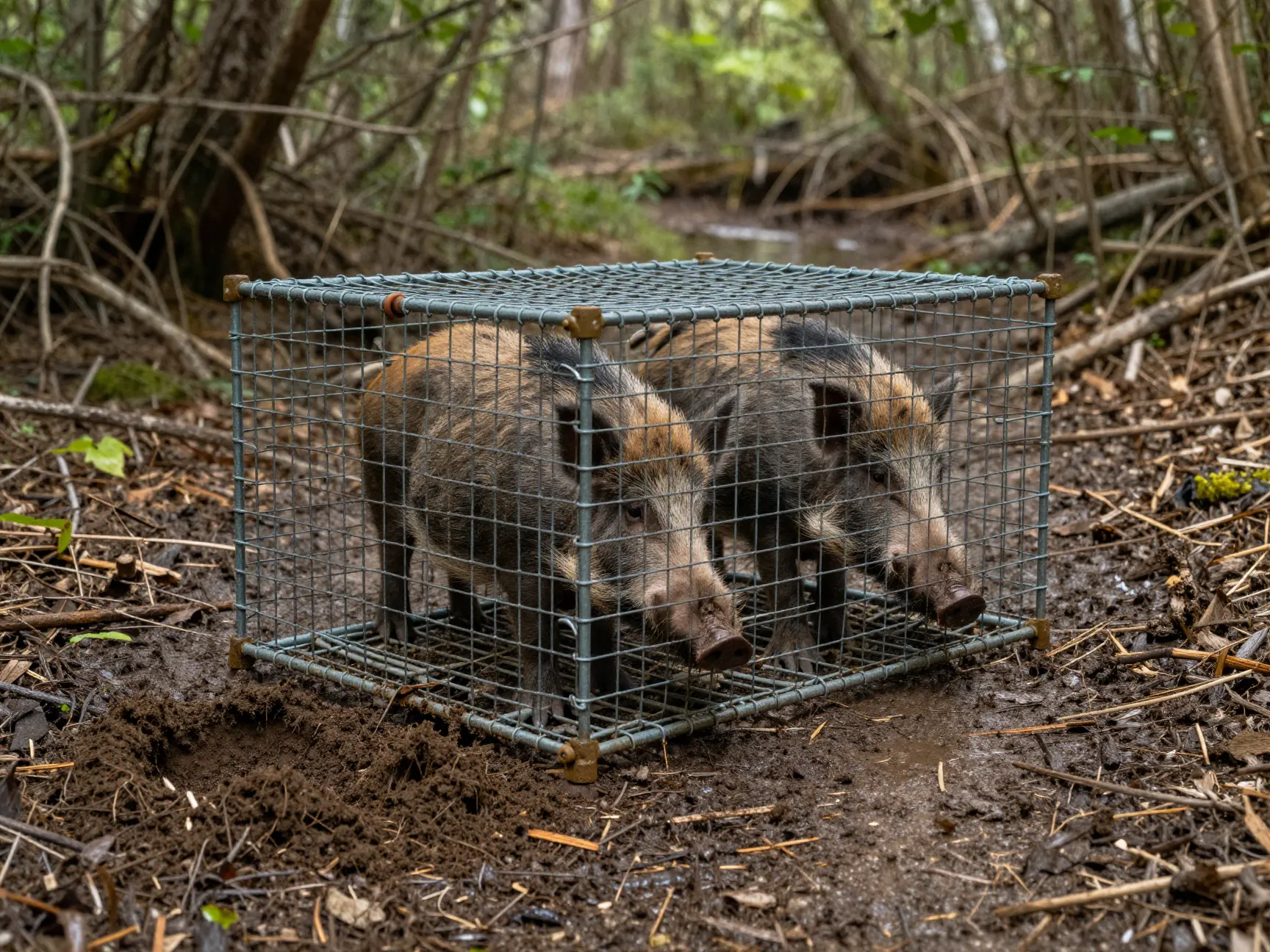
Box traps, smaller, portable cage traps ranging from 4 to 8 feet in length, are best suited for capturing individual animals or small groups of 2 to 4 hogs. They are highly portable, inexpensive, and useful for scouting new areas before committing to a full corral installation.
Box traps work well in:
- Riparian corridors and creek crossings
- Field edges with fresh rooting sign
- Areas where sounder size is unknown
The main limitation is capture rate. Box traps rarely capture more than 2 to 3 animals per set, making them inefficient for large sounders. However, they serve a valuable role in a multi-method program by removing stragglers that escape corral operations [10].
3. Night Hunting with Thermal Optics
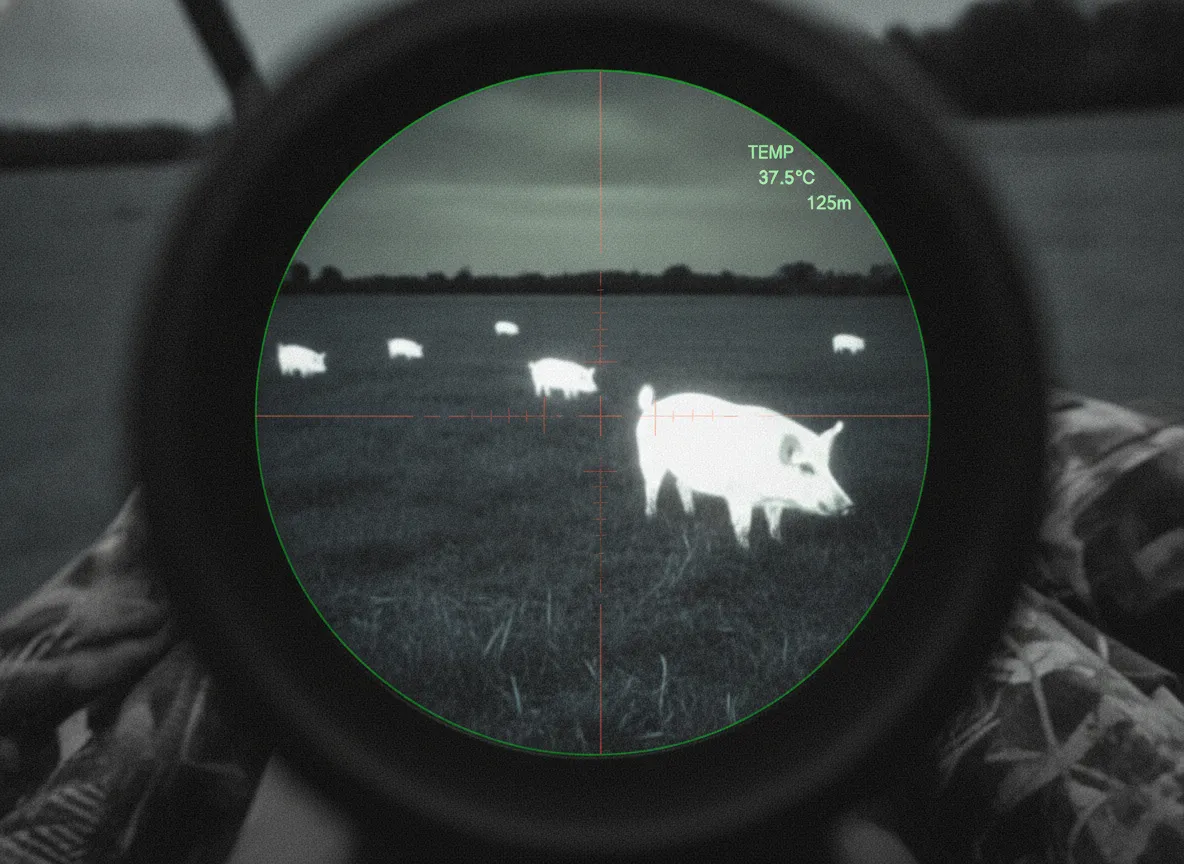
Feral hogs are primarily nocturnal, making thermal imaging one of the most transformative advances in hog hunting technology over the past decade. Thermal scopes and clip-on units detect the heat signature of hogs at distances exceeding 400 yards, allowing hunters to locate and engage animals in complete darkness without alerting the sounder to human presence.
Equipment considerations:
| Feature | Entry-Level Thermal | Professional-Grade Thermal |
|---|---|---|
| Detection Range | 200-300 yards | 400-800 yards |
| Image Resolution | 384×288 | 640×480 or higher |
| Battery Life | 4-6 hours | 8-12 hours |
| Cost Range | $1,500-$3,000 | $4,000-$10,000+ |
Night hunting with thermal optics is legal in most states with appropriate licensing, though regulations vary significantly. Hunters should verify state-specific rules on artificial light, suppressor use, and caliber restrictions before operating at night. When combined with suppressed rifles, thermal hunting causes minimal disturbance to the sounder, allowing multiple animals to be taken before the group flees [8].
4. Aerial Hunting (Helicopter Operations)
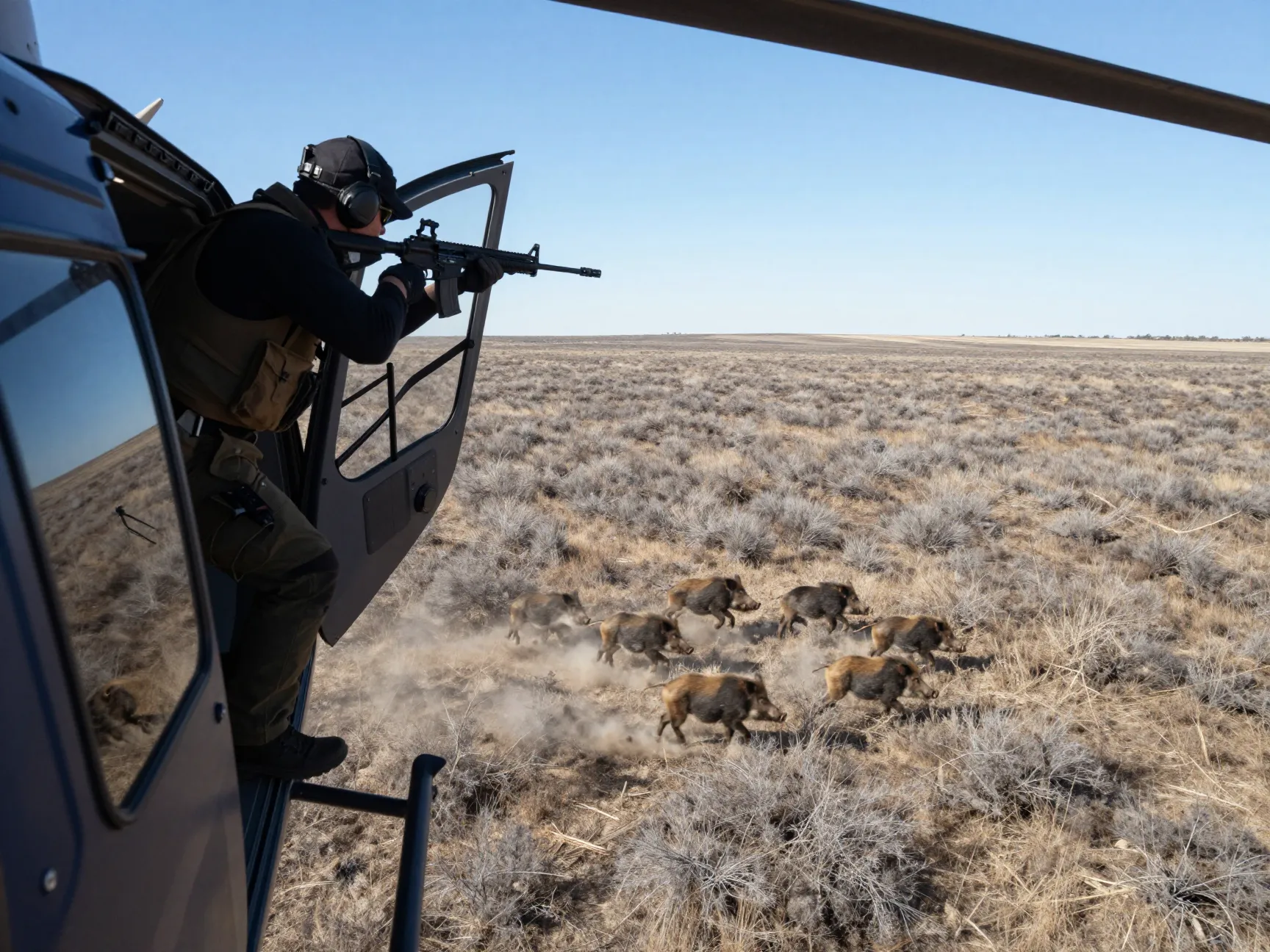
Aerial hunting is the highest-yield removal technique available and is particularly effective in open terrain such as South Texas brush country, Gulf Coast prairies, and Midwestern agricultural fields. Licensed operators use helicopters equipped with shotguns or semi-automatic rifles to locate and dispatch hogs from the air, covering hundreds of acres in a single flight.
APHIS FY-2027 planning documents identify aerial operations as a core component of large-scale removal programs, particularly in states with established feral swine populations exceeding sustainable management thresholds [1]. The federal government funds coordinated aerial removal through APHIS Wildlife Services, and private landowners can contract licensed aerial operators independently.
Aerial hunting facts:
- A single helicopter crew can remove 100 to 500 hogs per day in high-density areas
- Most effective during winter when vegetation is low and hogs are visible
- Requires FAA compliance and state permits in addition to standard hunting licenses
- Cost ranges from $500 to $1,500 per flight hour, partially offset by federal cost-share [2]
5. Spot-and-Stalk Hunting
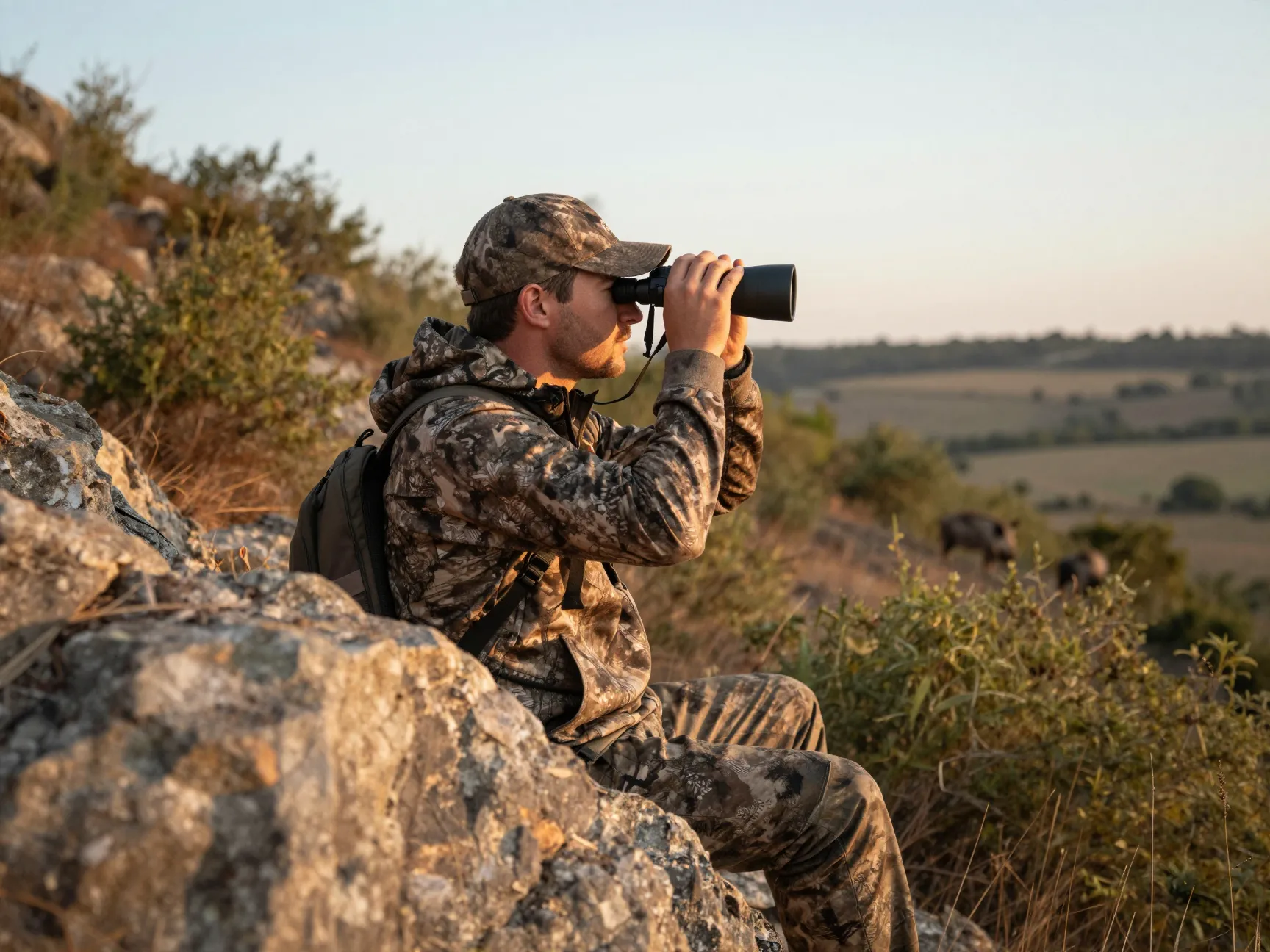
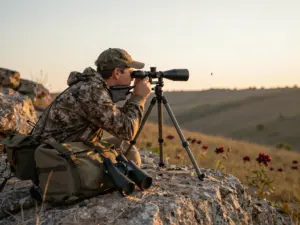
Spot-and-stalk is the most traditional hog hunting technique and remains effective for individual boars and small groups in varied terrain. The hunter uses elevated vantage points, binoculars, or spotting scopes to locate hogs at distance, then closes the gap using wind direction, terrain features, and slow deliberate movement.
This technique is best suited for:
- Trophy boar hunting where selective harvest is desired
- Properties where trapping infrastructure is not yet in place
- Hunters building knowledge of hog movement patterns before deploying traps
Spot-and-stalk produces lower removal numbers per hour than trapping or aerial methods, but it builds invaluable scouting intelligence. Hunters who spend time observing sounder behavior, identifying travel corridors, and mapping feeding sites become significantly more effective when they later deploy corral traps [7].
6. Stand Hunting Over Bait
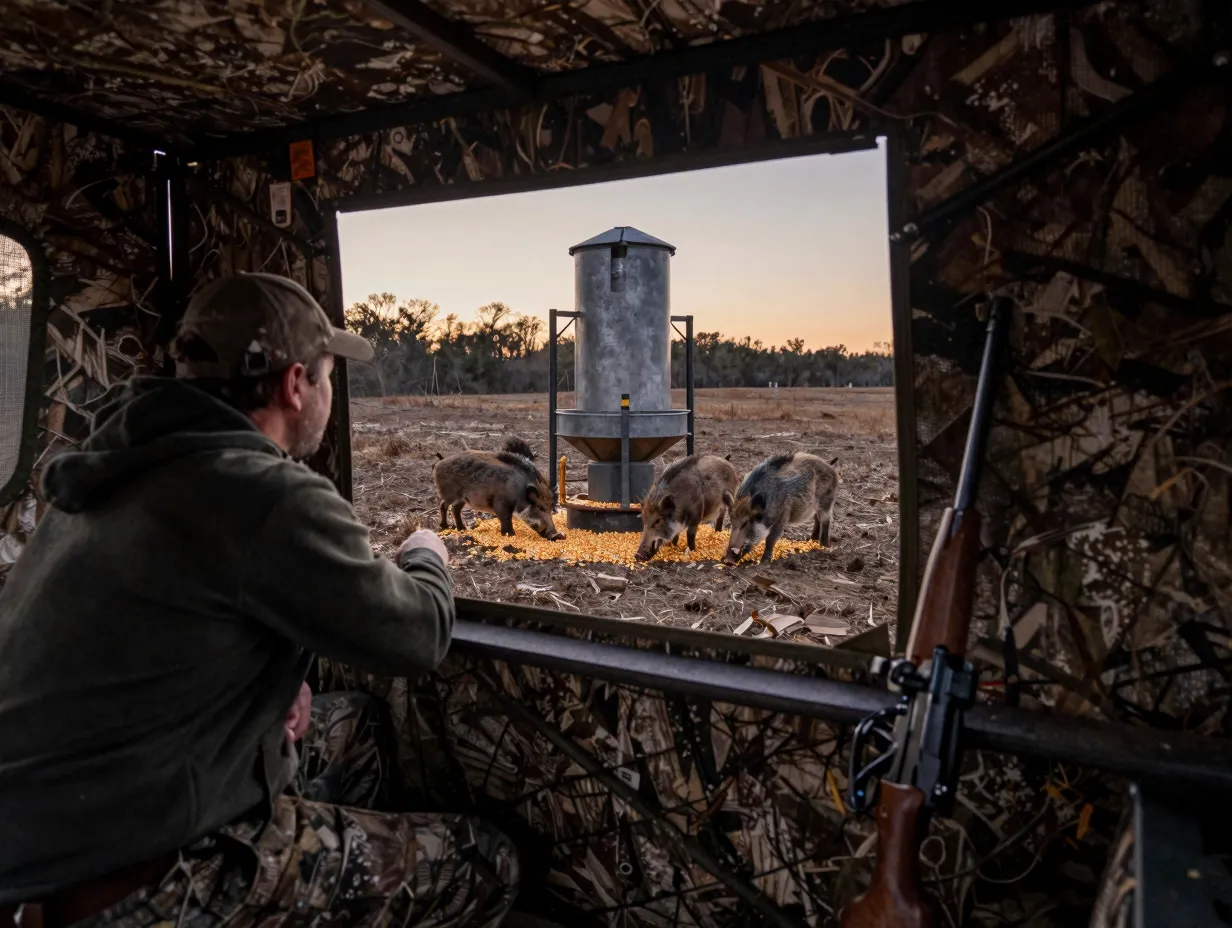
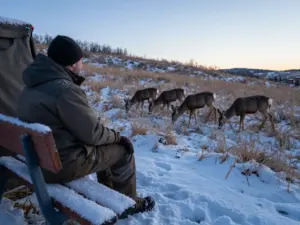
Stand hunting over bait stations, typically corn feeders on automatic timers, is one of the most accessible and widely practiced hog hunting techniques for landowners and recreational hunters. A feeder is placed near fresh hog sign, and the hunter waits in a ground blind or elevated stand during feeding windows, typically at dusk and dawn.
Best practices for bait station hunting:
- Use protein pellets or soured corn to attract hogs over deer corn, which draws non-target species
- Position stands downwind of the feeder with clear shooting lanes
- Use a trail camera to pattern sounder timing before hunting the site
- Consider hunting multiple feeders in rotation to prevent hogs from pattern-avoiding a single site
Stand hunting is highly compatible with recreational hunting programs, where landowners charge guided fees to offset management costs. This economic model is particularly common in Texas, where feral hog hunting generates significant revenue for rural landowners [8].
7. Hunting with Dogs
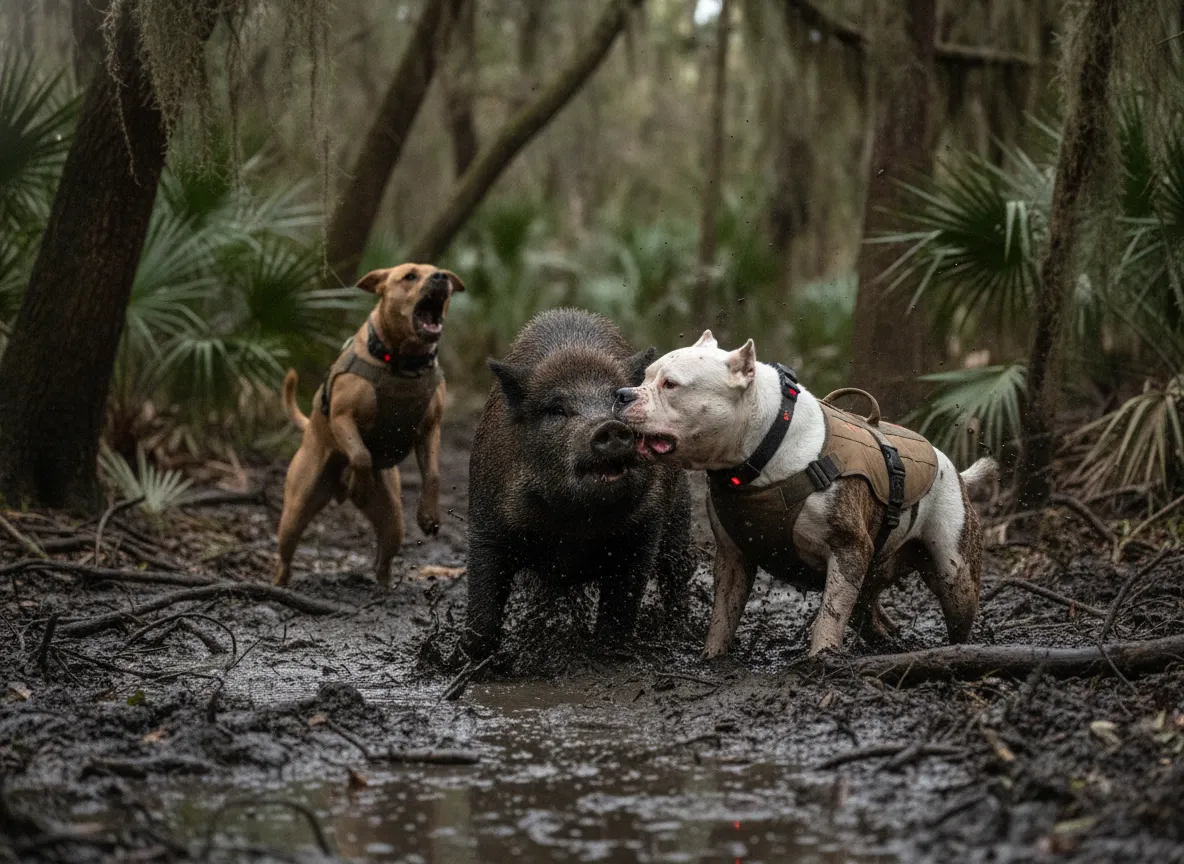
Trained hunting dogs, typically bay dogs and catch dogs working in combination, are one of the oldest and most culturally embedded hog hunting methods in the American South. Bay dogs (often Catahoulas, Black Mouth Curs, or Walker Hounds) locate and bay the hog, holding it in place vocally. Catch dogs (typically American Bulldogs or Pit Bull-type breeds) then close in to physically restrain the animal until the hunter arrives.
Dog hunting excels in:
- Dense swamp, thicket, and bottomland timber where other methods are impractical
- Situations where live capture for relocation is desired (though relocation is discouraged by most wildlife agencies)
- High-adrenaline recreational hunting experiences that attract paying clients
The primary risks are injury to dogs from hog tusks and the potential for hogs to scatter before the catch dog engages. Experienced dog hunters outfit their bay dogs with cut-proof Kevlar vests and GPS tracking collars to reduce losses [10].
8. Snaring
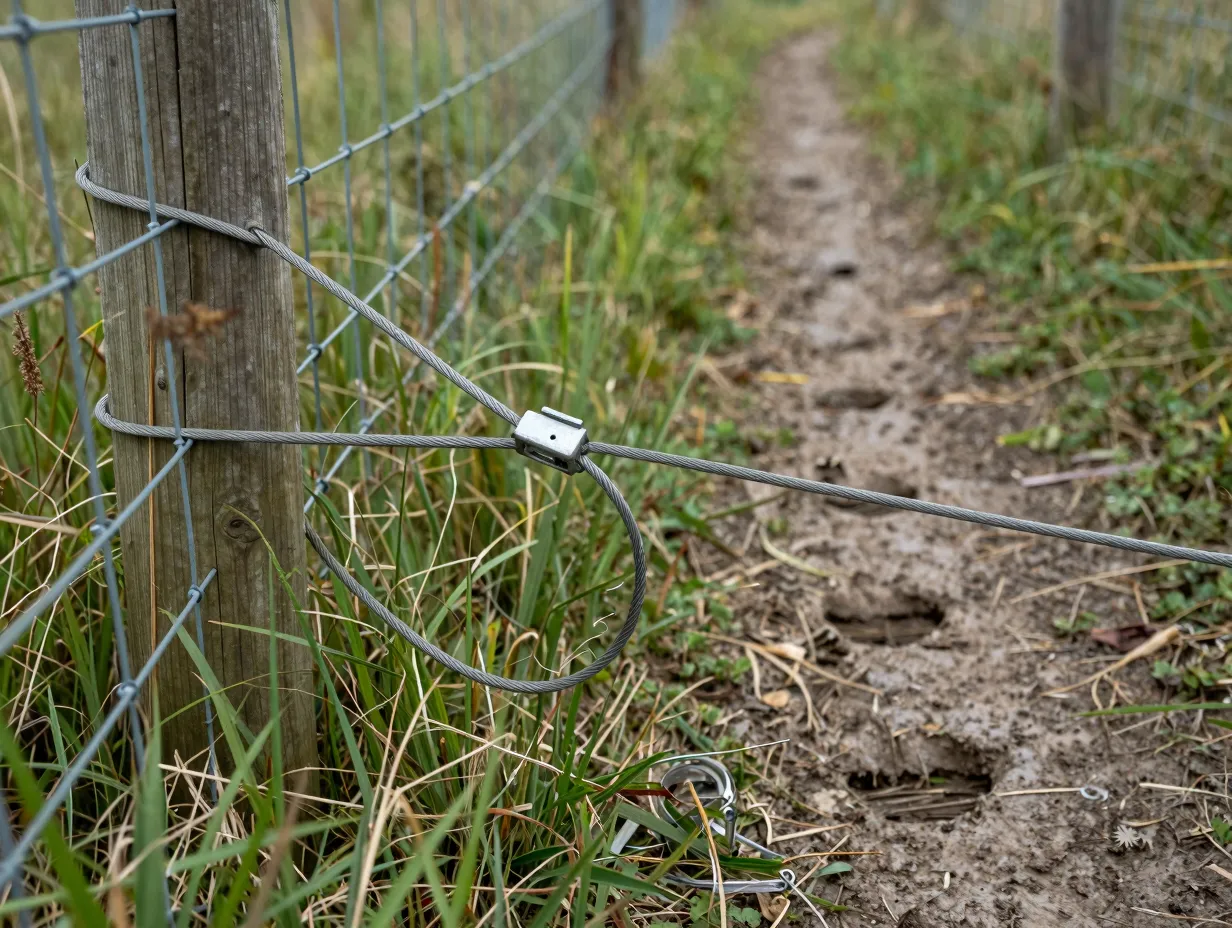
Snaring is a cost-effective trapping method that works well in travel corridors, fence crossings, and creek bottoms where hogs move predictably. A cable snare is anchored to a fixed object and positioned at the correct height and width to capture a hog by the neck or leg as it passes through.
Snaring considerations:
- Legal in most states but subject to specific regulations on wire diameter, breakaway devices, and check intervals
- Highly selective when set correctly in hog-specific travel lanes
- Inexpensive, a quality snare costs $5 to $15 compared to hundreds for a box trap
- Requires daily checks to comply with humane trapping standards
Snaring is most effective as a supplemental technique alongside corral or box trapping, targeting animals that avoid enclosed traps after previous capture experiences [10]. Trap-shy hogs, sometimes called “lockjaw” hogs by experienced trappers, are often more vulnerable to snares than to any enclosed trap design.
9. Coordinated Multi-Method Programs
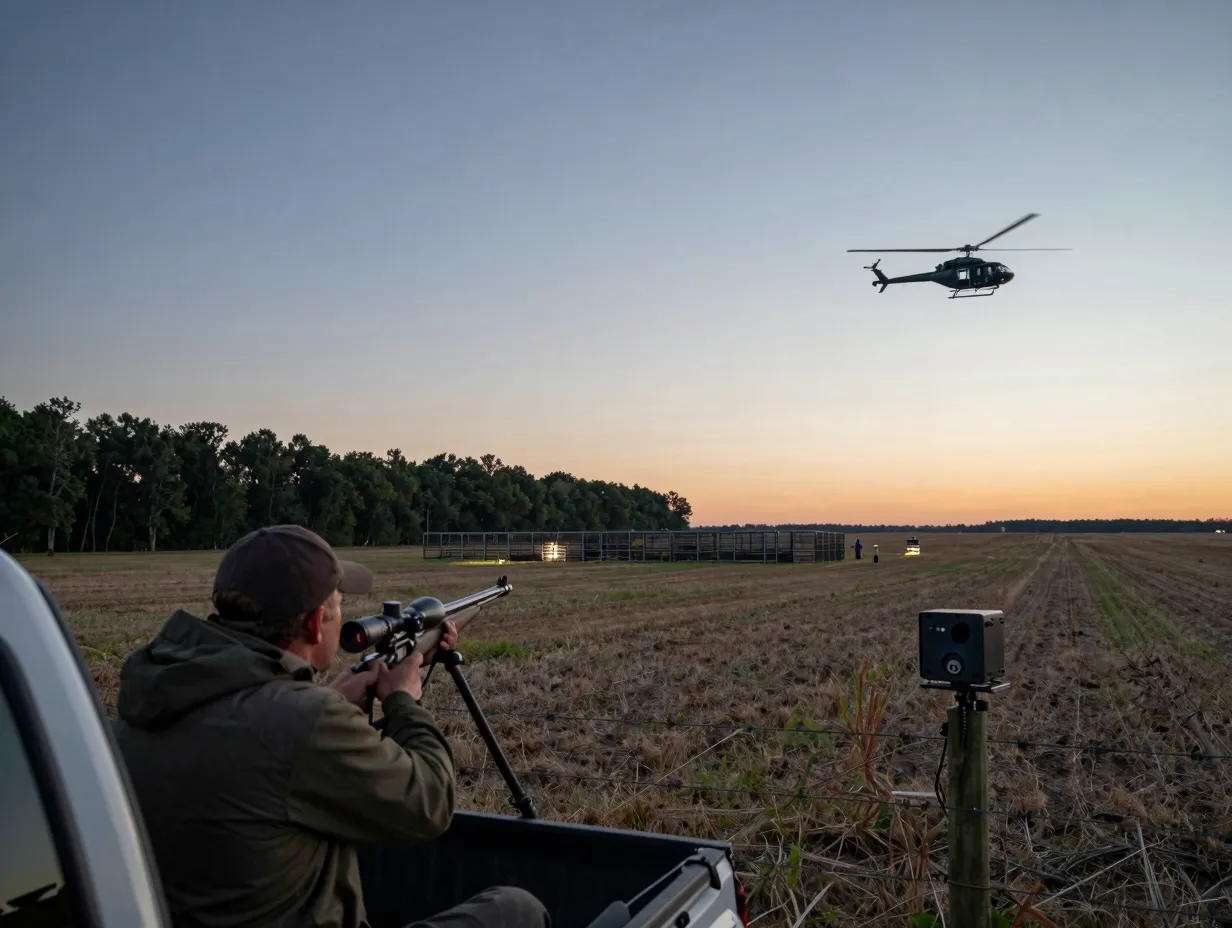
The ninth and most advanced entry in the 9 hog hunting techniques for effective predator management framework is not a single tool but a systematic, coordinated approach that deploys multiple methods simultaneously across a defined landscape. This is the model promoted by USDA APHIS Wildlife Services and supported by the $150 million Farm Bill allocation for feral swine management [2].
A coordinated program typically includes:
- Landscape-wide scouting using trail cameras and GPS data to map sounder home ranges
- Simultaneous corral trap deployment at multiple sites to prevent sounder dispersal
- Aerial operations to reduce population density before traps are set
- Night hunting to remove surviving animals after trap operations
- Ongoing monitoring and adaptive management based on removal data
The USDA Feral Swine Eradication and Control Pilot Program demonstrated that coordinated multi-method removal reduced feral hog populations by 70 to 90% in pilot areas within 12 to 18 months, compared to 20 to 30% reductions achieved by single-method programs over the same period [5]. NRCS technical assistance is available to help landowners design coordinated programs, and the federal cost-share can cover up to 75% of eligible program costs [4].
Matching Technique to Terrain and Sounder Size
Selecting the right method from the 9 hog hunting techniques for effective predator management depends on three primary variables: terrain type, sounder size, and available resources.
| Technique | Best Terrain | Sounder Size | Relative Cost |
|---|---|---|---|
| Corral Trapping | Open to semi-open | 5 to 30+ | Medium-High |
| Box Trapping | Any terrain | 1 to 4 | Low-Medium |
| Night/Thermal Hunting | Open fields, pastures | 2 to 10 | Medium-High |
| Aerial Hunting | Open, low vegetation | Any size | Very High |
| Spot-and-Stalk | Mixed terrain | 1 to 5 | Low |
| Stand Over Bait | Any terrain | 1 to 10 | Low-Medium |
| Dog Hunting | Dense cover, swamp | 1 to 5 | Medium |
| Snaring | Travel corridors | 1 to 3 | Very Low |
| Coordinated Multi-Method | Landscape-wide | Any size | High (offset by cost-share) |
Accessing Federal Funding for Hog Hunting Programs in 2026
One of the most significant developments in feral swine management in 2026 is the expanded availability of federal cost-share funding that makes professional-grade hog hunting and trapping programs financially accessible to individual producers.
Key funding pathways:
- NRCS Environmental Quality Incentives Program (EQIP): Covers up to 75% of costs for corral trap construction, remote trigger systems, and technical assistance. The July 2026 $35 million announcement specifically targets agricultural producers in high-impact states [4].
- APHIS Wildlife Services Cooperative Agreements: Provide access to federal wildlife specialists who can design and implement coordinated removal programs at no cost to the landowner in many states [1].
- Farm Bill Feral Swine Provisions (2025-2031): The $150 million allocation creates a sustained funding pipeline that supports both on-farm trapping (NRCS) and large-scale aerial and technology-driven removal (APHIS) [2].
Producers interested in accessing these programs should contact their local NRCS field office or APHIS Wildlife Services state office. Documentation of damage, including photographs, GPS-mapped rooting sites, and crop loss estimates, strengthens cost-share applications significantly [5].
Safety, Legal Compliance, and Ethical Considerations
Every technique in the 9 hog hunting techniques for effective predator management framework carries specific legal and safety requirements that vary by state. Failure to comply can result in license revocation, equipment confiscation, and civil liability.
Universal compliance checklist:
- Verify state regulations on night hunting, artificial light, and suppressor use before operating after dark
- Confirm trap check interval requirements (most states mandate 24 to 48 hours maximum)
- Obtain landowner written permission for all operations on private land
- Follow APHIS interstate movement regulations if transporting live hogs
- Dispose of harvested animals in compliance with state health department guidelines, particularly in areas with African Swine Fever surveillance zones
Firearm safety during night operations deserves special emphasis. Thermal and night-vision equipment can create a false sense of target identification certainty. Hunters must positively identify the target and what lies beyond it before every shot, regardless of optic quality [7][8].
Conclusion
The scale of feral swine damage in the United States demands a systematic, informed response, not occasional recreational hunting. The 9 hog hunting techniques for effective predator management outlined in this article represent a complete toolkit, from low-cost snaring and stand hunting to high-yield aerial operations and coordinated landscape-level programs. Each method has a specific role, and the most effective land managers use multiple techniques in combination rather than relying on a single approach.
Actionable next steps for 2026:
- Contact your local NRCS field office to assess eligibility for the $35 million feral swine cost-share program announced in July 2026 [4].
- Install trail cameras at rooting sites and water sources for 2 to 4 weeks to map sounder size, timing, and travel routes before deploying any removal technique.
- Begin with corral trap pre-baiting if sounder size exceeds 5 animals, whole-sounder removal produces the highest return on investment of any single technique [5].
- Add night hunting with thermal optics as a follow-up to trap operations to remove surviving animals before the sounder reorganizes.
- Document all removal data, animal counts, GPS locations, dates, to build a case for continued federal cost-share funding and to measure program effectiveness over time.
Feral hog populations are not a problem that resolves itself. Consistent, science-based application of the techniques in this guide, supported by available federal resources, gives landowners and wildlife managers the best available path toward meaningful predator management and lasting agricultural protection.
References
[1] FY 2027 Chapter 22 APHIS – https://www.usda.gov/sites/default/files/documents/FY-2027-Chapter-22-APHIS.pdf
[2] Invasive Species And The Farm Bill – https://naisma.org/2026/03/31/invasive-species-and-the-farm-bill/
[3] Congress.gov Senate Bill 1207 – https://www.congress.gov/bill/119th-congress/senate-bill/1207
[4] USDA Announces $35 Million To Combat Feral Swine On American Agricultural Lands – https://www.nrcs.usda.gov/our-agency/news/usda-announces-35-million-to-combat-feral-swine-on-american-agricultural-lands
[5] USDA Feral Swine Eradication Control Pilot Program Final Report – https://www.nrcs.usda.gov/sites/default/files/2025-12/usda-feral-swine-eradication-control-pilot-pgm-final-report.pdf
[6] NWRC RDS 2025 001 – https://www.fs.usda.gov/rds/archive/catalog/NWRC-RDS-2025-001
[7] Predator Hunting – https://www.oneoutdoors.org/guides/predator-hunting/
[8] Hog Hunting Tips For Beginners – https://www.hogmanoutdoors.com/blog/hog-hunting-tips-for-beginners
[10] Comprehensive Guide To Feral Hog Control Methods Traps Hunting And More – https://boarblanket.com/comprehensive-guide-to-feral-hog-control-methods-traps-hunting-and-more/