8 Offshore Fishing Outfit Essentials for Women Anglers
Women now make up nearly 36% of all recreational anglers in the United States, yet the offshore fishing apparel market has historically been designed almost exclusively with men in mind. That gap is closing fast, and knowing exactly what to wear on the open water can mean the difference between a miserable, sunburned trip and a safe, comfortable, and productive day on the boat. This guide covers the 8 offshore fishing outfit essentials for women anglers, the gear that actually matters when you are miles from shore, battling wind, spray, and relentless UV exposure.
Disclosure: This post contains affiliate links. As an Amazon Associate, we earn from qualifying purchases, and at no extra cost to you.
Key Takeaways
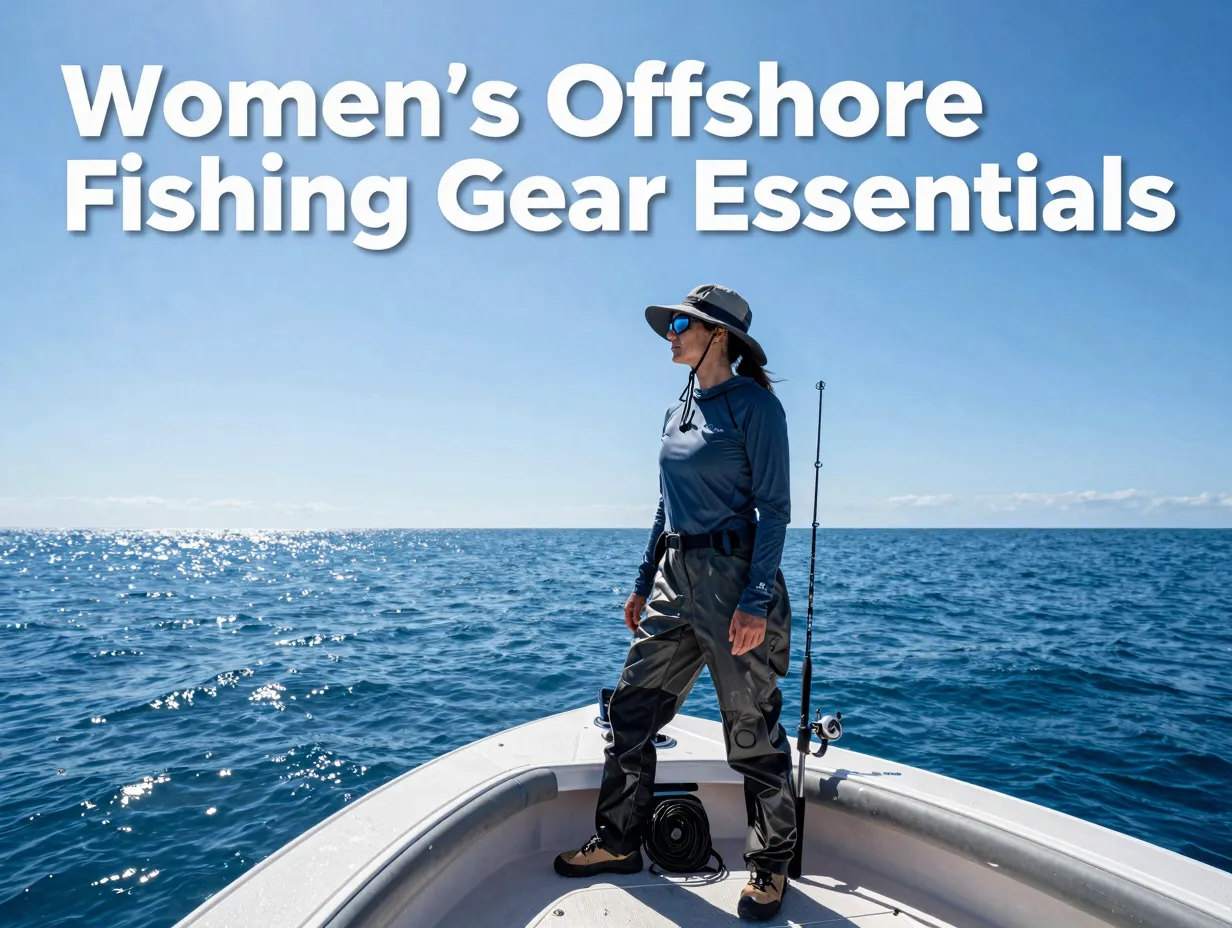
- Sun protection is the single most critical factor in an offshore fishing outfit for women, UPF-rated clothing, polarized sunglasses, and a wide-brim hat are non-negotiable.
- Layering is essential offshore because conditions can shift from hot and humid to cold and wet within hours.
- Fit matters as much as function, women-specific cuts improve mobility, comfort, and safety on a moving boat.
- Waterproof, non-slip footwear prevents falls on wet decks and protects feet from hooks and heavy tackle.
- Investing in quality materials upfront reduces long-term costs and keeps performance consistent across multiple seasons.
Why the Right Outfit Changes Everything Offshore
Offshore fishing is a physically demanding environment. Unlike inshore or freshwater fishing, the open ocean exposes anglers to intensified UV radiation reflected off the water, sustained wind, salt spray, and unpredictable weather. The National Oceanic and Atmospheric Administration notes that UV intensity over open water can be 25% higher than on land due to surface reflection.
For women anglers, the challenge is compounded by the fact that most generic fishing apparel is cut for male body proportions. Ill-fitting gear restricts movement, creates chafing, and in worst-case scenarios, becomes a safety hazard on a rocking boat. Understanding the 8 offshore fishing outfit essentials for women anglers is the foundation of every successful trip.
“The best fishing outfit is the one you barely notice while you are fighting a fish, because it fits, breathes, and protects without getting in your way.”
The Complete Breakdown of 8 Offshore Fishing Outfit Essentials for Women Anglers
1. UPF-Rated Sun Shirt
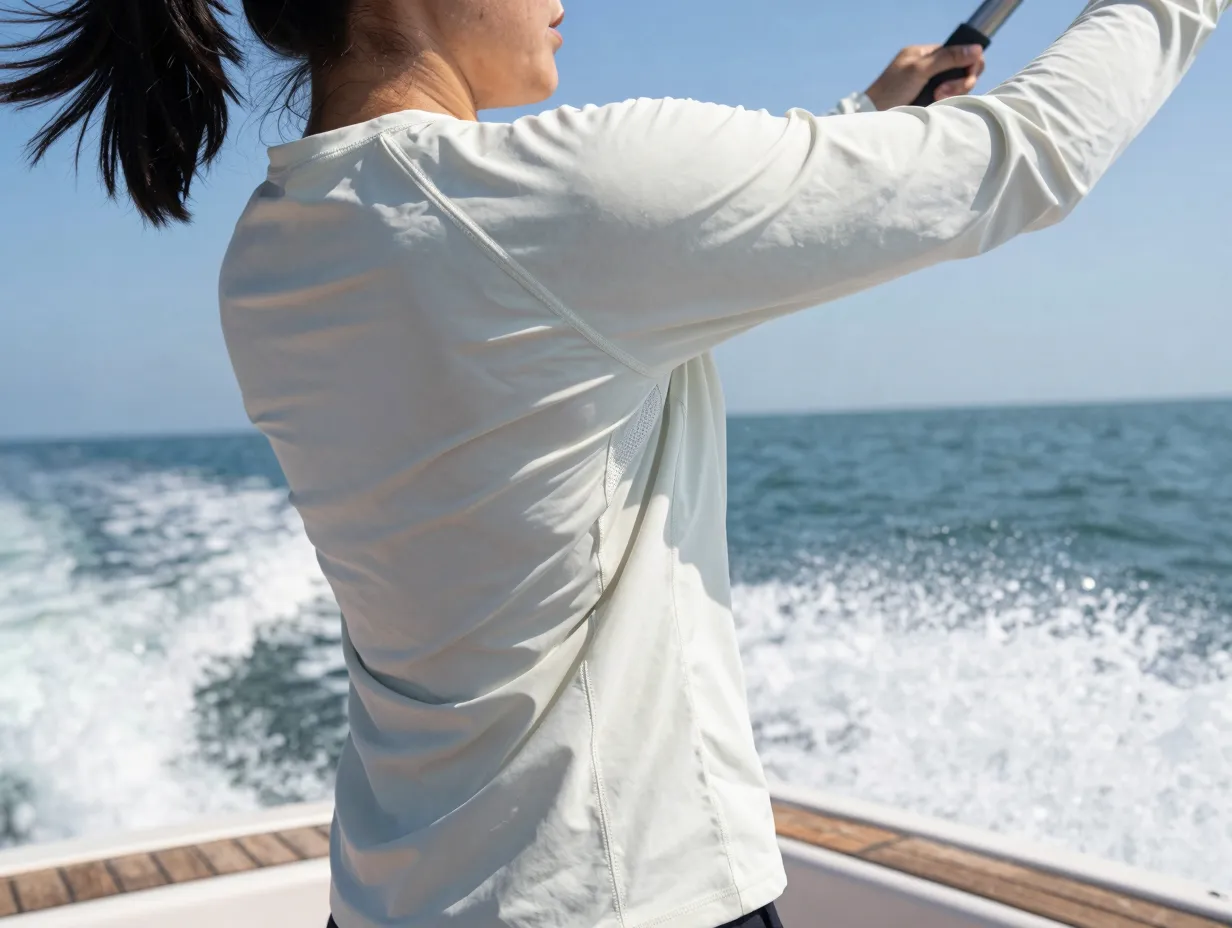
The sun shirt is the cornerstone of any offshore fishing outfit for women. When spending six to ten hours on the open water, sunscreen alone is insufficient, it wears off, sweats off, and requires constant reapplication. A long-sleeve shirt rated UPF 50+ blocks more than 98% of UV radiation and provides consistent protection throughout the day.
What to look for:
- UPF 50+ certification from a recognized testing body
- Moisture-wicking, quick-dry fabric (polyester-spandex blends perform well)
- Flatlock seams to prevent chafing during repetitive casting motions
- Women-specific cut with a slightly longer back hem and articulated shoulders
- Vented back panels or mesh underarm gussets for airflow in humid conditions
Popular fabric choices include nylon-spandex blends for stretch and durability, and lightweight polyester for faster drying. Avoid 100% cotton offshore, it absorbs water, becomes heavy, and takes hours to dry, increasing the risk of hypothermia in cooler conditions.
Fit tip: The shirt should allow full arm extension without pulling at the shoulders. Test by mimicking a casting motion before purchasing.
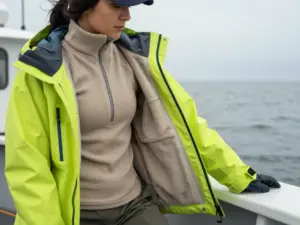
2. Waterproof Outer Layer or Rain Jacket
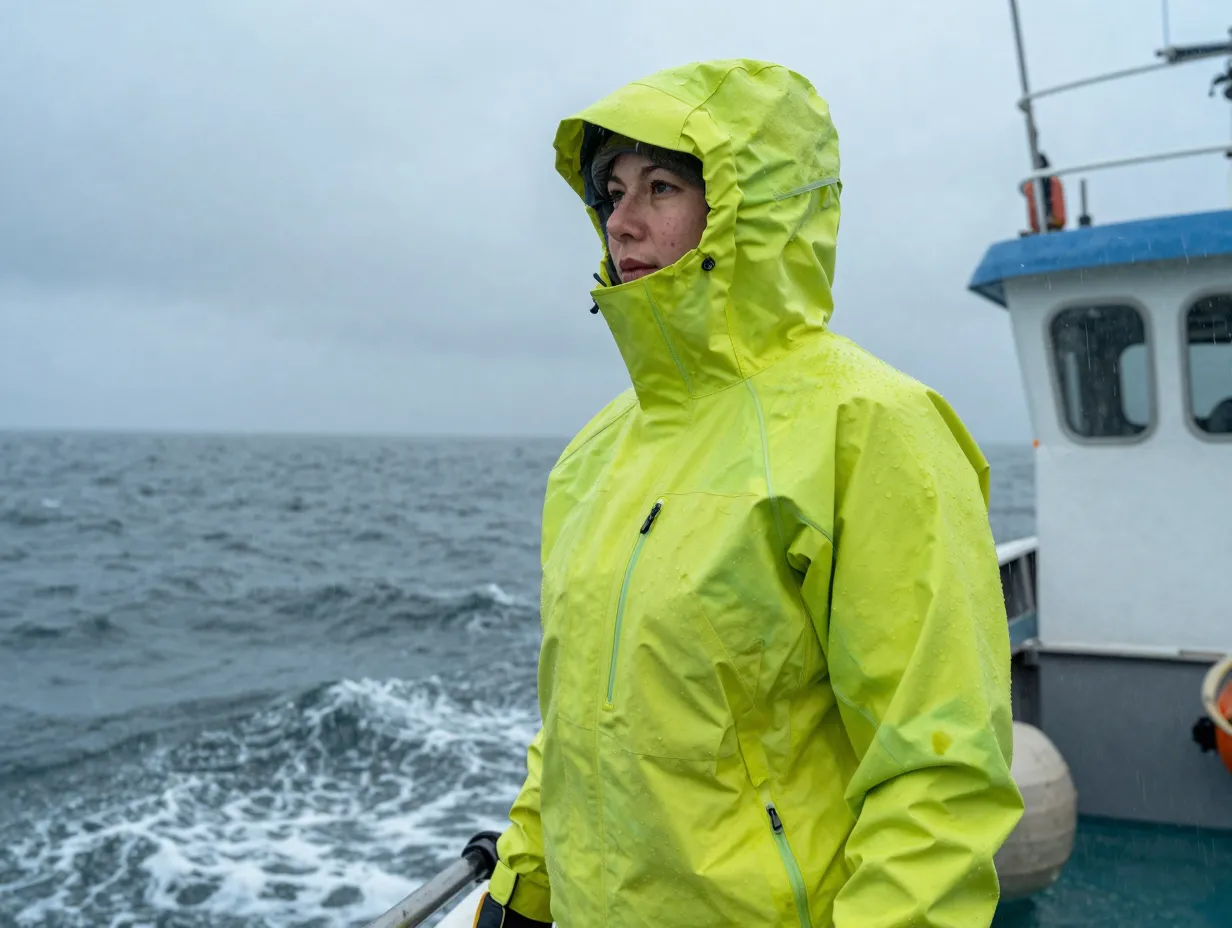
Offshore conditions change without warning. A squall that looks distant on the horizon can reach the boat within minutes, dropping temperatures by 10 to 15 degrees and soaking everything on deck. A waterproof outer layer is not optional, it is a safety essential.
Key features to prioritize:
- Fully seam-sealed or critically seam-sealed construction
- Breathable waterproof membrane (Gore-Tex or proprietary equivalents)
- Adjustable hood that stays in place at speed
- Zippered hand pockets with drainage ports
- High collar or neck seal to block spray
Women’s-specific offshore jackets are now widely available from brands that specialize in marine apparel. These cuts account for a higher hip-to-shoulder ratio and shorter torso length, which prevents the jacket from riding up during active fishing.
A lightweight packable rain shell works for warm-weather trips, while a heavier insulated waterproof jacket is the better choice for early-morning starts or fishing in northern latitudes.
3. Moisture-Wicking Base Layer
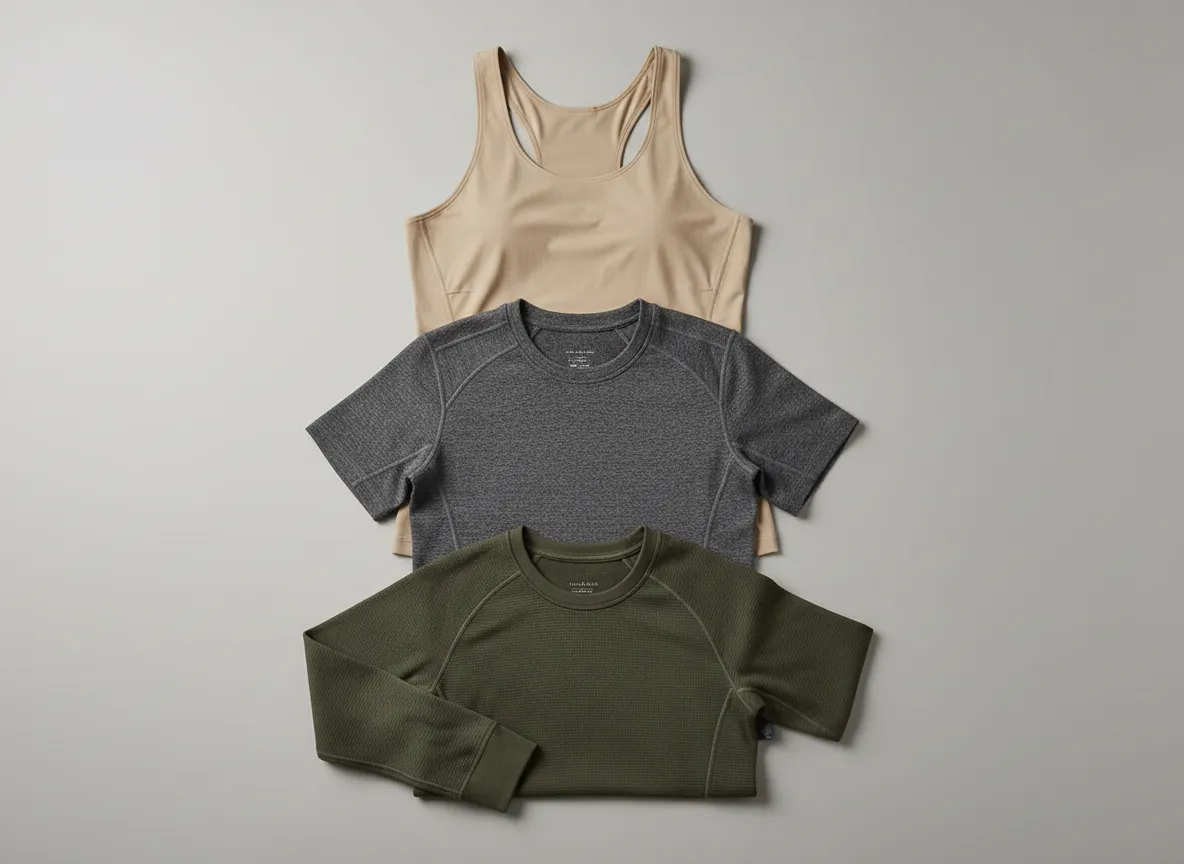
The base layer is the first line of defense against sweat accumulation and temperature fluctuation. On warm days, a lightweight moisture-wicking tank or short-sleeve top worn under the sun shirt helps regulate body temperature. On cooler days, a thermal base layer traps warmth without adding bulk.
Base layer selection by condition:
| Condition | Recommended Base Layer | Material |
|---|---|---|
| Hot and humid (80°F+) | Lightweight moisture-wicking tank | Polyester or nylon blend |
| Mild (60-79°F) | Short-sleeve moisture-wicking top | Merino wool or polyester |
| Cool (45-59°F) | Lightweight thermal long-sleeve | Merino wool or synthetic fleece |
| Cold (below 45°F) | Midweight thermal set | Merino wool or polypropylene |
Merino wool is worth the higher price point for offshore use because it manages odor naturally, regulates temperature in both warm and cold conditions, and remains comfortable even when damp.
4. Non-Slip Deck Shoes or Offshore Boots
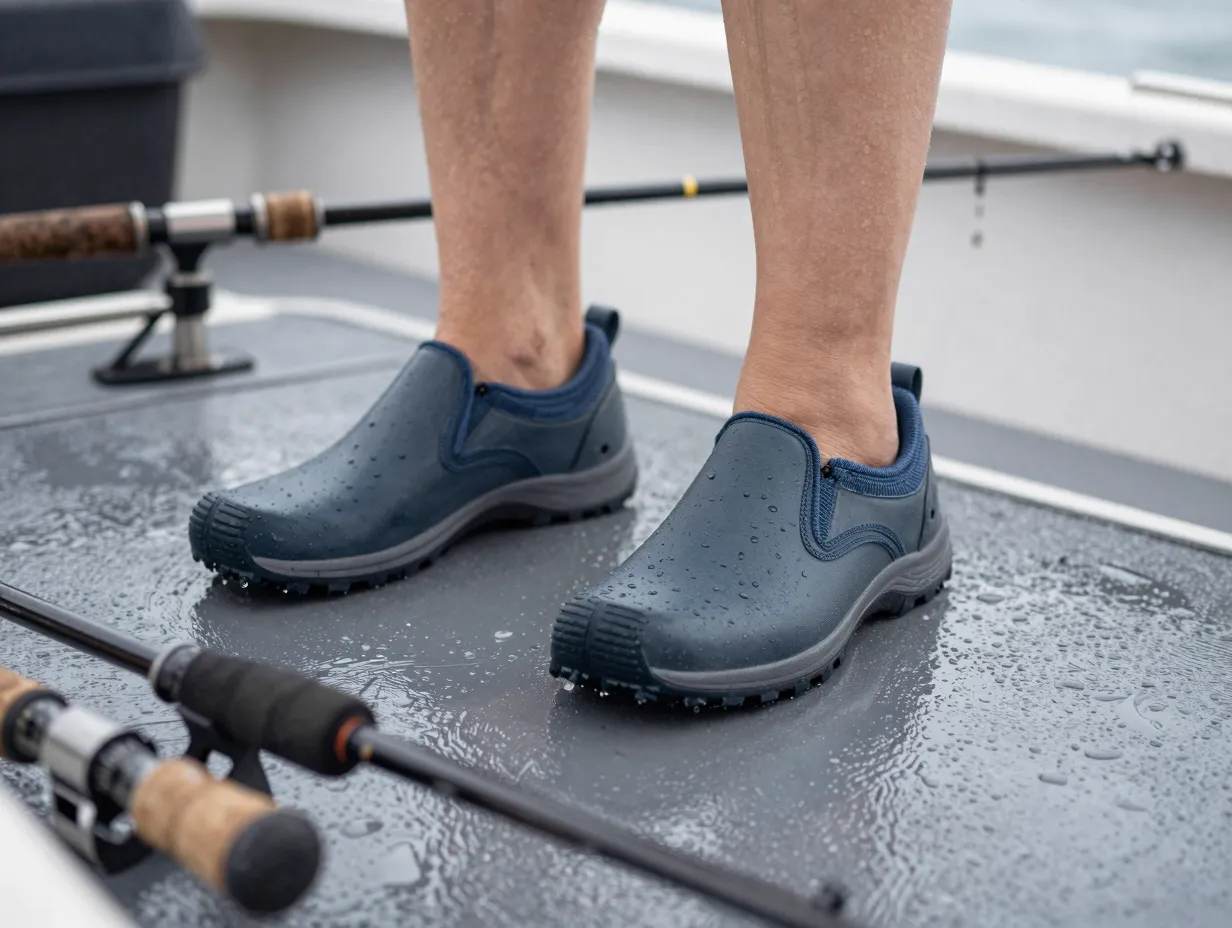
Falls on wet boat decks are one of the leading causes of injury in recreational fishing. The right footwear is not a style choice, it is a safety decision. Non-slip deck shoes designed specifically for marine environments use specialized rubber compounds that grip wet fiberglass and teak surfaces without leaving marks.
What separates good offshore footwear from bad:
- Siping pattern on the sole (small cuts that channel water away from the contact surface)
- Closed-toe construction to protect feet from dropped tackle, hooks, and heavy equipment
- Drainage ports or quick-dry mesh lining for water that enters the shoe
- Low-profile heel that does not catch on deck hardware
- Ankle support for rough-water conditions (consider a low boot over a shoe)
For women anglers, fit is critical. Many marine footwear brands now offer women-specific sizing and narrower lasts. A shoe that is too wide will shift during movement, reducing the effectiveness of the non-slip sole.
Avoid: Flip-flops, sandals, bare feet, and any shoe with a smooth rubber sole. These are serious safety hazards offshore.
5. Wide-Brim Sun Hat
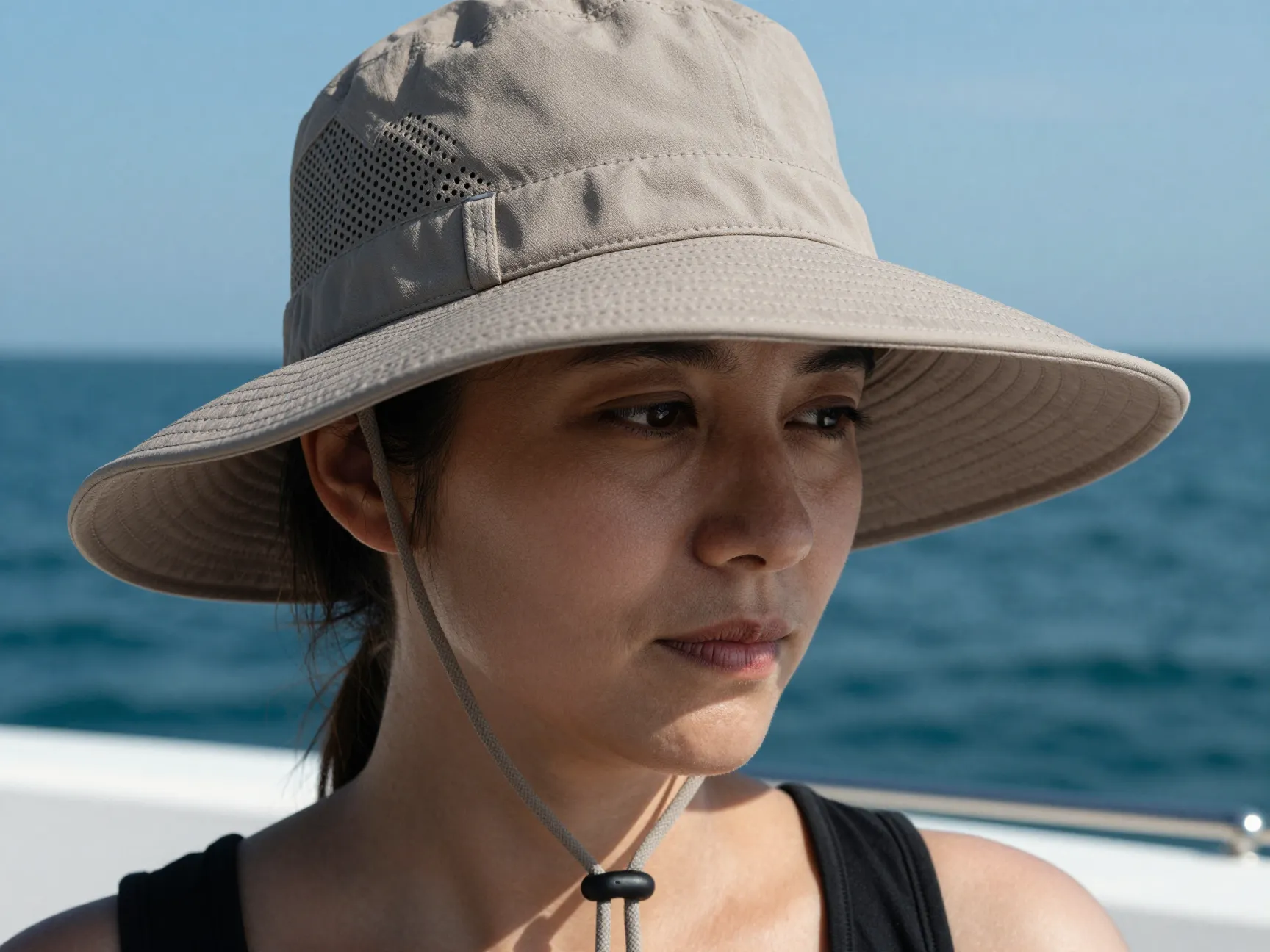
The face, neck, and ears receive the highest UV exposure during a day of offshore fishing. A wide-brim hat rated UPF 50+ addresses all three areas simultaneously and reduces the amount of sunscreen needed on the face.
Brim width recommendations:
- Minimum 3-inch brim for adequate face and neck coverage
- 4-inch or wider for maximum protection in tropical or high-UV environments
- Neck cape attachment (optional but highly recommended for full-day offshore trips)
Hat construction features to evaluate:
- Crushable or packable design for easy storage in a gear bag
- Chin strap or wind cord to prevent loss in high winds (a common offshore problem)
- Moisture-wicking sweatband inside the crown
- Ventilated crown panels to prevent heat buildup
Straw hats and fashion sun hats are not designed for active fishing, they lack structural integrity in wind and typically offer no certified UV protection. Choose a hat specifically rated for outdoor performance.
6. Polarized Sunglasses
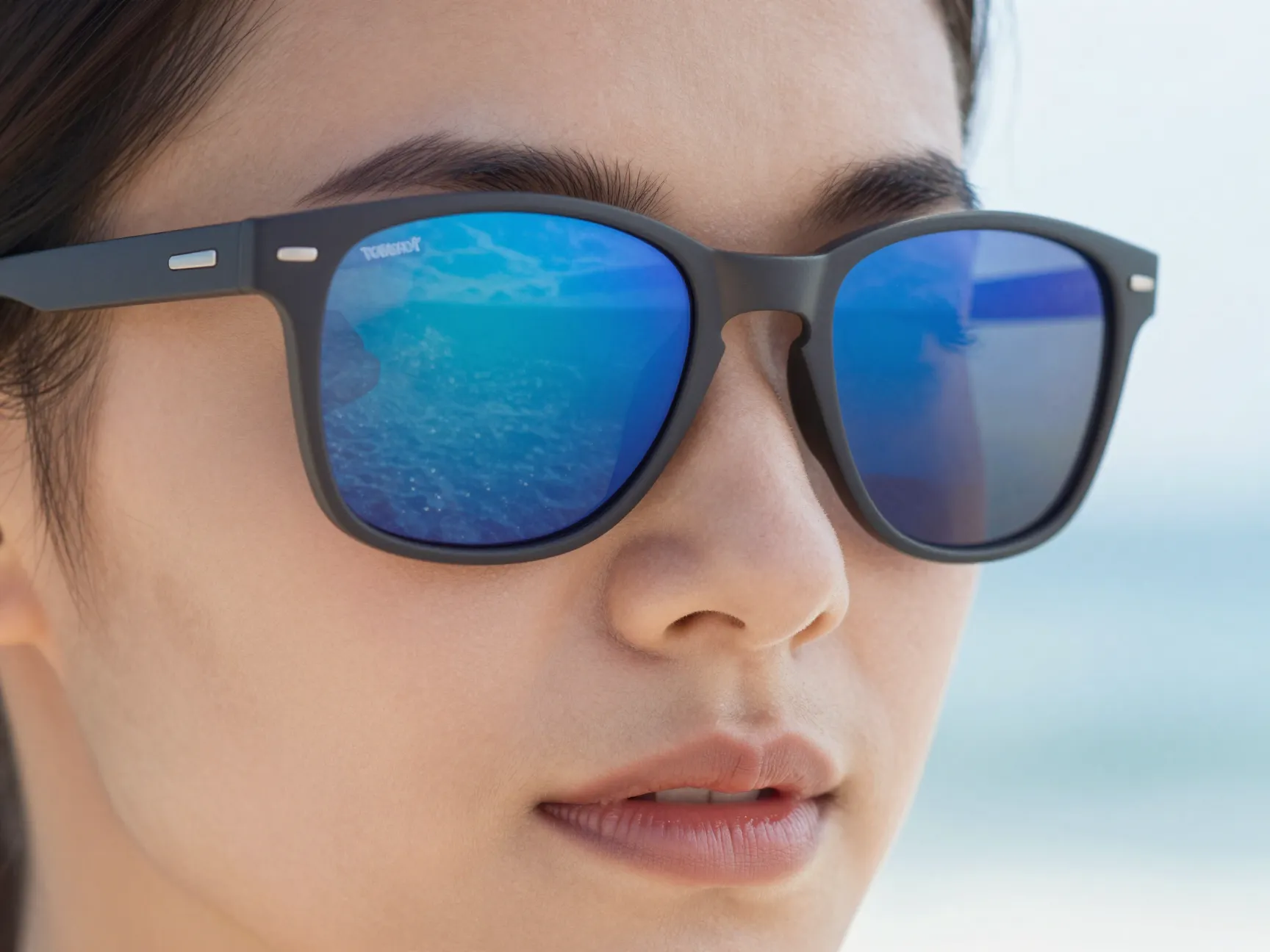
Polarized lenses are not a luxury upgrade for offshore fishing, they are a functional tool. The horizontal light waves reflected off the ocean surface create glare that obscures underwater visibility and causes significant eye fatigue over a full day. Polarized lenses filter these waves, reducing glare and allowing anglers to see fish, structure, and depth changes below the surface.
Lens color guide for offshore use:
- Gray lenses: Best for bright, open-ocean conditions. Maintain true color perception.
- Copper or amber lenses: Versatile for variable light conditions, enhance contrast.
- Blue mirror lenses: Reduce intense offshore glare, good for tropical environments.
Frame considerations for women anglers:
- Wraparound or semi-wrap frame for maximum peripheral coverage
- Lightweight frame material (TR-90 nylon or titanium) to reduce pressure over long days
- Rubberized nose pads and temple tips to prevent slipping in humid conditions
- Strap attachment point to secure glasses when leaning over the gunwale
UV400 protection (blocking all UVA and UVB rays up to 400nm) should be a minimum requirement. Polarization alone without UV protection is insufficient for eye safety.
7. Fishing Gloves
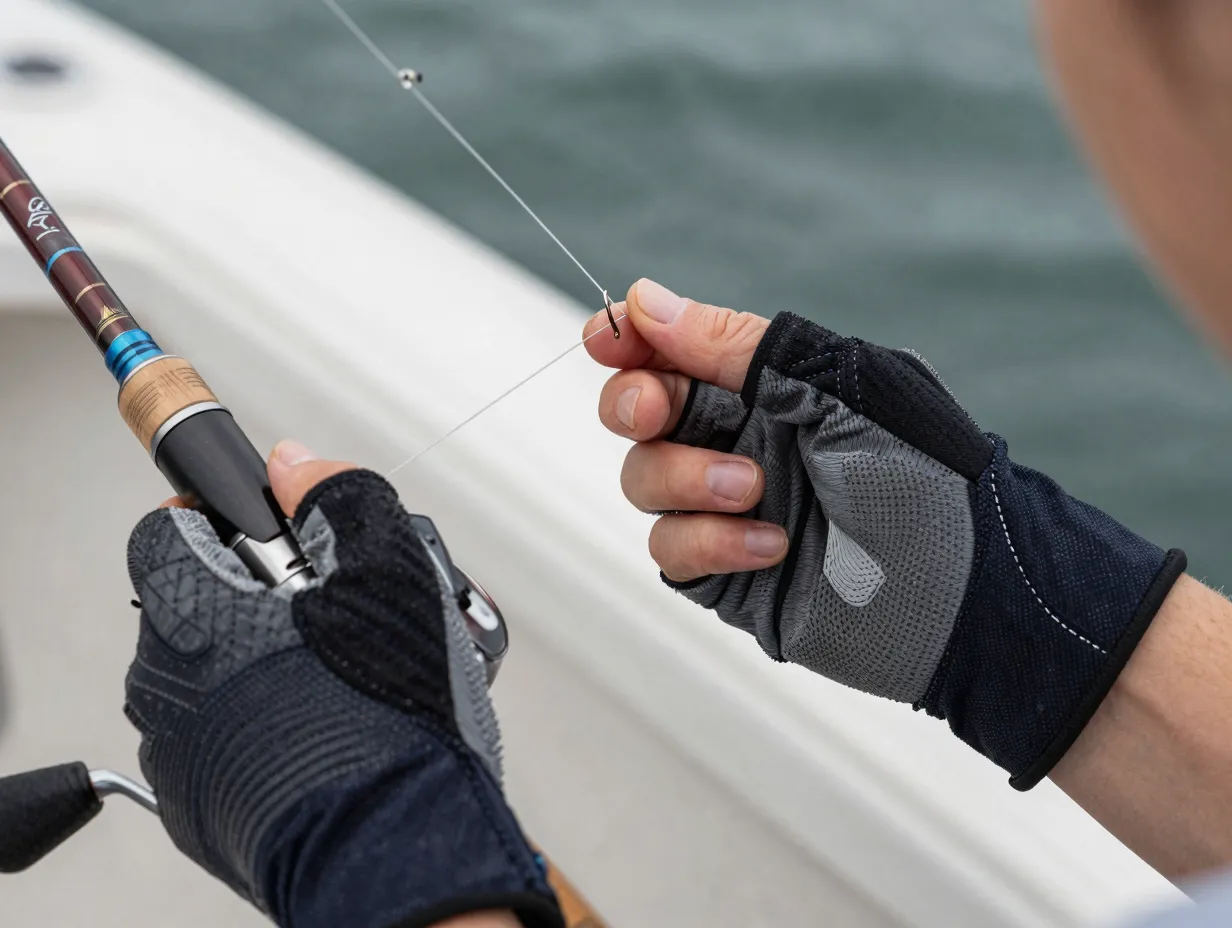
Hands take significant punishment during offshore fishing. Repeated casting, line handling, fighting large fish, and contact with sharp tackle all create abrasion, cuts, and UV exposure on the backs of the hands. Fishing-specific gloves address all of these issues without sacrificing dexterity.
Types of offshore fishing gloves:
- Full-finger sun gloves: Lightweight, UPF-rated fabric covers the entire hand. Best for long days with high UV exposure and minimal heavy tackle work.
- Cut-resistant fighting gloves: Reinforced palm and finger panels protect against monofilament and braid cuts when fighting large fish or handling leaders.
- Fingerless or three-quarter gloves: Expose fingertips for knot tying and bait rigging while protecting the palm and back of the hand.
Women-specific gloves with a smaller palm circumference and shorter finger length are now widely available and provide a significantly better fit than unisex options. A glove that is too large bunches at the fingertips and reduces grip strength.
Additional benefit: Gloves reduce the risk of saltwater-induced skin cracking and the irritation caused by fish slime and bait contact.
8. Neck Gaiter or Buff
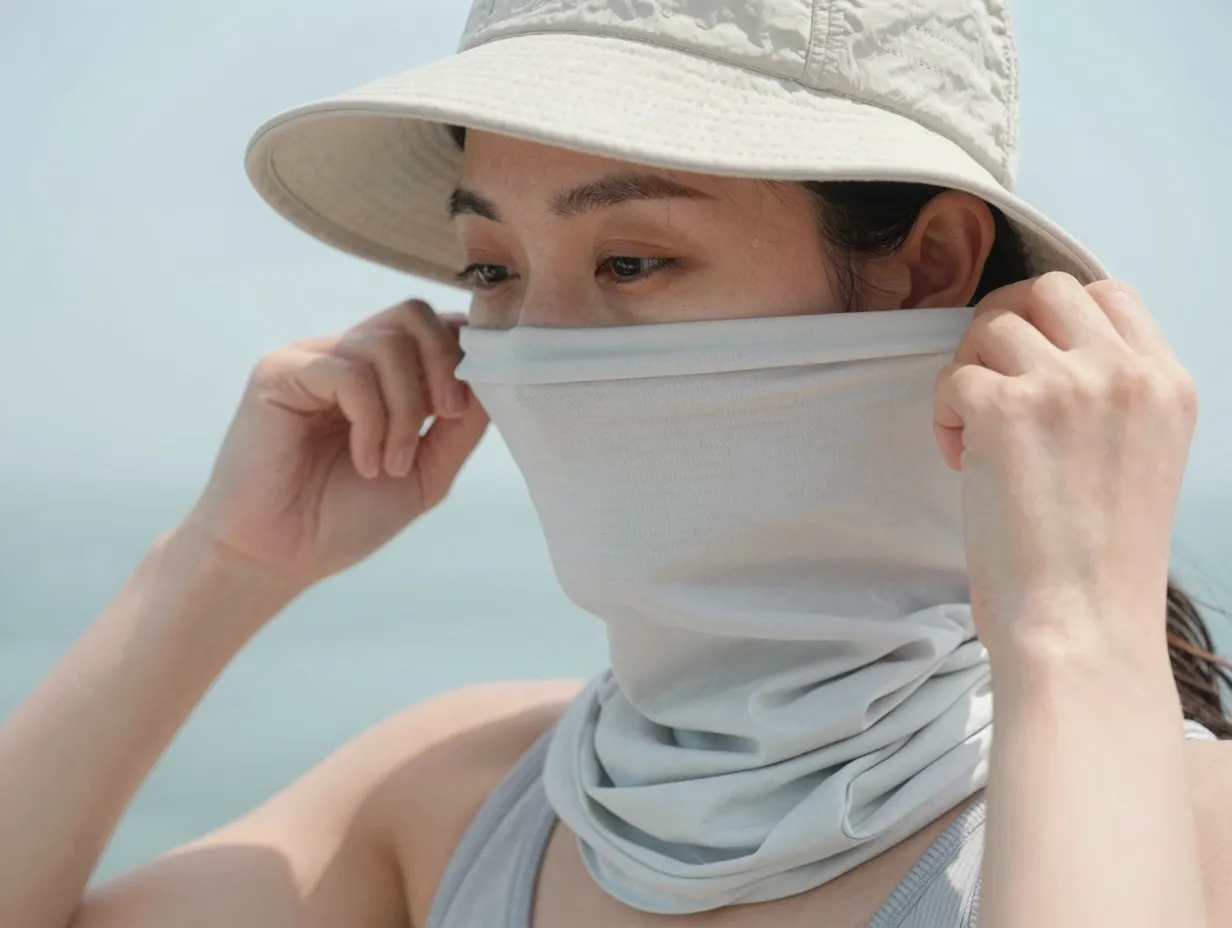
The neck gaiter is the most underrated item in the 8 offshore fishing outfit essentials for women anglers. This single piece of lightweight, tubular fabric can function as a neck cover, face mask, headband, hair wrap, or ear protection depending on how it is worn. For offshore fishing, its primary role is protecting the neck, lower face, and ears from UV exposure and wind.
Key performance features:
- UPF 50+ rated fabric (look for certification, not just marketing claims)
- Moisture-wicking and quick-dry construction
- Four-way stretch for comfortable repositioning throughout the day
- Lightweight enough to wear without noticing in warm conditions
Versatile wearing positions for offshore use:
- Pulled up over the nose and lower face during high-UV midday hours
- Worn as a neck tube to cover the gap between the sun shirt collar and the hat brim
- Folded as a headband to keep hair out of the face during active fishing
- Worn over the ears to reduce wind noise and prevent earache in cold conditions
A quality neck gaiter weighs less than two ounces and takes up almost no space in a gear bag. It is one of the highest value-to-weight items in any offshore fishing kit.
How to Build the Complete Offshore Fishing Outfit for Women
Understanding the 8 offshore fishing outfit essentials for women anglers individually is only half the equation. The other half is knowing how to combine them into a functional layering system that adapts to changing conditions throughout the day.
A practical layering sequence for offshore fishing:
- Start with the moisture-wicking base layer directly against the skin.
- Add the UPF sun shirt as the primary outer layer in warm conditions.
- Wear the neck gaiter around the neck, ready to pull up when UV intensity increases.
- Put on the wide-brim hat before leaving the dock, not after the sun is already beating down.
- Secure polarized sunglasses before the boat leaves the marina.
- Keep the waterproof jacket accessible in the cockpit, not buried in a bag.
- Wear deck shoes from the moment you step aboard, not just when conditions get wet.
- Gloves go on before extended casting sessions or when fighting fish.
Common mistakes women anglers make with offshore outfits:
- Wearing athletic leggings without UV protection (standard fabric offers minimal UV blocking)
- Choosing fashion sunglasses without polarization or UV400 rating
- Skipping the waterproof layer because the morning forecast looks clear
- Wearing sandals or boat shoes with smooth soles on offshore vessels
- Underestimating wind chill at speed, a 70°F day at 30 knots feels significantly colder
Fabric Technology and Care for Offshore Fishing Apparel
The performance of offshore fishing apparel depends heavily on proper care. Salt, sunscreen, fish oils, and UV exposure degrade fabric faster than normal wear. Following care instructions extends the life of each item and preserves the UPF rating and waterproofing.
Care guidelines by item type:
- UPF sun shirts and base layers: Rinse in fresh water after each use. Machine wash in cold water with a gentle detergent. Avoid fabric softener, it clogs moisture-wicking fibers and reduces UPF effectiveness.
- Waterproof jackets: Rinse after salt exposure. Machine wash on a gentle cycle with a technical outerwear cleaner. Tumble dry on low heat to reactivate the DWR (Durable Water Repellent) coating.
- Deck shoes: Rinse thoroughly after each use. Allow to air dry away from direct heat. Apply a marine-grade rubber conditioner to the sole periodically.
- Polarized sunglasses: Rinse with fresh water, dry with a microfiber cloth. Store in a hard case to prevent lens scratching.
- Neck gaiters and gloves: Machine wash cold, air dry. Replace when the UPF certification is no longer listed as active (typically after 30 to 40 washes for most fabrics).
Budget vs. Investment Approach to Women’s Offshore Fishing Apparel
Not every angler needs to purchase the highest-end version of every item simultaneously. A tiered approach to building out the complete set of 8 offshore fishing outfit essentials for women anglers allows for smart spending without compromising safety.
Prioritize spending on these items first:
- Polarized sunglasses with UV400 protection (eye damage is permanent)
- Non-slip deck shoes (fall prevention is a safety priority)
- UPF 50+ sun shirt (daily UV exposure accumulates over a lifetime)
Items where mid-range options perform nearly as well as premium:
- Neck gaiters and buffs
- Moisture-wicking base layers
- Fishing gloves
Items worth investing in quality from the start:
- Waterproof outer layer (cheap rain jackets fail quickly in salt environments)
- Wide-brim performance hat (a hat that blows off at sea is useless)
The total cost of building a complete, quality offshore fishing outfit for women ranges widely depending on brand and retailer. However, treating each item as a multi-season investment rather than a single-use purchase changes the cost calculation significantly.
Conclusion
The 8 offshore fishing outfit essentials for women anglers, the UPF sun shirt, waterproof outer layer, moisture-wicking base layer, non-slip deck shoes, wide-brim sun hat, polarized sunglasses, fishing gloves, and neck gaiter, form a complete system designed to protect, perform, and adapt on the open water.
Actionable next steps:
- Audit the current gear bag against this list and identify the two or three most critical gaps.
- Prioritize purchasing items that address safety first: footwear, eye protection, and UV-rated clothing.
- Look specifically for women-specific cuts and sizing rather than defaulting to unisex or men’s sizing.
- Test new apparel on shorter inshore or nearshore trips before committing to a full offshore day.
- Replace items that have lost their technical performance (faded UPF ratings, delaminated waterproofing, worn-out soles) before the next season begins.
Offshore fishing in 2026 offers more high-performance, women-specific apparel options than ever before. The right outfit does not just make the trip more comfortable, it makes the angler safer, more focused, and better prepared to land the fish of a lifetime.