9 Bluefin Tuna Fishing Secrets from Seasoned Anglers
A single Atlantic bluefin tuna can weigh over 1,000 pounds and swim at speeds exceeding 40 miles per hour, yet most anglers who target them come home empty-handed. The gap between those who consistently land these fish and those who do not almost always comes down to a handful of hard-won techniques that rarely appear in beginner guides. This article breaks down the 9 Bluefin Tuna Fishing Secrets from Seasoned Anglers that separate elite offshore fishermen from the rest of the fleet. Whether targeting giants off the Northeast coast or chasing Pacific schools off Southern California, these insights apply across the board.
Disclosure: This post contains affiliate links. As an Amazon Associate, we earn from qualifying purchases, and at no extra cost to you.
Key Takeaways
- Matching casting setups to surface-feeding “foamers” dramatically increases hookup rates
- Trolling speed and spread configuration must be adjusted based on bluefin behavior, not habit
- Reading water temperature breaks, bait concentrations, and current edges is as important as tackle selection
- Leader material, hook size, and bait presentation are often the difference between a strike and a refusal
- Regulations and seasonal timing vary significantly by region, knowing the rules protects both the angler and the fishery
What Makes Bluefin Tuna So Difficult to Catch
Bluefin tuna are not simply large fish. They are highly intelligent, exceptionally fast, and acutely sensitive to unnatural presentations. They travel in schools that can vanish beneath the surface in seconds, and they feed selectively even when actively hunting. Understanding their behavior is the foundation of every secret covered below [2].
Bluefin are found in both the Atlantic and Pacific Oceans. Atlantic bluefin are managed under strict quotas by NOAA and the International Commission for the Conservation of Atlantic Tunas (ICCAT). Pacific bluefin, particularly the schools that appear off Southern California, have generated extraordinary catches in recent seasons [3]. The species demands respect, both as a sportfish and as a managed resource.
The 9 Bluefin Tuna Fishing Secrets from Seasoned Anglers
1. Build a Casting Setup Specifically for Foamers
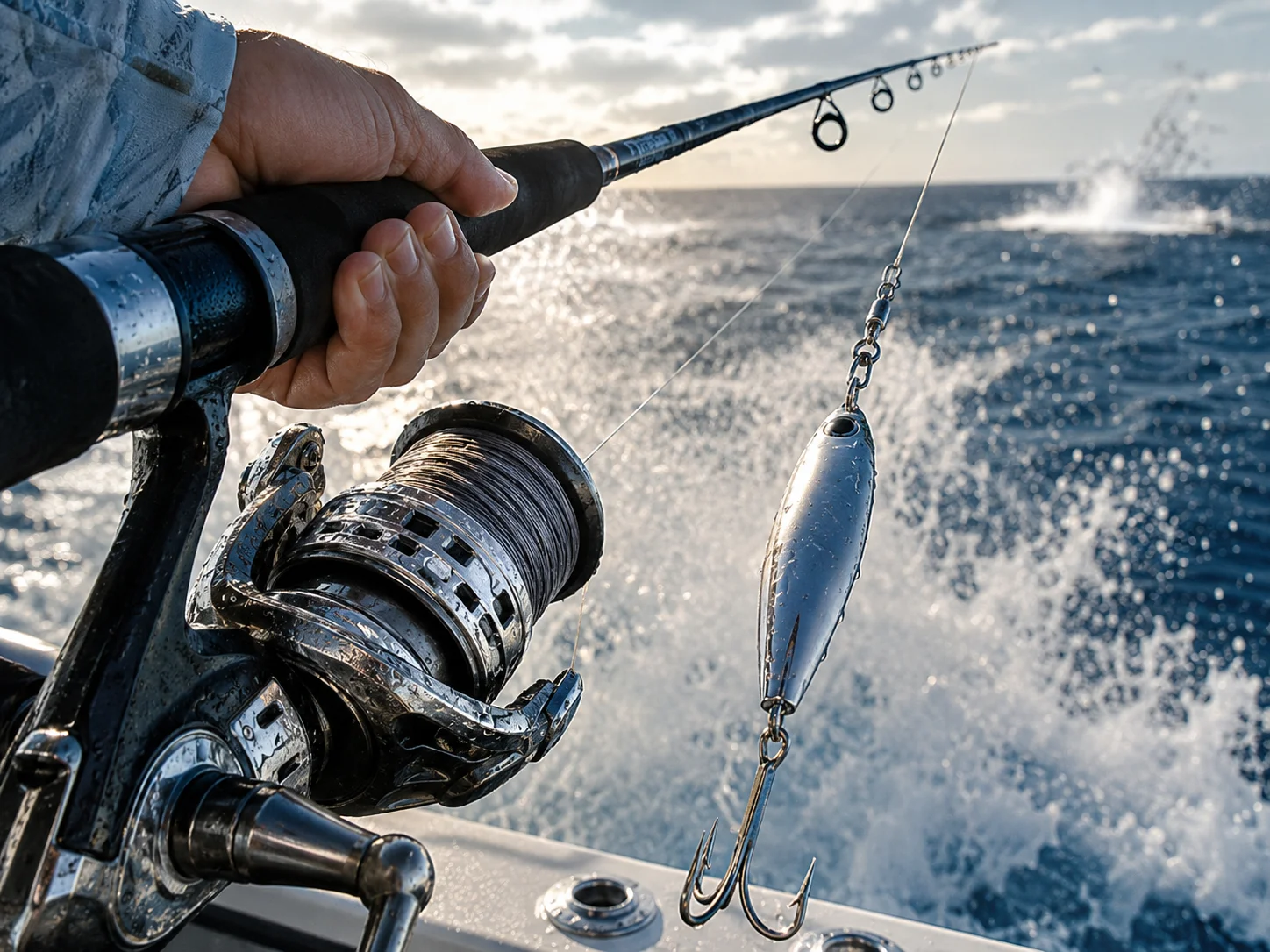
A “foamer” is a surface-feeding school of bluefin tuna that erupts on bait, creating a boiling, white-water frenzy visible from a distance. These opportunities are brief and unforgiving. A general-purpose spinning rod will not cut it.
Experienced anglers build dedicated foamer setups around:
- Rod: A fast-action spinning rod in the 7 to 8-foot range rated for 40 to 80-pound braid
- Reel: A high-capacity spinning reel with a smooth, powerful drag system capable of handling sudden 40-mph runs
- Line: 65 to 80-pound braided mainline with a 60 to 80-pound fluorocarbon leader (15 to 20 feet)
- Lure: Surface irons, poppers, or stick baits in the 3 to 6-ounce range that match the size of the bait being targeted
The key is having this rod rigged and ready before a foamer appears. When a school erupts, there is no time to tie knots. Casts should be made ahead of the school’s direction of travel, not directly into the boil, which spooks fish [8].
2. Dial In Trolling Speed and Spread for Bluefin Behavior
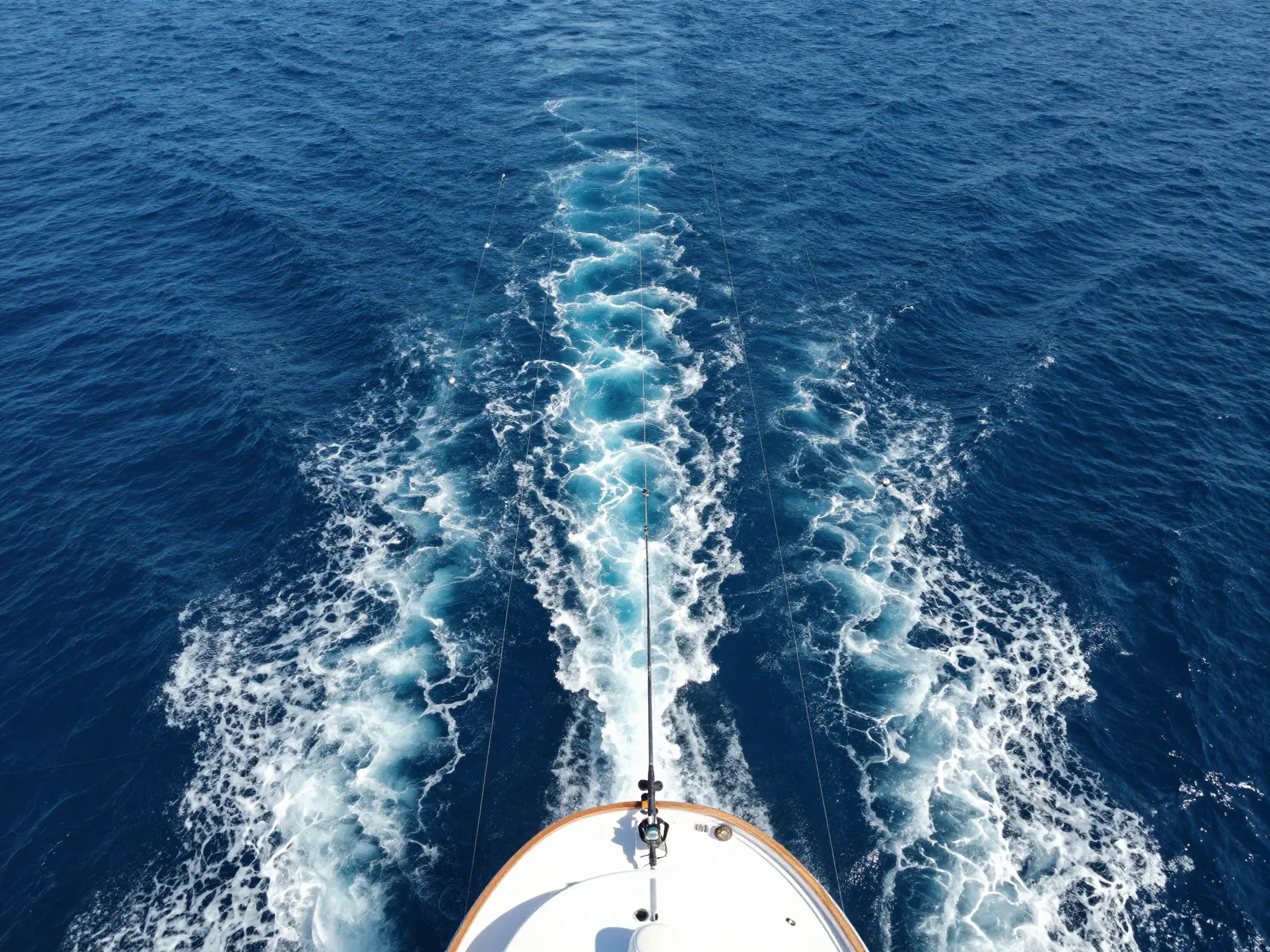
Trolling remains one of the most productive methods for covering water and locating bluefin, but the details matter enormously. Many anglers troll at speeds that work for other species and wonder why bluefin ignore their spread.
Optimal trolling speeds for bluefin typically range from 7 to 9 knots, though some captains push to 10 or 11 knots when targeting fast-moving schools. The spread itself should be staggered:
| Position | Distance Behind Boat | Recommended Lure |
|---|---|---|
| Short Corner | 20-30 feet | Skirted ballyhoo or cedar plug |
| Long Corner | 40-60 feet | Spreader bar or daisy chain |
| Short Rigger | 60-80 feet | Skirted lure or naked ballyhoo |
| Long Rigger | 100-150 feet | High-speed jet lure or swimming plug |
Adjust the spread based on sea conditions. In rough water, shorten distances so lures stay in the water rather than skipping over waves [7].
3. Follow the Temperature Breaks
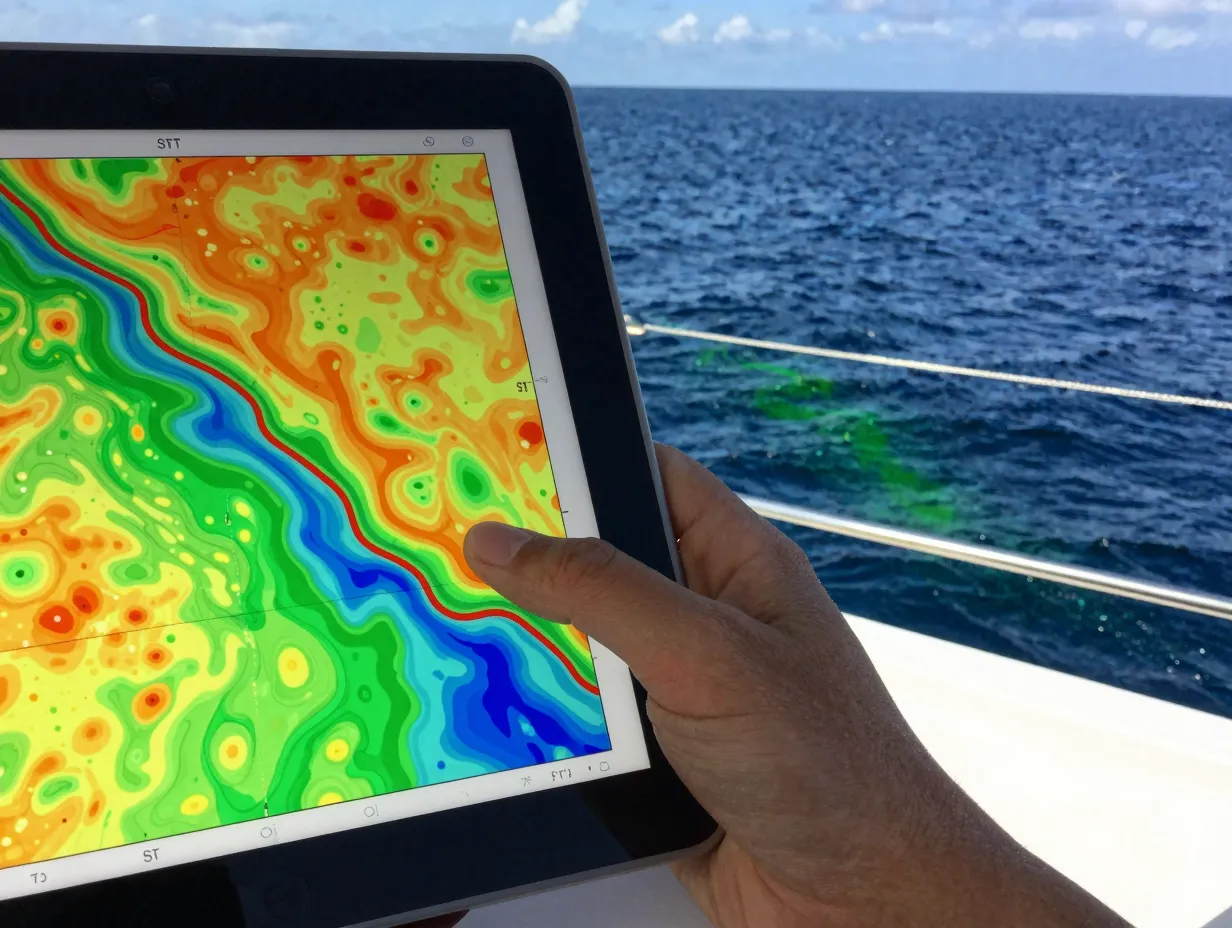
Bluefin tuna are thermal predators. They concentrate along temperature breaks, sharp transitions where warm and cold water masses meet, because bait fish stack there in enormous numbers.
Experienced captains use SST (sea surface temperature) charts updated daily via satellite services. A temperature change of just 2 to 3 degrees Fahrenheit over a short distance can hold thousands of pounds of bluefin. The cleaner and sharper the break, the better [4].
Pro tip: Look for temperature breaks that also coincide with color changes (green-to-blue water transitions) and current edges. The intersection of all three is often called a “triple point” and is among the most productive locations in offshore fishing.
4. Match the Bait, Precisely
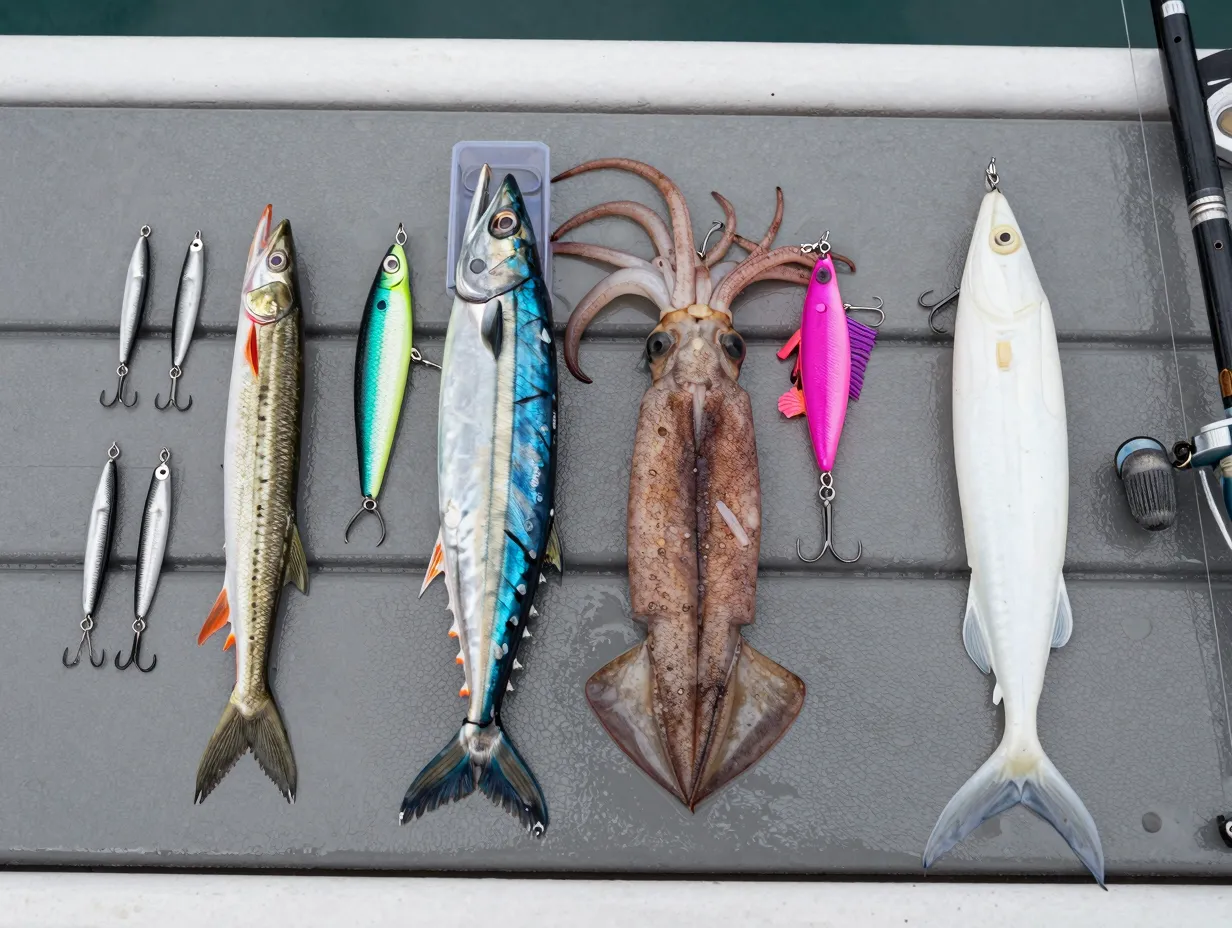
Bluefin tuna are selective feeders. When they are keyed in on small sand eels, a large mackerel bait will be ignored. When they are feeding on adult menhaden, a small jig will draw no interest.
Carry a cast net or a Sabiki rig to sample what bait is present in the area. Examine the stomach contents of any legally kept fish to confirm what they have been eating. Then match that bait as closely as possible in size, color, and action [2].
Common bait categories and matching presentations:
- Sand eels or spearing: small diamond jigs, slim metal lures, or 3-inch soft plastics
- Mackerel or herring: live-lined whole fish, large swimming plugs, or skirted rigged baits
- Squid: white or pink skirted lures, rigged whole squid, or soft plastic squid imitations
- Menhaden (bunker): live-lined or chunk-cut presentations, large poppers
5. Use Fluorocarbon Leaders, Always
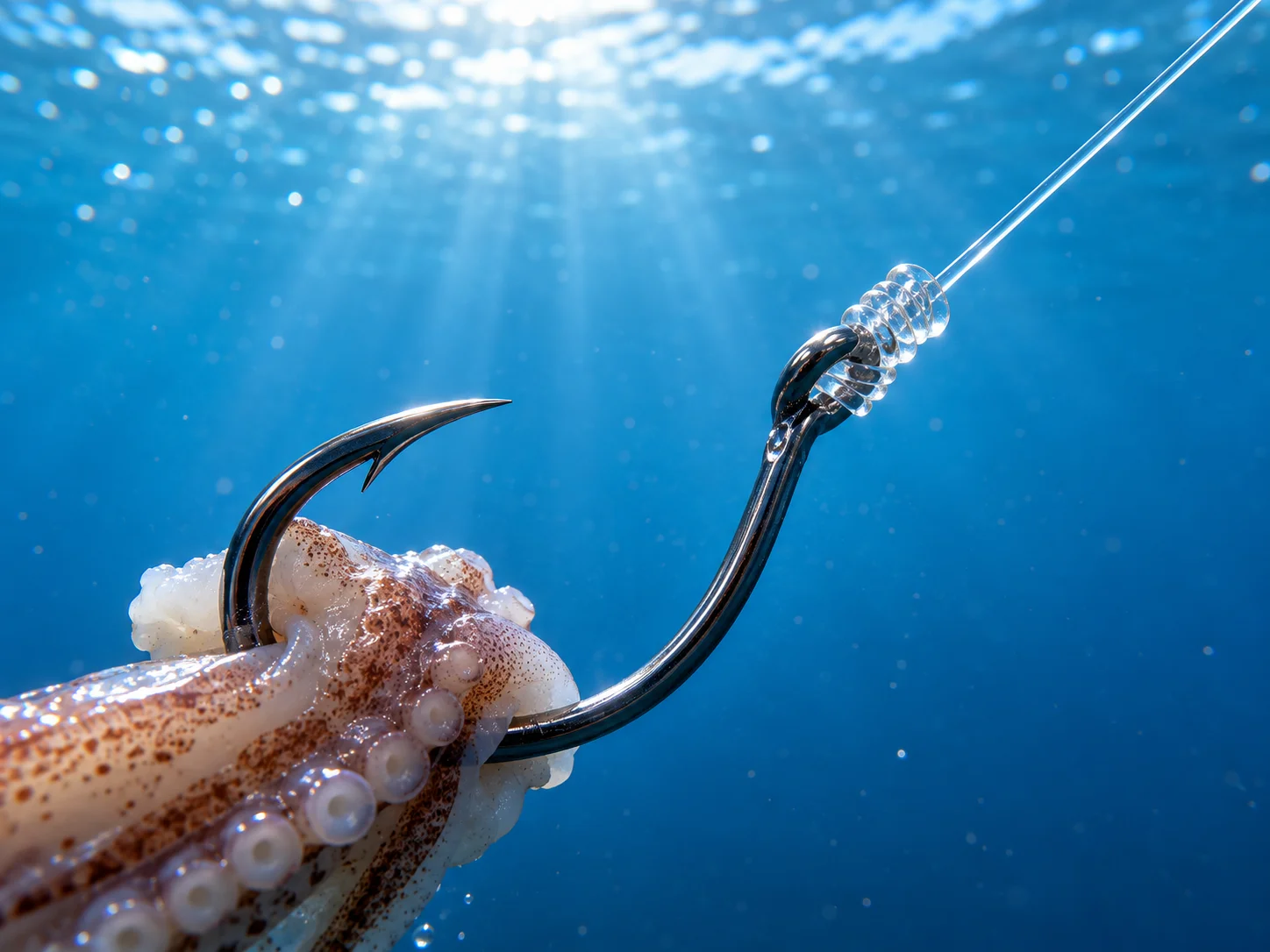
Bluefin tuna have exceptional eyesight. In clear offshore water, monofilament leaders are visible and will cost strikes. Fluorocarbon, which has a refractive index close to water, is nearly invisible and dramatically improves hookup rates.
For fish in the 50 to 200-pound class, a 60 to 80-pound fluorocarbon leader of 15 to 20 feet is standard. For giant bluefin over 200 pounds, leaders of 100 to 130-pound test are appropriate, though some captains accept fewer strikes in exchange for better landing odds [8].
“The leader is the last thing a bluefin sees before it commits. Get it wrong and the fish ghosts the bait every time.”, Common advice among veteran offshore captains
6. Time the Tides and Moon Phases
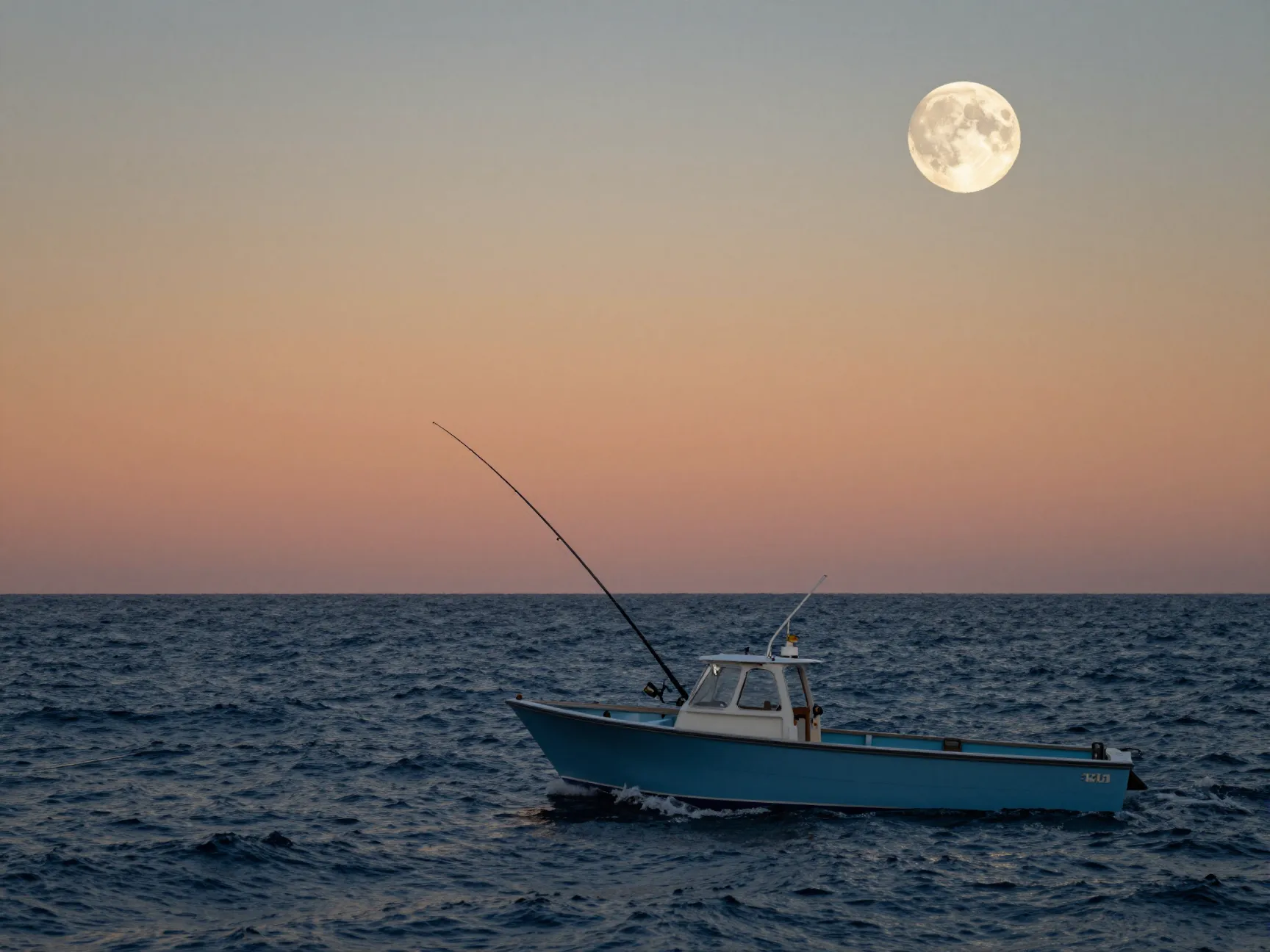
Bluefin feeding activity is strongly influenced by tidal movement and lunar cycles. Slack water periods, when the tide is neither flooding nor ebbing, often produce the slowest fishing. The strongest feeding windows typically occur during the first two hours of an incoming or outgoing tide.
Full moon and new moon phases increase tidal amplitude, which moves more water, concentrates bait, and triggers aggressive feeding. Many experienced captains plan their offshore trips around these windows rather than simply targeting weekends [7].
A practical planning framework:
- Best: New moon or full moon, strong tidal movement, early morning or late afternoon
- Good: Quarter moon phases, moderate tidal flow, overcast skies
- Challenging: Slack neap tides, bright midday sun, glassy calm conditions with no bait activity
7. Master the Chunking and Chumming Technique
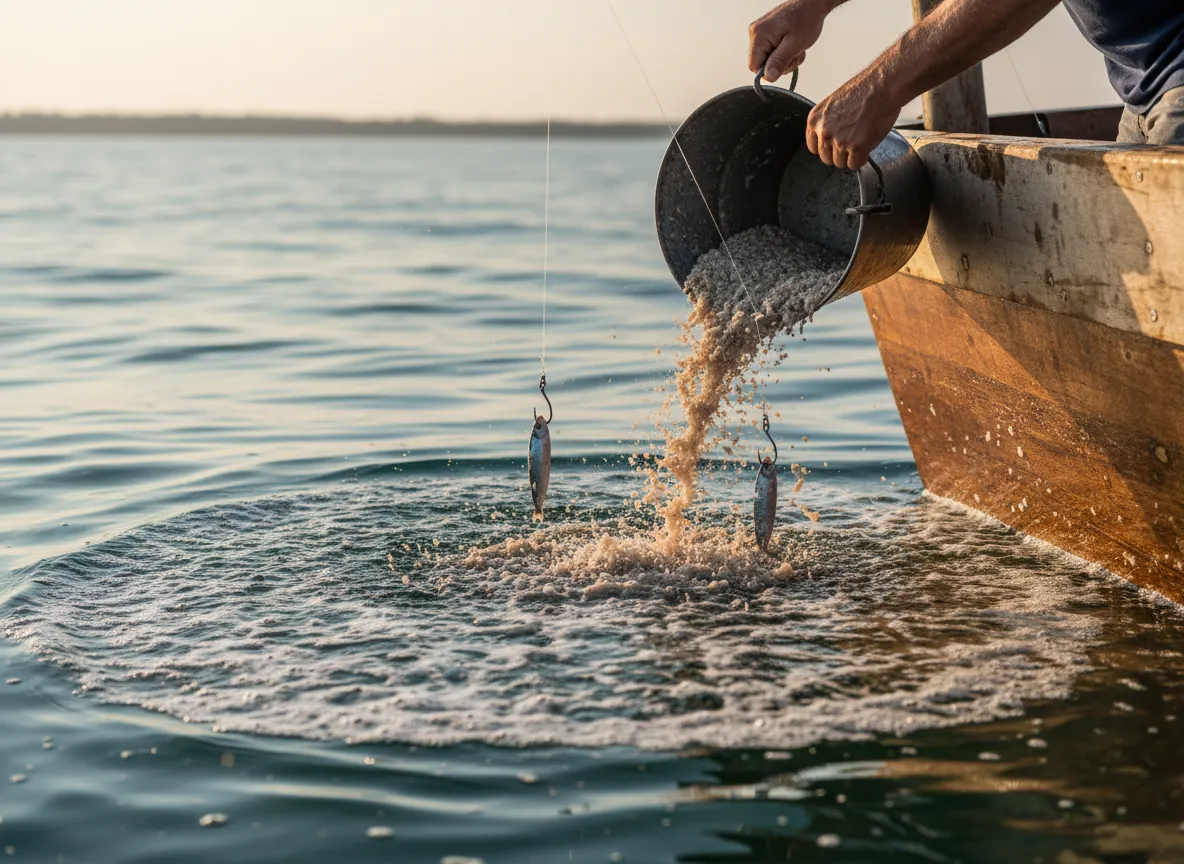
When bluefin are located but not actively feeding on the surface, chunking and chumming can draw them up and trigger strikes. This technique involves anchoring or drifting over a known holding area and creating a slick of cut bait that drifts downcurrent.
The process works as follows:
- Locate fish on sonar or by observing bird activity
- Position the boat upcurrent of the fish
- Begin a steady chum slick using ground menhaden or mackerel
- Deploy baited hooks at varying depths within the slick, some near the surface, some at 30 to 60 feet
- Use fluorocarbon leaders and circle hooks to improve hookup rates and reduce gut-hooking
Patience is critical. It can take 20 to 40 minutes before bluefin commit to a chunking spread. Maintain a consistent chum cadence and resist the urge to change presentations too quickly [4].
8. Understand Seasonal Migrations and Regional Hotspots
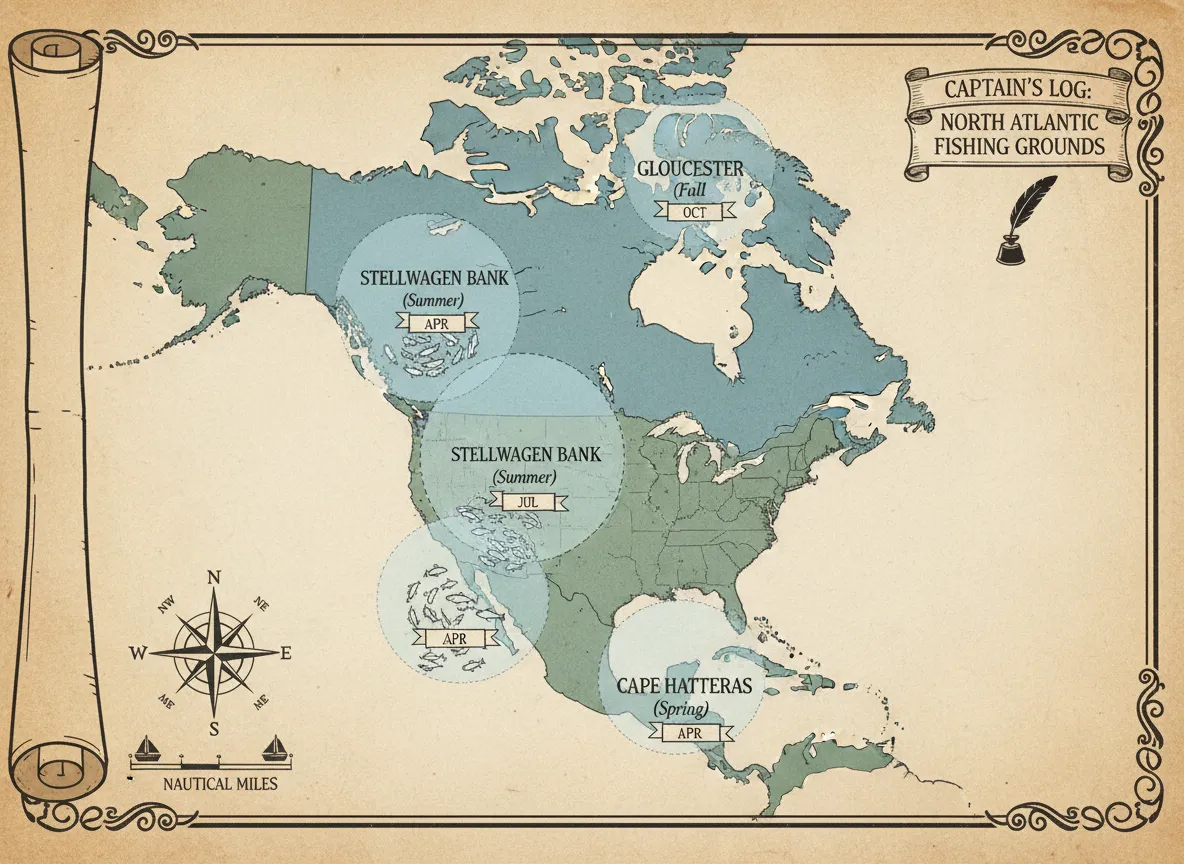
The 9 Bluefin Tuna Fishing Secrets from Seasoned Anglers would be incomplete without addressing seasonal timing. Bluefin are migratory fish, and being in the right place at the right time is non-negotiable.
Atlantic bluefin seasonal movement:
- Spring (April, June): Schools move northward along the Mid-Atlantic Bight; Cape Hatteras, Virginia Beach, and the New York Bight become productive
- Summer (July, September): Fish push into New England waters; Stellwagen Bank, the Canyons off New Jersey, and Cape Cod Bay hold significant populations [4]
- Fall (October, November): Giants stage off Gloucester, Chatham, and Prince Edward Island before heading south
- Winter: Fish move offshore and south; Gulf of Mexico spawning aggregations form
Pacific bluefin seasonal movement:
- Southern California waters have seen exceptional bluefin activity in recent years, with March 2026 producing some of the most remarkable catches on record, with anglers reporting unprecedented yields from schools holding surprisingly close to the coast [3]
- Summer and fall typically bring the best action off San Diego and the Channel Islands
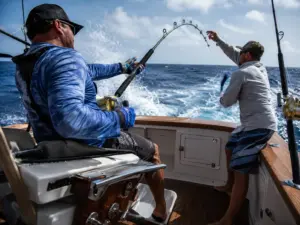
9. Fight the Fish Efficiently to Maximize Survival and Success
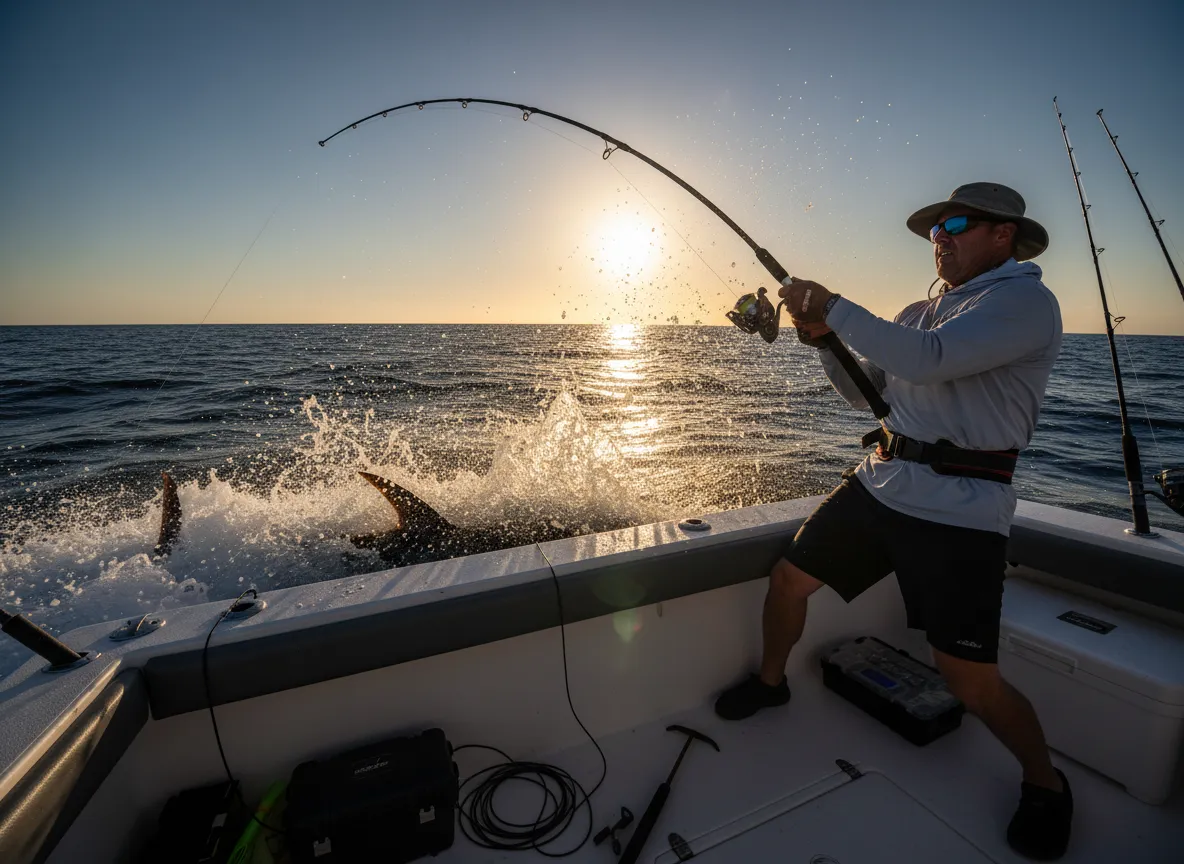
The final secret among the 9 Bluefin Tuna Fishing Secrets from Seasoned Anglers is about what happens after the hookup. Many anglers lose fish, or kill fish they intended to release, due to poor fighting technique and extended fight times.
Key principles for fighting bluefin effectively:
- Use the rod, not just the reel. Pump and wind in short, controlled strokes. Cranking against a running fish burns out the angler and the reel.
- Keep maximum drag pressure within the line’s safe working load. For 80-pound braid, a drag setting of 20 to 25 pounds is appropriate.
- Use a fighting belt or harness for fish over 100 pounds. Trying to hand-hold a rod against a 200-pound tuna for 45 minutes leads to injury and lost fish.
- Minimize fight time for fish intended for release. Bluefin that are fought to exhaustion have significantly lower survival rates. A well-equipped angler with proper tackle should be able to land a 100-pound fish in under 20 minutes [8].
- Use circle hooks when bait fishing. Circle hooks dramatically reduce deep-hooking and improve release survival rates.
Gear Checklist for a Serious Bluefin Trip
Before leaving the dock, experienced anglers confirm the following:
- Heavy spinning or conventional rods rated for the target size class
- Reels spooled with fresh braided line (inspect for abrasion)
- Pre-tied fluorocarbon leaders in multiple strengths
- A selection of surface irons, poppers, and stick baits
- Spreader bars, daisy chains, and skirted trolling lures
- Fresh or frozen bait (menhaden, mackerel, squid)
- Fighting belt and/or harness
- Current SST charts downloaded before departure
- Updated knowledge of current regulations and possession limits
Common Mistakes That Cost Anglers Fish
Even experienced fishermen fall into recurring traps. Avoiding these errors is as valuable as any technique:
- Approaching a foamer too fast or too close. The boat’s noise and pressure wave will scatter the school instantly. Cut the engine well outside the boil and drift in, or use an electric trolling motor.
- Using line that is too light. Bluefin make long, powerful runs. Undersized line breaks under sustained pressure or abrades on the fish’s body.
- Ignoring regulations. Bluefin tuna are subject to strict federal regulations in the United States. Anglers must hold the appropriate permits and adhere to size limits and bag limits. Violations carry severe penalties [2].
- Neglecting knot integrity. Check every knot before deployment. The FG knot and PR bobbin knot are the preferred braid-to-leader connections for offshore applications.
- Fishing the wrong depth. When surface activity stops, bluefin often drop to 60 to 150 feet. Switching to vertical jigging or deep-drifted baits can save the day.
Conclusion
The 9 Bluefin Tuna Fishing Secrets from Seasoned Anglers outlined above are not theoretical, they are the product of thousands of hours on the water, hard lessons, and refinements made by captains and anglers who have dedicated their careers to understanding this species. Applying even three or four of these principles on the next offshore trip will produce measurable improvements in hookup rates, landing percentages, and overall success.
Actionable next steps:
- Review current NOAA bluefin tuna regulations for the target region before booking any trip
- Build or purchase a dedicated foamer casting setup before the next season opens
- Subscribe to a satellite SST chart service and begin studying temperature break patterns
- Practice the FG knot until it can be tied reliably in low-light conditions
- Connect with a reputable charter captain in the target region for a guided trip, the learning curve on bluefin is steep, and one day with an expert compresses years of independent trial and error
Bluefin tuna fishing rewards preparation, patience, and precision. The fish are out there in numbers that continue to surprise even veteran anglers [3]. The question is whether the angler on the other end of the rod is ready when the opportunity arrives.
References
[1] Watch – https://www.youtube.com/watch?v=xLWcz570LjI&vl=en
[2] Bluefin Tuna Fishing – https://fishingbooker.com/blog/bluefin-tuna-fishing/
[3] Unprecedented Bluefin Tuna Yields In March 2026 – https://www.reddit.com/r/SoCalFishing/comments/1sbpb71/unprecedented_bluefin_tuna_yields_in_march_2026/
[4] Chasing Giant Bluefin Tuna Off New York City – https://onthewater.com/chasing-giant-bluefin-tuna-off-new-york-city
[5] Watch – https://www.youtube.com/watch?v=YpW0KzABL_M
[6] Watch – https://www.youtube.com/watch?v=MQgn3SKLwGc
[7] How To Catch Giant Bluefin Tuna Fishing Tips For Success – https://southernboating.com/life/fishing/how-to-catch-giant-bluefin-tuna-fishing-tips-for-success/
[8] How To Catch Bluefin Tuna – https://www.aftco.com/blogs/saltwater-how-to/how-to-catch-bluefin-tuna
[9] Watch – https://www.youtube.com/watch?v=4pxdet6_rzg