8 Must-Have Saltwater Flies for Targeting Inshore and Offshore Species
Saltwater fly fishing accounts for some of the most explosive strikes in all of angling, yet fewer than 15% of fly anglers regularly fish salt, largely because choosing the right fly feels overwhelming. The good news: a focused selection of proven patterns can cover nearly every scenario the ocean throws at you. The 8 Must-Have Saltwater Flies for Targeting Inshore and Offshore Species covered in this guide represent decades of refinement by guides, competitive anglers, and marine biologists who study baitfish behavior. Whether you are wading the flats for bonefish or standing on the bow of an offshore boat chasing mahi-mahi, these eight patterns belong in every serious saltwater fly box in 2026.
Disclosure: This post contains affiliate links. As an Amazon Associate, we earn from qualifying purchases, and at no extra cost to you.
Key Takeaways
- The eight patterns in this guide cover both inshore flats species and pelagic offshore targets, reducing the need for an overstuffed fly box.
- Hook size, material buoyancy, and color contrast matter more in saltwater than in freshwater because visibility and current are more extreme.
- Matching the local baitfish profile, not just the color, is the single most important factor in saltwater fly selection.
- Proper hook quality (corrosion-resistant, chemically sharpened) is non-negotiable in a salt environment; cheap hooks fail at the worst moments.
- Carrying two or three size variations of each pattern dramatically increases versatility across tides, light conditions, and target species.
Why Fly Selection Matters More in Saltwater
Saltwater fish are not forgiving. A redfish cruising a grass flat has a fraction of a second to decide whether a fly is food. An offshore tuna will reject a pattern that does not pulse like a fleeing baitfish. Unlike trout, which often feed in predictable feeding lanes, saltwater species move constantly, feed opportunistically, and can see, hear, and feel pressure waves with extraordinary sensitivity.
Three factors drive fly selection in salt:
- Profile, Does the fly match the size and silhouette of the local forage?
- Movement, Does the material breathe, pulse, and undulate naturally in current or on retrieve?
- Durability, Will the fly survive multiple strikes, toothy fish, and repeated casting without falling apart?
The eight patterns below score high on all three criteria. Each entry includes the target species, recommended hook size range, and a brief tying note so you can evaluate commercial versions or tie your own.
The 8 Must-Have Saltwater Flies for Targeting Inshore and Offshore Species
1. Clouser Minnow
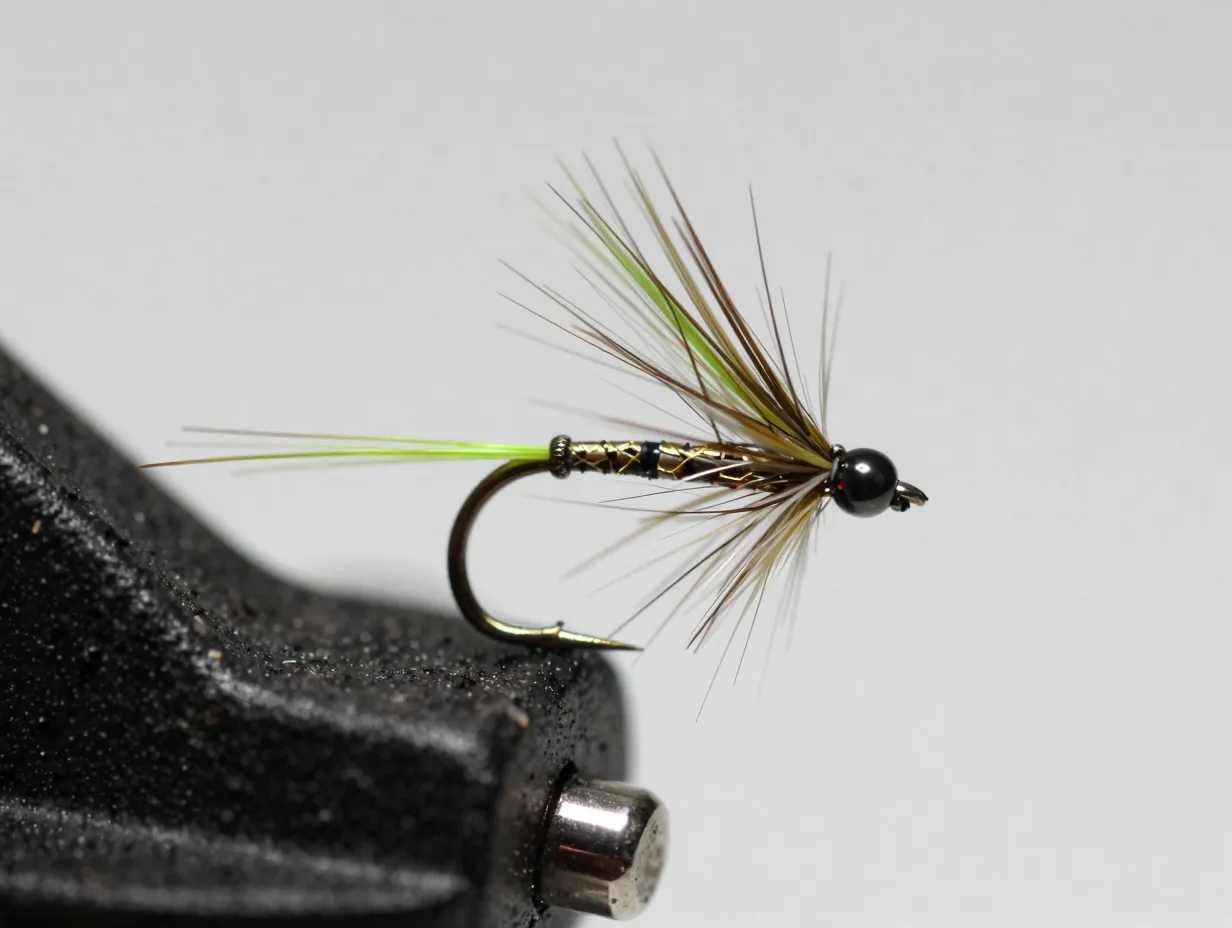
No list of essential saltwater flies is complete without the Clouser Minnow. Developed by Bob Clouser on the Susquehanna River in the 1980s, this pattern has since caught more saltwater species than arguably any other fly in history.
Why it works: The dumbbell eyes cause the hook to ride point-up, dramatically reducing snags on grass and oyster bars. The sparse bucktail wing breathes in the water and creates a jigging action on a strip-pause retrieve that triggers reaction strikes.
| Specification | Detail |
|---|---|
| Hook size range | 1/0 to 4/0 for saltwater |
| Best colors | Chartreuse/white, olive/white, all-white |
| Target species | Striped bass, redfish, snook, bonefish, tarpon |
| Sink rate | Fast (weighted eyes) |
Pro tip: Use lead-free dumbbell eyes in sizes matched to water depth. Deeper water demands heavier eyes; shallow flats require lighter or bead-chain eyes to avoid spooking fish.
2. Lefty’s Deceiver
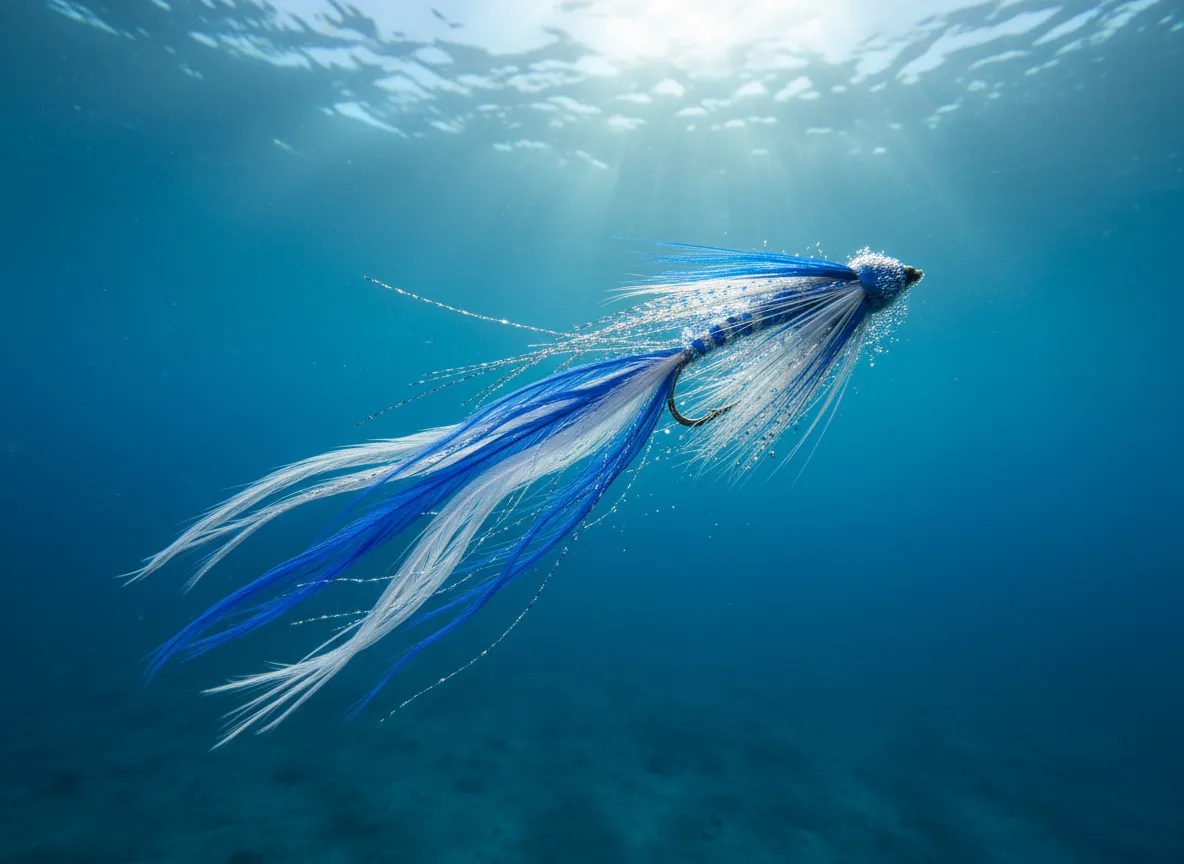
Lefty Kreh designed this fly in the 1950s, and it remains the gold standard for imitating larger baitfish such as mullet, menhaden, and herring. The Deceiver’s genius lies in its long saddle hackle tail, which creates a large profile without adding bulk that would resist casting.
Why it works: The tail feathers collapse on the cast and expand in the water, giving the fly a lifelike swimming action. The bucktail collar adds volume and color contrast. The fly can be tied in 2-inch to 10-inch versions, making it one of the most scalable patterns available.
Best applications:
- Bluewater edge fishing for false albacore and jack crevalle
- Night fishing for snook around dock lights
- Surf fishing for striped bass during baitfish migrations
“The Deceiver is not one fly, it is a template. Once you understand its architecture, you can imitate almost any baitfish in the ocean.”, A sentiment echoed by saltwater guides from the Florida Keys to Montauk.
3. Ep Baitfish (Enrico Puglisi Baitfish)
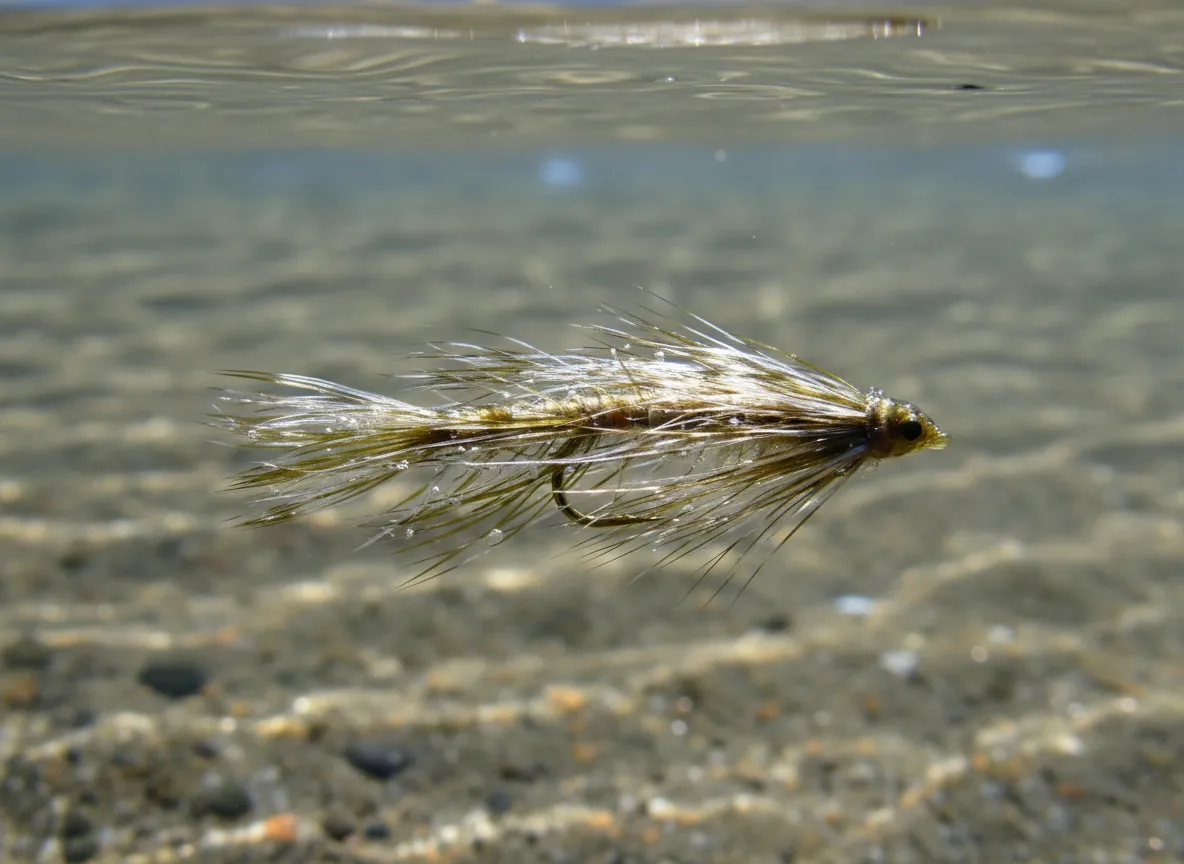
The EP Baitfish, developed by tier Enrico Puglisi, revolutionized saltwater fly tying by introducing synthetic fiber as a primary material. EP fibers absorb almost no water, making the fly lightweight to cast even after hours on the water.
Why it works: The translucent synthetic fibers mimic the semi-transparent body of juvenile baitfish such as glass minnows and scaled sardines. When wet, the fibers cling together and then flare apart on each pause, simulating a wounded or fleeing baitfish perfectly.
| Specification | Detail |
|---|---|
| Hook size range | 1 to 3/0 |
| Best colors | Olive/white, tan/white, pink/white |
| Target species | Permit, bonefish, redfish, snook, offshore dolphin (mahi-mahi) |
| Sink rate | Slow to moderate |
Durability note: EP fibers resist teeth better than natural materials, making this fly a strong choice for toothy species like bluefish or barracuda.
4. Crab Fly (Del Brown’s Merkin)
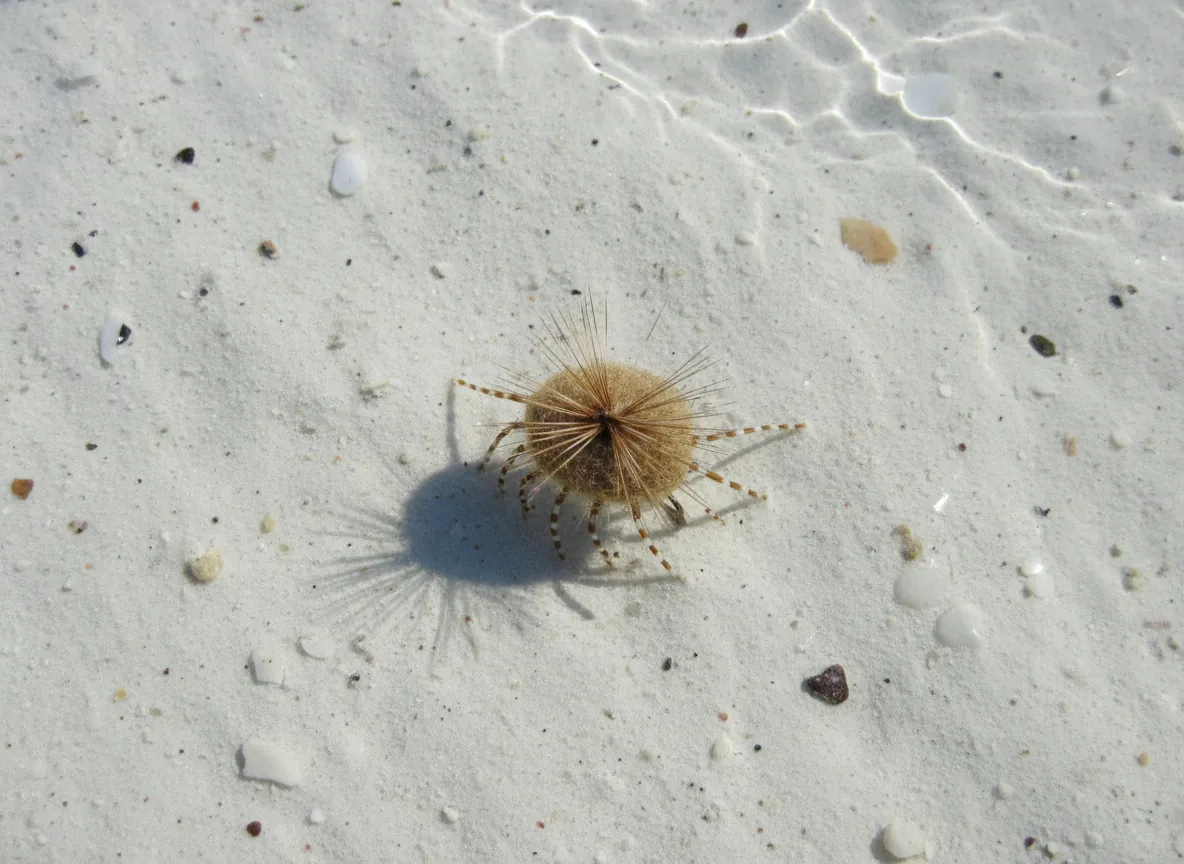
For permit, widely considered the most challenging inshore fly rod target, the crab fly is not optional. Del Brown’s Merkin pattern, tied with clipped deer hair and rubber legs, is the most famous crab imitation in saltwater fly fishing and has accounted for more permit on fly than any other pattern.
Why it works: Permit feed heavily on crabs in the wild. The Merkin’s flat, disc-shaped profile and dangling rubber legs create an irresistible target when dropped ahead of a cruising permit. The weighted eyes make it sink headfirst, mimicking a crab diving to escape.
Critical presentation note: Cast the Merkin 6 to 10 feet ahead of a spotted permit and let it sink. Do not strip immediately. Permit often pick up a crab fly off the bottom with zero movement from the angler.
Other species that respond to crab flies:
- Redfish
- Sheepshead
- Tarpon (in crab-heavy areas)
- Bonefish
5. Tarpon Toad
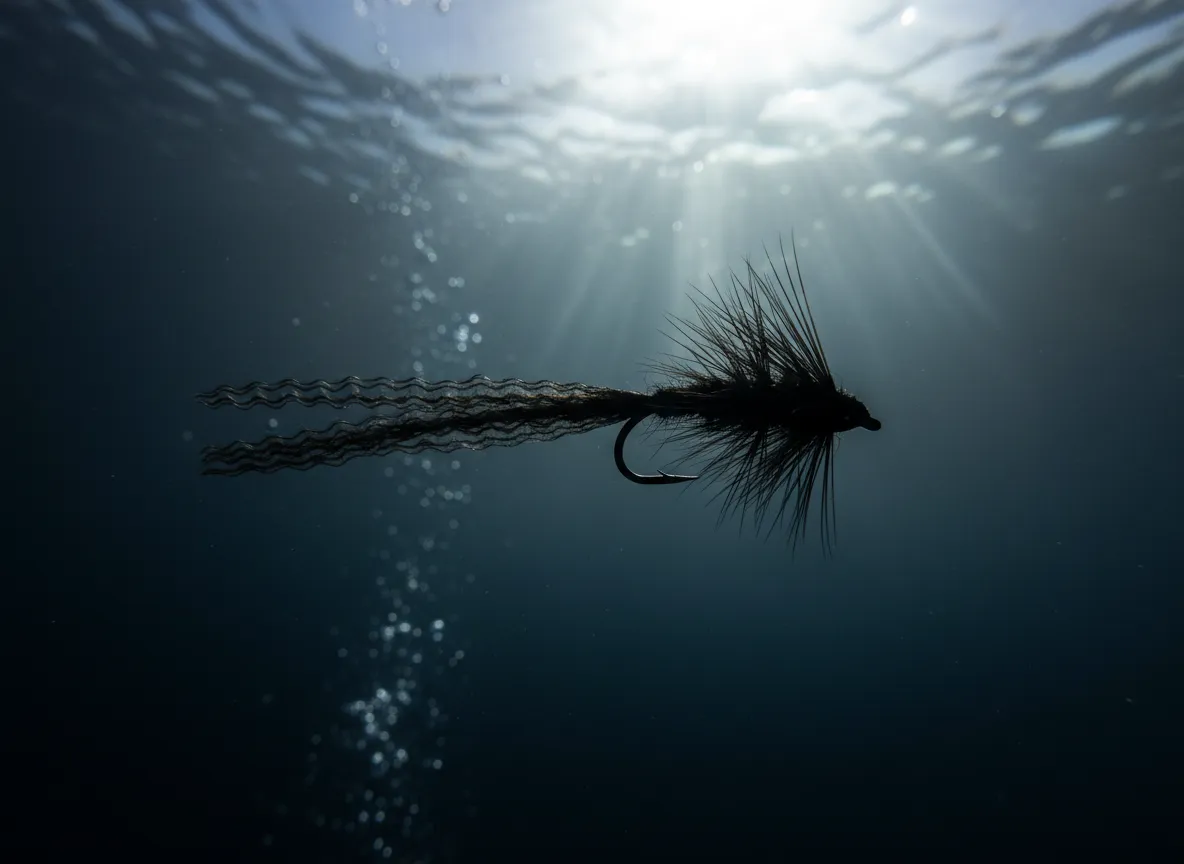
The Tarpon Toad is a relatively modern pattern that has become the go-to fly for tarpon fishing in the Florida Keys and throughout the Gulf of Mexico. Its simple construction, a palmered rabbit strip tail and a sparse marabou collar, belies its extraordinary effectiveness.
Why it works: Rabbit strip material has an unmatched undulating action in water. On a slow hand-twist retrieve, the Tarpon Toad pulses and breathes like a live shrimp or small baitfish. Tarpon, which can exceed 150 pounds, are notoriously selective, and the Toad’s subtle movement profile triggers strikes when flashier flies fail.
| Specification | Detail |
|---|---|
| Hook size range | 1/0 to 3/0 |
| Best colors | Black, purple/black, tan, olive |
| Target species | Tarpon (primary), large snook, jack crevalle |
| Sink rate | Moderate |
Black is the most productive Tarpon Toad color in low-light conditions because it creates a strong silhouette against a bright sky when viewed from below, exactly how a tarpon sees it.
6. Surf Candy
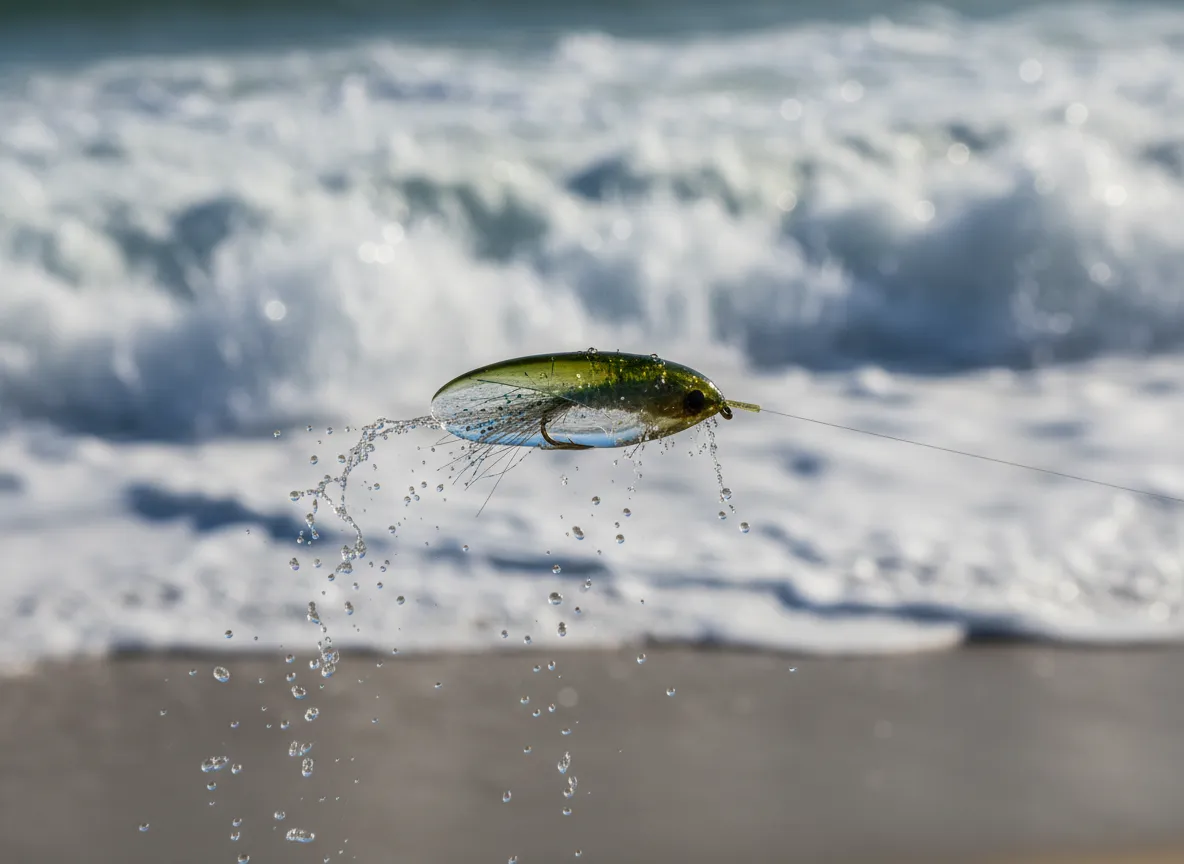
The Surf Candy, developed by Bob Popovics, is an epoxy-coated pattern designed specifically for surf and nearshore environments where durability is paramount. The hard epoxy body makes the fly nearly indestructible and creates a high-gloss finish that reflects light like the scales of a real baitfish.
Why it works: The rigid epoxy body does not absorb water, so the fly casts easily even after hundreds of casts through breaking surf. The flash material embedded under the epoxy creates a realistic lateral line effect. This fly excels in fast current and heavy surf where soft materials would collapse and lose action.
Best applications:
- Striped bass in the surf zone
- False albacore and bonito along rocky points
- Bluefish in breaking bait schools
- Nearshore Spanish mackerel
Tying note: Use UV-cure epoxy for faster production. Apply in thin coats to maintain the correct profile and avoid a lumpy finish that disrupts water flow.
7. Clouser Swimming Shrimp
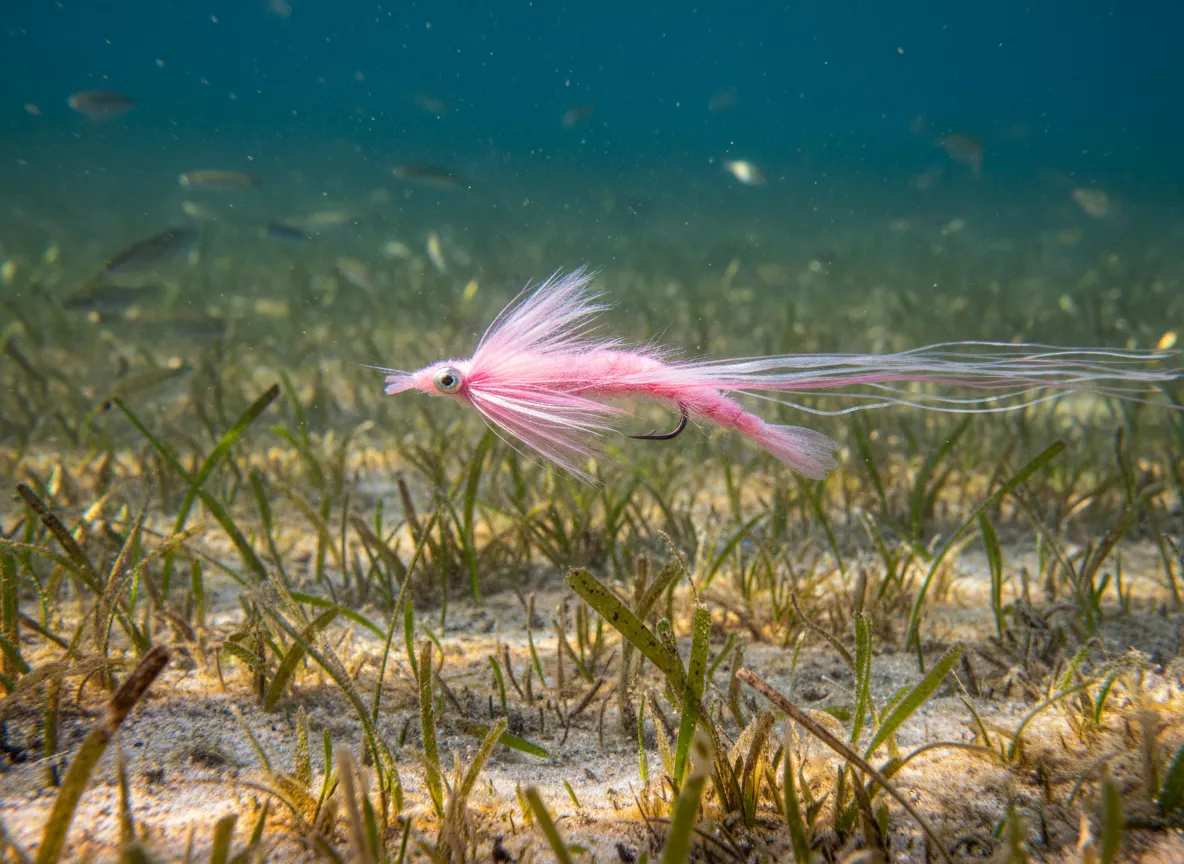
While the original Clouser Minnow imitates baitfish, the Clouser Swimming Shrimp fills a critical niche: shrimp imitation. Shrimp are the most abundant forage item in most inshore saltwater ecosystems, and every major inshore species, redfish, speckled trout, snook, flounder, feeds on them daily.
Why it works: The pattern uses sparse craft fur or EP fibers tied to mimic the translucent body of a swimming shrimp, with rubber legs and a small bead-chain or dumbbell eye. On a strip-pause retrieve, it darts and glides exactly like a fleeing shrimp.
| Specification | Detail |
|---|---|
| Hook size range | 4 to 1/0 |
| Best colors | Pink/white, tan, orange, olive |
| Target species | Redfish, speckled trout, snook, flounder, bonefish |
| Sink rate | Slow to moderate |
Seasonal note: Shrimp patterns are especially productive during spring and fall shrimp migrations when massive numbers of shrimp move through inlets and estuaries on outgoing tides. Matching the size of the migrating shrimp, which can range from 1 inch to 4 inches, is critical.
8. Popovic’s Silicone Fly (or Big Game Streamer)
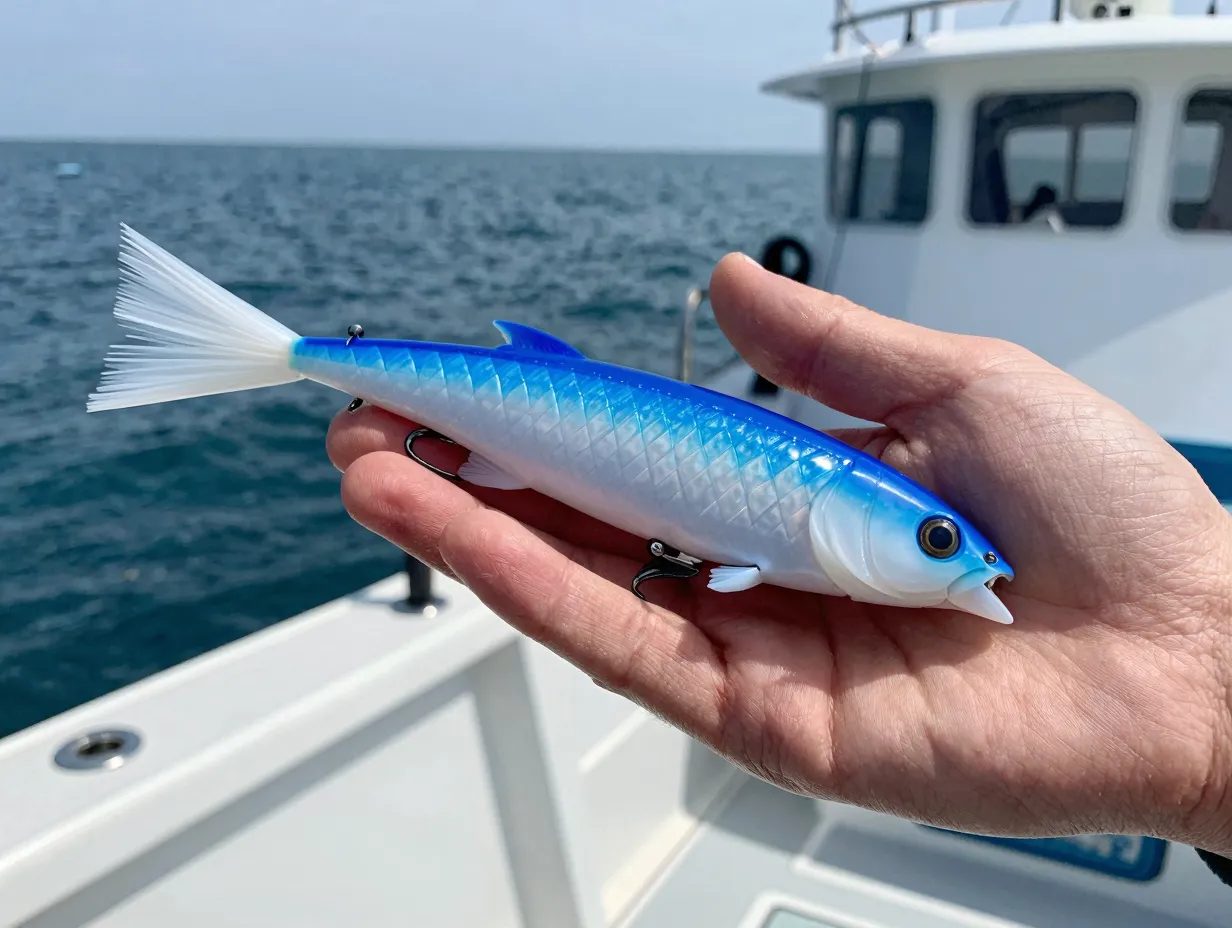
The final pattern in the 8 Must-Have Saltwater Flies for Targeting Inshore and Offshore Species is designed for offshore and big-game applications. Bob Popovics’ silicone-bodied patterns, along with large synthetic streamers tied on 4/0 to 7/0 hooks, are built to imitate the large baitfish, ballyhoo, flying fish, and large mullet, that offshore pelagics chase.
Why it works: Silicone materials are nearly neutrally buoyant, allowing the fly to suspend at any depth on a pause. The large profile triggers the predatory instinct in species like mahi-mahi, wahoo, sailfish, and large tuna. These flies are typically tied 6 to 12 inches long and require a stout 10- to 14-weight rod to cast effectively.
Offshore target species and recommended sizes:
- Mahi-mahi (dolphin): 6 to 8 inches, blue/white or green/yellow
- Wahoo: 8 to 12 inches, silver/blue with wire bite tippet
- Sailfish: 6 to 9 inches, pink/white or white
- Large tuna: 6 to 10 inches, olive/white or all-white
Critical gear note: Offshore big-game fly fishing demands a reel with a sealed drag system rated for at least 25 pounds of stopping power. The fly is only as good as the tackle backing it up.
How to Build a Complete Saltwater Fly Box
With the 8 Must-Have Saltwater Flies for Targeting Inshore and Offshore Species identified, the next step is organizing them into a functional system. A well-organized fly box saves time on the water and ensures the right pattern is always within reach.
Recommended fly box organization by environment:
Inshore Flats Box
- Clouser Minnow (sizes 1 and 1/0, chartreuse/white and olive/white)
- Merkin Crab (sizes 2 and 1, tan and brown)
- Clouser Swimming Shrimp (sizes 4 and 2, pink and tan)
- EP Baitfish (size 1, olive/white)
Nearshore and Surf Box
- Lefty’s Deceiver (sizes 1/0 and 2/0, blue/white and all-white)
- Surf Candy (sizes 1 and 1/0, clear and olive)
- Clouser Minnow (size 2/0, chartreuse/white)
Offshore Box
- Popovic’s Silicone Fly or large synthetic streamer (6 to 10 inches)
- EP Baitfish (size 2/0 to 3/0, olive and pink)
- Lefty’s Deceiver (size 3/0 to 4/0, blue/silver)
Tarpon-Specific Box
- Tarpon Toad (sizes 1/0 and 2/0, black and purple/black)
- Clouser Minnow (size 2/0, all-white)
- Large Crab Fly (size 1/0, tan)
Matching Flies to Conditions: A Quick Reference
Conditions on the water change constantly. The following table helps match the right pattern from the core eight to the most common saltwater scenarios.
| Condition | Best Pattern | Reason |
|---|---|---|
| Clear shallow flats, bright sun | Merkin Crab, Swimming Shrimp | Subtle profile, natural sink |
| Murky water, low light | Tarpon Toad (black), Deceiver | Strong silhouette |
| Fast current, surf zone | Surf Candy, Clouser Minnow | Durability, weighted sink |
| Offshore blue water | Silicone Fly, large Deceiver | Large profile, offshore scale |
| Baitfish blitz on surface | EP Baitfish, Surf Candy | Matches glass minnow profile |
| Permit on the flat | Merkin Crab | Matches primary permit forage |
Hook Quality and Maintenance in Saltwater
The best fly in the world fails if the hook corrodes or dulls after one fish. Saltwater environments are brutally corrosive. Follow these non-negotiable rules:
- Use only corrosion-resistant hooks, stainless steel or nickel-plated high-carbon steel (brands: Gamakatsu, Owner, Tiemco TMC 811S).
- Rinse flies in fresh water after every outing and allow them to dry completely before storing.
- Check hook points with a fingernail test before every cast: if the point slides without catching, sharpen or replace.
- Avoid closed fly boxes that trap moisture; use vented foam boxes or silicone-insert boxes that allow airflow.
Common Mistakes When Fishing Saltwater Flies
Even experienced anglers make avoidable errors when transitioning to saltwater fly fishing.
Mistake 1: Casting too close to the fish. Saltwater fish spook easily from line shadow and leader splash. Lead the fish by at least 6 feet on flats, more in calm conditions.
Mistake 2: Stripping too fast. Most saltwater species respond better to a strip-pause-strip retrieve than a continuous fast strip. The pause is when most strikes occur.
Mistake 3: Ignoring tippet diameter. Heavy tippet creates drag on small flies and reduces action. Match tippet diameter to fly size and water clarity.
Mistake 4: Using the wrong sink rate. A fly that sinks too fast on a shallow flat spooks fish. A fly that sinks too slowly in a strong current never reaches the strike zone. Carry multiple versions of each pattern in different weights.
Mistake 5: Neglecting the leader. A 9-foot freshwater leader is rarely appropriate in saltwater. Most inshore scenarios call for a 9- to 12-foot leader tapered to 12- to 20-pound fluorocarbon. Offshore fishing often requires a short 6- to 7-foot leader for casting large flies.
Conclusion
The 8 Must-Have Saltwater Flies for Targeting Inshore and Offshore Species, the Clouser Minnow, Lefty’s Deceiver, EP Baitfish, Merkin Crab, Tarpon Toad, Surf Candy, Clouser Swimming Shrimp, and Popovic’s Silicone Fly, represent the most versatile, proven, and widely applicable patterns available to saltwater fly anglers in 2026. Together, they cover shrimp, crab, and baitfish imitations across shallow flats, nearshore surf zones, and deep offshore blue water.
Actionable next steps:
- Audit your current fly box against this list and identify the gaps.
- Purchase or tie two to three size variations of each pattern before your next trip.
- Research the primary forage species at your target destination and prioritize the patterns that best match that forage.
- Invest in a quality corrosion-resistant hook brand and replace hooks on any fly that has been in salt water for more than one season.
- Practice the strip-pause retrieve on a lawn or in a pool before hitting the water, muscle memory on the retrieve is as important as fly selection.
The ocean rewards preparation. A focused fly box built around these eight patterns gives any saltwater angler, beginner or veteran, the tools to succeed across the widest possible range of species and conditions.
References
- Kreh, L. (2002). Saltwater Fly Patterns. Lyons Press.
- Clouser, B. (2006). Clouser’s Flies: Tying and Fishing the Fly Patterns of Bob Clouser. Stackpole Books.
- Popovics, B., & Likakis, E. (2001). Pop Fleyes: Bob Popovics’s Approach to Saltwater Fly Design. Stackpole Books.
- Puglisi, E. (2010). Saltwater Flies of the Northeast. Stackpole Books.
- Tabory, L. (1992). Inshore Fly Fishing. Lyons & Burford.
- Kaufmann, R. (1995). Fly Patterns for Saltwater. Frank Amato Publications.