9 Deep Sea Creatures That Will Change How You See the Ocean
More than 80 percent of Earth’s oceans remain unexplored, unmapped, and largely unknown to science. That single statistic reframes the ocean not as a familiar backdrop to human life, but as the planet’s greatest frontier, one that harbors life forms so bizarre they challenge every assumption about what biology can produce. The 9 deep sea creatures that will change how you see the ocean are not mythological inventions. They are real, documented animals living in conditions that would destroy most life on Earth, and studying them has reshaped fields from evolutionary biology to materials science. Each one represents a window into a world that operates by entirely different rules.
Disclosure: This post contains affiliate links. As an Amazon Associate, we earn from qualifying purchases, and at no extra cost to you.
Key Takeaways
- The deep ocean covers more than 65 percent of Earth’s surface and remains the least explored biome on the planet.
- Many deep-sea creatures use bioluminescence as their primary tool for communication, predation, and survival.
- Several deep-sea species have inspired real-world technological and medical breakthroughs.
- Extreme pressure, near-freezing temperatures, and total darkness have driven evolution to produce body plans found nowhere else in nature.
- Conservation of deep-sea ecosystems is increasingly urgent as deep-sea mining and climate change threaten habitats that recover extremely slowly.
Why the Deep Ocean Produces Such Extraordinary Life
The deep ocean begins roughly 200 meters below the surface, where sunlight fails to penetrate. Below 1,000 meters lies the midnight zone, a realm of perpetual darkness, crushing pressure, and water temperatures hovering just above freezing. Yet life not only survives here; it thrives in forms that took scientists decades to believe were real.
The pressure at the deepest point of the Mariana Trench, approximately 11,000 meters down, is more than 1,000 times the atmospheric pressure at sea level. Organisms living there have evolved cell membranes, enzymes, and metabolic processes that function only under those extreme conditions. Remove them from the deep and they die. Return a surface creature to those depths and it is crushed.
This isolation has made the deep sea an engine of evolutionary innovation. With no sunlight, photosynthesis is impossible. Food is scarce. Predators are rare but lethal. Every adaptation is a high-stakes solution to an almost impossible problem. The result is a collection of animals that look and behave unlike anything else on Earth.
Three key environmental pressures shape deep-sea evolution:
- Extreme hydrostatic pressure requiring specialized biochemistry
- Total absence of light driving bioluminescence and sensory adaptation
- Chronic food scarcity producing highly efficient, often slow metabolisms
9 Deep Sea Creatures That Will Change How You See the Ocean
1. The Anglerfish
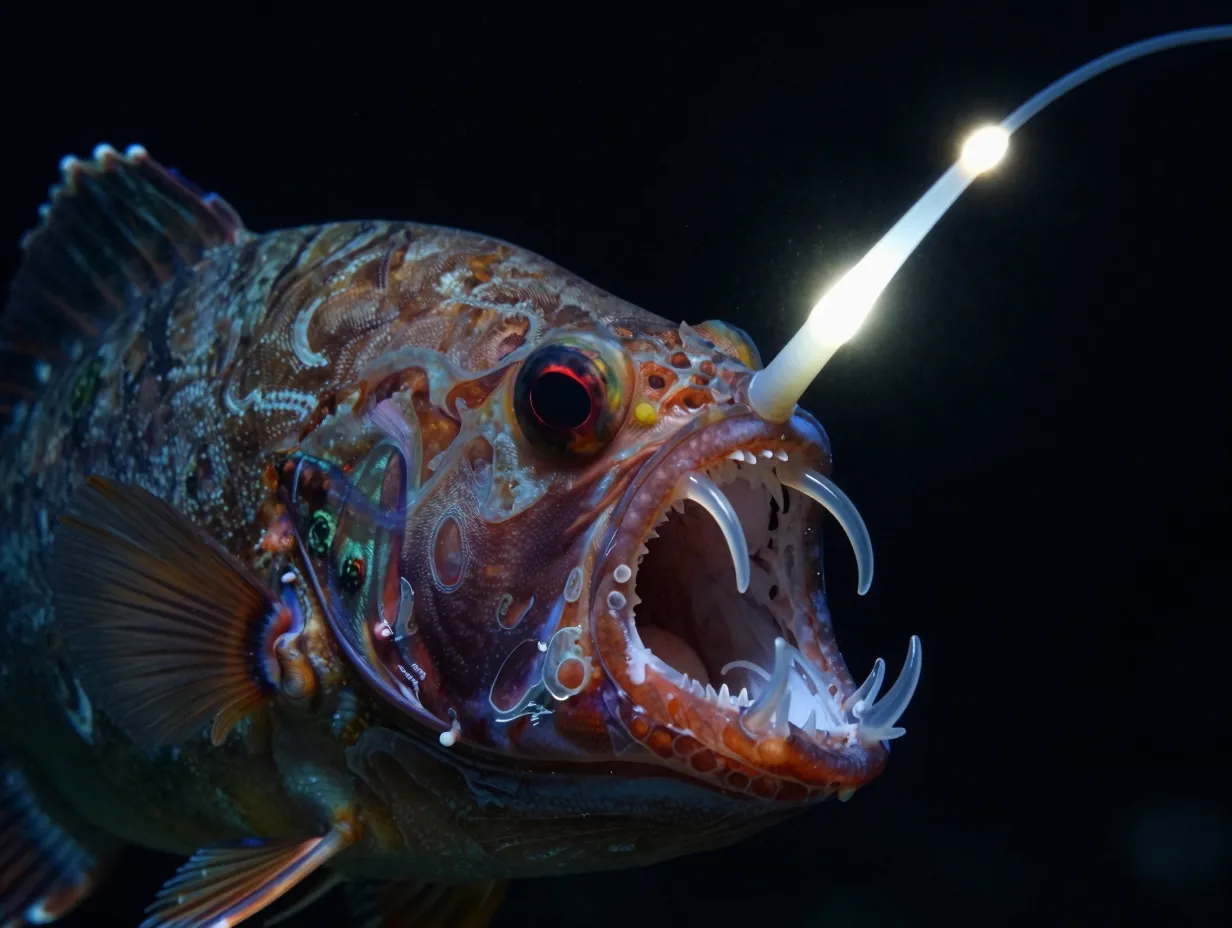
No creature better represents the alien nature of the deep sea than the anglerfish. The females of many species carry a bioluminescent lure, a modified dorsal spine tipped with light-producing bacteria, dangling directly in front of their mouths. In the absolute darkness of the midnight zone, this glowing beacon attracts prey that swims directly into a trap lined with transparent, inward-curving teeth.
What makes the anglerfish truly remarkable, however, is its reproductive biology. Male anglerfish are dramatically smaller than females, sometimes 40 times smaller by length. When a male finds a female, he bites into her body and fuses with her permanently. His circulatory system merges with hers. He loses his eyes, his internal organs, and his independent existence, becoming a sperm-producing appendage. A single female can carry multiple fused males simultaneously.
This phenomenon, called sexual parasitism, is unique in the vertebrate world and was so strange when first described that scientists initially thought the tiny males were a different species entirely.
2. The Giant Squid
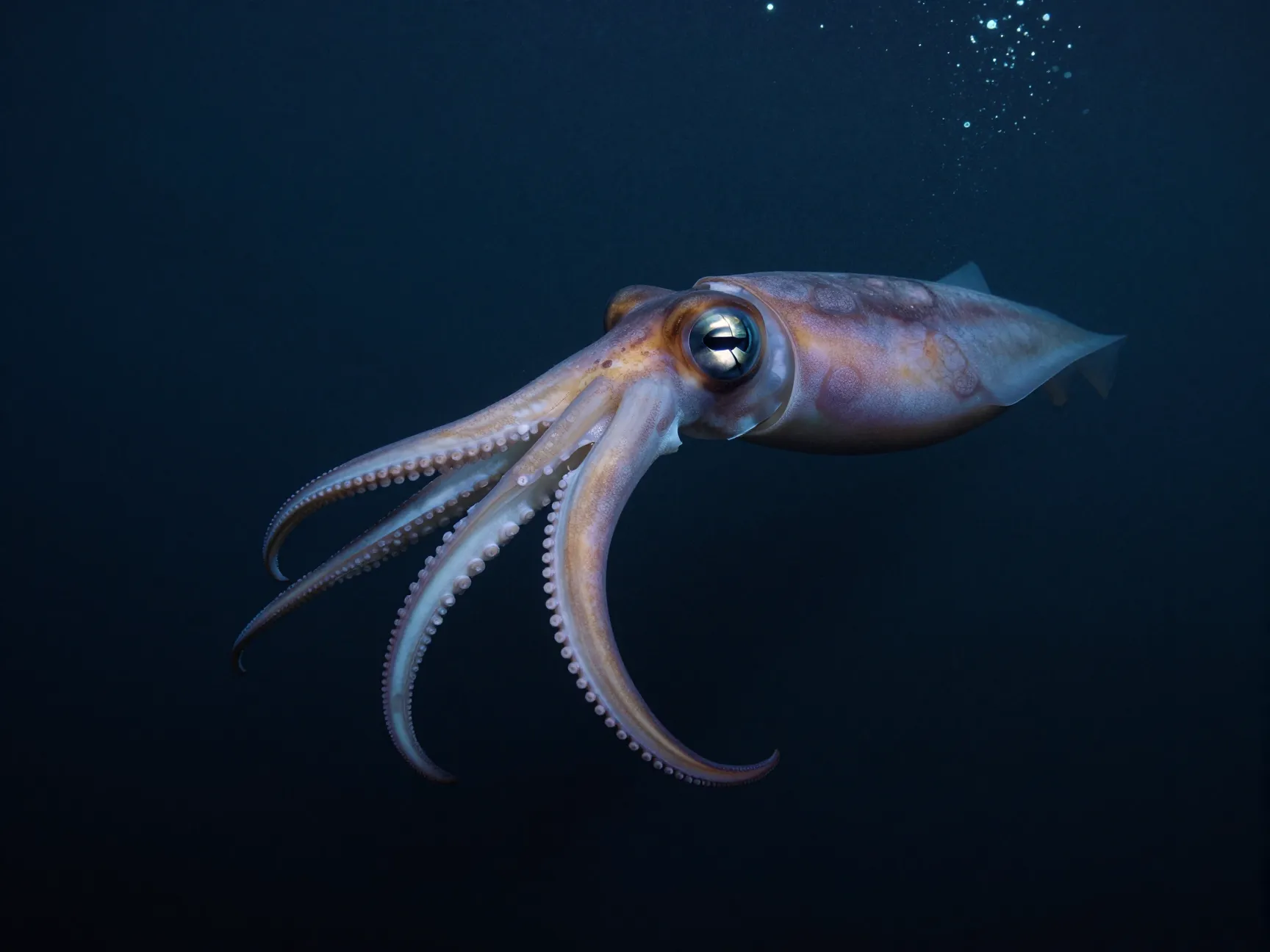
For centuries, sailors reported encounters with a monstrous tentacled creature capable of pulling ships beneath the waves. The giant squid (Architeuthis dux) was dismissed as legend until 2004, when Japanese researchers captured the first photographs of a living specimen in its natural habitat. A live giant squid was not filmed in the deep ocean until 2012.
Giant squid can reach lengths of up to 13 meters. Their eyes are the largest of any living animal, up to 30 centimeters in diameter, roughly the size of a dinner plate. Those enormous eyes are an adaptation to detect the faint bioluminescent flashes produced by sperm whales hunting in the darkness.
“The giant squid is proof that the ocean still holds secrets large enough to swallow a person whole.”
The relationship between giant squid and sperm whales is one of the ocean’s great ecological dramas. Sperm whale stomachs regularly contain squid beaks, and the skin of many sperm whales bears circular sucker scars from squid tentacles. This is a predator-prey battle happening in total darkness, thousands of meters below the surface, completely invisible to human observation.
3. The Barreleye Fish
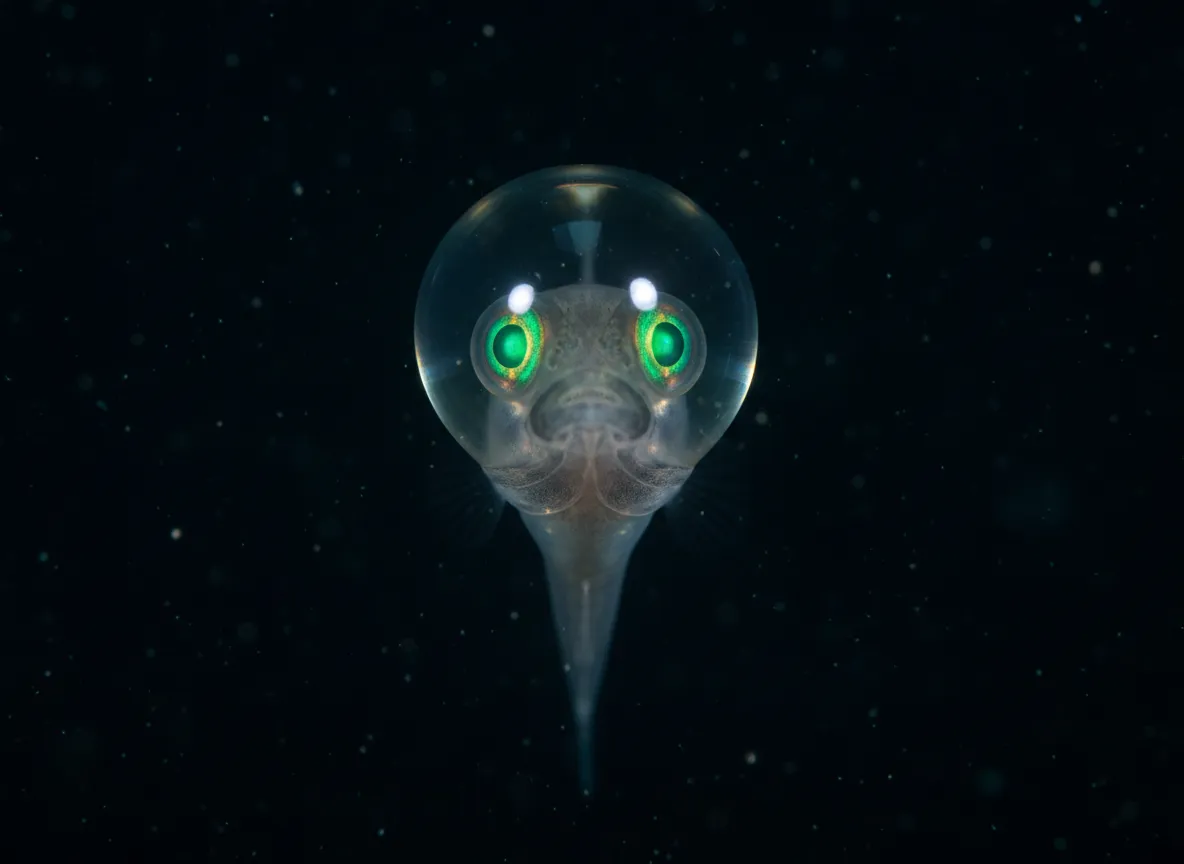
The barreleye fish (Macropinna microstoma) looks like it was designed by an engineer rather than evolution. Its most striking feature is a transparent, fluid-filled dome that covers the top of its head. Inside that dome sit two tubular, barrel-shaped eyes, the green, glowing structures visible through the dome, that can rotate to point either upward or directly forward.
For decades, scientists studying preserved specimens believed the fish’s eyes were fixed pointing upward. It was only in 2009, when researchers from the Monterey Bay Aquarium Research Institute observed living barreleye fish using remotely operated vehicles, that they discovered the eyes could rotate freely within the transparent shield.
The barreleye uses its upward-pointing eyes to detect the silhouettes of prey above it, then rotates them forward to track and capture that prey. The transparent dome protects those sensitive eyes from the stinging tentacles of siphonophores, from which the barreleye is believed to steal captured prey.
Key facts about the barreleye:
- Found at depths of 600 to 800 meters in the Pacific Ocean
- The transparent dome is filled with a clear fluid and is a living tissue structure
- The green color of the eyes comes from a yellow pigment that may filter bioluminescent light
- Body length typically reaches only 15 centimeters
4. The Vampire Squid
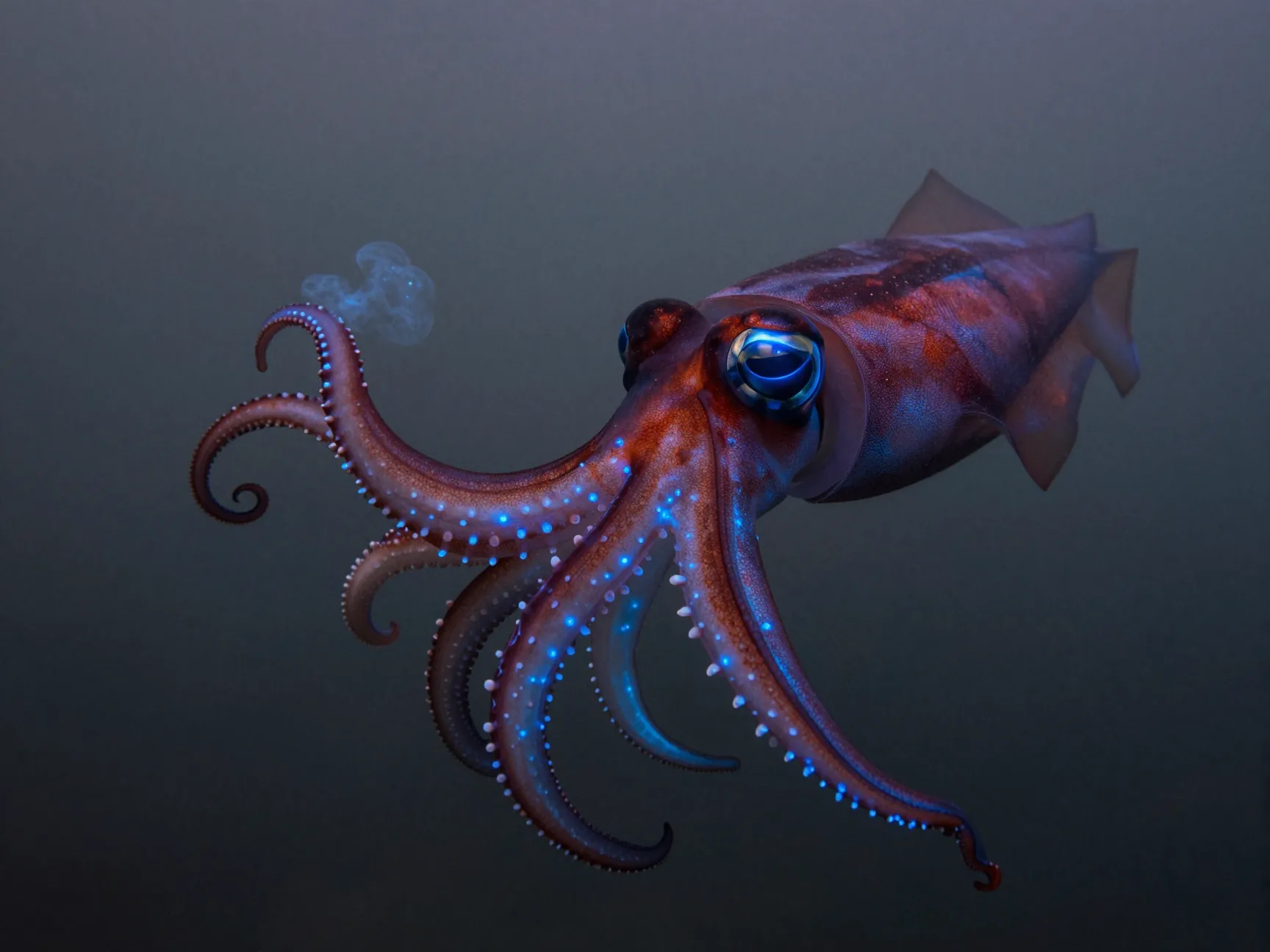
Despite its dramatic name and appearance, the vampire squid (Vampyroteuthis infernalis, literally “vampire squid from hell”) is neither a true squid nor an octopus. It occupies its own taxonomic order, Vampyromorphida, as the sole living member. It is a living fossil, a lineage that branched off from the ancestors of modern cephalopods hundreds of millions of years ago.
The vampire squid lives in the oxygen minimum zone, a layer of the ocean between 600 and 900 meters where oxygen levels are so low that most predators cannot survive. This is its primary defense: it lives where nothing else can breathe comfortably.
When threatened, the vampire squid does not produce ink like its relatives. Instead, it ejects a cloud of bioluminescent mucus, a glowing blue cloud that confuses predators while the squid retreats into darkness. It can also pull its webbed arms over its body like a cloak, displaying the spiny inner surface to appear larger and more threatening.
Unlike most cephalopods, the vampire squid is not an active predator. It feeds primarily on marine snow, the slow, continuous rain of dead organic particles, fecal matter, and microorganisms that drifts down from the surface. This passive feeding strategy requires almost no energy expenditure, perfectly suited to a low-oxygen environment.
5. The Goblin Shark
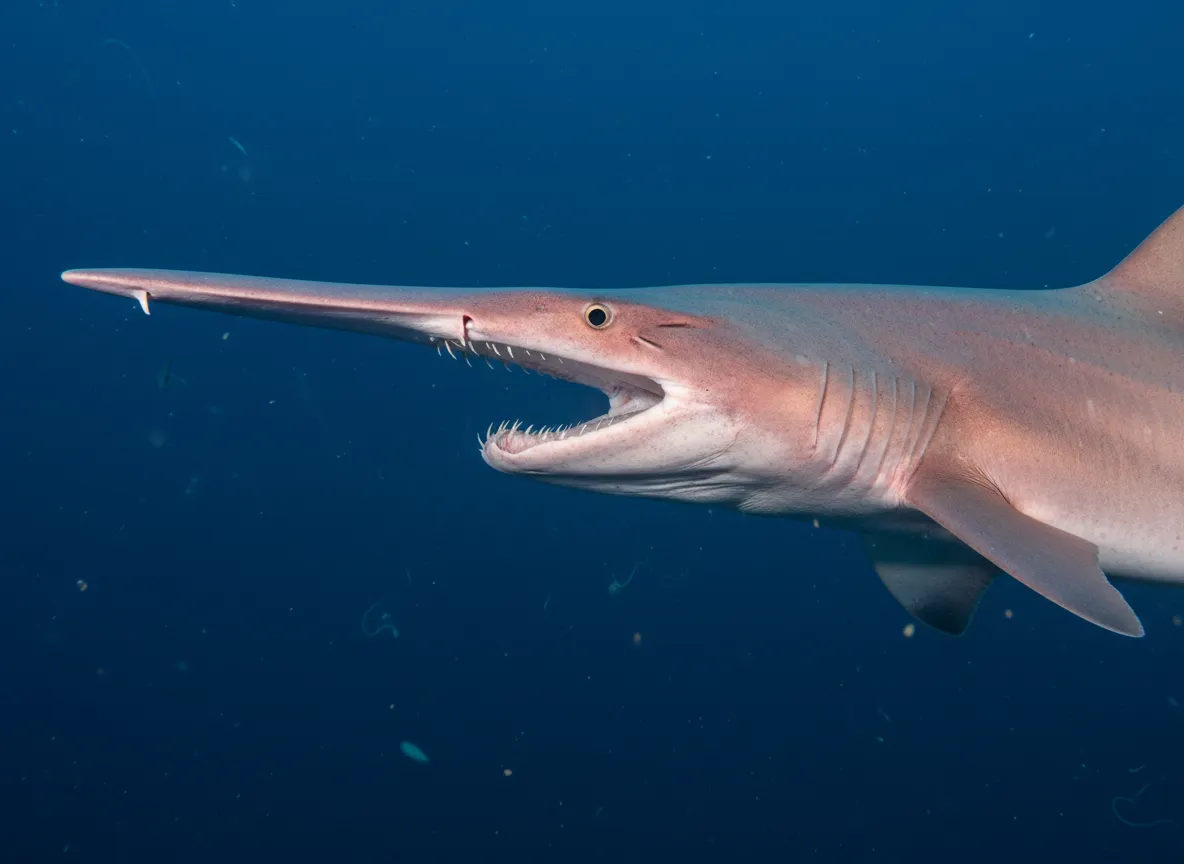
The goblin shark (Mitsukurina owstoni) is often described as a living fossil because its lineage dates back at least 125 million years, making it the oldest living species of shark. It looks the part: a long, flattened snout called a rostrum, small eyes, and a jaw that can project forward from its face in a rapid strike, a feeding mechanism called slingshot jaw projection.
The goblin shark’s jaw extends outward at remarkable speed to capture prey, driven by elastic ligaments that store and release energy like a spring. This adaptation compensates for the goblin shark’s sluggish swimming speed, allowing it to ambush prey it could never chase down.
The rostrum is densely packed with electroreceptors called ampullae of Lorenzini, which detect the faint electrical fields produced by the muscle contractions of nearby animals. In the total darkness of the deep sea, this electrical sense effectively replaces vision as the primary hunting tool.
Goblin sharks are rarely encountered because they live at depths between 270 and 1,300 meters. Most specimens known to science have been caught accidentally in deep-sea fishing nets.
6. The Dumbo Octopus
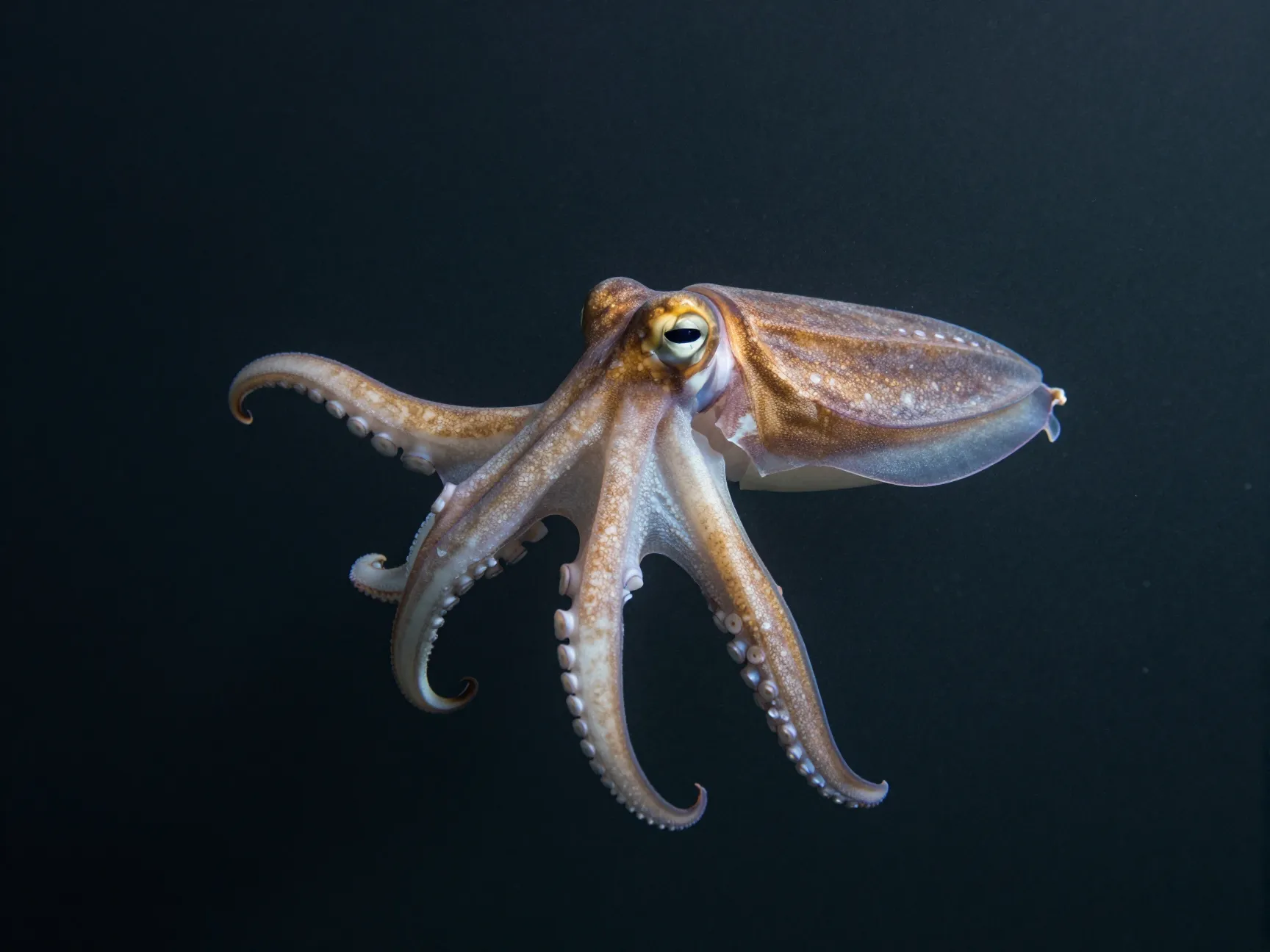
Named for the large, ear-like fins on either side of its mantle that resemble the fictional elephant’s oversized ears, the dumbo octopus (Grimpoteuthis spp.) is the deepest-living known octopus genus on Earth. Specimens have been recorded at depths exceeding 7,000 meters.
Unlike shallow-water octopuses, the dumbo octopus does not use jet propulsion as its primary means of locomotion. It flaps its fins to hover and maneuver, a far more energy-efficient strategy at depths where food is scarce and every calorie counts. It swallows prey whole rather than using the radula (a tooth-like feeding structure) to tear food apart, another energy-saving adaptation.
The dumbo octopus has no ink sac, a feature common to many deep-sea cephalopods. At those depths, ink clouds are useless in water that is already completely dark. Instead, the animal relies on its ability to change skin color and texture, and on the simple fact that almost nothing else lives at those extreme depths.
“The dumbo octopus reminds scientists that the most extreme environments on Earth are not empty, they are simply filled with life that plays by different rules.”
7. The Siphonophore
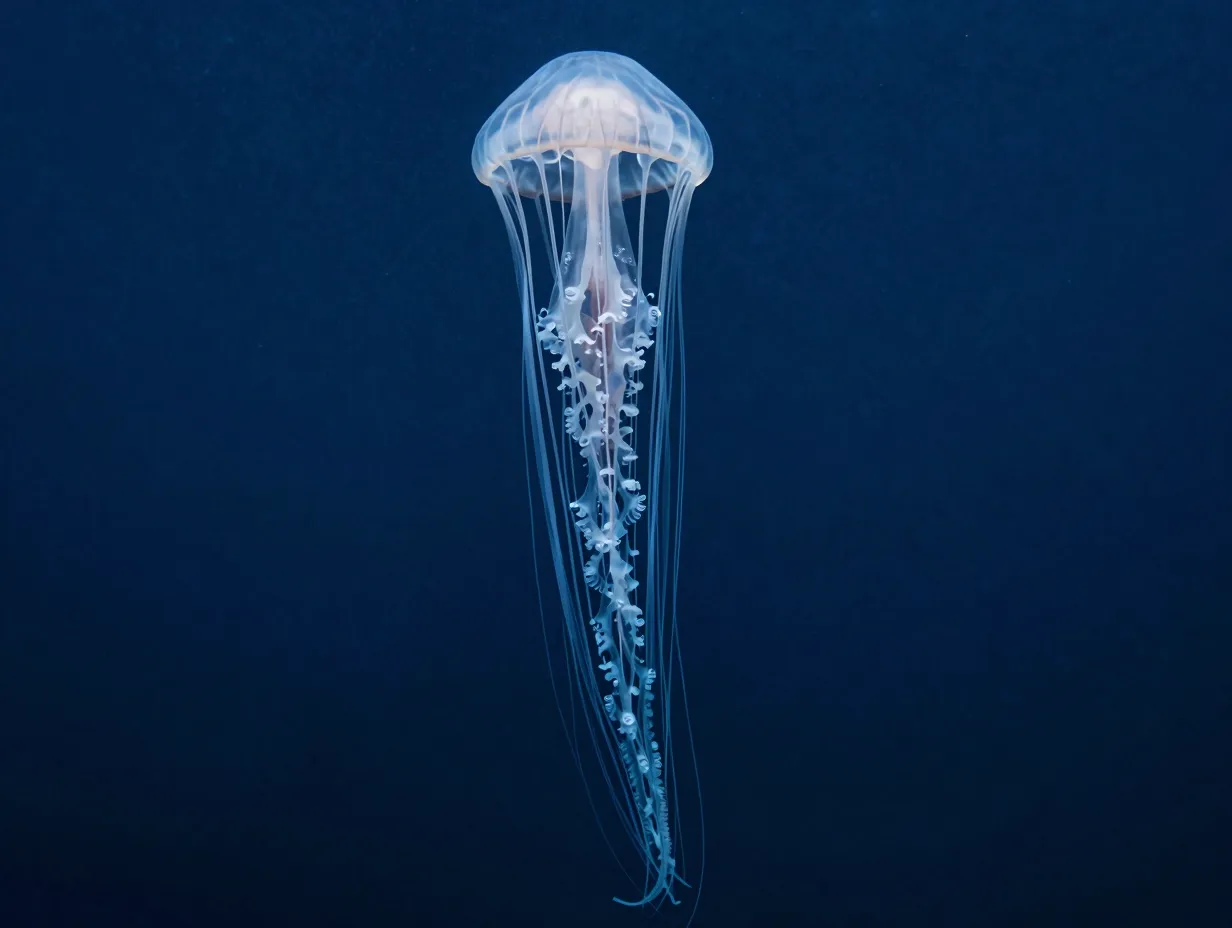
Technically, a siphonophore is not a single creature. It is a colonial organism, a superorganism composed of thousands of individual animals called zooids, each specialized for a specific function. Some zooids handle propulsion. Others handle feeding, reproduction, or defense. None can survive independently. Together, they form what may be the longest animal on Earth.
The giant siphonophore (Praya dubia) can reach lengths of 40 to 50 meters, longer than a blue whale. It drifts through the deep ocean trailing a curtain of stinging tentacles that can extend tens of meters in every direction, creating an invisible trap for any animal that swims into it.
Siphonophore zooid types and their roles:
| Zooid Type | Function |
|---|---|
| Nectophore | Jet propulsion and movement |
| Dactylozooid | Prey capture and defense |
| Gastrozooid | Digestion and nutrient distribution |
| Gonozooid | Reproduction |
| Pneumatophore | Buoyancy regulation |
The siphonophore challenges the very definition of an individual organism. Each zooid is genetically identical to every other zooid in the colony, yet they have differentiated into entirely different body forms to perform entirely different functions, a process that mirrors, in some ways, how the cells of a single animal differentiate during development.
8. The Mariana Snailfish
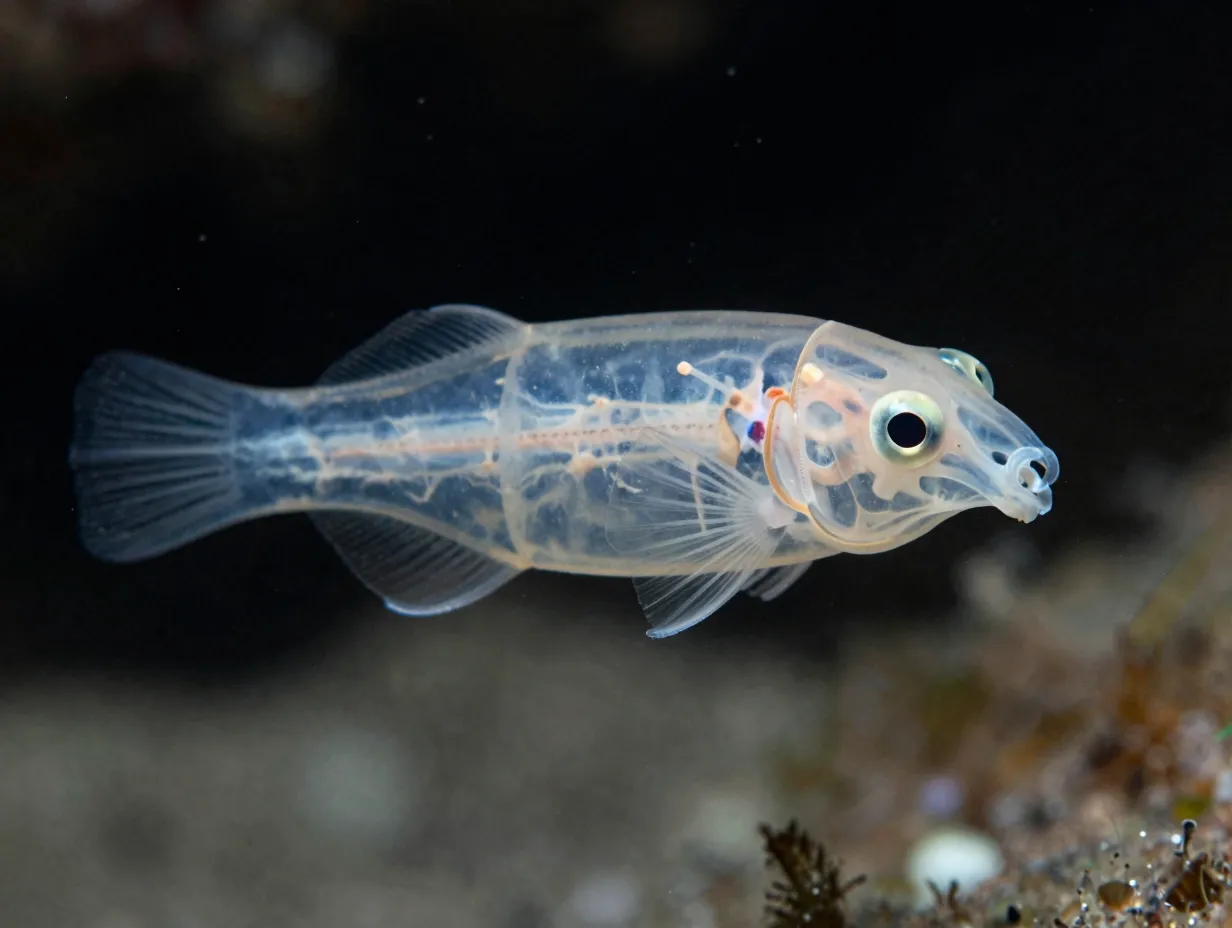
In 2017, a research expedition to the Mariana Trench captured footage of the deepest fish ever recorded: the Mariana snailfish (Pseudoliparis swirei), photographed at a depth of 8,178 meters. Subsequent expeditions have recorded the species at depths approaching 8,336 meters, nearly the height of Mount Everest below sea level.
The Mariana snailfish is small, translucent, and looks almost fragile, a sharp contrast to the crushing environment it inhabits. Its survival at those pressures depends on a molecule called trimethylamine oxide (TMAO), which stabilizes proteins and cell membranes under extreme pressure. The deeper a fish lives, the higher its TMAO concentration. Scientists have found that TMAO concentrations become physiologically limiting at approximately 8,200 meters, which may explain why no fish have ever been found deeper than roughly that depth.
This discovery suggests there may be a hard biological ceiling on how deep a fish can live, a pressure barrier that no vertebrate can cross, no matter how well adapted.
9. The Hydrothermal Vent Tube Worm
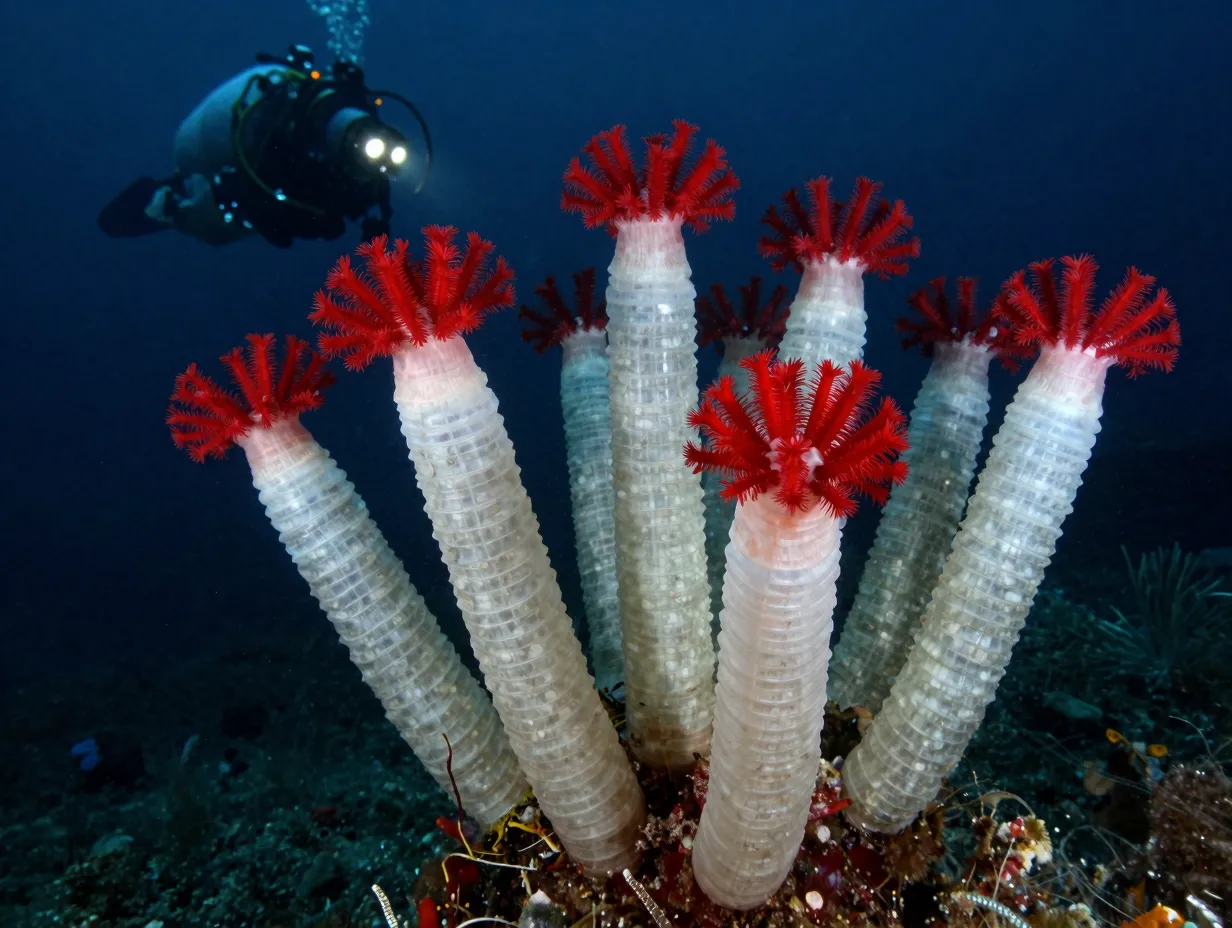
In 1977, scientists diving in the submersible Alvin discovered something that overturned a foundational assumption of biology: thriving ecosystems clustered around hydrothermal vents on the ocean floor, in complete darkness, with no connection to sunlight whatsoever.
The giant tube worm (Riftia pachyptila) is the most iconic inhabitant of these vent communities. It can grow up to 2.4 meters long and has no mouth, no stomach, and no digestive system. It survives entirely through a symbiotic relationship with chemosynthetic bacteria living inside a specialized organ called the trophosome. Those bacteria convert hydrogen sulfide, a toxic gas venting from the seafloor, into organic compounds that nourish the worm.
This discovery proved that life does not require sunlight. It requires only a source of chemical energy. The implications extended far beyond biology: if life can thrive around hydrothermal vents on Earth, it may be able to thrive around similar features beneath the ice-covered oceans of Europa or Enceladus, moons of Jupiter and Saturn respectively.
The tube worm single-handedly expanded the definition of the habitable zone, not just in Earth’s oceans, but potentially across the solar system.
What These 9 Deep Sea Creatures Reveal About Life on Earth
The 9 deep sea creatures that will change how you see the ocean are not isolated curiosities. They are data points in a much larger story about the flexibility of life and the limits of human knowledge.
Several patterns emerge across these species:
- Bioluminescence appears independently in multiple unrelated lineages, suggesting it is an almost inevitable solution to the problem of darkness at depth.
- Energy conservation dominates deep-sea evolutionary strategy. Slow metabolisms, passive feeding, and reduced body activity are common themes.
- Symbiosis is a recurring survival mechanism. From the anglerfish’s fused males to the tube worm’s internal bacteria, cooperation between organisms, even at the cellular level, is a deep-sea survival tool.
- Pressure is not just a physical challenge but a biochemical one, shaping the molecular structure of proteins and membranes in ways that have direct applications for pharmaceutical research.
Deep-sea research has already produced practical results. TMAO research has informed studies of protein folding diseases. Bioluminescence proteins from deep-sea organisms have become standard tools in genetic research and medical imaging. Chemosynthesis pathways discovered at hydrothermal vents are being studied for applications in carbon capture and industrial chemistry.
The deep ocean is not just a biological curiosity. It is an active research frontier with direct implications for medicine, materials science, astrobiology, and climate science.
The Urgent Case for Deep-Sea Conservation
Despite their distance from human activity, deep-sea ecosystems face growing threats. Deep-sea mining operations targeting polymetallic nodules on the ocean floor, rich in cobalt, nickel, and manganese, would physically destroy habitats that have developed over millions of years and recover, if at all, over timescales of centuries.
Climate change is altering deep-ocean chemistry. Ocean acidification and deoxygenation are expanding the oxygen minimum zone, compressing the habitats of species already living at the edge of survival. Warming surface waters are changing the volume and composition of marine snow, the primary food source for many deep-sea organisms, with cascading effects throughout the water column.
The challenge is that deep-sea conservation is difficult to advocate for when most people have never seen a dumbo octopus, a siphonophore, or a hydrothermal vent community. Awareness is the first step. Understanding that these ecosystems exist, that they are biologically extraordinary, and that they are vulnerable is the foundation on which meaningful conservation policy can be built.
Conclusion
The 9 deep sea creatures that will change how you see the ocean are not simply strange animals from an inaccessible world. They are evidence that life is more adaptable, more inventive, and more resilient than any prior framework predicted. They have already changed medicine, genetics, and astrobiology. They will continue to change science as exploration technology improves and more of the deep ocean becomes accessible to study.
Actionable next steps for readers who want to engage with this topic:
- Follow the work of institutions like the Monterey Bay Aquarium Research Institute (MBARI) and the Woods Hole Oceanographic Institution (WHOI), both of which publish accessible deep-sea research and expedition footage.
- Support organizations working on deep-sea conservation and opposing unregulated deep-sea mining, such as the Deep Sea Conservation Coalition.
- Watch footage from remotely operated vehicle (ROV) dives, which are frequently published online by research institutions and provide direct visual access to deep-sea environments.
- Engage with the science of astrobiology, which increasingly draws on deep-sea biology to model what life on ocean moons might look like.
- Share this knowledge. Public awareness of deep-sea biodiversity is one of the most powerful tools available for building political will around its protection.
The ocean covers more than 70 percent of this planet. The vast majority of it remains unknown. That is not a reason for indifference, it is the most compelling reason for curiosity that exists.