8 Deep Sea Fish Species That Defy Imagination
More than 80 percent of Earth’s oceans remain unexplored, and the creatures living in those lightless depths are stranger than most science fiction. The 8 deep sea fish species that defy imagination featured in this article were shaped by millions of years of extreme pressure, near-freezing temperatures, and total darkness, conditions that produced adaptations so bizarre they challenge basic assumptions about what a fish can look like and how it can survive. From a fish filmed at nearly 27,350 feet below the surface to one with a fully transparent skull, these species represent the outer edge of vertebrate biology.
Disclosure: This post contains affiliate links. As an Amazon Associate, we earn from qualifying purchases, and at no extra cost to you.
Key Takeaways
- A snailfish in the genus Pseudoliparis holds the current depth record for any fish, filmed at 27,349 feet (8,336 m) in 2023.
- Several deep-sea species use bioluminescence as a weapon, a lure, or camouflage rather than simply for communication.
- Extreme food scarcity in the deep ocean has driven the evolution of expandable jaws, enormous mouths, and highly elastic stomachs.
- The barreleye fish possesses a transparent, fluid-filled dome over its head with eyes that rotate inside the skull, a unique adaptation among vertebrates.
- Deep-sea fish biology continues to yield new discoveries in 2026, with each expedition revealing species and behaviors previously unknown to science.
The Science Behind the 8 Deep Sea Fish Species That Defy Imagination
Before examining each species individually, it helps to understand the environment that created them. The ocean is divided into depth zones. The sunlight zone reaches down to about 660 feet. Below that lies the twilight zone, then the midnight zone (bathypelagic), then the abyssal zone, and finally the hadal zone found in ocean trenches, the deepest places on Earth. Each zone presents increasing pressure, colder temperatures, and less available food [2].
Fish living below 3,300 feet face pressure hundreds of times greater than at the surface. Their bodies have evolved remarkable solutions: flexible, gelatinous tissue instead of rigid bone, specialized proteins that function at low temperatures, and metabolic rates slowed to near-stillness to conserve energy [4]. The result is a collection of animals that look, hunt, and survive in ways that seem to break the rules of biology.
Why study deep-sea fish?
- They reveal the limits of vertebrate adaptation.
- Their biochemistry offers potential applications in medicine and materials science.
- Understanding them is essential for deep-sea conservation as mining and trawling expand into deeper waters.
1. Snailfish (Pseudoliparis spp.), The Deepest Fish on Earth
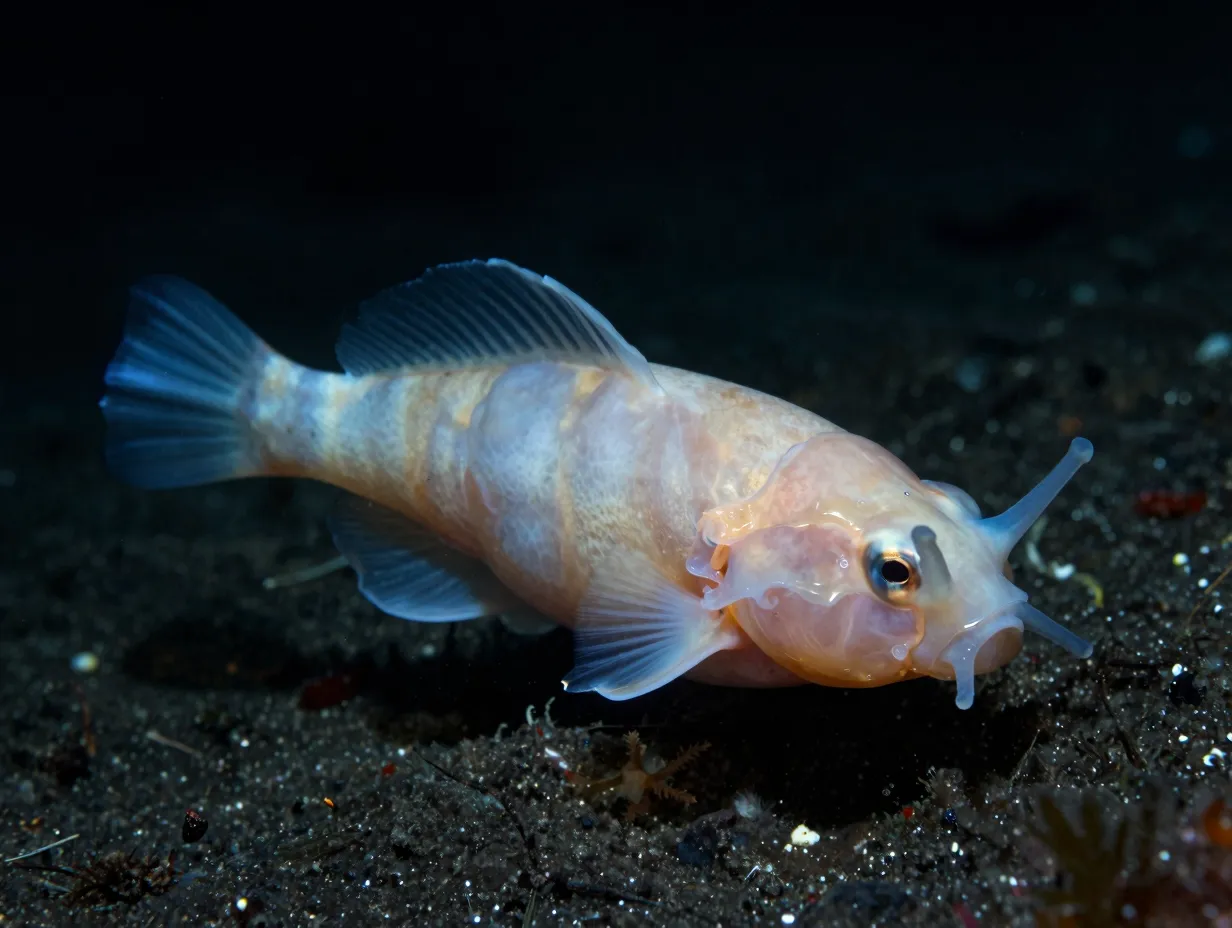
The snailfish holds the most extreme address of any known vertebrate. In 2023, a specimen from the genus Pseudoliparis was filmed at a staggering 27,349 feet (8,336 meters) in the Izu-Ogasawara Trench near Japan, setting the current depth record for any fish [1]. To put that in context, Mount Everest stands at 29,032 feet, this fish lives at a depth nearly as great as that mountain’s height.
Snailfish look nothing like the fearsome predators people typically imagine in the deep sea. They are small, pale, and soft-bodied, resembling a tadpole more than a monster. Their gelatinous flesh is the key to their survival: rigid bones and air-filled swim bladders would be crushed at hadal depths, so snailfish have evolved flexible, pressure-tolerant bodies instead [7].
Key facts about snailfish:
- Depth record: 27,349 feet (8,336 m) [1]
- Habitat: Hadal zone, ocean trenches
- Body type: Soft, gelatinous, no scales
- Diet: Small crustaceans and invertebrates found in trenches
Their cells contain high concentrations of a molecule called trimethylamine oxide (TMAO), which stabilizes proteins under crushing pressure. Scientists study this compound for potential applications in preserving biological materials at extreme conditions [4].
2. Barreleye Fish (Macropinna microstoma), The Fish With a Transparent Head
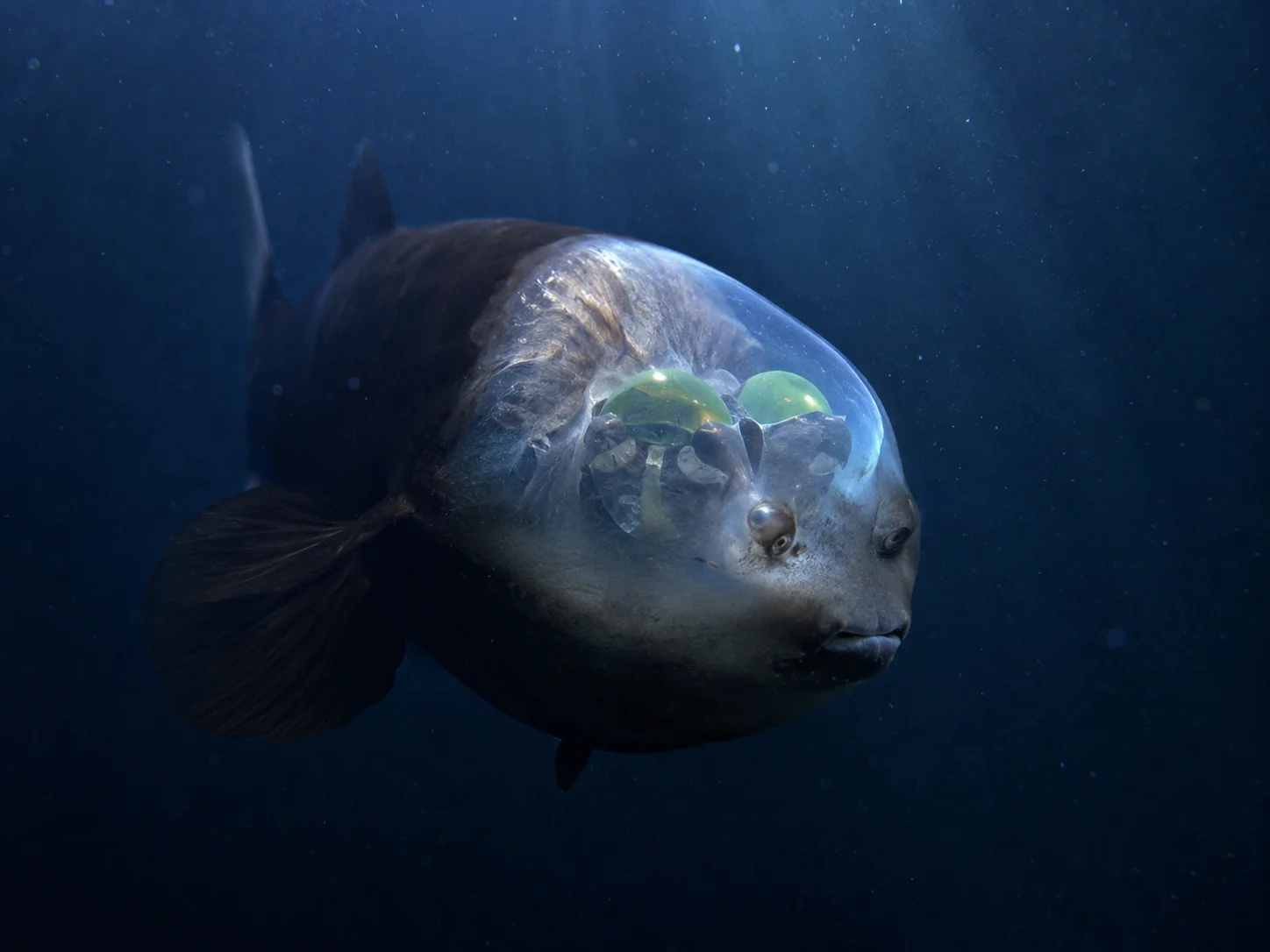
Few animals anywhere on Earth match the visual strangeness of the barreleye fish. This species carries a transparent, fluid-filled dome over the top of its head, and inside that dome sit two large, tubular eyes that can rotate freely, pointing upward through the skull to spot prey silhouetted against faint surface light, or rotating forward to focus on food directly ahead [5][6][9].
For decades, scientists were confused by the barreleye’s anatomy because specimens brought to the surface lost their transparent dome due to pressure changes. It was only through in-situ underwater video footage that researchers confirmed the dome was intact in living fish and that the green, barrel-shaped organs inside were the actual eyes [9].
“The barreleye fish is arguably the most optically unusual vertebrate in the known animal kingdom, a living periscope built into a fish’s skull.”
The barreleye lives in the mesopelagic (twilight) zone of the Pacific Ocean, typically between 2,000 and 2,600 feet deep. It feeds on small jellies and other organisms drifting above it, using its extraordinary upward-facing eyes to detect their faint outlines [6].
Barreleye at a glance:
| Feature | Detail |
|---|---|
| Head dome | Transparent, fluid-filled |
| Eyes | Tubular, rotatable |
| Depth range | ~2,000-2,600 feet |
| Diet | Jellyfish, siphonophores |
| Ocean | Pacific |
3. Gulper Eel (Saccopharynx spp.), The Living Trap
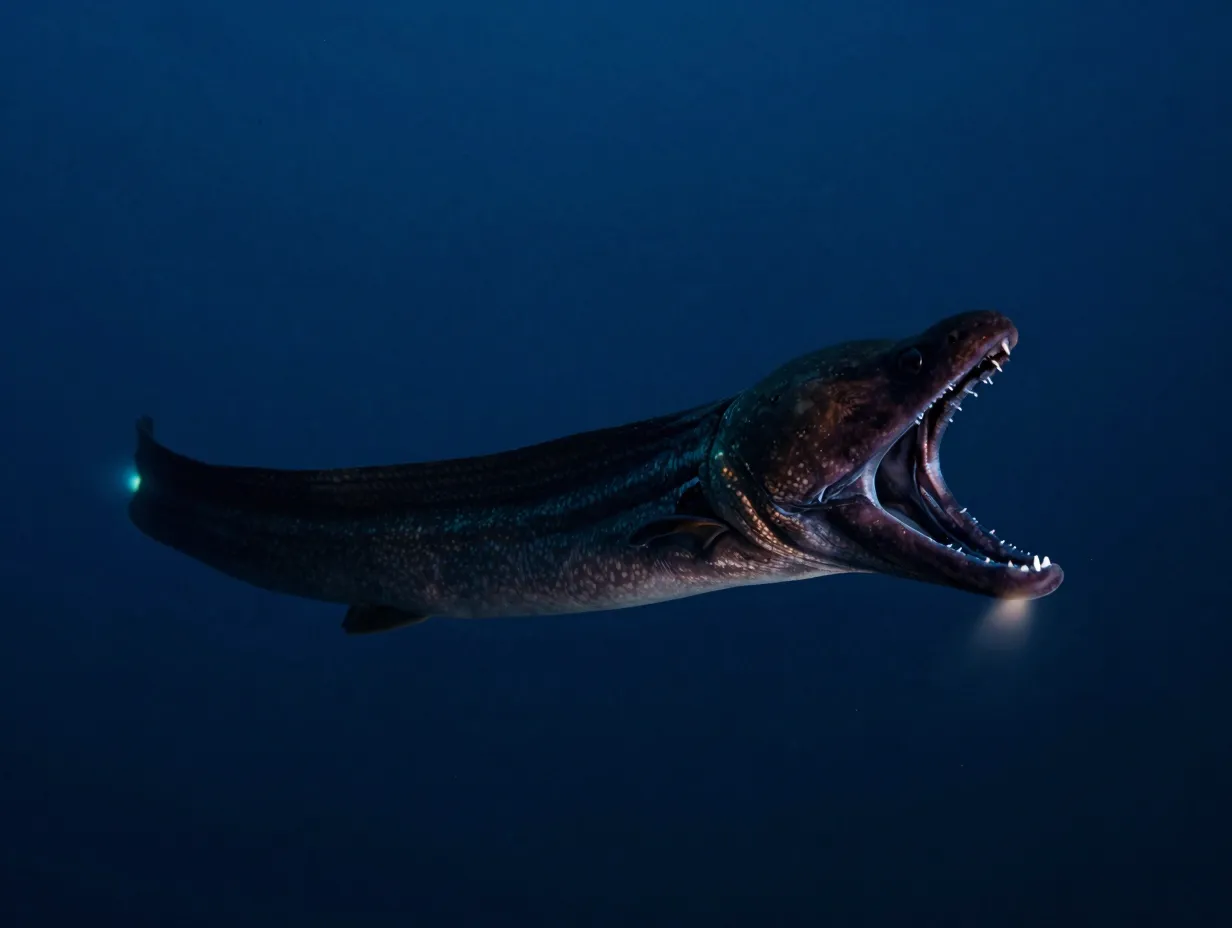
The gulper eel, also called the pelican eel, is built around one overwhelming feature: an enormous, hinged mouth capable of swinging wide open to engulf prey far larger than the eel’s own body [1][6]. The mouth accounts for a disproportionate fraction of the animal’s total length, and the stomach can stretch dramatically to accommodate whatever it manages to catch.
This design is a direct response to food scarcity in the deep ocean. When meals are rare and unpredictable, the ability to swallow almost anything, regardless of size, provides a significant survival advantage. The gulper eel essentially becomes a floating trap, waiting in the dark for anything edible to pass close enough [6].
Gulper eels are typically found between 980 and 2,000 feet (300-600 m), though some specimens have been recovered from depths as great as 14,800 feet (4,500 m), placing them well into the bathypelagic zone [1]. Their slender, whip-like bodies can reach up to six feet in length, with the vast majority of that length being tail.
Notable adaptations:
- Hinged jaw that opens to nearly 180 degrees
- Highly elastic stomach
- A small bioluminescent organ at the tail tip, possibly used as a lure
- Reduced eyes compared to surface fish, vision is less critical in total darkness
4. Anglerfish (Multiple Species), The Bioluminescent Hunter
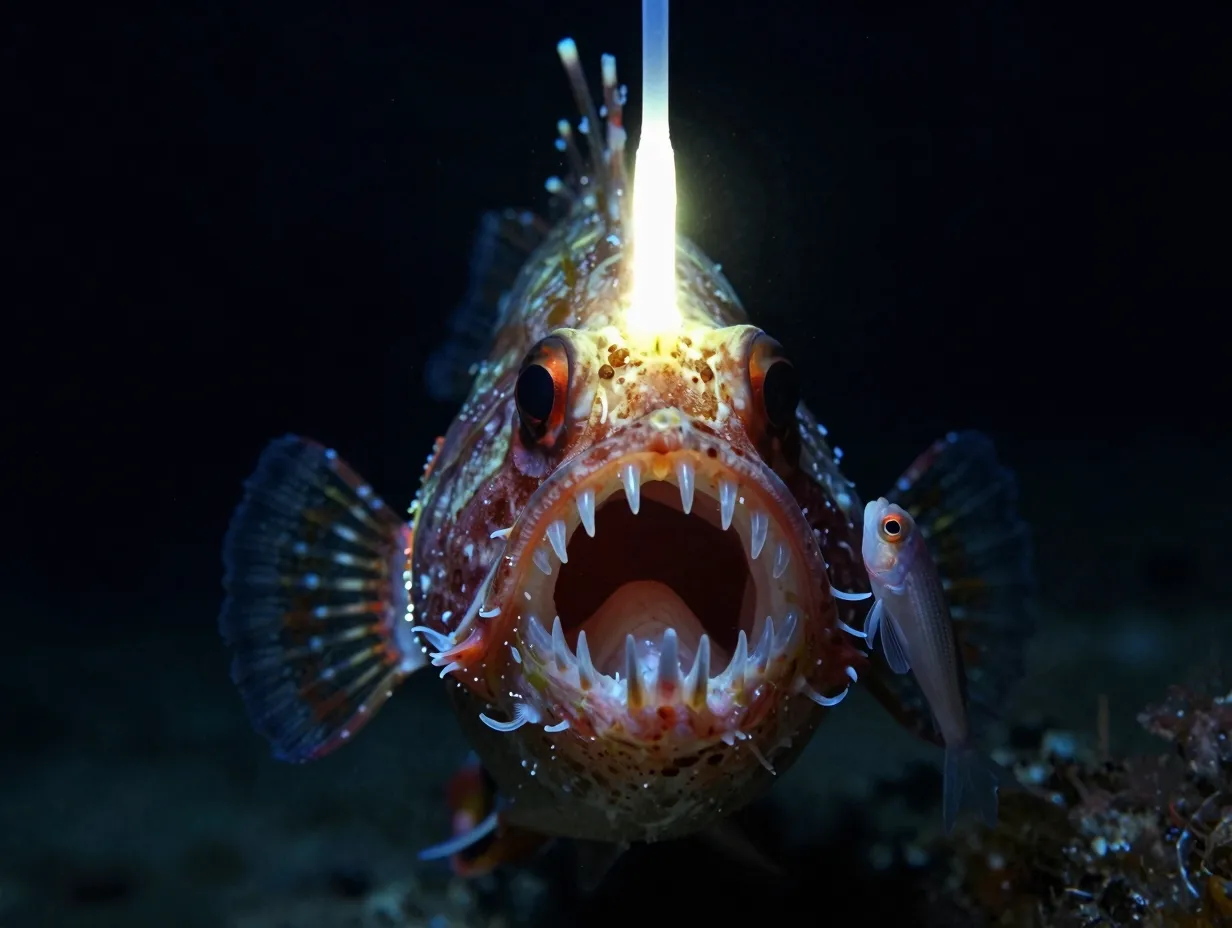
No group of deep-sea fish is more iconic than the anglerfish. The name covers dozens of species, including the footballfish (Himantolophus spp.) and the black seadevil (Melanocetus johnsonii), all of which share one defining feature: a bioluminescent lure dangling from a modified dorsal spine above the mouth [1][6].
The lure glows because it contains colonies of bioluminescent bacteria. In the absolute darkness of the bathypelagic zone, this tiny light draws curious prey directly toward the anglerfish’s waiting jaws, a predatory strategy of elegant simplicity [4]. The teeth are long, transparent, and angled inward, ensuring that anything entering the mouth cannot escape.
Anglerfish are also famous for one of the most extreme reproductive strategies in the animal kingdom. In several species, the tiny male bites into the female’s body and fuses with her permanently, sharing her bloodstream and eventually losing most of his own organs. He becomes, in effect, a sperm-producing appendage [3][6].
Anglerfish reproductive biology:
- Males are dramatically smaller than females (up to 60 times smaller in some species)
- After fusing, the male’s eyes and internal organs degenerate
- One female can carry multiple fused males simultaneously
- This strategy ensures reproduction despite the extreme difficulty of finding a mate in the vast, dark ocean
5. Viperfish (Chauliodus sloani), Fangs Built for the Abyss
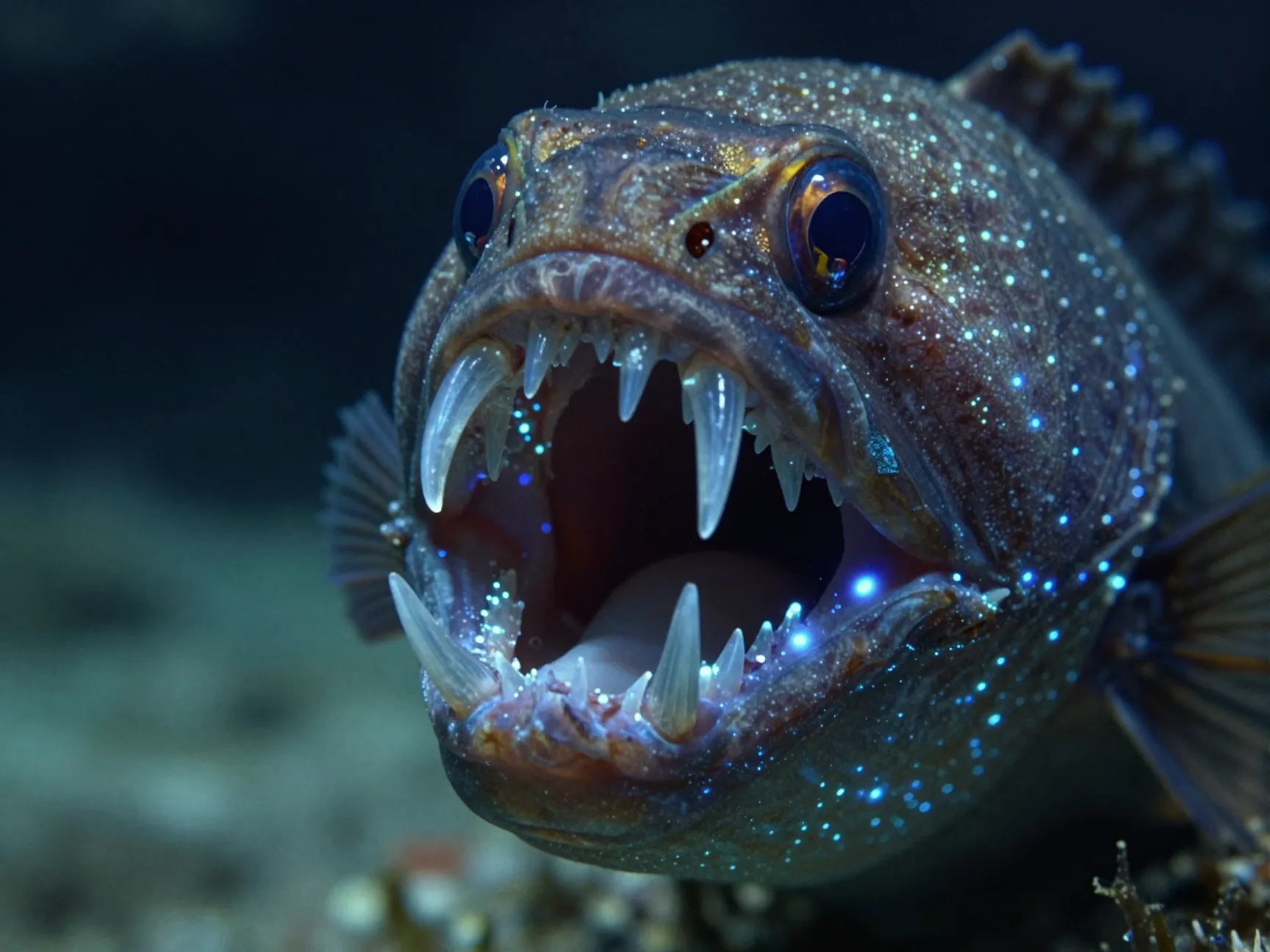
The viperfish carries fang-like teeth so long they cannot fit inside its closed mouth, curving back toward the eyes instead. These transparent, needle-sharp teeth are designed to impale fast-moving prey on impact, a critical advantage in an environment where a missed meal could mean starvation [5][9].
Chauliodus sloani is a vertical migrator, rising toward shallower waters at night to feed and descending back to depths of 5,000 feet or more during the day to avoid predators. This daily commute, called diel vertical migration, is one of the largest animal migrations on Earth by biomass [2].
The viperfish also possesses photophores, light-producing organs, along its belly. These lights match the faint downwelling light from above, making the fish nearly invisible to predators looking upward from below. This form of camouflage is called counterillumination [9].
Viperfish survival toolkit:
- Hinged skull that tilts back to accommodate large prey
- Bioluminescent photophores for counterillumination camouflage
- Extremely large stomach relative to body size
- Slow metabolism to survive long periods without food
6. Pacific Dragonfish (Idiacanthus atlanticus), The Invisible Predator
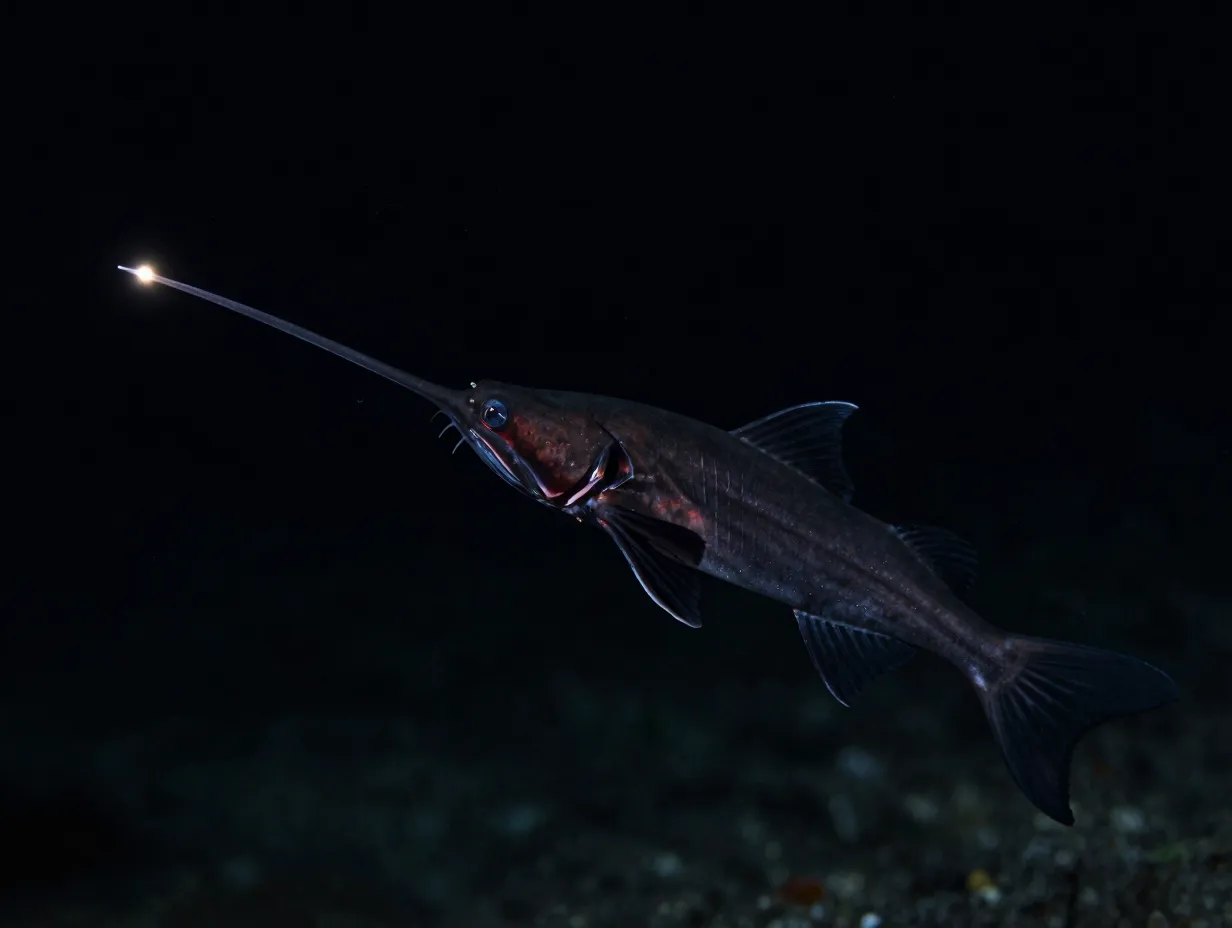
The Pacific dragonfish, also known as the black dragonfish, takes counterillumination to an extreme level. Its body is jet black, one of the deepest, most light-absorbing blacks found in any animal, which makes it nearly undetectable in the dim twilight zone [5][7]. Females grow to about 16 inches and carry a long, thread-like chin barbel tipped with a bioluminescent lure.
What makes the dragonfish particularly remarkable is its ability to produce and detect far-red and near-infrared light, wavelengths that most deep-sea animals cannot see. This gives the dragonfish what amounts to a private communication channel and a secret hunting spotlight invisible to its prey [4][9].
The males of this species are so different from the females that they were originally classified as a separate species. Adult males lack teeth, have no functional stomach, and cannot feed at all, they exist solely to reproduce, living off energy reserves built up during their larval stage [5].
Dragonfish fast facts:
- Body color: Ultra-black, absorbs up to 99.5% of light
- Special ability: Produces and detects near-infrared light
- Chin barbel: Bioluminescent lure for attracting prey
- Sexual dimorphism: Males are toothless, stomach-less, non-feeding
7. Blobfish (Psychrolutes marcidus), Pressure’s Masterpiece
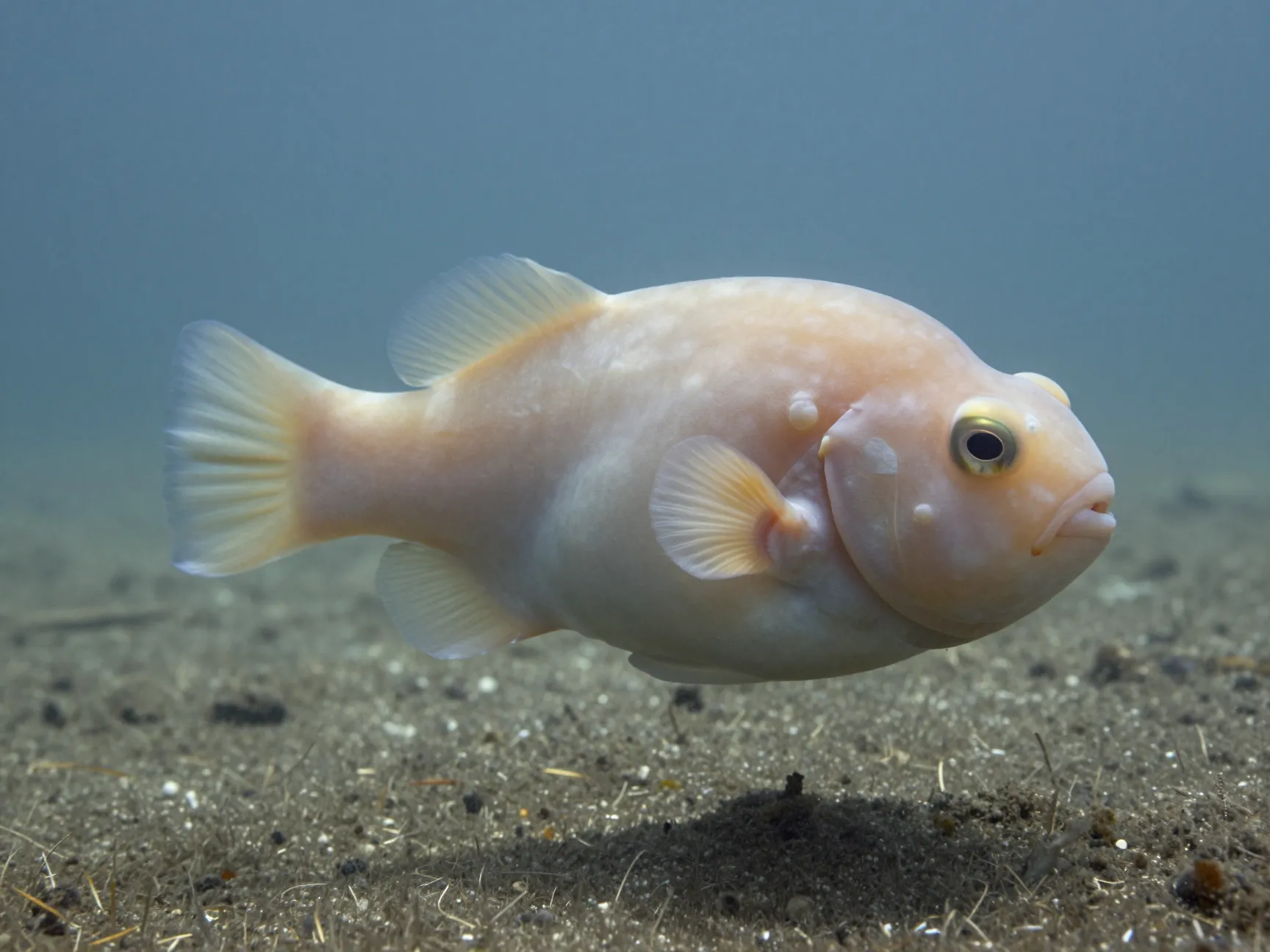
The blobfish became famous as the “world’s ugliest animal” after a 2013 public vote, but that reputation is based on a misunderstanding. At its native depth of 3,000 to 4,000 feet (900-1,200 m), the blobfish looks like a fairly ordinary, unremarkable fish. The iconic drooping, gelatinous appearance only emerges when the fish is brought to the surface and the enormous pressure difference causes its soft tissues to expand and distort [3][4].
The blobfish has almost no muscle mass, it does not need any. At depth, the pressure is so great that the fish achieves near-neutral buoyancy simply by being slightly less dense than the surrounding water, allowing it to hover just above the seafloor without expending energy [4]. It feeds by slowly drifting over the bottom and swallowing whatever edible material it encounters.
“The blobfish is not ugly, it is perfectly engineered for a world where looking ‘normal’ by surface standards would be fatal.”
What the blobfish teaches about deep-sea biology:
- Appearances change radically with pressure
- Minimal muscle mass is a viable strategy when buoyancy replaces active swimming
- Gelatinous tissue is a recurring solution across unrelated deep-sea species
- Conservation matters: blobfish are frequently caught as bycatch in deep-sea trawling operations
8. Stoplight Loosejaw (Malacosteus niger), The Fish That Sees in Secret
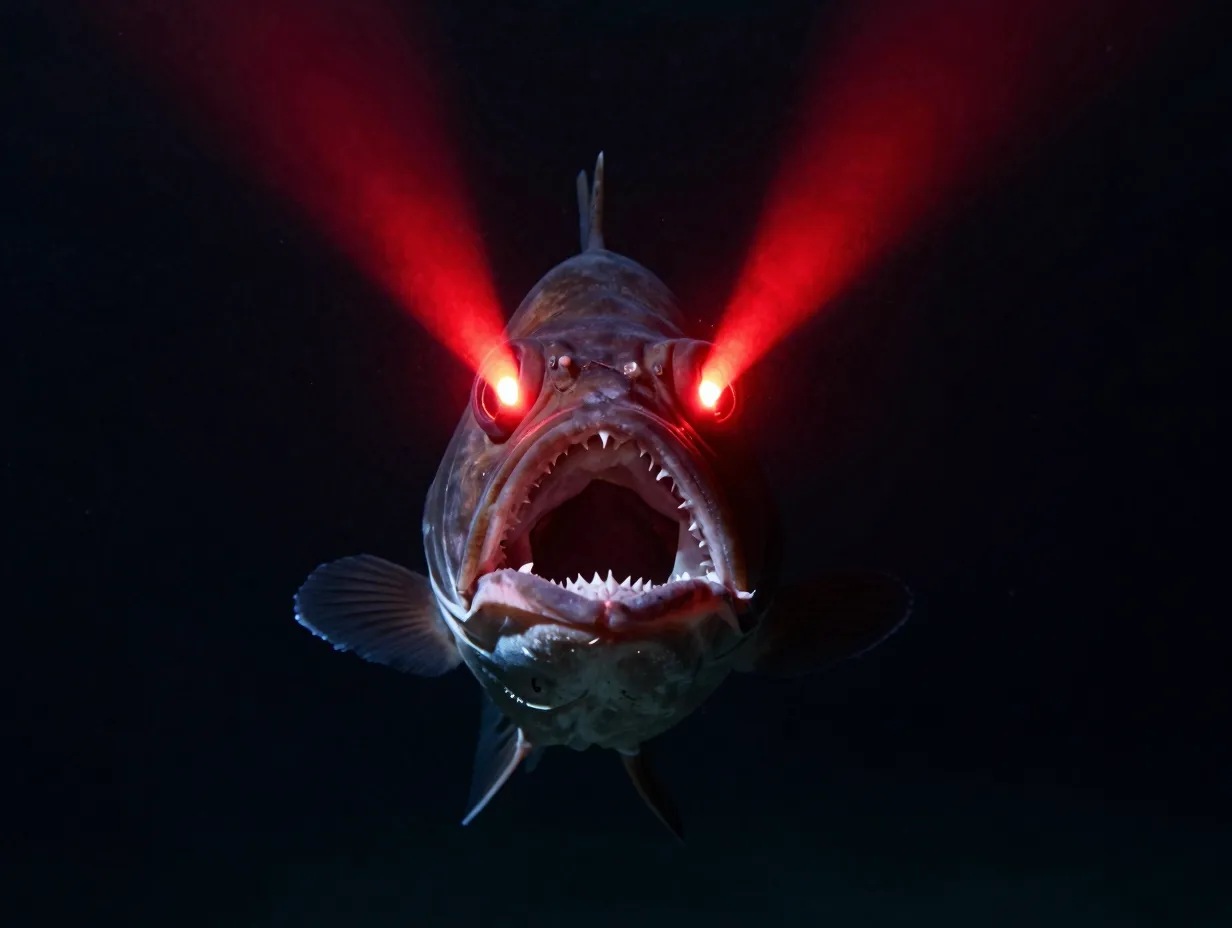
The stoplight loosejaw is one of the most tactically sophisticated predators in the deep sea. It produces red bioluminescent light from organs beneath its eyes, a remarkable feat, since virtually no other deep-sea animal can see red light at those depths. This means the loosejaw can illuminate its prey like a spotlight while remaining completely invisible to it [5][9].
The “loosejaw” part of its name refers to the fish’s lower jaw, which hangs open and is connected to the skull by only a thin strip of tissue rather than a full floor of the mouth. This allows the jaw to swing open with extraordinary speed, snatching prey before it can react [6][9].
The stoplight loosejaw also has no floor to its mouth, water passes straight through rather than creating drag, allowing for faster strikes. Combined with its secret red-light hunting system, this makes it one of the most efficient ambush predators in the bathypelagic zone.
Stoplight loosejaw adaptations summary:
- Red bioluminescent headlights invisible to prey
- Open jaw structure with no mouth floor, reduces water resistance
- Extremely fast strike speed
- Depth range: approximately 500 to 3,300 feet
How the 8 Deep Sea Fish Species That Defy Imagination Compare
Understanding these species side by side reveals the recurring themes in deep-sea evolution: bioluminescence, expandable anatomy, reduced or absent features that are unnecessary in darkness, and extreme specialization for scarce food.
| Species | Key Adaptation | Max Depth | Zone |
|---|---|---|---|
| Snailfish | Gelatinous pressure-tolerant body | 27,349 ft | Hadal |
| Barreleye Fish | Transparent dome, rotating eyes | ~2,600 ft | Mesopelagic |
| Gulper Eel | Enormous hinged jaw | 14,800 ft | Bathypelagic |
| Anglerfish | Bioluminescent lure, parasitic mating | ~6,600 ft | Bathypelagic |
| Viperfish | Oversized fangs, counterillumination | ~5,000 ft | Bathypelagic |
| Pacific Dragonfish | Ultra-black body, infrared vision | ~6,600 ft | Mesopelagic/Bathy |
| Blobfish | Near-zero muscle, pressure buoyancy | ~4,000 ft | Bathypelagic |
| Stoplight Loosejaw | Red bioluminescence, open jaw | ~3,300 ft | Bathypelagic |
Why the 8 Deep Sea Fish Species That Defy Imagination Matter Beyond Curiosity
The value of studying these extraordinary animals extends well beyond scientific fascination. In 2026, deep-sea research is increasingly urgent for several reasons.
Conservation pressure is growing. Deep-sea trawling, deep-sea mining for rare earth minerals, and climate change-driven shifts in ocean chemistry are all threatening habitats that took millions of years to develop. Many of these fish species have extremely slow reproduction rates and small population sizes, making them highly vulnerable to disturbance [4].
Biomimicry and biotechnology. The TMAO compounds in snailfish, the ultra-black pigment structures of the dragonfish, and the optical engineering of the barreleye’s eye system all represent biological solutions that materials scientists and engineers are actively studying. Deep-sea biology has already contributed to advances in cold-active enzymes used in molecular biology [7].
Understanding ocean health. Deep-sea fish are part of the biological pump, the process by which carbon fixed by surface phytoplankton is transported to the deep ocean through the food web. Viperfish and dragonfish, as vertical migrators, play a direct role in this process. Disrupting their populations could affect how much carbon the ocean sequesters [2].
Key threats to deep-sea fish species:
- Bottom trawling, which destroys seafloor habitat
- Bycatch in commercial fishing operations targeting other species
- Deep-sea mining operations disturbing sediment and water chemistry
- Ocean acidification reducing prey availability
Conclusion
The 8 deep sea fish species that defy imagination, snailfish, barreleye, gulper eel, anglerfish, viperfish, Pacific dragonfish, blobfish, and stoplight loosejaw, are not anomalies. They are the logical outcome of evolution operating under conditions that are alien to surface life. Every bizarre feature, from transparent skulls to parasitic mates to secret infrared spotlights, is a precise solution to a specific survival problem.
Actionable next steps for readers:
- Support organizations working on deep-sea conservation, such as the Ocean Conservancy, which actively advocates for protections on deep-sea habitats [3].
- Follow ongoing research from institutions like the Natural History Museum, which continues to document and describe new deep-sea species [4].
- Advocate for stronger international regulations on deep-sea trawling and mining, both of which threaten these species before many are even formally described.
- Explore citizen science platforms that allow the public to help classify deep-sea footage collected by research expeditions.
The deep ocean is not a distant, irrelevant wilderness. It covers the majority of Earth’s surface and plays a central role in regulating climate and supporting biodiversity. The creatures living there are not just curiosities, they are indicators of ocean health and reservoirs of biological innovation that science is only beginning to understand.
References
[1] Truly Bizarre Deep Sea Creatures – https://www.livescience.com/animals/truly-bizarre-deep-sea-creatures
[2] Deep Sea Fish – https://en.wikipedia.org/wiki/Deep-sea_fish
[3] Weird Wild Deep Sea Creatures – https://oceanconservancy.org/blog/2019/07/04/weird-wild-deep-sea-creatures/
[4] The Fishes Of The Deep Sea – https://www.nhm.ac.uk/discover/the-fishes-of-the-deep-sea.html
[5] 15 Deep Sea Creatures That Should Not Be Real – https://www.animalsaroundtheglobe.com/15-deep-sea-creatures-that-should-not-be-real-4-320581/
[6] Bizarre Deep Sea Creatures – https://www.mentalfloss.com/animals/bizarre-deep-sea-creatures
[7] Remarkable Fish Species – https://animalko.com/remarkable-fish-species/
[9] 8 Weird And Wonderful Fish That Live In The Deep Sea – https://a-z-animals.com/articles/8-weird-and-wonderful-fish-that-live-in-the-deep-sea/