8 Stunning Wooden Fishing Kayak Designs That Blend Classic Craftsmanship With Modern Performance
A rotomolded plastic fishing kayak tips the scales at roughly 80 to 100 pounds. A well-built cedar-strip wooden fishing kayak of the same length can weigh less than half that, and it will turn heads at every boat ramp it visits. That weight advantage, combined with the visual beauty of hand-laid wood, is driving a quiet resurgence in wooden kayak building that extends well beyond hobbyist workshops and into serious fishing platforms. These 8 stunning wooden fishing kayak designs that blend classic craftsmanship with modern performance prove that choosing wood does not mean sacrificing function.
Disclosure: This post contains affiliate links. As an Amazon Associate, we earn from qualifying purchases, and at no extra cost to you.
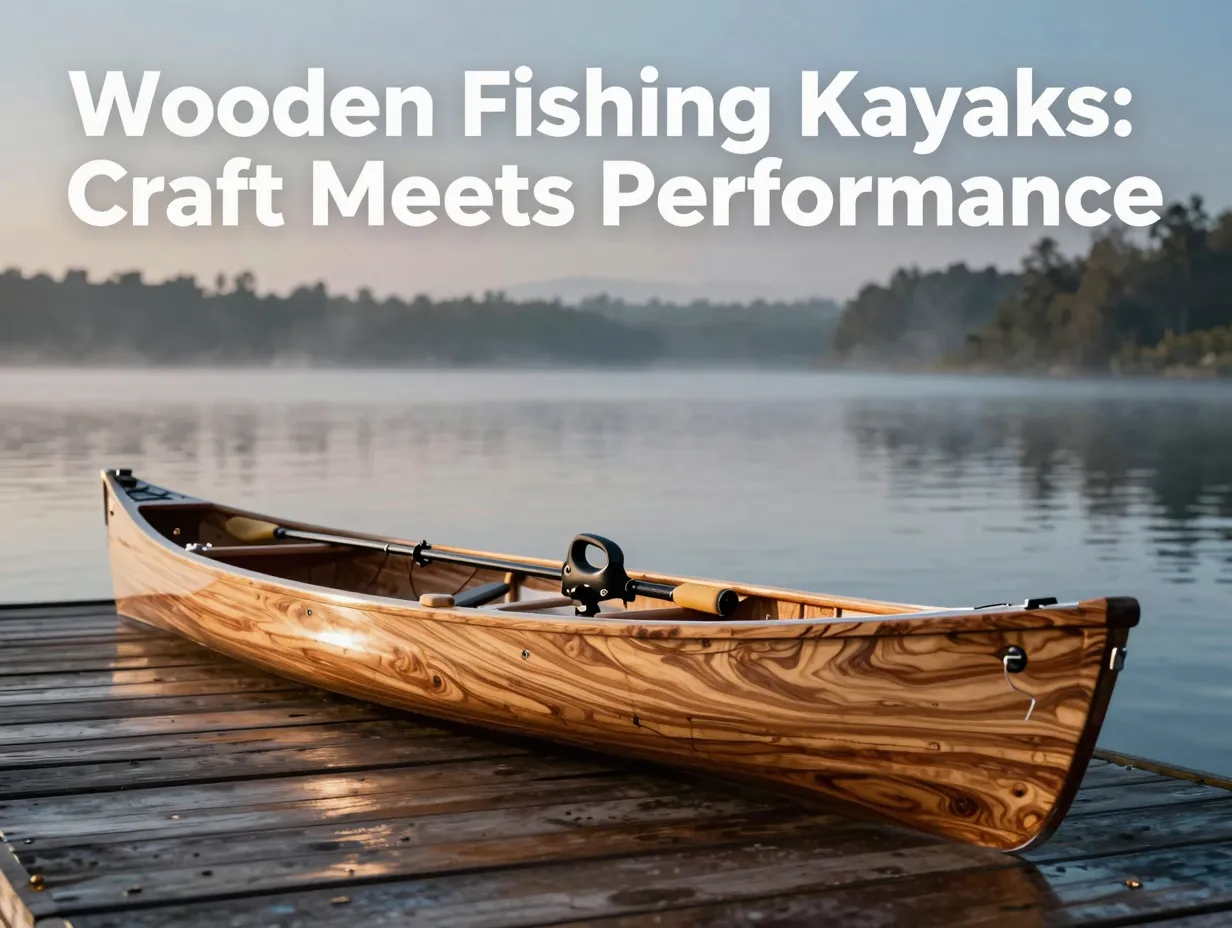
From stitch-and-glue fishing platforms engineered to accept pedal drive systems, to cedar-strip sea kayaks refined with CAD hydrodynamic analysis, the designs covered here represent the full spectrum of what is possible when traditional materials meet 21st-century engineering. Whether the goal is a finished boat, a kit build, or a custom commission, there is a wooden fishing kayak design in 2026 that fits the mission.
Key Takeaways
- Modern wooden fishing kayaks combine traditional wood-epoxy construction with performance features like pedal drive compatibility, rod holders, and live-bait wells.
- Cedar-strip and stitch-and-glue methods both produce lightweight, strong hulls that outperform rotomolded plastic on weight and aesthetics.
- Digital tools including CAD hydrodynamic analysis are now standard in high-end wooden kayak design, ensuring modern performance is not left to chance.
- The DIY kit market remains robust in 2026, with builders able to source precision pre-cut panels, plans, and full materials packages from specialist suppliers.
- Exotic woods, composite skins, and advanced epoxy systems allow wooden kayaks to compete directly with fiberglass and carbon-fiber boats in demanding conditions.
What Makes Wooden Fishing Kayaks Worth Considering in 2026
Before diving into the individual designs, it helps to understand why wooden construction is gaining ground rather than fading away. Three factors stand out.
Weight. A 17-foot cedar-strip kayak covered in fiberglass cloth and epoxy resin can weigh approximately 50 pounds [6]. That is a meaningful advantage for solo anglers who load and unload without help.
Structural efficiency. The strip-building method allows a builder to fine-tune hull shape with precision, producing a stiff, strong monocoque structure that is well-suited to performance paddling [6].
Aesthetics that serve a purpose. The visual beauty of a wooden hull is not just cosmetic. It reflects the care taken in construction, a boat built with that level of attention is also built to last.
The table below summarizes the core construction methods used across the designs in this article.
| Construction Method | Core Material | Typical Weight (17 ft) | Best For |
|---|---|---|---|
| Cedar Strip | Western Red Cedar + fiberglass/epoxy | ~50 lb | Performance, aesthetics |
| Stitch and Glue | Marine plywood + epoxy/glass | ~45-60 lb | Kit builds, fishing platforms |
| Hybrid Composite | Wood core + carbon/Kevlar/epoxy | ~35-50 lb | Rough water, expedition |
8 Stunning Wooden Fishing Kayak Designs That Blend Classic Craftsmanship With Modern Performance
The following designs are numbered in ascending order. Each one represents a distinct approach to the challenge of building a wooden kayak that fishes as well as it looks.
1. Bedard F1430 Sit-On-Top Fishing Kayak
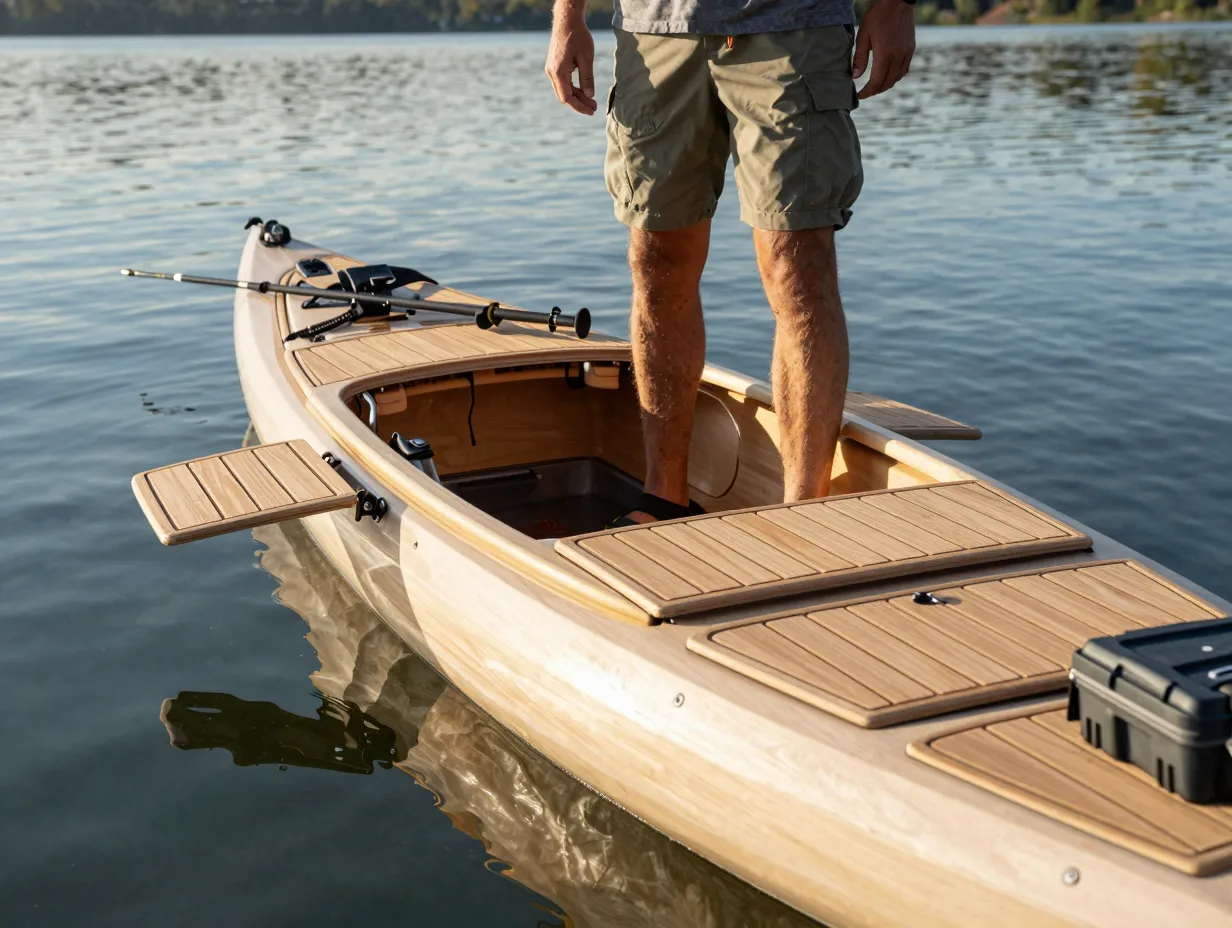
The F1430 from Bedard Yacht Design, featured by WoodenBoat, may be the most purpose-built wooden fishing kayak available in plan form today. It is a sit-on-top stitch-and-glue design that explicitly pairs “classic looks” with modern wood-epoxy construction, and it weighs less than half of a comparable rotomolded fishing kayak [1].
What separates the F1430 from decorative wooden boats is its fishing-specific layout. The hull is stable enough for the designer to stand and take a selfie, a practical test that matters to anglers who need to sight-fish or cast standing up. The deck includes multiple day hatches, one of which can be converted to a live-bait well, and the cockpit and storage areas use cedar scuppers for drainage [1].
The standout feature: The F1430 is designed to accept various pedal drive systems by converting one of the day-hatch compartments. This makes it one of the few wooden kayak designs that directly addresses the pedal-drive trend that has dominated the fishing kayak market for the past decade [1].
“The F1430 positions itself squarely as a performance wooden fishing platform rather than a purely aesthetic craft.”, WoodenBoat
2. RPF Kayaks Wood Sea Kayak Line
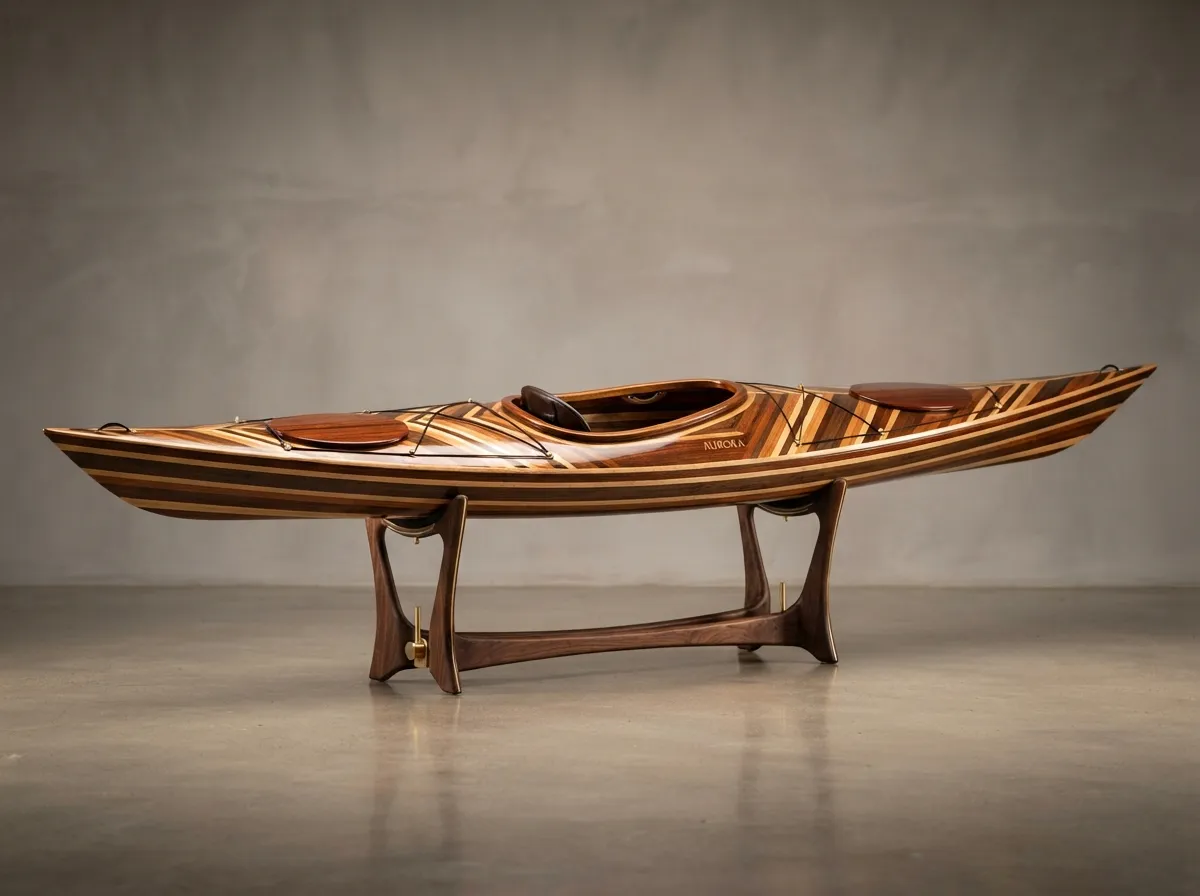
RPF Kayaks produces a line of handmade wood sea kayaks created in partnership with designer Silvério Palma. What distinguishes this line in 2026 is the integration of CAD analysis of hydrodynamics and performance before each design is released [2].
These kayaks use exotic woods chosen for both visual impact and structural properties. The combination of hand craftsmanship with digital design tools means that hull shapes are not guesswork, they are tested virtually before a single strip is laid. This approach closes the performance gap between wooden kayaks and their fiberglass or carbon counterparts [2].
For anglers who want a finished boat rather than a kit project, RPF Kayaks represents the high end of the production wooden kayak market. The exotic wood selections give each hull a unique appearance that no two boats will replicate exactly.
3. Redfish Custom Kayak Cedar-Strip Sea Kayak

Redfish Custom Kayak and Canoe offers cedar-strip sea kayaks, canoes, and kits, positioning itself as a specialist in performance wood designs [3]. The business supplies both finished boats and complete plans-and-materials packages for builders, which makes it a useful entry point for anglers who want to build their own fishing kayak from scratch.
The cedar-strip method used by Redfish produces a hull with excellent stiffness-to-weight ratio. Each strip is edge-glued and stapled over a series of temporary molds, then sheathed inside and out with fiberglass cloth and epoxy resin. The result is a monocoque structure that is both light and strong.
Why it matters for fishing: A lighter hull is easier to car-top, easier to launch solo, and more responsive in current, all qualities that matter on a fishing day. The DIY and boutique custom market for wooden performance kayaks remains robust in mid-2026, and Redfish is a clear example of why [3].
4. One Ocean Kayaks High-Performance Wood-Strip Designs

One Ocean Kayaks focuses specifically on “high performance wooden sea kayaks,” providing both wood-strip and stitch-and-glue designs along with detailed construction manuals [4]. The designs target both recreational and high-performance use, making them adaptable to fishing applications with modest modifications.
The One Ocean approach is notable for its emphasis on efficiency and speed rather than tradition alone. Hull forms are drawn with tracking, primary stability, and secondary stability in mind, the same performance criteria applied to high-end fiberglass sea kayaks [4].
For the angler who also paddles in open water or coastal environments, a One Ocean design offers a wooden hull that can keep pace with composite boats on long crossings while still providing the aesthetic and weight benefits of wood construction.
5. WoodenCanoes UK Guillemot Single Sea Kayak
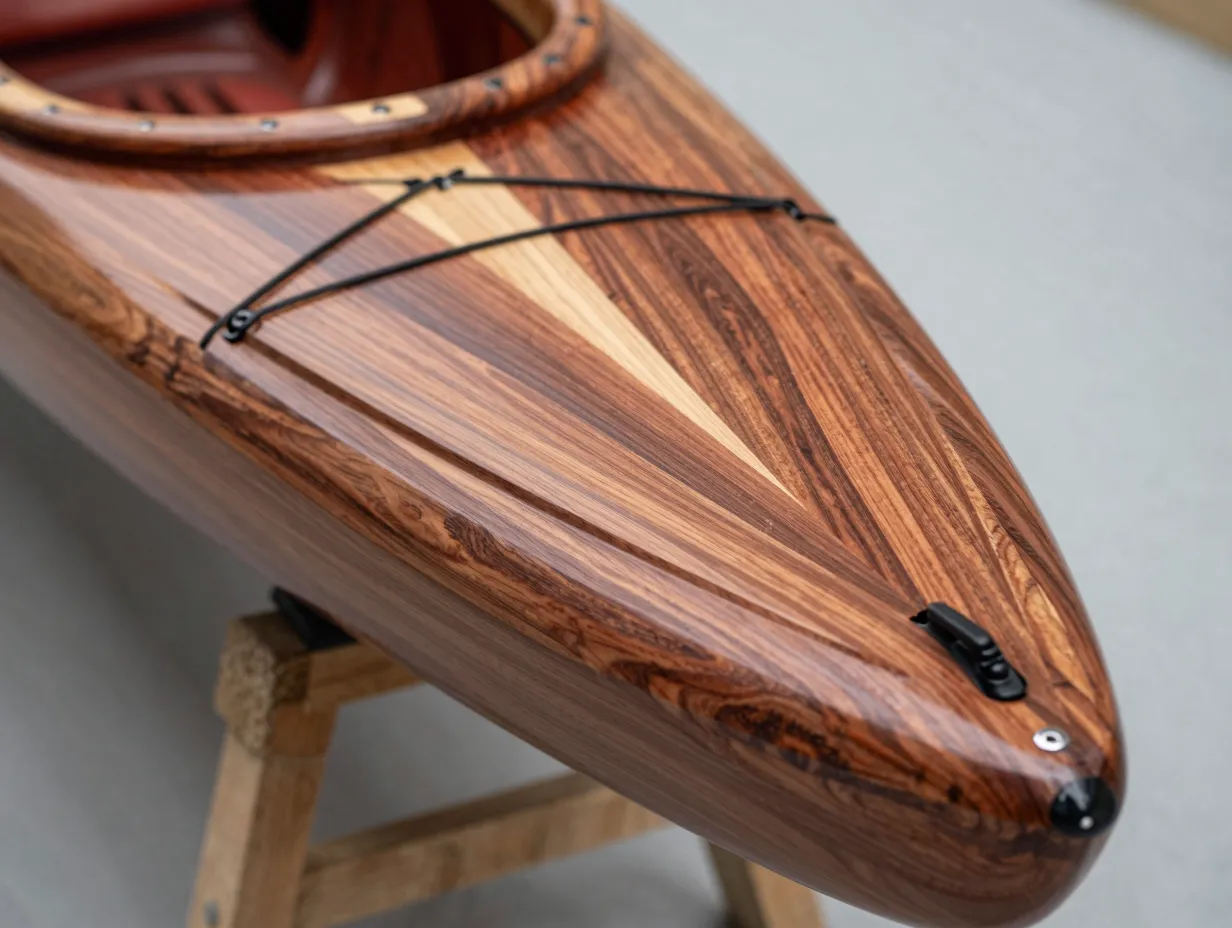
The 17-foot Guillemot Single Sea Kayak showcased by WoodenCanoes UK represents the pinnacle of visual craftsmanship in this list. Built from Western Red Cedar, Scandinavian Redwood, and American Black Walnut, the deck features complex wave-pattern striping that is unique to each build [5].
This level of visual detail is what differentiates a custom wooden kayak from any mass-produced plastic hull. The wave patterns are not applied, they are structural, formed by the arrangement of individual wood strips during the build process. Every planing stroke and glue line contributes to the final appearance.
Key specifications:
- Length: 17 feet
- Primary woods: Western Red Cedar, Scandinavian Redwood, American Black Walnut
- Deck: Complex wave-pattern strip arrangement
- Skin: Clear fiberglass and epoxy over wood core [5]
For fishing applications, the Guillemot hull form offers good primary stability and a long waterline that tracks well in wind, important qualities for anglers working open bays or coastal flats.
6. Woodenboat USA Cedar Wood Strip Kayak (OMH Inc.)
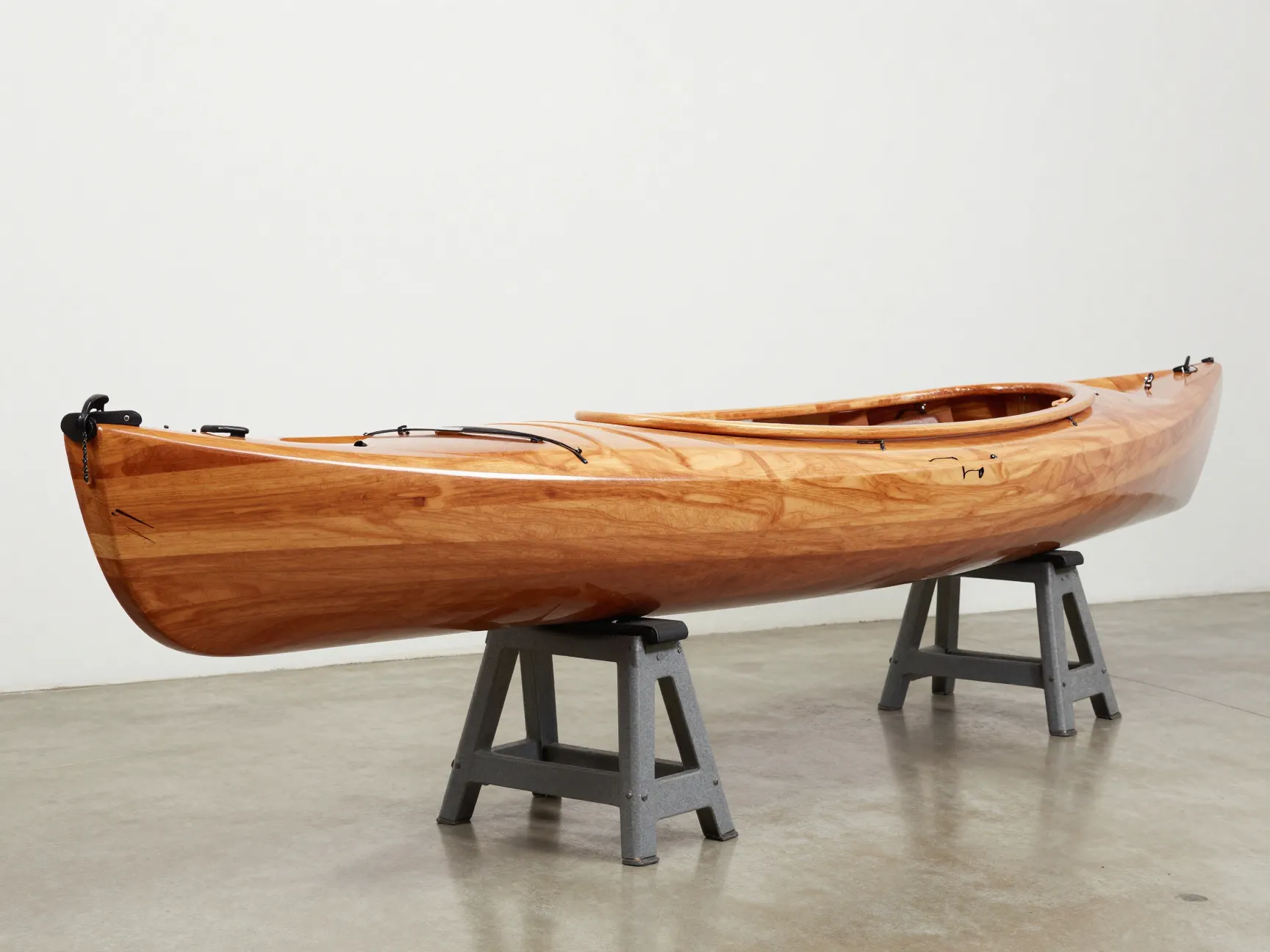
The Cedar Wood Strip Built Kayak from Woodenboat USA, produced by OMH Inc., is a production example of the strip-building method applied to a 17-foot hull. It weighs approximately 50 pounds and uses 100 percent Canadian Western Red Cedar covered with clear fiberglass cloth, epoxy resin, and marine varnish [6].
This construction stack, traditional wood core plus invisible composite skin, is the standard approach for modern high-end wooden kayaks. The fiberglass and epoxy provide abrasion resistance and waterproofing without adding significant weight or obscuring the wood grain beneath [6].
The boat is described as “100% hand built from scratch” using the strip-building method, which allows fine control over hull shape and produces a structure suitable for performance paddling [6]. For anglers, the 50-pound weight means a realistic solo car-top without a roof rack system.
Construction stack at a glance:
- Core: 100% Canadian Western Red Cedar strips
- Outer skin: Clear fiberglass cloth + epoxy resin
- Finish: Marine varnish (UV protection, gloss)
- Weight: ~50 lb at 17 ft [6]
7. Chesapeake Light Craft Sea Island Sport Pedal Kayak
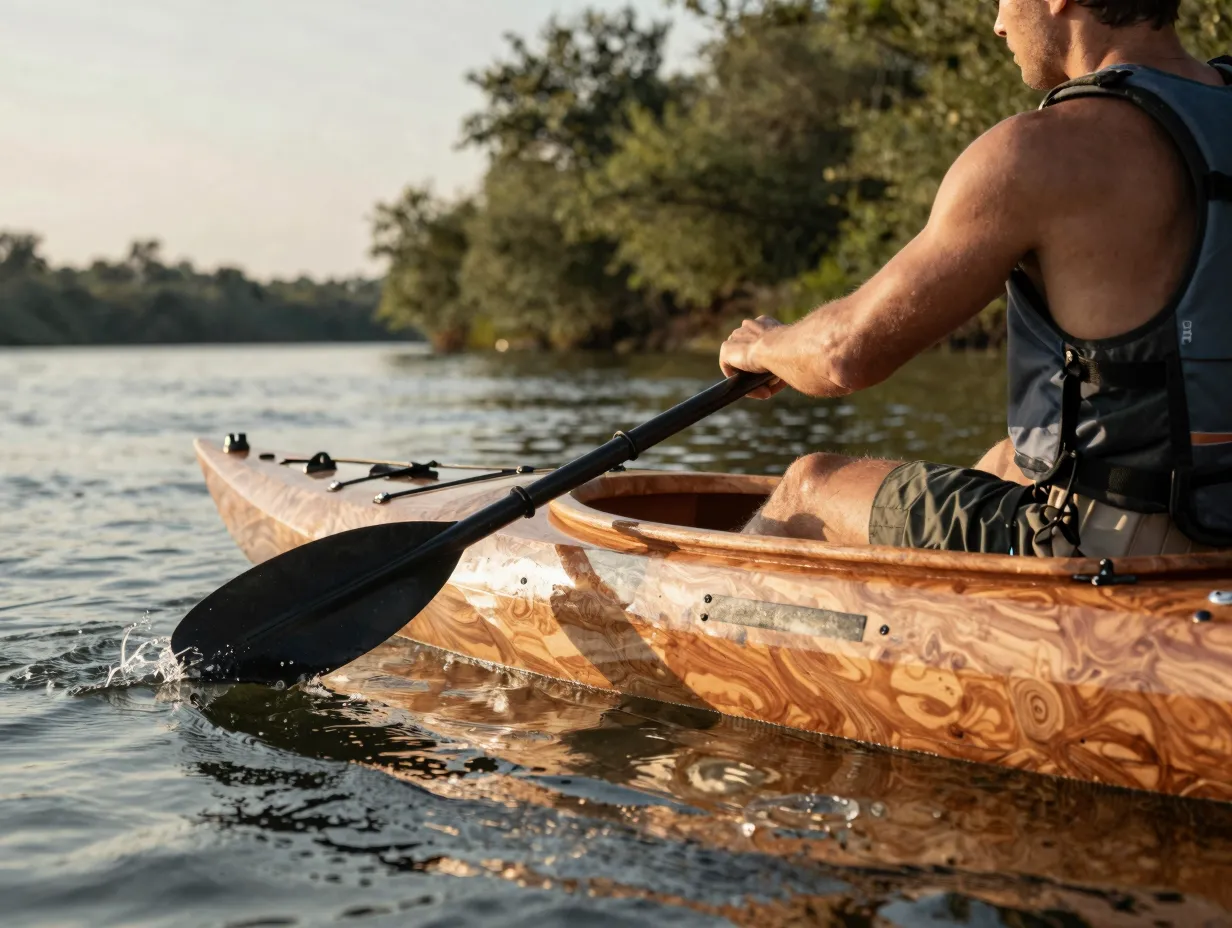
The Sea Island Sport, built from Chesapeake Light Craft plans, is a stitch-and-glue sit-on-top wooden kayak that incorporates pedal power, making it one of the most fishing-functional wooden designs available [7]. The hull uses 4 mm okoume and 3 mm sapele marine plywood as the core of a fiberglass-epoxy composite.
A documented build of this design, including video of the finished pedal-powered kayak on the water, demonstrates that the stitch-and-glue method can produce a sit-on-top fishing platform with modern propulsion integrated into a traditional wooden structure [7].
The combination of okoume and sapele plywood gives the hull both structural stiffness and visual warmth. Okoume is lightweight and bends easily around panel curves; sapele adds density and a distinctive ribbon-grain figure that shows through the clear epoxy finish.
This design is particularly relevant for anglers who want hands-free propulsion for trolling or working structure, without giving up the weight and aesthetic advantages of a wooden hull.
8. Petrel Sea Kayak, Greenland Heritage Meets Advanced Composites
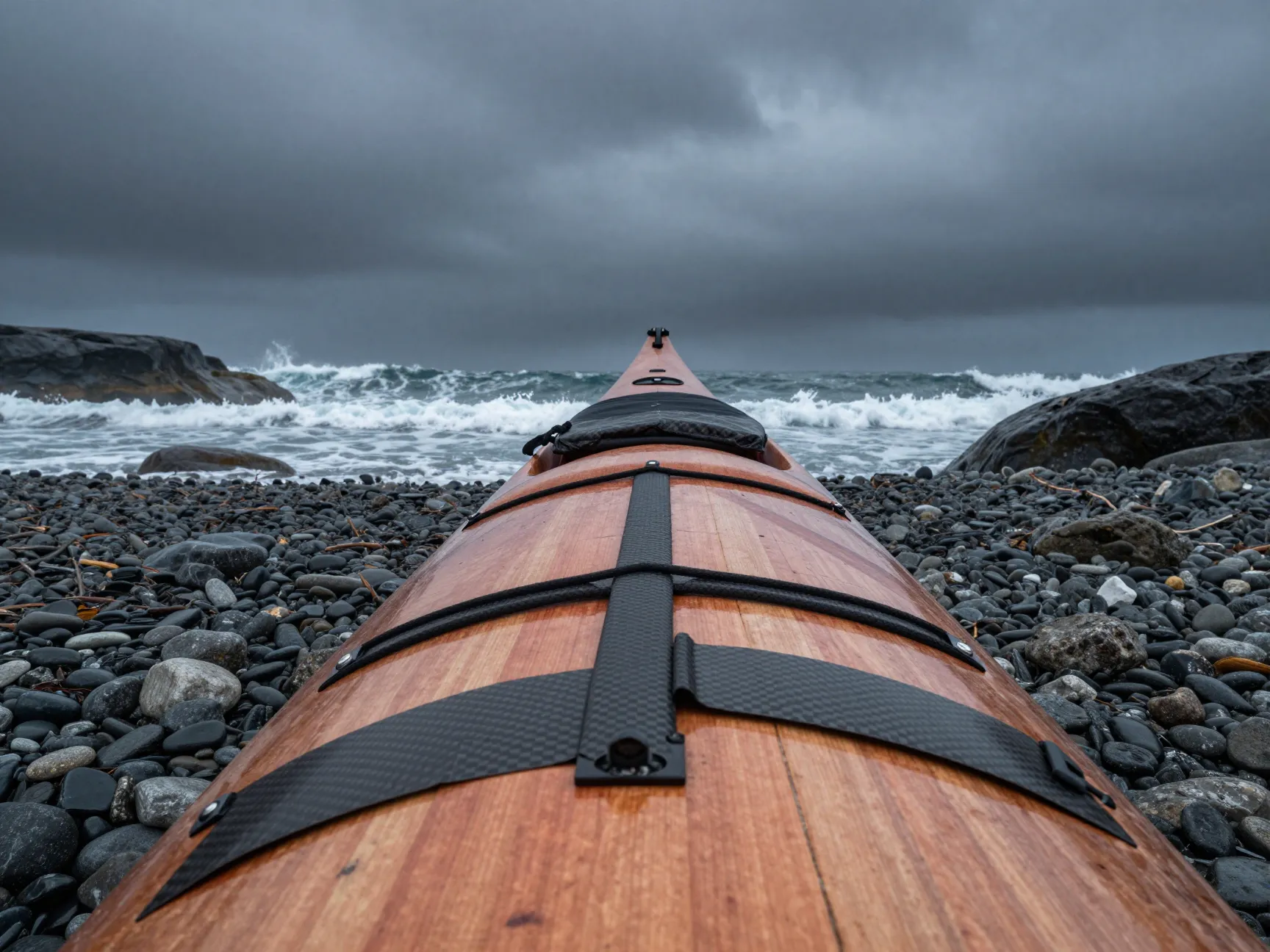
The Petrel sea kayak design draws its hull form from Greenland Inuit hunting kayaks, one of the most hydrodynamically refined hull shapes in paddling history. Built in matched Western Red Cedar with layers of carbon fiber, Kevlar, fiberglass, and epoxy, the Petrel represents the most technically advanced entry on this list [12].
The Greenland hull form is long, narrow, and low-volume, optimized for speed and rough-water maneuverability. Hundreds of hours of craftsmanship go into a finished Petrel, and the multiple composite layers mean the boat can handle conditions that would challenge far more expensive factory-built kayaks [12].
Why it belongs on a fishing list: The Petrel’s Greenland heritage is directly relevant to fishing. The original qajaq was a hunting tool, designed to approach prey quietly, handle rough coastal water, and be paddled efficiently over long distances. Those same qualities translate directly to serious kayak fishing in open or coastal environments.
The carbon and Kevlar reinforcement layers add impact resistance and stiffness without the weight penalty of additional wood, a practical engineering choice for a boat that may encounter rocky shorelines or submerged structure.
How to Choose Between These Designs
With 8 stunning wooden fishing kayak designs that blend classic craftsmanship with modern performance now laid out, the next question is which one fits a specific fishing style. The following framework helps narrow the choice.
For stand-up fishing and live bait: The Bedard F1430 is the clear choice. Its purpose-built fishing layout, live-bait well option, and pedal drive compatibility make it the most fishing-specific design on the list [1].
For open water and coastal fishing: The Petrel, One Ocean designs, or the Guillemot offer the tracking and rough-water performance needed for exposed environments [4][5].
For kit builders on a budget: Pygmy Boats is described as the original manufacturer of precision pre-cut stitch-and-glue kayak kits in North America [9], and the Chesapeake Light Craft Sea Island Sport offers a pedal-capable sit-on-top option for anglers who want to build their own [7].
For a finished production boat: The Woodenboat USA cedar-strip kayak and RPF Kayaks’ exotic wood line both offer ready-to-fish options with documented construction quality [2][6].
The Role of Modern Technology in Wooden Kayak Design
One of the most important shifts in wooden kayak building over the past decade is the adoption of digital design tools. RPF Kayaks uses CAD analysis of hydrodynamics before each design is released [2]. One Ocean Kayaks engineers hull forms for efficiency and speed using the same criteria applied to composite boats [4].
This matters because it addresses the most common objection to wooden kayaks: that they are beautiful but slow, or beautiful but fragile. When hull shapes are optimized digitally before being cut from wood, the resulting boat is not a compromise, it is a wooden version of a high-performance hull.
The Petrel’s Greenland-derived hull form is another example. That shape was refined over centuries of use in some of the most demanding paddling conditions on earth. Combining it with modern composite reinforcement produces a boat that is both historically grounded and technically current [12].
“When hull shapes are optimized digitally before being cut from wood, the resulting boat is not a compromise, it is a wooden version of a high-performance hull.”
Building vs. Buying: What the Market Looks Like in 2026
The wooden fishing kayak market in 2026 divides cleanly into three segments.
- Finished production boats from makers like RPF Kayaks and Woodenboat USA offer quality without requiring build skills [2][6].
- Custom commissions from specialists like Redfish Custom Kayak and WoodenCanoes UK produce one-of-a-kind hulls tailored to specific fishing environments [3][5].
- Kit and plans builds from Chesapeake Light Craft, Pygmy Boats, and Bedard Yacht Design allow anglers to build their own kayak to a proven design, often for significantly less than a finished boat costs [1][7][9].
Each segment serves a different buyer. The kit-build route requires time and workshop space but produces a boat the builder knows intimately, every joint, every layer of glass, every coat of varnish. That knowledge is valuable when a repair is needed on a remote fishing trip.
Conclusion
The 8 stunning wooden fishing kayak designs that blend classic craftsmanship with modern performance covered in this article share a common thread: none of them asks the angler to choose between beauty and function. The F1430 accepts pedal drives. The Petrel handles rough coastal water. The Sea Island Sport offers hands-free propulsion in a stitch-and-glue wooden hull. The RPF Kayaks line uses CAD hydrodynamics to ensure every exotic wood hull performs as well as it looks.
Actionable next steps for 2026:
- Identify the primary fishing environment, flatwater, coastal, or open bay, and match hull form to conditions before selecting a design.
- Request plans or a kit from Bedard Yacht Design or Chesapeake Light Craft if a DIY build fits the schedule and budget [1][7].
- Contact Redfish Custom Kayak or WoodenCanoes UK for a custom commission if a finished one-of-a-kind hull is the goal [3][5].
- Review the RPF Kayaks exotic wood line or the Woodenboat USA cedar-strip kayak for a production finished boat [2][6].
- Study the Petrel design if rough-water performance is the top priority, and budget for the additional composite reinforcement layers [12].
Wooden fishing kayaks are not a nostalgic detour from modern performance. In 2026, they are a legitimate, well-engineered choice for anglers who want a lighter, more beautiful, and often more capable boat than the plastic alternative.
References
[1] F1430 Fishing Kayak – https://www.woodenboat.com/boat-plans-kits/f1430-fishing-kayak
[2] Woodseakayaks En – https://www.rpfkayaks.com/kayaks/woodseakayaks_en.htm
[3] redfishkayak – https://www.redfishkayak.com/
[4] oneoceankayaks – http://www.oneoceankayaks.com/
[5] Kayaks – https://www.woodencanoes.uk/kayaks
[6] Cedar Wood Strip Built Kayak Wooden 17 Woodenboat Usa – https://www.captjimscargo.com/cedar-strip-canoes-kayaks-surfboards/cedar-wood-strip-built-kayak-wooden-17-woodenboat-usa/
[7] Watch – https://www.youtube.com/watch?v=E_Ylj_Z72W0
[9] Pygmy Boats – https://paddling.com/gear/manufacturers/pygmy-boats