8 Salt Water Fishing Techniques for Beginners and Pros
Saltwater fishing accounts for more than 72 million fishing trips taken by Americans every year, yet most newcomers step onto a pier or boat with little more than a hook and a hope. The gap between a frustrating day on the water and a productive one almost always comes down to technique. Whether casting from a beach, drifting over a reef, or trolling offshore, knowing which method to use, and when, separates consistent anglers from those who go home empty-handed. This guide breaks down the 8 salt water fishing techniques for beginners and pros that every serious angler should understand, from the most beginner-friendly approaches to the refined methods that experienced offshore fishermen rely on [1][2].
Disclosure: This post contains affiliate links. As an Amazon Associate, we earn from qualifying purchases, and at no extra cost to you.
Key Takeaways
- Matching the right saltwater technique to the target species, water depth, and conditions is the single most important factor in fishing success.
- Bottom fishing and surf casting are the most accessible methods for beginners, requiring minimal gear and offering fast results.
- Trolling, jigging, and popping are higher-skill techniques that consistently produce larger, pelagic species for experienced anglers.
- Live bait fishing remains one of the most universally effective methods across all skill levels and saltwater environments.
- Understanding tides, water temperature, and structure is as important as the technique itself, the best method fails in the wrong location [5][6].
Why Technique Matters More Than Gear in Saltwater Fishing
Many beginners spend hundreds of dollars on rods and reels before learning a single reliable method. The truth is that a basic spinning setup paired with the right technique will consistently outfish an expensive rod used incorrectly. Saltwater environments are dynamic, tides shift feeding windows, currents carry bait, and fish relate to structure in predictable ways. Anglers who understand the mechanics behind each method can adapt quickly, read the water, and put fish in the cooler regardless of conditions [6].
The 8 salt water fishing techniques for beginners and pros covered in this guide are not random. They represent the foundational methods that appear across every credible saltwater fishing resource and are proven across species from redfish and flounder to tuna and wahoo [2][5].
“The best technique is the one that matches the fish’s behavior at that moment, not the one you’re most comfortable with.”
The Role of Tides, Structure, and Bait Selection
Before diving into individual techniques, three variables shape every decision on the water:
- Tides: Incoming tides push baitfish onto flats and into inlets; outgoing tides concentrate predators near channel edges and drop-offs.
- Structure: Reefs, wrecks, rock piles, jetties, and grass beds are where fish feed. Technique selection depends heavily on the structure being fished.
- Bait: Live bait almost always outperforms artificial lures in saltwater, but the right artificial used correctly can be equally deadly [4].
The 8 Salt Water Fishing Techniques for Beginners and Pros, Explained
1. Bottom Fishing
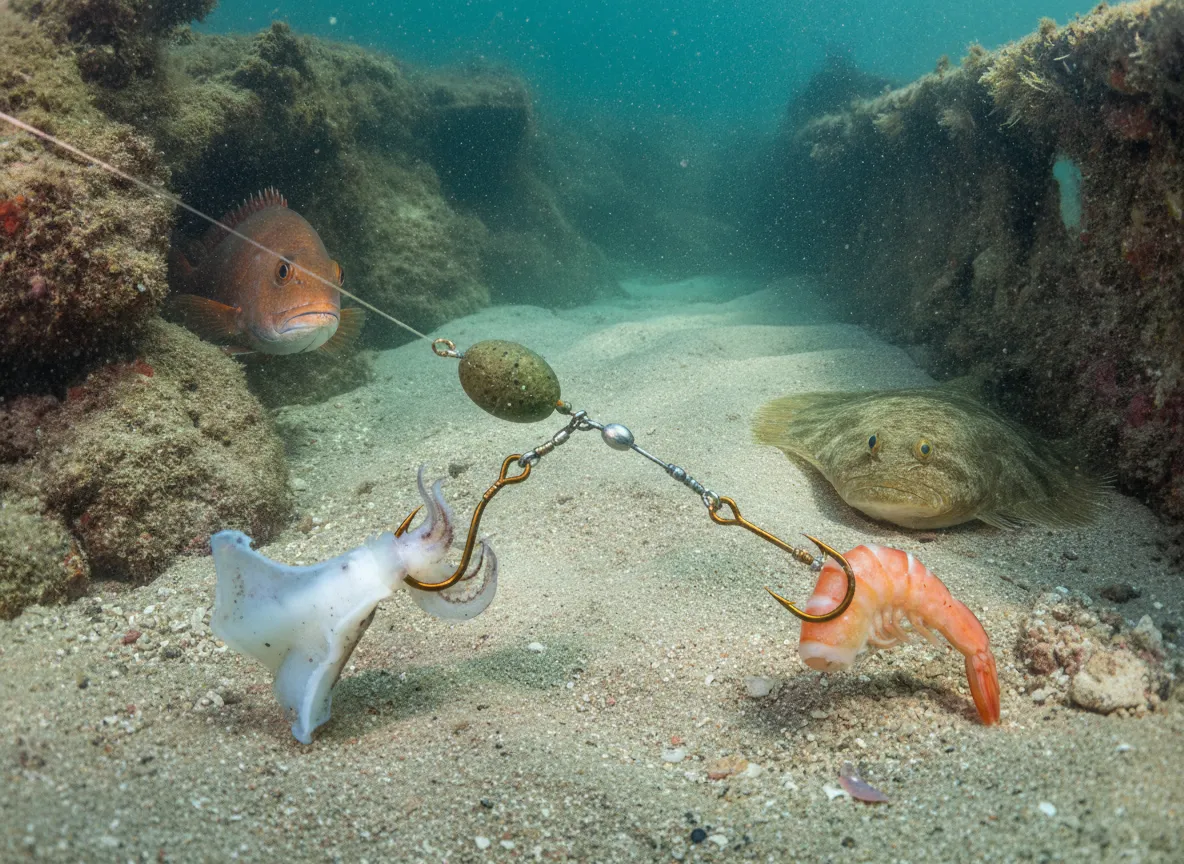
Bottom fishing is the starting point for most saltwater anglers and remains one of the most productive methods at any experience level. The concept is straightforward: a weighted rig carries the bait to the seafloor, where it sits in the strike zone for species like red snapper, grouper, sea bass, flounder, and porgy.
How it works:
- A sinker (typically a bank or egg sinker) holds the rig on the bottom.
- A leader connects the sinker to one or two hooks baited with cut fish, squid, shrimp, or crab.
- The angler holds the rod or props it in a holder and waits for a bite.
Best conditions: Rocky reefs, wrecks, sandy flats, and inshore channels. Works in water from 10 feet to several hundred feet deep.
Beginner tip: Start with a simple knocker rig or Carolina rig. Use circle hooks to reduce gut-hooking and improve catch-and-release survival rates [7].
| Skill Level | Target Species | Recommended Bait |
|---|---|---|
| Beginner | Flounder, Porgy | Squid, shrimp |
| Intermediate | Grouper, Snapper | Cut fish, live pinfish |
| Advanced | Deep-water Tilefish | Squid, mackerel strips |
2. Surf Casting
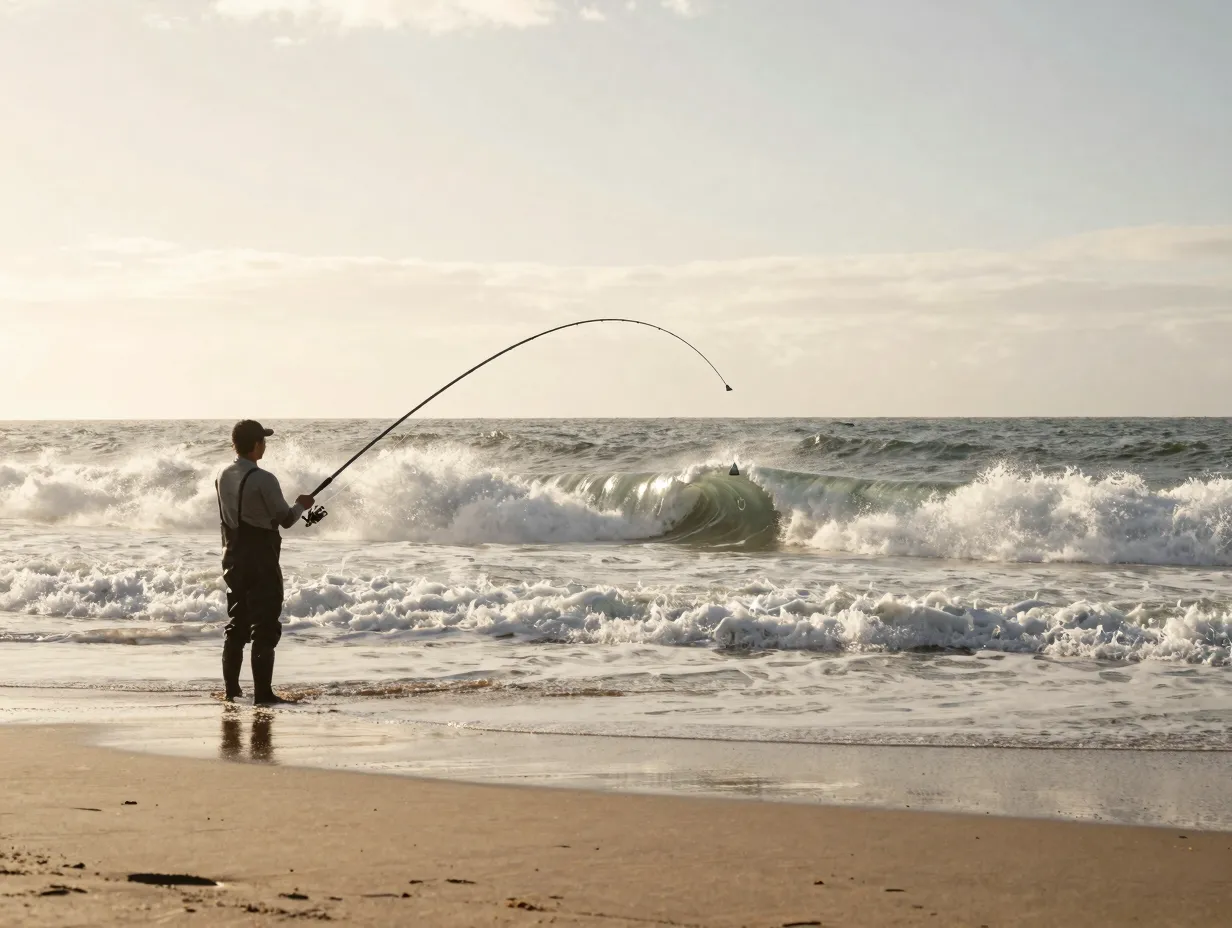
Surf casting is one of the most accessible forms of saltwater fishing because it requires no boat. Anglers stand on the beach and cast weighted rigs or lures beyond the breaking surf into the troughs and channels where fish feed. Target species include striped bass, bluefish, pompano, redfish, and whiting [1].
How it works:
- A long rod (9 to 12 feet) generates the casting distance needed to reach fish beyond the breakers.
- Pyramid sinkers hold the bait in the current without rolling.
- Bait choices include sand fleas, cut mullet, shrimp, and bloodworms depending on the target species.
Key technique detail: Reading the beach is critical. Look for cuts in the sandbars, discolored water, and areas where waves break differently, these are fish highways. Casting into these zones rather than randomly into open water dramatically increases catch rates [5].
Pro tip: Fish the first two hours of an incoming tide for the best surf action. Baitfish push onto the beach with the tide, and predators follow.
3. Trolling
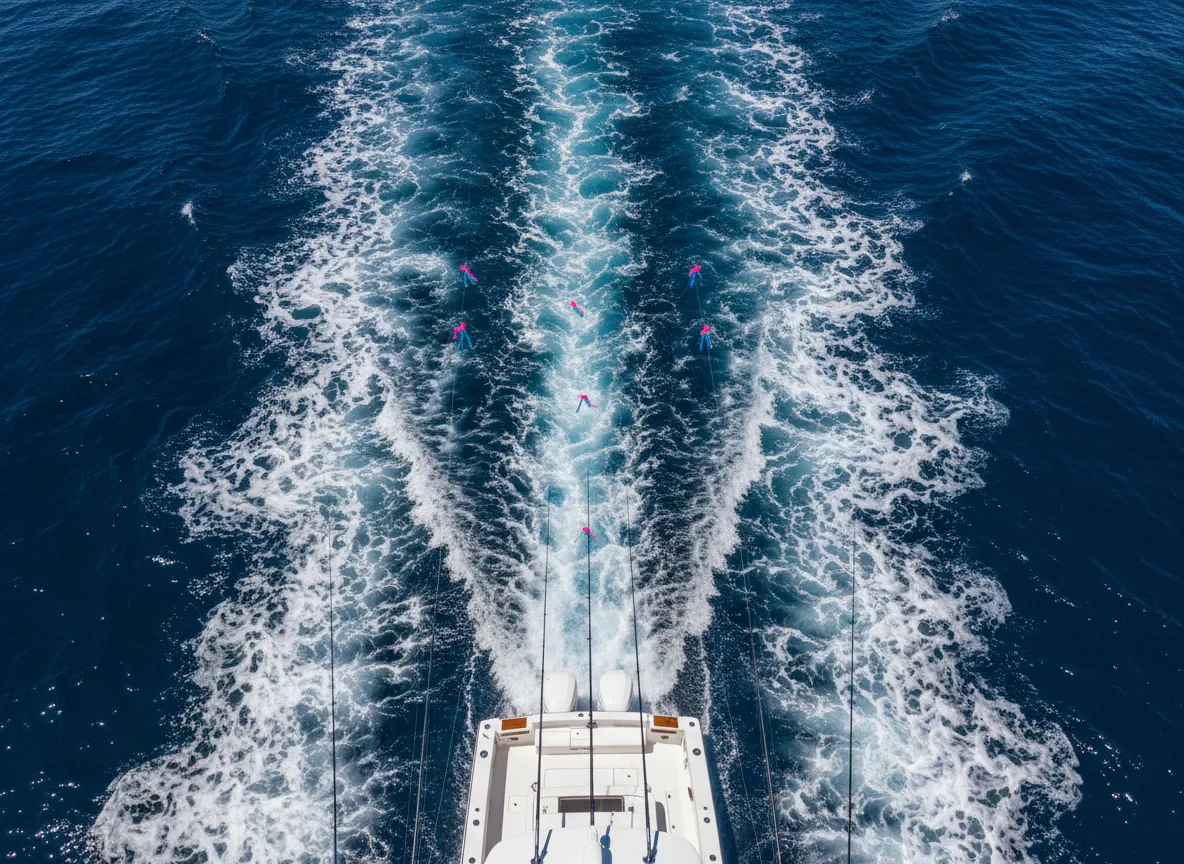
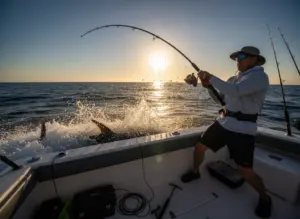
Trolling involves dragging lures or rigged baits through the water behind a moving boat. It is the dominant technique for targeting pelagic species, fish that roam open water, including mahi-mahi, wahoo, kingfish, tuna, and marlin. While trolling requires a boat and more equipment investment, the fundamentals are learnable by beginners [2].
How it works:
- Multiple lines are deployed at different distances behind the boat (a spread).
- Lures or rigged baits run at different depths using planer boards, downriggers, or weighted lines.
- The boat moves at a speed matched to the target species, typically 6 to 9 knots for mahi and wahoo, slower for tuna.
Lure selection by target:
- Mahi-mahi: Skirted trolling lures in bright colors (pink, blue, green)
- Wahoo: High-speed lures at 12 to 15 knots, often with wire leader
- Tuna: Cedar plugs, feathers, or rigged ballyhoo
Beginner mistake to avoid: Running all lines at the same distance creates tangles when a fish strikes. Stagger lines at 30, 50, 75, and 100 feet behind the boat [6].
4. Jigging
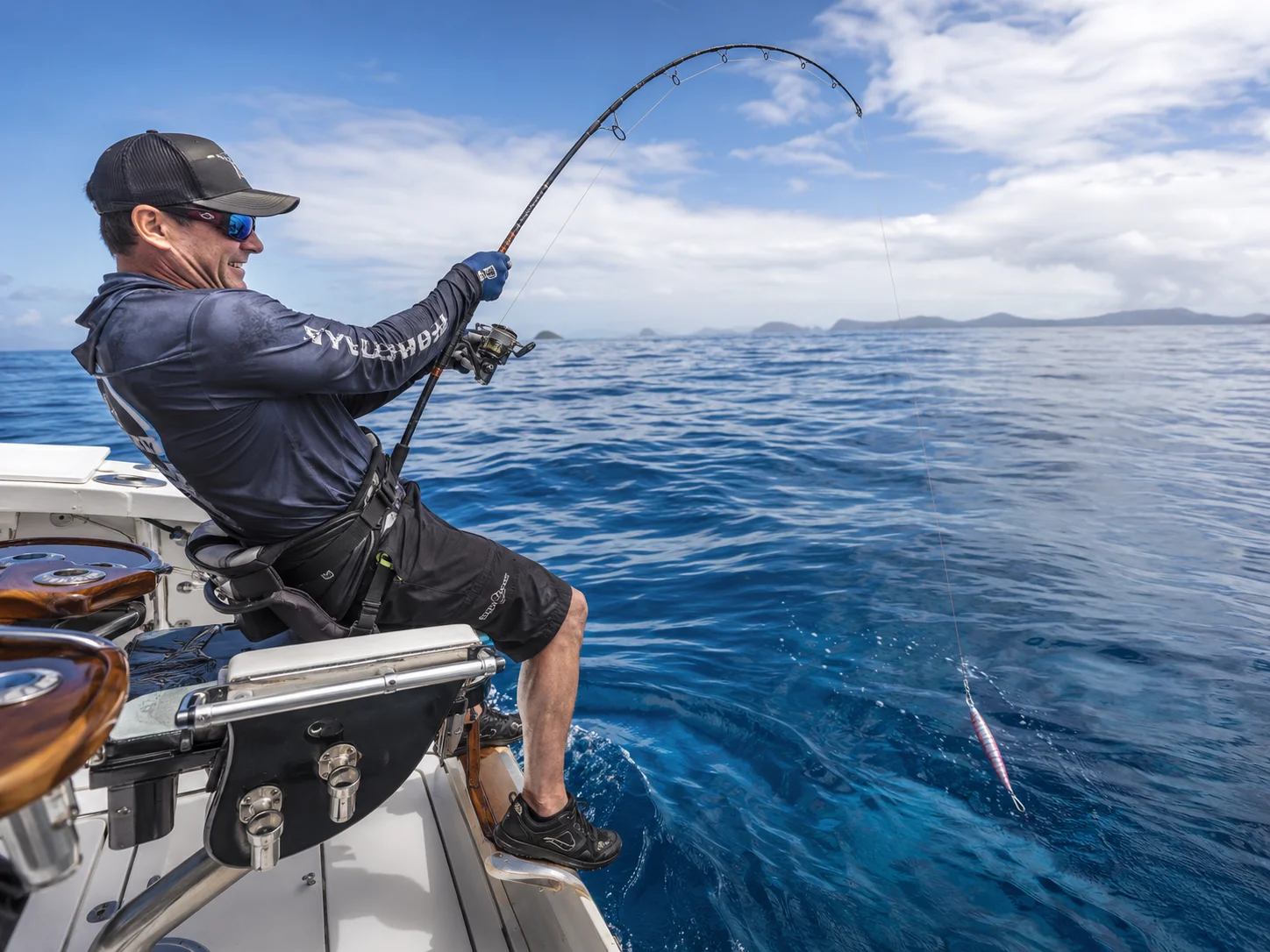
Jigging uses a weighted metal lure called a jig that is worked vertically through the water column with a pumping or ripping rod action. It is one of the most versatile saltwater techniques, effective from shallow inshore waters to deep offshore canyons. Species caught on jigs include amberjack, cobia, striped bass, yellowtail snapper, and many others [1].
Two main styles:
- Slow-pitch jigging: A deliberate, rhythmic lift-and-fall presentation that mimics an injured baitfish. Extremely effective for bottom-oriented species.
- Speed jigging (high-speed vertical jigging): Rapid, aggressive retrieves that trigger reaction strikes from fast-moving pelagics.
How to work a jig:
- Drop the jig to the bottom or to the desired depth.
- Lift the rod tip sharply, then let the jig flutter back down on a semi-slack line.
- Repeat the action while slowly winding in line to cover the water column.
Jig weight selection: Match jig weight to water depth and current. A general rule is 1 ounce per 20 feet of water in moderate current, heavier in strong current [5].
5. Live Bait Fishing
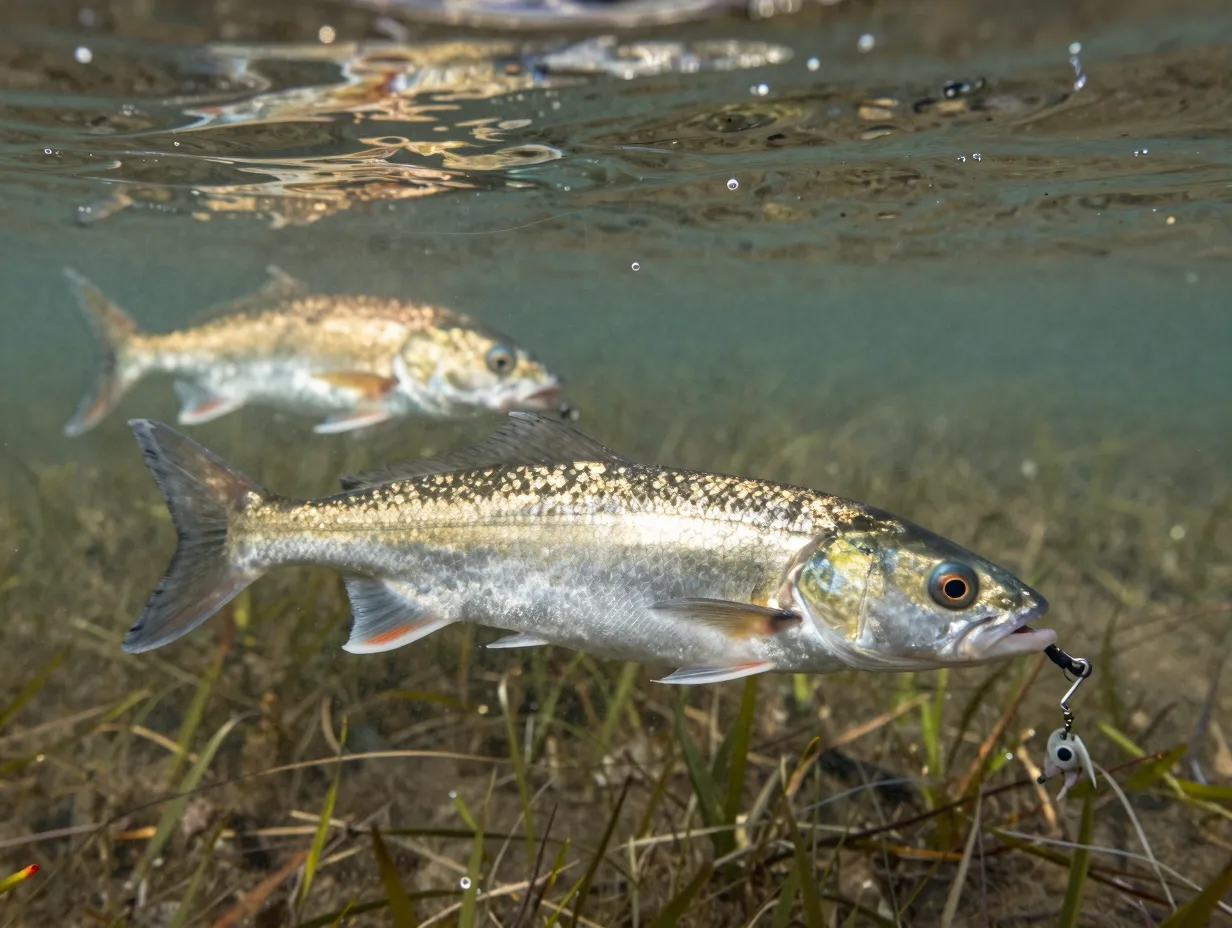
Live bait fishing is arguably the most universally effective saltwater technique. A live, swimming baitfish or crustacean triggers feeding responses that no artificial lure can fully replicate. Pilchards, pinfish, mullet, live shrimp, and blue crabs are among the most productive live baits in saltwater [4].
Rigging options:
- Free-lining: No weight, allowing the bait to swim naturally. Best in shallow water or around structure.
- Under a float/popping cork: Suspends the bait at a specific depth. Highly effective for speckled trout and redfish in grass flats.
- Knocker rig with live bait: Pins the bait near the bottom for grouper, snook, and tarpon.
Keeping bait alive: A quality livewell with aeration and regular water changes is essential. Stressed or dying bait loses its action and appeal rapidly [4].
“A lively, healthy baitfish will do more work than any angler, the key is keeping it alive and presenting it naturally.”
Pro technique: When fishing around structure like a dock or bridge piling, allow a free-lined live shrimp to drift naturally with the current rather than casting directly to the structure. Fish facing into the current will intercept it.
6. Drift Fishing
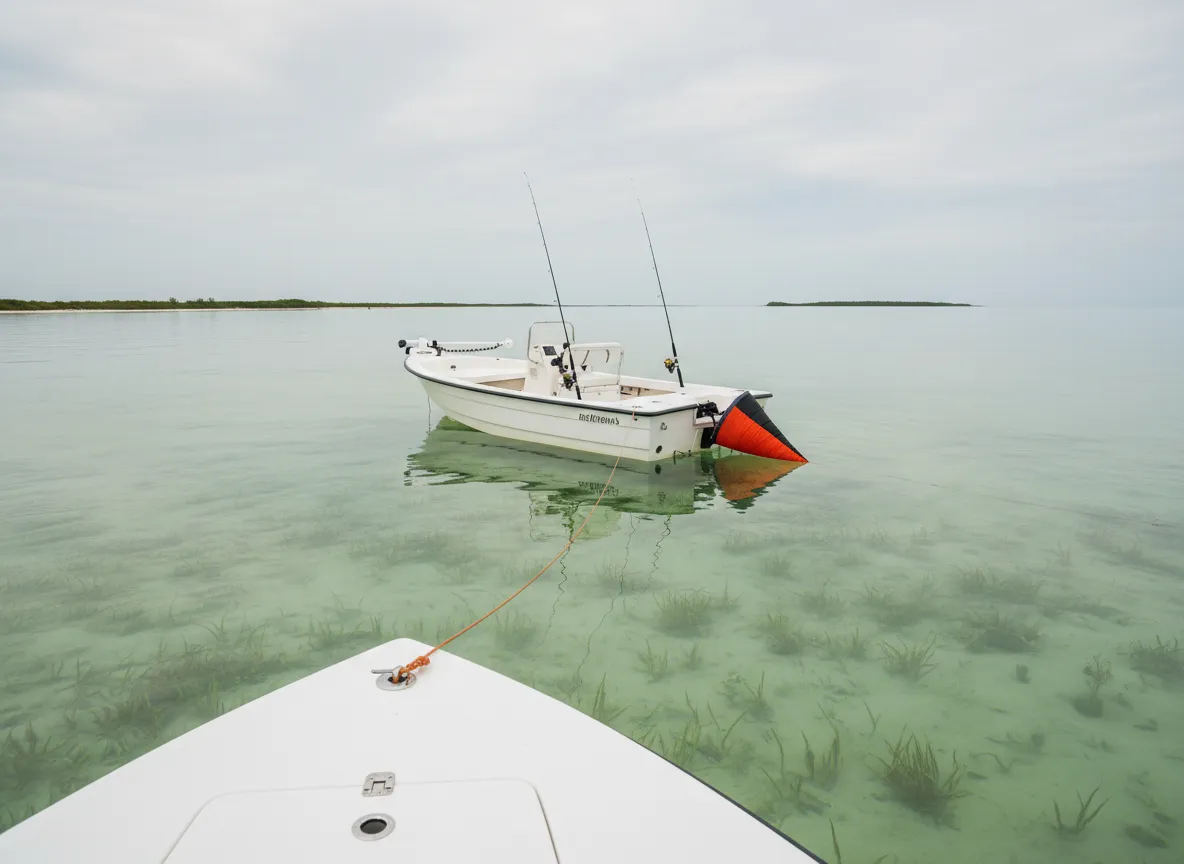
Drift fishing uses the boat’s natural movement, pushed by wind or current, to cover large areas of water and present baits or lures to fish across a wide zone. It is particularly effective over grass flats, sandy bottom, and reef edges. Target species include flounder, sea trout, snook, and various bottom fish [6].
How it works:
- The engine is cut (or a drift sock is deployed to slow the boat).
- Baits or jigs are lowered to the desired depth and allowed to move naturally with the drift.
- Anglers cover ground until they locate fish, then anchor or repeatedly drift the same productive zone.
Drift sock advantage: In strong wind, a drift sock (sea anchor) slows the boat’s drift speed, giving baits more time in the strike zone and preventing the presentation from moving too fast for fish to track.
Best application: Drifting over a grass flat with live shrimp under a popping cork is one of the most productive inshore techniques for speckled trout in the Gulf of Mexico and Southeast Atlantic coast [7].
7. Fly Fishing in Saltwater
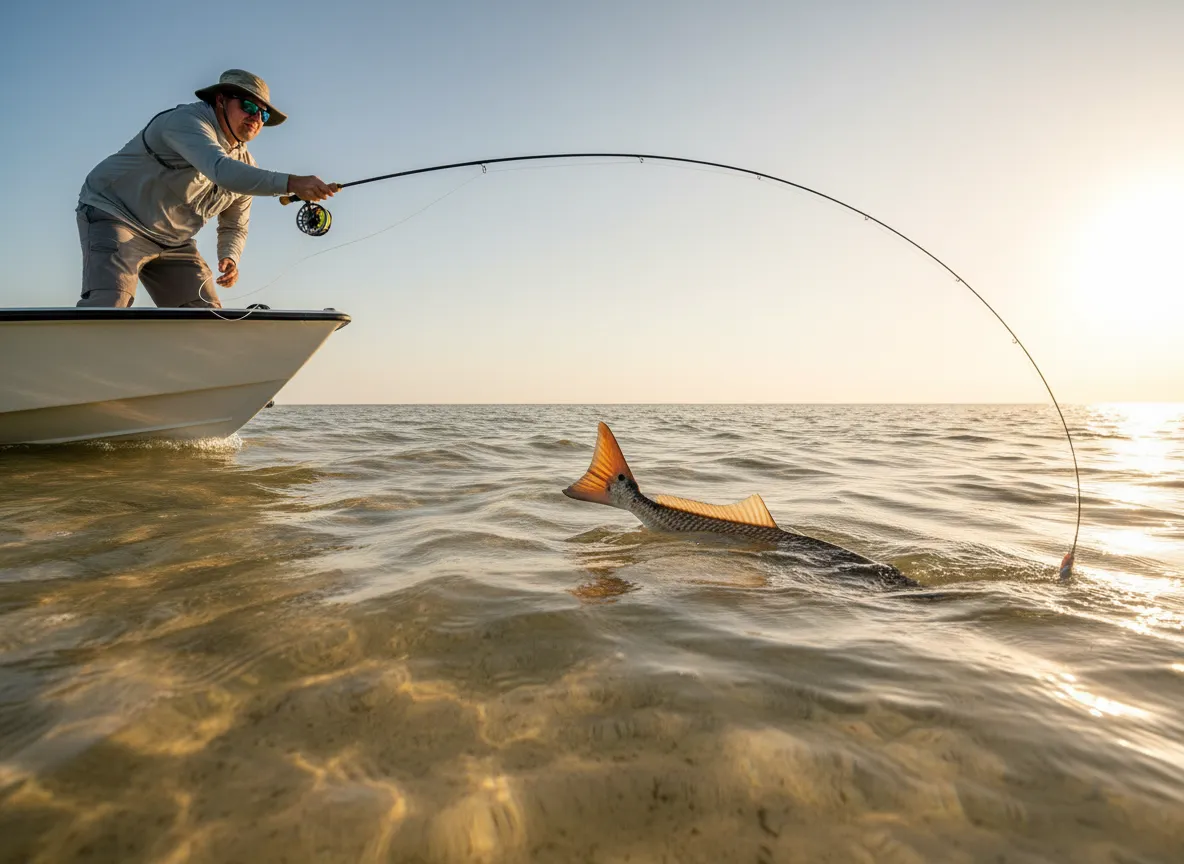
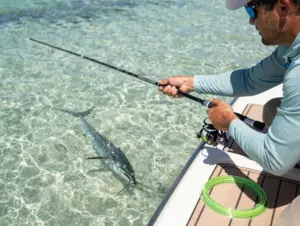
Saltwater fly fishing has grown significantly in popularity and is no longer the exclusive domain of expert anglers. Targeting bonefish, permit, tarpon, redfish, and striped bass on the fly is considered one of the most challenging and rewarding forms of fishing. The technique requires practice but is accessible to anyone willing to invest time in casting skills [2].
Key differences from freshwater fly fishing:
- Saltwater fly rods are heavier (8 to 12 weight) to handle wind and larger fish.
- Saltwater flies are tied on corrosion-resistant hooks and often imitate crabs, shrimp, and small baitfish.
- Long, accurate casts under windy conditions are essential, most saltwater fly fishing involves sight-casting to visible fish.
Getting started:
- Practice casting on land before fishing. A 40-foot accurate cast is more valuable than a 70-foot sloppy one.
- Learn the double haul, a casting technique that generates line speed and distance in wind.
- Start with redfish on shallow flats. They are more forgiving targets than bonefish or permit [5].
Gear essentials:
- 9-weight rod and reel with a large arbor and strong drag
- Floating line for flats fishing, sinking line for deeper applications
- A selection of Clouser Minnows, Crazy Charlies, and crab patterns
8. Popping and Topwater Fishing
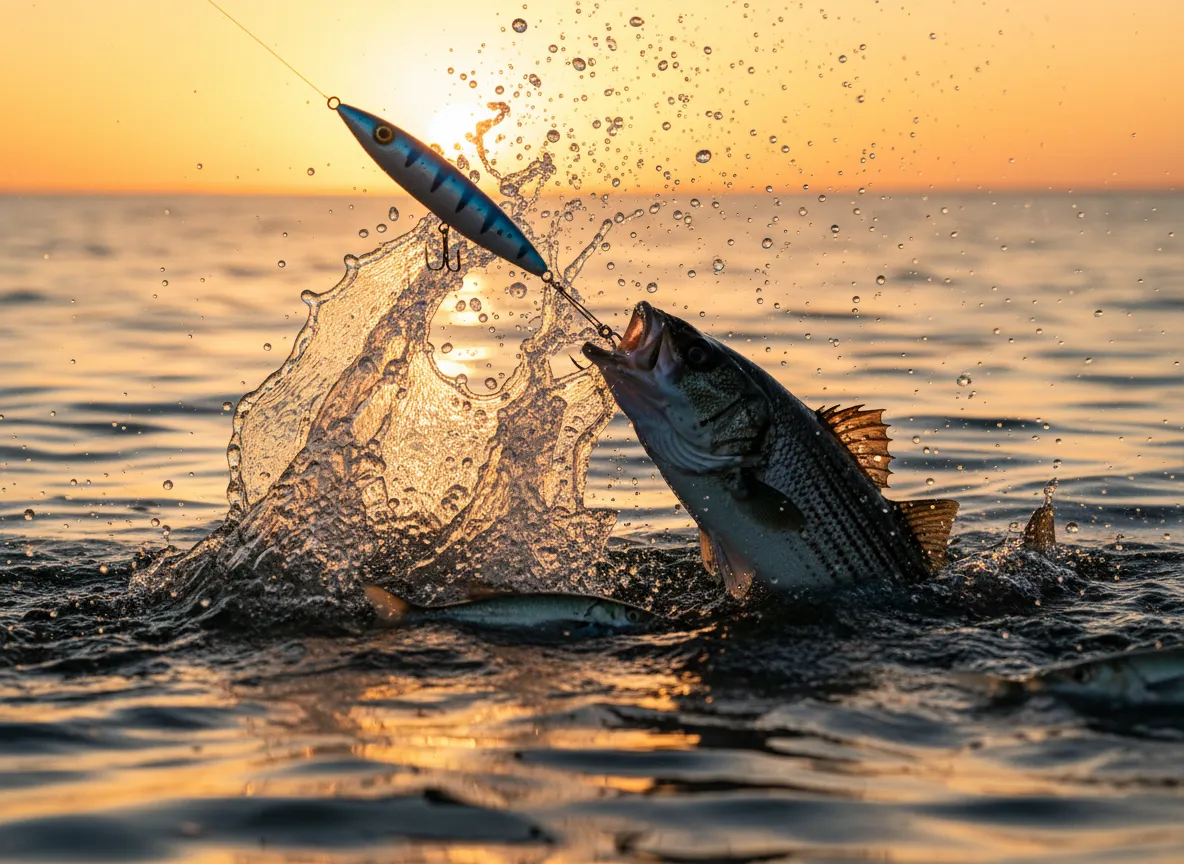
Popping is a surface technique that uses floating lures, poppers, walk-the-dog plugs, and pencil poppers, to create surface disturbance that triggers explosive strikes from predatory fish. It is visually the most exciting form of saltwater fishing and is devastatingly effective for species like striped bass, bluefish, snook, jack crevalle, and giant trevally [1].
How it works:
- A popper is cast to a likely area, near bait schools, structure, or breaking fish.
- The angler works the lure with sharp rod tip pops, creating a splashing, gurgling action that mimics a struggling baitfish.
- The retrieve is varied, fast pops, pauses, slow gurgles, until the fish’s preference is identified.
When to use topwater lures:
- Early morning and late evening when fish are actively feeding near the surface
- When birds are diving on bait schools, this is a guaranteed feeding frenzy
- During low-light conditions when fish are less wary
Pro tip: When a fish misses the popper, resist the urge to stop the lure. Keep working it, many fish will strike again on the next pop. Stopping the lure often kills the bite [6].
Choosing the Right Technique for Your Situation
The 8 salt water fishing techniques for beginners and pros outlined above are not interchangeable, each fits specific conditions, species, and environments. Use the framework below to select the right approach before heading out.
| Situation | Best Technique |
|---|---|
| No boat, fishing from shore | Surf casting, bottom fishing |
| Inshore flats, shallow water | Live bait, drift fishing, fly fishing |
| Offshore pelagic species | Trolling, jigging |
| Reef or wreck fishing | Bottom fishing, jigging |
| Surface-feeding fish visible | Popping, topwater |
| Sight-fishing to visible fish | Fly fishing, live bait |
Layering techniques: Experienced anglers rarely rely on a single method. A common offshore approach is to troll until a productive area is found, then anchor and bottom fish or jig the same structure. Inshore anglers often drift fish first to locate concentrations, then anchor and switch to live bait [2][5].
Essential Gear Checklist for Saltwater Fishing
Regardless of the technique chosen, certain gear items are non-negotiable in a saltwater environment:
- Corrosion-resistant tackle: Saltwater destroys standard freshwater gear quickly. Use stainless steel, titanium, or saltwater-rated components.
- Appropriate line: Braided line (20 to 80 lb depending on application) offers sensitivity and strength. Fluorocarbon leaders are essential, saltwater fish are leader-shy.
- Circle hooks: Recommended by fisheries management agencies for improved catch-and-release outcomes [7].
- Polarized sunglasses: Critical for sight-fishing and reading water structure.
- Tide chart and local knowledge: No gear substitutes for knowing when and where fish feed in a specific area [6].
Conclusion
Mastering the 8 salt water fishing techniques for beginners and pros does not happen overnight, but the learning curve is far less steep than most anglers expect. Start with bottom fishing or surf casting to build confidence and understand how saltwater fish relate to structure and bait. As skills develop, incorporate live bait fishing and drift fishing into the rotation. When ready for the next challenge, trolling, jigging, popping, and saltwater fly fishing offer a lifetime of refinement and reward.
Actionable next steps for 2026:
- Choose one technique from this list that matches your current access, shore, inshore, or offshore.
- Spend two to three sessions focusing exclusively on that method before adding another.
- Consult local fishing reports and tide charts before every trip to align technique selection with current conditions.
- Connect with a local guide for at least one trip, watching an experienced angler apply these techniques in real conditions accelerates learning faster than any article can [2][7].
The water is the best classroom. Every trip, regardless of outcome, adds a layer of understanding that no guide can fully replace.
References
[1] Saltwater Fishing – https://fishingbooker.com/blog/saltwater-fishing/
[2] Beginners Guide To Saltwater Fishing – https://www.saltwatersportsman.com/howto/beginners-guide-to-saltwater-fishing/
[4] Saltwater Fishing Bait – https://fishingbooker.com/blog/saltwater-fishing-bait/
[5] Saltwater Fishing For Beginners The Complete Starter Guide – https://blog.getboat.com/saltwater-fishing-for-beginners-the-complete-starter-guide/
[6] Saltwater Fishing Basics – https://fishmaster.com/blog/post/saltwater-fishing-basics
[7] How To Fish – https://myfwc.com/fishing/saltwater/outreach/how-to-fish/