9 Essential Fishing Rod Holders To Secure Your Gear On Any Boat
Every year, anglers lose thousands of dollars worth of fishing rods overboard, not from bad casts, but from unsecured gear sliding off gunwales, tipping in rough water, or simply rolling free during a sudden wake. A quality rod holder is one of the most overlooked investments in a serious angler’s setup, yet it directly protects expensive equipment and keeps hands free when it matters most. This guide to the 9 Essential Fishing Rod Holders To Secure Your Gear On Any Boat covers every major holder type, from flush mounts to rocket launchers, so anglers at every level can make a smart, informed choice for their specific vessel and fishing style.
Disclosure: This post contains affiliate links. As an Amazon Associate, we earn from qualifying purchases, and at no extra cost to you.
Key Takeaways
- The right rod holder depends on your boat type, fishing style, and the number of rods you need to manage simultaneously.
- Flush mount holders offer the cleanest, most permanent installation and are ideal for fiberglass hulls.
- Clamp-on and suction cup holders provide flexible, no-drill solutions for kayaks, aluminum boats, and rentals.
- Material quality, stainless steel versus high-density polyethylene, directly affects corrosion resistance and long-term durability in saltwater environments.
- Matching the holder angle, depth, and mounting method to your specific rod and reel combination prevents damage and improves fishing efficiency.
Why Rod Holders Matter More Than Most Anglers Realize
A fishing rod can cost anywhere from $50 to well over $1,000. Without proper securing, that investment is vulnerable every time the boat accelerates, turns sharply, or hits a wave. Beyond protecting gear, rod holders serve a tactical purpose: they allow anglers to run multiple lines simultaneously, respond quickly to a strike, and keep the deck clear of trip hazards.
Rod holders also improve safety. A loose rod rolling underfoot on a wet deck is an accident waiting to happen. Properly mounted holders eliminate that risk and create a more organized, professional fishing environment.
The market in 2026 offers a wide range of holder styles, materials, and mounting systems. Understanding the differences between them is the first step toward building a setup that genuinely works.
The 9 Essential Fishing Rod Holders To Secure Your Gear On Any Boat
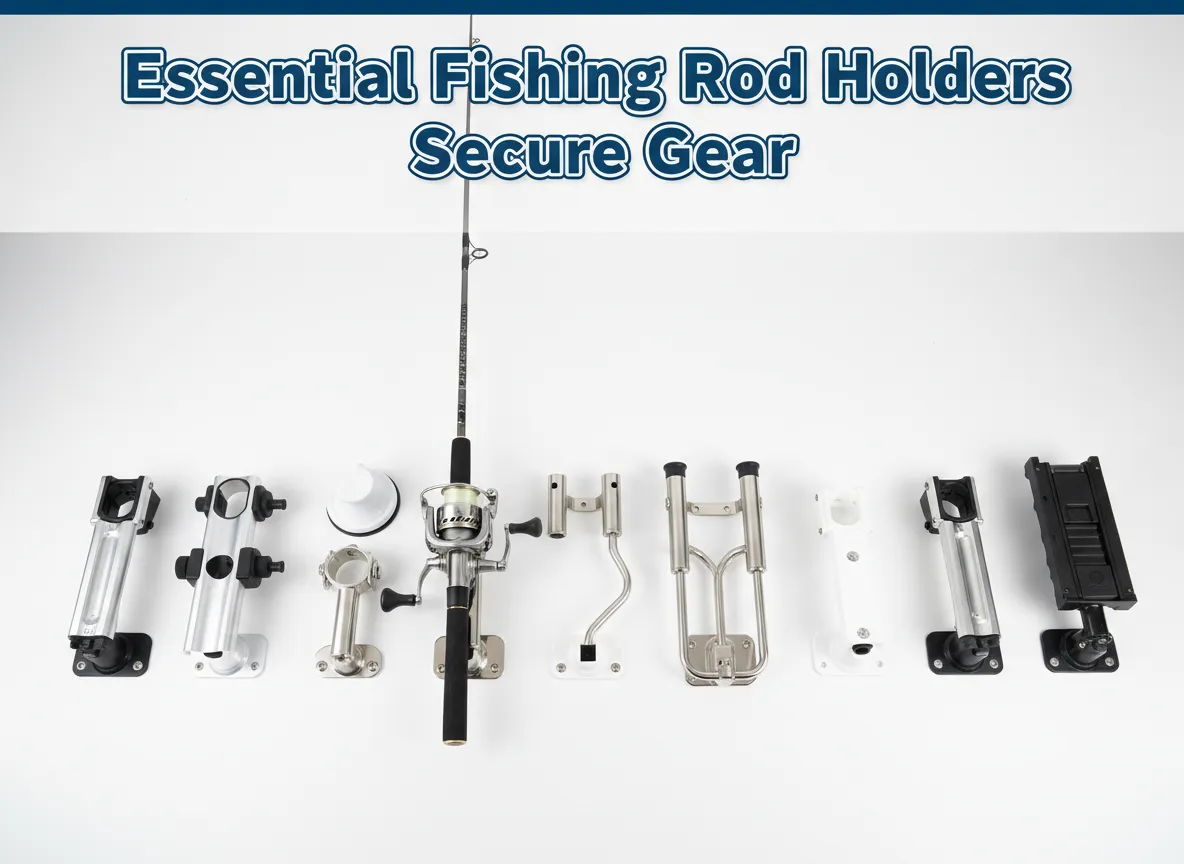
The following nine holder types represent the full spectrum of what is available to modern anglers. Each serves a specific purpose, and many boats benefit from using two or three types in combination.
1. Flush Mount Rod Holders
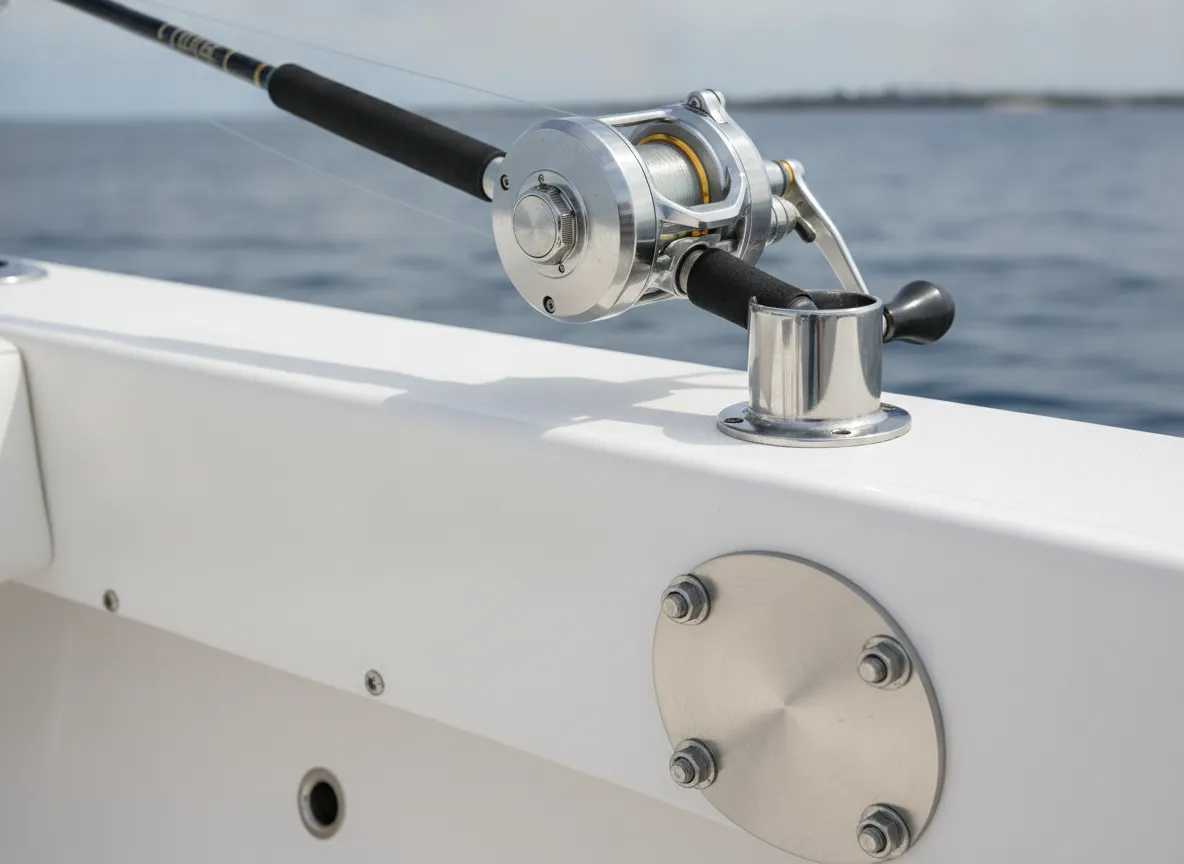
Flush mount holders are the gold standard for permanent boat installations. They are recessed directly into the gunwale, transom, or side rail, leaving only the opening visible above the surface. This creates a clean, streamlined look and a very secure hold.
Best for: Fiberglass center consoles, bass boats, offshore sportfishing vessels.
Key features to look for:
- Marine-grade 316 stainless steel or UV-stabilized nylon construction
- 30-degree, 45-degree, or straight (90-degree) angle options
- Drain holes to prevent water pooling inside the tube
- Minimum 9-inch depth for heavy spinning or conventional rods
Installation note: Flush mounts require drilling, which means they are a permanent commitment. Always use a backing plate on the underside of the hull to prevent cracking and distribute load.
“A properly installed flush mount holder can withstand several hundred pounds of pull force, far more than any fish is likely to generate.”
2. Clamp-On Rod Holders
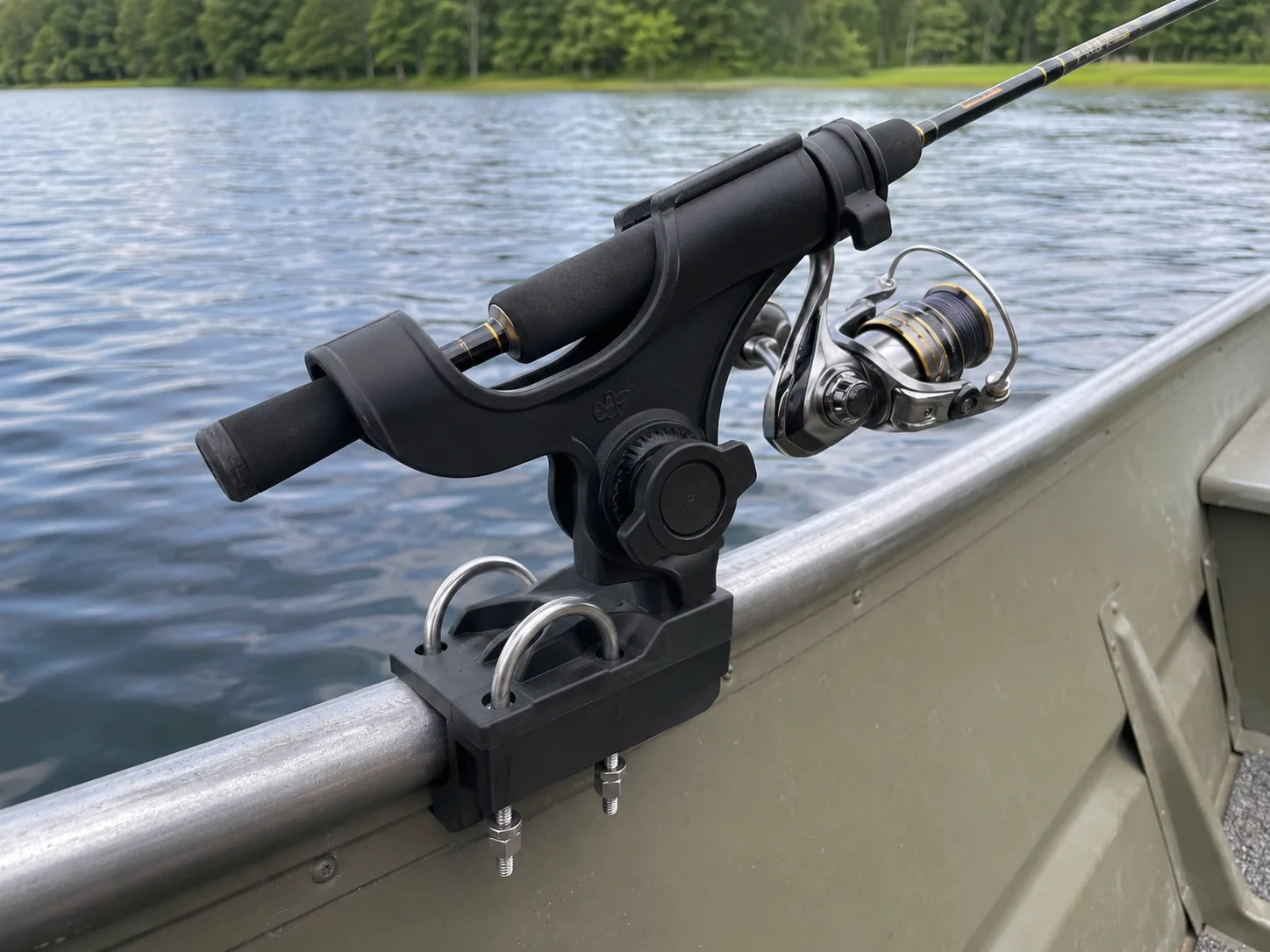
Clamp-on holders attach to rails, tubes, and gunwale edges without any drilling. They use a U-bolt or screw-clamp mechanism to grip the mounting surface firmly. This makes them one of the most versatile options available.
Best for: Aluminum jon boats, pontoon boats, rental vessels, anglers who want flexibility.
Advantages:
- No permanent modification to the boat
- Repositionable in minutes
- Compatible with round rails from 7/8 inch to 2 inches in diameter (most models)
- Significantly lower cost than flush mount systems
Disadvantage: Clamp-on holders are not as rigid as flush mounts under heavy load. For trolling heavy tackle or fighting large fish, they may flex or rotate slightly.
Material tip: Choose stainless steel hardware over zinc or chrome-plated steel, especially in saltwater environments where corrosion accelerates rapidly.
3. T-Top and Leaning Post Holders
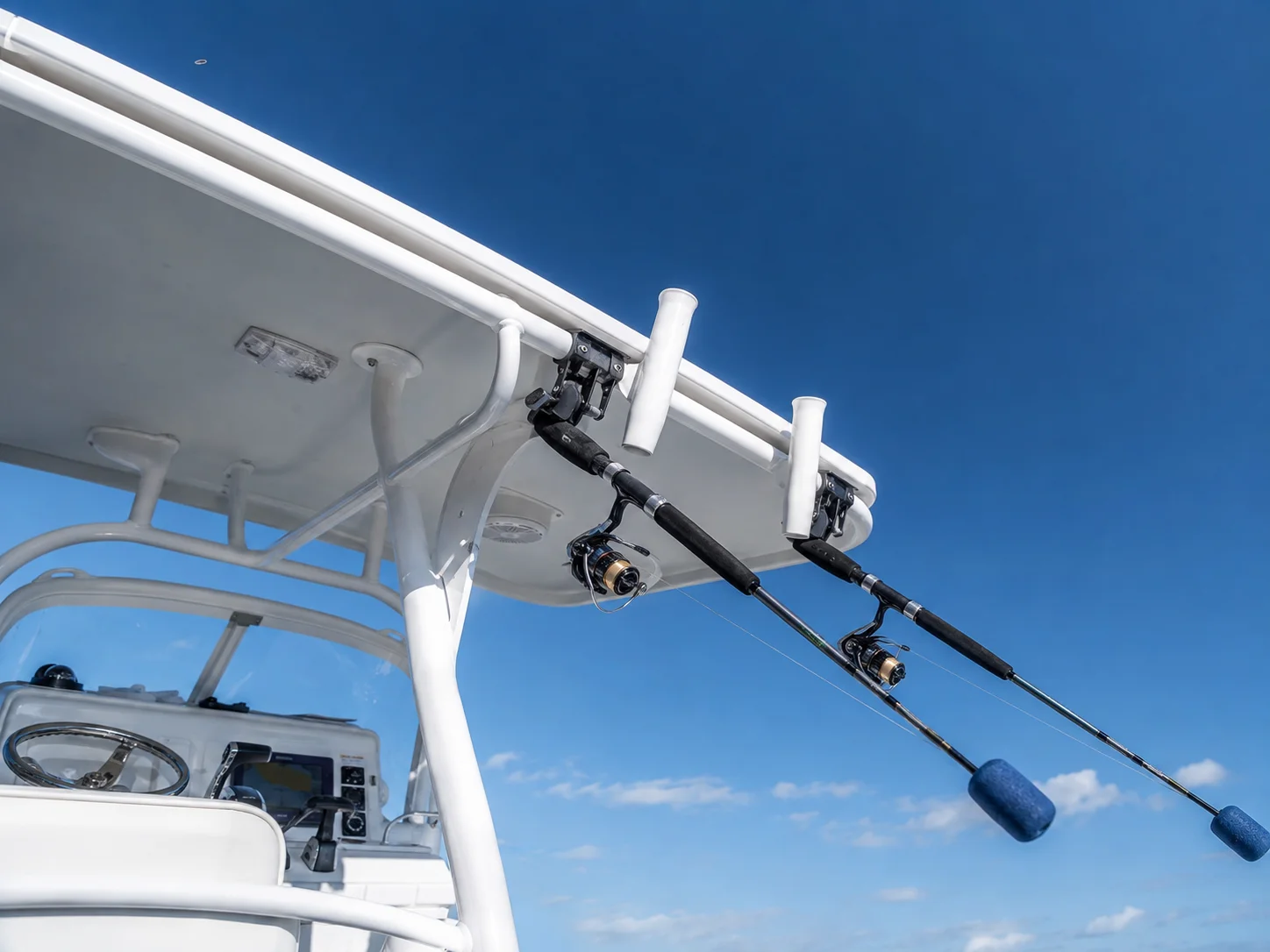
T-top rod holders mount directly to the frame of a T-top, hardtop, or leaning post, the vertical and horizontal tubing common on center console boats. They keep rods elevated and out of the way, which is especially valuable on smaller boats where deck space is limited.
Best for: Center consoles, bay boats, inshore fishing vessels.
These holders typically use a clamp-style mount that grips the T-top tube and positions the rod at a downward angle toward the stern. Many anglers use them to store rods rigged and ready while running between spots.
What to look for:
- Adjustable angle (usually 15 to 45 degrees downward)
- Foam or rubber rod tip protectors to prevent blank damage during transit
- Locking mechanisms or rod straps for rough-water running
4. Rocket Launcher Rod Holders
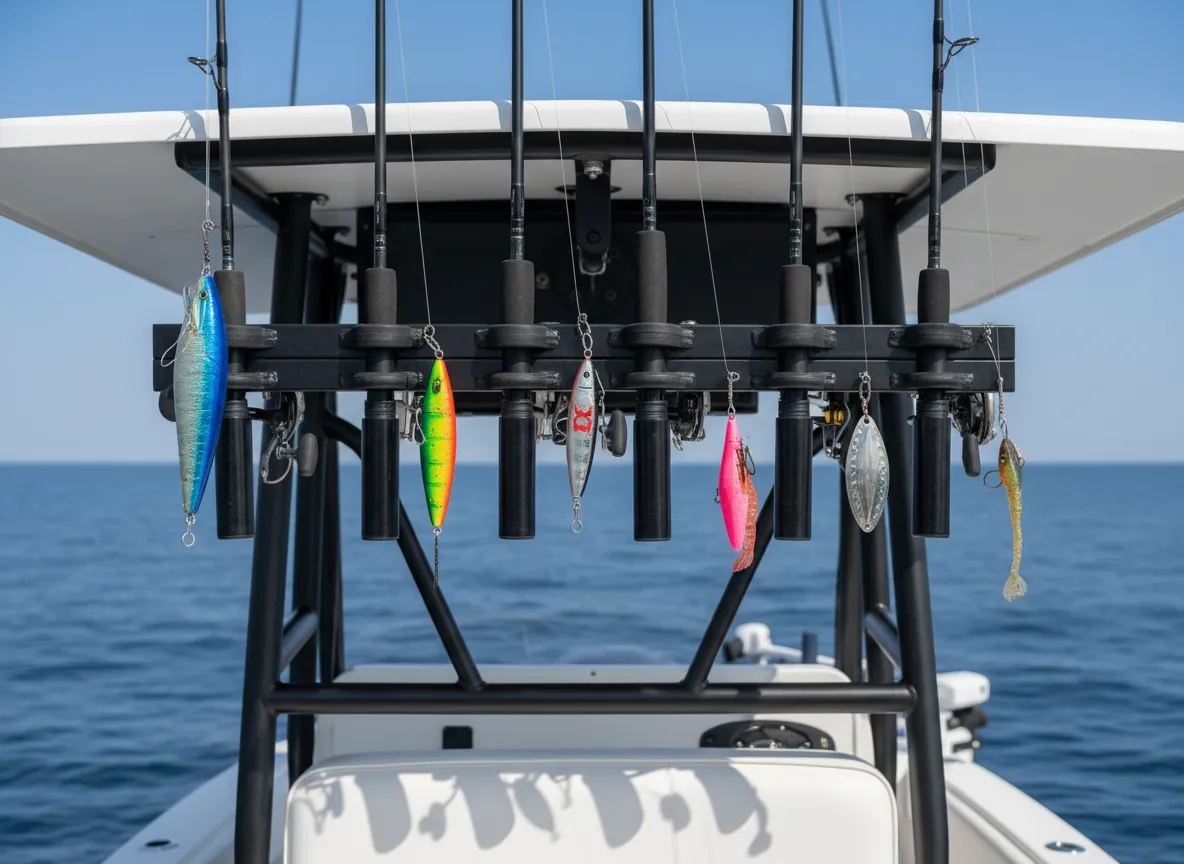
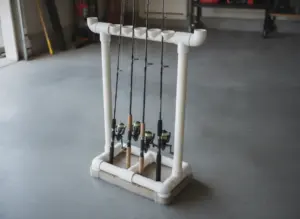
The rocket launcher is a multi-rod rack system, typically holding four to eight rods in a vertical or angled array. The name comes from its resemblance to a missile launch rack. It mounts to the T-top frame, hardtop, or leaning post and is one of the most efficient ways to store multiple rigged rods on a single boat.
Best for: Offshore fishing, tournament boats, charter vessels where rod management is critical.
A rocket launcher keeps all rods organized, separated, and accessible without tangling lines or crowding the deck. Many models include individual rod clips or foam inserts to prevent rattling during high-speed runs.
Capacity options:
- 4-rod compact models for smaller T-tops
- 6-rod standard models for most center consoles
- 8-rod or 10-rod heavy-duty models for large sportfishing boats
Material note: Welded aluminum or stainless steel construction is standard. Powder-coated aluminum is lighter; stainless steel is more corrosion-resistant in harsh offshore environments.
5. Deck Mount Rod Holders
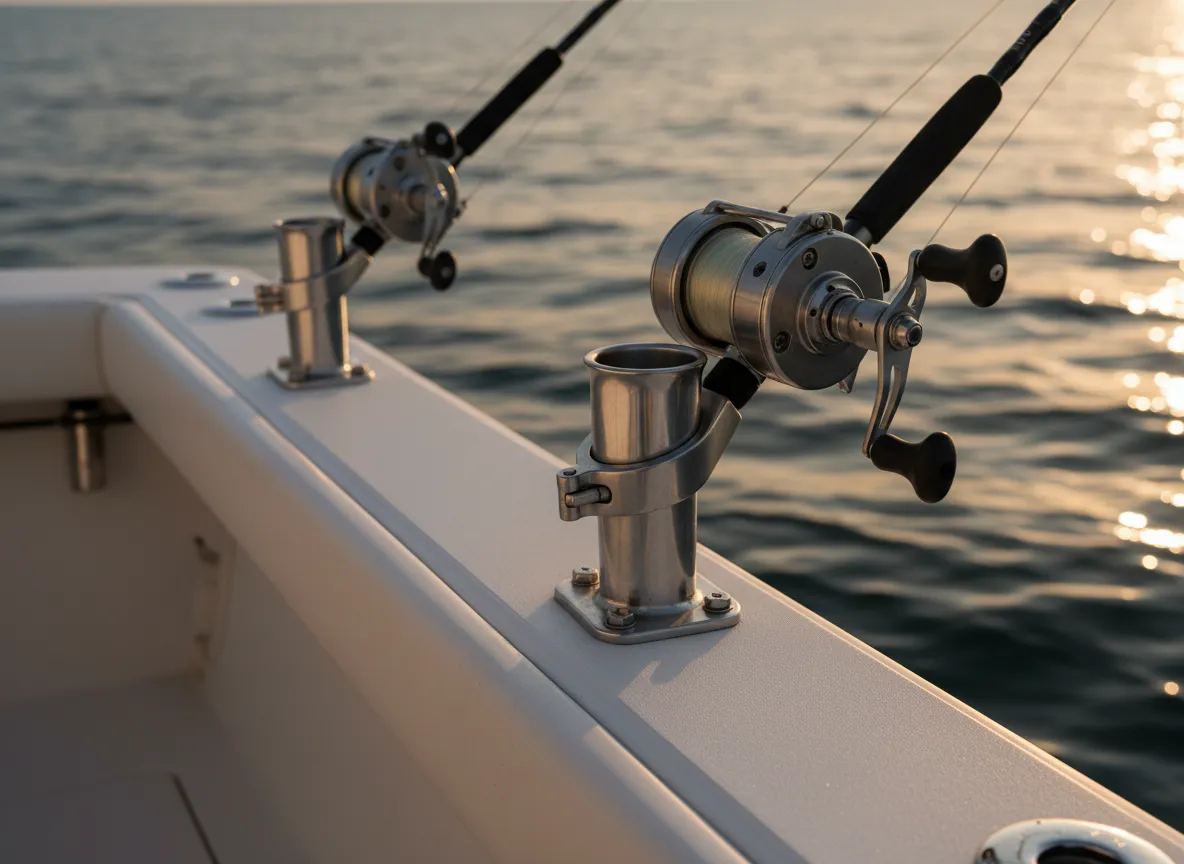
Deck mount holders bolt directly to the flat surface of the deck or gunwale cap rather than through the hull side. They stand upright and typically hold rods at a slight outward angle. This style is common on larger walkaround boats and offshore vessels.
Best for: Walkaround boats, express cruisers, offshore fishing platforms with wide gunwale caps.
Deck mounts are highly stable and can handle heavy conventional rods and large reels loaded with braided line. Many models include a locking collar or pin to prevent rods from bouncing out in rough seas.
Installation tip: Use marine-grade sealant around every bolt hole to prevent water intrusion into the deck core. Wet core rot is a costly repair that proper installation prevents entirely.
6. Rail Mount Rod Holders
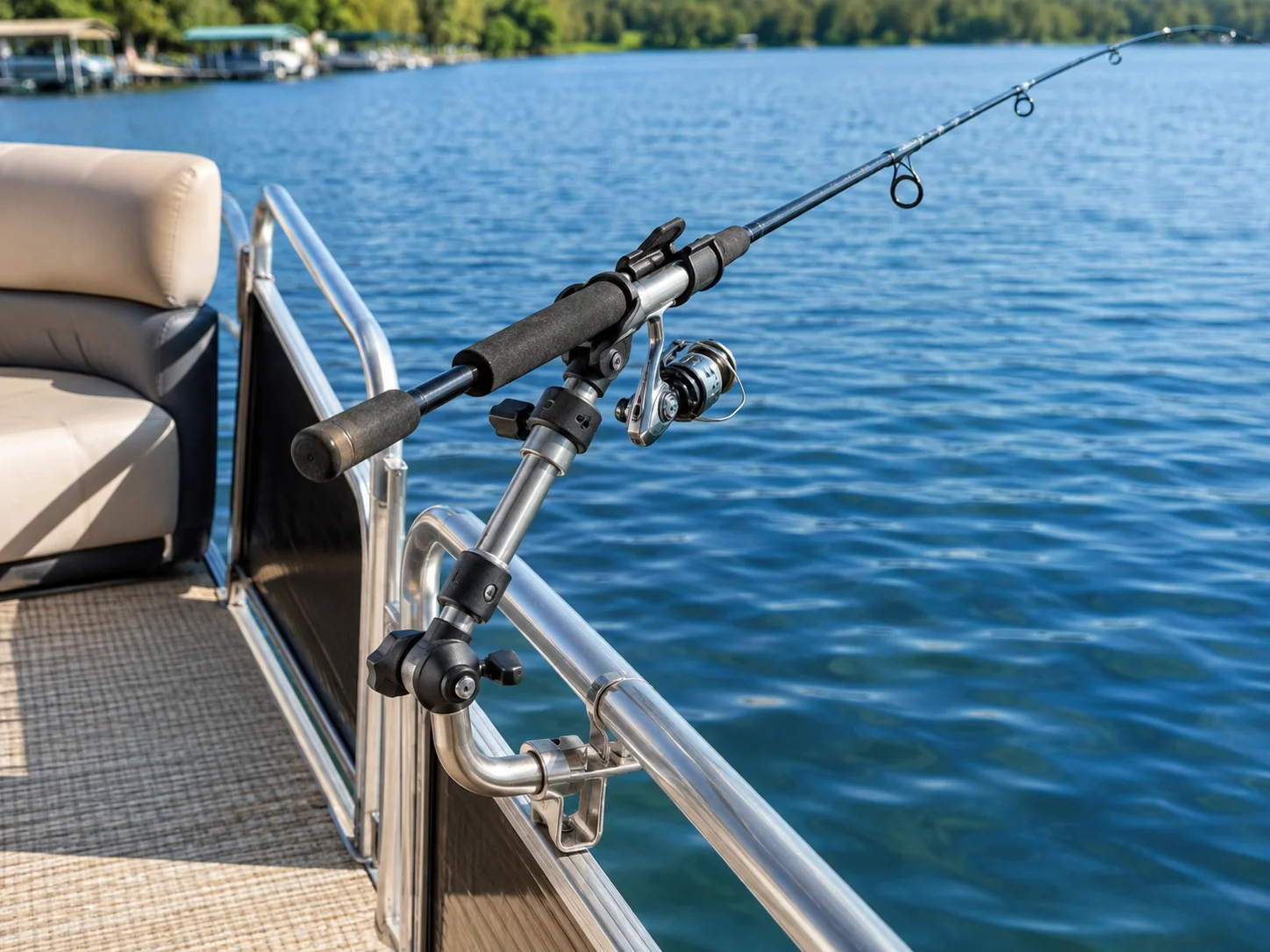
Rail mount holders clamp onto the stainless steel or aluminum railings found on the bow, stern, and sides of larger boats. They are similar to clamp-on holders but are specifically designed for round rail tubing and often offer a wider range of angle adjustment.
Best for: Pontoon boats, cabin cruisers, sportfishing yachts, any vessel with perimeter railing.
Key advantages:
- No drilling required
- Adjustable horizontal and vertical angle
- Easy to move along the rail to find the optimal fishing position
- Available in single-rod and double-rod configurations
Rail mount holders are a popular choice for pontoon boat anglers because the perimeter railing provides abundant mounting points all around the boat.
7. Suction Cup Rod Holders
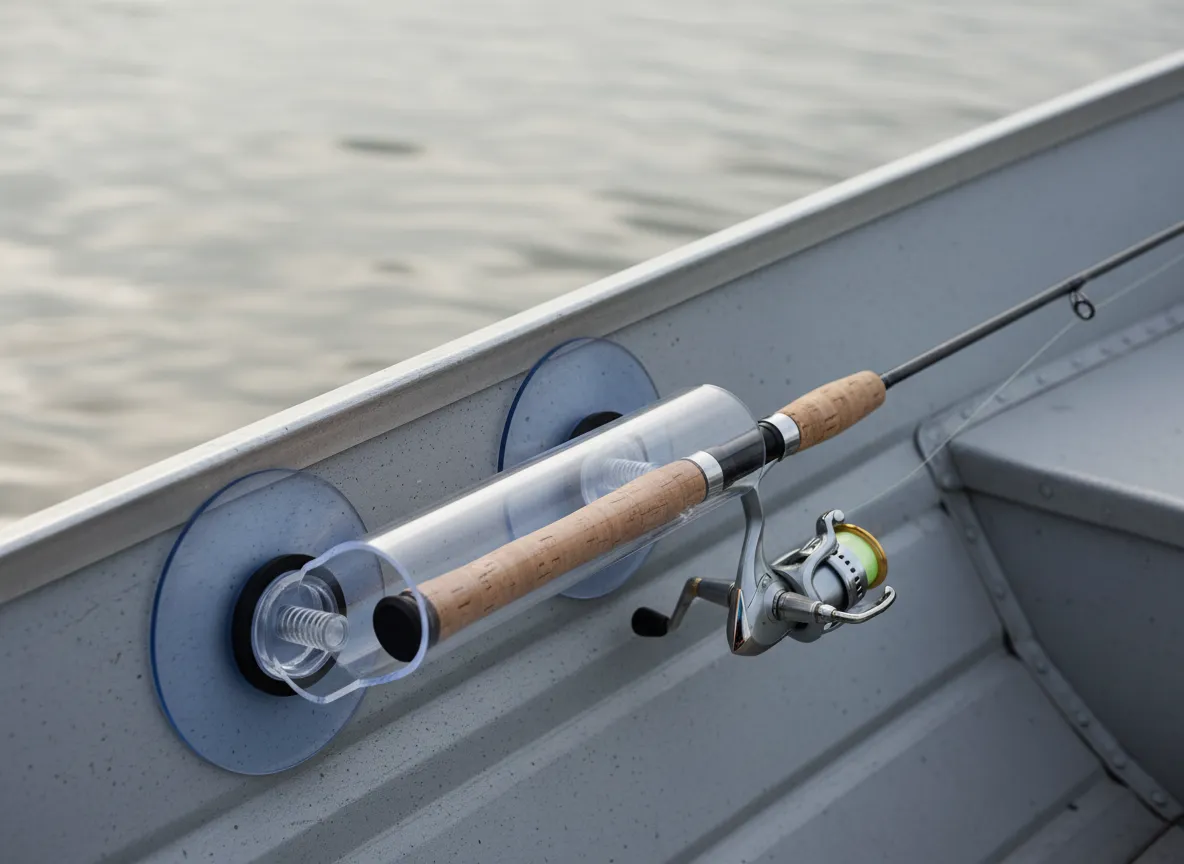
Suction cup holders use industrial-strength vacuum cups to attach to smooth, flat surfaces, typically the inside of a hull, a console face, or a kayak hull. They require no tools and leave no marks, making them ideal for temporary setups.
Best for: Kayaks, canoes, small aluminum boats, inflatable boats, rental vessels.
Limitations to understand:
- Suction cups lose grip on textured, painted, or dirty surfaces
- They should not be relied upon in rough water or for heavy rods
- UV exposure and heat can degrade the rubber cup over time, reducing holding power
- Not recommended for saltwater trolling applications
Best use case: Holding a light spinning rod or a rod-and-reel combo while paddling or slow-trolling in calm, protected waters.
8. Kayak and Canoe Rod Holders
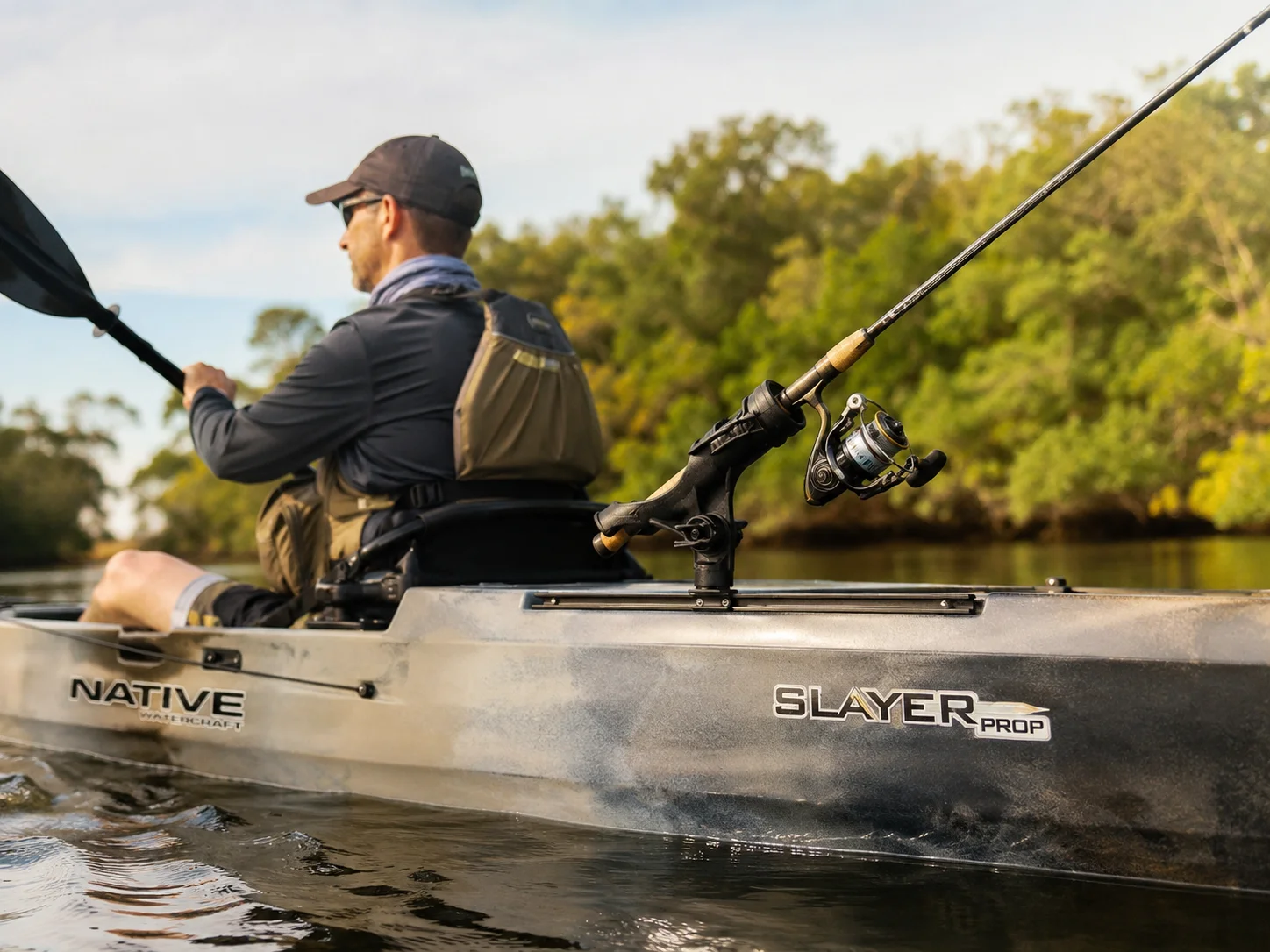
Kayak-specific rod holders are engineered for the unique geometry and limited space of paddle craft. They come in two main styles: flush mount (installed through the hull using a drill) and track mount (sliding into a pre-installed accessory track on the kayak deck).
Best for: Fishing kayaks, canoes, stand-up paddleboards with rod holder accessories.
Track mount systems are particularly popular because they allow anglers to reposition the holder without any additional drilling. Brands like RAM Mounts and YakAttack have built entire ecosystems of track-compatible accessories around this concept.
Flush mount kayak holders are more permanent but offer a lower profile and cleaner installation. They are best installed by the kayak manufacturer or an experienced dealer to ensure proper hull sealing.
Angle options for kayaks:
- Straight up (90 degrees) for storing rods while paddling
- 30 to 45 degrees outward for trolling
- Horizontal for carrying rods flat during transport
9. Trolling Rod Holders and Fighting Chairs
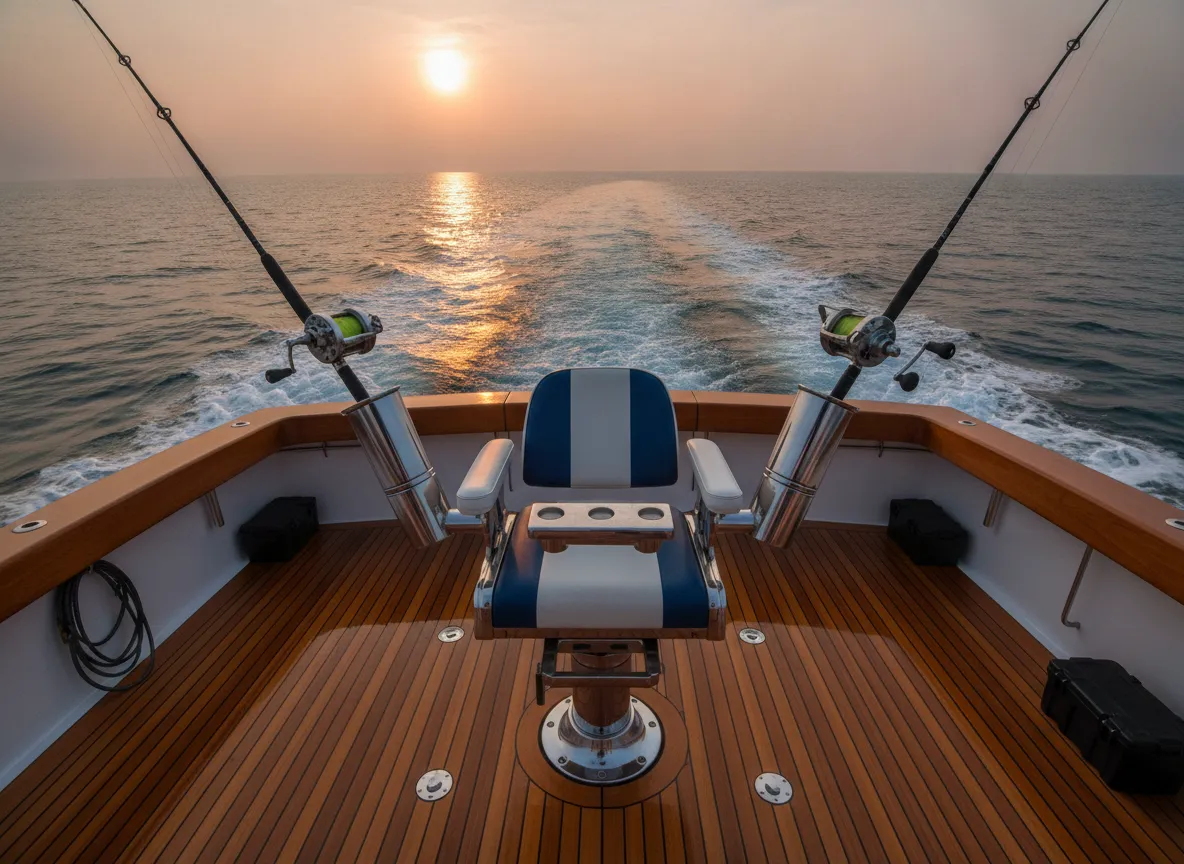
Trolling rod holders are heavy-duty, purpose-built mounts designed to handle the sustained load of dragging large lures or baits at speed. They are typically mounted at the transom corners, on the gunwale, or on a fighting chair.
Best for: Offshore trolling, big-game fishing, bluewater sportfishing.
These holders feature:
- Deep tube depth (12 to 18 inches) to prevent rods from ejecting under load
- Gimbal pin receivers that lock into the rod butt for a secure connection
- 360-degree swivel bases for adjusting rod angle during a fight
- Heavy-gauge stainless steel or chrome-plated bronze construction
Fighting chairs take this concept further by integrating the rod holder into a full seat system with a footrest and harness attachment points. They are standard equipment on large sportfishing yachts targeting marlin, tuna, and swordfish.
“For offshore trolling, the rod holder is not just a convenience, it is the primary mechanical connection between the angler and a fish that may weigh several hundred pounds.”
How To Choose the Right Rod Holder for Your Boat
With nine distinct types covered, the selection process comes down to four key factors.
1. Boat type and available mounting surfaces
A kayak demands a different solution than a 30-foot center console. Identify what surfaces are available, hull sides, rails, T-top tubes, flat deck, before selecting a holder style.
2. Fishing style and rod count
Trolling offshore with six rods requires a rocket launcher and heavy-duty transom mounts. Inshore fishing with two rods might only need a pair of flush mounts. Match the system to the actual fishing scenario.
3. Material and corrosion resistance
Saltwater environments are extremely corrosive. Always prioritize 316 stainless steel, marine-grade aluminum, or UV-stabilized high-density polyethylene (HDPE) over cheaper zinc or chrome-plated alternatives. The cost difference is small; the durability difference is enormous.
4. Installation permanence
Decide upfront whether a permanent or removable solution is needed. Permanent flush mounts and deck mounts offer the best security but require commitment. Clamp-on, rail mount, and suction cup options offer flexibility at a slight reduction in rigidity.
Rod Holder Materials Comparison
| Material | Saltwater Rating | Weight | Best Use |
|---|---|---|---|
| 316 Stainless Steel | Excellent | Heavy | Offshore, trolling, permanent mounts |
| Marine Aluminum | Very Good | Light | T-tops, rocket launchers, rails |
| HDPE Plastic | Excellent | Very Light | Flush mounts, inshore, freshwater |
| Chrome-Plated Steel | Poor | Heavy | Freshwater only, budget builds |
| Rubber/Suction | Fair | Very Light | Kayaks, temporary setups, calm water |
Installation Tips for Maximum Security
Regardless of which holder type is selected, proper installation is what separates a secure setup from a liability.
- Always use backing plates on flush mount and deck mount installations. A 1/4-inch aluminum or stainless plate distributes load and prevents the fastener from pulling through the hull under stress.
- Apply marine sealant (not household silicone) to every drilled hole before inserting fasteners. This prevents water intrusion and core rot in fiberglass and composite hulls.
- Torque fasteners correctly. Over-tightening stainless bolts into fiberglass can crack the laminate. Use a torque wrench and follow manufacturer specifications.
- Inspect clamp-on mounts regularly. Vibration from the engine loosens clamp hardware over time. Check and re-tighten after every five to ten hours of running.
- Rinse all hardware with fresh water after every saltwater trip. Even 316 stainless steel benefits from regular rinsing to remove salt deposits from crevices.
Matching Rod Holders to Fishing Techniques
Different fishing techniques place different demands on rod holders. The table below summarizes the best holder type for common fishing scenarios.
| Fishing Technique | Recommended Holder Type |
|---|---|
| Offshore trolling | Trolling holders, fighting chair |
| Inshore casting | Flush mount, T-top holders |
| Freshwater bass fishing | Flush mount, deck mount |
| Kayak fishing | Track mount, flush mount kayak |
| Pontoon boat fishing | Rail mount, clamp-on |
| Multi-rod trolling setup | Rocket launcher, transom flush mounts |
| Temporary or rental boat | Clamp-on, suction cup |
Common Mistakes To Avoid
Even experienced anglers make avoidable errors when setting up rod holders. The most common include:
Choosing the wrong angle. A holder angled too steeply inward can cause rods to rattle against the hull. Too far outward and rods may swing free in turns. A 30 to 45-degree outward angle is the most versatile starting point for most applications.
Ignoring tube depth. A shallow holder (less than 6 inches) will not secure a heavy conventional rod and reel combo. Measure the rod butt length and choose a holder with at least 2 to 3 inches of clearance beyond the reel foot.
Using freshwater-rated hardware in saltwater. Zinc-plated or chrome-plated steel will begin corroding within weeks in a saltwater environment. The resulting rust stains and structural failure make this a false economy.
Overloading a single mounting point. Distributing rod holders evenly around the boat improves balance, reduces localized stress on the hull, and makes rods more accessible from multiple positions on the deck.
Conclusion
The 9 Essential Fishing Rod Holders To Secure Your Gear On Any Boat covered in this guide, flush mount, clamp-on, T-top, rocket launcher, deck mount, rail mount, suction cup, kayak-specific, and trolling holders, represent a complete toolkit for any angler on any vessel. No single type is universally best; the right choice depends on the boat, the fishing style, and the level of permanence required.
Actionable next steps for anglers in 2026:
- Audit the current boat setup and identify every location where a rod is currently unsecured or resting on a surface without a holder.
- Determine whether a permanent or removable solution best fits the vessel and fishing style.
- Prioritize marine-grade materials, 316 stainless steel or UV-stabilized HDPE, for any saltwater application.
- Install backing plates and marine sealant on every drilled mount to protect the hull long-term.
- Consider combining two or three holder types (for example, flush mounts plus a rocket launcher) to maximize rod capacity and organization on the deck.
Investing in the right rod holders is one of the highest-return upgrades available to any angler. The gear stays safe, the deck stays clear, and the focus stays where it belongs, on the water.