9 Practical PVC Fishing Rod Holder Designs For DIY Organization
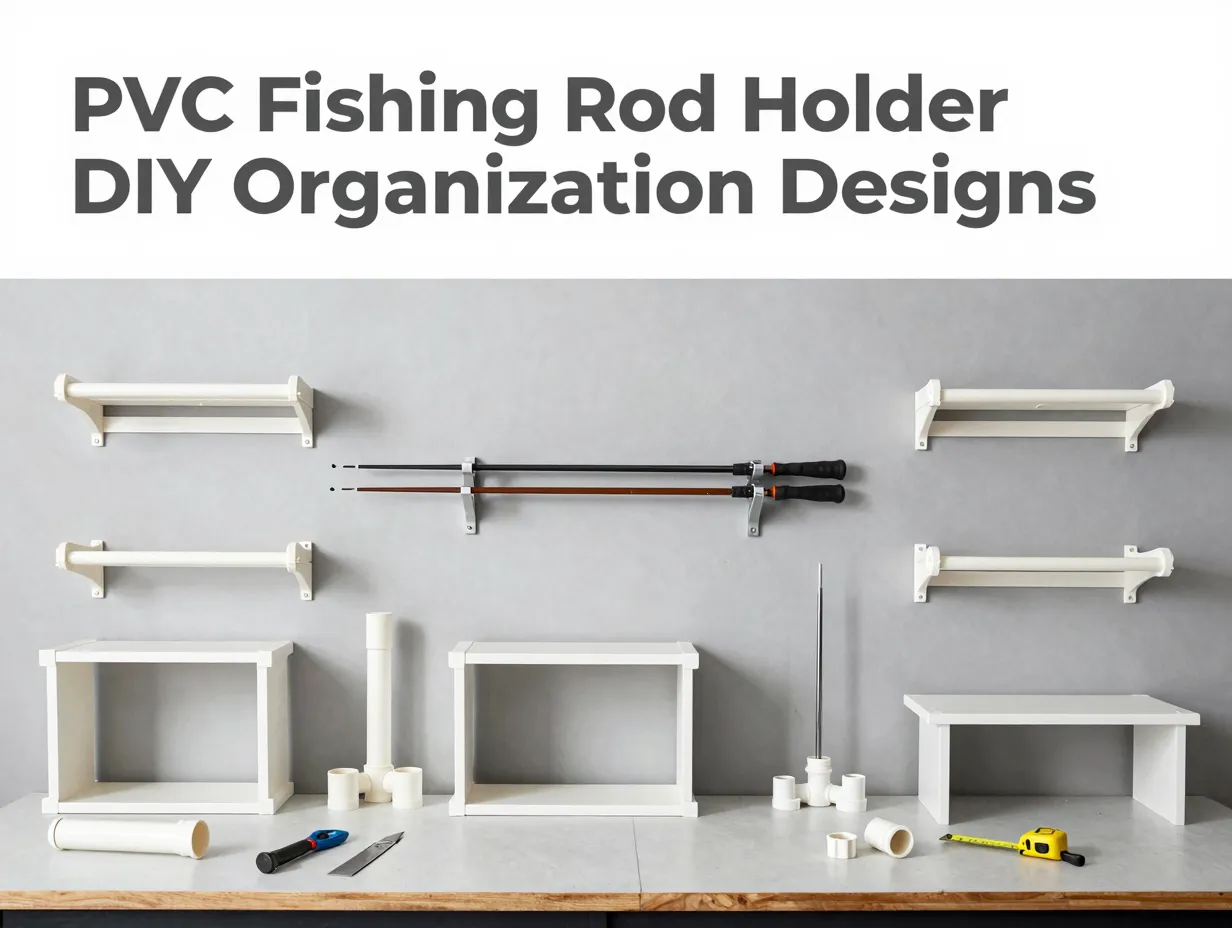
Tangled fishing rods are responsible for more broken rod tips and frayed lines than almost any other storage mistake anglers make, yet the fix costs less than $20 in materials from any hardware store. The 9 practical PVC fishing rod holder designs for DIY organization covered in this guide solve that problem permanently, using standard PVC pipe, fittings, and basic hand tools that most people already own. Whether the goal is a wall-mounted garage rack, a portable floor stand, or a truck-bed solution for fishing on the go, PVC delivers the durability, affordability, and flexibility that purpose-built rod holders rarely match.
Disclosure: This post contains affiliate links. As an Amazon Associate, we earn from qualifying purchases, and at no extra cost to you.
Key Takeaways
- PVC pipe is one of the most cost-effective and durable materials for building custom fishing rod holders at home.
- The 9 practical PVC fishing rod holder designs for DIY organization range from simple wall mounts to mobile truck-bed and kayak solutions.
- Most designs require only basic tools, a PVC cutter or hacksaw, PVC cement, and a drill.
- Proper rod spacing (typically 3 to 4 inches between holders) prevents tangling and protects rod guides.
- Customizing pipe diameter to match rod handle size ensures a snug, secure fit for every rod in the collection.
Why PVC Is the Ideal Material for DIY Rod Holders
Before diving into the specific builds, it helps to understand why PVC outperforms wood, metal, and commercial plastic racks for most DIY fishing rod storage projects.
Cost: Schedule 40 PVC pipe typically costs $0.50 to $1.50 per linear foot, making a full garage rack buildable for under $25.
Durability: PVC resists moisture, UV exposure (when painted or kept indoors), rust, and corrosion, all critical factors in a fishing environment.
Workability: Standard PVC cuts cleanly with a hacksaw or ratchet-style PVC cutter, requires no welding or special skills, and bonds permanently with solvent cement in seconds.
Customizability: Pipe diameters from 1.5 inches to 3 inches accommodate everything from ultralight spinning rods to heavy surf-casting rods.
Material Comparison at a Glance
| Material | Avg. Cost | Moisture Resistance | DIY Ease | Customizability |
|---|---|---|---|---|
| PVC Pipe | Low | Excellent | Very Easy | Very High |
| Wood | Low-Med | Poor (untreated) | Moderate | High |
| Metal Conduit | Medium | Good | Moderate | Moderate |
| Store-Bought Rack | High | Varies | None | Low |
The 9 Practical PVC Fishing Rod Holder Designs For DIY Organization
The following nine designs are organized from simplest to most complex, so beginners can start with Design 1 and work up to more advanced builds as their confidence grows.
1. Basic Wall-Mounted Horizontal Rack
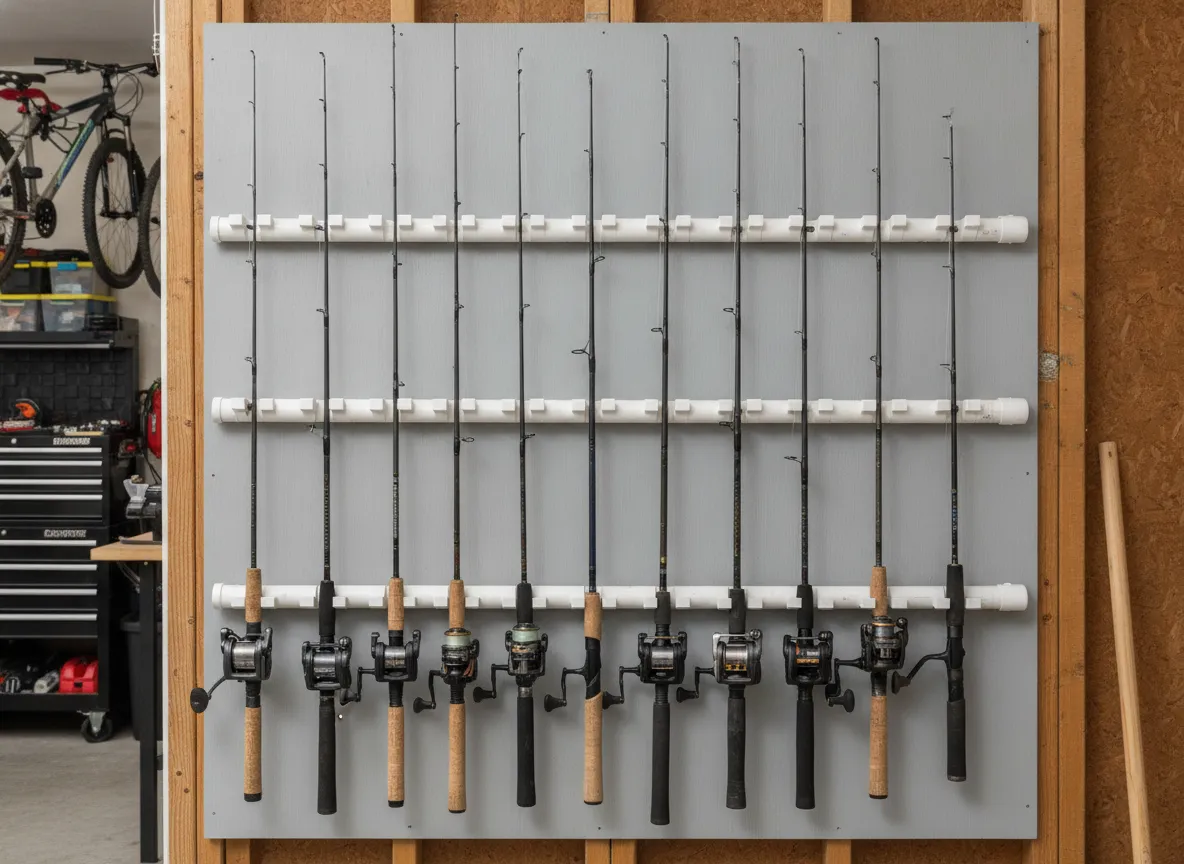
The most popular starting point for any angler’s garage or shed, this design uses two horizontal rows of PVC pipe sections mounted to a wall stud or plywood backer board.
Materials needed:
- 1.5-inch PVC pipe (cut into 4-inch sections)
- 1.5-inch PVC end caps
- 1×6 or 1×8 plywood backer (length depends on rod count)
- Wood screws and wall anchors
How it works: Cut short PVC sections and glue end caps on one side to create open-ended tubes. Mount the tubes in two parallel horizontal rows, one near the top of the backer for rod tips, one near the bottom for handles. Space each tube 3 to 4 inches apart. The rods slide in tip-down or handle-down depending on preference.
This build holds 8 to 12 rods on a 4-foot backer and takes less than two hours to complete.
2. Vertical Floor Stand with PVC Base
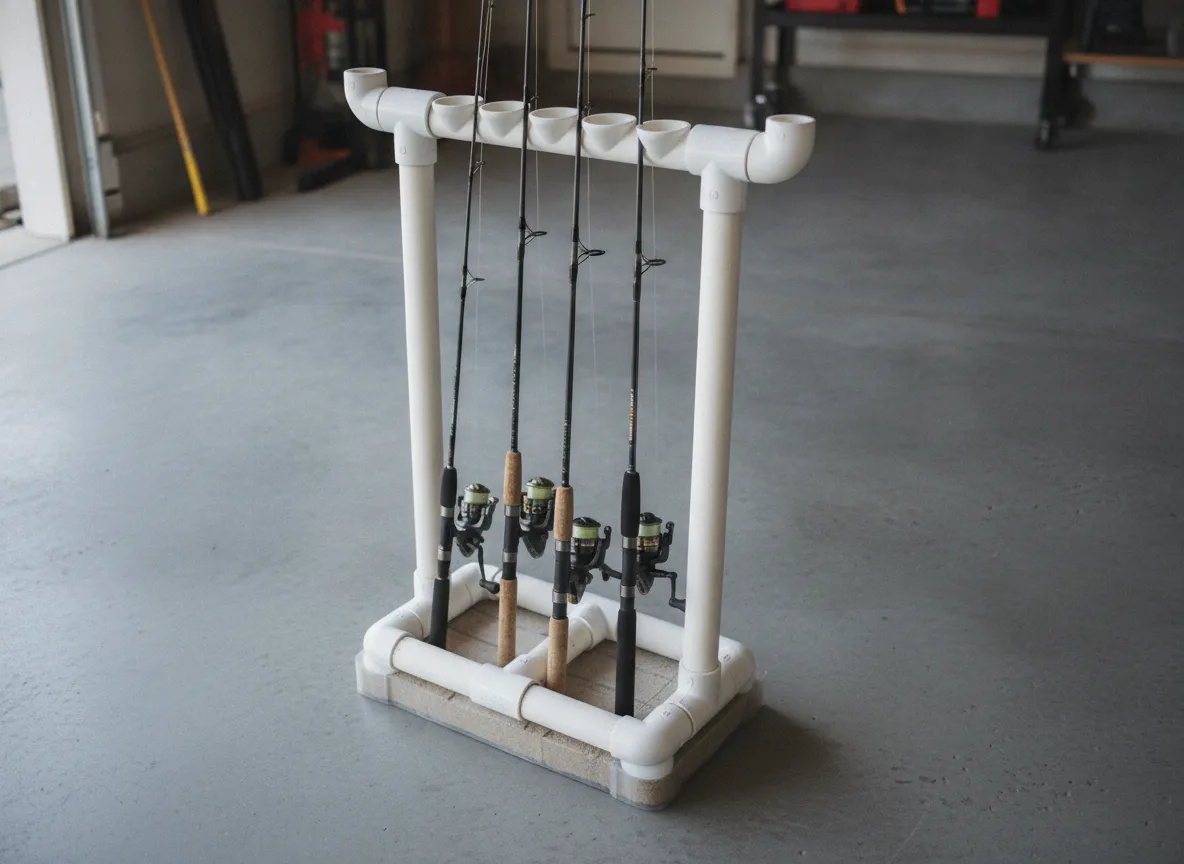
For anglers who prefer not to drill into walls, a freestanding floor stand offers a flexible, portable alternative.
Core structure: Two vertical PVC pipes (1.5-inch, approximately 5 feet tall) connected by horizontal cross members using T-fittings. A wide base made from 3-inch PVC pipe sections filled with concrete or sand provides stability.
Key design detail: Angle the top pipe sections at 15 degrees using 45-degree elbow fittings. This slight angle keeps rods from sliding out and separates rod tips naturally to prevent tangling.
A floor stand holds 6 to 10 rods and can be moved easily between the garage, porch, or boat dock.
3. Ceiling-Mounted Overhead Rod Rack
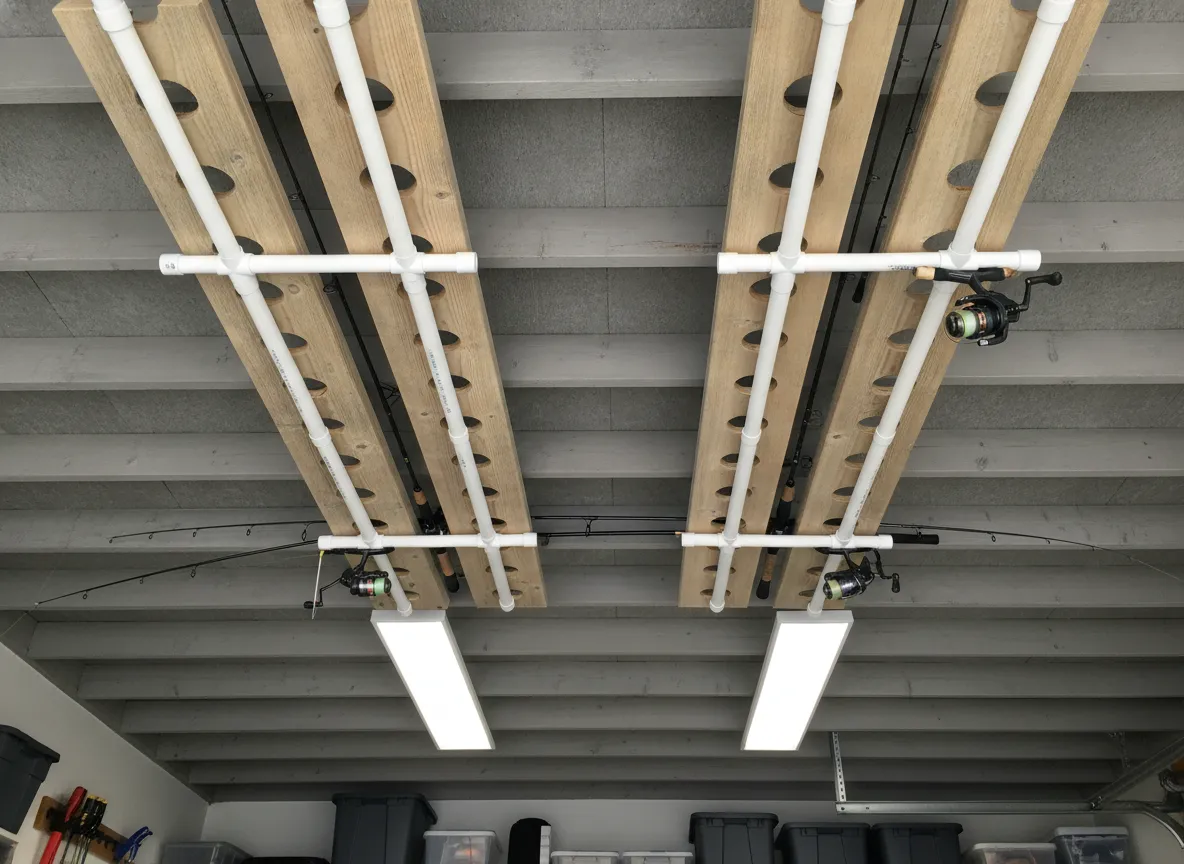
Ceiling storage is dramatically underused in most garages. A ceiling-mounted PVC rod rack keeps rods completely out of the way while protecting them from foot traffic and accidental bumps.
Construction approach: Mount two parallel 2×4 boards across ceiling joists, spaced 4 feet apart. Drill evenly spaced holes (sized for 1.5-inch PVC pipe) through both boards. Cut PVC sections slightly longer than the board thickness and press them into the holes. Rods slide through the PVC guides horizontally, resting across both boards.
Safety note: Always anchor ceiling mounts directly into joists, not just drywall. Use lag bolts rated for at least 50 pounds per mount point.
This design is ideal for long-term storage of rods that are not used frequently.
4. Truck Bed Rod Holder Using PVC Pipe
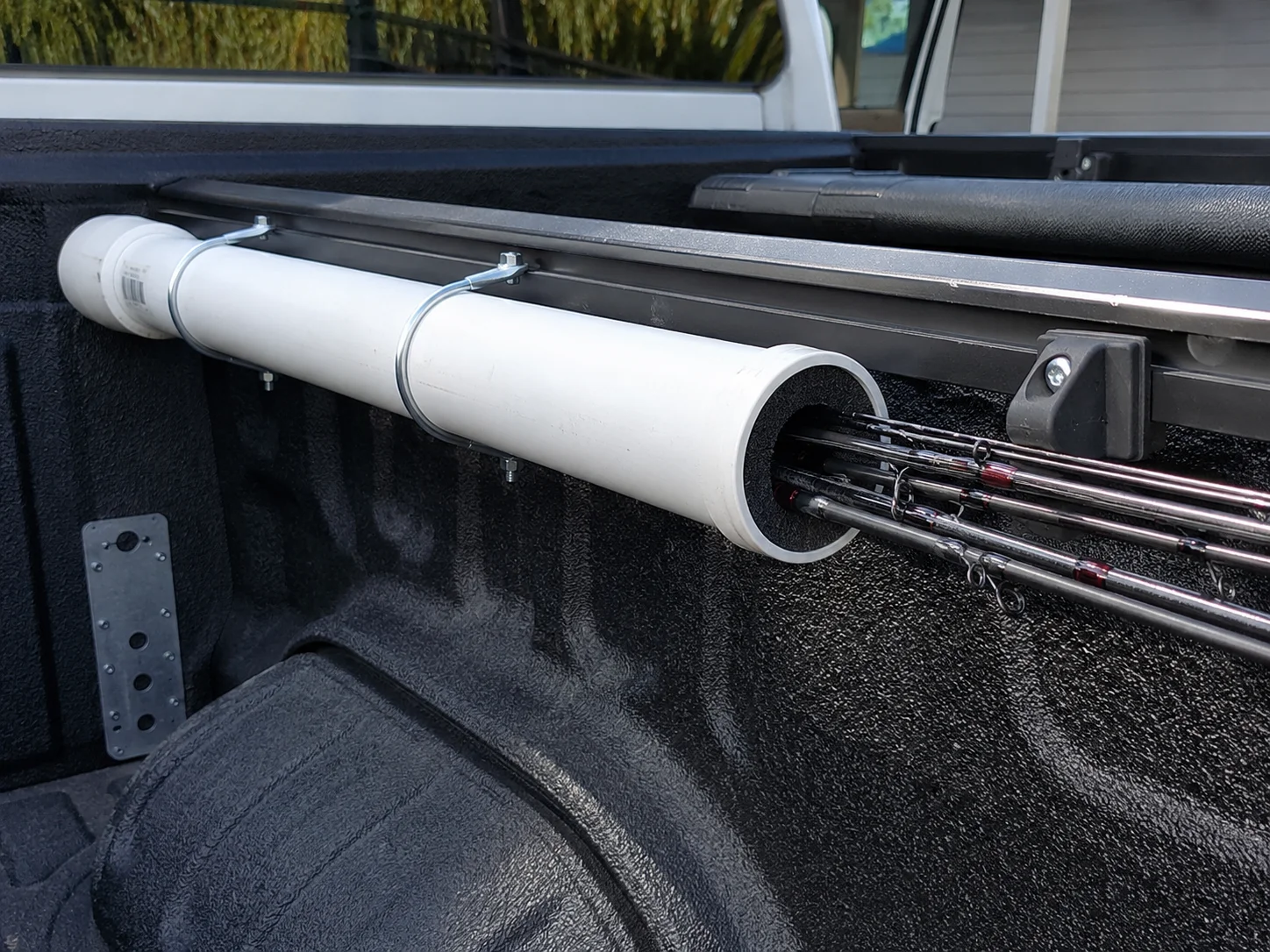
Transporting rods safely in a pickup truck without a full rod vault is one of the most common challenges for mobile anglers. A PVC truck-bed holder solves this with minimal investment.
Basic design: Mount a length of 2-inch PVC pipe along the inside rail of the truck bed using U-bolt pipe clamps. Cap one end and leave the other open. Rods slide in tip-first and rest securely during transport.
Enhanced version: Add a second parallel pipe at a lower position to support both the rod tip and the handle section independently. Use foam pipe insulation inside the tubes to prevent scratching rod blanks.
For trucks with toolboxes, a short PVC rack can be mounted to the front face of the toolbox using hose clamps and eye bolts.
5. PVC Rod Holder for Boat Gunwales
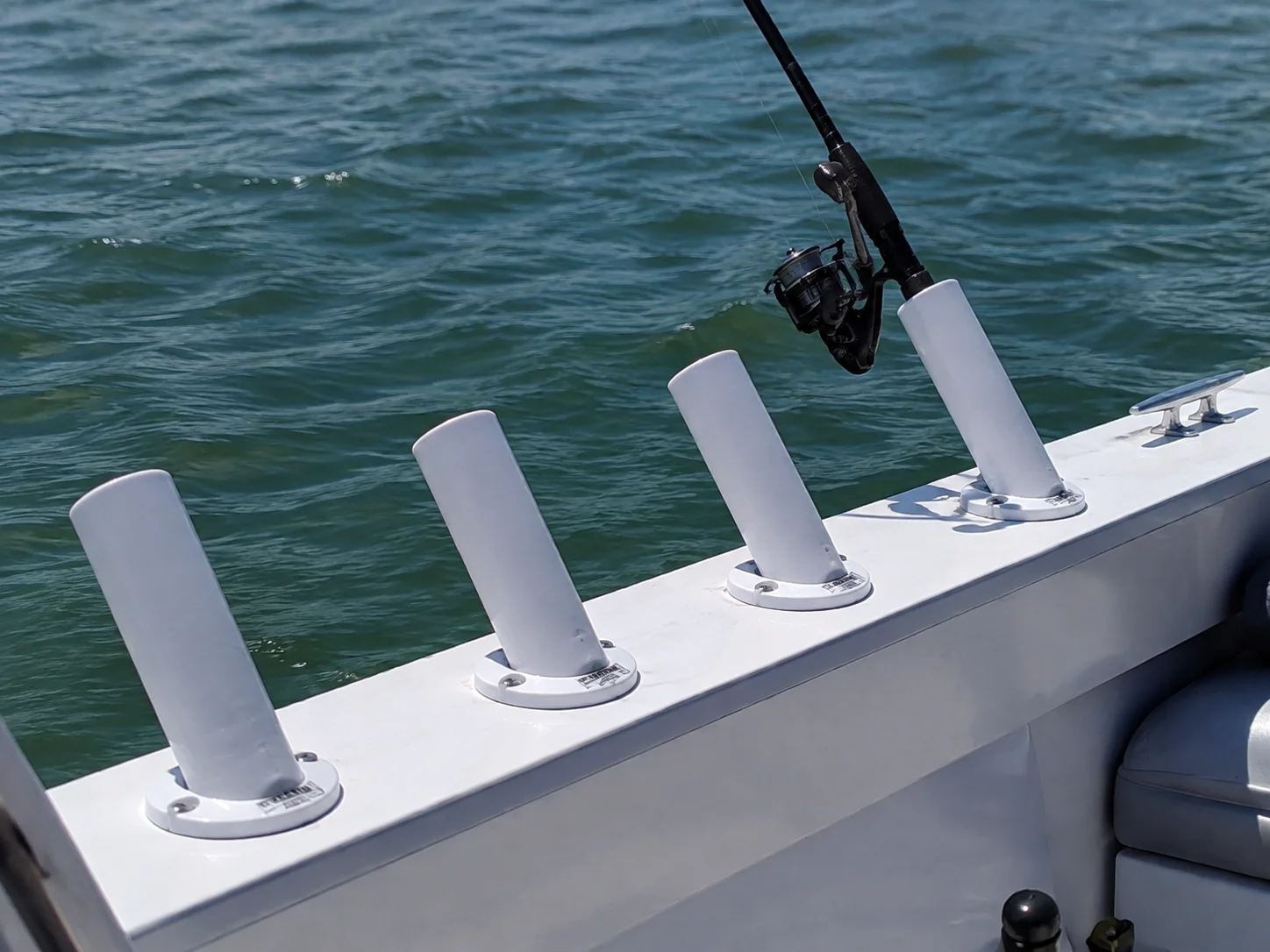
Fishing from a boat requires rod holders that can handle vibration, spray, and constant movement. PVC gunwale-mounted holders are a proven, affordable solution.
Design specifics: Use 2-inch Schedule 40 PVC pipe cut to 12-inch lengths. Drill a 3/8-inch drain hole at the bottom of each tube to prevent water pooling. Mount each tube at a 30-degree angle using a PVC flange fitting screwed directly into the boat’s gunwale.
Spacing recommendation: Mount rod holders every 10 to 12 inches along the gunwale for maximum capacity without crowding.
A rubber grommet inside each tube protects rod handles from scratching against the PVC interior during rough water conditions.
6. Kayak Rod Holder Built from PVC
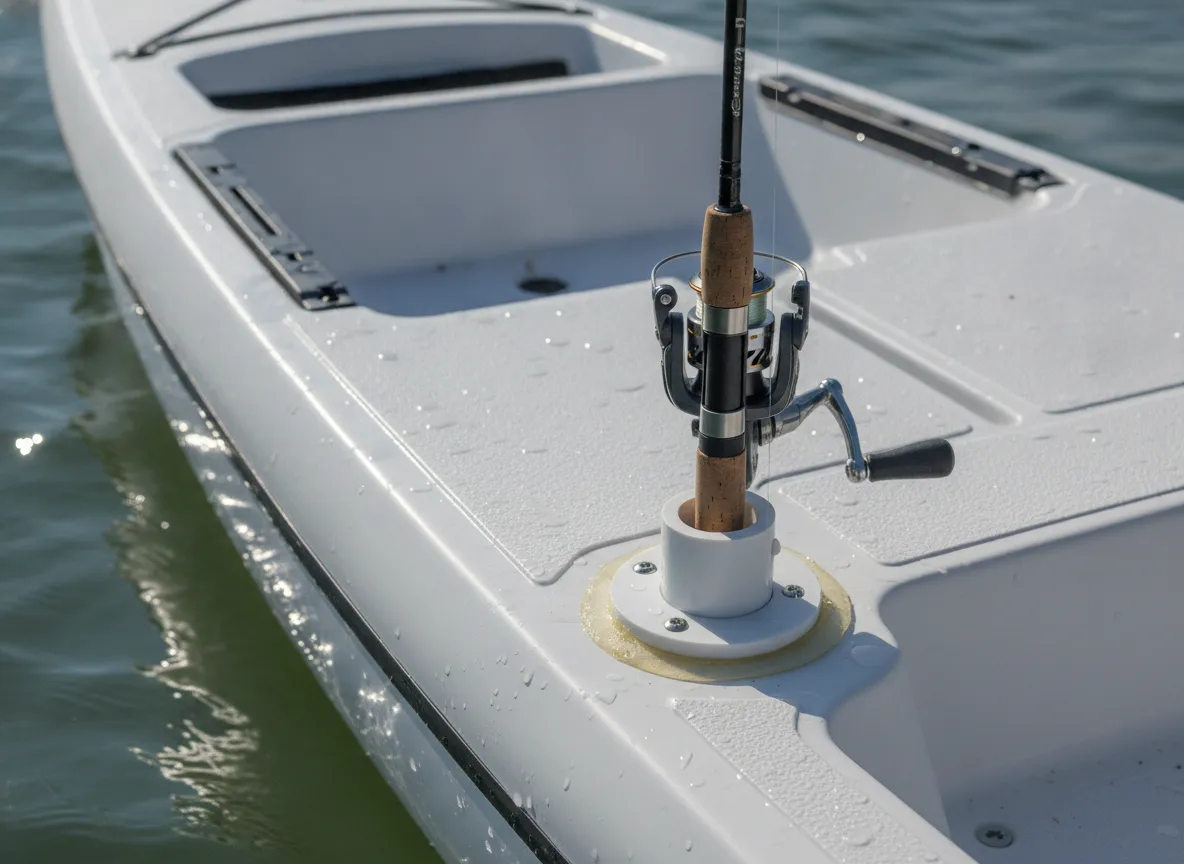
Kayak fishing presents unique space constraints. A custom PVC rod holder designed for kayak mounting keeps rods accessible without interfering with paddling.
Flush-mount style: Cut a 6-inch section of 2-inch PVC pipe. Glue a 2-inch PVC flange to the bottom. Mount the flange flush into the kayak deck using marine-grade sealant and stainless steel screws. The rod sits vertically in the tube, handle down, within easy reach.
Adjustable-angle style: Use a 2-inch PVC ball-valve fitting as the base. This allows the rod angle to be adjusted from vertical to 45 degrees, which is particularly useful when trolling or drifting.
Always use stainless steel or marine-grade hardware on kayak builds to prevent rust from saltwater exposure.
7. PVC Rod Holder Cabinet with Locking Door
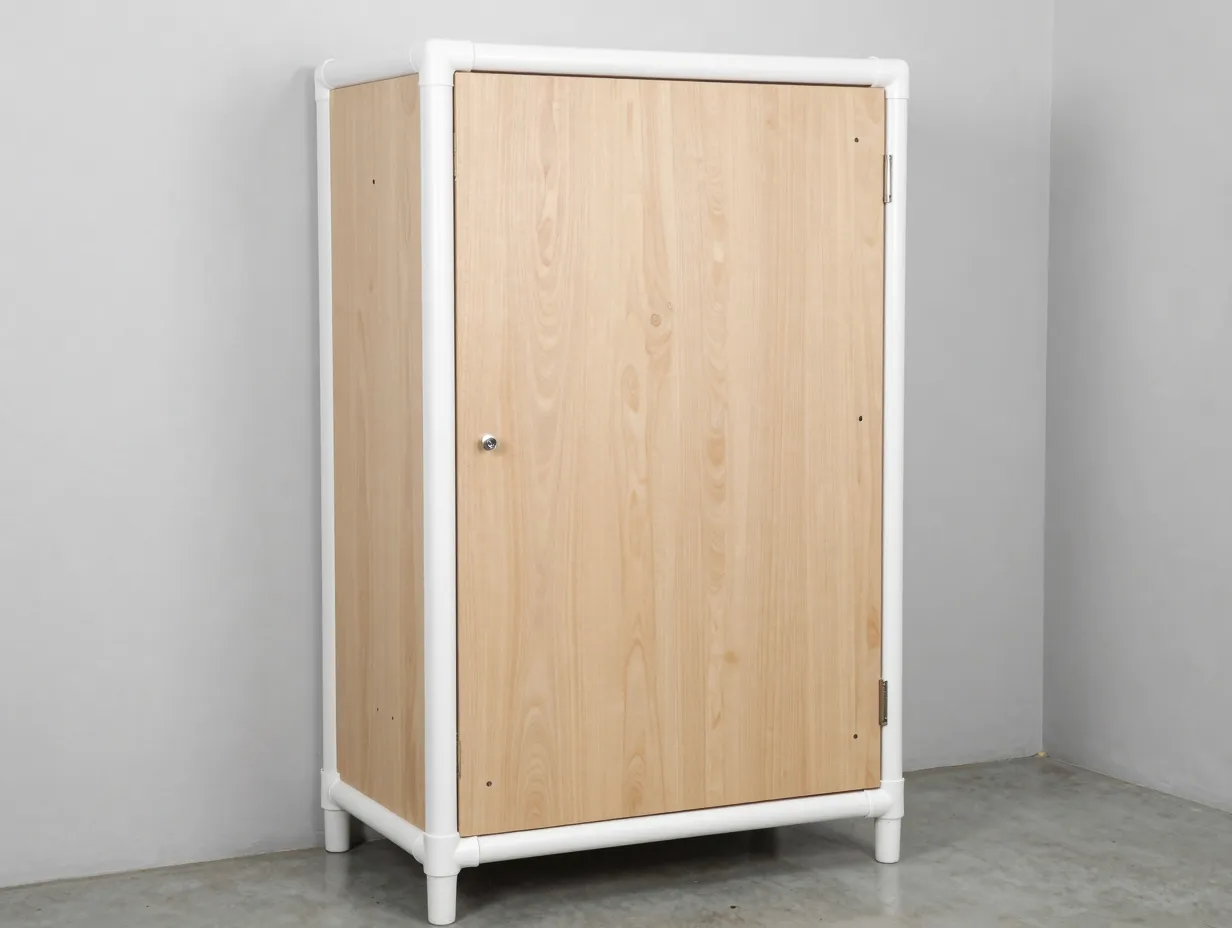
For anglers who want to protect expensive rods from dust, humidity, and theft, a PVC-framed rod cabinet is a significant upgrade over open racks.
Frame construction: Build a rectangular frame from 1.5-inch PVC pipe and 90-degree elbow fittings. The frame dimensions should accommodate rod length (typically 7 feet tall, 18 inches wide). Attach a plywood back panel and side panels using PVC pipe straps screwed into the plywood.
Interior rod holders: Mount two rows of short PVC tube sections inside the cabinet, one row near the top for tips, one near the bottom for handles, identical to the basic wall-mounted design.
Door: A simple plywood door with a barrel bolt latch keeps the cabinet closed. Adding a small dehumidifier rod inside prevents moisture buildup during long storage periods.
8. Portable PVC Rod Holder for Shore Fishing
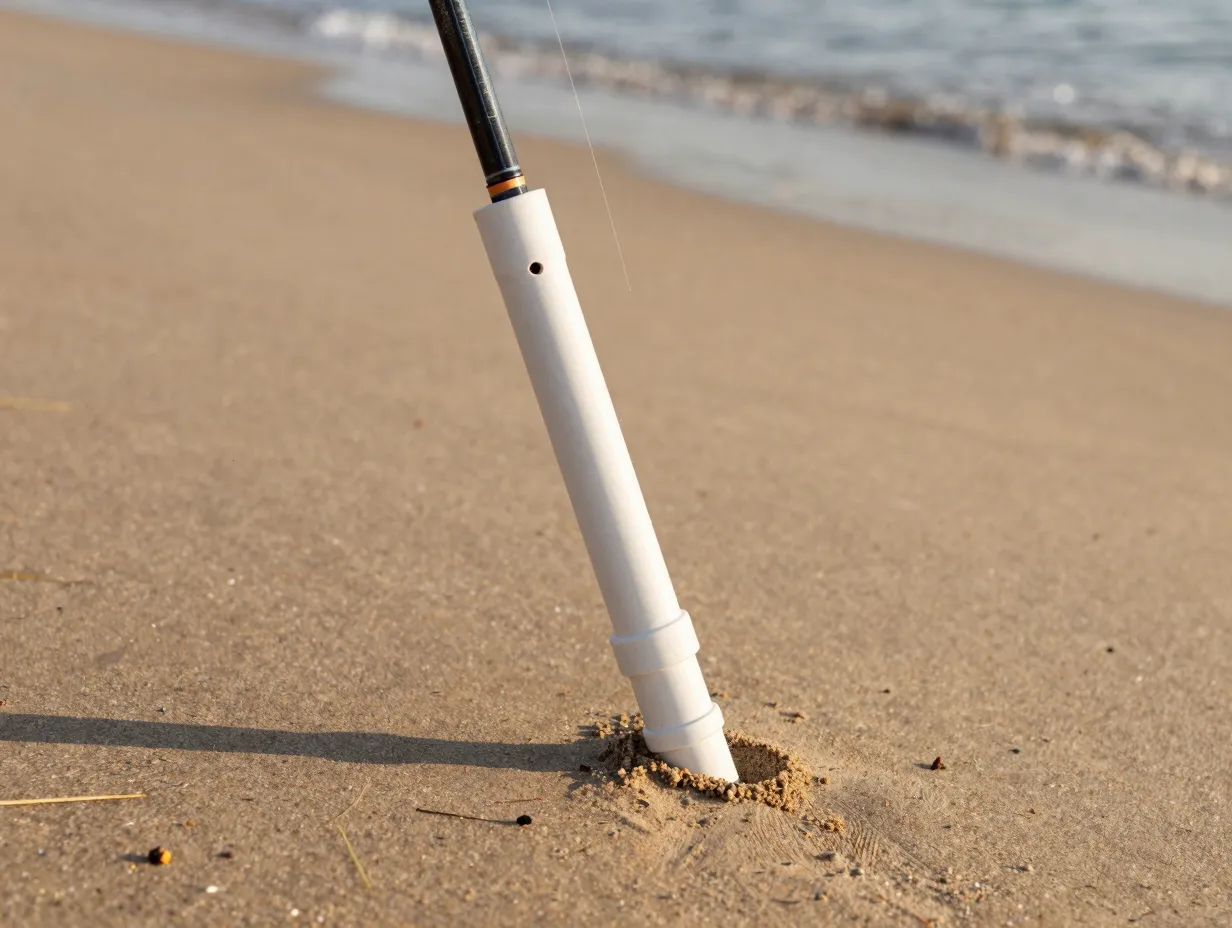
Shore anglers often need to keep multiple rods deployed simultaneously while waiting for bites. A portable PVC rod spike holder solves this without requiring any permanent installation.
Spike design: Cut a 24-inch section of 2-inch PVC pipe. Cap the top end. Sharpen the bottom end using a utility knife or grinder to create a point that can be pushed into soft ground or sand. Drill a 1-inch hole near the top of the tube at a 45-degree angle, this is where the rod butt rests.
Multi-rod version: Connect three or four spike holders with a horizontal PVC crossbar using T-fittings. The crossbar keeps all holders aligned and prevents them from leaning in soft sand.
This design breaks down flat for easy transport in a tackle bag or truck bed.
9. PVC Rod Holder Integrated into a Workbench or Tackle Station
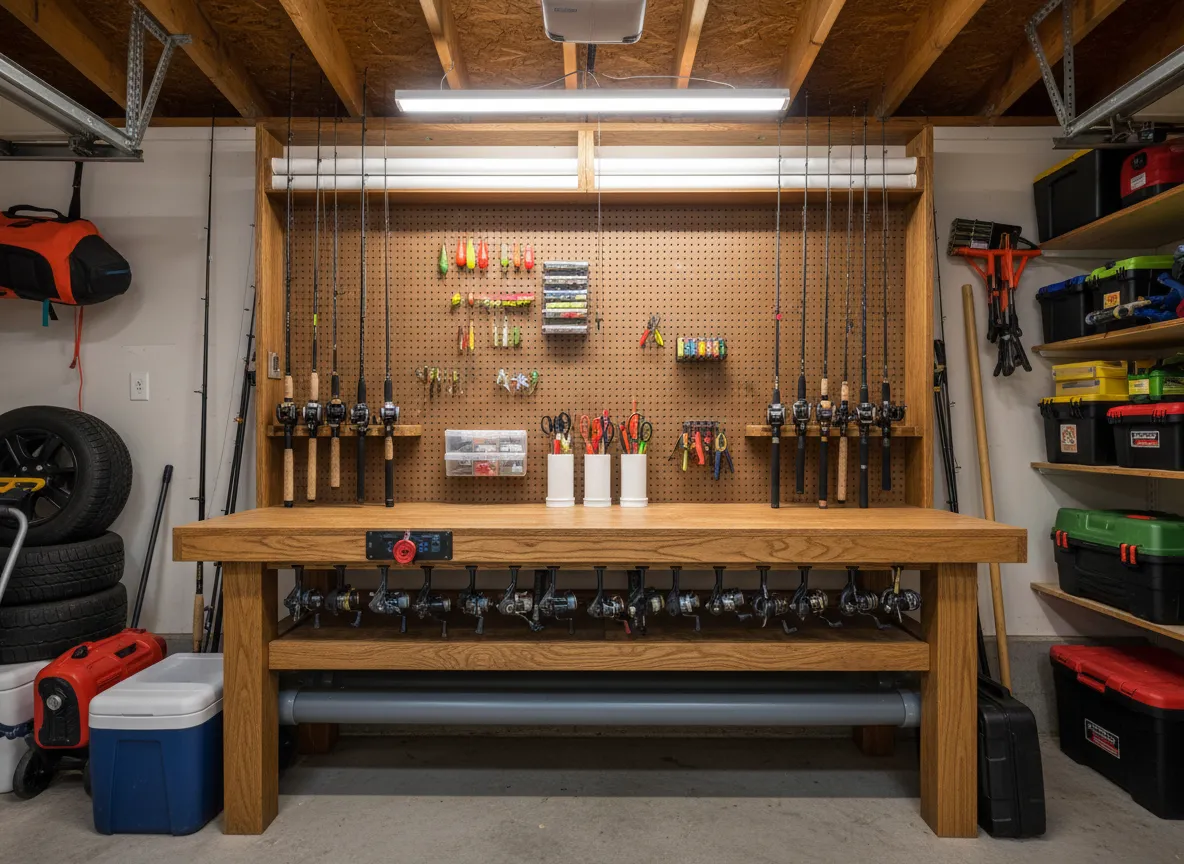
The most advanced of the 9 practical PVC fishing rod holder designs for DIY organization, this build combines rod storage with a full tackle organization station.
Concept: Build a freestanding workbench from 2×4 lumber. Along the back edge of the bench, mount a pegboard panel for tackle storage. Attach a row of PVC rod tubes to the top of the pegboard frame, angled at 20 degrees, to hold rods vertically above the work surface.
Additional features to include:
- PVC pipe sections mounted horizontally beneath the bench for reel storage
- Short PVC tubes glued to the bench surface to hold scissors, pliers, and other tools upright
- A PVC pipe frame on one side of the bench to hold a rod-drying rack after cleaning
This integrated station turns a corner of the garage or basement into a fully functional fishing preparation area, keeping every piece of gear organized and within arm’s reach.
Building Tips That Apply to All 9 Designs
Regardless of which design is chosen from this list of 9 practical PVC fishing rod holder designs for DIY organization, several universal best practices will improve the quality and longevity of every build.
Measure rod length before cutting pipe. Most spinning and casting rods range from 6 to 8 feet. Surf rods can reach 12 feet. Always measure the longest rod in the collection before determining rack height or tube length.
Deburr all cut pipe ends. After cutting PVC, use sandpaper or a deburring tool to smooth the inside and outside edges. Sharp burrs can scratch rod blanks and damage guide feet.
Use primer before PVC cement. Purple PVC primer cleans and softens the pipe surface before cement is applied, creating a significantly stronger bond. Skipping primer is the most common cause of joint failure in DIY PVC projects.
Paint or wrap exposed PVC. Uncoated PVC degrades under prolonged UV exposure. Spray paint with a plastic-bonding primer, or wrap tubes with foam pipe insulation, to extend the life of any outdoor or partially outdoor installation.
Test fit before cementing. Dry-fit every joint before applying cement. PVC cement bonds in seconds and is not reversible.
Rod spacing guidelines:
| Rod Type | Recommended Tube Spacing |
|---|---|
| Ultralight spinning | 3 inches |
| Medium spinning/casting | 3.5 inches |
| Heavy casting / baitcasting | 4 inches |
| Fly rods | 4 to 5 inches |
| Surf / heavy saltwater | 5 to 6 inches |
Common Mistakes to Avoid
Even experienced DIYers run into problems with PVC rod holder builds. These are the most frequent errors and how to avoid them.
Using the wrong pipe diameter. A tube that is too wide will let the rod rattle and tip over. A tube that is too narrow will scratch the reel seat or handle. Test with the actual rod handle before committing to a diameter.
Mounting to drywall without studs. Wall-mounted racks loaded with 10 or more rods can weigh 30 to 50 pounds. Always anchor into wall studs or use a plywood backer that spans multiple studs.
Ignoring rod guide protection. When rods are stored tip-down, the guides contact the bottom of the tube. Line the inside of tip-side tubes with a short section of foam pipe insulation to protect guide feet and wraps.
Overcrowding the rack. Packing rods too tightly together causes guide tangling when rods are removed. The spacing guidelines in the table above are minimums, not targets, more space is always better.
Cost Breakdown for a Typical 10-Rod Wall Rack
A standard 10-rod horizontal wall rack using Design 1 or Design 2 from this guide requires the following approximate materials as of 2026:
- 10 feet of 1.5-inch PVC pipe: approximately $8
- 20 PVC end caps: approximately $6
- PVC cement and primer: approximately $7
- 1×8 plywood backer (4 feet): approximately $10
- Screws, anchors, and sandpaper: approximately $5
Total estimated cost: $36 or less, compared to $60 to $150 for a comparable commercial rod rack.
Conclusion
The 9 practical PVC fishing rod holder designs for DIY organization presented in this guide cover every common fishing scenario, from garage wall storage to kayak deck mounts to portable shore-fishing spikes. Each design uses widely available materials, requires no specialized tools beyond a saw and a drill, and can be completed in a single afternoon.
Actionable next steps:
- Audit the current rod storage situation and identify the primary problem, wall space, portability, vehicle transport, or boat access.
- Select the design from this list that best matches that specific need and available space.
- Measure the longest rod in the collection before purchasing any materials.
- Purchase materials from a local hardware store, dry-fit the entire assembly before cementing, and deburr all cut edges.
- Once the first build is complete, consider combining two designs, for example, a wall-mounted rack for home storage paired with a truck-bed holder for transport.
A well-organized rod storage system protects expensive equipment, saves time on the water, and turns a cluttered garage corner into a functional fishing station. With PVC pipe as the foundation, that transformation costs less than a single fishing lure box.