8 Critical Pieces of Hunting Equipment You Should Never Go Without
Every year, thousands of hunters enter the field underprepared, and the consequences range from a ruined hunt to a life-threatening emergency. According to the International Hunter Education Association, a significant share of hunting incidents involve factors directly tied to poor preparation and missing gear. The 8 critical pieces of hunting equipment you should never go without are not optional extras; they are the baseline for a safe, legal, and productive hunt. Whether heading out for whitetail in the Midwest or elk in the Rockies, the right gear separates a successful trip from a dangerous one.
Disclosure: This post contains affiliate links. As an Amazon Associate, we earn from qualifying purchases, and at no extra cost to you.
Key Takeaways
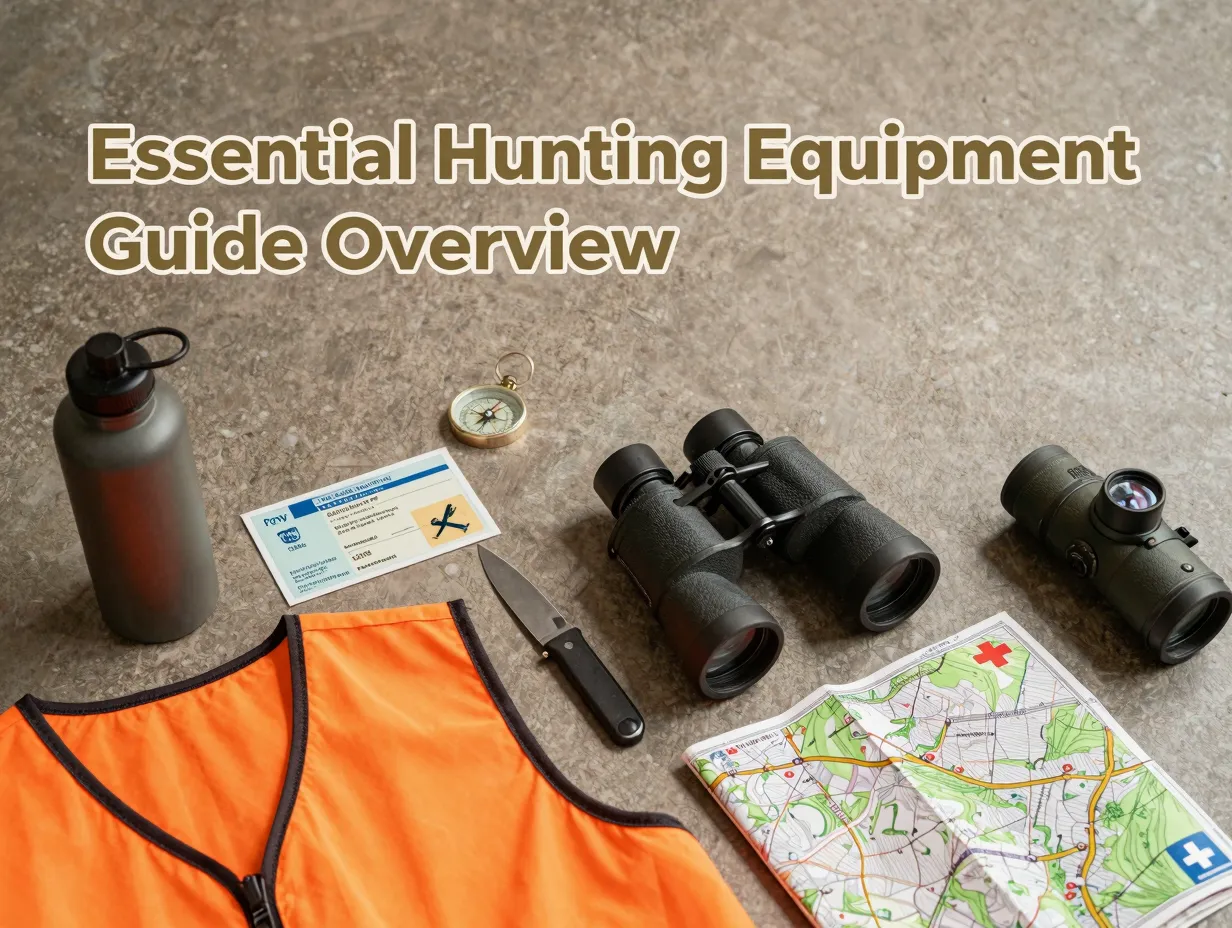
- Carrying valid licenses, tags, and documentation is the first non-negotiable step before any hunt begins
- A quality optic such as a rangefinder or binoculars dramatically improves both accuracy and safety in the field
- Navigation tools, map, compass, and GPS, are essential even in familiar terrain
- A reliable fixed-blade knife and a well-stocked first aid kit belong in every hunter’s pack without exception
- High-visibility safety gear reduces the risk of hunting accidents and is legally required in many states
Why the Right Gear Makes or Breaks Every Hunt
Preparation is not a suggestion in hunting, it is a discipline. The difference between hunters who consistently fill tags and those who come home empty-handed often comes down to what is in their pack before they leave the truck. Beyond success, the right equipment is a direct safety investment. Terrain changes, weather turns, and animals do not always cooperate with plans.
The 8 critical pieces of hunting equipment you should never go without represent a core checklist that applies across hunting disciplines, rifle, bow, muzzleloader, and more. Each item on this list addresses a specific risk or need that arises in the field. Skipping even one can compromise the entire outing.
The sections below break down each piece of essential hunting gear, explain why it matters, and offer practical guidance on selecting the right option.
The 8 Critical Pieces of Hunting Equipment You Should Never Go Without
1. Valid Licenses, Tags, and Legal Documentation
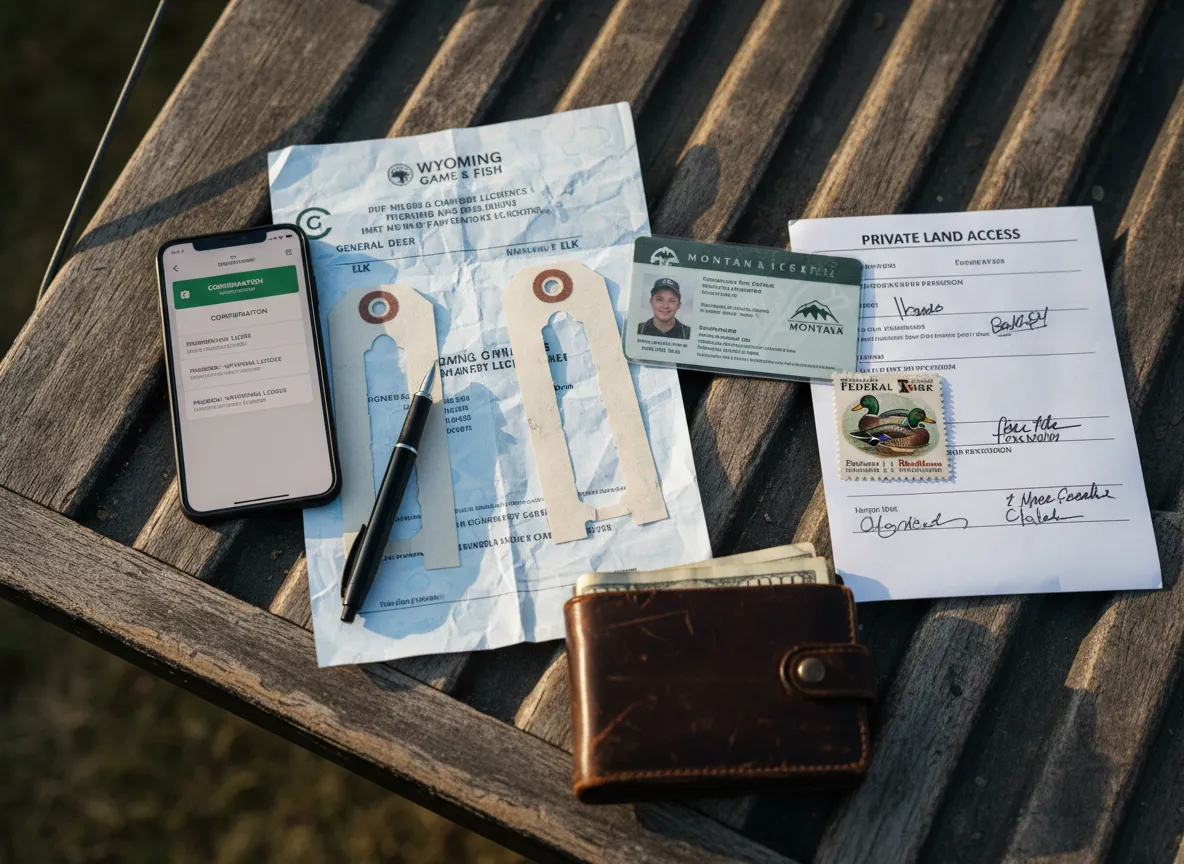
Before a single piece of hardware goes into the pack, documentation must be confirmed. Recent gear checklists emphasize that a valid hunting license, printed or digital tags, a hunter safety card where required, and any landowner permission forms are the first non-negotiable “equipment” a hunter carries [4][9]. Game wardens can and do check for these in the field, and hunting without proper documentation carries serious legal penalties.
What to carry:
- State hunting license (physical or verified digital copy)
- Species-specific tags and permits
- Hunter education certification card
- Written landowner permission if hunting private land
- Any required federal stamps (e.g., Duck Stamp for waterfowl)
In 2026, many states now accept digital licenses through official apps, but hunters should confirm their state’s policy before relying solely on a phone. A backup printed copy is always a smart precaution.
“The most expensive piece of gear you can forget is your hunting license. The fine alone will cost more than a season’s worth of equipment.”
2. A Reliable Firearm, Bow, or Primary Weapon, Properly Maintained
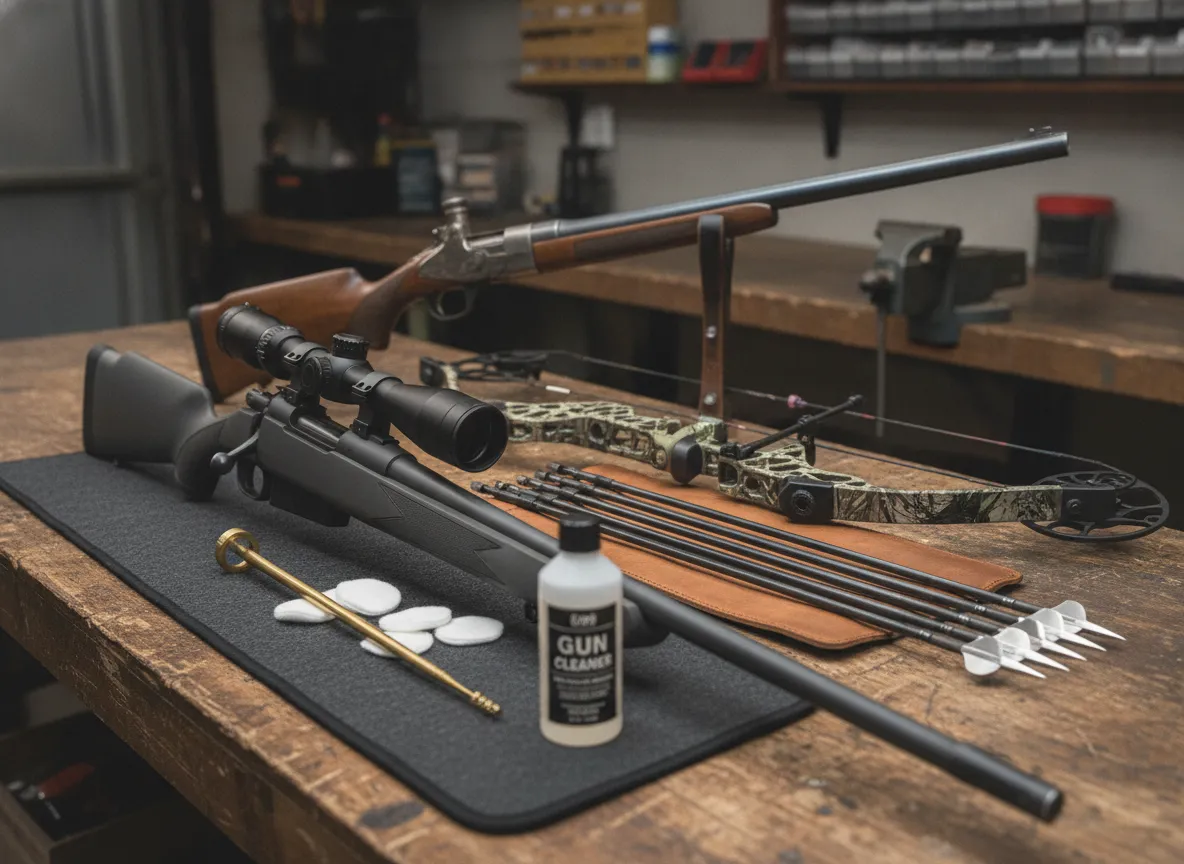
The primary weapon is the centerpiece of any hunt, and its reliability depends entirely on maintenance and preparation. A firearm with a fouled barrel, a bow with a worn string, or a muzzleloader with degraded powder can all fail at the critical moment [6].
Pre-hunt weapon checklist:
- Clean and inspect the firearm or bow before every season
- Check scope mounts, rings, and zero for rifles
- Inspect bowstrings, cams, and arrow rests for wear
- Carry appropriate ammunition or arrows in sufficient quantity
- Store and transport according to state and federal safety laws
Hunters should also confirm that their weapon is legal for the specific season and zone they are hunting. Regulations vary by state, species, and season type. A well-maintained weapon is not just about performance, it is a core safety responsibility.
3. Quality Optics, Binoculars and Rangefinder
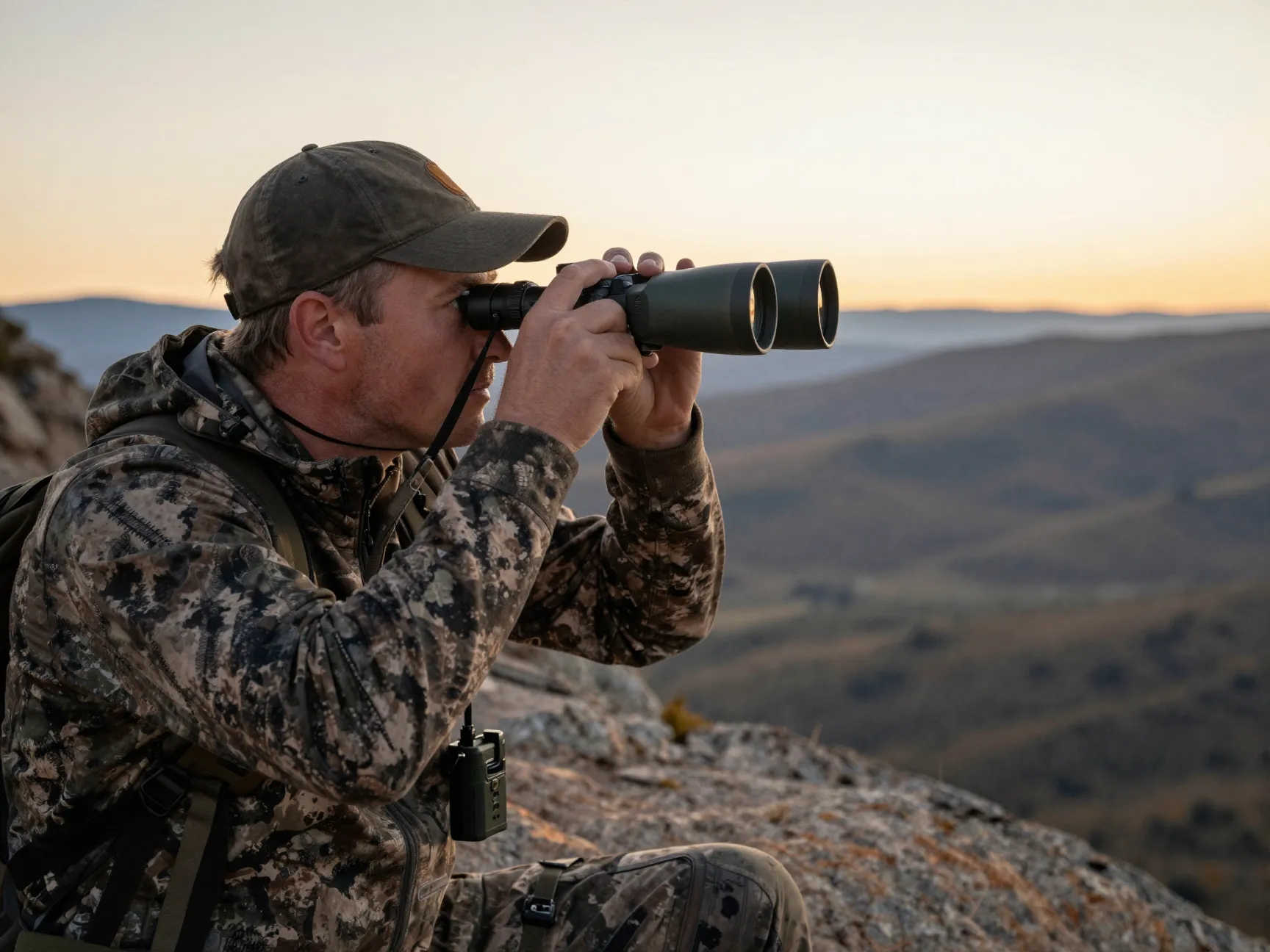
No single piece of gear improves a hunter’s effectiveness more consistently than quality optics. Binoculars allow hunters to identify animals, assess antler or horn characteristics, and spot movement at distances where naked-eye observation fails entirely [7]. A rangefinder eliminates guesswork on shot distance, which is critical for ethical, clean kills, particularly for bowhunters where distance accuracy is even more demanding [8].
Binocular quick-selection guide:
| Use Case | Recommended Spec | Key Feature |
|---|---|---|
| Whitetail in timber | 8×42 | Wide field of view |
| Open-country mule deer | 10×42 or 10×50 | Magnification and brightness |
| Bowhunting | Compact 8×25 | Lightweight and packable |
| Waterfowl | 7×35 | Weather resistance |
Cutting corners on optics is one of the most common mistakes new hunters make. Mid-range to premium glass from established brands pays dividends in low-light conditions at dawn and dusk, exactly when game is most active.
4. Navigation Tools, Map, Compass, and GPS
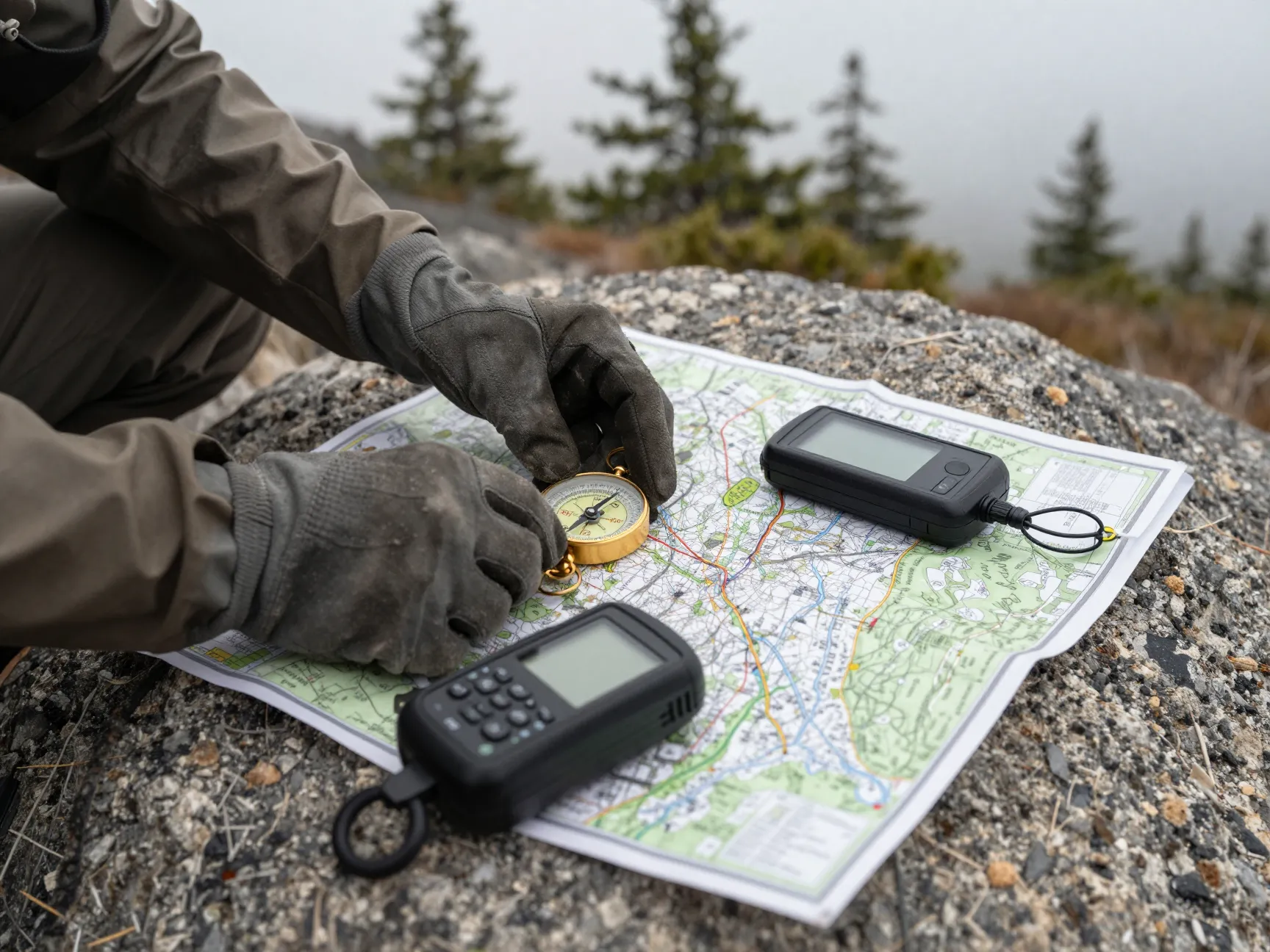
Cell service disappears in the places where game lives. Relying solely on a smartphone for navigation in remote terrain is a gamble that has cost hunters their lives. Every hunter should carry a topographic map of the hunt area, a baseplate compass, and ideally a dedicated GPS device or a GPS-capable satellite communicator [9].
Why all three matter:
- A paper topographic map never runs out of battery and cannot be hacked or corrupted
- A compass works in any weather and requires no signal
- A GPS device provides precise coordinates and can store waypoints for stand locations, water sources, and exit routes
Learning to use a map and compass together is a skill that takes a few hours to learn and can save a life. Many hunters invest in a GPS unit but never practice with a compass, leaving them helpless if the device fails.
Satellite communicators like the Garmin inReach series have become a standard recommendation in 2026 gear lists because they combine GPS navigation with two-way messaging and SOS capability, all in one compact device [10].
5. A Fixed-Blade Hunting Knife
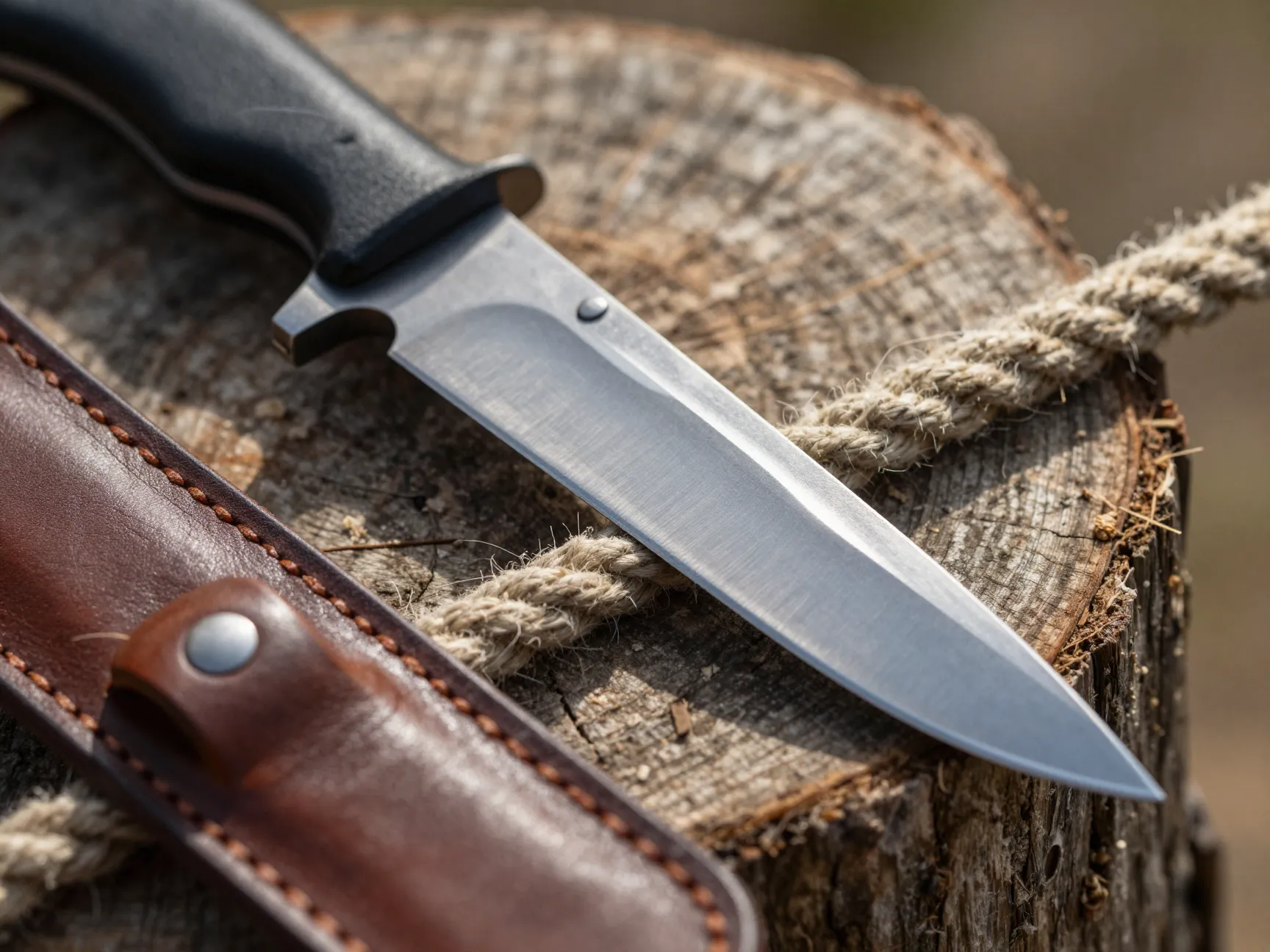
A quality fixed-blade knife is one of the most versatile and essential tools a hunter carries. From field dressing and skinning to cutting rope, preparing food, and emergency tasks, a fixed-blade knife earns its place in every pack [5][9].
What separates a good hunting knife from a poor one:
- Full-tang construction for strength and durability
- Blade length of 3.5 to 5 inches for most big-game field dressing tasks
- High-carbon stainless steel for edge retention and corrosion resistance
- A secure, lockable sheath for safe carry
Folding knives are convenient but lack the structural integrity of a fixed-blade under heavy use. For hunters who process their own game in the field, a dedicated skinning knife paired with a heavier-duty blade for bone work is worth considering.
Keep the knife sharp before the hunt. A dull blade requires more force, increases the risk of slipping, and makes field dressing far more difficult than it needs to be.
6. First Aid Kit, Tailored for the Field
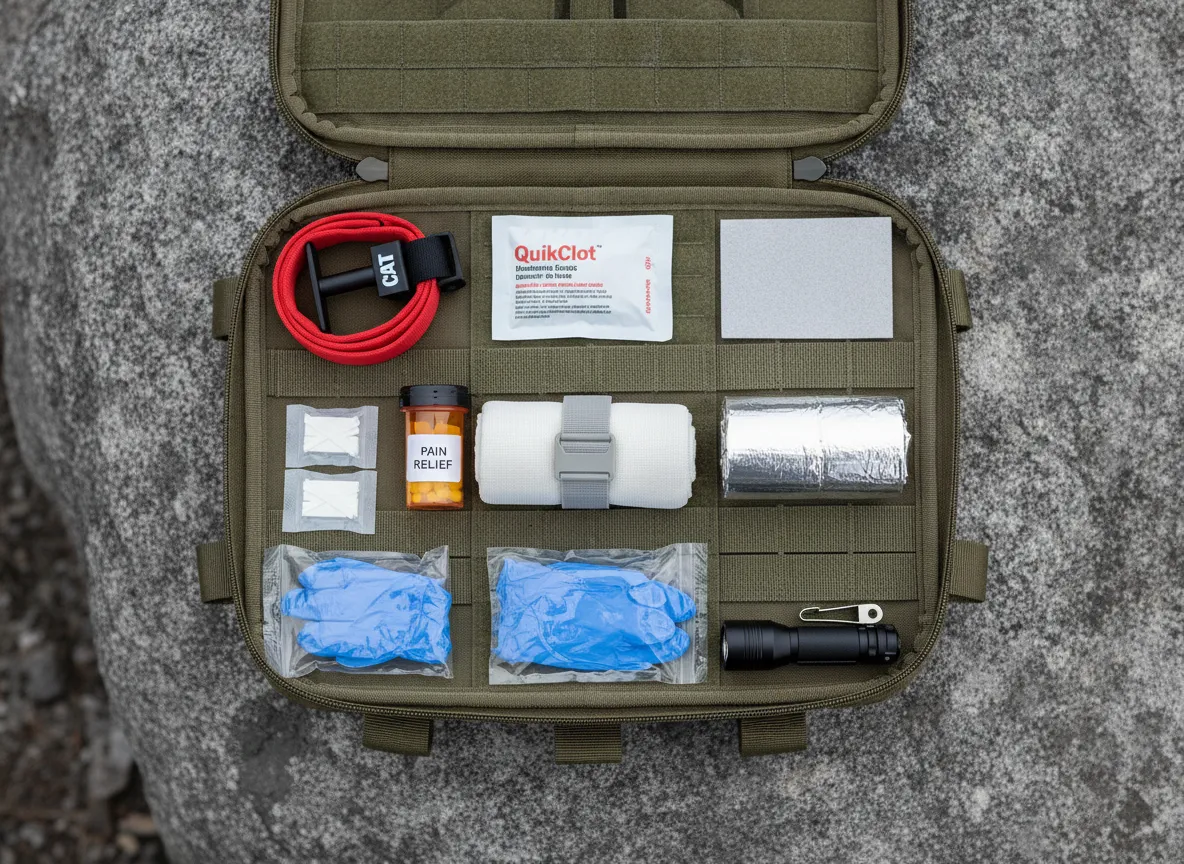
Standard household first aid kits are not built for hunting scenarios. A hunting-specific kit addresses the most common field emergencies: deep lacerations from knives, blunt trauma from falls, hypothermia, blisters, and in worst cases, gunshot wounds [9].
Core components of a hunting first aid kit:
- Tourniquet (CAT or SOFTT-W rated)
- Hemostatic gauze (QuikClot or similar)
- Compression bandages and wound closure strips
- Moleskin and blister treatment
- Pain relievers and antihistamines
- Emergency mylar blanket
- Nitrile gloves
- Small flashlight or headlamp
Hunters who are bowhunting or hunting alone in remote areas should consider taking a Wilderness First Aid (WFA) course. Knowing how to use the kit is as important as having it. Pre-packaged hunting first aid kits are available from several outdoor retailers, but building a custom kit ensures nothing critical is missing [6].
7. High-Visibility Safety Gear, Blaze Orange or Pink
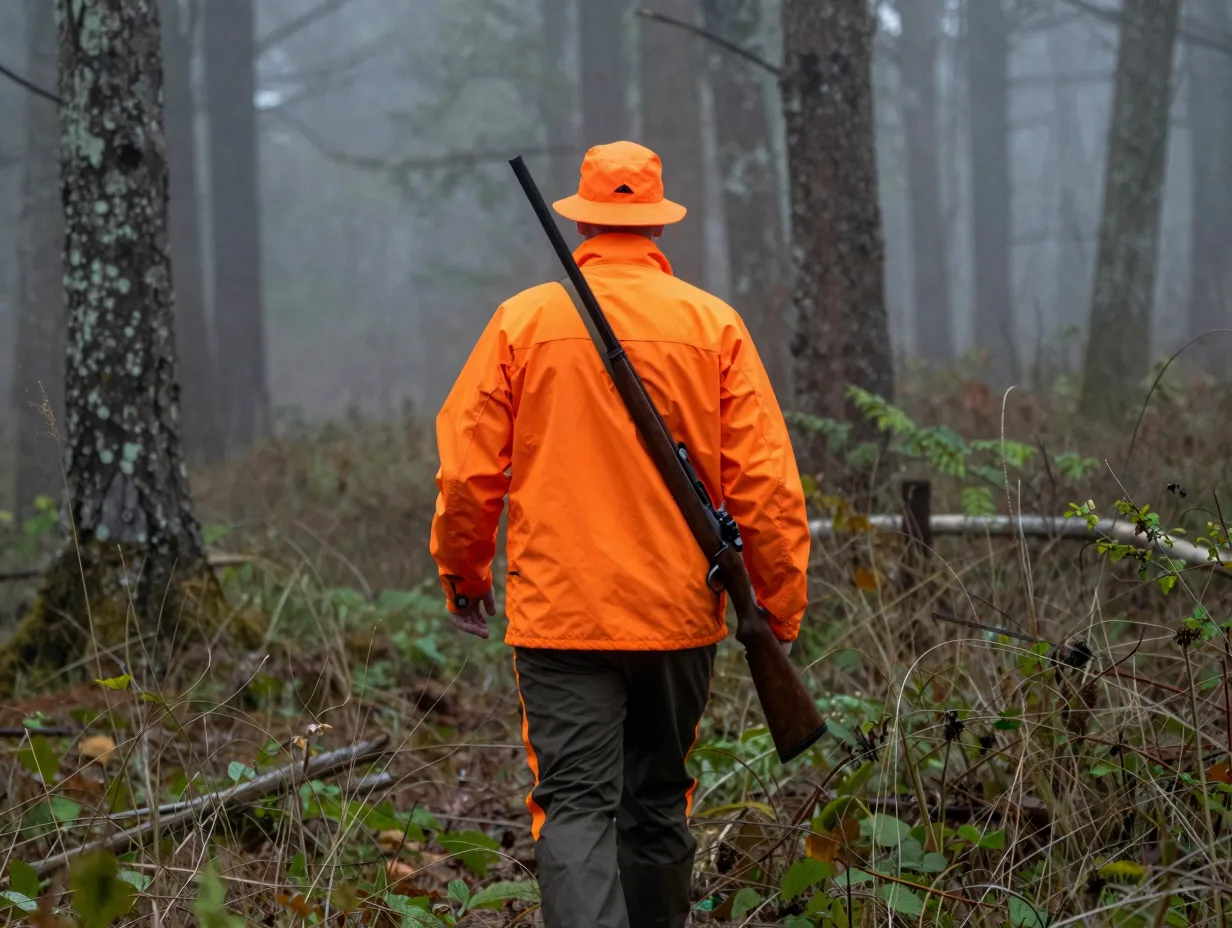
Hunter orange, and in many states, hunter pink, is legally required during firearm seasons in the vast majority of U.S. states. Beyond legal compliance, blaze orange dramatically reduces the risk of being mistaken for game by other hunters [4][9].
Minimum recommended visibility gear:
- Blaze orange or pink hat (500 square inches of solid color is a common requirement)
- Blaze orange or pink vest or jacket
- Check state-specific requirements before each season, as they vary
Bowhunters are sometimes exempt from orange requirements during archery-only seasons, but wearing it anyway during any mixed-use period is a sound safety practice. Modern blaze orange gear is designed to be highly visible to other hunters while remaining less detectable to big-game animals, which have limited color vision in the orange spectrum.
“Blaze orange is not a fashion choice, it is a life-saving tool that costs less than ten dollars and takes three seconds to put on.”
8. Food, Water, and Emergency Shelter
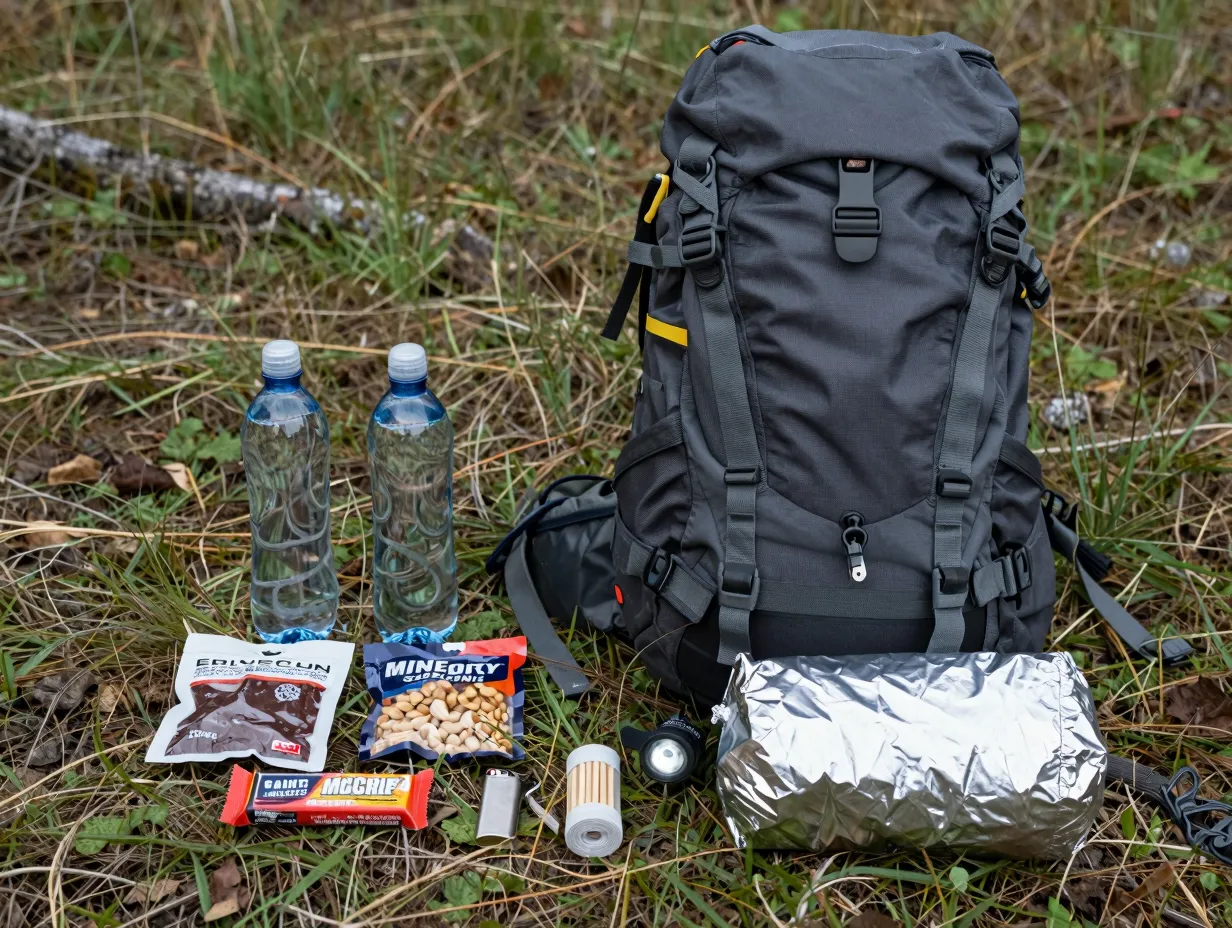
The final category of the 8 critical pieces of hunting equipment you should never go without addresses survival basics that hunters routinely underpack. Dehydration impairs judgment. Caloric depletion reduces physical performance. Exposure to unexpected cold or wet conditions can become life-threatening within hours [4][9].
Minimum field provisions for a day hunt:
- At least 2 liters of water (more in hot or high-altitude environments)
- High-calorie snacks: jerky, nuts, energy bars, trail mix
- Emergency fire-starting kit (lighter, waterproof matches, fire starter)
- Emergency bivy or mylar survival blanket
- Headlamp with fresh batteries
For multi-day backcountry hunts, water filtration becomes essential. Lightweight options like the Sawyer Squeeze or LifeStraw allow hunters to safely drink from natural sources without carrying excessive water weight [10].
Packing emergency shelter, even just a lightweight bivy or a heavy-duty trash bag, takes up minimal space and adds no meaningful weight. The scenarios where it becomes necessary are rare, but when they occur, the stakes are absolute.
Building Your Complete Hunting Gear Checklist
The 8 critical pieces of hunting equipment you should never go without form the non-negotiable foundation of any hunting loadout. Everything else, calls, decoys, scent control, climbing stands, and specialty clothing, builds on top of this base layer.
A useful practice is to build a master gear checklist organized by category and review it before every hunt [2]. Many experienced hunters keep a physical or digital checklist that they run through the night before departure, ensuring nothing is left behind.
Gear organization by priority:
- Legal documentation (licenses, tags, permits)
- Primary weapon and ammunition or arrows
- Optics (binoculars and rangefinder)
- Navigation (map, compass, GPS)
- Fixed-blade knife
- First aid kit
- Safety visibility gear
- Food, water, and emergency shelter
This sequence reflects both legal priority and survival priority. Documentation comes first because hunting without it is illegal. Shelter and water come last on the list but should never be treated as optional.
Common Mistakes Hunters Make With Essential Gear
Even experienced hunters fall into patterns that compromise their preparation. Recognizing these mistakes helps avoid them.
Mistake 1: Assuming familiar terrain means no navigation tools needed.
Terrain looks different in low light, fog, or snow. Hunters have become disoriented within a mile of their truck. Always carry navigation tools regardless of how well the area is known.
Mistake 2: Buying cheap optics to save money.
Low-quality glass causes eye strain, reduces low-light performance, and often fails to hold zero on rifle scopes. Quality optics are a long-term investment that pays off every season [7].
Mistake 3: Packing a first aid kit but never opening it.
A kit that has never been reviewed is only marginally better than no kit. Know where every item is, know how to use it, and replace expired supplies before each season.
Mistake 4: Skipping food and water for “short” hunts.
Plans change. A one-hour sit can become a five-hour tracking job. Always carry more water and calories than the planned hunt duration suggests.
Mistake 5: Forgetting to check digital license validity.
Apps crash, phones die, and cell service disappears. Confirm digital licenses are downloaded for offline access, or carry a printed backup [4].
Conclusion
The 8 critical pieces of hunting equipment you should never go without are not glamorous, they are foundational. Documentation, a reliable weapon, quality optics, navigation tools, a fixed-blade knife, a field first aid kit, high-visibility safety gear, and basic survival provisions form the core of every successful and safe hunt.
Actionable next steps:
- Build or update a master gear checklist using the categories above and review it before every hunt
- Audit existing gear for condition, replace worn knives, expired first aid supplies, and dead batteries now, not the morning of the hunt
- Confirm all licenses and tags are valid and accessible for the upcoming season
- Practice with navigation tools at least once before hunting unfamiliar terrain
- Consider a Wilderness First Aid course if hunting alone or in remote backcountry
The hunters who come home safely and successfully are not the ones with the most expensive gear, they are the ones who never leave without the right gear.
References
[1] Watch – https://www.youtube.com/watch?v=4CHLm-GBy7o
[2] Free Checklist – https://huntersloadout.com/free-checklist
[3] Watch – https://www.youtube.com/watch?v=2YvPzqxlm6Q
[4] Ultimate Hunting Trip Packing Lists Gear Hunt – https://gearjunkie.com/hunting/ultimate-hunting-trip-packing-lists-gear-hunt
[5] Must Have Hunting Equipment – https://foodvacbags.com/blogs/foodsaverblogs/must-have-hunting-equipment
[6] Must Have Hunting Gear – https://www.pewpewtactical.com/must-have-hunting-gear/
[7] Best Hunting Accessories – https://www.outsideonline.com/outdoor-gear/tools/best-hunting-accessories/
[8] Bow Hunting Gear List Breakdown What Im Carrying – https://archeryhunting.com/bow-hunting-gear-list-breakdown-what-im-carrying/
[9] The Ultimate Hunting Gear Checklist What Every Hunter Should Carry In The Field – https://huntingcase.com/blogs/news/the-ultimate-hunting-gear-checklist-what-every-hunter-should-carry-in-the-field
[10] Three Products Im Adding To My 2026 Hunt Gear List – https://bornhunting.com/three-products-im-adding-to-my-2026-hunt-gear-list/