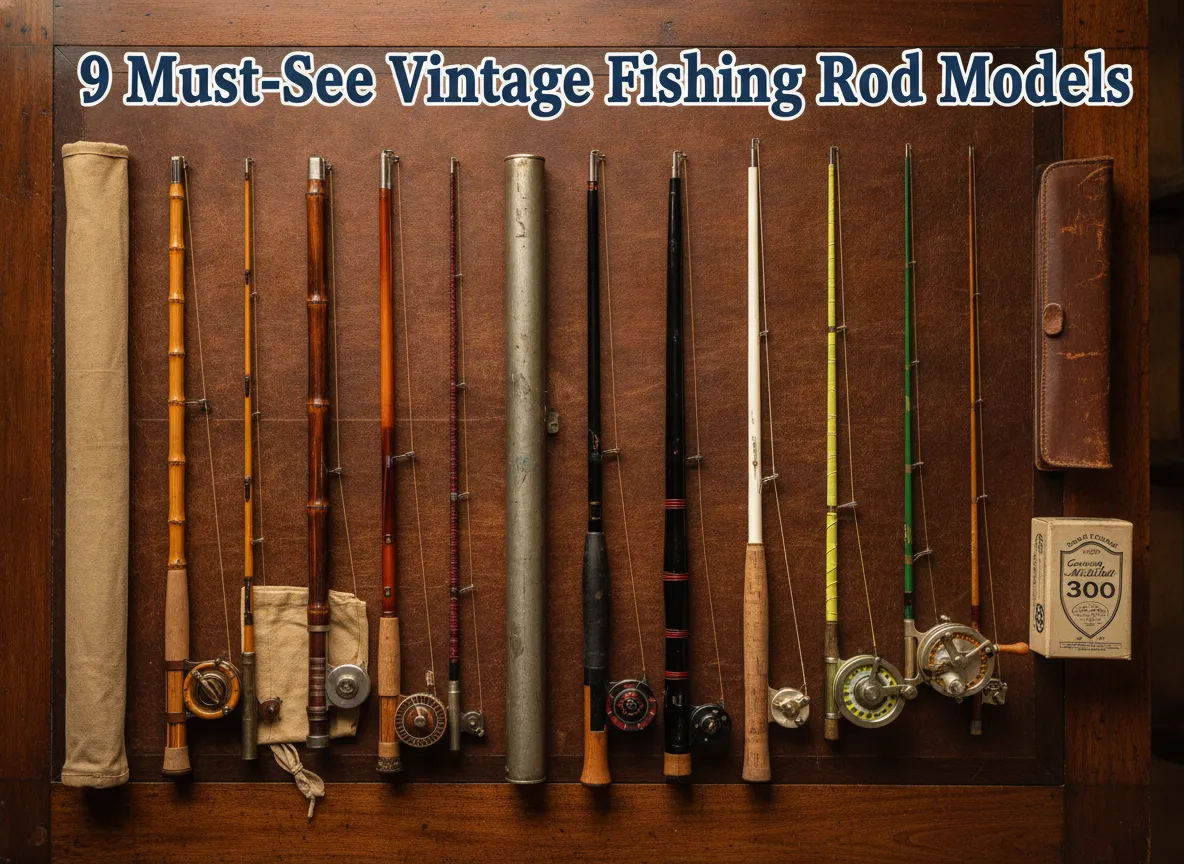
9 Must-See Vintage Fishing Rod Models Every Collector Should Own
Fewer than 3% of antique fishing tackle collectors own a complete set of the most historically significant vintage rod models, yet these pieces have appreciated in value by as much as 400% over the past two decades at major auction houses. For anyone serious about the hobby, knowing which rods define the golden age of American and European rod-making is not optional. This guide to the 9 Must-See Vintage Fishing Rod Models Every Collector Should Own covers the essential pieces that belong in every serious collection, from hand-split bamboo masterworks to early fiberglass icons.
Disclosure: This post contains affiliate links. As an Amazon Associate, we earn from qualifying purchases, and at no extra cost to you.
Key Takeaways
- The 9 Must-See Vintage Fishing Rod Models Every Collector Should Own span roughly a century of craftsmanship, from the late 1800s through the 1970s.
- Bamboo (cane) rods from makers like Payne, Leonard, and Garrison command the highest prices and greatest historical prestige.
- Early fiberglass rods from Shakespeare, Fenwick, and Garcia-Mitchell represent an undervalued segment with strong appreciation potential.
- Condition, original components, and provenance documentation are the three most critical factors in determining collector value.
- Beginners should focus on one maker or era before expanding, as the market rewards deep expertise over broad accumulation.
What Makes a Vintage Rod Worth Collecting
Before diving into the specific models that make up the 9 Must-See Vintage Fishing Rod Models Every Collector Should Own, it helps to understand what separates a collectible rod from a mere old fishing stick.
Three core value drivers:
| Factor | Why It Matters |
|---|---|
| Maker reputation | Rods from recognized craftsmen carry a premium regardless of condition |
| Original components | Original guides, wrappings, and ferrules add 30-60% to value |
| Documented provenance | A rod with a known ownership history sells for significantly more |
Collectors also look at the rod’s action, taper design, and the quality of the materials used. A six-strip bamboo rod with a smooth progressive taper is far more desirable than a four-strip rod with a fast tip action. Similarly, early fiberglass hollow-built rods are considered superior to the solid glass rods that followed.
“A great vintage rod is not just a fishing tool. It is a document of the maker’s philosophy, the era’s technology, and the culture of angling at a specific moment in history.”
Knowing these fundamentals will help collectors make smarter decisions as they work through the nine models described below.
The 9 Must-See Vintage Fishing Rod Models Every Collector Should Own
The rods listed here are ranked in roughly chronological order, beginning with the earliest bamboo classics and moving through the fiberglass revolution. Each entry includes the rod’s historical context, what to look for when buying, and why it belongs in a serious collection.
1. Hiram Leonard Model 50 DF Bamboo Fly Rod
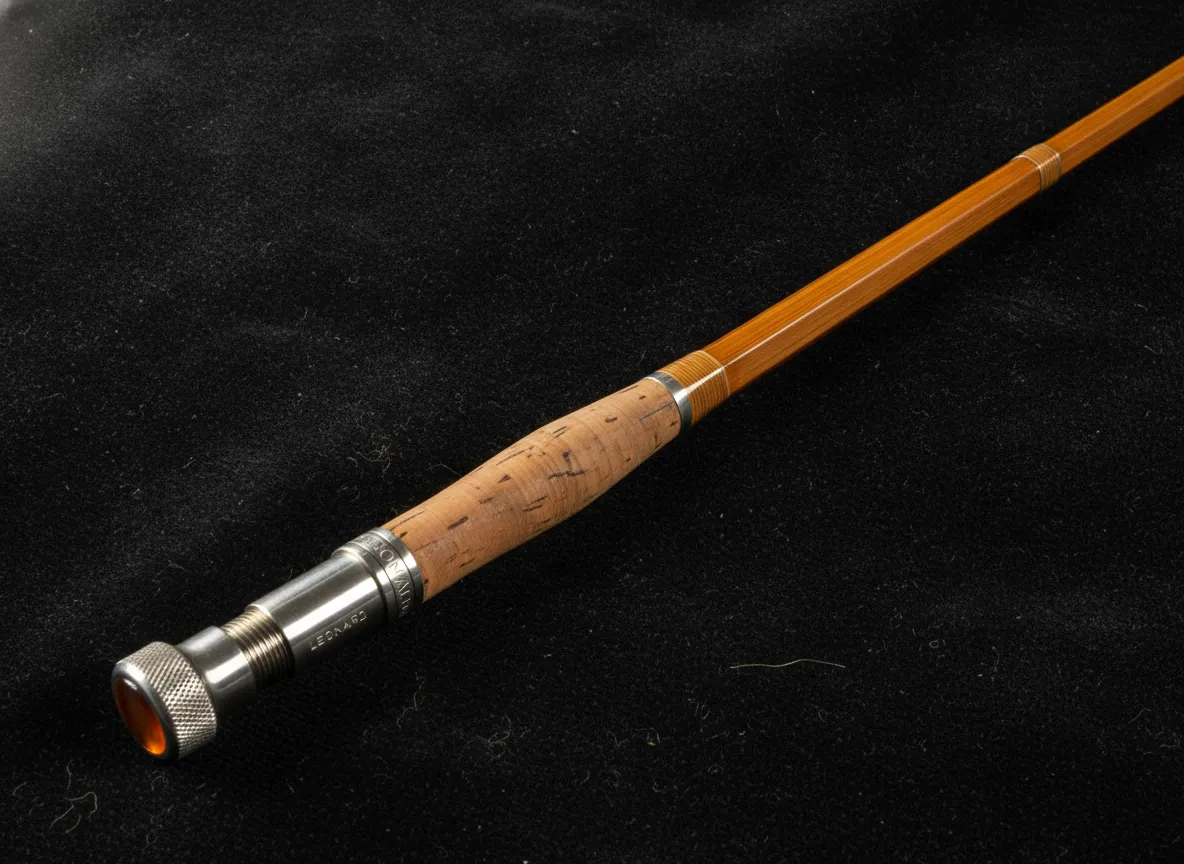
Hiram Leonard is widely regarded as the father of the modern split-cane fly rod. His Model 50 DF, produced in the late 19th and early 20th centuries from his shop in Central Valley, New York, set the standard for six-strip bamboo construction that every maker who followed him would attempt to match.
What to look for:
- Original German silver ferrules stamped with the Leonard logo
- Intact agate stripping guides
- The distinctive Leonard taper, which produces a medium-slow action perfect for dry fly presentation
Leonard rods in excellent original condition regularly sell for $3,000 to $8,000 at auction. Even rods requiring restoration are worth acquiring for their historical significance. The Model 50 DF is the single most important rod in the history of American fly fishing, and no serious collection is complete without one.
2. Everett Garrison Model 212 Bamboo Fly Rod
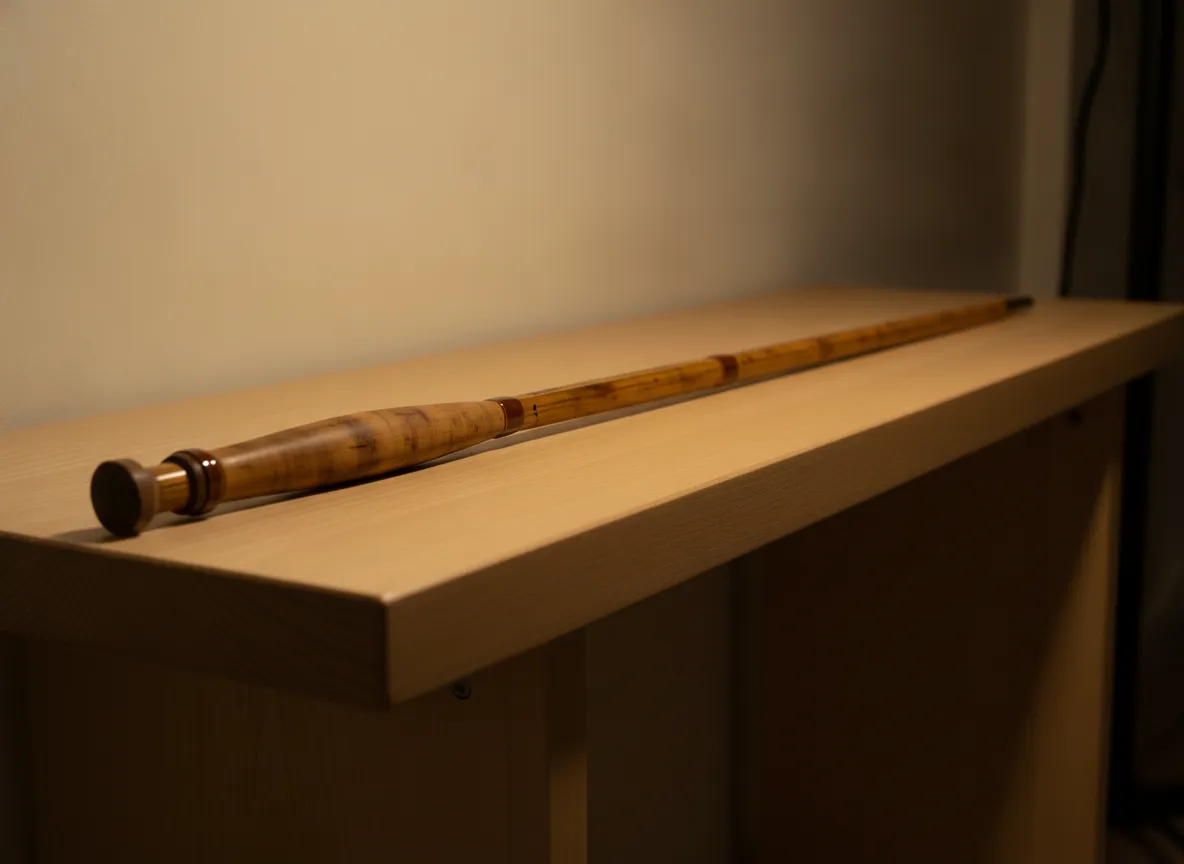
Garrison rods are the Stradivarius instruments of the bamboo rod world. Everett Garrison, a structural engineer by training, applied mathematical precision to rod design in a way no maker before him had attempted. His Model 212 is a 7-foot, 5-weight rod that remains one of the most sought-after pieces in all of vintage tackle collecting.
Key characteristics:
- Extremely precise taper calculations documented in Garrison’s own notebooks
- Flamed bamboo culms that give the rod a distinctive golden-brown appearance
- Lightweight hollow-built construction on some examples
Garrison produced fewer than 700 rods in his lifetime, which makes scarcity a major factor in their value. Authenticated Garrison rods routinely sell for $10,000 to $25,000. Buyers should always request authentication from a recognized expert before purchasing, as fakes and misattributed rods are common in this segment.
3. E.W. Edwards Bamboo Fly Rod
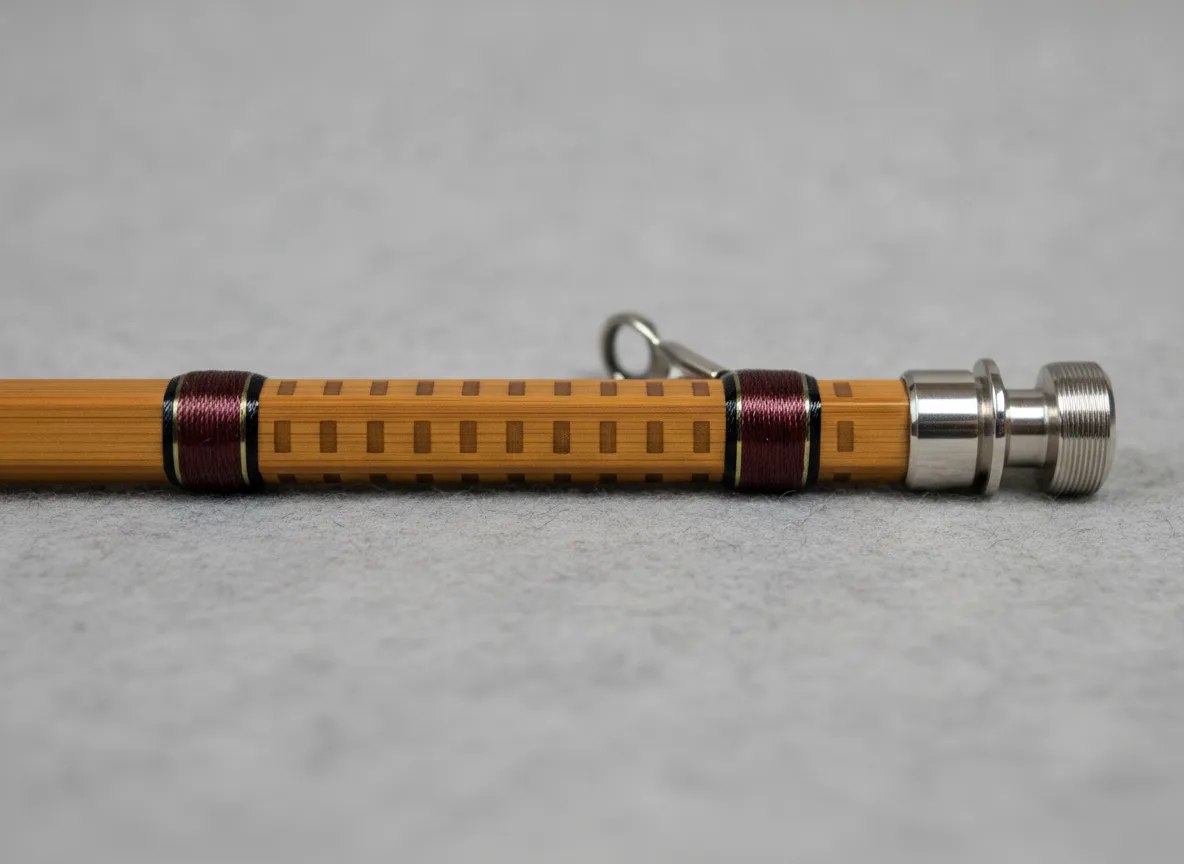
Eugene Edwards and his sons ran one of the most respected rod-making operations in early 20th-century America. The E.W. Edwards rods produced between approximately 1900 and 1930 are celebrated for their elegant cosmetics and superb fishing action.
Distinguishing features:
- Honey-colored bamboo with tight, even nodes
- Silk wrappings in burgundy with black trim
- Nickel silver hardware throughout
Edwards rods are somewhat more accessible than Garrison or early Leonard examples, with good specimens selling in the $1,500 to $4,000 range. This makes them an excellent entry point for collectors who want a historically significant bamboo rod without committing to a five-figure purchase immediately.
4. Payne Model 98 Bamboo Fly Rod
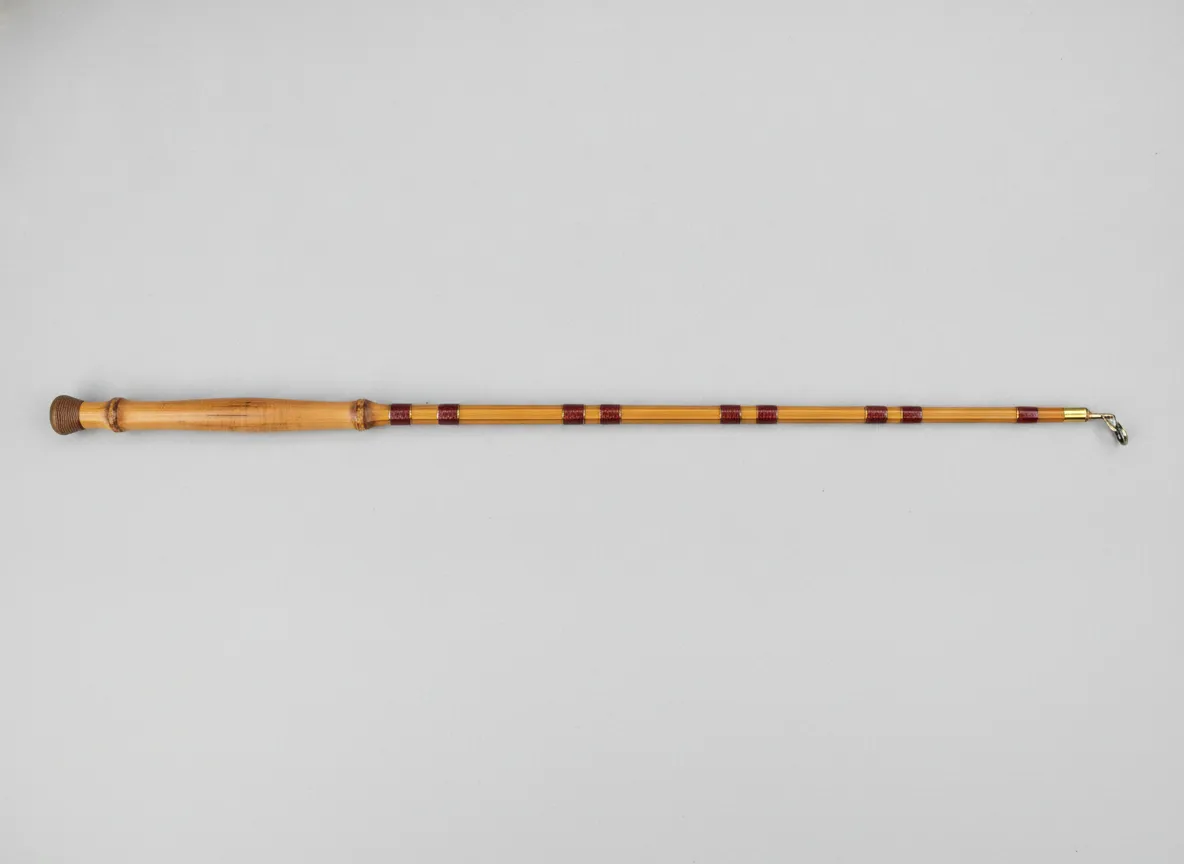
Jim Payne is often cited alongside Garrison as one of the two greatest American bamboo rod makers of the 20th century. The Payne Model 98, a 7.5-foot, 4-weight rod, is considered his masterpiece by many collectors and fly fishing historians.
Why it belongs in every collection:
- Payne’s signature intermediate wraps, which are wrapped guides placed at specific intervals to control rod flex
- A medium-fast action that was revolutionary for its time
- Exceptional node placement and culm selection
Payne rods in original condition command prices between $5,000 and $15,000 depending on model and condition. The Model 98 specifically is one of the most referenced rods in the literature of fly fishing, appearing in books by major angling writers of the mid-20th century.
5. South Bend Cross Double Built Bamboo Rod
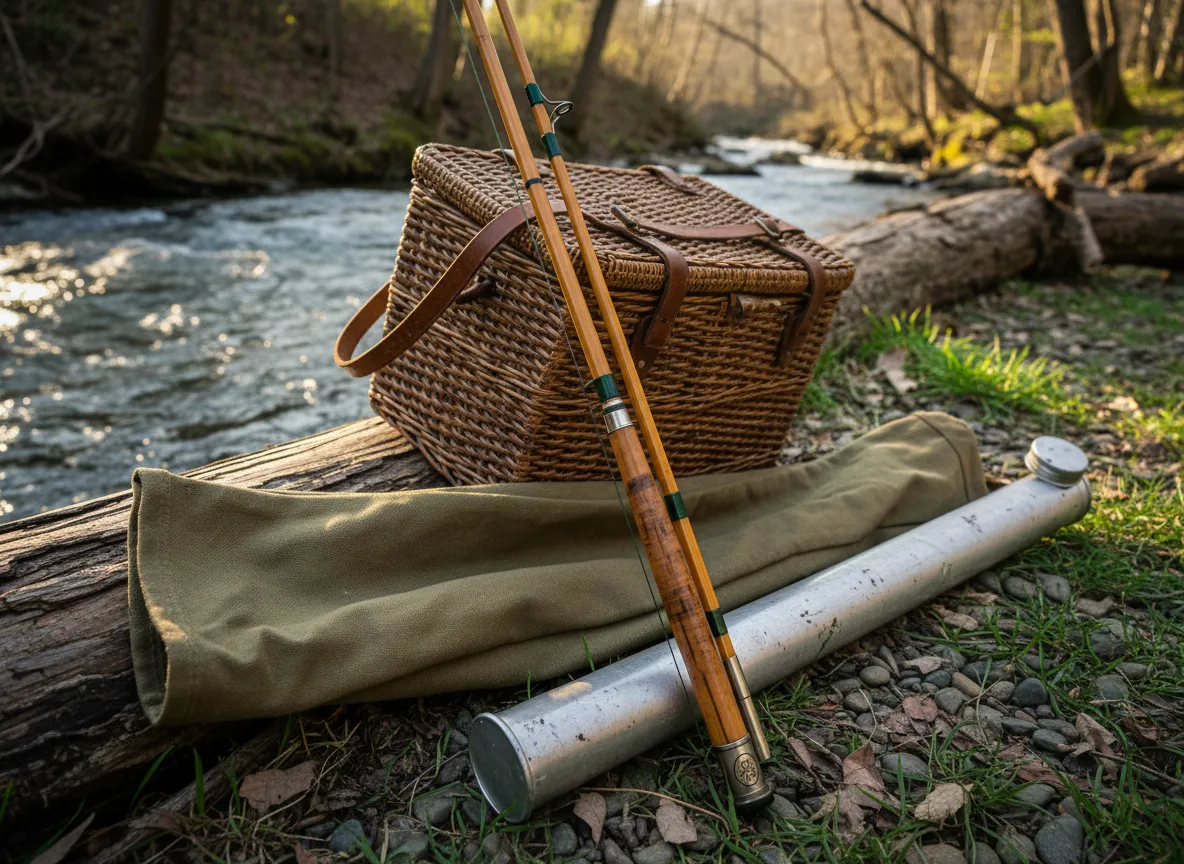
South Bend’s Cross Double Built rods, produced from the 1920s through the 1940s, represent the pinnacle of production-level bamboo rod making. Unlike the custom makers listed above, South Bend was a factory operation, but their Cross Double Built construction, which used a double layer of bamboo strips for added power, was genuinely innovative.
Collector notes:
- Look for the original “Cross” logo on the butt cap
- Original cloth bags and aluminum tubes add significant value
- Models in the 9-foot range designed for wet fly fishing are the most desirable
South Bend Cross rods are among the most affordable entry points into serious bamboo collecting, with excellent examples available for $300 to $900. They are ideal for collectors who want to fish their vintage rods rather than simply display them.
6. Heddon Black Beauty Bamboo Fly Rod
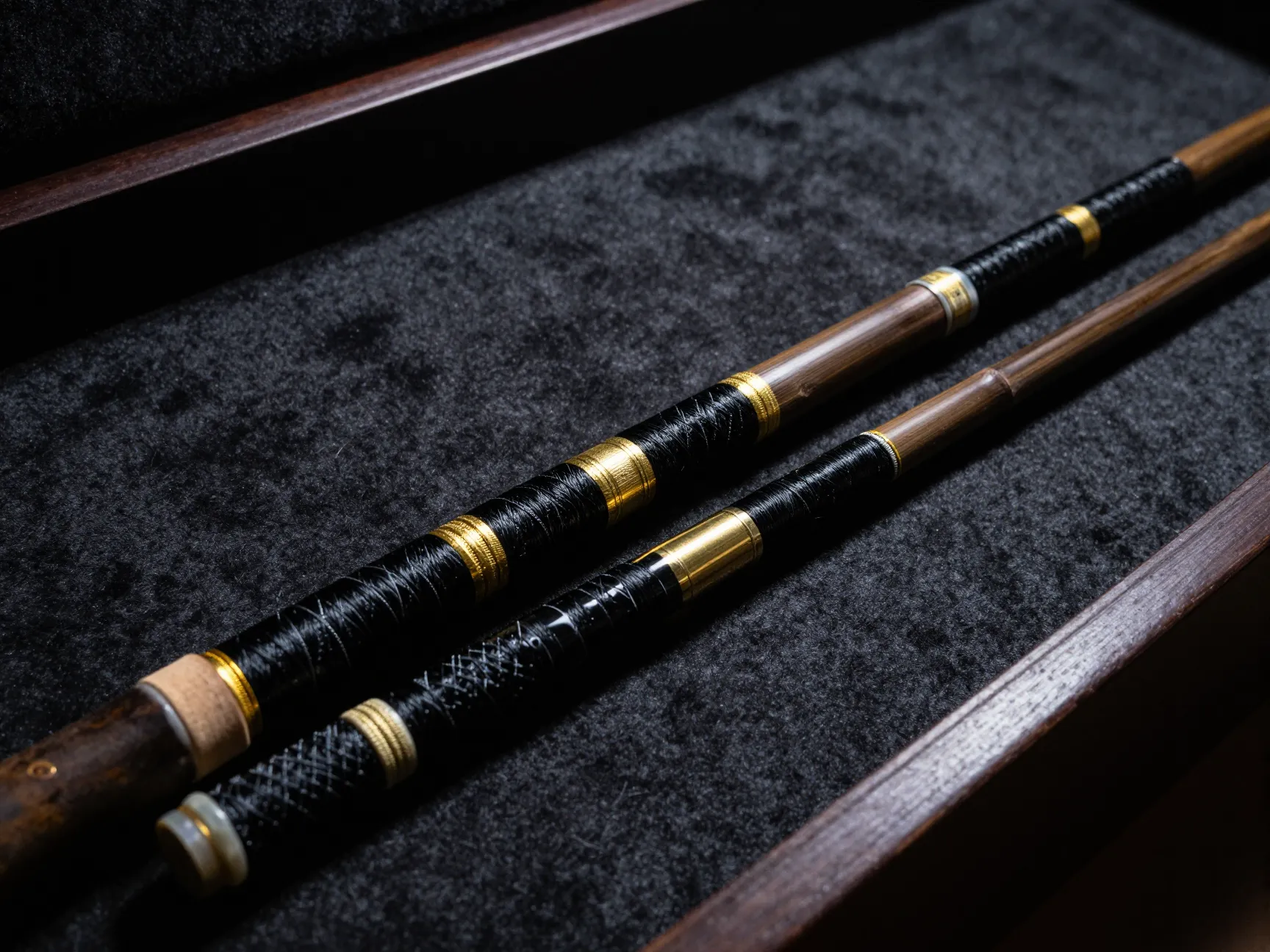
The James Heddon’s Sons company is best known for its lures, but the Heddon Black Beauty fly rod, produced primarily in the 1930s and 1940s, is one of the most visually striking vintage rods ever made. The rod takes its name from its dark-stained bamboo and black silk wrappings.
Visual and functional highlights:
- Distinctive jet-black silk thread wrappings with gold trim
- Agate stripper guide on most examples
- A medium-action taper well suited to classic wet fly techniques
Heddon Black Beauty rods are highly collectible both as fishing tools and as display pieces. Their bold cosmetics make them among the most visually impressive rods in any collection. Prices range from $400 to $1,500 depending on length and condition.
7. Shakespeare Wonderod Fiberglass Fly Rod
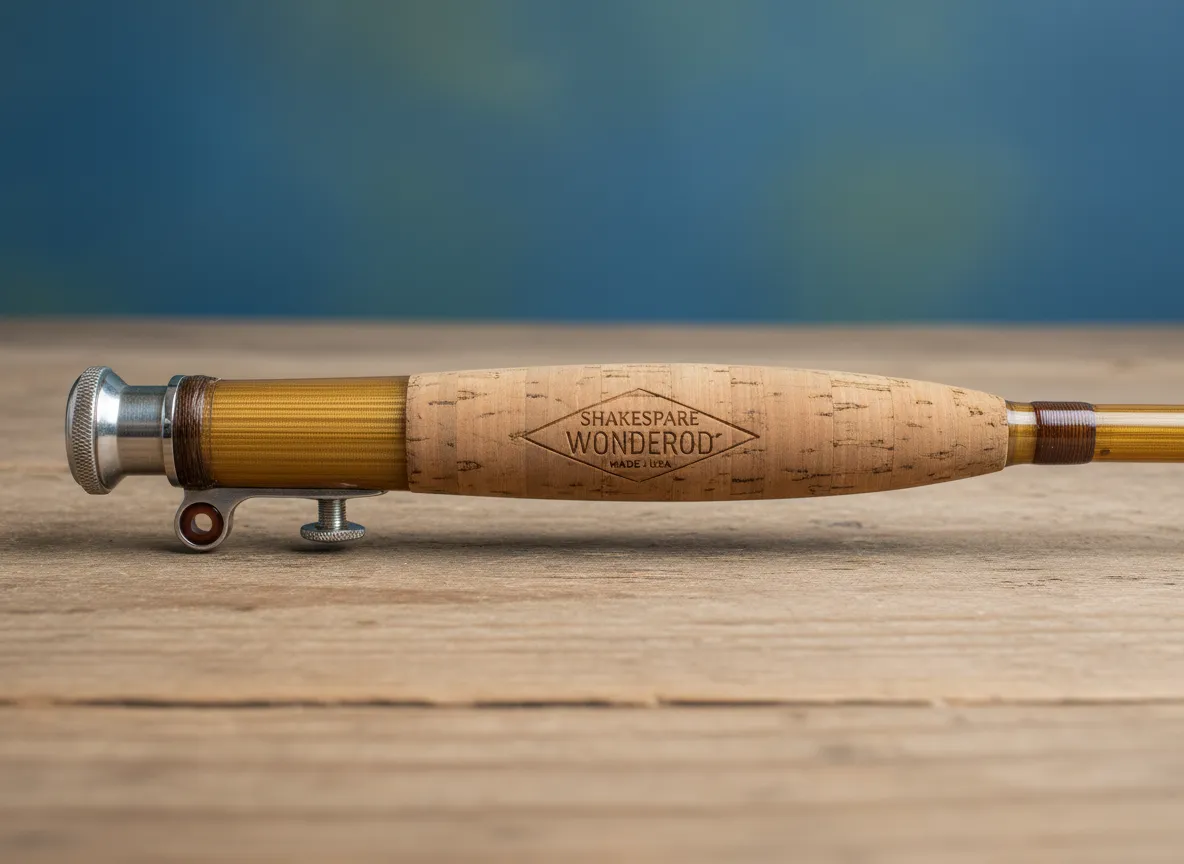
The Shakespeare Wonderod, introduced in 1946, was the first commercially successful hollow-built fiberglass fly rod. It fundamentally changed the fishing tackle industry and made fly fishing accessible to millions of anglers who could not afford bamboo. For collectors, the early hollow-built Wonderods from the late 1940s and early 1950s are the most important examples.
What distinguishes early Wonderods:
- Hollow-built construction (later models were solid glass and far less desirable)
- Original cork grips with the Shakespeare diamond logo
- Agate guides on premium models
The Shakespeare Wonderod represents a true technological turning point in angling history. Early hollow-built examples in original condition sell for $150 to $600, making them accessible to collectors at virtually every budget level. They are also excellent fishing rods by any practical standard.
8. Fenwick Fiberglass Fly Rod (FF Series)
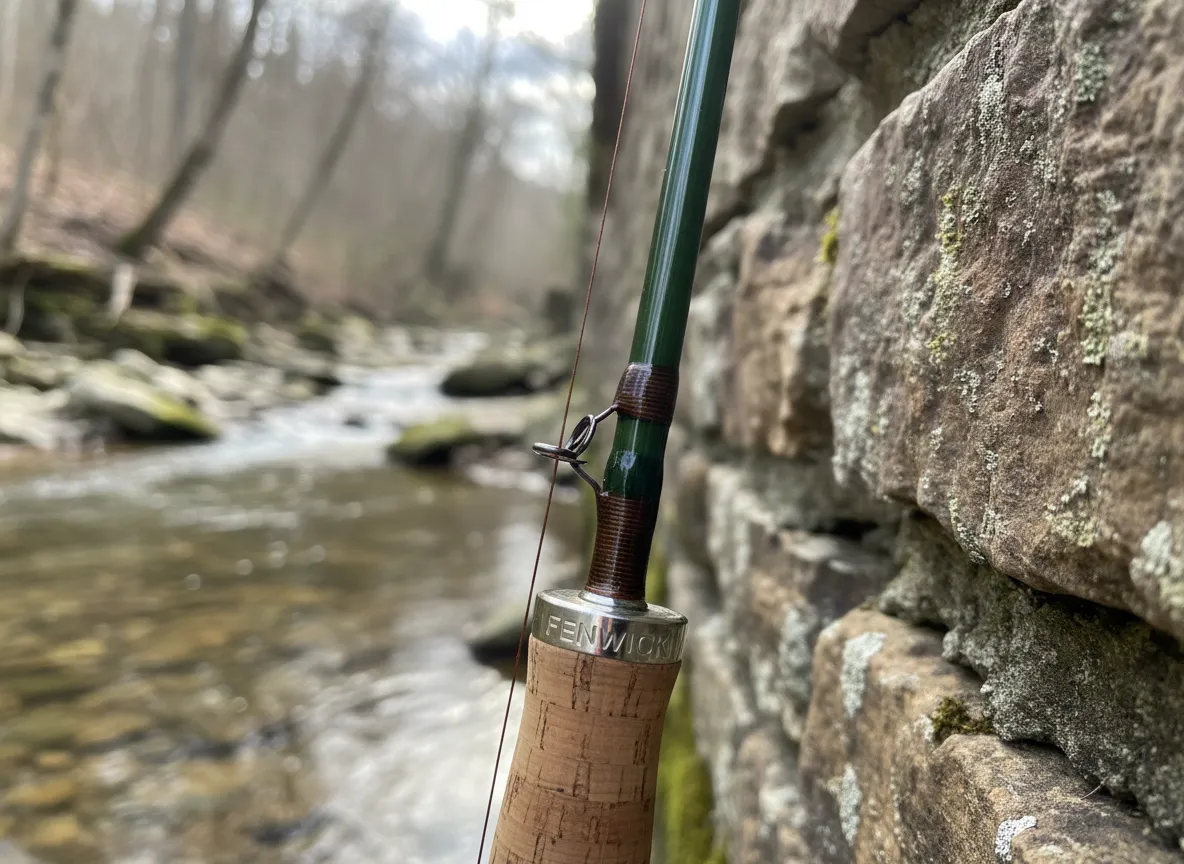
Fenwick’s FF series fiberglass fly rods, produced from the late 1950s through the 1970s, are widely considered the finest production fiberglass fly rods ever made. The company’s proprietary “Fenglass” material produced rods with a sensitivity and action that many anglers of the era preferred to bamboo.
Key identifiers for collectors:
- The distinctive Fenwick green blank color
- Original Fenwick cork grips with the branded ring
- Snake guides wrapped in brown or olive silk thread
Fenwick FF rods have experienced a significant revival among both collectors and anglers who appreciate their smooth, progressive action for presenting dry flies on small streams. Prices have risen sharply in the past decade, with desirable models now selling for $200 to $800. The FF75 and FF80 models in particular are considered must-have pieces.
9. Garcia-Mitchell 300 Spinning Rod Combo
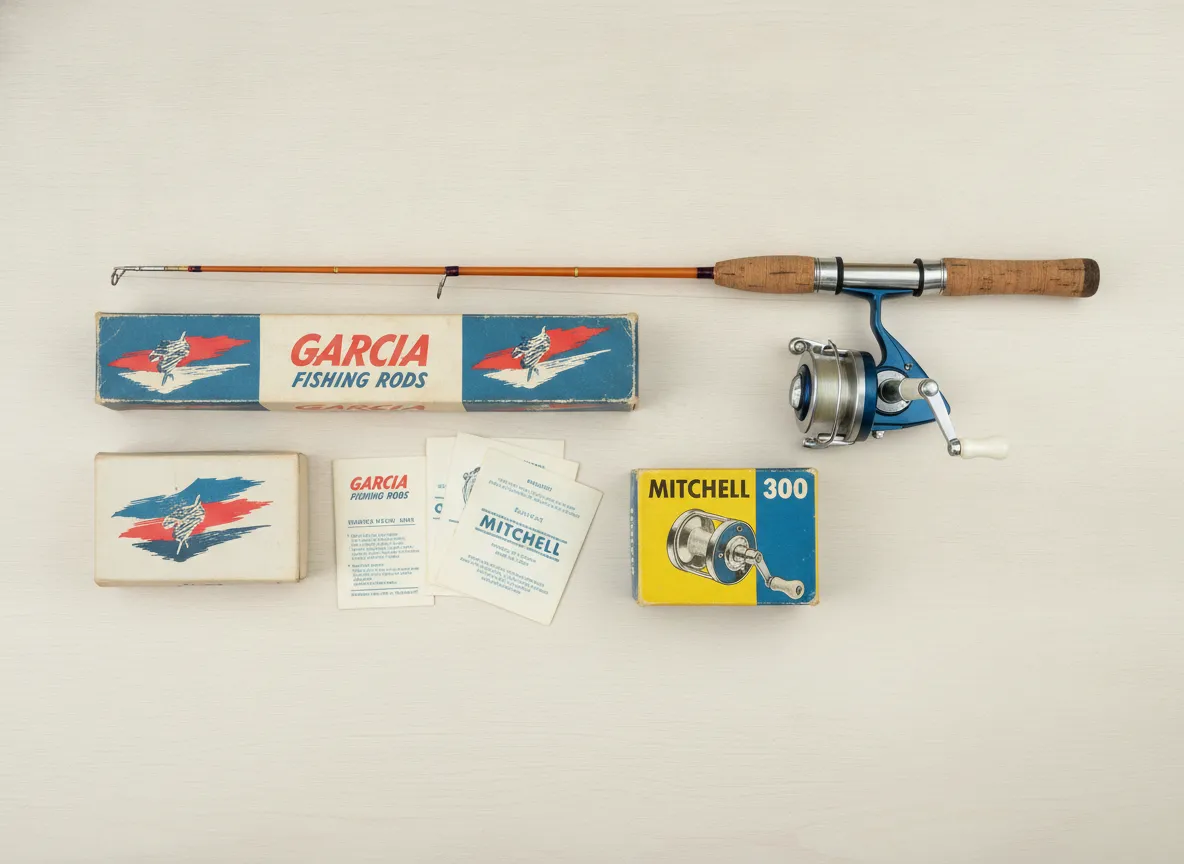
No list of the 9 Must-See Vintage Fishing Rod Models Every Collector Should Own would be complete without acknowledging the rod that introduced spinning tackle to American anglers on a mass scale. The Garcia-Mitchell 300 reel paired with the Garcia fiberglass spinning rod was the dominant freshwater setup of the 1950s and 1960s.
Why the Garcia-Mitchell matters:
- The Mitchell 300 reel is one of the most significant fishing tackle innovations of the 20th century
- Original Garcia fiberglass spinning rods in matched sets with the 300 reel are increasingly rare
- The combination represents the cultural peak of postwar American recreational fishing
Complete Garcia-Mitchell matched sets in original condition with the original box and paperwork are among the most desirable pieces in the broader vintage tackle market. Prices for complete sets range from $150 to $500, but exceptional examples with full documentation can exceed $1,000.
How to Authenticate and Grade Vintage Fishing Rods
Understanding the 9 Must-See Vintage Fishing Rod Models Every Collector Should Own is only half the challenge. Knowing how to evaluate condition and authenticity is equally important.
Standard condition grades used by serious collectors:
- Mint (M): All original components, no repairs, no fading, original bag and tube present
- Excellent (EX): All original components, minor handling marks only, no repairs
- Very Good (VG): Original components with minor wear, possibly missing one small accessory
- Good (G): Some replaced guides or wrappings, fishable condition
- Fair (F): Multiple replaced components, structural repairs, display only
For bamboo rods specifically, collectors should inspect for:
- Set (permanent bend in the blank), minor set is acceptable, severe set is not
- Delamination between strips, run a fingernail along the glue lines
- Replaced ferrules, mismatched metal color or solder marks indicate replacement
- Refinished varnish, original varnish has a warm amber tone; refinished rods look too perfect
For fiberglass rods, the main concerns are crazing (fine surface cracks in the finish), delamination of the hollow wall, and replaced guides. A rod with original guides and original wrapping is worth significantly more than one that has been re-wrapped, even if the new wrapping is technically superior.
Building a Focused Collection Strategy
Serious collectors do not simply accumulate rods at random. The most respected collections are built around a coherent theme or focus area.
Common collection strategies:
- Single maker focus: Collect every model from one maker, such as Payne or Garrison, to build depth and expertise
- Era focus: Concentrate on a specific decade, such as the 1930s or 1950s, to capture a complete picture of that period’s technology
- Regional focus: Some collectors specialize in rods made in a specific region, such as the Catskill school of bamboo makers
- Transition era focus: The period from 1945 to 1965, when bamboo and fiberglass coexisted, offers rich collecting opportunities across multiple price points
Regardless of strategy, documentation is critical. Every rod in a serious collection should have a file that includes purchase records, any available provenance information, condition notes at time of acquisition, and photographs of all components.
“The collector who knows the most wins. In vintage tackle, expertise is the ultimate competitive advantage.”
Where to Buy and Sell Vintage Fishing Rods in 2026
The market for vintage fishing rods has expanded significantly in 2026, with multiple channels available to buyers and sellers.
Primary market channels:
- Dedicated tackle auctions: Houses specializing in antique fishing tackle hold regular sales where the most significant rods change hands
- Online marketplaces: Platforms with antique categories host a large volume of vintage rod transactions, though authentication is the buyer’s responsibility
- Collector shows: Annual antique tackle shows, particularly those affiliated with the National Fishing Lure Collectors Club (NFLCC), are excellent venues for both buying and networking
- Direct from estates: Estate sales and probate auctions occasionally produce significant finds at below-market prices
When selling, provenance documentation and original packaging can increase realized prices by 40% or more. Sellers who invest in professional photography and detailed condition descriptions consistently achieve better results than those who post minimal information.
Conclusion
The 9 Must-See Vintage Fishing Rod Models Every Collector Should Own, from the Hiram Leonard Model 50 DF through the Garcia-Mitchell matched set, represent the full arc of American angling history across more than a century of innovation and craftsmanship. Each rod on this list tells a specific story about the era in which it was made, the maker who built it, and the anglers who used it.
Actionable next steps for collectors at every level:
- Start with one rod from this list that fits your current budget and expertise level. The South Bend Cross Double Built and the Shakespeare Wonderod are ideal entry points.
- Join a collector organization such as the NFLCC or a regional bamboo rod group to access expertise and buying opportunities that are not available to the general public.
- Study the reference literature. Books by authors such as Hoagy Carmichael on Garrison rods or Paul Schmookler on classic bamboo rods are essential reading.
- Document everything. Begin building condition files for every rod you own from the moment of purchase.
- Handle as many rods as possible before buying. No photograph substitutes for the experience of feeling a rod’s action and inspecting its components in person.
The market for significant vintage fishing rods remains strong in 2026, and the rods described in this guide are likely to continue appreciating as the pool of original examples shrinks and collector demand grows. The time to build a serious collection is now, while the best examples are still accessible.