9 Essential Coyote Hunting Tips for Predator Control and Success
Coyote populations in the United States have expanded into all 49 continental states, with estimates suggesting the total population has grown by more than 40 percent over the past century despite decades of control efforts. That resilience makes coyote hunting one of the most intellectually demanding forms of predator hunting available today. Hunters who apply the 9 essential coyote hunting tips for predator control and success consistently outperform those who rely on instinct alone. Whether the goal is protecting livestock, managing deer herds, or simply testing skills against one of North America’s most adaptable predators, a disciplined, tactical approach is non-negotiable.
Disclosure: This post contains affiliate links. As an Amazon Associate, we earn from qualifying purchases, and at no extra cost to you.
Key Takeaways
- Wind direction is the single most important variable in coyote hunting; always position downwind of expected approach routes
- Stand duration of 20 to 45 minutes per location balances patience with efficiency across multiple setups
- Electronic call placement at least 20 yards from the hunter forces coyotes to expose themselves before detecting the shooter
- Elevation, camouflage, and movement control work together to defeat a coyote’s exceptional eyesight and scent detection
- Night hunting with red or green lights and thermal optics dramatically expands productive hunting hours
Understanding Why These Tactics Work Against a Highly Adaptive Predator
Coyotes survive by processing sensory information faster than most prey animals. Their hearing range extends well beyond human capability, their nose can detect scent at distances exceeding a mile under favorable wind conditions, and their eyesight is tuned specifically to detect motion. Any successful predator control strategy must address all three of those senses simultaneously. The 9 essential coyote hunting tips for predator control and success outlined in this article are built around that biological reality, not around tradition or guesswork.
Applying these tips consistently does more than fill tags. Effective predator control reduces livestock depredation, stabilizes small game populations, and contributes to broader wildlife management goals recognized by state agencies including the Oregon Department of Fish and Wildlife [7].
The 9 Essential Coyote Hunting Tips for Predator Control and Success
1. Master Wind Direction Before Every Setup
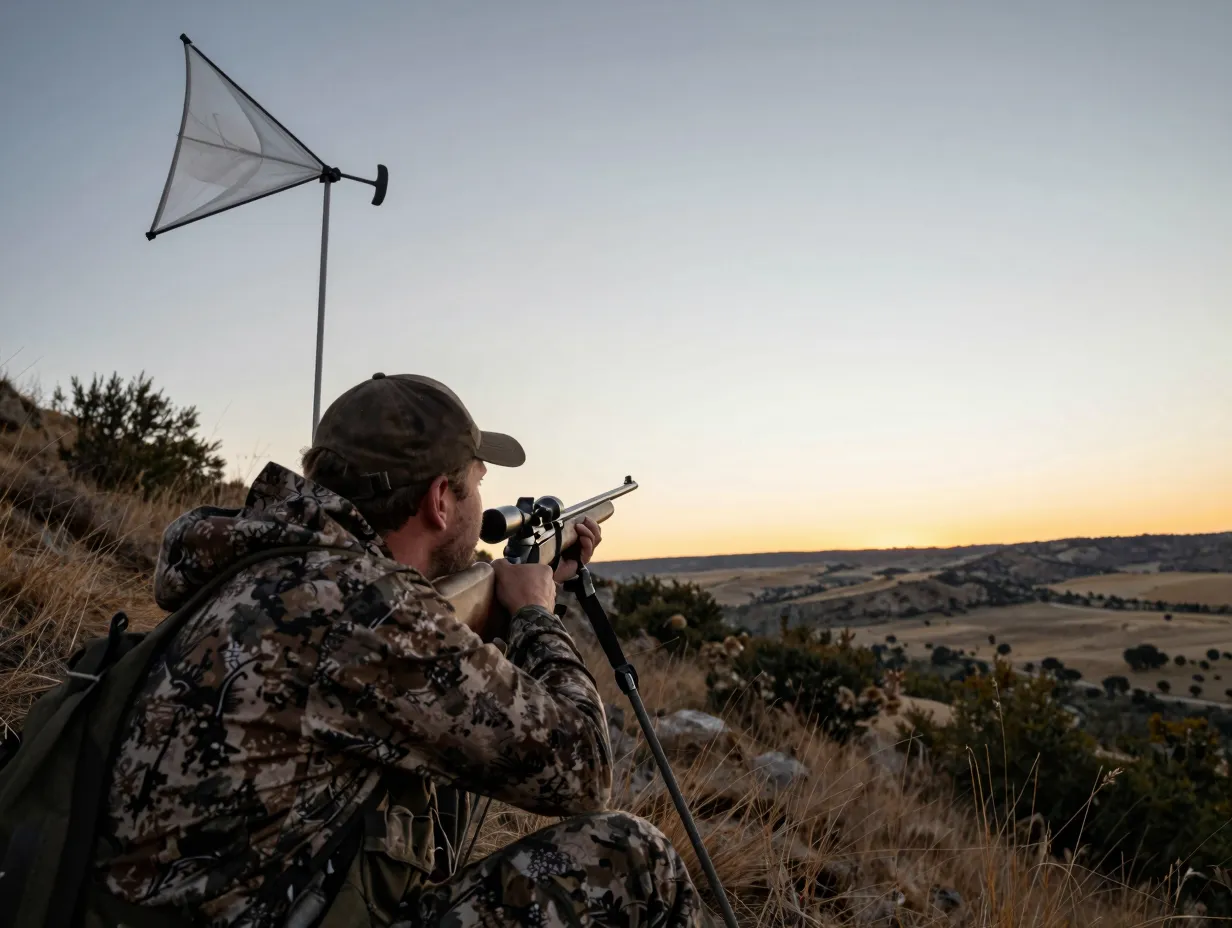
Wind management is the foundation of every successful coyote stand. A coyote that smells a hunter will vanish before the hunter ever sees it. Positioning downwind of the area where coyotes are expected to approach is the single most important decision made before sitting down [2][5].
Practical wind management steps:
- Check wind direction using a wind indicator or milkweed fluff before approaching the stand location
- Identify the most likely approach corridors coyotes will use based on terrain features
- Position the setup so prevailing wind carries scent away from those corridors
- Account for thermal shifts at dawn and dusk, when cool air sinks into draws and valleys
Scent-elimination sprays and ozone-based scent control technology add a secondary layer of protection, but they do not replace proper wind positioning [6]. Hunters who cut corners on wind management will educate coyotes and reduce success rates across future stands in the same area.
2. Use Elevation to Your Advantage
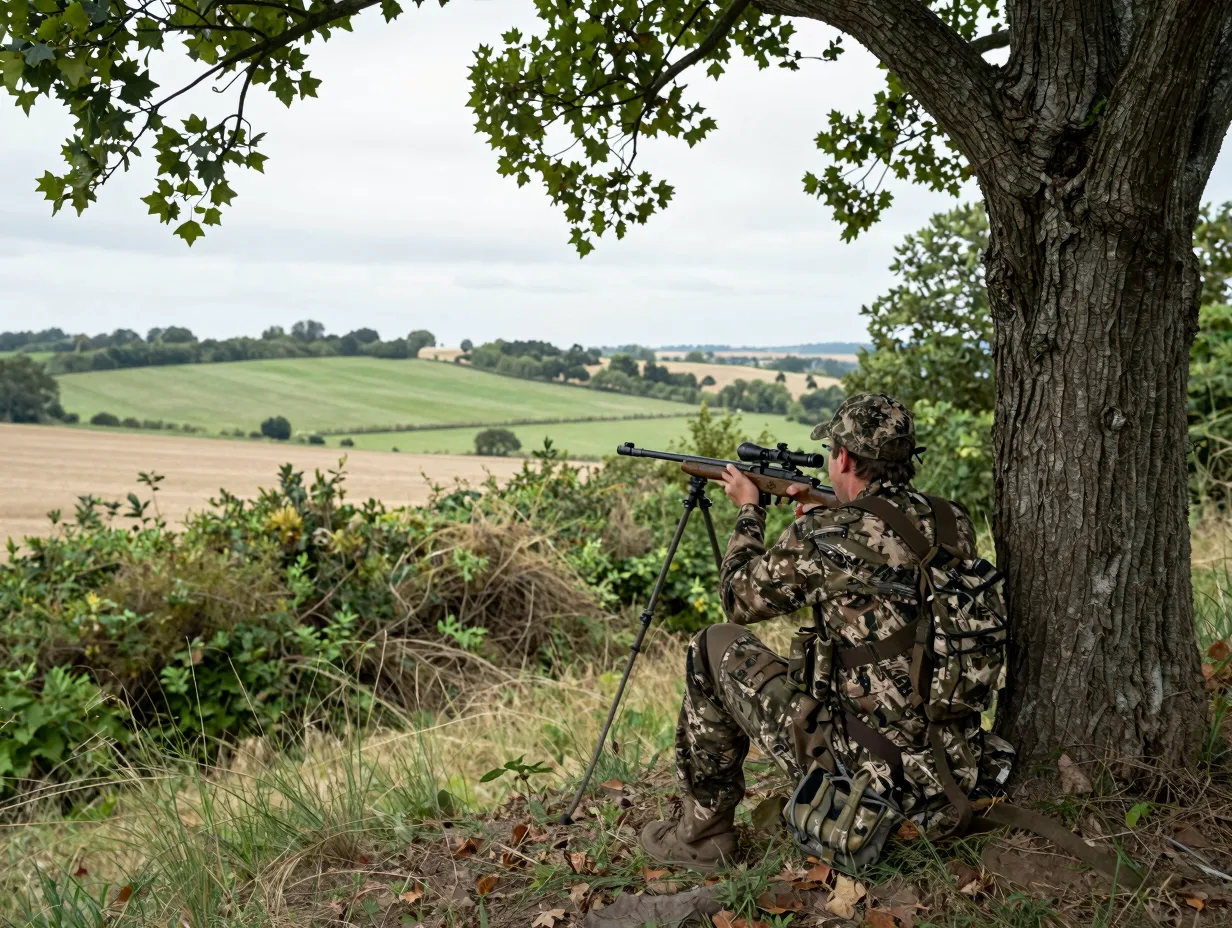
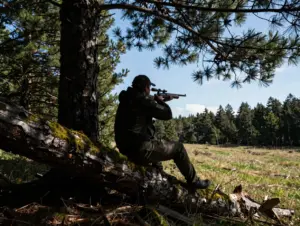
Higher ground solves two problems at once. It increases the hunter’s field of view and it places the hunter above the direct line of sight that a coyote typically scans when approaching a call [1][2].
Even modest elevation gains of 10 to 20 feet make a measurable difference. Rock piles, small ridgelines, fence lines with elevated terrain, and the bases of trees on hillsides all qualify as useful elevated positions. The goal is not to climb to the highest possible point but to gain enough height to see approaching coyotes before they identify the hunter [6].
Elevation benefits at a glance:
| Elevation Feature | Benefit |
|---|---|
| Ridge or hillside | Wider field of view, scent carries over approaching coyotes |
| Rock pile or boulder | Natural concealment plus modest height advantage |
| Tree base on slope | Breaks up hunter’s silhouette against skyline |
| Agricultural berm | Visibility over flat fields with natural cover |
Avoid skylined positions where the hunter’s silhouette is visible against open sky. The goal is height with background cover, not exposure.
3. Select Habitat With Proven Predator Sign
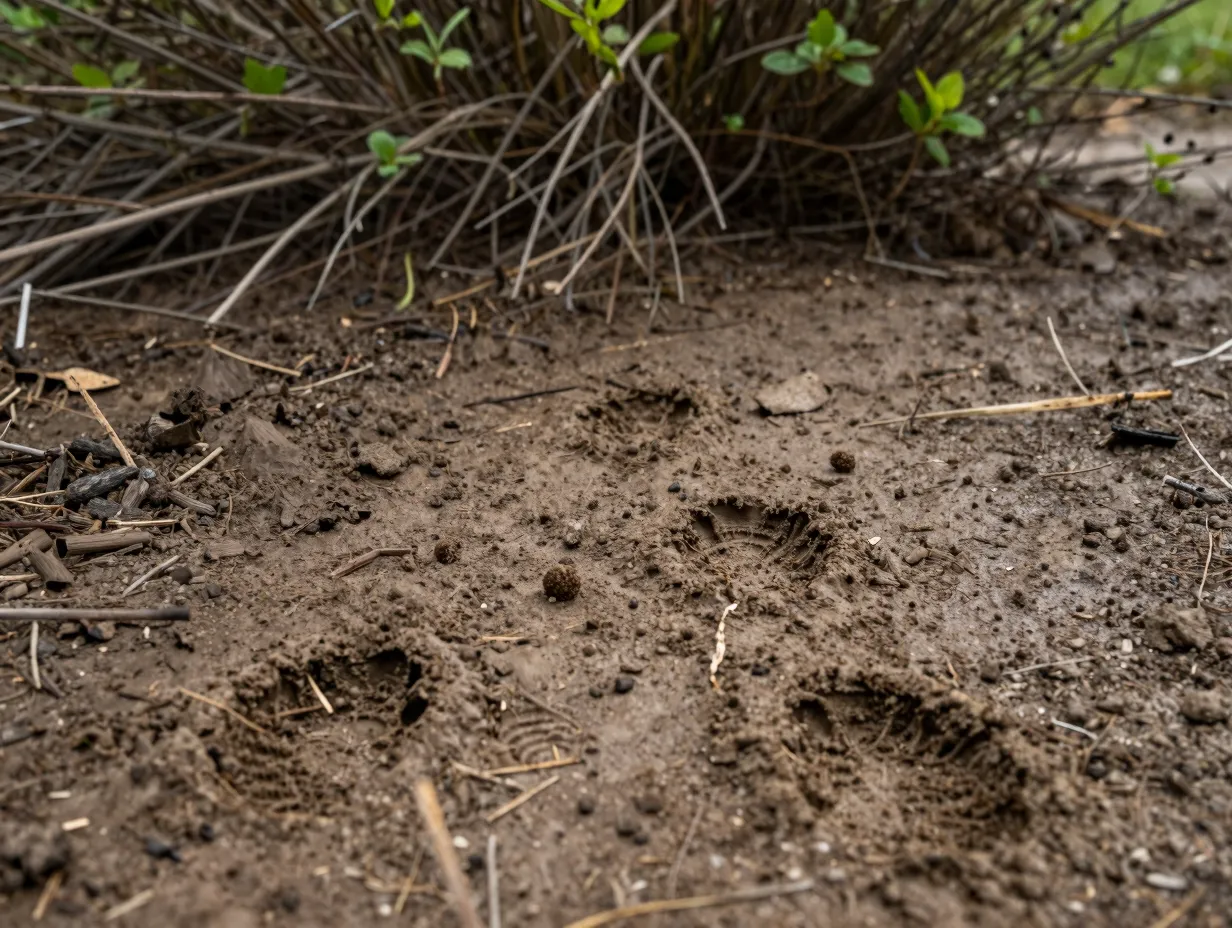
Calling in areas with no coyotes produces no results regardless of technique. Productive habitat selection focuses on locations where coyotes are already active [4][10].
High-priority habitat features:
- Agricultural fields adjacent to brushy draws or woodlots
- Livestock operations where coyotes have been seen or heard
- Waterways and creek bottoms showing tracks, scat, or hair
- Areas with dense small game populations, particularly rabbits and rodents
Bottomlands and creek drainages are especially productive during the first hour of daylight. Brushy draws and field edges become more active as the morning progresses [4]. Scouting with trail cameras placed near known travel corridors provides reliable pre-hunt intelligence and eliminates guesswork about whether coyotes are using a specific area [10].
4. Execute Calling Sequences Strategically
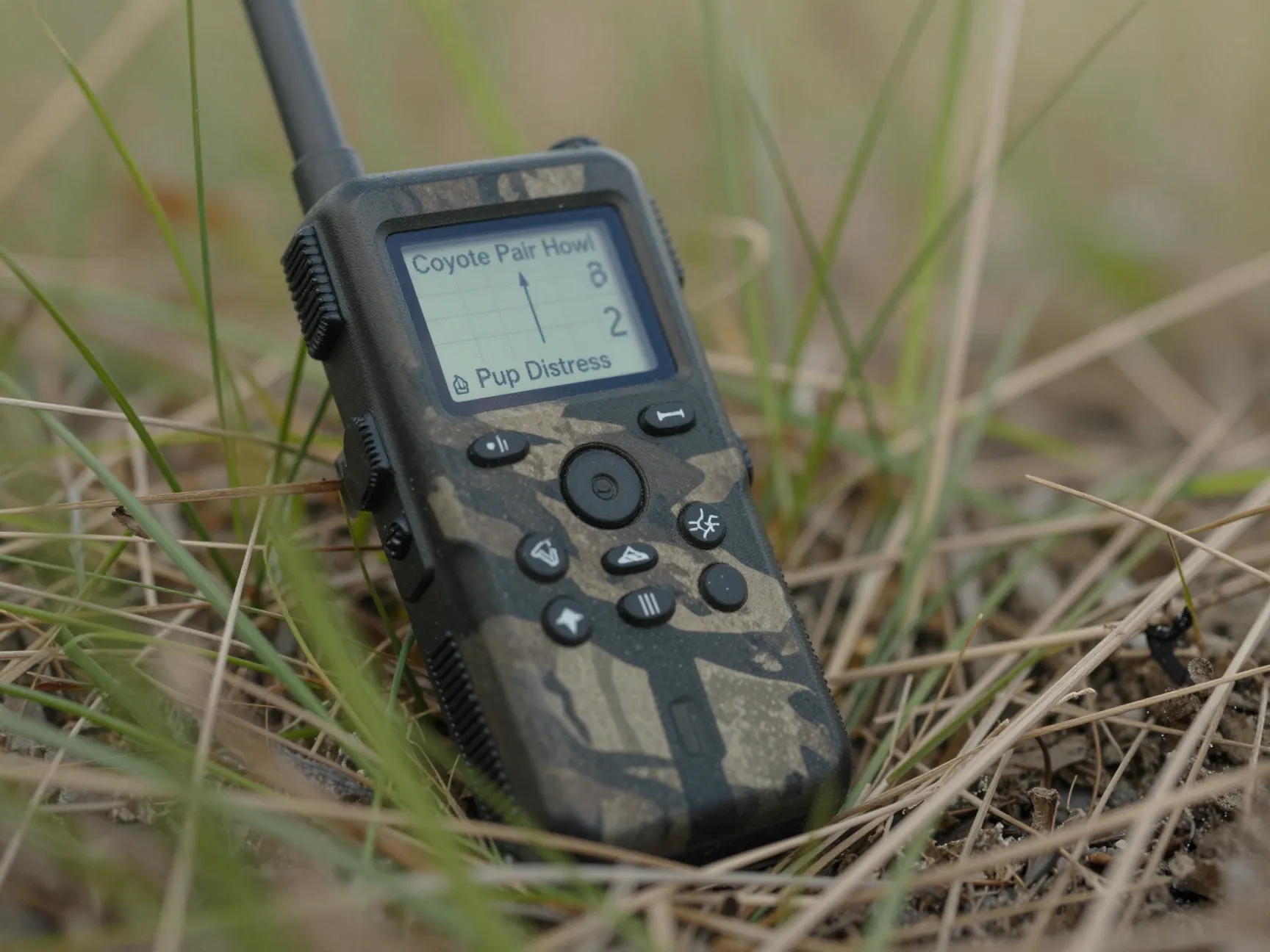
A poorly structured calling sequence alerts coyotes without drawing them into shooting range. A well-structured sequence builds urgency and guides approaching animals into the right position [1][8].
Recommended calling sequence structure:
- Open with loud, high-volume calls designed to reach coyotes at maximum distance
- Transition to medium-volume distress sounds after two to three minutes
- Switch to quieter, more muted tones as coyotes close the distance
- Incorporate coyote-specific vocalizations such as pair howls or pup distress calls to trigger territorial responses [1]
Sequences like a “Coyote Pair” howl followed by “Coyote Pup Distress” sounds have demonstrated consistent effectiveness by combining territorial instinct with parental response [1][8]. Electronic callers allow hunters to execute these transitions cleanly without movement, which is a significant advantage over mouth calls in open terrain.
“The calling sequence is a conversation. Start loud to get attention, then lower the volume as the coyote approaches, just like a real distress scenario plays out in the field.”, Synthesized from predator hunting best practices [1][9]
5. Position Electronic Calls Correctly
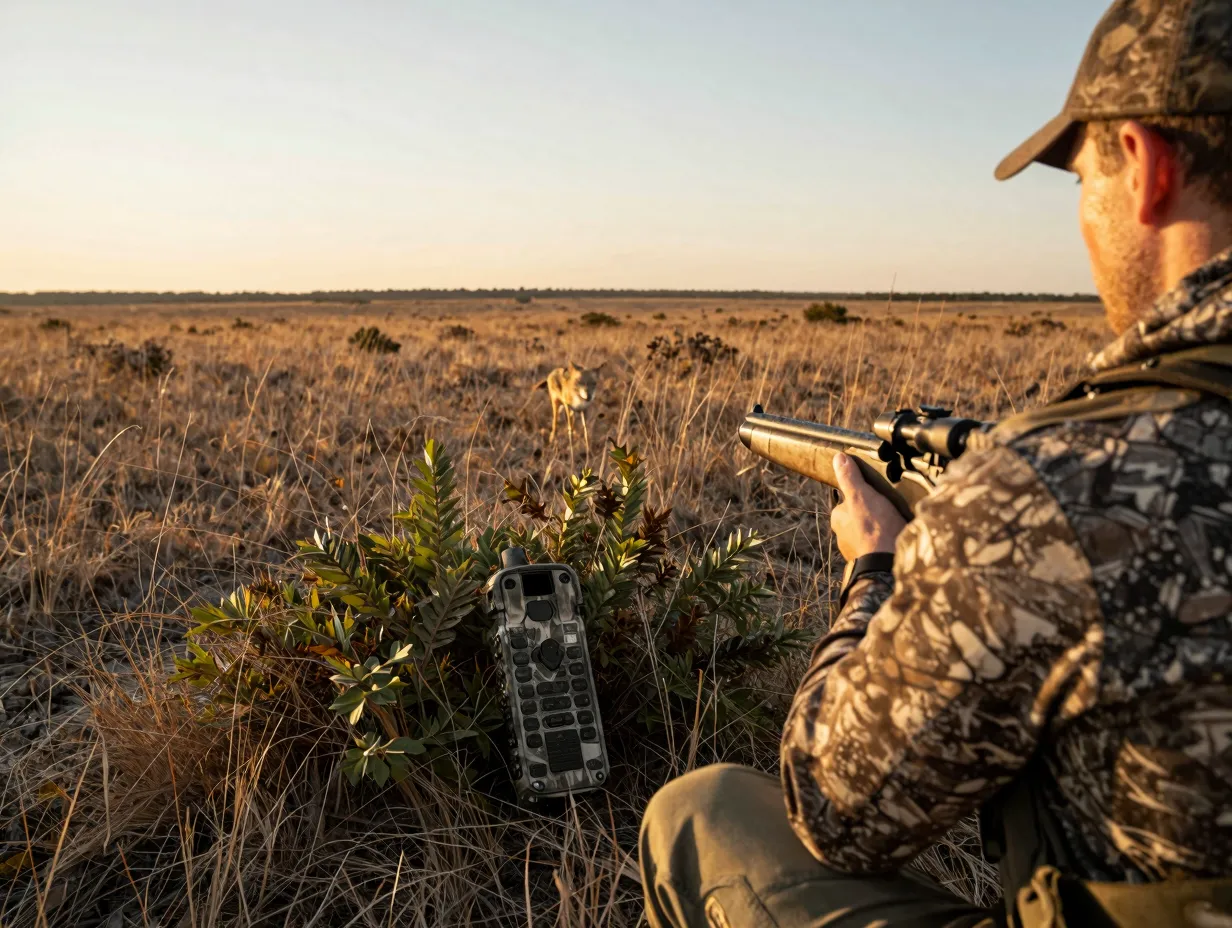
The placement of an electronic caller is as important as the sounds it produces. A caller sitting in the open on bare ground looks unnatural to a coyote that has survived long enough to become call-shy [4].
Electronic call placement rules:
- Place the call at least 20 yards from the hunter’s position, ideally upwind of the hunter [4]
- Conceal the call in brush, tall grass, or natural debris so it appears to be a hidden animal
- Position the call so that any coyote approaching it must step into an open shooting lane before reaching the sound source
- Never place the call directly between the hunter and the most likely approach direction
This separation between hunter and call serves a dual purpose. It draws the coyote’s focus away from the shooter’s position, and it forces the coyote to commit to an exposed location before realizing anything is wrong [4].
6. Control Camouflage and Movement Absolutely
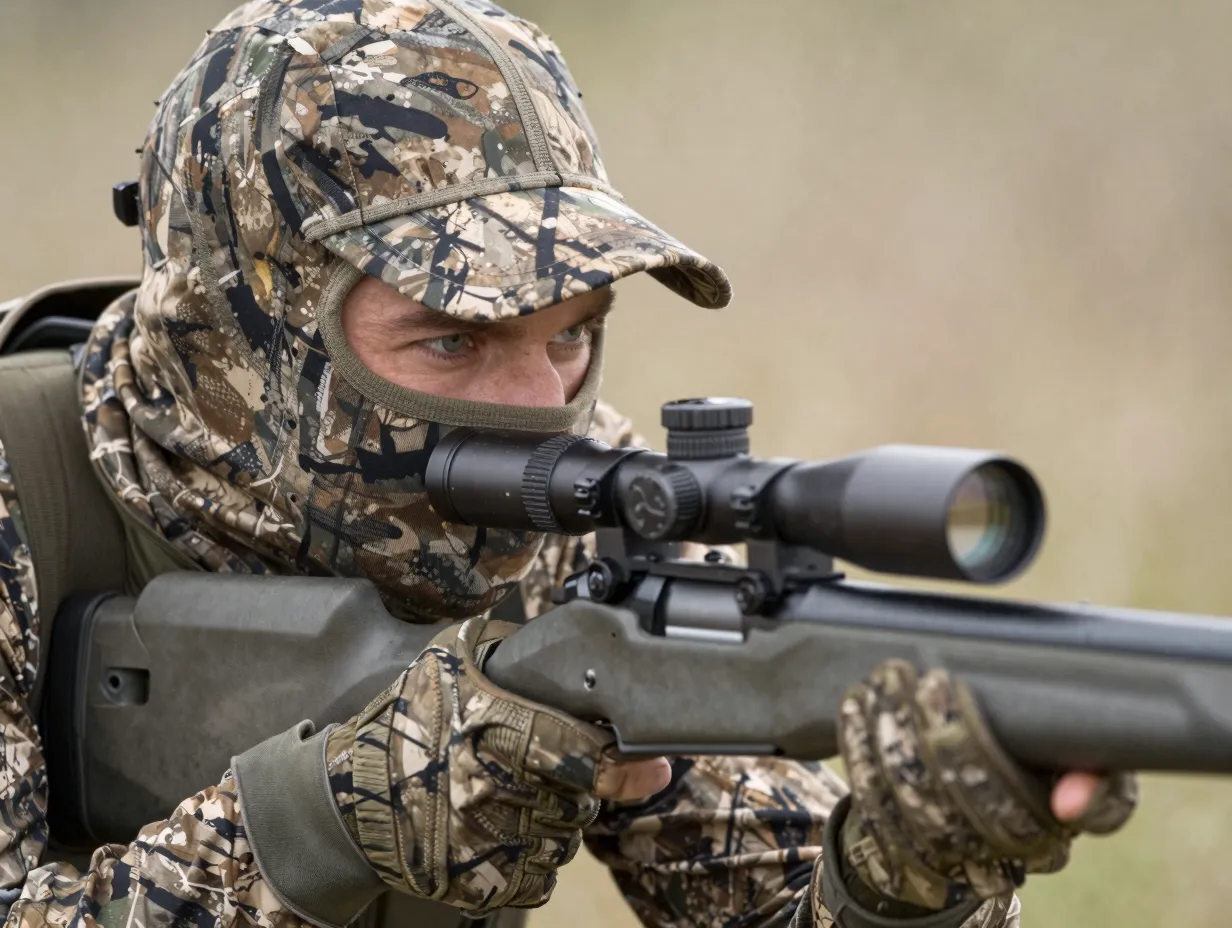
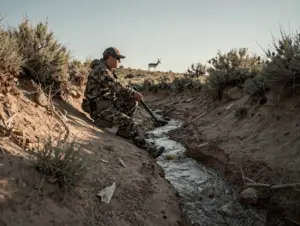
Coyotes detect motion faster than almost any other North American predator. A single unnecessary movement at the wrong moment will end a stand immediately [2][6][4].
Camouflage and movement discipline checklist:
- Match camouflage pattern to the specific habitat: woodland patterns for timber, open-country patterns for grasslands and agricultural areas
- Use snow camouflage or white outerwear when hunting in snow-covered terrain [2]
- Cover all exposed skin including hands and face
- Settle into position completely before beginning to call
- Move only when a coyote’s head is turned away or obscured by terrain
- Use a shooting rest or bipod to minimize movement when acquiring a target
Glare from optics, watches, or exposed metal on firearms has ended more stands than most hunters realize. Matte finishes and lens covers eliminate this problem before it starts [6].
7. Park Smart and Manage Stand Duration
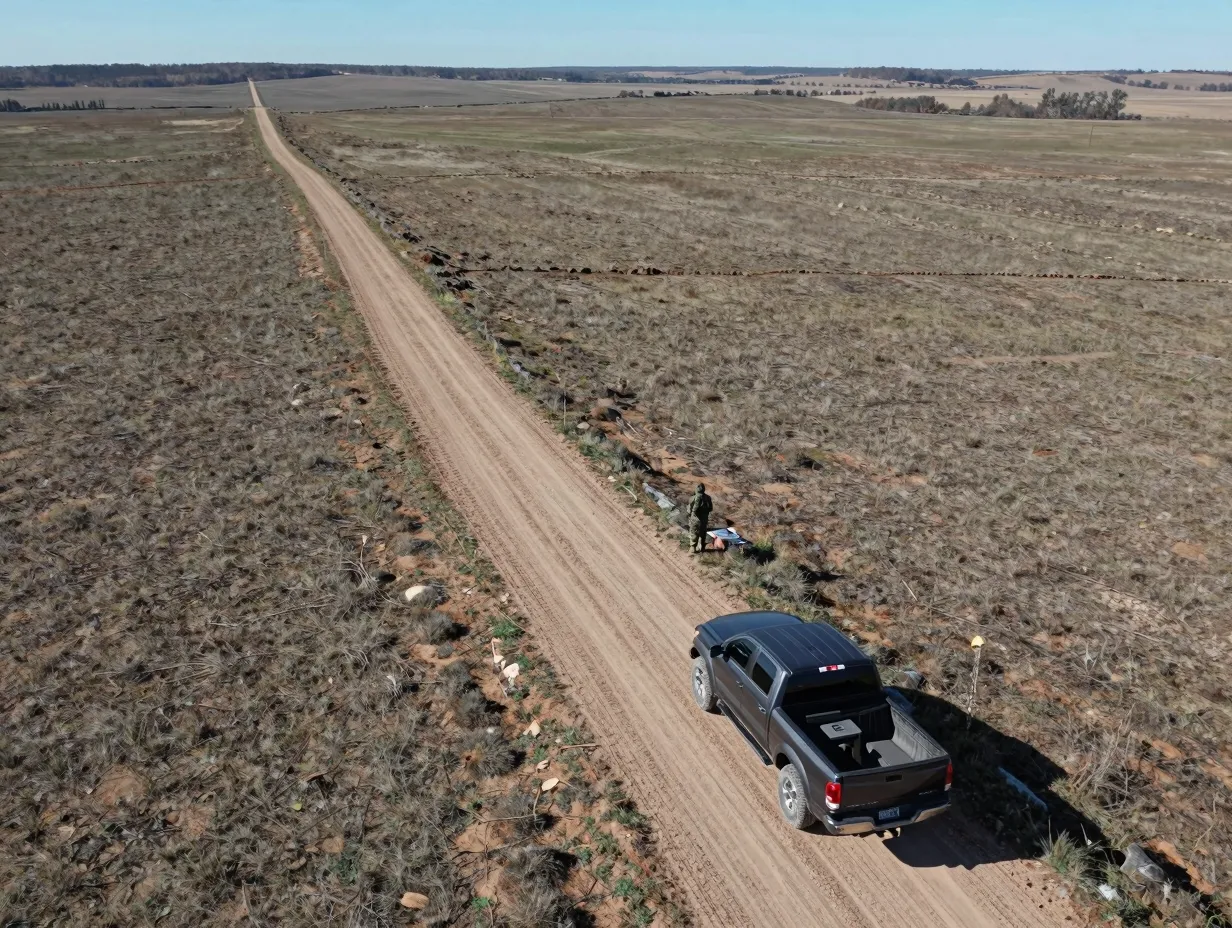
Vehicle noise and scent contaminate a stand location before the hunter ever sits down. Parking too close is one of the most common and most avoidable mistakes in predator hunting [4][1].
Vehicle and stand management guidelines:
- Park at least 200 yards from the intended setup location [4]
- In open country where sound carries far, increase that buffer to 400 yards or more
- Move at least one full mile between stands in open terrain to avoid calling the same coyotes twice [4][1]
- Spend 20 to 45 minutes at each stand before moving on [10][9]
Most coyotes that respond to a call do so within the first 15 minutes. However, pressured or cautious coyotes sometimes hang up at distance and circle for 30 minutes or more before committing. Leaving too early abandons those opportunities. Staying beyond 45 minutes in most conditions yields diminishing returns and reduces the total number of stands possible in a day [10].
8. Apply Night Hunting Techniques When Permitted
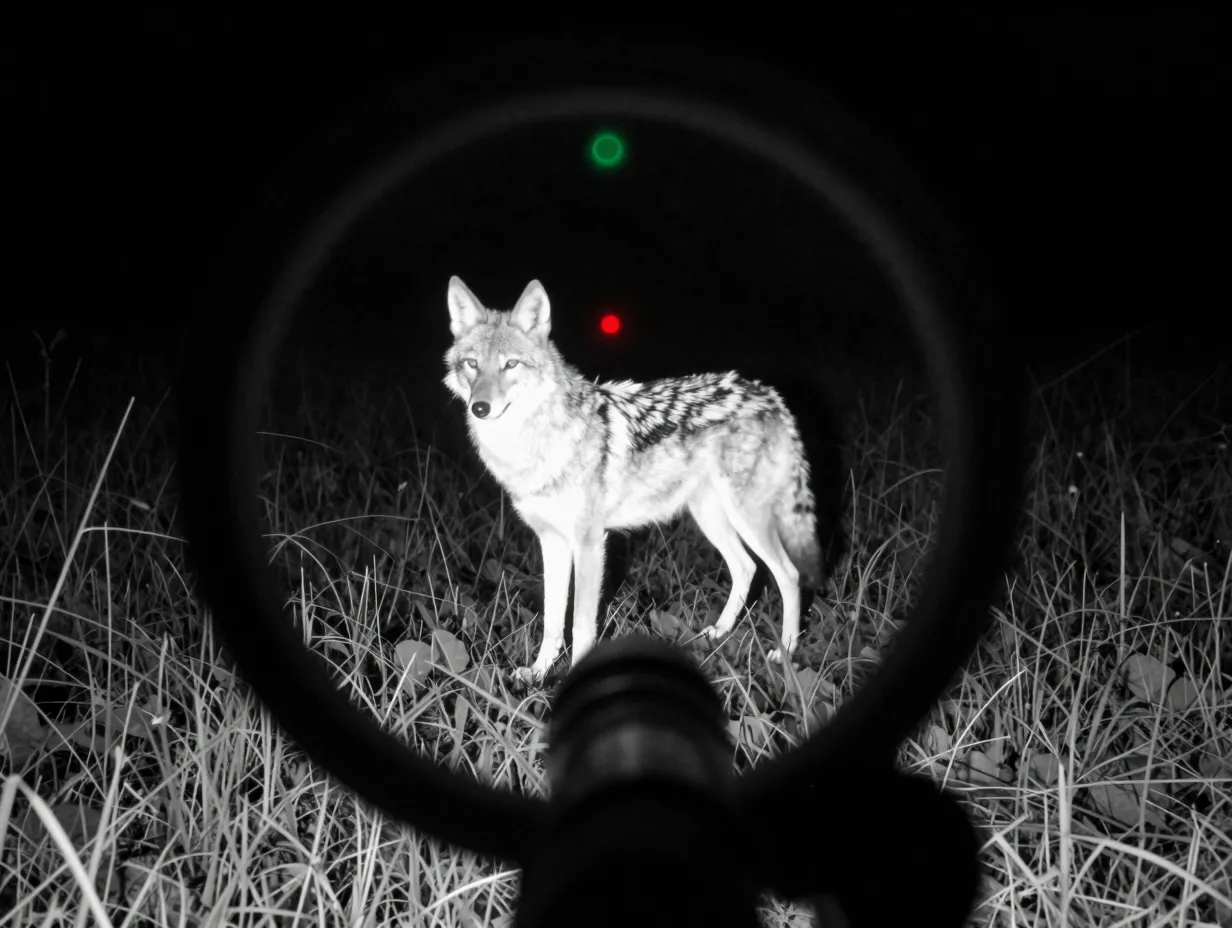
In states and jurisdictions where night hunting is legal, the hours between dusk and dawn represent some of the most productive coyote hunting time available. Coyotes are naturally more active at night and often less cautious in darkness [6].
Night hunting equipment and technique:
- Use red or green filtered lights for target illumination; these wavelengths are less visible to coyotes than white light [6]
- Thermal imaging optics allow hunters to detect body heat signatures at long range without any light source
- Night vision scopes and clip-on units provide clear target identification in low-light conditions
- Move more slowly and deliberately than during daylight; sound travels farther after dark and any noise carries risk
- Reduce calling volume slightly compared to daytime sequences, as sound carries more efficiently in cool night air [6]
Thermal technology has transformed night predator hunting over the past decade. Hunters using quality thermal monoculars for scanning and thermal scopes for shooting can identify and engage coyotes at distances that were impractical with traditional night vision equipment.
9. Execute Post-Shot Procedures and Shot Placement
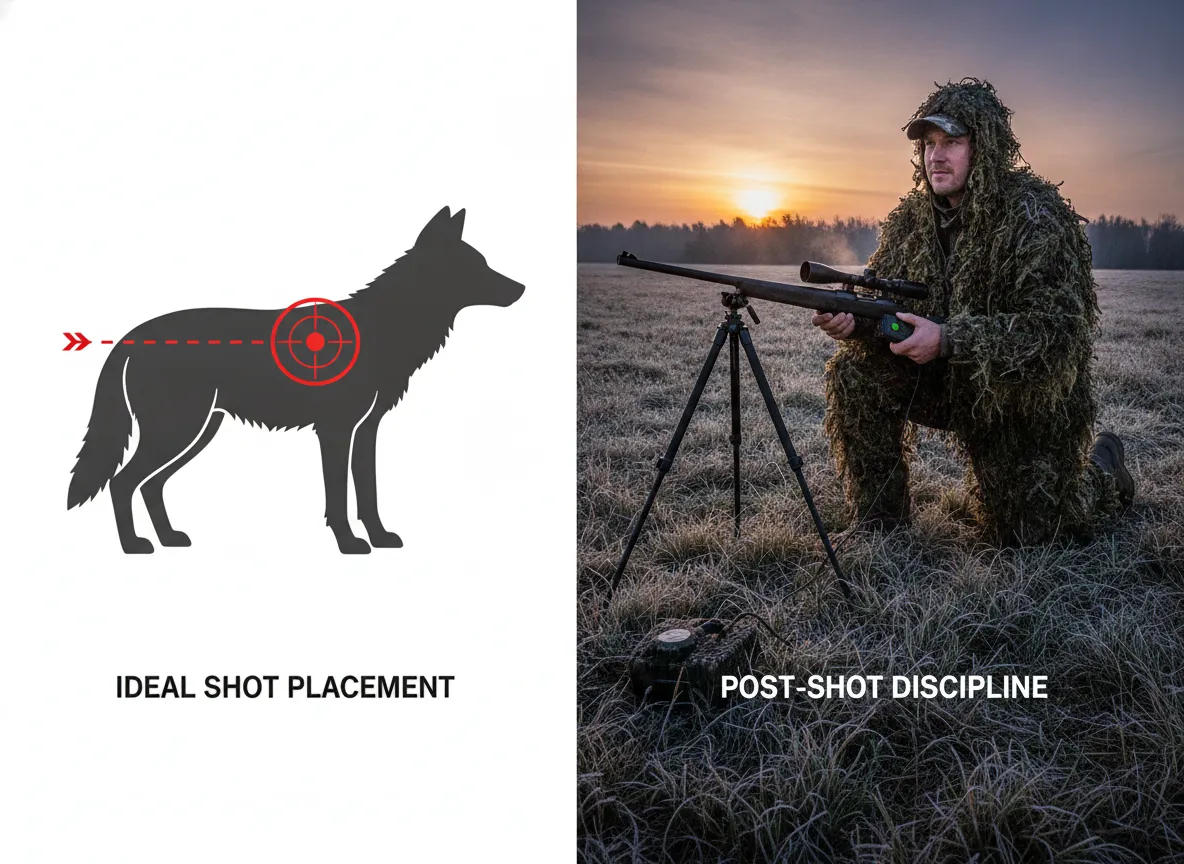
The stand does not end when the trigger is pulled. Post-shot discipline determines whether a single coyote becomes two, and proper shot placement protects fur value for hunters who intend to sell or keep pelts [2][4].
Shot placement priorities:
- Wait for a standing, broadside, or quartering-away presentation whenever possible [2]
- Use fast, flat-shooting calibers such as the .22-250 Remington, .223 Remington, or .243 Winchester for clean kills at distance with minimal pelt damage [2][4]
- Aim for the shoulder or behind the ear for instant incapacitation
- Avoid high-velocity frangible bullets on close shots if pelt condition matters
Post-shot calling procedure:
After firing, whether the shot connects or misses, continue calling for at least five additional minutes [1]. Other coyotes in the area often interpret the commotion as a feeding opportunity and will approach the call location. This technique consistently produces multiple coyotes from a single stand when done correctly [1].
If the shot connects and the coyote drops in view, remain still and continue calling quietly. A second or third coyote following the first will often appear within minutes, drawn by the sounds of distress and activity.
Common Mistakes That Undermine Predator Control Success
Even experienced hunters fall into patterns that reduce effectiveness. Recognizing these errors is the first step toward eliminating them.
Most frequent coyote hunting mistakes:
- Calling from the same locations repeatedly without rotating stands
- Using only one type of call sound throughout the entire season
- Failing to scout for fresh sign before selecting stand locations
- Moving too quickly between stands without allowing adequate time at each location
- Neglecting to check wind direction before approaching a setup
- Wearing inappropriate camouflage that does not match the surrounding habitat
- Leaving the vehicle too close to the stand location
Rotating call sounds throughout the season prevents coyotes in a specific area from associating particular sounds with danger. Mixing prey distress calls with coyote vocalizations, bird distress sounds, and rabbit squeals keeps the calling program unpredictable and effective across multiple visits to the same general area [9][8].
Gear Essentials for Applying These Coyote Hunting Tips
The right equipment does not replace skill, but it eliminates preventable failures. The following gear supports the application of every tip covered in this article.
Core gear list:
- Electronic call with remote operation capability and a library of high-quality sound files
- Quality binoculars (10×42 minimum) for scanning terrain before and during stands
- Shooting sticks or bipod for stable, low-movement target acquisition
- Wind checker (powder or electronic) for real-time wind reading
- Rangefinder for accurate distance estimation in open country
- Appropriate camouflage for the specific terrain and season
- Thermal monocular for pre-stand scanning and night hunting applications
- Scent-elimination spray as a secondary wind management tool
Hunters who invest in a quality electronic caller with remote control gain the ability to adjust volume and switch sounds without any body movement, which directly supports the movement control principles covered in tip six [4][9].
Conclusion
The 9 essential coyote hunting tips for predator control and success covered in this article represent a complete tactical system, not a collection of isolated tricks. Wind management, elevation, habitat selection, calling sequences, electronic call placement, camouflage discipline, vehicle management, night hunting techniques, and post-shot procedures each address a specific vulnerability in the hunter’s approach. Applied together, they systematically remove the advantages that make coyotes so difficult to hunt consistently.
Actionable next steps for hunters at every experience level:
- Scout at least two new stand locations before the next hunt using trail cameras or on-foot scouting for fresh sign
- Purchase a quality wind checker and commit to using it before every approach
- Build a structured calling sequence library on an electronic caller with at least five distinct sound progressions
- Review local regulations regarding night hunting and invest in at minimum a quality thermal monocular if permitted
- Log stand locations, wind conditions, call sequences used, and results after every hunt to identify patterns over time
Consistent predator control requires consistent application of proven methods. The hunters who fill the most tags are not the ones with the most expensive gear. They are the ones who understand coyote behavior deeply enough to exploit it systematically, stand after stand, season after season.
References
[1] 9 Easy Tactics To Predator Hunting Success – https://www.grandviewoutdoors.com/predator-hunting/9-easy-tactics-to-predator-hunting-success
[2] Ten Coyote Tips – https://www.melissabachman.com/blog/ten-coyote-tips
[4] 13 Predator Coyote Bobcat Hunting Strategies From Pros – https://www.outdoorlife.com/13-predator-coyote-bobcat-hunting-strategies-from-pros/
[5] Coyote Hunting Tips Guide – https://www.mossyoak.com/our-obsession/blogs/predator/coyote-hunting-tips-guide
[6] Coyote Hunting The Key To Outsmarting A Predator – https://ozonicshunting.com/blogs/ozonics-blog/coyote-hunting-the-key-to-outsmarting-a-predator
[7] Coyotes – https://www.dfw.state.or.us/wildlife/living_with/docs/Coyotes.pdf
[8] Coyote Hunting Tips And Tactics – https://nadeerhunter.com/coyote-hunting-tips-and-tactics/?amp=1
[9] How To Hunt Coyotes – https://www.outdoorlife.com/story/hunting/how-to-hunt-coyotes/
[10] Coyote Hunting Guide – https://huntwise.com/field-guide/coyote/coyote-hunting-guide