8 Space-Saving Fishing Pole Rack Ideas For Your Garage, Basement, Or Closet
Roughly 54 million Americans fish at least once a year, yet most of them store their rods by leaning them against a wall, cramming them into a corner, or tossing them on a garage shelf where they tangle, tip over, and eventually get damaged. A broken rod tip or a snapped guide is not just frustrating, it is an expensive mistake that a simple rack could have prevented. The good news is that the 8 space-saving fishing pole rack ideas for your garage, basement, or closet covered in this guide solve that problem without requiring a major renovation or a large budget.
Disclosure: This post contains affiliate links. As an Amazon Associate, we earn from qualifying purchases, and at no extra cost to you.
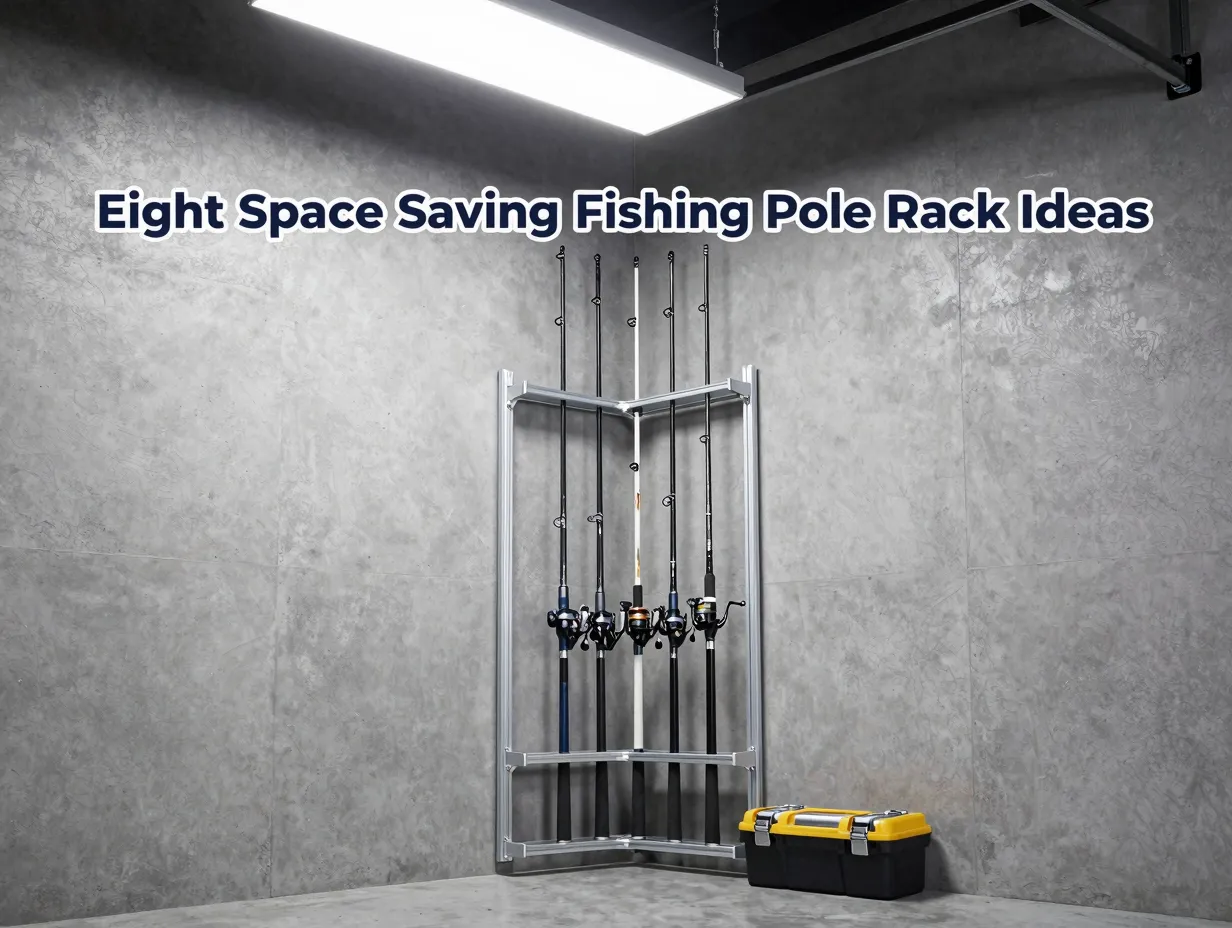
Whether the storage space is a two-car garage, a damp basement corner, or a narrow hall closet, at least one of these solutions will fit the footprint, the budget, and the number of rods that need organizing. Most options cost between $13 and $30 and can be installed in under an hour [2].
Key Takeaways
- Wall-mounted and ceiling-mounted racks are the most efficient ways to free up floor space while keeping rods protected and accessible.
- Budget-friendly options range from $13 to $30 and can hold 8 to 20 rods per set, making professional-grade organization accessible to most anglers [2].
- Corrosion-resistant aluminum and solid hardwood with waterproof coatings are the best material choices for garages and basements where moisture and temperature swings are common [3].
- Rolling cart racks are a strong 2026 trend for renters or anyone who frequently reconfigures their storage layout [2][3].
- DIY builds using PVC pipe, wooden pallets, or pegboard can rival commercial racks in function at a fraction of the cost [10].
Why Proper Rod Storage Matters More Than Most Anglers Realize
A fishing rod is not just a stick, it is a precision tool with guides, wraps, and a blank that can warp, crack, or delaminate when stored improperly. Leaning rods against a wall puts uneven pressure on the blank over time. Stacking them in a bucket or bin causes guides to snag and scratch each other. Even a modest collection of six to eight rods can become a tangled hazard that takes ten minutes to sort through before every trip.
Beyond rod protection, poor storage wastes space. A garage, basement, or closet that already feels tight becomes even more cramped when rods are scattered rather than organized. A dedicated rack consolidates everything into a vertical or overhead footprint, leaving floor space open for tackle bags, coolers, and other gear.
The solutions below are organized by mounting style and use case, starting with the most popular wall-mounted options and moving through ceiling, floor, and mobile alternatives. Each idea includes practical details about materials, capacity, and the type of space it suits best.
8 Space-Saving Fishing Pole Rack Ideas For Your Garage, Basement, Or Closet
1. Vertical Wall-Mounted Rod Rack
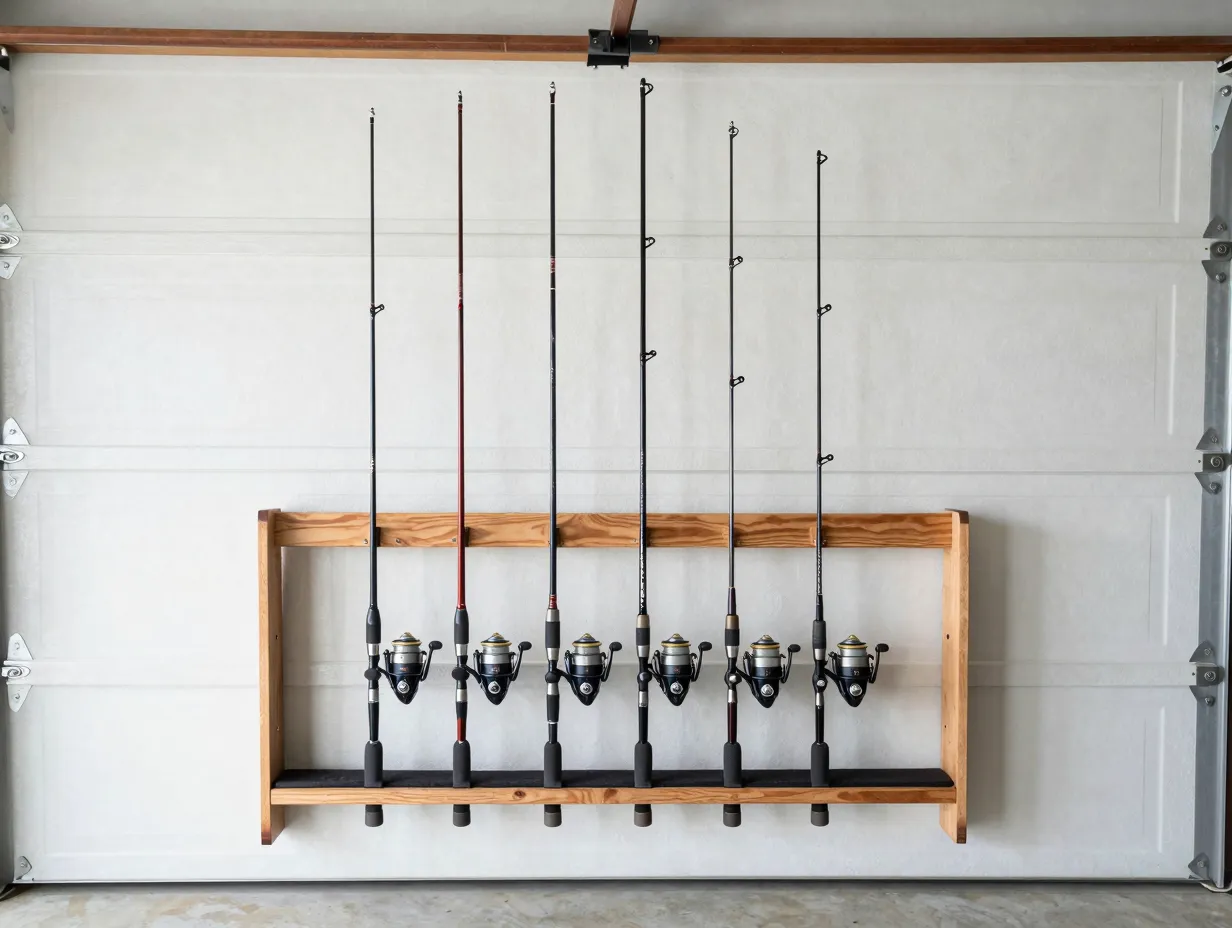
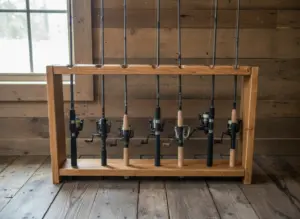
A vertical wall-mounted rack is the single most popular rod storage solution for garages and basements, and for good reason. It mounts flush against a wall, occupies almost no floor space, and keeps every rod visible and easy to grab [2].
How it works: Two horizontal bars, one near the top of the rod and one near the handle, hold each rod in individual slots or foam-lined channels. The rods stand vertically, tips pointing up or down depending on the model.
Best for: Garages and basements with at least one open wall section. Works well in closets too, provided the ceiling height is sufficient for the rod length.
Capacity and cost: Most commercial vertical wall racks hold 8 to 9 rods or rod-and-reel combos and cost between $15 and $30 [2][7]. Models rated for rod diameters from approximately 3 mm to 19 mm can accommodate spinning rods, casting rods, and fly rods in the same unit [7].
Material tip: Look for solid hardwood with a waterproof finish or powder-coated steel for garage and basement environments where humidity fluctuates [3].
“A vertical rack rated for rods with diameters from about 3-19 mm can typically store up to nine setups while staying flush to the wall, making it suitable for hall closets and narrow utility rooms.” [7]
2. Horizontal Wall or Ceiling Rod Rack
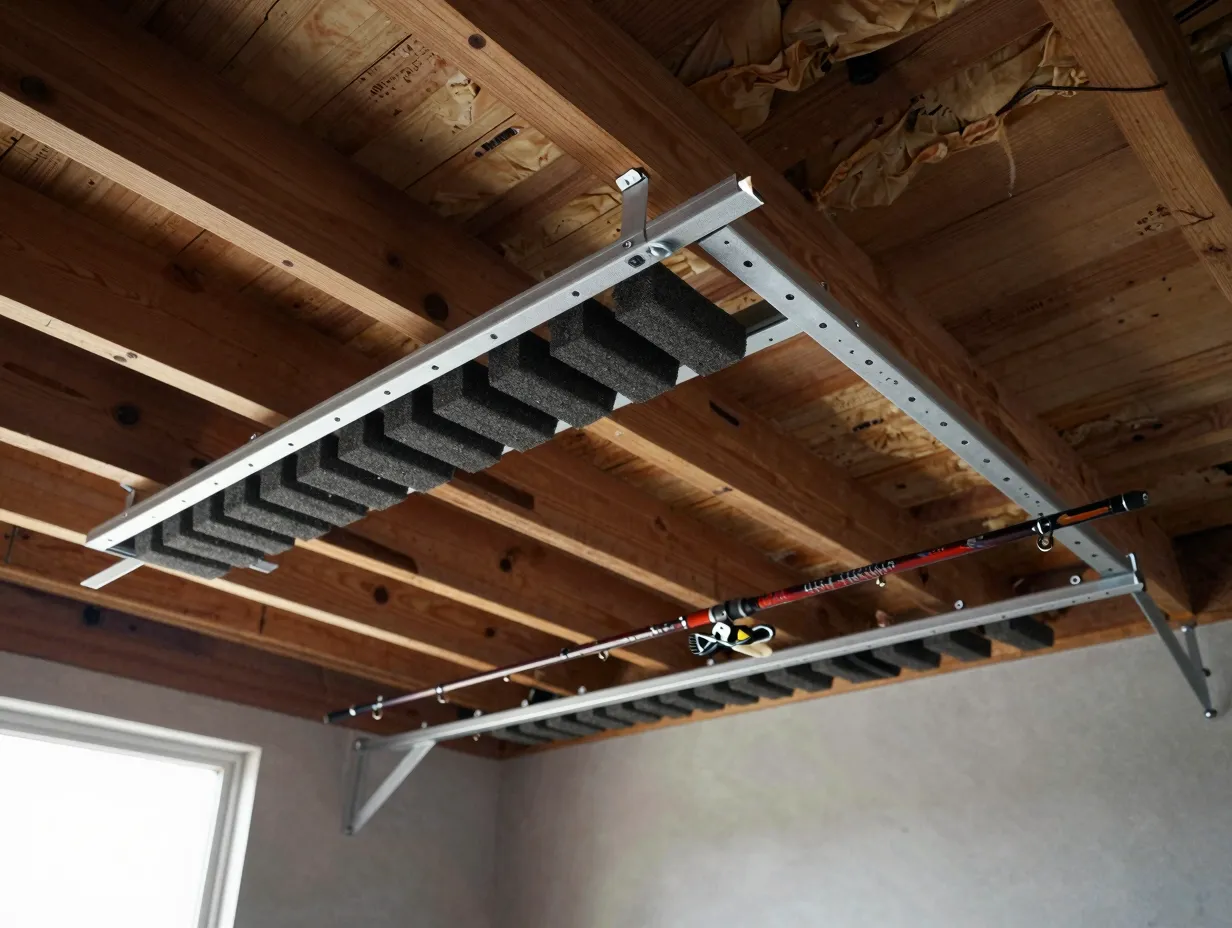
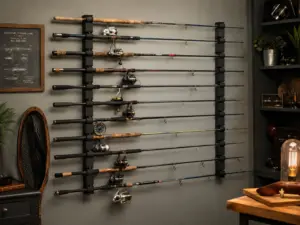
Where vertical racks stand rods upright, horizontal racks lay them on their sides along the wall or ceiling. This style is particularly useful when ceiling height is limited or when the storage area has more horizontal run than vertical clearance.
How it works: Two or more bracket pairs mount to wall studs or ceiling joists. Each pair cradles a rod horizontally, with foam or rubber padding protecting the blank and guides.
Best for: Low-ceiling basements, long garage walls, and spaces where rods need to be stored out of reach of children or pets.
Capacity and cost: A standard horizontal wall set typically holds 8 to 20 rods and costs $13 to $25 [2]. Sets like the PLUSINNO H5 aluminum rack fall into this range and are lightweight enough for drywall anchors if studs are not accessible [2].
Pro tip: When mounting horizontally on a ceiling, space the bracket pairs so that the rod’s center of gravity is supported, this prevents sagging over time, especially with heavier surf or trolling rods.
3. Ceiling-Mounted Overhead Rod Rack
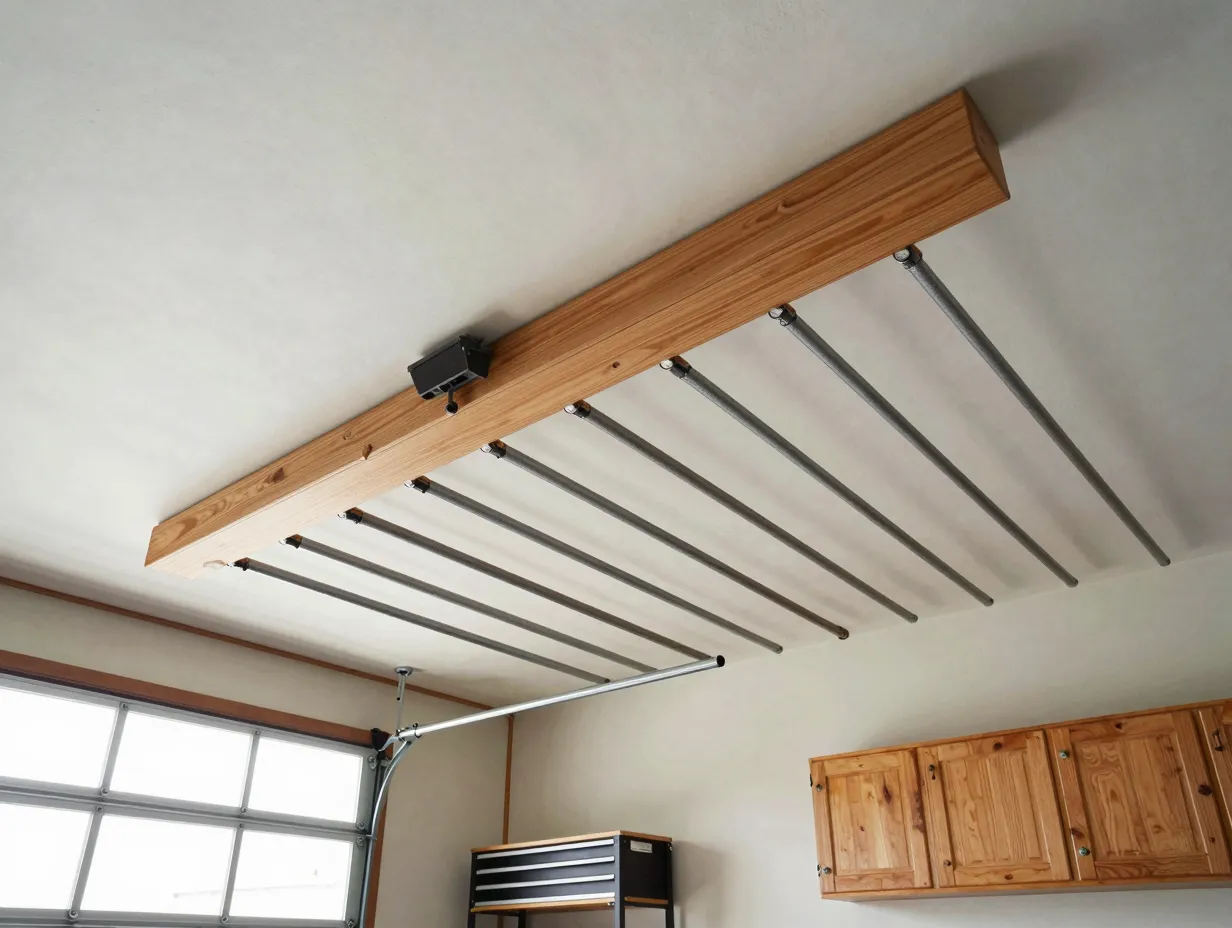
Ceiling-mounted racks are repeatedly identified as one of the best space-saving ideas for garages or tackle rooms with limited wall area, because they shift storage into overhead dead space and keep rods completely out of daily traffic lanes [6].
How it works: A pair of long horizontal bars or individual bracket sets mount directly to ceiling joists. Rods slide into slots or hang from hooks, running parallel to the ceiling.
Best for: Garages where wall space is already occupied by shelving, tool panels, or cabinets. Also ideal for tackle rooms and basements where rods must be kept completely out of harm’s way [15].
Capacity and cost: Ceiling systems vary widely, but a quality hardwood ceiling rack can hold 8 to 16 rods and typically costs $20 to $35. The Ghosthorn wall/ceiling hardwood rack is one commonly cited option in this category [2].
Installation note: Always screw into ceiling joists, not just drywall. Use a stud finder and confirm joist spacing before purchasing a rack, since some models are designed for 16-inch on-center framing while others accommodate 24-inch spacing.
4. Dual Wall-and-Ceiling Hardwood Rack
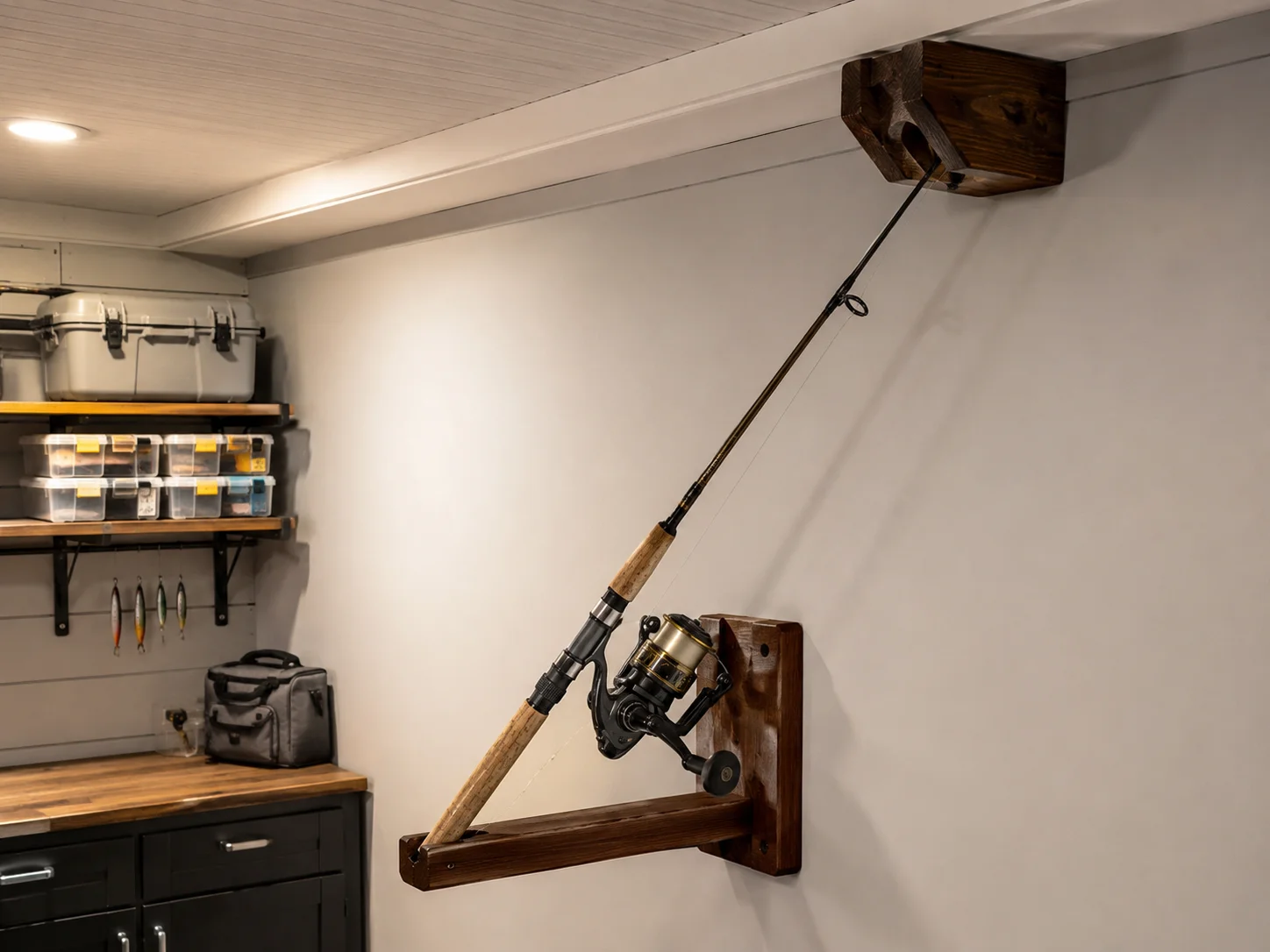
The dual wall-and-ceiling hardwood rack is a hybrid system that uses both the wall and the ceiling simultaneously. One bracket set mounts to the wall near the floor or mid-wall, and a second set mounts to the ceiling directly above, creating a diagonal or vertical channel that holds each rod at two points.
How it works: The lower bracket supports the rod handle and reel, while the upper ceiling bracket cradles the rod tip area. This two-point contact distributes weight evenly and virtually eliminates any risk of rods falling.
Best for: Garages and tackle rooms where maximum rod security is a priority, particularly useful for expensive fly rods or custom-built rods that cannot afford to be knocked over.
Capacity and cost: Most dual systems hold 8 to 20 rods per set and cost $20 to $30, with solid hardwood models offering the best combination of durability and aesthetics [2][3].
Material advantage: Hardwood with a waterproof coating handles the temperature swings common in uninsulated garages far better than particleboard or MDF alternatives [3].
5. Modular Wall System With Adjustable Holders
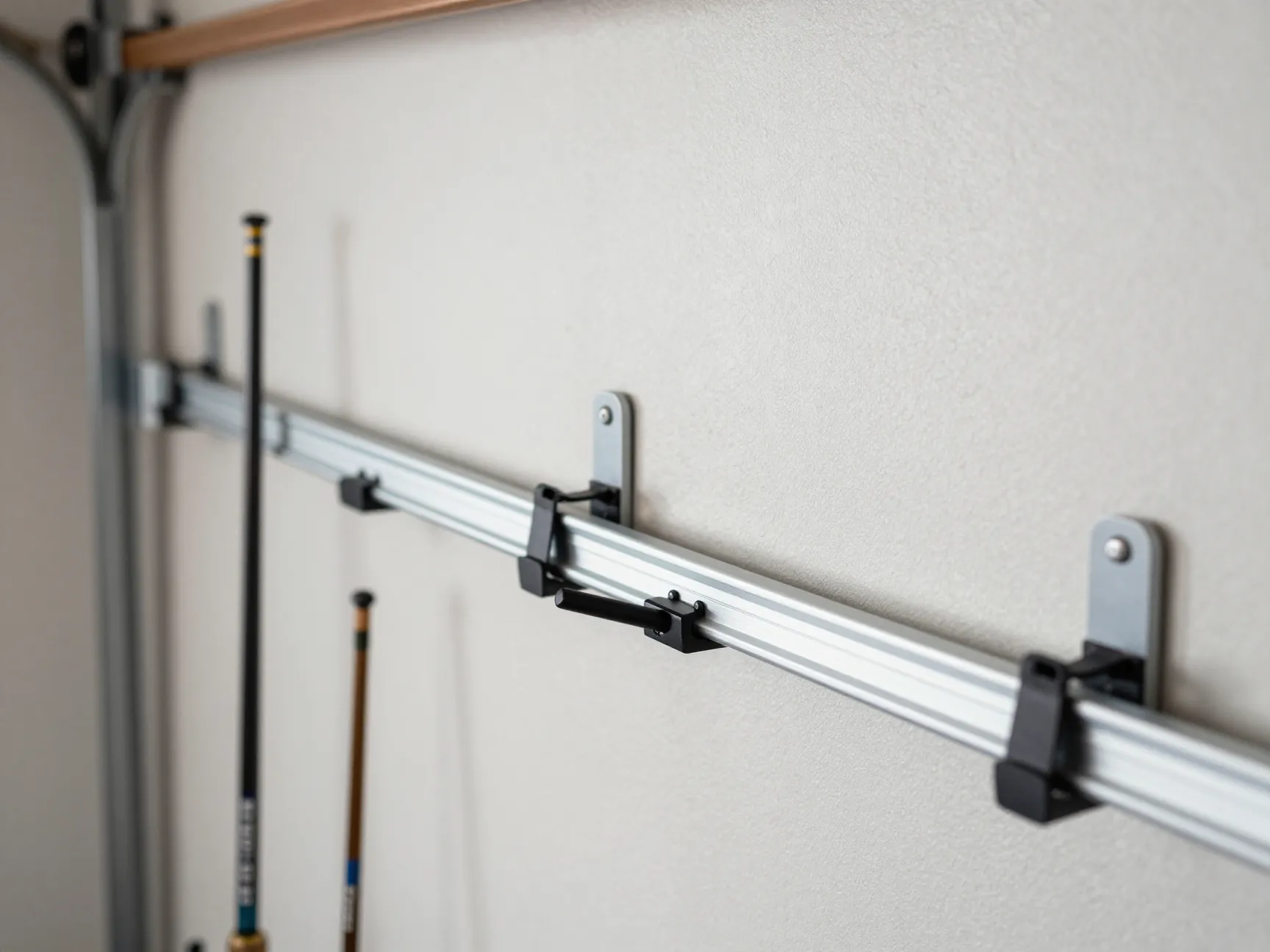
A modular wall system takes the concept of a standard wall rack and adds flexibility. Instead of fixed slots, these systems use adjustable or widened holders that can be repositioned along a rail or pegboard-style backing to accommodate different rod lengths and diameters.
How it works: A horizontal mounting rail attaches to the wall. Individual rod holders clip, slide, or screw into the rail at any position. The spacing between holders can be changed without tools in most designs.
Best for: Anglers with a mixed collection, spinning rods, baitcasting rods, ice fishing rods, and fly rods, that do not all share the same dimensions.
Capacity and cost: Modular systems that support roughly 18 to 24 rods are available in the $25 to $50 range [3]. The adjustable holders can also be widened to fit thicker rod handles or rod-and-reel combos without the reel getting stuck [3].
Long-term value: Because the rail stays in place and only the holders change, a modular system can grow with a rod collection without requiring new wall holes.
6. Mobile Rolling Cart Rack
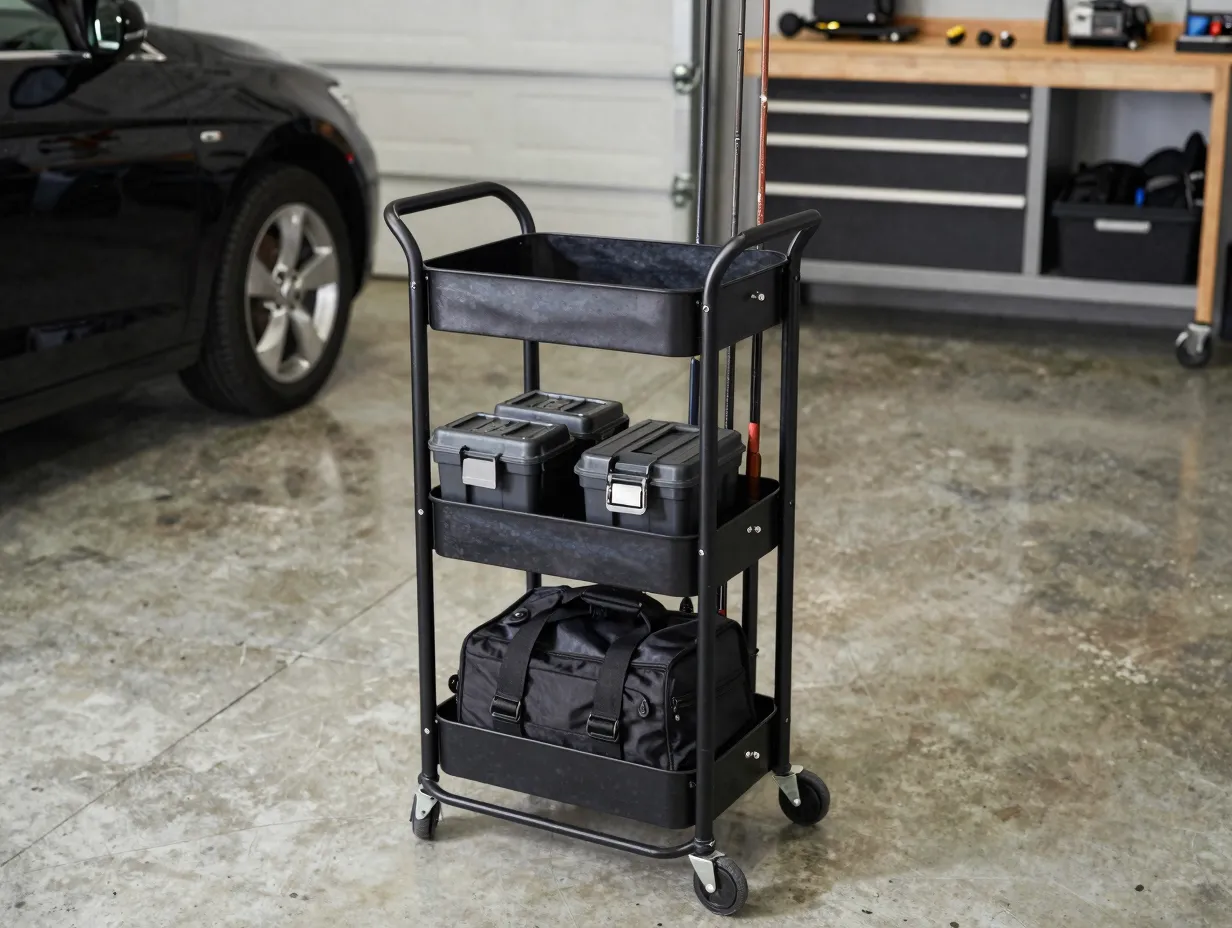
Mobile rolling cart racks have emerged as a notable 2026 trend for anglers who rent their homes, share garage space with family members, or frequently reconfigure their storage layouts [2][3]. Unlike wall-mounted options, a rolling cart requires no drilling and can be repositioned in seconds.
How it works: A freestanding cart, typically with two or three tiers, holds rods vertically or at a slight angle in slots or tubes built into the top tier. Lower tiers provide shelving or basket storage for tackle boxes, reels, line, and accessories.
Best for: Renters, apartment dwellers with storage units, shared garages, and anyone who wants a portable, all-in-one fishing gear station.
Capacity and features: A 3-tier rolling cart can hold rods plus a full set of tackle accessories on multiple levels. Look for models with lockable or quiet-rolling casters for stability on concrete or tile floors [2][3]. The compact footprint, typically 18 to 24 inches wide, fits between vehicles in a standard garage bay.
Trade-off: Rolling carts are less space-efficient per square foot than wall-mounted systems and can tip if overloaded on one side. Distribute weight evenly and engage the wheel locks when the cart is parked.
7. Compact Vertical Closet Strip Rack
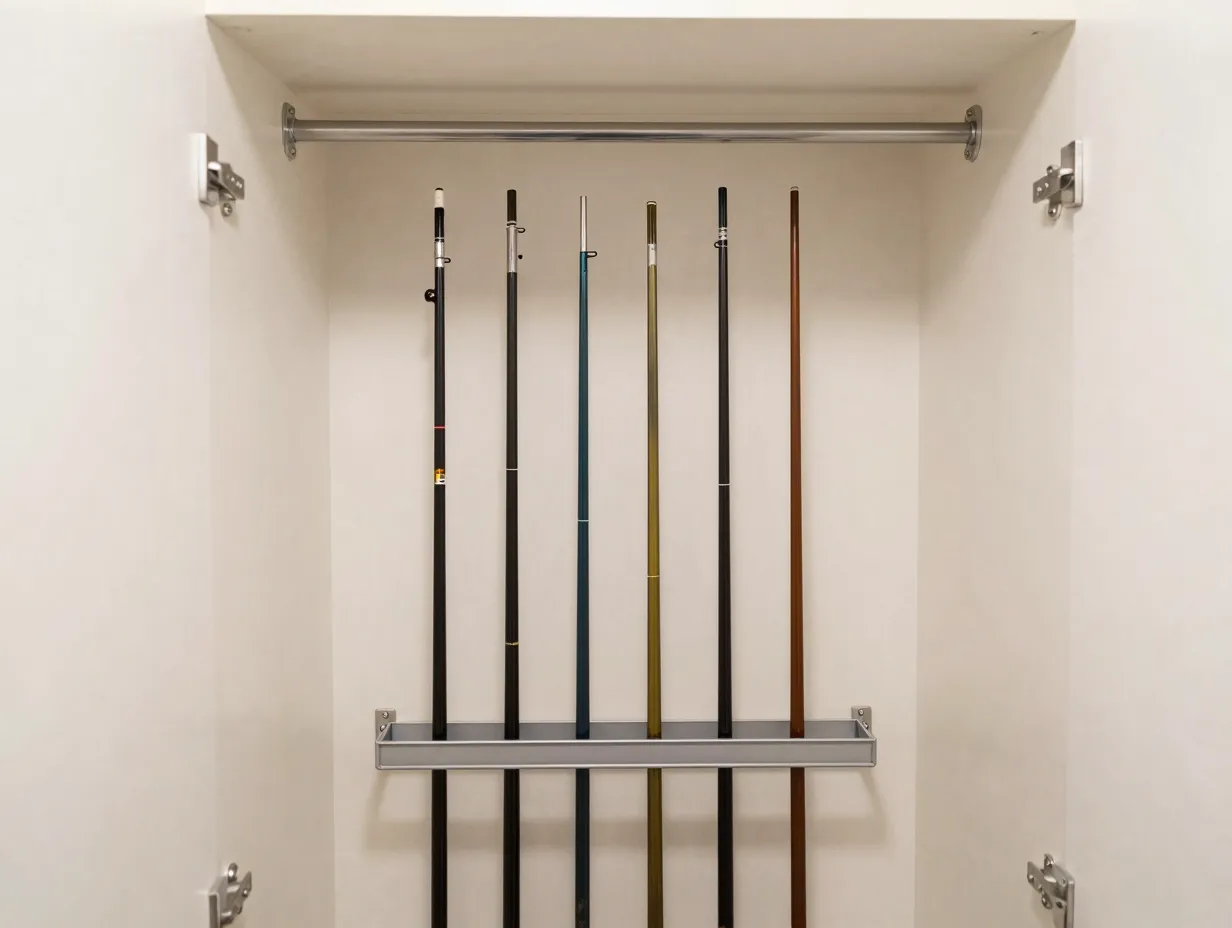
For anglers without garage or basement access, a compact vertical closet strip rack turns an ordinary hall closet or utility closet into a functional rod storage space. This solution is specifically designed for narrow wall sections and tight vertical footprints [7][13].
How it works: A slim two-bracket system, often no wider than 6 to 8 inches, mounts to the interior wall of a closet. Rods slide into individual slots and stand vertically, tips pointing toward the ceiling. The rack occupies a strip of wall space that would otherwise go unused.
Best for: Apartments, condos, townhouses, and any living space where the only available storage is a closet. Also useful as a secondary storage point in a garage closet or mudroom.
Capacity and dimensions: A closet strip rack typically holds 8 to 9 rods or combos and accommodates rod diameters from approximately 3 mm to 19 mm [7]. The narrow profile keeps the rack from interfering with clothing rods or shelves already in the closet.
Installation tip: Use wall anchors rated for at least 40 lbs even if studs are not accessible, most closet strip racks weigh the rods at two points, distributing the load effectively [7].
8. DIY PVC Pipe or Wooden Pallet Rack
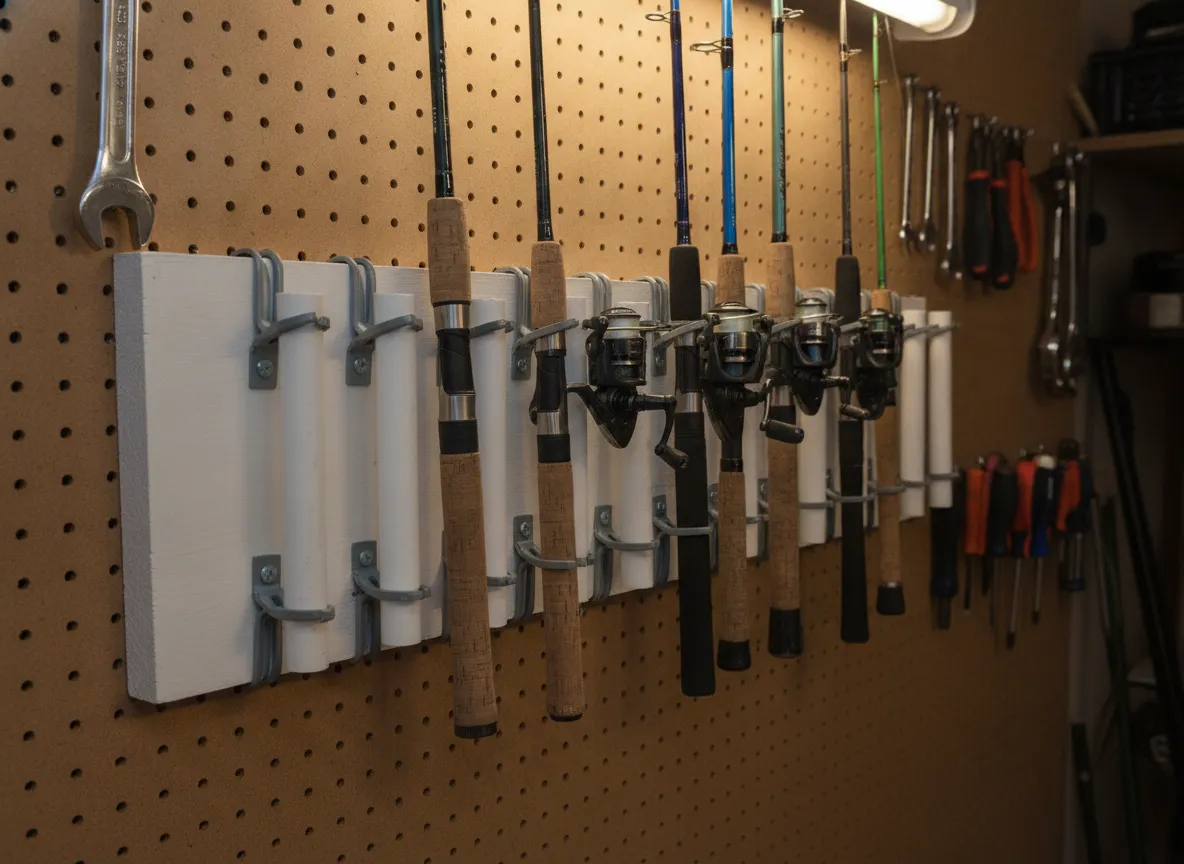
Not every storage solution needs to come in a box. A DIY rack built from PVC pipe, a reclaimed wooden pallet, or basic lumber can match the function of a commercial product at a fraction of the cost, sometimes for under $10 in materials [10].
PVC pipe version: Cut sections of 1.5-inch or 2-inch PVC pipe into 6-inch lengths. Mount them in a row along a wooden board using pipe straps or epoxy. Each pipe section becomes an individual rod holder. The board mounts to the wall like any standard rack.
Wooden pallet version: A standard shipping pallet mounted vertically on a wall creates a grid of natural slots that can hold rods, tools, and accessories simultaneously. The gaps between pallet boards are typically wide enough for rod handles but narrow enough to keep rods upright.
Best for: Budget-conscious anglers, renters who want a non-permanent solution, and hobbyists who enjoy building their own gear [10].
Customization advantage: A DIY rack can be built to any length, height, or slot spacing. It can also be painted, stained, or finished to match the garage or room decor, something most commercial racks cannot offer.
“DIY rod racks for the garage can be built from basic lumber or PVC at minimal cost, and when done right, they hold rods just as securely as commercial alternatives.” [10]
How to Choose the Right Rack for Your Space
With the 8 space-saving fishing pole rack ideas for your garage, basement, or closet now laid out, the next step is matching the right solution to the specific storage environment. The table below summarizes the key decision factors.
| Rack Type | Best Space | Drilling Required | Approx. Capacity |
|---|---|---|---|
| Vertical Wall Mount | Garage, Basement | Yes | 8-9 rods |
| Horizontal Wall/Ceiling | Garage, Basement | Yes | 8-20 rods |
| Ceiling Overhead | Garage, Tackle Room | Yes (joists) | 8-16 rods |
| Dual Wall-and-Ceiling | Garage, Tackle Room | Yes | 8-20 rods |
| Modular Wall System | Garage, Basement | Yes | 18-24 rods |
| Rolling Cart Rack | Any (no drilling) | No | 6-12 rods + gear |
| Closet Strip Rack | Closet, Mudroom | Yes (anchors) | 8-9 rods |
| DIY PVC or Pallet | Any | Optional | Customizable |
Three questions to guide the decision:
- Is drilling or permanent wall modification allowed? If not, a rolling cart or a freestanding floor rack is the only viable option.
- How many rods need to be stored? A collection of 8 or fewer fits most single-unit racks; 18 or more calls for a modular system or multiple units.
- What is the primary concern, moisture, space, accessibility, or budget? Moisture-prone basements need aluminum or coated hardwood [3]; tight closets need a slim strip rack [7]; tight budgets point toward DIY [10].
Materials That Hold Up in Garages and Basements
Material selection is often overlooked when buying a rod rack, but it directly affects how long the rack lasts in a garage or basement environment. Two materials stand out as the most reliable choices [3].
Corrosion-resistant aluminum is lightweight, rust-proof, and easy to clean. It handles humidity well and does not warp with temperature changes. Aluminum racks are typically the most affordable option in the $13 to $20 range [2].
Solid hardwood with waterproof coating offers better aesthetics and a heavier, more stable feel. The waterproof finish is the critical factor, untreated wood in a garage or basement will absorb moisture, swell, and eventually crack. Quality hardwood racks cost slightly more but last significantly longer [3][7].
Materials to avoid: Particleboard, MDF, and untreated softwood are all poor choices for garage and basement storage. They absorb moisture rapidly, lose structural integrity, and can release the hardware holding the rods within a single season.
Conclusion
Disorganized rod storage is one of the most common, and most preventable, problems in any angler’s setup. The 8 space-saving fishing pole rack ideas for your garage, basement, or closet covered in this guide range from simple $13 aluminum wall brackets to custom DIY builds and mobile rolling carts, giving every angler at least one practical option regardless of space, budget, or living situation.
Actionable next steps:
- Measure the available wall, ceiling, or floor space before purchasing or building anything. Rod length (typically 6 to 8 feet) determines the minimum clearance needed.
- Count the rods in the current collection and add two to four for growth. Choose a rack rated for that number.
- Identify the primary concern, moisture, space, portability, or budget, and use the comparison table above to narrow the options to two or three candidates.
- For permanent installations, locate wall studs or ceiling joists before buying a rack, since mounting hardware requirements vary by model.
- Consider starting with a single vertical wall rack or a DIY PVC build to test the layout before committing to a larger modular system.
A well-organized rod collection is not just tidier, it protects expensive equipment, saves time before every fishing trip, and makes the garage, basement, or closet a more functional space for everyone who uses it.
References
[2] Best Fishing Rod Racks Garage Wall Storage – https://bushwhackfishing.com/blog/best-fishing-rod-racks-garage-wall-storage
[3] Best Fishing Rod Rack For Garage – https://whilehome.com/vetted/best-fishing-rod-rack-for-garage/
[6] Vertical – https://www.findthisbest.com/best-fishing-rod-racks/vertical
[7] Rebrilliant Fishing Pole Holders For Garage Wall And Ceiling Storage Rack For Fishing Rods Solid Wood Garage Organizer Holds 8 Rods Or Combos Up To 40 Lbs W112528169 – https://www.wayfair.com/storage-organization/pdp/rebrilliant-fishing-pole-holders-for-garage-wall-and-ceiling-storage-rack-for-fishing-rods-solid-wood-garage-organizer-holds-8-rods-or-combos-up-to-40-lbs-w112528169.html
[10] Diy Rod Racks For The Garage – http://www.bdoutdoors.com/article/diy-rod-racks-for-the-garage