9 Ways To Achieve The Perfect Fishing Rod Aesthetic For Your Gear
A 2022 survey by the American Sportfishing Association found that over 55 million Americans fish each year, yet fewer than 10% ever customize the look of their rods. That gap represents a massive opportunity. Whether someone is building a rod from scratch or upgrading an existing setup, the visual appeal of a fishing rod is not a vanity project. It directly affects pride of ownership, motivation to get on the water, and even the perceived quality of the gear. The 9 ways to achieve the perfect fishing rod aesthetic for your gear covered in this article break down every major customization avenue, from thread wraps to rod blank finishes, so anglers at any skill level can build a setup that looks as good as it performs.
Disclosure: This post contains affiliate links. As an Amazon Associate, we earn from qualifying purchases, and at no extra cost to you.
Key Takeaways
- Rod aesthetics go beyond looks, a well-finished rod signals quality craftsmanship and increases angler confidence on the water.
- Thread wrap color combinations, guide placement, and epoxy finish quality are the three highest-impact visual elements on any custom rod.
- Matching your rod’s color palette to your reel and tackle creates a cohesive gear system that looks intentional and professional.
- Budget-friendly options like heat-shrink grips and custom decals can dramatically improve rod appearance without a full rebuild.
- Consistency in finish application is the single most common differentiator between amateur and professional-looking custom rods.
What Makes a Fishing Rod Aesthetic Matter
Before diving into the 9 ways to achieve the perfect fishing rod aesthetic for your gear, it is worth understanding why rod appearance carries real weight among serious anglers. A rod that looks polished and deliberate communicates skill and attention to detail. It also holds resale value better, photographs well for tournament documentation, and creates a sense of personal identity that mass-produced gear simply cannot replicate.
“The best fishing rods are the ones that feel like an extension of the angler, and that starts with how they look.”
Rod aesthetics also influence how other anglers perceive a setup at the launch ramp or on a charter boat. While performance always comes first, appearance is the first thing anyone sees. A thoughtfully finished rod earns respect before a single cast is made.
The 9 Ways To Achieve The Perfect Fishing Rod Aesthetic For Your Gear
1. Choose the Right Rod Blank Color as Your Foundation
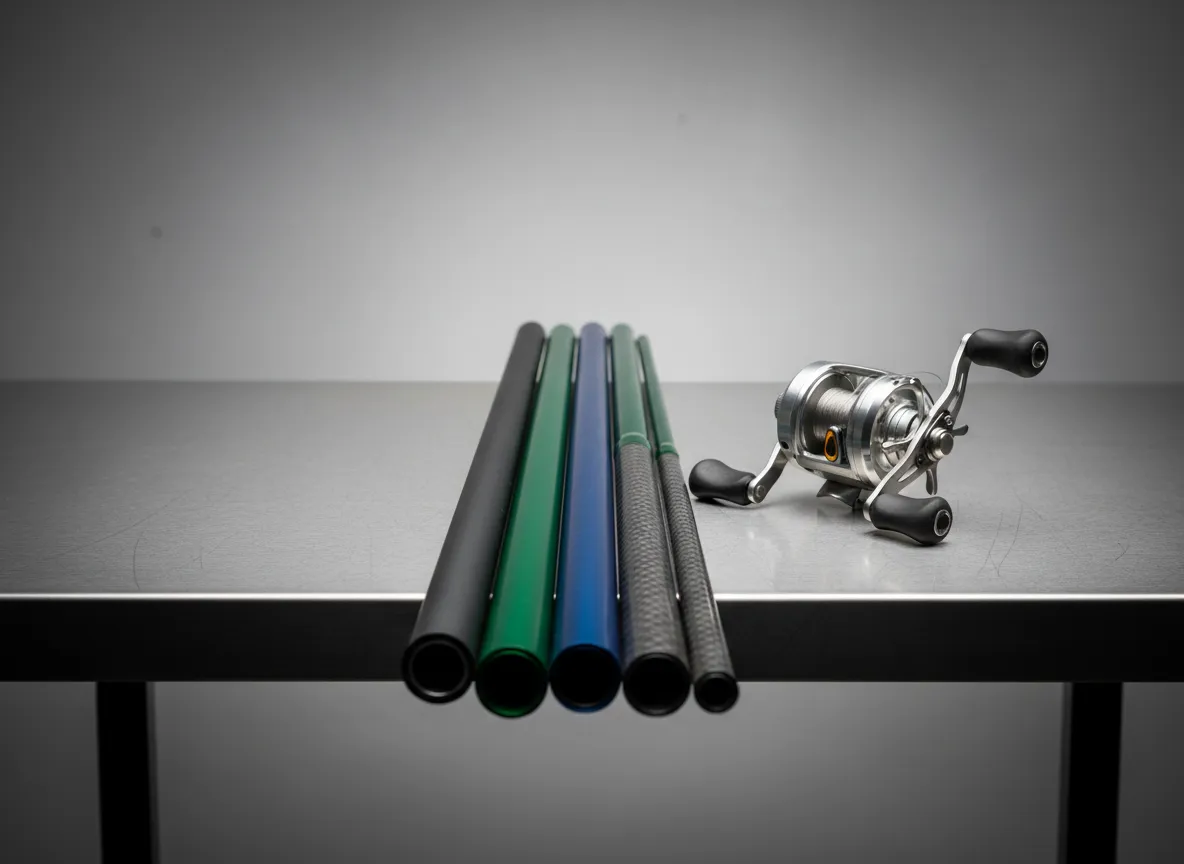
Every great rod aesthetic starts with the blank itself. Rod blanks come in a wide range of colors, graphite gray, matte black, forest green, deep blue, and even translucent finishes that show the carbon fiber weave beneath. The blank color sets the tone for every other visual decision made afterward.
Key blank color considerations:
- Matte blacks and dark grays are versatile and pair with nearly any thread color
- High-modulus graphite blanks often have a natural silver-gray sheen that looks premium
- Fiberglass blanks in white or cream offer a retro aesthetic popular in saltwater builds
- Translucent blanks showcase the underlying material and appeal to technique-focused anglers
When selecting a blank, hold it next to the reel and any hardware already owned. The blank should complement, not compete with, the rest of the setup.
2. Master Thread Wrap Color Combinations
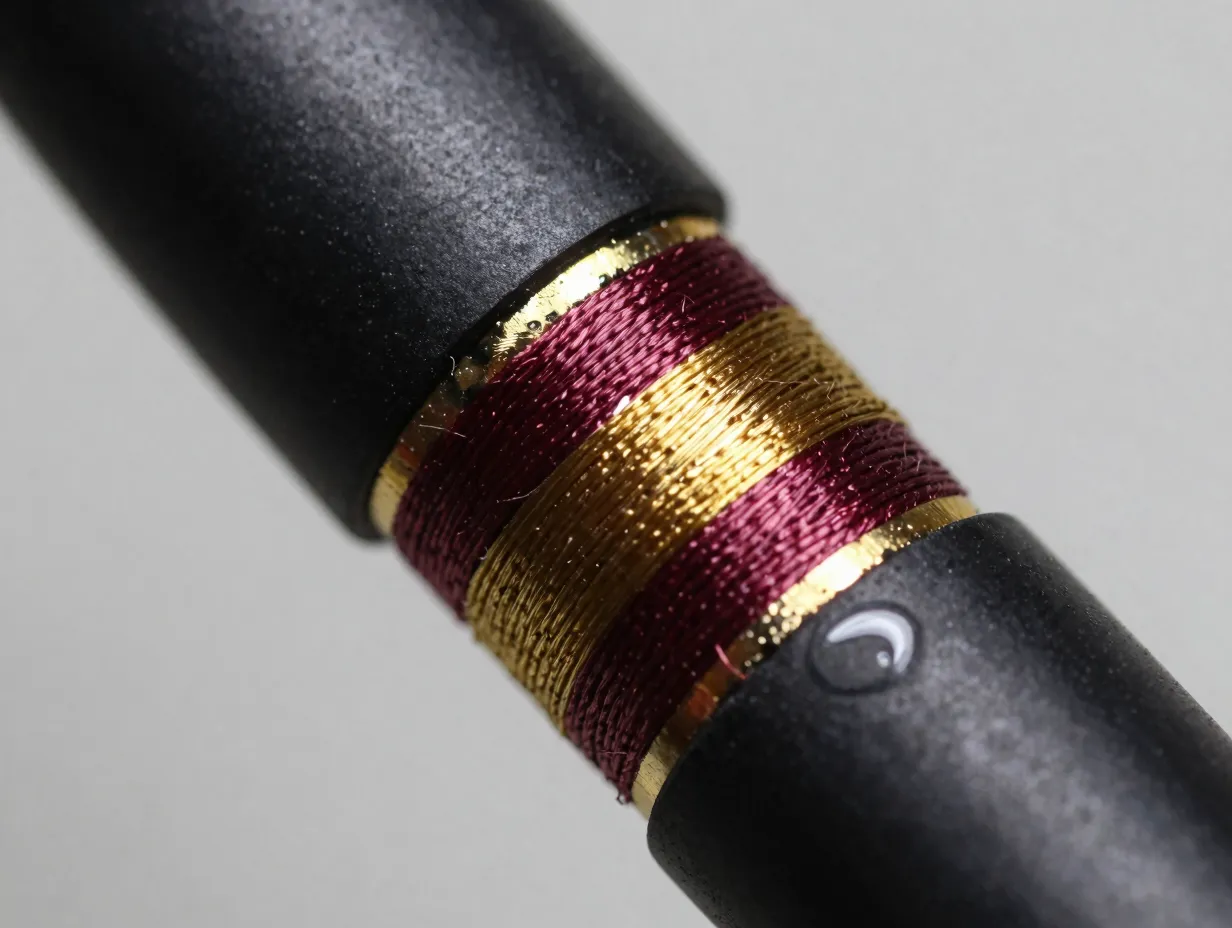
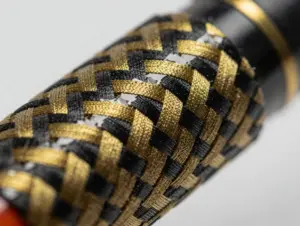
Thread wraps are the most visible and most customizable element on any fishing rod. They hold the guides in place, but their visual impact goes far beyond function. Professional rod builders treat thread wraps the way designers treat typography, the right combination elevates the entire piece.
| Thread Combination | Best Blank Color | Visual Effect |
|---|---|---|
| Burgundy + Gold | Matte black | Classic, high-end, tournament-ready |
| Navy + Silver | Graphite gray | Modern, clean, saltwater-ready |
| Olive + Copper | Forest green | Earthy, natural, freshwater aesthetic |
| White + Black | Any blank | Minimalist, timeless, versatile |
| Red + Cream | White fiberglass | Retro, vintage, surf-rod inspired |
Use a primary thread for the main wrap and a contrasting trim thread for the edge bands. Adding a metallic or NCP (no-color-preserver) thread as an accent creates a translucent shimmer effect that catches light beautifully.
3. Select Guides That Complement the Overall Look
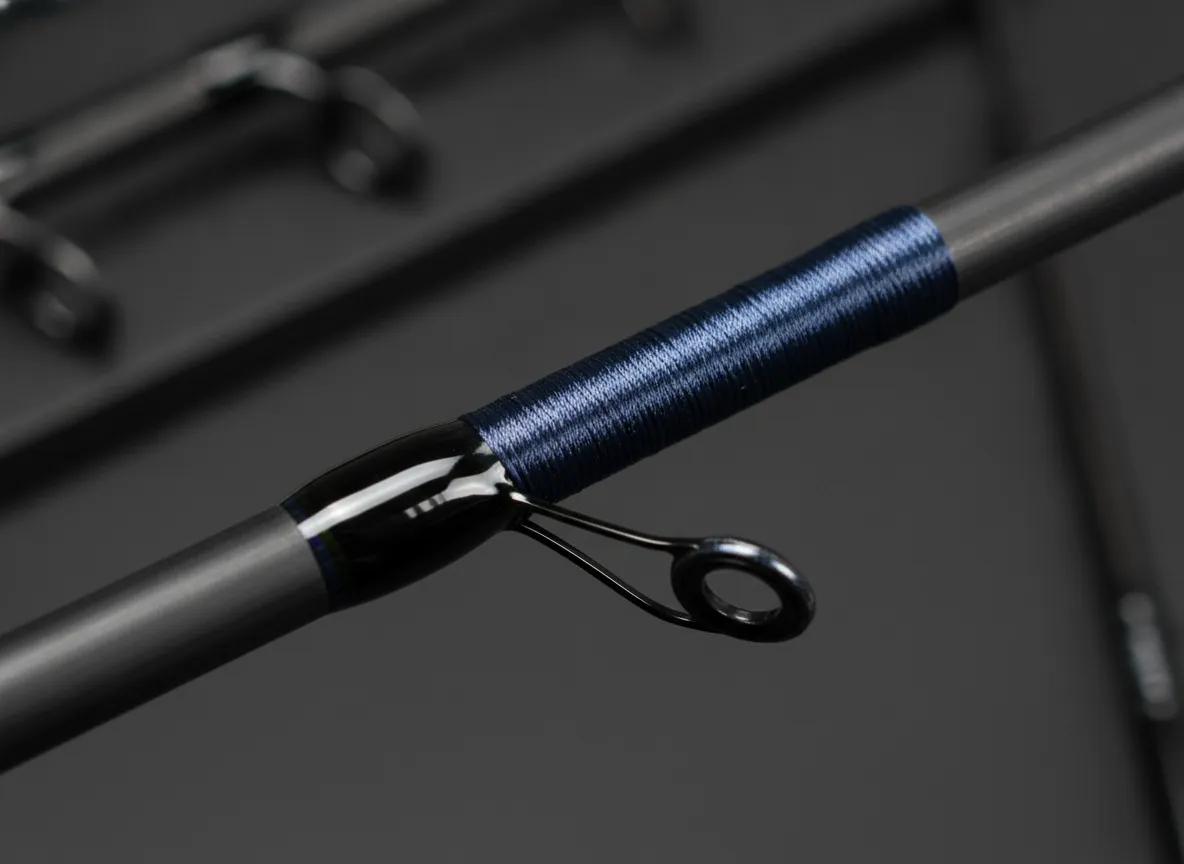
Guides are functional hardware, but they are also a major visual component. The frame finish, chrome, black, titanium, gold, or gunmetal, must align with the rod’s color story. Mixing chrome guides on a matte black blank with gold thread wraps, for example, creates visual conflict that undermines an otherwise strong build.
Guide finish pairings that work:
- Chrome guides pair best with silver, white, or light-colored thread wraps
- Black oxide or titanium guides complement dark blanks and darker thread combinations
- Gold-plated guides elevate burgundy, cream, or olive thread wraps into a premium look
- Gunmetal guides offer a modern industrial aesthetic on graphite or charcoal blanks
Guide size and spacing also affect visual rhythm. Evenly spaced guides with consistent wrap lengths create a sense of order and craftsmanship. Inconsistent spacing, even when functional, reads as sloppy to the trained eye.
4. Upgrade the Grip Material and Shape
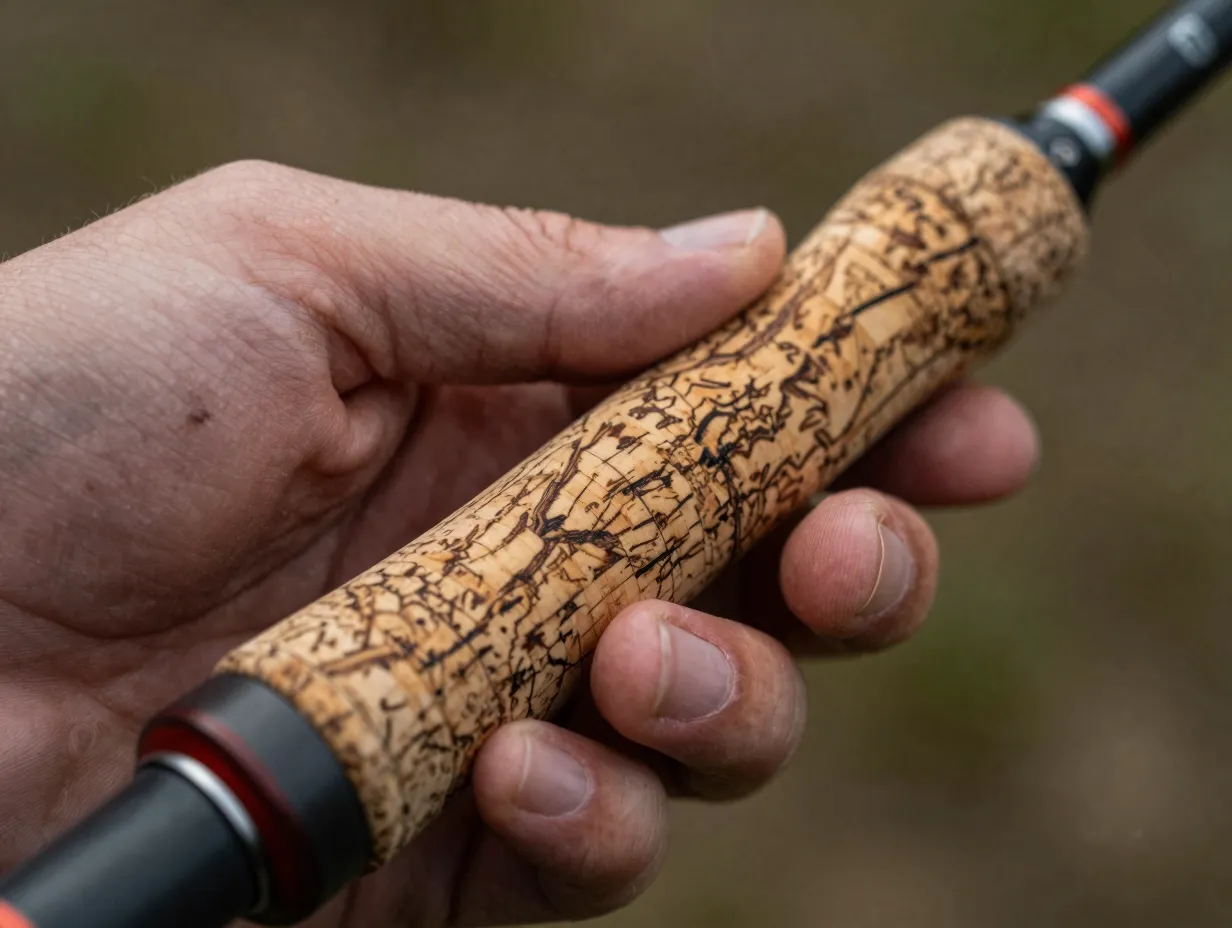
The grip is the part of the rod that gets the most physical contact, and it is also one of the most visible sections. Cork, EVA foam, and hybrid materials each carry a distinct visual identity.
Cork is the traditional premium choice. High-grade cork with minimal pitting looks refined and ages beautifully. Specie cork or tiger cork, which features natural dark streaks, adds visual texture that makes each rod unique.
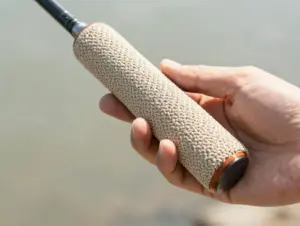
EVA foam offers a cleaner, more modern look. Winn Grip tape and similar wrap products allow for color customization that cork cannot match. A deep blue or forest green EVA grip paired with matching thread wraps creates a visually unified rod.
Hybrid grips combine split cork sections with EVA spacers or carbon fiber inlays. These designs are popular in bass and inshore saltwater builds because they look technical and performance-oriented.
Grip shape matters too. A fighting butt, a full wells grip, or a split-grip design each sends a different visual signal about the rod’s intended use and the builder’s style.
5. Apply a Flawless Epoxy Finish Over Thread Wraps
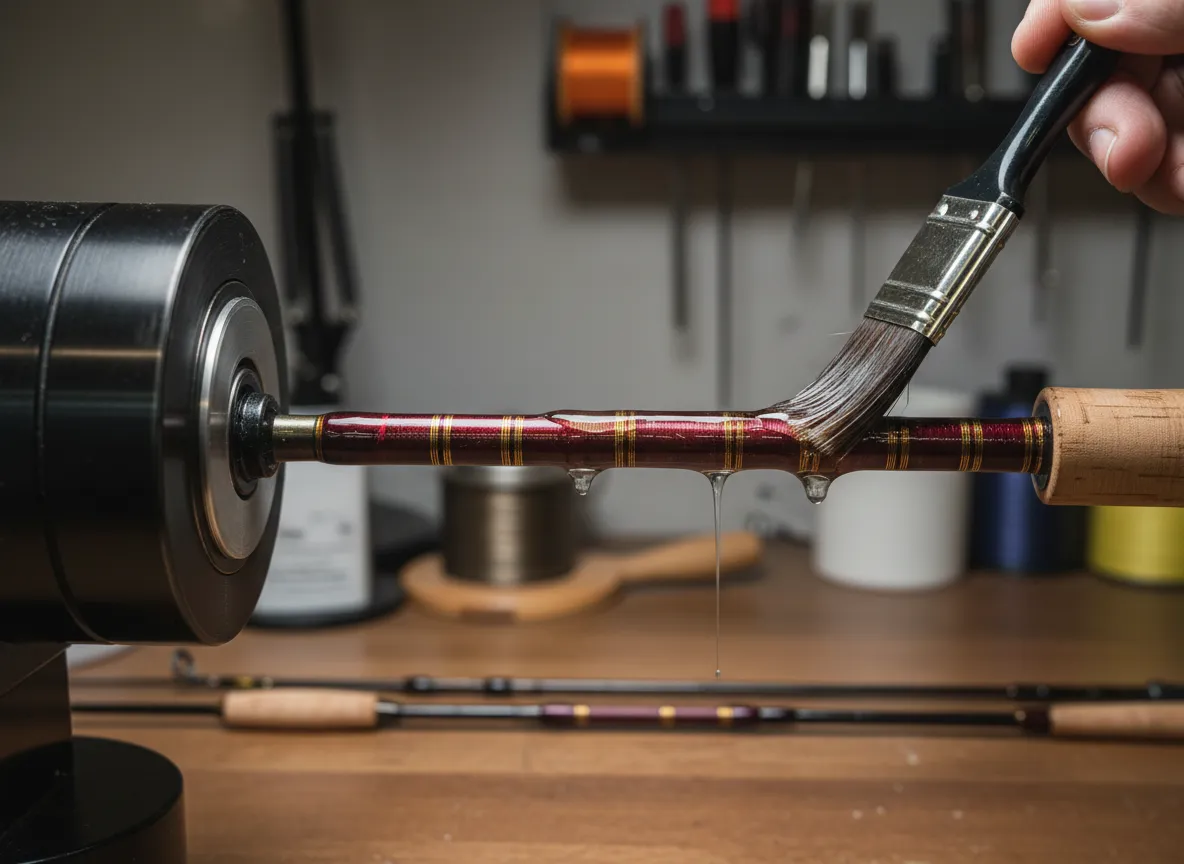
The epoxy finish applied over thread wraps is where a rod’s aesthetic either succeeds or fails. A smooth, bubble-free, glass-like epoxy coat makes thread wraps look professional and intentional. A cloudy, drip-marked, or uneven finish undermines every other design decision made.
Steps for a clean epoxy finish:
- Mix two-part rod finish epoxy in the correct ratio (typically 1:1 by volume)
- Stir slowly for at least two minutes to avoid introducing air bubbles
- Apply thin coats with a small brush, working from the center of the wrap outward
- Rotate the rod on a drying motor for at least four hours per coat
- Apply a second coat after the first has cured (typically 12-24 hours)
- Lightly sand between coats with 400-grit sandpaper for a glass-smooth final surface
Common epoxy mistakes to avoid:
- Mixing too quickly (creates bubbles that cloud the finish)
- Applying in cold temperatures below 65 degrees Fahrenheit (slows curing and causes cloudiness)
- Skipping the drying motor (gravity causes drips that ruin the finish)
6. Personalize With Custom Rod Decals and Lettering
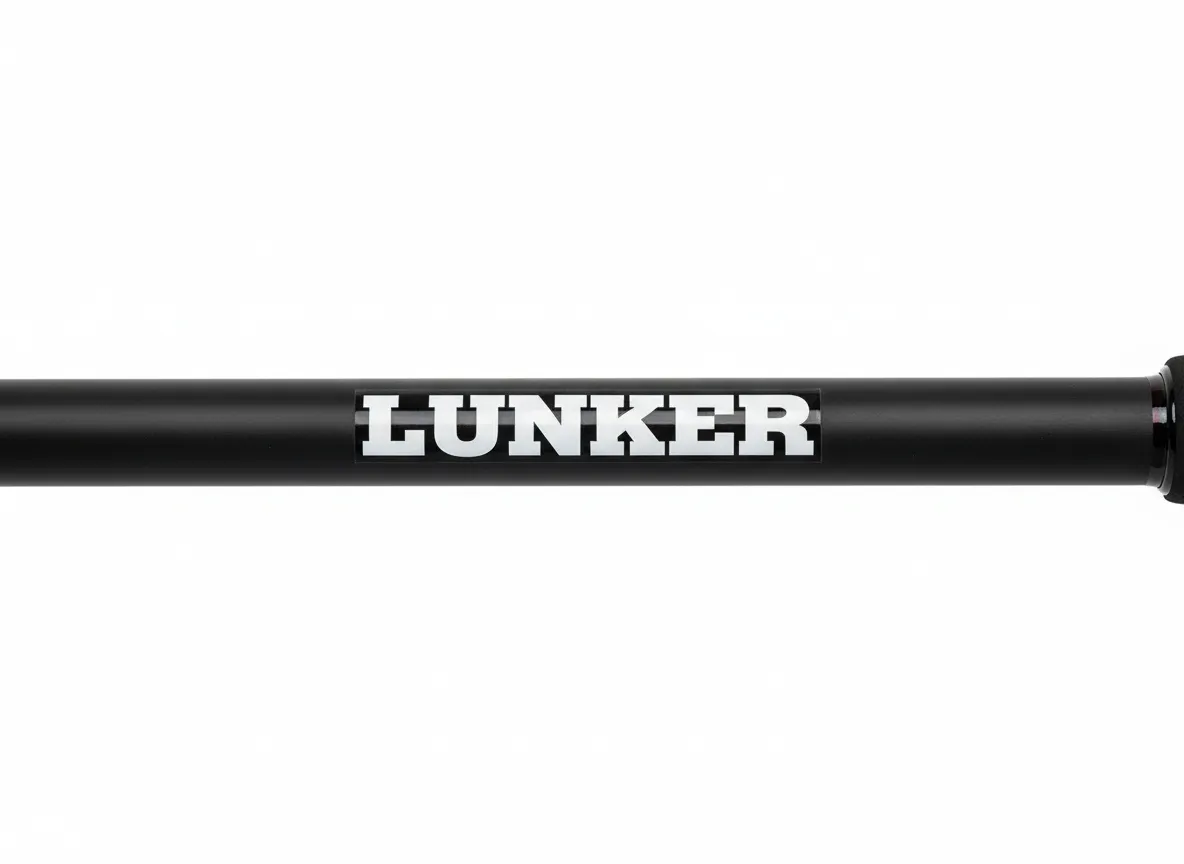
Custom decals and lettering add a signature element to any rod build. Whether it is a builder’s logo, the angler’s name, a species silhouette, or a custom design, decals transform a rod from a tool into a personal statement.
Options for rod lettering and decals:
- Thread-wrapped lettering is the most durable and professional option, achieved by wrapping individual letters in contrasting thread
- Vinyl decals are budget-friendly and available in hundreds of designs, though they are less durable than thread work
- Waterslide decals allow for photographic-quality imagery and are sealed under epoxy for permanent protection
- Laser-etched blanks are available from some custom blank manufacturers and offer a permanent, premium look
Placement matters. Lettering near the butt section above the grip is the traditional location. Avoid placing decals over guide feet or near the tip where they may interfere with action or visibility.
7. Coordinate the Reel Seat Finish With the Rest of the Rod
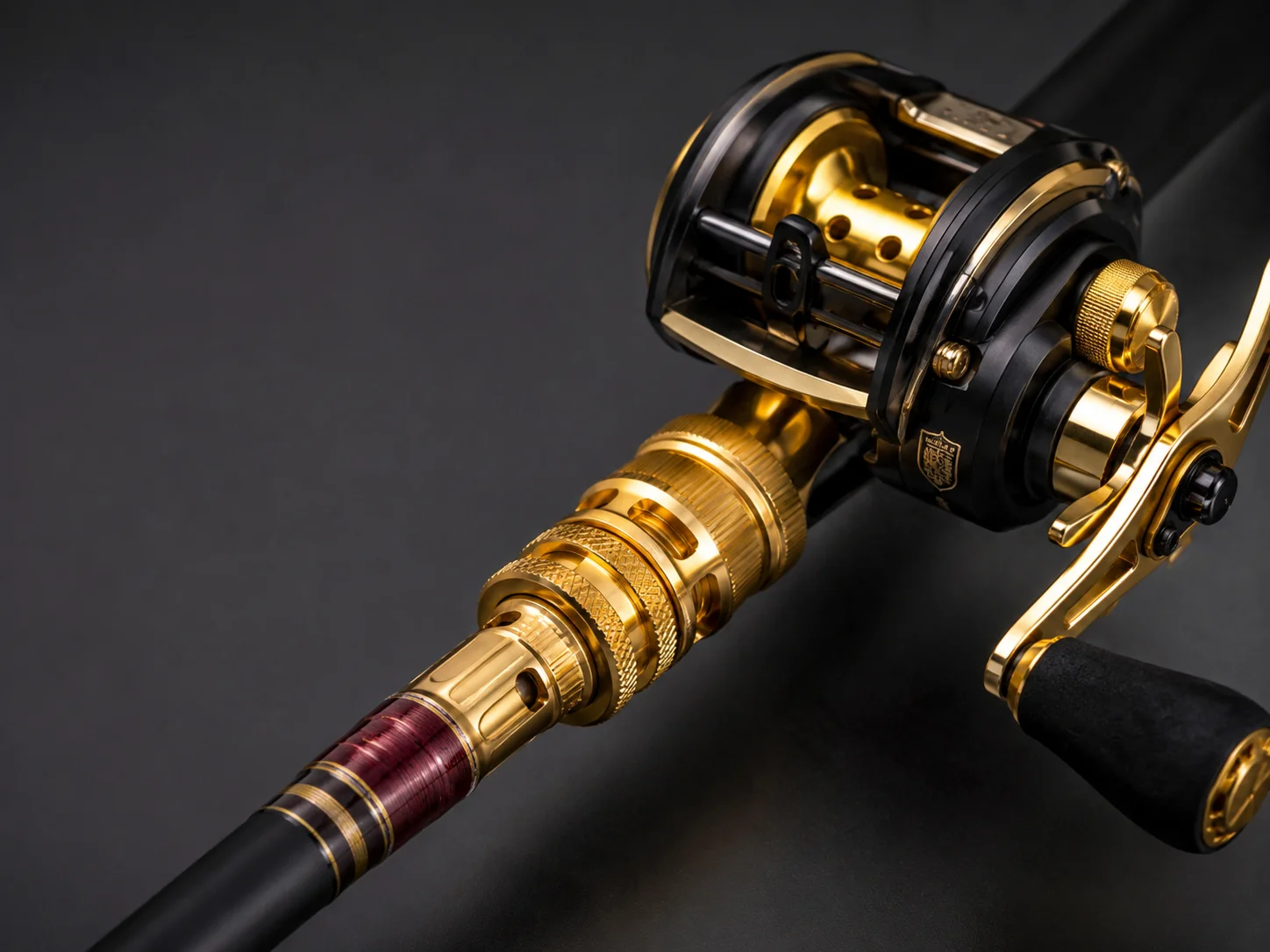
The reel seat is the mechanical heart of the rod, and its finish has an outsized impact on the overall aesthetic. Reel seats come in aluminum, graphite, carbon fiber, wood, and hybrid materials, each with distinct visual characteristics.
Reel seat material and finish options:
- Anodized aluminum in black, gunmetal, or gold is the most popular choice for custom builds
- Skeletal reel seats expose the blank beneath and create a lightweight, high-tech look
- Wood inserts (rosewood, maple burl, or black walnut) add warmth and a handcrafted feel
- Carbon fiber reel seats signal performance and pair well with dark, modern builds
The reel seat hood and nut finish should match the guide frames. A gold reel seat with chrome guides creates visual inconsistency. When all metal components share the same finish family, the rod reads as a cohesive, intentional design rather than an assembled collection of parts.
8. Match the Rod’s Color Palette to the Reel and Tackle
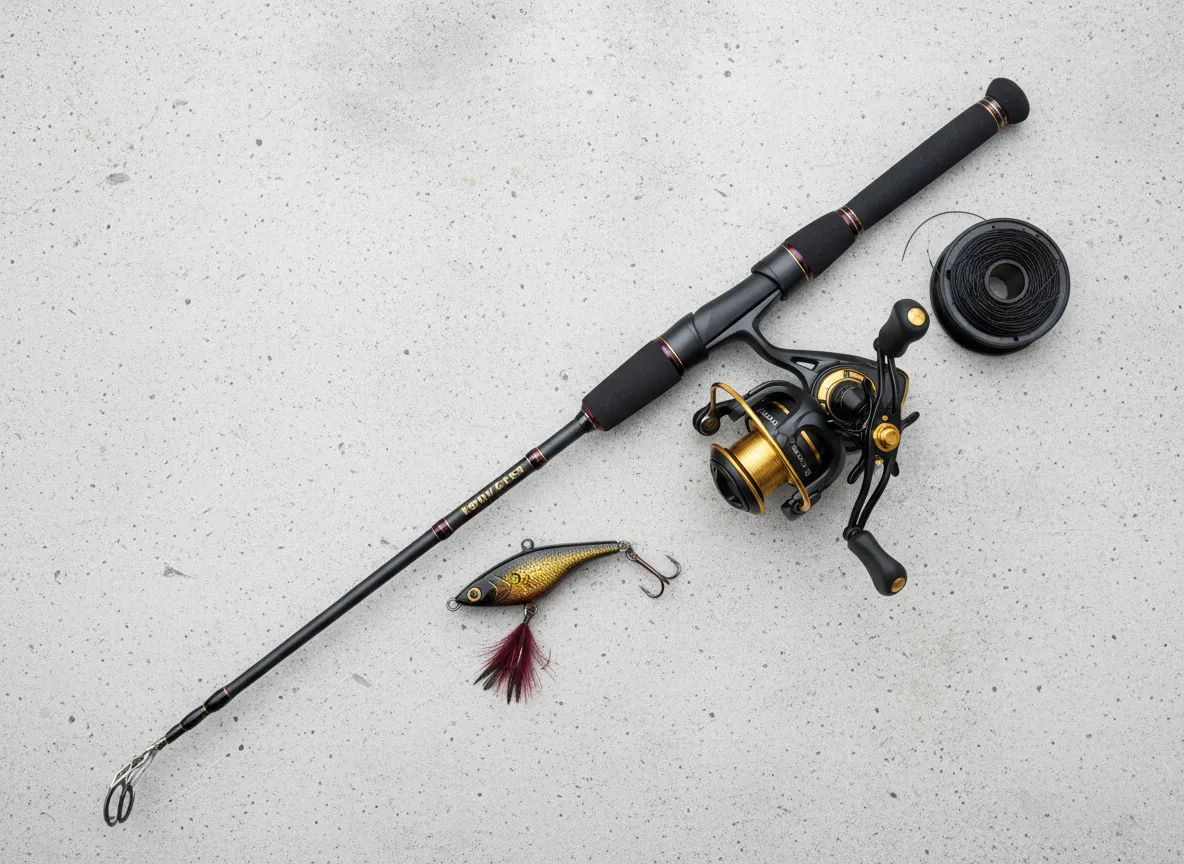
A fishing rod does not exist in isolation. It is always paired with a reel, line, and often a lure or terminal tackle. Building a cohesive color system across all these elements is what separates a casual setup from a gear aesthetic that looks curated and deliberate.
How to build a cohesive gear palette:
- Start with the reel’s dominant color (body, rotor, or handle knob)
- Choose a rod blank color that complements rather than clashes with the reel
- Select thread wrap colors that echo the reel’s accent tones
- Match the line color (braid or fluorocarbon) to the overall palette where possible
- Use lure colors that fit within the same color family for photography and display purposes
For example, a black and gold Shimano reel pairs naturally with a matte black blank, burgundy and gold thread wraps, and black oxide guides. The result is a setup that looks like it was designed as a system rather than assembled from random components.
9. Protect and Maintain the Aesthetic With Proper Rod Care
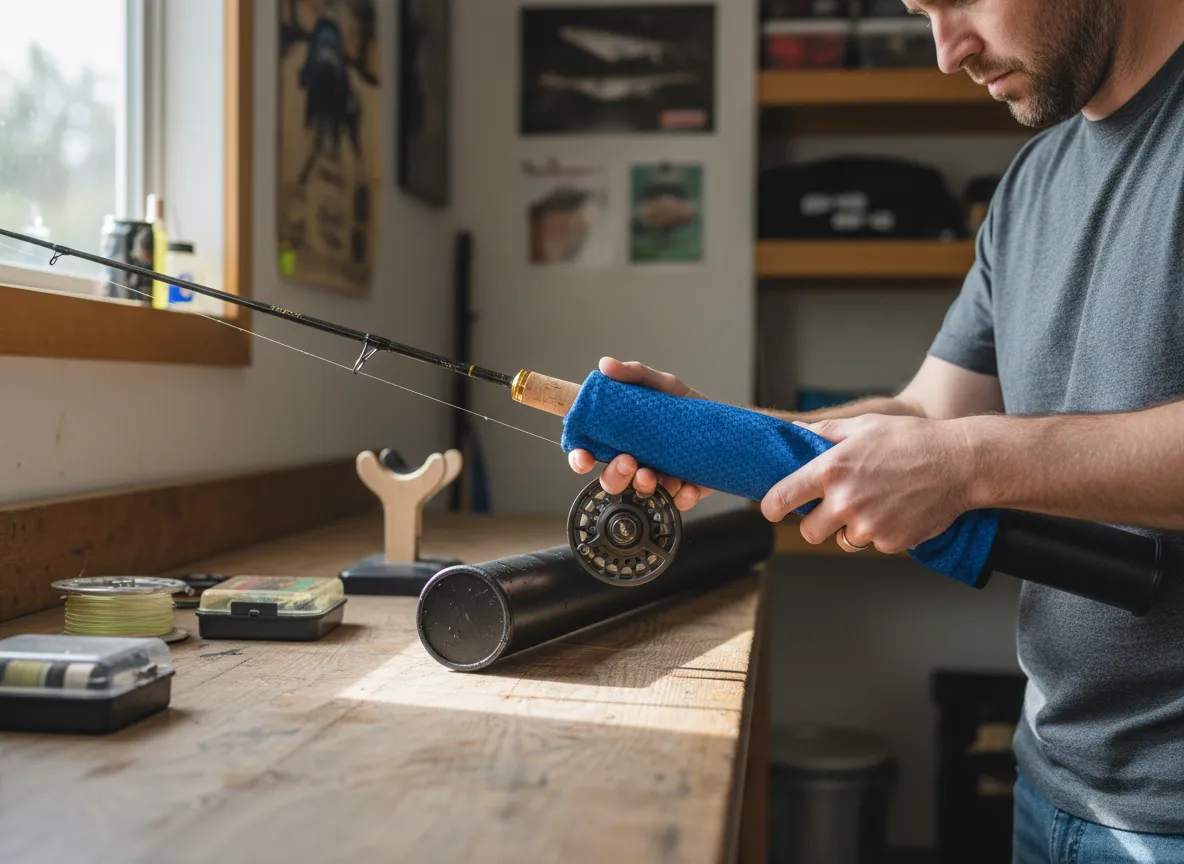
All the work invested in achieving a perfect fishing rod aesthetic is only as good as the maintenance routine behind it. UV exposure, saltwater corrosion, and physical impact are the three primary threats to a rod’s appearance over time.
Rod care practices that preserve aesthetics:
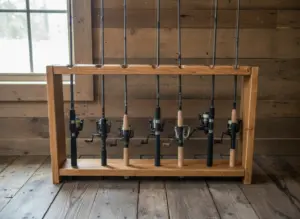
- Store rods vertically or horizontally in a rod rack, never leaning against a wall at an angle that stresses the blank
- Rinse saltwater rods with fresh water after every use to prevent corrosion on guide frames and reel seat hardware
- Apply a thin coat of carnauba wax to the blank once or twice per season to protect the finish and maintain gloss
- Inspect epoxy wraps annually for cracking or lifting, and recoat with fresh epoxy if needed
- Use rod socks or rod tubes for transport to prevent scratches, chips, and UV fading
- Avoid leaving rods in direct sunlight in car trunks or truck beds, as heat and UV degrade both epoxy and blank finish
A rod that is well-maintained for five years will look as good as the day it was finished. Neglected rods fade, corrode, and chip, undoing every aesthetic decision made during the build.
Bringing It All Together: Aesthetic Principles for Every Rod Builder
Understanding the 9 ways to achieve the perfect fishing rod aesthetic for your gear is only the beginning. The real skill lies in applying these principles as a unified system rather than isolated choices. Every decision, blank color, thread wrap, guide finish, grip material, epoxy quality, decals, reel seat, gear coordination, and maintenance, feeds into a single visual narrative.
The three universal aesthetic principles that tie everything together:
- Consistency, All metal finishes should belong to the same finish family (chrome, black, gold, or gunmetal). Mixing finishes without intention creates visual noise.
- Contrast, The most visually compelling rods use deliberate contrast between blank color and thread wraps. A light thread on a dark blank, or a dark thread on a light blank, creates definition and draws the eye.
- Restraint, The most professional-looking custom rods avoid overloading the design with too many colors or elements. Three colors maximum, a primary, a secondary, and an accent, is the rule most experienced rod builders follow.
A rod built with consistency, contrast, and restraint will always look more professional than one loaded with every color and technique available.
Conclusion
The 9 ways to achieve the perfect fishing rod aesthetic for your gear outlined here represent a complete framework for any angler who wants their setup to reflect the same care and intention they bring to their fishing. Start with the blank color as the foundation, build upward through thread wraps and guide selection, and finish with a flawless epoxy coat. Coordinate the reel seat and hardware finishes, personalize with decals or lettering, and tie the entire system together by matching the rod’s palette to the reel and tackle.
Actionable next steps:
- Audit the current gear setup and identify the dominant color in the reel or most-used lure
- Select a blank color and thread combination from the table in section 2 that complements that dominant color
- Source a two-part rod finish epoxy and a drying motor before starting any thread work
- Commit to a three-color maximum rule for the first custom build
- Establish a seasonal maintenance routine to protect the finished rod from UV, salt, and impact damage
A fishing rod that looks exceptional is not an accident. It is the result of deliberate choices made at every stage of the build and care process. In 2026, with more rod-building resources and component suppliers available than ever before, there has never been a better time to build a setup that is as visually striking as it is functional.