9 Must-Have Fish Rod Holder Options For Boats, Docks, And Banks
The global fishing rod holder market is expanding at a consistent mid-single-digit compound annual growth rate through 2034, reflecting how seriously modern anglers take their gear organization [1]. Yet many fishermen still lose fish, damage rods, or waste prime fishing time fumbling with equipment that was never properly secured. The right rod holder is not a luxury, it is a functional tool that directly affects catch rates, rod longevity, and overall safety on the water. This guide to the 9 must-have fish rod holder options for boats, docks, and banks breaks down every major holder type, what makes each one effective, and how to match the right option to your specific fishing environment.
Disclosure: This post contains affiliate links. As an Amazon Associate, we earn from qualifying purchases, and at no extra cost to you.
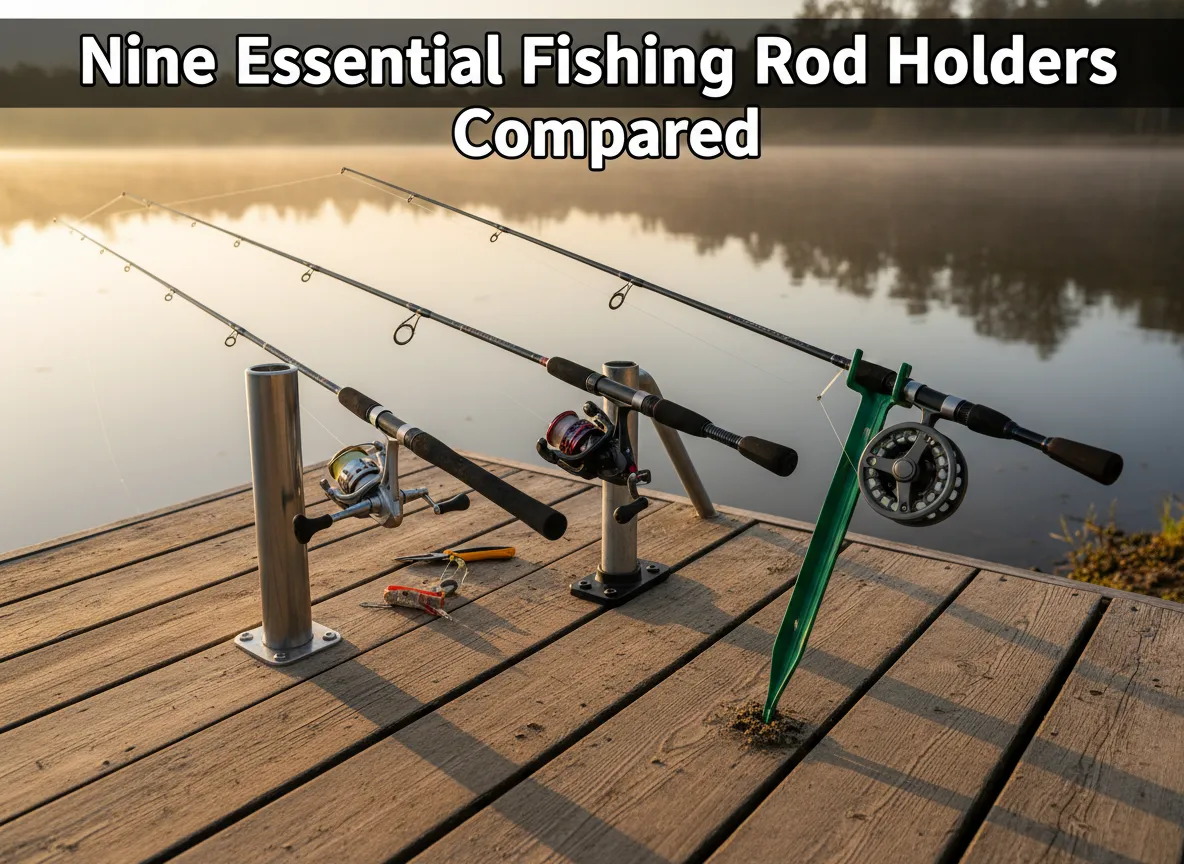
Key Takeaways
- Rod holders are available in distinct categories designed for boats, fixed docks, and open bank fishing, matching the right type to the environment is critical
- Material quality (stainless steel, high-density polyethylene, anodized aluminum) determines corrosion resistance and long-term durability
- Adjustability features such as swivel angles and tilt positions significantly expand a holder’s versatility across fishing styles
- The fishing rod holder market is growing steadily, driven by rising participation in recreational fishing and demand for organized, multi-rod setups [3]
- Proper installation and weight capacity must be verified before mounting any holder to a boat rail, dock post, or bank stake
What to Look for Before Buying Any Rod Holder
Before diving into the 9 must-have fish rod holder options for boats, docks, and banks, it helps to understand the core selection criteria that apply across all holder types.
Material: Saltwater environments demand 316-grade stainless steel or UV-stabilized polymers. Freshwater setups can tolerate aluminum or standard ABS plastic, though corrosion-resistant materials always extend product life [10].
Mounting System: Flush mount, clamp-on, rail mount, and stake designs each require different surfaces and installation tools. Always confirm compatibility with your specific boat gunwale thickness, dock rail diameter, or bank soil type.
Rod Diameter Compatibility: Most holders accommodate rods between 1.25 and 2 inches in butt diameter, but heavy trolling rods or ultralight spinning rods may fall outside standard ranges [2].
Angle Adjustment: Fixed-angle holders work for passive soaking rigs, but adjustable tilt and swivel options are essential for active fishing styles like trolling or live bait fishing.
Weight Capacity: Heavier offshore rods paired with large reels can stress mounting hardware. Verify that the holder and its mounting bracket are rated for the combined rod and reel weight.
| Criteria | Why It Matters |
|---|---|
| Material | Corrosion resistance, lifespan |
| Mounting type | Surface compatibility |
| Angle adjustment | Fishing style flexibility |
| Rod diameter range | Universal vs. specialized fit |
| Weight capacity | Safety and hardware integrity |
The 9 Must-Have Fish Rod Holder Options For Boats, Docks, And Banks
The following nine holder types cover every major fishing environment and technique. Each entry includes a description, best use case, key features to prioritize, and installation notes.
1. Flush Mount Rod Holders
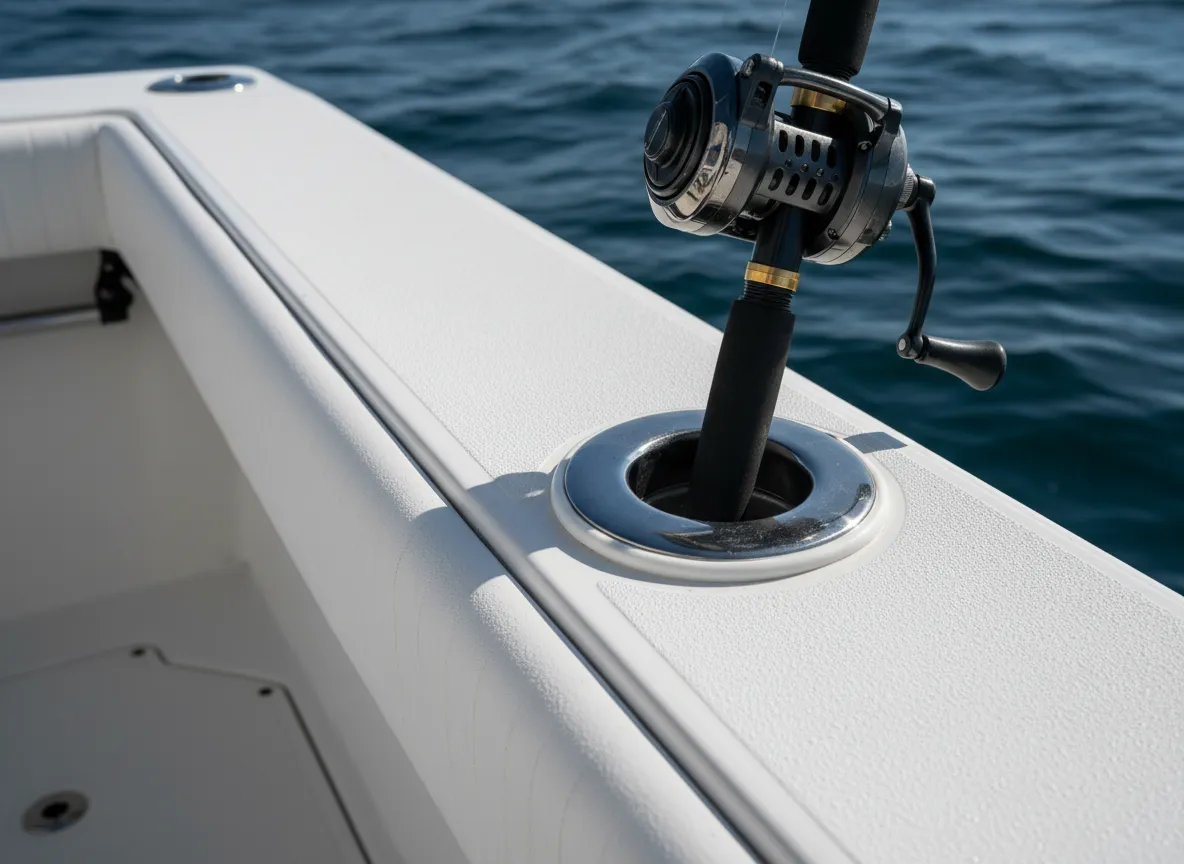
Flush mount rod holders are permanently installed directly into a boat’s gunwale, transom, or deck surface. The holder body sits flush with the surrounding surface, creating a clean, low-profile look while keeping rods secure and out of the way during transit.
Best for: Offshore boats, center consoles, bass boats, and any vessel where a permanent, clean installation is preferred.
Key features to look for:
- 304 or 316 stainless steel construction for saltwater resistance
- 30-degree or 45-degree fixed angle options (45-degree is most common for trolling)
- Rubber or foam rod butt insert to prevent rattling and scratching
- Drain hole at the base to prevent water pooling
Installation note: Flush mounting requires cutting a precise hole in the gunwale or deck. Use a hole saw matched to the holder’s outer diameter and apply marine sealant around the flange before fastening. This is a permanent modification, so placement should be planned carefully.
Flush mount holders are among the most widely sold holder types globally, appearing on both production fishing boats and custom offshore builds [7].
2. Clamp-On Rod Holders
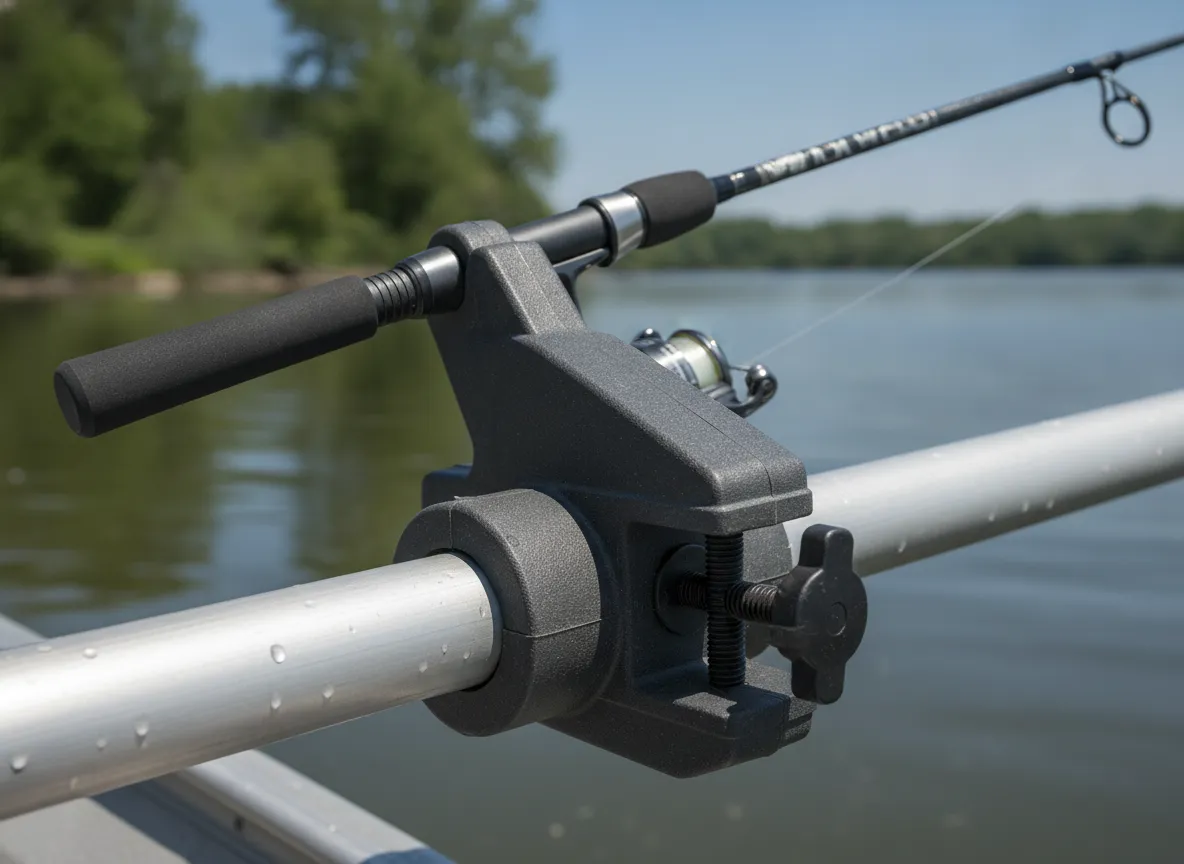
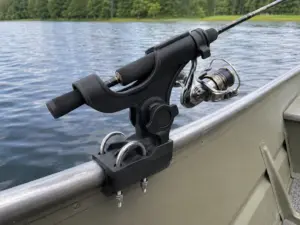
Clamp-on rod holders attach to boat gunwales, railings, or dock rails without any drilling or permanent modification. A set of adjustable clamps grips the rail or gunwale edge, and the holder body extends outward at a fixed or adjustable angle.
Best for: Rental boats, leased vessels, kayaks with side rails, and situations where permanent mounting is not permitted or practical.
Key features to look for:
- Stainless steel or heavy-duty polymer clamp body
- Clamp jaw range that matches your rail or gunwale thickness
- Locking thumb screw or hex bolt for a secure grip
- 360-degree rotation capability for repositioning during a session
Installation note: Clamp-on holders can shift under heavy rod loads or when a fish strikes aggressively. Tighten all fasteners firmly and check periodically during use. For heavier rods, opt for models with dual-clamp designs that distribute load across a wider grip area [10].
3. Rail Mount Rod Holders
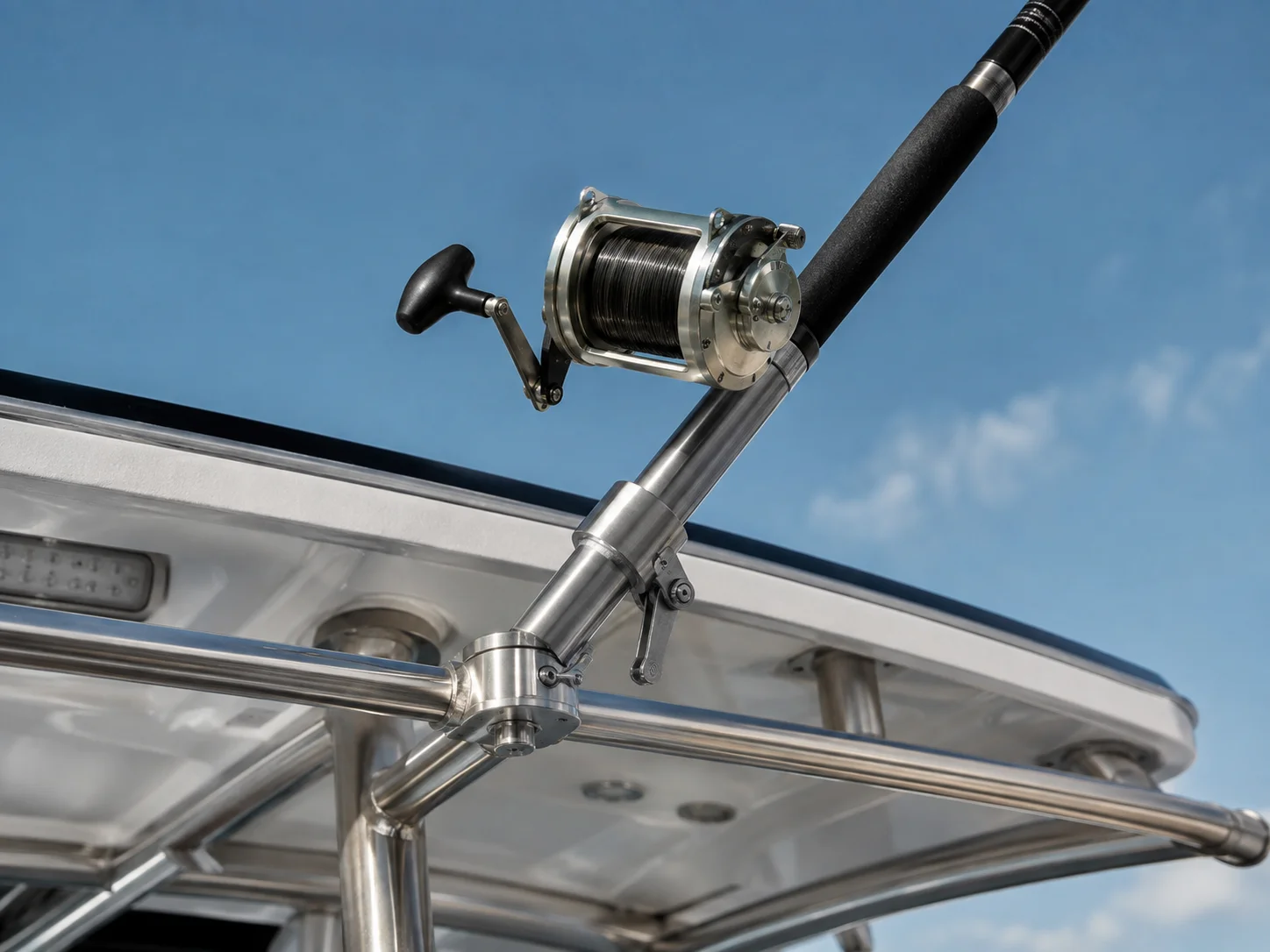
Rail mount rod holders are specifically engineered to attach to round or square stainless steel or aluminum rails found on the T-tops, hardtops, and side rails of larger offshore and center console boats. Unlike clamp-on models, rail mounts use a dedicated collar system sized to standard rail diameters (typically 1-inch or 1.25-inch OD).
Best for: Center console boats, offshore sportfishers, and any vessel with an existing rail system.
Key features to look for:
- Collar diameter matched to the specific rail OD on the vessel
- Stainless steel collar and holder body for saltwater durability
- Swivel or tilt adjustment for positioning rods at different angles
- Quick-release locking mechanism for repositioning
Installation note: Rail mounts are semi-permanent and can be repositioned along the rail without tools on many models. Confirm the collar’s clamping force rating, undersized collars on large-diameter rails can slip under load.
4. T-Top and Hardtop Rod Holders
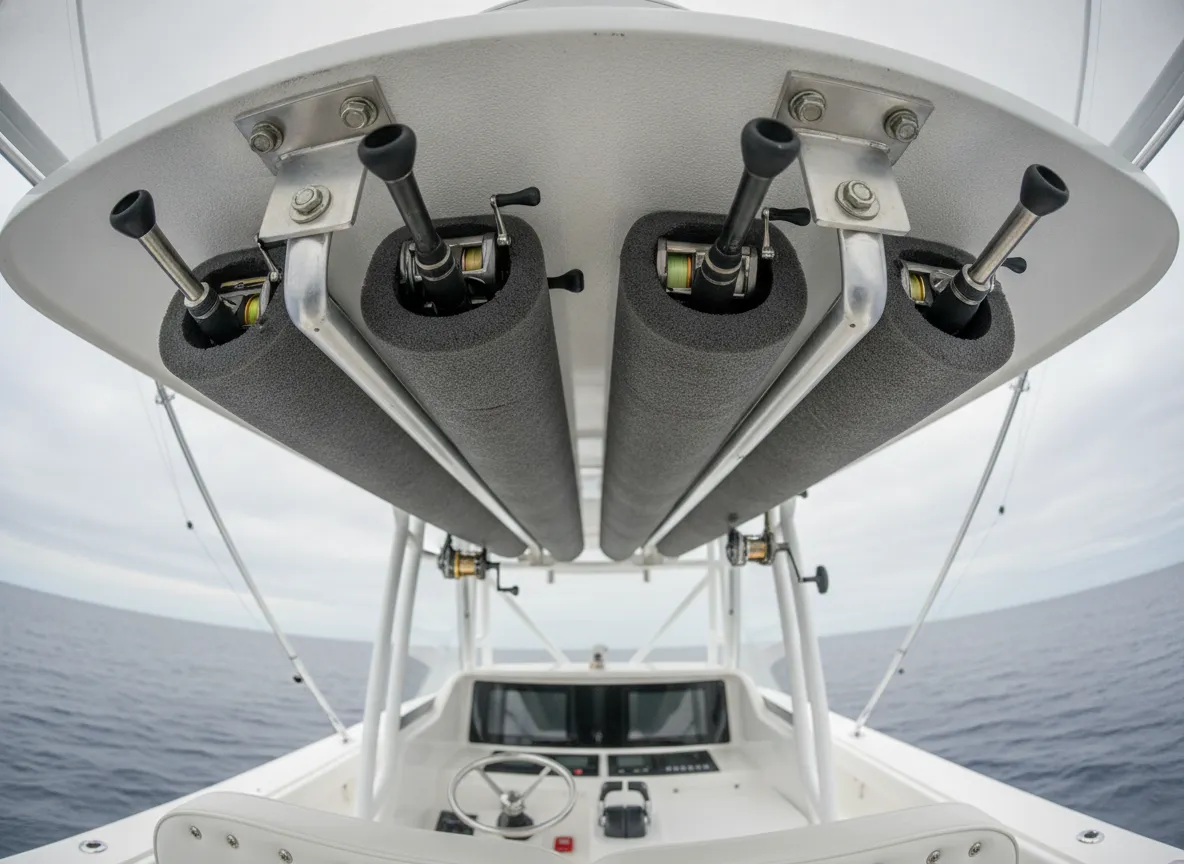
T-top and hardtop rod holders are mounted directly to the underside or vertical supports of a boat’s T-top or hardtop structure. These holders are designed specifically for storing rods horizontally during transit or positioning them for trolling passes.
Best for: Offshore center consoles and sportfishing boats with existing T-top or hardtop structures.
Key features to look for:
- Horizontal storage tubes for rod-and-reel combos during transit
- Foam-lined interior to prevent rod finish damage from vibration
- Stainless steel mounting brackets with marine-grade fasteners
- Capacity for 4 to 8 rods depending on the T-top width
Installation note: Mounting to a T-top requires drilling into the aluminum or fiberglass structure. Use stainless steel hardware and apply thread-locking compound to prevent fastener loosening from engine vibration. Confirm the T-top manufacturer’s load rating before adding multiple holders loaded with heavy offshore rods.
5. Kayak and Small Watercraft Rod Holders
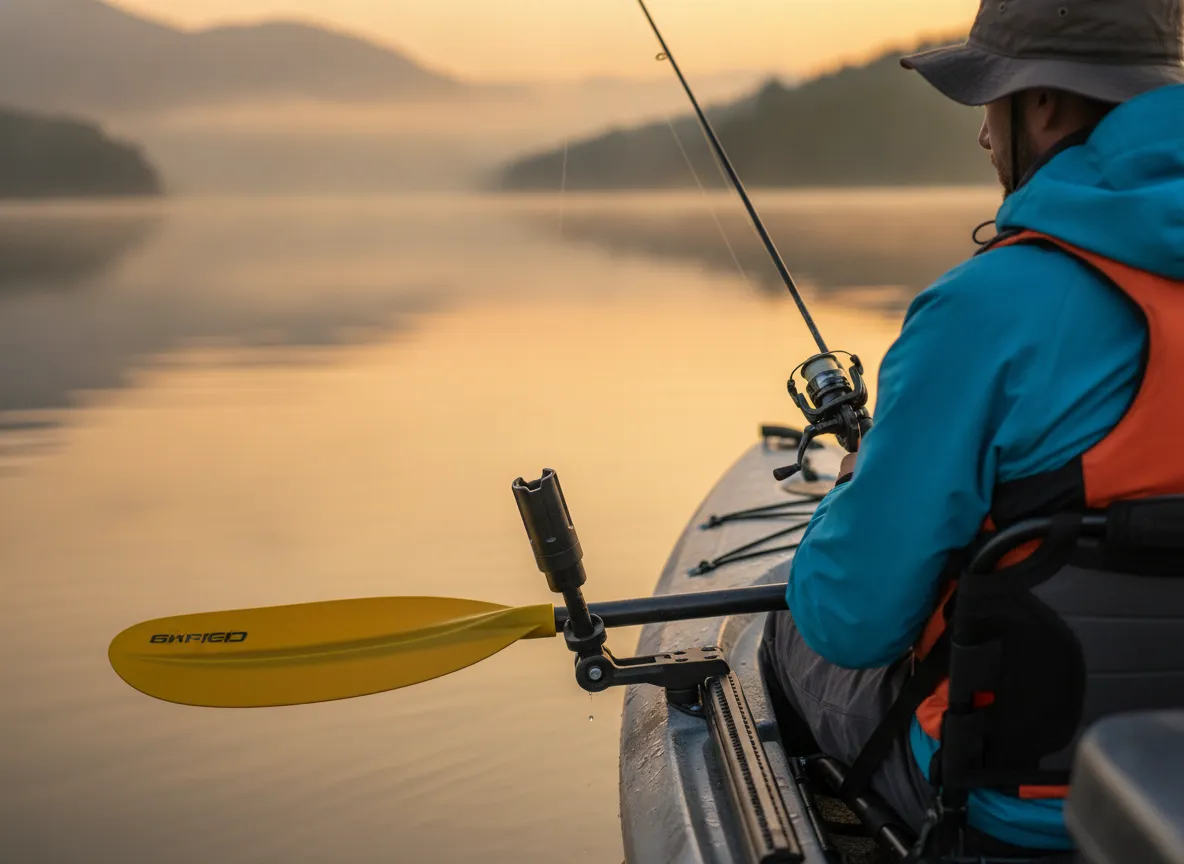
Kayak-specific rod holders are engineered for the narrower profiles, lighter materials, and unique mounting tracks found on fishing kayaks and small jon boats. Most modern fishing kayaks feature a standardized track system (such as the Scotty or RAM mounting rail) that accepts compatible holder bases without drilling.
Best for: Kayak anglers, canoe fishermen, and small aluminum jon boat operators.
Key features to look for:
- Track-mount or flush-mount base compatible with the kayak’s existing rail system
- 360-degree swivel and tilt adjustment for hands-free trolling or soaking baits
- Compact, low-profile design that does not interfere with paddle strokes
- UV-stabilized polymer construction to handle prolonged sun exposure
Installation note: Many kayak holders use a twist-lock track mount that requires no tools for installation or removal. For kayaks without factory tracks, adhesive-backed or strap-mount bases are available, though these are less secure than track-mounted options [2].
The kayak fishing segment is one of the fastest-growing subsectors driving overall demand in the rod holder market [4].
6. Dock Post Rod Holders
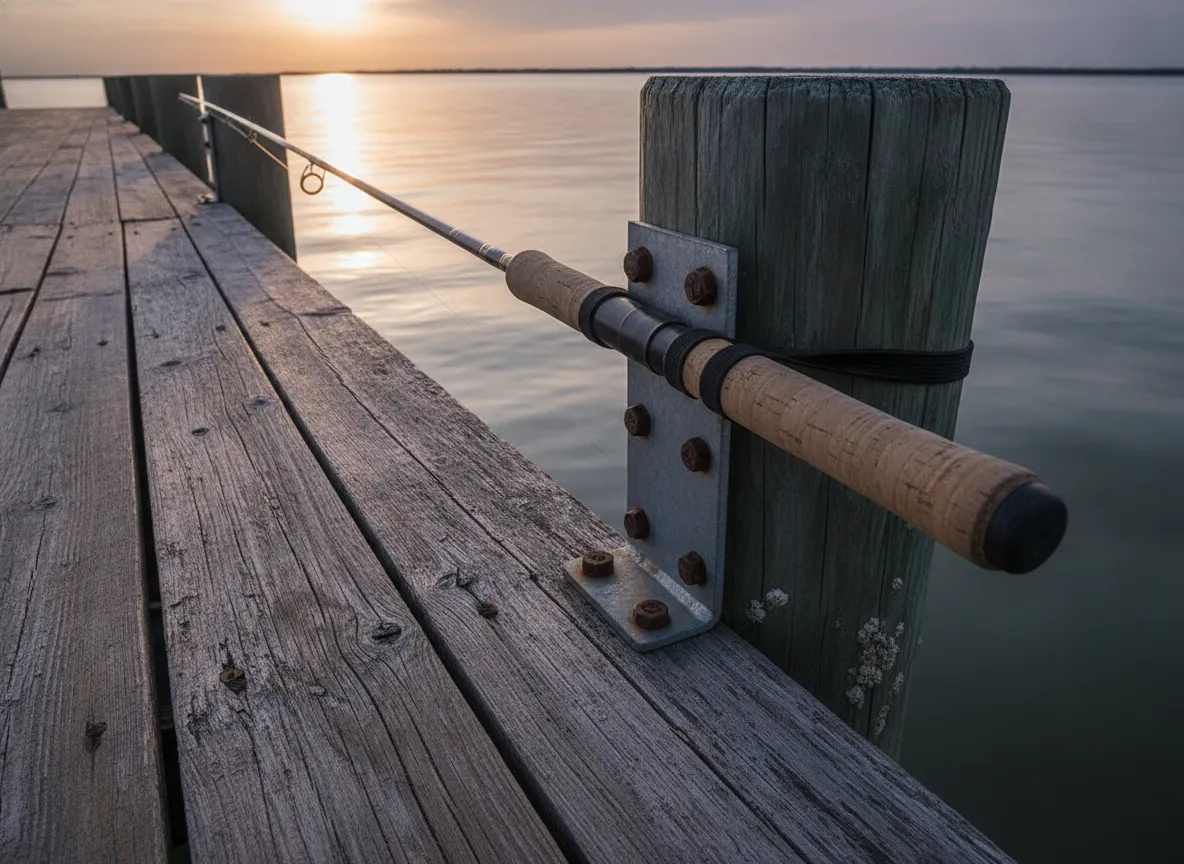
Dock post rod holders are designed to mount directly to the vertical posts or pilings of a fixed dock. They hold rods at a fixed or adjustable angle over the water, making them ideal for passive bait fishing, crabbing setups, or simply storing rods between casts.
Best for: Freshwater and saltwater dock fishing, crabbing, and multi-rod passive setups.
Key features to look for:
- Heavy-duty stainless steel or galvanized steel construction for dock environments
- Adjustable tilt angle (typically 0 to 90 degrees) to position the rod tip over the water
- Clamp or through-bolt mounting options for different post diameters
- Rod retention strap or bungee cord to prevent rods from bouncing out in wind or current
Installation note: Through-bolt mounting provides the most secure attachment to dock posts. Clamp-on dock holders are convenient but should be checked for slippage regularly, especially on older or weathered posts where surface irregularities can reduce clamp grip.
7. Dock Rail and Fence Rod Holders
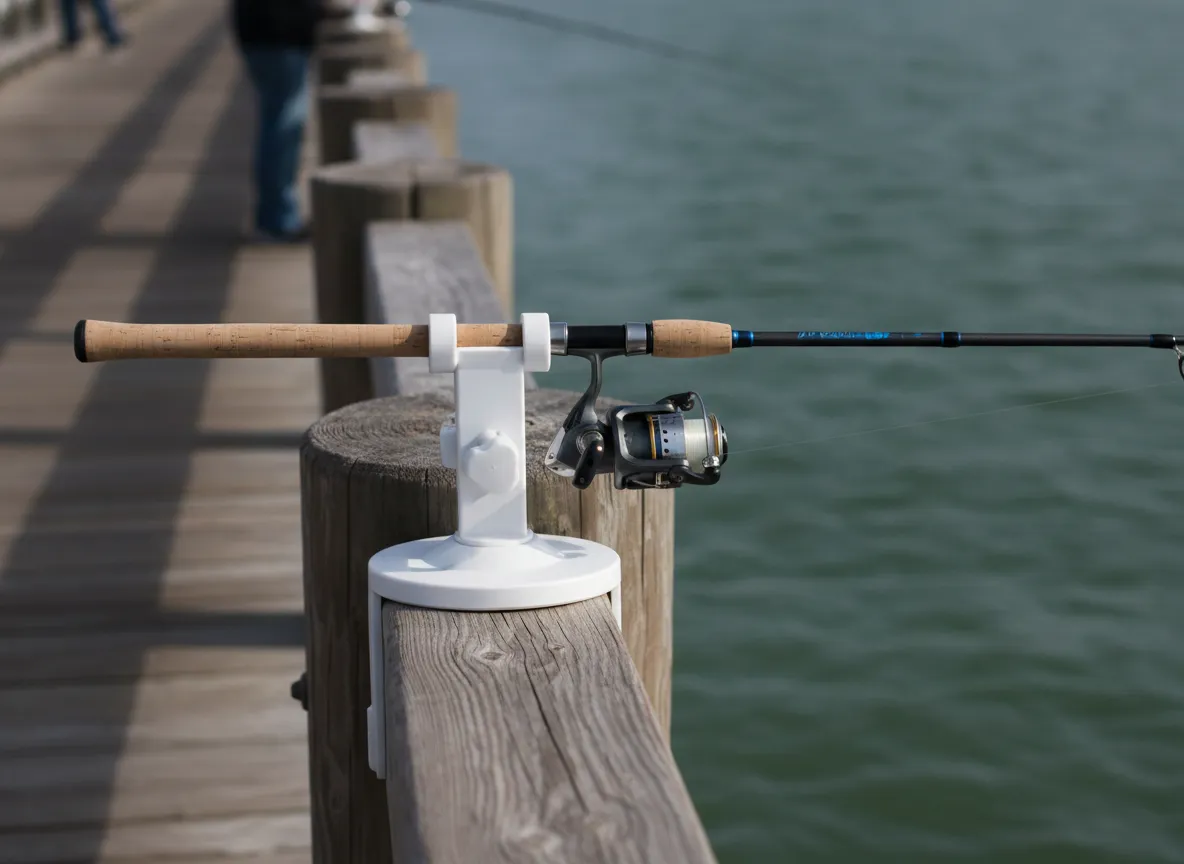
Dock rail and fence rod holders clamp onto the horizontal top rail or fence structure of a dock rather than the vertical post. This positions the rod holder at a comfortable working height and keeps rods accessible without requiring the angler to bend down to a post-mounted holder.
Best for: Elevated dock platforms, fishing piers, and dock structures with existing top-rail systems.
Key features to look for:
- Adjustable clamp jaw to fit various rail diameters and profiles
- 360-degree swivel base for positioning rods in any direction
- Durable polymer or stainless steel body rated for outdoor exposure
- Compatibility with both round and square rail profiles
Installation note: Rail-mount dock holders are non-destructive and highly portable. They can be moved along the rail to follow fish activity or repositioned for different tide stages. Ensure the clamp jaw fully engages the rail, partial engagement under a heavy rod load can cause the holder to rotate unexpectedly [10].
8. Bank Fishing Rod Holders (Ground Stakes)
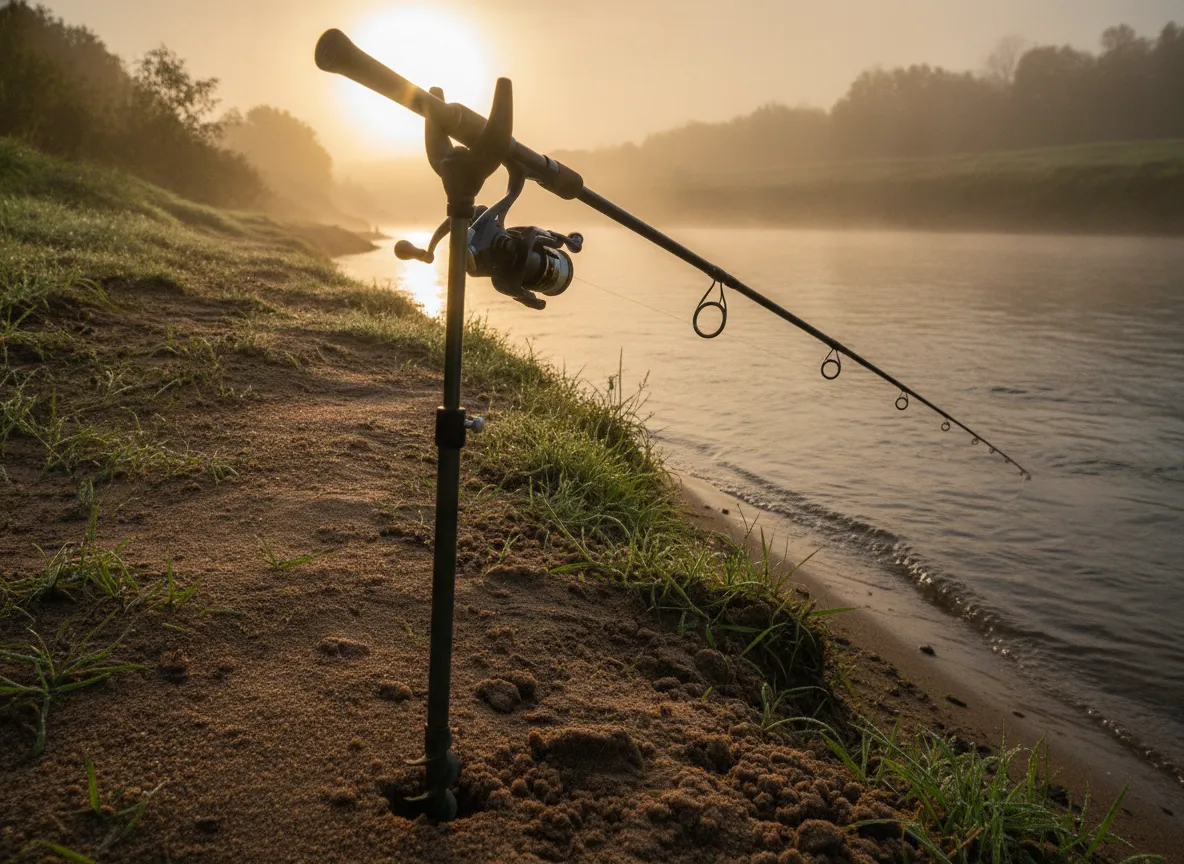
Bank fishing rod holders, commonly called bank sticks or ground stakes, are driven directly into the soil, sand, or gravel of a riverbank, lake shore, or pond edge. They hold rods at a fixed angle while the angler waits for a bite, freeing both hands for other tasks.
Best for: Shore fishing, river bank fishing, carp fishing, catfishing, and any situation where no fixed structure is available for mounting.
Key features to look for:
- Pointed or spiral-tip stake design for easy insertion into varied soil types
- Adjustable height via telescoping shaft (typically 12 to 36 inches)
- Swivel or tilt head to angle the rod tip toward the water at the correct position
- Durable powder-coated steel or aluminum construction to resist ground moisture
Installation note: In sandy or loose soil, a wider spiral stake base provides better resistance to pull-out when a fish strikes. In hard or rocky ground, a pointed spike with a mallet-driven design is more practical. Always test stake stability before leaving a rod unattended, a powerful strike from a large catfish or carp can pull a poorly seated stake entirely out of the ground [9].
Bank fishing rod holders are particularly popular in Europe and Asia, where carp and coarse fishing traditions involve multi-rod setups with bite alarms mounted on the same stake system [4].
9. Adjustable Swing-Arm and Multi-Rod Holder Systems
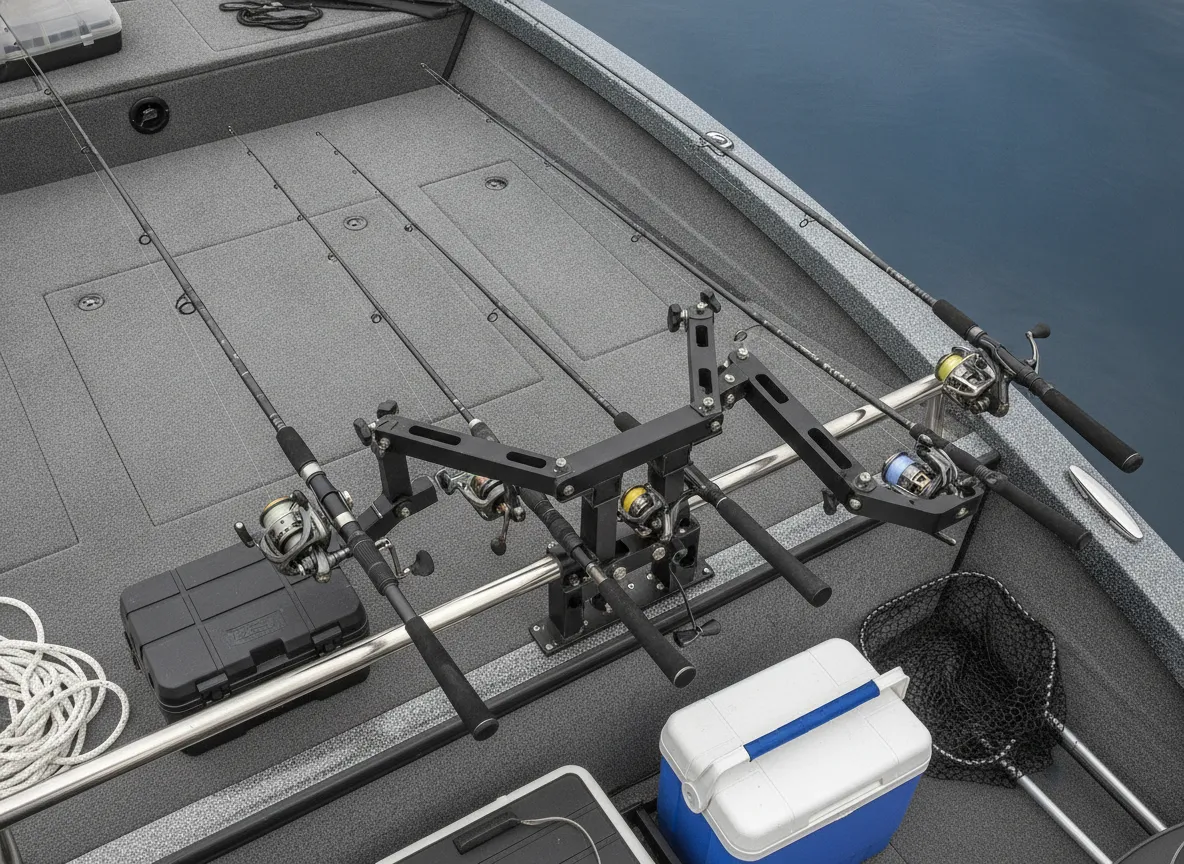
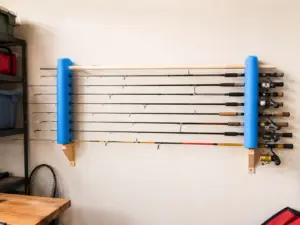
Adjustable swing-arm rod holders and multi-rod rack systems represent the most versatile category in this list. These holders feature articulating arms, multiple rod slots in a single unit, or modular designs that can be configured for boats, docks, or even vehicle-mounted transport racks.
Best for: Serious anglers who fish multiple rods simultaneously, tournament fishermen, and guide boats that need to store and deploy many rods quickly.
Key features to look for:
- Swing-arm or articulating design that allows each rod to be positioned independently
- Multi-slot capacity (4 to 12 rods per unit) for maximum efficiency
- Modular base mounting options (rail, flush, post, or stake) for cross-environment use
- Locking positions at multiple angles to accommodate different techniques
Installation note: Multi-rod systems are heavier and place more concentrated load on their mounting point. Always use the manufacturer’s recommended mounting hardware and verify that the boat gunwale, dock post, or bank stake can support the combined weight of the unit plus all loaded rods and reels. For tournament boats and guide vessels, professional installation by a marine outfitter is recommended [2].
The demand for multi-rod holder systems is growing as recreational anglers adopt techniques borrowed from professional tournament fishing, where managing several lines simultaneously is standard practice [8].
Comparing Rod Holder Types by Environment
| Holder Type | Boat | Dock | Bank | Permanent Install |
|---|---|---|---|---|
| Flush Mount | Yes | No | No | Yes |
| Clamp-On | Yes | Yes | No | No |
| Rail Mount | Yes | Yes | No | Semi |
| T-Top / Hardtop | Yes | No | No | Yes |
| Kayak / Small Craft | Yes | No | No | Semi |
| Dock Post Mount | No | Yes | No | Semi |
| Dock Rail / Fence | No | Yes | No | No |
| Bank Stake / Ground | No | No | Yes | No |
| Swing-Arm / Multi-Rod | Yes | Yes | Yes | Varies |
Market Trends Driving Rod Holder Innovation in 2026
The fishing rod holder market is not standing still. Several trends are shaping product development and purchasing decisions heading through the mid-2020s.
Rising recreational fishing participation continues to drive demand for organized, multi-rod setups at all price points. More anglers on the water means more demand for gear that improves efficiency and reduces tackle loss [3].
Kayak fishing growth is accelerating the development of lightweight, track-compatible holder systems. As kayak fishing becomes more mainstream, manufacturers are investing in holders that integrate seamlessly with existing kayak accessory ecosystems [4].
Corrosion-resistant materials are becoming a baseline expectation rather than a premium feature. Anglers fishing in saltwater or brackish environments are increasingly unwilling to accept holders that show rust within a single season [1].
Modular and multi-use designs are gaining market share as anglers seek gear that transitions between environments. A holder that works on a boat rail, a dock post, and a bank stake offers significantly more value than a single-purpose design [8].
“The shift toward modular, multi-environment fishing gear reflects a broader consumer preference for versatility and long-term value over single-use products.”
Smart integration is an emerging trend, with some manufacturers developing holders that incorporate rod-strike sensors or bite alarms directly into the holder body, particularly in the carp and catfish market segments [7].
Common Mistakes to Avoid When Choosing Rod Holders
Even experienced anglers make avoidable errors when selecting and installing rod holders. The following mistakes are the most frequently reported across fishing communities and gear review platforms [2] [10].
- Buying the wrong mounting type for the surface available. A flush mount purchased for a dock post is useless without the right adapter.
- Ignoring rod butt diameter. A holder designed for heavy offshore rods will not grip a light spinning rod securely, and the rod can bounce out during transit.
- Skipping marine sealant on flush mount installations. Water intrusion through an unsealed hole can cause delamination in fiberglass hulls over time.
- Over-tightening clamp-on holders on aluminum rails, which can deform the rail surface and make the holder impossible to reposition.
- Underestimating wind and current forces on bank stakes. A light wire stake that holds fine in calm conditions can fail completely when a strong current pulls the line.
- Mixing stainless steel holders with aluminum mounting hardware in saltwater environments, which accelerates galvanic corrosion at the contact point.
Conclusion
Selecting the right rod holder is one of the highest-return investments an angler can make. A well-matched holder protects expensive rods, keeps lines in the water longer, and eliminates the frustration of managing multiple rods by hand. The 9 must-have fish rod holder options for boats, docks, and banks covered in this guide represent the full spectrum of what the market offers in 2026, from permanent flush mounts on offshore center consoles to simple bank stakes for shore fishing.
Actionable next steps:
- Identify the primary environment where the holder will be used, boat, dock, or bank, and narrow the selection to holder types compatible with that surface.
- Measure the gunwale thickness, rail diameter, dock post size, or soil type before purchasing to ensure mounting compatibility.
- Prioritize corrosion-resistant materials (316 stainless steel or UV-stabilized polymer) for any saltwater or high-humidity application.
- Consider a modular or swing-arm multi-rod system if fishing multiple environments or techniques regularly.
- Always apply marine-grade sealant on permanent installations and verify stake stability before leaving rods unattended on the bank.
The right holder, properly installed, pays for itself the first time it prevents a rod from going overboard or keeps a bait in the strike zone while attention is elsewhere.
References
[1] Fishing Rod Holders Market Market 497 – https://www.intelmarketresearch.com/fishing-rod-holders-market-market-497
[2] Best Fishing Rod Holders – https://www.geekfill.com/best-fishing-rod-holders/
[3] Fishing Rod Holders Market – https://www.verifiedmarketreports.com/product/fishing-rod-holders-market/
[4] Fishing Rod Holders Market – https://dataintelo.com/report/fishing-rod-holders-market
[5] wtffishinggear – https://wtffishinggear.com/collections/all
[6] Consumer Goods And Services 497 – https://www.intelmarketresearch.com/consumer-goods-and-services-497
[7] Qyr1873596 Fishing Rod Holders Global Market Share Ranking – https://www.giiresearch.com/report/qyr1873596-fishing-rod-holders-global-market-share-ranking.html
[8] Fishing Rod Holders – https://flapen.com/research/us/sports-outdoors/fishing-rod-holders
[9] wtffishinggear – https://wtffishinggear.com/
[10] Choose Best Fishing Rod Holder – https://outdoorempire.com/choose-best-fishing-rod-holder/