9 Bear Hunting Strategies for the Ultimate Predator Challenge
North American black bear populations exceed 900,000 animals, yet harvest success rates hover between 10 and 20 percent across most western states, a sobering number that separates casual hunters from serious predator challengers. Bear hunting demands a different mental model than deer or elk hunting. These animals are intelligent, have an extraordinary sense of smell, and move unpredictably across vast terrain. Mastering the 9 Bear Hunting Strategies for the Ultimate Predator Challenge outlined here can close that gap between a blank tag and a filled cooler. Whether pursuing black bears in Pacific Northwest clearcuts or spot-and-stalk hunting in alpine terrain, every strategy below is grounded in field-tested technique and wildlife biology.
Disclosure: This post contains affiliate links. As an Amazon Associate, we earn from qualifying purchases, and at no extra cost to you.

Key Takeaways
- Wind direction is the single most critical variable in bear hunting, always position downwind of expected bear travel routes
- Bears are most active at dawn and dusk; midday hours are best spent scouting or maintaining bait stations
- Identifying cubs and sows before shooting is both a legal requirement and an ethical obligation requiring extended observation
- Concentrated bear sign, claw marks, rubbings, large droppings, is more reliable than tracks for locating active areas
- Proper field care, including complete fat removal, is essential to protect meat quality after harvest
Why Bear Hunting Demands a Unique Tactical Approach
Most hunters transfer skills from deer or elk season directly to bear country and struggle. Bears operate on a different sensory hierarchy. Their eyesight is moderate, their hearing is adequate, but their nose is extraordinary, estimated to be seven times more powerful than a bloodhound’s. That biological reality reshapes every tactical decision a hunter makes, from entry routes to stand placement to clothing choices.
Bears also cover enormous home ranges, sometimes exceeding 100 square miles for adult males, which means locating a specific animal requires systematic scouting rather than luck. The 9 Bear Hunting Strategies for the Ultimate Predator Challenge framework addresses this complexity by organizing tactics around three phases: pre-season preparation, in-field execution, and post-harvest responsibility.
Understanding bear behavior also means accepting that patience is a weapon. Unlike deer hunting, where a 30-minute observation window might be enough to make a harvest decision, bear hunting often demands extended glassing sessions and deliberate, slow-paced stalks.
The 9 Bear Hunting Strategies for the Ultimate Predator Challenge
1. Scout Habitats as Snow Melts
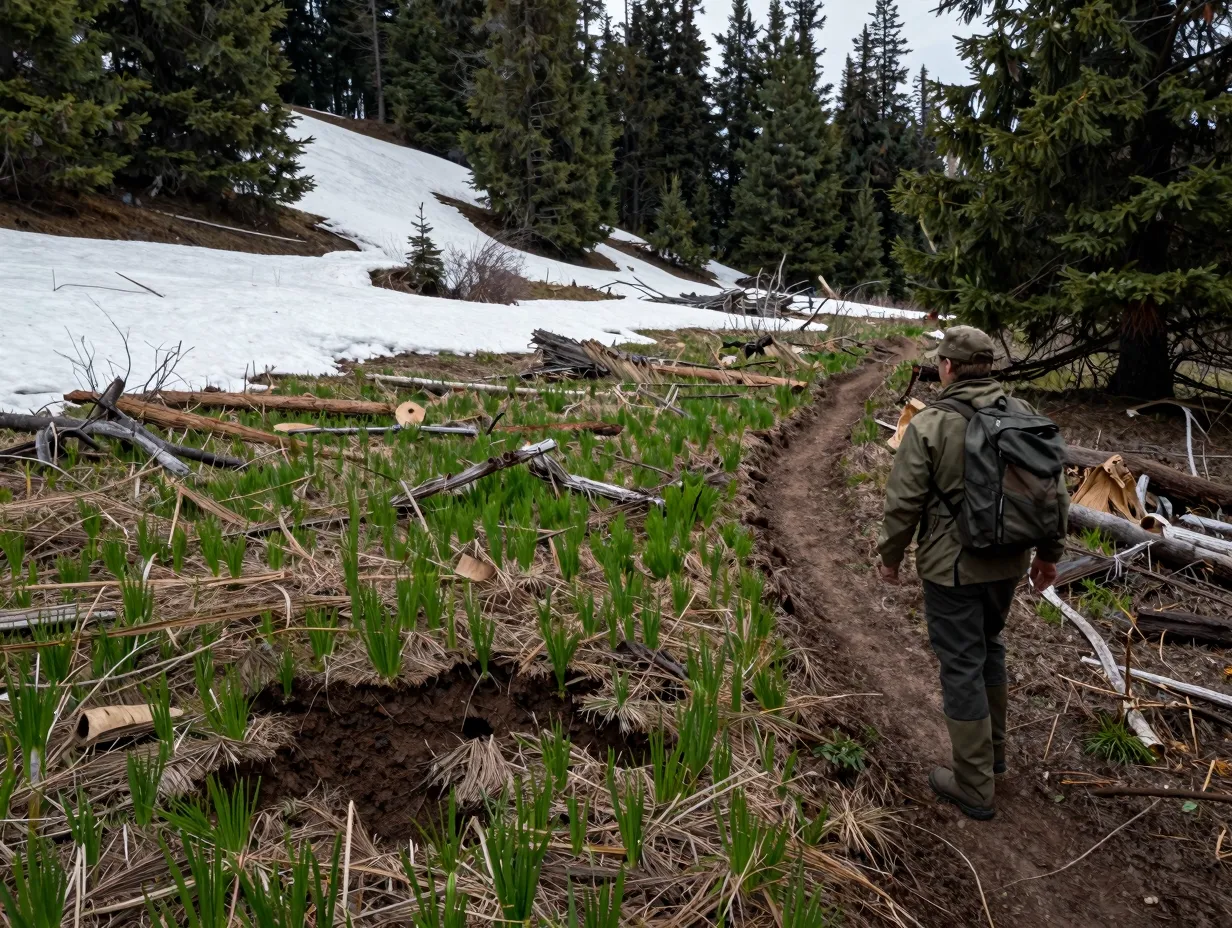
The most productive pre-season scouting window opens the moment snow begins retreating from lower elevations. As snowpack recedes, fresh green grass emerges in clearcuts and open meadows, the first high-calorie food source available to bears exiting winter dens. The Oregon Department of Fish and Wildlife specifically recommends focusing scouting efforts on these transitional zones, particularly areas where open feeding ground sits adjacent to denning cover [1].
What to look for during spring scouting:
- Fresh diggings where bears excavate roots and grubs
- Heavily grazed grass patches in clearcut edges
- Trails connecting bedding timber to open feeding areas
- Proximity to south-facing slopes that warm and green up first
Mapping these locations before season opens gives hunters a significant advantage. Bears are creatures of habit when food sources are predictable, and spring green-up areas often produce consistent sightings year after year.
2. Hunt the Edges of Dawn and Dusk
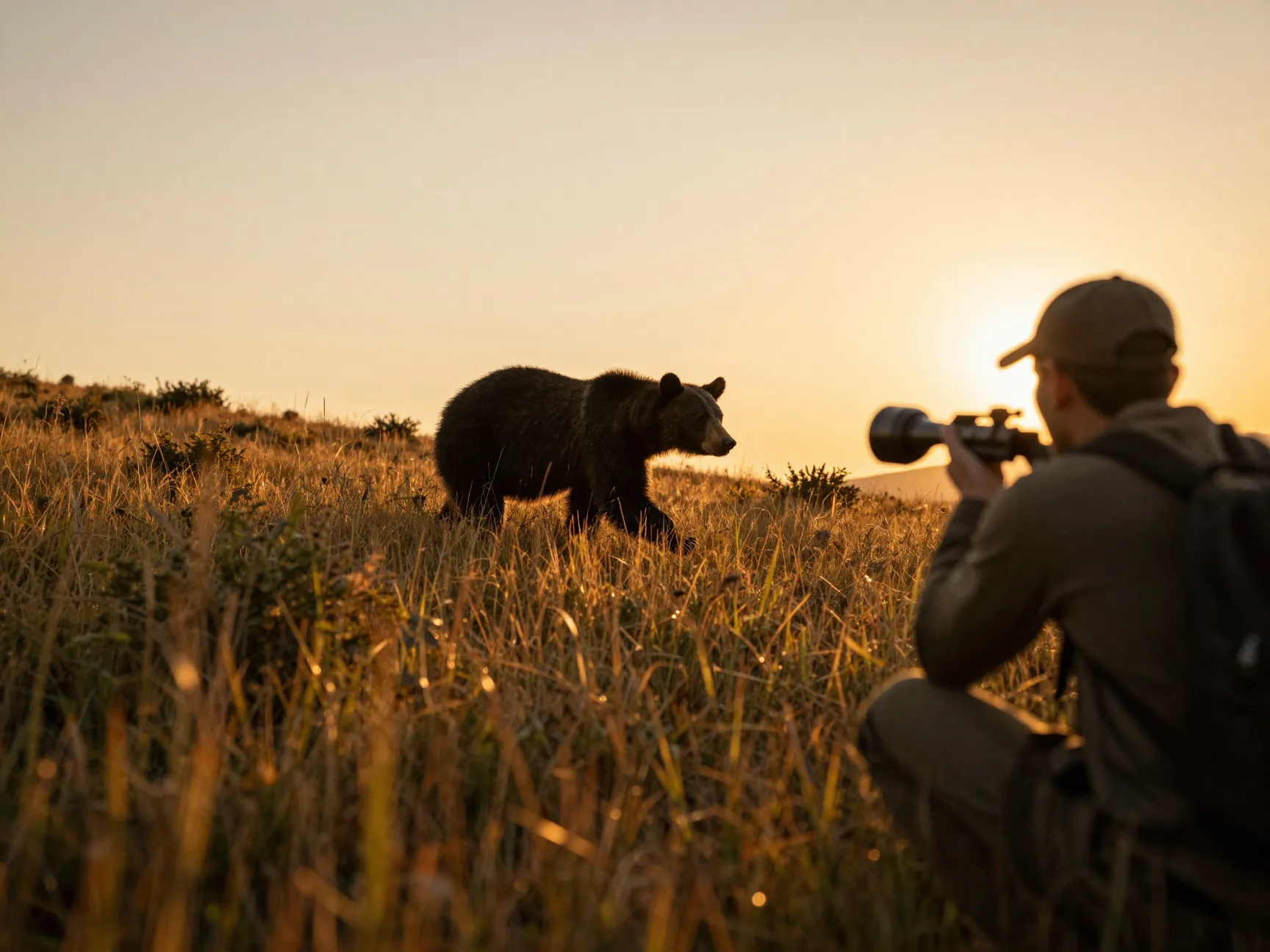
Bear activity follows a reliable daily rhythm. Both black bears and brown bears concentrate movement during the low-light hours of early morning and late evening, retreating to heavy cover during midday to rest and thermoregulate [1][2]. Hunters who commit to being in position before first light and staying through the final 30 minutes of legal shooting light consistently outperform those who arrive late or leave early.
“The first and last 45 minutes of legal shooting light account for the majority of bear sightings in open terrain. Every minute in position during those windows matters.”
Practical time management for bear hunters:
| Time of Day | Bear Activity Level | Recommended Hunter Action |
|---|---|---|
| Pre-dawn to 2 hours after sunrise | Very High | In position, glassing or on stand |
| Mid-morning to early afternoon | Low | Scouting, bait maintenance, rest |
| Late afternoon to last light | Very High | In position, active hunting |
This schedule also aligns with thermal wind patterns. Morning thermals pull cool air downhill, while afternoon thermals push air upslope, both of which can be used strategically when positioning for a stalk or stand setup.
3. Prioritize Wind Direction Above Everything Else
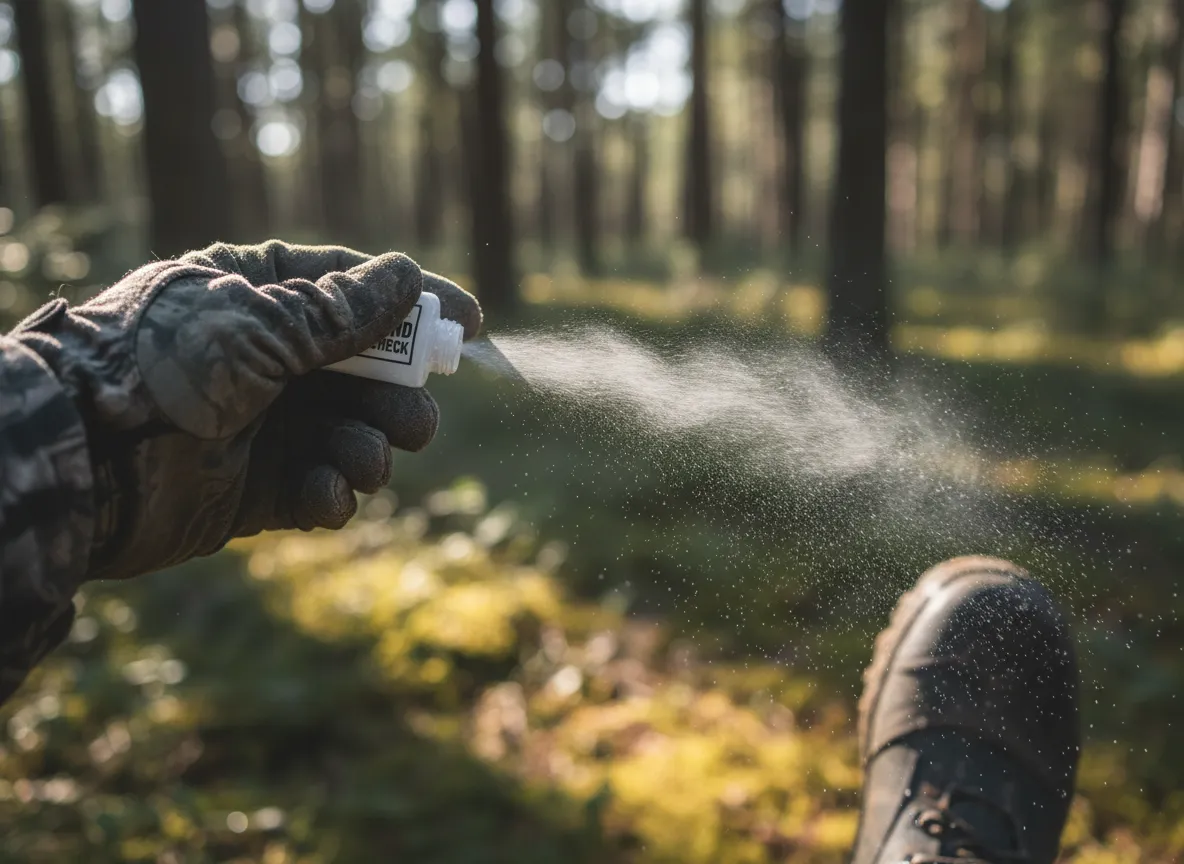
No single variable determines bear hunting success more than wind management. Bears possess olfactory capabilities that allow them to detect human scent at distances exceeding a mile under the right atmospheric conditions [1][2][5]. A hunter who ignores wind direction will educate bears without ever seeing them, effectively destroying productive hunting areas for days.
Wind management fundamentals:
- Always approach feeding areas, bait stations, and travel corridors from downwind
- Use a wind indicator (milkweed, lighter fluid puff, or commercial powder) every 15 minutes during a stalk
- Avoid crossing known bear travel routes when the wind is blowing toward those routes
- Rubber-soled boots reduce ground scent compared to leather alternatives [5]
- Scent-eliminating sprays and carbon-lined clothing reduce but do not eliminate human odor
The critical mistake most hunters make is checking wind direction once at the trailhead and assuming it stays consistent. Terrain features, ridgelines, drainages, cliff faces, create micro-wind currents that shift constantly. Continuous wind monitoring throughout a hunt is non-negotiable.
4. Glass South-Facing Slopes Adjacent to Old Growth
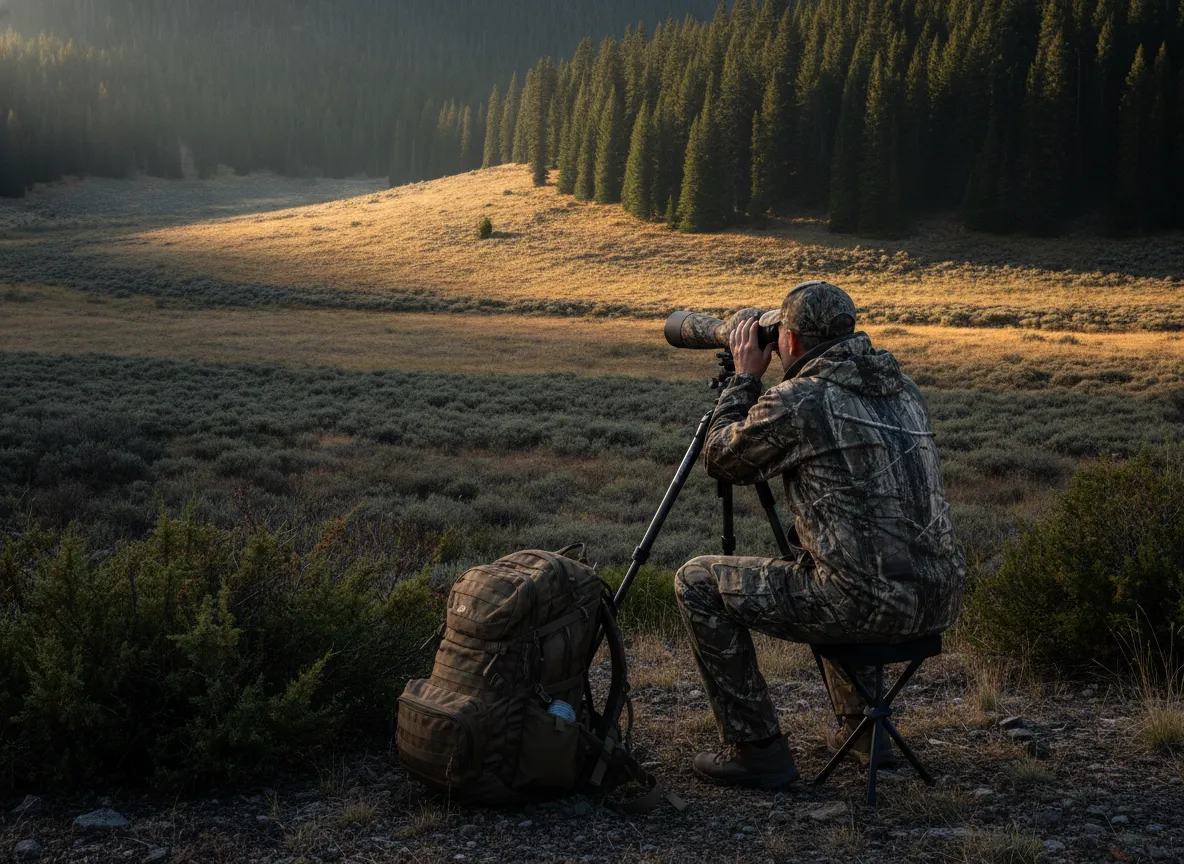
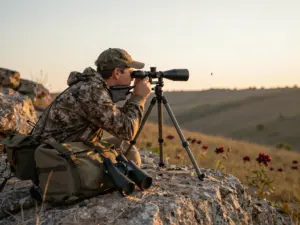
Optics-based hunting is the most efficient method for covering large bear country without burning scent or leaving human sign across the landscape. When glassing for bears, south-facing slopes adjacent to old-growth forest provide the ideal combination of food and security cover that mature bears prefer [2].
South-facing aspects receive more direct sunlight, which accelerates plant growth earlier in the season and produces berry crops and forbs before north-facing slopes. Old-growth timber adjacent to these slopes provides immediate escape cover and bedding areas, making the transition zone between the two habitat types a natural concentration point.
Effective glassing technique:
- Set up optics before first light and let eyes adjust to low-light conditions
- Grid search slopes methodically in overlapping horizontal passes
- Look for movement, color anomalies, and the rounded shape of a feeding bear
- Use a spotting scope at 20-60x magnification to confirm species and assess size before committing to a stalk
Patience during glassing sessions is essential. Bears feeding in open areas will often pause, stand upright to survey surroundings, and then resume feeding. A hunter who gives up after 20 minutes of glassing may miss a bear that steps into the open at minute 25.
5. Read Concentrated Bear Sign Accurately
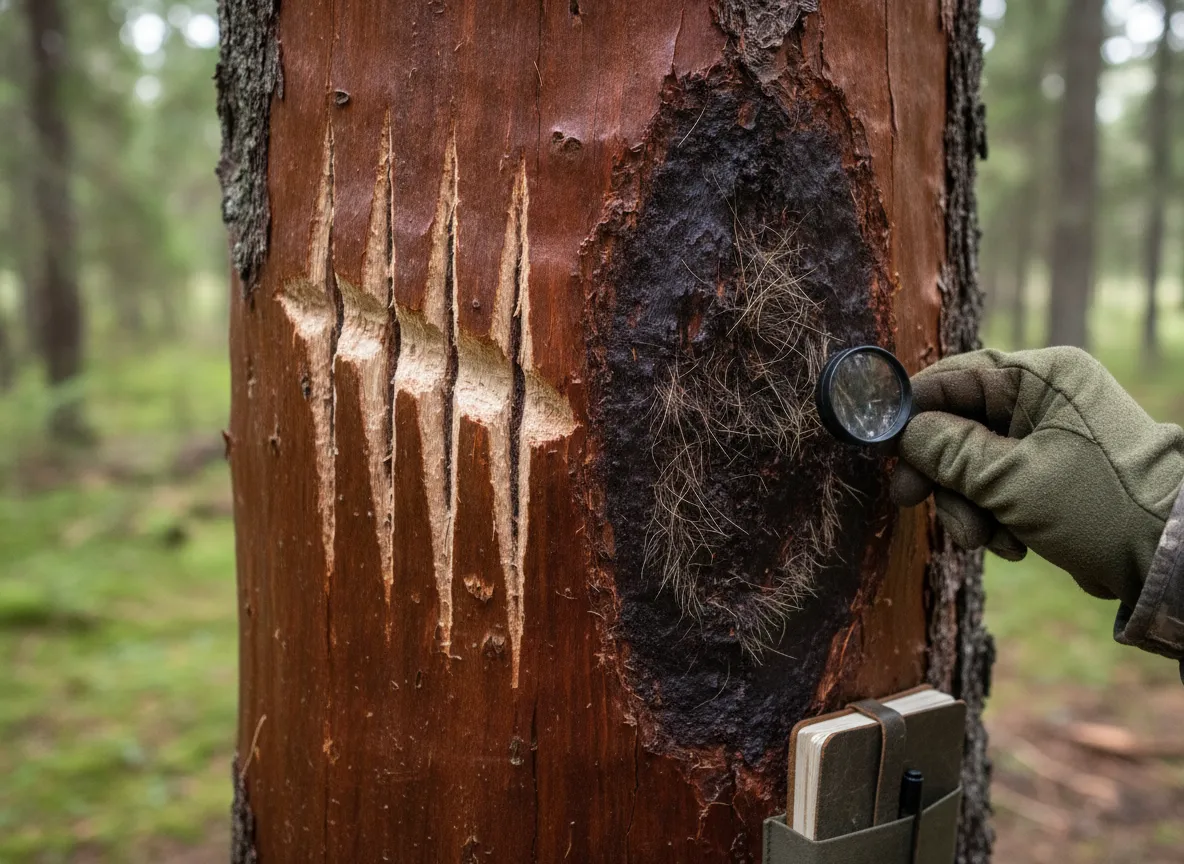
Tracks are an unreliable primary indicator of bear presence. Unlike deer or elk, bears have soft, flexible foot pads that leave clear prints only in ideal substrates like mud or fresh snow [2]. Hunters who rely exclusively on tracks will miss the majority of evidence bears leave behind.
The most reliable bear sign to locate and interpret:
- Claw-marked trees: Bears mark territory by raking claws down smooth-barked trees, often at shoulder height or higher, leaving deep parallel gouges [2]
- Rubbed trees: Smooth, hair-embedded rub marks on tree trunks indicate regular travel corridors and scratching behavior
- Large droppings: Bear scat is distinctive in size and often contains identifiable food material, berry seeds, grass, insect parts, that reveals current diet and food source location
- Diggings: Excavated soil around stumps, ant colonies, and root systems indicates active foraging
- Turned logs and rocks: Systematic overturning of woody debris is a signature bear foraging behavior
When multiple types of sign concentrate in a small area, that location warrants a stand setup or repeated glassing attention. A single track means a bear passed through; a cluster of sign means a bear is living there.
6. Execute a Disciplined Baiting Program
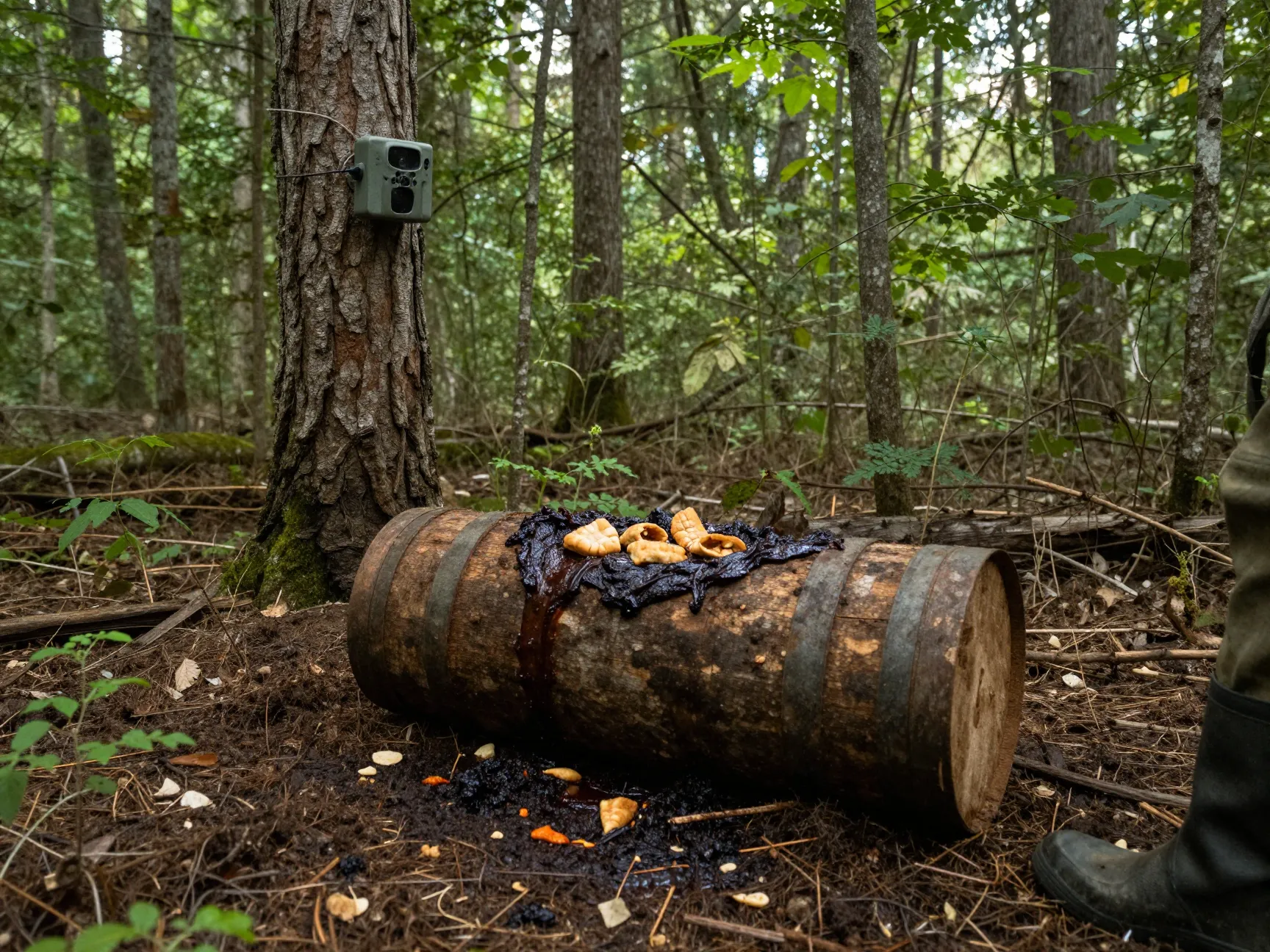
Where baiting is legally permitted, it remains one of the most effective methods for consistently encountering mature bears. A successful baiting program requires lead time, consistency, and strict scent discipline [5].
Baiting program timeline and protocol:
- Begin baiting 2 to 4 weeks before season opens to establish bear visitation patterns [5]
- Use high-calorie attractants such as rendered grease, pastries, or commercially available bear bait
- Maintain the bait during midday hours when bears are typically bedded and away from the site [5]
- Wear rubber boots and use scent-eliminating products during every bait visit
- Minimize time at the bait site and approach from downwind on every visit
- Position trail cameras to monitor visit frequency, time of day, and bear size
The most common baiting mistake is over-visiting the site and contaminating it with human scent. Bears that detect repeated human presence at a bait will shift to nocturnal visits or abandon the site entirely. Discipline during the pre-season baiting period directly determines success once the season opens.
7. Identify Cubs and Sows Before Pulling the Trigger
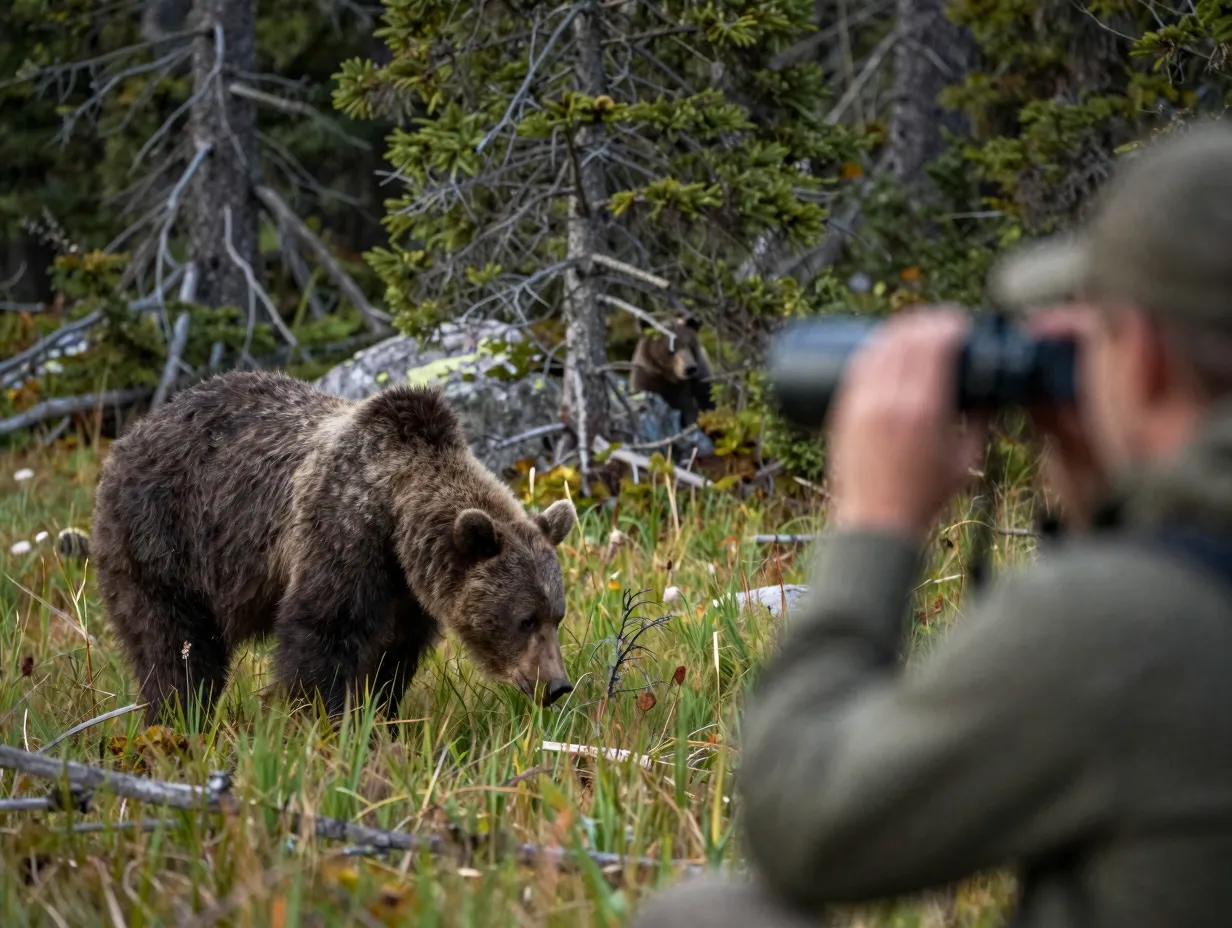
Harvest legality in bear hunting carries significant ethical and legal weight. In most jurisdictions, including Oregon, it is illegal to harvest bears under one year of age or sows accompanied by cubs under one year [1]. Violating these regulations carries serious penalties and undermines conservation goals.
“Extended observation before shooting is not optional, it is a legal requirement and a fundamental responsibility of every bear hunter.”
The challenge is that cubs in timberline areas are frequently hidden in trees or dense brush while the sow feeds in the open. A hunter who observes a single bear for only a few minutes may not see accompanying cubs. Wildlife managers recommend observing a lone bear for up to one hour in timberline habitat before concluding it is unaccompanied [1].
Cub identification checklist before harvest:
- Observe the bear for a minimum of 15 to 30 minutes, longer in dense cover
- Look for smaller bears moving nearby or in adjacent trees
- Assess the bear’s physical condition, lactating sows often appear thinner in early season
- If any doubt exists about cub presence, do not shoot
- When using calls, stand down immediately if a smaller bear (50 pounds or under) responds [3]
Patience during this identification phase protects both the hunter from legal consequences and the bear population from unsustainable harvest pressure.
8. Apply Precise Shot Placement for Clean Harvests
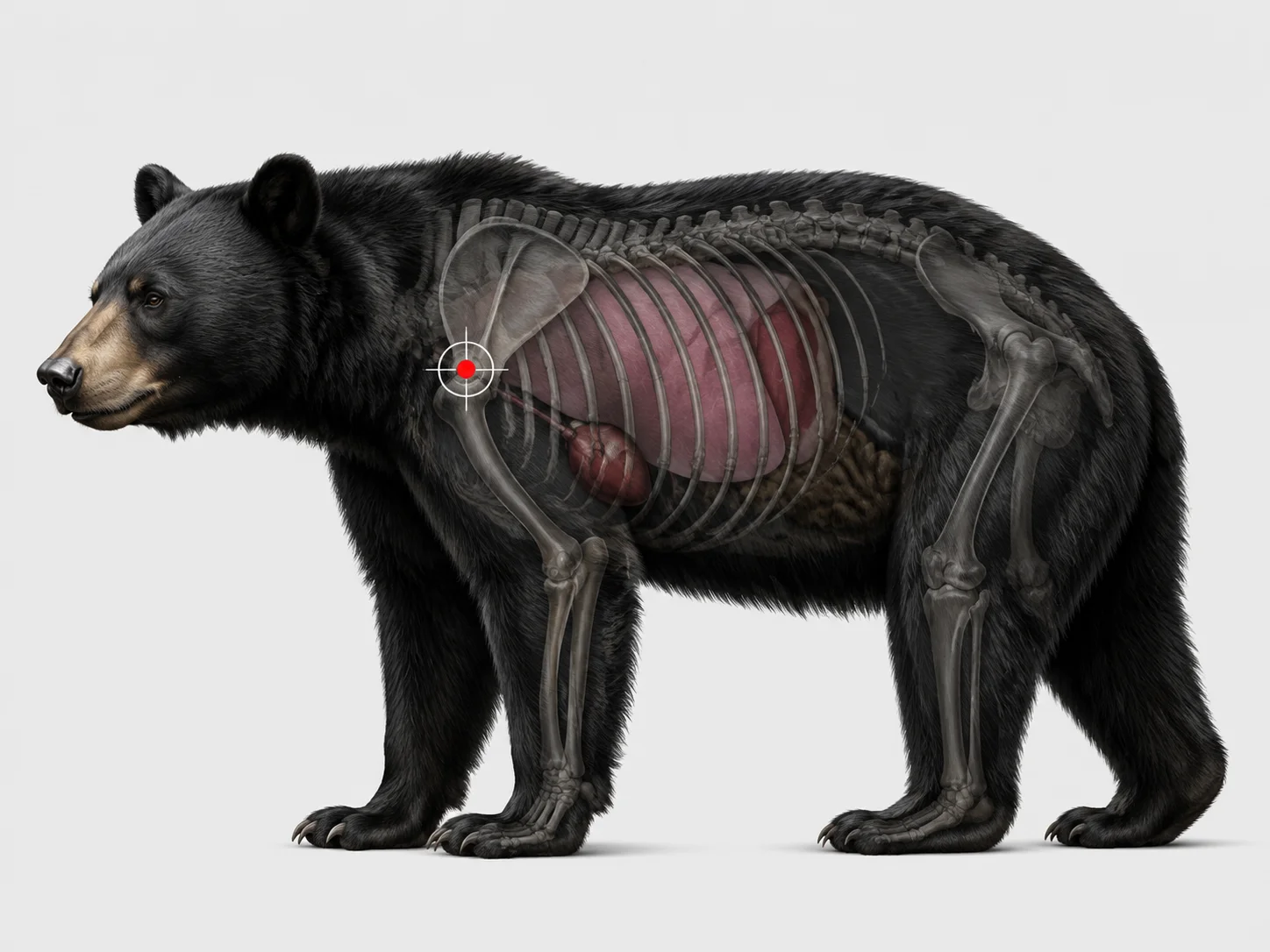
Shot placement on bears differs from deer or elk in one critical way: the front shoulder bone on a bear is thick, dense, and capable of deflecting or stopping bullets that would pass cleanly through other big game [4][5]. A shot that would be acceptable on a broadside elk can result in a wounded bear if it strikes the heavy shoulder bone.
Shot placement fundamentals for bears:
- On a broadside bear, aim 4 to 5 inches behind the front shoulder crease to achieve double-lung penetration [4][5]
- Avoid quartering-toward shots entirely, the shoulder bone and heavy muscle mass make clean penetration nearly impossible
- Quartering-away shots offer excellent access to the vital zone but require precise angle judgment
- Wait for a clear broadside or quartering-away presentation rather than forcing a marginal shot
- Bears have a thick layer of fat that can seal entry wounds quickly, making blood trails sparse even on well-hit animals
Caliber and bullet selection considerations:
A controlled-expansion bullet of adequate weight for the caliber is essential. Bears absorb significant energy before going down, and bullets that fragment prematurely on fat and muscle may not reach the vital zone. Bonded or partition-style bullets in .30 caliber or larger are widely recommended for reliable penetration.
After the shot, wait a minimum of 30 minutes before tracking, even on what appears to be a clean hit. Bears that are pushed immediately after being hit often run significantly farther than those given time to expire undisturbed.
9. Use Technology and Proper Field Care to Complete the Hunt
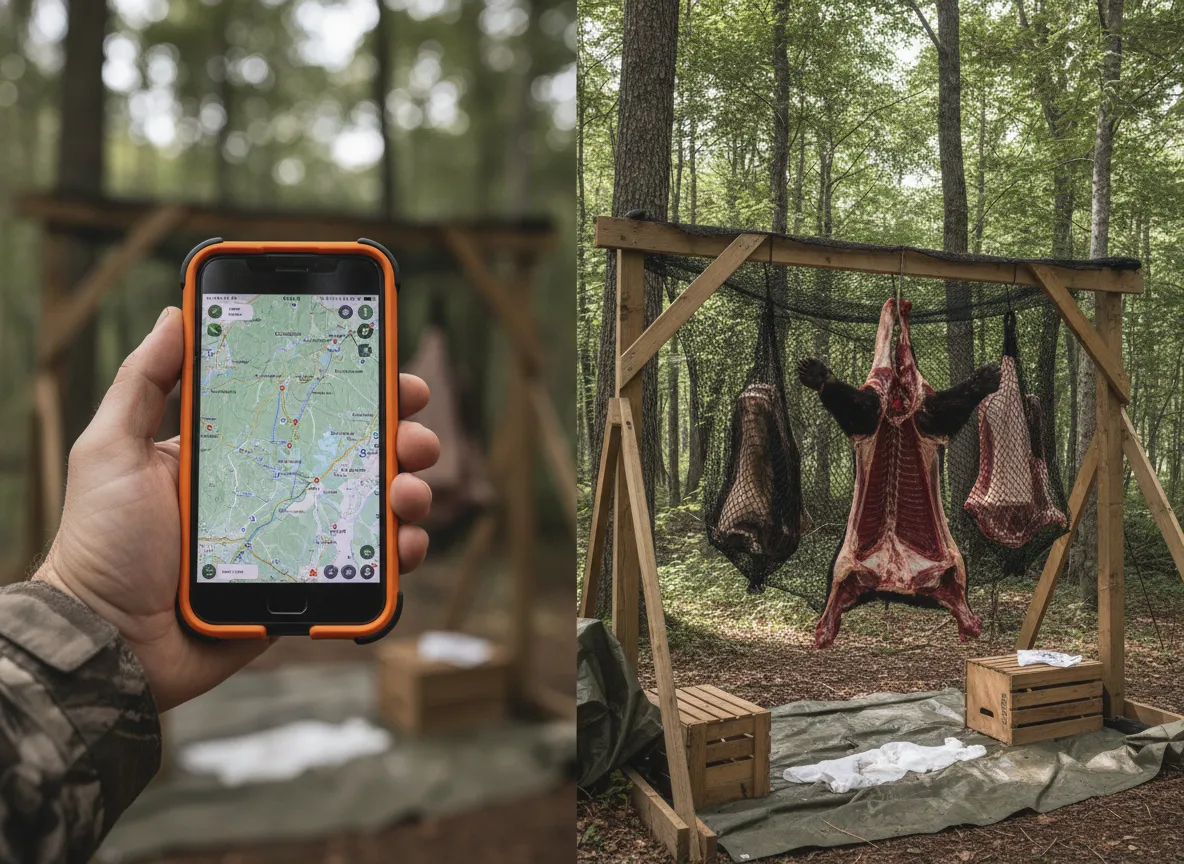
The final strategy in the 9 Bear Hunting Strategies for the Ultimate Predator Challenge framework bridges modern scouting tools with post-harvest responsibility, two areas where hunters frequently leave value on the table.
Leveraging technology for pre-season scouting:
Drone imagery and satellite mapping platforms allow hunters to identify crop damage patterns, high-concentration berry patches, nut tree stands, and wetland edges from a desktop before ever setting foot in the field [3]. Mapping ridgelines, saddles, and drainage systems in relation to known food sources creates a strategic hunting plan rather than a reactive one.
Trail cameras placed at identified sign concentrations provide data on bear size, sex, time of activity, and frequency of use, all of which inform stand placement and hunting schedule decisions.
Field care after harvest:
Bears carry substantially more body fat than deer or elk, and that fat layer must be completely removed during field dressing to prevent spoilage [1]. Standard skinning procedures are not sufficient. Every layer of fat must be stripped away in addition to removing the hide and internal organs.
Post-harvest field care checklist:
- Remove all fat completely during field dressing, not just the hide and organs [1]
- Cool the carcass as rapidly as possible, especially in warm early-season conditions
- Quarter the animal and hang or bag meat in a shaded, ventilated location
- Check in the harvested bear at an official wildlife office as required by state regulations, Oregon Department of Fish and Wildlife mandates this step for all bear harvests [1]
- Retain the hide and skull if required by local check-in regulations
Compliance with check-in requirements is not optional. These data points feed directly into population management decisions that determine future season structures and harvest quotas.
Putting the 9 Strategies Into a Coherent Season Plan
The nine strategies above are most effective when organized into a seasonal workflow rather than applied randomly. The table below maps each strategy to the appropriate phase of a bear hunting season.
| Season Phase | Primary Strategies | Key Focus |
|---|---|---|
| Pre-season (4-6 weeks out) | Scouting, baiting, technology | Identify food sources, establish bait |
| Opening week | Wind management, dawn/dusk timing, glassing | Locate and approach bears |
| Active hunt | Shot placement, cub identification, sign reading | Execute clean, legal harvest |
| Post-harvest | Field care, check-in compliance | Protect meat, fulfill legal obligations |
This phased approach prevents the common mistake of applying all tactics simultaneously without prioritization. Each phase has a clear objective, and success in later phases depends directly on execution in earlier ones.
Conclusion
The gap between a successful bear hunter and an unsuccessful one rarely comes down to luck. It comes down to preparation, patience, and a willingness to execute fundamentals under pressure. The 9 Bear Hunting Strategies for the Ultimate Predator Challenge covered here, from reading snow-melt habitats and managing wind direction to executing precise shot placement and completing proper field care, form a complete system that addresses every phase of the hunt.
Actionable next steps for hunters preparing for the 2026 bear season:
- Pull up satellite imagery of target hunting units now and map south-facing slopes adjacent to old-growth timber
- Identify legal baiting regulations in the target state or province and begin bait site preparation 4 to 6 weeks before the opener
- Practice wind-reading skills on scouting trips before season opens
- Confirm cub identification protocols and legal observation requirements with the relevant wildlife agency
- Verify check-in requirements and locate the nearest official check station before the season begins
Bear hunting rewards hunters who respect the animal’s capabilities and invest in systematic preparation. Apply these nine strategies with discipline, and the odds shift decisively in the hunter’s favor.
References
[1] 9 Tips Be Better Bear Hunter – https://myodfw.com/articles/9-tips-be-better-bear-hunter
[2] Spot Stalk Black Bear Hunting Tips – https://zenbowhunter.com/spot-stalk-black-bear-hunting-tips/
[3] Bear Hunting Tips – https://www.sitkagear.com/experience/bear-hunting-tips
[4] 5 Tips For Shot Placement On Bear Podcast – https://www.bear-hunting.com/2019/9/5-tips-for-shot-placement-on-bear-podcast
[5] Bear Hunting Fundamentals – https://prohuntertips.com/bear-hunting-fundamentals/