9 Western Hunting Tactics for Mule Deer, Elk, and Pronghorn Antelope
Only about 6 percent of the American public hunts, yet western big-game tags remain among the most coveted permits in North America, drawing hundreds of thousands of applicants every year for a finite number of opportunities. The gap between a successful hunter and one who returns home empty-handed rarely comes down to luck. It comes down to preparation, adaptability, and a working knowledge of proven field craft. This guide breaks down the 9 Western Hunting Tactics for Mule Deer, Elk, and Pronghorn Antelope that consistently produce results across the Rocky Mountain states, the Great Basin, and the high plains.
Disclosure: This post contains affiliate links. As an Amazon Associate, we earn from qualifying purchases, and at no extra cost to you.
Key Takeaways
- Glassing from high vantage points before moving is the single most effective way to locate mule deer and elk in open western terrain.
- Pronghorn require a fundamentally different approach than deer or elk because of their extraordinary eyesight and preference for flat, open country.
- Wind direction and thermals dictate every approach in western hunting, ignoring them guarantees failure.
- Calling and decoying are high-reward tactics during rut periods but require precise timing and situational awareness.
- Physical fitness and gear weight management are as important as any hunting skill in the backcountry.
Understanding the Western Landscape Before You Hunt
Western hunting is not simply eastern hunting transplanted to bigger country. The terrain, elevation, distances, and animal behavior patterns are categorically different. A hunter who understands these differences before stepping into the field will apply the 9 Western Hunting Tactics for Mule Deer, Elk, and Pronghorn Antelope far more effectively than one who does not.
Three key landscape factors shape every western hunt:
- Elevation transitions. Animals move vertically with the seasons. Early-season elk may be at 10,000 feet; by late November, they drop to winter range at 5,000 feet.
- Water scarcity. In arid states like Nevada, Arizona, and Wyoming, water sources concentrate animals predictably during dry months.
- Openness. Vast sightlines mean animals can spot hunters at distances of a mile or more. Concealment requires patience and terrain use, not just camouflage.
“In the West, the hunter who covers the most ground with their eyes, not their boots, almost always outperforms the one who walks the most miles.”
The 9 Western Hunting Tactics for Mule Deer, Elk, and Pronghorn Antelope
1. Glass First, Move Second
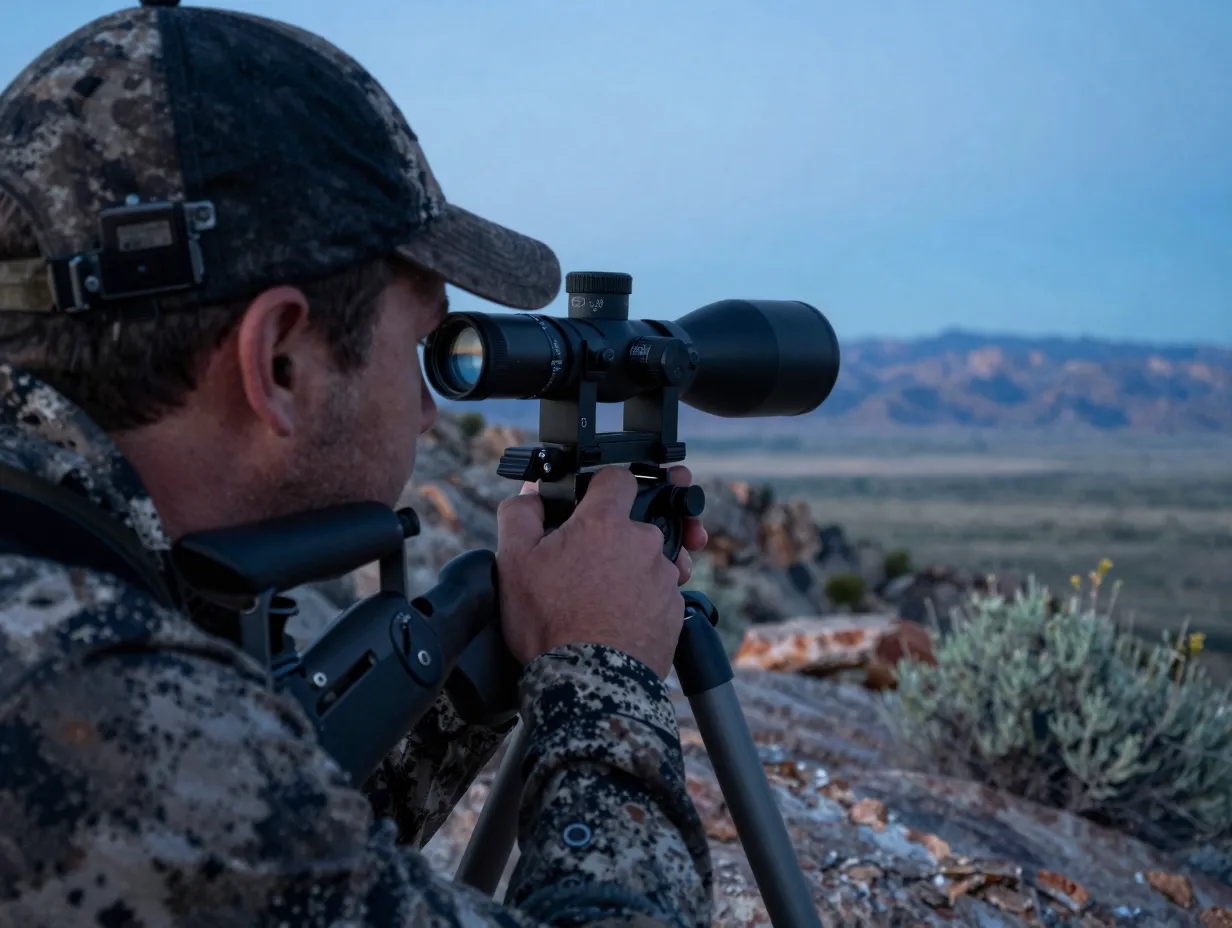
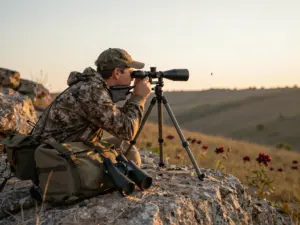
The foundation of western hunting is the spotting scope. Before any other tactic is applied, a hunter must commit to glassing, systematically scanning terrain with quality optics from a high, concealed vantage point.
Why it works: Mule deer, elk, and pronghorn all rely on their eyes as a primary defense. Moving through country without first locating animals almost always results in bumping game before getting into range.
How to do it right:
- Arrive at a vantage point before first light.
- Use a tripod-mounted 15x to 20x binocular or a 20-60x spotting scope.
- Grid the terrain in overlapping sections, pausing on shadows, brush edges, and bedding areas.
- Spend at least 60 to 90 minutes glassing before making any move toward an animal.
Recommended gear for glassing:
| Tool | Minimum Spec | Notes |
|---|---|---|
| Binocular | 10×42 | Roof prism, ED glass |
| Spotting scope | 20-60×80 | Tripod-mounted |
| Tripod | Carbon fiber | Reduces fatigue |
2. Hunt Thermals and Wind Religiously
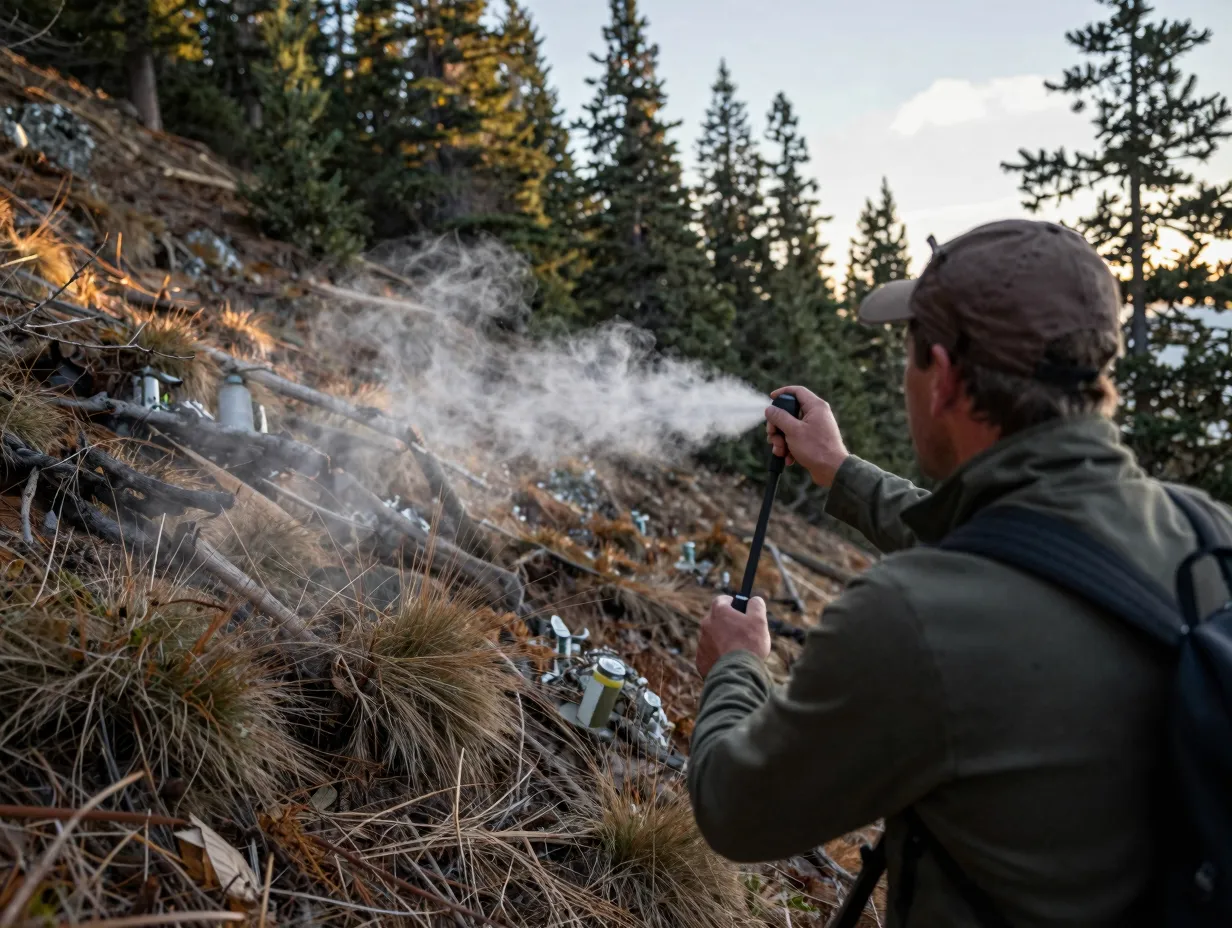
No tactic on this list matters if an animal smells the hunter first. Elk, in particular, have a sense of smell estimated to be 1,000 times more sensitive than a human’s. Mule deer are nearly as capable.
Thermals explained: In mountainous terrain, air moves in predictable patterns based on temperature. In the morning, cool air drains downhill (downslope thermals). As the sun heats the earth, air rises uphill (upslope thermals). These shifts typically occur within an hour of sunrise and sunset.
Practical application:
- Plan morning approaches from below, moving with downslope thermals before the switch.
- Plan afternoon approaches from above, moving with upslope thermals.
- Always carry a wind-checking powder or lightweight thread to monitor micro-shifts.
- Never approach a bedded animal from the downwind side.
A hunter who masters thermal management gains a decisive edge over one who simply checks a wind app on their phone.
3. Spot-and-Stalk for Mule Deer in Broken Country
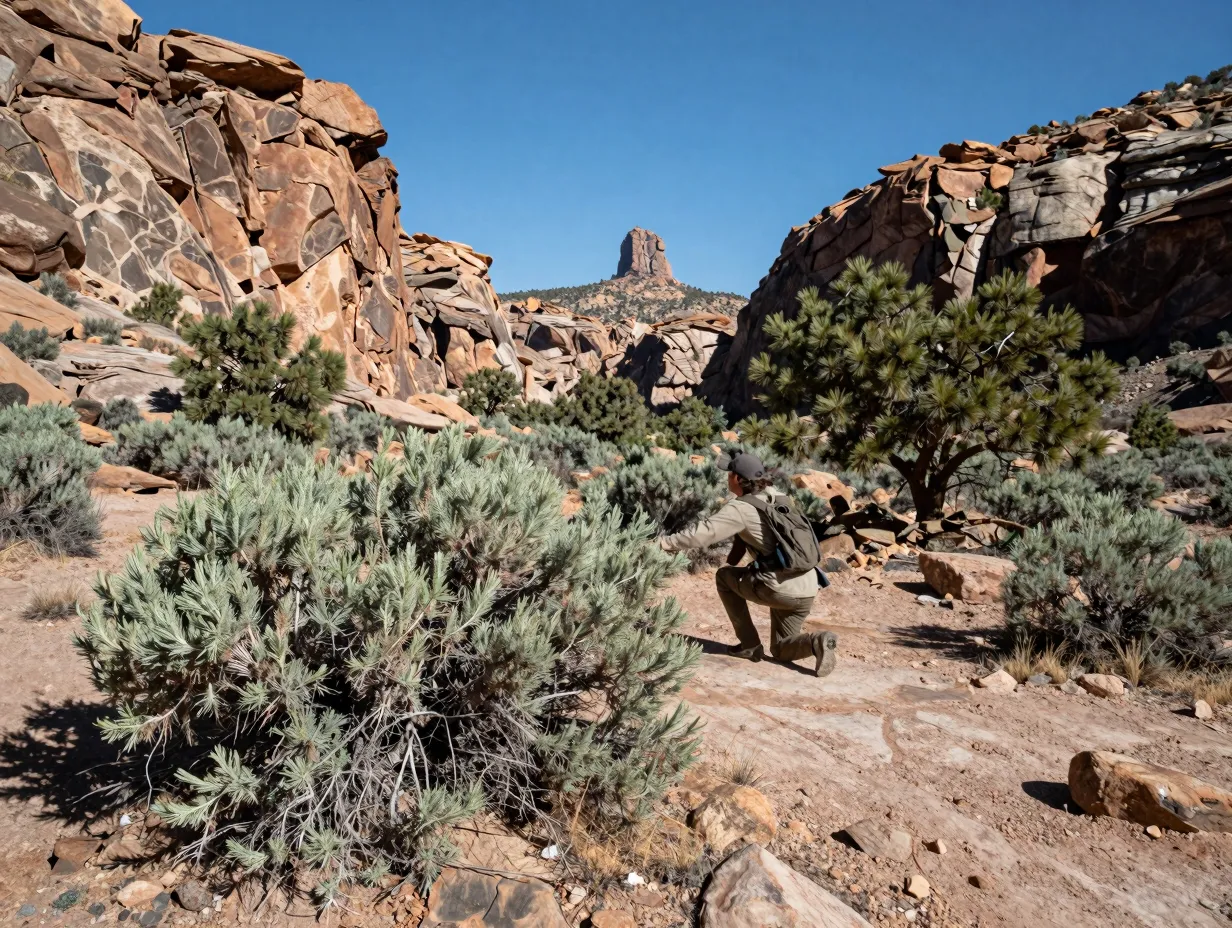
Mule deer are the quintessential spot-and-stalk quarry. Their habitat, rocky canyons, pinyon-juniper ridges, sagebrush basins, offers enough broken terrain to execute a careful approach if the hunter is patient.
The stalk sequence:
- Locate the animal from a distance using optics.
- Study the terrain between the hunter and the deer to identify a concealed route.
- Mark a visible landmark near the deer’s location (deer often move out of sight during a stalk).
- Move slowly, keeping terrain features between the hunter and the deer.
- Close to within ethical shooting range before setting up for a shot.
Common stalk mistakes:
- Moving too fast and skyling on ridgelines.
- Losing track of the animal’s exact position.
- Failing to account for wind shifts during the approach.
- Rushing the final 100 yards when patience matters most.
Mule deer have a well-known tendency to look back after running a short distance. A hunter who freezes when a deer looks back, rather than dropping immediately, will often blow the stalk at the last moment.
4. Elk Calling During the Rut
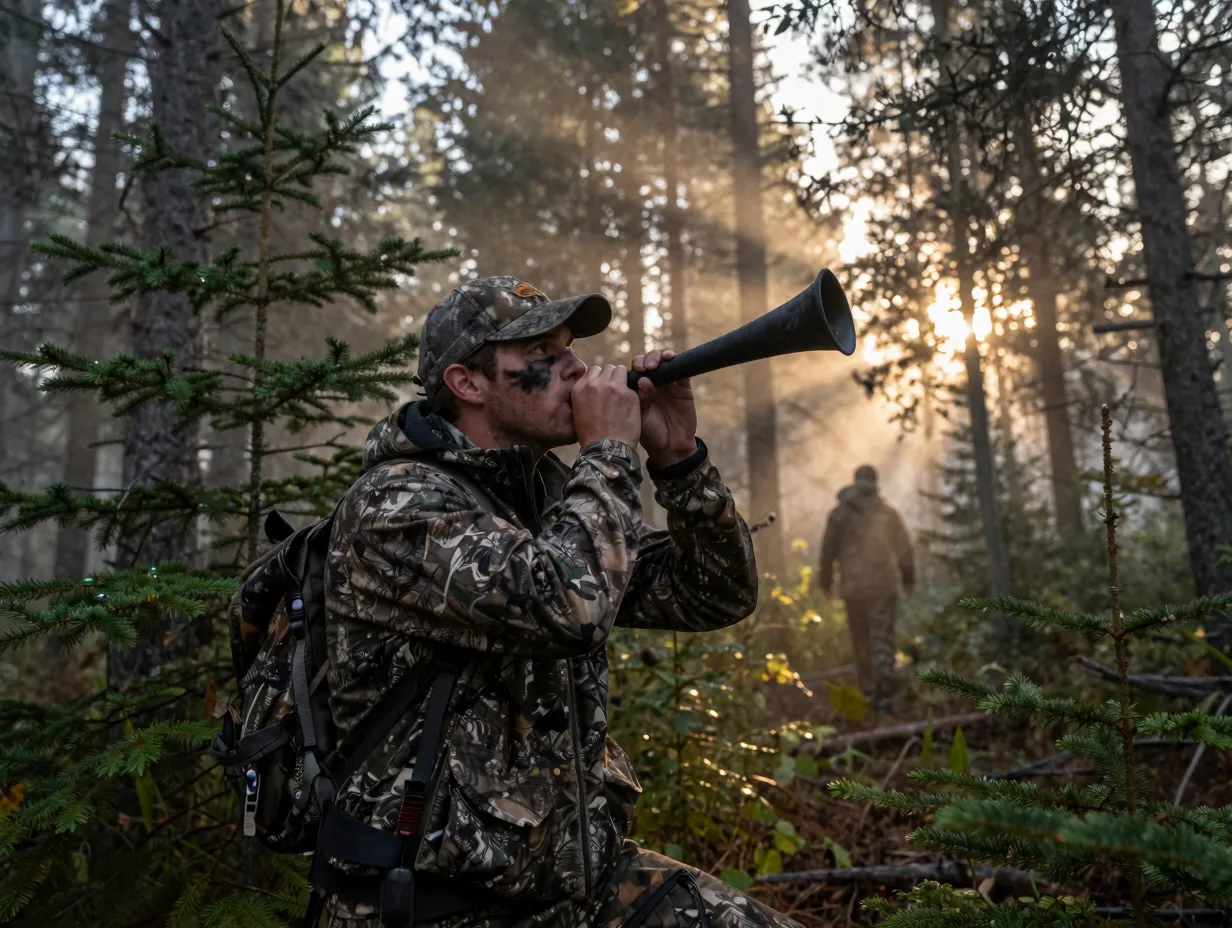
September is the month that defines elk hunting in the West. Bull elk bugle to assert dominance, locate cows, and challenge rivals. A skilled caller can bring a bull to within bow range, one of the most thrilling experiences in North American hunting.
The two primary calls:
- Bugling: Mimics a bull’s challenge or location call. Effective for locating bulls and provoking dominant animals.
- Cow calling: Mimics estrus cows. Often more effective for drawing in satellite bulls that are reluctant to challenge a dominant animal.
Key calling principles:
- Do not over-call. Elk that hear too many calls too quickly become suspicious.
- Combine bugles with raking (scraping a stick or antler on brush) to simulate a bull’s physical presence.
- Position a partner 30 to 50 yards in front of the caller so the elk approaches the caller but encounters the shooter first.
- Read the bull’s body language. A bull with his head low and ears pinned is fully committed; a bull that hangs up at 80 yards may need a cow call to close the gap.
“The elk that hangs up just out of range is not a failed stalk, it is an invitation to adjust your calling strategy.”
5. Water Hole Hunting for Pronghorn and Mule Deer
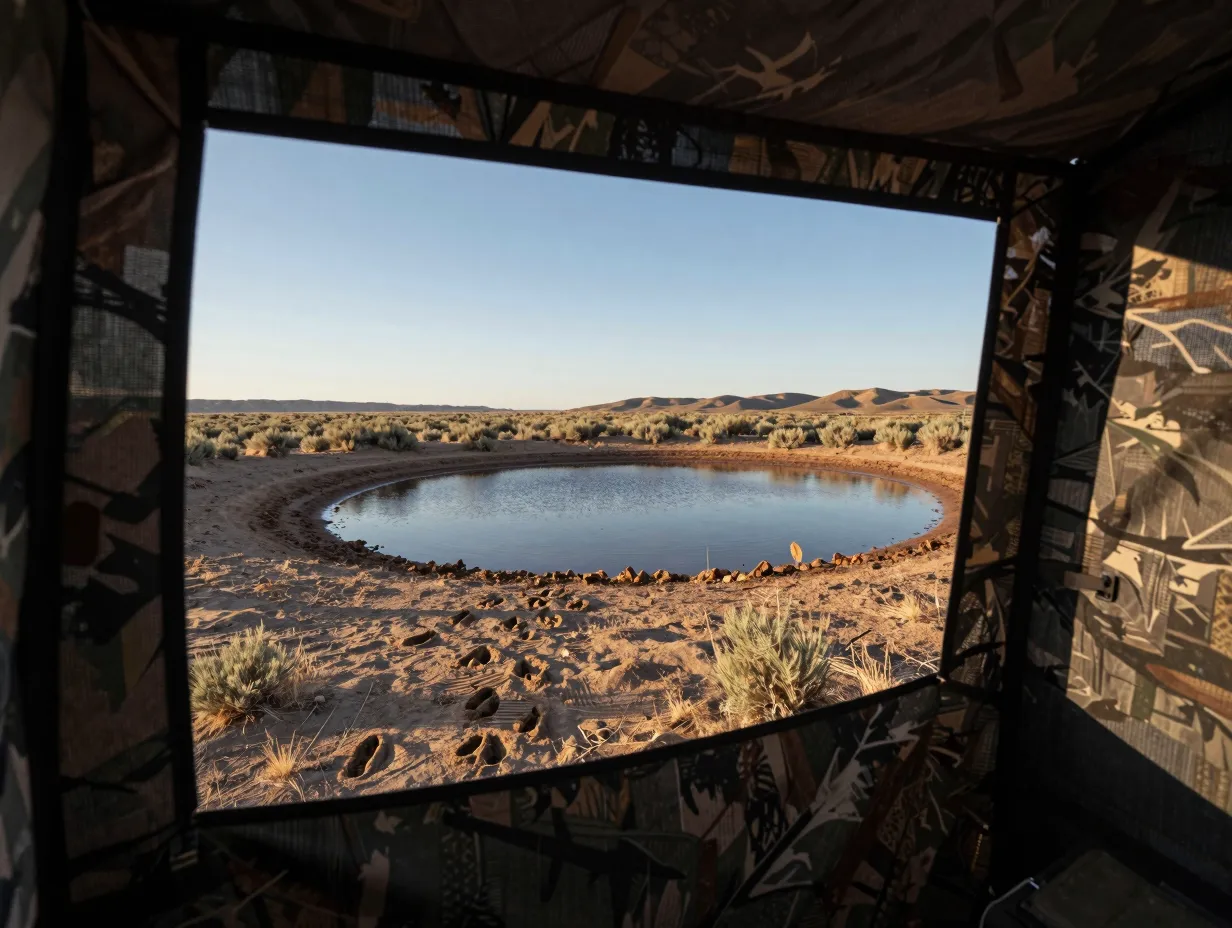
In arid western states, water is life. During summer and early fall, before seasonal rains arrive, both pronghorn and mule deer will visit reliable water sources at predictable times, typically early morning and late afternoon.
Setting up a water hole ambush:
- Scout water sources using satellite imagery (Google Earth, onX Hunt) before the season.
- Identify which sources show fresh tracks, trails, and droppings.
- Set up a ground blind or portable tree stand downwind of the approach trail, not directly at the water’s edge.
- Arrive at least two hours before expected animal movement to allow scent to settle.
Pronghorn-specific notes: Pronghorn are creatures of habit around water. They often approach from the same direction repeatedly. A hunter who observes approach patterns over two or three days before hunting can position with precision.
6. Glassing Basins for Pronghorn on the Open Plains
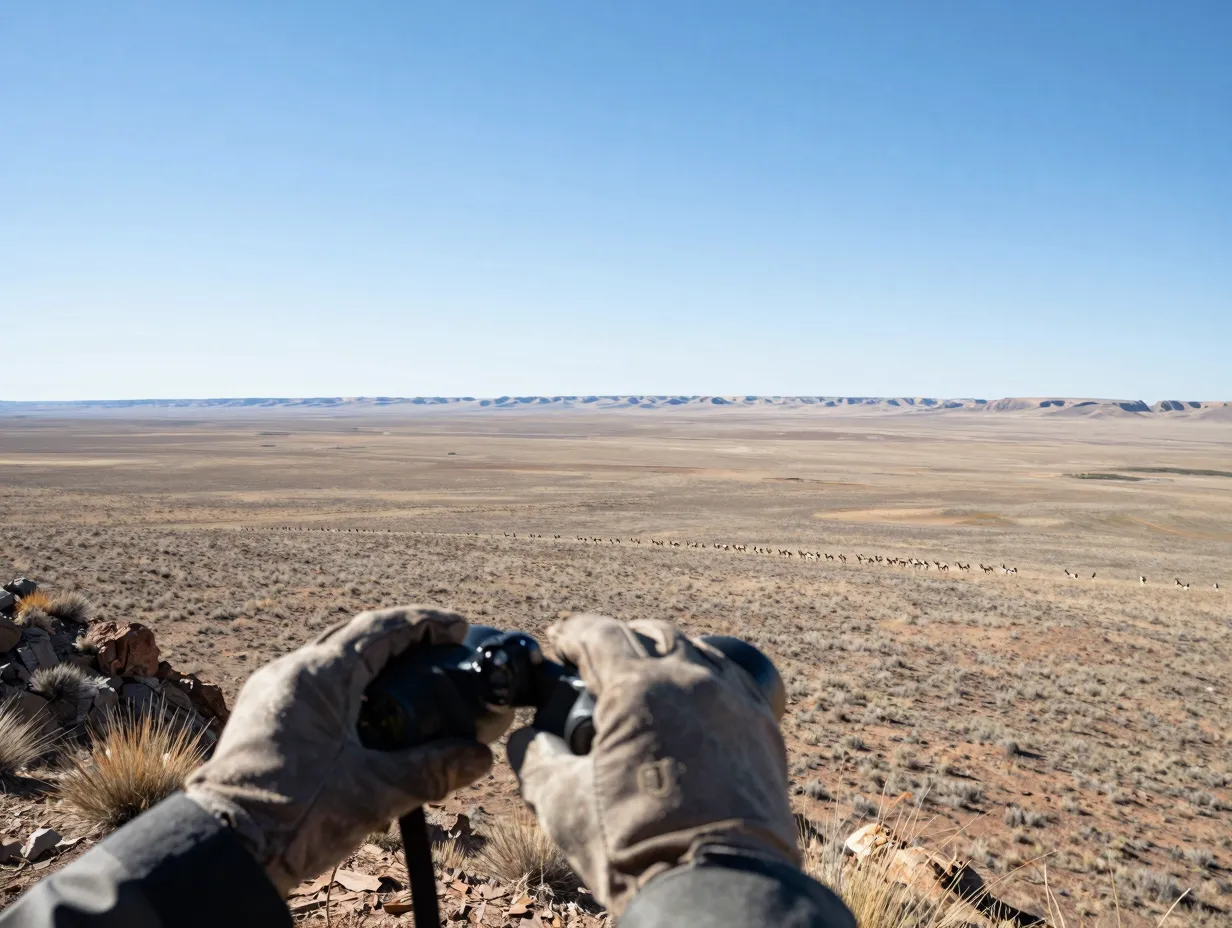
Pronghorn antelope are built for open country. Their eyes are often compared to 8-power binoculars, capable of detecting movement at extraordinary distances. Conventional stalking approaches that work on deer frequently fail on pronghorn because there is simply no cover.
The basin-glassing approach:
- Park vehicles well away from hunting areas and approach vantage points on foot.
- Glass wide, flat basins from elevated edges at first light.
- Identify buck groups versus doe groups and locate dominant bucks.
- Plan approaches using every available terrain feature, dry creek beds, low ridges, sagebrush swales.
The crawl-and-decoy combination (covered in Tactic 7) is often the only way to close the final 200 yards on a wary pronghorn buck in open terrain.
Pronghorn vs. Mule Deer: Approach Comparison
| Factor | Pronghorn | Mule Deer |
|---|---|---|
| Primary defense | Eyesight | Nose and ears |
| Preferred terrain | Open flats | Broken, rocky ground |
| Stalk difficulty | Extreme | Moderate to high |
| Best tactic | Decoy/ambush | Spot-and-stalk |
7. Decoying Pronghorn Bucks During the Rut
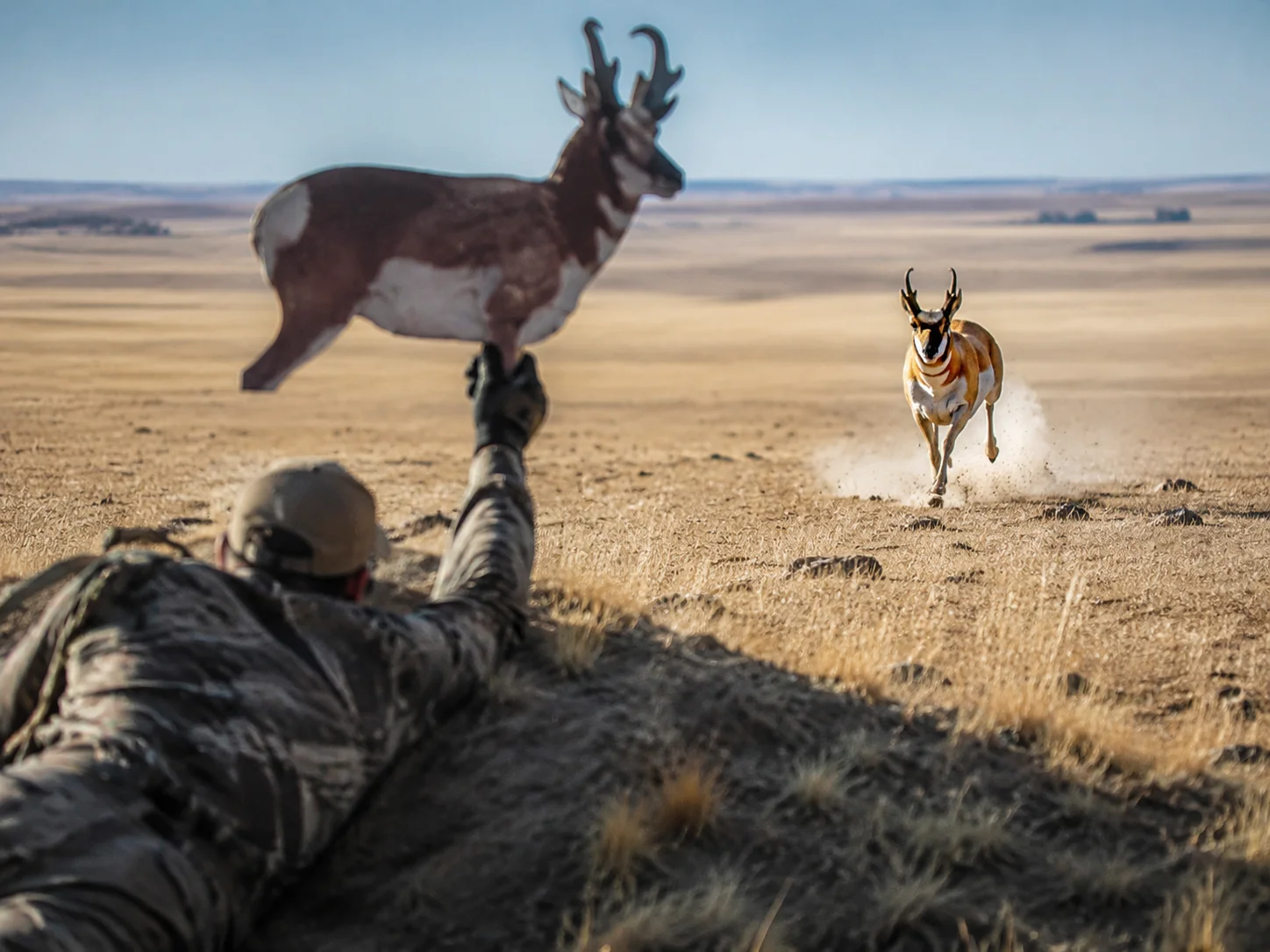
The pronghorn rut typically peaks in mid-September across most of the West. During this window, dominant bucks become aggressively territorial and will charge a rival buck decoy with remarkable boldness.
How to decoy pronghorn:
- Locate a dominant buck that is actively herding does.
- Get within 300 to 400 yards using terrain, staying below the skyline.
- Raise a pronghorn buck decoy above the horizon so the target buck can see it.
- Wave the decoy side to side to simulate a feeding or moving buck.
- Be ready to shoot quickly, pronghorn charge decoys fast, sometimes covering 300 yards in under 30 seconds.
Critical safety note: Always be certain of what is beyond the target animal. A pronghorn charging a decoy can close distance so rapidly that a hunter must be fully prepared before the decoy is raised.
Decoy selection tips:
- Lightweight foam decoys are preferred for backcountry carry.
- A silhouette decoy is sufficient; full-body decoys are more effective but heavier.
- Some hunters add a doe decoy alongside the buck to increase attraction.
8. Backcountry Elk Hunting: The Wilderness Push
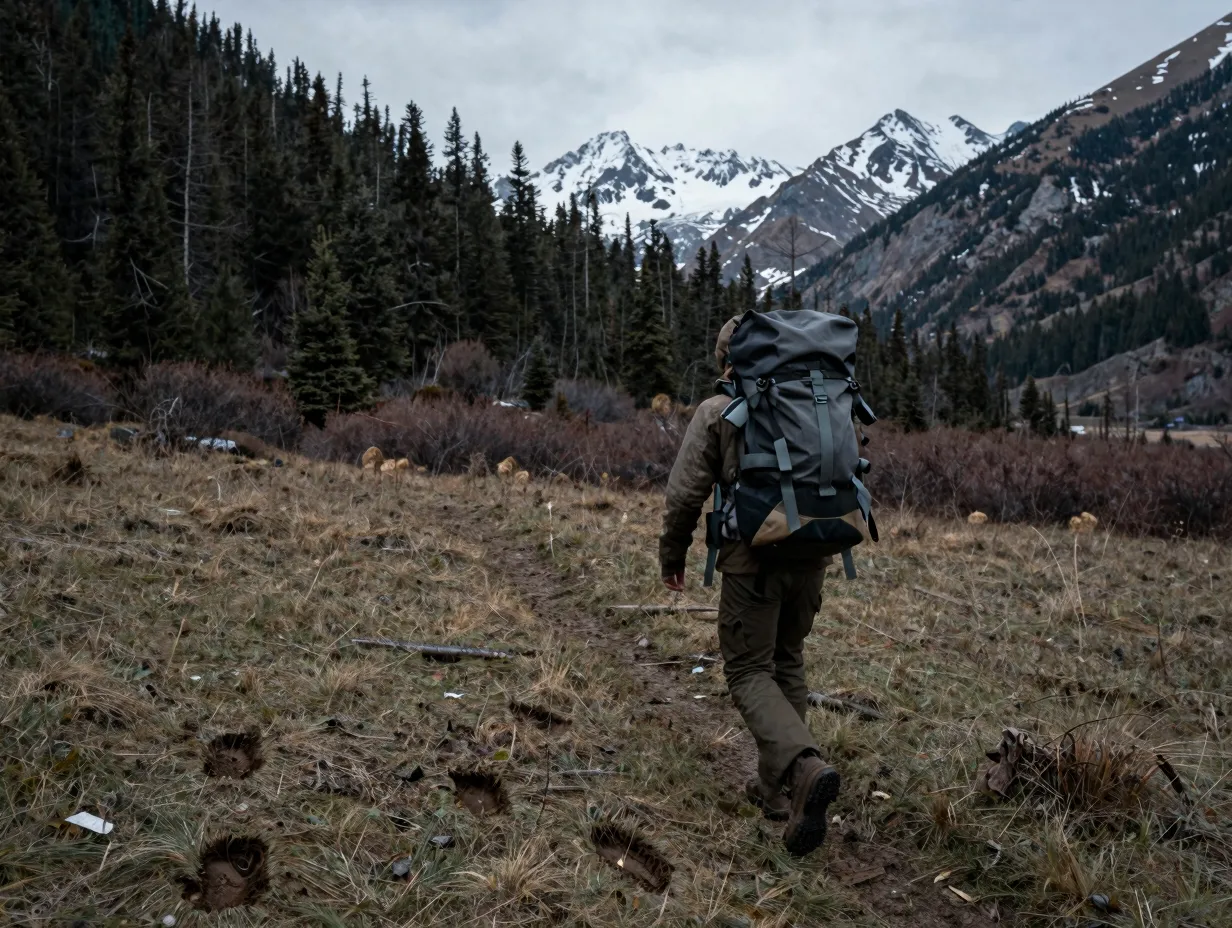
The most consistent way to find mature bull elk in 2026 is to go where other hunters do not. Roadside elk are heavily pressured in most western states. Elk that survive multiple seasons learn to avoid roads, trailheads, and human activity corridors.
The wilderness push strategy:
- Identify roadless areas or wilderness units on public land maps using onX Hunt or BaseMap.
- Plan a minimum five-mile penetration from any trailhead or road.
- Pack light enough to move camp every two to three days to follow elk sign.
- Focus on north-facing slopes with dense timber adjacent to open parks and meadows.
Backcountry elk sign to prioritize:
- Fresh wallows (mud-churned depressions used by bulls during the rut)
- Rubs on trees with fresh cambium exposed
- Large, fresh tracks in soft soil
- Bugling heard at dawn or dusk
Pack weight targets for backcountry elk:
| Category | Target Weight |
|---|---|
| Base pack weight | Under 30 lbs |
| Food (per day) | 1.5 to 2 lbs |
| Total with 5 days food | Under 40 lbs |
Physical conditioning before the season is not optional for backcountry elk hunting. Hunters who train specifically for elevation and pack weight consistently outperform those who do not.
9. Late-Season Mule Deer: Following the Migration
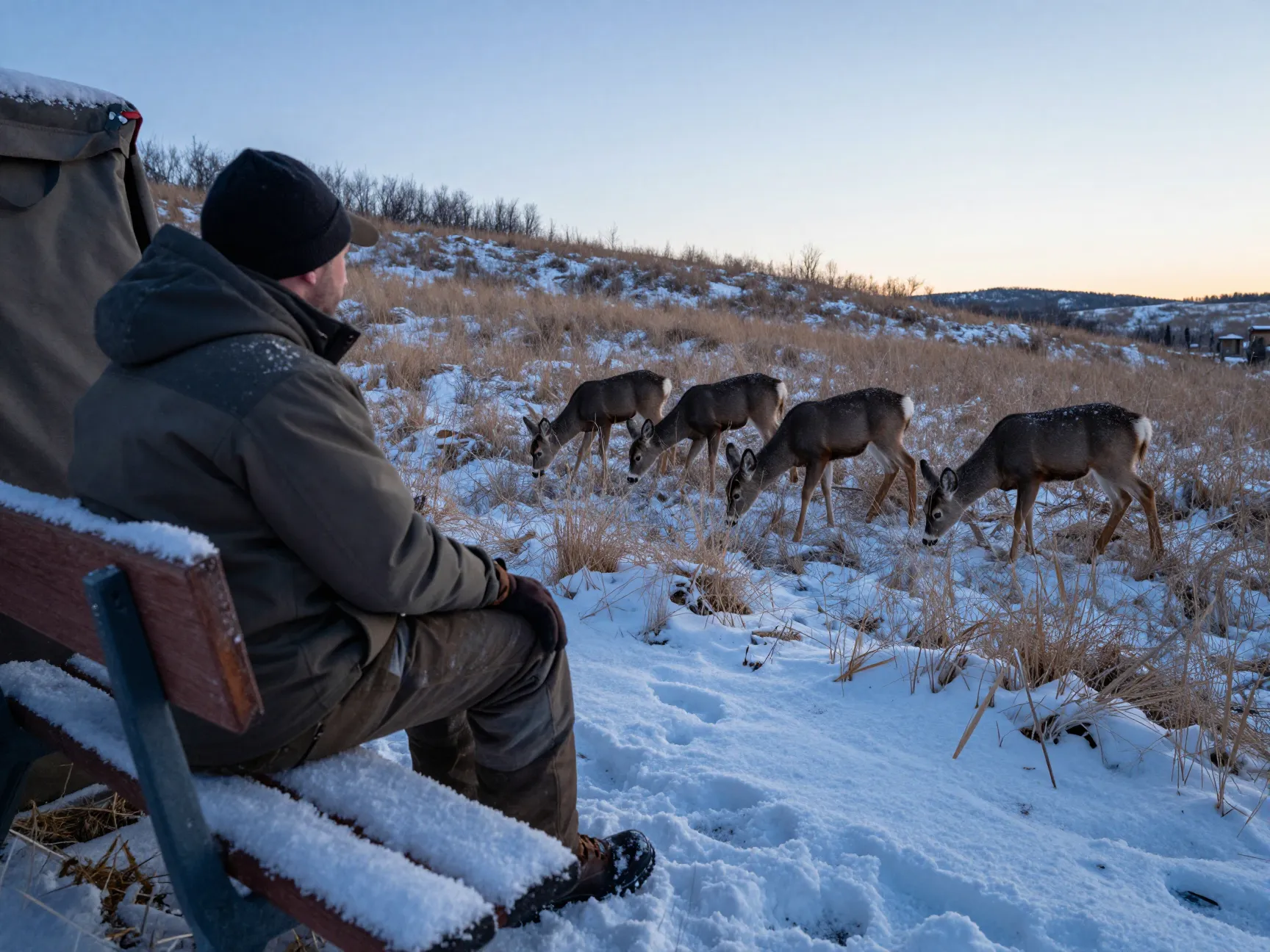
Late-season mule deer hunting, November through December in most western states, offers a different set of opportunities. Bucks that were nearly invisible during the summer and early fall become visible and vulnerable as they follow does to winter range and enter the rut.
Why late season works:
- Bucks are focused on breeding, not survival, making them less cautious.
- Snow concentrates deer on lower-elevation winter range, reducing the search area dramatically.
- Mature bucks that avoided hunters all fall are now moving during daylight.
Late-season tactics:
- Scout winter range transition zones, the benches, south-facing slopes, and valley edges where deer congregate after the first significant snowfall.
- Watch migration corridors: saddles, creek crossings, and ridge ends that funnel deer between summer and winter range.
- Set up ambushes on feeding areas in the afternoon, when deer move from bedding to food.
- In cold weather, deer feed aggressively. Alfalfa fields, winter wheat, and browse-heavy hillsides are primary destinations.
A note on patience: Late-season hunting often means sitting in cold, uncomfortable conditions for hours. Hunters who invest in quality layering systems and insulated ground blinds dramatically extend their effective hunting time.
Applying the 9 Western Hunting Tactics for Mule Deer, Elk, and Pronghorn Antelope Together
No single tactic works in isolation. The most successful western hunters layer these approaches based on the species, the season, the terrain, and the conditions on any given day.
A practical decision framework:
- Early season (August to mid-September): Lead with glassing (Tactic 1), thermal management (Tactic 2), and water hole hunting (Tactic 5).
- Rut period (mid-September to October): Add elk calling (Tactic 4) and pronghorn decoying (Tactic 7).
- Mid-season (October to November): Shift to spot-and-stalk for mule deer (Tactic 3) and backcountry elk pressure (Tactic 8).
- Late season (November to December): Focus on migration patterns and winter range ambushes (Tactic 9).
Gear that supports all nine tactics:
- Quality optics (binocular, spotting scope, rangefinder)
- Lightweight layering system rated to 0 degrees Fahrenheit
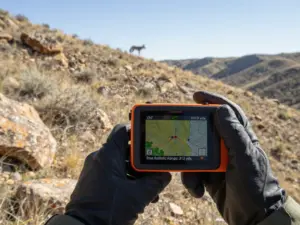
- GPS mapping app with offline capability
- Pack sized for the mission (day pack vs. multi-day frame pack)
- Wind-checking powder or lightweight thread
Common Mistakes That Undermine Western Hunting Success
Even experienced hunters fall into patterns that cost them opportunities. Recognizing these errors is as valuable as mastering the tactics themselves.
Top five field mistakes:
- Over-walking. Covering miles without glassing burns energy and bumps animals. Move less, glass more.
- Ignoring thermals. A hunter who checks wind at the trailhead but ignores thermal shifts during the stalk will be smelled at the worst possible moment.
- Underestimating distances. Western terrain creates optical illusions. A ridge that looks 400 yards away is often 700. Always rangefind before committing to a shot.
- Poor physical preparation. Altitude, steep terrain, and heavy packs punish unprepared hunters within the first two days of a backcountry trip.
- Tag fever. Rushing a shot on a marginal animal, or taking a shot beyond reliable ability, leads to lost game. Patience is a tactic.
Conclusion
The 9 Western Hunting Tactics for Mule Deer, Elk, and Pronghorn Antelope outlined in this guide represent a tested, systematic approach to one of the most demanding and rewarding forms of hunting in North America. Success in the West is earned through preparation, observation, and the discipline to execute each tactic correctly under pressure.
Actionable next steps for the 2026 season:
- Invest in quality optics before any other gear upgrade, glassing is the foundation of every other tactic.
- Study topographic and satellite maps of your unit before the season to identify water sources, migration corridors, and wilderness access points.
- Begin a physical training program at least 90 days before the hunt, focusing on loaded carries and elevation gain.
- Practice wind and thermal reading in the field before your hunt begins, not during it.
- Choose one new tactic from this list to master each season rather than attempting all nine at once.
Western hunting rewards the prepared and punishes the complacent. Apply these tactics with patience and persistence, and the West will deliver experiences that no other hunting environment can match.