9 Survival Life Hacks and Clever Camping Ideas for Your Next Trip
Nearly 60 million Americans go camping each year, yet a large percentage of outdoor incidents, from minor injuries to serious emergencies, happen to people who considered themselves prepared. The gap between a good trip and a dangerous one often comes down to a handful of low-cost, high-impact techniques that most campers never learn. This guide covers the 9 survival life hacks and clever camping ideas for your next trip that experienced wilderness guides, military veterans, and seasoned backpackers rely on, not as last resorts, but as standard practice.
Disclosure: This post contains affiliate links. As an Amazon Associate, we earn from qualifying purchases, and at no extra cost to you.
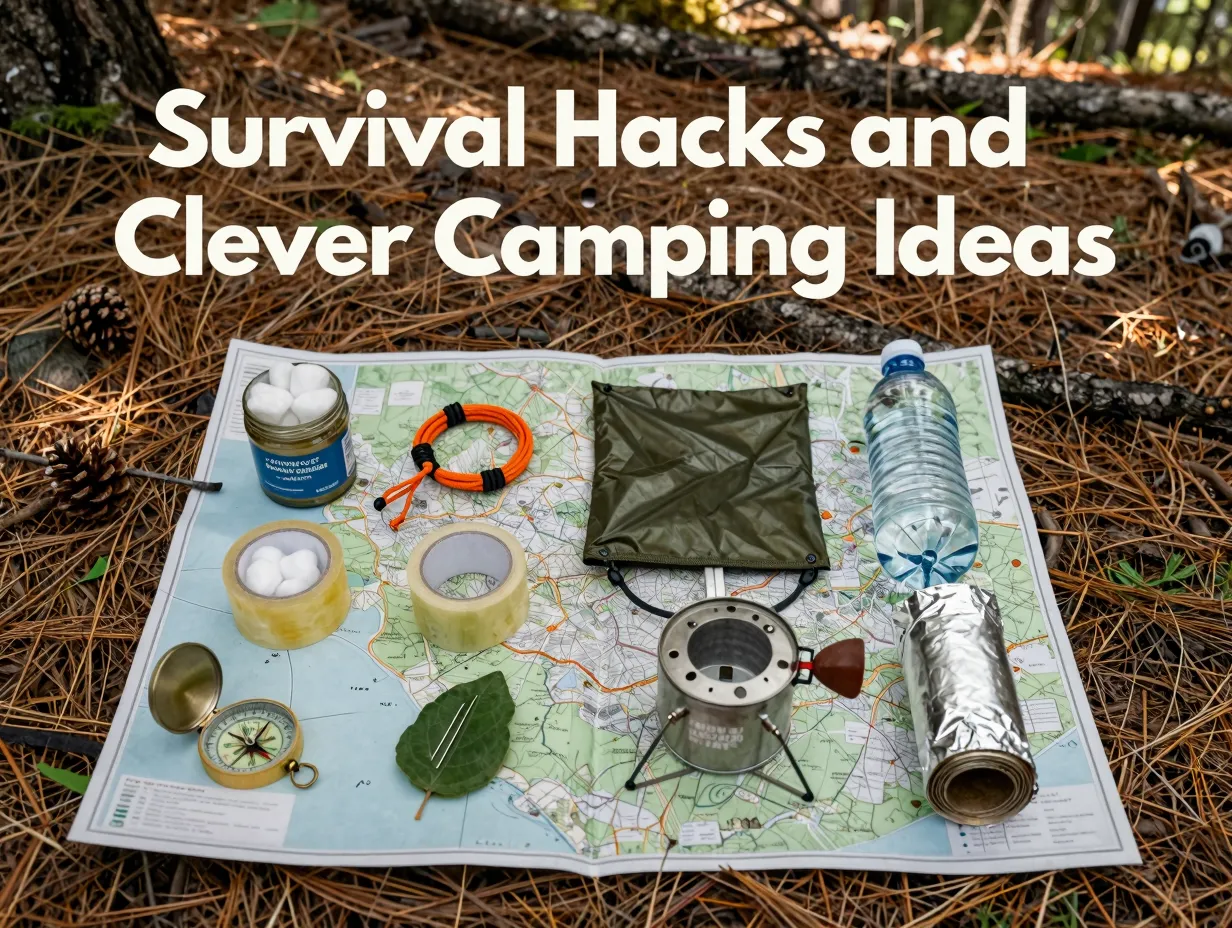
Whether heading into a national forest for a weekend or planning a multi-day backcountry expedition in 2026, these field-tested methods can make the difference between comfort and crisis.
Key Takeaways
- Everyday household items like petroleum jelly, duct tape, and aluminum foil can serve critical survival functions in the field.
- Mastering fire-starting, shelter-building, and navigation fundamentals eliminates dependence on single-use gadgets that can fail.
- Water safety and food preparation techniques protect against the most common causes of camping illness.
- Lightweight, multi-purpose gear choices reduce pack weight while increasing overall preparedness.
- Practicing these hacks at home before a trip dramatically improves execution under pressure.
Why Smart Campers Rely on These 9 Survival Life Hacks and Clever Camping Ideas for Your Next Trip
The outdoors does not grade on a curve. A storm that rolls in overnight, a sprained ankle three miles from the trailhead, or a lighter that fails in wet weather, these are not rare events. They are predictable variables that smart preparation neutralizes. The 9 survival life hacks and clever camping ideas for your next trip outlined below are not about fear. They are about competence.
Each hack below is organized by category of need: fire, water, shelter, navigation, first aid, food, signaling, lighting, and comfort. Together they form a complete preparedness framework that fits inside a standard daypack.
The 9 Survival Life Hacks Every Camper Should Know
1. Cotton Balls and Petroleum Jelly: The Ultimate Fire Starter
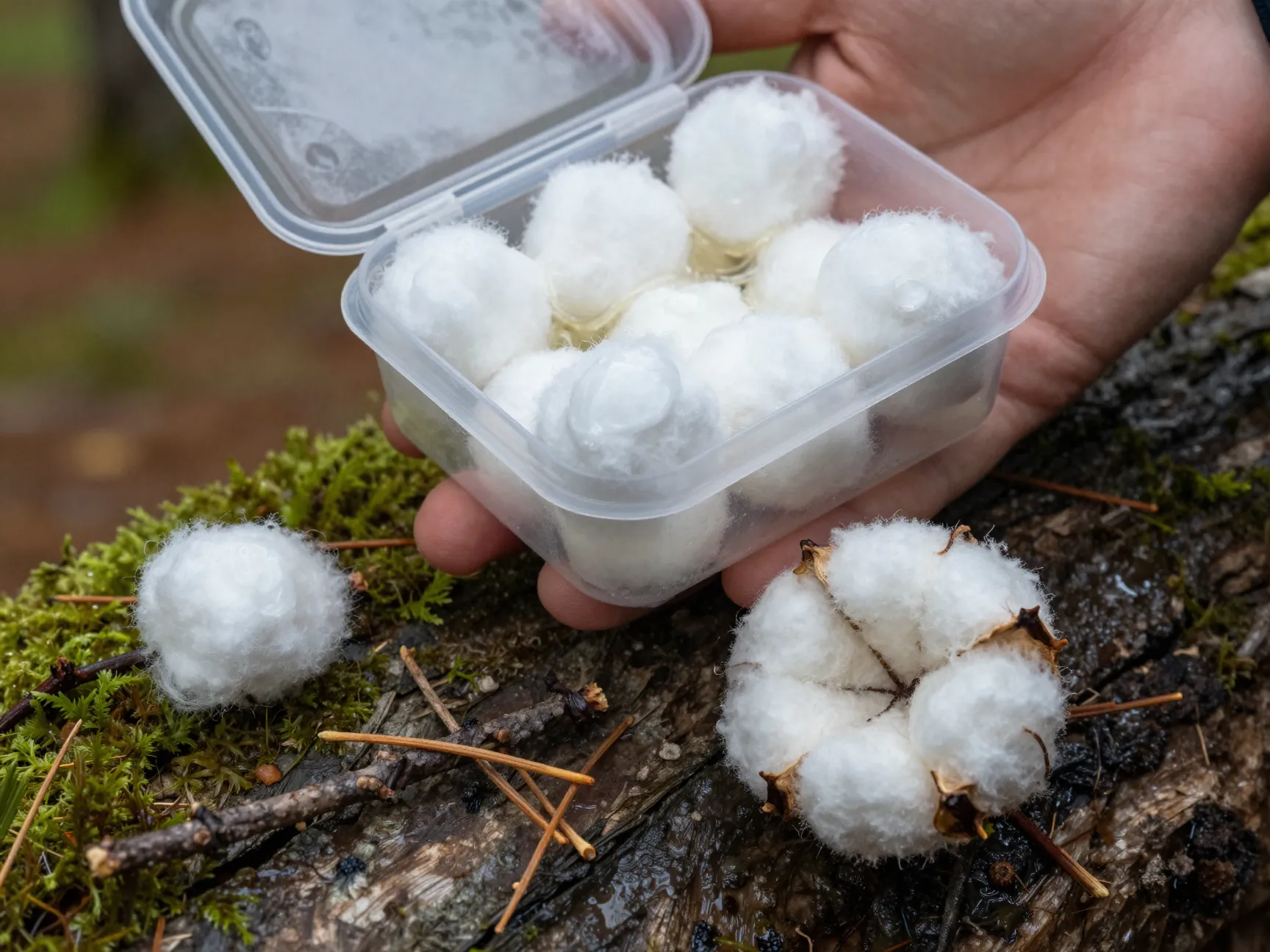
Fire is the single most important survival tool in cold or wet environments. Commercial fire starters are expensive, heavy, and often unreliable in rain. A far superior alternative costs almost nothing.
How to make it:
- Take 10 to 15 standard cotton balls.
- Work a small amount of petroleum jelly (such as Vaseline) into each one until saturated.
- Store them in a small waterproof container or a sealed zip-lock bag.
Each treated cotton ball burns for three to five minutes, more than enough time to catch damp tinder or green wood. A single cotton ball can be split into two or three pieces to extend the supply. This hack is used by survival instructors worldwide because it works in wind, light rain, and at altitude where oxygen is thinner.
“The best survival tool is the one that works every time, not the one that looks impressive in a store.”
Pro tip: Dryer lint packed into cardboard egg carton cups and coated with melted candle wax creates a similar long-burning starter that is ideal for car camping.
2. The Tarp Lean-To: Fast, Lightweight Emergency Shelter
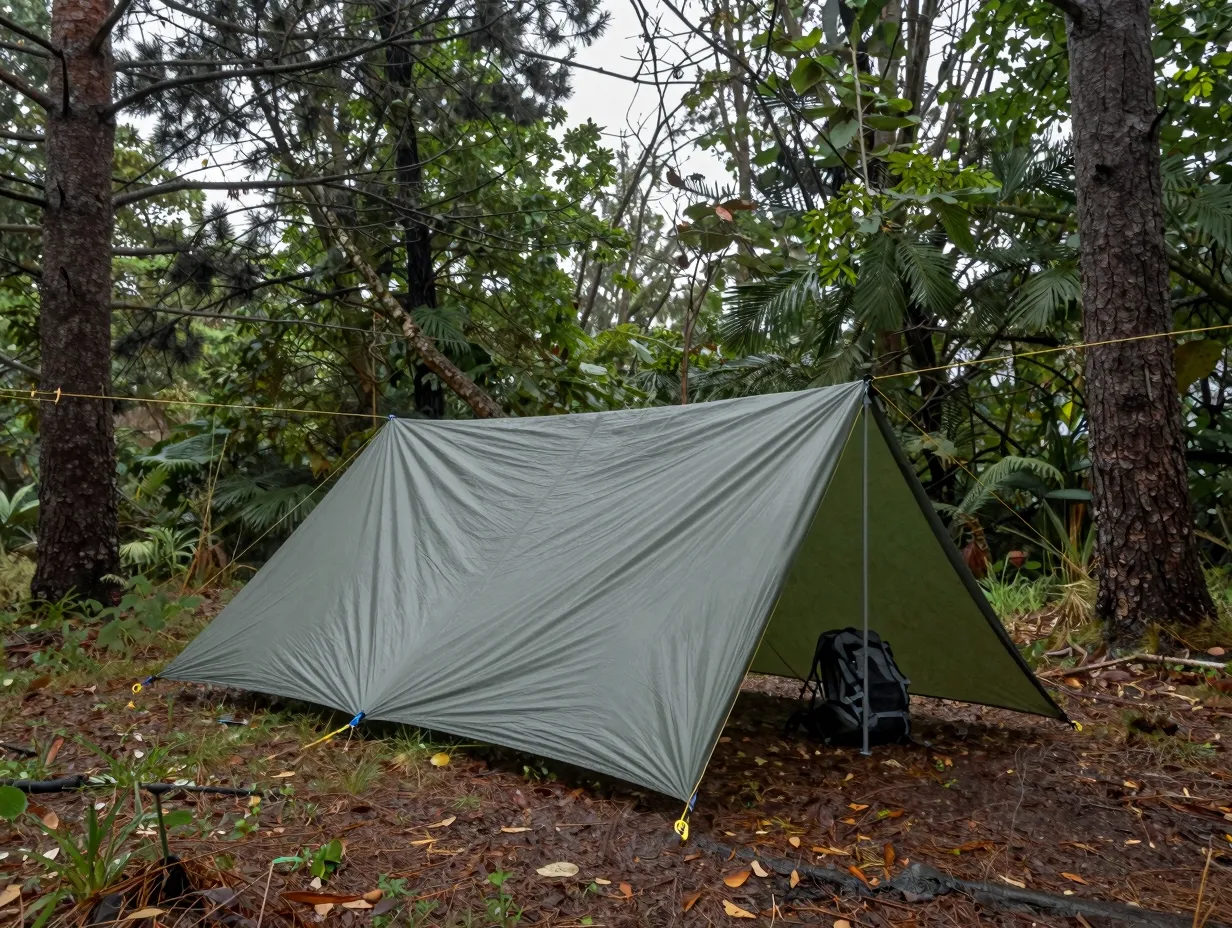
Tents are excellent, but a quality tarp weighs a fraction of the lightest tent and can be configured in dozens of ways. The lean-to is the fastest setup for rain protection and wind blocking.
Basic setup:
- Run a length of paracord between two trees at shoulder height, pulled tight.
- Drape the tarp over the cord so one edge extends to the ground.
- Stake the ground edge down at a 45-degree angle into the wind.
- Use additional paracord to guy out the sides for stability.
A 9-by-9-foot silnylon tarp weighs roughly 14 ounces and costs far less than a comparable tent. In summer, it doubles as a sunshade over a picnic area. In an emergency, it can wrap around a person as a heat-reflective cocoon when paired with a mylar emergency blanket on the inside.
Key materials to carry:
- One tarp (silnylon or polycryo for ultralight setups)
- 50 feet of 550 paracord
- Six to eight aluminum tent stakes
3. The Leaf and Needle Compass: Navigate Without Electronics
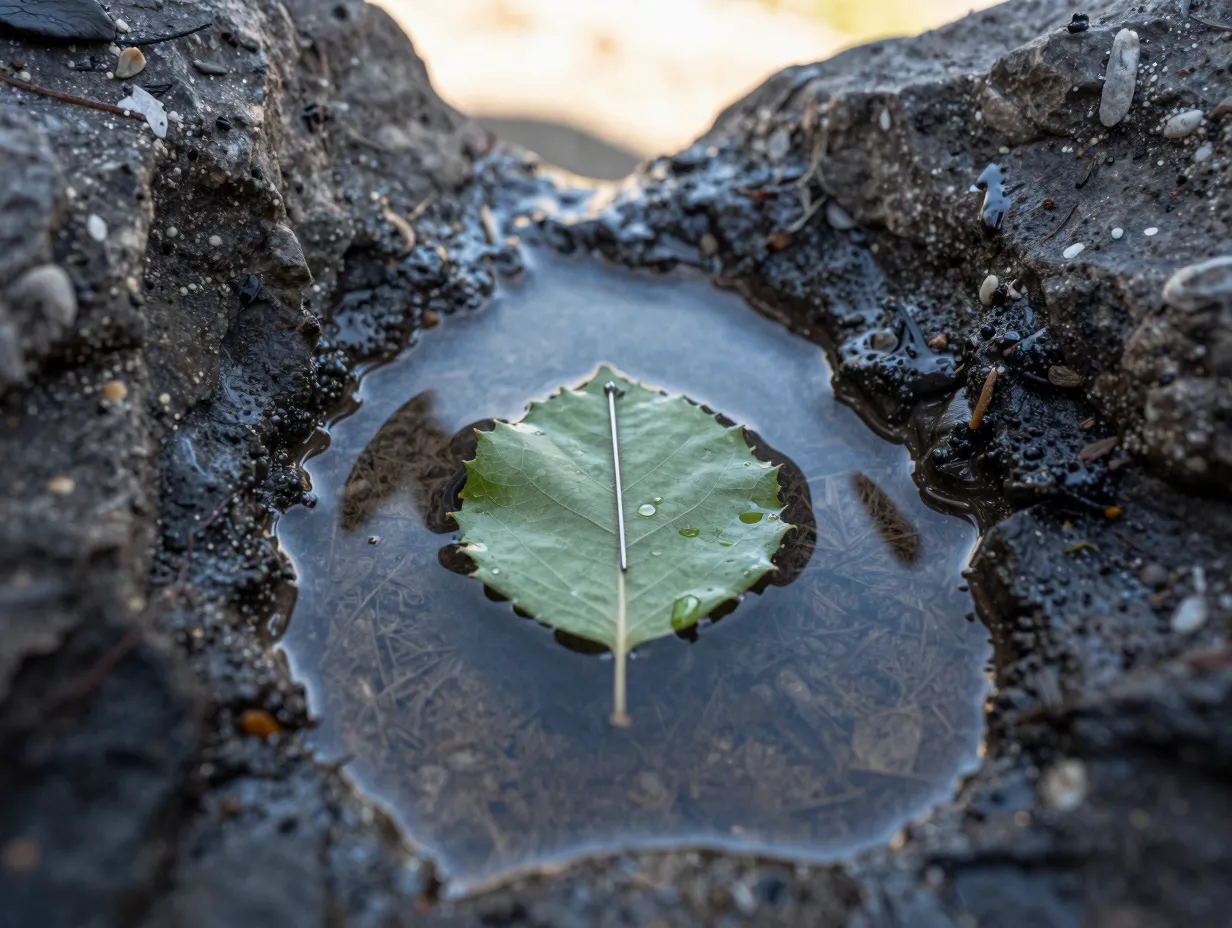
GPS devices fail. Phone batteries die. A basic understanding of magnetic navigation using a sewing needle and a still body of water takes two minutes to learn and requires no batteries.
Steps:
- Rub a sewing needle or safety pin against a magnet (or silk fabric) in one direction approximately 50 times to magnetize it.
- Lay the needle gently on a small leaf or piece of bark.
- Float the leaf on a calm puddle, still water in a cup, or any undisturbed surface.
- The needle will slowly rotate and align itself north-to-south.
To determine which end points north, note that the sun rises in the east and sets in the west. Cross-reference the needle’s alignment with the sun’s position to confirm orientation.
This technique works because the Earth’s magnetic field is strong enough to influence a magnetized ferrous object even at the surface. It is taught in military survival schools as a primary backup navigation method.
4. Water Purification Using Sunlight and a Clear Bottle (SODIS Method)
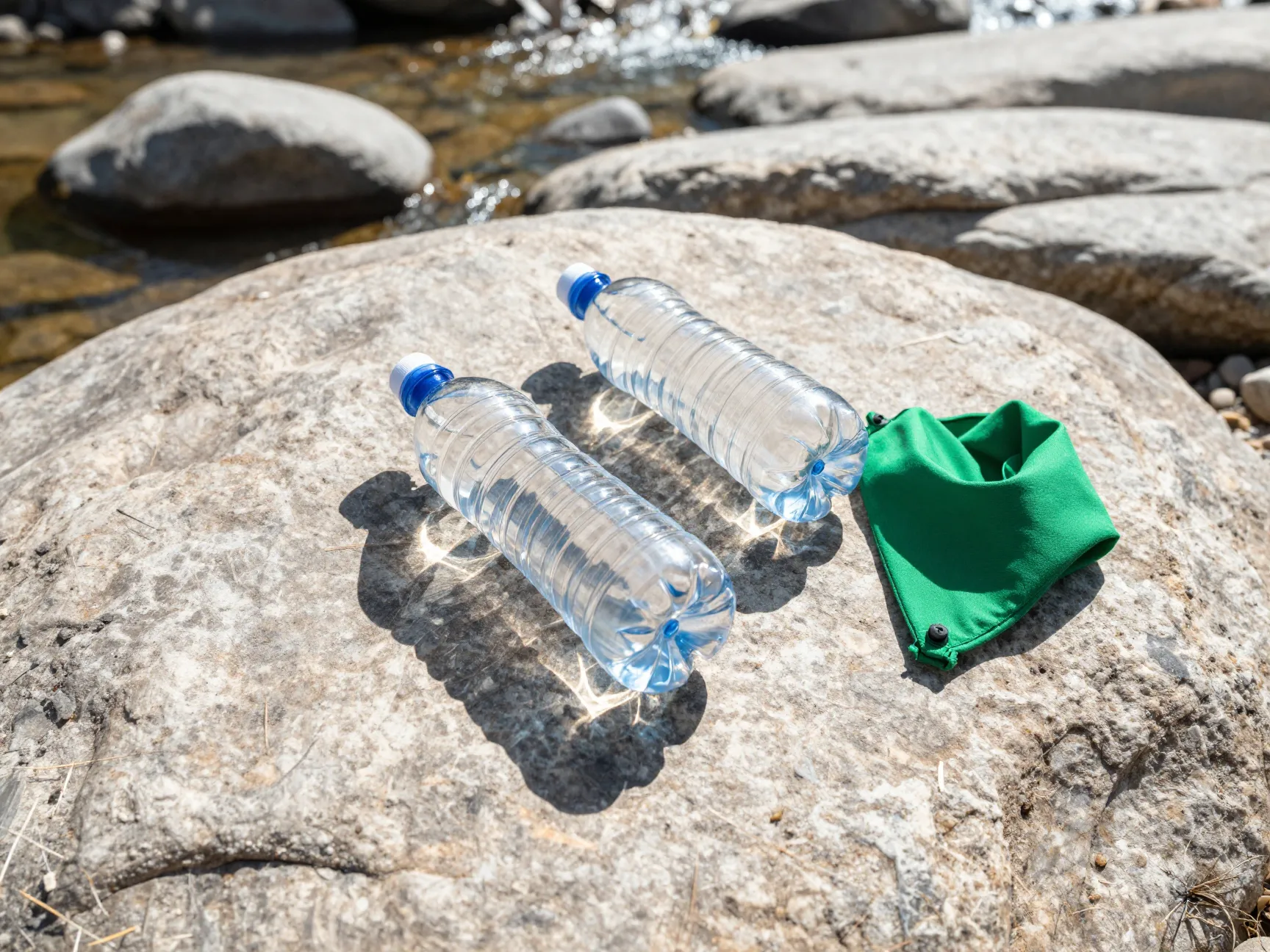
Waterborne illness is the leading cause of camping-related sickness. Boiling is the gold standard, but fuel is finite. The Solar Water Disinfection method (SODIS) requires nothing but a clear PET plastic bottle and direct sunlight.
How it works:
- Fill a clear, clean PET plastic bottle (the type used for commercial water) with water that has been pre-filtered through a bandana or coffee filter to remove sediment.
- Lay the bottle on a reflective surface, a piece of foil, a light-colored rock, or the roof of a car.
- Leave it in direct sunlight for a minimum of six hours (or two days under overcast skies).
UV-A radiation from the sun damages the DNA of pathogens including Giardia, E. coli, and Cryptosporidium, rendering the water safe to drink. The World Health Organization has validated SODIS as an effective low-cost purification method in field conditions.
Important limitations:
- Works only in clear or lightly turbid water
- Requires genuine direct sunlight (not shade or heavy cloud cover)
- Does not remove chemical contaminants
Carry water purification tablets as a backup for cloudy days or fast-moving situations.
5. Duct Tape Blister Prevention and Wound Management
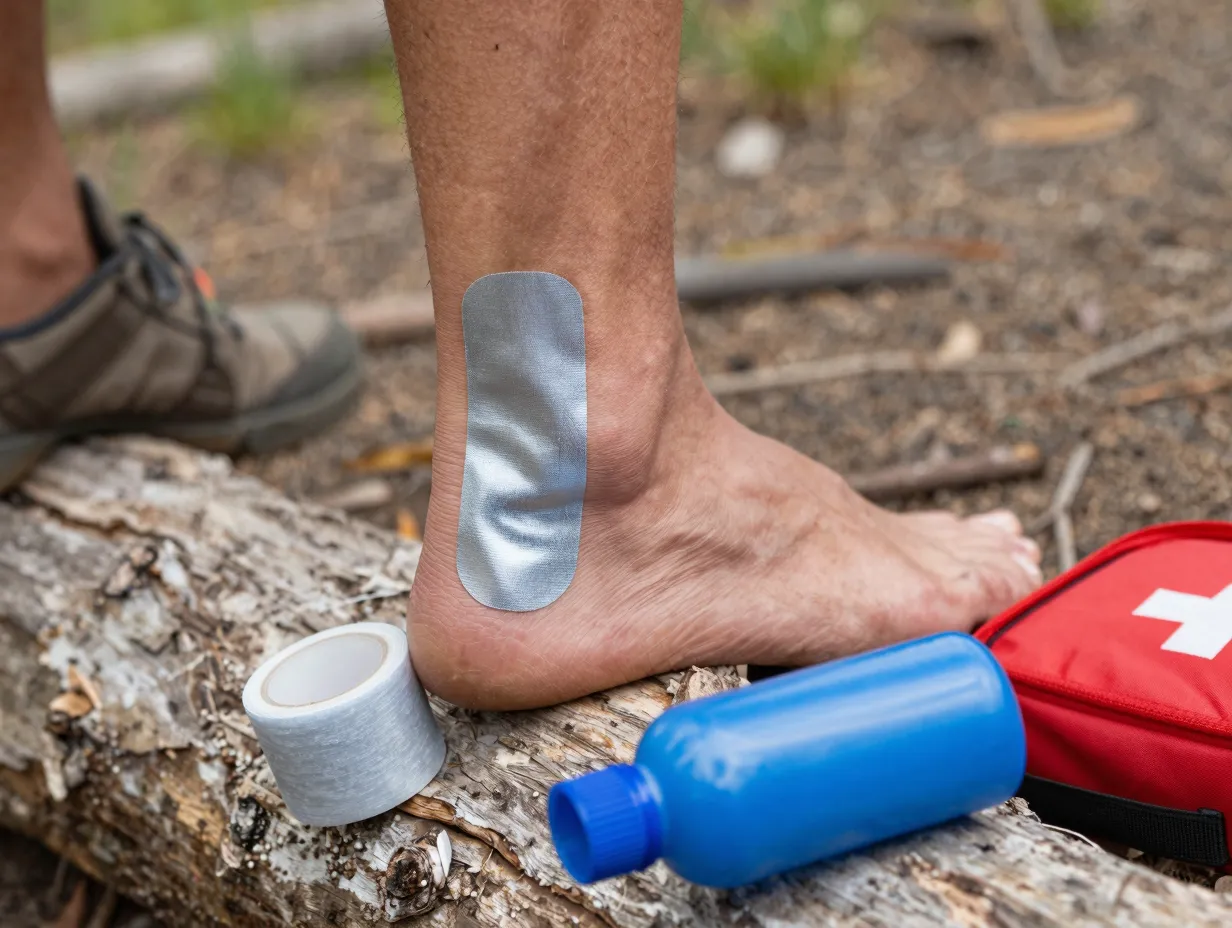
Blisters end more hiking trips than any other physical ailment. Prevention is dramatically more effective than treatment, and duct tape applied before a blister forms is one of the most field-proven methods available.
Prevention protocol:
- At the first sign of “hot spots” (friction areas on the foot), stop immediately.
- Clean and dry the area.
- Apply a piece of duct tape directly over the hot spot, smoothing out all air bubbles.
- For multi-day trips, replace the tape each morning.
For existing blisters, do not pop them unless the pressure is unbearable. If draining is necessary, sterilize a needle with flame or alcohol, puncture the edge (not the center), drain gently, and cover with duct tape over a thin layer of moleskin.
Duct tape also serves as a field-expedient wound closure for minor lacerations, a splint reinforcement, and a repair patch for torn gear. Carrying a 10-foot roll wrapped around a water bottle eliminates the bulk of a full roll.
6. The Tin Can Alcohol Stove: Ultralight Cooking on Zero Budget
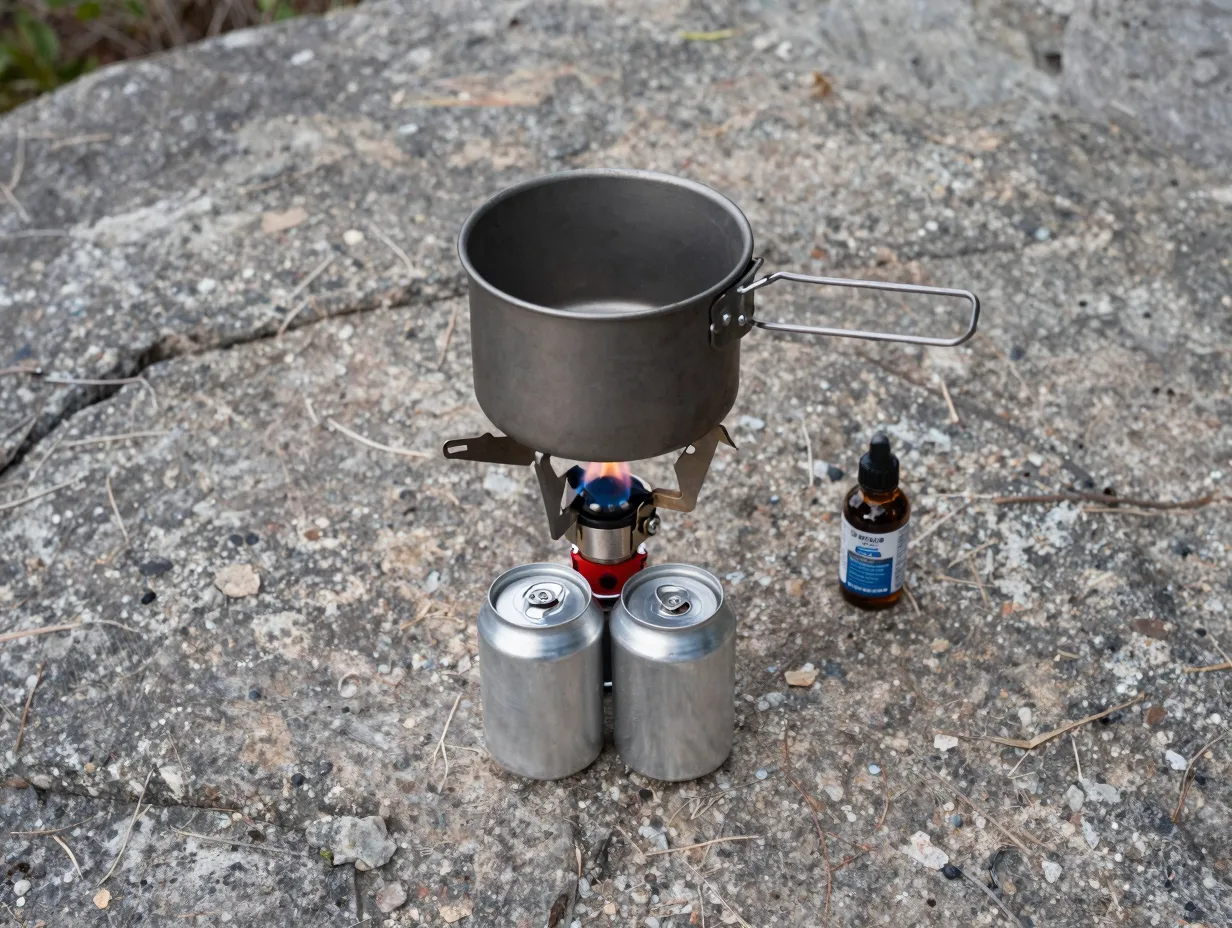
Commercial backpacking stoves are reliable but expensive. A functional alcohol stove can be made from two aluminum soda cans in under 20 minutes and weighs less than half an ounce.
Basic construction:
- Cut the bottom three inches off two aluminum cans using a sharp knife or scissors.
- Use a pin to punch 16 small holes in a circle around the rim of one bottom piece.
- Punch one hole in the center of the same piece.
- Press the two bottom pieces together firmly (this requires patience, work slowly around the edge).
- Fill through the center hole with denatured alcohol or HEET yellow bottle fuel.
- Light the center hole; the stove will prime in 30 to 60 seconds, then the jets will ignite.
This stove boils approximately two cups of water using one ounce of fuel in eight to ten minutes. It has no moving parts, nothing to break, and the fuel is available at most hardware stores and gas stations.
Safety note: Alcohol flames are nearly invisible in daylight. Always assume a lit stove is burning and never add fuel to a hot stove.
7. The Paracord Survival Bracelet: 10 Feet of Multi-Use Cordage
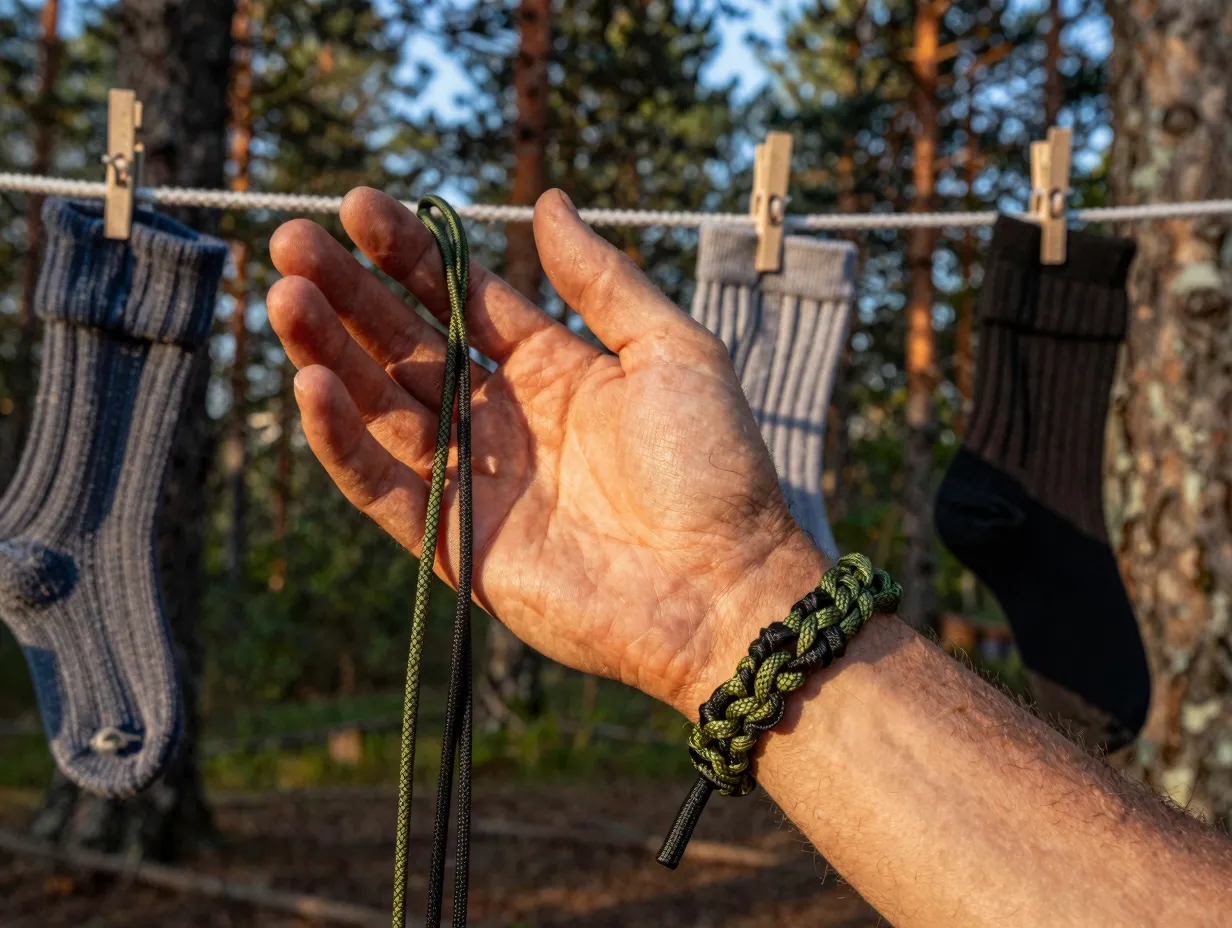
A standard 550 paracord bracelet contains seven to nine feet of usable cord when unraveled. Each strand of outer sheath contains seven inner strands, each of which can be separated for fine tasks like suturing, fishing line, or dental floss in an emergency.
Practical uses in camp:
| Use Case | Cord Needed |
|---|---|
| Clothesline between trees | 8 to 10 feet |
| Bear bag hang (PCT method) | 50+ feet |
| Tent guyline replacement | 3 to 5 feet |
| Tourniquet (emergency) | 18 inches |
| Fishing line (inner strand) | As needed |
| Snare trigger (inner strand) | 2 to 3 feet |
Wearing the bracelet means the cordage is always accessible, even if a pack is lost or left at camp. A double-cobra weave bracelet provides approximately 12 feet of usable 550 cord.
8. Signal Mirror and Whistle: The Two Most Effective Rescue Tools
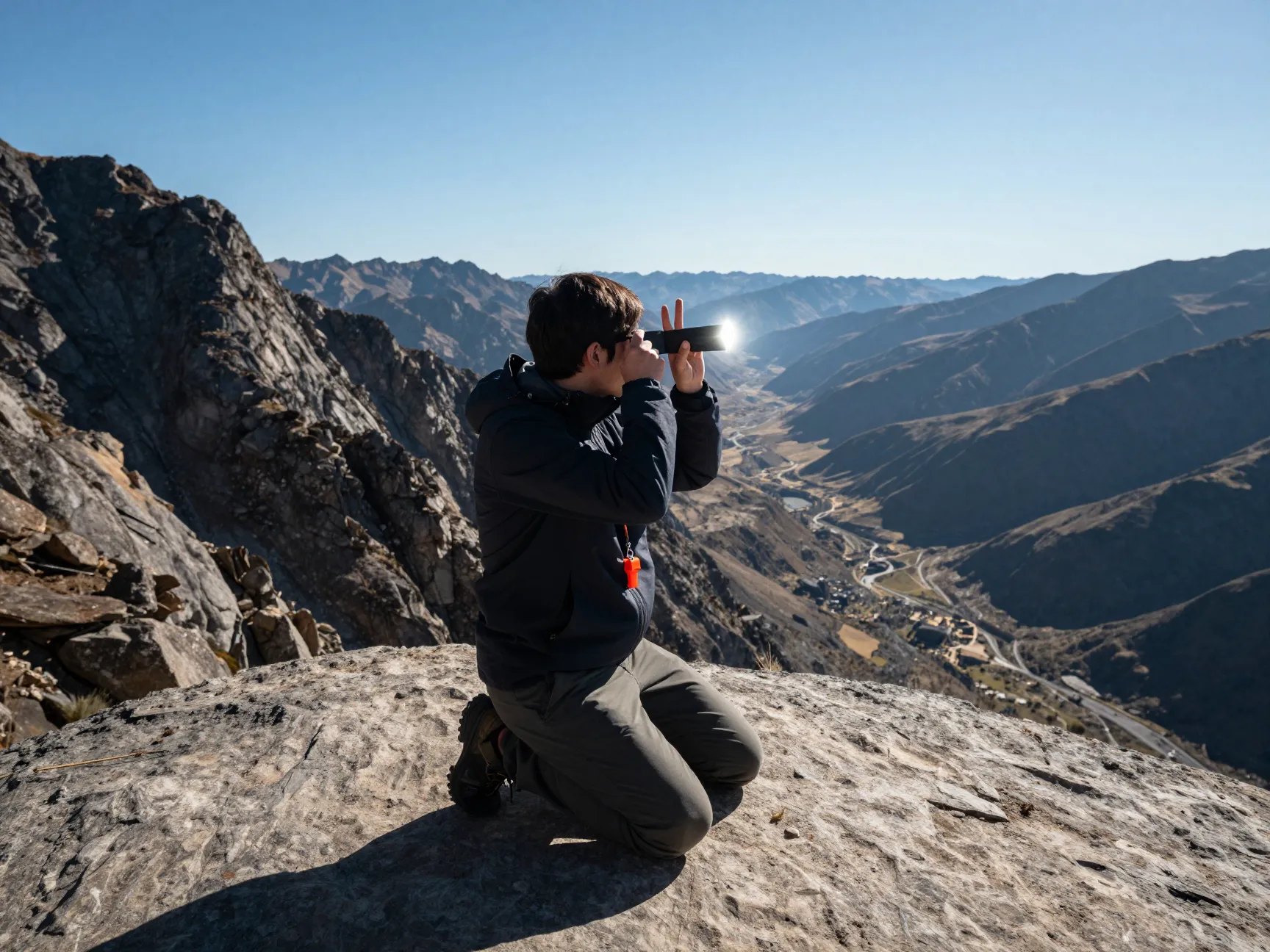
Many campers carry flares or personal locator beacons (PLBs), but a signal mirror and a pealess whistle are lighter, cheaper, require no batteries, and work in conditions where electronic devices fail.
Signal mirror technique:
- Hold the mirror close to the face and extend one arm forward.
- Create a “V” with two fingers and sight the target (aircraft, distant person, road) through the V.
- Tilt the mirror until the reflected sunlight spot falls on the V and through to the target.
- Flash in groups of three, the universal distress signal.
A signal mirror can be seen by aircraft up to 10 miles away under clear conditions. In contrast, a standard flashlight is visible for roughly one mile.
Whistle protocol:
- Three blasts = distress signal
- One blast = acknowledgment or “I hear you”
- A pealess whistle (such as the Fox 40 or Storm) functions in freezing temperatures and wet conditions where a traditional pea whistle fails
These two tools combined weigh less than two ounces and cost under ten dollars. They belong in every hiking kit, including day hikes.
9. The Aluminum Foil Multi-Tool: Cooking, Signaling, and Insulation
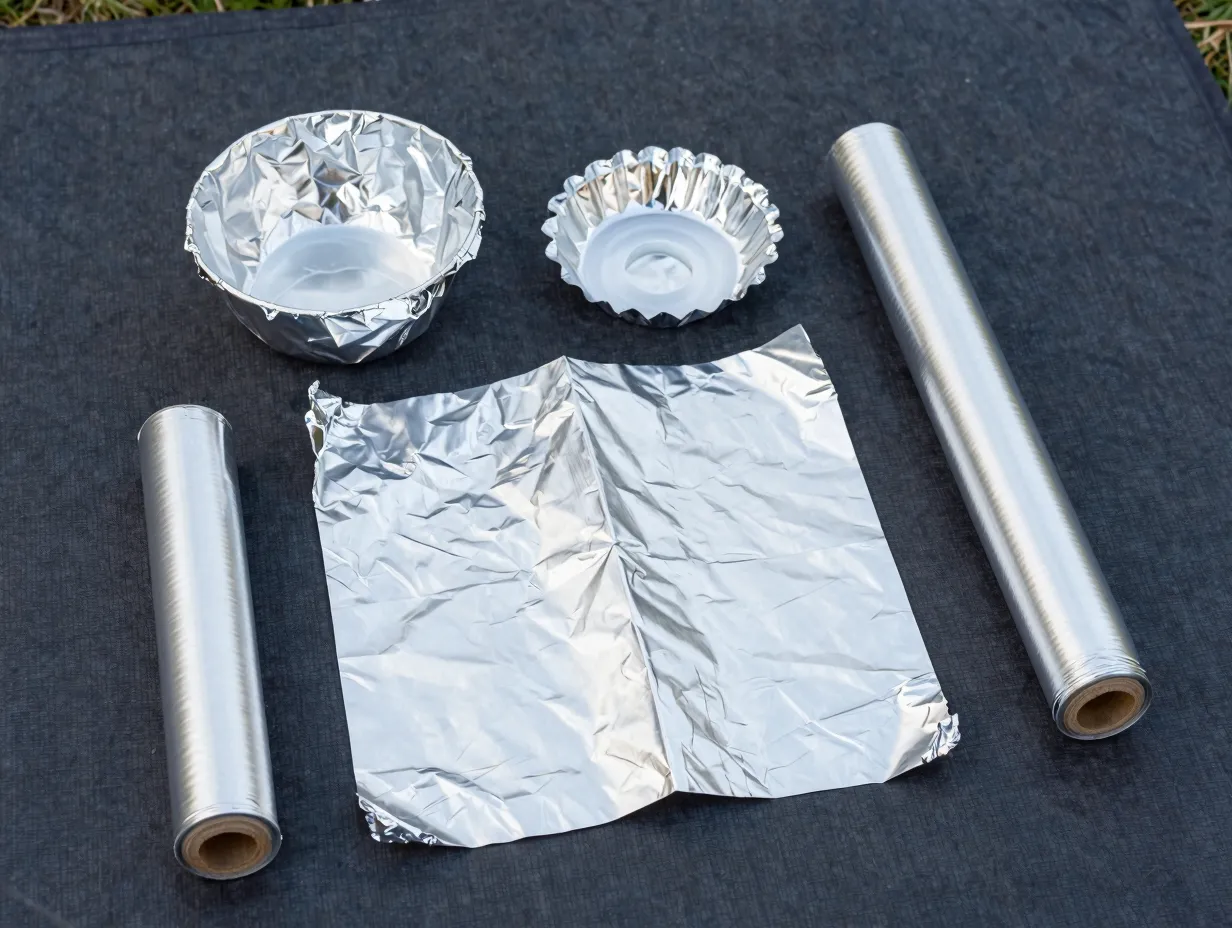
Heavy-duty aluminum foil is one of the most versatile and underrated items in any camp kit. A single roll weighing four ounces serves functions that would otherwise require multiple specialized items.
High-value applications:
- Cooking vessel: Shape foil into a bowl or cup for boiling water over a fire when no pot is available. Double or triple layers prevent burnthrough.
- Emergency signal: A flat sheet of foil reflects sunlight nearly as effectively as a commercial signal mirror. Crinkle it slightly to diffuse the reflection and create a wider flash pattern.
- Insulation layer: Wrap around a water bottle filled with hot water and place inside a sleeping bag for radiant heat on cold nights.
- Food storage: Wrap cooked food tightly to prevent odor from attracting wildlife. Foil is more odor-resistant than plastic bags for short-term storage.
- Windscreen for stoves: Form a U-shape around an alcohol stove to block wind and increase fuel efficiency by up to 30 percent.
- Improvised funnel: Roll into a cone shape for transferring water or fuel between containers.
Carry one roll of heavy-duty foil (not standard kitchen foil, which tears too easily) in a resealable bag to prevent moisture damage.
Applying These 9 Survival Life Hacks and Clever Camping Ideas for Your Next Trip in the Real World
Knowing these techniques is only half the equation. The other half is practice. Each of the nine hacks above can be rehearsed at home or in a backyard before a real trip. Light a petroleum jelly cotton ball in the kitchen sink. Build a tarp lean-to in the yard. Float a magnetized needle in a bowl of water. The muscle memory built during low-stakes practice pays dividends when conditions are stressful.
A practical pre-trip checklist based on these hacks:
- 10 to 15 petroleum jelly cotton balls in a waterproof container
- One 9×9 silnylon tarp and 50 feet of paracord
- One sewing needle stored in a small tin
- Two clear PET water bottles and water purification tablets
- One roll of duct tape (wrapped around a water bottle)
- Denatured alcohol (4 oz) and a DIY tin can stove
- One paracord bracelet (worn)
- One signal mirror and one pealess whistle
- One roll of heavy-duty aluminum foil
Total weight for the above kit: approximately 14 to 18 ounces depending on specific items chosen. Total cost: under $30 USD for most items.
Conclusion
The 9 survival life hacks and clever camping ideas for your next trip covered in this guide share a common thread: they replace expensive, single-purpose gear with inexpensive, multi-purpose knowledge. The most dangerous camper is not the one with the least gear, it is the one who has never thought through what they would do if their primary system failed.
Actionable next steps:
- Build a petroleum jelly fire starter kit this week using materials already in most homes.
- Purchase a signal mirror and pealess whistle before the next outdoor trip, these two items alone have saved lives.
- Practice the SODIS water purification method with a clear bottle in direct sunlight to understand its real-world timing.
- Run through the tarp lean-to setup in a backyard before relying on it in the field.
- Review the paracord use-case table and identify which applications apply to the specific terrain of the next planned trip.
Preparedness is not a personality type. It is a skill set. And like any skill set, it improves with deliberate, consistent practice. Start with one hack. Master it. Then add the next.