9 Off-Grid Survival Projects to Make Your Homestead Self-Sufficient
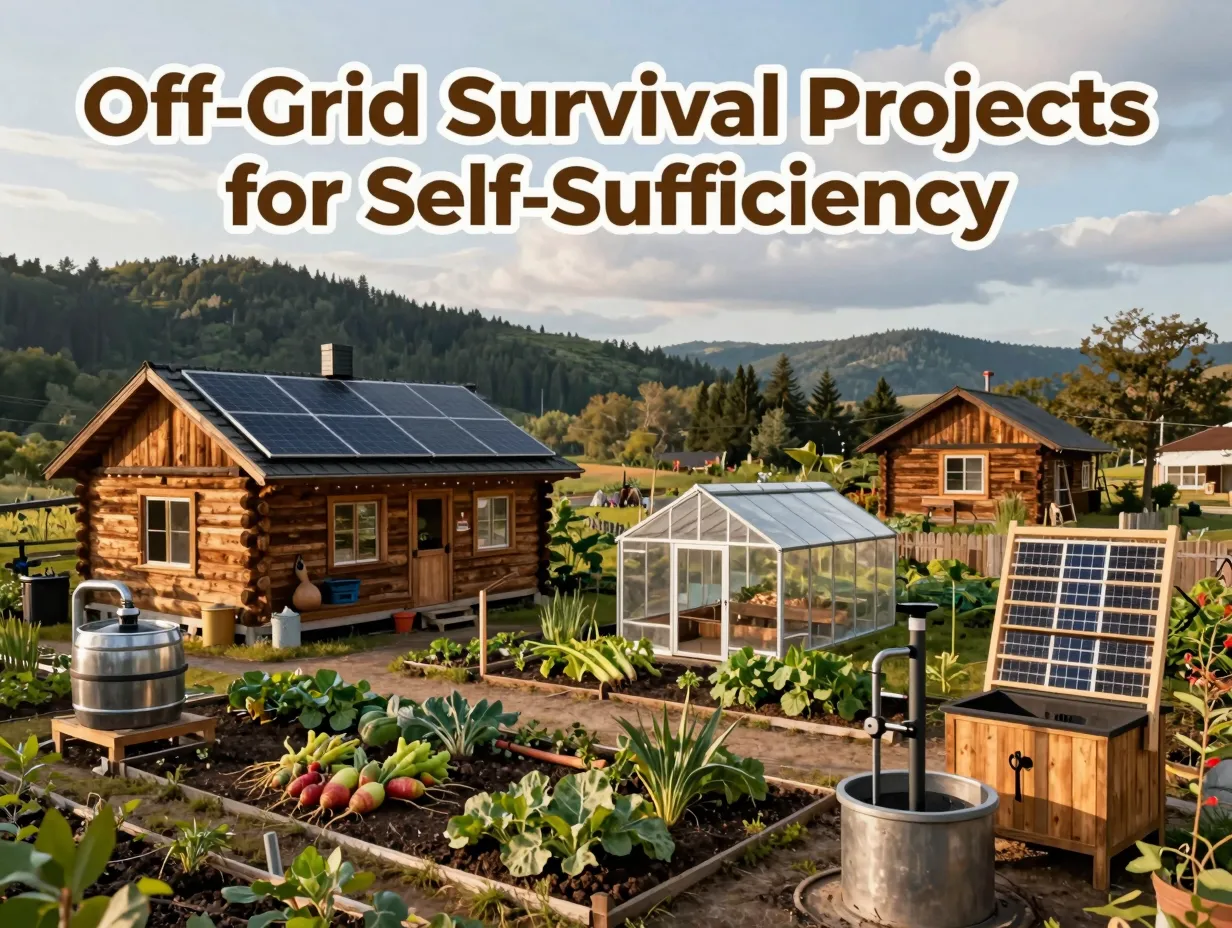
Nearly 3 million Americans now live full-time off the grid, and that number has grown by an estimated 10 percent every year since 2020. Yet the majority of homesteaders who attempt self-sufficiency abandon the effort within two years, not because the lifestyle is impossible, but because they tackle the wrong projects in the wrong order. The 9 Off-Grid Survival Projects to Make Your Homestead Self-Sufficient outlined in this guide are ranked by foundational importance, ensuring that every hour of labor and every dollar of investment builds on a stable base. Whether starting from raw land or upgrading an existing rural property in 2026, these projects create interlocking systems that reduce dependence on external supply chains, utility companies, and municipal services.
Disclosure: This post contains affiliate links. As an Amazon Associate, we earn from qualifying purchases, and at no extra cost to you.
Key Takeaways
- Water security must come before energy systems, without a reliable water source, no other homestead project can succeed long-term.
- Renewable energy projects like solar and micro-hydro pay for themselves through eliminated utility bills, typically within five to eight years.
- Food preservation infrastructure (root cellars, solar dehydrators) is as critical as food production itself.
- Waste-to-resource systems such as biogas digesters and composting toilets close nutrient loops and reduce ongoing costs.
- The most resilient homesteads layer multiple redundant systems rather than depending on a single solution for any one need.
The Foundation: Why These 9 Off-Grid Survival Projects Work Together
Self-sufficiency is not a single achievement, it is a cascade of interdependent systems. A solar array is useless if a drought has depleted the household’s water supply. A productive garden fails without a reliable method to preserve the harvest. The 9 Off-Grid Survival Projects to Make Your Homestead Self-Sufficient presented here are designed as a layered ecosystem, where each project strengthens the others.
The framework follows three tiers:
Tier 1, Life-Critical Resources: Water, energy, and food production.
Tier 2, Preservation and Storage: Root cellars, food dehydration, and seed saving.
Tier 3, Waste-to-Resource Conversion: Biogas, composting, and greywater systems.
Working through these tiers in order prevents the common mistake of building a beautiful chicken coop before securing a clean water source.
1. Rainwater Harvesting and Gravity-Fed Water System
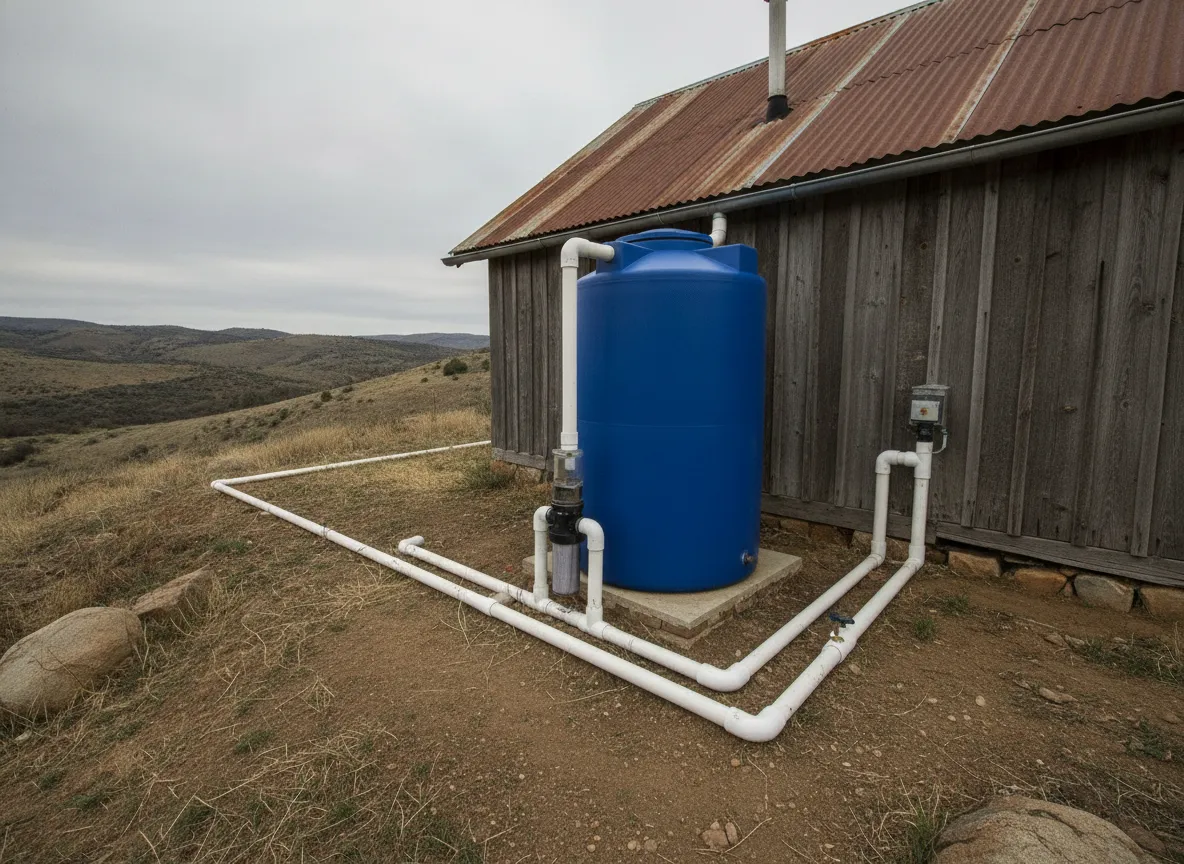
Water is the single resource that cannot be substituted. Before any other project begins, a homestead needs a dependable, gravity-fed water supply that operates without electricity.
Core components of a complete system:
- Corrugated metal or standing-seam roof catchment surface (minimum 1,000 square feet recommended)
- First-flush diverter to discard the initial contaminated runoff
- Underground cistern or above-ground food-grade polyethylene tanks (1,000 to 10,000 gallons depending on household size)
- Slow-sand biofilter followed by a UV sterilizer for potable water
- Gravity-fed distribution lines dropping at least 2.31 feet of elevation per 1 PSI of pressure needed
A 1,000-square-foot catchment surface in a region receiving 30 inches of annual rainfall can theoretically collect over 18,000 gallons per year. Even accounting for evaporation and loss, this exceeds the average American household’s annual drinking water requirement by a significant margin.
Redundancy tip: Pair a rainwater system with a hand-dug or drilled well as a backup. A manual pitcher pump requires zero electricity and can supply water during extended dry seasons.
2. Off-Grid Solar Power System with Battery Storage
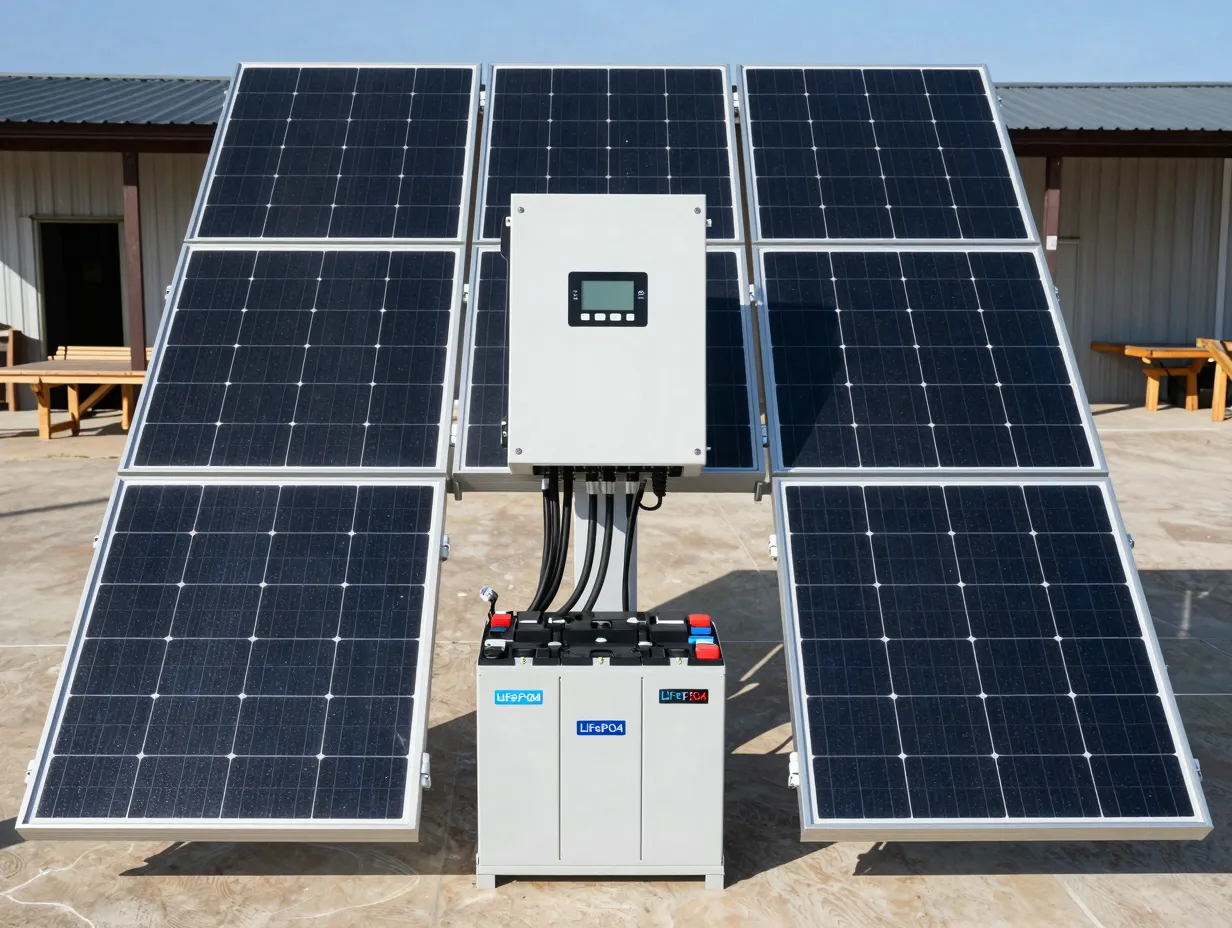
Solar photovoltaic technology has dropped in cost by more than 90 percent since 2010, making it the most accessible renewable energy option for most homesteads. A properly sized system eliminates the monthly utility bill and provides reliable power for lighting, refrigeration, water pumping, and communication equipment.
Sizing a basic off-grid solar system:
| Household Size | Daily kWh Usage | Recommended Panel Wattage | Battery Bank (kWh) |
|---|---|---|---|
| 1-2 people (minimal) | 1-3 kWh | 800W – 1,500W | 5 – 10 kWh |
| 3-4 people (moderate) | 4-8 kWh | 2,000W – 4,000W | 15 – 25 kWh |
| Full homestead (5+ people) | 10-20 kWh | 5,000W – 10,000W | 30 – 60 kWh |
Lithium iron phosphate (LiFePO4) batteries have become the preferred storage technology in 2026 due to their 3,000-plus charge cycle lifespan, thermal stability, and lack of toxic off-gassing. A charge controller, inverter, and automatic generator backup complete a resilient system.
Critical add-on: A small wind turbine or micro-hydro generator (if a stream is present) provides power during cloudy periods, dramatically improving year-round reliability.
3. Root Cellar for Year-Round Food Storage
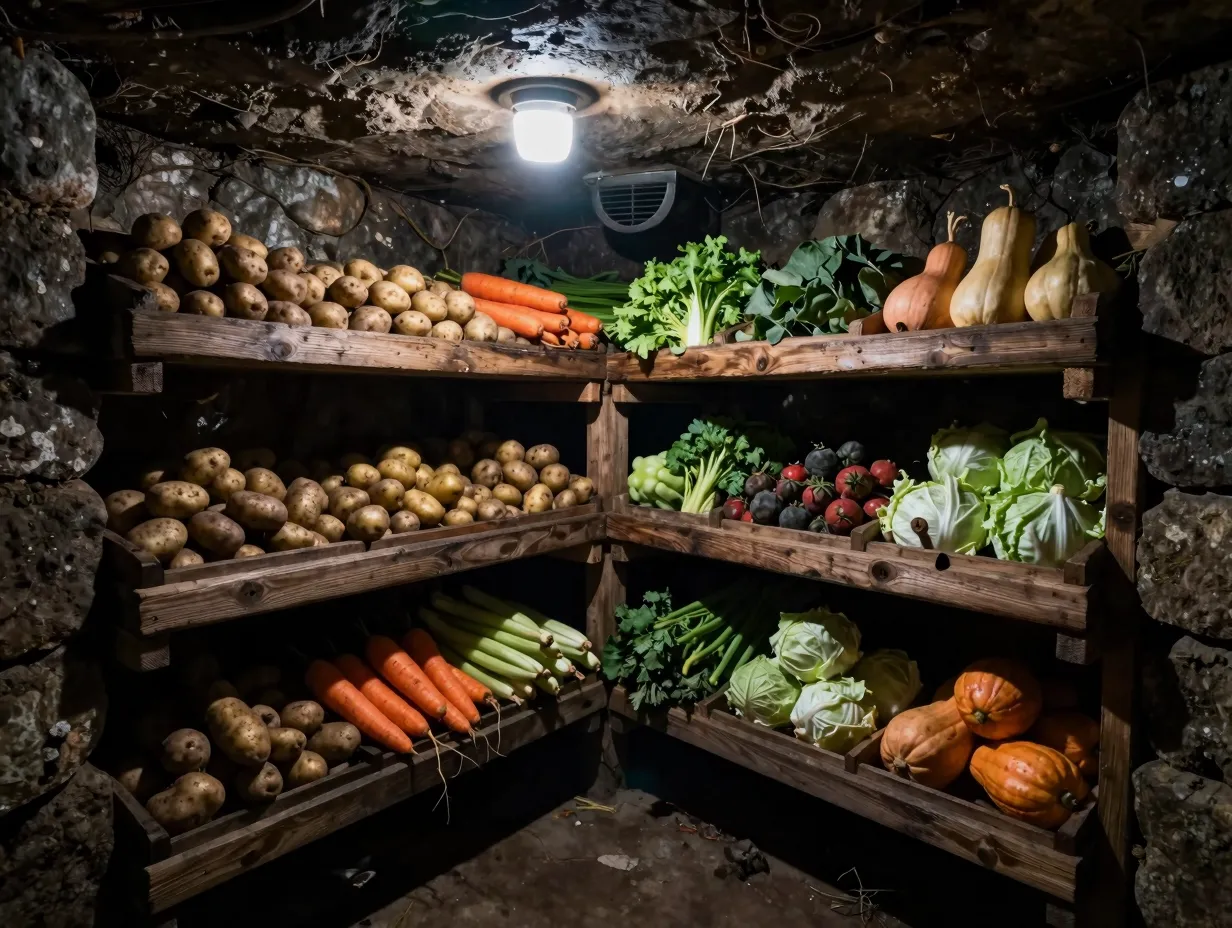
Before refrigeration existed, root cellars kept families fed through long winters. They remain one of the most cost-effective food preservation projects available to homesteaders, requiring no electricity and minimal maintenance once constructed.
Ideal conditions inside a functional root cellar:
- Temperature: 32°F to 40°F (0°C to 4°C)
- Humidity: 85 to 95 percent for most root vegetables
- Ventilation: Two-pipe system (one low for cold air intake, one high for warm air exhaust)
- Darkness: Complete light exclusion to prevent sprouting
Construction options ranked by cost:
- Hillside bank cellar (lowest cost, uses natural earth insulation)
- Buried shipping container with earthen cover (moderate cost, large capacity)
- Basement root cellar room (convenient but requires good insulation from heated living space)
Properly stored, potatoes last 4 to 6 months, carrots 4 to 5 months, cabbages 3 to 4 months, and winter squash up to 6 months. A well-stocked 10-by-12-foot root cellar can carry a family of four through an entire winter with zero external food purchases.
4. Solar Food Dehydrator
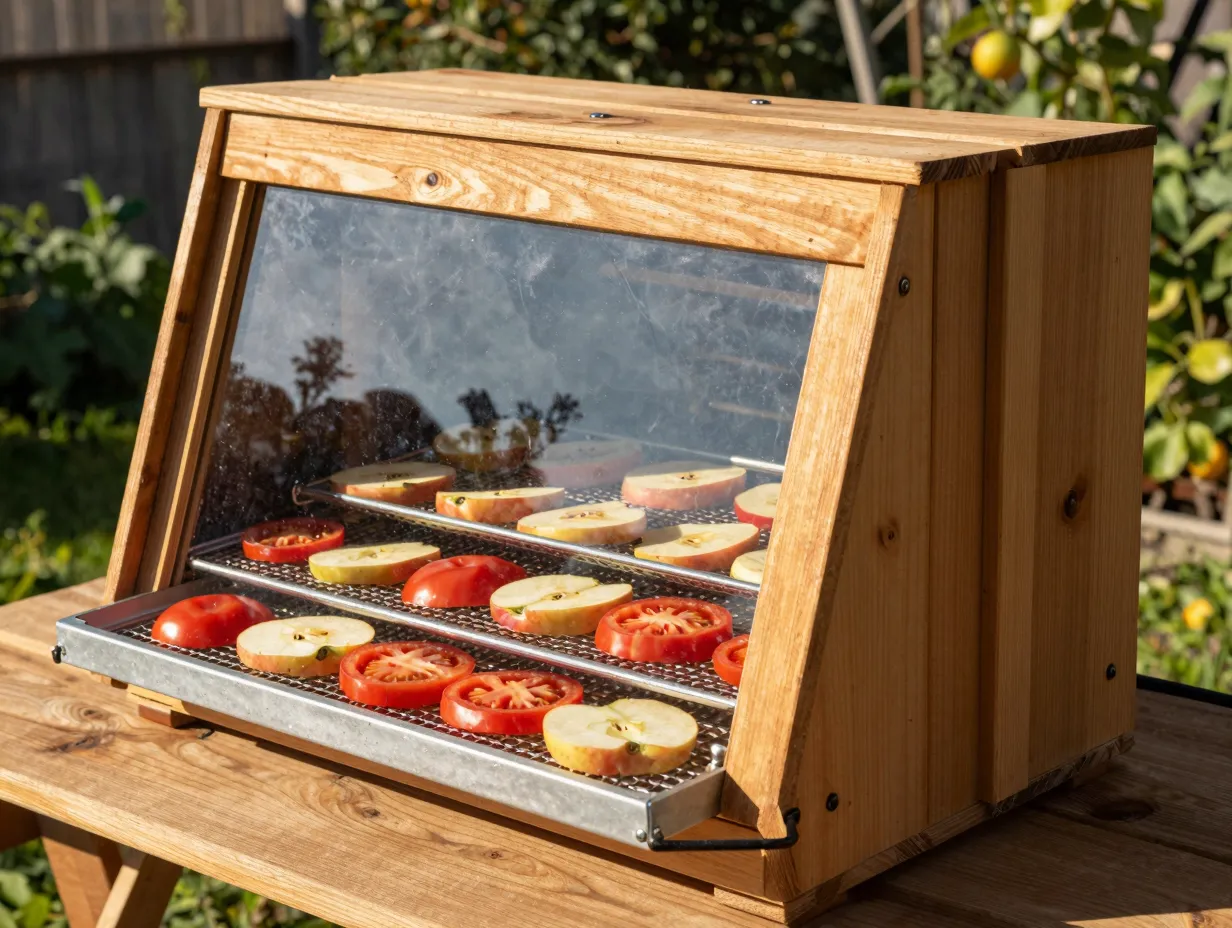
Dehydration removes 80 to 95 percent of moisture from food, making it shelf-stable for 1 to 3 years without refrigeration. A solar dehydrator uses no electricity and can process large volumes of garden produce during peak harvest season.
Two proven designs:
- Indirect solar dehydrator: Air is heated in a separate solar collector box before passing over food trays. This design prevents UV light from degrading nutrients and is preferred for fruits and vegetables.
- Direct solar dehydrator: Food sits directly under a glazed panel. Simpler to build but less effective for nutrient-sensitive produce.
A basic indirect dehydrator can be built from salvaged lumber, a sheet of polycarbonate glazing, and window screen mesh for under $80 in materials. Drying capacity of 20 to 40 pounds of fresh produce per batch is achievable with a well-designed 6-tray unit.
Best crops for solar dehydration: tomatoes, apples, herbs, peppers, mushrooms, zucchini, and berries.
5. Hand-Dug Well or Drilled Well with Manual Pump
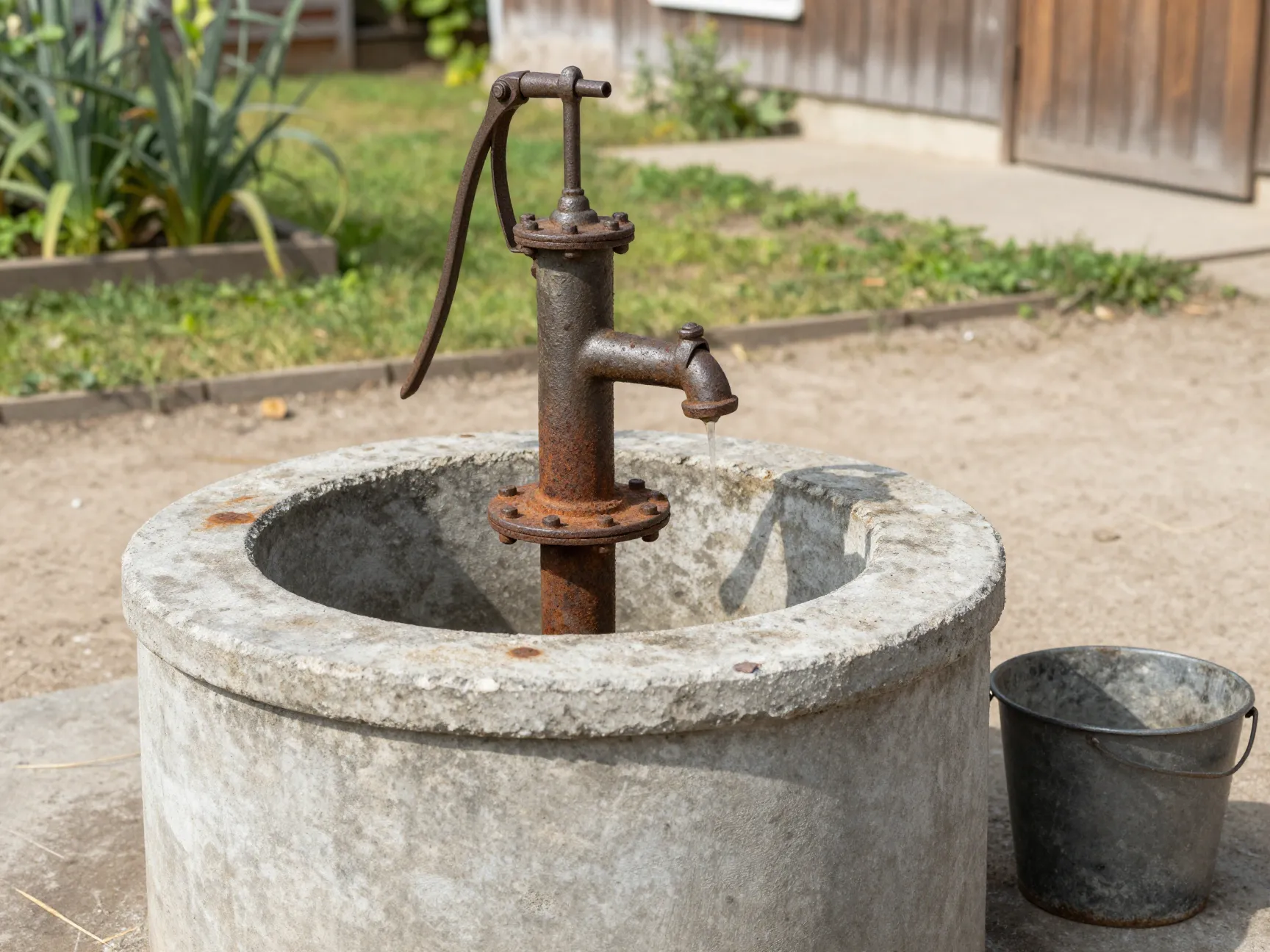
While rainwater harvesting covers most household water needs, a well provides access to groundwater that replenishes independently of surface weather patterns. This redundancy is critical during droughts or after extended periods without rainfall.
Hand-dug wells are suitable for shallow water tables (under 30 feet) and can be completed with basic tools and labor. They are lined with concrete rings or dry-stacked stone and covered with a sealed cap to prevent contamination.
Drilled wells access deeper aquifers (30 to 300+ feet) and require professional equipment but provide access to cleaner, more reliable water sources.
Regardless of depth, pairing any well with a hand-operated pitcher pump or rope pump ensures water access during power outages. A rope pump, a continuous loop of rope threaded through a pipe with small rubber discs, can be built for under $50 and lifts water from depths up to 100 feet with minimal effort.
6. Biogas Digester
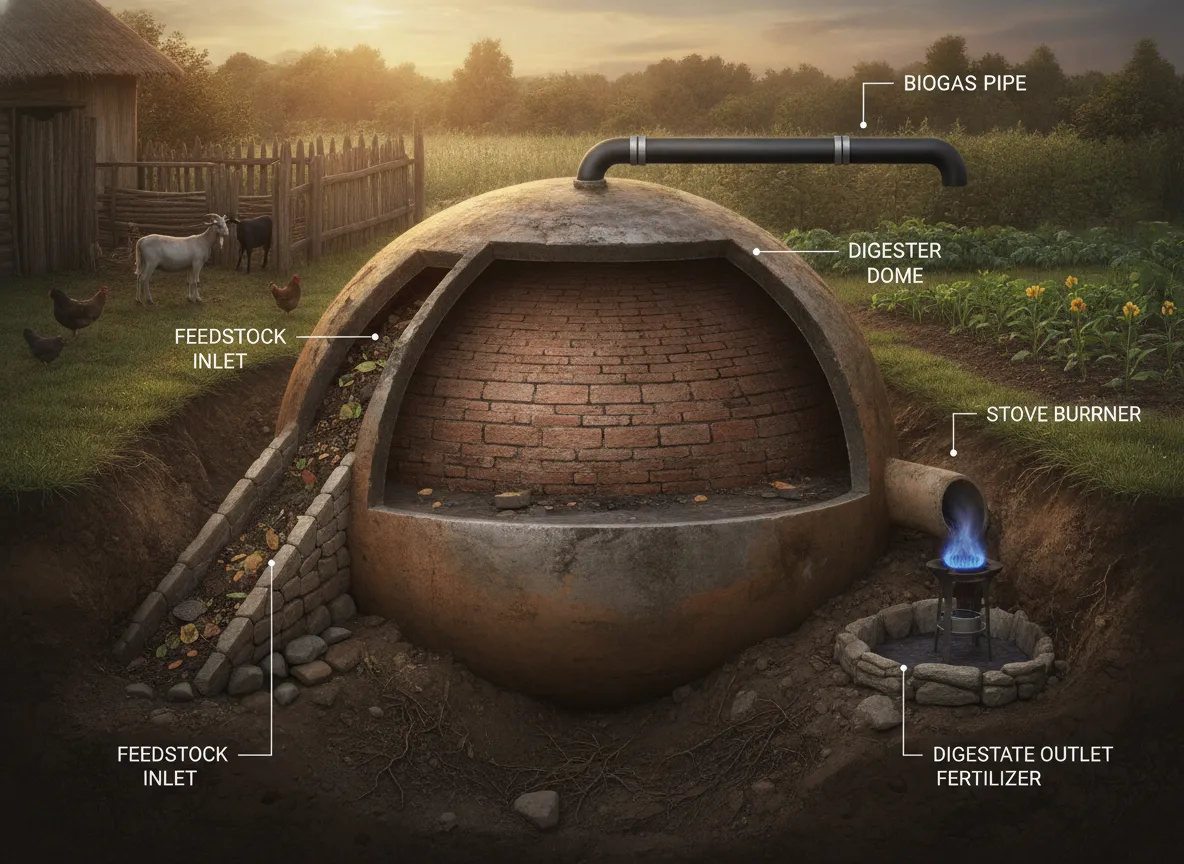
A biogas digester converts organic waste, animal manure, food scraps, and plant material, into combustible methane gas for cooking and heating, plus a nutrient-rich liquid fertilizer called digestate. This project closes two loops simultaneously: waste management and energy production.
How a simple fixed-dome digester works:
- Organic feedstock is mixed with water and loaded into an inlet pipe.
- Anaerobic bacteria break down the material inside a sealed underground chamber.
- Methane gas rises and collects in the dome above the slurry.
- Gas pressure pushes digestate out through an overflow pipe into a collection tank.
- Gas is piped directly to a modified burner for cooking.
A digester fed with manure from just two to three pigs or one dairy cow can produce enough biogas to cover the average household’s daily cooking fuel needs. The digestate, once applied to garden beds, outperforms most commercial fertilizers in nitrogen and phosphorus content.
Build time: 3 to 5 days for a simple 6-cubic-meter fixed-dome design using locally sourced bricks and cement.
Advanced Projects: Completing the 9 Off-Grid Survival Projects to Make Your Homestead Self-Sufficient
The first six projects establish the foundation. The three projects below push a homestead from basic self-reliance to genuine long-term independence.
7. Composting Toilet and Greywater System
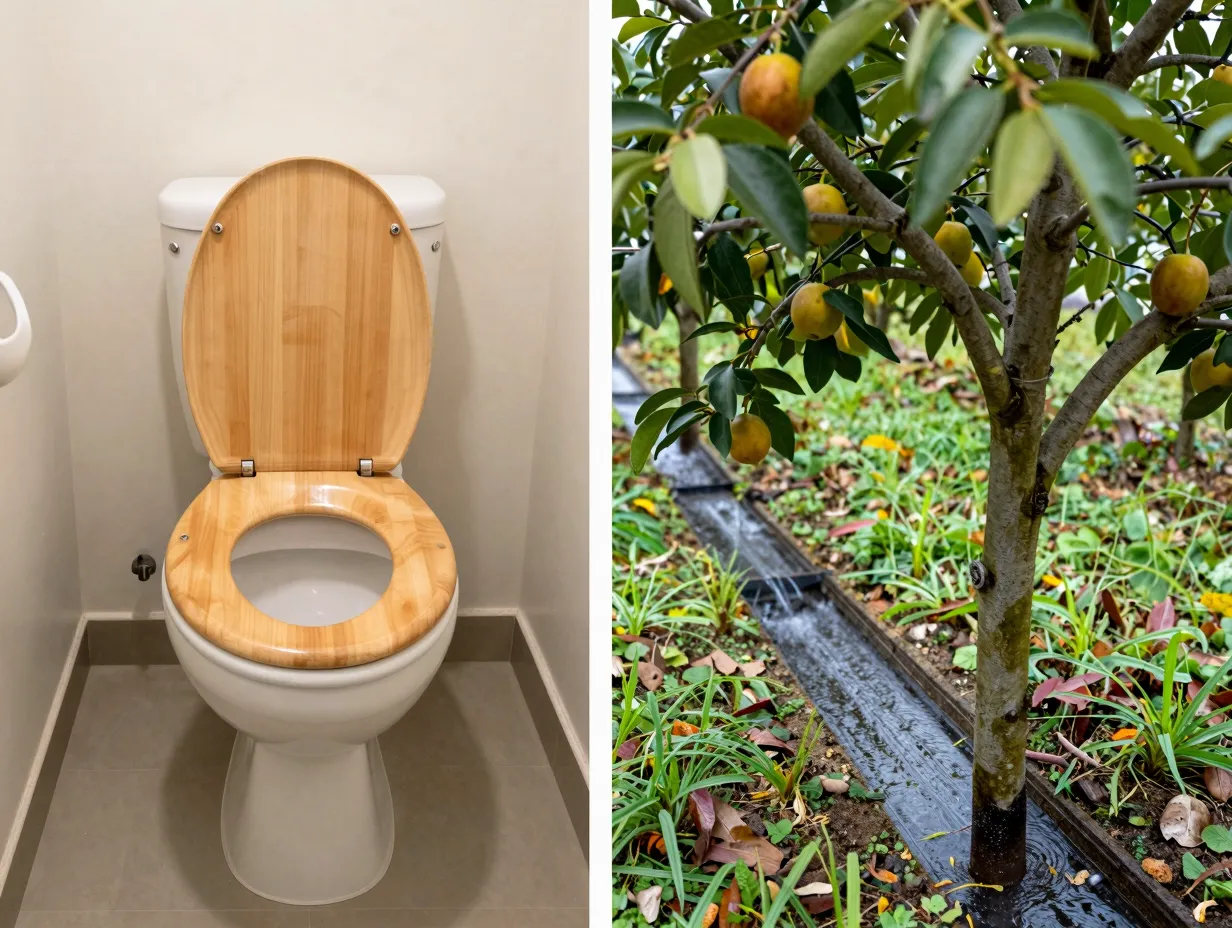
Municipal sewage systems represent one of the most overlooked dependencies on modern infrastructure. A composting toilet and greywater recycling system eliminate this dependency entirely while converting human waste into a valuable soil amendment.
Composting toilet basics:
- Separates liquid and solid waste at the source (urine-diverting design)
- Solid waste composts aerobically in a ventilated chamber over 6 to 12 months
- End product is a pathogen-free humus safe for use on non-food garden areas
- No water required for flushing, saves 25 to 30 percent of typical household water use
Greywater system components:
A simple three-stage greywater system routes sink, shower, and laundry water through:
- A settling tank to remove solids
- A mulch basin or constructed wetland for biological filtration
- Subsurface irrigation to fruit trees or ornamental plants
Greywater should never be applied to root vegetables or leafy greens consumed raw. Fruit trees, berry bushes, and ornamental plantings are ideal recipients. A properly designed system can irrigate up to 2,000 square feet of landscape with zero additional water draw.
8. Seed Saving and Seed Bank
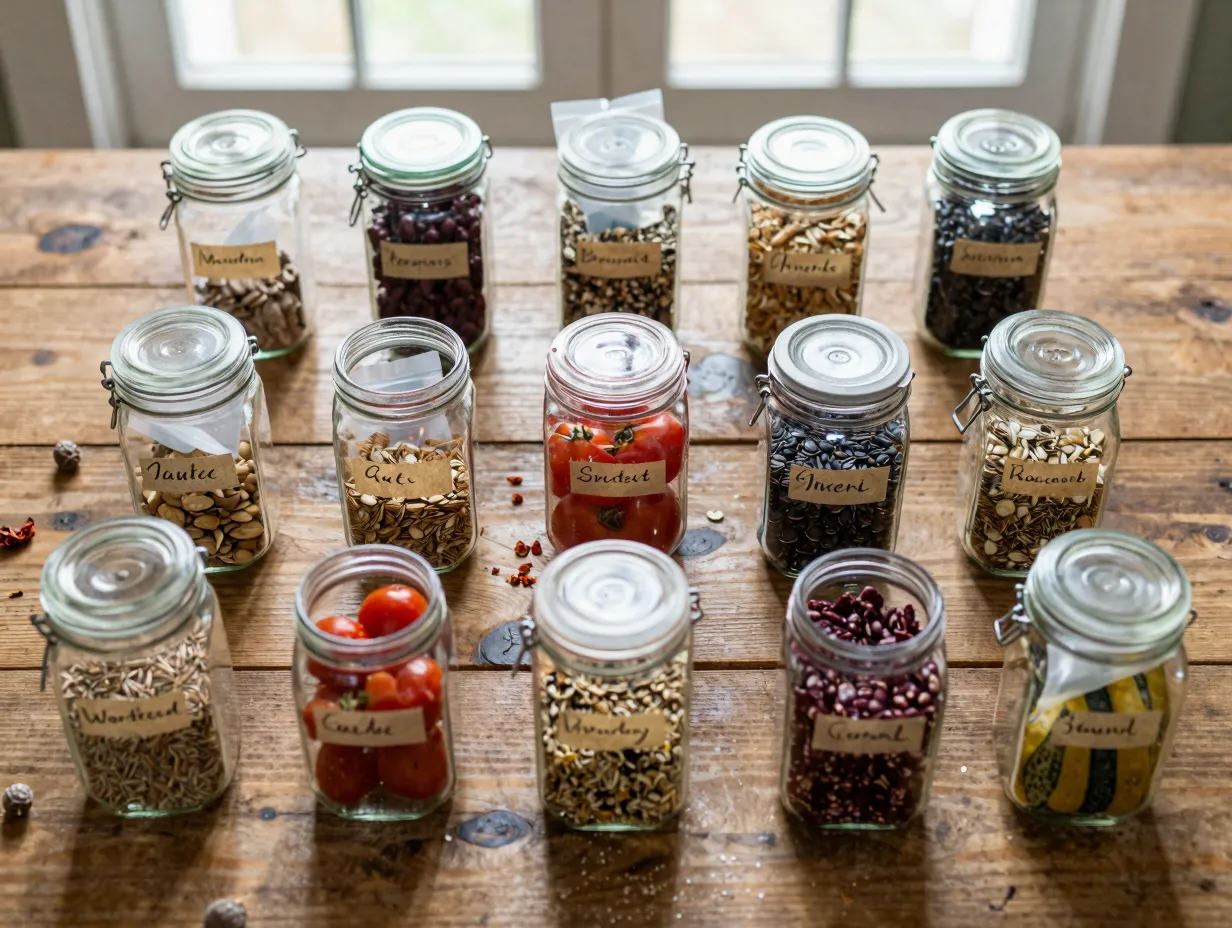
No food production system is truly self-sufficient if it depends on annual seed purchases. Seed saving, selecting, drying, and storing seeds from open-pollinated and heirloom varieties, severs the last major dependency in the food production chain.
Principles of effective seed saving:
- Open-pollinated varieties only: Hybrid seeds (labeled F1) do not breed true. Always select open-pollinated or heirloom varieties for saving.
- Isolation distances: Prevent cross-pollination by growing only one variety of each species at a time, or by using physical barriers (row covers, cages) during flowering.
- Proper drying: Seeds must be dried to below 8 percent moisture content before storage. Spread on screens in a warm, ventilated space for 2 to 4 weeks.
- Storage conditions: Sealed glass jars with silica gel desiccant packets, stored at 35°F to 50°F, extend seed viability dramatically.
Seed viability by storage conditions:
| Crop | Room Temp Viability | Cool/Dry Storage Viability |
|---|---|---|
| Tomato | 3-4 years | 6-10 years |
| Pepper | 2-3 years | 5-7 years |
| Squash | 4-5 years | 8-12 years |
| Bean | 3-4 years | 7-10 years |
| Corn | 1-2 years | 3-5 years |
A well-organized seed bank with 30 to 50 varieties, maintained and rotated annually, provides complete food production independence indefinitely.
9. Wood Gasifier for Fuel and Heat
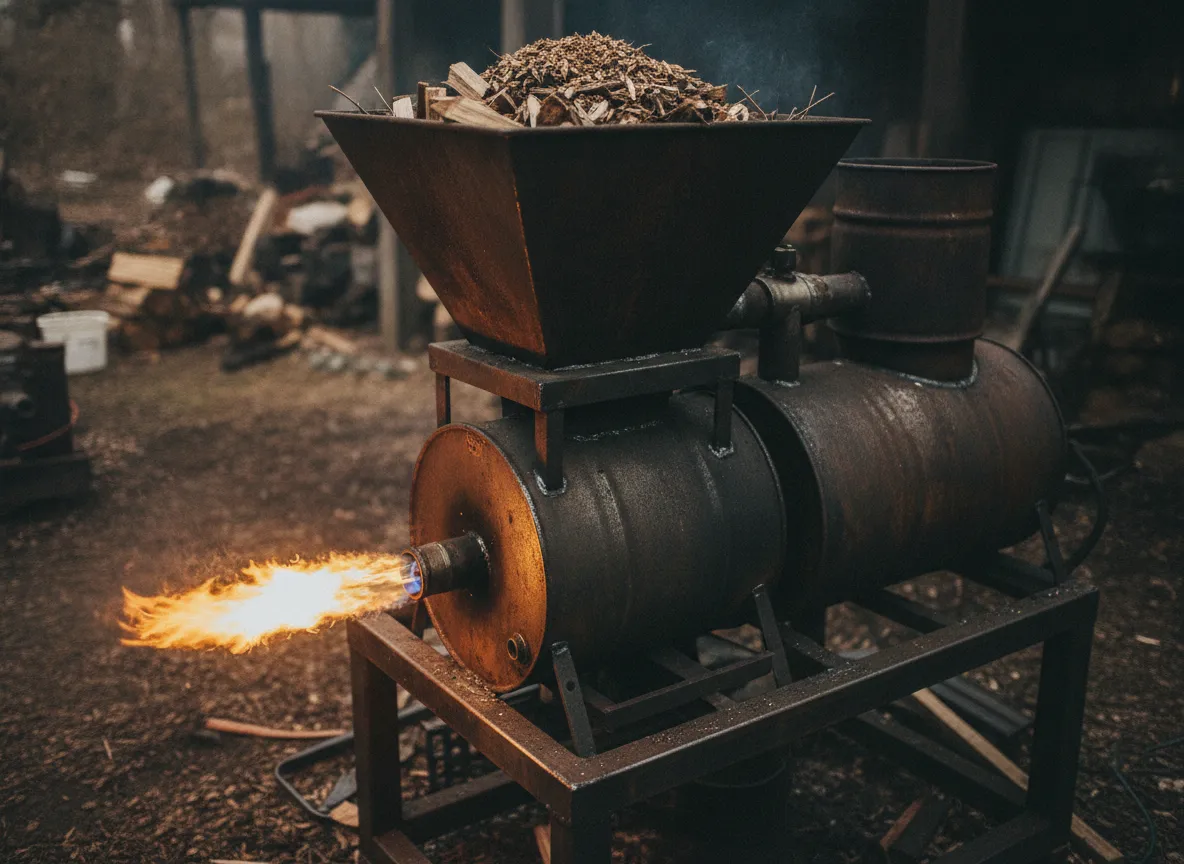
A wood gasifier converts solid biomass, wood chips, agricultural waste, or charcoal, into a combustible gas called producer gas (or syngas), which can fuel modified internal combustion engines, generators, and heating systems. This project addresses the one gap that solar and biogas often leave: reliable mechanical power and heat during extended cloudy or cold periods.
How a downdraft wood gasifier works:
- Biomass fuel is loaded into a hopper at the top of the unit.
- A controlled air intake ignites the fuel in a restricted combustion zone.
- Incomplete combustion produces carbon monoxide, hydrogen, and methane gases.
- Hot gas passes through a cooling and filtering system to remove tar and particulates.
- Clean producer gas exits and is fed directly into an engine or burner.
Practical applications on a homestead:
- Running a converted gasoline generator during solar outages
- Fueling a modified vehicle or tractor using locally sourced wood chips
- Providing high-temperature heat for a forge, kiln, or large-batch cooking operation
A small-scale gasifier unit producing 20 to 30 kW of thermal energy can be built from salvaged steel drums, pipe fittings, and a few hundred dollars in materials. Larger commercial units capable of running a 10 kW generator are available as kits for $2,000 to $5,000.
Fuel efficiency note: One pound of dry wood chips produces approximately 40 cubic feet of producer gas, which contains roughly 50 percent of the energy value of natural gas. A homestead with 5 to 10 acres of managed woodland can produce fuel indefinitely on a sustainable harvest rotation.
Building Your Homestead System: Priority Order and Timeline
Attempting all nine projects simultaneously is a reliable path to burnout and incomplete systems. The table below provides a realistic implementation timeline for a single household starting from scratch.
| Phase | Projects | Estimated Timeline | Approximate Cost Range |
|---|---|---|---|
| Phase 1 | Rainwater system, well, root cellar | Months 1-6 | $2,000 – $8,000 |
| Phase 2 | Solar system, solar dehydrator, seed bank | Months 6-18 | $5,000 – $20,000 |
| Phase 3 | Biogas digester, composting toilet, wood gasifier | Months 18-36 | $1,500 – $8,000 |
Total investment across all three phases ranges from approximately $8,500 to $36,000 depending on labor costs, local material prices, and system scale. Households that perform their own labor and source salvaged materials regularly complete all nine projects for under $15,000.
Common Mistakes to Avoid
Even experienced homesteaders make costly errors when building off-grid systems. The most frequent pitfalls include:
- Undersizing water storage: Most first-time builders underestimate dry-season water demand. Always size storage for 90 days of zero rainfall.
- Skipping system redundancy: A single solar array with no backup generator or wind turbine creates a single point of failure.
- Neglecting local building codes: Many jurisdictions have regulations governing rainwater collection, well drilling, and composting toilets. Research local rules before breaking ground.
- Ignoring the learning curve: Biogas digesters and wood gasifiers require months of operational experience to optimize. Build and test during low-stakes seasons.
- Buying before building skills: Purchasing expensive pre-built systems without understanding their operation leaves homesteaders unable to repair failures. Learn the principles before spending.
Conclusion
The 9 Off-Grid Survival Projects to Make Your Homestead Self-Sufficient covered in this guide, rainwater harvesting, solar power, root cellar construction, solar food dehydration, well drilling, biogas production, composting toilet and greywater systems, seed saving, and wood gasification, form a complete, interlocking framework for genuine independence from external infrastructure.
Actionable next steps for 2026:
- Conduct a full site assessment: identify water sources, solar exposure hours, prevailing wind direction, and soil type before choosing which project to start first.
- Build a 12-month water security plan before investing in any energy or food systems.
- Join a regional homesteading network or permaculture guild to access local knowledge, tool-sharing, and hands-on workshops.
- Start a seed-saving practice immediately, it costs almost nothing and builds critical knowledge that takes years to develop.
- Document every system built with photos, measurements, and maintenance logs. This institutional knowledge becomes the homestead’s most valuable long-term asset.
Self-sufficiency is not achieved in a single season. It is built project by project, season by season, until the homestead functions as a resilient, regenerative system that provides for its inhabitants regardless of what happens beyond the property line.