8 Critical Skills for Surviving in the Wild When Everything Goes Wrong
Every year, search and rescue teams across North America respond to more than 150,000 incidents involving lost, injured, or stranded outdoor adventurers. The majority of those situations involve people who had no plan, no training, and no idea that a single afternoon hike could turn into a multi-day ordeal. Mastering the 8 Critical Skills for Surviving in the Wild When Everything Goes Wrong is not about paranoia, it is about giving yourself a fighting chance when the trail disappears, the weather turns violent, and your phone shows no signal. Whether a person is an experienced backcountry traveler or a casual day-tripper, these skills are the difference between a story told at the dinner table and a tragedy reported on the evening news.
Disclosure: This post contains affiliate links. As an Amazon Associate, we earn from qualifying purchases, and at no extra cost to you.
Key Takeaways
- The human body can survive roughly three minutes without air, three hours without shelter in harsh weather, three days without water, and three weeks without food, knowing this priority order saves lives.
- Fire, shelter, water, and navigation are the four pillars of wilderness survival; every other skill builds on them.
- Improvisation is the core mindset of survival, the ability to use what is available beats having the perfect gear every time.
- Psychological resilience is as important as any physical skill; panic kills faster than cold or thirst in most survival scenarios.
- Practicing these skills before an emergency is the only reliable way to perform them under stress.
Why These 8 Critical Skills for Surviving in the Wild Matter More Than Gear
Gear fails. Batteries die. Backpacks get swept away in river crossings. The one constant in any survival situation is the knowledge stored in a person’s mind. Research from military survival schools and civilian rescue data consistently shows that survivors share a common trait: they acted rather than froze, and they used whatever was at hand.
The 8 Critical Skills for Surviving in the Wild When Everything Goes Wrong outlined in this article follow the survival priority order, a framework used by the U.S. Army Survival Manual (FM 3-05.70) and adopted by wilderness survival instructors worldwide. Each skill is learnable, practicable, and applicable regardless of terrain or climate.
“The will to survive is the most important factor in any survival situation. Without it, skills and equipment mean nothing.”
>, U.S. Army Survival Manual, FM 3-05.70
1. Building an Emergency Shelter
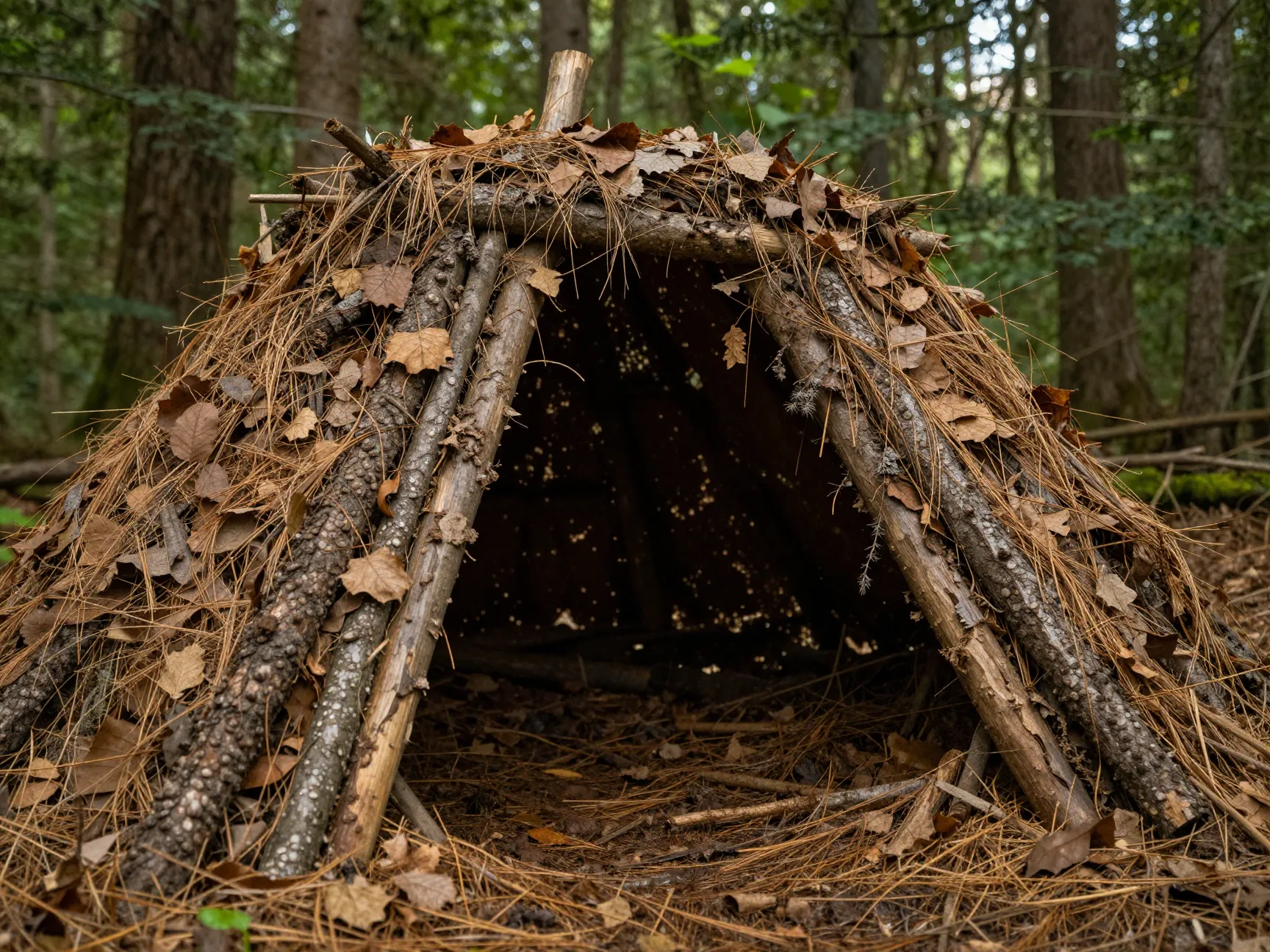
Why it matters: Exposure kills faster than almost anything else in the wilderness. Hypothermia can set in at temperatures well above freezing, especially when a person is wet, tired, or injured. A body loses heat roughly 25 times faster in water than in air at the same temperature.
Core techniques:
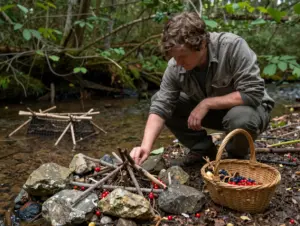
- Debris hut: Pile leaves, pine needles, bark, and branches over a ridgepole framework. The debris acts as insulation. A well-built debris hut can retain body heat even in near-freezing temperatures.
- Lean-to: Prop a large branch against a tree fork and layer smaller branches and leaves over it at a 45-degree angle. Best used in mild conditions or when a fire is also available.
- Snow shelter (quinzhee or snow trench): In winter environments, snow is an excellent insulator. A snow trench covered with branches and a tarp or more snow can keep internal temperatures near 32°F (0°C) even when outside temperatures plunge far below that.
Key rules for any shelter:
- Keep it small, a smaller space retains body heat more efficiently.
- Insulate from the ground first, ground contact steals heat faster than cold air.
- Choose a site protected from wind and away from flood zones, dead trees, and animal trails.
2. Starting a Fire Without Modern Tools
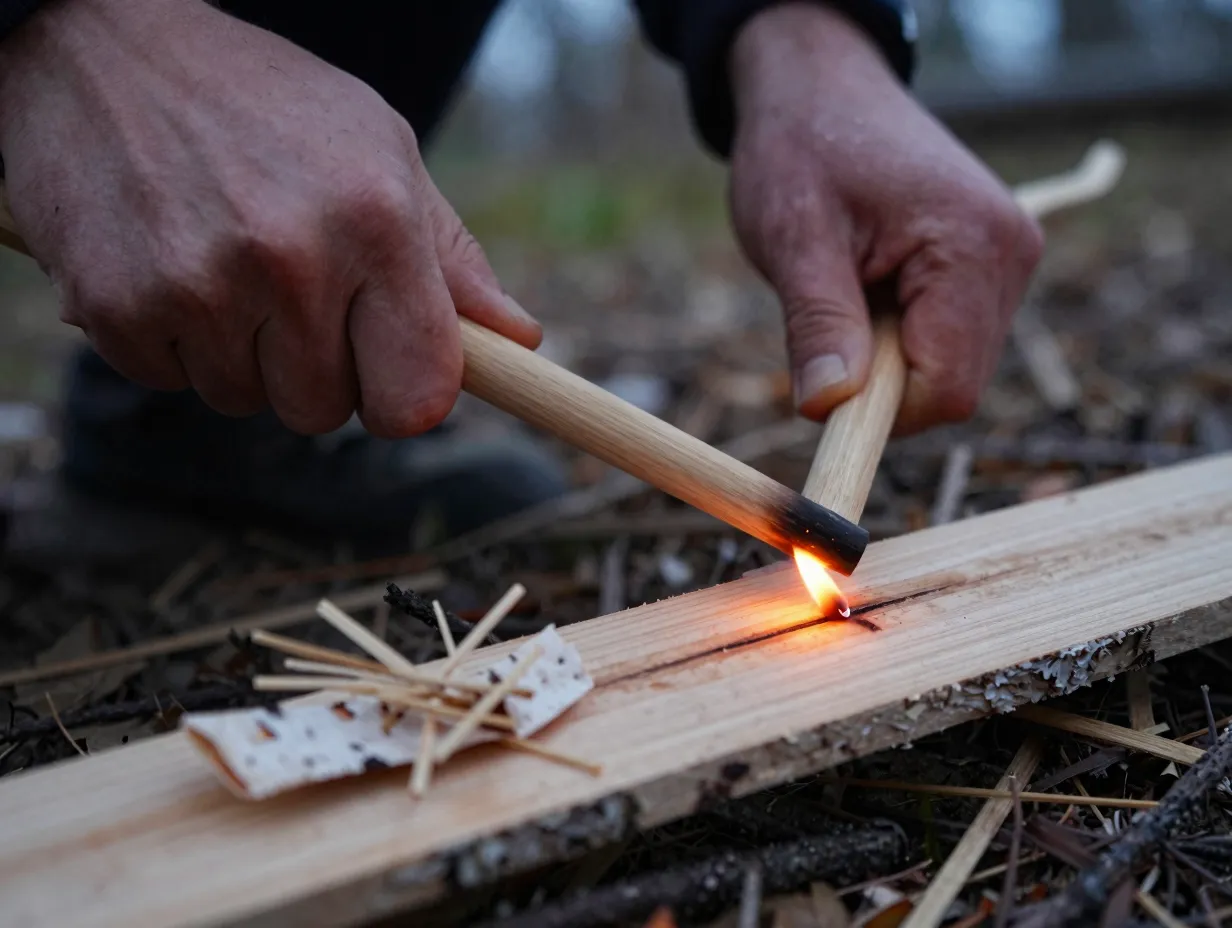
Fire provides warmth, purifies water, signals rescuers, boosts morale, and keeps predators at a distance. It is one of the most critical survival skills a person can develop, and one of the hardest to perform under stress without practice.
Methods ranked by reliability:
| Method | Difficulty | Tools Needed | Best Conditions |
|---|---|---|---|
| Ferro rod | Low | Rod, striker | Any |
| Bow drill | High | Wood, cordage | Dry conditions |
| Hand drill | Very High | Specific wood types | Warm, dry |
| Fire piston | Medium | Piston device | Any |
| Flint and steel | Medium | Flint, high-carbon steel | Dry tinder required |
The tinder bundle is everything. The best fire-starting method in the world fails without dry, fine tinder. Collect birch bark, dry grass, cattail fluff, or shredded inner bark. Form it into a bird’s-nest shape. Keep tinder dry inside a jacket or waterproof bag until needed.
Fire-building sequence: tinder bundle, pencil-sized kindling, finger-sized sticks, wrist-sized fuel. Never skip a stage.
3. Finding and Purifying Water
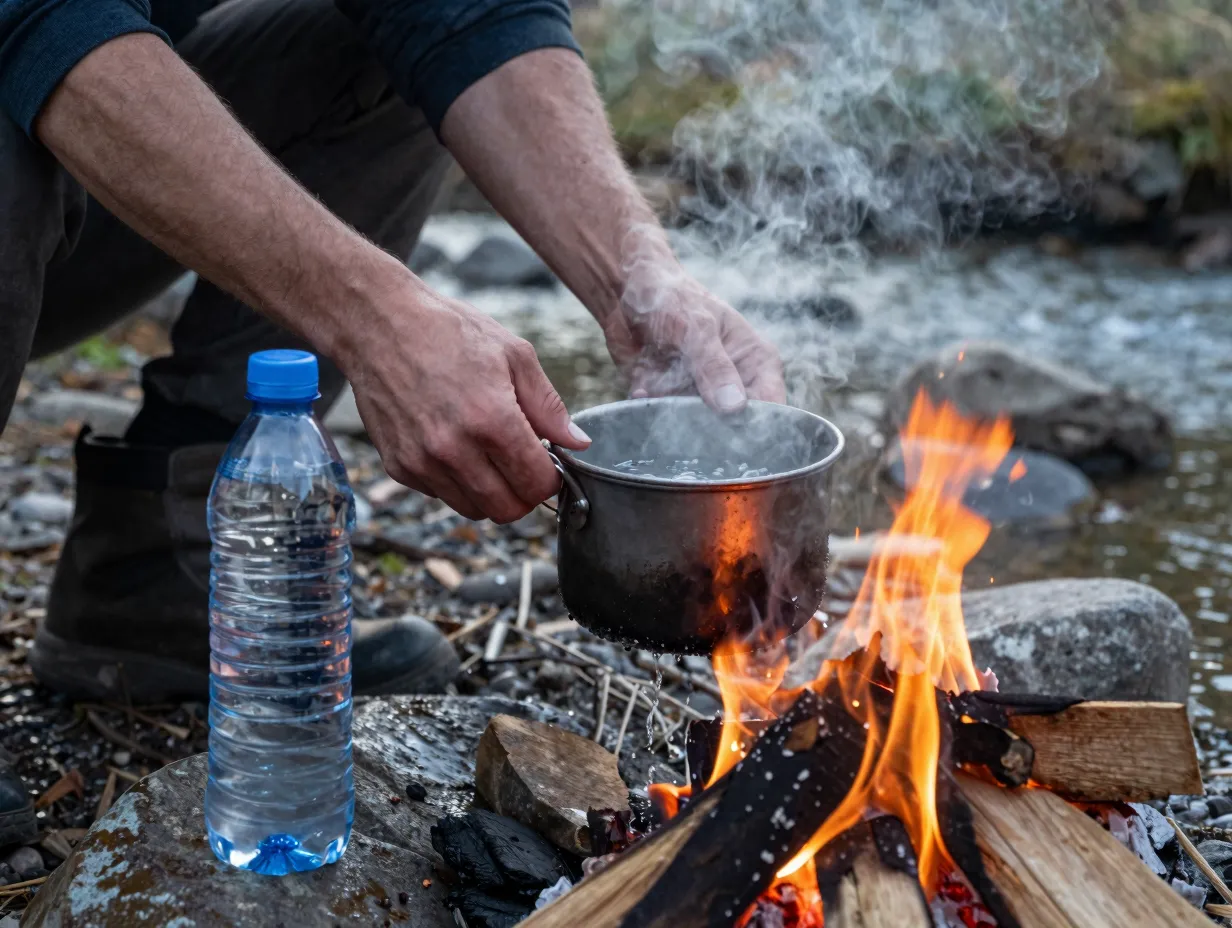
The human body can go roughly three days without water, but cognitive function and physical performance degrade dramatically within hours of dehydration. In a survival scenario, a person needs their mind sharp, which means water is an urgent priority.
Finding water in the wild:
- Follow terrain downhill, water flows to valleys and low points.
- Look for animal trails, which often lead to water sources.
- Watch for vegetation changes, willows, cottonwoods, and cattails indicate water nearby.
- Collect morning dew from leaves and grass using an absorbent cloth, then wring it out into a container.
- In coastal environments, dig above the high-tide line in sandy beaches to find freshwater seeping in.
Purification methods:
- Boiling: The most reliable method. Bring water to a rolling boil for at least one minute (three minutes above 6,500 feet elevation). Kills all biological pathogens.
- Solar disinfection (SODIS): Fill a clear plastic bottle and leave in direct sunlight for six hours (or two days if cloudy). Effective against most bacteria and viruses.
- Improvised filtration: Layer charcoal, sand, and small gravel in a container to remove particulates. This does NOT kill pathogens, always combine with boiling or another disinfection method.
Critical warning: Never drink untreated water from standing pools, animal carcass areas, or downstream of human settlements. Giardia and cryptosporidium are invisible and debilitating.
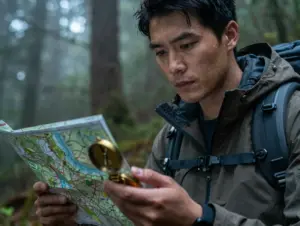
4. Navigating Without GPS or a Compass
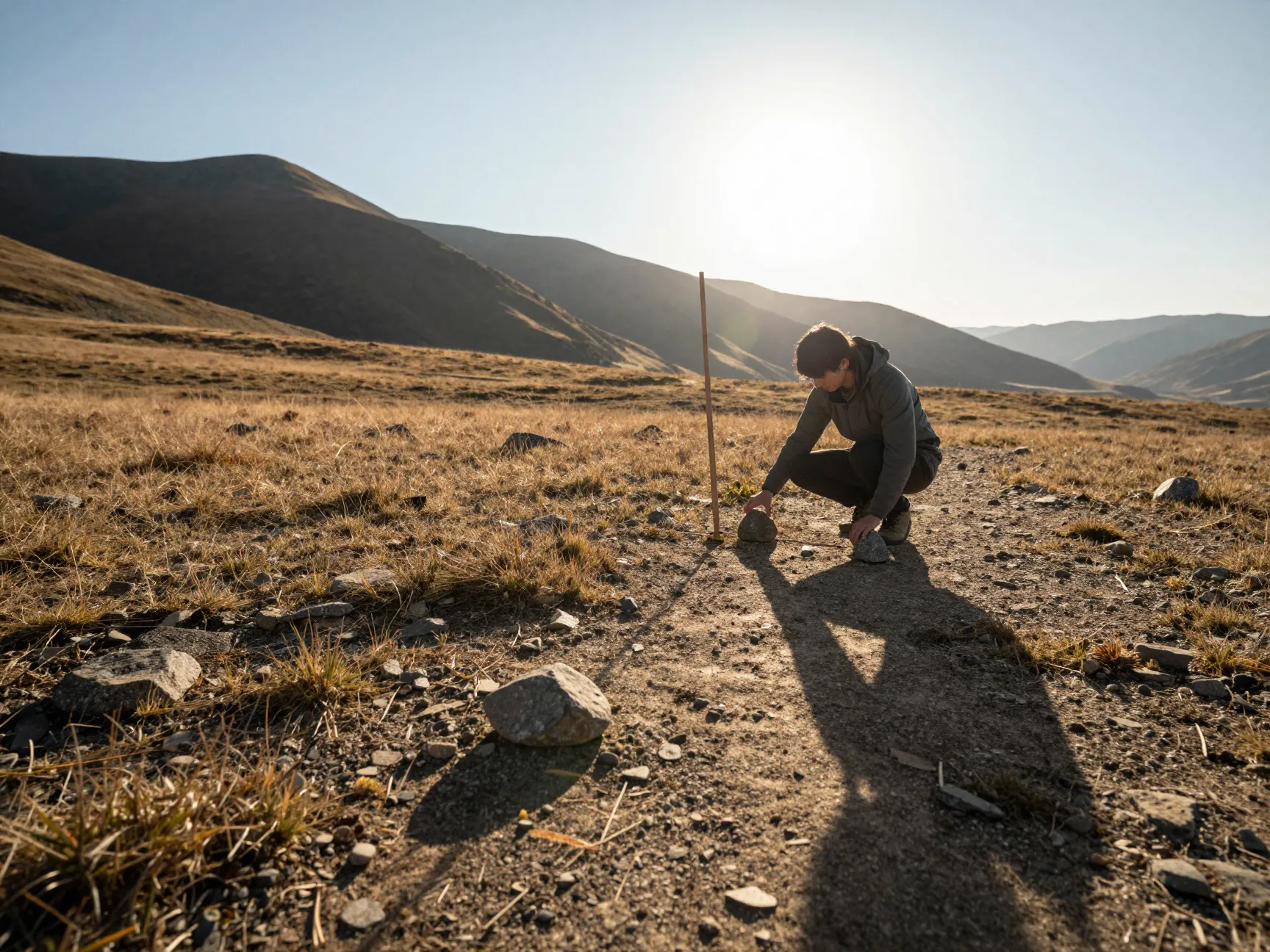
Modern navigation technology has made people deeply dependent on devices that can fail, run out of battery, or simply not work in dense terrain. The ability to navigate by natural cues is a foundational wilderness survival skill.
Sun-based navigation:
- In the Northern Hemisphere, the sun rises in the east, reaches its highest point due south at noon, and sets in the west.
- The shadow-tip method: Place a stick upright in the ground. Mark the tip of the shadow. Wait 15 minutes. Mark the new tip. A line drawn between the two marks runs roughly east-west. The first mark is west.
Star navigation:
- Find the North Star (Polaris) by locating the Big Dipper and extending a line from the two outermost stars of its cup five times their distance. Polaris sits nearly directly above true north.
Terrain association:
- Match visible landscape features, ridgelines, valleys, rivers, peaks, to a mental or physical map.
- Travel along linear features (rivers, ridgelines) rather than cutting through dense terrain.
- Always note the direction of travel when entering wilderness. Know which direction leads back to civilization.
Moss myth: The idea that moss always grows on the north side of trees is unreliable. Moss grows where moisture accumulates, which varies by local conditions. Do not rely on this method.
5. Signaling for Rescue
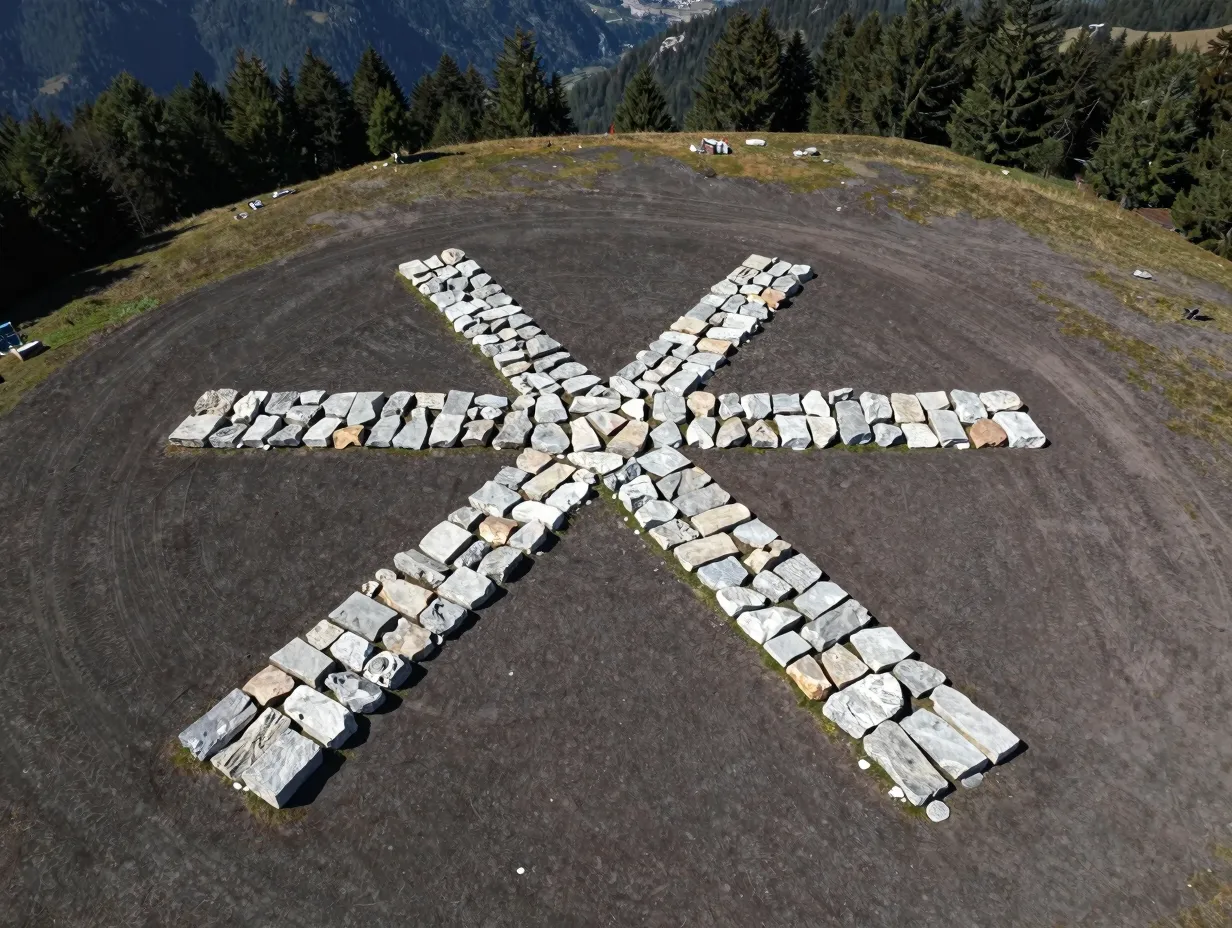
Staying alive long enough to be found is the core goal of most survival situations. Proactive signaling dramatically increases the chance of rescue and reduces the time spent in the field.
Most effective signaling methods:
- Signal mirror: A glass or polished metal mirror can reflect sunlight visible to aircraft and rescuers up to 10 miles away on a clear day. Aim by holding two fingers in a V toward the target and flashing light between them.
- Three of anything: Three whistle blasts, three fires in a triangle, three gunshots, the universal distress signal recognized internationally.
- Ground-to-air signals: Use rocks, logs, or trampled vegetation to create large symbols in open clearings. An X means “need assistance.” An arrow indicates direction of travel.
- Smoke: Green vegetation on a fire produces white smoke visible against dark forest. Rubber or plastic (if available) produces black smoke visible against sky.
- Personal Locator Beacon (PLB): If carried, activate it immediately. PLBs transmit a distress signal to satellites that relay the location to search and rescue authorities within minutes.
Stay in one place once signaling begins. Moving targets are harder to find than stationary ones.
6. Wilderness First Aid and Wound Management
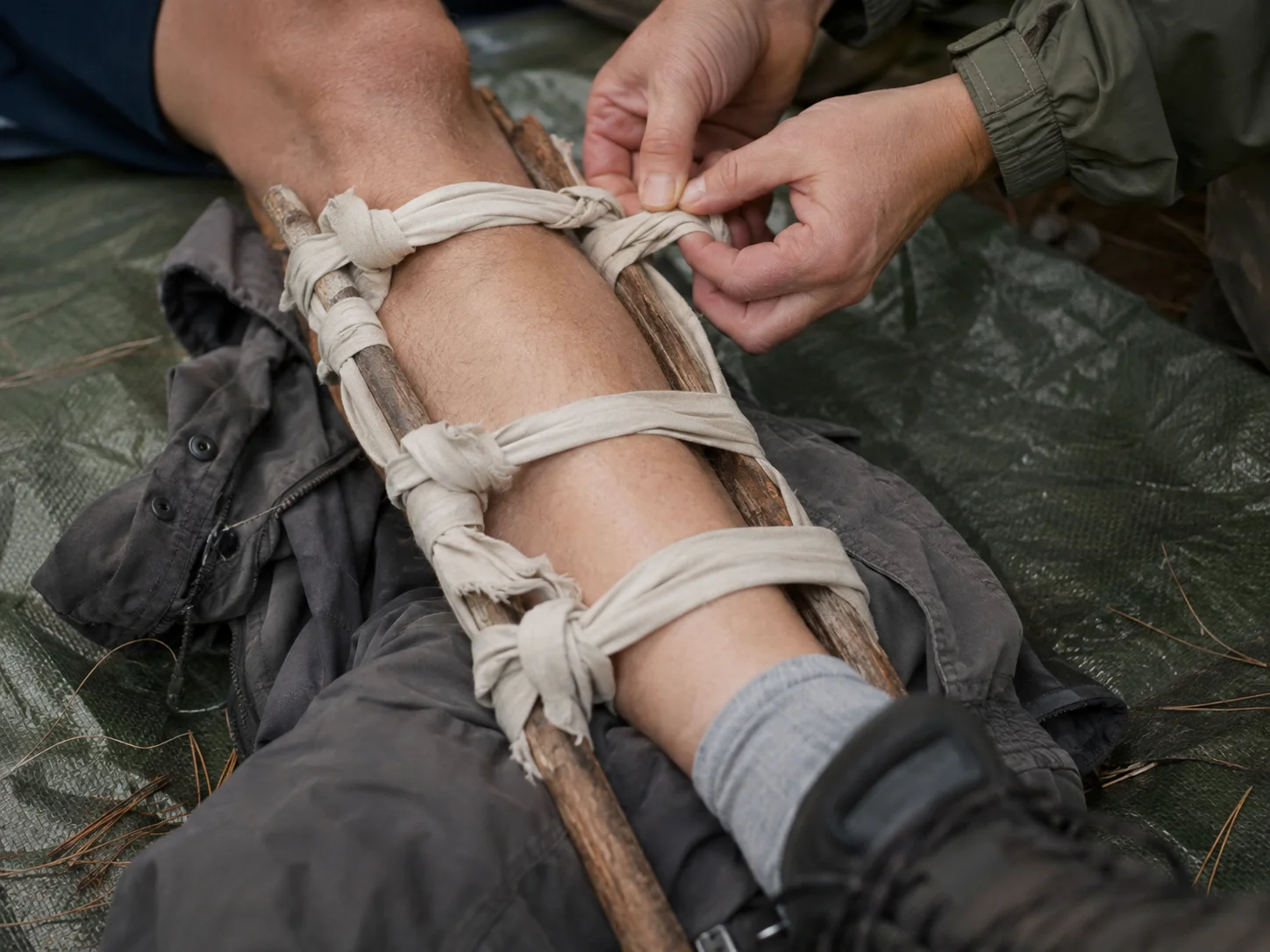
Injuries in the backcountry cannot be treated at an emergency room within minutes. A person must be capable of stabilizing wounds, managing shock, and preventing infection until professional help arrives.
Immediate priorities:
- Stop bleeding: Apply direct pressure with the cleanest material available. Maintain pressure for a minimum of 10 minutes without lifting to check. For limb bleeding that cannot be controlled, a tourniquet applied two to three inches above the wound can be life-saving.
- Prevent infection: Clean wounds with clean water, ideally purified. Remove visible debris. Cover with the cleanest available material. Change dressings regularly.
- Manage shock: Lay the person flat, elevate legs if no spinal injury is suspected, keep them warm, and reassure them calmly.
- Splinting fractures: Immobilize the joint above and below a suspected fracture using sticks, trekking poles, or any rigid material padded with clothing. Do not attempt to realign bones.
Blister management: Blisters are a leading cause of immobility in survival situations. Drain large blisters with a sterilized needle, keep the roof of the blister intact as a natural bandage, and pad heavily before continuing to walk.
Improvised stretcher: Two trekking poles or sturdy branches threaded through the sleeves of two jackets create a functional carry stretcher for moving an injured person short distances.
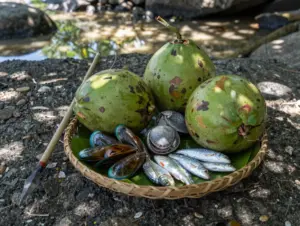
7. Finding and Preparing Food in the Wild
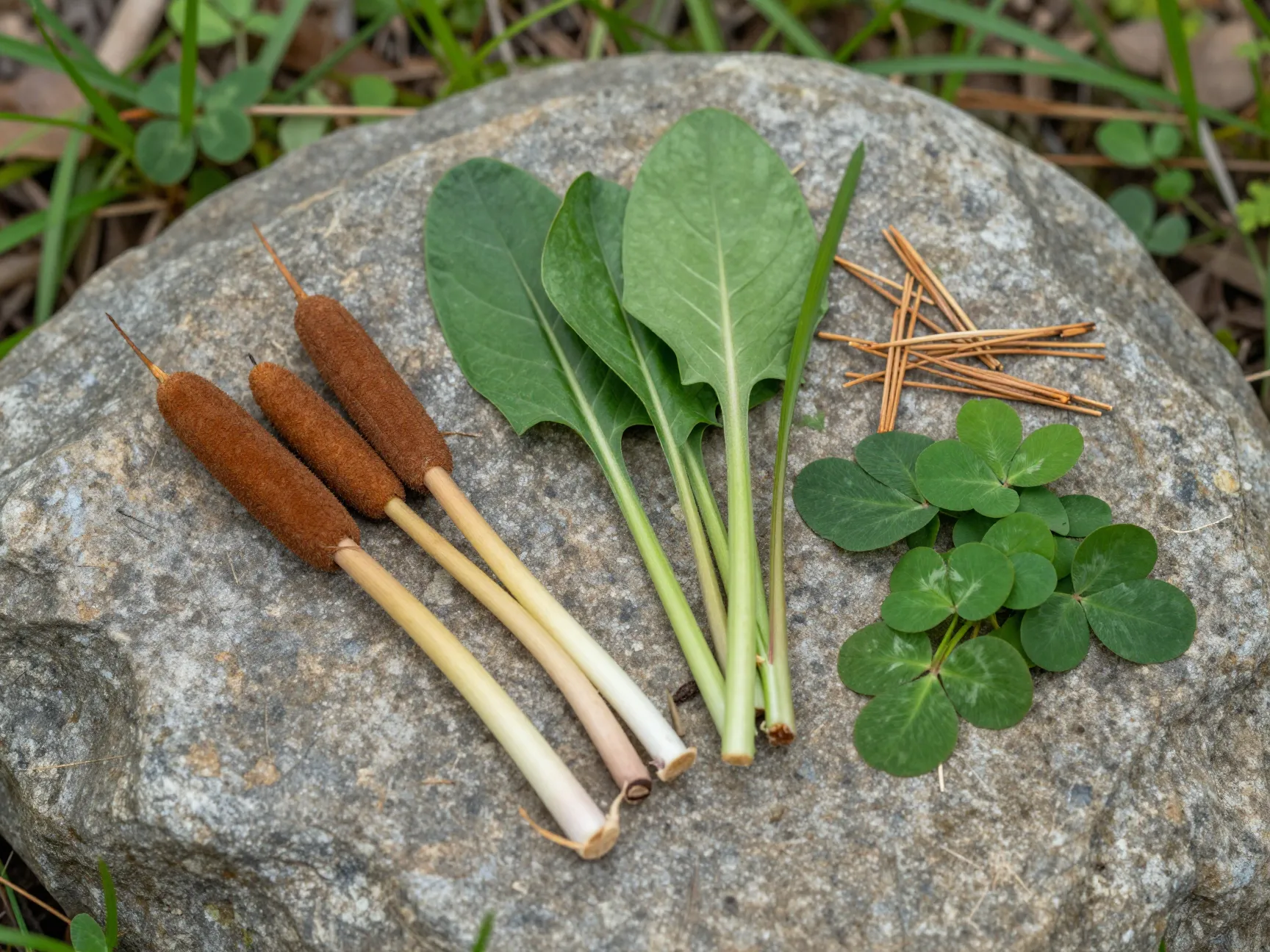
Food is the lowest priority in the survival hierarchy, a healthy adult can survive three weeks without it, but caloric intake becomes critical in extended situations, especially in cold environments where the body burns fuel rapidly to maintain core temperature.
Foraging principles:
- Universal edibility test: When unsure of a plant, test one part at a time. Rub it on the inner wrist. Wait 15 minutes. If no reaction, touch it to the lips. Wait 15 minutes. Place a small piece on the tongue without chewing. Wait 15 minutes. Chew and spit. Wait 8 hours. Only then swallow a small amount.
- Reliable wild edibles across North America: Cattail (roots, pollen, young shoots), dandelion (entire plant), pine needles (vitamin C-rich tea), acorns (leach tannins in water before eating), clover, and wild berries (identify carefully).
- Avoid: White or yellow berries (most are toxic), plants with milky sap, plants that smell like almonds (cyanide indicator), and any mushroom without absolute certainty of identification.
Protein sources:
- Insects, grasshoppers, crickets, ants, and grubs, are calorie-dense, widely available, and safe when cooked. Remove wings and legs before eating.
- Small game snares using paracord or natural cordage set near animal trails, water sources, or burrow entrances.
- Fishing using improvised hooks from safety pins, bent wire, or carved bone with natural cordage as line.
Caloric reality check: Foraging and trapping are energy-intensive activities. In short-term survival situations (under 72 hours), the energy spent finding food may exceed the calories gained. Prioritize water and shelter over food in the early stages.
8. Maintaining Mental Resilience Under Extreme Stress
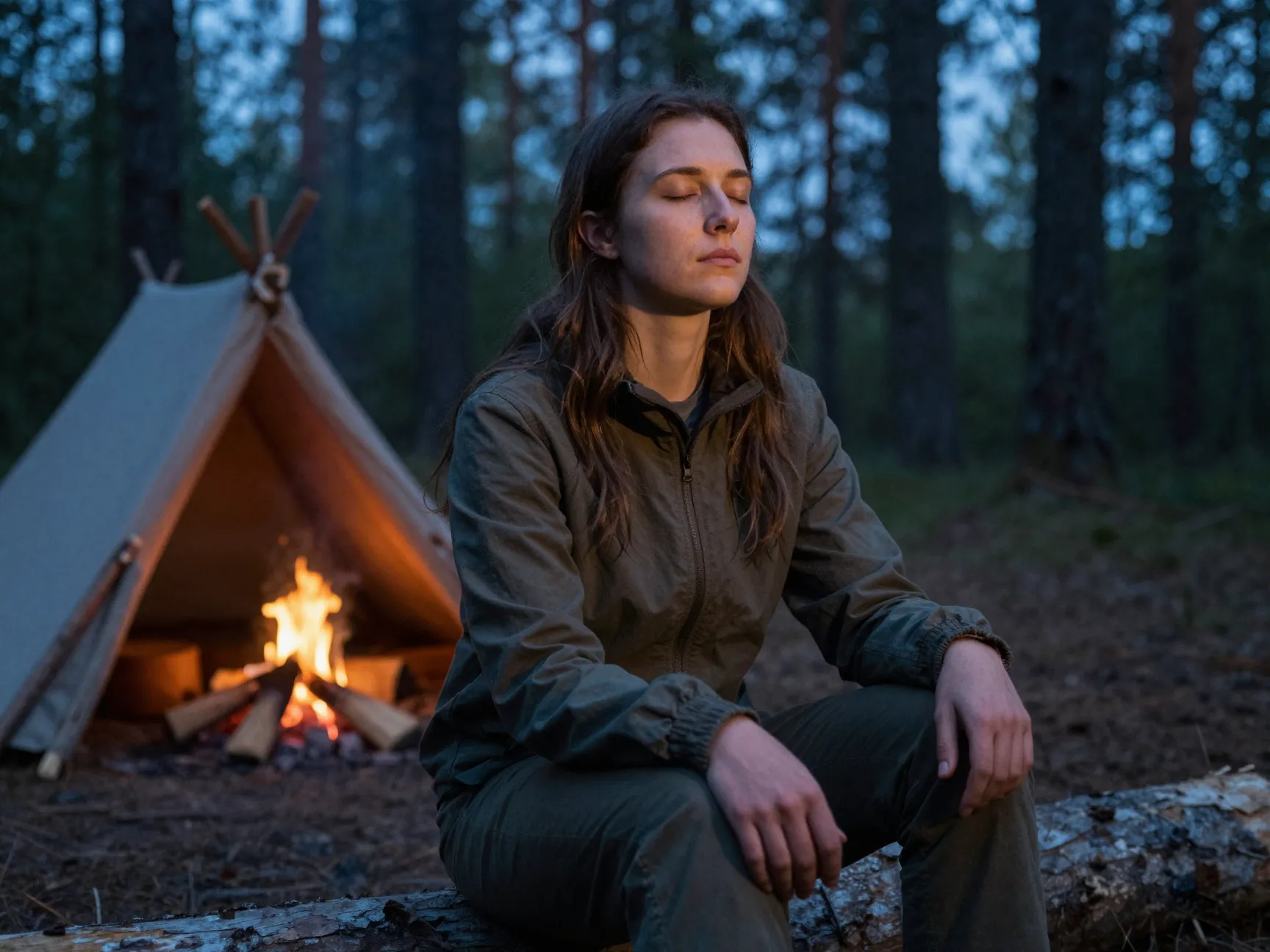
Every survival instructor with field experience will say the same thing: the mind fails before the body does. Panic, denial, and decision paralysis have ended lives in situations where physical survival was entirely possible.
The STOP framework (used by search and rescue professionals and military survival schools):
- S, Stop: Cease movement immediately when lost or in danger. Sit down.
- T, Think: Assess the situation rationally. What resources are available? What are the immediate threats?
- O, Observe: Survey the surroundings. Look for water, shelter materials, landmarks, and signs of human activity.
- P, Plan: Develop a specific, prioritized action plan before moving.
Psychological tools for maintaining composure:
- Controlled breathing: Box breathing (inhale for four counts, hold for four, exhale for four, hold for four) activates the parasympathetic nervous system and reduces panic response within minutes.
- Task focus: Break the situation into small, manageable tasks. “Build a fire” is less overwhelming than “survive for three days.” Completing small tasks builds confidence and momentum.
- Positive self-talk: Verbalize survival intentions out loud. Research on isolated survival situations consistently shows that people who speak to themselves, narrating actions, setting goals, recalling loved ones, maintain higher cognitive function under stress.
- Routine: Establishing a daily routine (morning fire, water collection, shelter improvement, signaling) creates psychological structure that combats the despair of uncertainty.
The survivor mindset in practice: Survivors are not fearless. They feel fear and act anyway. They accept the reality of their situation without catastrophizing it. They find purpose in small victories, a successful fire, a found water source, a completed shelter, and use those victories as fuel for continued effort.
How to Practice the 8 Critical Skills for Surviving in the Wild When Everything Goes Wrong
Reading about survival skills and being able to perform them under stress are entirely different things. The nervous system responds to real practice, not theoretical knowledge. Here is a structured approach to building genuine competence:
Progressive skill-building schedule:
- Start in the backyard. Practice fire-starting with a ferro rod until a fire can be built in under five minutes in dry conditions, then wet conditions.
- Take a wilderness first aid (WFA) or Wilderness First Responder (WFR) course. These are the gold standard for backcountry medical training.
- Do a one-night shelter-only camp, no tent, no sleeping bag. Use only natural materials and a mylar emergency blanket.
- Navigate a familiar trail using only a map and compass, with the phone turned off and stored.
- Practice the STOP framework during low-stakes moments of disorientation to build the habit.
- Take a formal wilderness survival course from a certified instructor (BOSS, Tom Brown Jr.’s Tracker School, NOLS, and Outward Bound are well-regarded programs).
The 10 essentials: No discussion of wilderness survival is complete without mentioning the Ten Essentials, a checklist developed by The Mountaineers that covers navigation tools, sun protection, insulation, illumination, first aid, fire-starting, repair tools, nutrition, hydration, and emergency shelter. Carrying these items does not replace skill, but it provides a critical backup layer.
Conclusion
The 8 Critical Skills for Surviving in the Wild When Everything Goes Wrong, shelter building, fire starting, water procurement, navigation, signaling, first aid, food sourcing, and mental resilience, form an interconnected system. No single skill operates in isolation. A person who can start a fire but panics and abandons their shelter site is no safer than someone who knows nothing. The skills reinforce each other, and the mindset ties them all together.
Actionable next steps for 2026:
- Audit the current emergency kit and identify which of the eight skill areas it supports and which it leaves exposed.
- Sign up for a wilderness first aid course this season, it is the single highest-return investment in outdoor safety.
- Practice fire-starting and shelter-building in a controlled environment before the next backcountry trip.
- Download and study a topographic map of the next planned hiking area. Learn to read contour lines before relying on them.
- Share these skills with hiking partners. A group where everyone has basic survival knowledge is exponentially safer than a group where only one person does.
Survival is not a destination. It is a practiced state of readiness, built one skill, one drill, and one deliberate preparation at a time.