8 Motivational Wilderness Quotes to Fuel Your Survival Spirit
Every year, roughly 2,000 people are reported lost or overdue in wilderness areas across the United States alone, and the difference between those who survive and those who do not often comes down to a single factor: mental fortitude. The physical skills matter, but the mind breaks first. That is precisely why the 8 Motivational Wilderness Quotes to Fuel Your Survival Spirit explored in this article carry real weight. These are not decorative phrases for coffee mugs. They are hard-won observations from explorers, conservationists, writers, and thinkers who understood that the wild demands everything from a person, and gives back something irreplaceable in return. [5]
Disclosure: This post contains affiliate links. As an Amazon Associate, we earn from qualifying purchases, and at no extra cost to you.
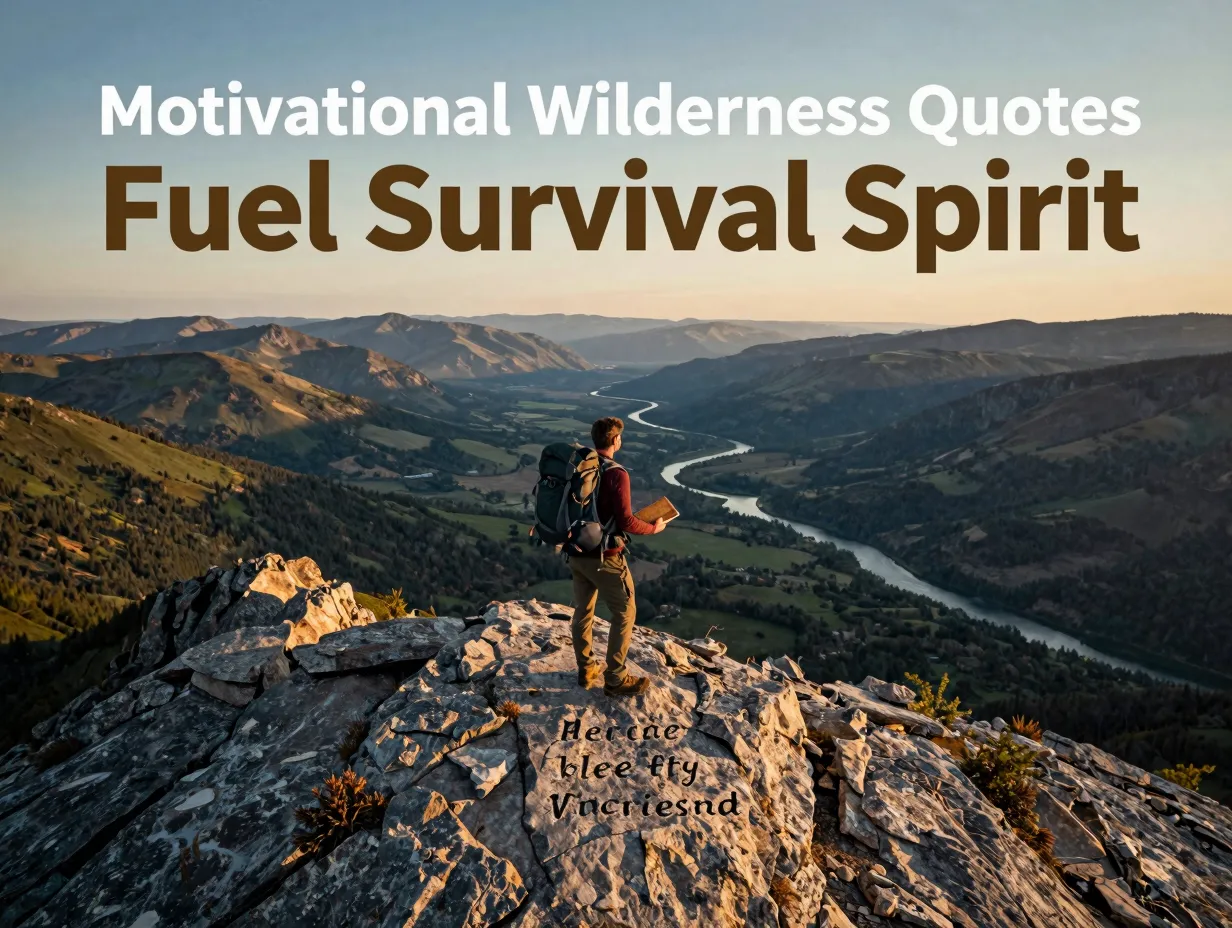
Whether preparing for a backcountry expedition, recovering from a personal setback, or simply seeking perspective, these eight quotes offer a framework for resilience that goes far beyond the treeline.
Key Takeaways
- The wilderness has long served as both a physical and psychological testing ground for human endurance and self-discovery.
- Motivational wilderness quotes distill centuries of hard-earned survival wisdom into actionable mental frameworks.
- The survival spirit is built on adaptability, patience, respect for nature, and an honest reckoning with one’s own limits.
- Conservation thinkers such as John Muir, Aldo Leopold, and Edward Abbey understood the wilderness not just as landscape but as a teacher.
- Applying these quotes as daily mental anchors can strengthen decision-making, reduce panic, and sharpen focus in challenging conditions.
Why Wilderness Quotes Matter for Survival Mindset
Before examining the 8 Motivational Wilderness Quotes to Fuel Your Survival Spirit in detail, it is worth understanding why language itself plays a role in survival psychology. Search and rescue professionals consistently report that survivors share a common trait: they talk to themselves constructively. They use self-directed language to stay calm, prioritize tasks, and resist the urge to panic. [7]
Wilderness quotes function as pre-loaded mental scripts. When the body is exhausted and the environment is hostile, a well-chosen phrase can interrupt a spiral of negative thinking and redirect energy toward problem-solving. Conservation organizations such as Friends of Scotchman Peaks Wilderness have long emphasized that the wilderness serves as “a spiritual necessity and antidote to modern pressure”, a place where the human relationship with land becomes honest and unmediated. [6]
That honesty is exactly what makes wilderness wisdom so durable. These quotes were not written in comfort. They were earned.
“The wilderness holds answers to questions we have not yet learned to ask.”, Nancy Wynne Newhall [5]
This kind of insight reframes the survival challenge entirely. The wilderness is not an enemy to be defeated. It is a system to be understood, and the right mindset is the first tool in any survival kit.
The 8 Motivational Wilderness Quotes to Fuel Your Survival Spirit
1. “In every walk with nature, one receives far more than he seeks.”, John Muir
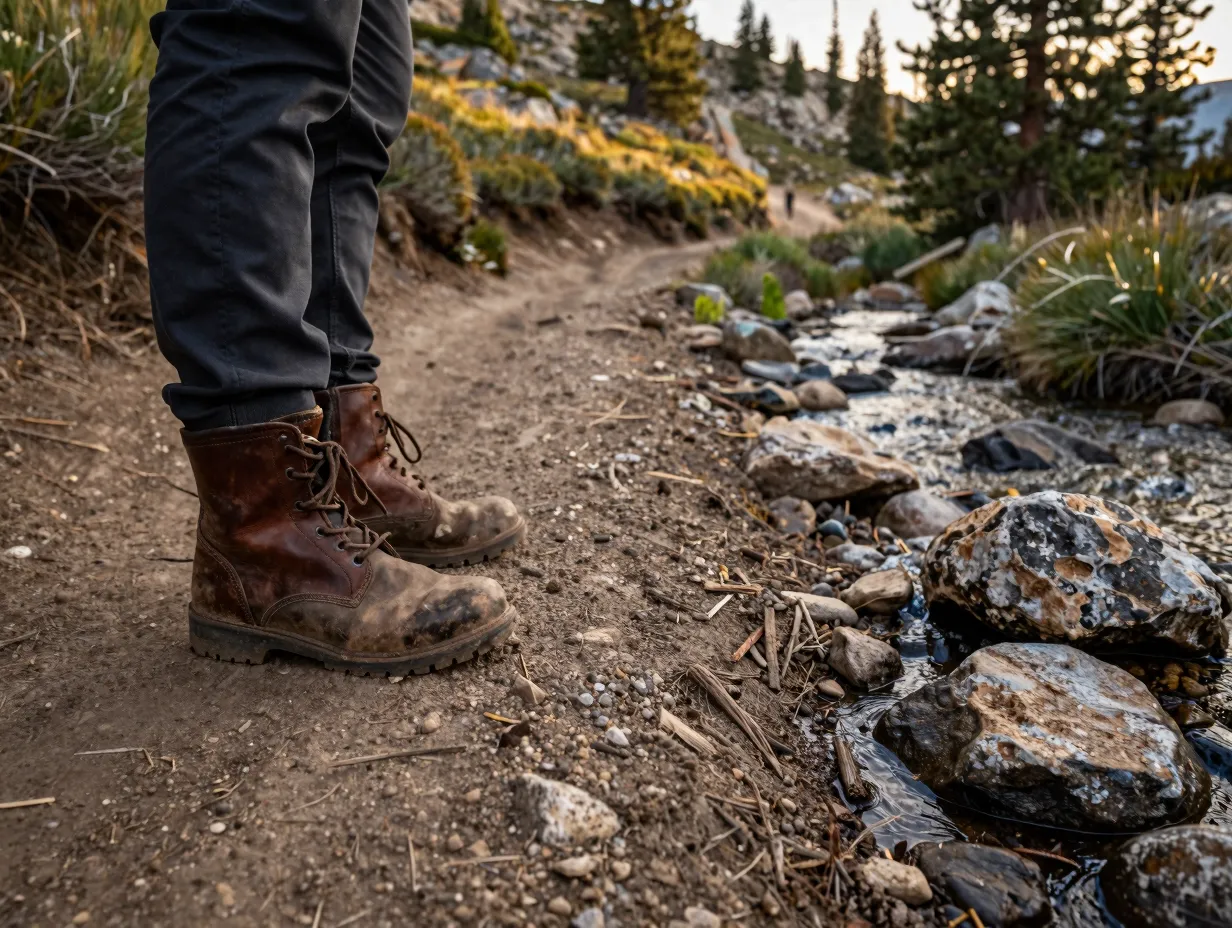
John Muir’s observation, drawn from a lifetime of exploration across the Sierra Nevada and beyond, captures the foundational principle of wilderness survival: approach nature with humility, not conquest. [8]
Survivors frequently report that their most critical breakthroughs came not from forcing a solution but from pausing, observing, and allowing the environment to reveal its resources. A dry streambed that looks barren may hold water just below the surface. A ridge that appears impassable may have a natural game trail just around the bend.
What this means in practice:
- Slow down before making major decisions in unfamiliar terrain.
- Observe animal behavior, plant distribution, and weather patterns before acting.
- Treat every hour in the wild as a lesson, not just a challenge to overcome.
Muir’s quote also carries a psychological benefit. When a person believes the environment has something to offer, rather than only something to take, the emotional relationship with the wilderness shifts from fear to curiosity. Curiosity is a survival asset. Fear, unchecked, is not.
2. “Not all those who wander are lost.”, J.R.R. Tolkien

Tolkien’s famous line from “The Fellowship of the Ring” has been adopted widely by the outdoor community, and for good reason. [4] It challenges the assumption that disorientation equals failure.
In a survival context, being geographically lost is a temporary condition. It is a navigational problem with navigational solutions. The real danger is psychological lostness, the collapse of confidence and purpose that causes people to make increasingly poor decisions. Staying in place when movement is needed, moving when stillness is wiser, abandoning a shelter that could be improved, these are the products of a mind that has given up its sense of agency.
Tolkien’s quote restores that agency. Wandering, in the wilderness sense, can be purposeful reconnaissance. It can be the act of gathering information before committing to a direction.
| Mental State | Behavior Pattern | Survival Outcome |
|---|---|---|
| Purposeful wandering | Observing, mapping, gathering | Increased situational awareness |
| Panicked movement | Running without direction | Increased exposure and exhaustion |
| Paralysis | Waiting without preparation | Missed opportunities for rescue or resource |
The distinction between wandering and being lost is entirely internal. This quote is a reminder to maintain the former and resist the latter.
3. “The clearest way into the Universe is through a forest wilderness.”, John Muir

A second Muir entry earns its place here because it addresses something survival instructors rarely discuss openly: the spiritual dimension of wilderness endurance. [5]
Long-duration survival situations, those lasting more than 72 hours, frequently push individuals into profound psychological territory. Isolation, physical discomfort, and uncertainty about rescue can trigger existential questioning. People who have a framework for finding meaning in that experience tend to fare better than those who experience it as pure suffering.
Muir’s framing of the forest as a gateway to universal understanding is not mysticism for its own sake. It is a practical invitation to find significance in the present moment, in the texture of bark, the sound of wind through canopy, the geometry of a spider’s web. That kind of present-moment attention is also the foundation of effective wilderness observation.
Practical application: When anxiety about the future threatens to overwhelm rational thinking, redirect attention to immediate sensory experience. Name five things visible from the current position. Identify one sound. Feel the ground underfoot. This is not just mindfulness practice, it is a survival technique.
4. “It is not the mountain we conquer, but ourselves.”, Sir Edmund Hillary
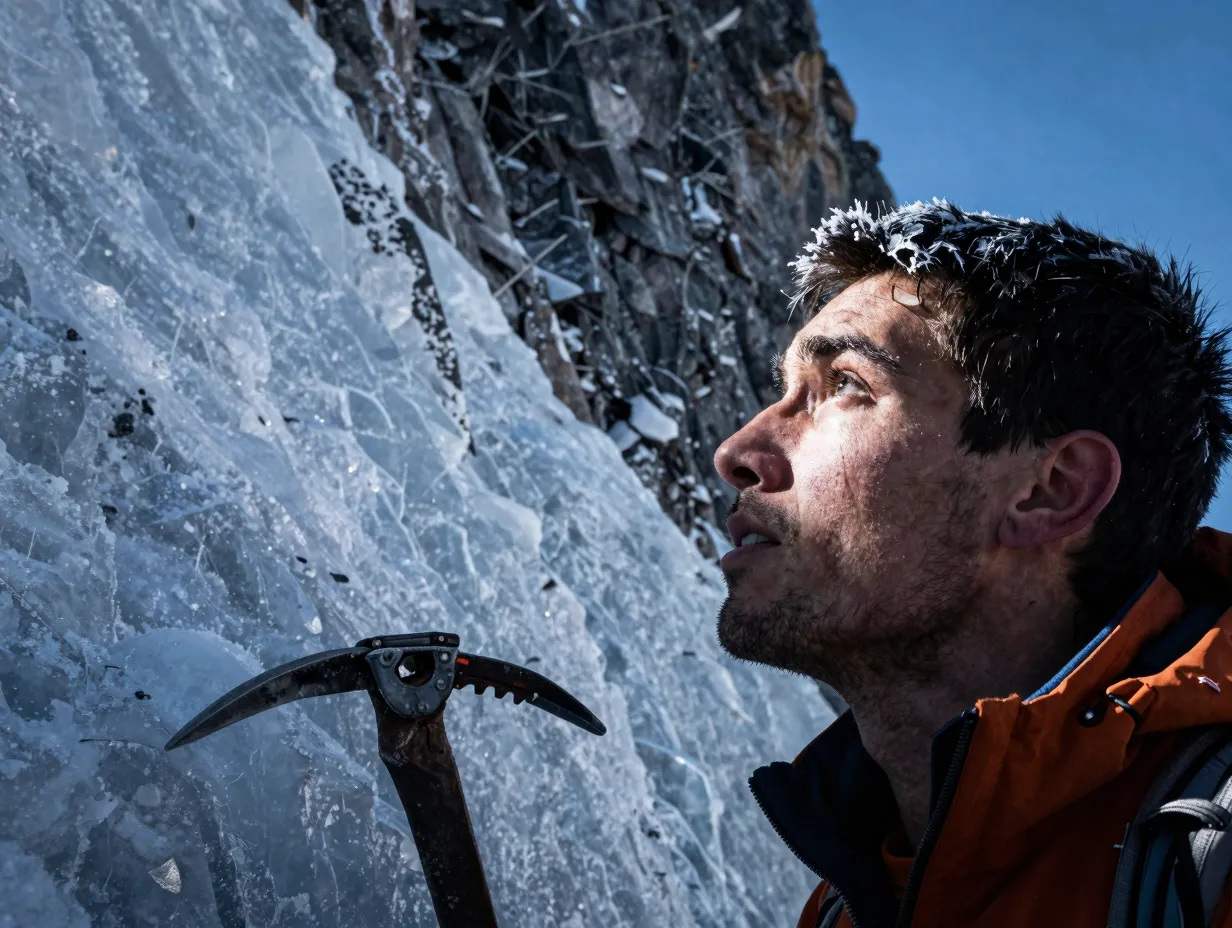
Hillary’s reflection, offered after the first successful ascent of Everest in 1953, remains one of the most cited statements in outdoor culture. [9] Its relevance to the survival spirit is direct and unambiguous.
Every wilderness challenge is, at its core, a confrontation with the self. The mountain does not care whether a climber reaches the summit. The river does not care whether a paddler makes it through the rapids. The wilderness is indifferent. The only variable that changes is the person within it.
This quote is particularly powerful in the context of survival because it removes the wilderness as an adversary and places responsibility squarely with the individual. That shift is empowering rather than burdensome. If the obstacle is internal, it is also solvable.
“It is not the mountain we conquer, but ourselves.”, Sir Edmund Hillary [9]
Survivors who adopt this framing stop blaming circumstances and start managing responses. They ask not “Why is this happening to me?” but “What can be done right now?” That question is the engine of effective survival behavior.
5. “Wilderness is not a luxury but a necessity of the human spirit.”, Edward Abbey
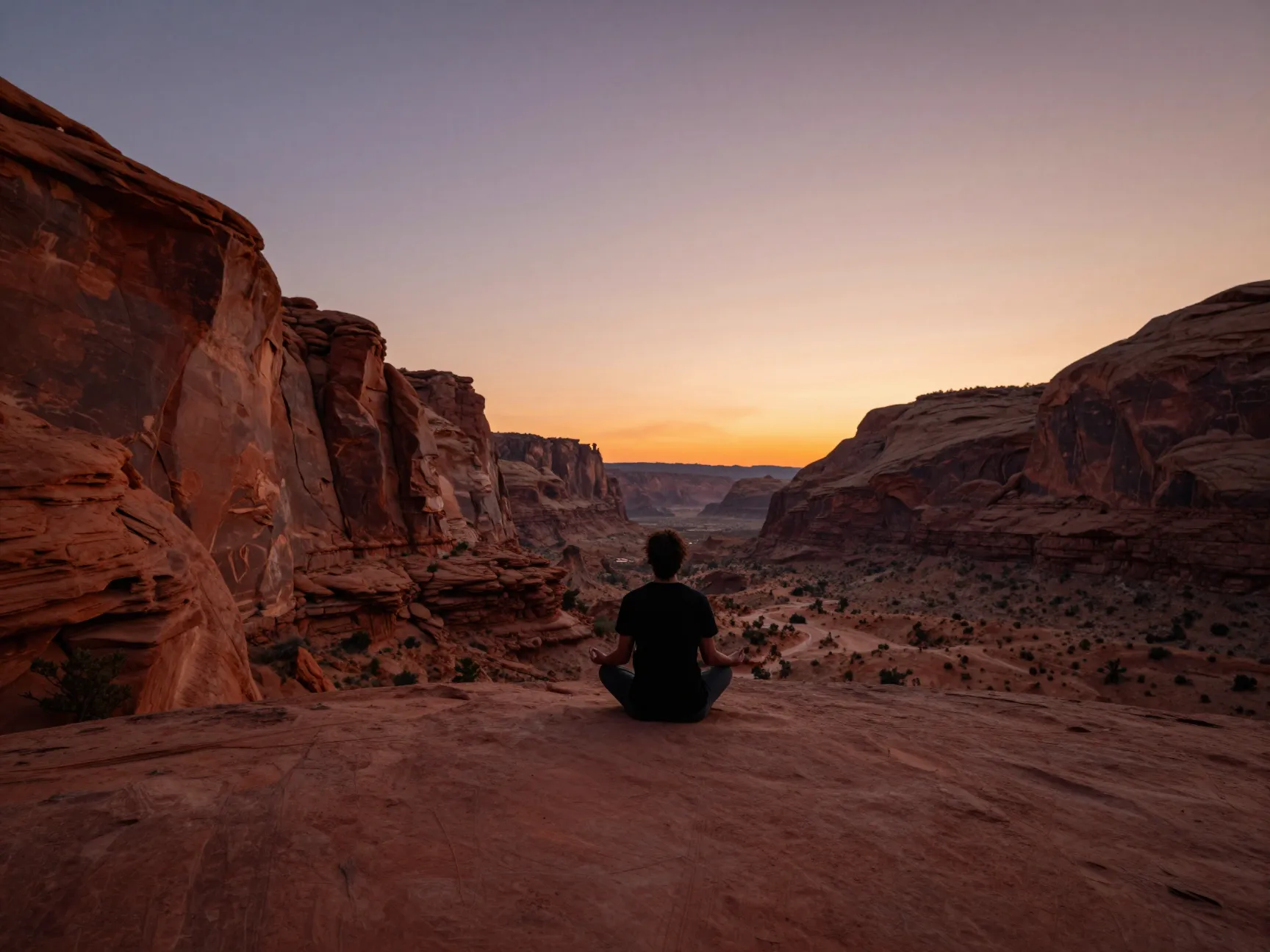
Edward Abbey’s declaration, drawn from his writing on the American Southwest, is perhaps the most philosophically dense of the 8 Motivational Wilderness Quotes to Fuel Your Survival Spirit examined here. [6]
Abbey was making an argument about conservation, but his words carry a survival psychology dimension that deserves attention. The word necessity is key. A luxury can be foregone without consequence. A necessity, by definition, cannot. Abbey is asserting that the human psyche requires contact with wild places to remain whole.
This has been supported by decades of research in environmental psychology. Time in natural settings reduces cortisol levels, lowers blood pressure, and improves executive function, the cognitive capacity responsible for planning, decision-making, and impulse control. [3] These are precisely the capacities most needed in a survival situation.
For those preparing for wilderness expeditions, Abbey’s quote is a reminder that mental preparation is not separate from physical preparation. The two are inseparable. A person who has spent meaningful time in natural environments before an emergency will draw on that reservoir of calm and familiarity when it matters most.
6. “Look deep into nature, and then you will understand everything better.”, Albert Einstein
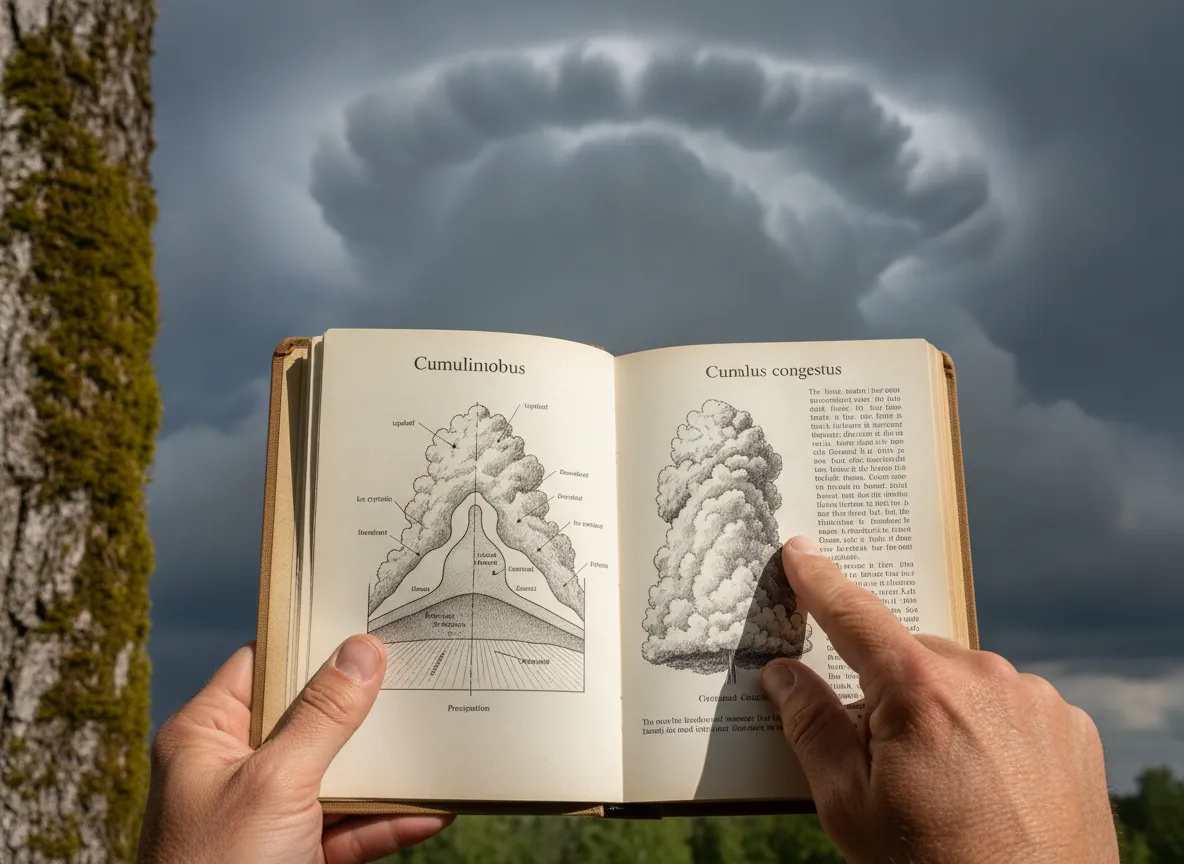
Einstein’s observation, though not made in a wilderness survival context, translates directly into practical field wisdom. [2] Nature operates according to consistent principles: water flows downhill, heat rises, animals move toward food and water sources, weather systems follow predictable patterns. A person who has learned to read these patterns has a significant advantage in any survival scenario.
Key natural indicators every wilderness traveler should know:
- Moss tends to grow on the north-facing sides of trees in the Northern Hemisphere, offering a basic compass reference.
- Animal trails typically lead toward water sources, especially in arid environments.
- Cumulus clouds building vertically in the afternoon often signal incoming thunderstorms within hours.
- The behavior of birds, sudden silence, mass flight, frequently precedes significant weather changes or predator presence.
Einstein’s broader point is about the relationship between careful observation and deep understanding. Survival is, in many ways, an applied science. The wilderness rewards those who study it with patience and without assumption.
7. “Of all the paths you take in life, make sure a few of them are dirt.”, John Muir
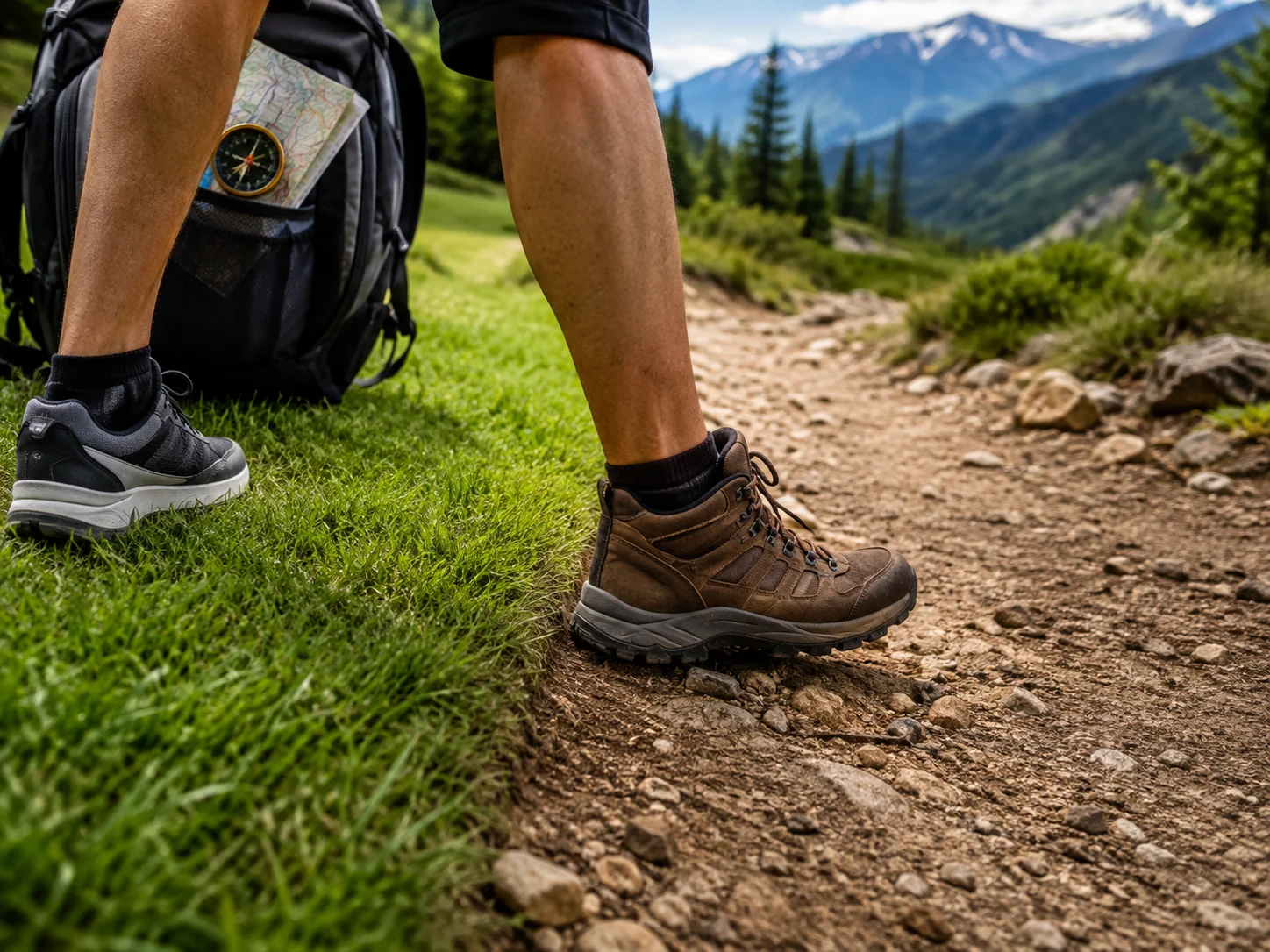
This third Muir quote earns its inclusion not for philosophical weight but for practical urgency. [1] It is a direct instruction, and in the context of survival preparation, instructions matter.
The survival spirit is not built in a gym or a classroom. It is built on actual terrain, in actual weather, with actual discomfort. People who regularly spend time on dirt paths, hiking, camping, foraging, navigating, develop a body of experiential knowledge that no manual can replicate. They know how their body responds to cold, how their judgment shifts when hungry, how their pace changes on loose scree versus packed trail.
This quote functions as a call to action for anyone who wants to develop genuine wilderness resilience. Preparation is not passive. It requires repeated, deliberate exposure to the environment.
A simple preparation framework:
- Begin with day hikes in familiar terrain before attempting overnight trips.
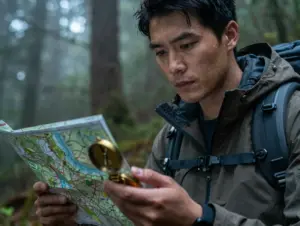
- Practice navigation with map and compass before relying on GPS devices.
- Deliberately camp in mild adverse conditions, light rain, cool temperatures, before facing genuine emergencies.
- Learn to identify three edible plants and three water sources in the specific region most frequently visited.
The dirt path is not just a metaphor. It is the training ground.
8. “The wilderness and the idea of wilderness is one of the permanent homes of the human spirit.”, Joseph Wood Krutch
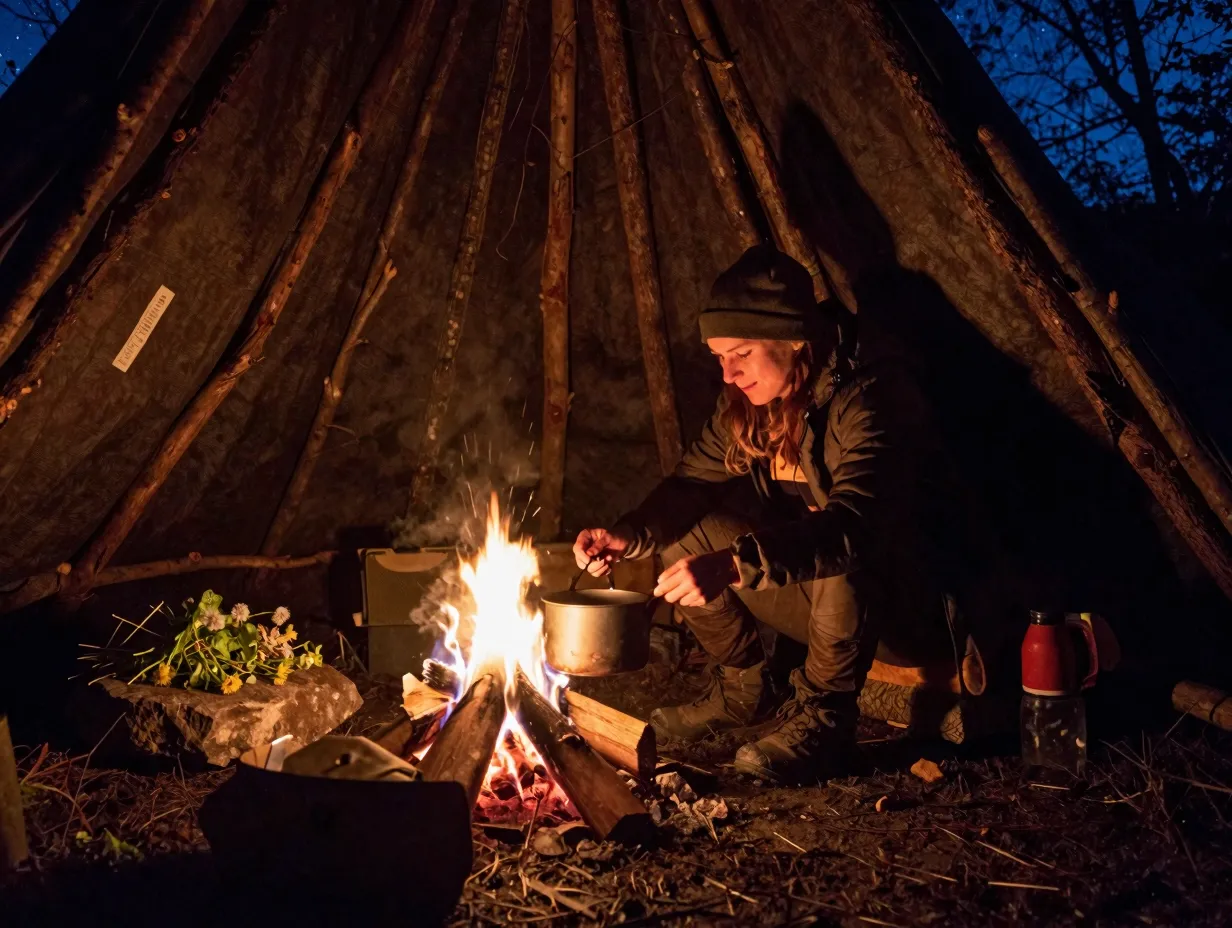
Krutch’s statement, preserved in wilderness quote archives maintained by organizations such as Wilderness.net, completes the 8 Motivational Wilderness Quotes to Fuel Your Survival Spirit with a declaration about belonging. [5]
The phrase permanent home is deliberate and significant. A home is a place of return, of restoration, of fundamental identity. Krutch is arguing that humans are not visitors to the wilderness, they are, in some essential way, native to it. The modern world has layered distance between people and that origin, but the connection remains.
In survival terms, this quote addresses one of the most dangerous psychological conditions a stranded person can experience: alienation from the environment. When the wilderness feels foreign and hostile, every sensory input becomes a threat. When it feels like a home, imperfect, demanding, but fundamentally familiar, the same inputs become information.
Training the mind to perceive the wilderness as a home rather than a hostile alien landscape is a legitimate survival skill. It reduces the physiological stress response, improves sensory processing, and encourages the kind of patient, attentive behavior that saves lives.
“The wilderness and the idea of wilderness is one of the permanent homes of the human spirit.”, Joseph Wood Krutch [5]
How to Apply These Quotes as Survival Mental Tools
Reading motivational wilderness quotes is one thing. Internalizing them as functional mental tools is another. The following framework converts passive reading into active preparation.
Step 1: Select two or three quotes that resonate most strongly. Attempting to memorize all eight before an expedition dilutes the impact of each. Depth of connection matters more than breadth.
Step 2: Write the selected quotes by hand in a field journal. The physical act of writing encodes information more deeply than typing or reading. A field journal also becomes a practical reference during an expedition. [1]
Step 3: Attach each quote to a specific survival scenario. For example, pair Hillary’s “conquer ourselves” quote with the scenario of making a difficult navigation decision under fatigue. Pair Muir’s “receives far more than he seeks” quote with the scenario of locating water in unfamiliar terrain.
Step 4: Recite the relevant quote aloud during training exercises. Verbalization reinforces neural pathways. When the same scenario arises in a real emergency, the quote, and the behavior it anchors, will surface more readily.
Step 5: Debrief after each outdoor experience. Ask which quote proved most relevant during the outing and why. This reflective practice builds a personalized library of applied wilderness wisdom over time.
The Broader Tradition of Wilderness Wisdom
The 8 Motivational Wilderness Quotes to Fuel Your Survival Spirit featured in this article represent a small but significant slice of a much larger tradition. Conservation organizations, wilderness educators, and outdoor writers have been collecting and curating these observations for well over a century. [6]
What makes this tradition valuable is its diversity of perspective. Some quotes come from mountaineers who tested themselves against extreme altitude. Others come from naturalists who spent decades observing ecosystems. Still others come from writers and philosophers who understood the wilderness as a mirror for the human condition. [8]
Together, they form a body of knowledge that is simultaneously practical and philosophical, a rare combination in any field. The wilderness does not separate the two. It demands both.
Notable themes that recur across wilderness wisdom traditions:
- Humility before nature as a prerequisite for safe passage.
- Patience and observation as more valuable than strength or speed.
- The wilderness as a source of psychological restoration and clarity.
- Self-knowledge as the ultimate survival tool.
- The relationship between human beings and wild land as one of mutual respect and reciprocity. [5]
These themes are not coincidental. They represent the distilled lessons of countless encounters between human beings and wild environments across cultures and centuries.
Conclusion
The 8 Motivational Wilderness Quotes to Fuel Your Survival Spirit gathered here are more than inspiration. They are a curriculum. Each one encodes a specific lesson about how to think, observe, and behave in the wilderness, lessons that apply equally to a backcountry emergency and to the broader challenges of a demanding life.
Actionable next steps for readers in 2026:
- Select one quote from this list and commit it to memory before the next outdoor outing.
- Keep a dedicated field journal and record observations that connect to these quotes during time in nature.
- Share these quotes with a hiking partner, survival group, or outdoor education class, collective wisdom compounds individual resilience.
- Revisit wilderness.net and similar conservation resources regularly for expanded collections of wilderness wisdom that can deepen this foundation. [5]
- Most importantly, get outside. The quotes point toward the wilderness, but only direct experience completes the lesson.
The survival spirit is not a fixed trait. It is a practice, built one trail, one observation, and one hard-earned insight at a time.
References
[1] 15 Wilderness Quotes For Lifes Journeys – https://www.sixmoondesigns.com/blogs/newsletter/15-wilderness-quotes-for-lifes-journeys
[2] Quotes For The Wild Soul – https://mindyonthemove.com/2020/07/27/quotes-for-the-wild-soul/
[3] Nature Quotes For The Wandering Soul – https://momsoulsoothers.com/nature-quotes-for-the-wandering-soul/
[4] 32 Quotes To Inspire Outdoor Adventures – https://mamabearoutdoors.com/2019/02/14/32-quotes-to-inspire-outdoor-adventures/
[5] Quotes – https://wilderness.net/learn-about-wilderness/quotes.php
[6] Wilderness Quotes – https://www.scotchmanpeaks.org/about-the-friends/wilderness-quotes/
[7] Wilderness Survival – https://www.goodreads.com/quotes/tag/wilderness-survival
[8] Wilderness – https://www.goodreads.com/quotes/tag/wilderness
[9] Wilderness Quotes – https://www.brainyquote.com/topics/wilderness-quotes
[10] Quotes About Wilderness – https://quotlr.com/quotes-about-wilderness/