8 Bold Bow Hunting Tattoos for Men: Symbols of the Wilderness
Roughly 30 percent of American men with tattoos choose designs connected to nature, sport, or personal identity, and bow hunting imagery ranks among the fastest-growing categories in that group. For hunters, a tattoo is not merely decoration. It is a permanent declaration of patience, skill, and deep respect for the wild. The collection of 8 Bold Bow Hunting Tattoos for Men: Symbols of the Wilderness explored in this article covers designs that carry genuine meaning, from ancient archery symbolism to modern geometric art, giving any hunter a powerful visual language to wear for life.
Disclosure: This post contains affiliate links. As an Amazon Associate, we earn from qualifying purchases, and at no extra cost to you.
Key Takeaways
- Bow hunting tattoos combine personal identity, outdoor heritage, and artistic craftsmanship into a single permanent statement.
- The eight designs covered range from minimalist arrow linework to complex realistic wildlife portraits, suiting different aesthetic preferences.
- Placement, size, and ink style dramatically affect how each design reads on the body and how well it ages over time.
- Choosing a tattoo artist who specializes in wildlife or nature themes produces significantly sharper, more detailed results.
- Each design in this guide carries layered symbolism rooted in hunting culture, indigenous tradition, or wilderness philosophy.
What Makes Bow Hunting Tattoos Uniquely Powerful
Before diving into the specific designs, it is worth understanding why bow hunting imagery translates so effectively into tattoo art. Unlike firearms, the bow demands physical closeness to the quarry, mastery of breath, and a near-meditative stillness. That psychological depth gives bow hunting tattoos a richness that purely mechanical hunting imagery often lacks.
Three core reasons these tattoos resonate:
- They reference one of humanity’s oldest survival skills, dating back at least 64,000 years to archaeological evidence found in South Africa.
- The visual elements, curved limbs, taut string, arrow in flight, feather fletching, are inherently dynamic and translate beautifully to skin.
- They connect the wearer to a community of hunters who share values of self-reliance, conservation, and time spent in wild places.
“A bow hunting tattoo is not a trophy. It is a philosophy etched permanently into the body.”
When selecting from the 8 Bold Bow Hunting Tattoos for Men: Symbols of the Wilderness, consider not just aesthetics but personal meaning. The strongest tattoos are the ones the wearer can explain in a single, honest sentence.
The 8 Bold Bow Hunting Tattoos for Men: Symbols of the Wilderness
1. The Recurve Bow with Forest Silhouette
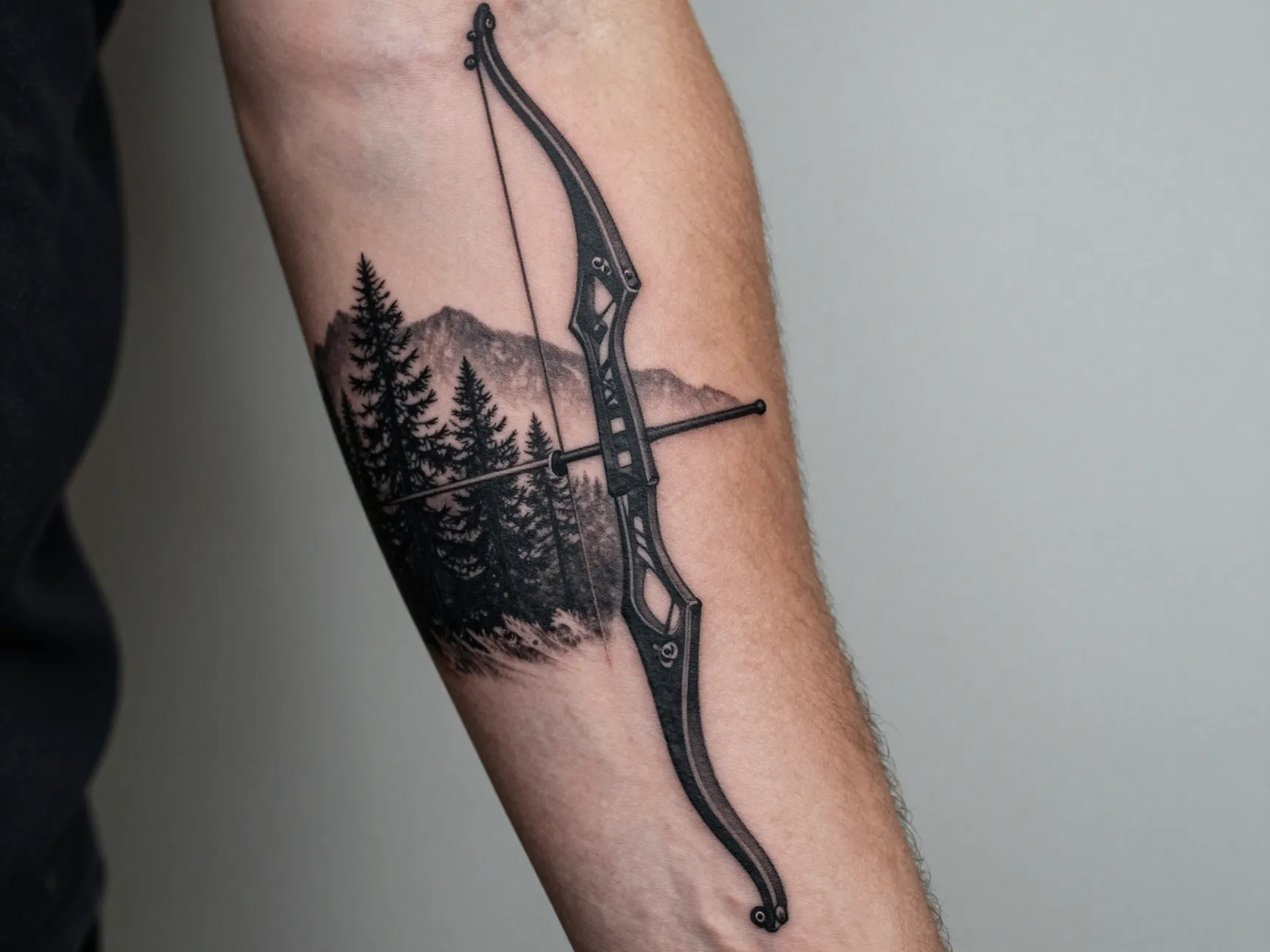
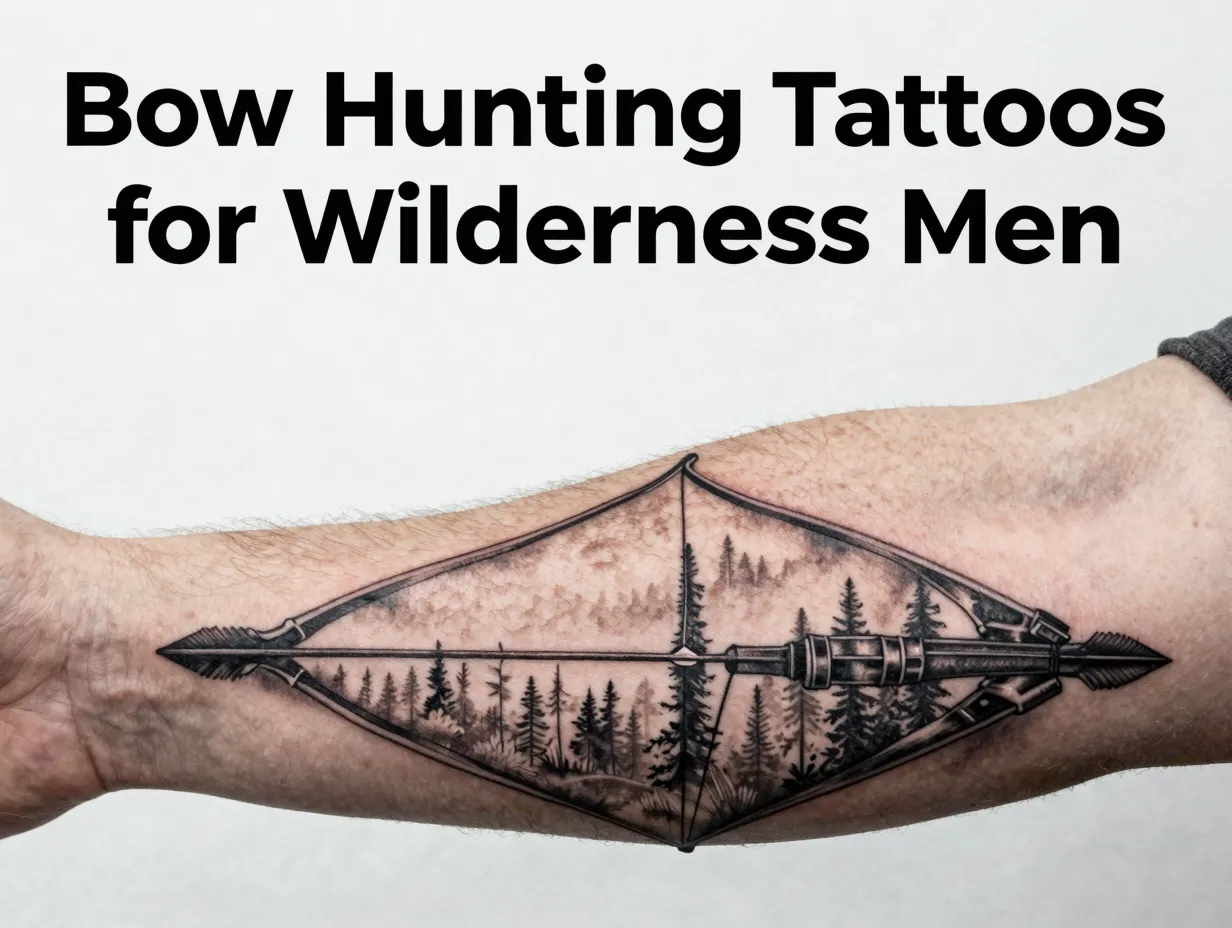
The recurve bow is the oldest refined bow design still in active use, and its curved limbs create a naturally elegant shape for tattoo work. Pairing the bow with a forest silhouette, pine trees, a rising moon, or a distant mountain ridge, transforms a simple archery tool into a full wilderness scene.
Best placement: Forearm or calf, where the long vertical shape of the bow can extend naturally along the muscle.
Ink style: Black and grey realism works best here. The contrast between the bow’s clean lines and the soft, faded forest background creates visual depth without requiring color.
What it symbolizes: Patience, traditional skill, and the hunter’s relationship with the landscape. The forest behind the bow reminds the viewer that the weapon only exists in context, it means nothing without the wild.
Design tip: Ask the artist to incorporate negative space within the bow’s riser. Leaving skin showing through the frame gives the design an airy, open feel that prevents it from looking heavy or cluttered.
2. Crossed Arrows with Deer Skull
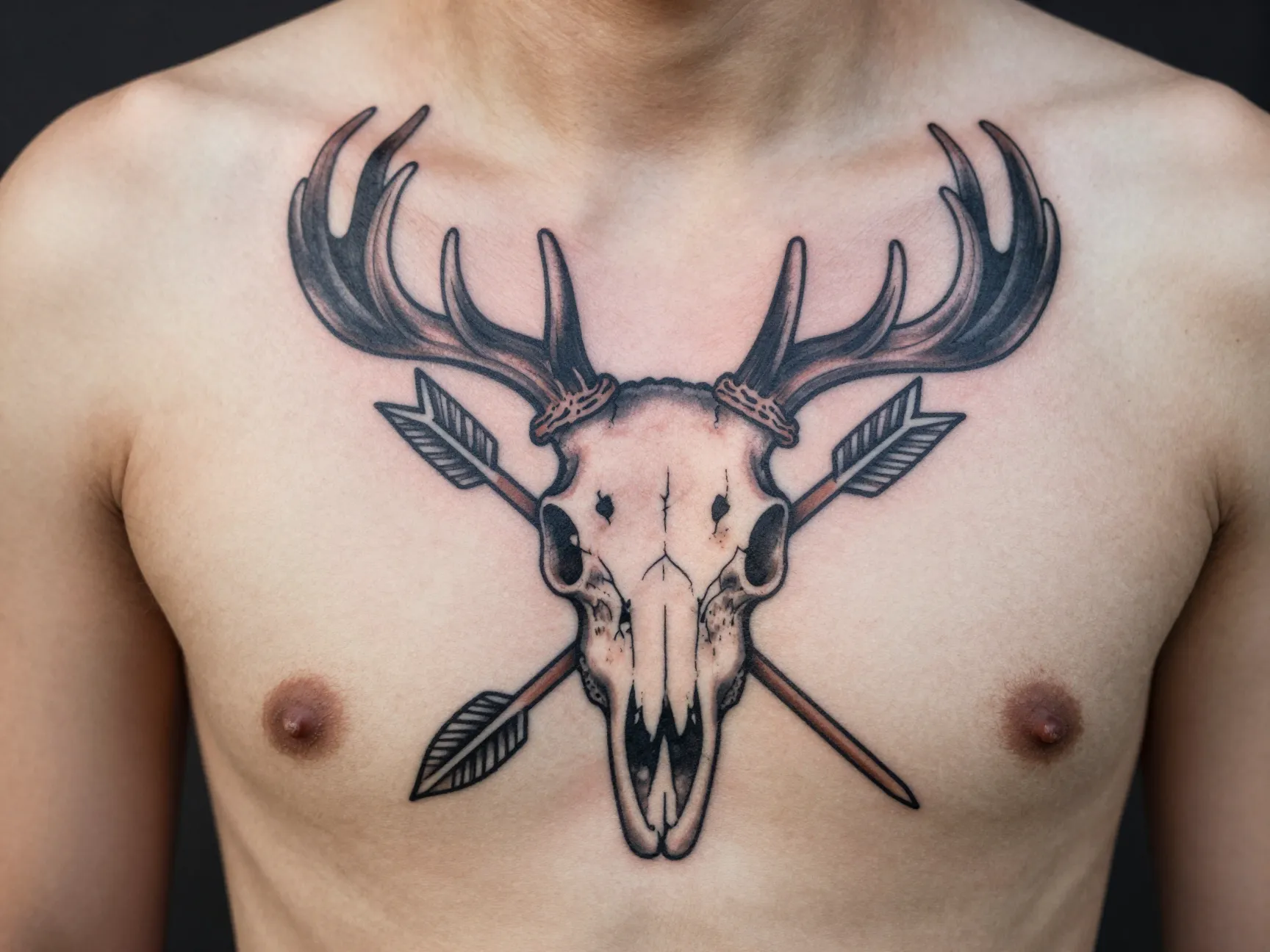
Few images in hunting culture carry as much weight as the deer skull. Combined with crossed arrows, a symbol borrowed from Native American tradition, where it represented alliance and friendship, this design becomes a meditation on the duality of the hunt: life taken in respect.
Best placement: Chest, upper back, or the back of the upper arm (tricep area).
Ink style: Bold traditional or neo-traditional tattooing suits this design well. Heavy outlines, strong black fill in the antlers, and subtle shading in the skull create a design that holds up over decades.
What it symbolizes: The crossed arrows historically signified peace between peoples. In a hunting context, they represent the covenant between the hunter and the hunted, the understanding that taking an animal’s life carries responsibility.
Design tip: Adding fine linework details inside the skull, cracks, texture, small floral elements, elevates the design from a simple icon to a piece of genuine art.
3. Geometric Arrow with Mountain Range
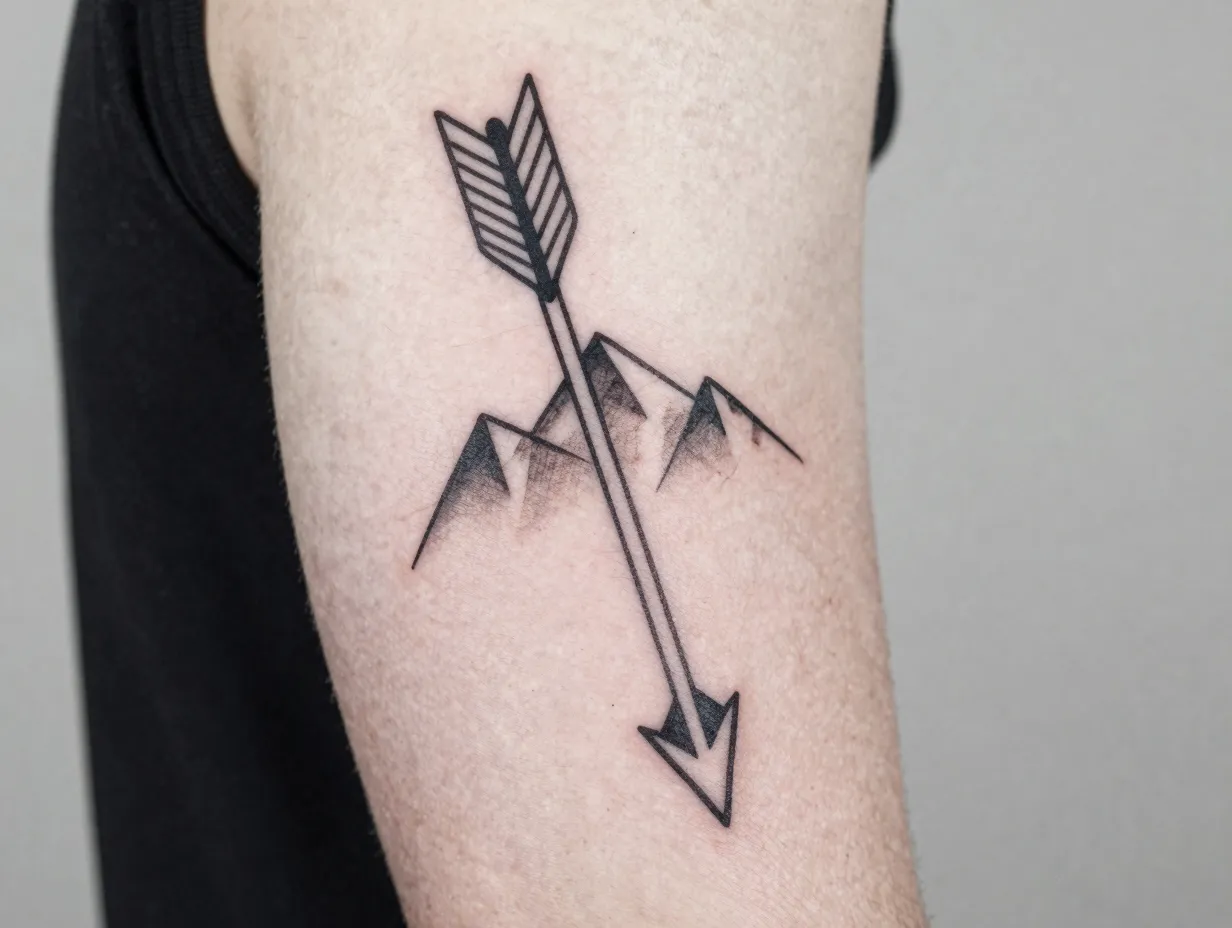
Geometric tattooing has dominated the industry for over a decade, and for good reason: clean lines, precise angles, and mathematical symmetry age exceptionally well on skin. A single arrow rendered in geometric style, with a mountain range composed of triangular peaks incorporated into the shaft or fletching, is one of the most versatile bow hunting tattoos available.
Best placement: Bicep, forearm, or behind the ear for a minimalist version.
Ink style: Fine-line blackwork or dotwork. Both techniques create crisp geometric shapes and allow for subtle shading through stippling rather than solid fills.
What it symbolizes: The arrow points forward, toward the hunt, toward a goal, toward personal growth. The mountain range grounds that forward motion in the physical world of wilderness.
Design tip: Keep the color palette strictly black and white. Introducing color into geometric tattoos often disrupts the visual logic of the design and causes the piece to look busy rather than precise.
4. Realistic Wildlife Portrait with Bow Element
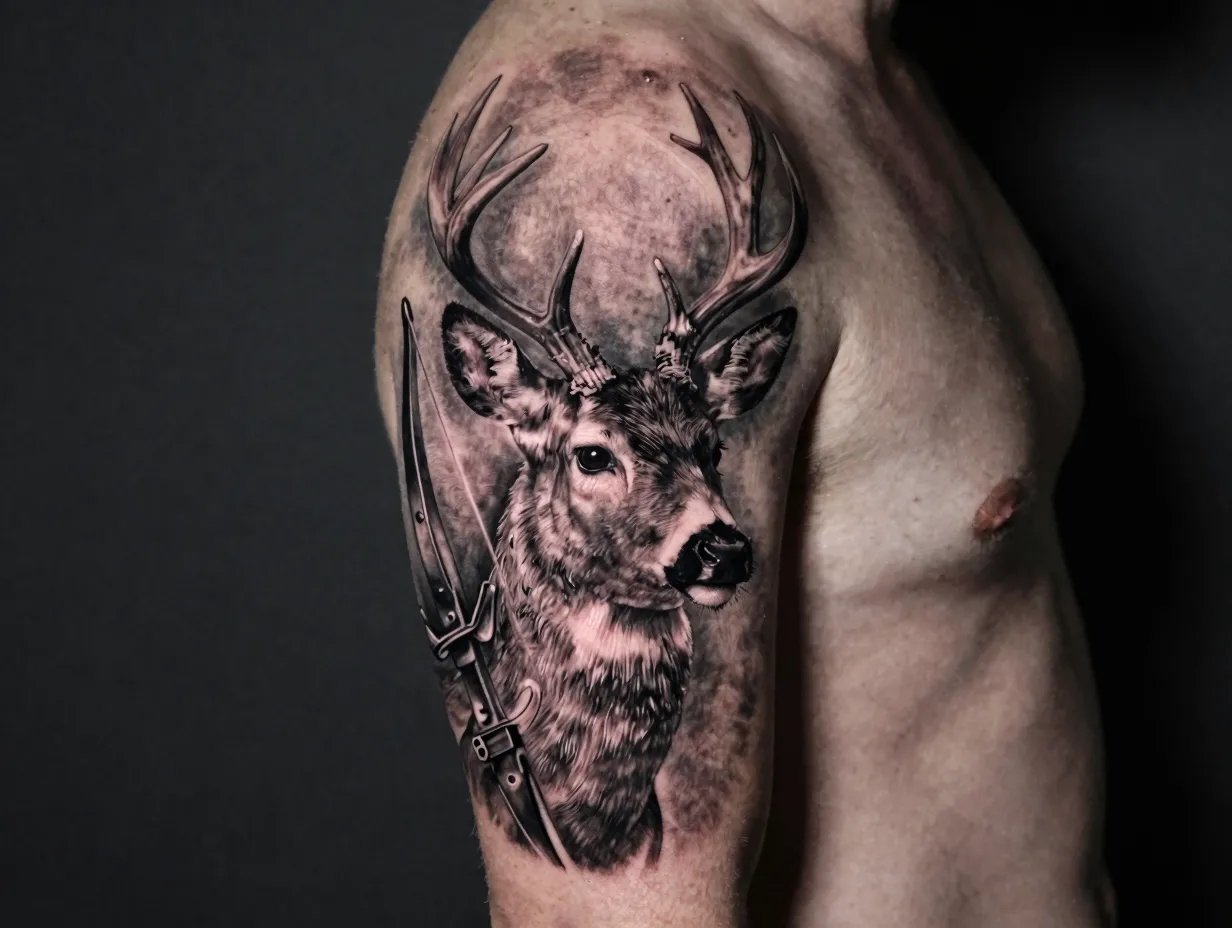
For hunters who want to honor a specific animal, a whitetail buck, a bull elk, a black bear, the realistic wildlife portrait is the gold standard. Incorporating a bow element (a drawn bow in the background, an arrow mid-flight, or a quiver resting against a tree) ties the portrait directly to the hunting context.
Best placement: Upper arm sleeve, thigh, or upper back. These larger canvases allow the artist to capture genuine anatomical detail.
Ink style: Black and grey photorealism. This style demands a highly skilled artist, but the results are unmatched in emotional impact. Color realism is also an option for hunters who want to capture the exact rust-red of a fox or the warm brown of a whitetail’s coat.
What it symbolizes: Deep respect for the specific animal that shaped the hunter’s experience. Many men choose this design to commemorate a first harvest, a record animal, or a hunt shared with a father or son.
Design tip: Bring reference photographs to the consultation. The more specific the reference, the more personal and accurate the final tattoo.
5. Traditional Compass with Arrow Needle
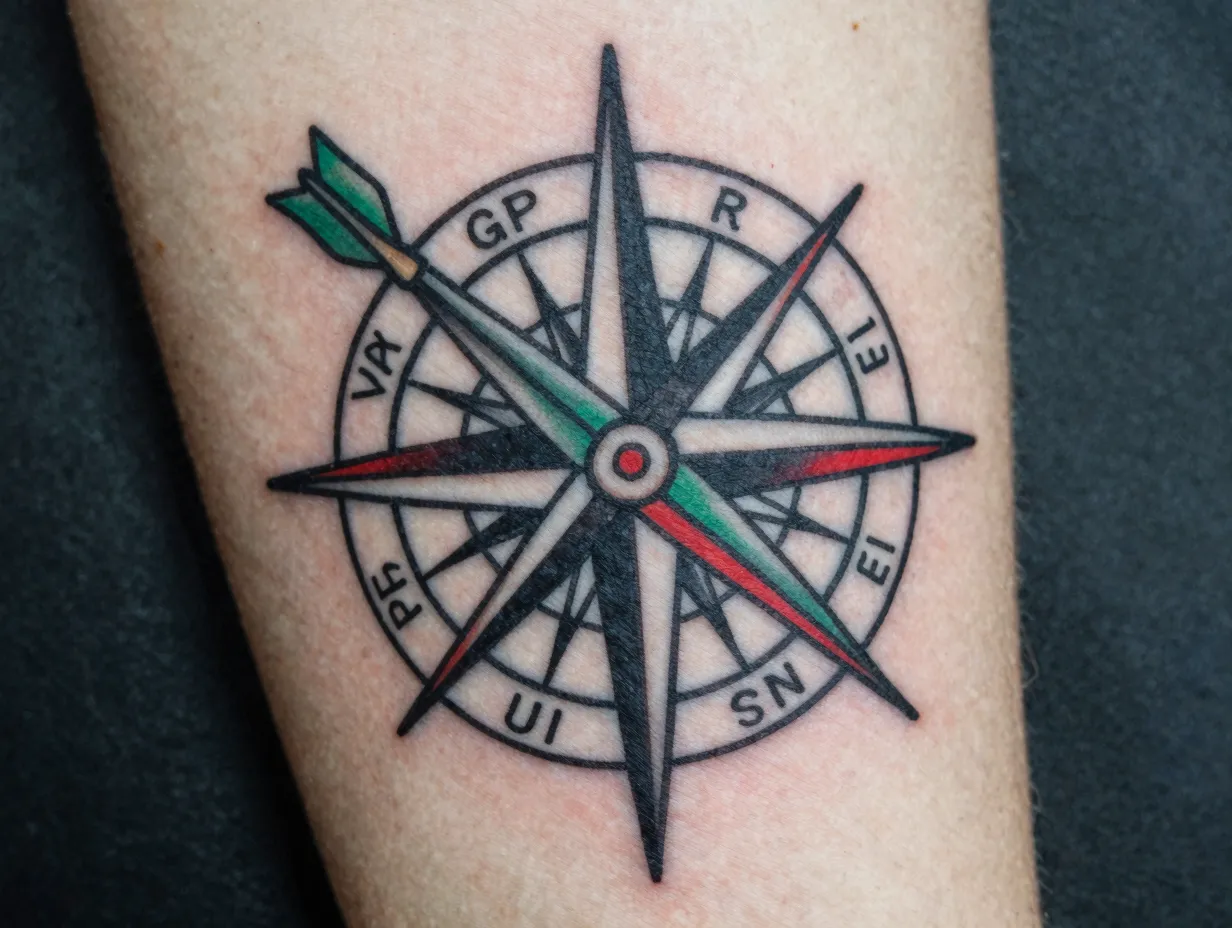
The compass is a timeless tattoo symbol representing direction, purpose, and the willingness to venture into unknown territory. Replacing the standard needle with a hunting arrow, or incorporating arrows at each cardinal point, creates a design that speaks directly to the outdoor lifestyle.
Best placement: Inner forearm, chest, or shoulder. The circular compass shape works well on rounded body parts.
Ink style: Traditional American tattooing (bold lines, limited color palette of black, red, and green) or neo-traditional with more detailed shading. Both styles give the compass a classic, enduring quality.
What it symbolizes: The hunter’s need for orientation, not just physical navigation through wilderness terrain, but moral and personal direction. The arrow-needle suggests that the hunt itself is the compass point guiding the wearer’s life.
Design tip: Incorporate a short word or coordinate (a meaningful hunting location’s GPS coordinates, for example) around the outer ring of the compass for a deeply personal touch.
6. Tribal Bow and Arrow Design
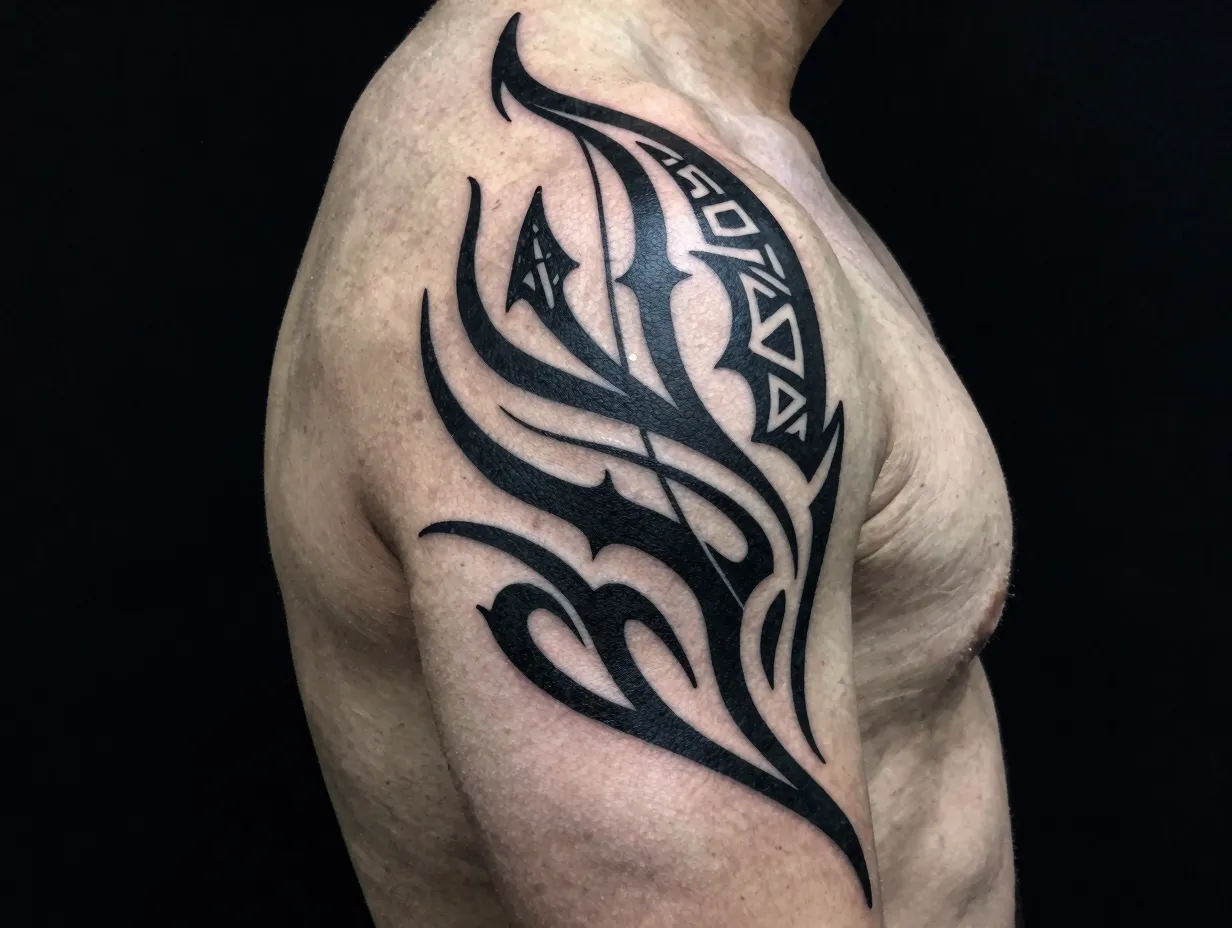
Tribal tattooing draws on centuries of indigenous artistic traditions from Polynesia, the Americas, and Southeast Asia. A tribal-style bow and arrow design uses bold black fills, repeating geometric patterns, and flowing organic shapes to create a design that feels ancient and powerful.
Best placement: Upper arm, shoulder, or calf. Tribal designs work best on areas with consistent muscle tone because the bold fills can distort on areas with significant fat variation.
Ink style: Solid black only. The power of tribal tattooing comes entirely from the contrast between dense black ink and bare skin. Adding grey shading or color undermines the visual language of the style.
What it symbolizes: Connection to ancestral hunting traditions, physical strength, and the primal relationship between human beings and wild animals. For men with indigenous heritage, this design can be a direct cultural statement.
Design tip: Research the specific tribal tradition being referenced and work with an artist who understands that tradition. Respectful, informed tribal tattooing produces far stronger results than generic pattern work.
7. Arrow Through the Heart (Hunter’s Version)
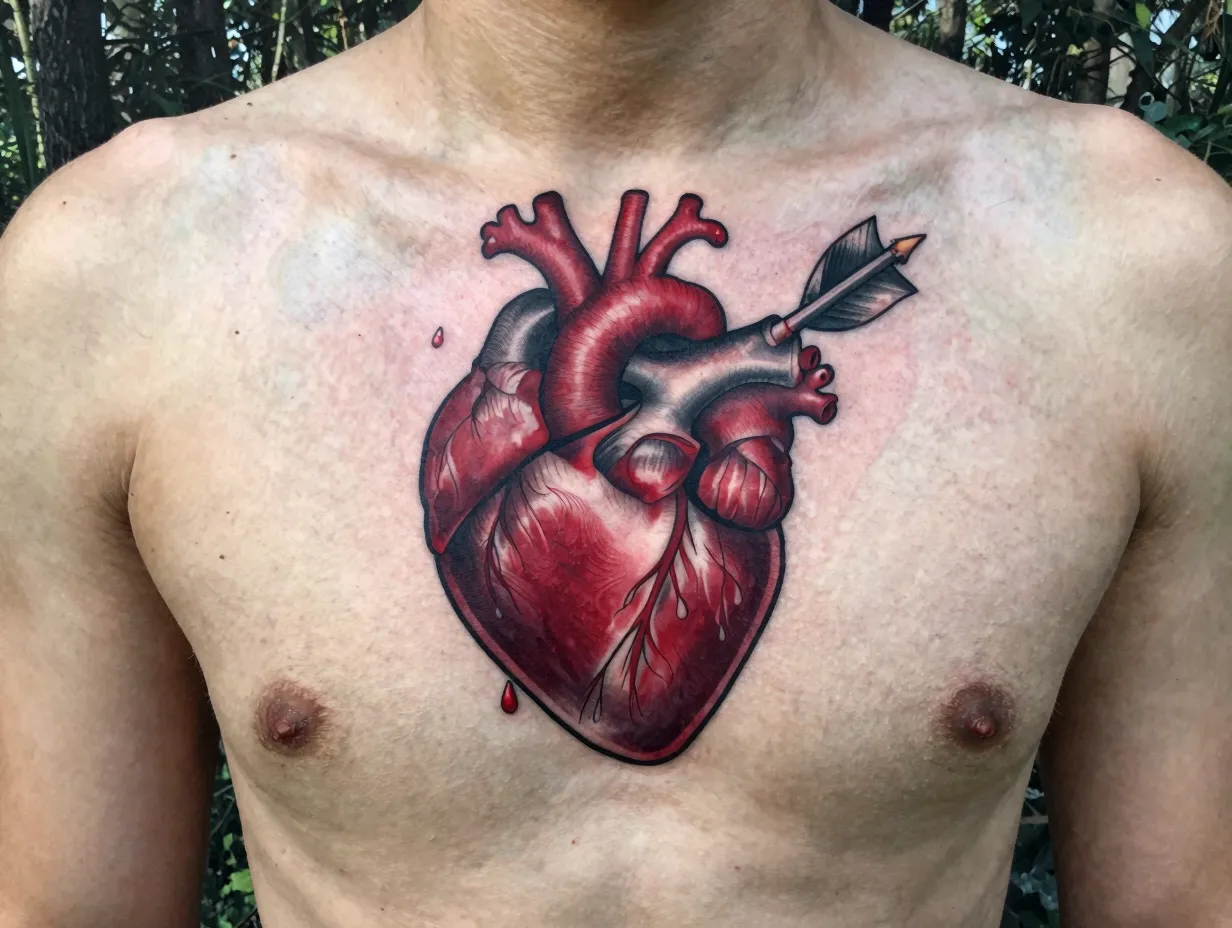
The arrow-through-the-heart is one of tattooing’s oldest motifs, but the hunter’s version strips away the romantic cliché and replaces it with something rawer. A broadhead-tipped hunting arrow, rendered in realistic detail, passing through a stylized anatomical heart, with small drops of blood or a forest backdrop, reframes the image entirely.
Best placement: Chest (directly over the sternum or left pectoral), upper arm, or ribcage.
Ink style: Neo-traditional or illustrative realism. The neo-traditional style allows for bold color, deep reds for the heart, silver-grey for the broadhead, while keeping the design graphic and readable.
What it symbolizes: The hunter’s complete devotion to the pursuit. The heart represents everything the hunter values: family, wilderness, tradition, and the primal satisfaction of a clean, ethical harvest. The arrow does not wound, it defines.
Design tip: Avoid making the design look gory. The goal is symbolic power, not shock value. A skilled artist will balance the realistic elements with enough stylization to keep the piece feeling intentional rather than gratuitous.
8. Full Sleeve Wilderness Scene with Bow Hunting Theme
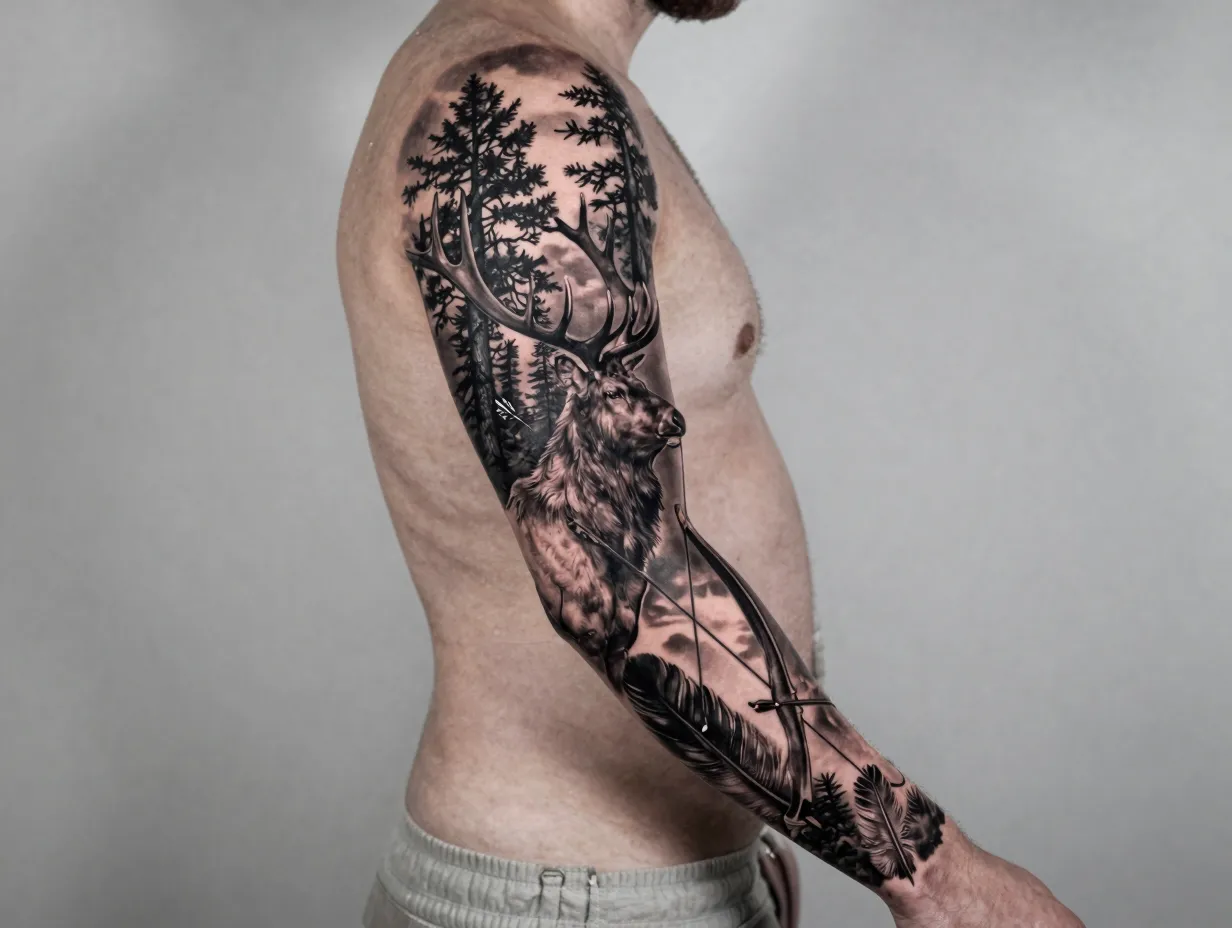
The full sleeve is the most ambitious entry in this collection of 8 Bold Bow Hunting Tattoos for Men: Symbols of the Wilderness. Rather than a single image, the sleeve is a curated environment, a complete wilderness world wrapping the entire arm from shoulder to wrist.
Typical elements in a bow hunting sleeve:
- A large focal animal (elk, deer, or bear) rendered in photorealism
- Pine and oak trees forming a forest canopy across the upper arm
- A recurve or compound bow woven into the composition
- Arrows, feathers, and antlers used as transitional elements between scenes
- A dawn or dusk sky filling the negative space with subtle color gradients
Best placement: By definition, the full arm. Most sleeves are built over multiple sessions spanning 20 to 40 hours of tattooing.
Ink style: Black and grey realism is the most cohesive choice for a sleeve because it unifies wildly different elements under a single tonal language. Color sleeves are possible but require extraordinary planning to prevent the arm from looking like a patchwork of unrelated pieces.
What it symbolizes: The totality of the hunting life. A sleeve is not a single statement, it is a biography. Every element chosen reflects a chapter of the wearer’s experience in the wild.
Design tip: Work with a single artist from start to finish. Consistency of hand is the single most important factor in a sleeve’s visual success. Changing artists mid-project almost always produces noticeable stylistic breaks.
Choosing the Right Artist for Bow Hunting Tattoo Work
The designs covered in this guide of 8 Bold Bow Hunting Tattoos for Men: Symbols of the Wilderness range from simple geometric linework to complex photorealistic wildlife portraits. Not every tattoo artist excels at every style.
Key factors when selecting an artist:
- Review their portfolio specifically for wildlife or nature work, not just general tattooing.
- Look for clean line consistency in healed photographs, not just fresh work.
- Prioritize artists who ask detailed questions about the meaning behind the design, this signals genuine investment in the outcome.
- Expect a consultation before any booking. Rushing this step is the most common cause of tattoo regret.
Placement considerations by design type:
| Design | Recommended Placement | Sizing Minimum |
|---|---|---|
| Recurve Bow with Forest | Forearm, Calf | 4 inches |
| Crossed Arrows with Skull | Chest, Upper Back | 5 inches |
| Geometric Arrow | Bicep, Forearm | 3 inches |
| Wildlife Portrait | Upper Arm, Thigh | 6 inches |
| Compass with Arrow | Forearm, Shoulder | 4 inches |
| Tribal Bow | Upper Arm, Calf | 5 inches |
| Arrow Through Heart | Chest, Ribcage | 3 inches |
| Full Sleeve | Full Arm | Full arm |
Aftercare and Longevity for Hunting Tattoos
A bold bow hunting tattoo is only as good as its long-term condition. The detailed linework and fine shading in wildlife and nature designs are particularly vulnerable to poor aftercare.
Essential aftercare practices:
- Keep the fresh tattoo wrapped for the period recommended by the artist (typically two to four hours for traditional wrap, or three to five days for second-skin bandaging).
- Wash gently with fragrance-free soap twice daily during the healing period.
- Apply a thin layer of fragrance-free, alcohol-free moisturizer to prevent cracking.
- Avoid direct sun exposure on the healing tattoo for at least four weeks.
- Stay out of pools, lakes, and rivers until the tattoo is fully healed, typically three to four weeks.
Long-term maintenance:
- Apply SPF 30 or higher sunscreen to tattooed areas whenever exposed to sunlight. UV radiation is the primary cause of tattoo fading.
- Schedule a touch-up session six to twelve months after the original work. Fine lines and detailed shading often benefit from one round of refinement.
- Stay hydrated and maintain a stable body weight. Significant weight fluctuation can distort detailed tattoo designs.
Conclusion
The 8 Bold Bow Hunting Tattoos for Men: Symbols of the Wilderness covered in this guide represent far more than aesthetic choices. Each design carries a distinct philosophy, patience, respect for wildlife, connection to ancient tradition, and the quiet pride of a skill earned through years of practice in wild places.
Actionable next steps for anyone considering a bow hunting tattoo:
- Identify which of the eight designs resonates most with personal hunting experience and values.
- Research tattoo artists in the local area who have demonstrable wildlife or nature portfolios.
- Schedule a consultation and bring reference images, including photographs from personal hunts if relevant.
- Discuss placement, sizing, and ink style before committing to a design direction.
- Budget appropriately, quality tattoo work is a long-term investment, and cutting costs on a permanent piece rarely ends well.
A bow hunting tattoo done well is a conversation starter, a personal monument, and a daily reminder of what matters most. Choose thoughtfully, invest in quality, and wear the wilderness with pride.