8 Essential Camo Outfit Ideas for Men on Hunting or Fishing Trips
Nearly 38 million Americans hunt or fish each year, yet a surprising number of them head into the field wearing the wrong camo for the conditions, and pay for it with spooked game, soaked gear, or dangerous cold exposure. Choosing the right camouflage outfit is not just about blending in; it is about performance, safety, and comfort across wildly different environments. The 8 essential camo outfit ideas for men on hunting or fishing trips covered in this guide draw from the latest 2026 gear research, expert brand analysis, and real-world field conditions, giving every outdoorsman a clear, actionable framework for dressing right before the first cast or the first step into the woods. [1][2]
Disclosure: This post contains affiliate links. As an Amazon Associate, we earn from qualifying purchases, and at no extra cost to you.
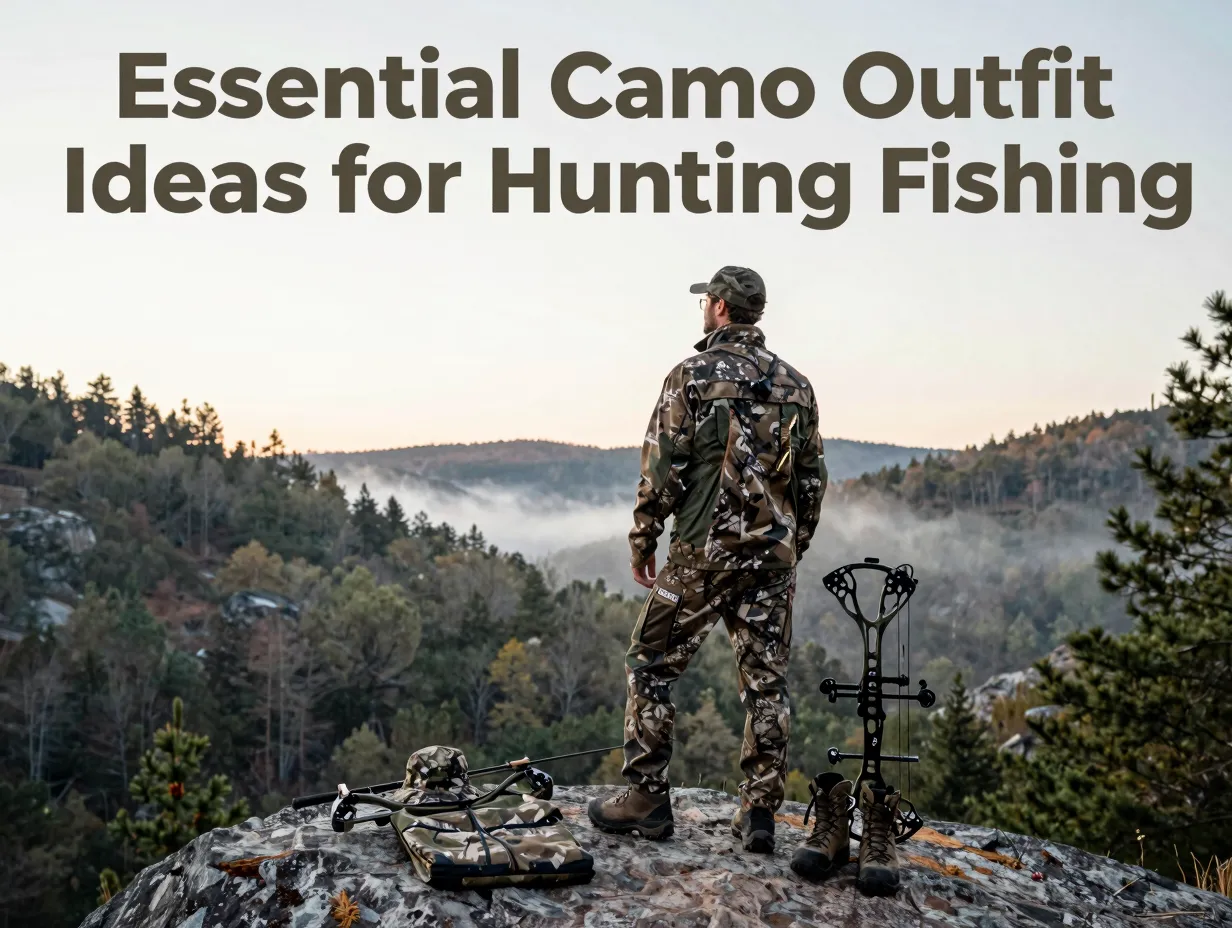
Key Takeaways
- Matching your camo pattern and fabric weight to the specific season and terrain dramatically improves concealment and comfort
- A proper layering system, base, mid, and shell, is the foundation of any cold-weather camo outfit
- Premium brands like Sitka, KUIU, Stone Glacier, and Duck Camp offer integrated head-to-toe systems worth the investment
- Budget-friendly tactical camo can perform at a high level when key pieces are chosen strategically
- Waterproof and scent-control features are non-negotiable for wet hunting or boat fishing conditions
What Makes a Great Camo Outfit for Hunting or Fishing
Before diving into the 8 essential camo outfit ideas for men on hunting or fishing trips, it helps to understand what separates a good camo outfit from a great one. Three pillars drive every smart buying decision: concealment, comfort, and function.
Concealment depends on matching the camo pattern to the environment. A high-contrast woodland pattern that works perfectly in a hardwood forest can stand out like a beacon in an open marsh. Realtree, Mossy Oak, and brand-specific patterns from Sitka or KUIU are engineered for specific biomes, not interchangeable. [1][9]
Comfort is driven by fabric technology. Moisture-wicking synthetics, merino wool blends, and brushed fleece each serve a different temperature window. Wearing the wrong fabric weight for the season leads to either overheating or hypothermia, both of which end a trip early.
Function covers everything else: silent movement for close-range game, scent control, waterproofing, and pockets placed where they actually matter in the field. [2][5]
The table below summarizes the core decision factors before choosing any of the eight outfits:
| Factor | What to Evaluate | Why It Matters |
|---|---|---|
| Pattern | Terrain match (forest, marsh, snow) | Reduces visual detection by game |
| Fabric Weight | Season and activity level | Regulates body temperature |
| Noise Level | Fabric softness and brush resistance | Prevents alerting nearby game |
| Waterproofing | DWR coating or membrane | Keeps hunter dry in rain or on water |
| Scent Control | Activated carbon or silver-ion treatment | Reduces olfactory detection by deer and elk |
The 8 Essential Camo Outfit Ideas for Men on Hunting or Fishing Trips
1. Early-Season Lightweight Camo Kit
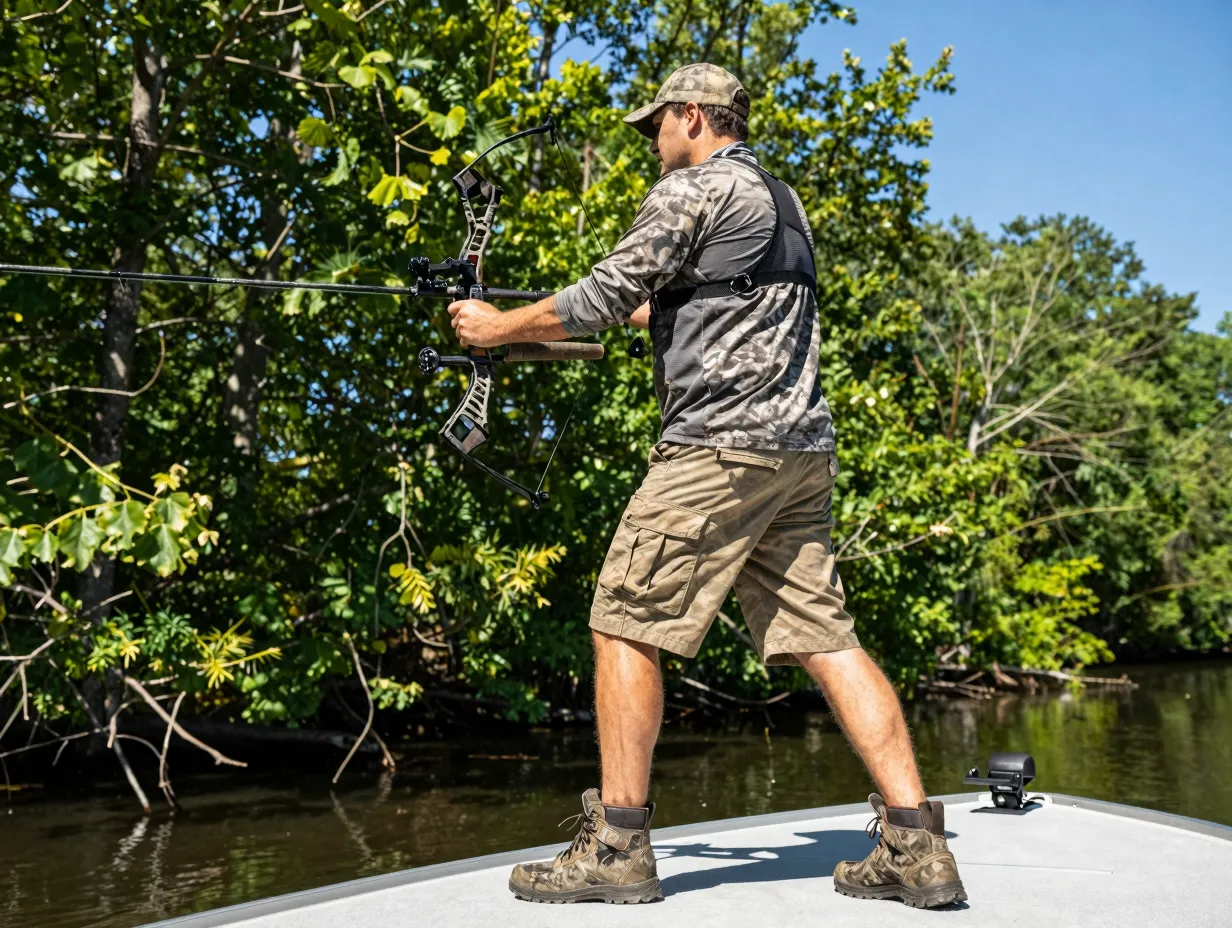
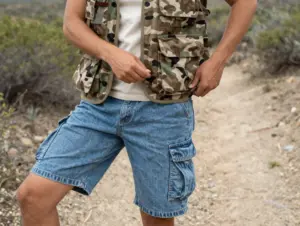
When temperatures sit above 70 degrees Fahrenheit and the woods are still thick with foliage, heavy camo is the enemy. The early-season lightweight camo kit is built for warm-weather hunts and boat fishing trips where heat management is the top priority.
Core pieces:
- Lightweight camo performance shirt (moisture-wicking polyester or nylon blend)
- Camo cargo shorts or lightweight camo pants with articulated knees
- Low-profile camo cap or boonie hat for sun protection
- Breathable camo ankle boots or camo trail runners
Best patterns for this outfit: Realtree Edge or Mossy Oak Bottomland work well in early-season green canopy environments. [1] For boat fishing, a lighter, more open pattern blends with water-reflected light.
Pro tip: Look for shirts with built-in UPF 50+ sun protection and vented back panels. On a fishing boat, the sun exposure is constant and unforgiving.
This outfit is particularly effective for turkey hunters in late spring, early whitetail archery seasons, and inshore saltwater fishing trips where mobility and sweat management matter more than insulation. [9]
2. Cold-Weather Layered Camo System
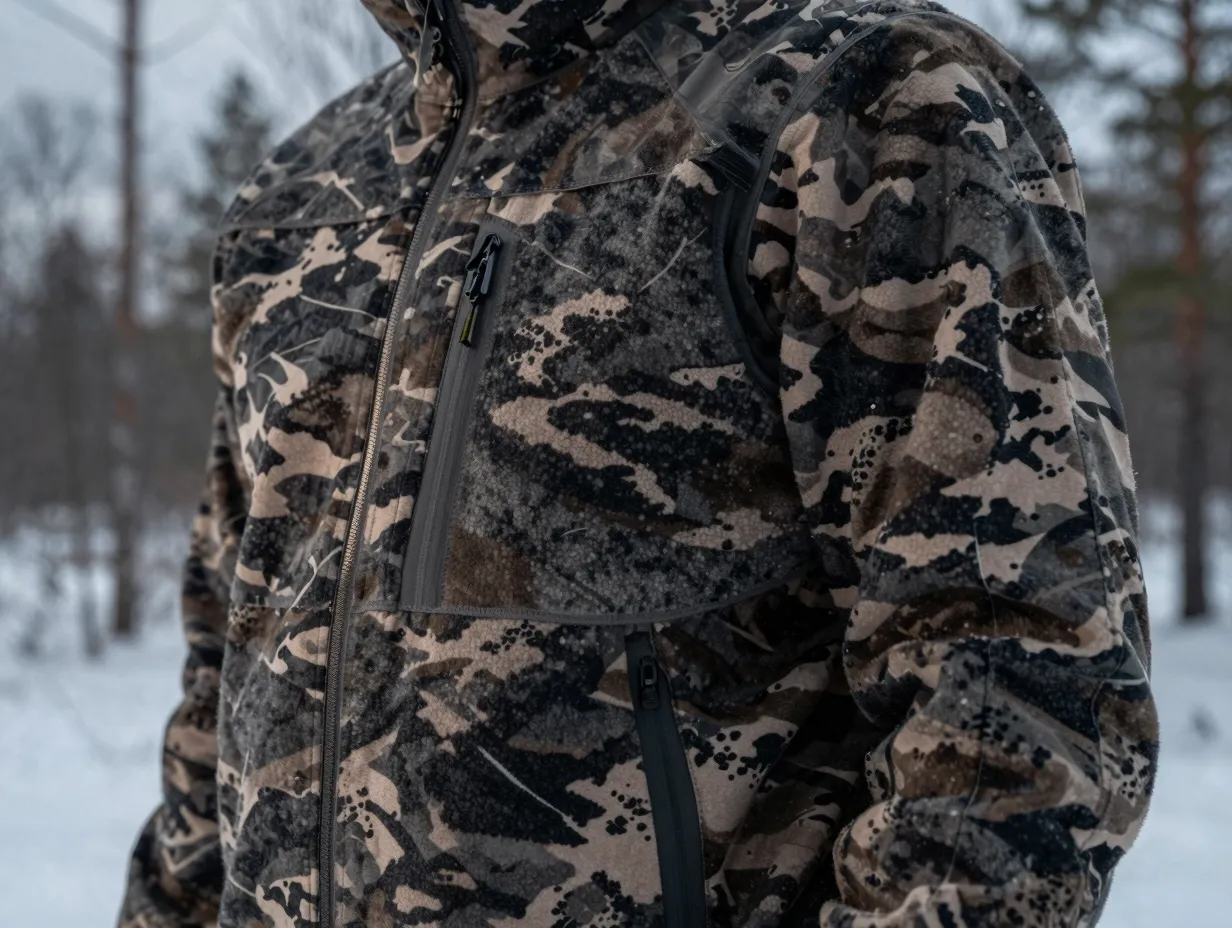
Cold-weather hunting demands a disciplined layering approach. The cold-weather layered camo system is the most technically complex outfit on this list, and the most critical for safety when temperatures drop below freezing.
The three-layer formula:
- Base layer: Merino wool or synthetic moisture-wicking long underwear. Merino is preferred for its natural odor resistance and temperature regulation across a wide range. Brands like Sitka and KUIU offer camo-printed merino base layers that maintain concealment even when outer layers are removed. [2]
- Midlayer: Insulating fleece or down jacket in a matching or complementary camo pattern. Fleece is quieter against brush; down packs smaller and is warmer per ounce in dry conditions.
- Outer shell: Waterproof, windproof camo jacket and bibs with taped seams. Gore-Tex or proprietary membranes from Sitka (GORE-TEX Pro) or Stone Glacier deliver the best balance of breathability and weather protection. [2]
Key performance benchmarks for cold-weather camo:
- Base layer weight: 150-250 gsm merino for active hunting; 250+ gsm for stationary stand hunting
- Midlayer insulation: 60-100g synthetic fill or 800-fill down minimum
- Outer shell breathability: 20,000+ g/m2/24hr MVTR rating recommended
This system is the backbone of elk, mule deer, and late-season whitetail outfits across the Rocky Mountain West and the upper Midwest. [9]
3. Head-to-Toe Premium Brand Camo System
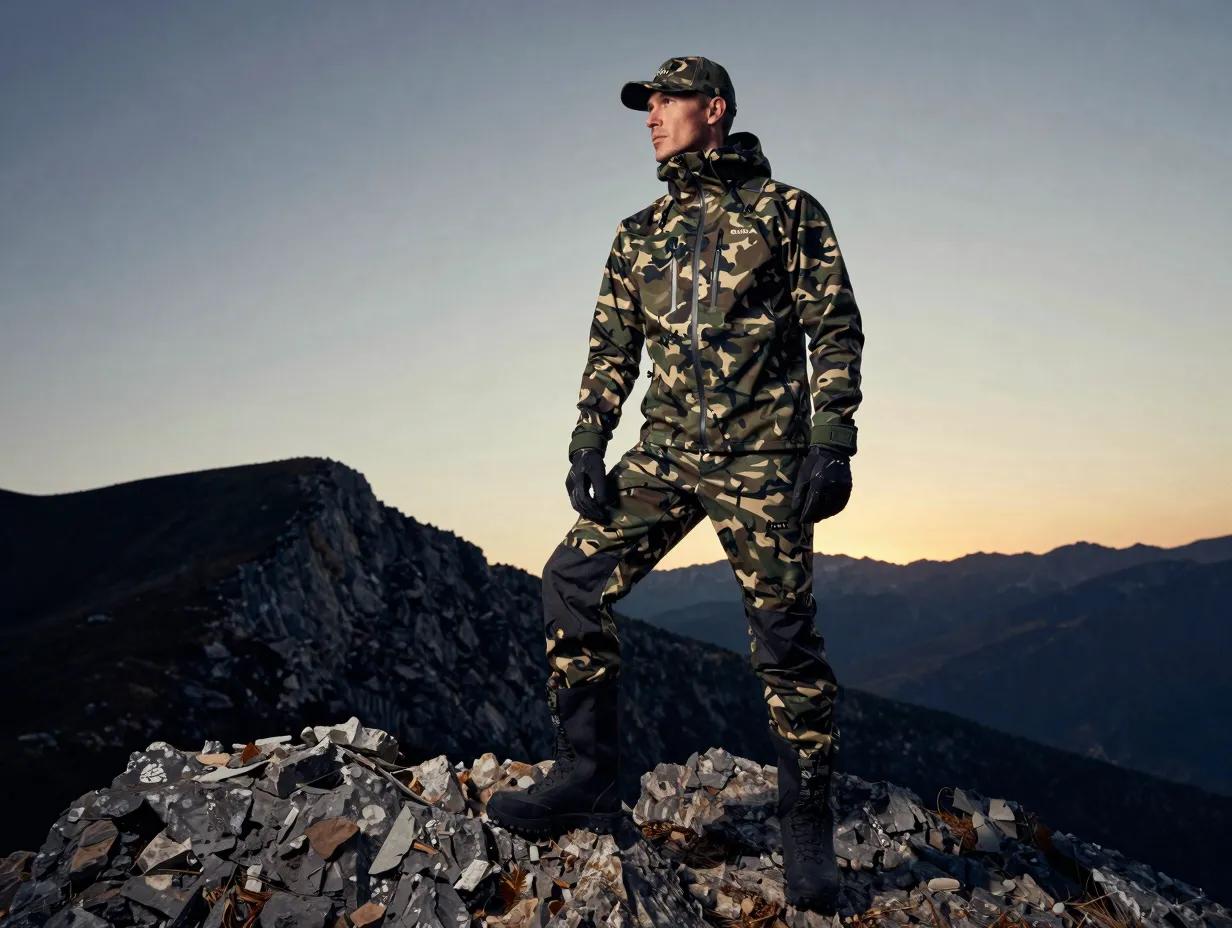
For hunters who want a fully integrated, performance-matched outfit, a head-to-toe premium brand camo system from a single manufacturer removes the guesswork. Brands like Sitka, KUIU, Stone Glacier, and Duck Camp have built complete ecosystems of camo clothing that share patterns, fit systems, and layering compatibility. [2]
Why a single-brand system works:
- Pattern consistency across all layers eliminates mismatched camo that breaks up the silhouette incorrectly
- Fit is engineered to work together, base layers do not bunch under midlayers; shells accommodate bulky insulation without restricting draw or cast
- Warranty and customer service are unified
Brand breakdown:
- Sitka Gear: Known for GORE-TEX integration and Optifade camo patterns designed with Hide & Seek Technologies. Best for mountain and big-game hunting. [2]
- KUIU: Lightweight focus, popular with backcountry elk and mule deer hunters. Uses their own Vias and Super Down patterns.
- Stone Glacier: Ultralight philosophy with durable fabrics; excellent for multi-day pack hunts.
- Duck Camp: Focused on waterfowl and fishing crossover; excellent for hunters who also spend time on the water. [5]
The investment in a premium system is substantial, a full Sitka or KUIU kit can run $800 to $1,500 or more, but the performance gap over budget alternatives is real and measurable in the field. [2][5]
4. Budget-Friendly Tactical Camo Outfit
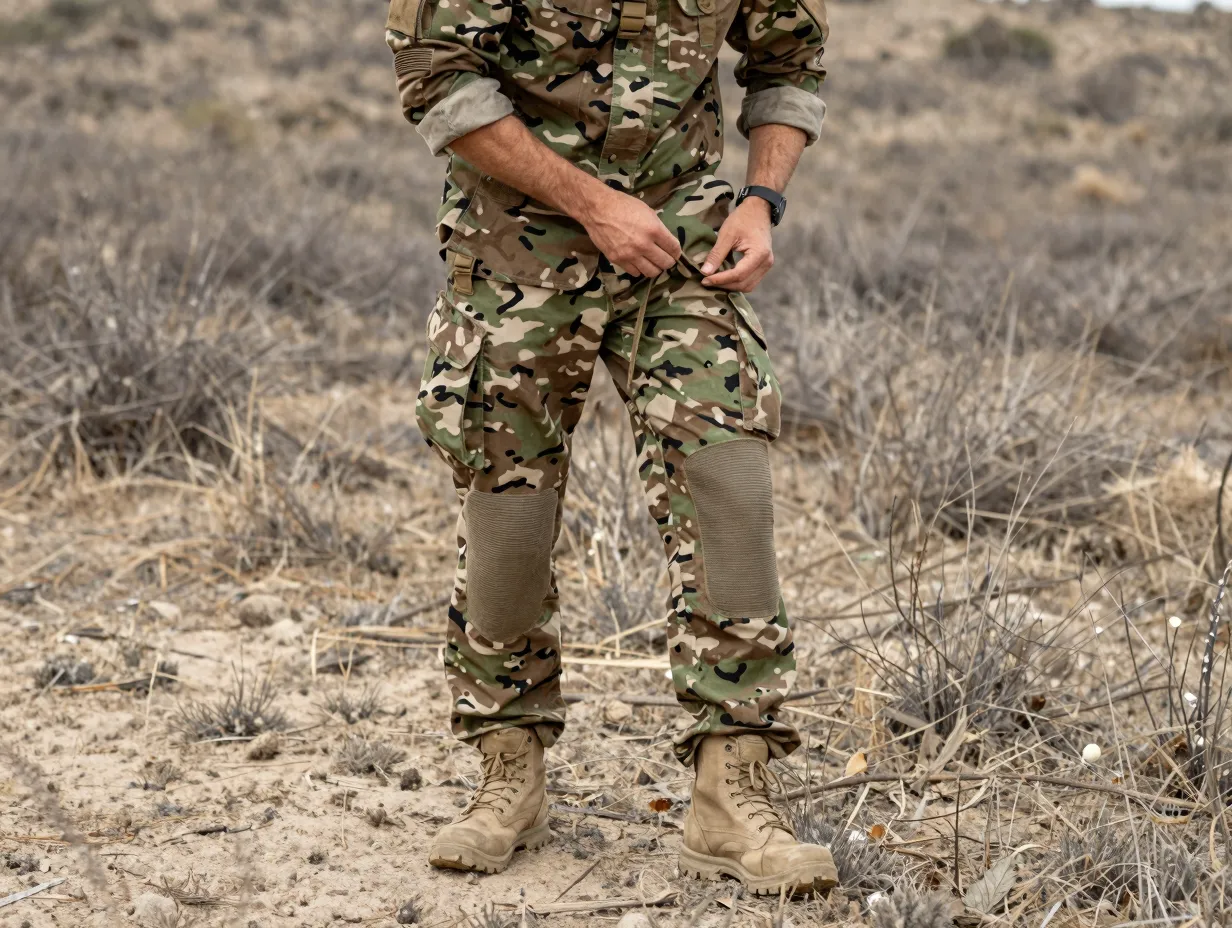
Not every hunter or angler needs to spend four figures on clothing. The budget-friendly tactical camo outfit proves that strategic shopping can deliver solid field performance without draining the gear fund.
Best value pieces for 2026:
- Tactical camo pants: Brands like Tru-Spec, Propper, and Helikon-Tex offer military-cut camo pants with reinforced knees and multiple cargo pockets for under $60. [9]
- Camo field shirt: A ripstop nylon or cotton-poly blend camo shirt from brands like Wrangler Outdoor, Carhartt, or 5.11 Tactical provides durability at a fraction of premium brand pricing.
- Camo base layer: Walmart’s Magellan Outdoors or Amazon Essentials camo base layers offer acceptable moisture management for moderate-temperature hunts.
- Camo boots: LaCrosse or Rocky budget lines deliver waterproof protection for under $120.
Where to invest vs. where to save:
| Gear Category | Spend More | Save Here |
|---|---|---|
| Boots | Yes, foot health matters most | No |
| Base Layer | Merino worth the cost in cold | Synthetic fine for warm seasons |
| Outer Shell | Yes if hunting in rain or snow | No |
| Camo Pants | No, budget options perform well | Yes |
The tactical camo aesthetic also translates well to fishing trips where a military-inspired look is preferred over a branded outdoor style. [9]
5. Waterproof Silent Camo Outfit for Rainy Hunts
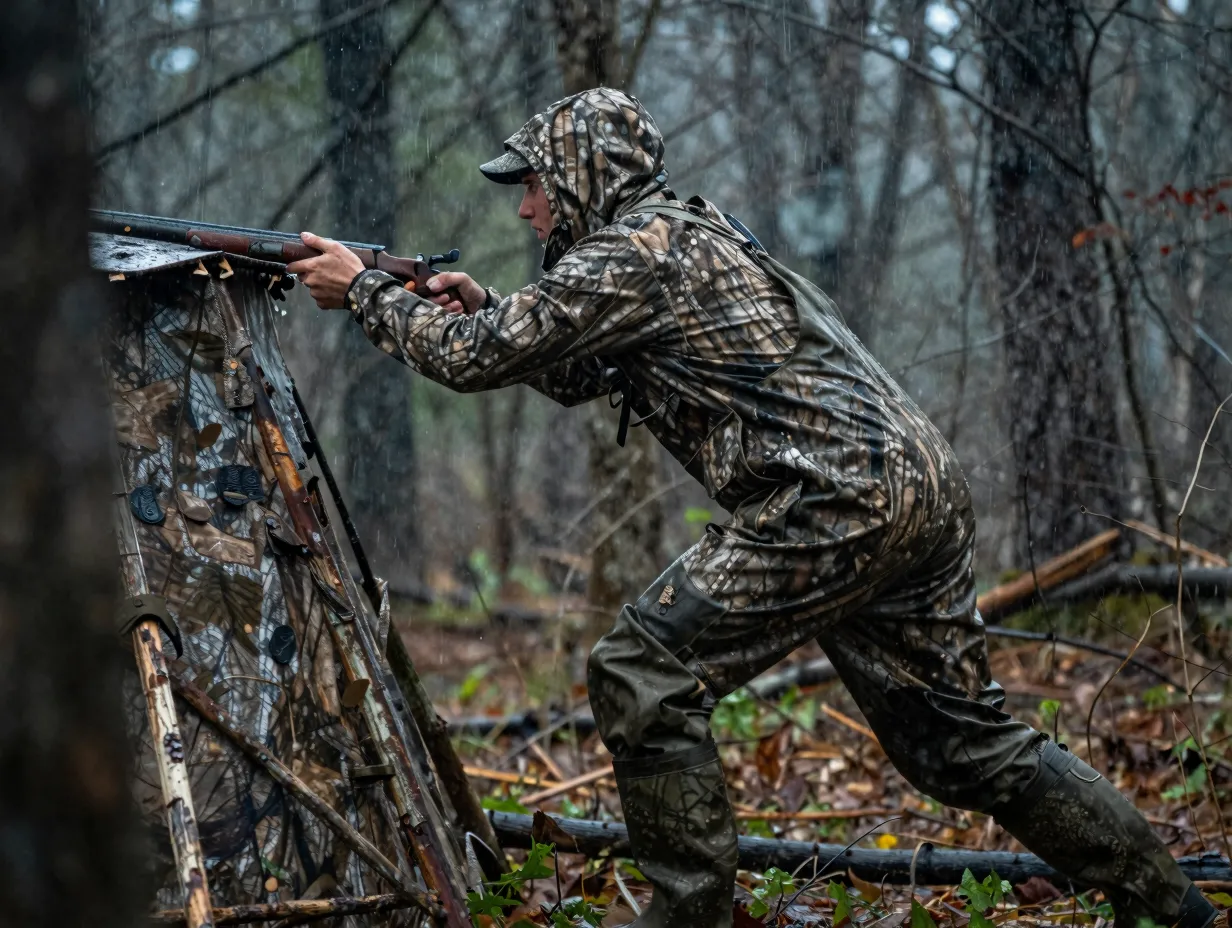
Rain does not cancel a good hunt, but the wrong gear does. The waterproof silent camo outfit is engineered specifically for wet conditions, whether that means a rainy whitetail morning in the Southeast or a gray, drizzly salmon river in the Pacific Northwest.
Critical features for this outfit:
- Waterproof shell jacket: Must have a DWR-treated face fabric plus a waterproof breathable membrane (Gore-Tex, eVent, or similar). Taped seams are non-negotiable. [5]
- Silent fabric: Standard waterproof fabrics are notoriously loud against brush. Look for soft-shell camo jackets with a mechanical stretch membrane or brushed face fabric that dampens noise. Sitka’s Stormfront series and Drake Waterfowl’s MST line are widely cited for their quiet waterproof performance. [2]
- Waterproof camo bibs or pants: Paired with the jacket, bibs offer better wet-weather coverage than pants alone, especially when sitting in a ground blind or a boat.
- Rubber or neoprene camo boots: For truly wet conditions, flooded timber, tidal marshes, or rainy creek crossings, rubber boots beat leather every time.
Scent control in wet conditions: Rain actually helps suppress human scent dispersal in many scenarios, but wet wool or synthetic fabrics can still carry odor. Scent-control treated camo from ScentLok or Scent Blocker adds an extra layer of concealment. [9]
This outfit is the go-to for duck hunters, turkey hunters in spring rain, and trout fishermen wading cold rivers. [5]
6. Waterfowl-Specific Camo Outfit
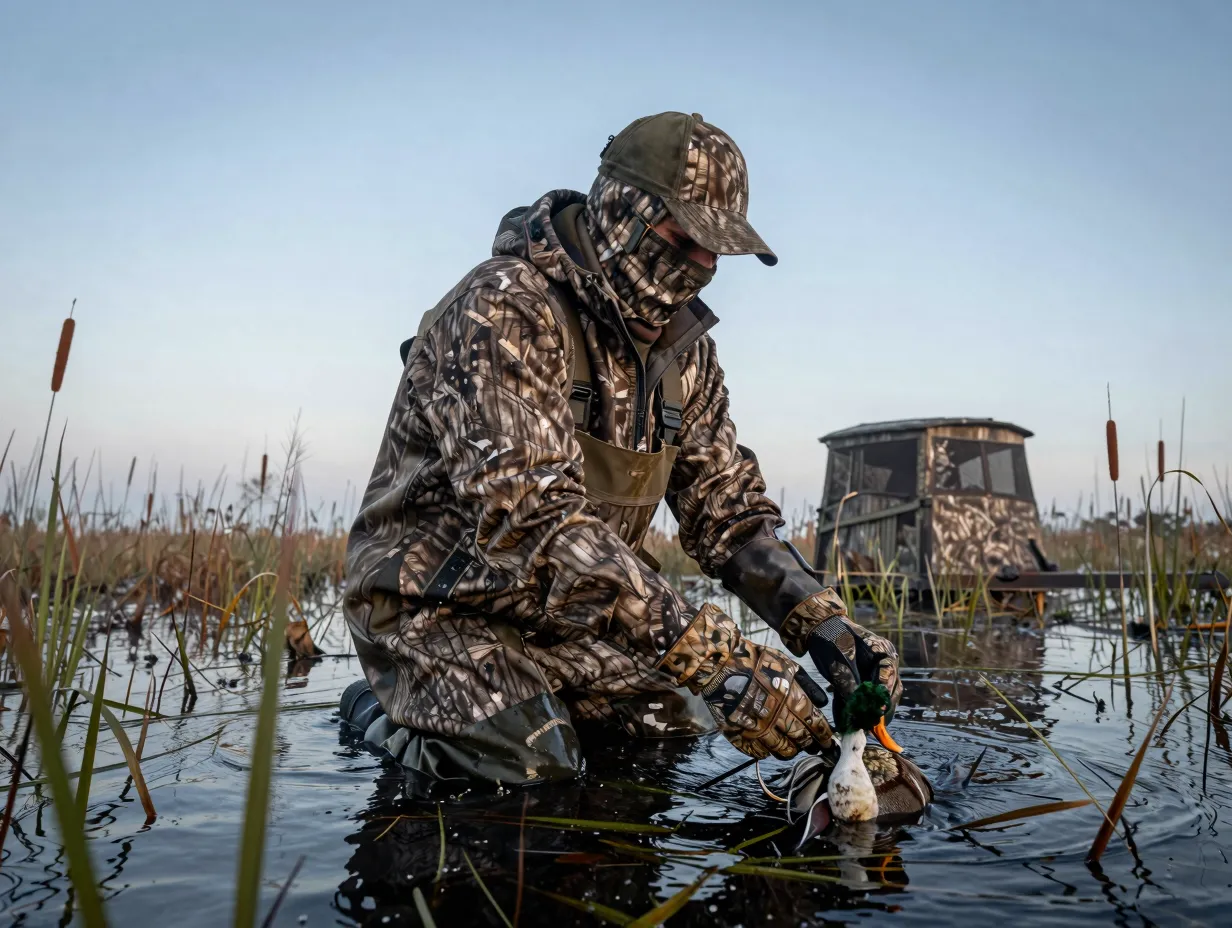
Duck and goose hunting demands a unique set of camo requirements that differ significantly from upland or big-game hunting. The waterfowl-specific camo outfit is built for marshes, flooded fields, and open water, environments where standard woodland camo stands out badly.
Pattern selection for waterfowl:
- Mossy Oak Shadow Grass Blades and Realtree Max-5 are the industry standards for marsh and cattail environments [1]
- Optifade Marsh from Sitka is engineered specifically for waterfowl hunters using science-backed concealment principles [2]
- Snow goose hunters in open fields benefit from white or light grey patterns
Key pieces for the waterfowl camo outfit:
- Insulated camo waders (neoprene for cold water; breathable for mild conditions)
- Camo layout blind jacket or layout coat for field hunting
- Camo face mask or face paint, waterfowl have excellent color vision and detect skin tones easily
- Camo gloves rated for cold and wet conditions
- Camo neoprene chest waders for flooded timber
Duck Camp’s waterfowl line is specifically designed for this crossover between hunting and fishing environments, making it a strong choice for hunters who also spend time on the water. [5]
7. Fishing-First Camo Outfit for Boat and Shore Anglers
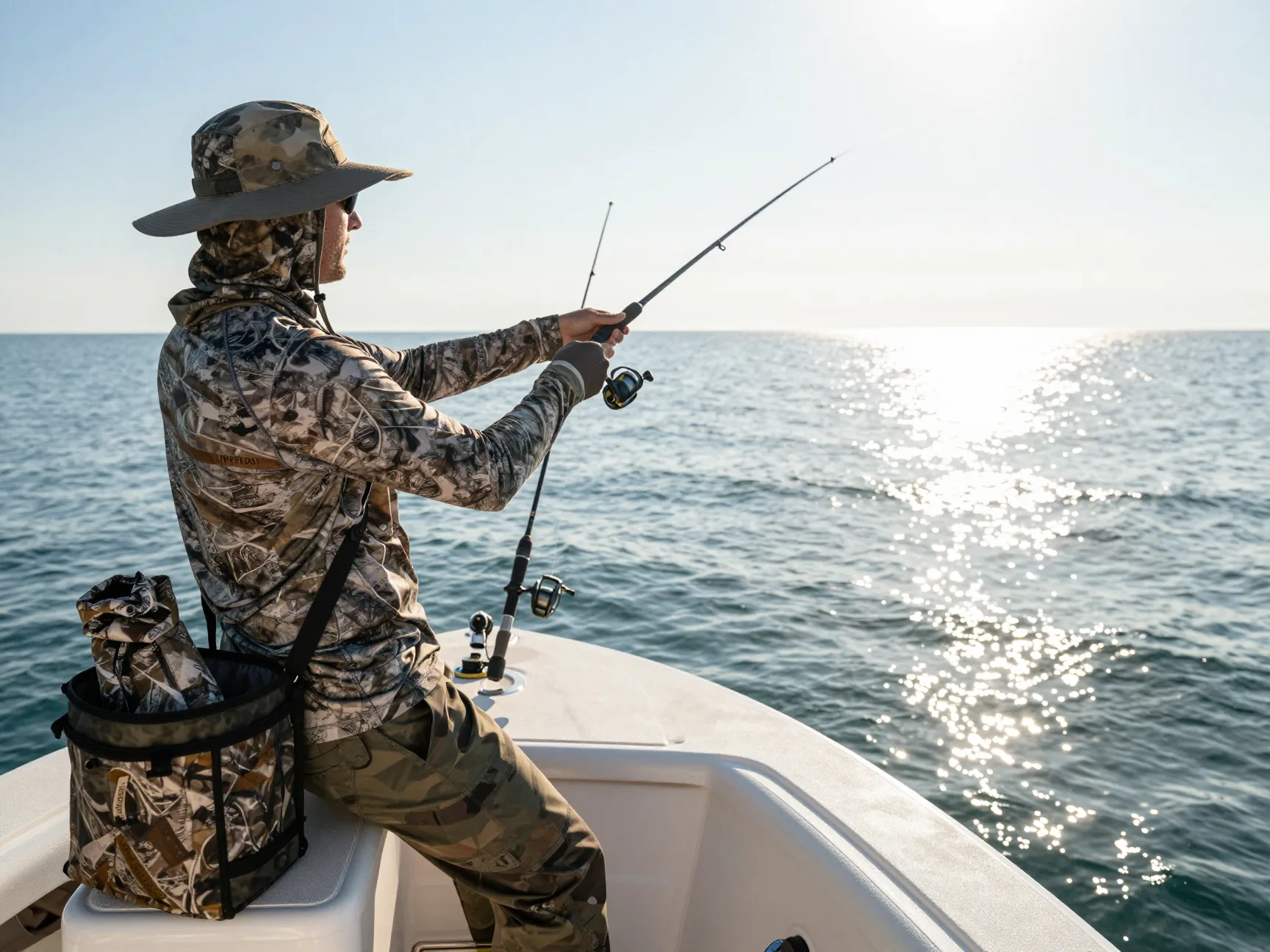
Camouflage for fishing is a growing category that blends outdoor performance wear with concealment patterns suited to aquatic environments. The fishing-first camo outfit for boat and shore anglers prioritizes sun protection, moisture management, and freedom of movement over the scent control and silence features that dominate hunting-focused gear.
Core pieces:
- Camo performance fishing shirt: Long-sleeve UPF 50+ shirts in camo patterns from Duck Camp, Realtree Fishing, or Costa Del Mar’s apparel line. These shirts wick sweat, dry fast, and protect against prolonged sun exposure. [1][5]
- Camo fishing pants or shorts: Lightweight, quick-dry nylon camo pants with reinforced knees for kneeling on boat decks. Zip-off convertible styles are practical for changing conditions.
- Camo fishing hat: Wide-brim camo hats with neck flaps for full sun coverage, or low-profile camo caps for casual bank fishing.
- Camo rain jacket: A packable, waterproof camo jacket stowed in a tackle bag for unexpected weather changes on the water.
Why camo matters for fishing: While fish do not respond to human camouflage the same way game animals do, camo patterns on fishing apparel reduce glare-based visibility from birds and other wildlife, and the patterns have become a strong cultural identifier for the serious angler. More practically, the technical fabrics used in fishing camo outperform standard cotton in every measurable way. [5][9]
8. Upland Bird Hunting Camo Outfit
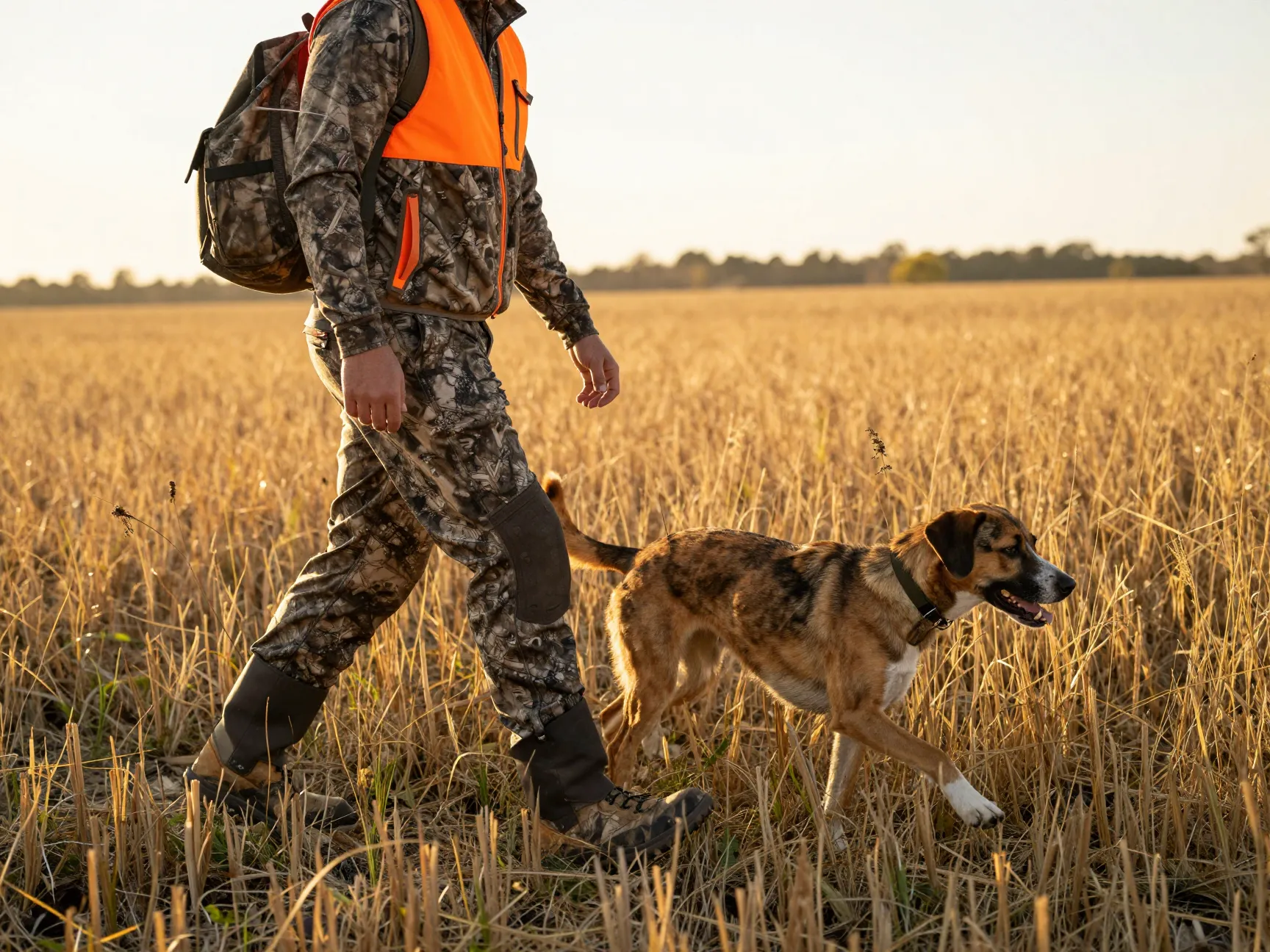
Pheasant, quail, grouse, and chukar hunters face unique terrain challenges, dense grass, thorny brush, and fast-moving dogs, that demand a purpose-built camo outfit. The upland bird hunting camo outfit balances concealment with durability and mobility.
Signature pieces:
- Briar-proof camo pants or chaps: Heavy-duty woven nylon or canvas-faced camo pants that resist thorns and burrs without tearing. Filson, Browning, and Beretta all offer respected options. [9]
- Camo upland vest: A blaze orange and camo combination vest with a rear game bag, shell loops, and front pockets for calls and snacks. Blaze orange is legally required in most states during upland seasons. [3]
- Camo long-sleeve shirt: A mid-weight camo shirt that breathes during active walking but provides enough warmth for cool fall mornings.
- Camo upland boots: Lightweight, ankle-supporting boots with aggressive soles for uneven terrain. Snake-proof models are recommended in the southern and western United States. [3]
Blaze orange and camo, the legal reality: Most states require a minimum amount of blaze orange for upland bird and deer hunters during firearm seasons. West Virginia, for example, mandates 400 square inches of blaze orange visible from all sides during deer firearms seasons. [3] Always check local regulations before finalizing an upland camo outfit.
How to Choose the Right Outfit from the 8 Essential Camo Outfit Ideas for Men on Hunting or Fishing Trips
Selecting the correct outfit from the 8 essential camo outfit ideas for men on hunting or fishing trips comes down to answering four questions before the season opens:
1. What is the target species and environment?
Big-game mountain hunting demands the cold-weather layered system or a premium brand system. Waterfowl hunting requires the waterfowl-specific outfit. Fishing from a boat in July calls for the lightweight kit or the fishing-first outfit.
2. What is the expected weather range?
Temperature swings of 30 degrees or more in a single day, common in the Rockies and the Great Plains, demand layering flexibility. The cold-weather layered system handles this best. Stable warm weather favors the lightweight kit.
3. What is the budget?
The budget-friendly tactical outfit delivers strong value under $250 total. Premium brand systems from Sitka or KUIU deliver best-in-class performance but require a significantly larger investment. [2][9]
4. How important is silence and scent control?
Archery hunters at close range need the quietest, most scent-controlled fabrics available. Boat fishermen and upland bird hunters can prioritize durability and weather resistance over scent control.
Camo Pattern Guide by Environment
Matching the pattern to the terrain is as important as choosing the right outfit type. The following breakdown covers the most common environments hunters and anglers encounter in North America:
- Dense hardwood forest (fall): Realtree Edge, Mossy Oak Break-Up Country, Sitka Optifade Subalpine
- Open marsh and wetlands: Mossy Oak Shadow Grass Blades, Realtree Max-5, Sitka Optifade Marsh
- Western mountain terrain: KUIU Vias, Sitka Optifade Open Country, Stone Glacier Solo
- Early-season green canopy: Realtree AP Green, Mossy Oak Obsession
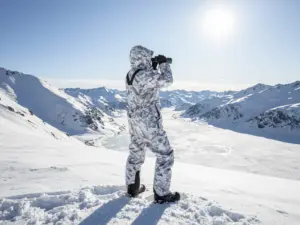
- Snow and winter fields: Realtree Snow, white overgarments, Sitka Optifade Open Country in snow conditions
- Open water and boat fishing: Realtree Fishing patterns, Duck Camp River patterns [1][5]
Camo Outfit Maintenance and Care
Even the best camo outfit loses performance without proper care. A few non-negotiable maintenance habits extend gear life and preserve technical properties:
- Wash camo clothing in scent-free, UV-brightener-free detergent (standard detergents leave UV-brightening agents that make clothing glow under UV light, visible to deer and elk)
- Re-apply DWR spray to waterproof shells after every five to ten washes
- Store camo clothing in sealed bags with natural scent wafers (cedar, pine, or earth) to maintain scent discipline between hunts
- Inspect seams and zippers on waterproof shells before each season; re-tape any delaminating seams
- Air dry rather than machine dry merino wool base layers to prevent shrinkage and fiber damage [9]
Conclusion
The 8 essential camo outfit ideas for men on hunting or fishing trips covered in this guide represent a complete toolkit for every major outdoor scenario a hunter or angler will encounter in 2026 and beyond. From the breathable lightweight kit built for July boat fishing to the technically advanced cold-weather layered system for late-season elk hunts, each outfit has a specific purpose, and wearing the right one makes a measurable difference in comfort, concealment, and success.
Actionable next steps:
- Identify the two or three hunting or fishing scenarios most relevant to the coming season and select the corresponding outfits from this list
- Audit the current gear closet against the recommended pieces, note gaps and prioritize replacements by safety and performance impact first
- Invest in boots and outer shells before cutting costs on shirts and pants, the extremities and the outermost layer carry the highest performance burden
- Match the camo pattern to the specific terrain being hunted, not just the general region
- Check state hunting regulations for blaze orange requirements before finalizing any upland or deer hunting outfit [3]
The right camo outfit does not guarantee a filled tag or a full cooler, but the wrong one can guarantee an early trip home. Start with the environment, build outward from the base layer, and let function drive every buying decision.
References
[1] Realtree – https://realtree.com/
[2] Best Hunting Clothing Brands – https://fieldandstream.com/stories/hunting/big-game-hunting/best-hunting-clothing-brands
[3] Hunting – https://wvdnr.gov/hunting/
[4] Watch – https://www.youtube.com/watch?v=LDsoDhJ02ag
[5] Best Camo Hunting Clothes For Men – https://www.nauticamalibutri.com/best-camo-hunting-clothes-for-men/
[6] Watch – https://www.youtube.com/watch?v=JT4MdeKLpo8
[7] Watch – https://www.youtube.com/watch?v=v25TMrS7T0M
[8] Watch – https://www.youtube.com/watch?v=Ky66ZSudItU
[9] The 12 Best Camo Hunting Clothes Review – https://hunterclothes.com/the-12-best-camo-hunting-clothes-review/