9 Non-Negotiable Items for Your Ultimate Camping Survival Kit
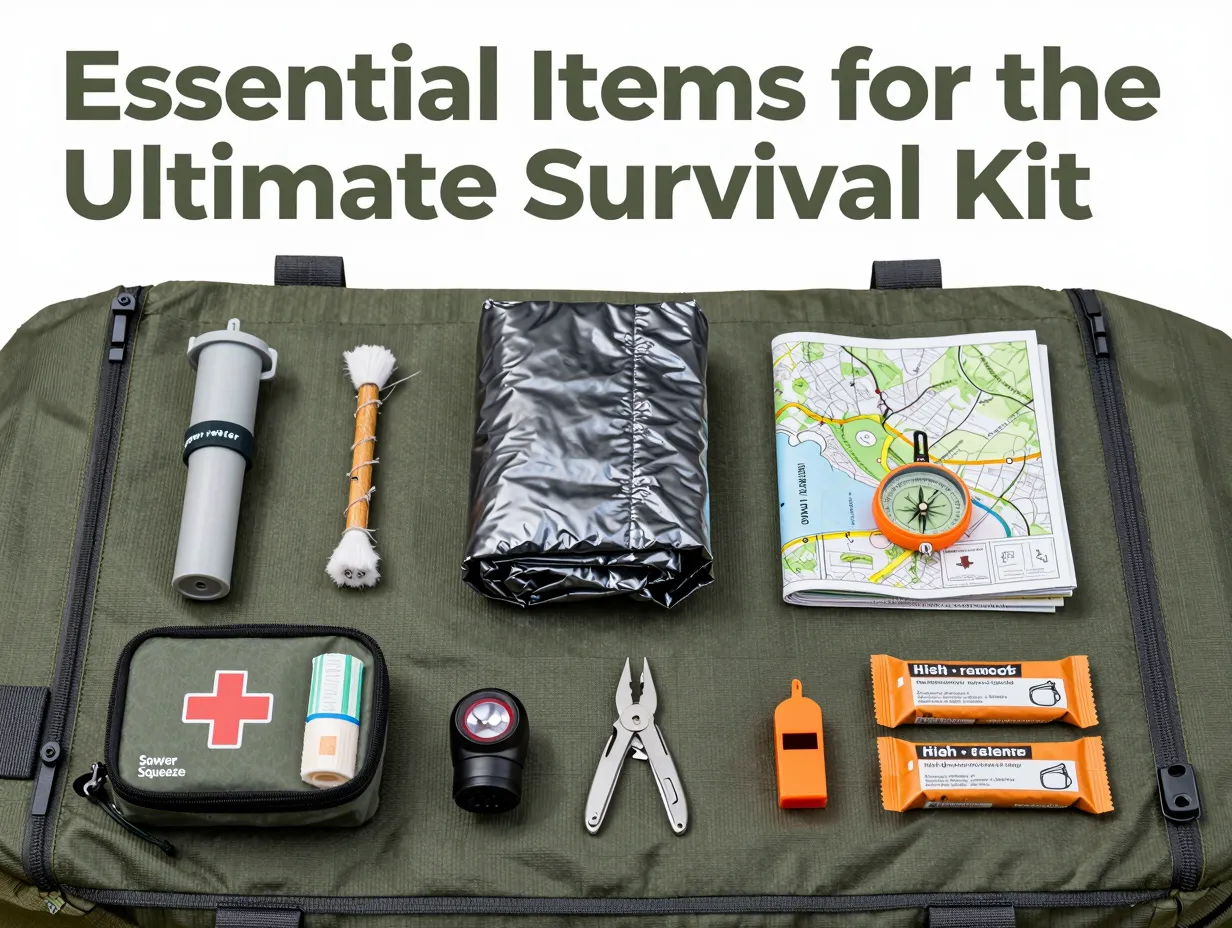
Every year, search and rescue teams in the United States respond to more than 250,000 incidents in wilderness and backcountry settings, and the majority of those emergencies involve people who believed they were prepared. A well-stocked camping survival kit is not a luxury or an afterthought. It is the single most reliable line of defense between a minor inconvenience and a life-threatening situation. The 9 Non-Negotiable Items for Your Ultimate Camping Survival Kit outlined in this guide are drawn from established wilderness survival principles, emergency preparedness standards, and the hard-won experience of seasoned outdoor professionals. Whether heading out for an overnight trip or a multi-week backcountry expedition, these items belong in every pack, every time.
Disclosure: This post contains affiliate links. As an Amazon Associate, we earn from qualifying purchases, and at no extra cost to you.
Key Takeaways
- The 9 Non-Negotiable Items for Your Ultimate Camping Survival Kit cover the five core survival priorities: water, fire, shelter, navigation, and medical care.
- Redundancy matters, carry at least two methods for fire-starting and water purification.
- Weight and packability should never come at the cost of function; choose gear that performs under real field conditions.
- A survival kit is only as effective as the person using it, basic skills training amplifies every item on this list.
- Regularly inspect and refresh kit contents; expired medications, depleted batteries, and corroded tools are common failure points.
Why Every Camper Needs the 9 Non-Negotiable Items for Your Ultimate Camping Survival Kit
The outdoors rewards preparation and punishes complacency. Weather shifts without warning. Trails become disorienting after dark. Injuries happen on the most routine hikes. The gap between a manageable situation and a genuine emergency often comes down to what is, or is not, inside a pack.
The concept of a “survival kit” has evolved significantly over the decades. Early versions were military-derived and focused almost entirely on signaling and fire. Modern wilderness medicine, Leave No Trace ethics, and advances in ultralight gear have transformed the survival kit into a precision tool set. The 9 items listed below are not arbitrary. Each one addresses a documented, statistically common failure point in outdoor emergency scenarios.
“The best survival gear is the gear you actually carry, and actually know how to use.”
Before diving into each item, it helps to understand the framework behind the selection. Survival priorities in the field follow a predictable hierarchy: protection from the elements, signaling for rescue, water procurement, fire, and food. The 9 Non-Negotiable Items for Your Ultimate Camping Survival Kit map directly onto this hierarchy, ensuring no critical gap is left unaddressed.
What Makes an Item “Non-Negotiable”
Not every piece of gear earns that designation. An item qualifies as non-negotiable when:
- Its absence has directly contributed to documented wilderness fatalities or serious injuries.
- It addresses a need that cannot be reliably improvised from natural materials alone.
- It is compact and lightweight enough that there is no practical justification for leaving it behind.
- It serves multiple survival functions, increasing its value-to-weight ratio.
With that standard established, here are the nine items every camping survival kit must contain.
The Complete Breakdown: 9 Non-Negotiable Items for Your Ultimate Camping Survival Kit
1. Water Filtration and Purification System
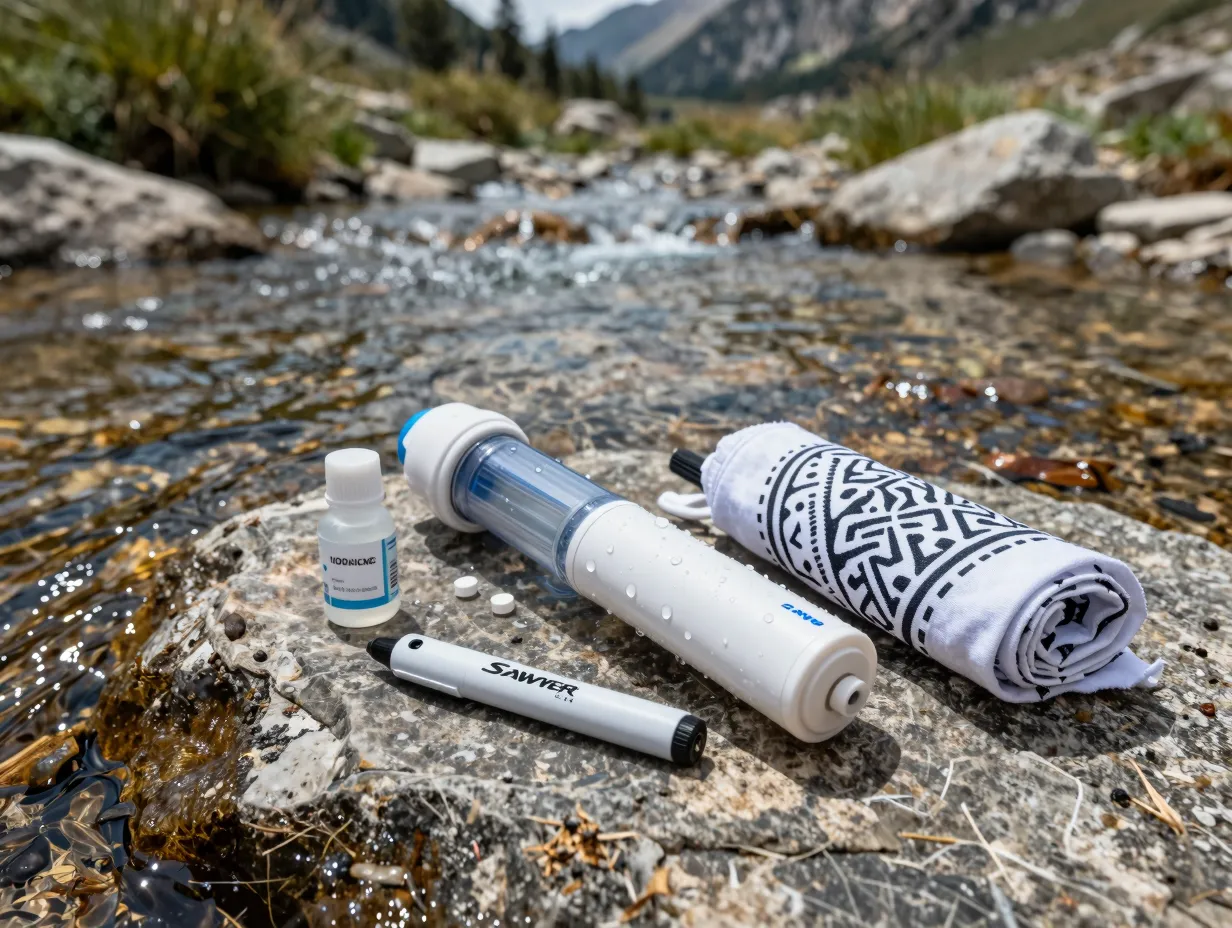
Dehydration and waterborne illness are among the most common threats in backcountry environments. Natural water sources, even those that appear crystal clear, can harbor Giardia, Cryptosporidium, bacteria, and viruses. A reliable water filtration and purification system is the first line of defense.
Best options to consider:
- Hollow-fiber squeeze filters (e.g., Sawyer Squeeze or LifeStraw) for fast, lightweight filtration
- Iodine or chlorine dioxide tablets as a chemical backup
- UV purification pens for viral coverage in international or high-risk water sources
The key principle here is redundancy. Carry at least two purification methods. Filters can freeze and crack in cold weather; tablets can expire or get wet. A dual-method approach costs very little in weight and could prevent a severe gastrointestinal crisis far from medical care.
2. Fire-Starting Kit
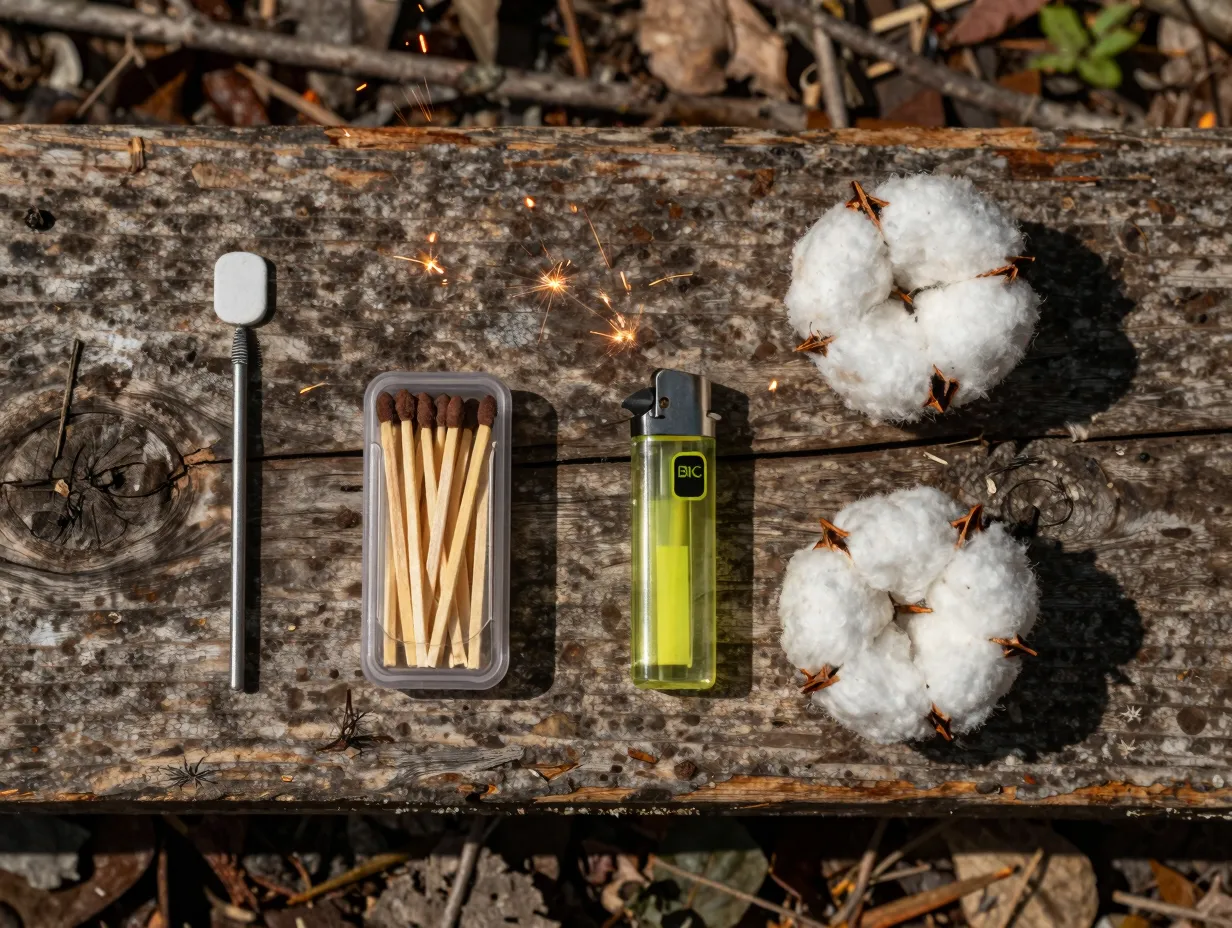
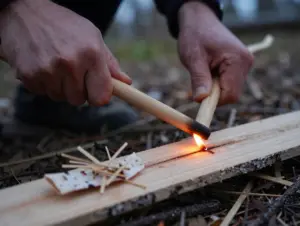
Fire serves four critical survival functions: warmth, water boiling, signaling, and psychological comfort. A fire-starting kit should contain multiple ignition methods because no single method is reliable across all weather conditions.
A complete fire-starting kit includes:
- A ferrocerium (ferro) rod, produces sparks at over 5,000°F and works when wet
- Waterproof matches in a sealed container
- A lighter (BIC-style lighters are reliable and inexpensive)
- Tinder material such as waxed cotton balls, fatwood shavings, or commercial fire starters
The ferro rod is the workhorse of the kit. Unlike lighters, it does not run out of fuel unexpectedly and functions in rain, wind, and sub-zero temperatures. However, it requires practice. Spend time at home mastering the technique before relying on it in the field.
Tinder selection matters enormously. Natural tinder (dry grass, birch bark, cattail fluff) is often unavailable in wet conditions. Carrying pre-made tinder eliminates one of the most common failure points in emergency fire-starting.
3. Emergency Shelter
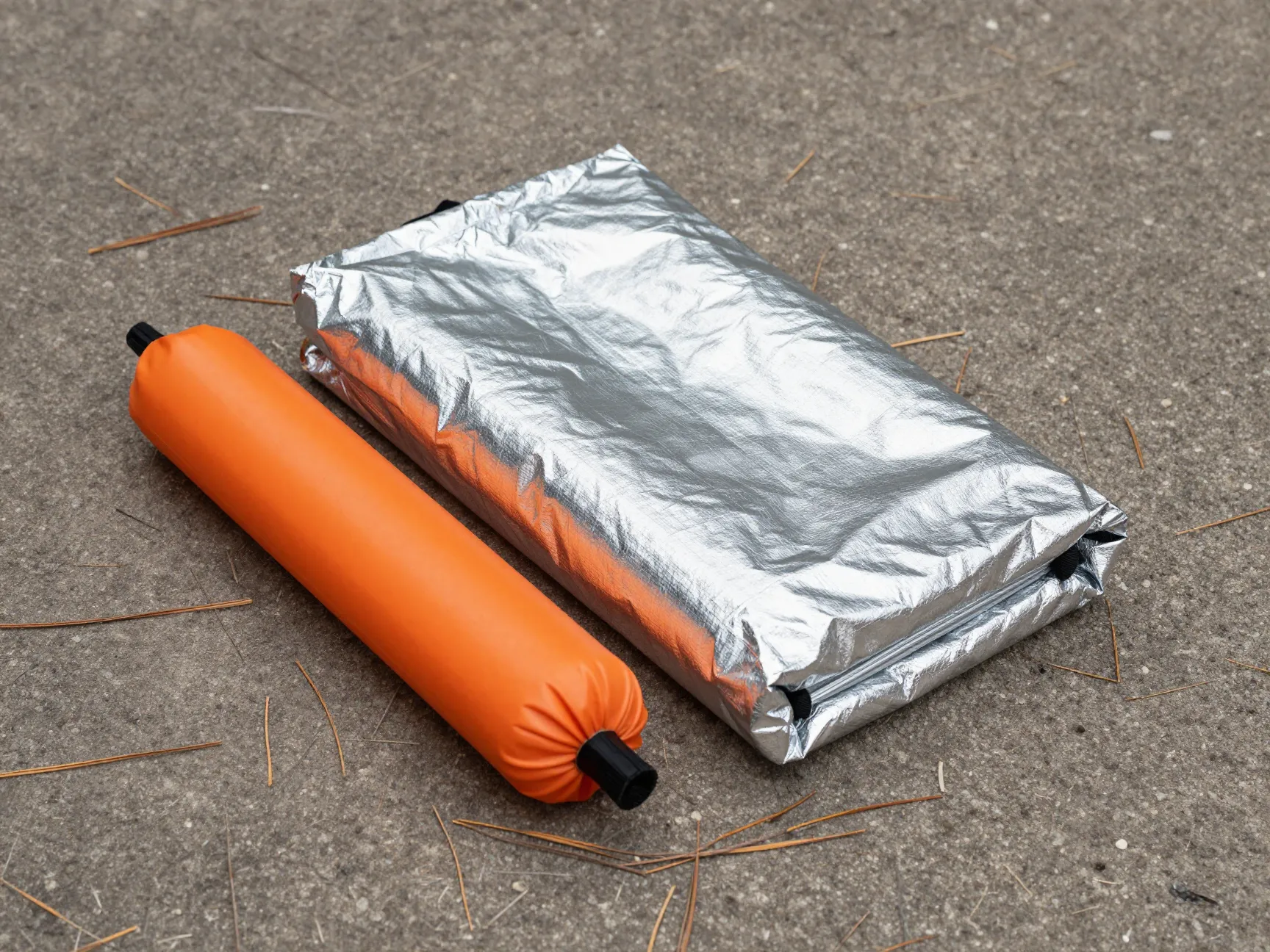
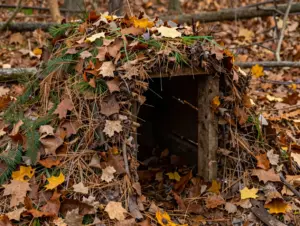
Hypothermia can develop at temperatures as mild as 50°F (10°C) when wind and moisture are present. An emergency shelter can prevent heat loss rapidly and requires no setup skills beyond unfolding.
Core emergency shelter options:
| Shelter Type | Weight | Warmth | Ease of Use |
|---|---|---|---|
| Mylar emergency blanket | Under 2 oz | High (reflects 90% body heat) | Immediate |
| Bivy sack (reflective) | 3-4 oz | Very high | Simple |
| Emergency tube tent | 8-12 oz | Moderate-high | Moderate |
The mylar emergency blanket is the minimum standard. It weighs almost nothing, costs under two dollars, and has saved lives in documented survival scenarios. A slightly heavier reflective bivy sack offers more comprehensive protection and is worth the marginal weight penalty for trips lasting more than a day.
Do not confuse emergency shelters with camping tents. The two serve different purposes. An emergency shelter is a last-resort tool; a camping tent is primary shelter. Both belong in a complete kit for any serious backcountry trip.
4. Navigation Tools
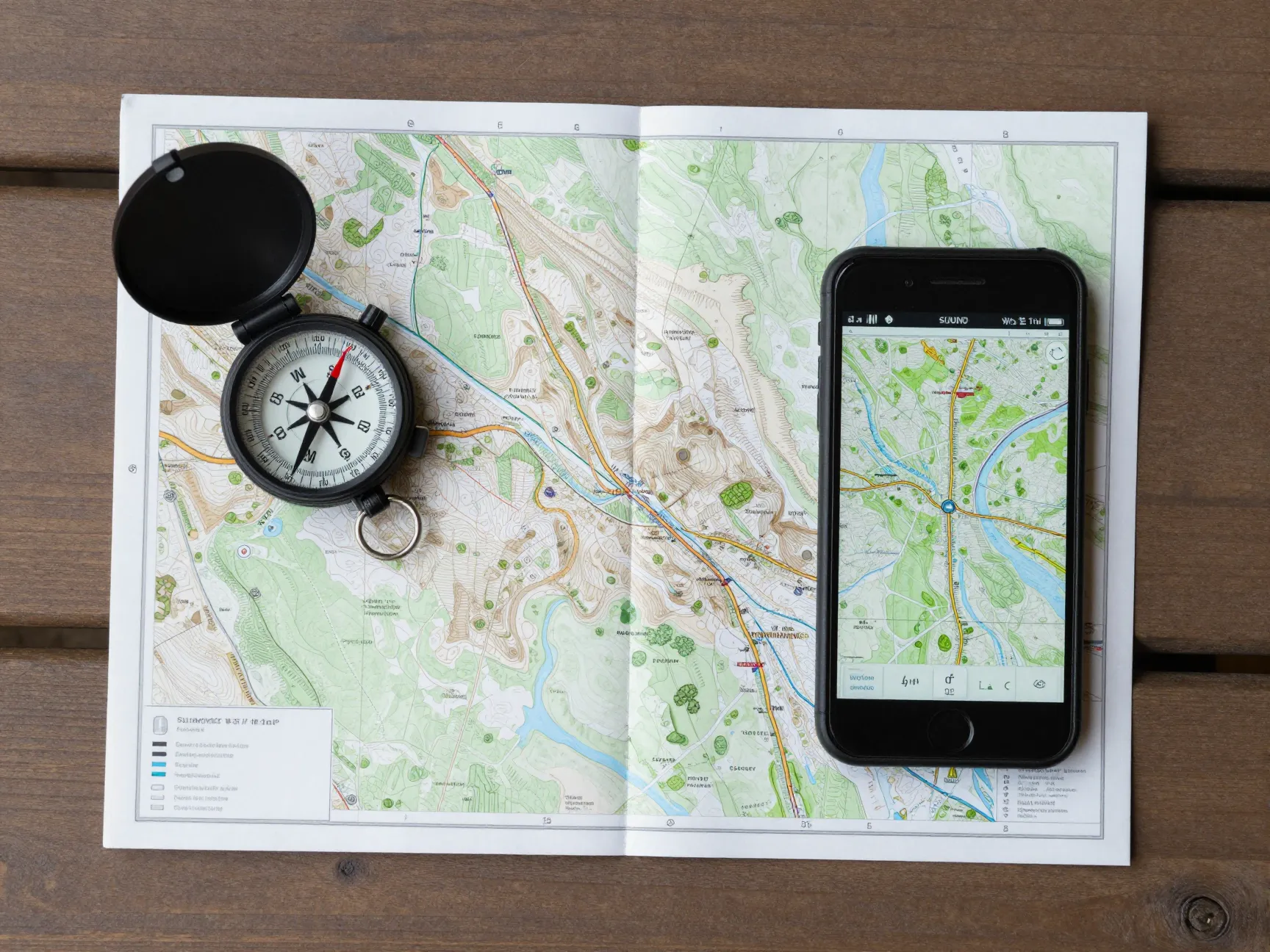
GPS devices fail. Batteries die. Satellite signals drop in deep canyons and dense forest canopy. Navigation tools in a survival kit must function independently of electronics.
The non-negotiable navigation pair:
- A detailed topographic map of the specific area being visited (waterproofed or in a dry bag)
- A baseplate compass with a declination adjustment feature
These two tools, used together, allow any camper to determine their position, identify terrain features, and navigate toward safety even in complete darkness or zero-visibility conditions. The skill of map-and-compass navigation is not difficult to learn but does require deliberate practice before it is needed.
Digital backup: A fully charged GPS device or a downloaded offline map on a smartphone (in airplane mode to conserve battery) adds a valuable layer. However, digital tools are supplements, not replacements, for analog navigation.
“A map and compass never run out of battery. They are the most reliable navigation tools ever invented.”
5. First Aid Kit
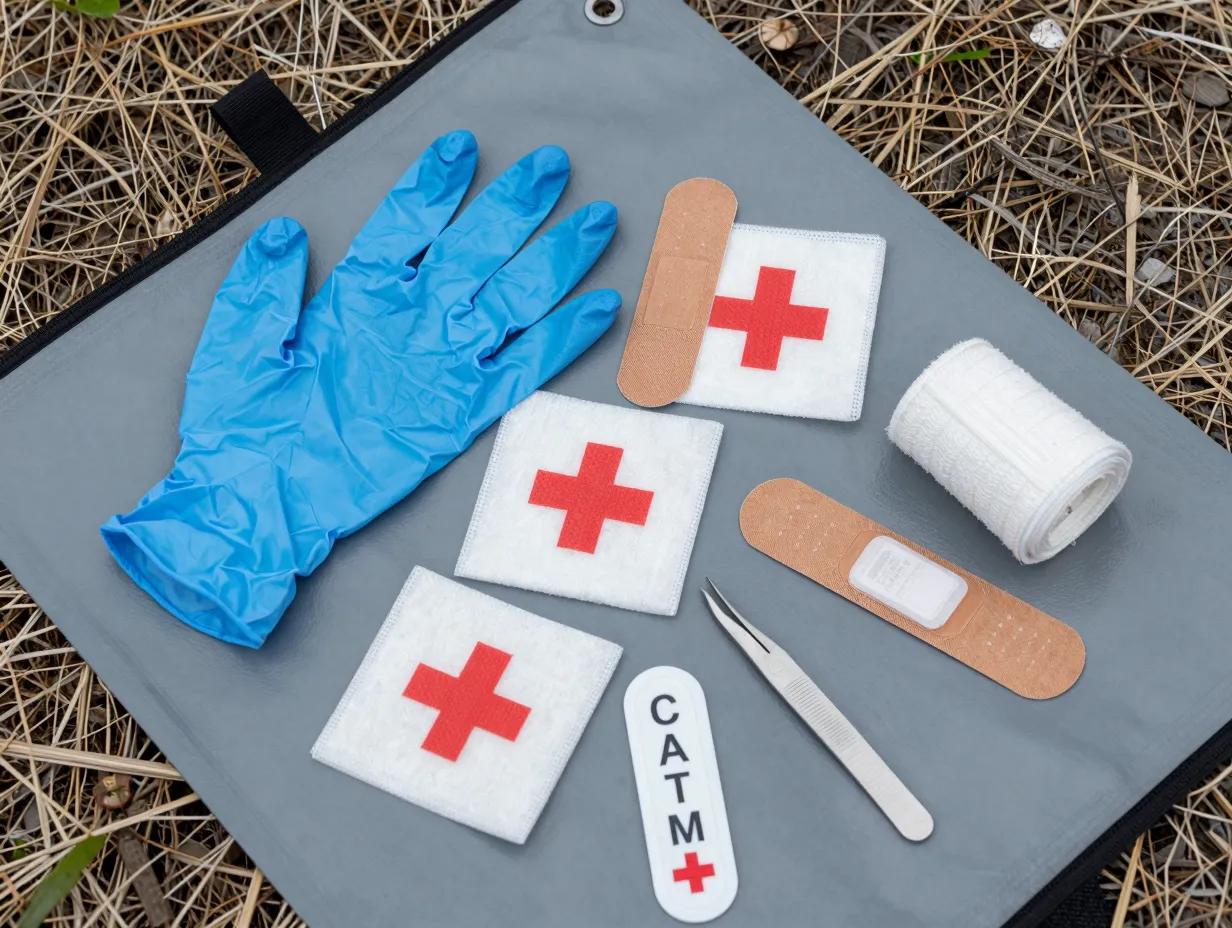
Wilderness first aid scenarios differ significantly from urban medical emergencies. Response times for professional help are measured in hours or days, not minutes. A wilderness-grade first aid kit must address the injuries and conditions most likely to occur in remote environments.
Essential components of a wilderness first aid kit:
- Adhesive bandages in multiple sizes
- Sterile gauze pads and medical tape
- Elastic bandage (ACE wrap) for sprains and splinting
- Antiseptic wipes and antibiotic ointment
- Blister treatment (moleskin, hydrocolloid pads)
- Nitrile gloves (at least two pairs)
- SAM splint (moldable aluminum splint)
- Tourniquet (CAT or SOFTT-W style)
- Tweezers for splinter and tick removal
- Oral rehydration salts
- Personal prescription medications (minimum 3-day supply)
- Wilderness first aid reference card
Pre-packaged first aid kits marketed for camping are often inadequate. They typically lack tourniquets, SAM splints, and sufficient blister treatment. Build or supplement a kit based on the specific environment, trip duration, and group size.
6. Multi-Tool or Fixed-Blade Knife
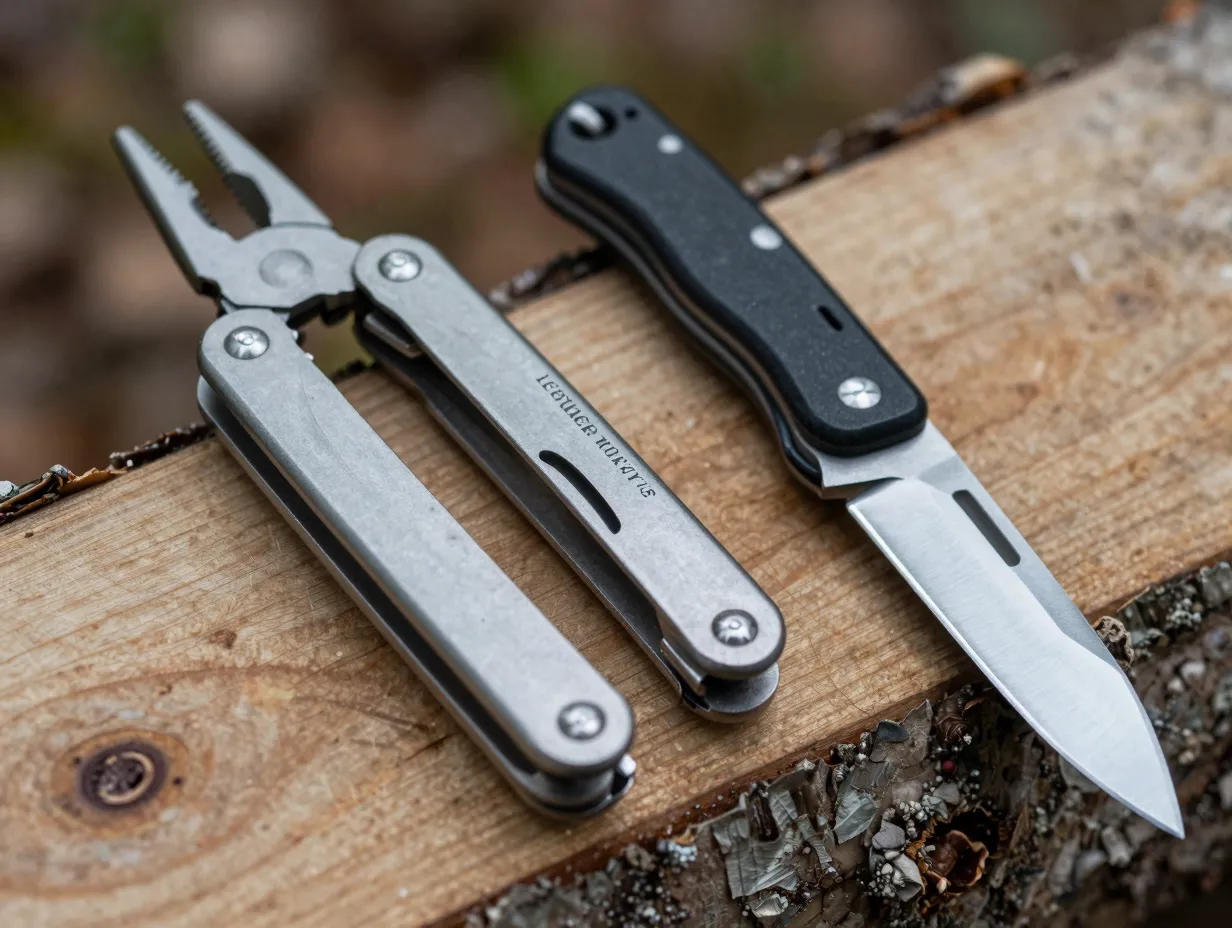
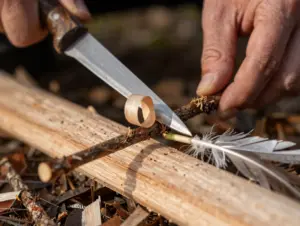
A quality cutting tool is one of the most versatile items in any survival kit. It is used for food preparation, gear repair, first aid (cutting bandages, clothing), fire preparation (feathering wood for tinder), and shelter construction.
Multi-tool vs. fixed-blade knife, when to choose each:
A multi-tool (such as a Leatherman Wave or Victorinox SwissTool) provides pliers, screwdrivers, scissors, a saw, and a blade in a single compact package. It is the better choice for general camp use and gear repair.
A fixed-blade knife offers superior strength for heavy-duty tasks like batoning wood, constructing shelter, and processing game. A blade length of 3.5 to 5 inches strikes the best balance between utility and portability.
For a survival kit, carry both if weight allows. If forced to choose one, a quality multi-tool covers more scenarios for the average camper.
Blade steel matters. High-carbon steel holds an edge longer but requires maintenance to prevent rust. Stainless steel is more corrosion-resistant and lower maintenance, a practical choice for humid or wet environments.
7. Illumination, Headlamp with Backup Batteries
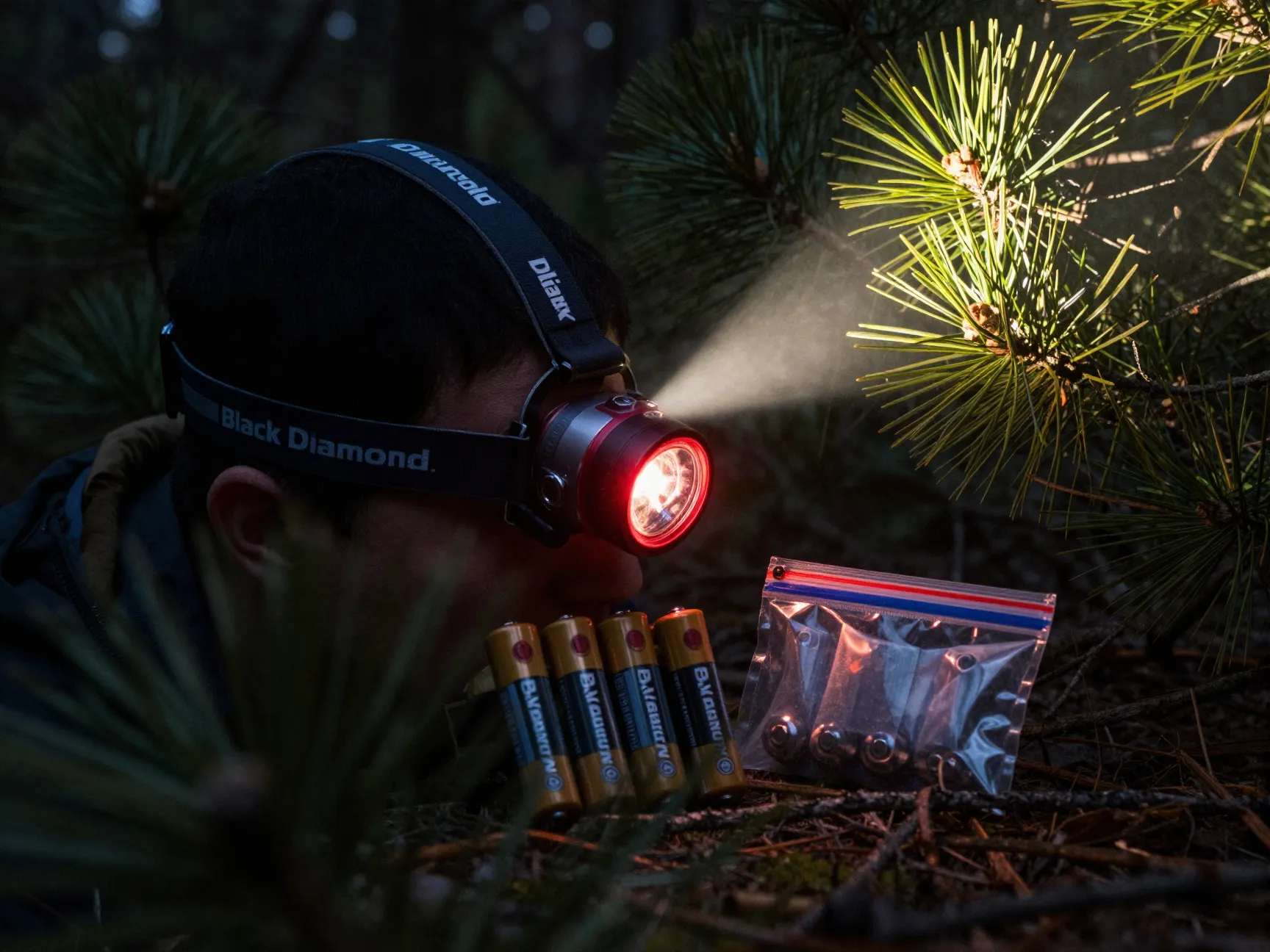
Darkness is a force multiplier for every other hazard in the outdoors. A headlamp keeps hands free for navigation, camp tasks, and first aid. Flashlights and phone lights are poor substitutes, they require one hand and drain smartphone batteries needed for communication.
Headlamp selection criteria:
- Minimum 200 lumens output (300+ recommended for trail navigation)
- Red-light mode to preserve night vision and avoid disturbing wildlife
- IPX4 or higher water resistance rating
- Battery type: AAA batteries are the most widely available worldwide
Always carry at least one full set of spare batteries. Cold temperatures reduce battery life by up to 50%, a critical consideration in alpine or winter camping. Store spare batteries in a small ziplock bag against the body to keep them warm.
8. Signaling Devices
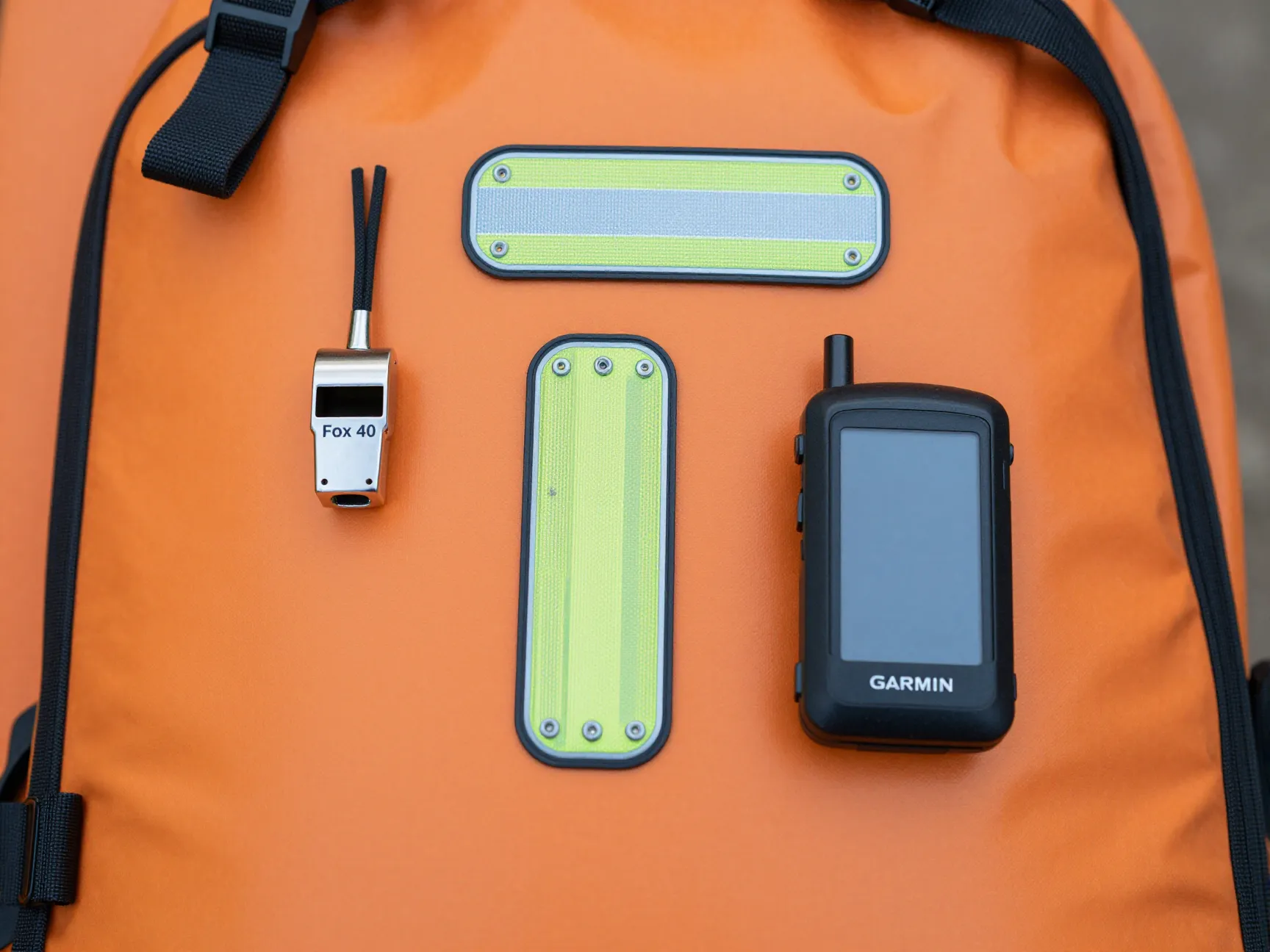
Being lost is only half the problem. The other half is being found. Signaling devices dramatically increase the probability of a successful rescue by making a person’s location visible or audible to search and rescue teams.
A complete signaling kit includes:
- A whistle, the Fox 40 or Storm whistle produces sound at over 120 decibels and can be heard more than a mile away in open terrain. Whistles require no batteries and function when wet.
- A signal mirror, a retroreflective signal mirror can be seen by aircraft up to 10 miles away on a clear day. It weighs less than an ounce.
- A personal locator beacon (PLB) or satellite communicator, for serious backcountry travel, a PLB (registered with NOAA) or a two-way satellite communicator (such as a Garmin inReach) is the gold standard. These devices transmit GPS coordinates to rescue coordination centers regardless of cellular coverage.
The whistle and signal mirror are the minimum standard for day hikes. For overnight and multi-day trips, a PLB or satellite communicator should be considered non-negotiable in its own right.
9. Emergency Food and Nutrition
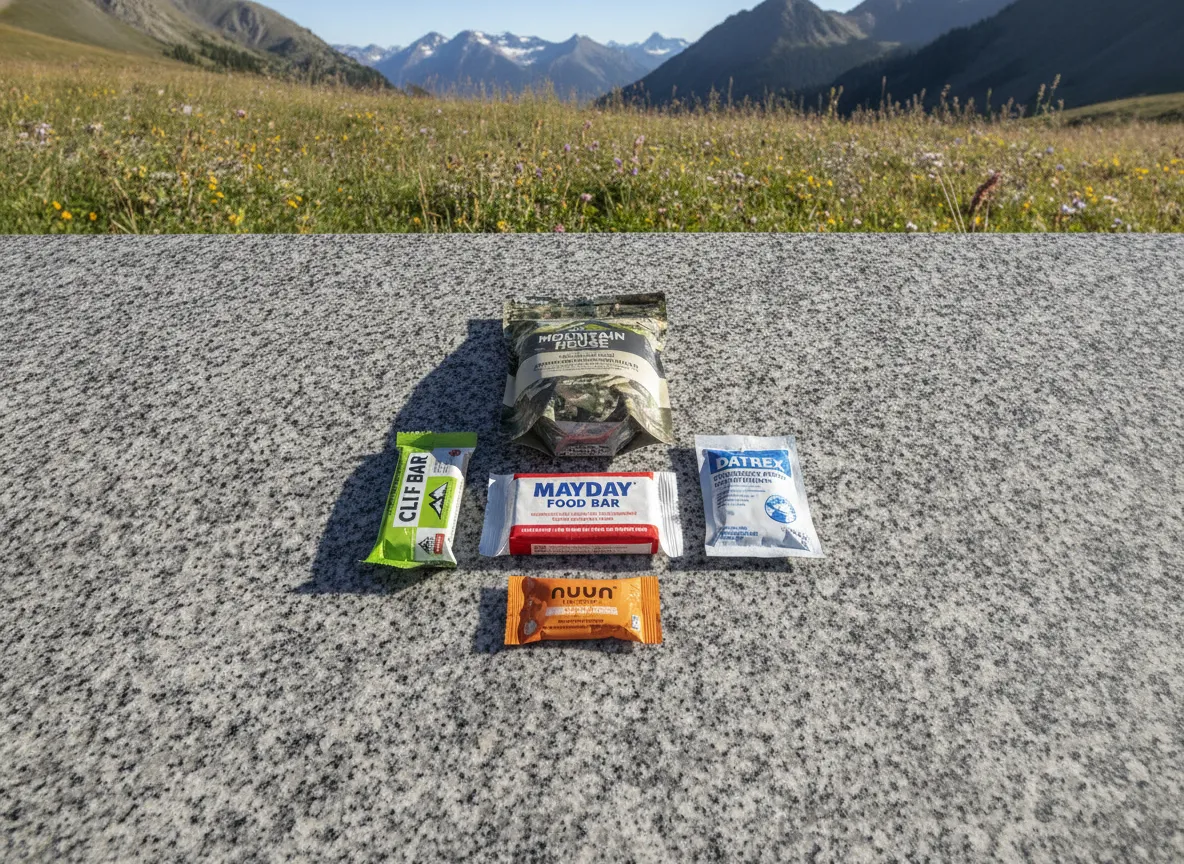
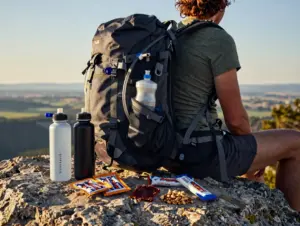
The human body can survive approximately three weeks without food, but cognitive function, decision-making ability, and physical strength degrade significantly after just 24 to 48 hours of caloric deficit. Emergency food in a survival kit is not about gourmet camp cooking, it is about maintaining the mental and physical capacity to self-rescue.
Characteristics of ideal emergency rations:
- High caloric density (at least 100 calories per ounce)
- Long shelf life (12 months minimum, 5 years preferred)
- Minimal preparation required (no cooking necessary)
- Compact and crush-resistant packaging
Best emergency food options:
- Mayday Food Bars or Datrex Emergency Rations (Coast Guard-approved, 5-year shelf life)
- Commercial energy bars (Clif Bars, Kind Bars), rotate every 6 months
- Freeze-dried single-serve meals (require water but are lightweight and calorie-dense)
- Hard candy and electrolyte chews for quick energy and morale
Carry enough emergency rations to sustain energy for at least 72 hours beyond the planned trip duration. This buffer accounts for weather delays, navigation errors, and injury-related immobility.
How to Assemble and Maintain Your Camping Survival Kit
Assembling the 9 Non-Negotiable Items for Your Ultimate Camping Survival Kit is only the first step. A survival kit that is disorganized, expired, or unfamiliar is far less effective than one that is well-maintained and regularly practiced with.
Organizing the Kit
Use a dedicated, brightly colored dry bag or hard-shell case to house survival kit items separately from general camp gear. This ensures the kit can be located quickly under stress and remains dry in wet conditions.
Suggested organization system:
- Outer pouch: signaling devices, whistle, mirror, PLB
- Inner pouch 1: fire-starting kit and tinder
- Inner pouch 2: first aid supplies
- Main compartment: navigation tools, headlamp, multi-tool, emergency shelter, food rations
- Side pocket: water filtration system
Label each pouch clearly. In a high-stress emergency, clear organization reduces decision fatigue and speeds up access to critical tools.
Maintenance Schedule
| Frequency | Task |
|---|---|
| Before every trip | Check batteries, inspect filter integrity, verify expiration dates |
| Every 6 months | Replace energy bars and chemical purification tablets |
| Annually | Replace mylar blanket (they degrade over time), restock first aid consumables |
| After every use | Clean and dry all items before repacking |
Skills Training: The Force Multiplier
No piece of gear compensates for a lack of skills. The 9 Non-Negotiable Items for Your Ultimate Camping Survival Kit perform at their highest level when the user has trained with them. Recommended training investments include:
- Wilderness First Aid (WFA) certification, a 16-hour course covering backcountry medical scenarios
- Map and compass navigation course, typically available through REI, NOLS, or local orienteering clubs
- Fire-starting practice, specifically with a ferro rod in wet and windy conditions
- PLB/satellite communicator familiarization, read the manual and practice activation before the trip
Common Mistakes to Avoid When Building Your Survival Kit
Even experienced campers make predictable errors when assembling their kits. Awareness of these mistakes prevents costly oversights.
Mistake 1: Prioritizing weight savings over function. Ultralight versions of critical gear (paper-thin mylar blankets, micro-sized first aid kits) often fail under real field conditions. Choose gear that is light enough to carry comfortably but robust enough to perform when it matters.
Mistake 2: Relying entirely on a smartphone. Smartphones are useful tools, but they are not survival devices. Batteries deplete rapidly in cold weather, screens crack, and cellular coverage is absent in most backcountry areas. Use a smartphone as a supplement, not a foundation.
Mistake 3: Never opening the kit. A survival kit that has never been opened is a liability. Batteries corrode, food expires, and filters dry out. Regular inspection is not optional.
Mistake 4: Building a kit for someone else’s trip. A survival kit must be tailored to the specific environment, season, and duration of each trip. A desert kit differs from an alpine kit. A day hike kit differs from a week-long expedition kit.
Mistake 5: Skipping the signaling devices. Many campers focus on self-rescue tools and neglect signaling. In most real emergencies, staying put and signaling for rescue is safer and more effective than attempting to self-navigate out of an unfamiliar area.
Conclusion
The difference between a frightening situation and a fatal one often comes down to preparation measured in ounces. The 9 Non-Negotiable Items for Your Ultimate Camping Survival Kit, water filtration, fire-starting, emergency shelter, navigation, first aid, a cutting tool, illumination, signaling devices, and emergency food, represent the distilled wisdom of wilderness survival professionals, emergency responders, and experienced backcountry travelers.
Actionable next steps:
- Audit the current pack against this list. Identify gaps and address them before the next trip.
- Invest in a Wilderness First Aid course. Knowledge is the lightest and most durable survival tool available.
- Practice with every item in the kit at home before relying on it in the field. Familiarity under stress is built through repetition, not wishful thinking.
- Set a calendar reminder to inspect and refresh the kit every six months.
- Tailor the kit to each specific trip, environment, season, group size, and duration all affect what “non-negotiable” means in practice.
The outdoors offers experiences that no other environment can match. Preparation does not diminish that experience, it protects the freedom to have it again.