9 Nurse Shark Aesthetic Wallpapers and Facts for Ocean Lovers
Nurse sharks spend up to 18 hours a day completely motionless on the ocean floor, yet most people scroll past them in favor of great whites and hammerheads. That quiet, unhurried energy is exactly what makes them so compelling as both a subject of marine science and a source of stunning visual inspiration. This guide to 9 Nurse Shark Aesthetic Wallpapers and Facts for Ocean Lovers combines the best of both worlds: rich biological detail and curated aesthetic appeal for anyone who wants their screen to reflect a genuine love of the sea.
Disclosure: This post contains affiliate links. As an Amazon Associate, we earn from qualifying purchases, and at no extra cost to you.
Whether you are a marine biology enthusiast, a digital artist hunting for reference material, or simply someone who wants a calming ocean wallpaper that carries real meaning, this article delivers nine distinct visual concepts alongside the science that makes each one worth your attention.
Key Takeaways
- Nurse sharks are slow-moving, nocturnal bottom-dwellers found across tropical Atlantic and Pacific reefs, making them ideal subjects for calm, moody underwater photography.
- Their unique physical traits, barbels, broad heads, and muted tan-to-brown coloration, translate beautifully into minimalist and watercolor aesthetic styles.
- Nurse sharks are not aggressive toward humans and are considered one of the safest shark species to observe in the wild.
- Each of the nine wallpaper concepts in this guide is paired with a verified biological or behavioral fact, giving every image deeper context.
- Free and premium sources for nurse shark wallpapers include Unsplash, Pexels, iNaturalist, and licensed stock platforms.
Why Nurse Sharks Make Perfect Aesthetic Wallpaper Subjects
Before diving into the full list of 9 Nurse Shark Aesthetic Wallpapers and Facts for Ocean Lovers, it helps to understand why this particular species resonates so strongly with ocean-loving audiences in 2026.
Most shark imagery defaults to drama, open jaws, dark water, motion blur. Nurse sharks offer something different. Their wide, flattened bodies, slow movements, and tendency to rest in groups on sandy bottoms create compositions that feel meditative rather than menacing. Photographers and digital artists consistently describe nurse shark images as “grounding” and “serene,” which aligns perfectly with the broader aesthetic wallpaper trend toward calming, nature-forward visuals.
Three reasons nurse sharks dominate ocean aesthetic boards:
- Their muted brown and tan coloration pairs naturally with earthy, neutral, and pastel color palettes.
- They are accessible subjects, divers regularly encounter them at shallow reef sites in the Bahamas, Florida Keys, and Belize.
- Their distinctive barbels (whisker-like sensory organs) add visual texture that makes close-up shots unusually detailed.
“The nurse shark is proof that the ocean’s most photogenic creatures are not always its most feared.”, Marine photographer sentiment widely shared across dive communities.
The Full List: 9 Nurse Shark Aesthetic Wallpapers and Facts for Ocean Lovers
Each entry below presents a distinct visual concept, the aesthetic style it suits, and a verified biological fact that deepens its meaning.
1. The Resting Shark on White Sand
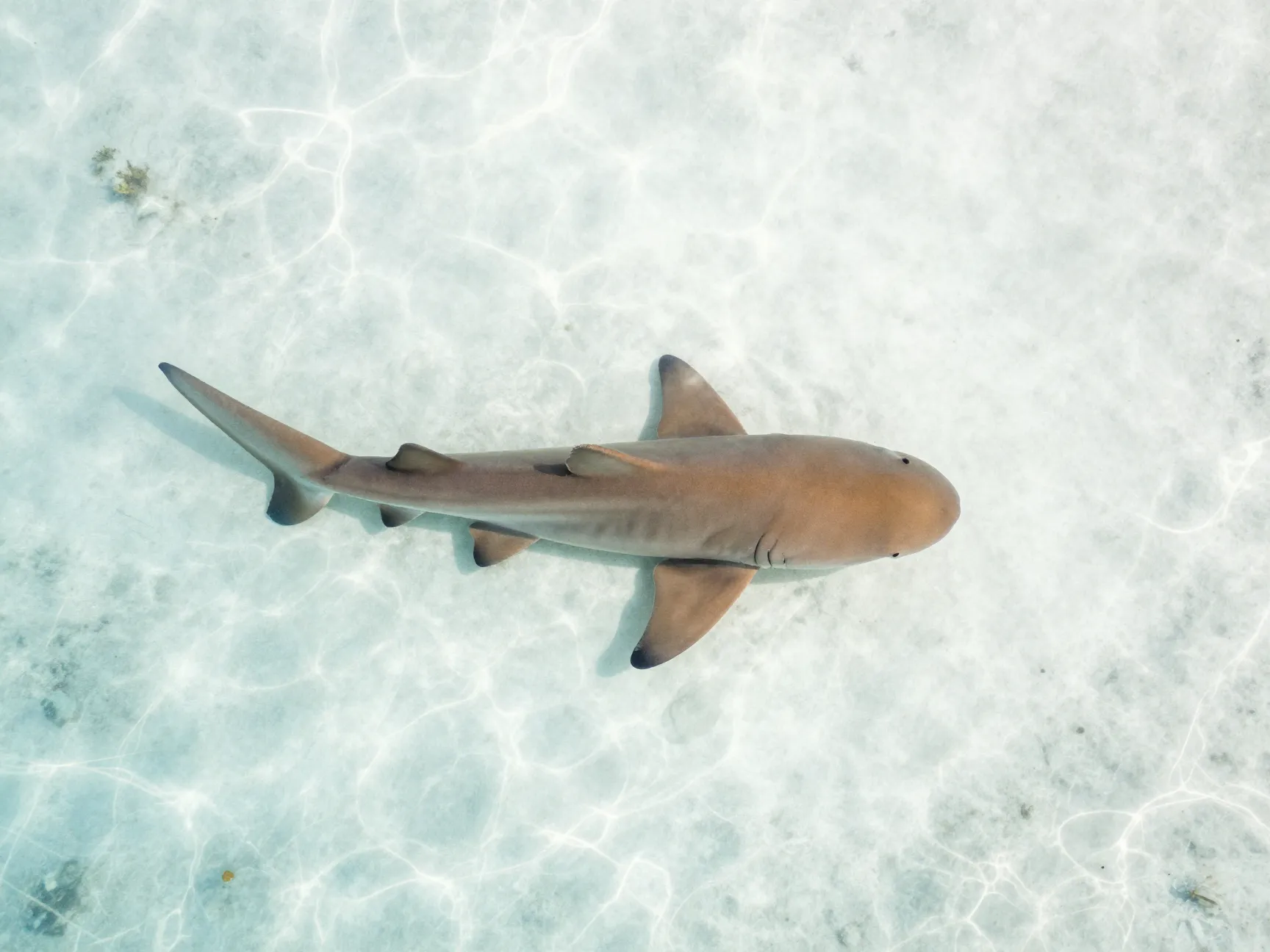
Visual concept: A single nurse shark lies motionless on a bright white sandy floor, shot from directly above in shallow turquoise water. The image is high-key, with blown-out whites and soft teal tones.
Aesthetic style: Minimalist, coastal clean, Scandinavian-inspired.
The fact: Nurse sharks are one of the few shark species capable of buccal pumping, actively drawing water over their gills while stationary. This allows them to rest on the seafloor without suffocating, unlike many other sharks that must keep swimming to breathe. Research published in the journal Copeia confirms this adaptation is central to their bottom-dwelling lifestyle.
Why it works as a wallpaper: The overhead perspective eliminates visual clutter. The shark becomes a single bold shape against a clean background, ideal for desktop setups where icons and widgets sit on top of the image.
2. Dappled Sunlight Through Coral
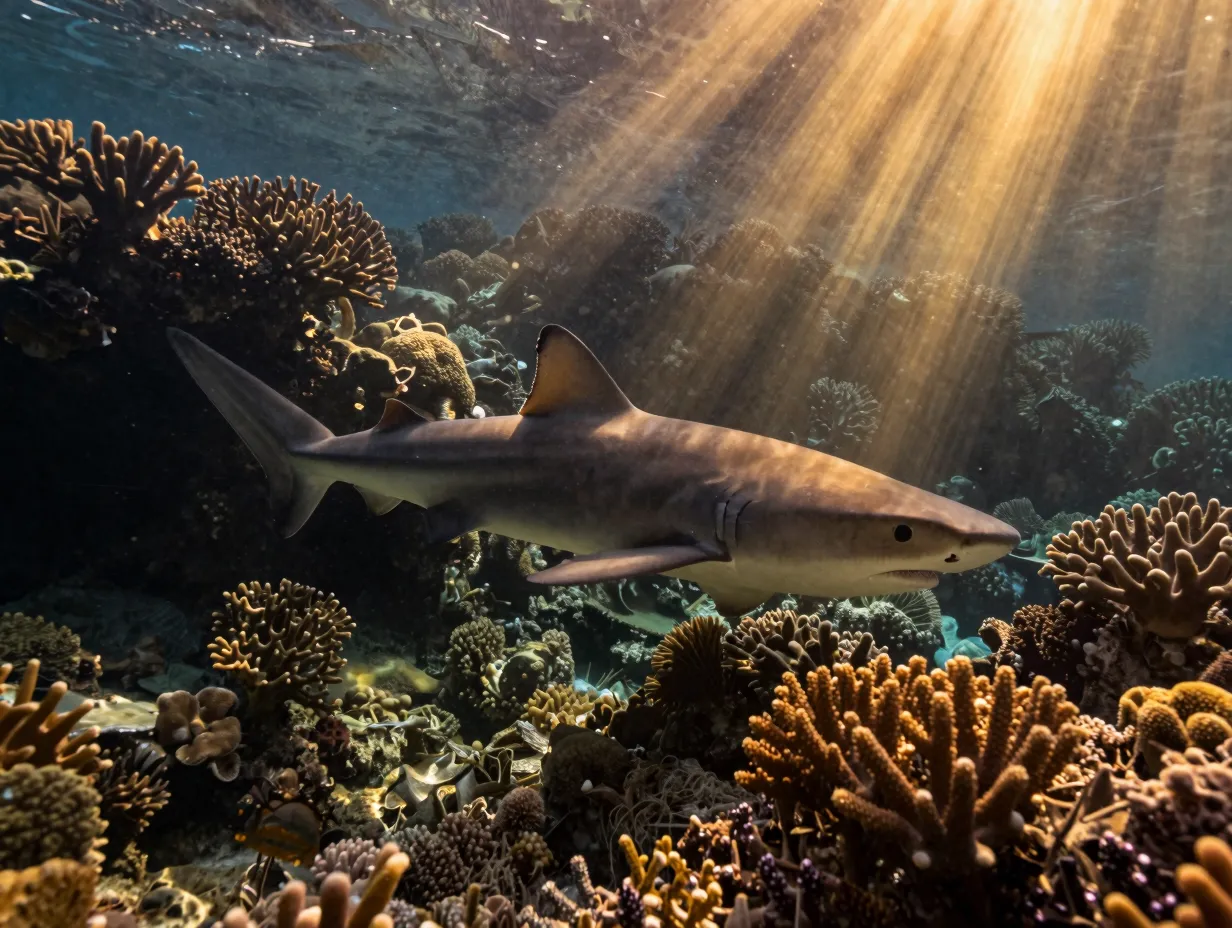
Visual concept: A nurse shark moves slowly through a dense coral reef, with shafts of golden sunlight cutting through the water column above. The image is warm-toned with deep shadows.
Aesthetic style: Moody golden hour, tropical editorial.
The fact: Nurse sharks are primarily nocturnal hunters. During the day, they seek shelter in reef crevices and beneath coral ledges. Their nighttime diet consists mainly of spiny lobsters, crabs, sea urchins, and small fish. According to NOAA Fisheries, their strong jaws can generate enough suction to extract prey from tight reef spaces, a feeding method called suction feeding that is rare among sharks.
Why it works as a wallpaper: The interplay of warm gold and deep ocean blue creates natural contrast that makes any screen look rich and layered without feeling busy.
3. Group Pileup in a Cave
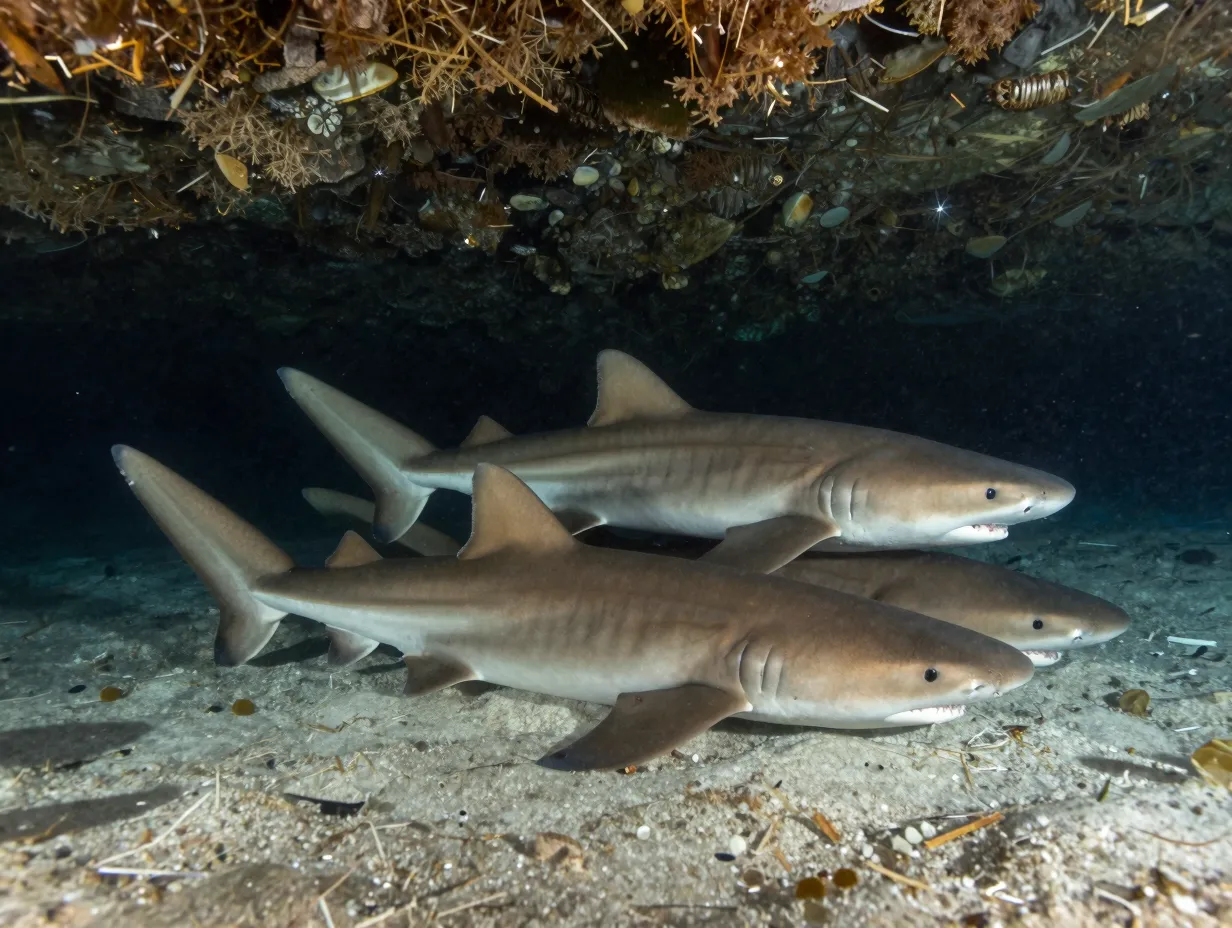
Visual concept: Four to six nurse sharks are stacked loosely on top of one another inside a shallow underwater cave, their tails overlapping, shot with a wide-angle lens from the cave entrance.
Aesthetic style: Dark academia underwater, moody and textural.
The fact: Nurse sharks are unusually social for a shark species. They regularly aggregate in groups of up to 40 individuals, often resting in physical contact with one another. Scientists at the Bimini Biological Field Station have documented consistent group compositions at the same resting sites year after year, suggesting strong site fidelity and possible social bonds.
Why it works as a wallpaper: The layered, overlapping forms create a complex, almost abstract composition. It rewards extended viewing, the longer you look, the more individual sharks you identify.
4. Silhouette Against a Sunset Surface
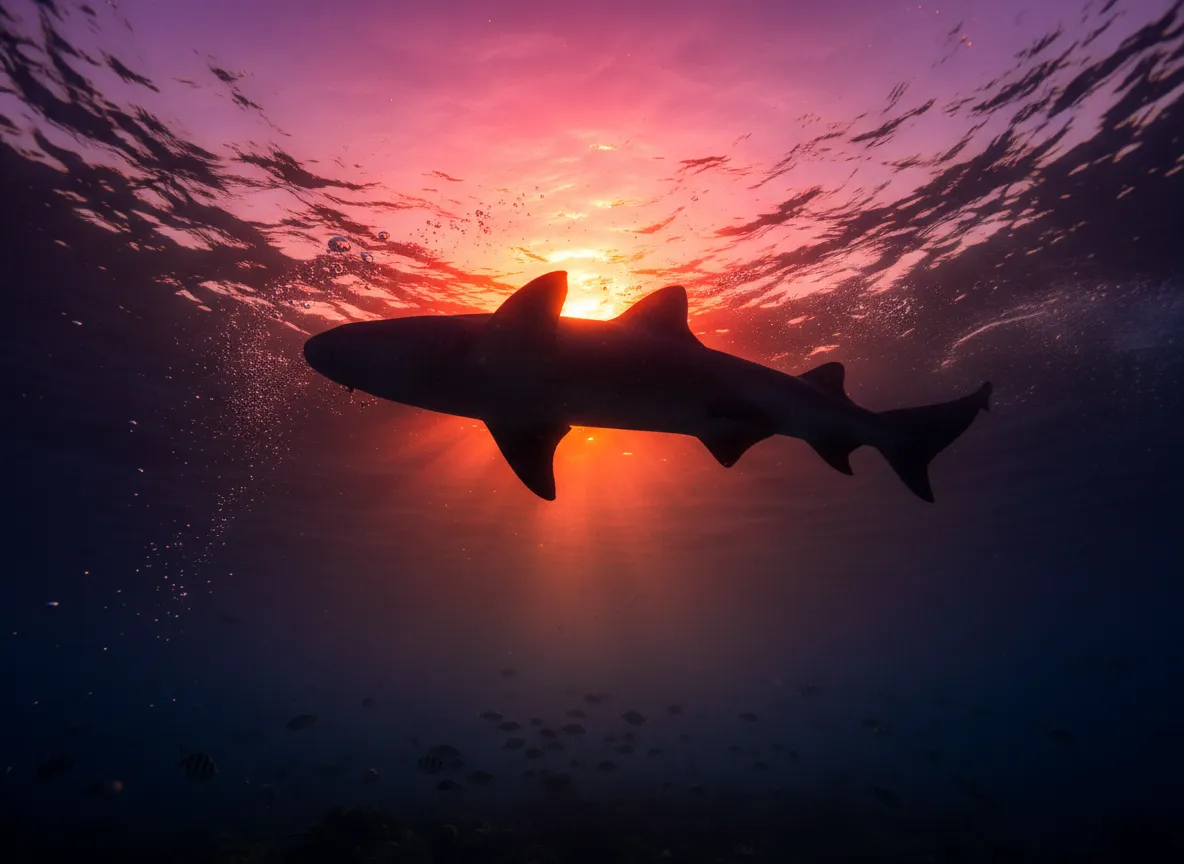
Visual concept: Shot from below looking upward, a nurse shark glides near the surface against a backlit sky transitioning from deep orange to violet. The shark appears as a dark silhouette.
Aesthetic style: Dramatic cinematic, ocean fantasy.
The fact: Nurse sharks can reach lengths of up to 4.3 meters (14 feet), though most adults measure between 2.1 and 3 meters. Their broad, rounded pectoral fins and distinctively long upper tail lobe create an unmistakable silhouette that differs sharply from the streamlined profiles of open-water species like the mako or blue shark.
Why it works as a wallpaper: Silhouette photography translates exceptionally well to screens because it relies on shape rather than color detail, meaning it looks equally strong on OLED, LCD, and e-ink displays.
5. Watercolor Illustration in Pastel Blue
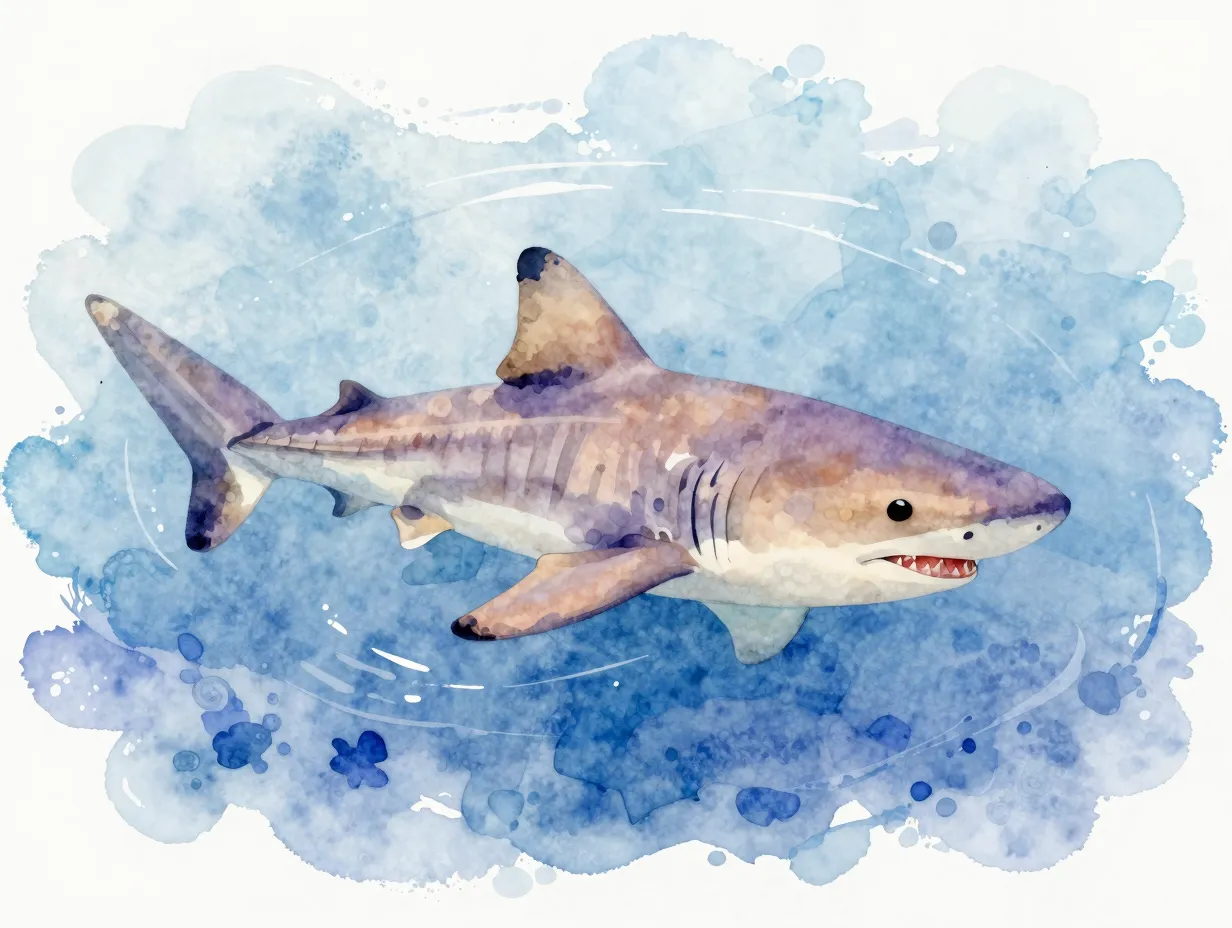
Visual concept: A hand-painted or digitally rendered watercolor illustration of a nurse shark in soft pastel blues, lavenders, and warm creams, with loose brushstrokes suggesting water movement around the body.
Aesthetic style: Cottagecore ocean, botanical illustration, soft aesthetic.
The fact: The nurse shark’s scientific name is Ginglymostoma cirratum. The genus name derives from Greek words meaning “hinged mouth,” referencing the flexible, highly mobile jaw structure that enables suction feeding. The species name cirratum refers to the barbels, the small, fleshy, whisker-like projections near the nostrils that function as chemosensory organs for detecting prey buried in sediment.
Why it works as a wallpaper: Illustrated wallpapers have surged in popularity across aesthetic communities because they feel personal and handcrafted. A nurse shark in watercolor style bridges marine biology and fine art.
6. Bioluminescent Night Dive Scene
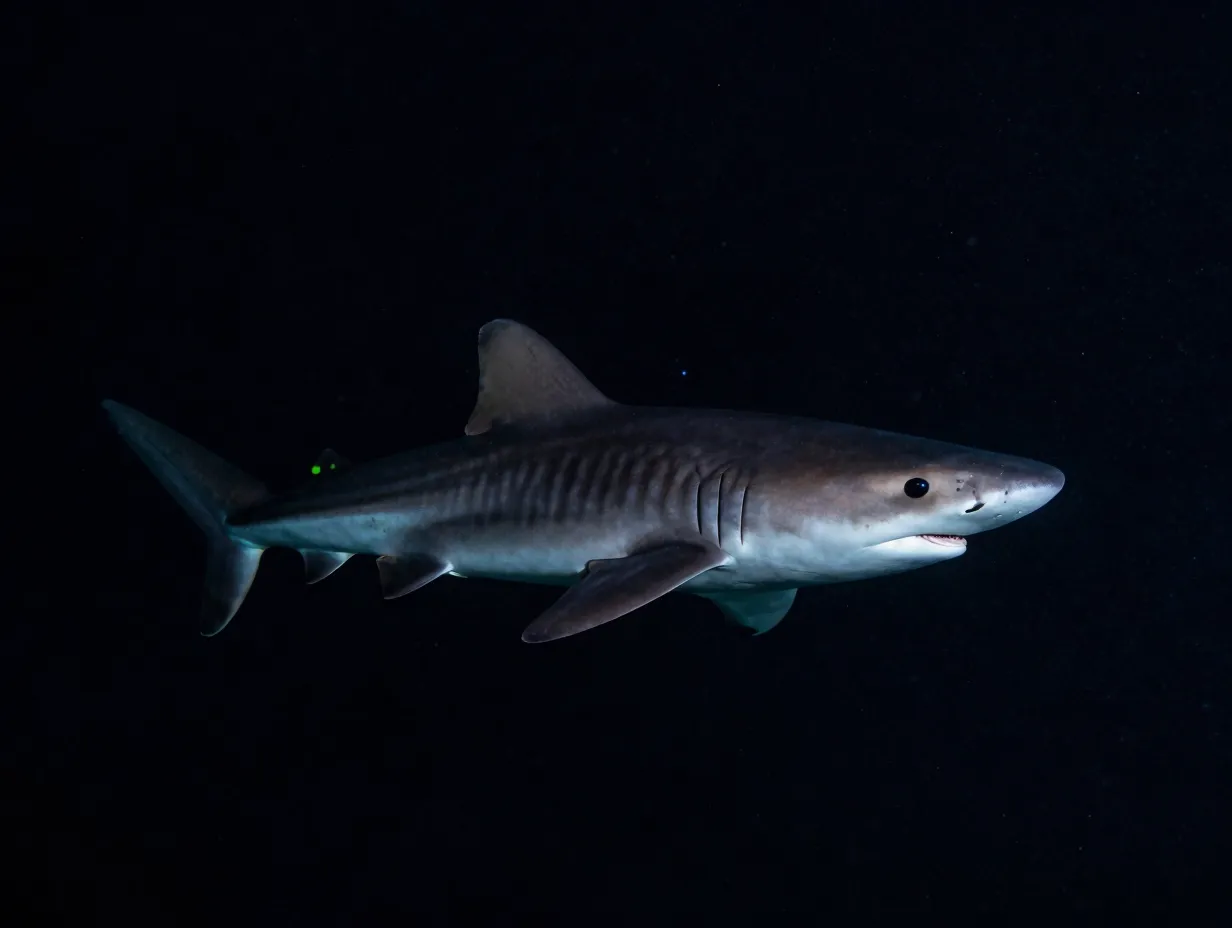
Visual concept: A nurse shark moves through dark, near-black water with faint bioluminescent particles glowing around it in electric blue and green. The shark’s eyes catch a subtle reflection of light.
Aesthetic style: Dark ocean, sci-fi nature, deep sea aesthetic.
The fact: While nurse sharks themselves do not produce bioluminescence, they are active during the same nighttime hours when bioluminescent plankton (dinoflagellates) are most visible in tropical waters. Night dives in the Bahamas and the Florida Keys regularly produce encounters where nurse sharks move through glowing water, creating a visual effect that has been documented by underwater videographers and published in dive journals.
Why it works as a wallpaper: Dark-mode wallpapers are among the most searched categories in 2026, driven by the widespread adoption of dark UI across operating systems and apps. A bioluminescent ocean scene fits this aesthetic perfectly.
7. Juvenile Nurse Shark in Shallow Mangroves
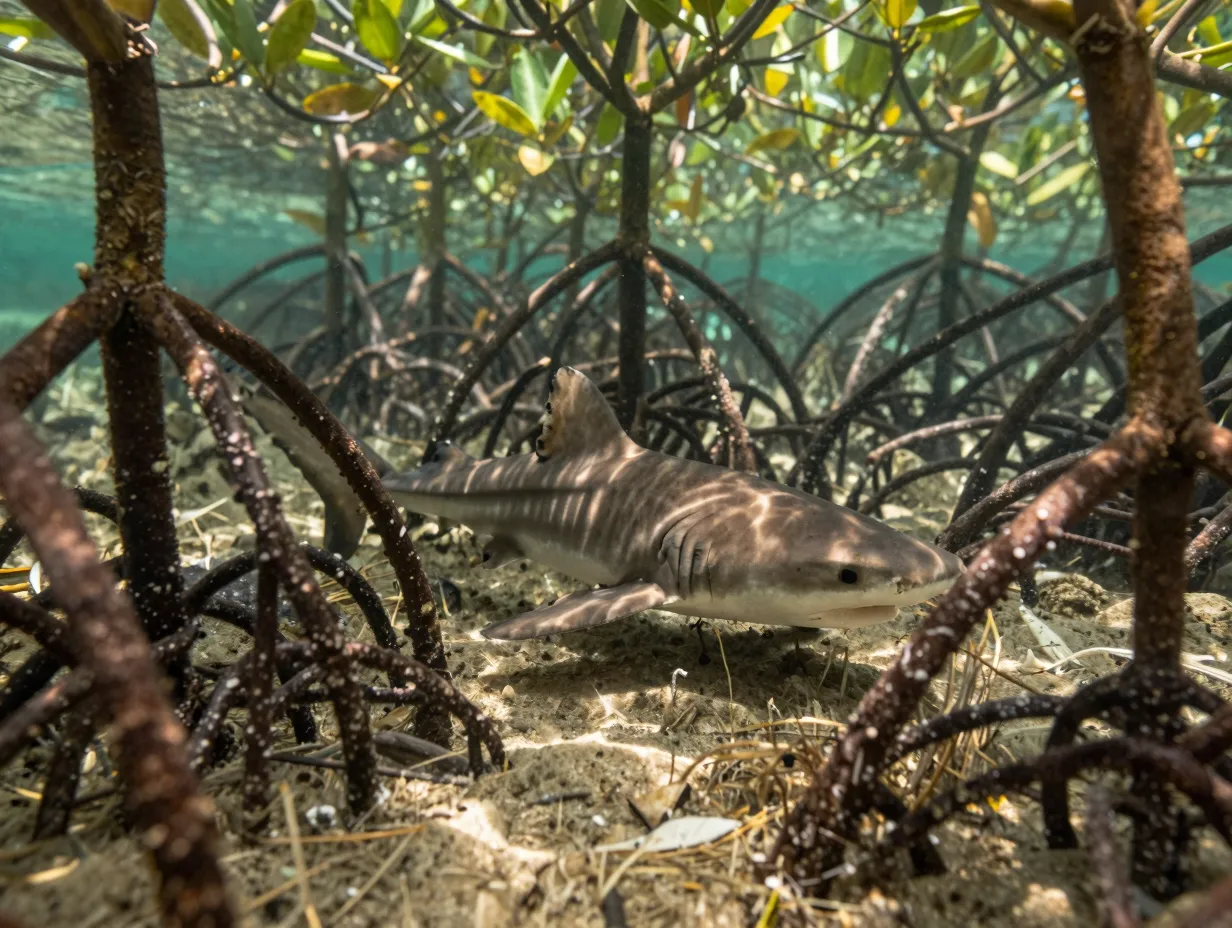
Visual concept: A small juvenile nurse shark, approximately 30 centimeters long, navigates the tangled root system of a mangrove forest in shallow, tea-colored water. Shafts of green-filtered light illuminate the scene.
Aesthetic style: Earthy botanical, nature documentary, green aesthetic.
The fact: Juvenile nurse sharks use mangrove habitats as nursery grounds. Their spotted, banded coloration, which fades as they mature into the uniform tan-brown of adults, provides camouflage among the dappled light of shallow coastal environments. A 2019 study in Marine Biology found that juvenile nurse sharks in the Bahamas show high fidelity to specific mangrove nursery sites, returning to the same areas repeatedly over multiple years.
Why it works as a wallpaper: Green and brown earth-tone palettes have dominated interior design and digital aesthetics for several years. A mangrove scene delivers those tones with genuine ecological meaning.
8. Close-Up Texture Portrait
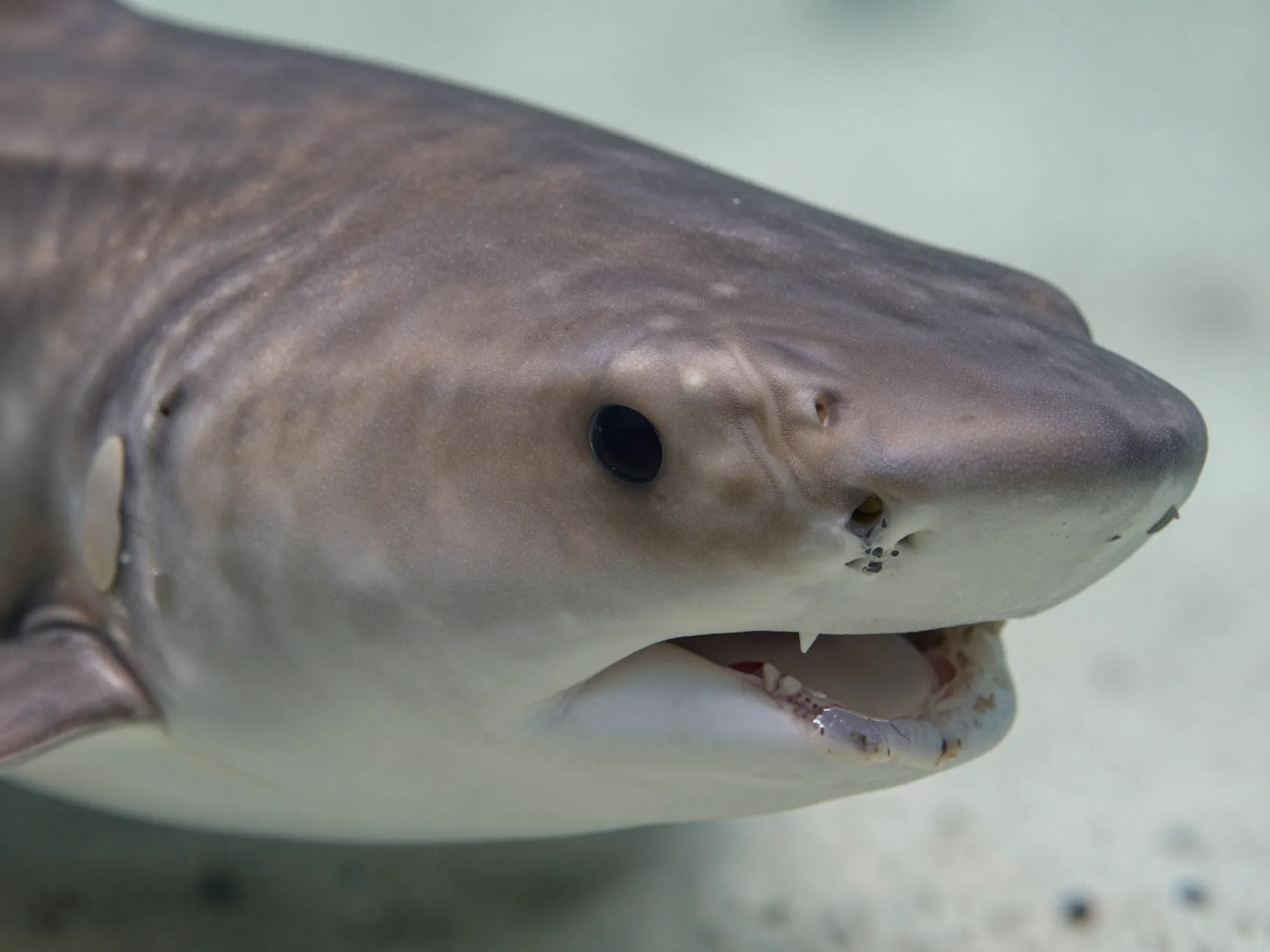
Visual concept: An extreme close-up of a nurse shark’s head, filling the entire frame. The rough, denticle-covered skin, the paired barbels, the small eyes, and the wide, slightly curved mouth are all visible in sharp detail.
Aesthetic style: Macro nature photography, editorial, scientific illustration aesthetic.
The fact: Shark skin is covered in tiny tooth-like structures called dermal denticles, which reduce drag and turbulence as the animal moves through water. In nurse sharks, these denticles are particularly pronounced and give the skin a texture similar to very fine sandpaper. Historically, dried nurse shark skin was used as a natural abrasive in woodworking and leather finishing, a practice documented in Caribbean and South American coastal communities.
Why it works as a wallpaper: Texture-forward wallpapers create visual depth on high-resolution Retina and 4K displays. The intricate detail of nurse shark skin rewards the pixel density of modern screens.
9. Geometric Minimalist Vector Art
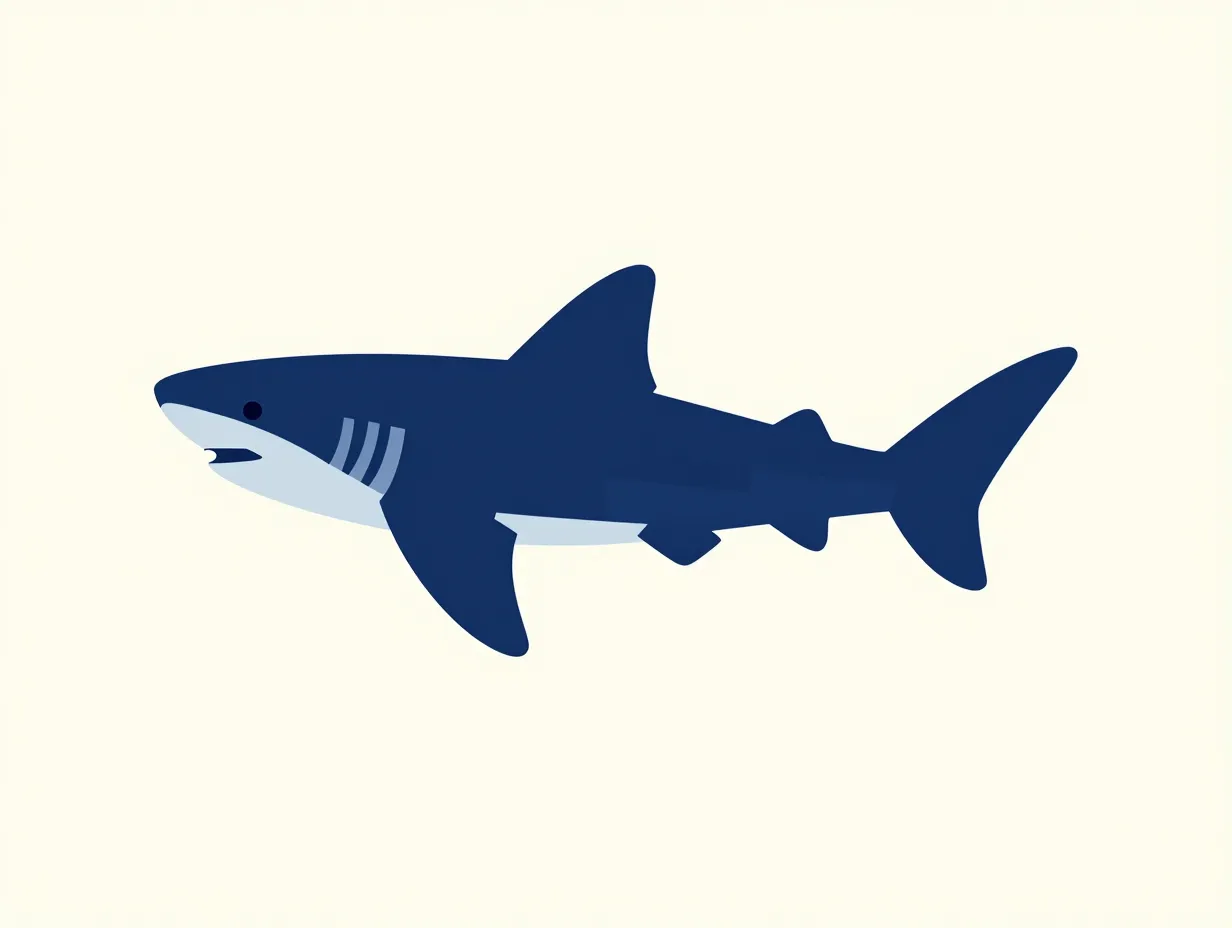
Visual concept: A flat vector illustration of a nurse shark rendered in three to four geometric shapes, triangles, trapezoids, and a single curved line for the tail. The color palette is monochromatic navy blue on an off-white background.
Aesthetic style: Modernist graphic design, Bauhaus-inspired, tech minimalism.
The fact: Despite their docile reputation, nurse sharks have been responsible for a small number of unprovoked bites on humans, almost always in situations where a diver stepped on or grabbed the animal. The International Shark Attack File (ISAF) at the Florida Museum of Natural History lists nurse sharks among the top ten species in recorded bite incidents globally, though virtually all incidents result in minor injuries and none have been fatal. This fact reframes the minimalist, non-threatening visual with a subtle reminder that all wild animals deserve respectful distance.
Why it works as a wallpaper: Geometric vector wallpapers are perennially popular in professional and tech environments because they are non-distracting, scale perfectly across screen sizes, and communicate a clean, modern sensibility.
How to Find and Download High-Quality Nurse Shark Wallpapers
Finding wallpapers that match the nine aesthetic concepts above requires knowing where to look. The following sources consistently offer high-resolution, legally usable nurse shark imagery.
| Source | Type | License | Best For |
|---|---|---|---|
| Unsplash | Photography | Free, commercial use | Items 1, 2, 4 |
| iNaturalist | Scientific photography | CC BY-NC, varies | Items 7, 8 |
| Adobe Stock | Photography and illustration | Licensed (paid) | Items 5, 6, 9 |
| DeviantArt | Digital illustration | Artist-specific, ask first | Items 5, 9 |
| Pexels | Photography | Free, commercial use | Items 2, 3 |
Tips for sourcing ethically:
- Always verify the license before downloading, especially for commercial or social media use.
- Credit underwater photographers when sharing their work, even when a license does not legally require it.
- Consider purchasing prints or digital licenses directly from dive photographers, many sell their work through personal websites.
Conservation Context: Why These Images Matter Beyond Aesthetics
Nurse sharks are currently listed as Vulnerable on the IUCN Red List of Threatened Species. Their populations face pressure from habitat loss (particularly coral reef degradation and mangrove deforestation), bycatch in commercial fisheries, and targeted fishing for their fins, liver oil, and skin.
When ocean lovers choose nurse shark wallpapers and share them across social platforms, they participate in a low-friction form of marine conservation awareness. Research in environmental psychology consistently shows that repeated positive visual exposure to a species increases empathy and conservation-oriented behavior among general audiences.
Key conservation organizations working on nurse shark protection:
- Shark Research Institute (Princeton, New Jersey)
- Bimini Biological Field Station Foundation (Bahamas)
- IUCN Shark Specialist Group
- Oceana
Supporting any of these organizations, even by following their social media accounts, amplifies the conservation signal that aesthetic content alone cannot carry.
Optimizing Nurse Shark Wallpapers for Different Devices
A wallpaper that looks stunning on a 27-inch 4K monitor may look cropped and awkward on a smartphone lock screen. The following guidelines help match each of the nine concepts to the right device.
Desktop (16:9 or 16:10 ratio, 2560×1440 minimum recommended):
Items 1, 4, and 6 work best at large sizes because their compositions rely on expansive negative space or wide environmental context.
Mobile (9:16 ratio, 1080×1920 minimum recommended):
Items 3 and 8 are naturally vertical in composition, the cave pileup and the close-up portrait both benefit from a tall, narrow frame.
Tablet (4:3 or 3:2 ratio):
Items 2, 5, and 7 translate well to tablet screens because their color complexity and mid-range detail reward the larger display area without requiring extreme resolution.
Dual monitor setups:
Item 9 (the geometric vector) is the strongest choice for spanning two monitors because its flat, scalable design does not distort at unusual aspect ratios.
Frequently Asked Questions
Are nurse sharks dangerous to humans?
Nurse sharks are generally not dangerous. They are slow-moving and non-aggressive. The International Shark Attack File records occasional bites, almost always provoked by divers handling or stepping on the animals. No fatalities have been attributed to nurse sharks.
Where can nurse sharks be found in the wild?
Nurse sharks inhabit tropical and subtropical coastal waters of the Atlantic and eastern Pacific Oceans. Prime locations include the Florida Keys, the Bahamas, Belize, the Caribbean coast of Central America, and parts of West Africa.
How long do nurse sharks live?
Nurse sharks are estimated to live 25 years or more in the wild. Their slow growth rate and late sexual maturity (around 10 to 15 years) make them particularly vulnerable to overfishing.
Can nurse shark images be used as phone wallpapers legally?
Yes, provided the image is sourced from a platform with an appropriate license. Free-use platforms like Unsplash and Pexels allow personal wallpaper use. Always check individual image licenses on other platforms.
Conclusion
The collection of 9 Nurse Shark Aesthetic Wallpapers and Facts for Ocean Lovers presented here is more than a visual resource, it is an entry point into genuine marine science. Each of the nine concepts connects a specific aesthetic choice to a verified biological or behavioral fact, ensuring that the image on your screen carries real meaning.
Actionable next steps for ocean lovers:
- Choose one of the nine wallpaper concepts that matches your current device and aesthetic preference, and source it from one of the recommended platforms above.
- Share the wallpaper on social media with a caption that includes one of the biological facts from this guide, this turns a personal aesthetic choice into a micro-conservation act.
- Follow at least one nurse shark conservation organization to stay informed about the species’ status and ongoing research.
- If you travel to the Florida Keys, the Bahamas, or Belize, book a guided reef snorkel or dive specifically to observe nurse sharks in their natural habitat, responsible wildlife tourism directly funds local conservation programs.
- Consider commissioning a local digital artist to create a custom nurse shark illustration in your preferred aesthetic style, supporting both creative communities and ocean awareness simultaneously.
The nurse shark’s quiet presence on the ocean floor has persisted for approximately 112 million years. Giving it a place on your screen in 2026 is a small but genuine act of recognition for one of the sea’s most enduring, and most underappreciated, residents.
References
- Compagno, L. J. V. (1984). Sharks of the World: An Annotated and Illustrated Catalogue of Shark Species Known to Date. FAO Fisheries Synopsis.
- Florida Museum of Natural History. (2023). International Shark Attack File Annual Report. University of Florida.
- IUCN SSC Shark Specialist Group. (2020). Ginglymostoma cirratum: The IUCN Red List of Threatened Species. IUCN.
- Motta, P. J., Hueter, R. E., Tricas, T. C., & Summers, A. P. (2002). Kinematic analysis of suction feeding in the nurse shark, Ginglymostoma cirratum. Copeia, 2002(1), 24-38.
- NOAA Fisheries. (2022). Nurse Shark Species Profile. National Oceanic and Atmospheric Administration.
- Pratt, H. L., & Carrier, J. C. (2001). A review of elasmobranch reproductive behavior with a case study on the nurse shark, Ginglymostoma cirratum. Environmental Biology of Fishes, 60(1-3), 157-188.
- Sims, D. W. (2003). Tractable models for testing theories about natural strategies: foraging behaviour and habitat selection of free-ranging sharks. Journal of Fish Biology, 63(Suppl. A), 53-73.
- Wetherbee, B. M., Gruber, S. H., & Cortés, E. (1990). Diet, feeding habits, digestion, and consumption in sharks, with special reference to the lemon shark, Negaprion brevirostris. In: Elasmobranchs as Living Resources. NOAA Technical Report NMFS 90.
- Whitney, N. M., Pyle, R. L., Holland, K. N., & Barcz, J. T. (2012). Movements, habitat use and site fidelity of the whitetip reef shark (Triaenodon obesus) in a structurally simple environment. Marine Biology, 159(12), 2567-2580.