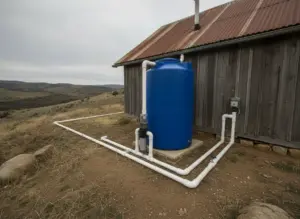
8 Foundational Skills for Long-Term Wilderness Living and Self-Reliance
Only about 3% of people who attempt extended wilderness living beyond 30 days do so without a critical failure in at least one core survival domain, most often water procurement or shelter construction. That statistic reveals a hard truth: enthusiasm and gear alone do not sustain life in the wild. Mastering the 8 Foundational Skills for Long-Term Wilderness Living and Self-Reliance is what separates short-term adventurers from people who genuinely thrive in remote environments over months and years. These are not optional upgrades. They are the non-negotiable pillars of sustainable backcountry life, and every serious practitioner must develop competence in all eight.
Disclosure: This post contains affiliate links. As an Amazon Associate, we earn from qualifying purchases, and at no extra cost to you.
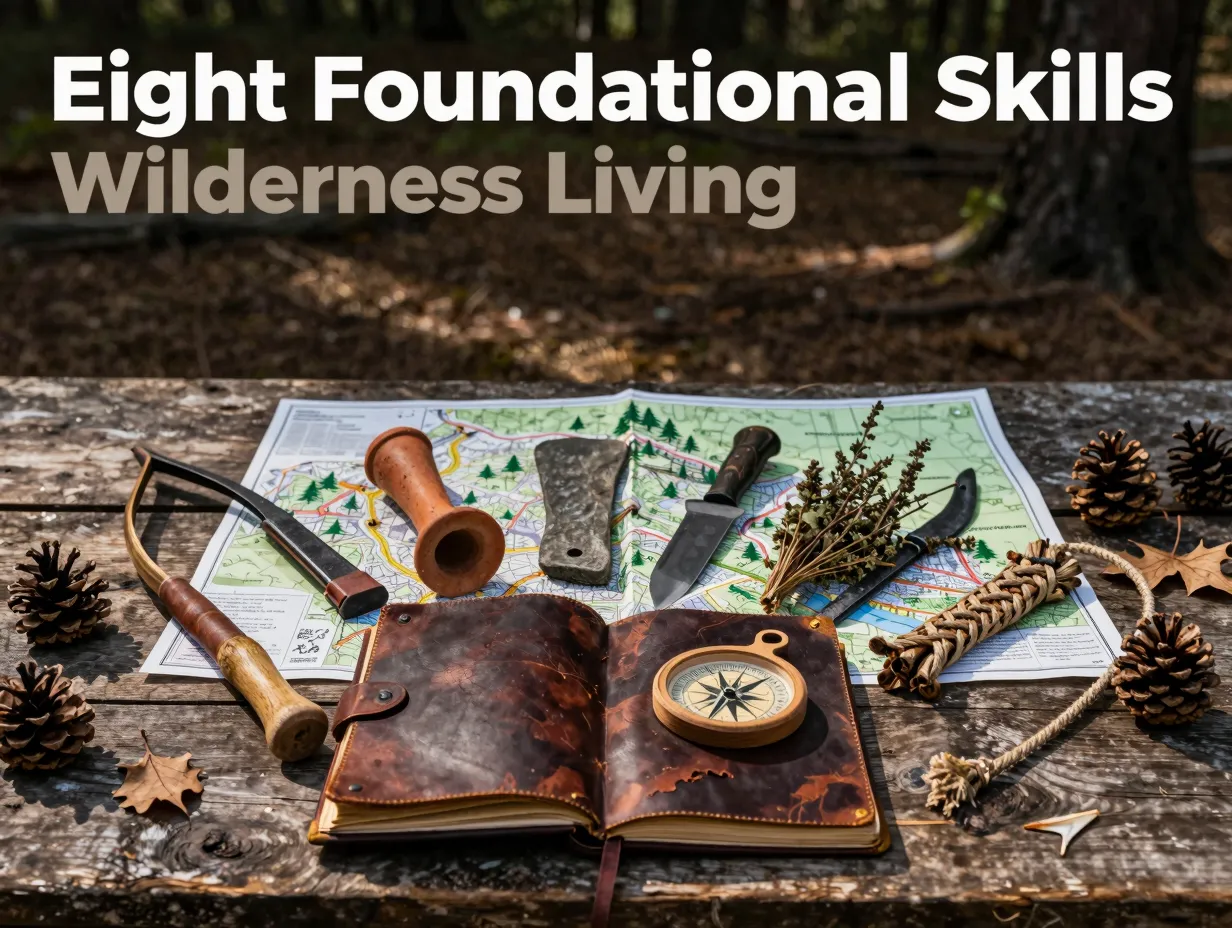
Key Takeaways
- Long-term wilderness living demands mastery across multiple interdependent skill domains, not just one or two.
- Water security and shelter construction are the two most time-sensitive skills and must be prioritized first.
- Wild food knowledge, foraging, hunting, and fishing, becomes the primary survival concern after the first 72 hours.
- Navigation, tool-making, and first aid form a protective layer that prevents small problems from becoming fatal ones.
- Mental resilience and community-building are often overlooked but are equally critical for multi-year self-reliance.
Why These 8 Foundational Skills for Long-Term Wilderness Living and Self-Reliance Matter
Short wilderness trips reward improvisation. Long-term wilderness living punishes it. When a person commits to living off the land for months or years, the margin for error shrinks dramatically. A failed fire in a weekend camping scenario is an inconvenience. A failed fire in a northern winter when temperatures drop below freezing is a life-threatening emergency.
The 8 Foundational Skills for Long-Term Wilderness Living and Self-Reliance outlined in this article are drawn from the accumulated knowledge of traditional indigenous lifeways, modern survival research, and the documented experiences of long-term homesteaders and primitive skills practitioners. Each skill reinforces the others. A person who can build shelter but cannot purify water will not survive long. A person who can forage but cannot navigate will eventually get lost and unable to return to their food cache.
Understanding the interconnected nature of these skills is the first step toward building genuine self-reliance.
“Survival is not about the gear you carry. It is about the knowledge you have internalized and the skills you can execute under pressure.”
1. Water Procurement and Purification
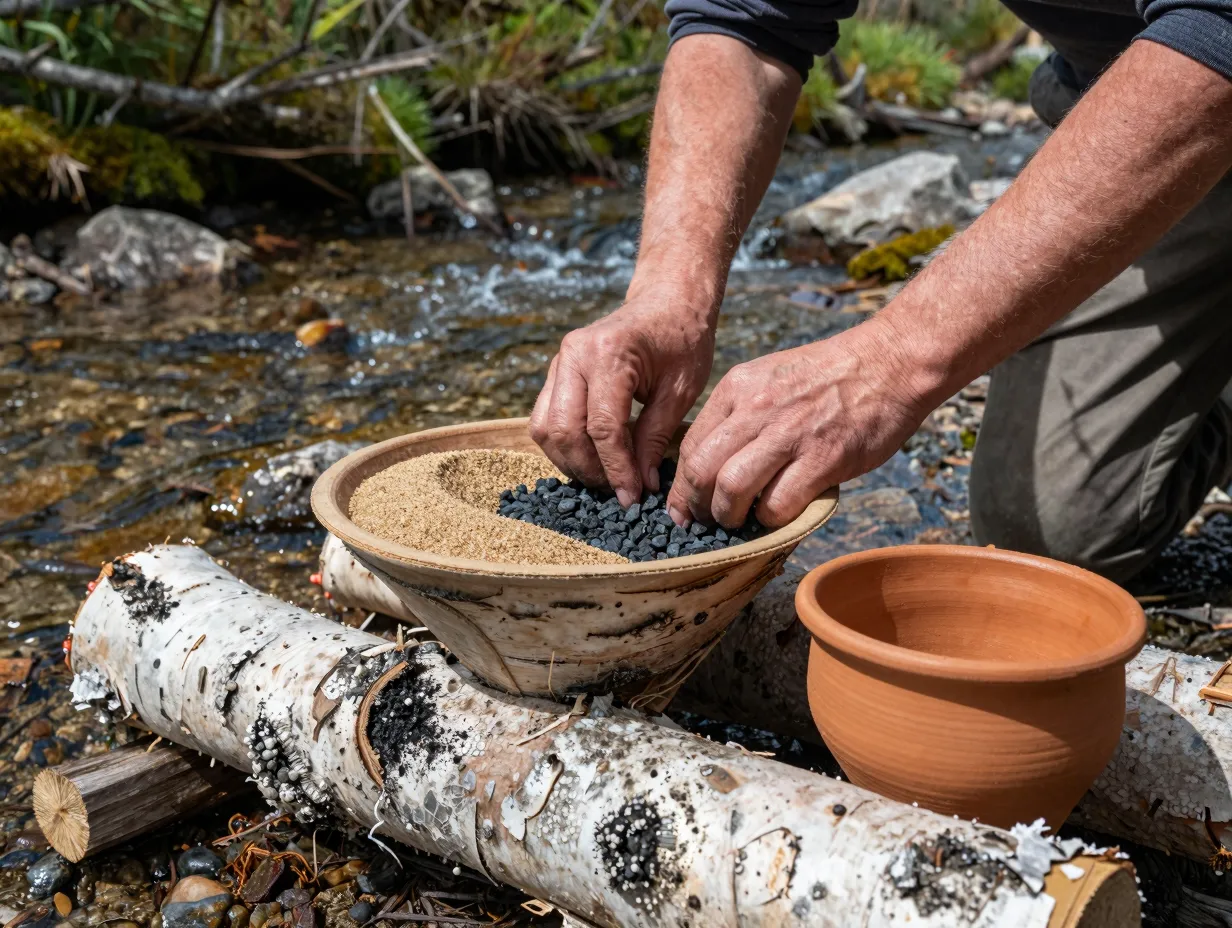
No skill is more immediately critical than securing safe drinking water. The human body can survive roughly three weeks without food but only three days without water, and cognitive decline from dehydration begins within hours, impairing every other survival task.
Key methods for long-term water security include:
- Locating reliable water sources: springs, streams, and seeps are preferable to standing water
- Reading landscape features to find water in arid environments (dry riverbeds, animal trails, vegetation clusters)
- Constructing primitive filtration systems using layers of sand, charcoal, and gravel
- Boiling as the most reliable purification method in a wilderness setting
- Solar disinfection (SODIS) as a backup method in clear-sky environments
- Building and maintaining a clay or ceramic pot filter for camp-based purification
Long-term wilderness dwellers must also account for seasonal variation. A spring that flows freely in April may dry up by August. Mapping multiple water sources within a reasonable travel radius of a base camp is not optional, it is a core planning task.
Water source quality comparison:
| Source Type | Reliability | Purification Needed | Notes |
|---|---|---|---|
| Mountain spring | High | Minimal | Best option when available |
| Running stream | Moderate | Yes | Risk of upstream contamination |
| Rainwater collection | Variable | Low | Depends on season and climate |
| Standing pond | Low | Essential | High pathogen load |
| Snow/ice melt | High (winter) | Boil recommended | Clean but energy-costly to melt |
2. Shelter Construction
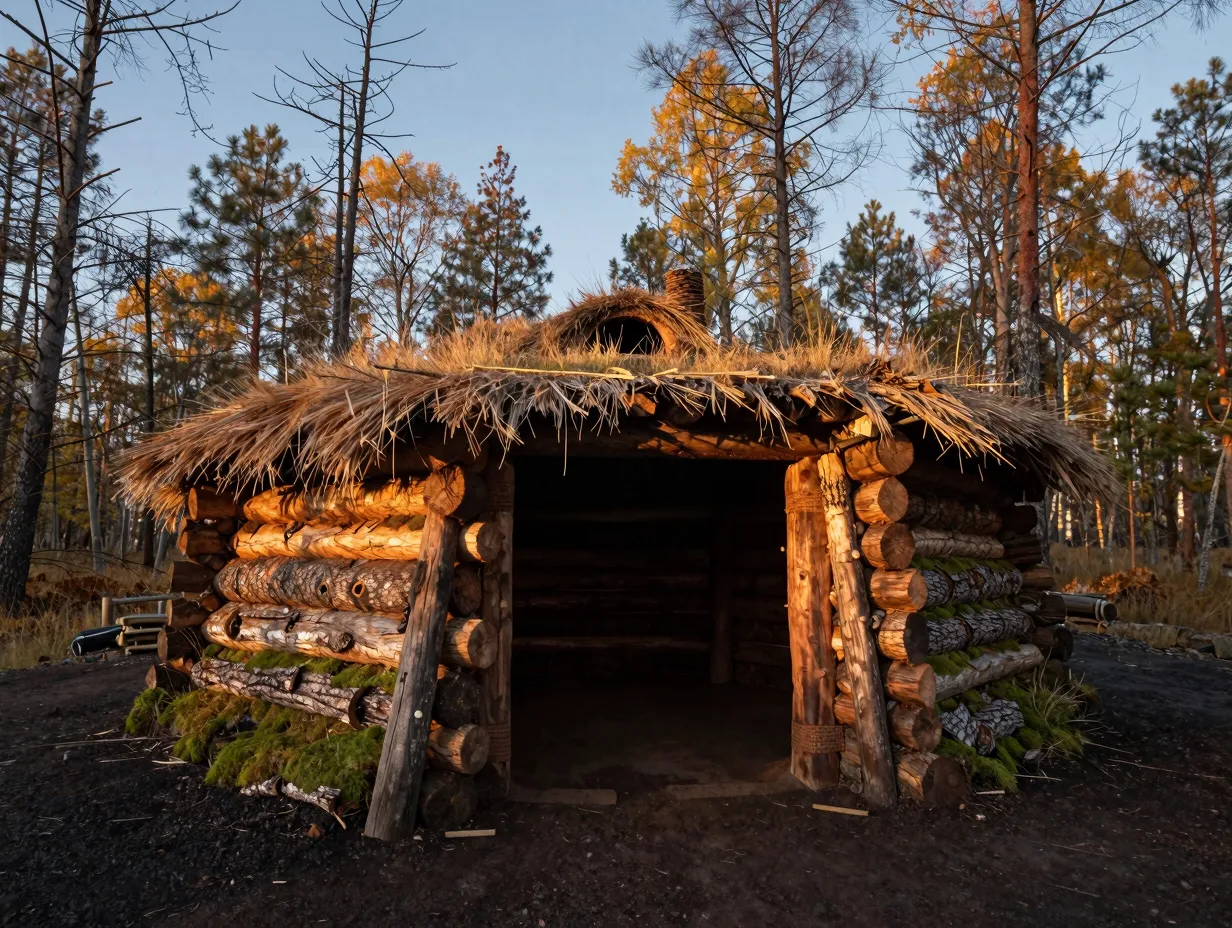
After water, shelter is the most urgent priority. Exposure kills faster than starvation. Hypothermia can set in within hours in wet or windy conditions, even when temperatures are well above freezing.
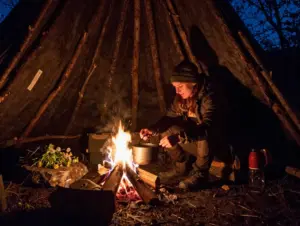
Long-term shelter differs fundamentally from emergency shelter. A debris hut that keeps a person alive for one night is not a viable dwelling for six months. Permanent or semi-permanent wilderness structures must address:
- Insulation: Thick walls of natural material (earth, logs, bark, sod) retain heat effectively
- Ventilation: Adequate airflow prevents moisture buildup, mold, and respiratory illness
- Waterproofing: Bark shingles, thatched grass, and layered natural materials shed rain reliably
- Structural integrity: A shelter that collapses under snow load or wind is worse than no shelter at all
- Site selection: Avoid flood plains, dead-fall zones, and exposed ridgelines
Traditional shelter types worth studying include the Finnish smoke sauna (lavvu-inspired earth lodge), the Native American longhouse, the Mongolian yurt principle, and the Scandinavian turf house. Each represents centuries of engineering refinement for specific climates.
A well-built long-term wilderness shelter should be able to maintain an interior temperature at least 20 degrees Celsius warmer than the outside ambient temperature without any fire, purely through passive insulation.
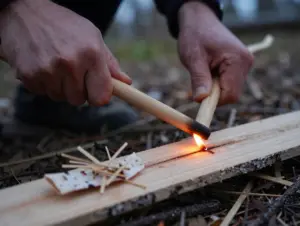
3. Fire Craft
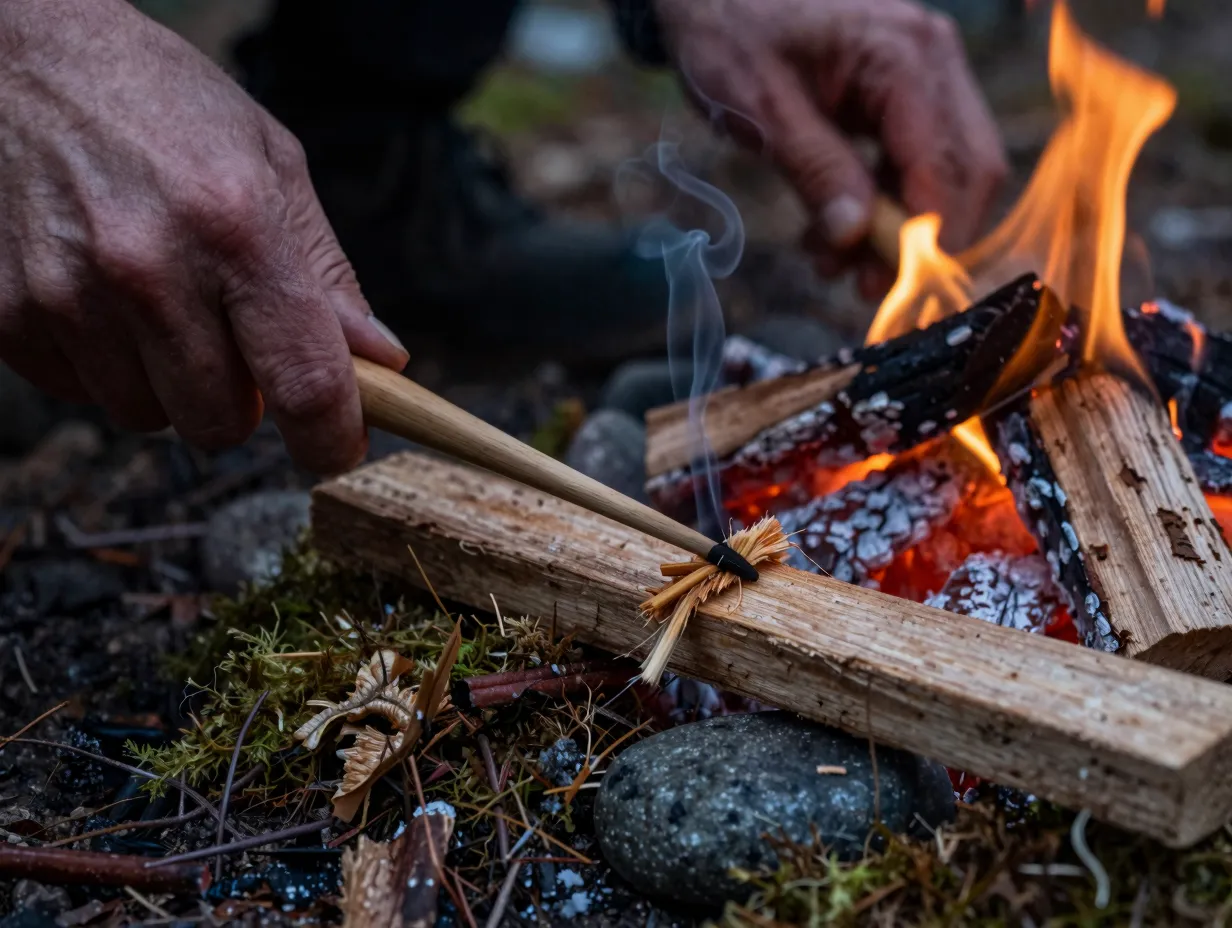
Fire is the multiplier skill. It purifies water, cooks food, provides warmth, processes materials, signals for help, and supports mental well-being. A person who cannot reliably start fire in wet, cold, or windy conditions is perpetually vulnerable.
The three tiers of long-term fire craft are:
- Friction fire: bow drill, hand drill, and fire plow methods using locally sourced materials
- Percussion fire: flint-and-steel or quartz-and-pyrite spark methods
- Lens and solar fire: using natural water-filled containers or ice lenses in bright sunlight
Friction fire is the most critical because it requires no imported materials. However, it demands precise knowledge of local wood species. Not all wood combinations produce adequate heat through friction. Practitioners must learn which local species serve as hearth boards and spindles, and which materials make the best tinder bundles.
Long-term fire craft also includes:
- Fire management: Keeping coals alive through the night using a well-banked hardwood fire
- Wet-weather fire starting: Splitting dry wood from the interior of standing dead trees
- Cooking fire design: Keyhole fires, Dakota holes, and trench fires for fuel efficiency
- Charcoal production: For water filtration, metal working, and drawing
4. Wild Food Procurement
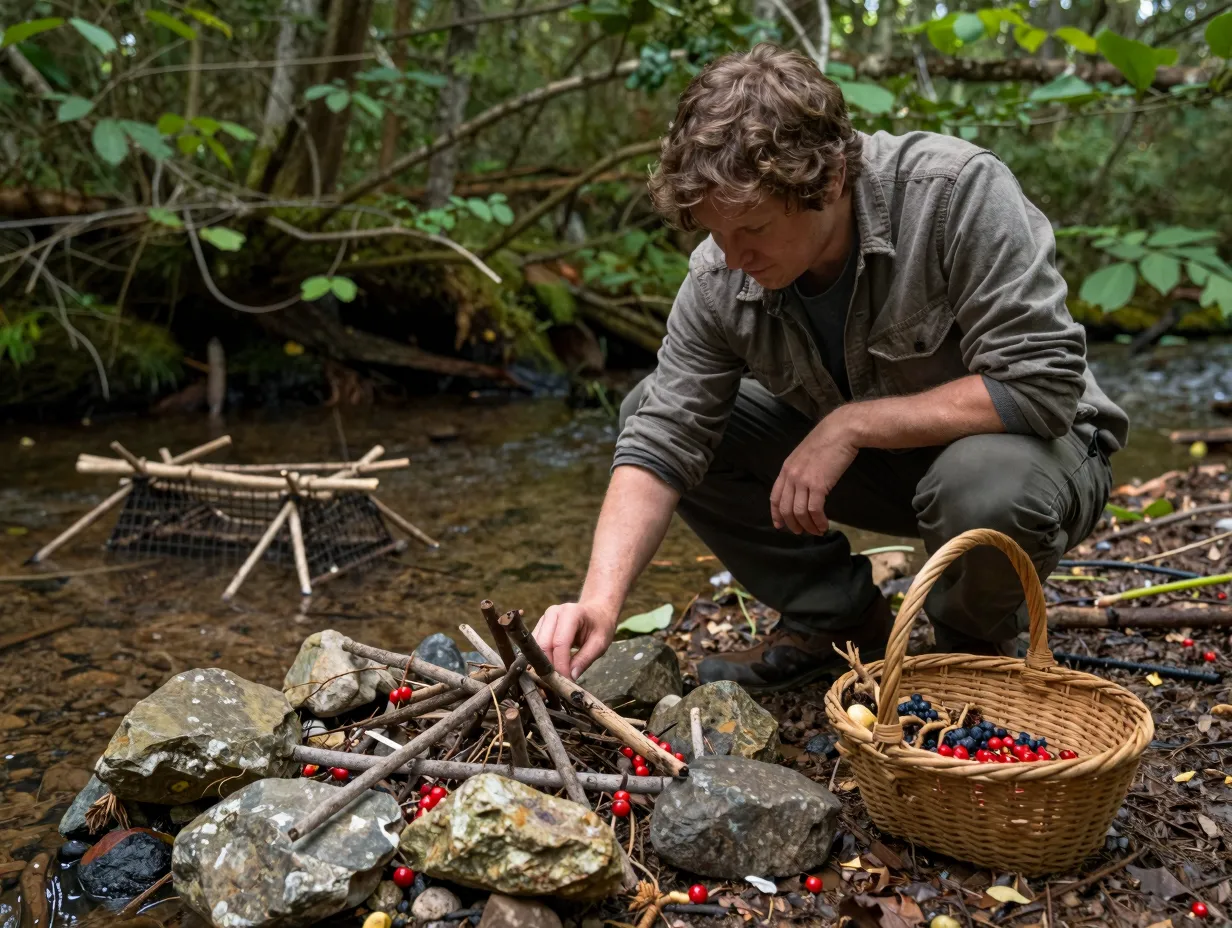
After the first 72 hours, food becomes the central ongoing challenge of wilderness living. Wild food procurement encompasses four distinct disciplines, each of which requires years of dedicated practice to master.
Foraging and plant identification is the most immediately accessible food source in most environments. However, it carries the highest risk of fatal error. Misidentifying a toxic plant as an edible one has killed experienced outdoors people. The rule is simple: never eat a plant unless identification is 100% certain.
Hunting and trapping provides calorie-dense animal protein. Long-term practitioners rely more heavily on trapping than active hunting because traps work continuously without human presence. Effective trap types include:
- Deadfall traps (Paiute, figure-4, and promontory peg designs)
- Snares for small game using natural cordage
- Fish traps and weirs in streams and rivers
Fishing is often the most reliable and calorie-efficient food procurement method near water. Hand-line fishing, spear fishing in shallow water, and basket traps all have roles in a long-term food strategy.
Food preservation is the fourth and often overlooked discipline. Smoking, drying, fermenting, and rendering fat are essential for surviving lean seasons. A summer abundance of berries or fish means nothing if it cannot be stored for winter.
“The wilderness does not distribute food evenly across the calendar. Long-term self-reliance requires storing surplus during abundance and rationing carefully during scarcity.”
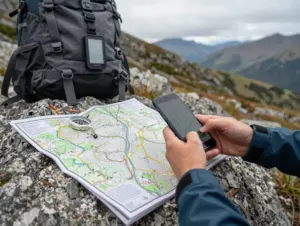
5. Navigation and Wayfinding

Getting lost is not merely inconvenient in a long-term wilderness context. It can mean losing a cache of preserved food, missing a seasonal migration of game, or failing to return to shelter before a storm. Navigation is the skill that connects all other activities across a landscape.
Core navigation skills for wilderness living include:
- Solar navigation: tracking the sun’s arc to determine cardinal directions and time of day
- Star navigation: using Polaris (North Star) and constellation patterns for nighttime orientation
- Topographic reading: understanding how terrain features translate to mental maps
- Natural landmark memorization: building a detailed internal map of a home territory
- Track and sign: following animal trails, which often lead to water, food, and shelter resources
Long-term wilderness practitioners develop what traditional cultures called “home range knowledge”, an intimate, detailed understanding of a specific landscape that allows confident movement in all weather conditions and all seasons. This is built through deliberate, repeated travel across the same territory from multiple directions.
A practical navigation toolkit for wilderness living requires no manufactured instruments. The sun, stars, prevailing winds, moss growth patterns, and topographic features are sufficient for confident orientation within a known territory.
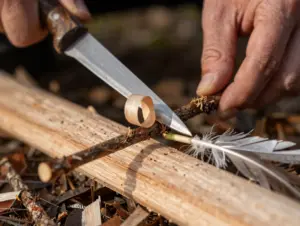
6. Tool and Material Craft
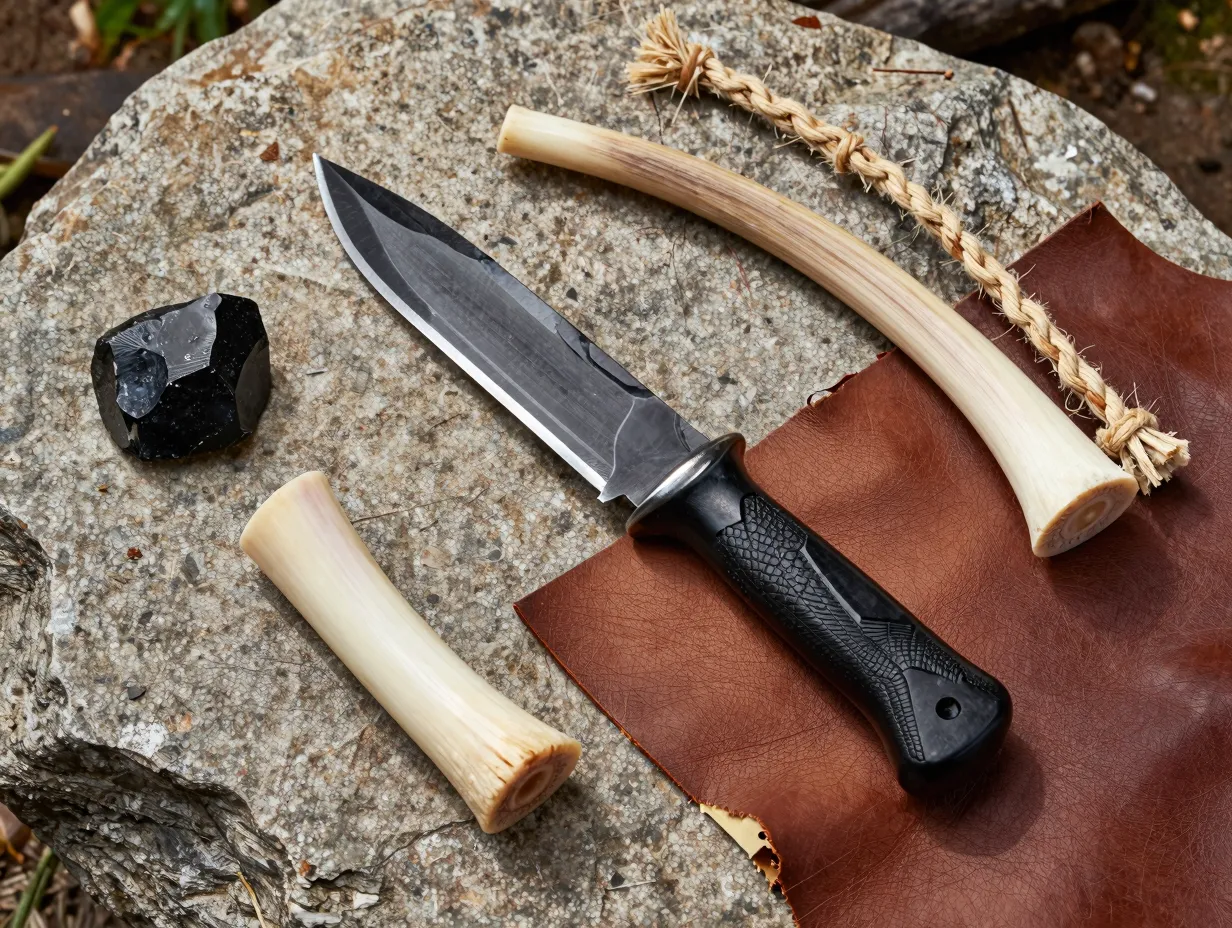
Every manufactured tool that enters a wilderness camp will eventually break, wear out, or be lost. Long-term self-reliance requires the ability to fabricate and repair tools from raw natural materials. This is one of the most technically demanding of the 8 Foundational Skills for Long-Term Wilderness Living and Self-Reliance, requiring knowledge of materials science, engineering principles, and fine motor skill.
Essential tool-crafting disciplines include:
- Flint knapping and stone tool making: Producing cutting edges, scrapers, and projectile points from flint, obsidian, chert, or quartzite
- Bone and antler working: Shaping needles, awls, fish hooks, and handles from skeletal material
- Cordage making: Twisting plant fibers (dogbane, stinging nettle, inner bark) into rope and thread
- Pottery: Hand-building and pit-firing clay vessels for water storage and cooking
- Wood working: Carving bowls, spoons, handles, frames, and structural components using stone tools
- Hide tanning: Processing animal hides into leather and rawhide for clothing, bags, and bindings
Each of these skills requires dedicated practice measured in hundreds of hours. A flint-knapped knife that holds an edge through weeks of daily use is the product of significant skill development, not casual experimentation.
7. Wilderness First Aid and Herbal Medicine
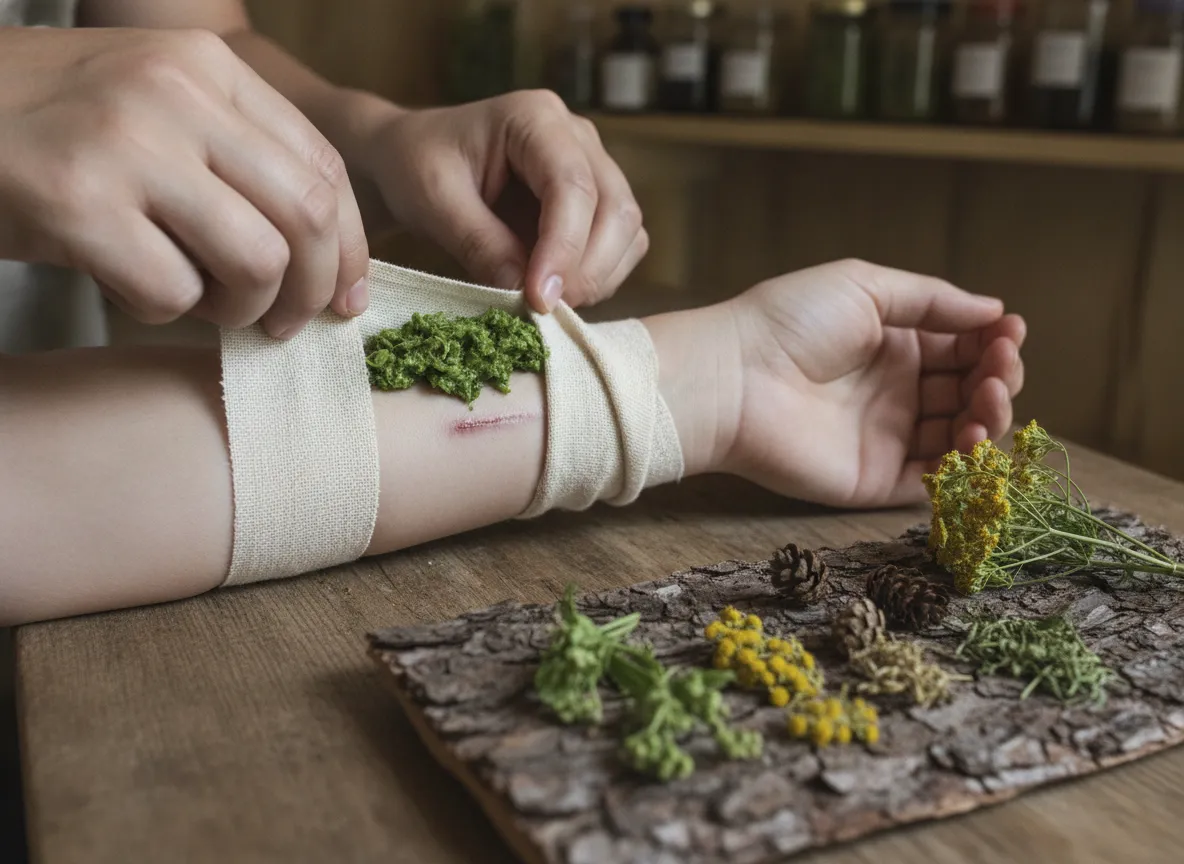
In a long-term wilderness context, access to professional medical care is either absent or severely delayed. Minor injuries and illnesses that would be trivial in an urban setting can become life-threatening without proper management.
Priority areas for wilderness first aid knowledge include:
- Wound cleaning, closure, and infection management using natural antiseptics (pine pitch, yarrow, plantain)
- Bone fracture stabilization and improvised splinting
- Hypothermia recognition and rewarming protocols
- Hyperthermia and heat stroke management
- Waterborne illness recognition and oral rehydration
- Dental emergencies: temporary filling materials and pain management
- Childbirth assistance in remote settings (for long-term family groups)
Herbal medicine is the traditional complement to first aid skills. Every bioregion has a pharmacopoeia of medicinal plants that have been used for centuries. Learning the medicinal plants of a specific region, their identification, preparation, dosage, and contraindications, is a multi-year study that pays significant dividends in a long-term wilderness context.
Key plant categories to study include:
- Antimicrobial and wound-healing plants
- Fever-reducing and anti-inflammatory plants
- Digestive and gut-health plants
- Respiratory support plants
- Analgesic (pain-reducing) plants
A critical caution applies here: herbal medicine knowledge should be built from verified traditional sources and practiced conservatively. Misapplication of medicinal plants can cause harm.
8. Community, Communication, and Mental Resilience
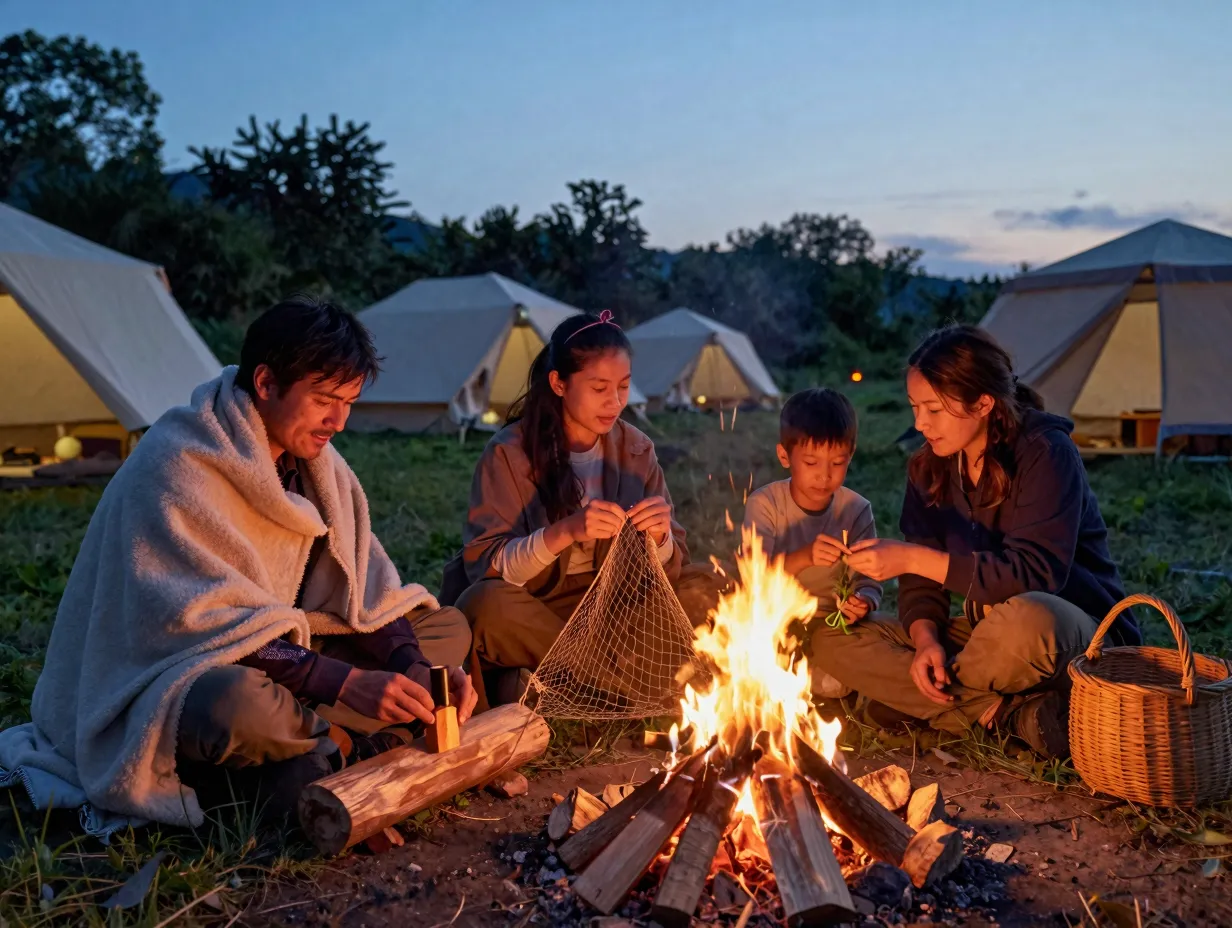
The eighth of the 8 Foundational Skills for Long-Term Wilderness Living and Self-Reliance is the one most often underestimated by people who approach wilderness living primarily as a technical challenge. Human beings are social animals. Isolation, monotony, and the psychological weight of constant survival demands create mental health challenges that have ended more long-term wilderness attempts than any physical skill deficit.
Mental resilience in a wilderness context involves:
- Developing structured daily routines that provide psychological stability
- Maintaining purposeful creative activity (carving, storytelling, music, art) as a mental health practice
- Building a realistic understanding of risk tolerance and personal limits before committing to extended isolation
- Practicing deliberate gratitude and observation as antidotes to survival fatigue
Community and communication matter enormously for multi-year self-reliance. No single person can master all necessary skills to an equal depth. Traditional wilderness-living cultures universally organized themselves into small groups of 20 to 50 people, large enough to distribute labor and knowledge, small enough to remain mobile and cohesive.
For modern practitioners, this means:
- Building relationships with other skilled practitioners before entering long-term wilderness situations
- Establishing reliable communication protocols with trusted contacts outside the wilderness area
- Developing conflict resolution skills, since interpersonal friction in isolated groups is a well-documented threat to group survival
- Creating knowledge-sharing systems so that critical skills are not held by only one person
“The lone wolf narrative of wilderness survival is largely a myth. The most successful long-term wilderness cultures in human history were built on interdependence, shared knowledge, and mutual care.”
Building a Progressive Training Plan for All 8 Skills
Developing genuine competence across all eight domains requires a structured, multi-year approach. The following framework provides a practical starting point:
Year 1, Foundation Layer
Focus on water procurement, shelter construction, and fire craft. Practice each skill in controlled conditions before introducing weather stress. Attend a reputable primitive skills course to receive feedback on technique.
Year 2, Sustenance Layer
Add wild food procurement and navigation. Begin a dedicated plant identification study program specific to the target bioregion. Practice trapping legally and ethically in areas where it is permitted.
Year 3, Craft and Medicine Layer
Develop tool-making and herbal medicine knowledge. Begin pottery and hide tanning. Build a personal materia medica of local medicinal plants with verified identification.
Year 4 and Beyond, Integration and Community
Focus on integrating all skills into sustained practice scenarios. Participate in extended primitive living immersions of 30, 60, and 90 days. Build and maintain relationships with a community of skilled practitioners.
Skill development milestones by year:
| Year | Primary Focus | Target Competency |
|---|---|---|
| 1 | Water, Shelter, Fire | Reliable execution in adverse conditions |
| 2 | Food, Navigation | Seasonal food calendar, home range mapping |
| 3 | Tools, Medicine | Functional tool kit from raw materials |
| 4+ | Integration, Community | Sustained multi-week primitive living |
Common Mistakes That Undermine Long-Term Wilderness Self-Reliance
Even dedicated practitioners make predictable errors. Recognizing these patterns accelerates skill development:
- Gear dependency: Relying on manufactured tools instead of building primitive skill depth
- Single-biome training: Practicing only in one environment and lacking adaptability
- Neglecting food preservation: Focusing on procurement without building storage capacity
- Ignoring the psychological dimension: Treating wilderness living as purely a technical challenge
- Skipping plant identification rigor: Rushing identification to the point of dangerous error
- Underestimating water demand: Failing to account for increased water needs during heavy physical labor
- Isolation as a virtue: Rejecting community-building as unnecessary
Conclusion
The 8 Foundational Skills for Long-Term Wilderness Living and Self-Reliance, water procurement, shelter construction, fire craft, wild food procurement, navigation, tool and material craft, wilderness first aid, and community resilience, form an integrated system. Weakness in any one domain creates vulnerability across the entire system.
The path forward is clear and actionable:
- Assess current skill levels honestly across all eight domains using a simple self-rating scale.
- Prioritize the two or three domains with the greatest gaps and build a 90-day focused practice plan.
- Seek instruction from experienced practitioners and reputable primitive skills programs in 2026.
- Begin bioregion-specific study, plants, animals, geology, and weather patterns of the specific landscape where long-term living will occur.
- Build and invest in a community of like-minded practitioners before attempting extended wilderness immersion.
Wilderness self-reliance is not a destination. It is a lifelong practice of deepening knowledge, refining skill, and building genuine relationship with the natural world. The eight skills outlined here are not a checklist to complete, they are doorways into a lifetime of meaningful learning.