8 Essential Skills for Your Next Epic Outdoors Adventure
Every year, search and rescue teams across North America respond to more than 150,000 incidents involving lost, injured, or stranded outdoor recreationists, a number that has climbed steadily as backcountry access expands and more people head into the wild with minimal preparation. The difference between a close call and a catastrophe almost always comes down to knowledge, not gear. Mastering the 8 Essential Skills for Your Next Epic Outdoors Adventure is the single most reliable investment any outdoor enthusiast can make before stepping off the trailhead. Whether the goal is a weekend camping trip, a multi-day backpacking route, or a technical alpine climb, these core competencies form the foundation of safe, confident, and deeply rewarding wilderness travel [4].
Disclosure: This post contains affiliate links. As an Amazon Associate, we earn from qualifying purchases, and at no extra cost to you.
Key Takeaways
- Trip planning and risk management are now considered the most critical skill for backcountry safety, outranking even navigation and first aid in importance [4].
- Navigation using both map and compass and modern GPS tools is non-negotiable for any off-trail or remote travel [7].
- Wilderness first aid knowledge can sustain life during the critical hours before professional rescue arrives [5].
- Fire starting, shelter building, and water procurement form a survival triad that addresses the three fastest killers in the outdoors: hypothermia, dehydration, and exposure [6].
- Avalanche awareness and terrain reading are increasingly essential skills as winter backcountry recreation surges in popularity [9].
Why the 8 Essential Skills for Your Next Epic Outdoors Adventure Matter More Than Ever
The modern outdoor industry has made gear more accessible, lightweight, and sophisticated than at any point in history. Yet gear alone does not keep people safe. Skills do. A $600 GPS unit is useless to someone who does not understand datum settings or how to interpret contour lines. A premium first aid kit does nothing for a hiker who cannot recognize the signs of anaphylaxis or a femur fracture.
Experts across the survival and wilderness education community consistently emphasize that knowledge weighs nothing and never runs out of batteries [7]. The eight skills outlined below represent a consensus drawn from wilderness survival educators, search and rescue professionals, and experienced backcountry guides. Each skill addresses a specific category of risk that outdoor adventurers face in real-world conditions.
The 8 Essential Skills for Your Next Epic Outdoors Adventure
1. Trip Planning and Risk Management
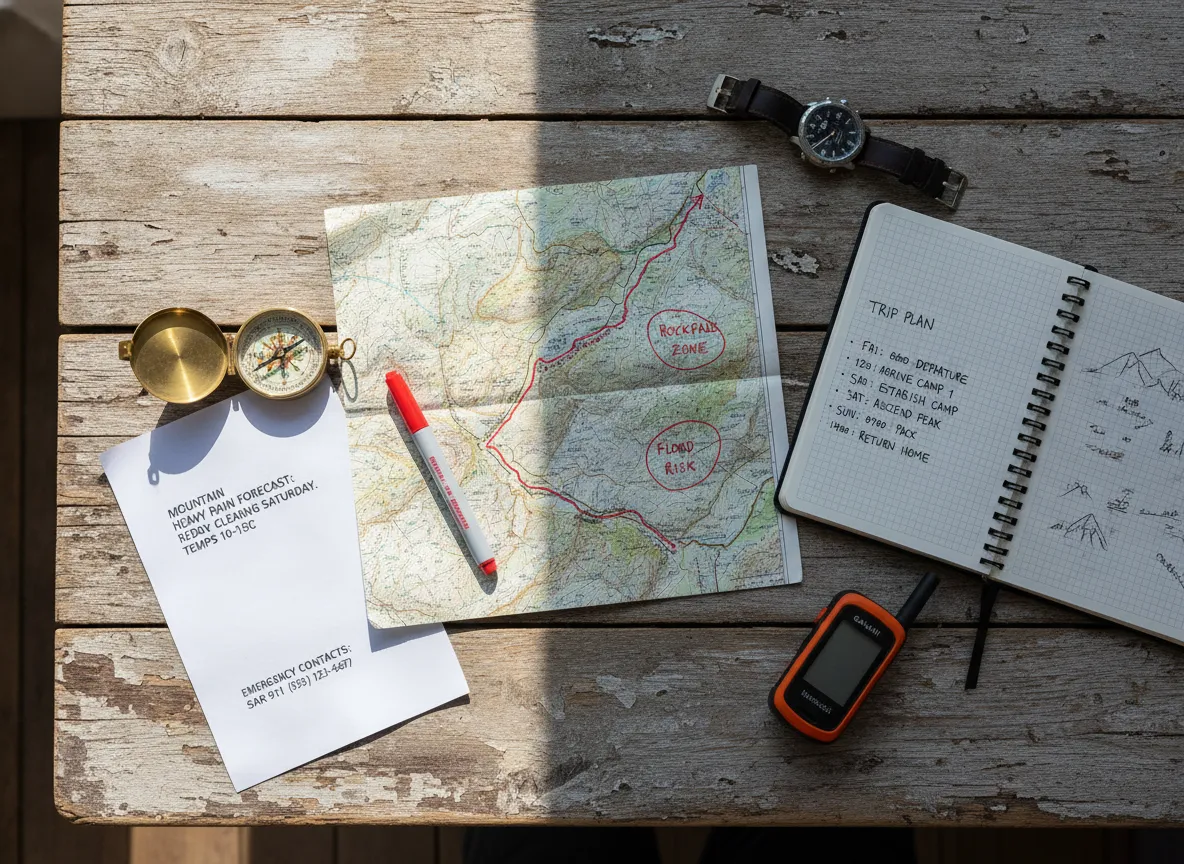
Trip planning has moved to the top of the essential skills list for a clear reason: most wilderness emergencies are preventable with proper preparation [4]. Effective trip planning involves far more than choosing a trailhead and packing a bag.
Core components of solid trip planning include:
- Researching weather forecasts from multiple sources, including elevation-specific models
- Studying the terrain, trail conditions, and any known hazards
- Filing a detailed trip plan with a trusted contact, including expected return time and emergency protocols
- Assessing the fitness and skill level of every member of the group
- Identifying the nearest emergency services, hospital, and communication dead zones
Risk management is the ongoing process of identifying hazards before and during a trip and making deliberate decisions to reduce exposure to those hazards. This includes recognizing when conditions have changed enough to justify turning back, a decision that requires ego management as much as technical knowledge.
“The decision to turn around is not a failure. It is the most important skill an outdoor adventurer can develop.”
A well-structured trip plan is the single greatest tool for ensuring that if something does go wrong, rescuers have the information they need to find you quickly [4].
2. Navigation: Map, Compass, and GPS
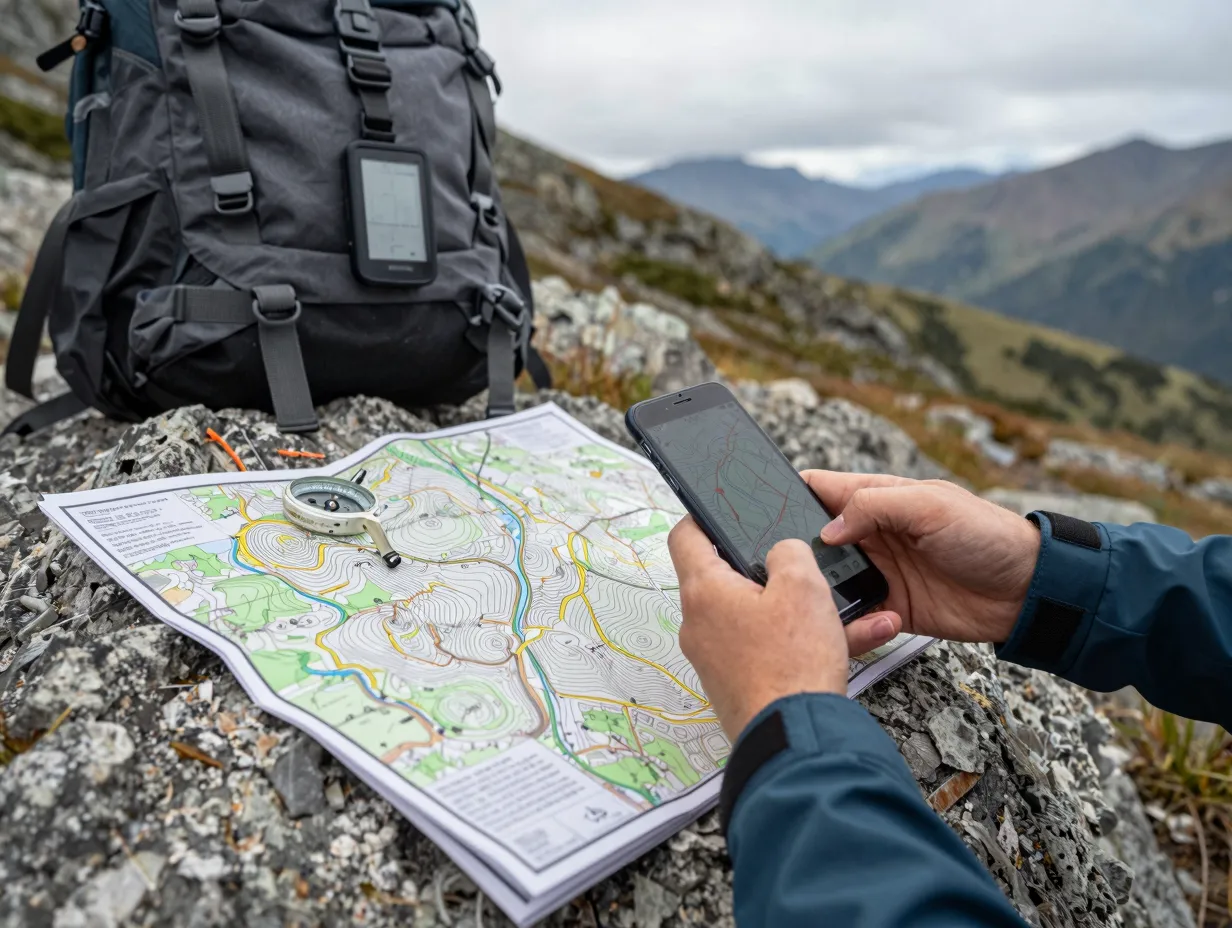
The ability to determine where you are and where you need to go is foundational to every other outdoor skill. Modern adventurers have access to powerful digital tools, but technology fails, batteries die, screens crack, and satellite signals drop in deep canyons [7].
The three-layer navigation system used by experienced backcountry travelers:
| Layer | Tool | Backup Role |
|---|---|---|
| Primary | Smartphone with offline maps | Convenient, high detail |
| Secondary | Dedicated GPS device | Durable, long battery life |
| Tertiary | Topographic map and compass | Never fails, no power needed |
Learning to read a topographic map, understanding contour lines, scale, and terrain features, is a skill that takes a few hours to learn and a lifetime to master. Compass skills, including taking a bearing and triangulating a position, complement map reading and provide a reliable fallback when electronics are unavailable [7].
Key navigation skills to develop:
- Identifying terrain features (ridgelines, saddles, drainages) on a topo map and matching them to the landscape
- Taking and following a compass bearing
- Using GPS waypoints effectively
- Estimating travel time based on distance and elevation gain
3. Wilderness First Aid
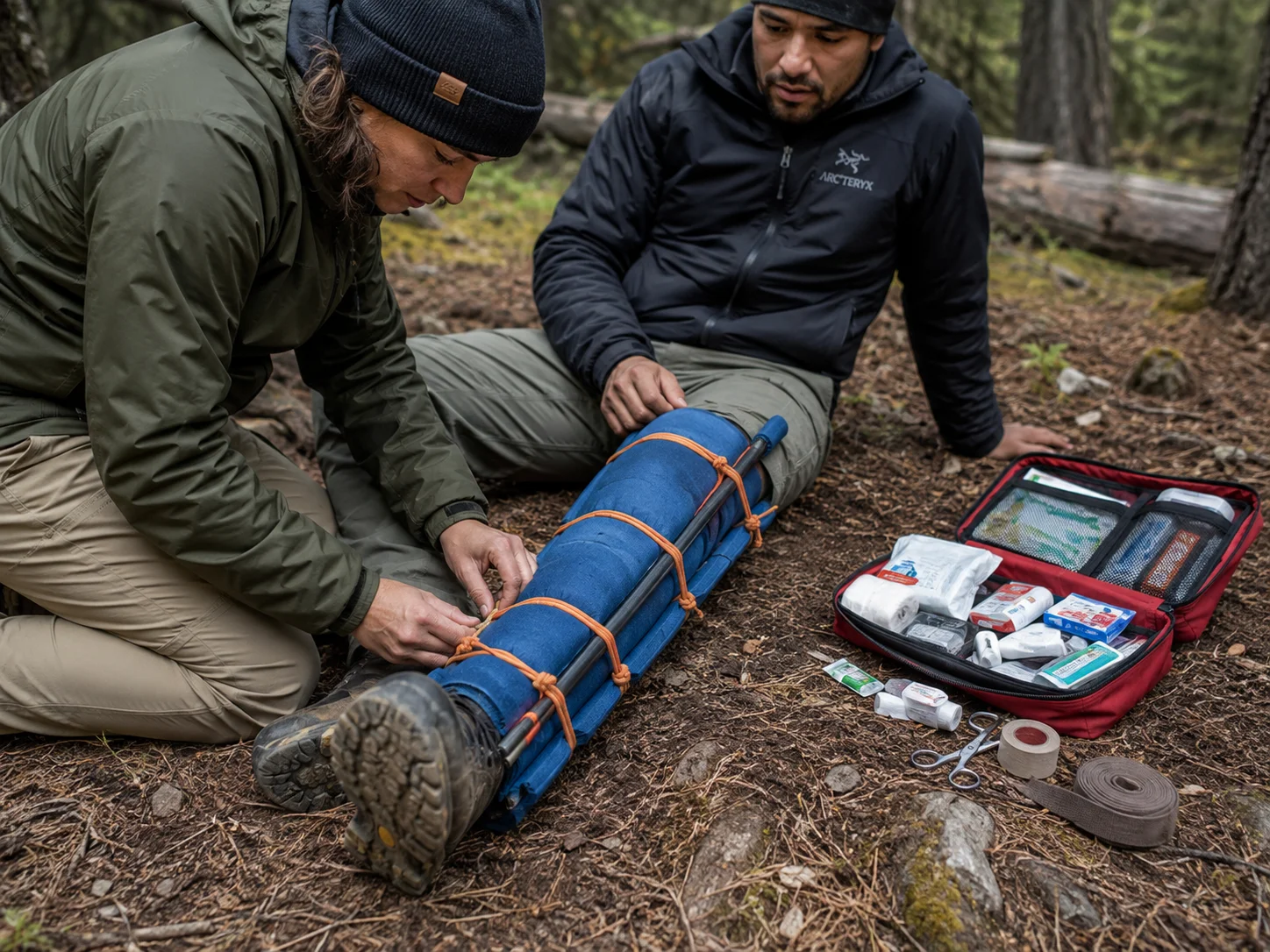
A wilderness first aid (WFA) certification is one of the highest-value investments an outdoor adventurer can make. In the backcountry, evacuation times can range from hours to days. The ability to assess and manage injuries during that window can be the difference between a full recovery and permanent disability, or worse [5].
Critical wilderness first aid skills include:
- Patient assessment: conducting a systematic head-to-toe examination
- Wound management: cleaning, irrigating, and dressing lacerations in field conditions
- Fracture and dislocation management: improvised splinting using trekking poles and sleeping pads
- Recognizing and treating hypothermia, hyperthermia, and altitude sickness
- Managing allergic reactions, including anaphylaxis with an epinephrine auto-injector
- Improvised evacuation techniques for patients who cannot walk
Formal WFA courses typically run 16 to 20 hours and are offered by organizations including NOLS, Wilderness Medical Associates, and SOLO. The Wilderness First Responder (WFR) certification offers a deeper 70-80 hour curriculum for guides and frequent backcountry travelers [5].
4. Shelter Building and Improvised Camping
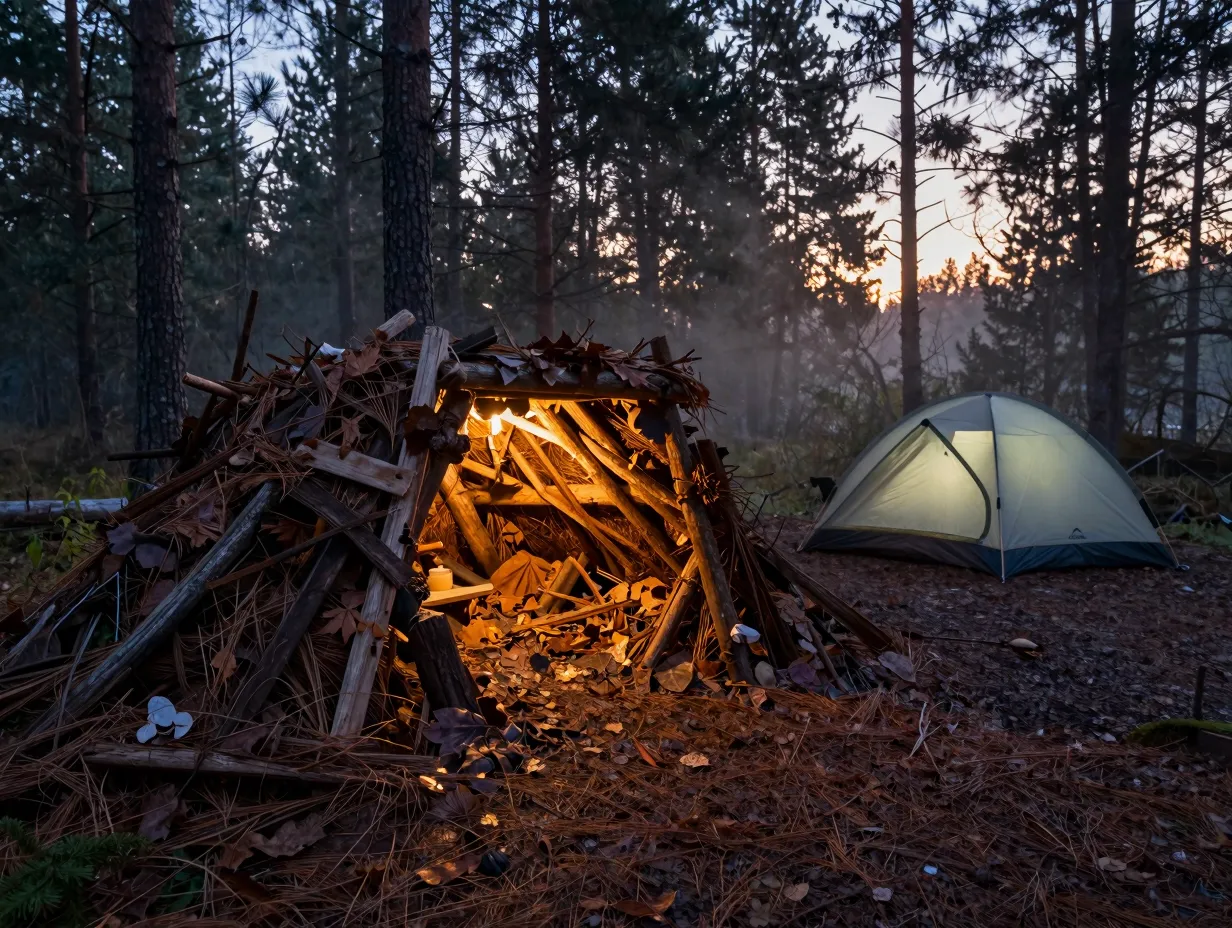
Exposure kills faster than thirst or hunger. In wet, windy, or cold conditions, a person without adequate shelter can develop life-threatening hypothermia within hours. Knowing how to construct an emergency shelter from available materials, or how to optimize a modern tent setup in extreme conditions, is a non-negotiable skill [6].
Shelter priorities in a survival situation:
- Insulation from the ground (ground cold is far more dangerous than air cold)
- Protection from wind
- Protection from precipitation
- Reflective or heat-retaining design
Common improvised shelter types:
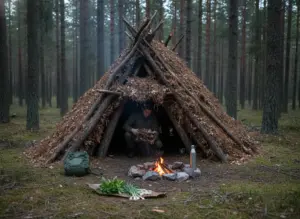
- Debris hut: A low, body-length shelter packed with leaves, pine needles, and bark for insulation. Effective to below freezing when built correctly.
- Lean-to: A simple angled structure using a ridgepole and branches, best used in mild conditions with a fire in front.
- Snow shelter (quinzhee or snow trench): Counterintuitively warm, snow shelters can maintain interior temperatures near freezing even when outside temperatures drop to -30°C.
Even when carrying a modern tent, understanding shelter principles allows adventurers to optimize campsite selection, manage condensation, and respond effectively when gear is lost or damaged [6].
5. Fire Starting
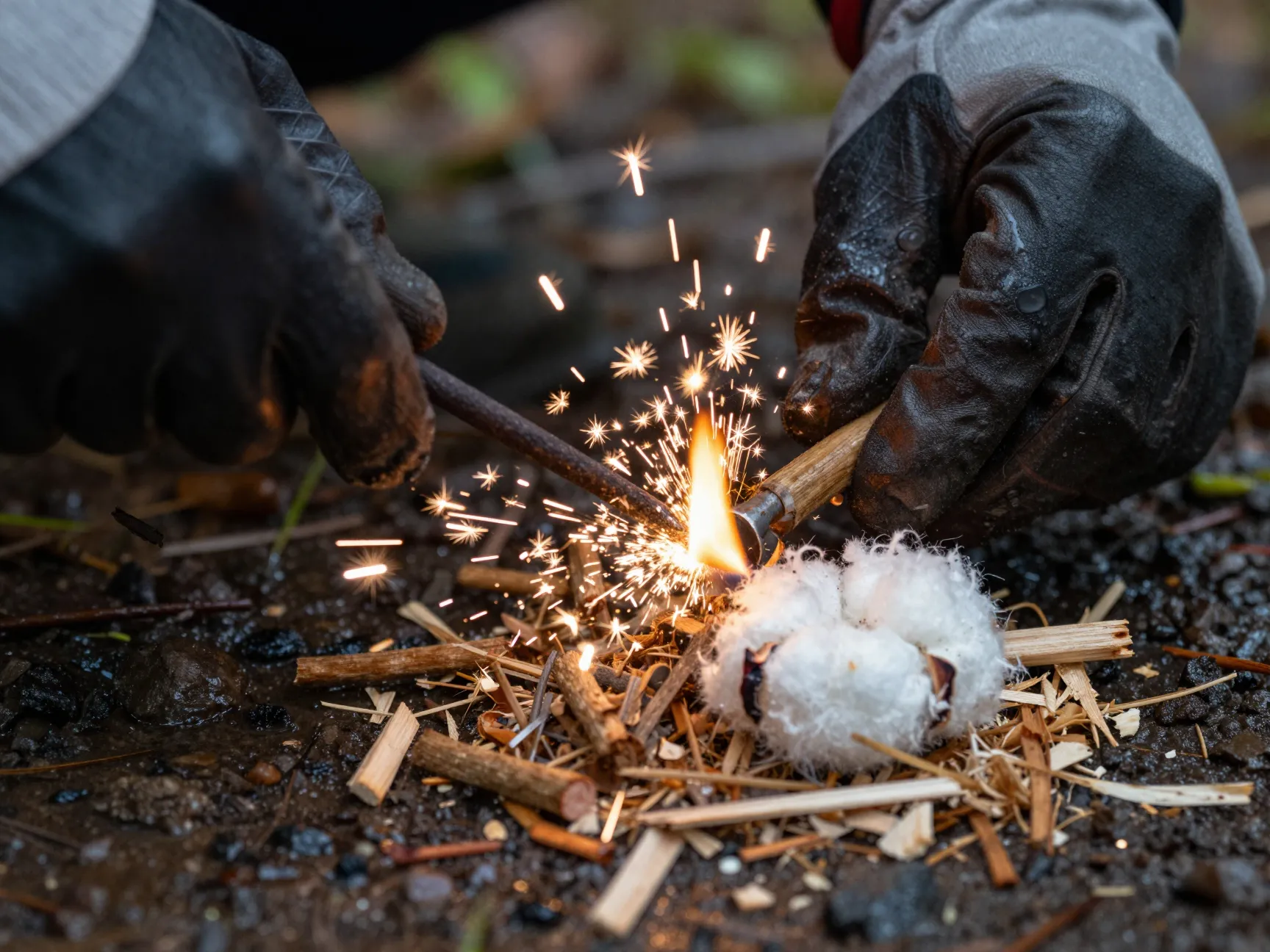
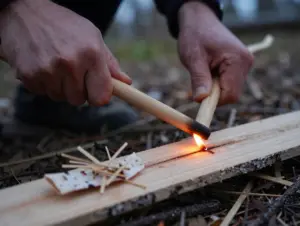
Fire serves four critical functions in the backcountry: warmth, water purification, signaling for rescue, and psychological morale. The ability to start a fire reliably, in wet, cold, or windy conditions, is a skill that requires both knowledge and practice [5].
The fire triangle in practice:
Every fire needs fuel, heat, and oxygen. Wilderness fire starting focuses on managing all three elements efficiently.
Recommended fire-starting kit:
- Waterproof matches (primary)
- Butane lighter (secondary)
- Ferro rod (tertiary, works when wet)
- Fire-starting tinder cubes or petroleum jelly-soaked cotton balls
Tinder preparation is the most overlooked step. Even experienced campers underestimate how much dry tinder a fire requires in wet conditions. Collecting tinder from the dry undersides of logs, the inner bark of standing dead wood, or carrying commercial tinder ensures success in challenging weather [5].
Primitive fire-starting methods, bow drill, hand drill, and flint and steel, are worth learning as a last resort, but they require significant practice to execute reliably under stress.
6. Water Procurement and Purification
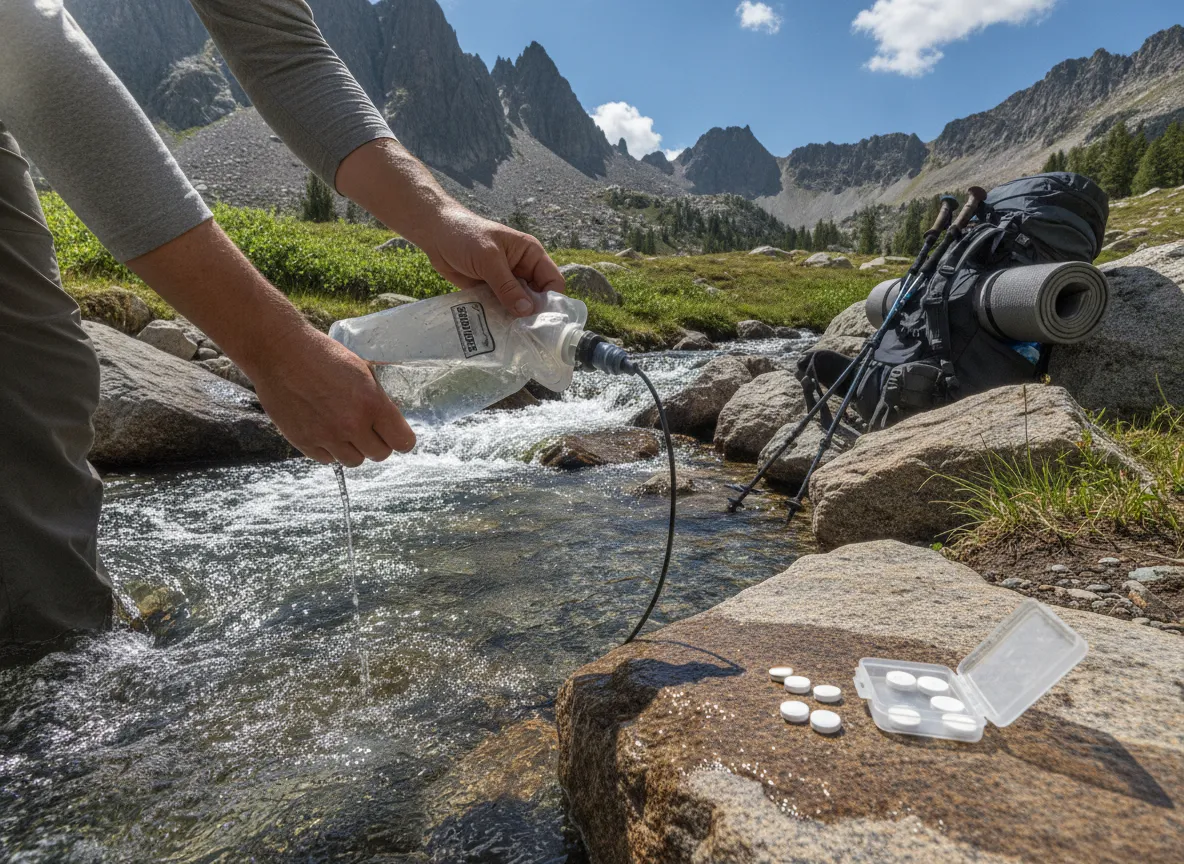
The human body can survive approximately three days without water. In high-exertion outdoor environments, dehydration can impair judgment and physical performance within hours. Knowing how to find, collect, and purify water in the field is a life-sustaining skill [6].
Water sources in the backcountry (ranked by typical purity):
- Moving water at high elevation above human activity
- Springs emerging directly from the ground
- Slow-moving streams and rivers
- Standing water (ponds, lakes)
- Collected rainwater or snowmelt
No backcountry water source should be consumed without treatment, regardless of how clean it appears. Giardia and Cryptosporidium are invisible to the naked eye and cause severe gastrointestinal illness [6].
Water purification methods compared:
| Method | Effectiveness | Speed | Weight |
|---|---|---|---|
| Squeeze filter (e.g., Sawyer) | High | Fast | Light |
| UV pen (e.g., SteriPen) | Very high | Fast | Light |
| Chemical tablets | Moderate | 30-60 min | Ultralight |
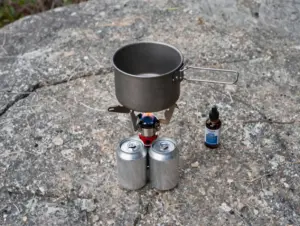
| Boiling | Very high | Slow | No extra gear |
Carrying at least two purification methods on any backcountry trip is standard practice among experienced wilderness travelers [7].
7. Food and Nutrition Management
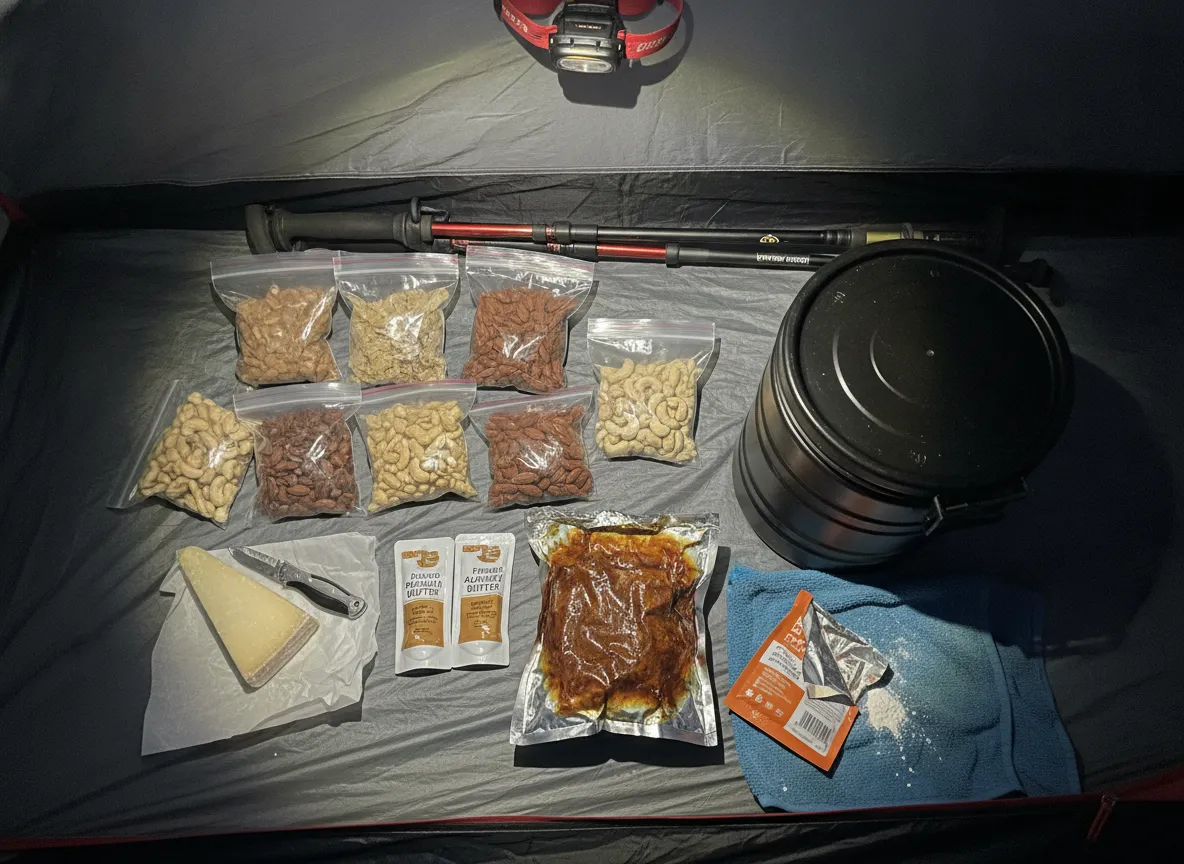
Caloric management in the backcountry is more nuanced than simply packing enough food. Cold temperatures, high altitude, and sustained physical exertion dramatically increase caloric needs, often to 4,000-6,000 calories per day for active backpackers [7].
Principles of backcountry nutrition:
- Caloric density: Prioritize foods with high calories per ounce. Nuts, nut butters, hard cheeses, and freeze-dried meals are staples.
- Macronutrient balance: Sustained energy requires a mix of carbohydrates for quick fuel, fats for sustained warmth and energy, and protein for muscle repair.
- Electrolyte management: Sweating depletes sodium, potassium, and magnesium. Electrolyte supplements or salty snacks prevent cramping and hyponatremia.
- Food safety: In bear country, all food must be stored in bear canisters or hung in a bear bag at least 200 feet from camp and 10 feet off the ground.
Knowing how to forage edible wild plants adds a meaningful safety margin in extended survival situations, but foraging should never be the primary food strategy. Misidentification of toxic plants is a serious and recurring cause of wilderness illness [7].
8. Avalanche Awareness and Terrain Reading
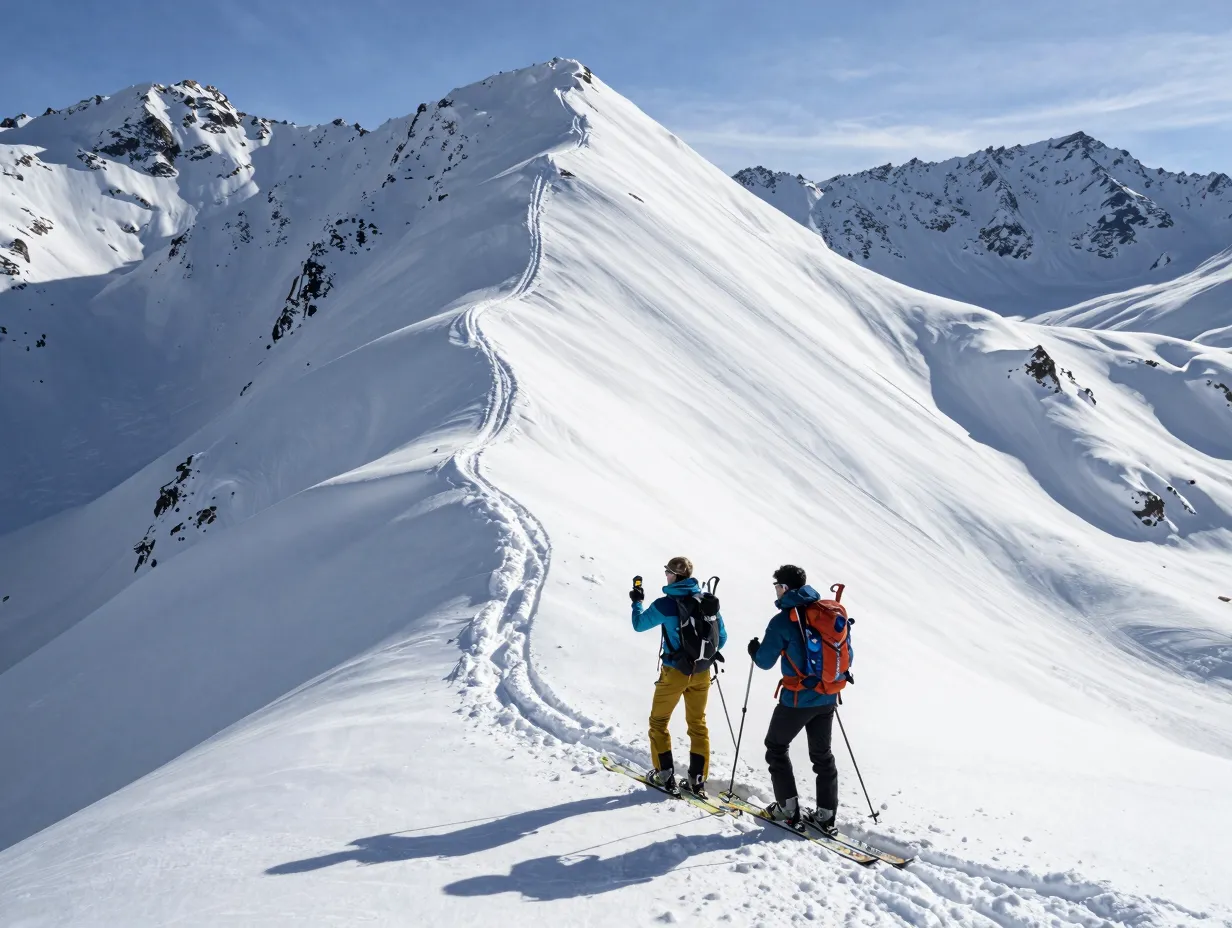
As winter backcountry recreation, including ski touring, snowshoeing, and winter camping, continues to grow, avalanche awareness has become an essential skill for a rapidly expanding population of outdoor adventurers. Avalanches kill an average of 27 people per year in the United States alone, and the vast majority of victims trigger the slide themselves [9].
The core components of avalanche safety education:
- Understanding avalanche terrain: convex rolls, lee slopes, and avalanche paths
- Reading the daily avalanche forecast from regional avalanche centers
- Recognizing red flags: recent avalanche activity, shooting cracks, “whumpfing” sounds, and rapid loading from new snow
- Carrying and knowing how to use the avalanche rescue triad: beacon, probe, and shovel
- Companion rescue: the systematic search and excavation process that must be completed within minutes to maximize survival odds
The Avalanche Skills Training (AST) program, offered in Canada and mirrored by the American Institute for Avalanche Research and Education (AIARE) in the United States, provides structured education for recreational backcountry travelers [9]. Access grants have been developed specifically to reduce financial barriers to this training, recognizing that avalanche education saves lives across all income levels [9].
Terrain reading extends beyond avalanche terrain. Understanding how to identify unstable slopes, loose rock, river crossing hazards, and wildlife corridors makes every outdoor adventure safer. The ability to read a landscape, to see what the terrain is telling you, is a skill that develops over years of deliberate observation and study [4].
Building Your Skills: A Practical Development Path
Knowing which skills matter is only the first step. Building genuine competency requires structured practice, not just passive reading.
A recommended skill-building sequence for 2026:
- Start with a wilderness first aid course. It is the highest-impact single investment for backcountry safety.
- Take a navigation clinic offered by a local outdoor club, REI, or wilderness school. Practice in familiar terrain before relying on the skill in remote areas.
- Complete an AST Level 1 course if winter travel is part of the plan. Many avalanche centers offer subsidized or grant-funded access [9].
- Practice fire starting and shelter building in a controlled backyard or car-camping environment before depending on these skills in the field.
- Join guided trips with experienced leaders. Observational learning from skilled practitioners accelerates development faster than solo practice.
Skill maintenance is as important as initial acquisition. First aid certifications expire. Navigation skills atrophy without use. Fire-starting techniques require muscle memory that fades without regular practice. Building a personal training calendar that revisits each skill annually is a hallmark of serious outdoor adventurers [7].
Gear That Supports the 8 Essential Skills
Skills and gear are not interchangeable, but the right gear makes skills easier to execute effectively.
Essential gear aligned with each skill:
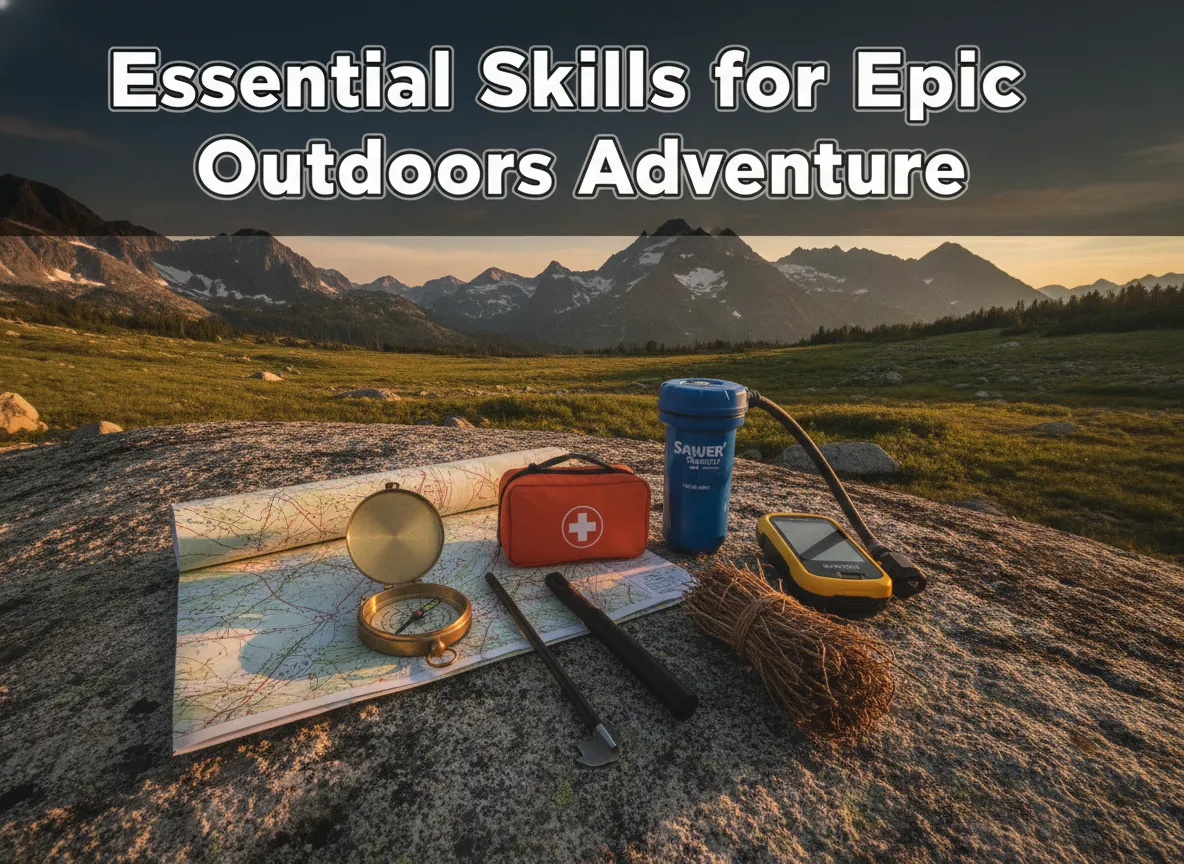
- Navigation: Topographic map (waterproofed), baseplate compass, GPS device with downloaded offline maps
- First aid: A comprehensive wilderness first aid kit including SAM splints, irrigation syringe, trauma dressings, and an epinephrine auto-injector (with prescription)
- Shelter: Four-season tent or bivy, emergency space blanket, ground insulation pad
- Fire: Waterproof matches, lighter, ferro rod, commercial tinder
- Water: Two purification methods (filter plus chemical or UV), collapsible water containers
- Signaling: Personal locator beacon (PLB) or satellite communicator (e.g., Garmin inReach), signal mirror, whistle
- Nutrition: High-density food for planned duration plus 20% emergency reserve
- Avalanche (winter): Beacon, probe, shovel, carried on the body, not in a pack
A personal locator beacon or satellite communicator deserves special emphasis. These devices allow two-way communication and GPS-based rescue coordination from virtually anywhere on Earth. They are the single most impactful piece of safety technology available to backcountry travelers today [4].
Conclusion
The 8 Essential Skills for Your Next Epic Outdoors Adventure are not abstract concepts for survival experts, they are practical, learnable competencies that any motivated person can develop with focused effort. Trip planning and risk management set the foundation. Navigation, first aid, shelter, fire, water, nutrition, and avalanche awareness build a comprehensive safety architecture that dramatically reduces the risk of a wilderness emergency becoming a wilderness tragedy.
Actionable next steps for 2026:
- Register for a Wilderness First Aid course within the next 30 days.
- Purchase a topographic map of a planned route and practice reading it before the trip.
- Enroll in an AST Level 1 course if winter backcountry travel is planned.
- Audit the current gear kit against the skills-aligned list above and fill any gaps.
- File a detailed trip plan with a trusted contact before every backcountry outing, without exception.
The wilderness rewards preparation. Every hour invested in skill development before a trip pays dividends in confidence, safety, and the freedom to go farther and deeper into the landscapes that make outdoor adventure worth pursuing.
References
[1] Outdoor Skills Fuer Anfaenger 15 Faehigkeiten Die Jeder Koennen Sollte – https://kinderoutdoor.de/2026/04/outdoor-skills-fuer-anfaenger-15-faehigkeiten-die-jeder-koennen-sollte/
[4] Survival Skills Every Outdoorsman Should Know Essential Backcountry Tactics For 2026 – https://theoutdoorhunter.com/survival-skills-every-outdoorsman-should-know-essential-backcountry-tactics-for-2026/
[5] Mastering Camping Survival Skills Essential Techniques For The Outdoors – https://www.battlbox.com/blogs/outdoors/mastering-camping-survival-skills-essential-techniques-for-the-outdoors
[6] Wilderness Survival Hub – https://www.thesavvysurvivalist.com/wilderness-survival-hub/
[7] 100 Essential Skills – https://infiniteoutdoorsusa.com/blog/100-essential-skills
[8] Survival Skills 101 – https://sossepic.weebly.com/uploads/1/3/2/1/13211340/survival_skills_101.pdf
[9] Ast Access Grant 2025 – https://avalanche.ca/news/ast-access-grant-2025