9 Decadent Stuffed Venison Backstrap Recipes for an Epic Meal
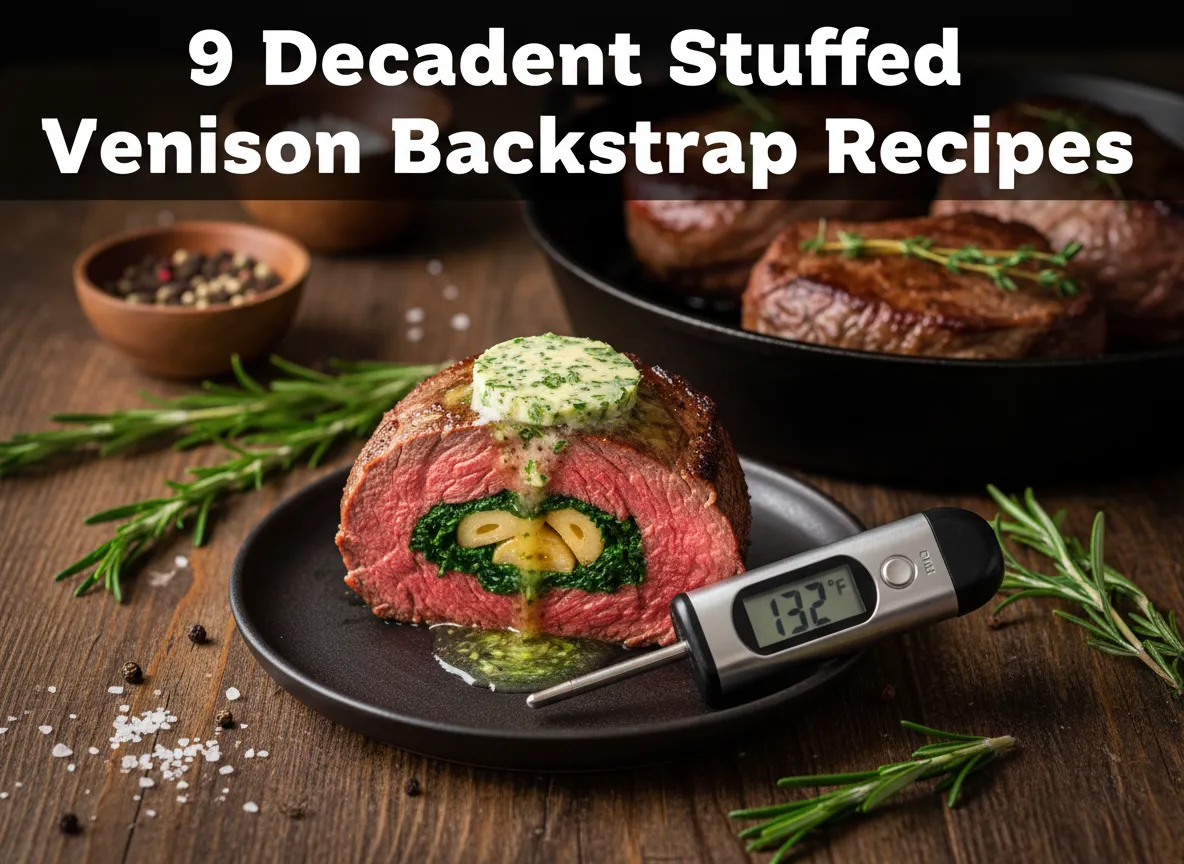
Venison backstrap is pound for pound one of the most prized cuts of wild game meat in North America, yet most hunters cook it the same way every single time. That habit leaves a staggering amount of culinary potential on the table. These 9 Decadent Stuffed Venison Backstrap Recipes for an Epic Meal transform a single elite cut into nine entirely different dining experiences, each built around bold fillings, smart technique, and flavors that rival any fine-dining menu. Whether the goal is a weeknight showstopper or a celebratory feast, this guide delivers the recipes, the method, and the confidence to execute every one of them.
Disclosure: This post contains affiliate links. As an Amazon Associate, we earn from qualifying purchases, and at no extra cost to you.
Key Takeaways
- Venison backstrap is a lean, tender loin cut that benefits enormously from moisture-rich stuffings and proper resting time after cooking.
- Butterflying the backstrap correctly is the single most important prep step for any stuffed venison recipe.
- Internal temperature matters more than cook time, pull the meat at 130-135 degrees Fahrenheit for medium-rare perfection.
- Bold, creamy, or smoky fillings offset venison’s natural earthiness and create a balanced flavor profile.
- Searing before or after oven-finishing locks in juices and produces a restaurant-quality crust on every recipe below.
What Makes Venison Backstrap the Perfect Cut for Stuffing
The backstrap runs along both sides of the deer’s spine, from the shoulder to the hindquarters. It is the equivalent of a beef tenderloin or pork loin, extremely tender, low in connective tissue, and remarkably lean. That leanness is both its greatest strength and its one vulnerability. Because venison contains very little intramuscular fat, it can dry out quickly when overcooked. Stuffing solves that problem elegantly.
Why stuffing works so well with backstrap:
- Cream-based fillings introduce fat and moisture directly into the center of the meat
- Cheese fillings melt and baste the interior as the roast cooks
- Vegetable and herb fillings add steam and aromatic compounds that enhance the venison’s natural flavor
- The stuffing acts as a thermal buffer, slowing the rate at which the center reaches temperature
Essential prep steps before any stuffed backstrap recipe:
- Trim all silver skin from the outside of the loin, this membrane tightens during cooking and causes the meat to curl
- Butterfly the backstrap by slicing lengthwise down the center, stopping about half an inch from the opposite side, then opening it flat like a book
- For thicker loins, pound the butterflied meat gently to an even half-inch thickness using a meat mallet
- Season the inside surface before adding filling
- Roll tightly, tie with butcher’s twine at one-inch intervals, and refrigerate for at least 30 minutes before cooking
“The difference between a good stuffed backstrap and a great one almost always comes down to prep. A properly butterflied, tightly rolled loin holds its filling, cooks evenly, and slices cleanly every time.”
Temperature guide for stuffed venison backstrap:
| Doneness | Internal Temp (F) | Notes |
|---|---|---|
| Rare | 120-125 | Very pink center, maximum juiciness |
| Medium-Rare | 130-135 | Recommended for backstrap |
| Medium | 140-145 | Slightly firmer texture |
| Well Done | 160+ | Not recommended, risks dryness |
The 9 Decadent Stuffed Venison Backstrap Recipes for an Epic Meal
1. Spinach, Cream Cheese, and Roasted Garlic
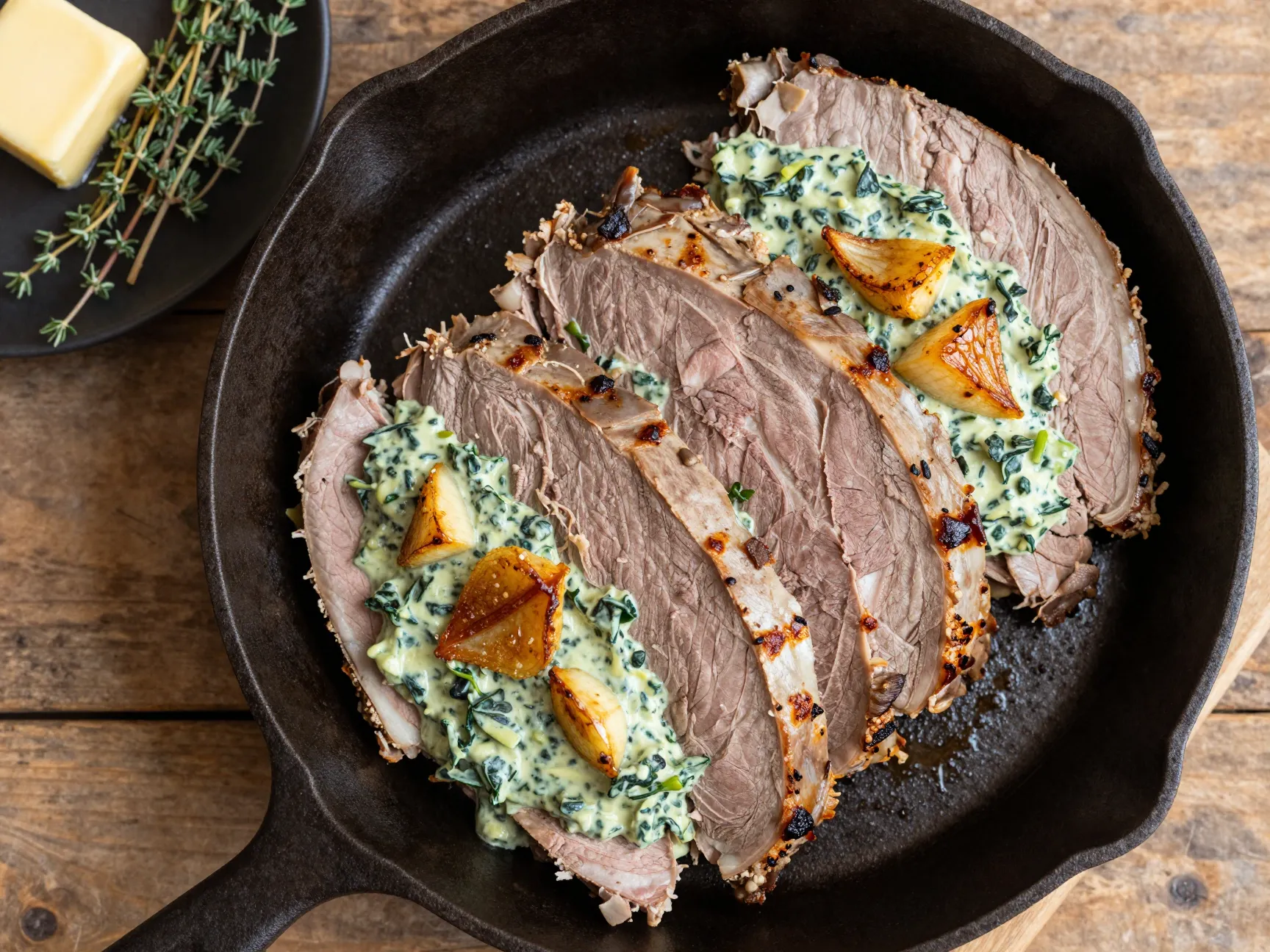
This is the gateway recipe, approachable, crowd-pleasing, and deeply satisfying. The cream cheese provides richness and moisture, the spinach adds color and a mild earthiness, and the roasted garlic delivers a mellow sweetness that complements venison beautifully.
Filling: Blend 8 oz softened cream cheese with 2 cups wilted, squeezed-dry spinach, one full head of roasted garlic (cloves squeezed from their skins), salt, black pepper, and a pinch of nutmeg.
Method: Spread the filling evenly over the butterflied backstrap, roll tightly, and tie. Sear in a cast iron skillet with butter and thyme over high heat for 2 minutes per side, then finish in a 375-degree oven until the internal temperature reaches 132 degrees Fahrenheit. Rest for 8 minutes before slicing.
Pro tip: Add 2 tablespoons of freshly grated Parmesan to the filling for a sharper, more complex flavor.
2. Mushroom, Brie, and Fresh Thyme
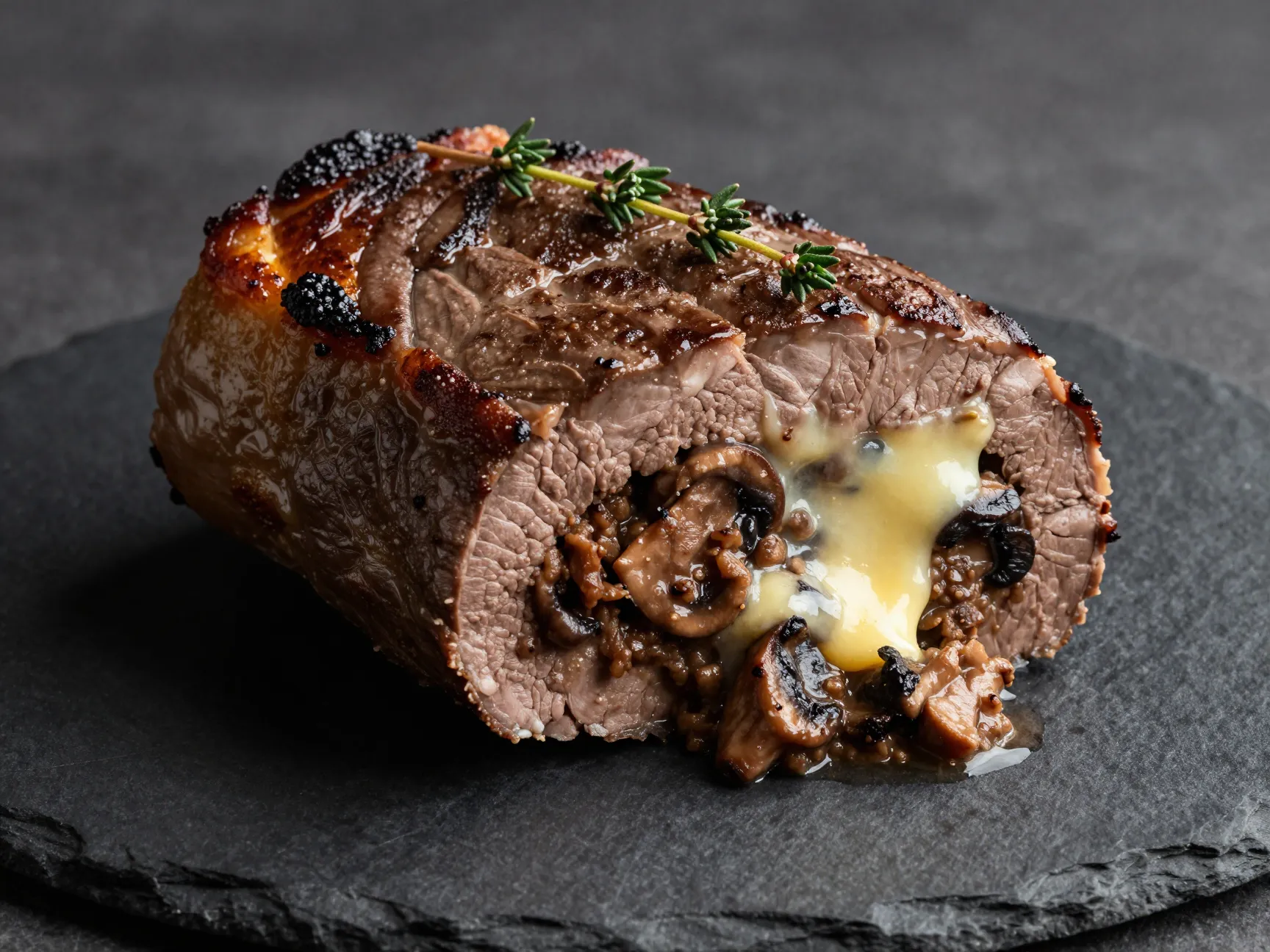
Few flavor combinations are as naturally suited to wild game as mushrooms and Brie. The umami depth of sauteed cremini or shiitake mushrooms mirrors the earthiness of venison, while the Brie melts into a luxurious, buttery sauce inside the roll.
Filling: Saute 2 cups finely chopped mushrooms in butter with shallots until all moisture evaporates and the mixture is deeply golden. Season with thyme, salt, and pepper. Cool completely, then layer with thin slices of ripe Brie.
Method: After rolling and tying, sear in a hot skillet, then roast at 375 degrees Fahrenheit to 132 degrees internal temperature. The Brie will melt and mingle with the mushroom duxelles, creating a filling that is almost sauce-like in texture.
Pairing suggestion: Serve alongside a red wine reduction sauce and roasted fingerling potatoes.
3. Jalapeno, Cream Cheese, and Crispy Bacon
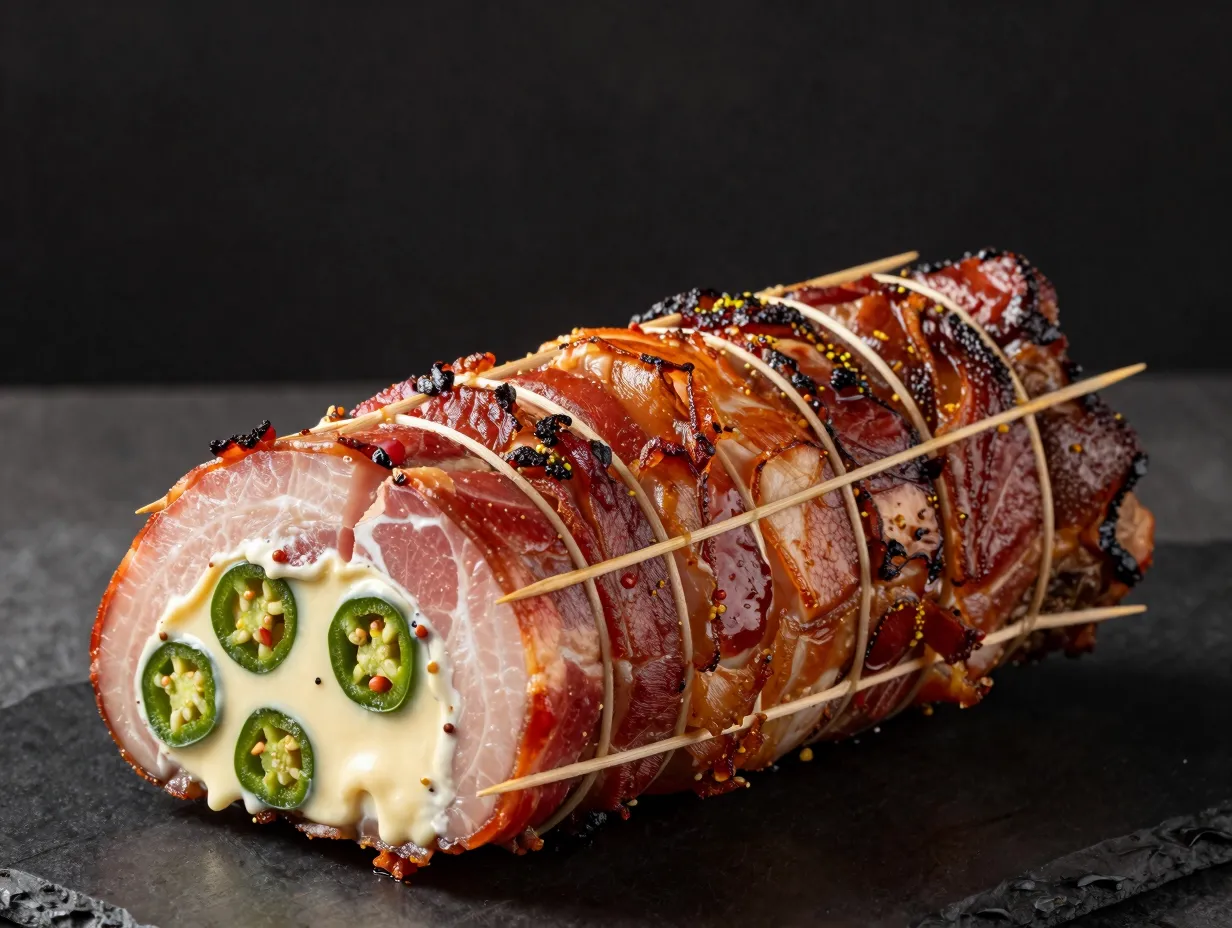
This recipe borrows from the classic jalapeno popper and scales it up into one of the most exciting stuffed venison backstrap recipes available. The heat from the jalapenos, the cool creaminess of the cheese, and the smokiness of the bacon create a filling that is bold, balanced, and deeply satisfying.
Filling: Mix 8 oz cream cheese with 3 finely diced, seeded jalapenos and 6 strips of cooked, crumbled bacon. Add garlic powder, onion powder, and a pinch of smoked paprika.
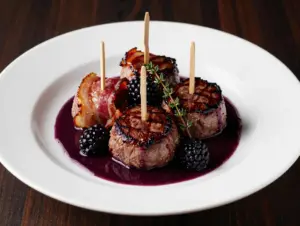
Method: Spread the filling, roll, and tie. Wrap the outside of the roll with additional strips of bacon secured with toothpicks. Sear briefly, then roast at 400 degrees Fahrenheit until the bacon is crispy and the internal temperature reads 133 degrees Fahrenheit.
Heat level adjustment: Leave the jalapeno seeds in for a spicier result, or substitute poblano peppers for a milder version.
4. Sun-Dried Tomato, Goat Cheese, and Fresh Basil
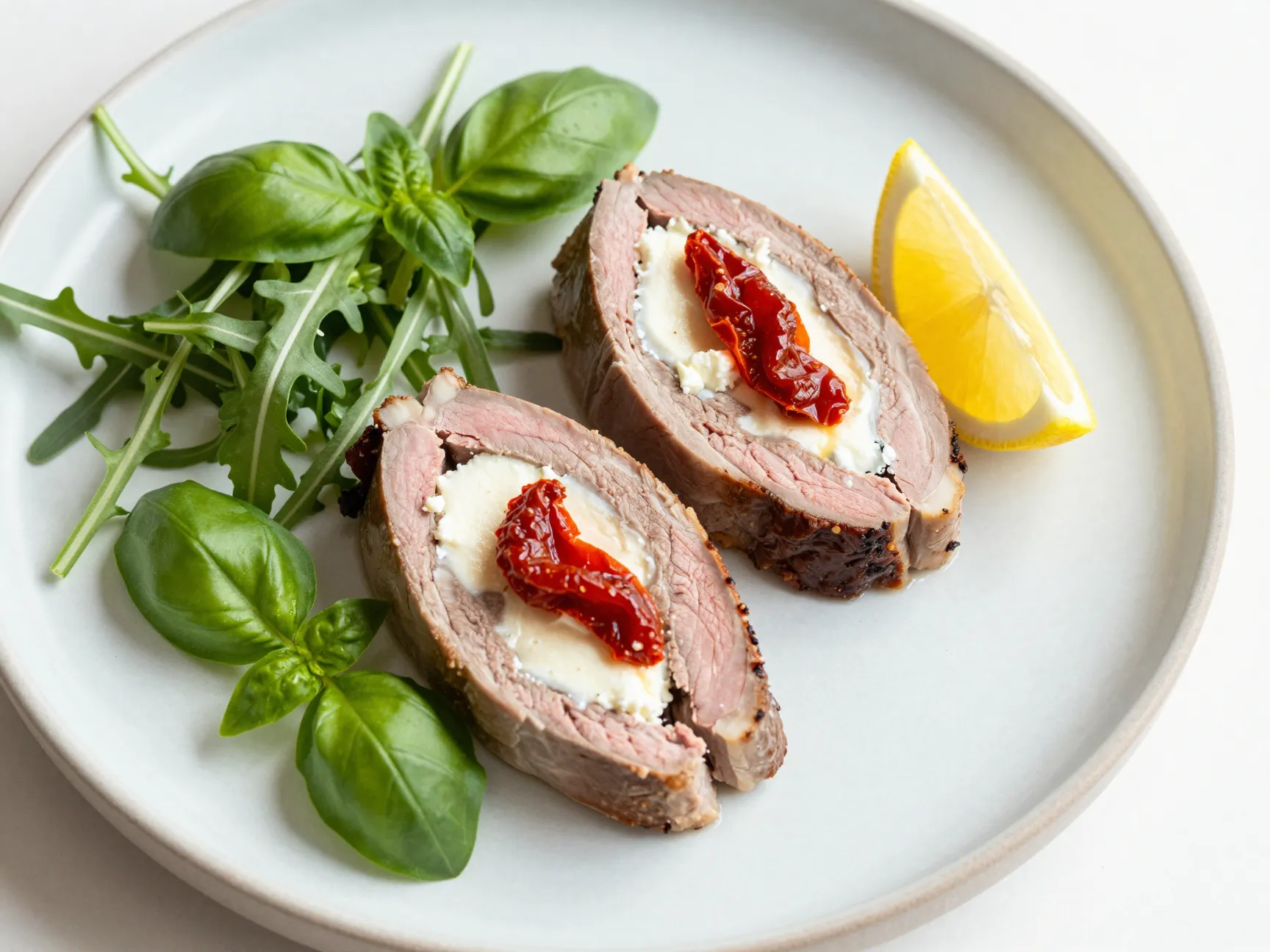
Mediterranean flavors work surprisingly well with venison. The acidity of sun-dried tomatoes cuts through the richness of the goat cheese, while fresh basil lifts the entire profile with bright, herbal notes. This recipe photographs beautifully and is ideal for entertaining.
Filling: Combine 6 oz softened goat cheese with half a cup of finely chopped oil-packed sun-dried tomatoes, a generous handful of torn fresh basil, minced garlic, and cracked black pepper.
Method: Butterfly, fill, roll, and tie. Sear in olive oil rather than butter to keep the Mediterranean profile consistent. Finish in a 375-degree oven. Rest and slice into medallions for an elegant presentation.
Serving idea: Plate over a bed of arugula dressed with lemon and olive oil, with the medallions fanned out for visual impact.
5. Caramelized Onion, Gruyere, and Dijon Mustard
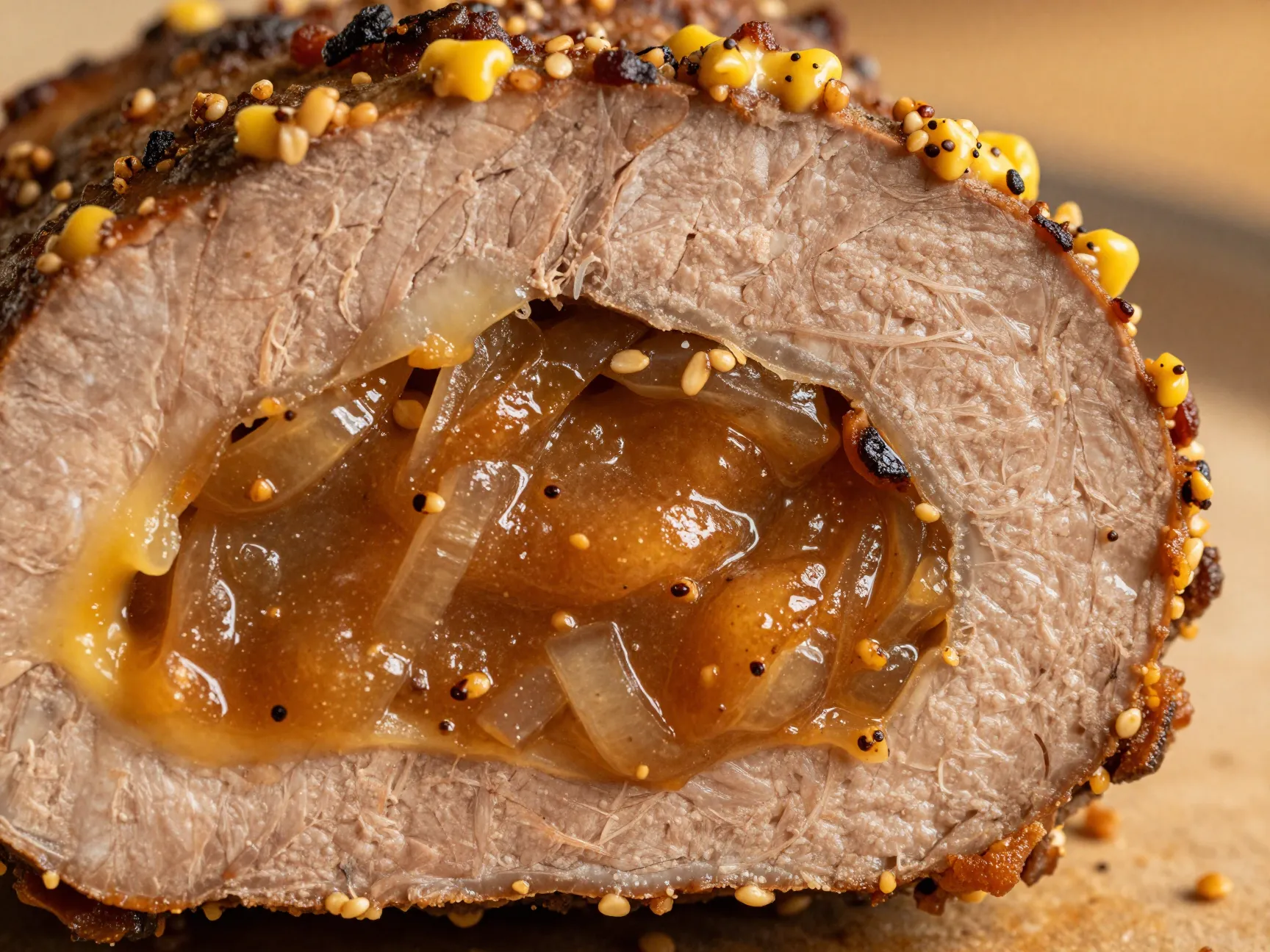
This recipe is essentially a French onion soup stuffed inside a venison loin, and it is every bit as indulgent as that description suggests. Caramelizing onions takes patience, a full 40 to 45 minutes over low heat, but the resulting sweetness and depth are irreplaceable.
Filling: Slowly caramelize 3 large yellow onions in butter with a pinch of sugar and a splash of dry white wine. Cool completely. Combine with half a cup of grated Gruyere and 2 tablespoons of whole-grain Dijon mustard.
Method: Spread a thin layer of additional Dijon directly on the butterflied meat before adding the filling. Roll, tie, and sear. Roast at 375 degrees to 130 degrees internal temperature for a slightly more pink center that contrasts beautifully with the golden onion filling.
6. Spinach, Feta, and Kalamata Olive
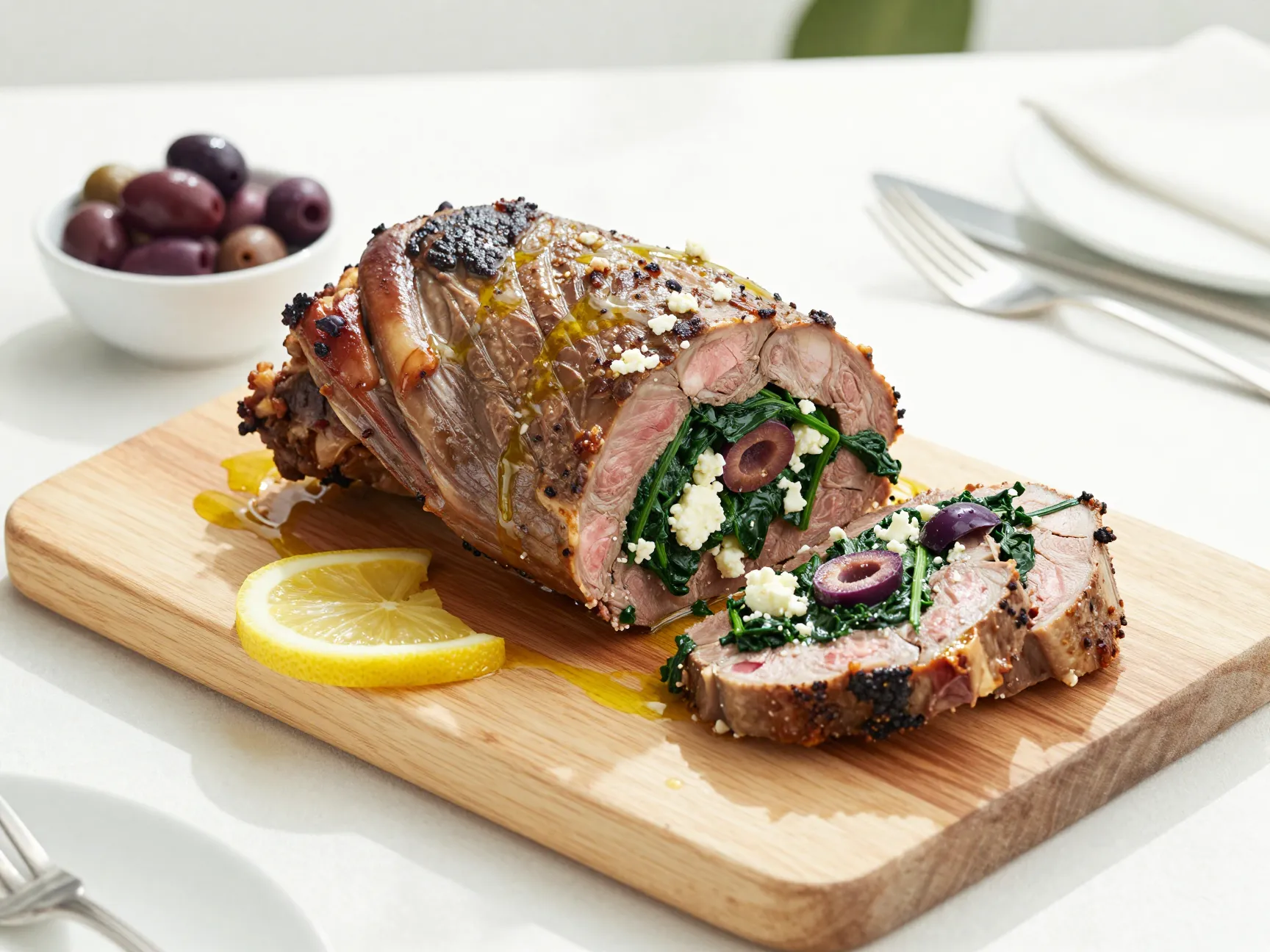
A Greek-inspired stuffed backstrap that delivers bright, briny flavors against the deep, savory backdrop of the venison. This recipe is lighter than the cream cheese-based options and works particularly well in warmer months or as part of a larger spread.
Filling: Combine 2 cups wilted, squeezed-dry spinach with half a cup of crumbled feta, a quarter cup of roughly chopped Kalamata olives, minced garlic, lemon zest, and dried oregano.
Method: The salt content of feta and olives means no additional salt is needed in the filling. Roll and tie, then sear in olive oil. Roast at 375 degrees to 132 degrees internal temperature. Finish with a squeeze of fresh lemon juice immediately after slicing.
Dietary note: This recipe is naturally gluten-free and lower in fat than the cream cheese-based versions.
7. Apple, Sage Sausage, and Brown Sugar Glaze
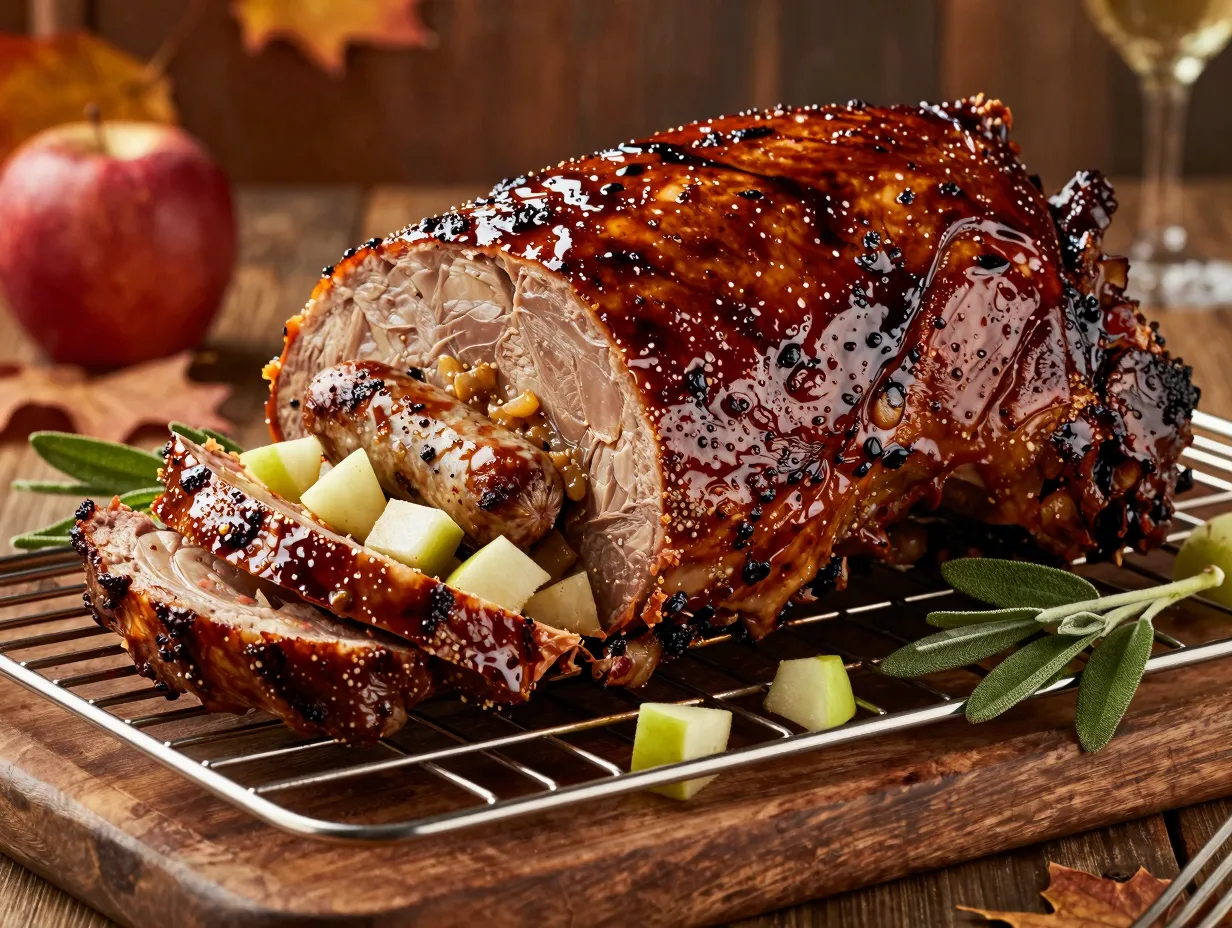
Sweet and savory combinations have a long history in game cookery, and this recipe honors that tradition with a filling that bridges the gap between a holiday roast and a wild game centerpiece. The apple adds moisture and sweetness, the sage sausage brings herbaceous depth, and the brown sugar glaze caramelizes on the outside for a stunning finish.
Filling: Brown half a pound of bulk sage sausage in a skillet and drain the fat. Combine with one peeled, finely diced Granny Smith apple, a tablespoon of fresh sage, and a pinch of cinnamon and black pepper.
Glaze: Whisk together 2 tablespoons brown sugar, 1 tablespoon apple cider vinegar, and 1 teaspoon Dijon mustard. Brush over the outside of the roll during the last 10 minutes of roasting.
Method: Roast at 375 degrees to 135 degrees internal temperature. The glaze will form a lacquered, caramelized crust that makes this one of the most visually impressive stuffed venison backstrap recipes in the collection.
8. Smoked Gouda, Roasted Red Pepper, and Chorizo
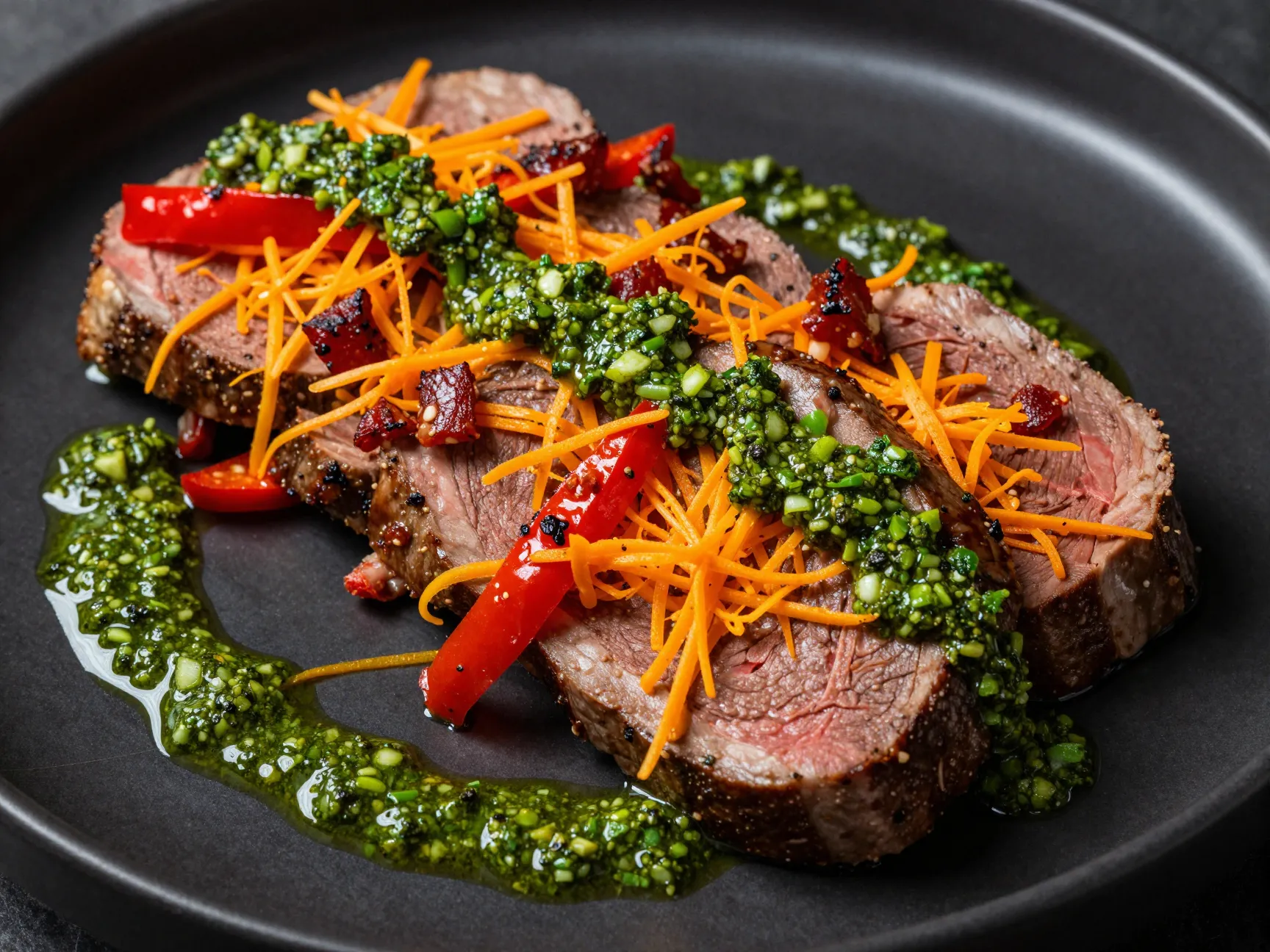
This recipe is built for those who want maximum flavor intensity. Smoked Gouda has a rich, nutty profile that pairs exceptionally well with venison’s earthiness. Roasted red peppers add sweetness and color, while chorizo introduces smoky, spiced heat that permeates the entire roll.
Filling: Brown and drain half a cup of crumbled Mexican-style chorizo. Cool, then combine with half a cup of shredded smoked Gouda and half a cup of finely chopped jarred roasted red peppers, well-drained. Add smoked paprika and garlic.
Method: The chorizo fat will render during cooking and baste the filling from within. Sear aggressively over high heat to develop a deep crust, then roast at 400 degrees to 133 degrees internal temperature. Rest for a full 10 minutes before slicing to allow the filling to set.
Serving suggestion: A chimichurri sauce drizzled over the sliced medallions adds a fresh, acidic counterpoint to the smoky, rich filling.
9. Herb Butter, Garlic, and Aged Parmesan
The final recipe in these 9 Decadent Stuffed Venison Backstrap Recipes for an Epic Meal is the most refined and arguably the most elegant. Rather than relying on a chunky filling, this preparation uses a compound herb butter that melts as the meat cooks, basting the interior continuously and producing an extraordinarily juicy result.
Compound butter: Soften 6 tablespoons of unsalted butter and blend with 2 minced garlic cloves, 2 tablespoons of fresh parsley, 1 tablespoon of fresh chives, 1 tablespoon of fresh thyme, half a cup of finely grated aged Parmesan, and cracked black pepper. Roll into a log in plastic wrap and refrigerate until firm.
Method: Slice the firm compound butter into rounds and layer them down the center of the butterflied backstrap. Roll tightly and tie. Sear in a very hot cast iron skillet on all sides until deeply browned, then finish in a 400-degree oven to 130 degrees internal temperature. The butter will melt into the meat, carrying the garlic, herbs, and Parmesan throughout every slice.
Presentation tip: Slice into thick medallions and top each one with a small additional pat of the compound butter, which will melt tableside for a dramatic, restaurant-worthy finish.
Cooking Techniques That Elevate Every Stuffed Venison Recipe
Mastering the recipes above requires understanding a few universal techniques that apply across all nine preparations.
Searing strategy: Always sear in a cast iron or stainless steel skillet, never non-stick. The goal is a deep Maillard reaction crust that adds flavor and seals the surface. Use high heat, minimal oil, and resist the urge to move the meat for at least 90 seconds per side.
Oven finishing: After searing, transfer the skillet directly to a preheated oven. This two-stage cooking method ensures an evenly cooked interior without burning the exterior.
Resting time: This step is non-negotiable. Resting allows the muscle fibers to relax and reabsorb juices that have been pushed toward the center during cooking. A minimum of 8 minutes, loosely tented with foil, is required for any stuffed backstrap recipe.
Twine technique: Tie butcher’s twine at one-inch intervals, starting from the center and working outward. This prevents the roll from unraveling during searing and ensures an even, cylindrical shape that cooks uniformly.
Thermometer use: A reliable instant-read thermometer is the single most valuable tool for cooking venison. Insert it into the thickest part of the roll, avoiding the filling, for an accurate reading.
Pairing and Serving Ideas for Stuffed Venison Backstrap
The right side dishes and sauces can elevate any of these recipes from excellent to unforgettable.
Sauce pairings by recipe:
- Recipes 1, 6, 9: Red wine reduction or pan jus
- Recipes 2, 5: Creamy horseradish sauce or Dijon cream sauce
- Recipes 3, 8: Chimichurri or roasted tomato salsa
- Recipe 4: Lemon beurre blanc or simple olive oil and herbs
- Recipe 7: Apple cider pan sauce or cranberry reduction
Side dish recommendations:
- Creamy polenta or risotto for recipes with mushroom or cheese fillings
- Roasted root vegetables for the apple-sage and herb butter versions
- Arugula or watercress salads for the Mediterranean-inspired recipes
- Crusty sourdough bread to capture any filling that escapes during slicing
Conclusion
These 9 Decadent Stuffed Venison Backstrap Recipes for an Epic Meal represent the full range of what this extraordinary cut can achieve when treated with creativity and care. From the approachable spinach and cream cheese roll to the refined herb butter and Parmesan medallions, every recipe on this list rewards the effort invested in preparation.
Actionable next steps:
- Start with Recipe 1 or Recipe 9 if this is a first attempt at stuffed backstrap, both are forgiving, crowd-pleasing, and technically straightforward.
- Invest in a reliable instant-read thermometer before cooking any venison, it is the single most impactful tool purchase available.
- Prepare the filling the day before to reduce day-of cooking stress and allow flavors to meld.
- Practice the butterfly technique on a store-bought pork loin before using a prized backstrap, the muscle structure is nearly identical.
- Document the cook by noting internal temperatures, oven times, and filling quantities for future reference, every deer and every loin is slightly different.
The backstrap is the best cut on the animal. Treat it accordingly.