9 Best Fishing Kayak Models for Every Angler and Budget
Fishing kayak sales in North America surpassed 1.2 million units in a single recent year, making kayak fishing one of the fastest-growing segments in the entire outdoor recreation industry. That explosive demand has flooded the market with hundreds of models, turning what should be an exciting purchase into an overwhelming research project. This guide cuts through the noise and delivers the 9 best fishing kayak models for every angler and budget, from first-time paddlers watching their wallets to seasoned tournament competitors who demand elite performance.
Disclosure: This post contains affiliate links. As an Amazon Associate, we earn from qualifying purchases, and at no extra cost to you.
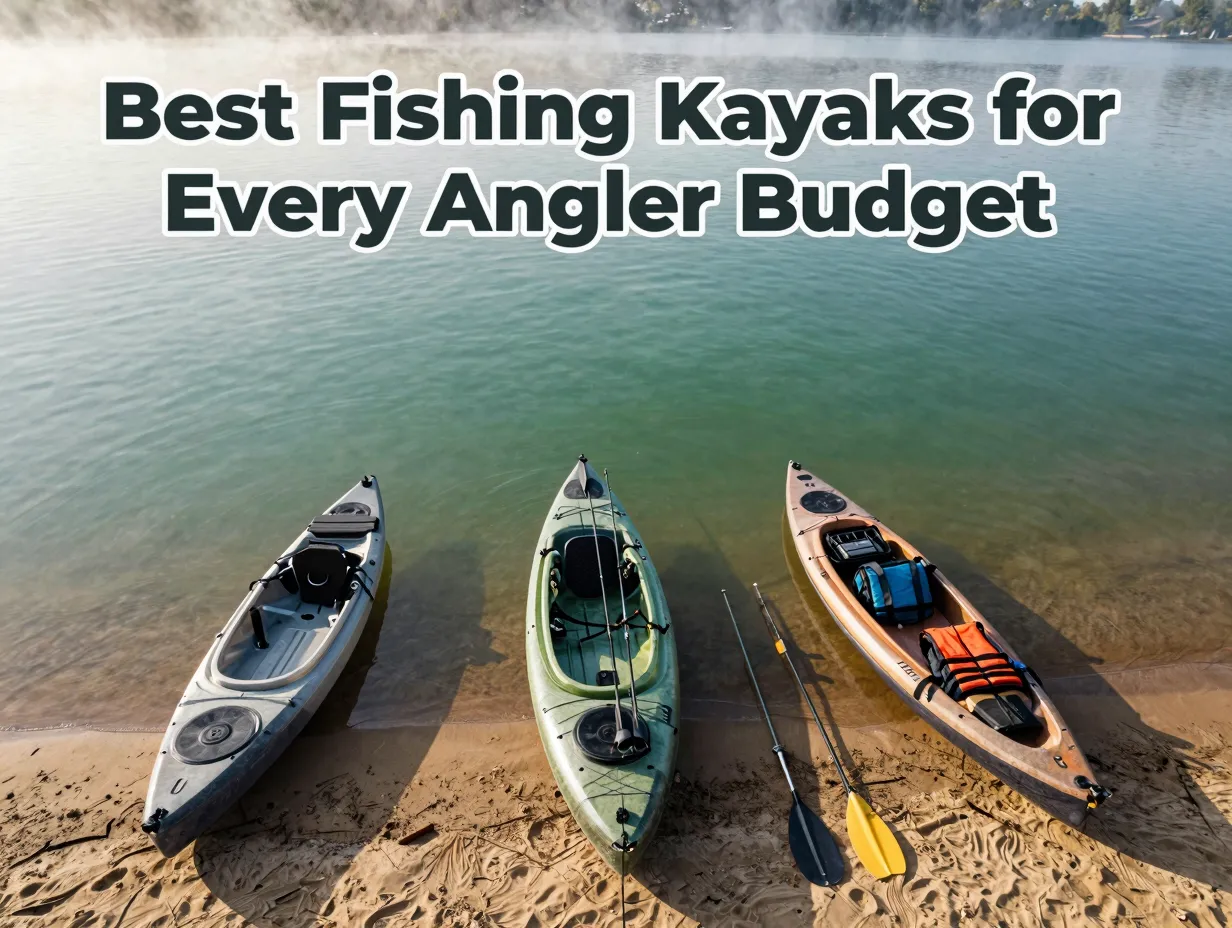
Whether the goal is stalking bass on a quiet pond or chasing redfish in open coastal flats, the right kayak transforms every outing. The 9 best fishing kayak models for every angler and budget covered here span a wide price range, hull styles, and fishing environments so that every reader leaves with a clear, confident choice.
Key Takeaways
- Stability, storage, and weight capacity are the three most critical specs to evaluate before buying a fishing kayak.
- Sit-on-top kayaks dominate the fishing market because they offer easier re-entry, better gear access, and more customization options than sit-inside models.
- Pedal-drive kayaks free both hands for casting and fighting fish but cost significantly more than paddle-only alternatives.
- Budget kayaks under $600 are viable for calm freshwater fishing; serious anglers targeting larger water or saltwater should budget $900 or more.
- Every angler should match hull length and width to their primary fishing environment, wider hulls for stability, longer hulls for speed and tracking.
What Makes a Great Fishing Kayak
Before diving into the 9 best fishing kayak models for every angler and budget, it helps to understand what separates a true fishing kayak from a recreational paddling hull. Standard kayaks are designed for movement and efficiency. Fishing kayaks are engineered around a completely different set of priorities.
Key features to evaluate:
- Weight capacity: Always choose a kayak rated at least 50 lbs above your body weight plus gear. Overloading a kayak reduces freeboard, kills stability, and creates a safety hazard.
- Primary stability vs. secondary stability: Primary stability is how steady the kayak feels sitting flat. Secondary stability is how well it resists capsizing when tilted. Wide, flat-hulled kayaks excel at primary stability, ideal for standing and casting.
- Rod holders: Flush-mount holders keep rods secure during paddling. Adjustable 360-degree holders allow precise positioning for trolling.
- Gear tracks and mounting systems: Brands like Wilderness Systems use their Slidetraker system; others use standard Picatinny-style rails. Universal tracks accept third-party accessories including fish finders, camera mounts, and anchor trolleys.
- Hull material: High-density polyethylene (HDPE) is the industry standard, durable, impact-resistant, and affordable. Thermoformed ABS offers a lighter, stiffer alternative at a higher price point.
“The best fishing kayak is not the most expensive one, it is the one that fits the angler’s body, target species, and home water.”
The 9 Best Fishing Kayak Models for Every Angler and Budget
The following models are ranked to serve a broad spectrum of anglers. Each entry includes the key specs, standout features, ideal use case, and honest trade-offs.
1. Perception Pescador Pro 12
Best for: Entry-level to intermediate freshwater anglers
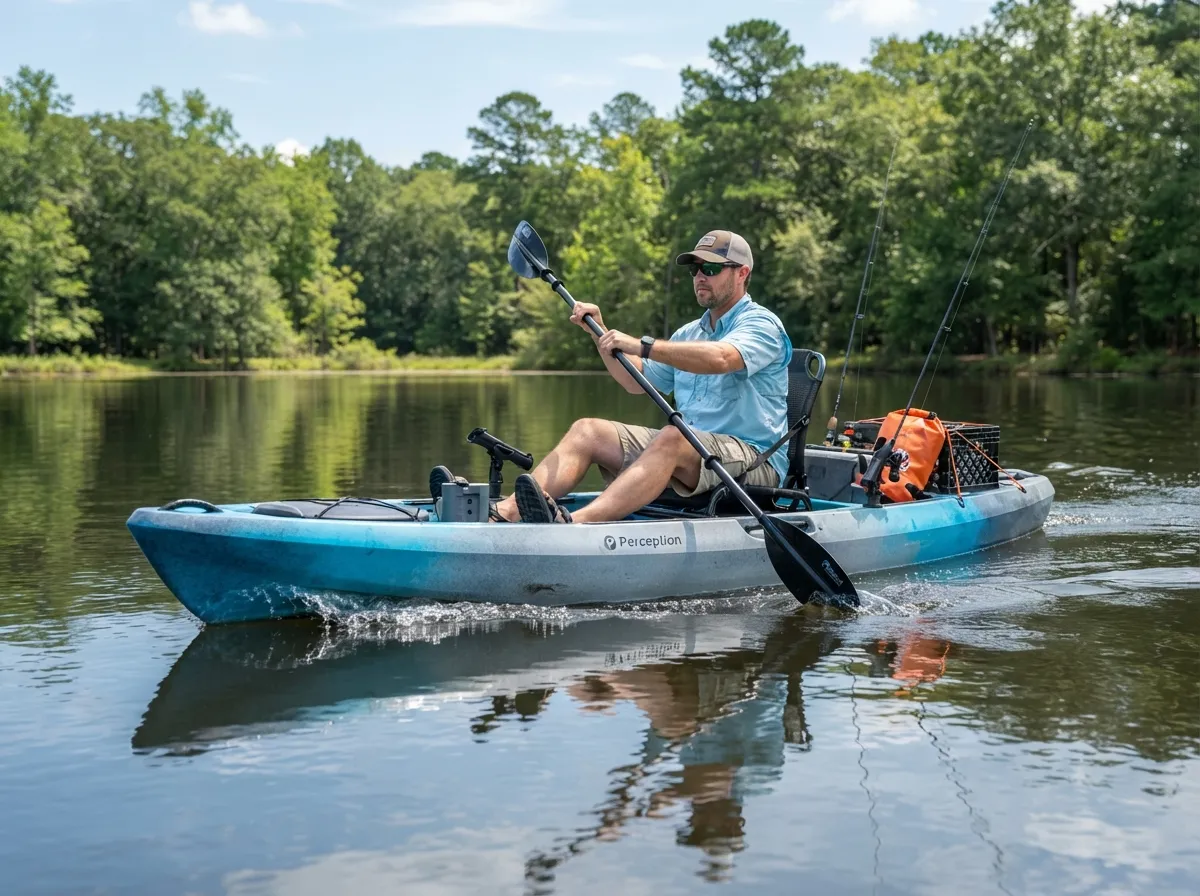
The Pescador Pro 12 consistently earns its reputation as one of the best value fishing kayaks on the market. At roughly 12 feet long and 32.5 inches wide, it strikes an excellent balance between tracking efficiency and lateral stability. The hull is crafted from UV-stabilized polyethylene that holds up well against rocky shorelines and prolonged sun exposure.
Standout features:
- Phase 3 AirPro seat with mesh backing for all-day comfort
- Two flush-mount rod holders plus two adjustable rod holders
- Large rear tankwell with bungee rigging for dry bags and crates
- Removable center console with storage compartments
The Pescador Pro 12 handles calm rivers, ponds, and small lakes with ease. It is not built for open-water ocean paddling, but for the freshwater angler on a moderate budget, few kayaks deliver this much fishability per dollar.
Trade-off: Heavier paddlers approaching the 325 lb weight limit will notice reduced freeboard and sluggish tracking.
2. Old Town Topwater 106
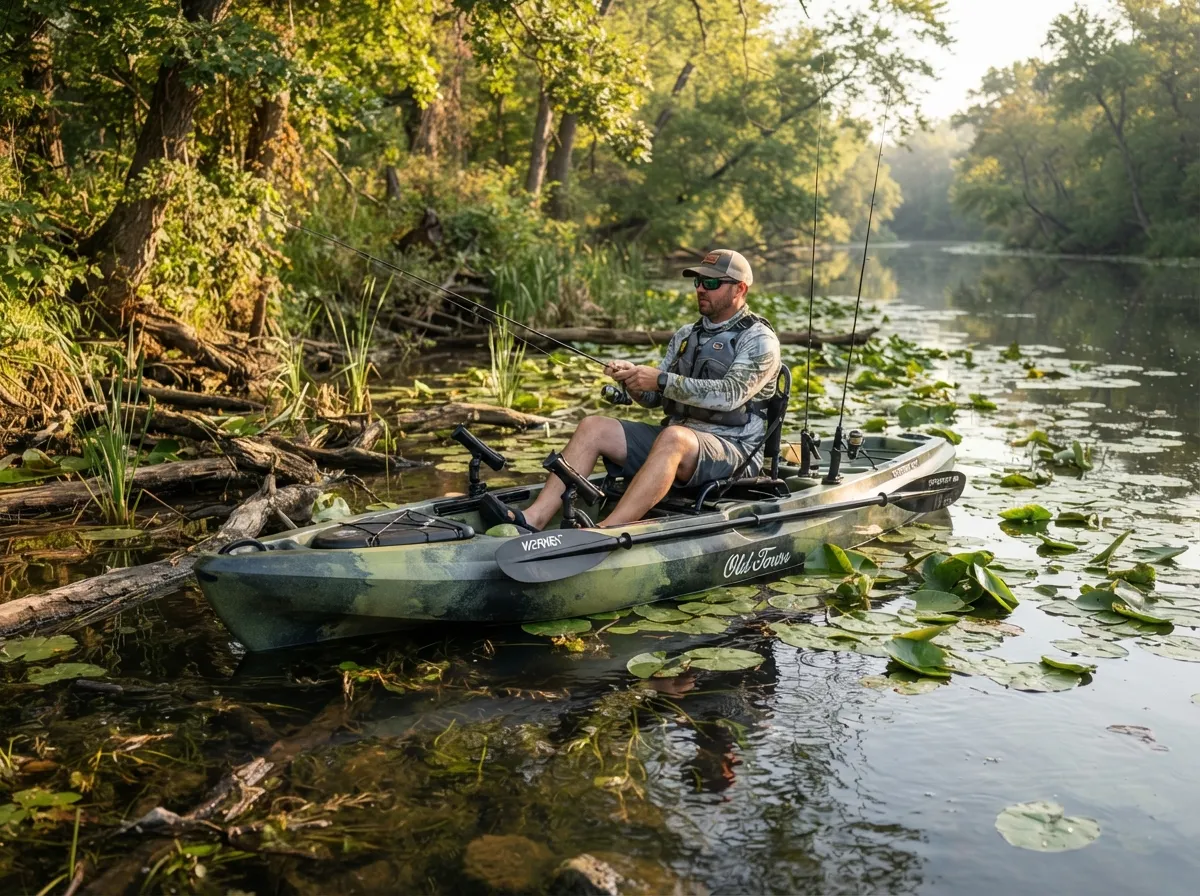
Best for: Budget-conscious anglers and beginners
Old Town’s Topwater 106 is a 10-foot, 6-inch sit-on-top designed specifically for anglers who are new to kayak fishing and need a stable, affordable platform. At just over 57 lbs, it is light enough for a solo car-top carry, which matters enormously for paddlers without a truck or trailer.
Standout features:
- Comfort Flex seating system with adjustable foot braces
- Four rod holders (two flush, two adjustable)
- Gear tracks for accessory mounting
- Molded-in paddle holder keeps hands free while rigging
The Topwater 106 shines on calm ponds, small rivers, and protected coves. Its compact length makes it highly maneuverable in tight cover, exactly where bass and panfish tend to hide.
Trade-off: The shorter hull sacrifices straight-line tracking speed. Paddling long distances to reach fishing spots becomes tiring faster than with a 12-foot model.
3. Wilderness Systems ATAK 120
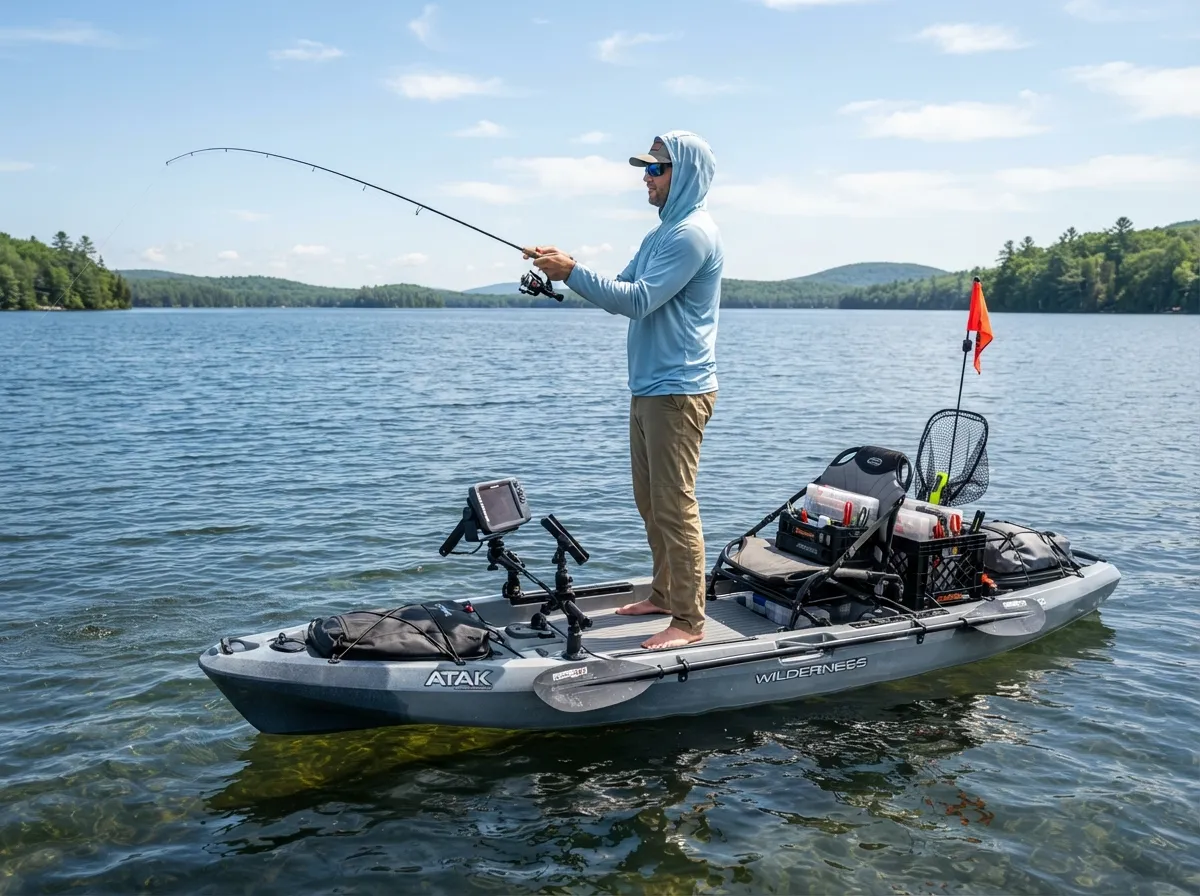
Best for: Intermediate to advanced anglers wanting a versatile platform
The ATAK 120 is Wilderness Systems’ flagship recreational fishing kayak and one of the most accessory-ready hulls in the entire market. Its 12-foot length and 34-inch beam create a wide, stable platform that supports standing while casting, a game-changer for sight fishing.
Standout features:
- AirPro Element seat with multiple back angle adjustments
- Slidetraker gear management system with four integrated tracks
- Bow and stern storage hatches with watertight covers
- 450 lb weight capacity, one of the highest in its class
The ATAK 120 performs well across freshwater lakes, slow rivers, and protected coastal bays. Anglers who plan to add a fish finder, anchor trolley, and multiple rod setups will appreciate the extensive track real estate.
Trade-off: At around 80 lbs, the ATAK 120 is not a solo car-top kayak for most people. A kayak cart or second set of hands is strongly recommended.
4. Hobie Mirage Compass
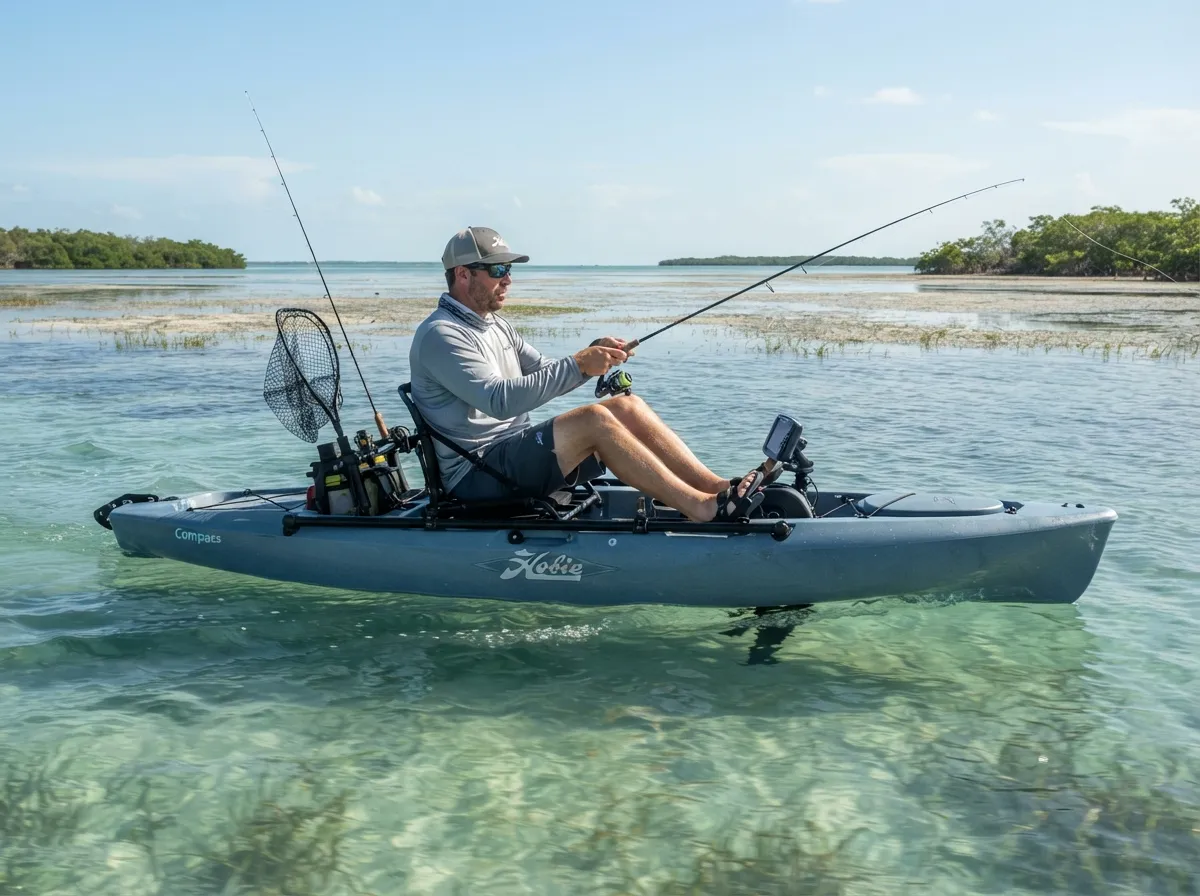
Best for: Anglers who want hands-free pedal drive at a mid-range price
Hobie’s MirageDrive pedal system changed kayak fishing when it launched, and the Compass brings that technology to a more accessible price point than Hobie’s flagship models. The elliptical pedaling motion is efficient, low-fatigue, and allows anglers to maintain precise boat position while keeping both hands on a rod.
Standout features:
- MirageDrive 180 with reverse capability
- Vantage CTi seat with lumbar support
- H-Rail mounting system for accessories
- 400 lb weight capacity
The Compass is 12 feet long and 33 inches wide, compact enough for most car racks, capable enough for coastal flats and large reservoirs. The pedal drive excels when fighting a strong current or holding position in wind.
Trade-off: The MirageDrive fins can be damaged in very shallow, rocky water. Anglers who frequently fish skinny water should retract the fins and paddle when necessary.
5. Jackson Kayak Bite FD
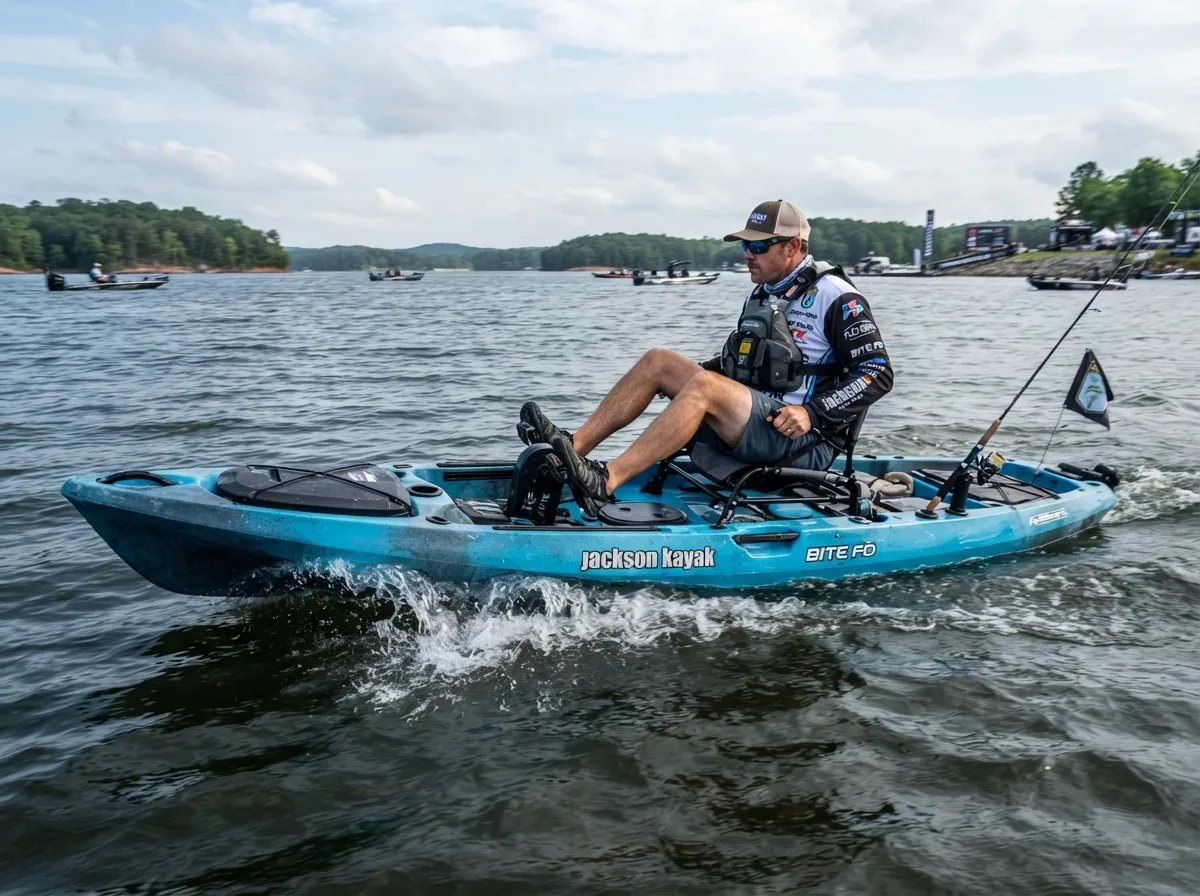
Best for: Tournament anglers and serious freshwater competitors
Jackson Kayak built the Bite FD around one concept: winning. The “FD” stands for Flex Drive, Jackson’s proprietary forward-and-reverse pedal system. The hull geometry prioritizes speed and tracking over raw stability, which suits experienced anglers who have developed their on-water balance.
Standout features:
- Flex Drive pedal system with adjustable resistance
- Ergo Form seat with six-position back adjustment
- Comprehensive tackle storage including bow hatch and rear tankwell
- Integrated transducer scupper for clean fish finder installation
The Bite FD is a tournament-grade machine. Its narrow profile cuts through water efficiently, making it the right choice for anglers who cover large bodies of water during competition days.
Trade-off: The narrower beam (32.5 inches) means less primary stability than wider platforms. Beginners or anglers who plan to stand frequently should consider a wider hull.
6. Bonafide SS127
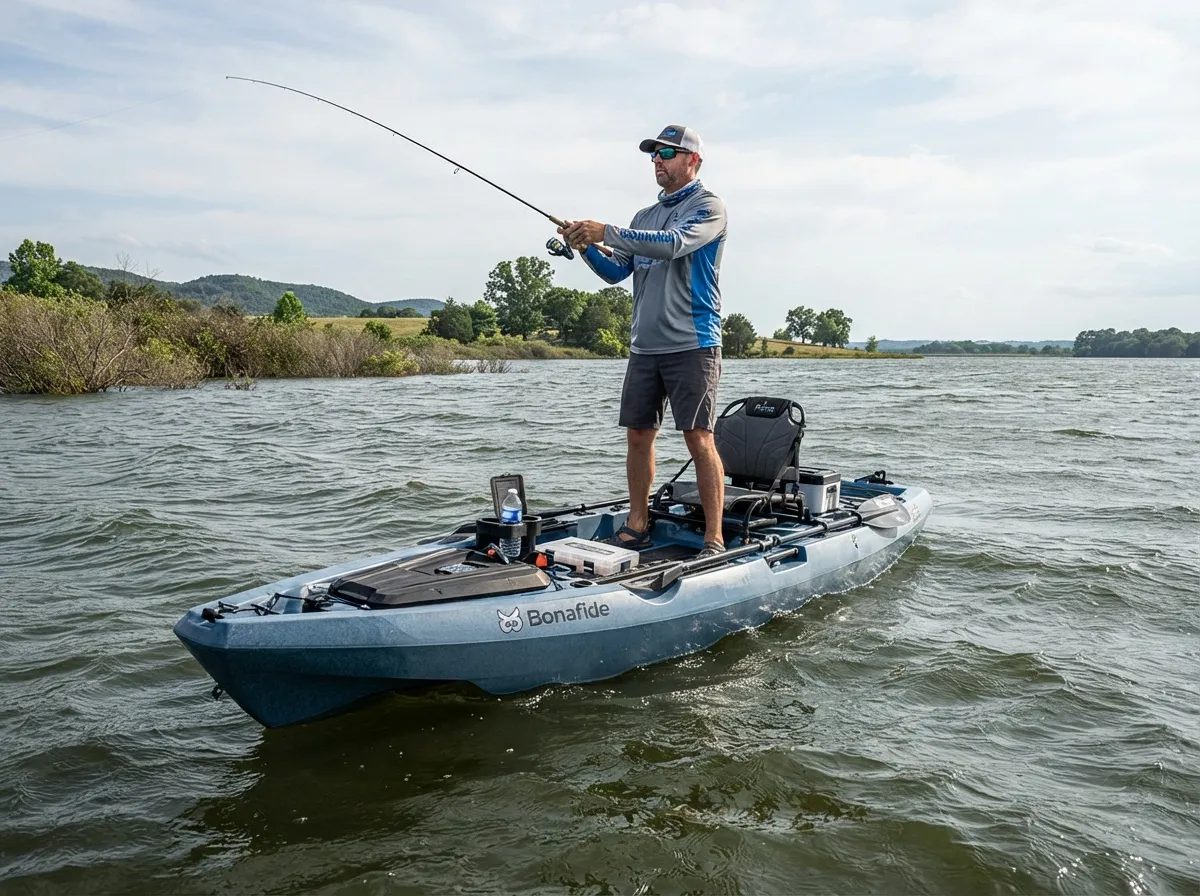
Best for: Stability-focused anglers and those who stand to cast
The Bonafide SS127 has earned a cult following among anglers who prioritize standing stability above everything else. At 12 feet, 7 inches long and 36 inches wide, it is one of the most stable non-pontoon fishing kayaks available. The hull’s flat bottom and pronounced rocker allow confident standing even in light chop.
Standout features:
- Ergo-Form seat with multiple recline positions
- Dual rod locker system in the bow
- Integrated tackle trays and cup holders
- Scupper plugs included for use in cold water
The SS127 is a freshwater specialist. Bass anglers who rely on sight fishing from a standing position will find this hull genuinely confidence-inspiring. It also performs well on slow-moving rivers and protected reservoirs.
Trade-off: The wide, flat hull creates more drag than narrower designs. Paddling efficiency suffers on long open-water crossings.
7. Native Watercraft Titan Propel 13.5
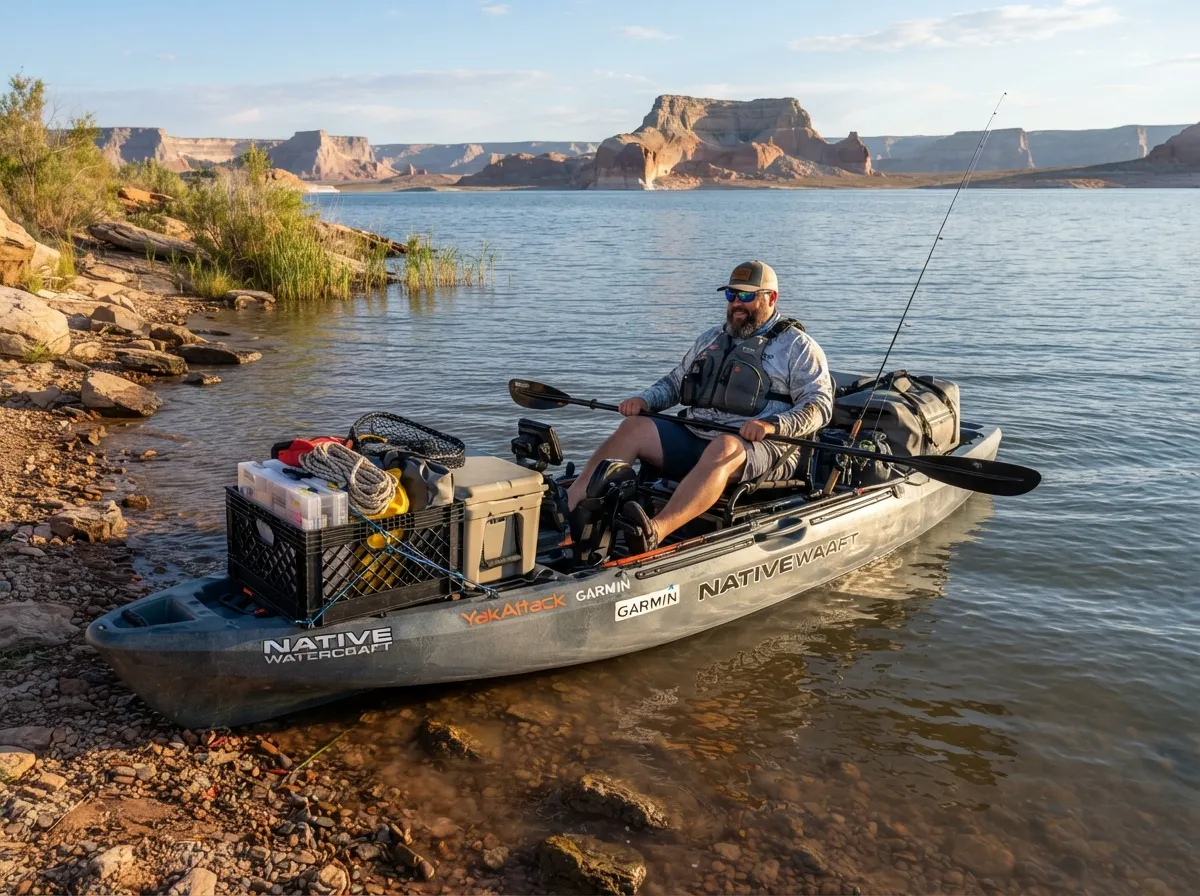
Best for: Big-water anglers and larger paddlers
The Titan Propel 13.5 is built for anglers who need maximum capacity, maximum stability, and maximum gear storage. At 13.5 feet long, 36 inches wide, and rated to 500 lbs, it is one of the most capable production fishing kayaks available. Native Watercraft’s Propel pedal drive uses a propeller rather than fins, which performs better in weedy, shallow environments.
Standout features:
- Propel 13 pedal drive with forward and reverse
- Comfort Seat with adjustable lumbar and thigh support
- Massive rear tankwell with integrated crate
- Dual flush rod holders plus adjustable rod holder mounts
The Titan Propel 13.5 excels on large lakes, reservoirs, and protected coastal environments. Larger anglers who have struggled to find a kayak with adequate weight capacity and legroom will find the Titan genuinely accommodating.
Trade-off: At approximately 115 lbs with the drive installed, this kayak requires a trailer or a dedicated launch system. It is not a car-top option for most people.
8. Hobie Pro Angler 14 360
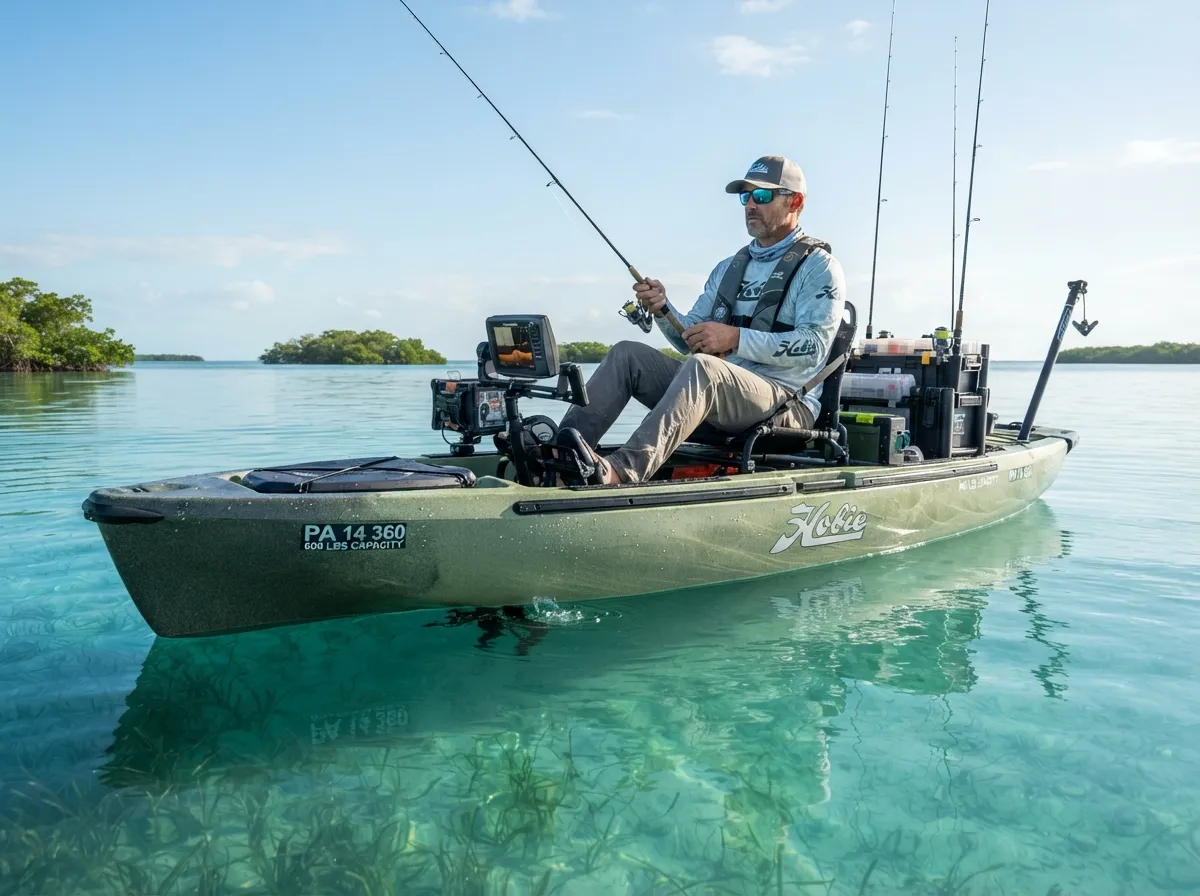
Best for: Elite anglers who demand the best performance available
The Hobie Pro Angler 14 360 is the benchmark against which all other fishing kayaks are measured. The “360” designation refers to Hobie’s revolutionary MirageDrive 360 system, which allows the pedal fins to rotate a full 360 degrees, enabling the kayak to move sideways, spin in place, and hold position with precision that no paddle kayak can match.
Standout features:
- MirageDrive 360 with Kick-Up Fin technology
- Vantage CTi seat (the most comfortable production kayak seat available)
- H-Rail mounting system with extensive track real estate
- 600 lb weight capacity
- Integrated transducer arm and fish finder mounting plate
The Pro Angler 14 360 is purpose-built for serious fishing. Saltwater flats anglers, tournament competitors, and dedicated freshwater bass hunters who spend hundreds of days per year on the water will find every premium dollar justified.
Trade-off: The price point places this kayak well beyond the reach of casual or budget anglers. At over 130 lbs, it also demands a dedicated launch and retrieval system.
9. Pelican Catch Mode 110
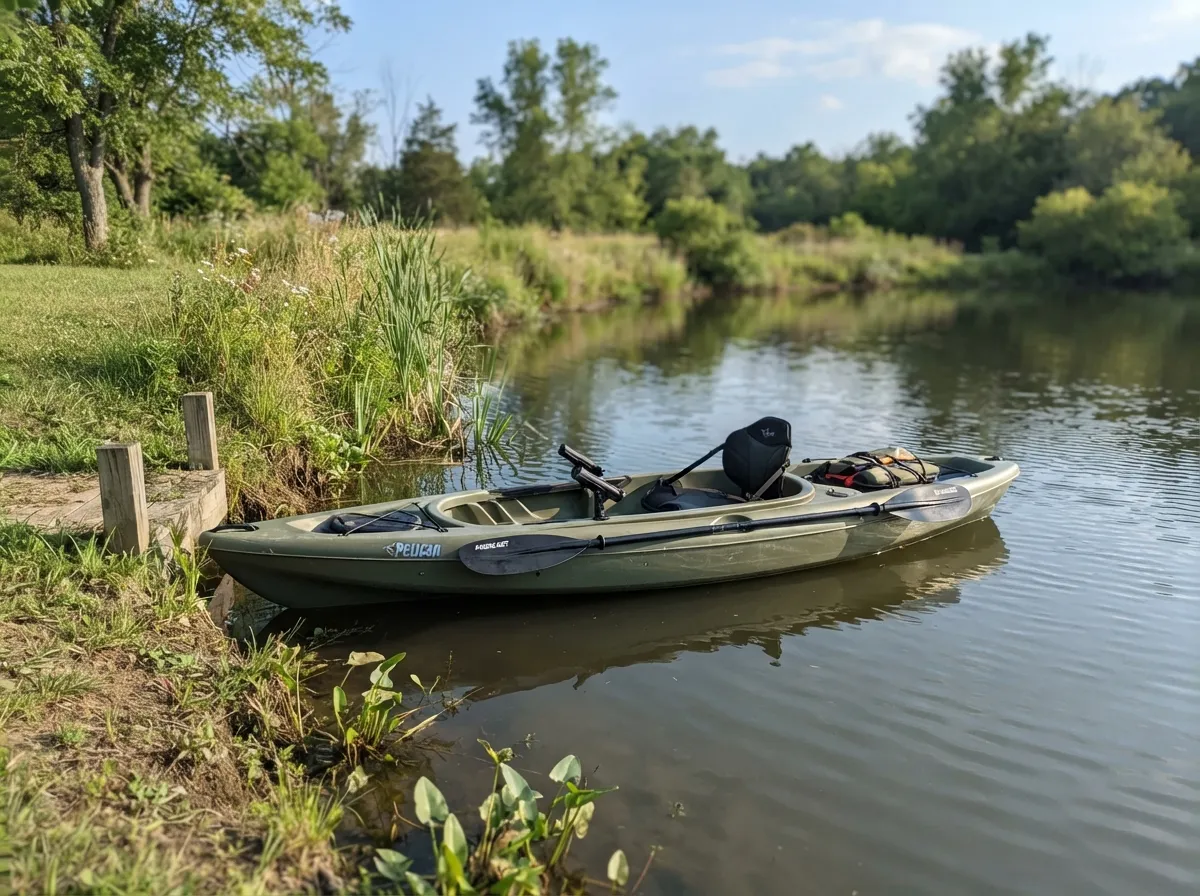
Best for: Ultra-budget anglers and occasional recreational fishers
Not every angler needs to spend $1,000 or more to enjoy kayak fishing. The Pelican Catch Mode 110 proves that a functional, fishable kayak can be had at an entry-level price. At 11 feet long and 32.5 inches wide, it offers reasonable stability for calm ponds and slow rivers without breaking the bank.
Standout features:
- ERGOCAST dual-position seating system
- Two flush-mount rod holders
- Multi-chine hull for improved stability
- Integrated paddle holder and storage compartment
The Catch Mode 110 is the right choice for anglers who fish occasionally, want to try kayak fishing before committing to a higher investment, or need an affordable option for younger family members.
Trade-off: Build quality and accessory compatibility are noticeably lower than mid-range and premium models. Anglers who progress quickly in the sport will likely feel the urge to upgrade within a season or two.
Comparing the 9 Best Fishing Kayak Models at a Glance
| Model | Length | Width | Capacity | Drive Type | Best For |
|---|---|---|---|---|---|
| Perception Pescador Pro 12 | 12 ft | 32.5 in | 325 lbs | Paddle | Entry/Intermediate |
| Old Town Topwater 106 | 10.5 ft | 32 in | 325 lbs | Paddle | Beginners |
| Wilderness Systems ATAK 120 | 12 ft | 34 in | 450 lbs | Paddle | Intermediate/Advanced |
| Hobie Mirage Compass | 12 ft | 33 in | 400 lbs | Pedal | Mid-range Pedal |
| Jackson Bite FD | 13 ft | 32.5 in | 400 lbs | Pedal | Tournament Anglers |
| Bonafide SS127 | 12.7 ft | 36 in | 425 lbs | Paddle | Standing/Stability |
| Native Watercraft Titan Propel 13.5 | 13.5 ft | 36 in | 500 lbs | Pedal | Big Water/Larger Anglers |
| Hobie Pro Angler 14 360 | 14 ft | 38 in | 600 lbs | Pedal (360) | Elite/Premium |
| Pelican Catch Mode 110 | 11 ft | 32.5 in | 300 lbs | Paddle | Ultra-Budget |
How to Choose the Right Model From the 9 Best Fishing Kayak Models for Every Angler and Budget
With nine strong options on the table, the final decision comes down to four personal factors.
1. Primary fishing environment
Calm ponds and small rivers forgive almost any hull design. Large reservoirs, coastal bays, and tidal rivers demand longer, more capable hulls with higher weight capacities and better tracking. Match the kayak to the water, not the other way around.
2. Budget
Set a realistic total budget that includes the kayak, paddle, personal flotation device (PFD), and any accessories. A $700 kayak budget that leaves nothing for a quality paddle and PFD is an incomplete budget. Plan for the full kit.
3. Paddle vs. pedal drive
Paddle kayaks are lighter, simpler, and less expensive. Pedal kayaks free both hands for fishing and are dramatically more efficient when fighting wind or current. For anglers who spend long days on open water, the pedal drive investment pays dividends quickly.
4. Physical considerations
Taller anglers need longer cockpits and adjustable foot braces. Heavier anglers must prioritize weight capacity and beam width. Anyone with knee or hip issues should evaluate how easy it is to get in and out of a specific model before purchasing.
Essential Accessories for Any Fishing Kayak
Choosing from the 9 best fishing kayak models for every angler and budget is only the first step. The right accessories transform a good kayak into a complete fishing platform.
- Anchor trolley system: Allows precise boat positioning relative to current and wind without permanently anchoring at the bow or stern.
- Fish finder/depth sounder: Entry-level units from Garmin, Humminbird, or Lowrance mount cleanly on most gear tracks and dramatically improve fish-finding efficiency.
- Kayak cart: Essential for models over 70 lbs. A quality cart with pneumatic tires handles sand, gravel, and uneven terrain with ease.
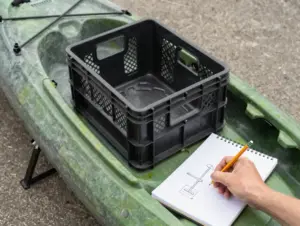
- Crate system: A milk-crate-style tackle crate fits most rear tankwells and provides organized rod storage, tackle tray slots, and net holders.
- Dry bags and hatches: Even sit-on-top kayaks get wet. Protect electronics, wallets, and food with quality dry bags rated to at least IPX6.
Conclusion
The 9 best fishing kayak models for every angler and budget covered in this guide represent the strongest options available in 2026 across every price tier and fishing style. From the ultra-affordable Pelican Catch Mode 110 to the elite Hobie Pro Angler 14 360, there is a proven, fishable hull for every type of water and every level of commitment.
Actionable next steps:
- Identify the primary water type, pond, river, lake, or coastal, and use that to narrow the list to two or three candidates.
- Visit a local paddle sports retailer or demo day event to sit in and ideally paddle each finalist before purchasing.
- Set a complete budget that covers the kayak, PFD, paddle, and at least two or three essential accessories.
- Check manufacturer warranty terms, most reputable brands offer at least a three-year hull warranty, and some offer lifetime coverage.
- Join a local kayak fishing club or online community. Experienced anglers are consistently generous with gear advice, local water knowledge, and rigging tips.
The right fishing kayak does not just get an angler on the water, it changes how often they go, how long they stay, and how many fish they catch.