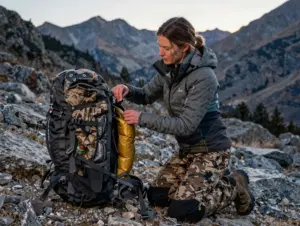
9 Camouflage Outfits That Dress to Impress on Any Outdoor Adventure
Hunters in the United States spend more than $26 billion annually on gear and clothing, and camouflage fabric accounts for a striking share of that market, with the global camo apparel industry valued at over $8 billion as of 2026. Yet most outdoor enthusiasts still choose their camouflage based on looks alone, leaving performance and versatility on the table. The 9 Camouflage Outfits That Dress to Impress on Any Outdoor Adventure covered in this guide go far beyond aesthetics. Each outfit is built around a specific terrain, activity, and performance need, so whether the goal is harvesting a whitetail at dawn or summiting a granite ridge by noon, the right camo ensemble does real work.
Disclosure: This post contains affiliate links. As an Amazon Associate, we earn from qualifying purchases, and at no extra cost to you.
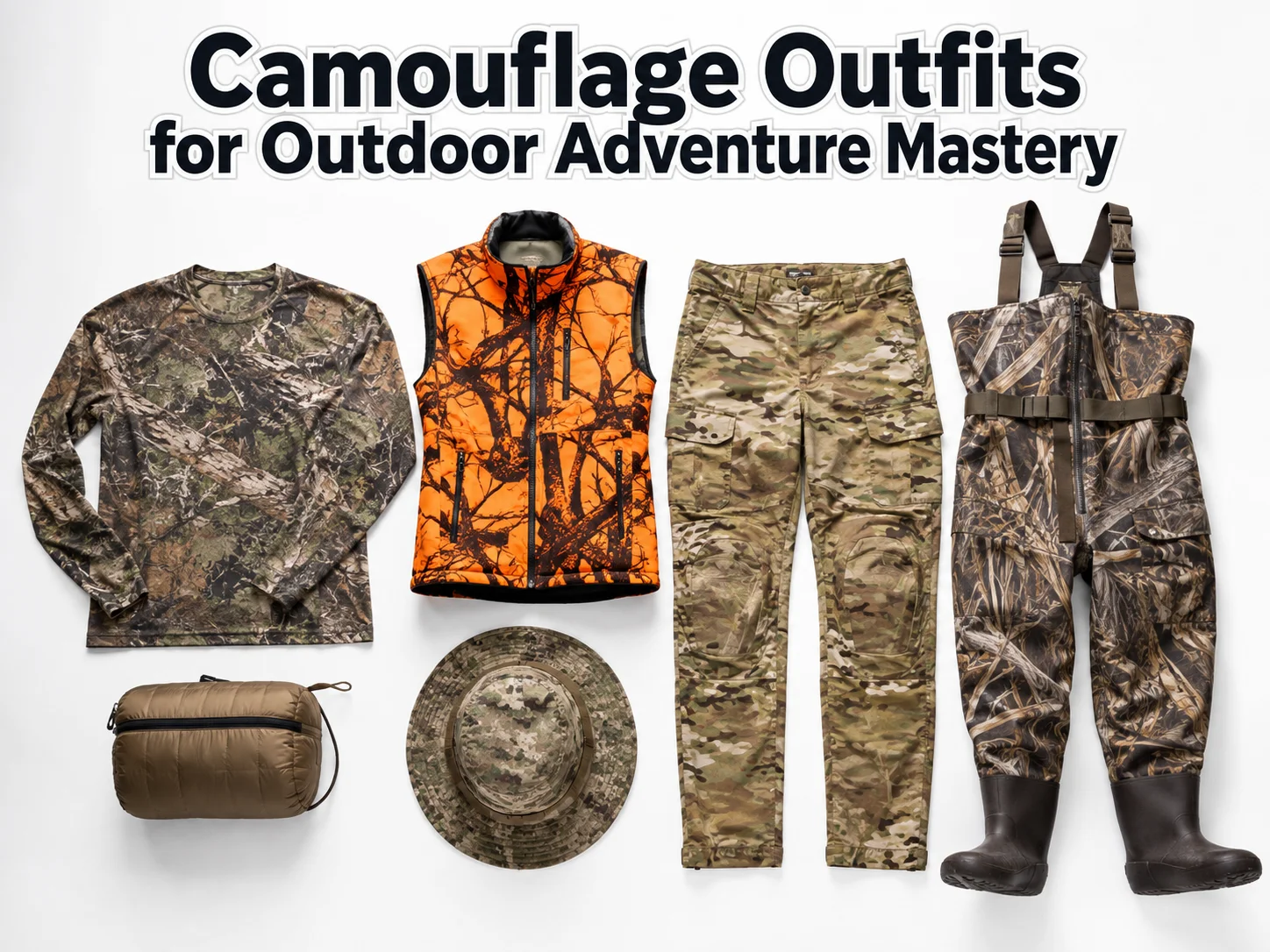
Key Takeaways
- Camouflage outfits are not one-size-fits-all, terrain, season, and activity type should drive every purchase decision.
- Layering systems within a camo wardrobe dramatically extend versatility across temperature ranges and weather conditions.
- Pattern matching to the specific environment (woodland, desert, snow, urban) is more effective than choosing the most popular or recognizable print.
- Modern camo fabrics offer moisture management, scent control, and UV protection, features that matter as much as the pattern itself.
- The 9 Camouflage Outfits That Dress to Impress on Any Outdoor Adventure outlined here cover the full spectrum from hunting and fishing to hiking and tactical training.
Why Camouflage Clothing Is More Than a Fashion Statement
Walk into any sporting goods store and the camo section has expanded well beyond hunting vests and blaze orange jackets. Today’s outdoor enthusiast can find camo-patterned base layers, insulated midlayers, rain shells, waders, and even compression tights. The reason is simple: camouflage clothing has evolved from a military utility into a full performance-apparel category.
Three core functions define a high-quality camo outfit:
- Visual concealment, breaking up the human silhouette against a specific background
- Environmental performance, managing moisture, temperature, and scent in the field
- Durability, resisting abrasion, tears, and weather across rugged terrain
Understanding these functions helps outdoor adventurers move past impulse buys and toward deliberate outfit building. The sections below break down the 9 Camouflage Outfits That Dress to Impress on Any Outdoor Adventure, each tailored to a distinct outdoor scenario.
The 9 Camouflage Outfits That Dress to Impress on Any Outdoor Adventure
1. The Classic Woodland Hunting Layering System
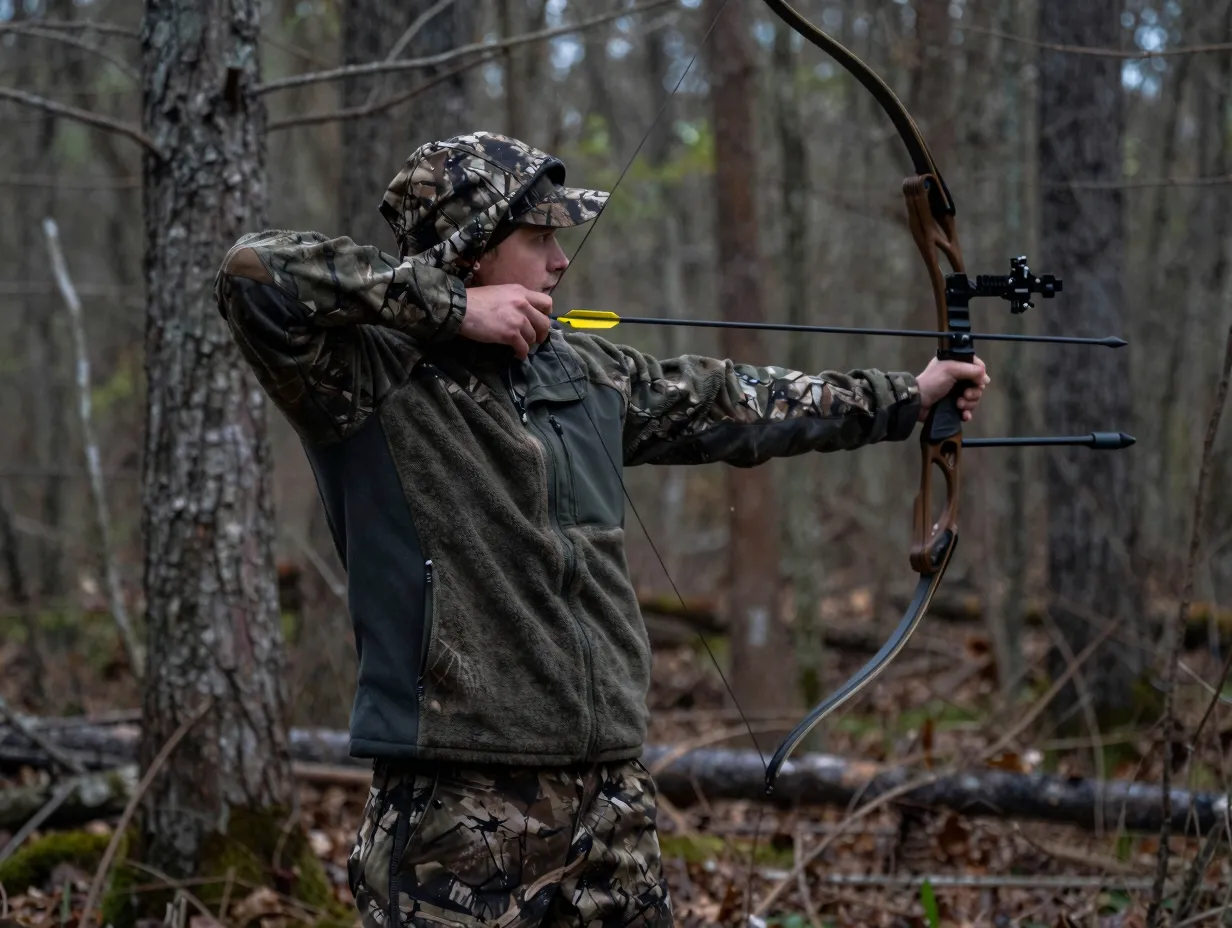
The woodland hunting layering system remains the gold standard for whitetail deer hunters across the eastern United States and Canada. It combines a scent-control base layer, an insulated midlayer, and a quiet outer shell, all in traditional green-brown-black woodland or Realtree AP patterns.
Core components:
- Moisture-wicking base layer in a fine-print woodland pattern (merino wool or synthetic)
- Fleece midlayer with a brushed finish to reduce noise when moving through brush
- Softshell or waterproof-breathable outer jacket with articulated elbows for draw clearance
The key performance detail here is sound management. Stiff, crinkly fabrics spook game at close range. Look for fleece-faced panels on the forearms and chest of the outer layer. Pants should match the jacket pattern precisely, mismatched patterns create visual breaks that reduce effectiveness.
“The best camo outfit is the one that disappears into its specific environment, not the one with the most recognizable brand name on the chest.”
Recommended terrain: Mixed hardwood forests, river bottoms, agricultural edges
2. The Desert Multicam Tactical Ensemble
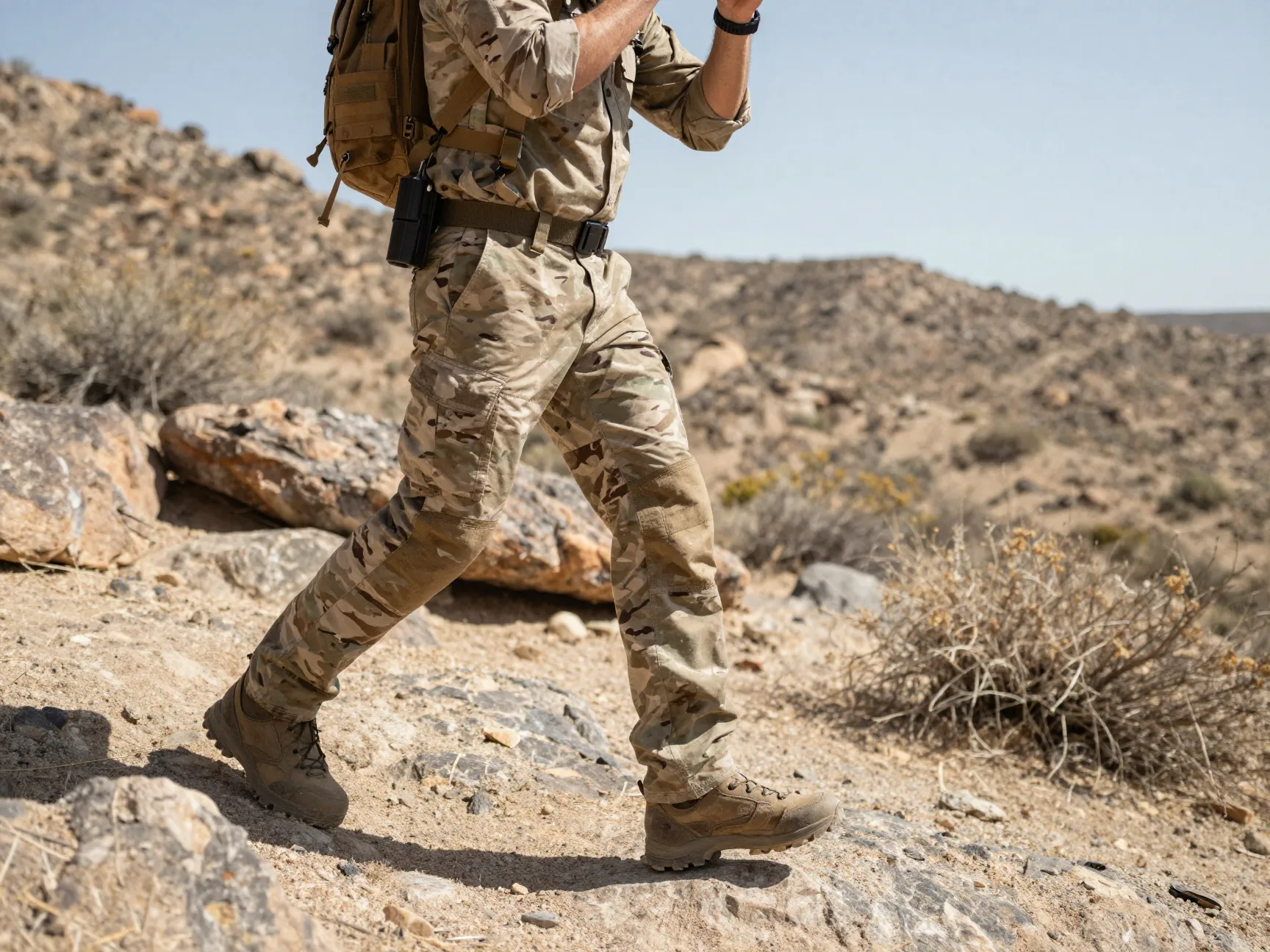
Multicam was originally developed for U.S. Army soldiers operating across multiple terrain types in a single deployment. Its genius lies in a transitional color palette, tan, coyote brown, light green, and dark earth, that performs reasonably well in desert scrub, arid grasslands, and dry rocky terrain.
For the outdoor adventurer, a desert multicam ensemble typically includes:
- Lightweight ripstop tactical pants with articulated knees and cargo pockets
- A moisture-wicking button-up field shirt with roll-tab sleeves
- A low-profile chest rig or pack in a matching or complementary pattern
Why it works in the field: The multicam pattern uses a macro-to-micro layering of colors that mimics the visual complexity of natural environments rather than replicating a single specific background. This makes it one of the most versatile camo patterns available in 2026.
Recommended terrain: Desert Southwest, arid scrubland, dry mountain foothills
3. The Snow and Alpine Camo Outfit
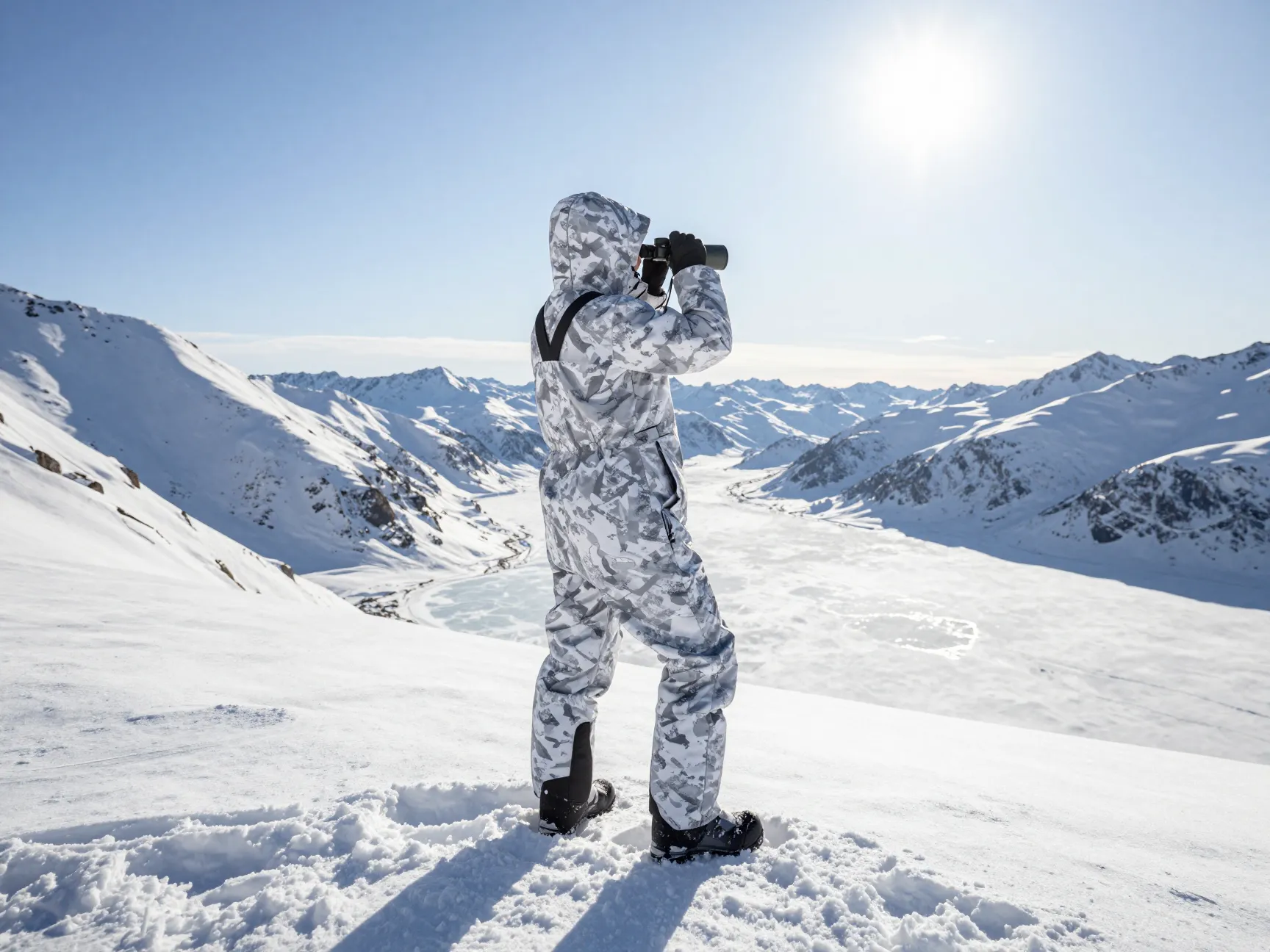
Few outdoor environments are as visually demanding as a snow-covered alpine landscape. Standard woodland or multicam patterns stand out sharply against white backgrounds, making a dedicated snow camo outfit essential for late-season hunters, ice fishers, and backcountry skiers who need concealment.
Key pieces for a snow camo system:
- White-grey reversible camo outer layer (often sold as a “ghillie-style” oversuit)
- Insulated bib pants in a snow or winter digital pattern
- Gaiters and boot covers in matching white or grey camo
The most functional snow camo outfits use a reversible design, one side in snow white, the other in a transitional pattern for use in partially snow-covered terrain. This doubles the outfit’s usability across early and late winter conditions.
Thermal performance note: Alpine environments demand a minimum of three insulating layers beneath the camo shell. The camo pattern is the final layer, warmth comes from what is underneath it.
Recommended terrain: High alpine bowls, frozen lake ice, boreal forest in winter
4. The Waterfowl and Flooded Timber Outfit
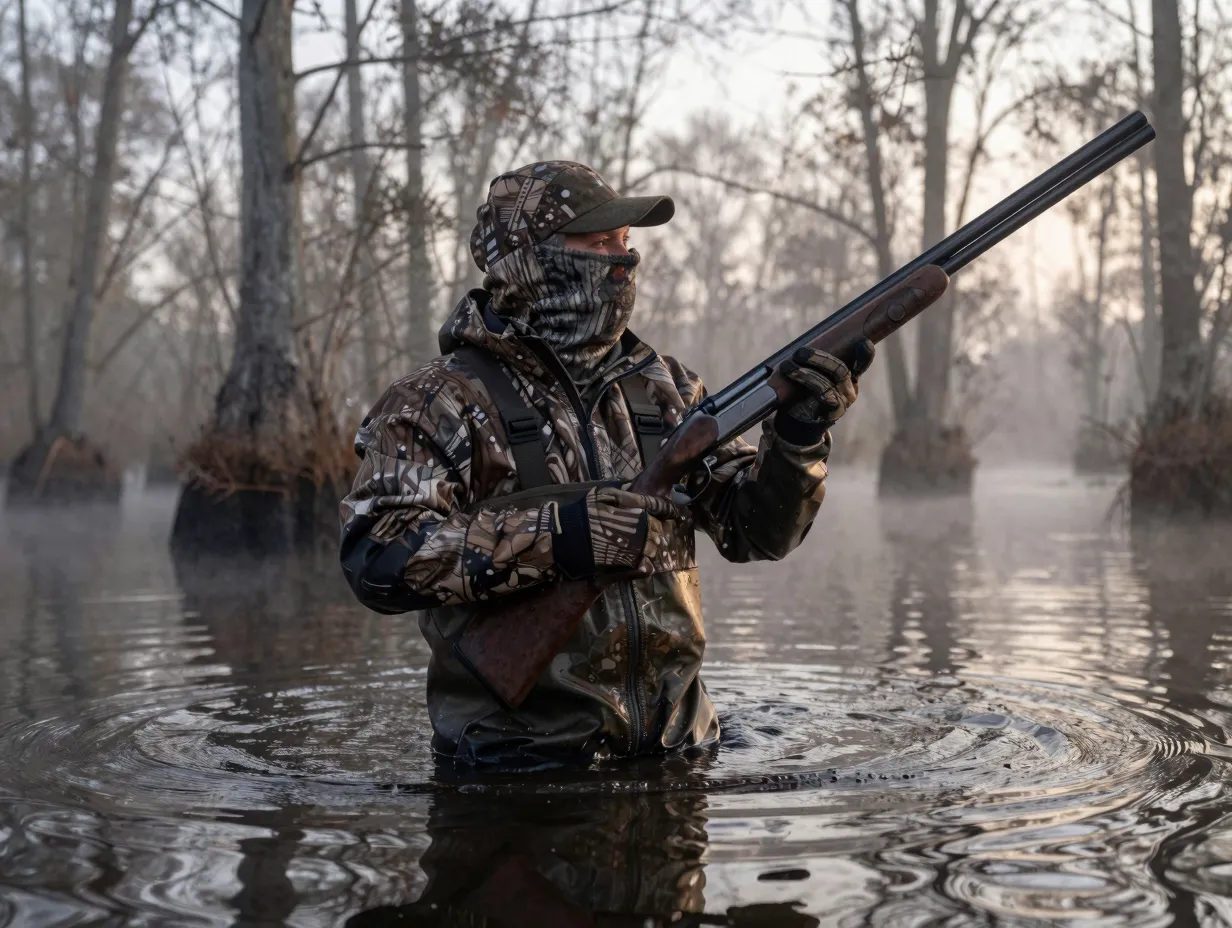
Duck hunting in flooded timber is one of the most physically demanding forms of waterfowl pursuit. Hunters wade through knee-to-waist-deep water in near-freezing temperatures, often before sunrise. The right camo outfit for this environment must handle water, cold, and the specific visual environment of bare grey timber and brown cattails.
Essential components:
- Neoprene chest waders (4mm to 5mm thickness) in a Mossy Oak Bottomland or similar flooded timber pattern
- Insulated wading jacket with waterproof-breathable membrane
- Fleece face mask and gloves in a matching pattern
Pattern selection matters enormously here. The Mossy Oak Bottomland pattern, featuring grey, brown, and black tones mimicking bare tree bark and dead vegetation, was specifically designed for this environment and remains one of the most effective waterfowl patterns available.
Recommended terrain: Flooded agricultural fields, cypress swamps, river backwaters
5. The High-Country Elk Hunting Outfit
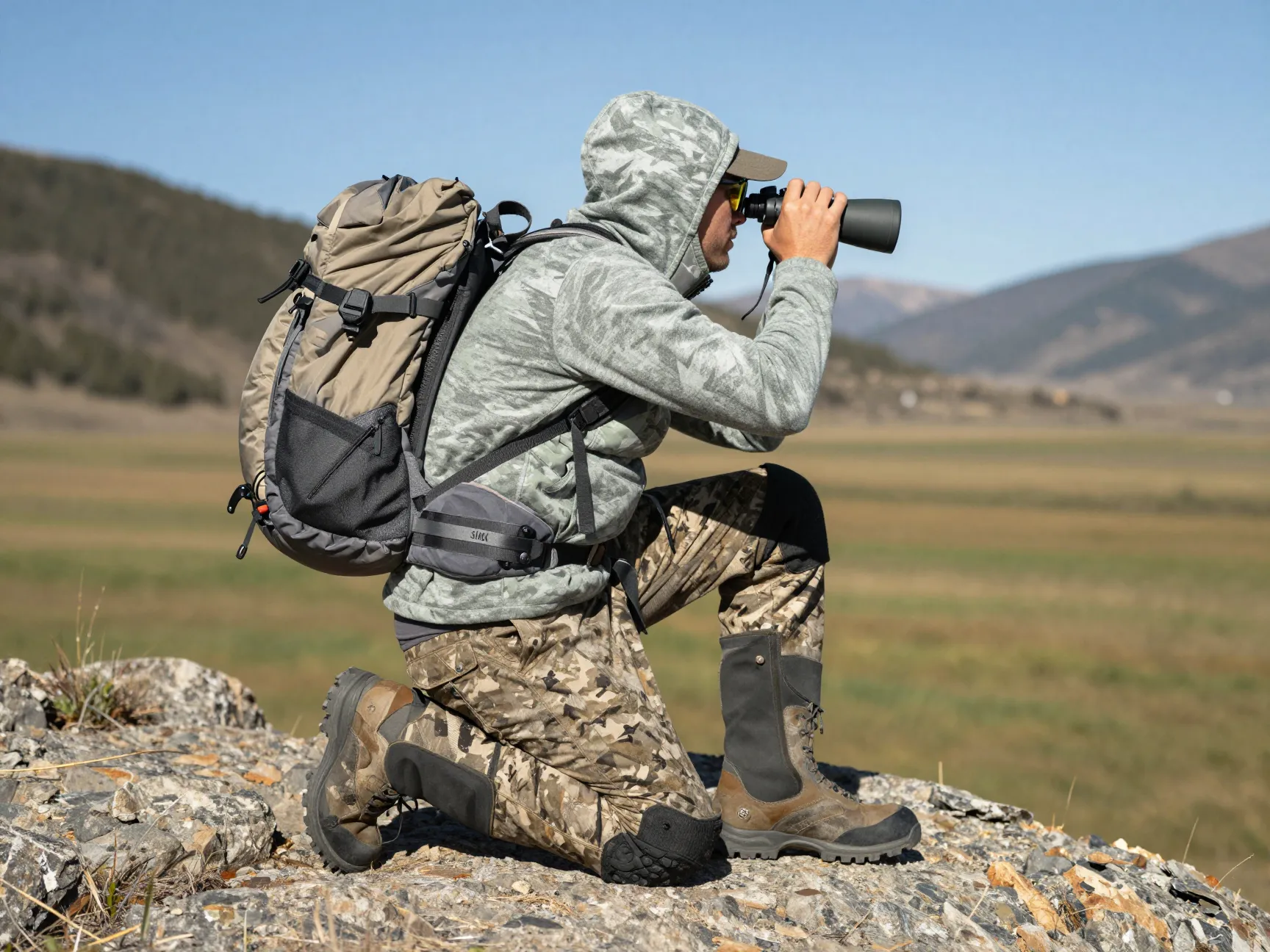
Elk hunting in the high country demands an outfit that can handle dramatic temperature swings, from 20°F at pre-dawn to 65°F by midday, while keeping the hunter concealed in open timber and subalpine meadows. This is where a well-engineered camo system earns its price tag.
The high-country camo system includes:
- Lightweight merino wool base layer in a grey-green mountain pattern
- Packable down midlayer (compresses to fist size) for warmth during glassing sessions
- Lightweight hardshell in a Sitka Subalpine or similar open-country pattern
- Camo gaiter pants worn over approach shoes or lightweight hunting boots
Open-country patterns like Sitka Subalpine, First Lite Fusion, or KUIU Vias use macro-level color blending, large patches of grey, sage, and tan, rather than fine-detail leaf prints. This is deliberate: at distances of 200 to 400 yards, fine-detail patterns blend into a single tone anyway, while macro patterns continue to break up the human outline.
Recommended terrain: Subalpine meadows, open timber, rocky ridgelines above 8,000 feet
6. The Urban and Tactical Training Outfit
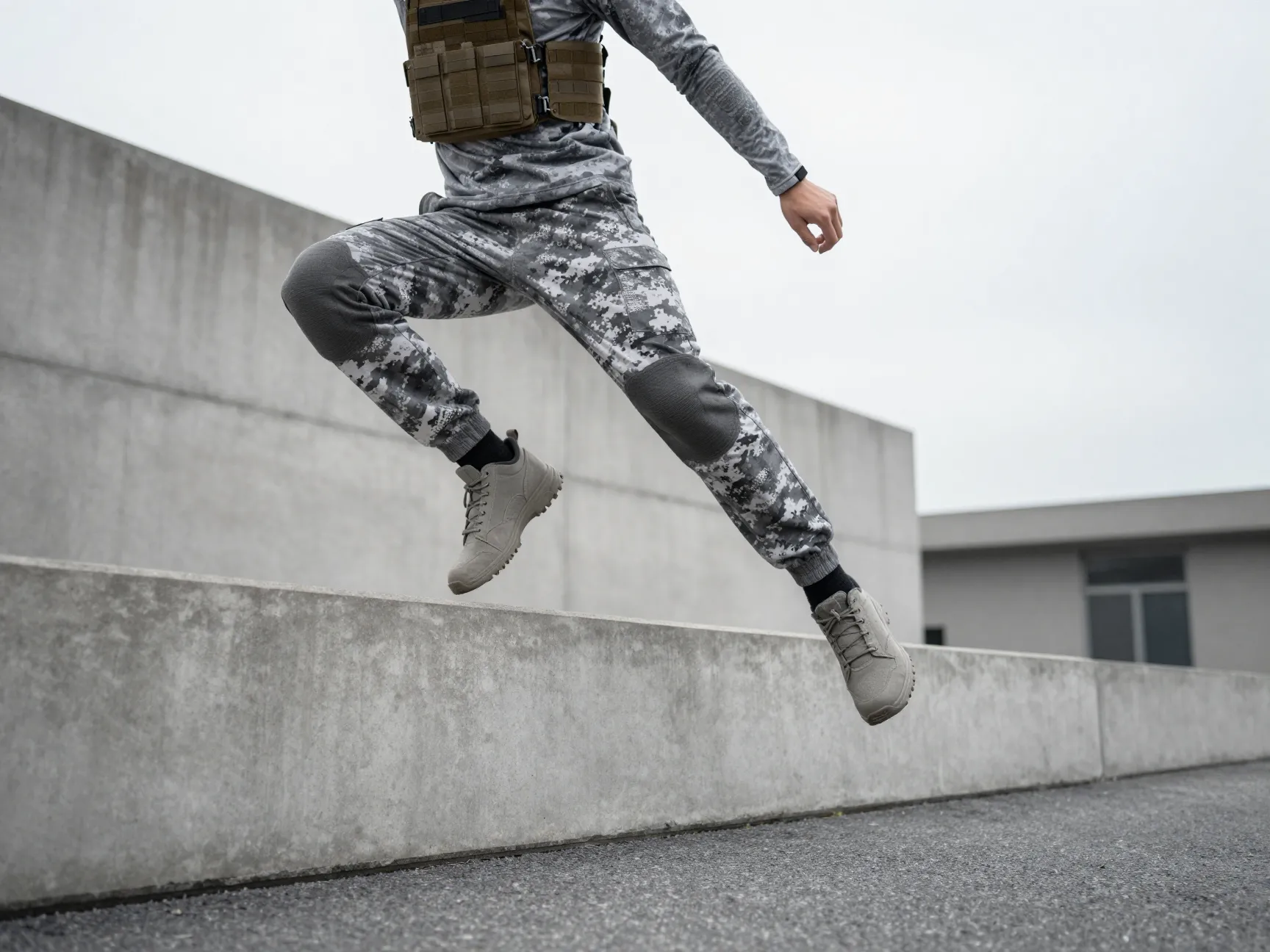
Urban camo has moved well beyond its military roots. In 2026, tactical training enthusiasts, airsoft competitors, and urban survivalists use grey-scale digital camo or urban multicam patterns for both performance and style. This outfit is built for mobility, not maximum concealment.
Urban camo outfit components:
- Slim-fit digital grey camo jogger pants with reinforced knees
- Lightweight tactical tee or long-sleeve shirt in a matching grey pattern
- Low-profile plate carrier or chest rig (for tactical training contexts)
- Minimalist trail runners or low-cut tactical boots
Performance fabric priorities for urban training:
| Feature | Why It Matters |
|---|---|
| 4-way stretch | Full range of motion during dynamic movements |
| Moisture wicking | Manages sweat during high-intensity drills |
| Abrasion resistance | Survives contact with concrete and hard surfaces |
| Low-profile pockets | Reduces snag points during obstacle courses |
Recommended terrain: Urban training facilities, obstacle courses, airsoft fields, tactical competitions
7. The Fishing and Kayak Angler’s Camo Outfit
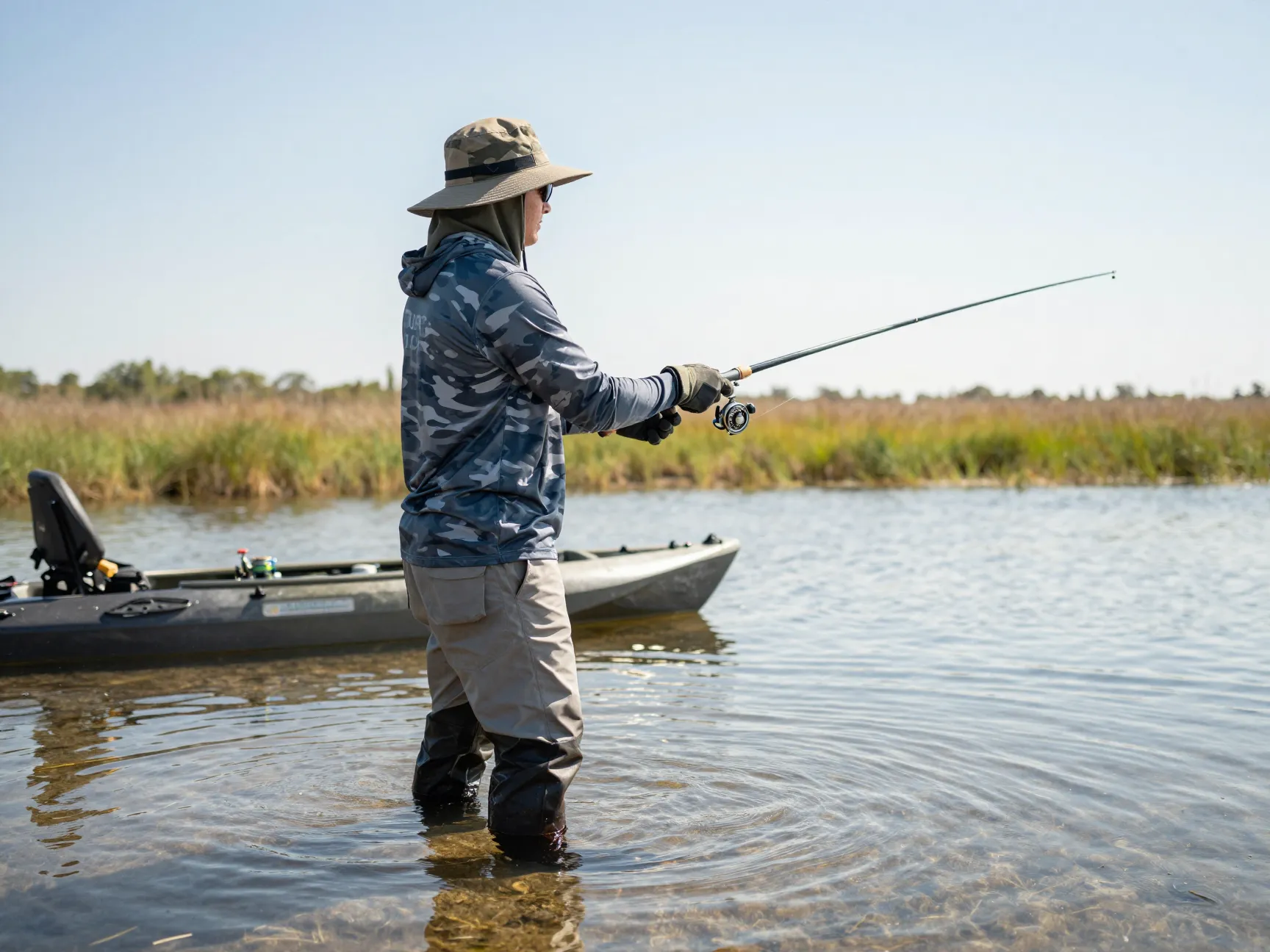
Camo for anglers serves a different purpose than camo for hunters. The goal is not to hide from fish, fish primarily detect movement and shadow, not pattern, but to reduce glare reflection off clothing that can spook fish in clear, shallow water, and to manage the sun, wind, and spray of a full day on the water.
The kayak angler‘s camo outfit:
- UPF 50+ long-sleeve fishing shirt in a blue-grey or marsh camo pattern
- Lightweight camo fishing pants or convertible shorts with quick-dry fabric
- Wide-brim camo hat with neck drape
- Neoprene or nylon camo gloves for grip and sun protection
Why camo works for anglers: In shallow flats fishing and sight-casting scenarios, a muted, patterned shirt reduces the visual contrast between the angler and the sky background as seen from below the water’s surface. Solid bright colors create a stark silhouette; patterned earth tones soften it.
Recommended terrain: Saltwater flats, clear mountain streams, shallow lake edges, kayak fishing in marshes
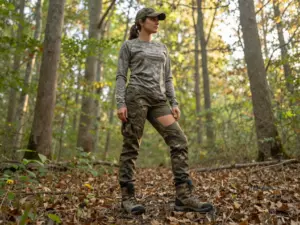
8. The Backcountry Hiking and Overlanding Outfit
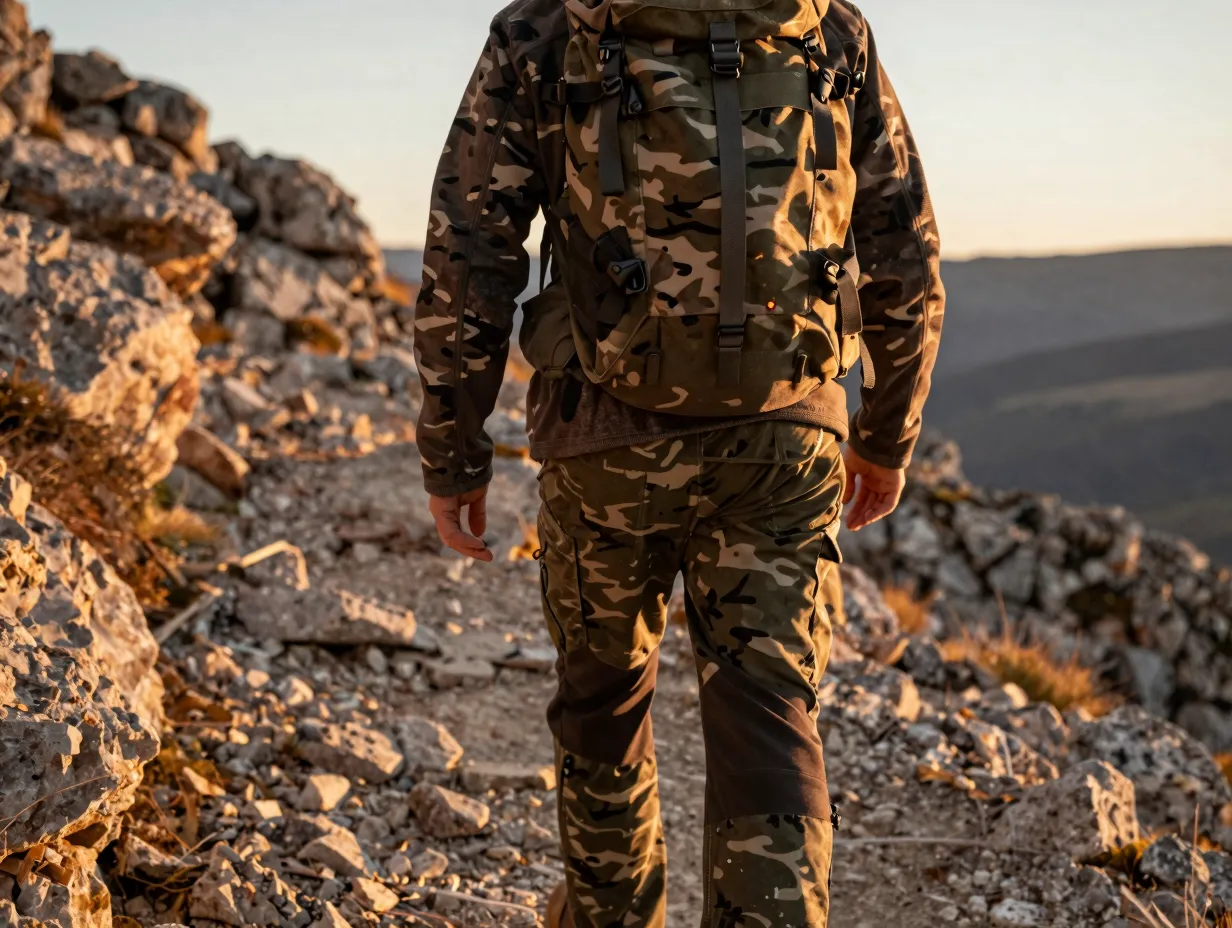
Not every camo outfit is built around concealment from animals. The backcountry hiking camo ensemble is chosen for its ruggedness, earth-tone aesthetics, and ability to handle everything from creek crossings to ridge scrambles. This is camo as a performance choice, not a hunting strategy.
Core pieces:
- Camo softshell jacket with helmet-compatible hood and underarm vents
- Camo hiking pants with articulated knees, gusseted crotch, and zip-off legs
- Merino wool camo base layer for odor resistance on multi-day trips
- Camo stuff-sack daypack or hydration vest
The overlanding community has adopted camo heavily in 2026, particularly earth-tone multicam and olive drab patterns, for both aesthetic alignment with the outdoors and practical durability. Camo fabrics used in tactical apparel are typically more abrasion-resistant than standard hiking fabrics, making them a logical choice for technical terrain.
Recommended terrain: Rocky backcountry trails, river crossings, overlanding base camps, multi-day wilderness trips
9. The Blaze Orange Safety Camo Outfit
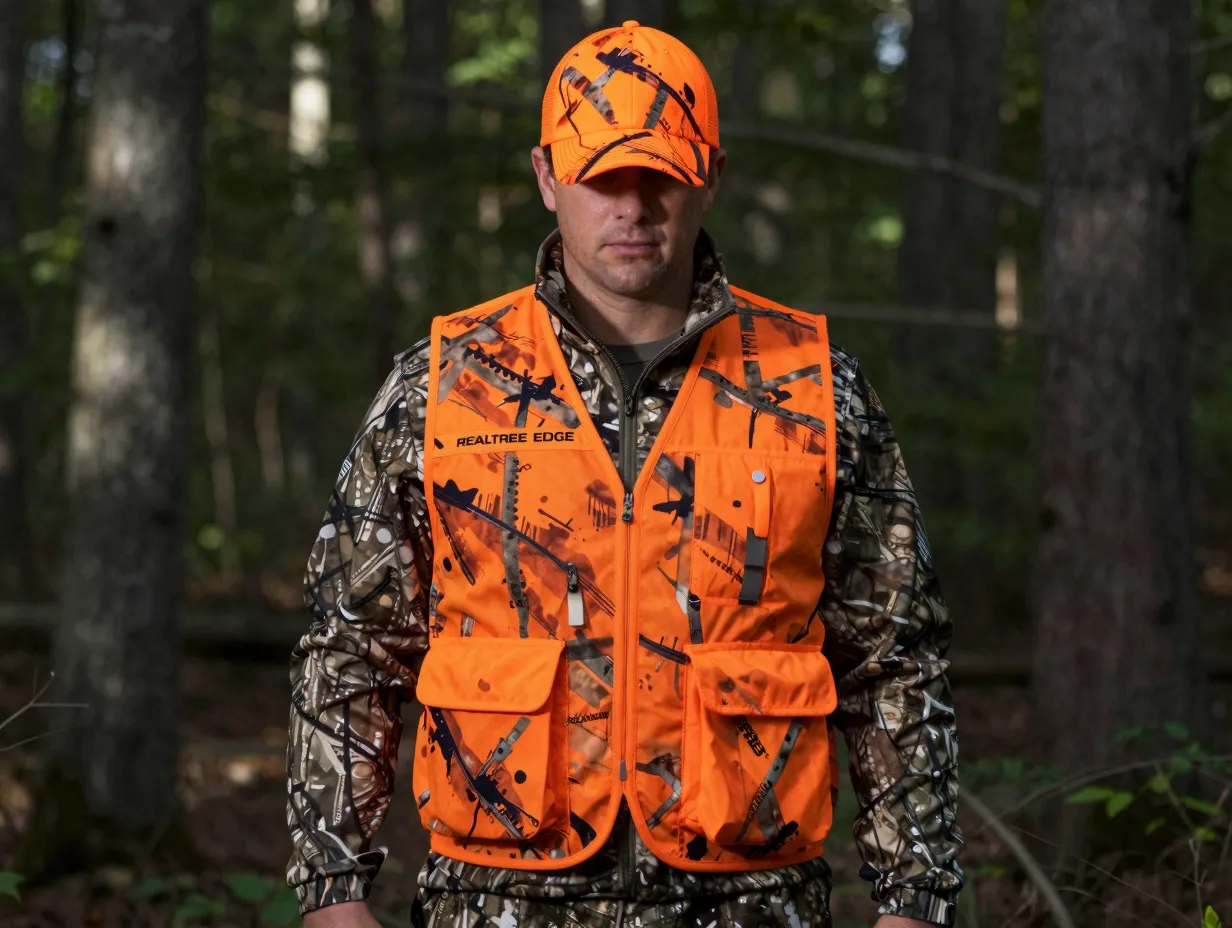
The ninth outfit on this list is the one most hunters legally require but fewest people discuss in depth: the blaze orange safety camo ensemble. Most U.S. states mandate a minimum of 400 to 500 square inches of blaze orange during firearm deer seasons. The challenge is meeting that legal requirement without abandoning the concealment benefits of camo.
Modern blaze orange camo solves this problem directly. Patterns like Realtree EDGE in blaze orange, Mossy Oak Blaze, and Sitka’s Open Country Blaze use the standard blaze orange color combined with dark brown or black pattern elements. Research has confirmed that deer, which lack red-green color receptors, perceive blaze orange as a grey-yellow tone, meaning the pattern still provides meaningful concealment from the animal’s perspective.
The blaze orange camo outfit:
- Blaze orange camo vest (meets or exceeds state minimums)
- Blaze orange camo cap
- Standard woodland or open-country camo base layers beneath the vest
- Matching camo pants in a non-blaze pattern (most states do not require blaze orange on lower body)
Recommended terrain: Public land during firearm deer season, turkey season opener days, any mixed-use public land where hunter visibility to other hunters is a safety priority
How to Build a Versatile Camo Wardrobe for Multiple Adventures
The 9 Camouflage Outfits That Dress to Impress on Any Outdoor Adventure do not require nine separate full wardrobes. Smart outdoor adventurers build a modular camo system where core pieces overlap across multiple outfits.
Modular camo wardrobe strategy:
- Start with two base patterns: Choose one woodland/forest pattern and one open-country/multicam pattern. These two cover the majority of North American terrain types.
- Invest in quality base layers: A merino wool camo base layer works equally well under a hunting jacket, a hiking softshell, or a wading jacket.
- Add one specialty piece per season: Snow camo oversuit for winter, waders for waterfowl season, blaze orange vest for firearm season.
- Prioritize fabric performance over pattern novelty: A moisture-wicking, scent-controlled fabric in a slightly imperfect pattern outperforms a visually perfect pattern in a stiff, noisy, non-breathable fabric every time.
Pattern-to-terrain matching quick reference:
| Terrain Type | Recommended Pattern |
|---|---|
| Eastern hardwood forest | Realtree AP, Mossy Oak Break-Up Country |
| Western open country | Sitka Subalpine, KUIU Vias, First Lite Fusion |
| Desert and arid scrub | Multicam, Kryptek Highlander |
| Snow and alpine | Kryptek Yeti, Sitka Optifade Open Country Snow |
| Flooded timber and marsh | Mossy Oak Bottomland, Realtree Max-5 |
| Urban and tactical | Urban multicam, A-TACS AU, grey digital |
Common Mistakes to Avoid When Choosing Camo Outfits
Even experienced outdoor enthusiasts make avoidable errors when assembling camo outfits. Knowing these pitfalls saves money and improves field performance.
Mistake 1, Mismatching patterns across layers. Wearing a Realtree jacket over Mossy Oak pants creates a visual break at the waistline that defeats the purpose of both patterns. Consistency across all visible layers matters.
Mistake 2, Choosing pattern over fabric performance. A quiet, moisture-wicking fabric in a mediocre pattern will outperform a loud, crinkly fabric in a perfect pattern. Sound and scent betray hunters before visual pattern ever does.
Mistake 3, Ignoring scale. Fine-detail patterns (small leaves, tight branch structures) are designed for close-range concealment. Open-country macro patterns are designed for long-range glassing distances. Using a fine-detail pattern in open terrain creates a blob of color at distance, exactly the opposite of the intended effect.
Mistake 4, Neglecting fit. Camo that bunches, rides up, or restricts movement creates noise and reduces comfort on long days in the field. Articulated knees, gusseted crotches, and adjustable waistbands are not luxury features, they are functional necessities.
Mistake 5, Overlooking layering compatibility. Each piece in a camo system should be designed to work with the pieces above and below it. A puffy midlayer that is too bulky to fit under the outer shell defeats the entire layering strategy.
Conclusion
The right camouflage outfit is a precision tool, not a costume. The 9 Camouflage Outfits That Dress to Impress on Any Outdoor Adventure outlined in this guide demonstrate that effective camo dressing requires matching pattern, fabric, and system design to a specific terrain, season, and activity.
Actionable next steps for outdoor adventurers in 2026:
- Identify the two or three outdoor activities that make up the majority of time spent in the field, and build a camo wardrobe around those specific scenarios first.
- Audit existing camo gear for fabric performance, if any piece is stiff, noisy, or non-breathable, replace it regardless of how visually appealing the pattern is.
- Research state-specific blaze orange requirements before every firearm season to ensure legal compliance while still maintaining effective concealment.
- Invest in a quality merino wool or synthetic camo base layer as the single highest-impact upgrade to any existing camo system.
- Test new camo pieces in the actual terrain before relying on them in high-stakes situations, patterns that look perfect in a store can perform very differently against real backgrounds.
Camouflage clothing has never been more technically advanced or more diverse than it is in 2026. The outdoor adventurer who approaches outfit selection with the same deliberateness applied to optics, firearms, or navigation gear will gain a measurable advantage in every environment they enter.