8 Proven Tarpon Fishing Techniques for Hookups in Saltwater Flats
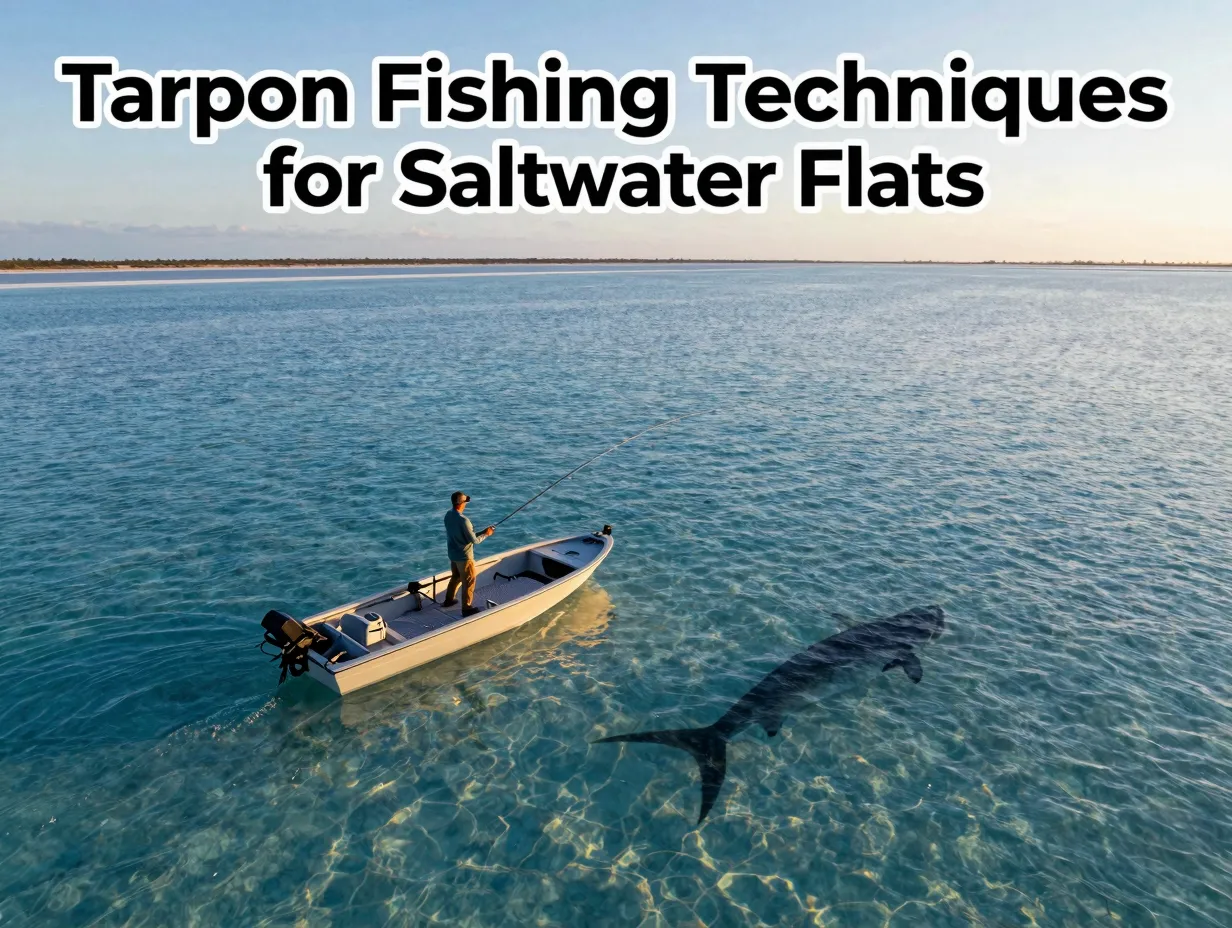
Tarpon can weigh over 200 pounds, leap 10 feet into the air, and still spit a hook in under three seconds, yet anglers travel from every corner of the world just for one shot at them on a shallow flat. The pursuit of the “Silver King” is equal parts science, patience, and raw instinct. Mastering the 8 proven tarpon fishing techniques for hookups in saltwater flats covered in this guide gives any angler, beginner or seasoned, a measurable edge when that dark shadow finally slides into casting range.
Disclosure: This post contains affiliate links. As an Amazon Associate, we earn from qualifying purchases, and at no extra cost to you.
Key Takeaways
- Presentation and angle of cast matter more than lure selection on pressured flats.
- Reading tarpon behavior, rolling, daisy-chaining, or laid-up, determines which technique to deploy.
- Leader strength, hook sharpness, and knot integrity are non-negotiable for landing large fish.
- Tidal movement and water temperature directly control tarpon feeding windows.
- The hookset on tarpon requires a strip-strike or “tarpon set,” not a traditional rod-lift strike.
Why Saltwater Flats Demand a Specialized Approach
Tarpon on open saltwater flats are not the same fish as tarpon holding in a deep harbor channel. On the flats, the water is shallow, often less than four feet, and crystal clear. Every cast, every footstep on the boat deck, and every shadow thrown across the water can spook a fish before it ever sees the bait. The margin for error is razor thin.
Understanding this environment is the foundation of every one of the 8 proven tarpon fishing techniques for hookups in saltwater flats. The angler who understands tidal flow, bottom composition, and fish behavior will consistently outperform the angler who simply has better gear.
Three environmental factors that control tarpon activity on the flats:
| Factor | Why It Matters | Optimal Condition |
|---|---|---|
| Water Temperature | Controls metabolism and feeding drive | 77°F to 88°F |
| Tidal Movement | Moves bait and triggers feeding windows | Incoming or early outgoing |
| Water Clarity | Determines visibility for sight-fishing | 2-6 feet of visibility |
The 8 Proven Tarpon Fishing Techniques for Hookups in Saltwater Flats
The following techniques are ordered from foundational to advanced. Each one addresses a specific scenario commonly encountered on productive tarpon flats from Florida to Belize to West Africa.
1. Sight-Fishing with a Fly Rod
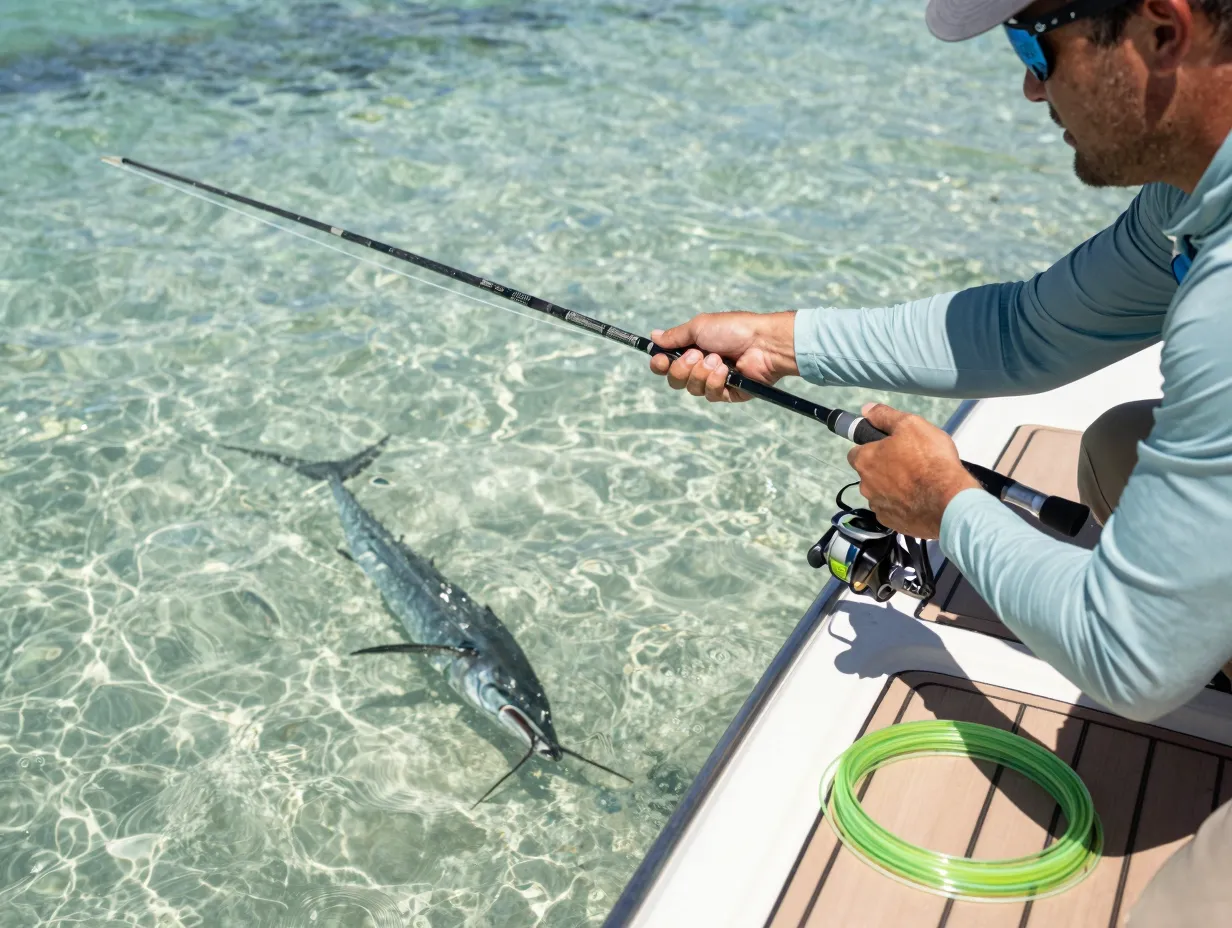
Fly fishing for tarpon on the flats is widely considered the pinnacle of the sport. The technique demands precise casting, a controlled presentation, and the discipline to wait for the fish to eat before setting the hook.
The core mechanics:
- Use a 10 to 12-weight fly rod matched to a tropical saltwater fly line.
- Carry pre-stripped line in neat coils at your feet to eliminate tangles on the cast.
- Lead the fish by casting 6 to 10 feet ahead of its nose, depending on swimming speed.
- Let the fly sink to the fish’s eye level before beginning a slow, deliberate strip retrieve.
- When the fish eats, execute a strip-strike, pull the fly line sharply with the line hand while keeping the rod tip low and pointed at the fish.
Common fly patterns: Black Death, Tarpon Toad, EP Baitfish, and Cockroach are proven producers. Dark patterns work well in bright conditions; lighter patterns shine on overcast days.
“The biggest mistake fly anglers make is lifting the rod tip on the strike. That single error accounts for the majority of pulled hooks on tarpon.”
2. Live Bait Fishing with Crabs
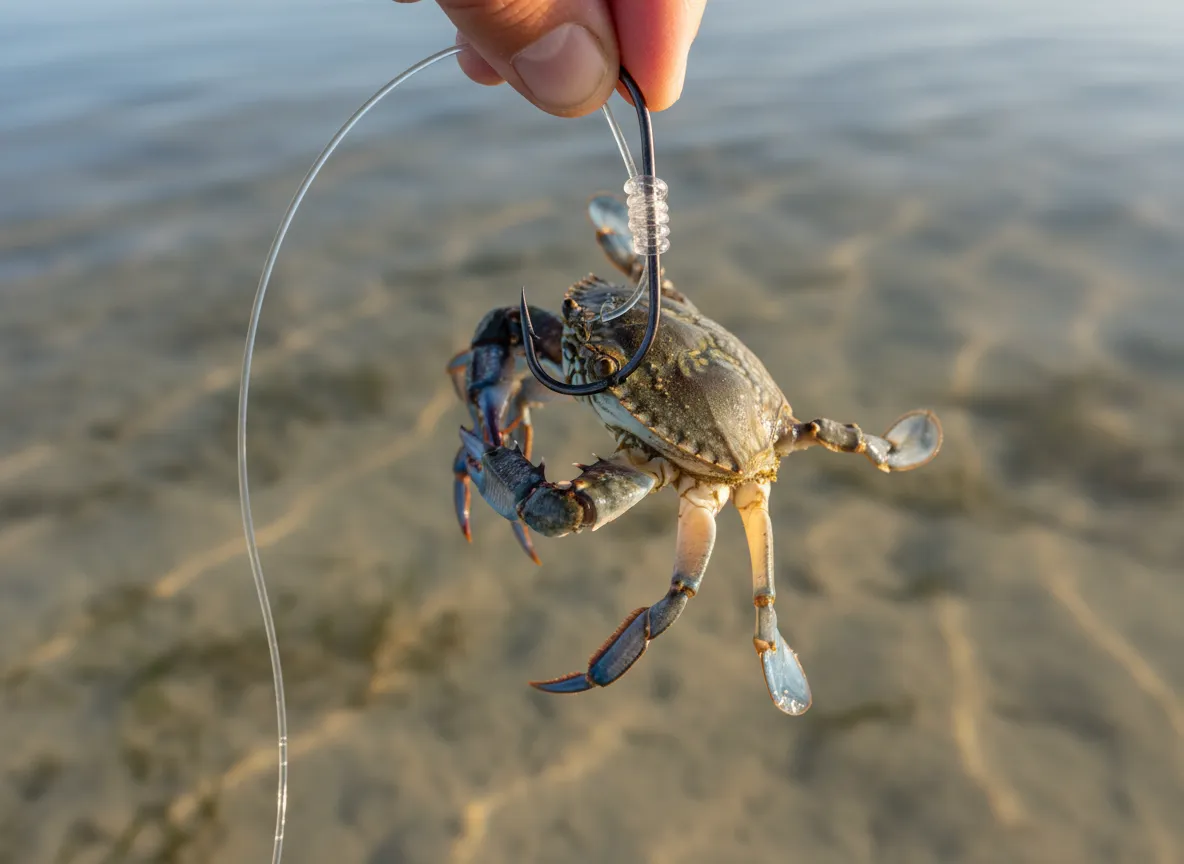
Blue crabs and pass crabs are arguably the most effective natural bait for tarpon on shallow flats, particularly during the late spring migration along Florida’s Gulf Coast. Tarpon are opportunistic predators, but few meals trigger a committed eat like a live crab drifting naturally in the current.
Rigging a live crab correctly:
- Use a 5/0 to 7/0 circle hook or wide-gap hook.
- Hook the crab through the corner of the shell, near the back leg socket.
- Keep the leader between 60 and 100 pounds of fluorocarbon, heavy enough to withstand the tarpon’s rough mouth, light enough to remain supple.
- Free-line the crab with no weight when current is present, or use a small split shot to keep it near the bottom in slack water.
The key to this technique is patience. Allow the tarpon to take the crab, turn, and begin moving away before applying pressure. Circle hooks perform best when the angler simply reels tight rather than striking hard.
3. Live Bait Fishing with Mullet and Threadfin Herring
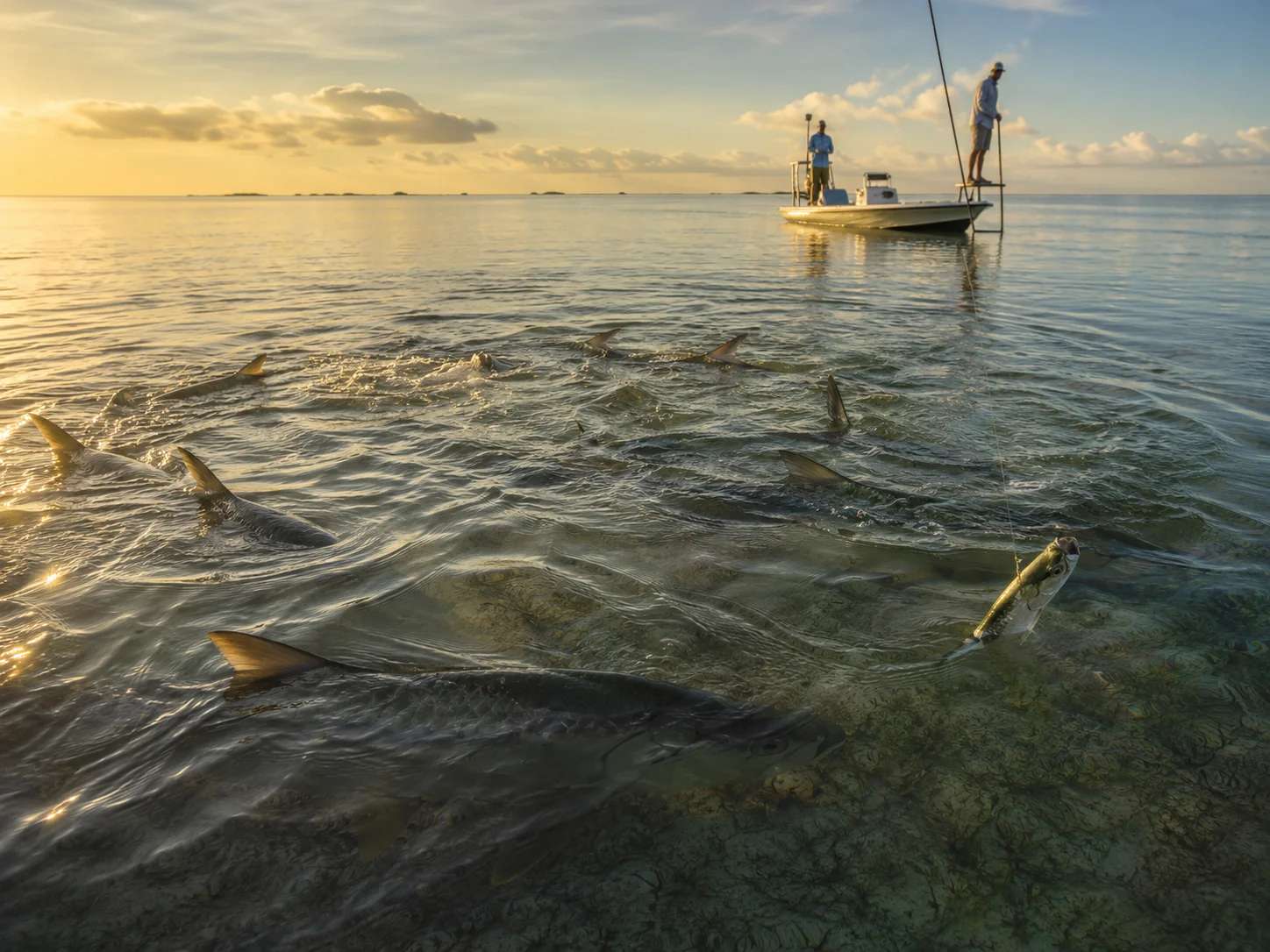
When tarpon are feeding aggressively on baitfish schools, matching that forage with a live mullet or threadfin herring produces explosive strikes. This technique works especially well when tarpon are seen “daisy-chaining”, circling slowly near the surface in a tight group.
Presentation tips:
- Hook mullet through the nose or just ahead of the dorsal fin to allow natural swimming action.
- Cast the bait to the edge of the daisy chain, not into the center, to avoid tangling with circling fish.
- Use a float or popping cork in very shallow water to keep the bait off the bottom.
- Allow the bait to swim freely; resist the urge to retrieve aggressively.
Threadfin herring are more fragile and require a lighter touch when hooking. A single hook through the nose is standard. Cast gently to preserve the bait’s liveliness.
4. Artificial Lure Fishing with Soft Plastics
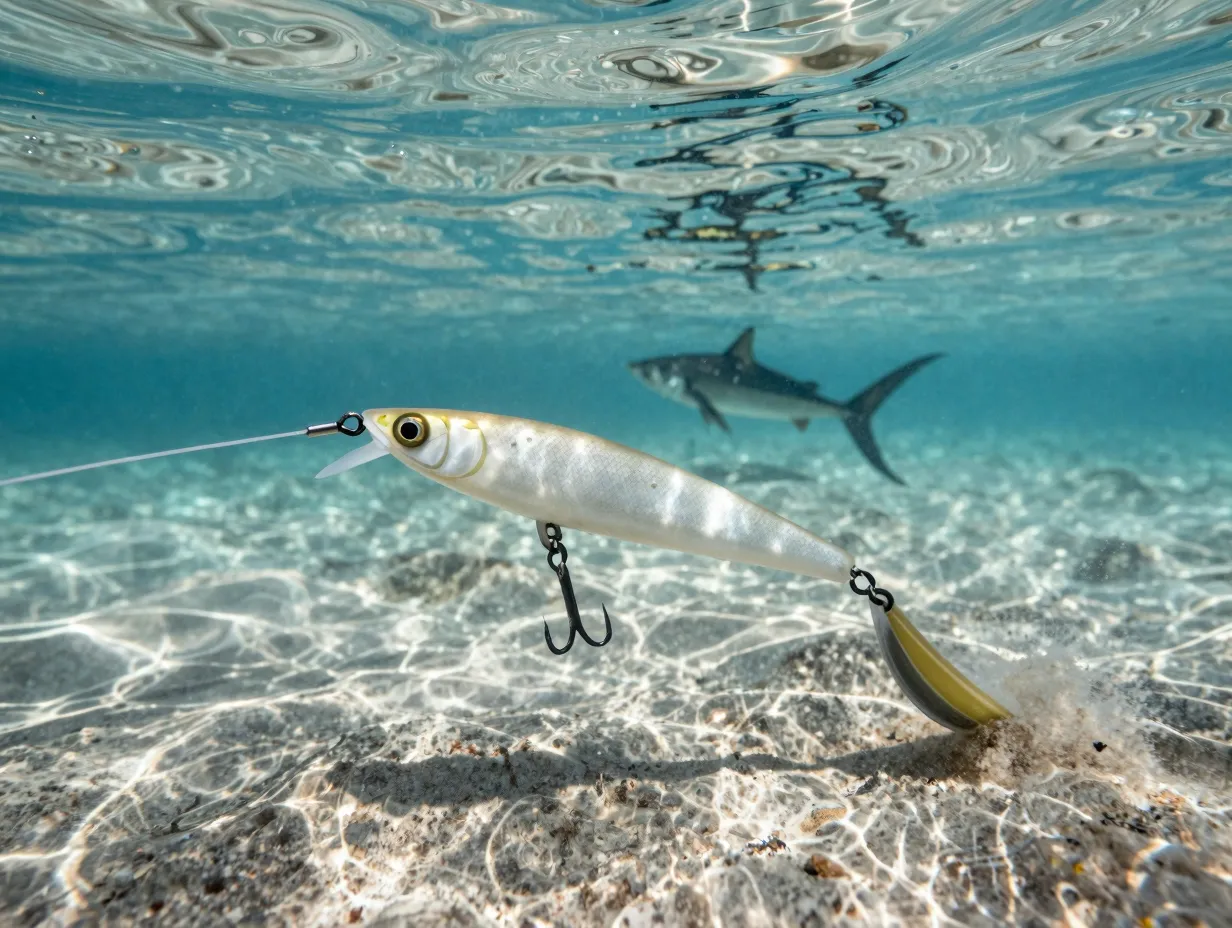
Soft plastic swimbaits and paddle-tail lures have earned a permanent place in the tarpon angler’s arsenal. They offer the advantage of durability, versatility, and the ability to cover water quickly when searching for fish.
Best setups for soft plastics on tarpon flats:
- Use a 1/2 to 1-ounce jig head matched to a 5- to 7-inch paddle-tail swimbait.
- Rig on a 7 to 7.5-foot medium-heavy spinning rod with 30 to 50-pound braided line and a 60 to 80-pound fluorocarbon leader.
- Cast well ahead of the fish and retrieve with a slow, steady swimming motion.
- Vary the retrieve cadence, a brief pause followed by a sharp pull can trigger a strike from a reluctant fish.
Popular colors include white, chartreuse, and natural baitfish patterns. In stained water, darker colors with contrast (black and purple, for example) often outperform natural tones.
5. Topwater Plug Fishing
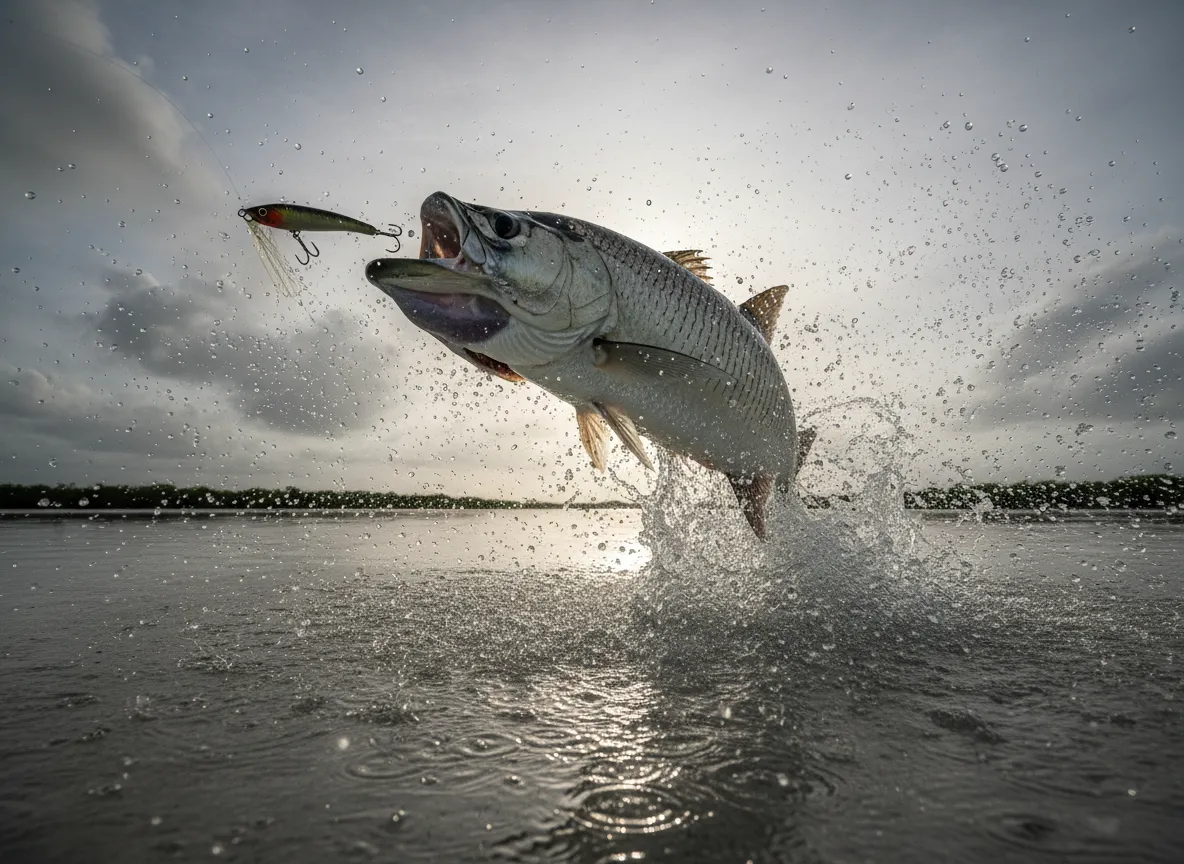
Few experiences in saltwater fishing rival the visual explosion of a 150-pound tarpon blowing up on a topwater plug. This technique is most productive during low-light periods, early morning, late afternoon, and overcast days, when tarpon are actively feeding near the surface.
Technique breakdown:
- Walk-the-dog style plugs (such as the MirrOlure He-Dog or similar) are the go-to choice.
- Use a slow, rhythmic side-to-side retrieve, keeping the rod tip low.
- Allow the lure to sit still for one to two seconds after the cadence to trigger hesitant fish.
- Do not set the hook the instant the fish strikes, wait a half-second for the fish to close its mouth before executing a firm strip-strike or sweeping rod strike.
Topwater fishing is less precise than sight-casting a fly or soft plastic, but it excels when fish are scattered across a large flat and a searching presentation is needed.
6. Fishing Bridges and Passes at Night
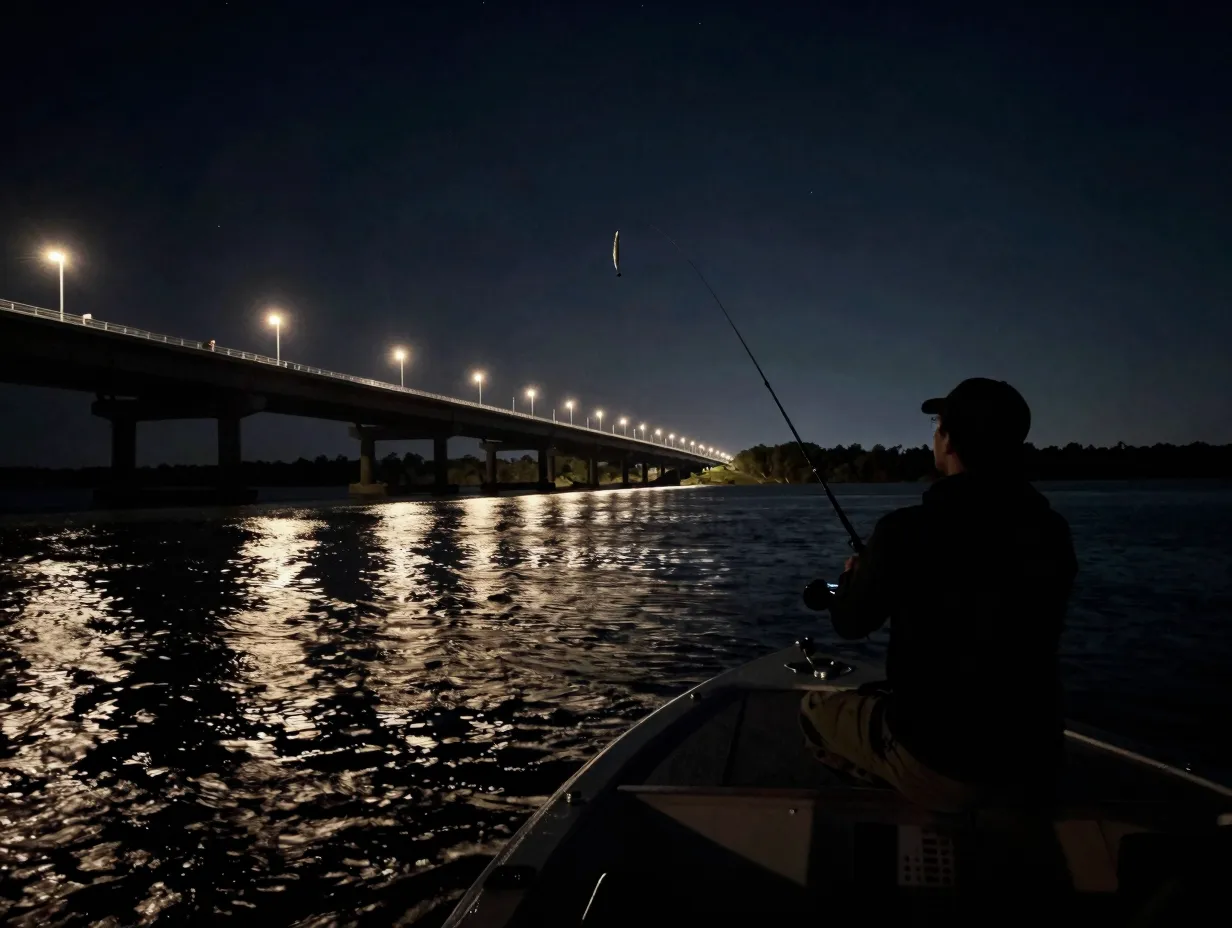
While this technique moves slightly away from open flats, many productive tarpon fisheries include tidal passes and bridge structures that border flat systems. Night fishing these structures during peak tidal flow is one of the most reliable methods for consistent hookups.
Why night fishing works:
- Tarpon lose their wariness in low-light conditions and feed more aggressively.
- Artificial lights on bridges attract baitfish, which in turn concentrate tarpon.
- Tidal current funneled through a pass or bridge creates a natural ambush point.
Effective approach:
- Position the boat upcurrent and cast lures or live baits into the shadow line created by bridge lights.
- Use a slow, downcurrent drift to present baits naturally.
- Large swimbaits, live pinfish, and cut ladyfish are all productive choices.
This technique pairs well with a heavy spinning or conventional outfit, 50 to 80-pound braid with a 100-pound fluorocarbon leader, to handle the powerful runs tarpon make around structure.
7. Poling and Stalking Laid-Up Fish
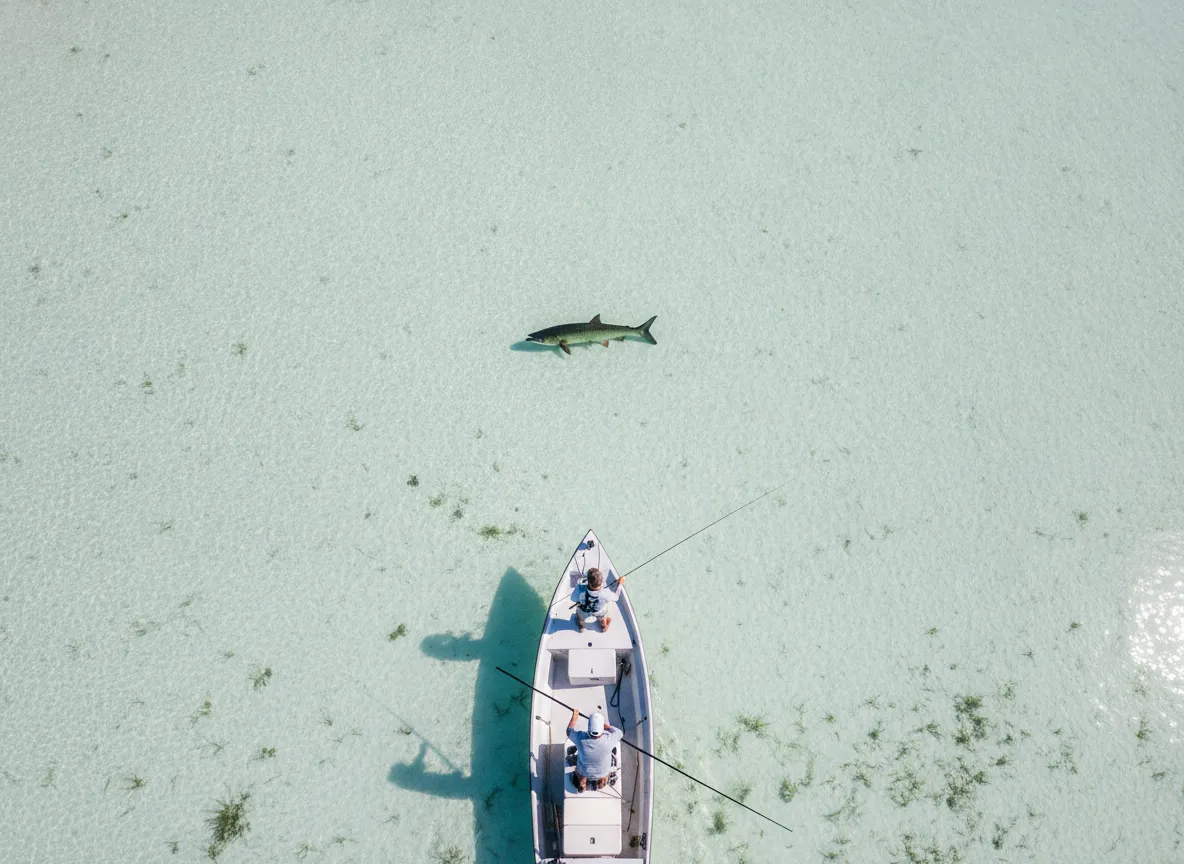
“Laid-up” tarpon are fish resting near the surface in warm, calm conditions, often visible as dark shapes or as fish with their backs breaking the waterline. These fish are not actively feeding, which makes them both a challenge and an opportunity.
The stalking approach:
- Use a push pole to move the skiff silently within casting range, typically 40 to 60 feet.
- Approach from the side or slightly behind the fish, never from directly in front.
- Make the first cast count. Laid-up fish rarely tolerate multiple presentations.
- A fly or soft plastic dropped softly just ahead of the fish’s nose, then retrieved slowly past its eye, is the most consistent trigger.
“Laid-up tarpon require the angler to think like a hunter. Silence, patience, and a single perfect cast matter far more than any lure selection.”
Polarized sunglasses with amber or copper lenses are essential for spotting laid-up fish. High-quality optics are not optional, they are a core piece of equipment for this technique.
8. Daisy Chain Interception and Fly Presentation
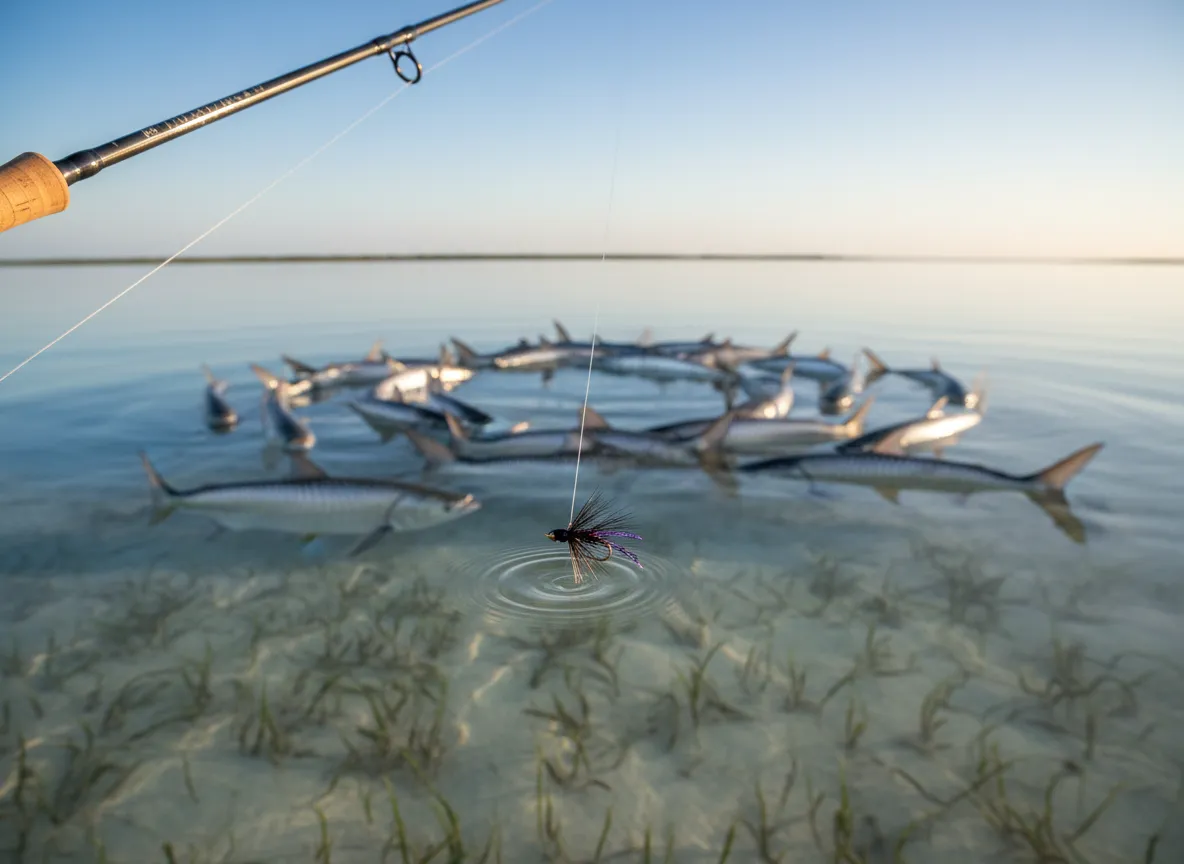
The daisy chain, a circular procession of tarpon swimming nose-to-tail near the surface, is one of the most iconic and exciting sights in saltwater fishing. Intercepting a daisy chain with a well-placed fly or lure is the most advanced of the 8 proven tarpon fishing techniques for hookups in saltwater flats, and it rewards anglers who understand fish behavior.
Why tarpon daisy-chain:
- The behavior is believed to be pre-spawning activity, most common in late spring and early summer.
- Fish in a daisy chain are not actively feeding but can be triggered into a reaction strike.
- The procession moves slowly and predictably, giving the angler time to position correctly.
Interception strategy:
- Identify the direction of travel and position the boat 60 to 80 feet ahead of the chain.
- Cast a fly or lure to intersect the path of the lead fish, not into the middle of the group.
- Use a large, dark fly (size 3/0 to 5/0) or a 6- to 8-inch soft plastic.
- Strip or retrieve at the same speed as the chain is moving, matching the pace is critical.
- When a fish peels off the chain to follow, slow the retrieve slightly to encourage commitment.
Patience is paramount. Casting repeatedly into a daisy chain will scatter the fish. One or two precise presentations per approach is the professional standard.
Essential Gear Checklist for Tarpon Flat Fishing
Every one of the 8 proven tarpon fishing techniques for hookups in saltwater flats depends on having the right equipment ready before the fish appears. Preparation is not optional at this level of fishing.
Rods and Reels:
- Fly rod: 10 to 12-weight, fast-action, 9 feet
- Spinning rod: 7 to 7.5-foot medium-heavy, rated for 20 to 40-pound line
- Conventional rod: 6.5 to 7-foot heavy, for night bridge fishing
Line and Leader:
- Fly line: tropical saltwater floating line with a short, aggressive head
- Braid: 30 to 50-pound for spinning; 50 to 80-pound for conventional
- Fluorocarbon leader: 60 to 100-pound for most applications; 100-pound for bridge/structure fishing
Terminal Tackle:
- Circle hooks: 5/0 to 7/0 for live bait
- Wide-gap hooks: 5/0 to 8/0 for soft plastics
- Fly hooks: 2/0 to 5/0 tarpon-specific (Gamakatsu SC15 or equivalent)
Boat and Navigation:
- Shallow-draft skiff with a push pole (minimum 18 feet)
- Trolling motor for silent repositioning
- Quality anchor system for holding position in current
Angler Gear:
- Polarized sunglasses (amber or copper lens)
- Sun protection (long sleeves, neck gaiter, hat with brim)
- Stripping basket for fly fishing
Understanding the Tarpon Strike and Hookset
One of the most common reasons anglers lose tarpon immediately after the strike is an improper hookset. The tarpon’s mouth is bony and hard, a standard trout-set or bass-set will not drive a hook into solid bone.
The correct hookset for tarpon:
- On fly: strip-strike by pulling the line hand sharply while keeping the rod tip low and pointed at the fish. Follow with two or three additional strip-strikes before raising the rod.
- On spinning or conventional with single hooks: reel tight to the fish and execute a firm, sweeping strike with the rod while continuing to reel, the “tarpon set.”
- On circle hooks with live bait: do not strike at all. Simply reel tight and let the circle hook find the corner of the mouth as the fish turns.
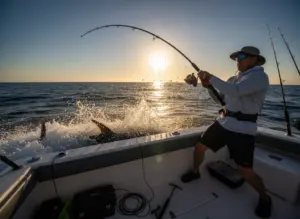
After the hookset, the tarpon will almost always jump. The universal rule is to “bow to the king”, drop the rod tip and extend both arms toward the fish during each jump to create slack and reduce the chance of a pulled hook.
Reading Tarpon Behavior to Select the Right Technique
Matching the correct technique to the fish’s current behavior is what separates consistent producers from occasional-luck anglers.
| Tarpon Behavior | Best Technique |
|---|---|
| Rolling on the surface | Live bait (crab or mullet), soft plastic |
| Daisy-chaining | Fly presentation, large soft plastic |
| Laid-up near surface | Stalking with fly or soft plastic |
| Actively feeding on bait schools | Live herring, topwater plug |
| Moving in a single-file line | Sight-casting fly or lure to lead fish |
| Night-feeding at structure | Live bait or swimbait at bridge/pass |
Using this behavioral framework alongside the 8 proven tarpon fishing techniques for hookups in saltwater flats dramatically increases the odds of a quality presentation and a committed eat.
Conclusion
Tarpon fishing on saltwater flats is one of the most demanding and rewarding pursuits in all of angling. The fish are powerful, intelligent, and unforgiving of mistakes, but they are also catchable by any angler willing to invest in understanding their behavior and environment.
Actionable next steps:
- Study the tidal charts for the flat being fished and plan arrival around the first two hours of an incoming tide.
- Invest in quality polarized sunglasses before spending money on additional lures, seeing fish is the first requirement.
- Practice casting accuracy at home or on a lawn before the trip. Distance is secondary to placement.
- Rig two or three rods before launching, one fly, one spinning with a soft plastic, and one with live bait, so the correct presentation is always ready.
- Hire a local guide for the first one or two trips to a new flat. The knowledge gained from a single day with an experienced guide is worth more than a season of trial and error.
The Silver King rewards preparation, patience, and precision. Apply the eight techniques in this guide with discipline, and the hookup rate on saltwater flats will improve measurably in 2026 and beyond.