8 Types of Fishing Kayaks Explained: Which One is Right for You?
Anglers in the United States spent over $49 billion on fishing equipment and related gear in a single recent year, yet a significant number of them still launch in the wrong kayak for their target water and species. Choosing the wrong hull design does not just affect comfort; it can cost fish, create safety hazards, and drain a budget on gear that never performs as expected. This guide to 8 Types of Fishing Kayaks Explained: Which One is Right for You? breaks down every major category, from entry-level sit-on-tops to high-performance pedal drives, so every angler, beginner or veteran, can match the right platform to their fishing style.
Disclosure: This post contains affiliate links. As an Amazon Associate, we earn from qualifying purchases, and at no extra cost to you.
Key Takeaways
- There are eight primary fishing kayak types, each designed for specific water conditions, fishing techniques, and angler skill levels.
- Stability, propulsion method, and hull width are the three most critical factors when selecting a fishing kayak.
- Pedal-drive and motor-assisted kayaks free both hands for casting but come with higher price points and added maintenance.
- Inflatable and folding kayaks offer unmatched portability for anglers with limited storage or transport options.
- Matching kayak type to target environment, flatwater, surf, rivers, or open ocean, dramatically improves both safety and catch rates.
Why Kayak Type Matters More Than Most Anglers Realize
Walk into any paddle sports retailer and the sheer number of hull shapes, seat systems, and propulsion options can feel overwhelming. Many buyers default to price or aesthetics, then discover six months later that their wide-beam recreational kayak is nearly impossible to paddle against a coastal headwind, or that their sleek touring hull has nowhere to mount a rod holder.
The fishing kayak market has evolved rapidly. Manufacturers now engineer purpose-built platforms for bass fishing, saltwater flats, offshore trolling, river drifting, and ice fishing. Understanding the core differences between each category is the foundation of a smart purchase.
“The right kayak does not just carry you to fish, it becomes a fishing platform that works with your technique, not against it.”
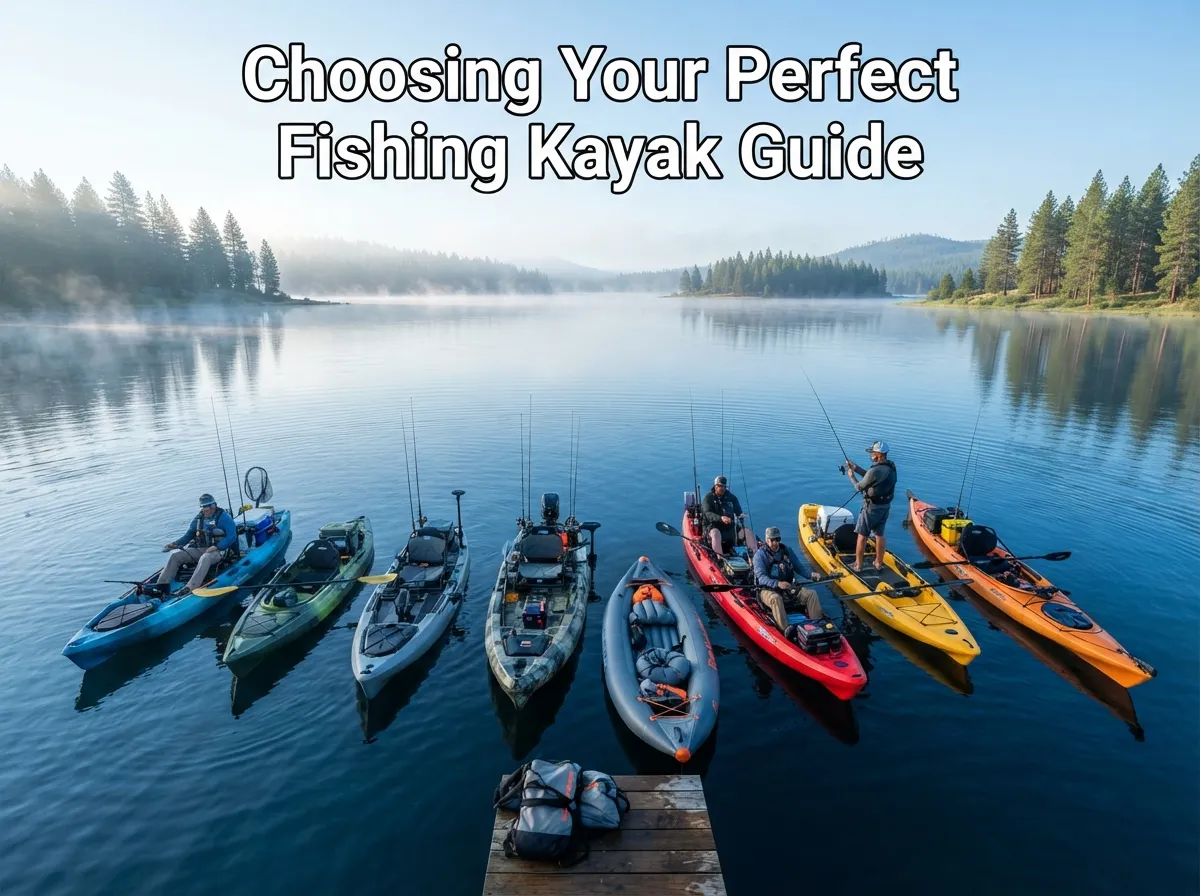
The following breakdown of 8 types of fishing kayaks explained covers the defining characteristics, ideal use cases, key advantages, and notable limitations of each category.
The Complete Guide: 8 Types of Fishing Kayaks Explained: Which One is Right for You?
1. Sit-On-Top Fishing Kayaks
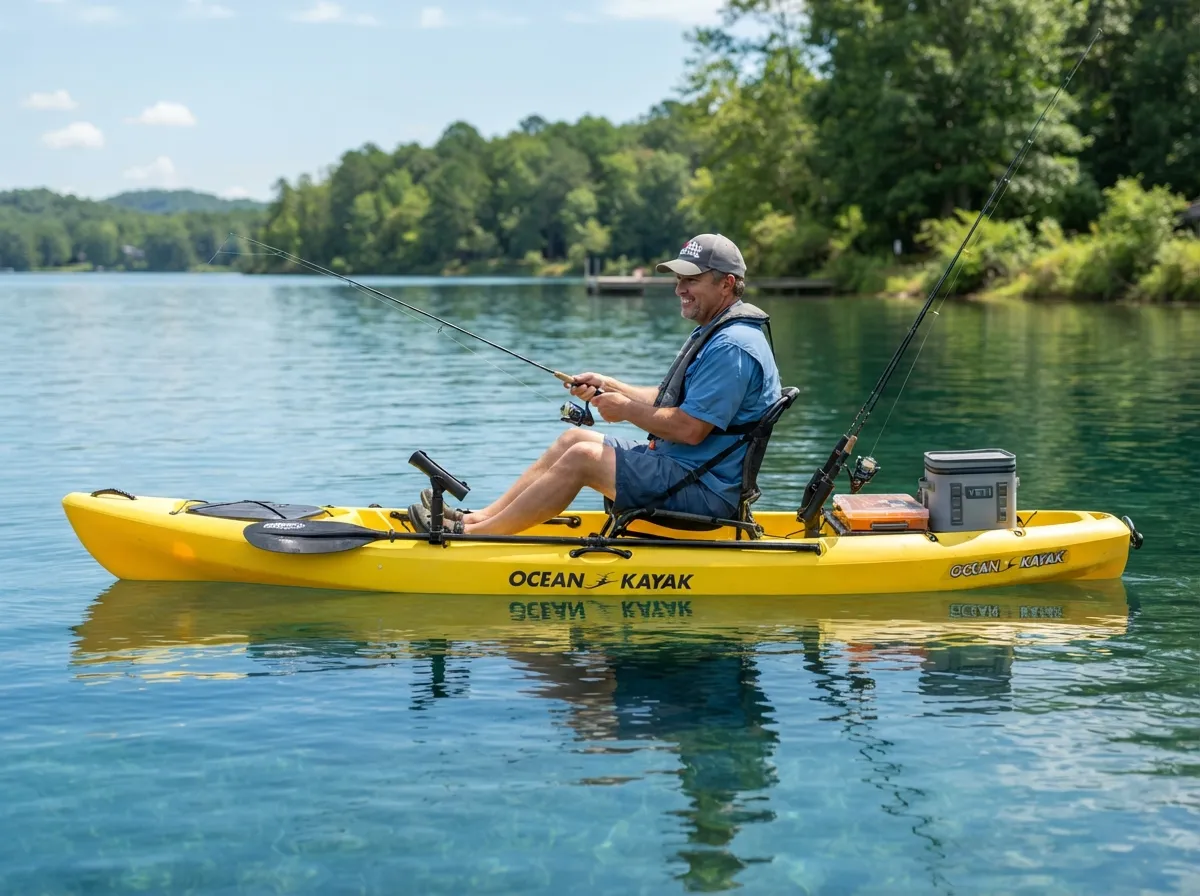
Sit-on-top (SOT) kayaks are the most popular starting point for fishing paddlers worldwide, and for good reason. The open deck design means there is no enclosed cockpit, the angler sits on top of a molded seat well rather than inside the hull.
Key characteristics:
- Self-bailing scupper holes drain water automatically
- Easy re-entry after a capsize, making them beginner-friendly
- Wide, flat decks accommodate rod holders, tackle trays, and coolers
- Hull widths typically range from 28 to 36 inches for fishing-specific models
Best for: Freshwater lakes, calm bays, inshore saltwater, warm-weather fishing
Limitations: Slower hull speed compared to touring designs; exposed to wind and spray
Sit-on-tops dominate the entry-level and mid-range fishing market because they balance stability, affordability, and customization potential. Most popular brands offer pre-molded tracks and mounting points for fish finders, anchor trolleys, and crate systems right out of the box.
2. Sit-Inside Fishing Kayaks
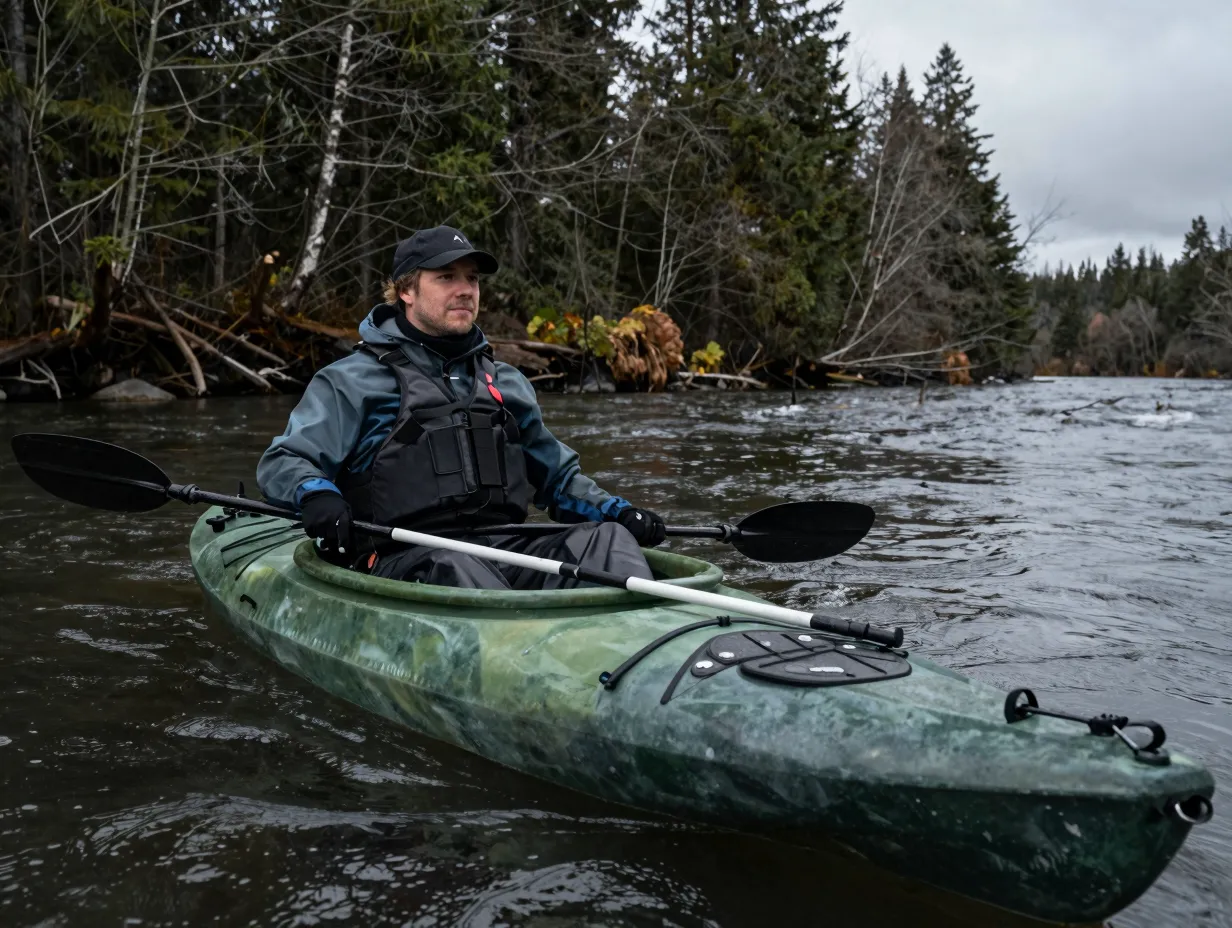
Sit-inside kayaks enclose the lower body within the hull, which provides significant protection from cold water, wind, and spray. While less common in dedicated fishing configurations than sit-on-tops, they remain a strong choice for cold-weather anglers and those targeting moving water.
Key characteristics:
- Cockpit coaming allows attachment of a spray skirt
- Lower center of gravity improves secondary stability
- Narrower hull profiles (22-26 inches) enable faster paddling
- Less deck space for gear compared to SOT designs
Best for: Cold-water environments, river fishing, early-season trout, kayak touring anglers who also fish
Limitations: Harder to re-enter after capsize without practice; limited gear accessibility mid-trip
Sit-inside fishing kayaks are often chosen by anglers who already paddle for recreation and want to integrate fishing without switching to a wider platform. They reward skill and preparation over raw convenience.
3. Pedal-Drive Fishing Kayaks
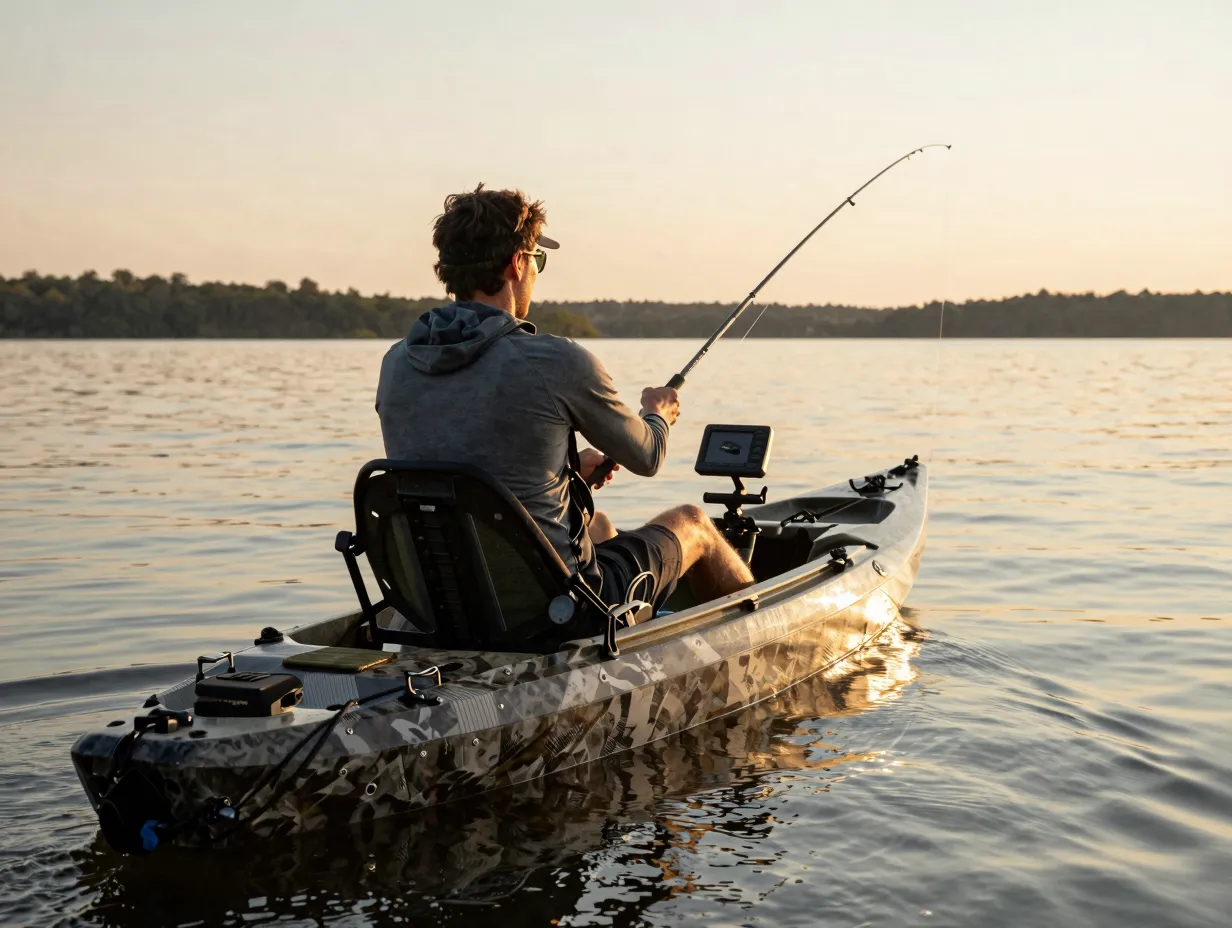
Pedal-drive kayaks represent one of the most significant technological shifts in the fishing kayak category over the past decade. Instead of paddling, the angler uses foot pedals connected to either a propeller or flipper-style fins beneath the hull.
Key characteristics:
- Hands-free propulsion allows continuous casting and retrieval
- Speeds of 3-5 mph are achievable with moderate effort
- Two drive systems dominate the market: rotational propeller (Hobie MirageDrive style) and forward-facing pedal with prop
- Heavier than comparable paddle kayaks (often 80-120 lbs)
Best for: Bass fishing, trolling, covering large water bodies, anglers with upper-body limitations
Limitations: Higher cost (typically $1,500,$4,000+); drive units require maintenance; not ideal for very shallow water
The hands-free advantage cannot be overstated for tournament bass fishing or saltwater flats work where precise lure presentation and constant boat control are required simultaneously.
4. Motor-Assisted Fishing Kayaks
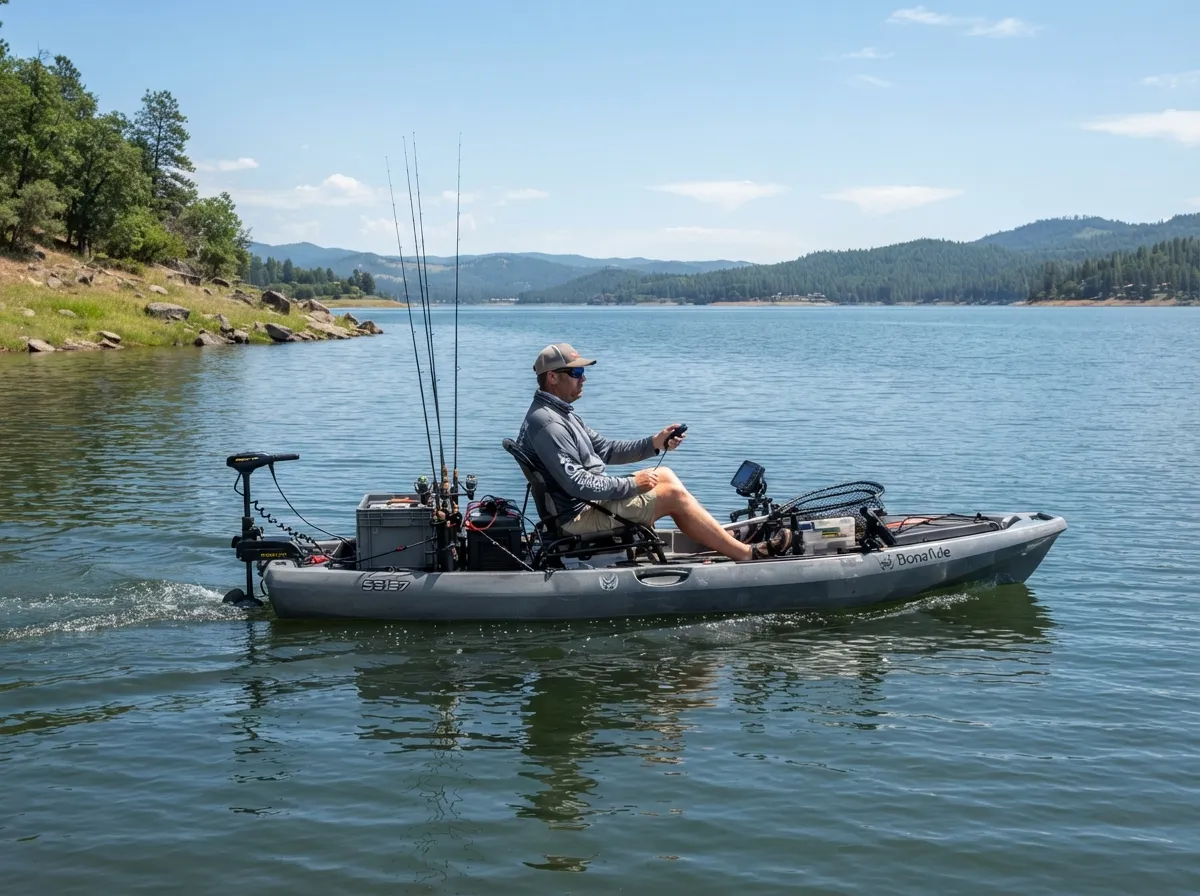
Motor-assisted or motorized kayaks bridge the gap between traditional kayaks and small aluminum fishing boats. These platforms are either purpose-built with motor mounts or retrofitted with small electric trolling motors or gas micro-motors.
Key characteristics:
- Electric trolling motors (12V or 24V) are the most common power source
- Some manufacturers integrate battery compartments and wiring directly into the hull
- Top speeds of 4-6 mph under electric power
- Heavier and wider hulls to support motor torque and battery weight
Best for: Large reservoirs, river fishing with current, anglers who need to cover significant distances, those with mobility challenges
Limitations: Battery weight and range limitations; regulations restrict motorized kayaks on some bodies of water; higher overall cost
Motor-assisted kayaks are growing in popularity as battery technology improves. Lithium iron phosphate (LiFePO4) batteries now offer longer range at reduced weight compared to traditional lead-acid systems, making motorized platforms more practical than ever in 2026.
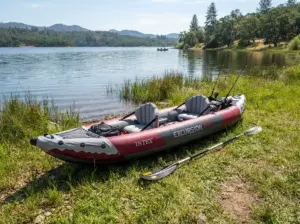
5. Inflatable Fishing Kayaks
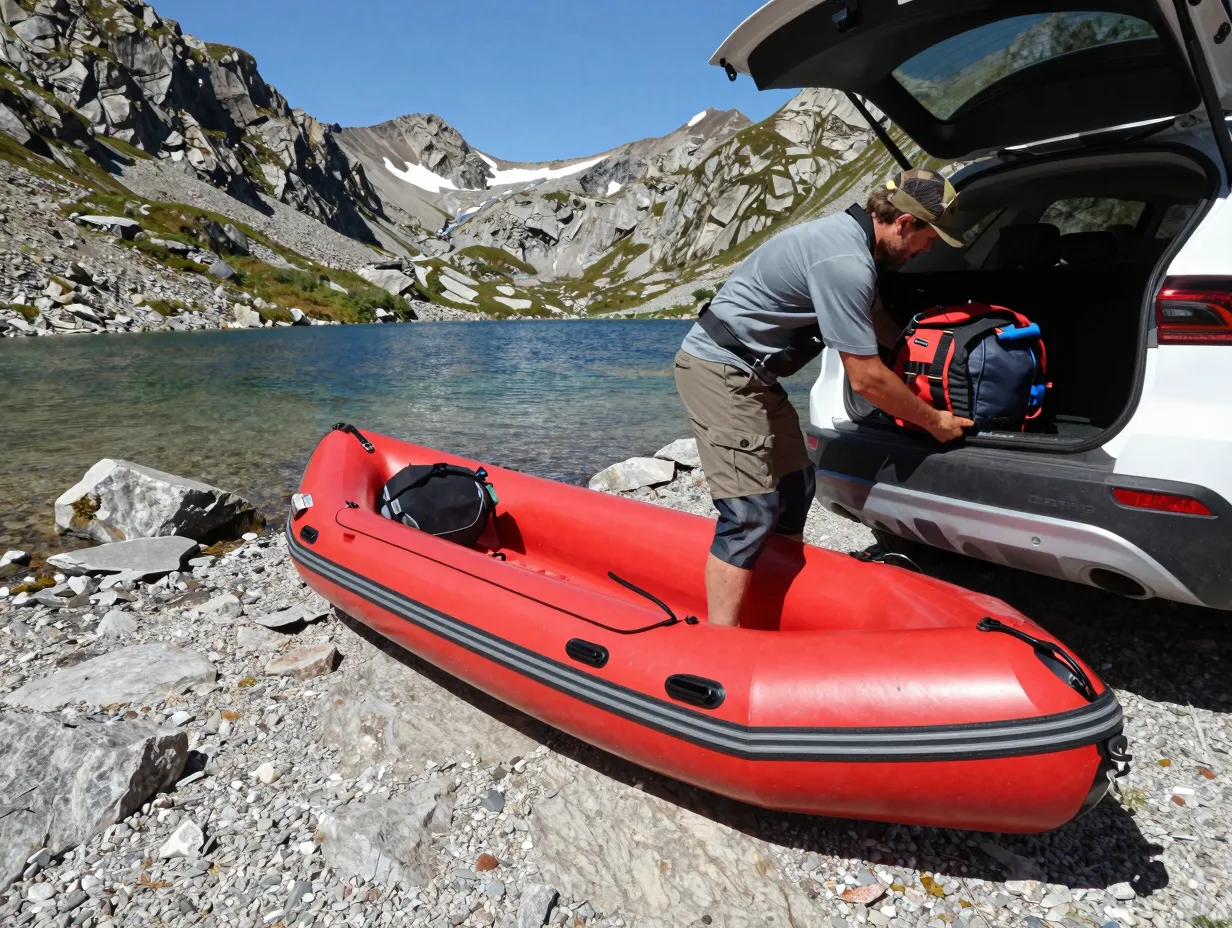
Inflatable fishing kayaks have shed their toy-like reputation entirely. Modern high-pressure drop-stitch construction creates rigid hulls that rival hard-shell performance while deflating to fit in a large backpack or car trunk.
Key characteristics:
- Drop-stitch floors and side chambers inflate to 10-15 PSI for rigidity
- Widths of 36-42 inches provide exceptional primary stability
- Weight when deflated: typically 25-45 lbs
- Puncture-resistant materials (PVC, Hypalon, or Nitrylon) handle moderate abuse
Best for: Anglers with limited vehicle space, fly-in fishing trips, backcountry lake access, apartment dwellers
Limitations: Slower hull speed; setup and breakdown time (10-20 minutes); not suitable for rocky whitewater above Class II
| Feature | Hard-Shell SOT | Inflatable Fishing Kayak |
|---|---|---|
| Storage | Requires roof rack or trailer | Fits in a bag |
| Setup Time | Immediate | 10-20 minutes |
| Primary Stability | High | Very High |
| Hull Speed | Moderate, High | Moderate |
| Durability | Excellent | Good, Very Good |
Inflatable fishing kayaks from brands like Sea Eagle, Advanced Elements, and Aquaglide have earned loyal followings among traveling anglers and those who fish remote wilderness lakes accessible only by floatplane or hiking trail.
6. Tandem Fishing Kayaks
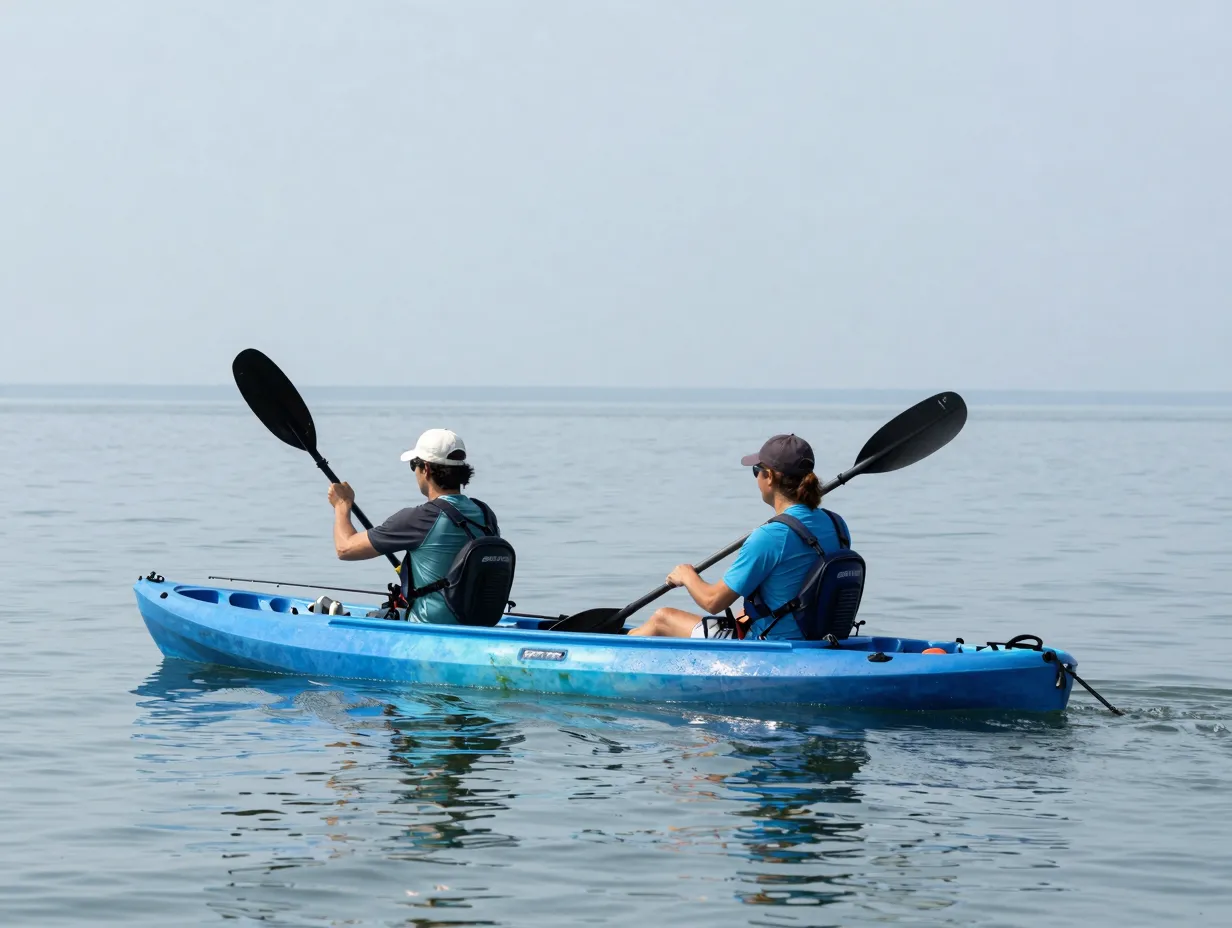
Tandem kayaks are designed for two paddlers and have carved out a specific niche in the fishing world, particularly for parent-child outings, guide-client trips, and fishing partnerships where one person paddles while the other focuses on casting.
Key characteristics:
- Lengths of 13-16 feet accommodate two seat positions
- Many models include a center hatch or third seat position for solo use
- Combined weight capacity of 500-700 lbs supports two anglers plus gear
- Wider beams (34-38 inches) provide stability for two people moving around
Best for: Fishing with a partner or child, guided fishing experiences, anglers who want a versatile solo/tandem platform
Limitations: Harder to maneuver in tight cover; requires coordination between paddlers; more difficult to transport and store
The “three-in-one” design offered by some tandem models, where the center seat converts the kayak to a solo paddler position, adds significant value for anglers who fish both alone and with a partner throughout the season.
7. Stand-Up Fishing Kayaks
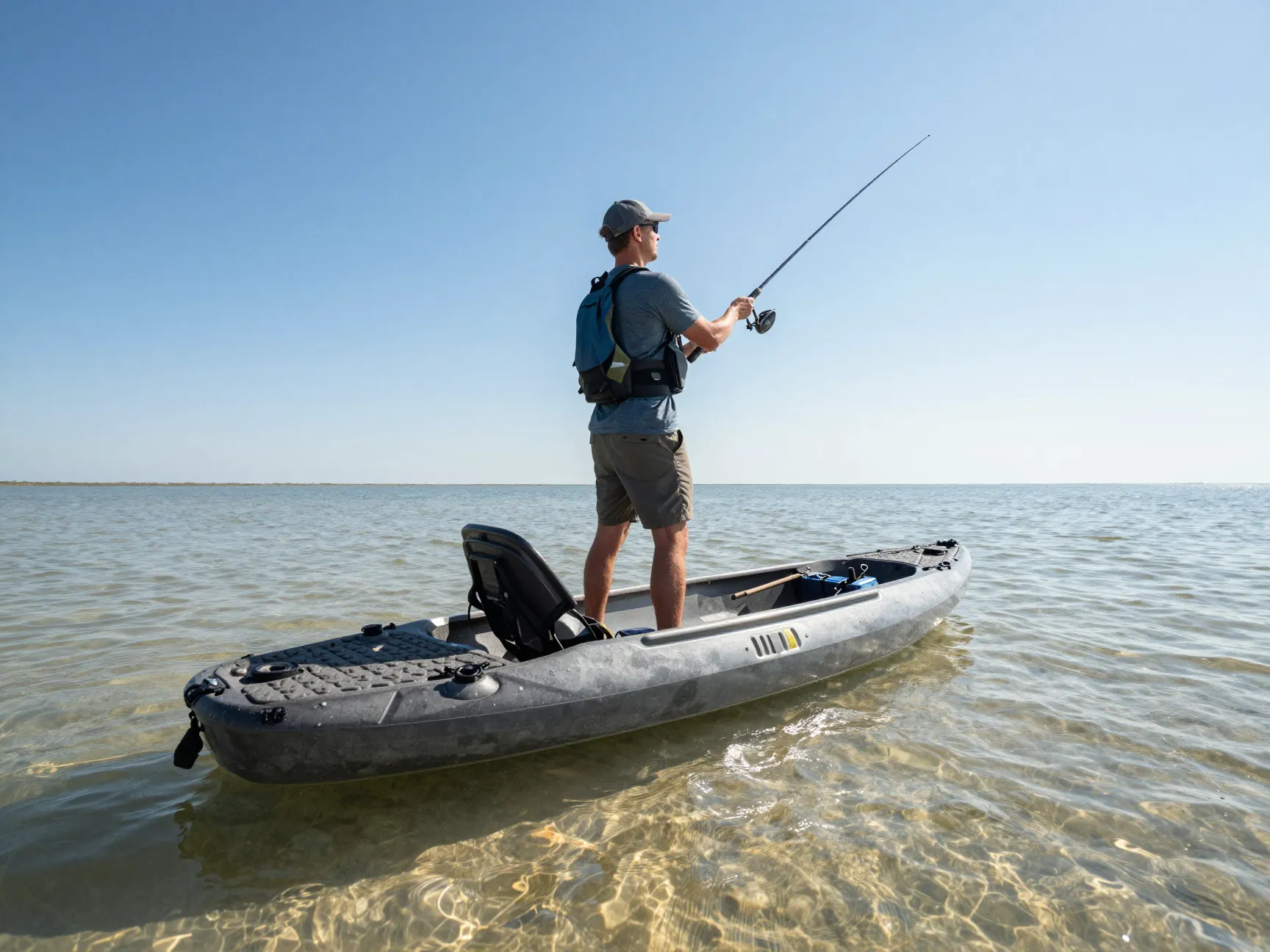
Stand-up fishing kayaks prioritize one specific capability: allowing the angler to stand and cast from a stable, elevated platform. These wide-beam hulls borrow design principles from stand-up paddleboards (SUPs) and apply them to a kayak chassis.
Key characteristics:
- Hull widths of 34-42 inches provide the stability needed to stand
- Flat or pontoon-style hull cross-sections minimize rocking
- Many models include non-slip EVA foam deck pads
- Rod storage, livewells, and tackle organization built into the deck
Best for: Bass fishing in shallow water, sight-fishing on flats, fly fishing, anglers who prefer the elevated vantage point for spotting fish
Limitations: Slower than narrower hulls; more affected by wind due to high profile; not suitable for rough open water
Standing while fishing is not just a comfort preference, it fundamentally changes the angler’s ability to spot fish in clear, shallow water. The elevated eye line allows sight-fishing for species like redfish, bonefish, largemouth bass, and carp in ways that are simply not possible from a seated position.
“On a flats kayak, standing is not optional, it is the technique. The elevated view turns a good angler into a great one.”
8. Ocean and Offshore Fishing Kayaks
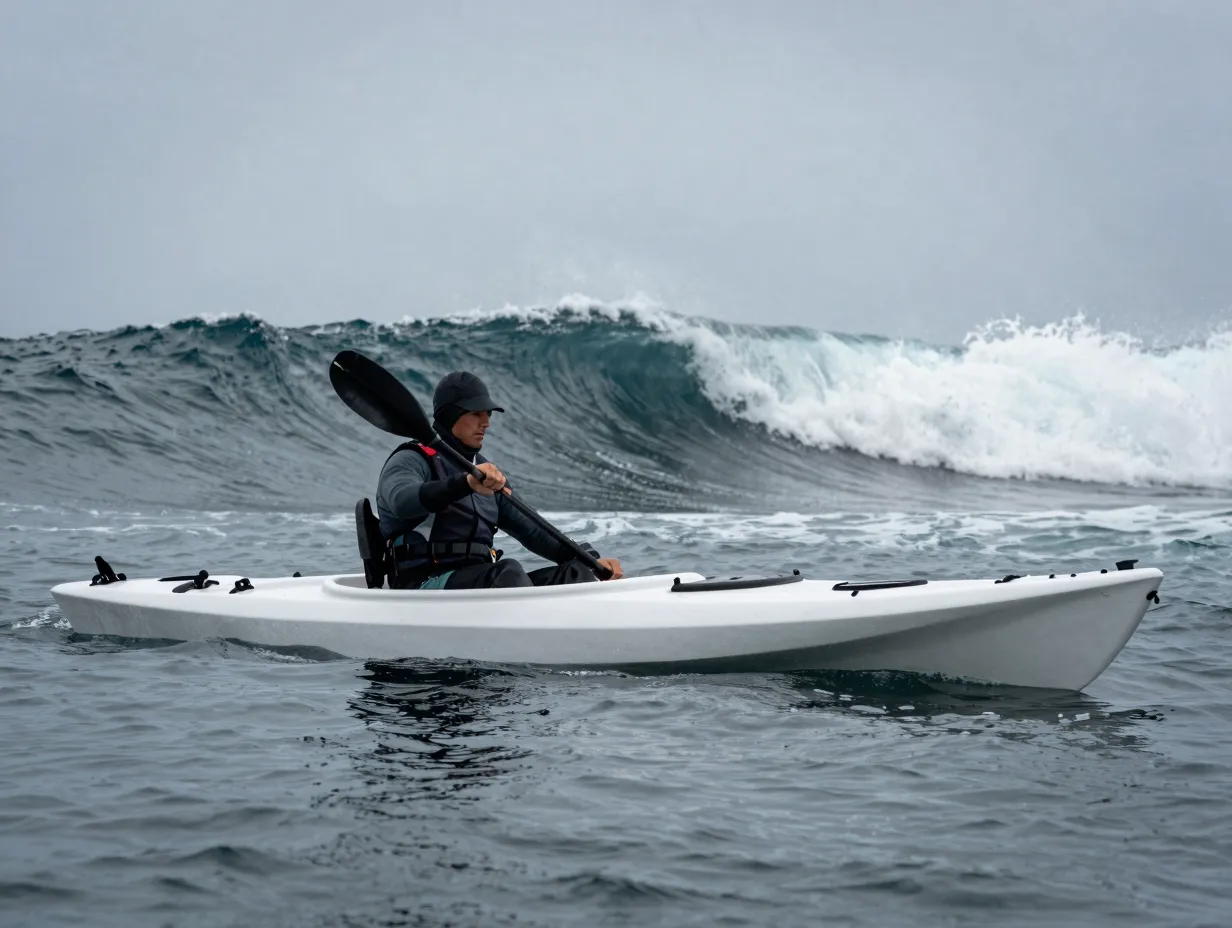
Ocean fishing kayaks are purpose-built for the most demanding environment in the sport: open saltwater. These long, narrow hulls prioritize tracking efficiency, wave-handling ability, and storage capacity for extended trips targeting species like tuna, mahi-mahi, wahoo, and large pelagic fish.
Key characteristics:
- Hull lengths of 14-17 feet for efficient tracking in swells
- Sealed bulkhead compartments provide flotation and dry storage
- Reinforced rod holders and anchor systems rated for large fish
- Low-profile seating reduces windage in offshore conditions
- Many models include built-in rudder systems for directional control
Best for: Offshore trolling, deep-water bottom fishing, surf launches, experienced paddlers targeting large saltwater species
Limitations: Steep learning curve; requires advanced paddling and safety skills; not suitable for beginners; high cost ($1,800,$4,500+)
Offshore kayak fishing has grown into a legitimate competitive and recreational pursuit. Anglers regularly target billfish and large tuna from specialized kayaks equipped with outriggers, fighting belts, and GPS fish finders, gear that would have seemed absurd on a kayak platform just fifteen years ago.
How to Choose the Right Kayak from These 8 Types
Understanding the 8 types of fishing kayaks explained above is only half the decision. Matching the right type to individual needs requires honest answers to five core questions:
1. What water will be fished most often?
Flatwater lakes and ponds favor wide, stable platforms. Rivers require maneuverable shorter hulls. Ocean and large reservoirs reward longer, faster designs.
2. What species and techniques are the priority?
Bass fishing in shallow cover benefits from stand-up stability. Trolling offshore favors pedal-drive or motorized platforms. Fly fishing in streams suits a narrow sit-inside or inflatable.
3. How will the kayak be transported and stored?
Anglers without a truck or roof rack should seriously consider inflatables. Those with garage space and a trailer have far more options.
4. What is the realistic budget?
Entry-level sit-on-tops start around $400,$700. Pedal-drive and motorized platforms run $1,500,$4,500. Ocean-capable touring kayaks occupy a similar premium range.
5. What is the angler’s experience level?
Beginners benefit from wide, stable, self-bailing sit-on-tops. Experienced paddlers can leverage the performance advantages of narrower, faster hulls.
Flatwater lakes and ponds: Sit-on-top, Pedal-drive, Stand-up
Rivers and streams: Sit-inside, Inflatable
Inshore saltwater: Sit-on-top, Stand-up, Pedal-drive
Offshore and ocean: Ocean touring, Motor-assisted
Travel and backcountry: Inflatable
Fishing with a partner: Tandem
Key Features to Compare Across All 8 Types
When evaluating any fishing kayak, regardless of type, the following specifications deserve close attention:
Weight capacity: Always choose a kayak rated for at least 25-30% more than the combined weight of the angler, gear, and any catch kept in a livewell or cooler.
Primary vs. secondary stability: Primary stability refers to how stable the kayak feels sitting flat on calm water. Secondary stability refers to how it behaves when leaned to the side. Wide-beam kayaks excel at primary stability. Narrower touring hulls have better secondary stability in rough conditions.
Seat quality: Fishing sessions lasting four to eight hours demand serious lumbar support. Many production kayaks ship with adequate but not exceptional seats. Aftermarket upgrades from brands like Surf to Summit or GTS are worth budgeting for.
Gear tracks and mounting systems: Look for integrated rail systems (such as Yakattack GearTrac or Scotty mounting bases) that allow repositioning of rod holders, fish finders, and cameras without drilling into the hull.
Hull material: Rotomolded polyethylene is durable and affordable but heavy. Thermoformed ABS is lighter and stiffer. Fiberglass and carbon fiber offer premium performance at premium prices.
Common Mistakes When Choosing a Fishing Kayak
Even experienced anglers make avoidable errors when selecting a platform. The most frequent mistakes include:
- Prioritizing length or speed when the primary fishing environment is small, sheltered water where maneuverability matters more
- Underestimating total loaded weight, leading to a kayak that sits too low and handles poorly
- Buying a narrow hull for its aesthetics without testing stability while standing or reaching for gear
- Overlooking transport logistics, a 100-lb pedal kayak is difficult to load solo without a cart and roof rack system
- Skipping a demo paddle before purchase; most specialty kayak retailers offer on-water demos that reveal fit and feel issues no specification sheet can communicate
Conclusion
The question at the heart of 8 Types of Fishing Kayaks Explained: Which One is Right for You? has no single universal answer, and that is precisely the point. The fishing kayak market in 2026 offers more purpose-built options than at any point in the sport’s history, which means every angler can find a platform engineered for their specific water, species, and fishing style.
Actionable next steps:
- Identify the primary water type and target species before visiting any retailer or browsing online.
- Establish a realistic total budget that includes paddle, PFD, anchor system, and any electronics, not just the kayak itself.
- Arrange an on-water demo through a local paddle sports shop or kayak fishing club before committing to a purchase.
- Join an online fishing kayak community (forums, social groups) to read real-world reviews from anglers fishing similar waters.
- Revisit this guide when upgrading, as skills and target species evolve, so does the ideal kayak type.
The right fishing kayak does not just improve comfort on the water. It fundamentally changes what is possible on any given day, from the water bodies accessible, to the techniques executable, to the species within reach.