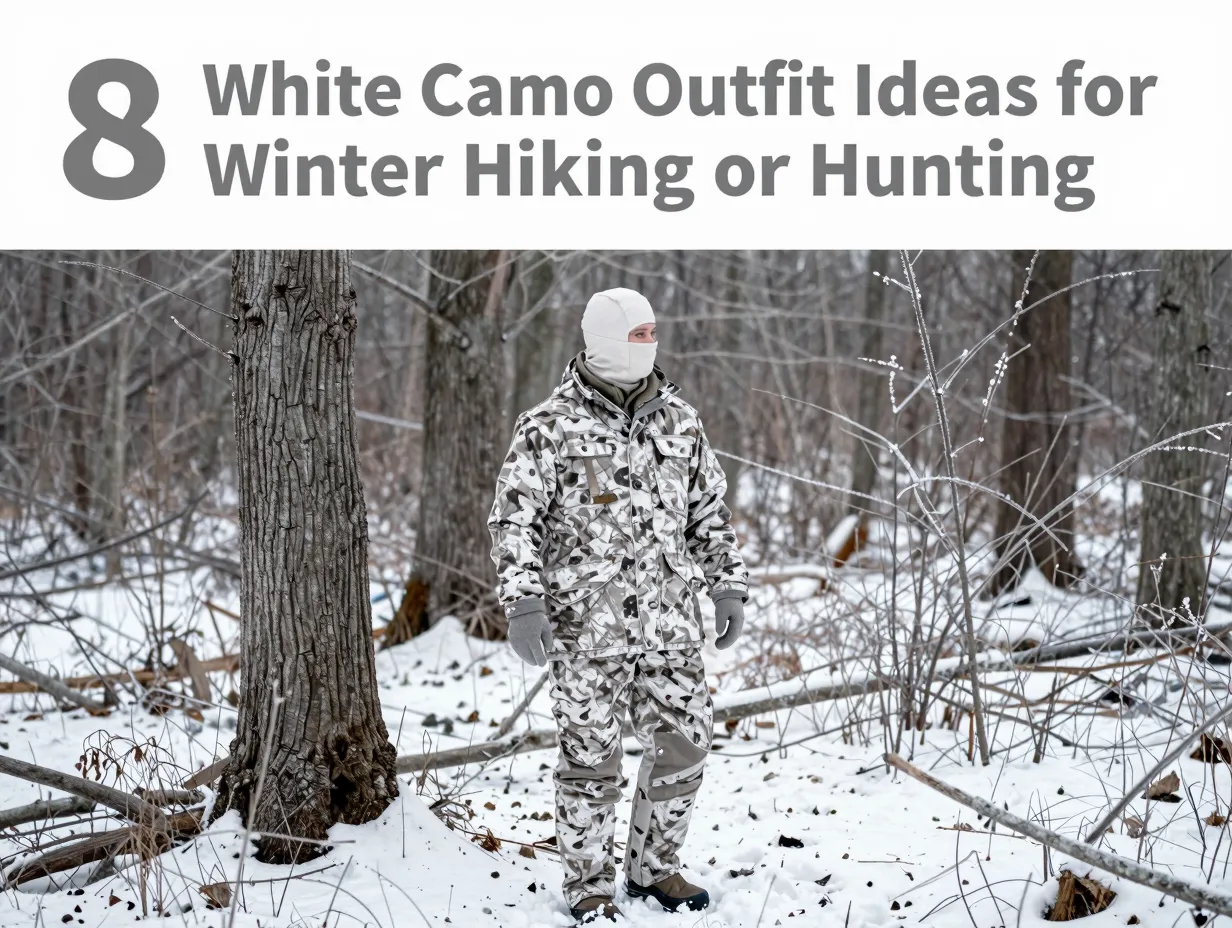
8 Stunning White Camo Outfit Ideas for Winter Hiking or Hunting
Roughly 40 percent of big-game hunters report that they have been spotted by their quarry before getting a shot opportunity, and most trace the failure directly to poor concealment in snow-covered terrain. When the landscape turns white, standard woodland or earth-tone camo becomes a liability rather than an asset. The right white camouflage outfit can mean the difference between a successful outing and a long, cold walk back empty-handed. This guide covers 8 stunning white camo outfit ideas for winter hiking or hunting, drawing on proven gear systems, layering science, and real-world performance data to help you stay invisible, warm, and mobile all season long.
Disclosure: This post contains affiliate links. As an Amazon Associate, we earn from qualifying purchases, and at no extra cost to you.
Key Takeaways
- White camo works best as a complete system, base layer, mid layer, and outer shell must all work together for maximum concealment and warmth.
- Active pursuits like spot-and-stalk hiking demand lightweight, breathable white shells, while static hunting setups require heavy insulation.
- Budget-friendly cover-up options let hikers and hunters add white camo over existing gear without replacing an entire kit.
- Three-layer systems designed for extreme cold offer the most protection but require careful moisture management to prevent overheating.
- Fit, mobility, and noise level of the fabric are just as important as the camo pattern itself when choosing winter hunting or hiking apparel.
Why White Camo Matters More Than Most Hunters Realize
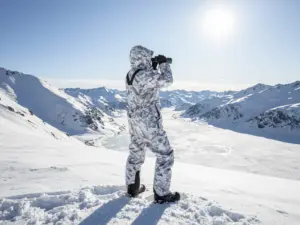
Most hunters invest heavily in autumn camo patterns and then improvise when the snow falls. That improvisation costs them. Snow-covered environments create a high-contrast visual field where even a small patch of dark fabric registers instantly to the sharp eyes of deer, elk, or predators. White camouflage is not just about color, it is about breaking up the human silhouette against a uniform white background.
Modern white camo patterns go far beyond a simple white coat. They incorporate grey undertones, subtle brown streaks, and irregular shapes that mimic the natural variation of snow-covered brush, bark, and frozen grass. Selecting the right pattern depends on the specific environment: open snowfields call for brighter, more uniform white, while timber and mixed cover benefit from patterns with more contrast and texture [5].
“The goal of snow camouflage is not to disappear completely, it is to make the human outline unrecognizable as a threat.”
Beyond concealment, the best white camo outfits for winter hiking or hunting also address thermal regulation, moisture wicking, and freedom of movement. A hunter who is shivering or sweating will move constantly, making noise and breaking cover far more effectively than any color mismatch.
8 Stunning White Camo Outfit Ideas for Winter Hiking or Hunting: Active and Static Builds
The eight outfit ideas below are organized to cover the full spectrum of winter use cases, from fast-moving backcountry hikes to long sits in a ground blind at minus-twenty degrees. Each build is described with its core components, best use scenario, and key performance notes.
1. The Huntworth Snow Camo Brown Active Shell System
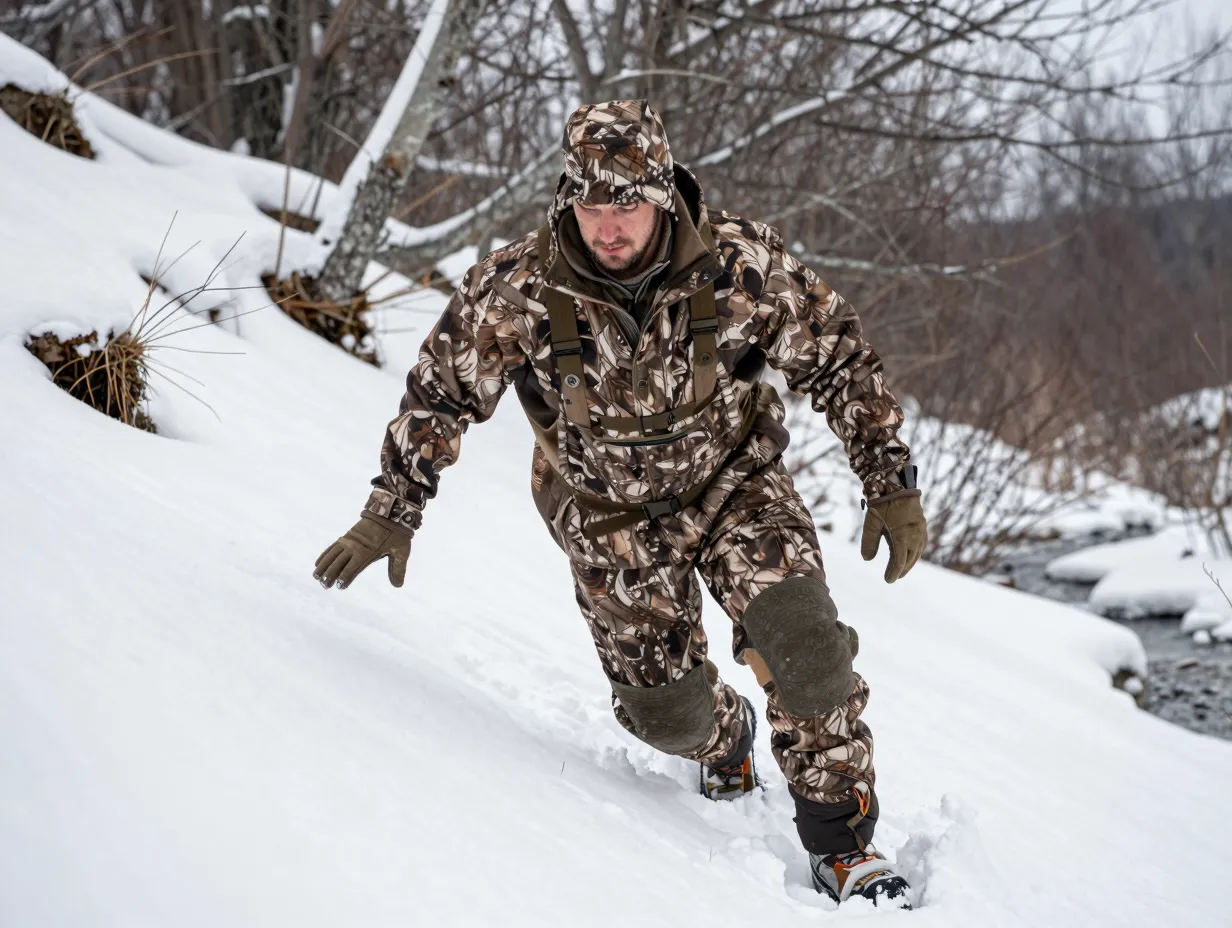
The Huntworth Snow Camo Brown pattern is engineered specifically for late-season hunting in environments where snow is present but not total, think mixed timber, frozen creek bottoms, and partially snow-covered fields [2]. The pattern blends white with warm brown tones that break up the outline against bark, dried cattails, and exposed soil patches that remain visible even in heavy snow years.
The active shell build pairs a Huntworth Snow Camo Brown jacket with matching bibs, both constructed from a lightweight, wind-resistant shell fabric that allows aggressive movement without overheating [3]. This is the outfit for the hunter who covers ground, spot-and-stalk whitetail, late-season mule deer, or predator calling across open terrain.
Key components for this build:
- Lightweight moisture-wicking base layer (merino wool or synthetic)
- Huntworth Snow Camo Brown shell jacket with articulated sleeves
- Matching shell bibs with reinforced knees
- Insulated mid-layer vest worn beneath the shell for core warmth
- White or grey wool socks with insulated pac boots
The shell fabric is intentionally uninsulated, which means the wearer controls warmth through layering underneath. This approach prevents overheating during long hikes and allows quick ventilation stops without removing the outer camo layer.
2. The Natural Gear Insulated Snow Parka Setup for Static Hunting
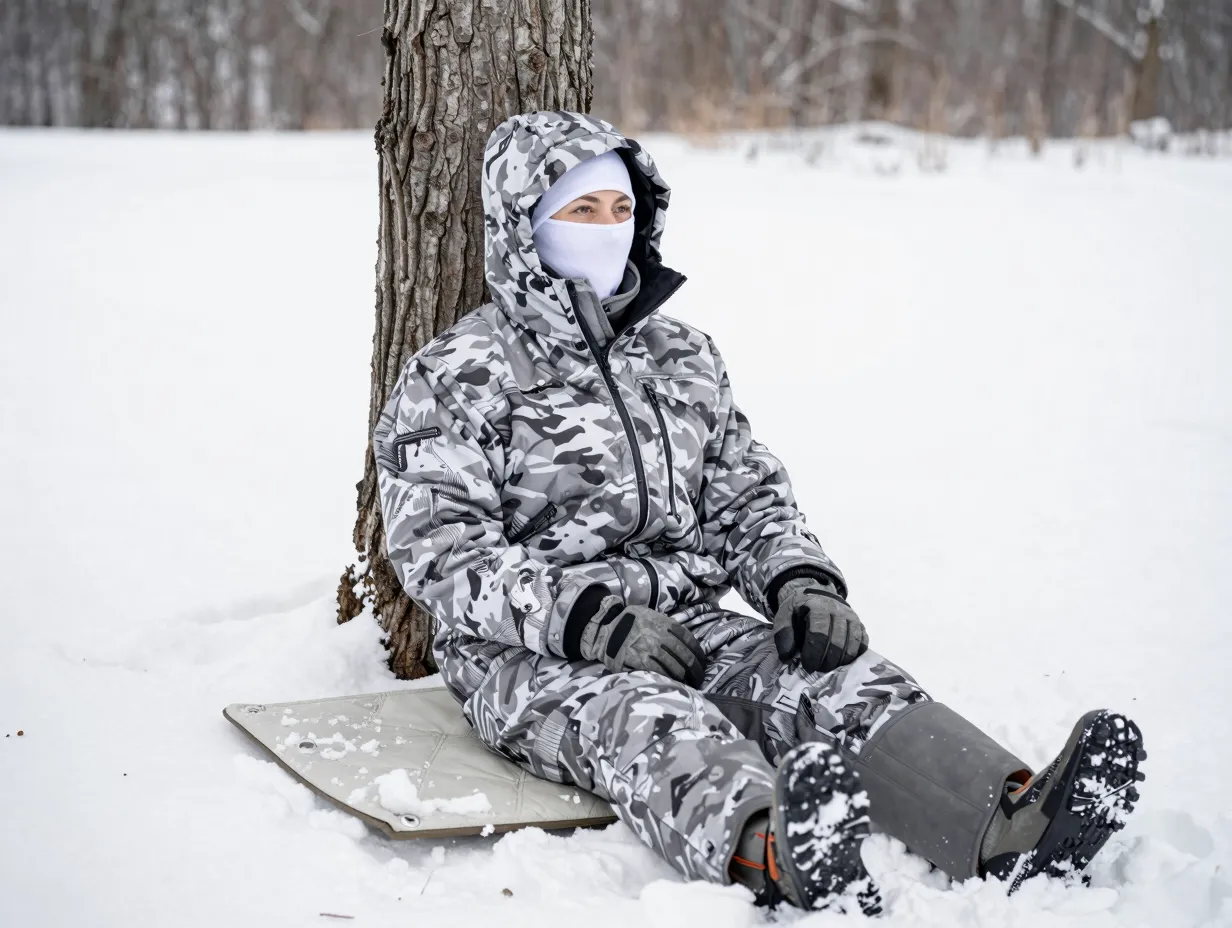
When the plan is to sit motionless in a ground blind, treestand, or natural hide for hours at a time, insulation becomes the top priority. The Natural Gear Insulated Snow Parka is built around 150 grams of synthetic insulation distributed across the body and arms, providing consistent warmth without the moisture-retention issues of down in wet snow conditions [4].
Natural Gear’s Snow pattern uses a high-contrast white-and-grey design that performs exceptionally well in open hardwood stands and agricultural field edges where snow cover is consistent [1]. The parka features a full-length front zipper, adjustable hood, and hand-warmer pockets that double as muff-style warmers for extended sits.
This outfit build includes:
- Heavy merino wool or fleece base layer top and bottom
- Natural Gear Insulated Snow Parka as the outer layer
- Insulated snow bibs in matching or complementary white camo
- Insulated, waterproof pac boots rated to at least minus-40 degrees
- White or grey balaclava and insulated gloves
Static hunting puts no premium on breathability, the body generates very little heat when sitting still. The 150-gram insulation rating in the Natural Gear parka hits the sweet spot for temperatures between minus-10 and plus-10 degrees Celsius, which covers the majority of late-season hunting windows in North America [4].
3. The Budget-Friendly White Cover-Up Shell Over Standard Hiking Kit
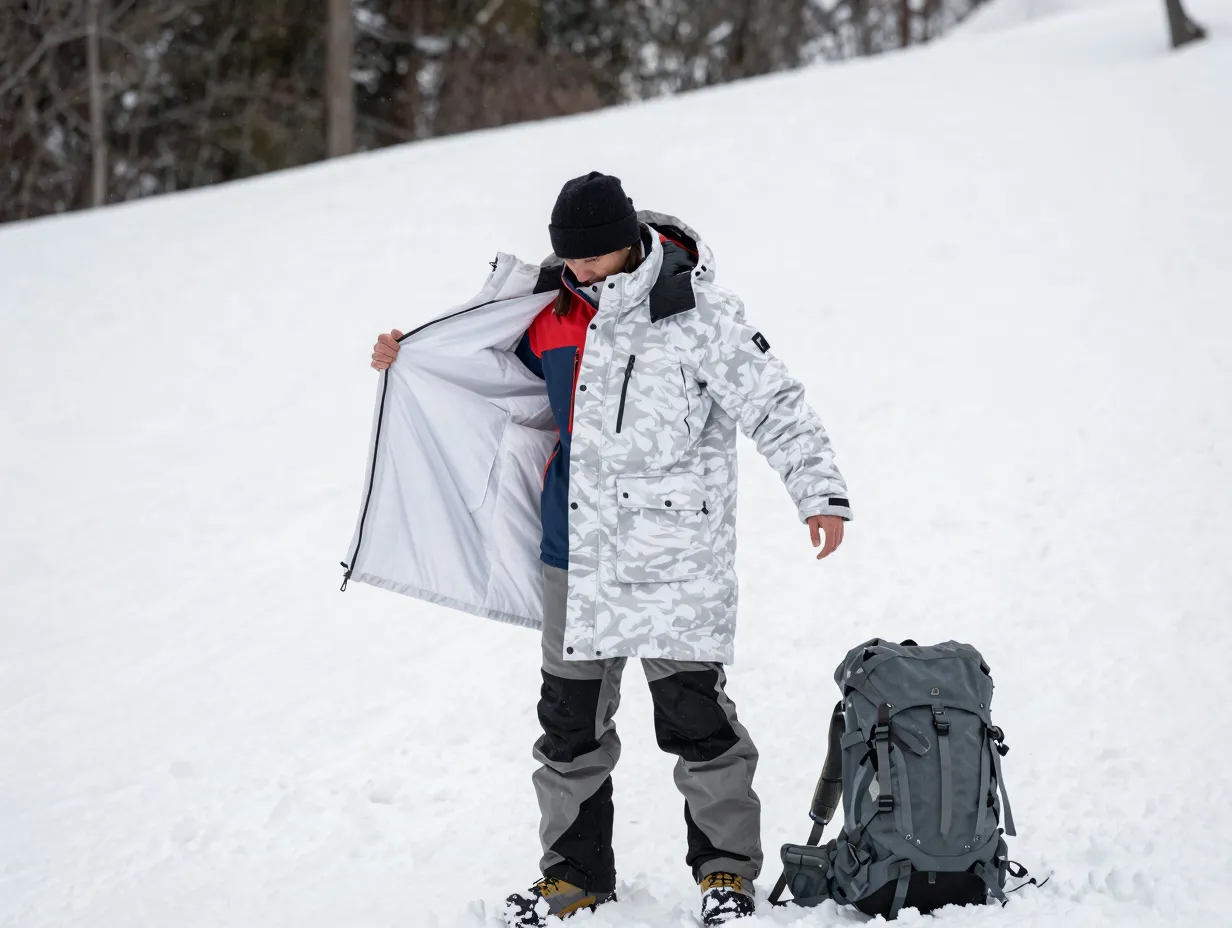
Not every hiker or hunter needs to replace an entire wardrobe when the snow arrives. A lightweight, uninsulated white cover-up shell worn over an existing hiking or hunting kit is one of the most cost-effective and versatile approaches available [8].
Natural Gear’s Uninsulated Cover-Up Snow Parka is designed exactly for this purpose, it pulls on over any base outfit in seconds, adding white camo concealment without trapping heat or restricting movement [8]. The fabric is thin enough to stuff into a daypack, making it practical for hunts or hikes where snow conditions are unpredictable.
This build works best for:
- Day hikers who encounter unexpected snow
- Hunters who already own quality insulated gear in non-white patterns
- Photographers and wildlife watchers who need quick concealment
- Backcountry skiers who double as hunters during season
The cover-up approach has one important limitation: the outer shell must be sized generously enough to fit over bulky insulated layers without restricting arm movement. Order at least one size up from the standard hiking fit.
4. The Varusteleka Three-Layer Extreme Cold System
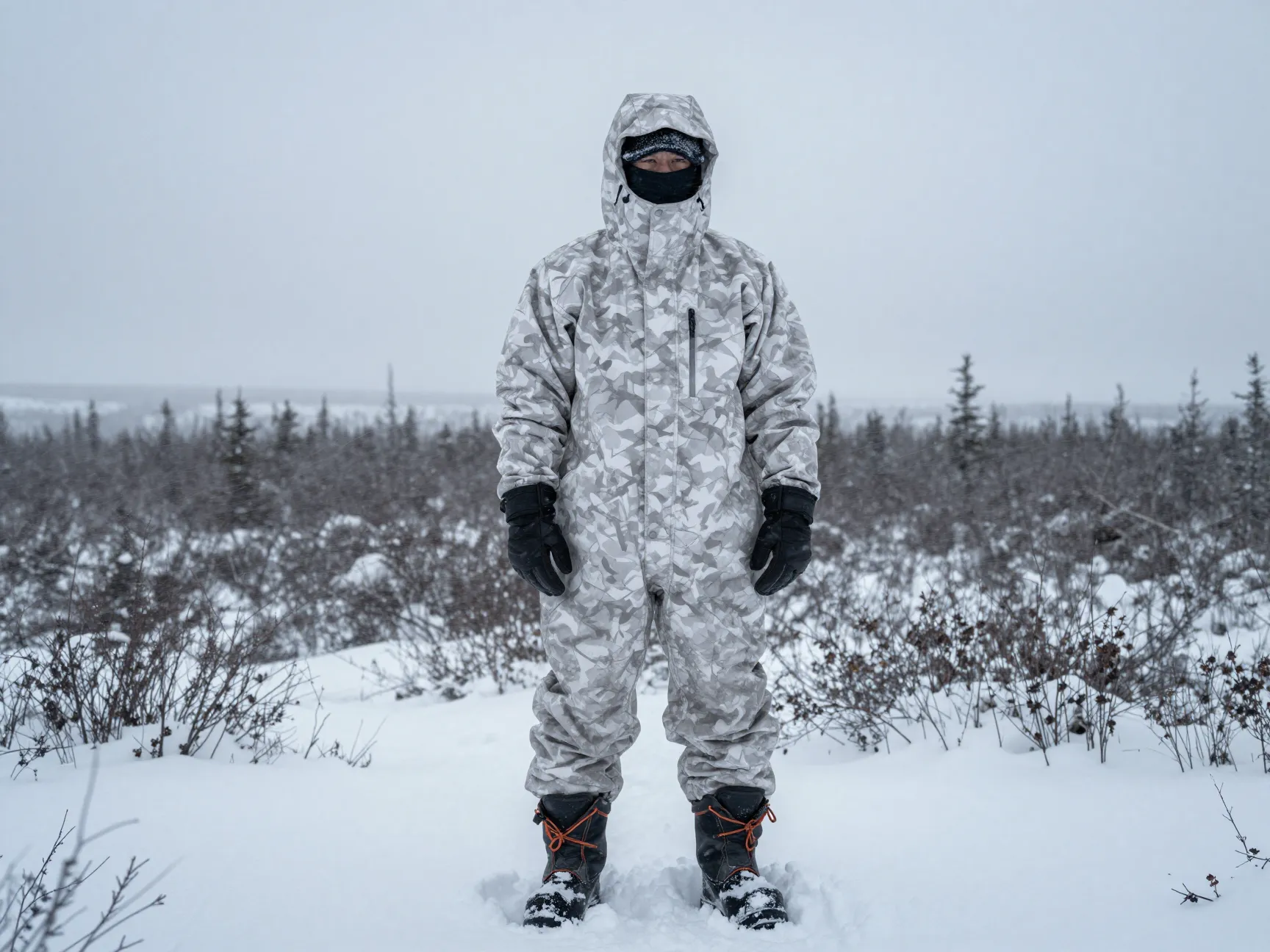
For hunters and hikers operating in genuinely extreme conditions, think Scandinavian winters, Alaskan interior, or high-altitude winter mountaineering, a purpose-built three-layer white camo system is the only responsible choice. Varusteleka’s snow camouflage collection includes a thermal coverall designed to function as the foundation of a complete cold-weather system [10].
The three-layer build from Varusteleka stacks as follows:
- Layer 1 (base): Heavyweight wool or synthetic thermal underwear, full coverage from wrist to ankle
- Layer 2 (mid): Fleece or softshell insulating suit, worn over the base for active warmth
- Layer 3 (outer): Varusteleka white camo coverall or smock, worn as the wind and concealment layer
This system is designed for temperatures below minus-20 degrees Celsius and is particularly effective for hunters who are setting up ambush positions in open tundra or boreal forest where wind chill is a serious factor [10]. The coverall design eliminates gaps at the waist, a critical advantage over separate jacket-and-bib combinations in extreme cold.
One important management note: three-layer systems generate significant heat during active movement. Hikers using this build must vent aggressively during uphill sections to prevent sweat buildup, which destroys insulation efficiency and creates dangerous chill during rest stops.
5. The Harkila Winter Active White Camo Performance Build
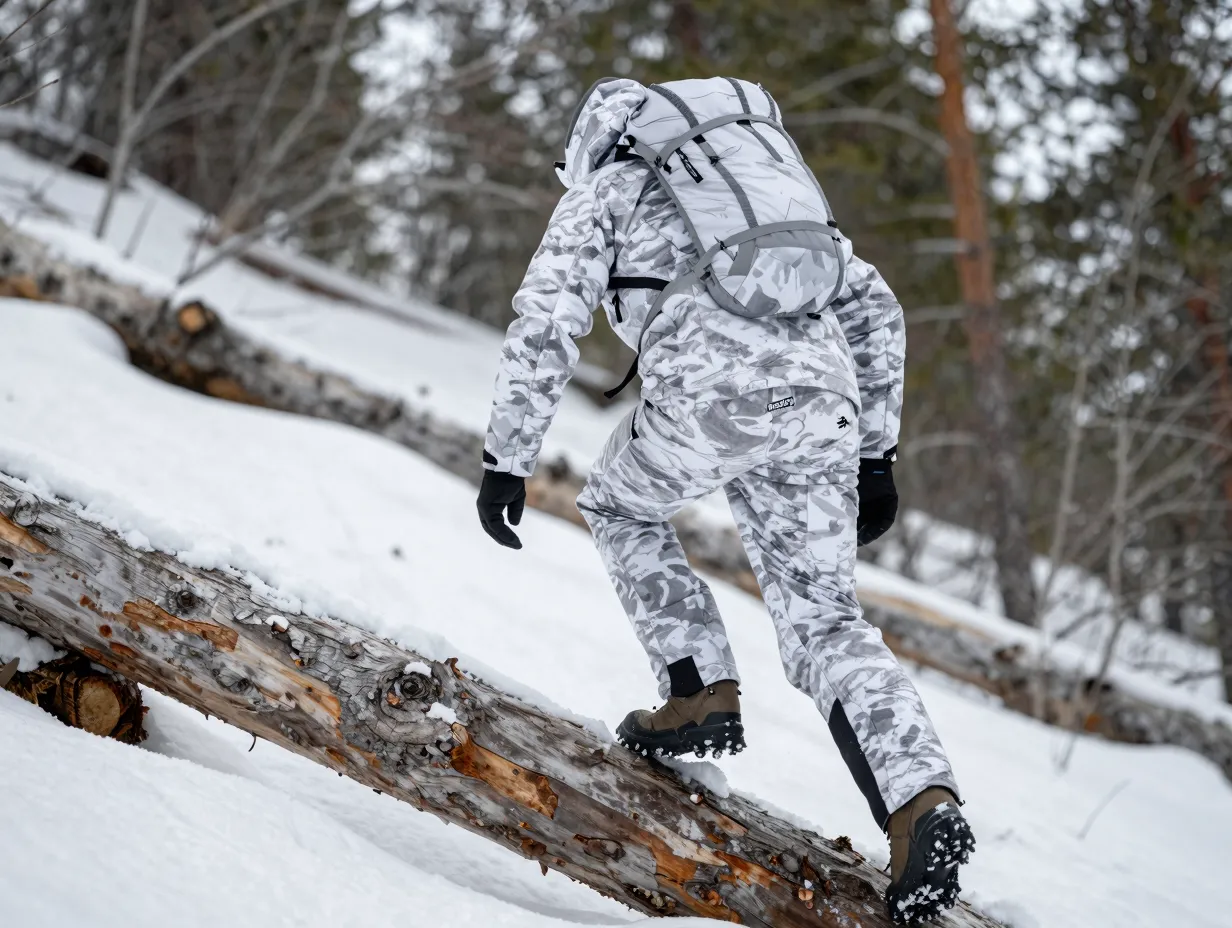
Harkila’s Winter Active series represents the premium end of the white camo market, combining Scandinavian design philosophy with technical fabrics engineered for the specific demands of driven hunts and long mountain approaches [6]. The series uses a stretch-woven outer fabric that moves with the body, making it one of the quietest options available, a critical factor when stalking game in crisp, still winter air where fabric noise carries.
This build is ideal for:
- Mountain hunters covering significant elevation changes
- Driven hunt participants who need to move quickly between positions
- Winter hikers who prioritize performance over budget
The Harkila Winter Active system pairs naturally with a lightweight merino base layer and a packable down mid-layer for maximum versatility across changing conditions [6]. The outer fabric is treated with a durable water repellent finish that sheds light snow without absorbing moisture.
Key performance advantage: the stretch fabric construction allows a full range of arm and leg motion without the bunching or restriction common in stiffer shell materials. This matters enormously when climbing over deadfall, crossing frozen streams, or drawing a bow in cold weather.
6. The Mixed-Pattern Layering Build for Transitional Snow Conditions
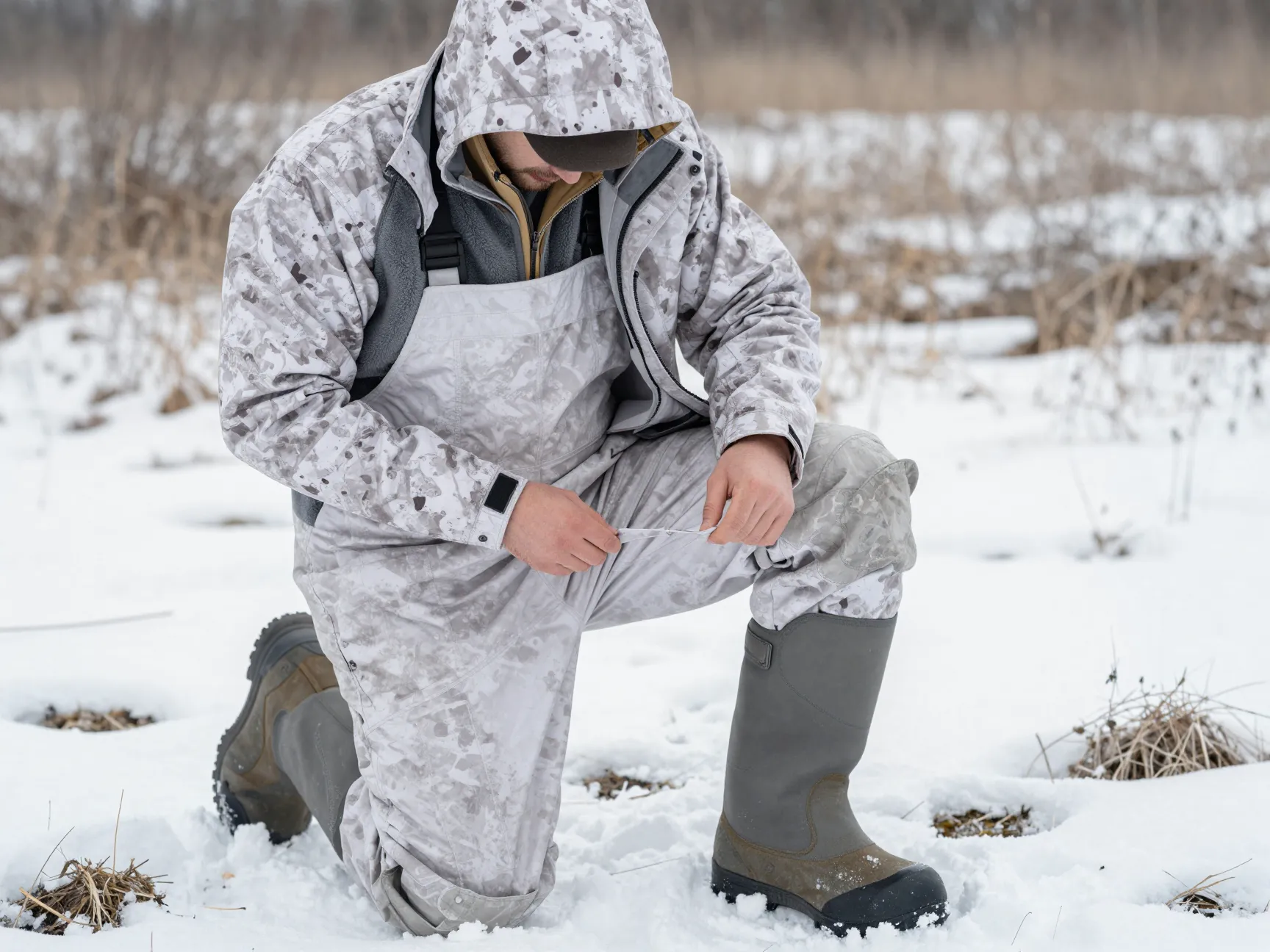
Late-season hunting rarely delivers consistent conditions. A morning hunt might begin on bare frozen ground and end in a full whiteout. The mixed-pattern layering build addresses this reality by combining a neutral grey or tan base layer system with a white camo over-shell that can be added or removed quickly.
This approach draws on the cover-up concept from outfit idea 3 but adds deliberate pattern selection at the mid-layer level. A grey or light brown fleece mid-layer visible at the collar and cuffs actually improves concealment in transitional environments, the mixed tones break up the outline more effectively than pure white when the ground cover is patchy [5].
Build components:
- Light grey or tan synthetic base layer
- Grey or light brown fleece mid-layer jacket
- White camo shell (uninsulated cover-up style)
- White or grey camo bibs or snow pants
- Gaiters in white or light grey to cover boot tops
The key to this build is keeping the white shell loose enough to vent quickly. In transitional conditions, temperature swings of 10 to 15 degrees Celsius between morning and midday are common, and the ability to regulate without removing the concealment layer is a significant tactical advantage.
7. The Predator Hunting Stealth Build with White Camo Accents
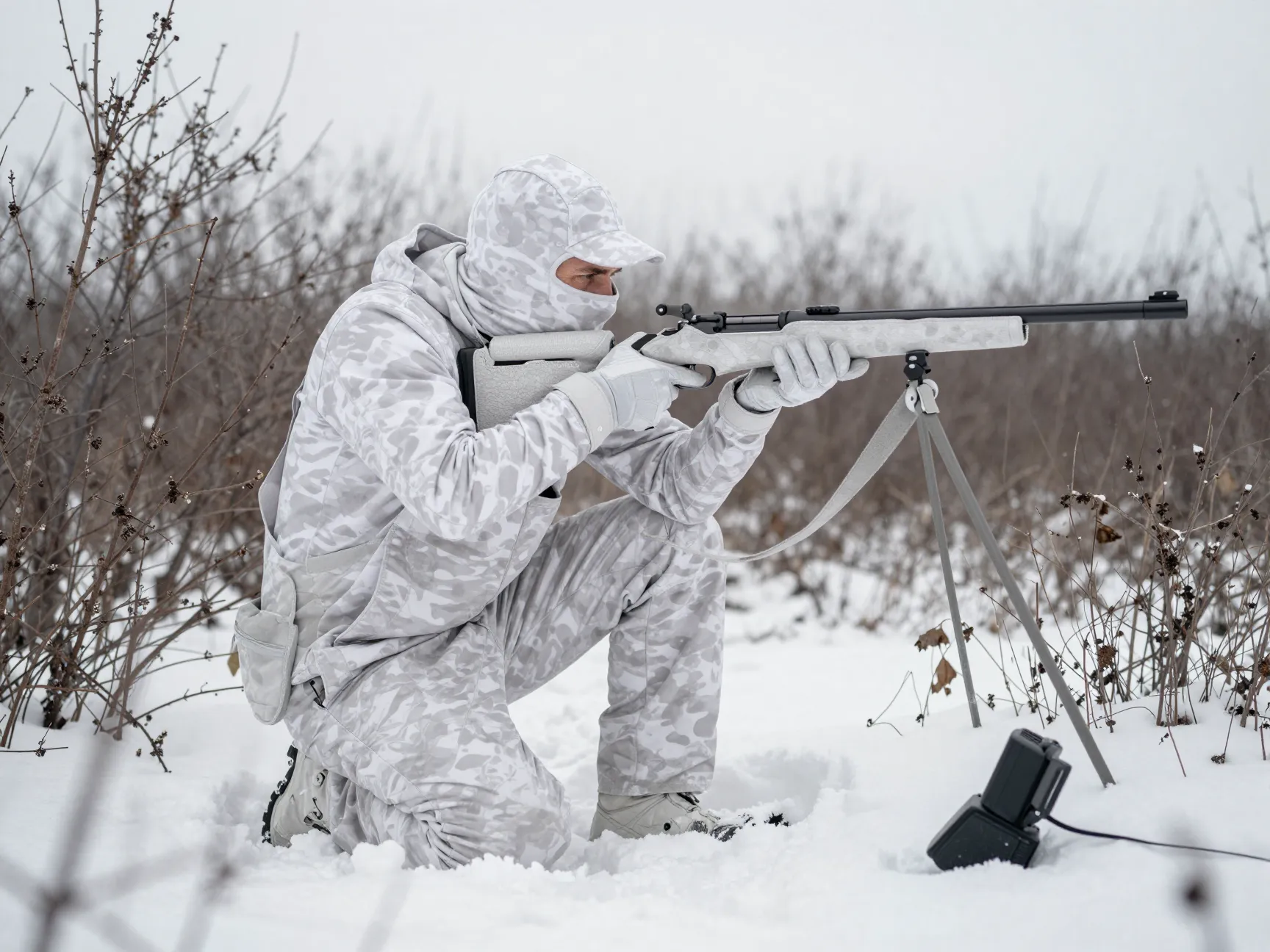
Predator hunters, those pursuing coyotes, foxes, and bobcats in winter, face a unique challenge: the animals they hunt have exceptional eyesight and nose, and they approach calls cautiously, often circling downwind before committing. A white camo outfit for predator hunting must prioritize full-body coverage, including face, hands, and rifle or call equipment.
This build goes beyond the jacket and bibs to include:
- White camo face mask or balaclava
- White camo gloves or mittens
- White camo rifle wrap or sleeve
- White camo seat cushion or ground mat
- Full white camo jacket and bibs in a low-contrast pattern
The low-contrast pattern recommendation is deliberate. Coyotes and foxes are more sensitive to movement than to color, but high-contrast patterns with sharp edges can trigger a flight response at distance. A softer, more blended white camo pattern reduces visual edge detection [5].
For calling setups, position the electronic caller or mouth call at least 20 yards from the shooter position and ensure the shooter is fully concealed against a white or grey background. Even a perfectly white outfit fails if the shooter is silhouetted against a dark treeline.
8. The Winter Hiking Day Pack Build for Non-Hunters
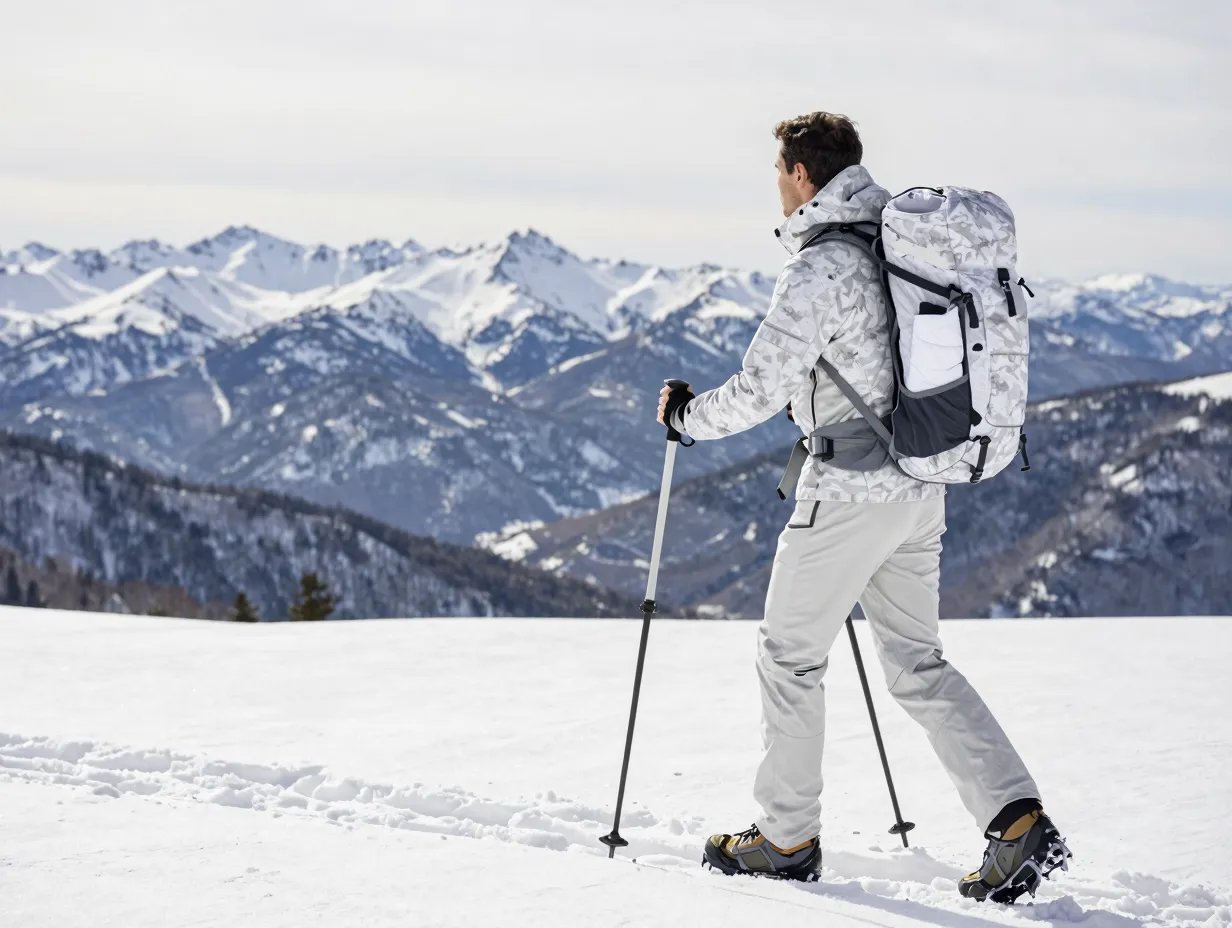
White camo is not exclusively a hunting tool. Winter hikers, wildlife photographers, and backcountry snowshoers increasingly use white camo layers to reduce their visual impact on wildlife and enhance the quality of animal encounters. This build prioritizes lightweight packability and moisture management over maximum concealment.
Components for the winter hiking white camo day pack build:
- Moisture-wicking synthetic base layer (avoid cotton entirely)
- Lightweight insulating mid-layer in white or light grey
- Packable white camo wind shell that stuffs into its own pocket
- White or grey softshell pants with articulated knees
- Trekking poles with white or grey grips
- Microspikes or snowshoes as terrain demands
The Natural Gear snow pattern jacket lineup offers several packable options that compress to roughly the size of a water bottle, making them practical additions to any winter day pack without significant weight penalty [9]. For photographers, the reduced visual profile means animals behave more naturally, producing better images.
One practical note for hikers: white camo makes the wearer less visible to other trail users and to search-and-rescue teams in emergency situations. Always carry a high-visibility orange layer that can be added quickly if conditions change or if the hike extends into low-light hours.
How to Choose Between These 8 Stunning White Camo Outfit Ideas for Winter Hiking or Hunting
Selecting the right build from these 8 stunning white camo outfit ideas for winter hiking or hunting comes down to three primary variables: activity level, temperature range, and terrain type.
| Outfit Build | Activity Level | Temp Range (C) | Best Terrain |
|---|---|---|---|
| 1. Huntworth Snow Camo Brown Shell | High | -5 to +5 | Mixed timber, fields |
| 2. Natural Gear Insulated Snow Parka | Low (static) | -10 to +10 | Open hardwoods, fields |
| 3. Budget Cover-Up Shell | Medium | 0 to +10 | Variable, day trips |
| 4. Varusteleka Three-Layer System | Low to Medium | Below -20 | Tundra, boreal forest |
| 5. Harkila Winter Active | High | -10 to +5 | Mountain, driven hunts |
| 6. Mixed-Pattern Transitional | Medium | -5 to +10 | Patchy snow, late season |
| 7. Predator Hunting Stealth | Low (calling) | -10 to +5 | Open fields, brushy draws |
| 8. Winter Hiking Day Pack | High | -5 to +10 | Trails, snowshoe routes |
Critical Layering Principles for All White Camo Builds
Regardless of which outfit build is chosen, three layering principles apply universally to winter hiking and hunting performance.
Moisture management comes first. The base layer must move sweat away from the skin. Cotton fails catastrophically in cold weather, it absorbs moisture and holds it against the body, accelerating heat loss. Merino wool and quality synthetics are the only acceptable base layer materials for serious winter use.
Insulation must be adjustable. Static insulation, a single heavy jacket, cannot adapt to the changing demands of a winter day. Builds that use a light shell over a removable mid-layer consistently outperform single-piece heavy systems for any activity that involves movement.
The outer layer sets the pattern. All the concealment value comes from the outermost visible layer. The pattern, fit, and coverage of the outer shell determine how effectively the outfit blends into snow-covered terrain. Gaps at the wrist, collar, and ankle break concealment, white gaiters, gloves, and a balaclava complete the system [5].
Frequently Asked Questions About White Camo for Winter Hunting and Hiking
Is white camo legal for deer hunting?
Regulations vary by state and province. Many jurisdictions require a minimum amount of blaze orange during firearms deer season, even when wearing white camo. Always check local regulations before building a white camo outfit for deer hunting.
How do you wash white camo without yellowing?
Use cold water, a gentle detergent without optical brighteners, and air dry away from direct sunlight. Optical brighteners in standard laundry detergent make fabric glow under UV light, visible to many animals, and cause white fabrics to yellow over time.
Can white camo be used in non-snow conditions?
White camo performs poorly in non-snow environments. It is a specialized tool for specific conditions. The mixed-pattern transitional build (outfit 6) is the best option for late-season hunts where snow coverage is inconsistent.
What is the quietest white camo fabric?
Fleece-faced outer layers are generally the quietest, but they sacrifice wind resistance. Woven stretch fabrics like those used in the Harkila Winter Active series offer a good balance of quietness and wind protection [6].
Conclusion
The eight builds covered in this guide represent the full range of what white camo can accomplish for winter hikers and hunters in 2026. From the active-pursuit efficiency of the Huntworth Snow Camo Brown shell system [2] to the extreme cold protection of the Varusteleka three-layer coverall [10], and from the budget-friendly flexibility of the Natural Gear cover-up parka [8] to the premium performance of the Harkila Winter Active series [6], there is a purpose-built solution for every scenario and budget.
Actionable next steps:
- Identify the primary use case, active hiking, static hunting, or predator calling, before purchasing any component.
- Start with the outer shell, since that layer determines concealment value, then build inward with appropriate insulation and base layers.
- Test the complete outfit at home before the first cold-weather outing, check range of motion, listen for fabric noise, and verify that all layers fit together without gaps.
- Add a high-visibility orange layer to any kit used in areas with other hunters or in emergency-prone backcountry terrain.
- Review local hunting regulations for any blaze orange requirements before finalizing a white camo build for hunting use.
White camo is a precision tool. Used correctly, it is one of the most effective concealment strategies available for winter conditions. Used carelessly, it is just an expensive white jacket. The difference lies entirely in how well the complete system is assembled and managed in the field.
References
[1] Snow – https://naturalgear.com/shop-by-pattern/snow/
[2] Snow Camo Brown – https://huntworthgear.com/camo-patterns/snow-camo-brown/
[3] Snow Camo – https://huntworthgear.com/camo/snow-camo/
[4] Insulated Snow Park – https://naturalgear.com/insulated-snow-park/
[5] How To Select Snow Camouflage – https://blog.gritroutdoors.com/how-to-select-snow-camouflage/
[6] Winter Active – https://harkila.com/en-gb/shop/series/winter-active
[8] Un Insulated Cover Up Snow Parka – https://naturalgear.com/un-insulated-cover-up-snow-parka/
[9] Jackets – https://naturalgear.com/jackets/
[10] Snow Camouflage – https://varusteleka.com/en-eu/collections/snow-camouflage