8 Salt Water Fish Tank Ideas for a Stunning Home Aquarium
Saltwater aquariums account for roughly 10% of all home fish tanks in the United States, yet they consistently rank as the most visually striking displays in any room. That gap between rarity and impact is exactly why a well-designed marine tank can transform an ordinary living space into something that stops guests mid-conversation. Whether you are a first-time hobbyist or an experienced reefer looking for fresh inspiration, these 8 salt water fish tank ideas for a stunning home aquarium offer a clear path from concept to a breathtaking finished display.
Disclosure: This post contains affiliate links. As an Amazon Associate, we earn from qualifying purchases, and at no extra cost to you.
Key Takeaways
- A saltwater aquarium‘s success depends on matching the tank concept to your available space, budget, and maintenance commitment.
- Reef tanks with live coral require more precise water chemistry than fish-only setups, but deliver unmatched visual rewards.
- Nano tanks under 30 gallons are a practical entry point for beginners without sacrificing beauty.
- Lighting, aquascaping, and livestock selection are the three biggest factors in the final aesthetic of any marine display.
- Planning filtration and flow before purchasing fish prevents the most common and costly beginner mistakes.
Why Saltwater Aquariums Are Worth the Investment
Before diving into the specific ideas, it helps to understand what separates a marine tank from a freshwater setup. The ocean covers more than 70% of Earth’s surface and hosts the most colorful and diverse animal life on the planet. Bringing even a small slice of that biodiversity into a home creates a living art installation that no painting or screen can replicate.
The perceived difficulty of saltwater tanks has decreased dramatically over the past decade. Modern protein skimmers, LED reef lighting, and reliable dosing pumps have made stable water chemistry far more achievable for everyday hobbyists. The key is choosing a concept that matches your lifestyle and then building the system to support it.
The following 8 salt water fish tank ideas for a stunning home aquarium are organized from accessible beginner builds to advanced showpiece displays. Each idea includes guidance on size, livestock, equipment, and design style.
The 8 Salt Water Fish Tank Ideas for a Stunning Home Aquarium
1. The Nano Reef Tank
Best for: Beginners, small spaces, apartment living
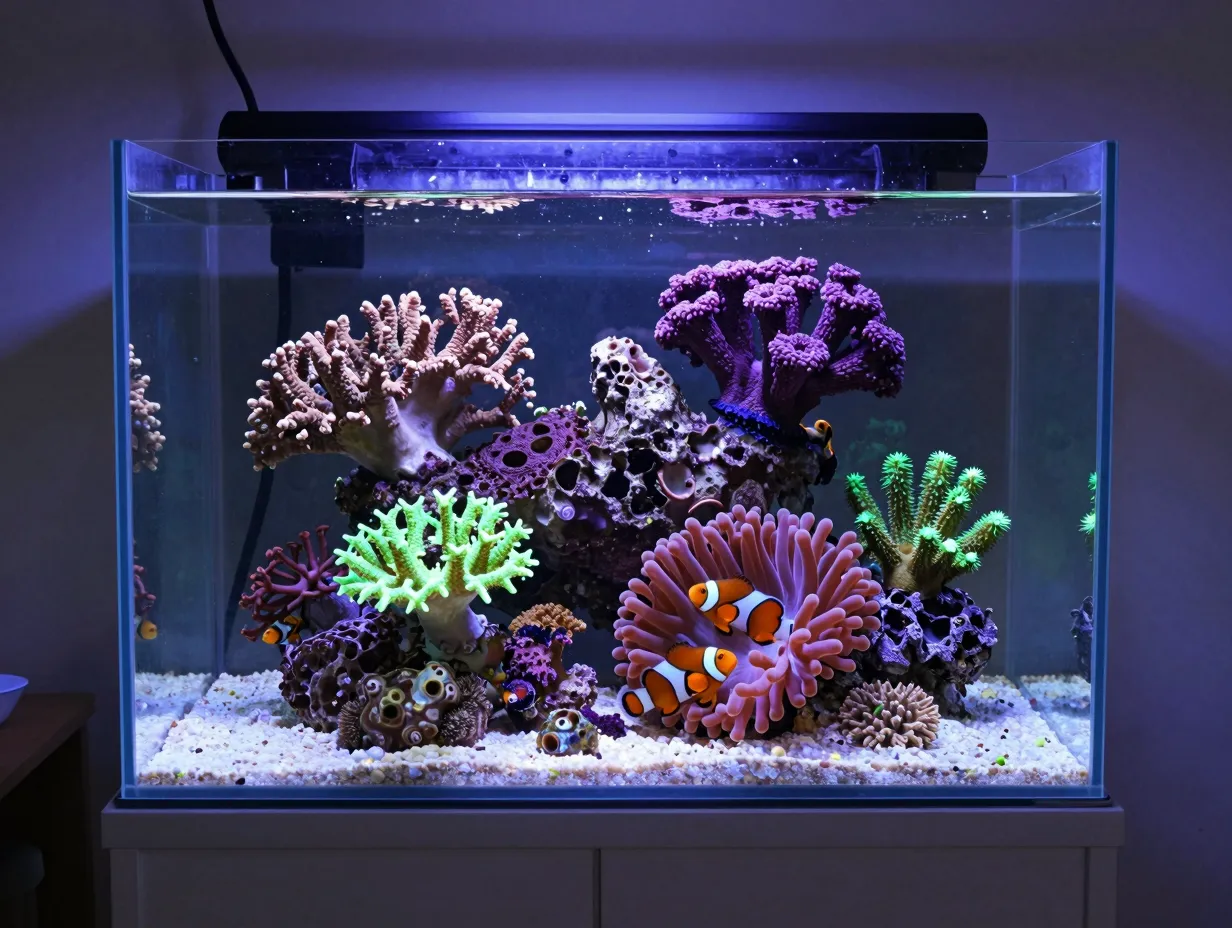
A nano reef tank typically ranges from 10 to 30 gallons and is one of the most popular entry points into the saltwater hobby. Do not let the small size fool you, a well-aquascaped nano reef packed with colorful zoanthids, mushroom corals, and a pair of clownfish rivals the visual impact of tanks three times its size.
Key design elements:
- Use a single large piece of live rock as the centerpiece, surrounded by smaller rubble
- Choose corals with contrasting colors: bright green star polyps against deep purple toadstool leather
- A pair of ocellaris clownfish hosting in a bubble-tip anemone is a classic, crowd-pleasing combination
Equipment essentials:
| Component | Recommended Type |
|---|---|
| Filtration | All-in-one sump or hang-on-back refugium |
| Lighting | Compact LED reef light (e.g., AI Prime or Kessil A80) |
| Flow | Single small powerhead (300-600 GPH) |
| Skimmer | Nano protein skimmer or surface skimmer |
Nano tanks require more frequent water changes (roughly 10-15% weekly) to maintain stable parameters, but the low water volume makes each change fast and inexpensive.
2. The Fish-Only With Live Rock (FOWLR) Tank
Best for: Hobbyists who prefer bold fish over coral, lower maintenance budgets
A fish-only with live rock setup is the most forgiving saltwater system available. Without delicate stony corals demanding precise calcium and alkalinity levels, the water chemistry requirements are significantly more relaxed. This makes FOWLR tanks ideal for anyone who wants the vibrant colors of marine fish without the complexity of a full reef.
Standout fish for a FOWLR display:
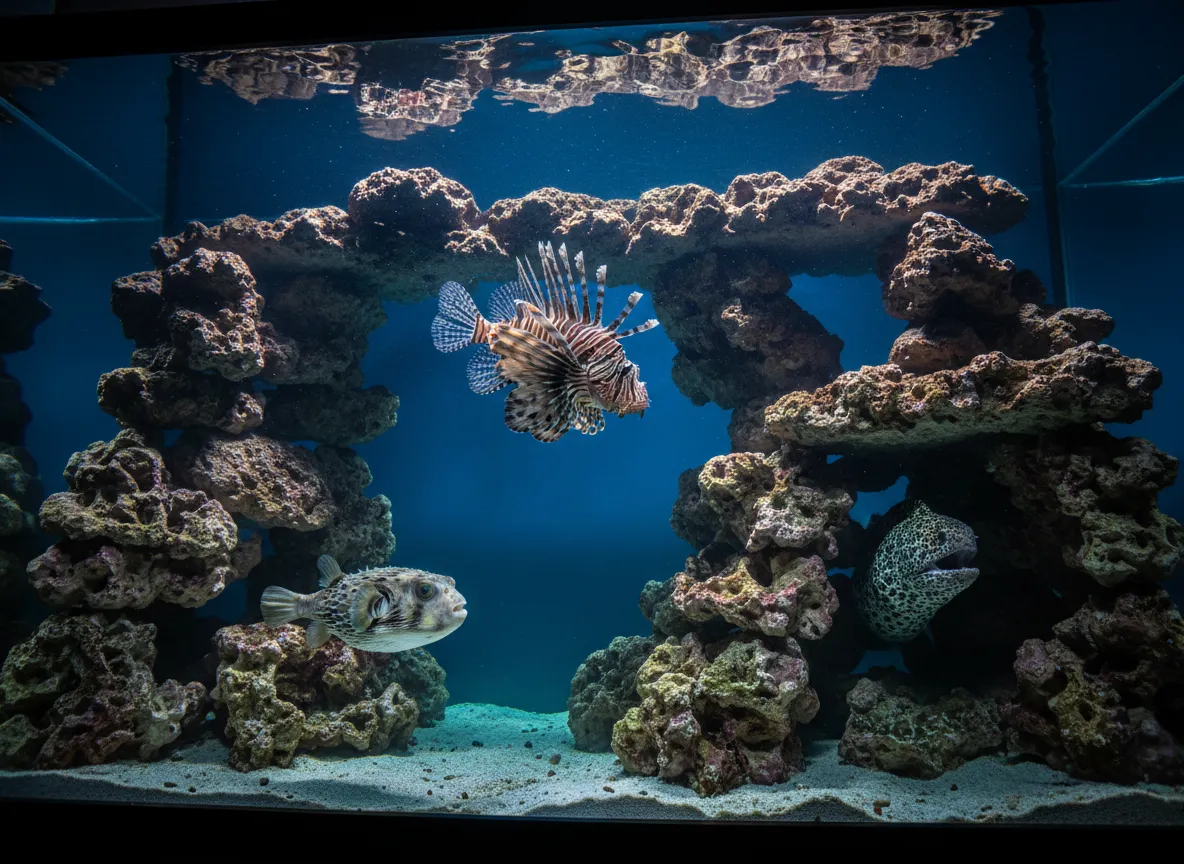
- Lionfish (Pterois volitans), dramatic, slow-moving, and visually commanding
- Porcupine puffer, personable and interactive
- Snowflake moray eel emerging from rock caves
- Large angelfish such as the emperor or French angel
The aquascaping in a FOWLR tank should prioritize caves, overhangs, and swim-throughs. Stack live rock to create a dramatic cliff face rather than a flat wall. This gives predatory and shy fish the hiding spots they need while creating visual depth for the viewer.
“In a fish-only tank, the rock structure IS the reef. Build it with the same care you would give a coral garden.”
3. The Shallow Lagoon or Biotope Tank
Best for: Intermediate hobbyists, naturalistic aesthetics
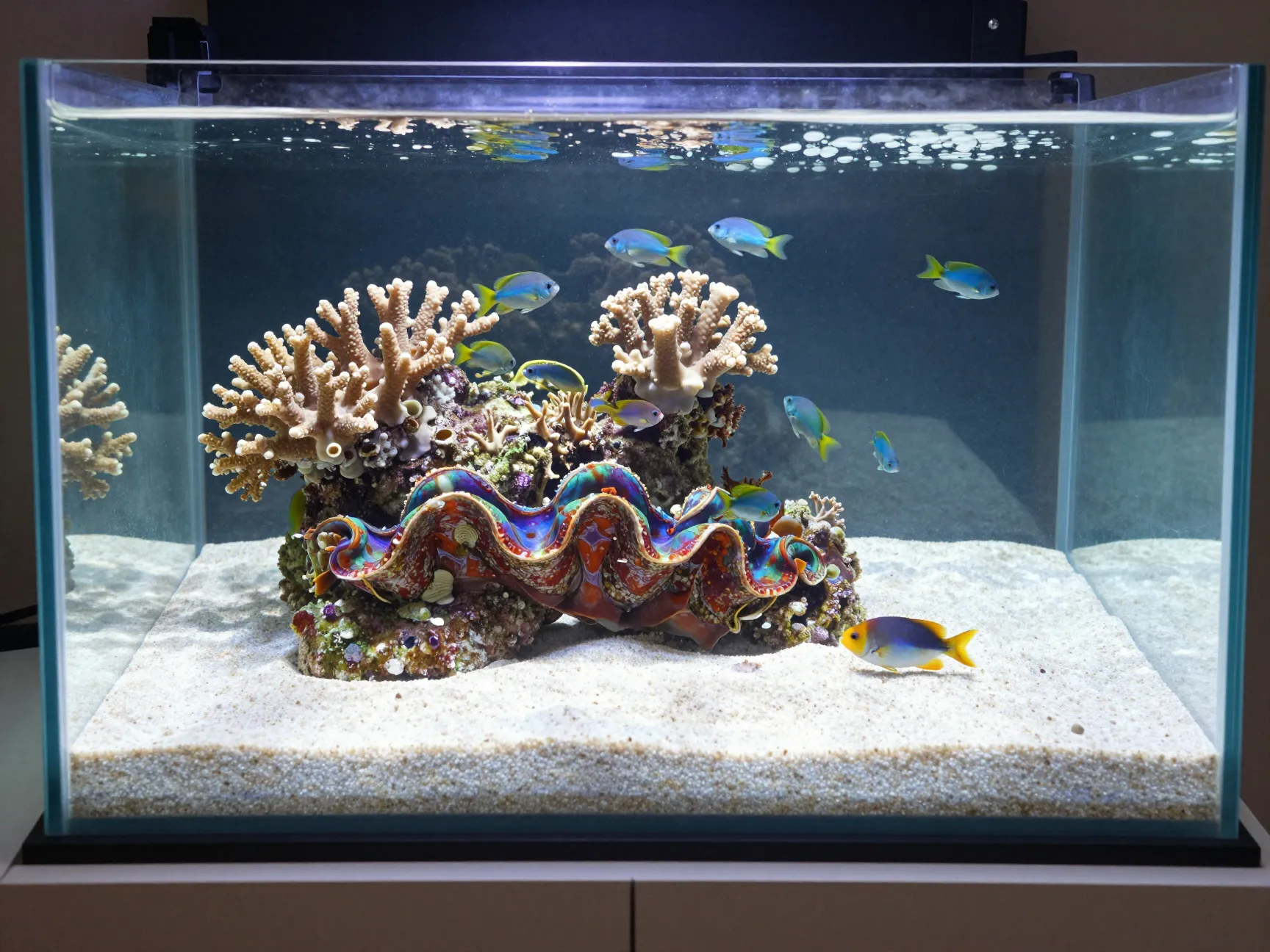
A shallow lagoon tank mimics the sunlit tidal flats and back-reef zones found in places like the Indo-Pacific and Caribbean. These tanks are typically wide and low, think 48 inches long by 24 inches wide but only 12 to 14 inches deep. The shallow depth allows intense light to penetrate evenly, which is ideal for photosynthetic clams, sea grass, and low-profile corals.
Design approach:
- Use a fine white aragonite sand bed to reflect light upward
- Place a giant clam (Tridacna maxima or T. squamosa) as the focal point
- Add small colonies of acropora and montipora corals along the sand
- Stock with small, colorful fish: chromis, dartfish, and mandarin dragonets
The biotope concept takes this further by recreating a specific geographic location. A Red Sea biotope, for example, would feature only species native to that region, purple and yellow Anthias, Red Sea mimic blennies, and Acropora corals with their characteristic branching forms.
4. The Built-In Wall Aquarium
Best for: Homeowners, renovation projects, maximum visual impact
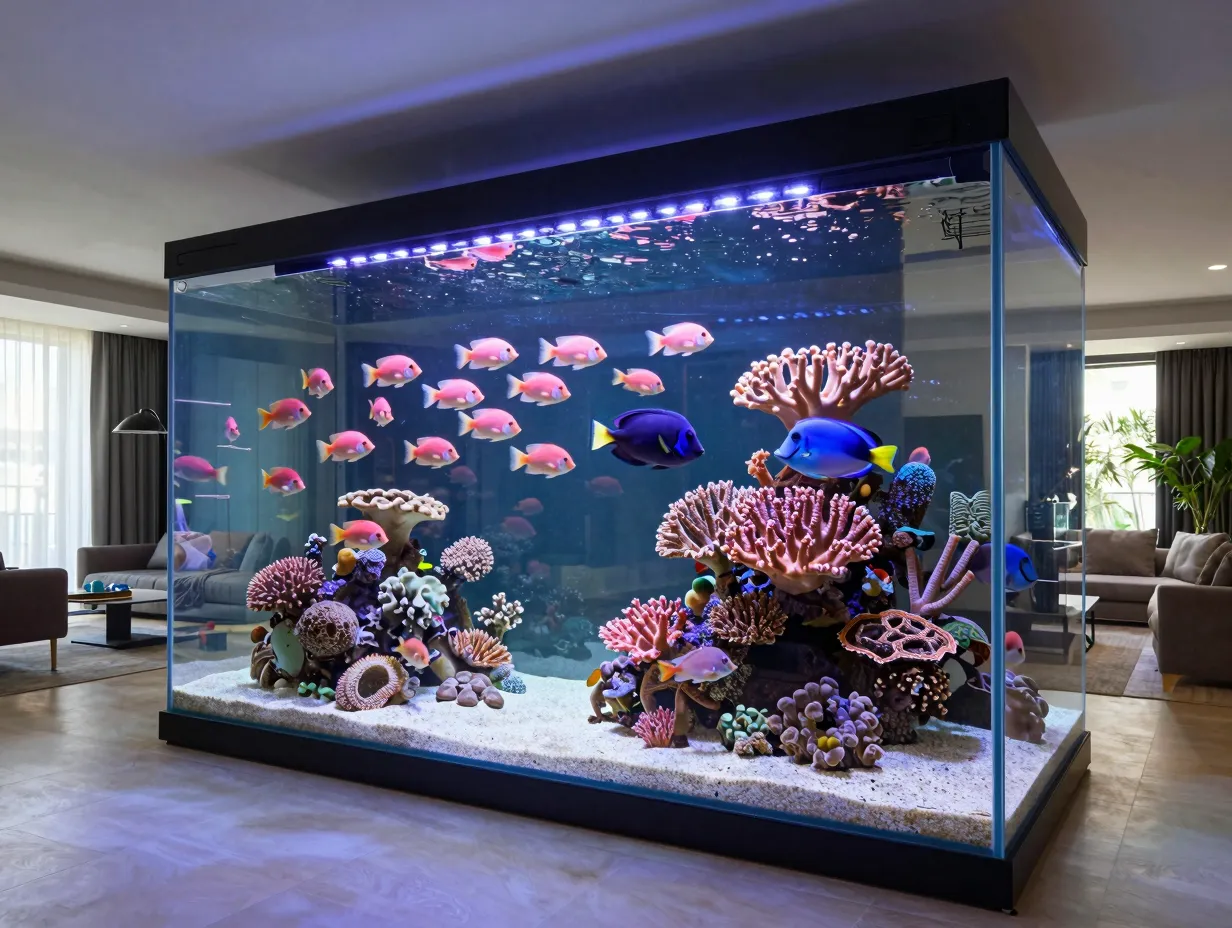
Few home features generate as much immediate impact as a floor-to-ceiling aquarium built into a wall. These installations typically range from 100 to 500 gallons and are viewed from both sides or from a single living space. The tank becomes the focal point of the entire room, a glowing, living partition between spaces.
Planning considerations:
- Structural reinforcement is mandatory; water weighs approximately 8.34 pounds per gallon
- The sump and equipment room should be accessible from a utility closet or adjacent space
- Custom acrylic tanks are preferred over glass at this scale for weight reduction and clarity
- Professional installation by a licensed aquarium builder is strongly recommended for tanks over 150 gallons
Livestock that shine in large wall displays:
- Schools of anthias (Pseudanthias squamipinnis) that move in synchronized waves
- Large tangs: purple, hippo, and sailfin tangs together create a color palette
- Impressive SPS coral colonies, table acropora, branching staghorn, and encrusting montipora
The lighting for a built-in wall tank should be programmable to simulate sunrise, midday peak, and sunset cycles. This creates a dynamic display that changes character throughout the day.
5. The Predator Tank
Best for: Hobbyists who prefer dramatic, large fish over coral
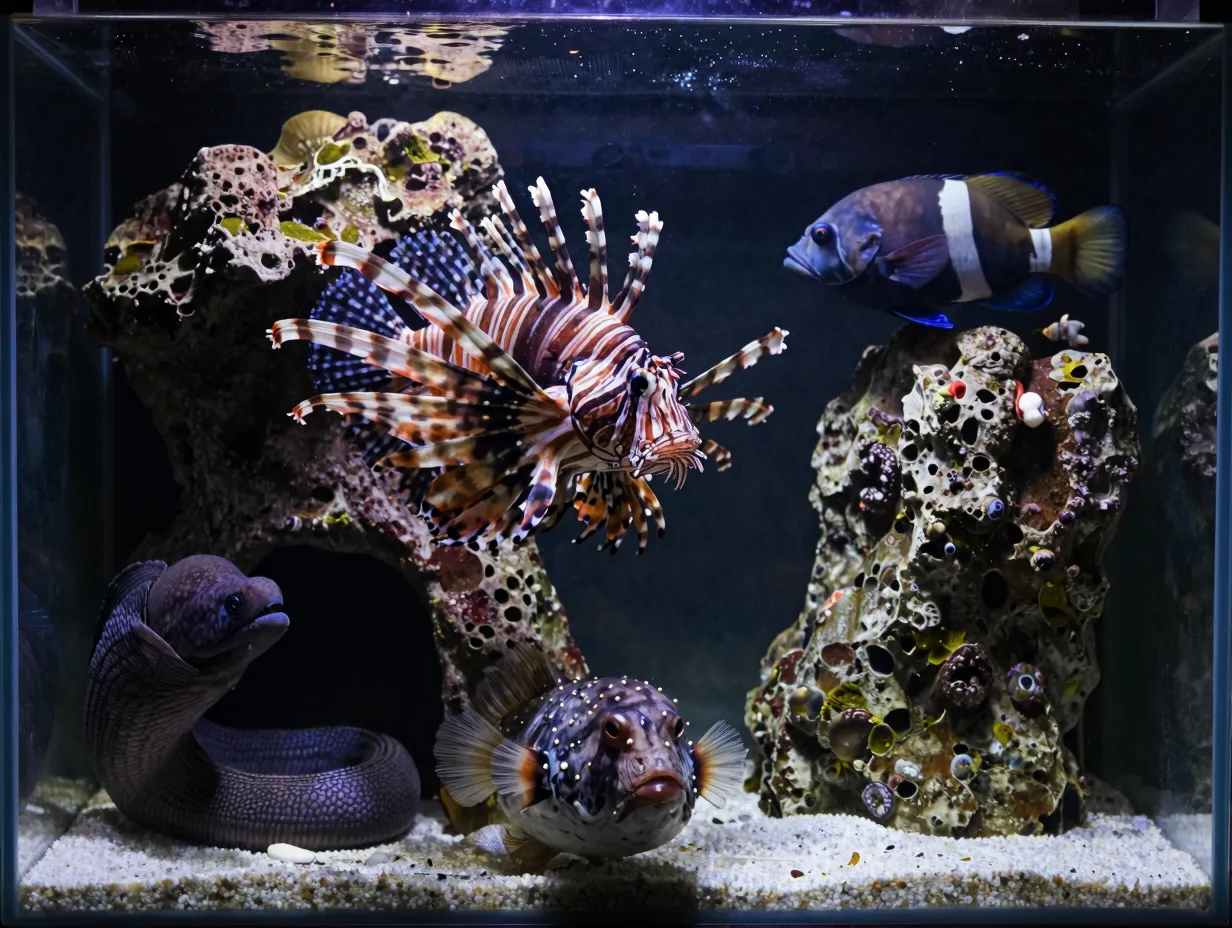
A dedicated predator tank celebrates the raw power and personality of larger marine carnivores. These tanks typically run 125 gallons or more and are stocked intentionally with fish that would be incompatible with a reef environment.
Classic predator tank inhabitants:
- Volitans lionfish, the undisputed centerpiece of any predator display
- Snowflake moray eel, dramatic, interactive, and surprisingly hardy
- Porcupine puffer, curious, intelligent, and grows to impressive size
- Grouper species, bold coloration and commanding presence
- Large hawkfish, perches on rock and surveys the tank like a sentinel
The aquascape for a predator tank should use large, dramatic rock formations with deep caves and overhangs. Avoid small decorative elements that large fish will rearrange or destroy. Bold, architectural rockwork suits the scale and temperament of the inhabitants.
Water quality in a predator tank demands a high-capacity protein skimmer and robust mechanical filtration, as large carnivorous fish produce significantly more waste than smaller reef fish.
6. The Coral Propagation and Frag Tank
Best for: Advanced hobbyists, coral enthusiasts, those interested in the aquaculture side of the hobby
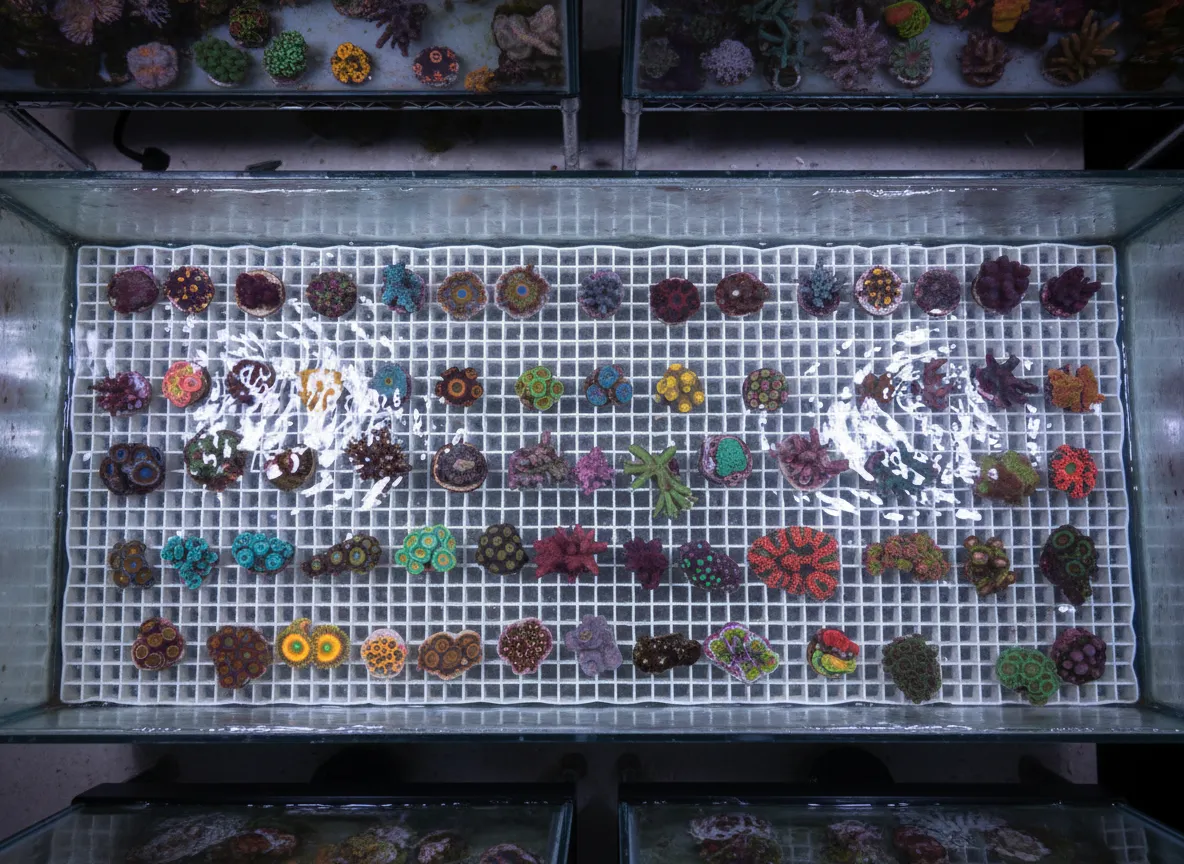
A frag tank is a shallow, brightly lit display designed specifically for growing coral fragments (frags) on flat racks or plug-lined tiles. While primarily functional, a well-organized frag tank can be as visually stunning as any display reef, rows of colorful zoanthids, acropora frags, and chalice corals arranged by color create a mosaic effect unlike any other aquarium style.
Setup specifics:
- Tank depth of 8 to 12 inches maximizes light penetration to all frags
- High-output LED lighting covering the full PAR spectrum (300-500 PAR at the sand bed)
- Strong, even flow across the entire tank floor to prevent detritus accumulation
- Frag racks, egg crate grids, or magnetic frag holders to organize coral placement
Beyond aesthetics, a frag tank serves a practical purpose: coral propagation supports the conservation of wild reef populations by reducing demand for wild-caught specimens. Many hobbyists trade or sell frags within the local reef club community, offsetting equipment costs.
7. The Seahorse and Soft Coral Biotope
Best for: Patient hobbyists, unique display concepts, those seeking a conversation-starting tank
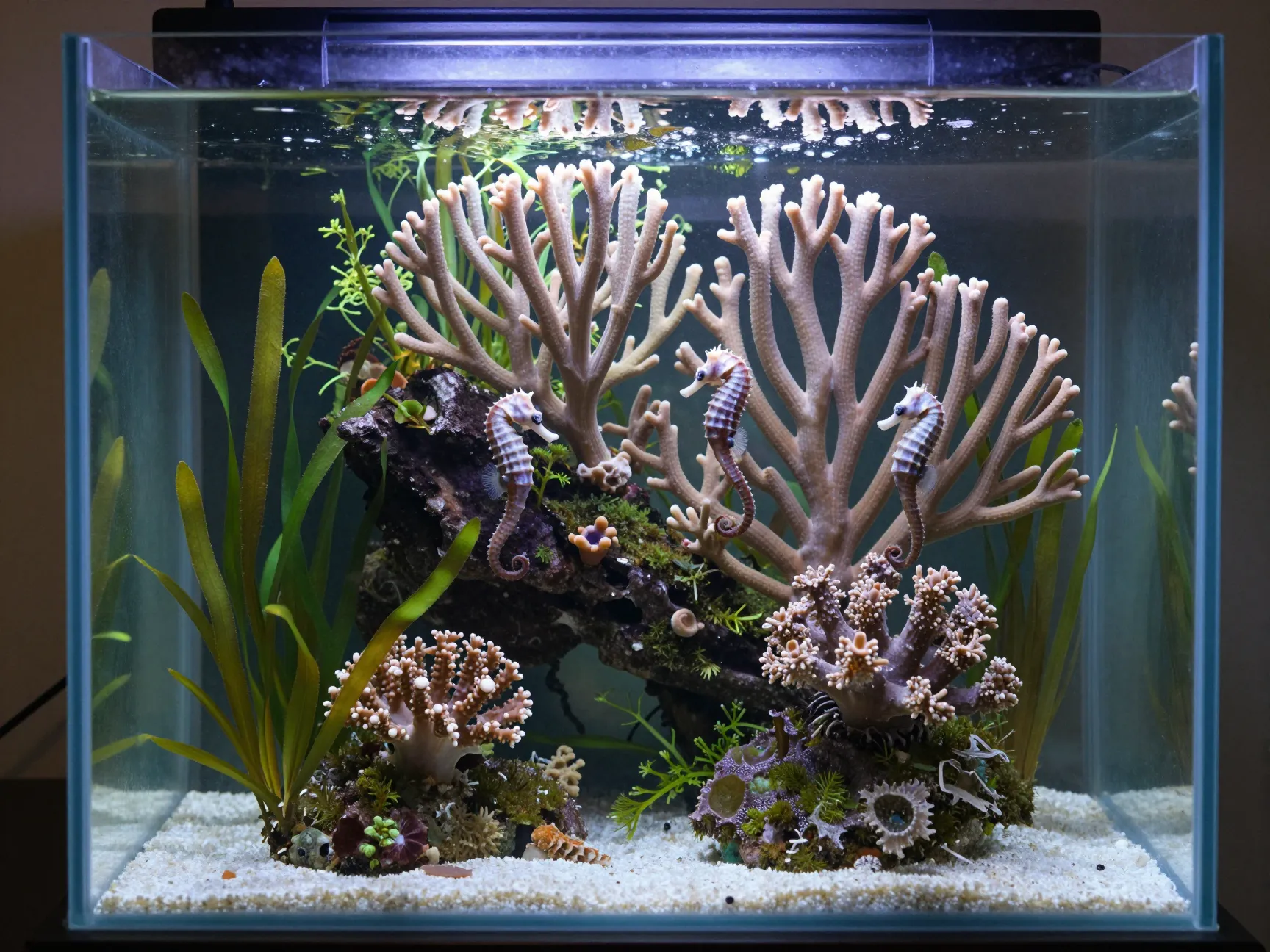
Seahorses are among the most captivating marine animals available to hobbyists, but they require a specialized environment. A dedicated seahorse tank pairs these slow-moving hunters with soft corals, sea fans, and macroalgae that provide hitching posts and visual complexity.
Critical requirements for seahorse success:
- Temperature: Captive-bred seahorses (Hippocampus erectus or H. reidi) prefer cooler water, typically 72-74°F. A small aquarium chiller may be needed.
- Flow: Gentle, indirect flow only. Strong powerheads can injure or exhaust seahorses.
- Tankmates: Avoid any fast-moving or aggressive fish. Pipefish, small gobies, and dragonets are compatible choices.
- Feeding: Captive-bred seahorses trained to eat frozen mysis shrimp are far easier to maintain than wild-caught specimens.
The visual design of a seahorse tank leans heavily on vertical elements, tall sea fans, branching gorgonians, and macroalgae like Halimeda and Caulerpa create a lush, jungle-like underwater garden that seahorses will explore and cling to throughout the day.
8. The SPS Dominated Reef Tank
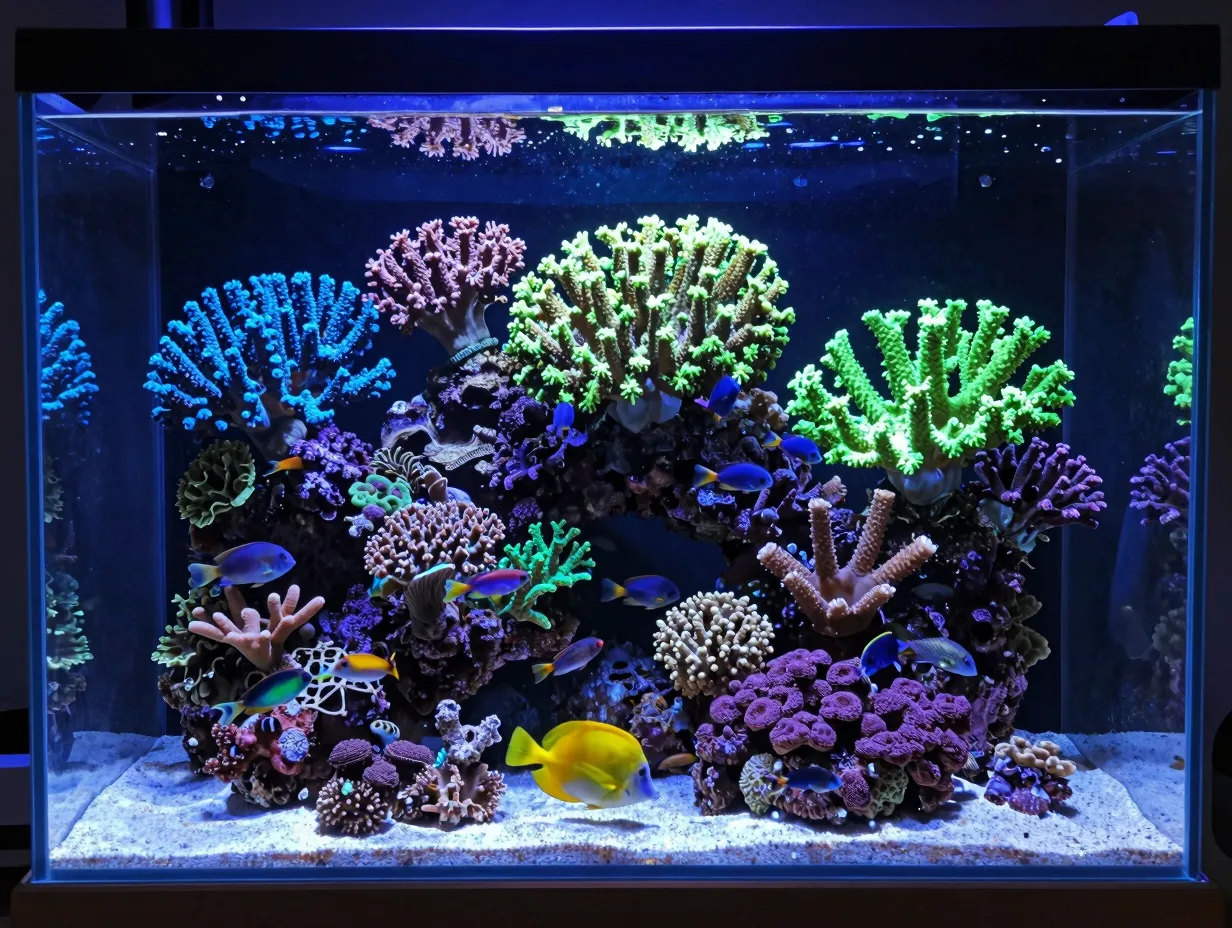
Best for: Experienced reefers, those seeking the ultimate challenge and reward
Small polyp stony (SPS) corals, primarily acropora, montipora, and pocillopora, represent the pinnacle of reef keeping. These corals demand near-perfect water chemistry, intense lighting, and strong, chaotic flow. In return, they grow into towering colonies of electric blue, neon green, and vivid purple that look like alien landscapes.
Water parameter targets for SPS success:
| Parameter | Target Range |
|---|---|
| Salinity | 1.025-1.026 SG |
| Temperature | 77-79°F |
| Alkalinity | 8-9 dKH |
| Calcium | 420-440 ppm |
| Magnesium | 1300-1350 ppm |
| Nitrate | 2-5 ppm |
| Phosphate | 0.03-0.08 ppm |
Maintaining these parameters requires a two-part dosing system or a calcium reactor. Automated dosing pumps and an apex controller or similar aquarium management system take much of the guesswork out of daily maintenance.
Design philosophy for an SPS reef:
- Build the rockwork low and open to allow coral colonies room to grow upward and outward
- Leave significant open sand bed space in the foreground for visual depth
- Use a combination of branching acropora in the upper column and encrusting montipora on rock surfaces
- Stock with small, non-coral-nipping fish: lyretail anthias, chromis, small wrasses, and a single tang for algae control
How to Choose the Right Idea for Your Space
With these 8 salt water fish tank ideas for a stunning home aquarium laid out, the next step is matching the right concept to your specific situation. The following framework simplifies that decision.
By experience level:
- Beginner: Nano reef (Idea 1) or FOWLR tank (Idea 2)
- Intermediate: Shallow lagoon (Idea 3) or seahorse biotope (Idea 7)
- Advanced: Predator tank (Idea 5), frag tank (Idea 6), or SPS reef (Idea 8)
- Renovation project: Built-in wall aquarium (Idea 4)
By available space:
- Under 30 gallons: Nano reef
- 30-75 gallons: FOWLR, shallow lagoon, seahorse biotope, frag tank
- 75-150 gallons: Predator tank, mixed reef, SPS reef
- 150+ gallons: Built-in wall aquarium, large predator display
By weekly maintenance commitment:
- Low (1-2 hours/week): FOWLR, predator tank
- Moderate (2-4 hours/week): Nano reef, shallow lagoon, seahorse biotope
- High (4+ hours/week): SPS reef, frag tank, built-in wall display
Essential Equipment Every Saltwater Tank Needs
Regardless of which concept you choose from these 8 salt water fish tank ideas, certain equipment fundamentals apply to every marine system.
Filtration: A protein skimmer is the single most important piece of equipment in a saltwater tank. It removes dissolved organic compounds before they break down into ammonia and nitrate. Match the skimmer rating to at least 1.5 times your actual tank volume.
Lighting: LED technology has made quality reef lighting affordable and energy-efficient. For fish-only tanks, basic LED strips work well. For coral tanks, invest in a programmable full-spectrum reef LED from reputable brands. Proper lighting is non-negotiable for photosynthetic corals and clams.
Flow: Marine fish and corals evolved in an environment of constant, multi-directional water movement. Powerheads or wavemakers that turn over the tank volume 20-40 times per hour are a standard baseline for reef tanks.
Heater and temperature monitoring: A reliable heater with an independent temperature controller prevents the single most common cause of catastrophic tank loss, a runaway heater cooking the tank overnight.
Refractometer or salinity probe: Maintaining salinity at 1.025-1.026 specific gravity is critical. A quality refractometer calibrated with reference solution is the minimum standard; an electronic salinity probe connected to a controller is the preferred solution for larger systems.
Aquascaping Principles That Elevate Any Marine Display
The rock structure in a saltwater tank is its skeleton. Poor aquascaping makes even expensive fish and coral look mediocre. Strong aquascaping makes a modest livestock selection look extraordinary.
Three principles that apply to all 8 concepts:
- Negative space is as important as filled space. Leave open sand areas in the foreground. Open water in the midground allows fish to swim freely and gives the eye a place to rest.
- Build height variation. A flat rock wall is visually boring. Stack rock to create peaks, valleys, overhangs, and caves. Aim for a natural, asymmetrical profile rather than a symmetrical arch.
- Plan for growth. Corals grow. Leave 4-6 inches of clearance between coral placements at the time of purchase. A tank that looks sparse at setup will look full and lush within 12-18 months.
Conclusion
The ocean’s beauty is not reserved for those who can afford a dive trip to the Maldives. A well-planned saltwater aquarium brings that same wonder into everyday life, morning coffee in front of a glowing reef, the meditative calm of watching fish navigate a coral garden, the satisfaction of a thriving ecosystem built by hand.
These 8 salt water fish tank ideas for a stunning home aquarium cover the full spectrum of what marine aquariums can offer, from the approachable nano reef to the technically demanding SPS showpiece. Every one of them is achievable with the right preparation.
Actionable next steps:
- Select the concept that matches your experience level, available space, and weekly time commitment.
- Research the specific water parameter requirements for your chosen livestock before purchasing anything.
- Join a local reef club or online community (reef2reef.com is the largest English-language resource) to connect with experienced hobbyists who can provide mentorship and frag trades.
- Build your filtration and flow system first, cycle the tank fully, and only then begin adding livestock.
- Start with hardy, forgiving species and upgrade to more demanding corals or fish as your skills and confidence grow.
The most stunning home aquariums in the world started with a single idea and a willingness to learn. The next one could be yours.