8 Thrilling Outdoor Adventure Activities to Test Your Survival Skills
Only 17% of adults can correctly identify safe drinking water sources in the wild, yet millions head into remote terrain every year with little more than enthusiasm and a smartphone. The gap between confidence and competence in the outdoors can be life-or-death. That is exactly why the 8 thrilling outdoor adventure activities to test your survival skills covered in this guide exist, not just to deliver adrenaline, but to sharpen the instincts, decision-making, and physical resilience that keep people alive when things go wrong.
Disclosure: This post contains affiliate links. As an Amazon Associate, we earn from qualifying purchases, and at no extra cost to you.
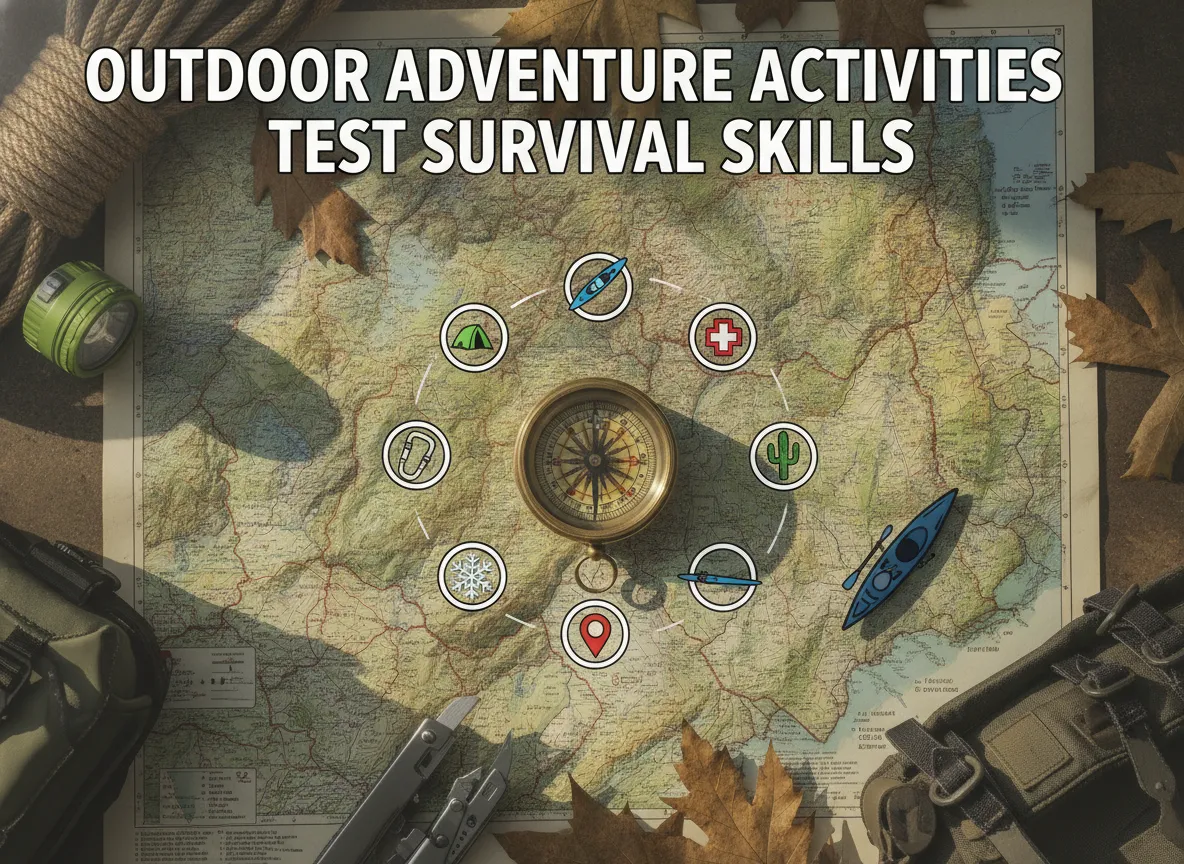
Whether a beginner or a seasoned backcountry explorer, these activities push real limits while building the kind of knowledge that no classroom can replicate.
Key Takeaways
- Survival skills are best learned through direct, high-stakes outdoor experiences rather than theory alone.
- Each of the 8 thrilling outdoor adventure activities in this guide targets a specific survival competency, from navigation to fire-making to water procurement.
- Physical fitness, mental fortitude, and situational awareness are the three pillars that underpin every activity on this list.
- Proper preparation, quality gear, and ideally a certified guide dramatically reduce risk while maximizing learning.
- Starting with beginner-friendly versions of each activity and progressively increasing difficulty is the safest and most effective approach.
Why These 8 Thrilling Outdoor Adventure Activities to Test Your Survival Skills Matter in 2026
Modern life has stripped away many of the daily challenges that once kept human survival instincts sharp. Central heating, GPS navigation, and instant food delivery have made comfort the default. But when a hiking trail disappears under snowfall, a kayak capsizes in a fast-moving river, or a campsite must be built from scratch before nightfall, those dormant instincts either activate, or they do not.
The activities below are not extreme sports for their own sake. Each one is a structured stress test that reveals specific gaps in a person’s survival toolkit. They demand problem-solving under pressure, physical endurance, and the ability to read natural environments with accuracy.
“The wilderness does not care about your credentials. It only responds to your competence.”
Understanding which skills each activity builds helps adventurers choose the right challenge for their current level and goals.
The Core Survival Skills These Activities Develop
| Survival Skill | Why It Matters |
|---|---|
| Navigation without technology | GPS fails; maps and compasses do not |
| Fire-starting | Warmth, water purification, signaling |
| Water procurement and purification | Dehydration is a top wilderness killer |
| Shelter building | Exposure kills faster than starvation |
| Physical endurance | Survival situations demand sustained effort |
| Mental resilience | Panic is the most dangerous wilderness hazard |
| Situational awareness | Preventing emergencies before they escalate |
The Complete List: 8 Thrilling Outdoor Adventure Activities to Test Your Survival Skills
1. Wilderness Survival Camping
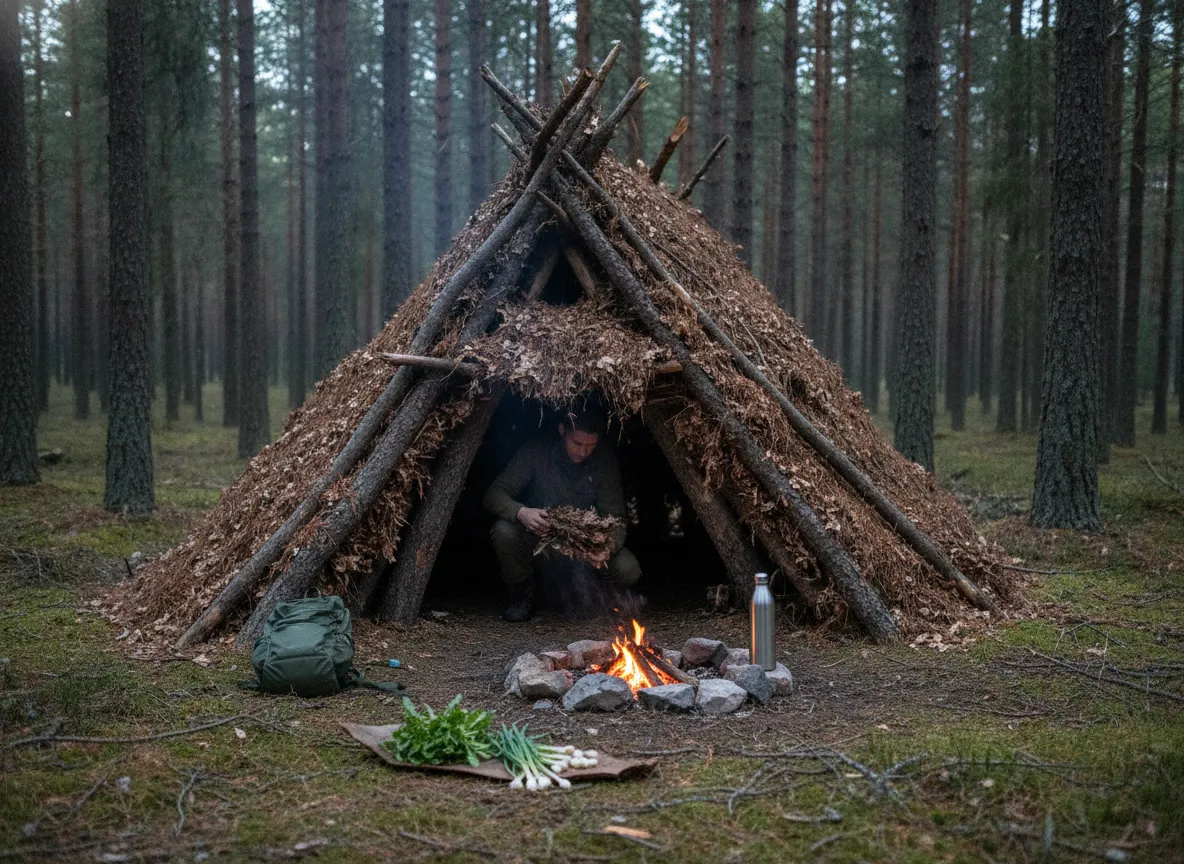
What it is: Spending one or more nights in the backcountry with minimal gear, ideally only what can be sourced or improvised from the environment.
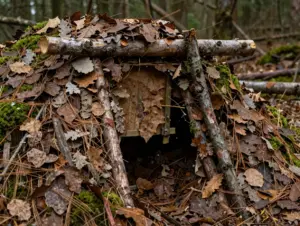
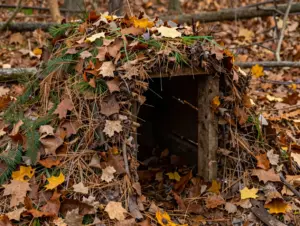
Wilderness survival camping is the foundational activity on this list. It forces participants to address the most immediate survival priorities in real time: shelter, water, fire, and food. Unlike standard camping, the rules are deliberately restrictive. No pre-built tents, no camp stoves, no water filters. Every comfort must be earned.
Core skills developed:
- Debris hut and lean-to shelter construction
- Fire-starting using flint and steel or friction methods
- Identifying and purifying natural water sources
- Foraging for edible plants (with proper training)
Getting started: Join a guided primitive camping course through a certified wilderness survival school. Programs typically run two to five days and cover all foundational skills in a controlled but authentic environment.
Risk level: Moderate. The greatest dangers are hypothermia, dehydration, and getting lost. A qualified instructor eliminates most of these risks for beginners.
2. White-Water Kayaking
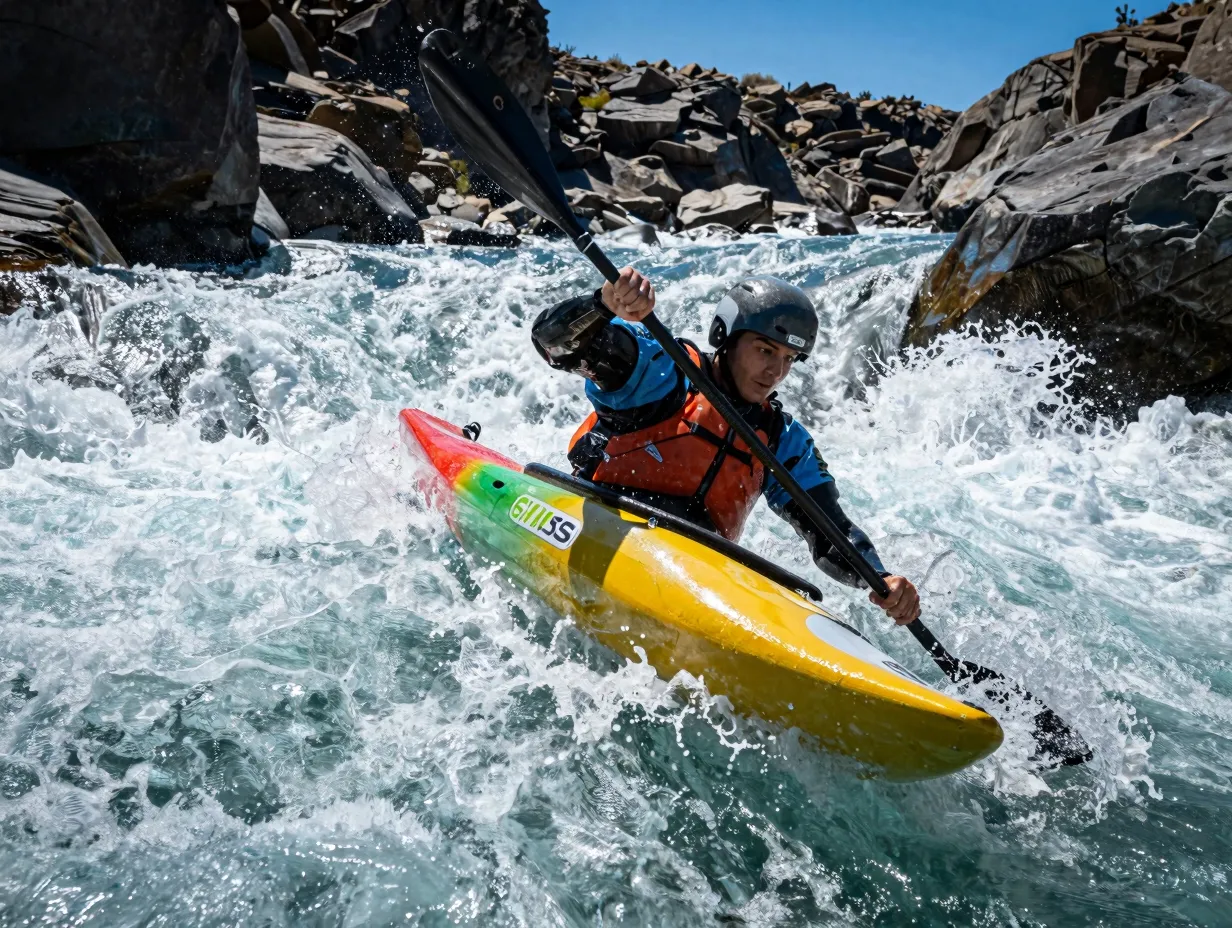
What it is: Navigating fast-moving rivers in a kayak, from Class II gentle rapids to Class V technical whitewater.
White-water kayaking is one of the most complete physical and mental survival challenges available. It demands rapid decision-making, precise body mechanics, and the ability to stay calm when fully submerged in cold, fast water.
Core skills developed:
- Reading river hydraulics and identifying hazards
- Swift-water self-rescue techniques
- Controlled breathing under stress
- Teamwork and communication in dynamic environments
Key technique, the wet exit: Every beginner must master the wet exit before progressing. This is the controlled process of releasing from a capsized kayak underwater and surfacing safely. It sounds terrifying; after ten repetitions, it becomes automatic. That shift from fear to automaticity is itself a survival lesson.
Getting started: Begin on flat water, then progress to Class I and II rivers with a certified instructor. The American Canoe Association (ACA) offers structured progression courses widely available across North America.
Risk level: Moderate to high depending on river class. Always wear a properly fitted personal flotation device (PFD) and helmet.
3. Wilderness Navigation and Orienteering
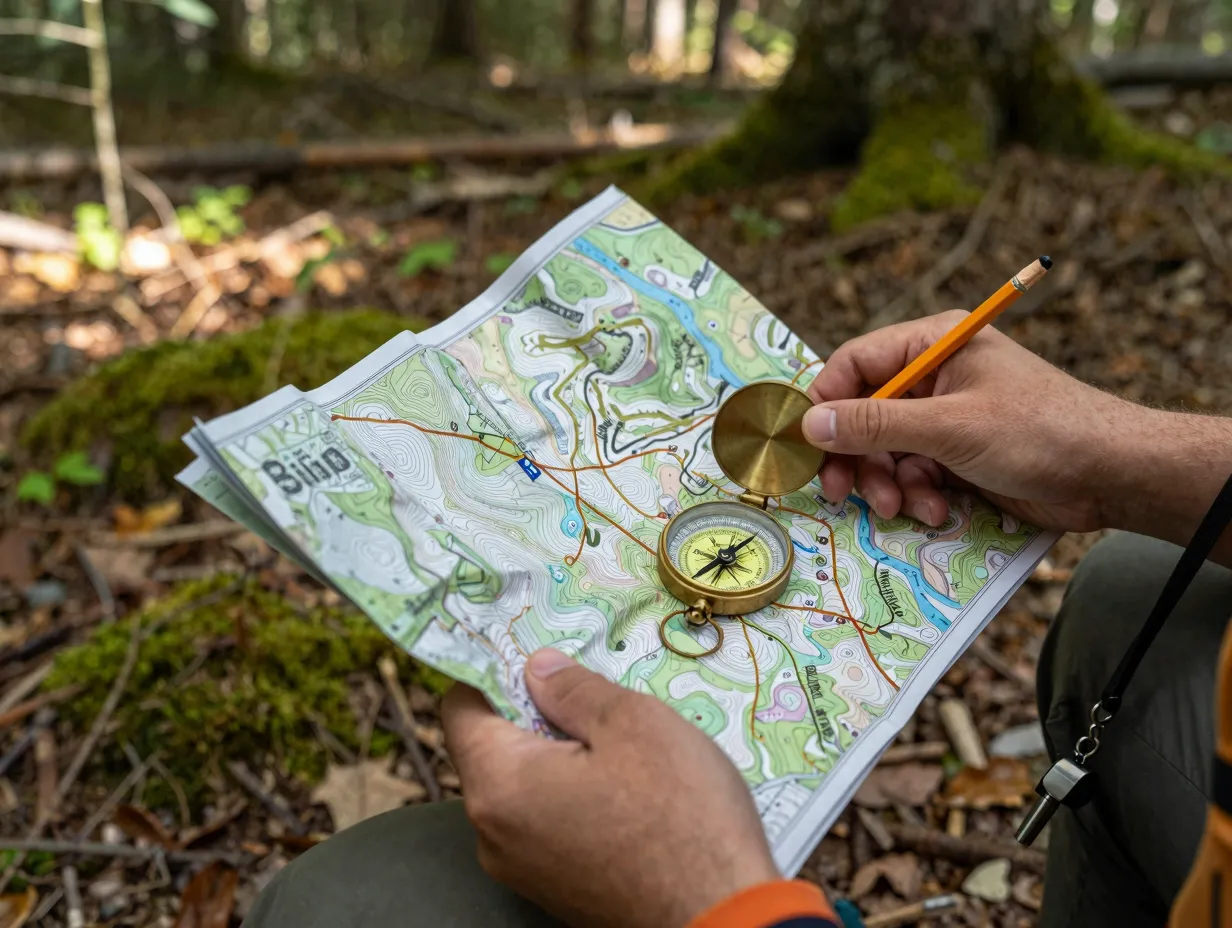
What it is: Finding one’s way through unfamiliar terrain using only a topographic map and compass, no GPS, no phone.
Navigation is arguably the single most critical survival skill. A person who can navigate can find water, avoid dangerous terrain, and self-rescue from almost any situation. Orienteering formalizes this skill into a competitive or recreational activity that makes learning genuinely engaging.
Core skills developed:
- Topographic map reading and terrain association
- Compass bearing and triangulation
- Pace counting and distance estimation
- Identifying natural navigation cues (sun, stars, vegetation patterns)
A practical exercise: Take a printed topographic map of a local forest or park. Without using any digital device, navigate from a start point to five control points and back. Time the run. Repeat monthly and track improvement.
Getting started: Orienteering clubs exist in most countries and welcome beginners. The International Orienteering Federation lists affiliated clubs globally. Many offer beginner events where courses are short and well-marked.
Risk level: Low to moderate. The primary risk is getting lost, which is managed by starting in small, well-defined areas and always carrying a whistle and emergency contact information.
4. Rock Climbing and Rappelling
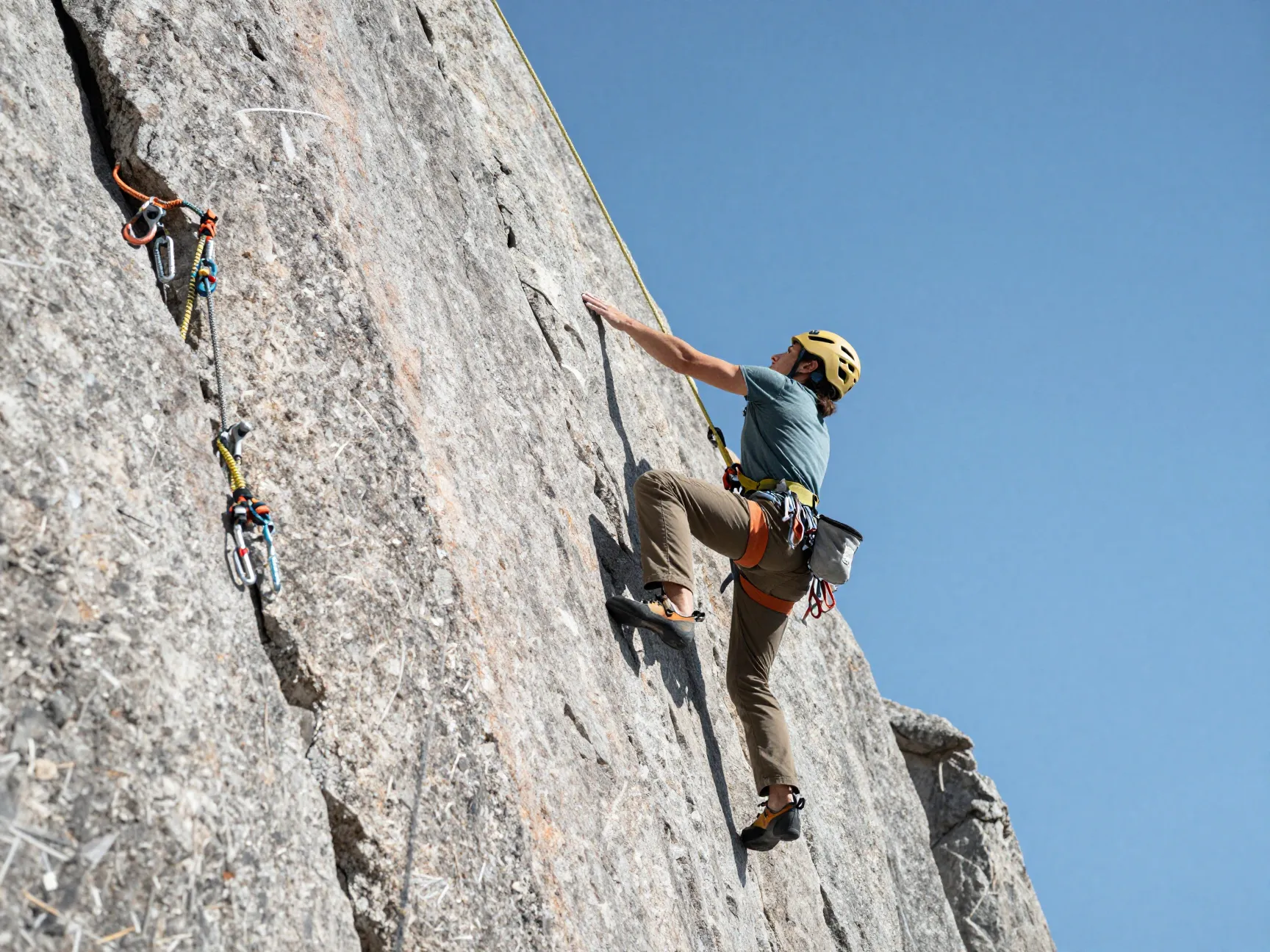
What it is: Ascending natural rock faces or artificial walls, then descending via controlled rope rappelling.
Rock climbing builds a specific type of problem-solving that transfers directly to survival situations: the ability to assess risk incrementally, commit to a course of action, and trust both equipment and judgment simultaneously. Rappelling, the controlled descent, adds a layer of technical rope management that has direct wilderness rescue applications.
Core skills developed:
- Anchor building and load-bearing knot tying
- Risk assessment and route reading
- Upper body and grip strength
- Controlled descent under load
Critical safety note: Never attempt outdoor rappelling without formal instruction. Anchor failure is the leading cause of rappelling fatalities, and it is entirely preventable with proper training.
Getting started: Start at an indoor climbing gym to build technique and strength. Progress to outdoor top-rope climbing with a certified guide before attempting lead climbing or multi-pitch routes.
Risk level: Moderate to high. With proper instruction and quality gear, rock climbing is statistically safer than many common activities. Without instruction, it is extremely dangerous.
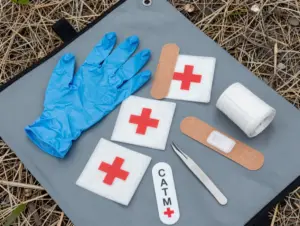
5. Wilderness First Aid Training in the Field
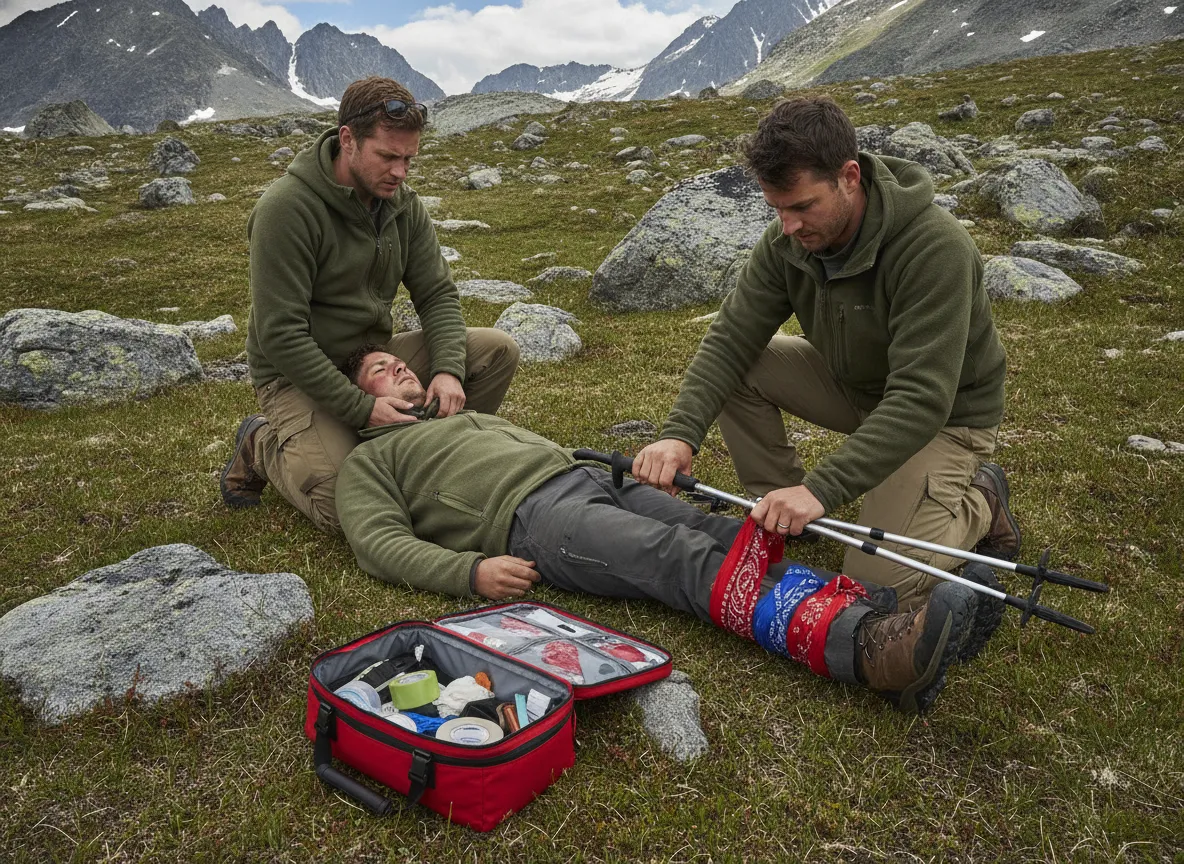
What it is: Hands-on medical training conducted in remote outdoor settings, simulating real emergency scenarios without access to professional medical services.
Most outdoor adventure lists overlook this one, but wilderness first aid (WFA) is arguably the most directly applicable survival skill on this list. When someone in a group breaks an ankle three miles from the trailhead, or goes into anaphylactic shock after a bee sting, the response in the first ten minutes determines the outcome.
Core skills developed:
- Patient assessment in austere environments
- Improvised splinting and wound management
- Hypothermia and hyperthermia treatment
- Evacuation decision-making
Certifications worth pursuing:
| Certification | Duration | Best For |
|---|---|---|
| Wilderness First Aid (WFA) | 2-3 days | Day hikers, casual campers |
| Wilderness First Responder (WFR) | 8-10 days | Guides, expedition members |
| Wilderness EMT (WEMT) | 30+ days | Professional wilderness responders |
Getting started: NOLS Wilderness Medicine and SOLO Schools are two of the most respected providers globally. Courses combine classroom instruction with realistic field simulations.
Risk level: Low. This is a training activity with controlled scenarios.
6. Desert Survival Trekking
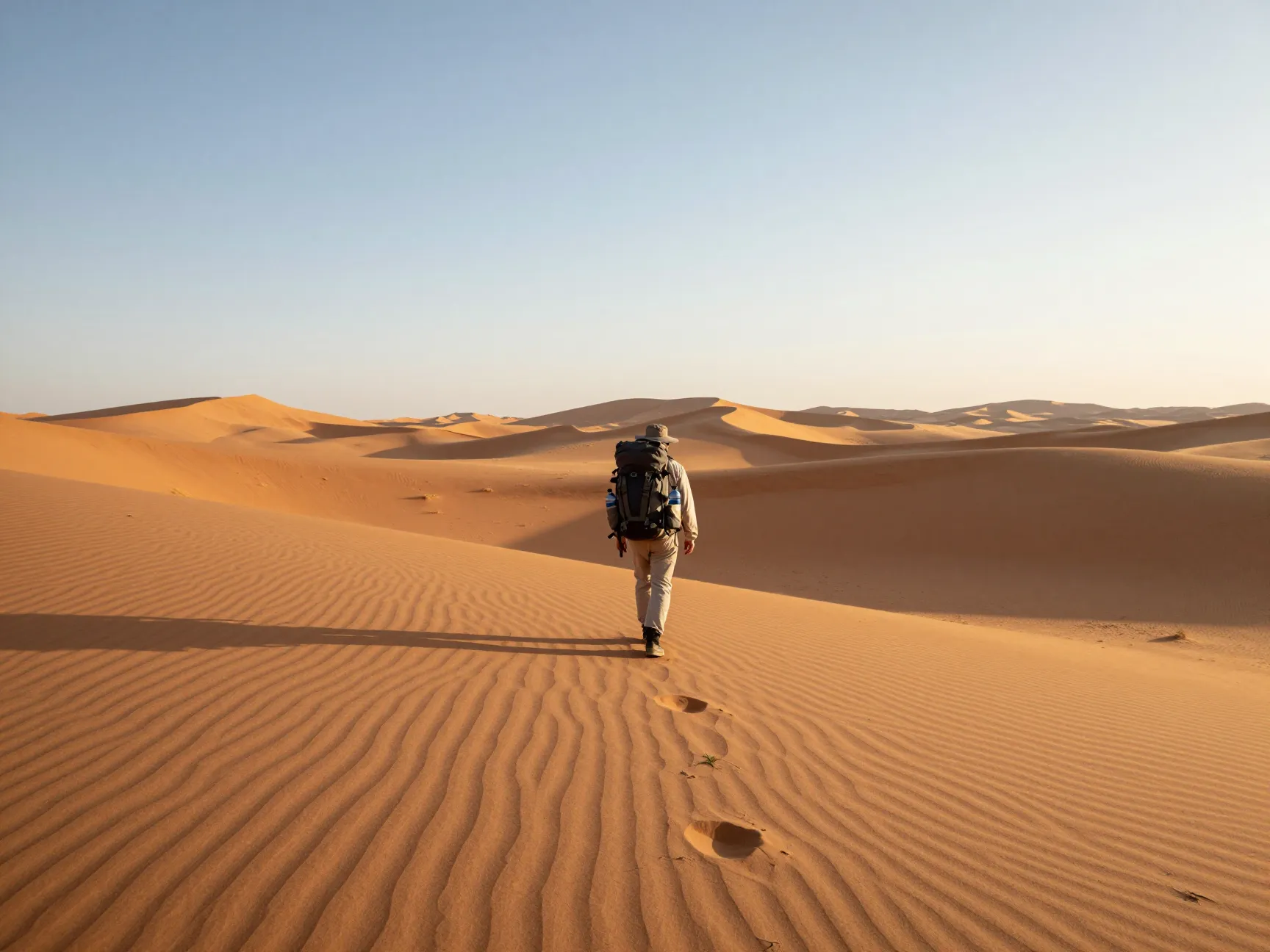
What it is: Multi-day trekking through arid desert environments, where water scarcity, extreme heat, and navigation challenges create an intense survival scenario.
Desert environments are uniquely unforgiving. The margin for error with water management is measured in hours, not days. Desert survival trekking forces participants to develop meticulous resource planning, heat management strategies, and the ability to extract water from unexpected sources.
Core skills developed:
- Water rationing and procurement (dew collection, solar stills)
- Heat stroke and dehydration prevention
- Navigation in featureless terrain
- Nocturnal travel techniques to conserve energy
The rule of threes in desert context: The classic survival rule states that a person can survive three minutes without air, three hours without shelter in extreme conditions, three days without water, and three weeks without food. In a desert at 40°C (104°F), the three-day water window collapses dramatically. Experienced desert trekkers plan for a minimum of four liters per person per day in high heat.
Getting started: Begin with guided day hikes in desert parks before attempting overnight treks. Reputable operators in destinations like the Sonoran Desert, Wadi Rum, or the Namib offer structured survival trekking programs.
Risk level: High without proper preparation. Always trek with a partner, carry emergency communication, and file a detailed trip plan with a trusted contact.
7. Sea Kayaking and Open Water Navigation
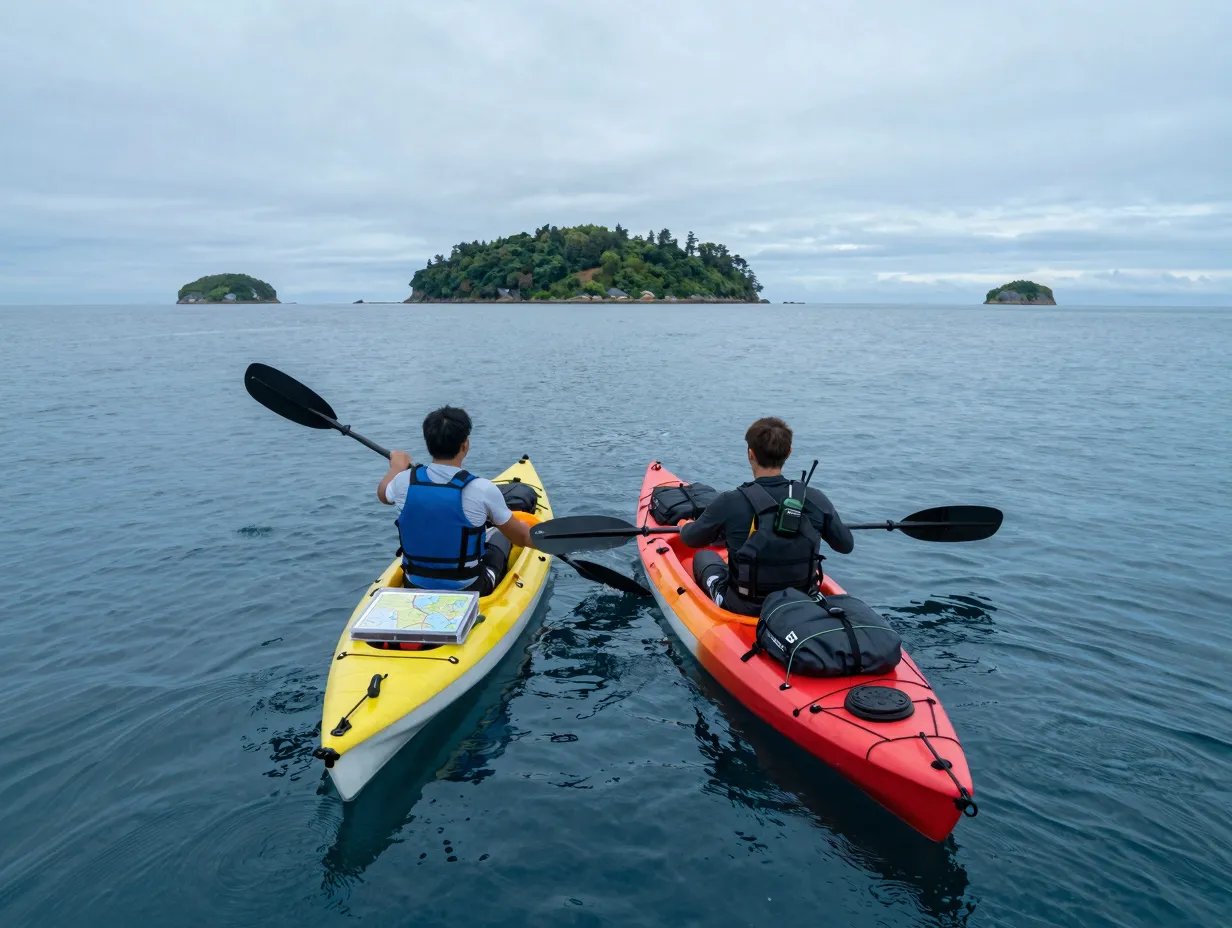
What it is: Multi-day kayaking expeditions along coastlines or between islands, navigating tidal patterns, weather windows, and open water crossings.
Sea kayaking extends the survival challenge of white-water kayaking into a broader, more self-sufficient context. Expeditions lasting three to seven days require comprehensive planning, weather reading, and the ability to manage emergencies far from shore.
Core skills developed:
- Tidal and current reading
- Weather pattern recognition and forecasting
- Wet re-entry and self-rescue in open water
- Coastal navigation using charts and landmarks
Gear that matters most:
- VHF marine radio: Essential for weather updates and emergency communication
- Bilge pump and paddle float: Required for self-rescue after capsize
- Dry bags and waterproof chart case: Protect navigation tools and emergency supplies
- Tow line: Critical for assisting a fatigued or injured paddling partner
Getting started: Complete a coastal kayaking course with a British Canoe (BC) or ACA certified instructor before attempting multi-day expeditions. Practice wet re-entry in calm, shallow water until it is fully automatic.
Risk level: Moderate to high. Cold water immersion is the primary danger. Proper dry suits or wetsuits, combined with solid self-rescue skills, significantly reduce this risk.
8. Winter Wilderness Survival and Snow Camping
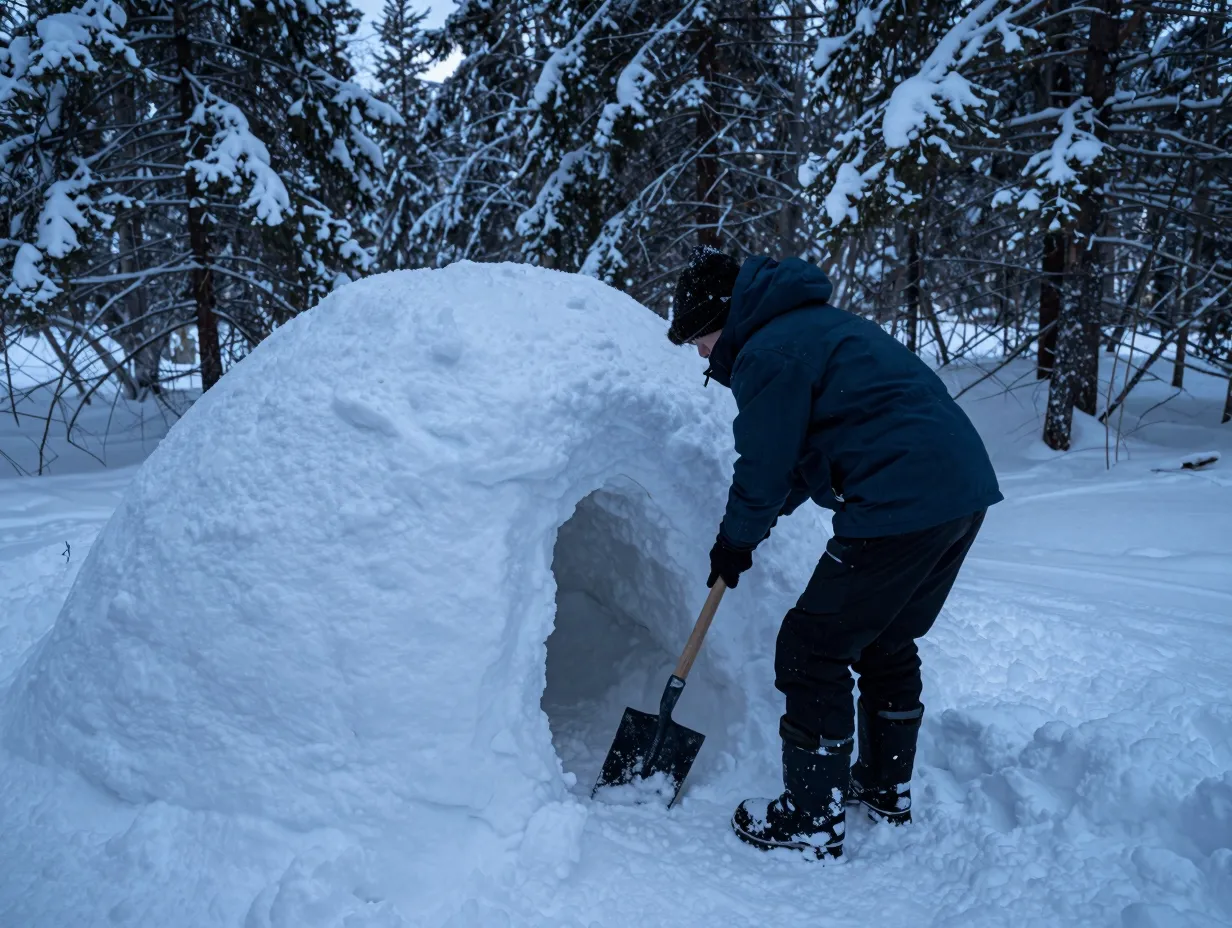
What it is: Overnight expeditions in snow-covered terrain, building snow shelters, managing cold-weather gear systems, and navigating avalanche terrain.
Winter wilderness survival is the most demanding activity on this list. Cold, wet, and wind combine to create conditions where mistakes have immediate and severe consequences. Snow camping strips away every comfort and demands complete competence in layering systems, shelter construction, and avalanche awareness.
Core skills developed:
- Quinzhee and snow trench shelter construction
- Layering system management to prevent sweat accumulation
- Avalanche terrain recognition and transceiver use
- Cold injury prevention and treatment (frostbite, hypothermia)
The quinzhee shelter: A quinzhee is a hollowed-out snow mound that can maintain an interior temperature near 0°C (32°F) even when outside temperatures drop to -30°C (-22°F). Building one correctly takes two to three hours and requires packing snow, waiting for sintering (the bonding of snow crystals), and carefully excavating the interior. It is one of the most impressive and genuinely life-saving skills in cold-weather survival.
Getting started: Take an avalanche safety course (AST 1) before venturing into any mountainous winter terrain. Pair this with a guided snow camping trip to learn gear management and shelter building from an experienced instructor.
Risk level: High. Winter wilderness travel demands thorough preparation, quality gear, and ideally a certified mountain guide for beginners.
Building a Progressive Survival Skills Development Plan
Approaching these 8 thrilling outdoor adventure activities to test your survival skills as a structured progression rather than a random checklist produces far better results. The following framework helps adventurers build competence systematically.
Phase 1, Foundation (Months 1-3):
- Complete a wilderness first aid course
- Practice land navigation in a local park
- Attempt a one-night primitive camping experience with a guide
Phase 2, Skill Expansion (Months 4-9):
- Begin rock climbing at an indoor gym
- Take a white-water kayaking beginner course
- Complete a guided desert day trek
Phase 3, Integration (Months 10-18):
- Attempt a multi-day sea kayaking expedition
- Complete a winter camping course
- Combine navigation, first aid, and shelter skills on a solo overnight trip
Phase 4, Mastery (Ongoing):
- Pursue advanced certifications in areas of greatest interest
- Mentor newer participants
- Regularly refresh and test skills in unfamiliar environments
Essential Gear Across All 8 Activities
Regardless of which activity is being pursued, certain items belong in every outdoor survival kit.
The Ten Survival Essentials:
- Navigation tools (map, compass, backup GPS)
- Sun protection (sunscreen, hat, UV-blocking layers)
- Insulation (extra layers appropriate to the environment)
- Illumination (headlamp with spare batteries)
- First aid supplies (including personal medications)
- Fire-starting tools (lighter, waterproof matches, ferro rod)
- Repair tools and knife (multi-tool, duct tape, cordage)
- Nutrition (high-calorie emergency food)
- Hydration (water bottles, purification tablets or filter)
- Emergency shelter (bivy sack or emergency space blanket)
Common Mistakes That Undermine Survival Skill Development
Even motivated adventurers make predictable errors that slow progress and increase risk. Being aware of these pitfalls accelerates learning.
- Over-relying on technology: GPS devices and satellite communicators are valuable tools, but they create a false sense of security. Always carry analog backups and know how to use them.
- Skipping foundational courses: Attempting advanced activities without proper instruction is the leading cause of preventable outdoor accidents.
- Neglecting mental training: Physical skills mean little if panic takes over. Controlled breathing techniques, stress inoculation through progressive challenges, and scenario rehearsal build the mental resilience that survival demands.
- Training only in good conditions: Skills practiced exclusively in fair weather often fail in the conditions where they matter most. Deliberately train in rain, cold, and low-light situations.
- Going alone too soon: Solo wilderness travel is a worthy long-term goal, but it requires years of skill-building and should only be attempted in appropriate terrain with robust emergency protocols in place.
Conclusion
The 8 thrilling outdoor adventure activities to test your survival skills outlined in this guide represent a complete curriculum for anyone serious about genuine wilderness competence. From the foundational challenge of primitive camping to the demanding complexity of winter wilderness survival, each activity builds specific, transferable skills that matter when conditions deteriorate and help is hours away.
Actionable next steps for 2026:
- Identify the one activity on this list that addresses the biggest gap in current skills.
- Research certified instructors or schools offering structured courses in that discipline within the next 90 days.
- Invest in the core gear required for that activity, quality matters, but starting simple is better than waiting for the perfect kit.
- Complete the activity with professional guidance, then debrief honestly on what worked and what needs improvement.
- Build a 12-month progression plan using the framework above, adding one new activity every two to three months.
Survival skills are not a destination, they are a practice. The wilderness rewards consistent, humble, progressive effort. Start with one activity, build the habit, and the competence will follow.