9 Cobia Fish Facts: How to Identify and Catch This Powerful Saltwater Species
Cobia grow faster than almost any other saltwater fish in North America, reaching 100 pounds within five years of hatching. That biological fact alone explains why anglers from Virginia to Texas spend entire seasons chasing a single species. This guide covers the essential 9 Cobia Fish Facts: How to Identify and Catch This Powerful Saltwater Species that every serious saltwater angler needs to understand before heading offshore.
Disclosure: This post contains affiliate links. As an Amazon Associate, we earn from qualifying purchases, and at no extra cost to you.
Key Takeaways
- Cobia are solitary, migratory predators identified by a distinctive dark lateral stripe and a flattened, almost shark-like head
- They are one of the fastest-growing large saltwater fish in the Atlantic and Gulf of Mexico
- Sight-fishing near rays, buoys, and structure is the most reliable method for locating cobia
- Live bait, particularly eels, crabs, and pinfish, consistently outperforms artificial lures for beginners
- Cobia are highly prized table fare, making proper handling and legal size limits critical knowledge
Understanding the 9 Cobia Fish Facts: How to Identify and Catch This Powerful Saltwater Species
Before diving into individual facts, it helps to understand what makes cobia unique among saltwater game fish. Cobia (Rachycentron canadum) are the only member of the family Rachycentridae, a taxonomic distinction that reflects just how different this fish is from every other species in the ocean. They are not a tuna, not a jack, and not a shark, though they are frequently mistaken for all three at first glance.
The following nine facts build on each other. Start with identification, move through biology and behavior, and finish with the tactical fishing knowledge that converts sightings into catches.
1. Cobia Have One of the Most Distinctive Body Shapes in Saltwater Fishing
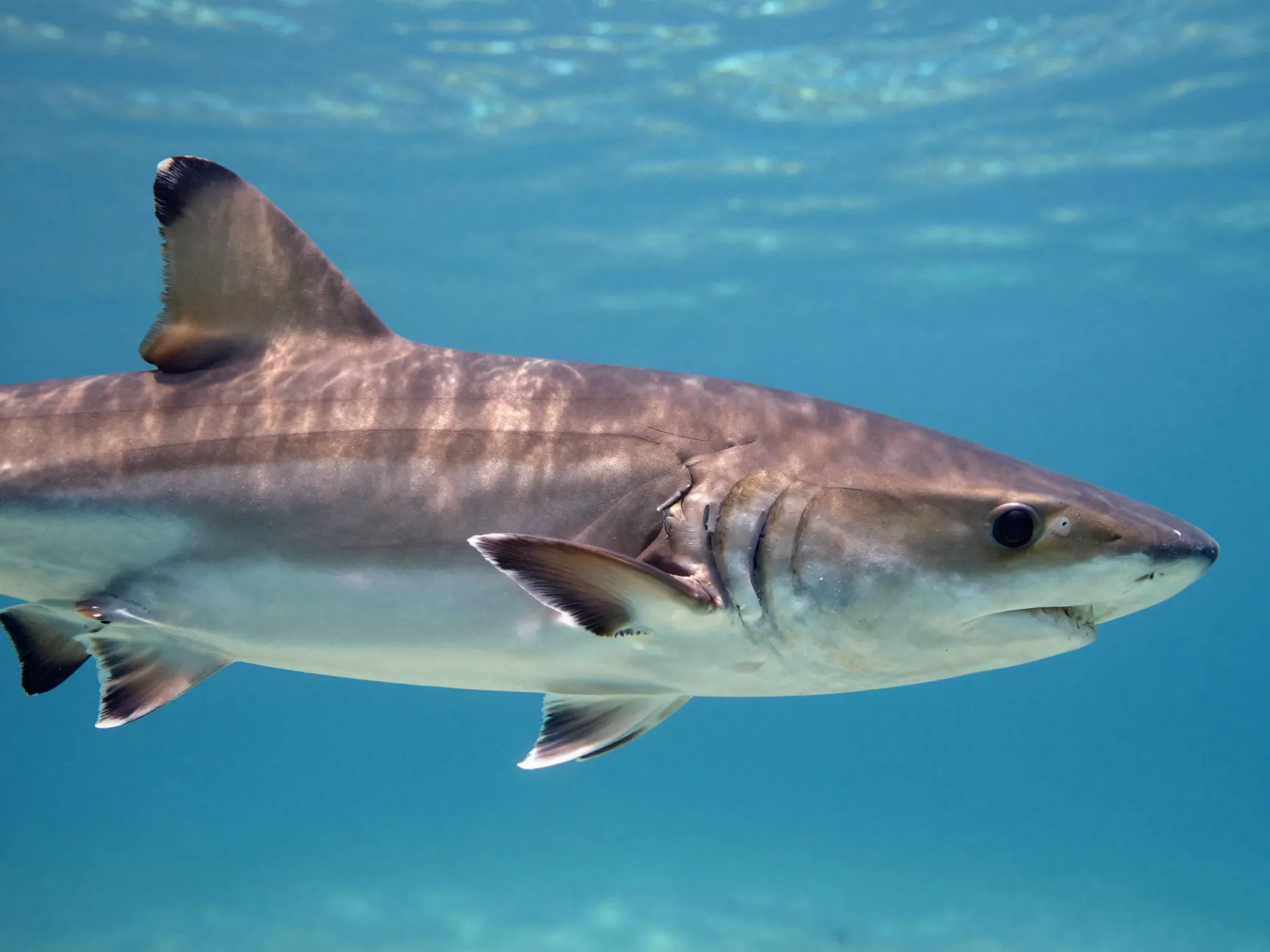
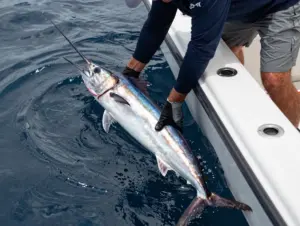
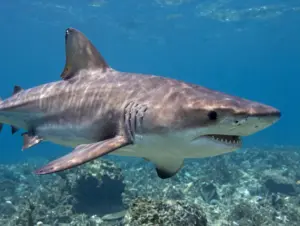
Cobia are hard to misidentify once you know what to look for. The body is long and cylindrical, almost like a torpedo, with a broad, flattened head that resembles a shark’s more than a typical bony fish. The lower jaw projects slightly beyond the upper jaw, giving the face a determined, forward-leaning appearance.
Key identification markers:
- A dark brown or bronze lateral stripe running from the snout to the base of the tail
- A pale or white underside that contrasts sharply with the darker dorsal surface
- 7 to 9 short, free dorsal spines that do not connect to a membrane, they look like a row of small, independent spikes along the back
- A large, forked tail with a slightly longer upper lobe
Adult cobia typically measure between 20 and 47 inches in recreational catches, though trophy fish exceed 50 inches regularly. The world record stands at 135 pounds, 9 ounces, caught off Shark Bay, Australia.
2. Cobia Are Found Across a Surprisingly Wide Geographic Range
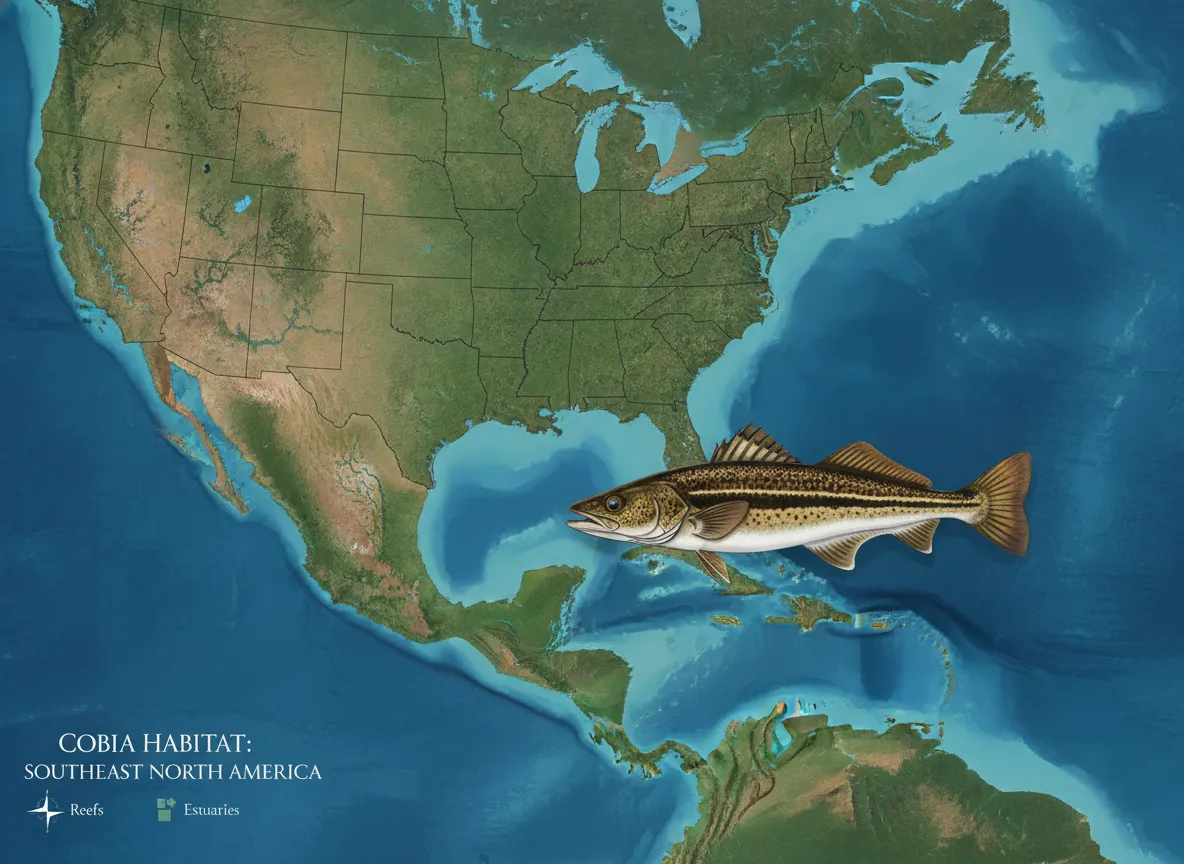
Most anglers associate cobia with the Gulf of Mexico and the Mid-Atlantic coast of the United States, and those are indeed prime locations. However, cobia inhabit tropical and subtropical waters across the globe, from the western Atlantic to the Indo-Pacific, including the coasts of Australia, Japan, and East Africa.
In North American waters, the species follows a predictable seasonal migration:
| Season | Primary Location |
|---|---|
| Spring (March, May) | Mid-Atlantic coast, Virginia, North Carolina |
| Summer (June, August) | Gulf of Mexico, Chesapeake Bay |
| Fall (September, November) | South Florida, offshore Gulf platforms |
| Winter (December, February) | South Florida, Caribbean edges |
One species that is notably absent from cobia habitat: cold water. Cobia prefer water temperatures between 68°F and 86°F. When surface temperatures drop below 60°F, cobia move south or offshore to warmer depths.
3. Cobia Are Apex Opportunists, Their Diet Explains Their Size
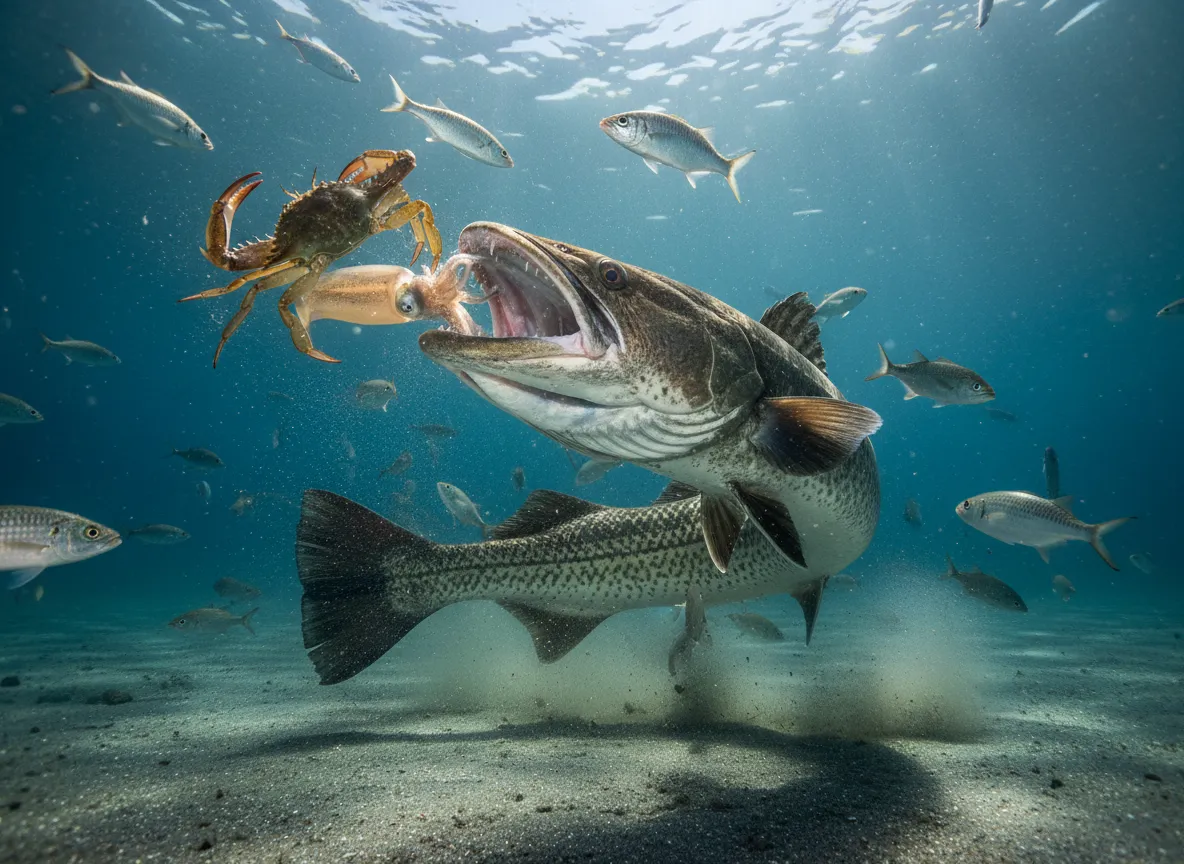
Cobia do not specialize. They eat whatever is available and whatever fits in their mouth, which is one reason they grow so quickly. Primary prey items include crabs, squid, small fish such as mullet and pinfish, eels, and shrimp. In estuarine environments, they will root around the bottom for crustaceans. Offshore, they often follow large rays and sharks to feed on the prey those animals disturb from the seafloor.
“Cobia are not picky eaters. They are efficient, aggressive, and opportunistic, a combination that makes them both easy to target and surprisingly difficult to fool on heavily pressured water.”
This dietary flexibility is why live bait works so reliably. A live eel, a blue crab with the claws removed, or a live pinfish rigged on a circle hook is difficult for a cobia to refuse. Artificial lures work best when retrieved at speed or worked aggressively, cobia respond to erratic, fleeing-prey presentations.
4. The Association Between Cobia and Rays Is Not Accidental
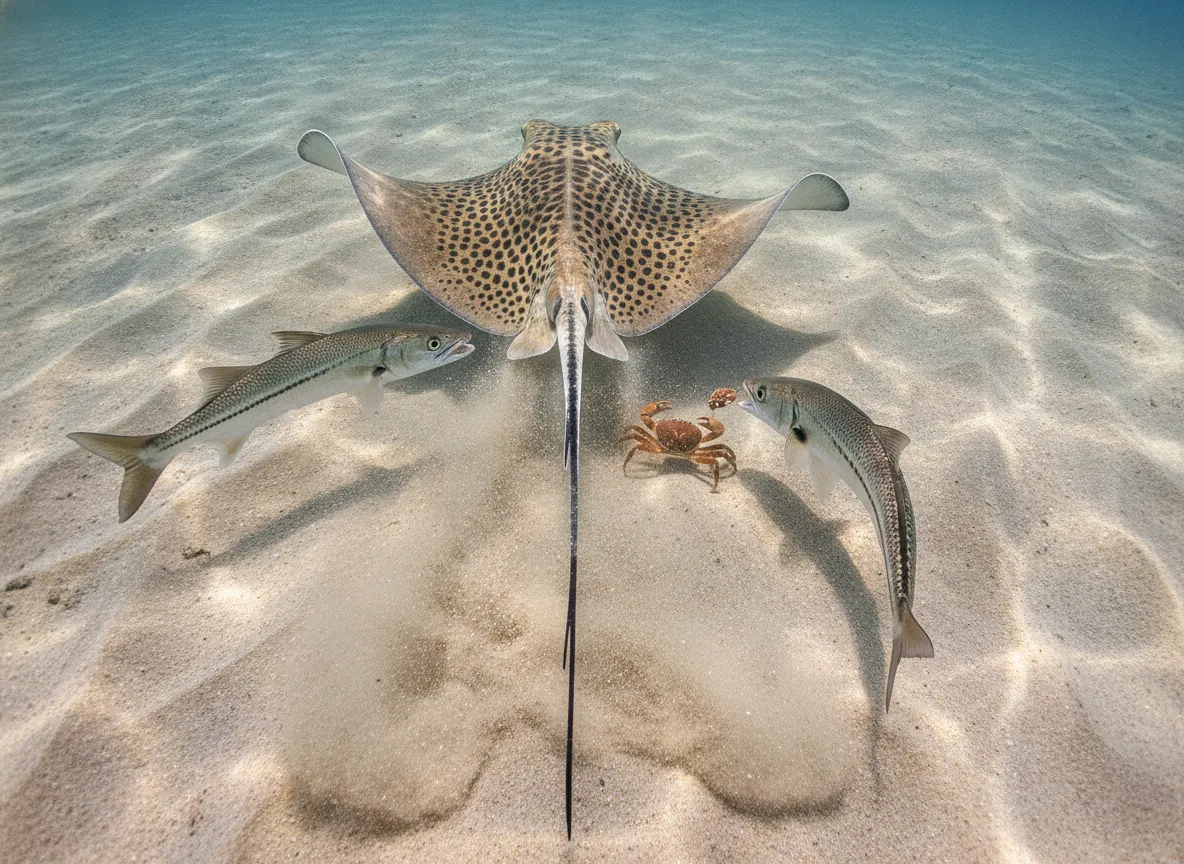
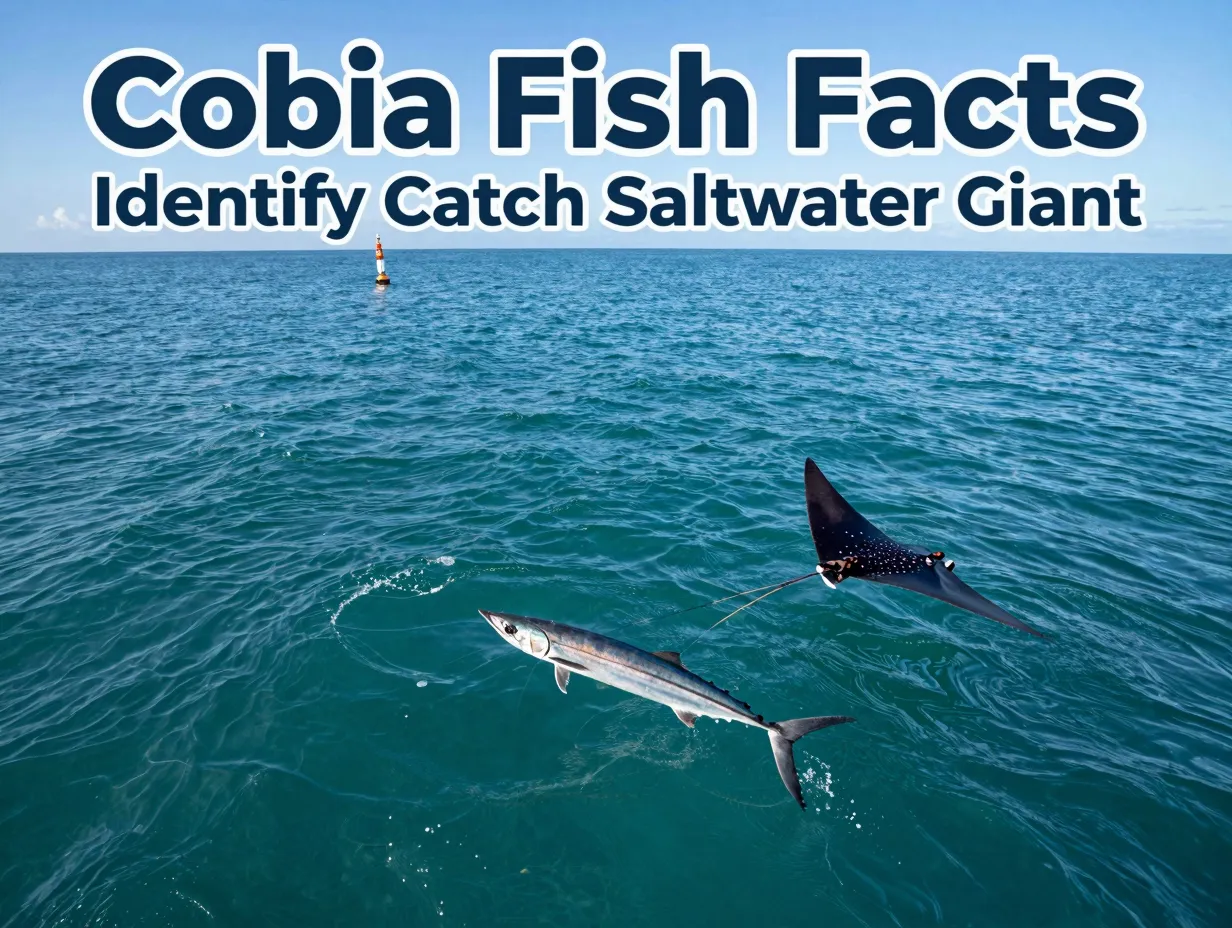
One of the most well-documented behaviors in cobia biology is their habit of shadowing large rays, particularly spotted eagle rays and cownose rays, across shallow flats and inshore waters. This is not a parasitic relationship. Cobia use the ray as a feeding partner.
As a large ray glides across a sandy flat, its wing beats disturb the bottom and flush crabs, small fish, and invertebrates into open water. Cobia follow directly behind or alongside the ray and pick off the displaced prey. From a fishing standpoint, this behavior is invaluable: when you spot a ray in shallow water during cobia season, there is a meaningful probability that one or more cobia are nearby.
Practical tip: When approaching a ray from a boat, cut the engine early and use a trolling motor or push pole. Cast a live bait or a heavy bucktail jig 6 to 10 feet ahead of the ray’s direction of travel. Allow the bait to sink naturally into the ray’s path.
5. Cobia Are Structure-Oriented Fish, Buoys, Platforms, and Wrecks Are Reliable Hotspots
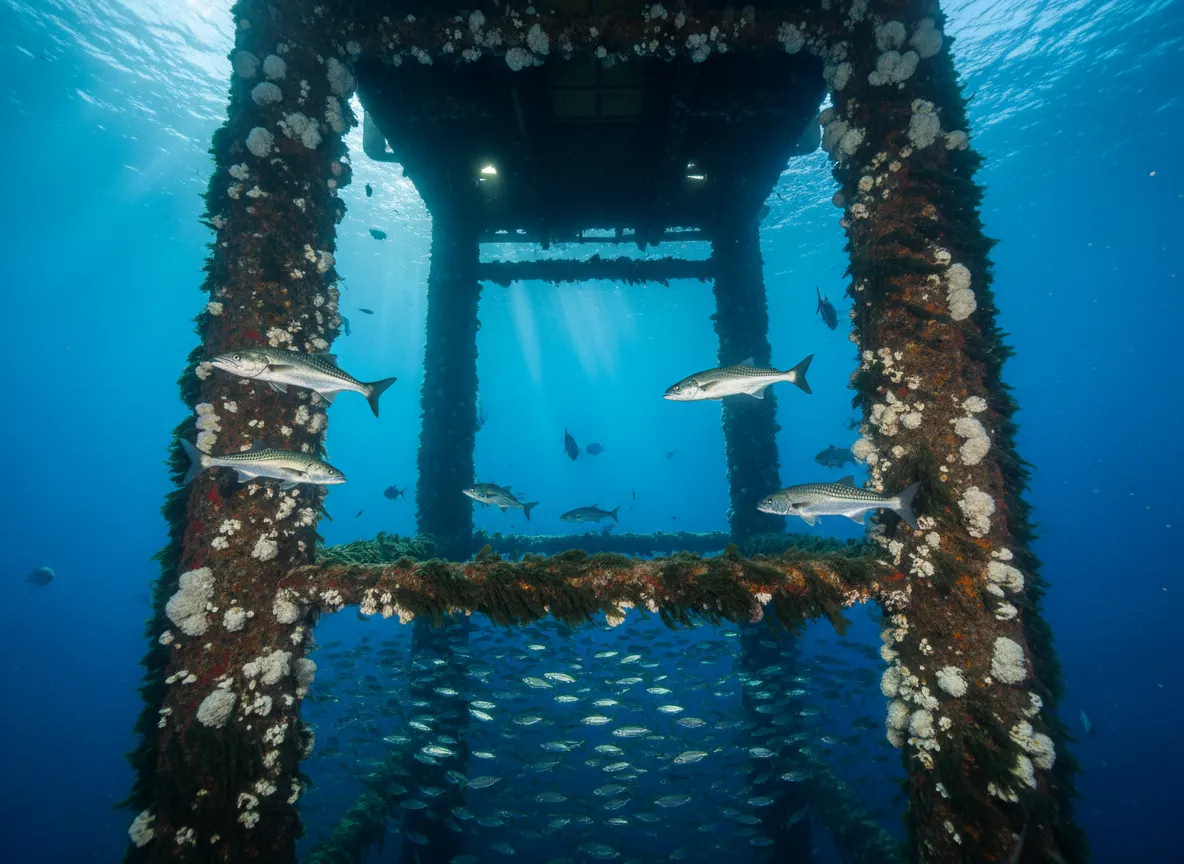
Beyond rays, cobia are strongly attracted to any floating or submerged structure. Navigational buoys, channel markers, offshore oil platforms, artificial reefs, and shipwrecks all concentrate cobia because they also concentrate baitfish. The logic is straightforward: structure creates shade and current breaks, baitfish gather there, and cobia follow the baitfish.
In the Gulf of Mexico, offshore oil and gas platforms are among the most productive cobia locations in the world. A single platform can hold dozens of cobia at various depths throughout the spring and summer. Anglers anchor upcurrent of the structure, drop live bait down the shadow line, and wait.
Inshore, channel markers and crab trap floats are underrated cobia magnets. Cobia will cruise along a line of markers, stopping to investigate each one. Anglers who run a stretch of markers with a trolling motor and a live bait dangling off the bow can cover significant water efficiently.
6. Cobia Fight Harder Per Pound Than Most Saltwater Species
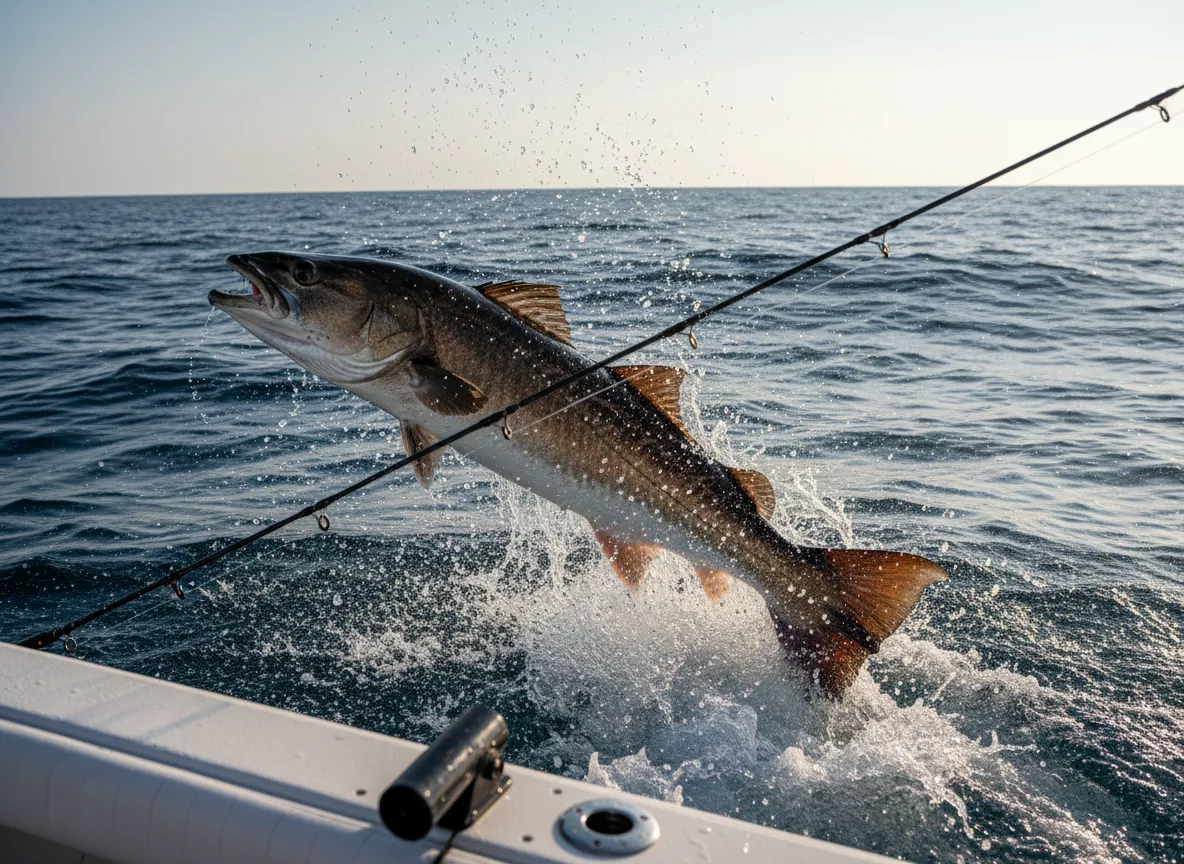
Ask any angler who has caught a 40-pound cobia on medium-heavy tackle, and the response is almost always the same: the fish fought like something twice its size. Cobia are known for their initial run, their deep, bulldogging resistance, and their tendency to make multiple surging runs before tiring.
Unlike pelagic speedsters such as wahoo or kingfish that rely on raw speed, cobia combine speed with raw power. They use their body mass and deep, muscular frame to drive downward and away from the boat. On light to medium tackle, a 30-pound cobia can take 20 minutes or more to land.
Recommended tackle for cobia:
- Rod: 7 to 7.5-foot medium-heavy to heavy spinning or conventional rod
- Reel: 4000 to 6000 series spinning reel or conventional equivalent
- Line: 30 to 50-pound braided main line
- Leader: 60 to 80-pound fluorocarbon, 3 to 5 feet
- Hook: 5/0 to 8/0 circle hook for live bait; 4/0 to 6/0 wide-gap for soft plastics
One critical warning: do not attempt to lip-grip a cobia. Unlike largemouth bass, cobia have small, abrasive teeth and a powerful jaw. Use a large landing net or a gaff for fish intended for harvest.
7. Sight-Fishing Is the Defining Technique for Targeting Cobia
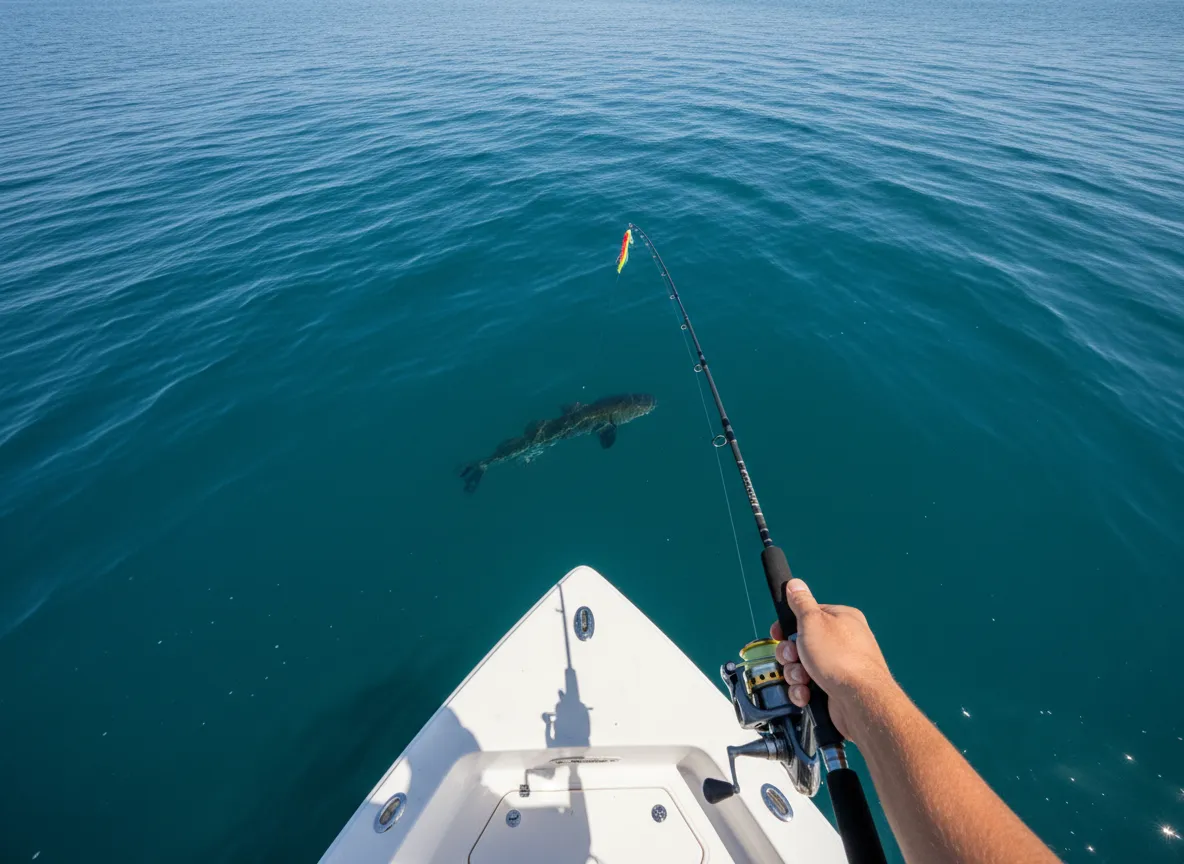
Unlike most offshore species that require blind trolling or bottom fishing, cobia are frequently caught by sight. They cruise near the surface, especially during their spring migration, and can be spotted from an elevated platform or tower on a calm day.
This is why center console boats with tower setups are so popular among dedicated cobia anglers. Height equals visibility. On a flat-calm spring morning, an angler in a tower can spot a cobia cruising 50 to 75 yards away and make a precise cast ahead of the fish.
The sight-fishing sequence:
- Post a spotter in the highest position on the boat
- Move at idle speed along likely areas, beaches, inlets, channel edges
- When a fish is spotted, note its direction of travel immediately
- Position the boat to intercept the fish without crossing its path
- Cast the bait or lure 5 to 8 feet ahead of the fish and allow it to sink
- If the fish does not respond, twitch the bait once, do not overwork it
Patience is essential. Cobia that are spooked by a boat or a poorly placed cast rarely give a second chance.
8. Cobia Are Exceptional Table Fare, Handling and Regulations Matter
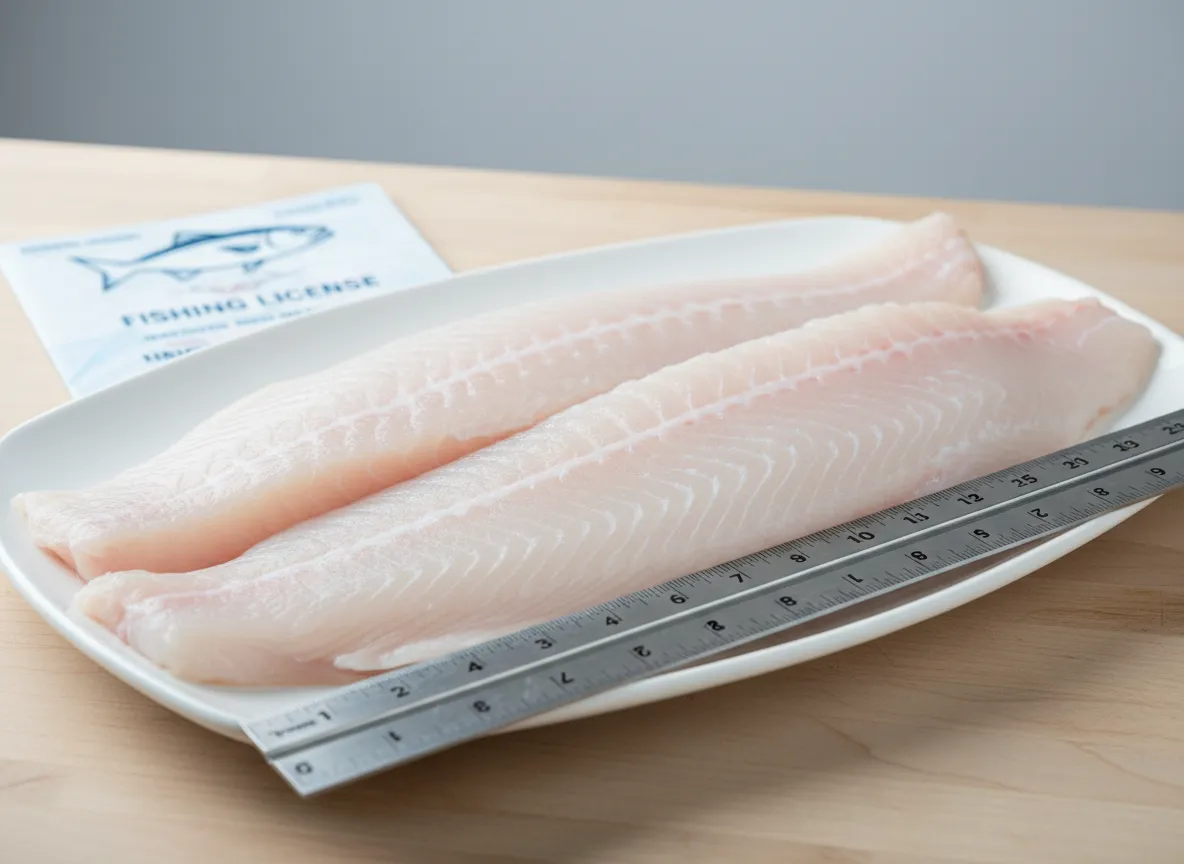
Cobia are widely regarded as one of the best-eating fish in saltwater. The flesh is firm, white, and mildly flavored with a moderate fat content that holds up well to grilling, smoking, and blackening. Many anglers rank cobia above grouper and mahi-mahi for eating quality.
That quality creates significant fishing pressure, which is why regulations exist in every state where cobia are found. As of 2026, regulations vary by state and federal jurisdiction, but common requirements include:
- Minimum size: 33 inches fork length in most Gulf and Atlantic states
- Bag limit: 1 fish per person per day in many jurisdictions, with a vessel limit of 2 fish
- Season closures: Some regions have implemented seasonal closures to protect spawning aggregations
Always verify current regulations with your state’s fish and wildlife agency before fishing. Regulations change, and cobia populations in some regions have shown signs of pressure from overharvest.
Handling tips for live release:
- Keep the fish in the water as much as possible during the release process
- Do not hold a large cobia vertically by the jaw, support the body horizontally
- Revive the fish by moving it forward and backward in the water until it swims away strongly
9. Cobia Aquaculture Is One of the Fastest-Growing Segments of Marine Fish Farming
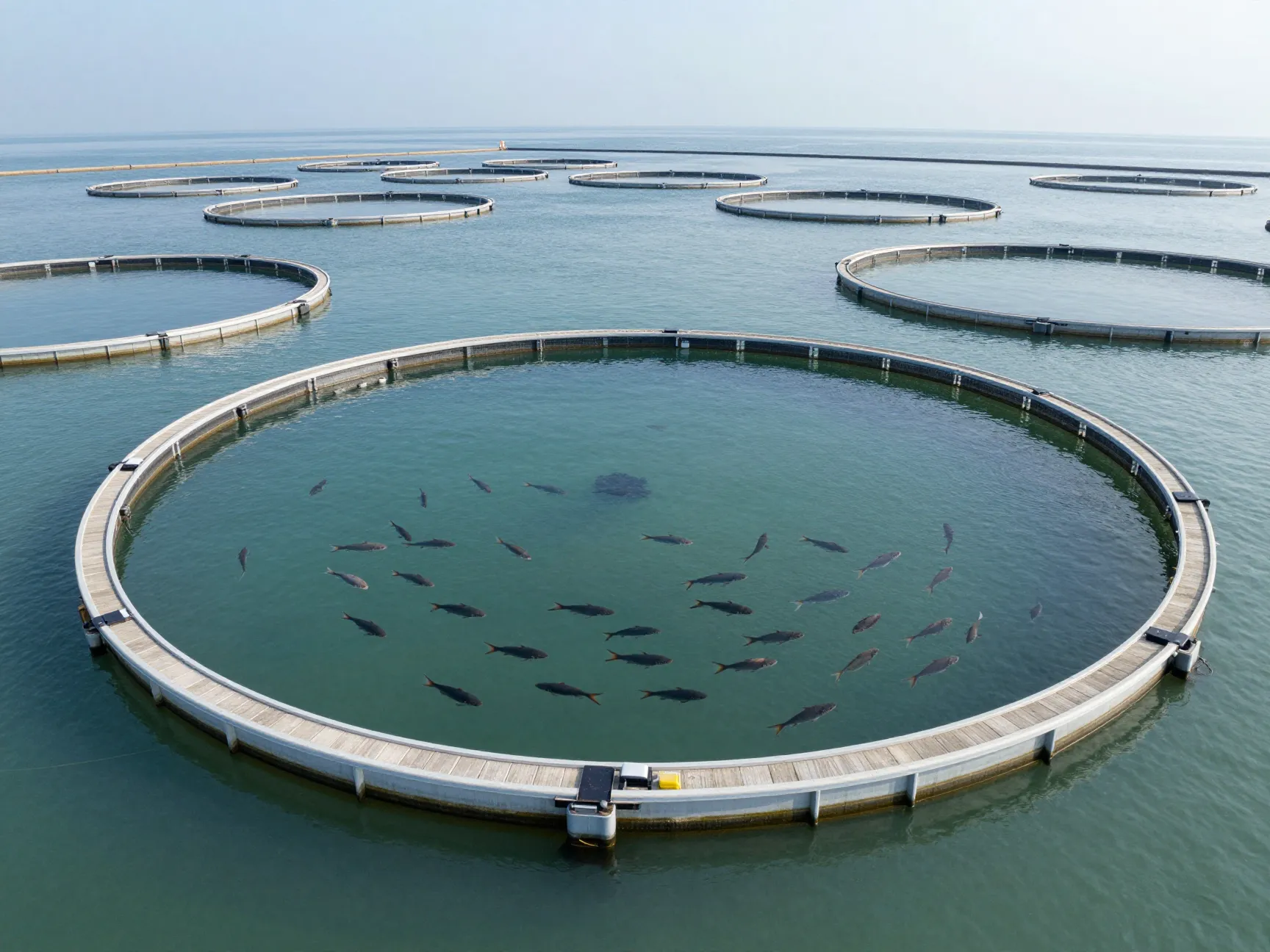
This final fact surprises many anglers: cobia are not just a wild-caught sport fish. They are one of the most commercially important aquaculture species in the world, particularly in Asia. Vietnam, Taiwan, and China produce thousands of metric tons of farmed cobia annually.
The reason cobia are ideal for aquaculture mirrors the reason anglers love catching them: growth rate. Cobia can reach market size (approximately 10 to 15 pounds) in as little as 12 to 18 months under optimal farming conditions. No other large marine fish grows this quickly in captivity.
In the United States, offshore aquaculture projects have explored cobia farming in the Gulf of Mexico. The fish’s tolerance for high-density conditions, its acceptance of pelleted feed, and its disease resistance make it a strong candidate for sustainable marine protein production.
For wild-stock anglers, this matters because farmed cobia reduces pressure on wild populations and may help sustain recreational fisheries long-term.
Putting the 9 Cobia Fish Facts: How to Identify and Catch This Powerful Saltwater Species Into Practice
Understanding individual facts about cobia is useful. Connecting them into a coherent fishing strategy is what separates consistent producers from occasional lucky anglers.
The most effective cobia fishing approach in 2026 combines three of the facts above: structure orientation, ray association, and sight-fishing technique. On any given spring morning along the Mid-Atlantic coast, the productive sequence looks like this:
- Launch early and run to known migration corridors, beach edges, inlet mouths, channel markers
- Post a spotter in the highest available position
- Watch for rays on the surface or in shallow water, where rays go, cobia often follow
- When a ray is spotted, slow to idle and approach from the downcurrent side
- Have a live bait rigged and ready before the approach begins
- Make one clean cast ahead of the ray’s path and allow the bait to sink naturally
If no rays are visible, work structure systematically. Run the line of channel markers from the inlet outward, stopping at each one for two to three minutes. Drop a live eel or crab on a circle hook to mid-depth and watch the rod tip.
When a cobia strikes, set the hook firmly, circle hooks require a steady reel-in rather than a sharp jerk, and prepare for a prolonged fight. Keep steady pressure, avoid pumping the rod aggressively on the initial run, and let the drag do the work.
Conclusion
The 9 Cobia Fish Facts: How to Identify and Catch This Powerful Saltwater Species covered in this guide provide a complete foundation for targeting this remarkable fish. From the distinctive dark lateral stripe and free dorsal spines that make identification straightforward, to the sight-fishing techniques and live bait strategies that consistently produce results, every piece of knowledge here is directly actionable on the water.
Actionable next steps for anglers in 2026:
- Review current size and bag limit regulations for your specific state before the season opens
- Invest in an elevated platform or tower if cobia fishing is a regular pursuit, height is the single biggest advantage in sight-fishing
- Stock a live well with eels, pinfish, or crabs before heading out, live bait remains the most reliable cobia producer
- Study local migration timing charts and water temperature reports to predict peak cobia presence in your area
- Practice catch-and-release technique for fish below legal size or beyond your harvest needs, healthy cobia populations depend on responsible angling
Cobia reward preparation. Anglers who understand the biology, respect the regulations, and refine their technique year over year will find this species to be one of the most satisfying targets in all of saltwater fishing.