9 Saltwater Fish Tank Ideas to Inspire Your Next Aquascape
Only about 10% of home aquarium hobbyists keep saltwater tanks, yet those tanks consistently rank among the most visually striking displays in any home or office. The gap between a bare glass box and a thriving reef ecosystem comes down to one thing: a clear creative vision before the first rock is placed. This guide presents 9 saltwater fish tank ideas to inspire your next aquascape, covering everything from nano reef cubes to dramatic FOWLR (Fish Only With Live Rock) setups, so you can move from concept to a living, breathing underwater world with confidence.
Disclosure: This post contains affiliate links. As an Amazon Associate, we earn from qualifying purchases, and at no extra cost to you.
Key Takeaways
- Choosing the right aquascape style before purchasing equipment saves significant time and money.
- Tank size, lighting intensity, and flow rate must match the specific livestock and coral species you plan to keep.
- Nano reefs (under 30 gallons) can be just as rewarding as large display tanks when planned correctly.
- Live rock aquascaping, biotope design, and minimalist layouts are among the most popular and achievable styles for hobbyists in 2026.
- Consistent water chemistry, not expensive equipment alone, determines long-term success in any saltwater setup.
Why Aquascape Planning Matters Before You Buy
Saltwater aquariums fail at a higher rate than freshwater tanks, and the most common reason is not equipment failure, it is poor planning. Hobbyists who research aquascape styles, stocking lists, and water flow requirements before purchasing equipment report significantly higher success rates and lower long-term costs.
A well-planned aquascape serves three purposes at once. It creates a visually cohesive display, provides appropriate shelter and territory for fish and invertebrates, and supports stable water chemistry by establishing natural biological filtration zones. Skipping this step leads to overcrowded rockwork, dead flow spots where detritus accumulates, and coral placement that blocks light or traps waste.
The 9 saltwater fish tank ideas to inspire your next aquascape featured below are organized by complexity and livestock requirements, making it easier to match a concept to your current skill level and budget.
The 9 Saltwater Fish Tank Ideas to Inspire Your Next Aquascape
1. The Classic FOWLR (Fish Only With Live Rock) Setup
Best for: Beginners and intermediate hobbyists
Recommended tank size: 55 to 150 gallons
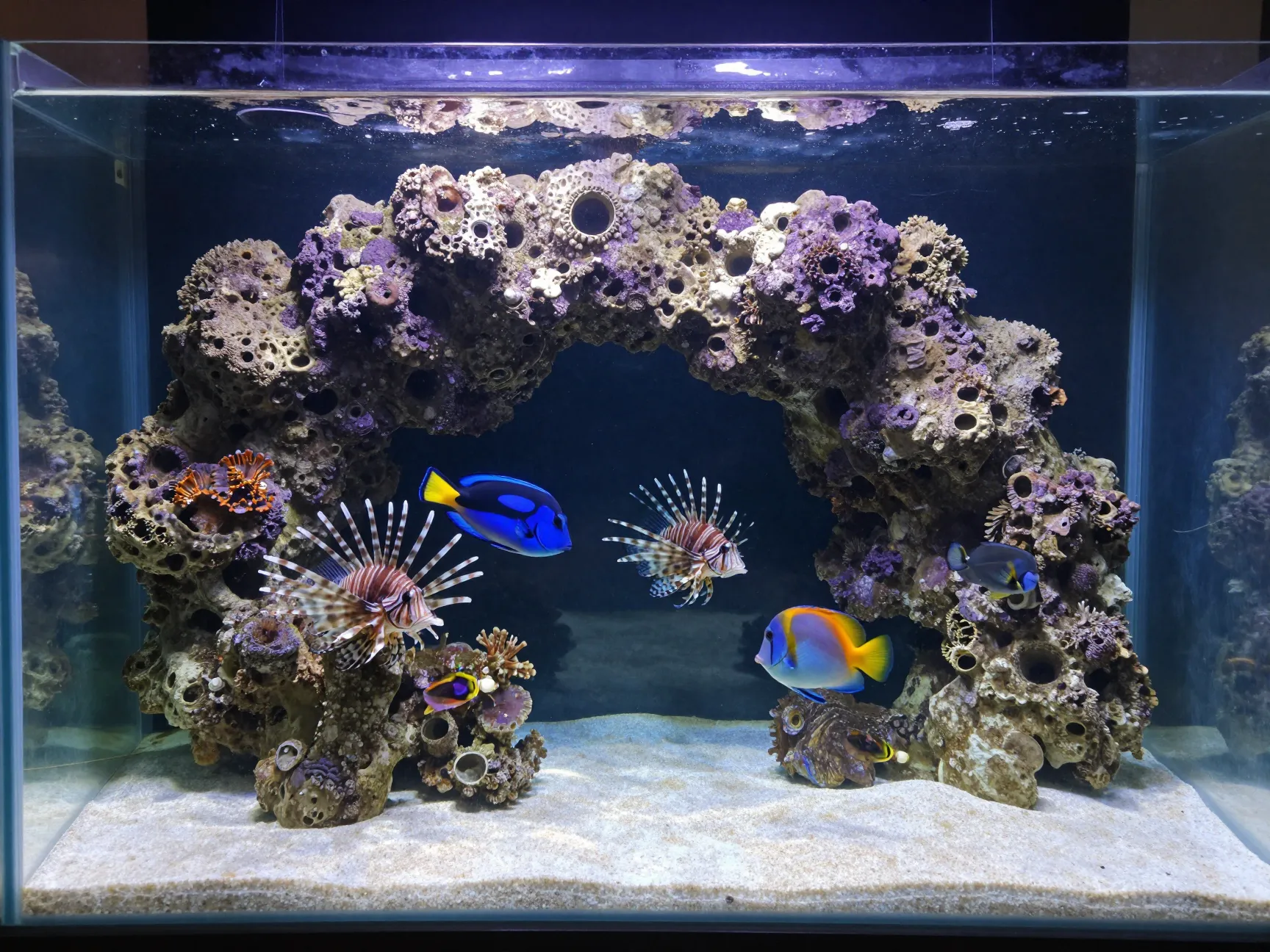
The FOWLR setup is the most forgiving entry point into saltwater fishkeeping. Live rock provides biological filtration, natural structure, and visual depth without the demanding water chemistry requirements of a full reef tank.
Key design principles for a successful FOWLR aquascape:
- Stack live rock in an open, arch-like formation to maximize water flow through the structure.
- Leave at least 30% of the substrate bare to allow fish to swim freely and reduce detritus buildup.
- Choose larger, more colorful fish such as angelfish, tangs, and lionfish that would be incompatible with coral-heavy reefs.
A FOWLR tank allows hobbyists to focus on fish behavior and water quality fundamentals before advancing to coral keeping. It is also significantly less expensive to maintain, as metal halide or high-output LED systems are not required.
2. The Minimalist Zen Reef
Best for: Experienced hobbyists who value negative space
Recommended tank size: 40 to 120 gallons
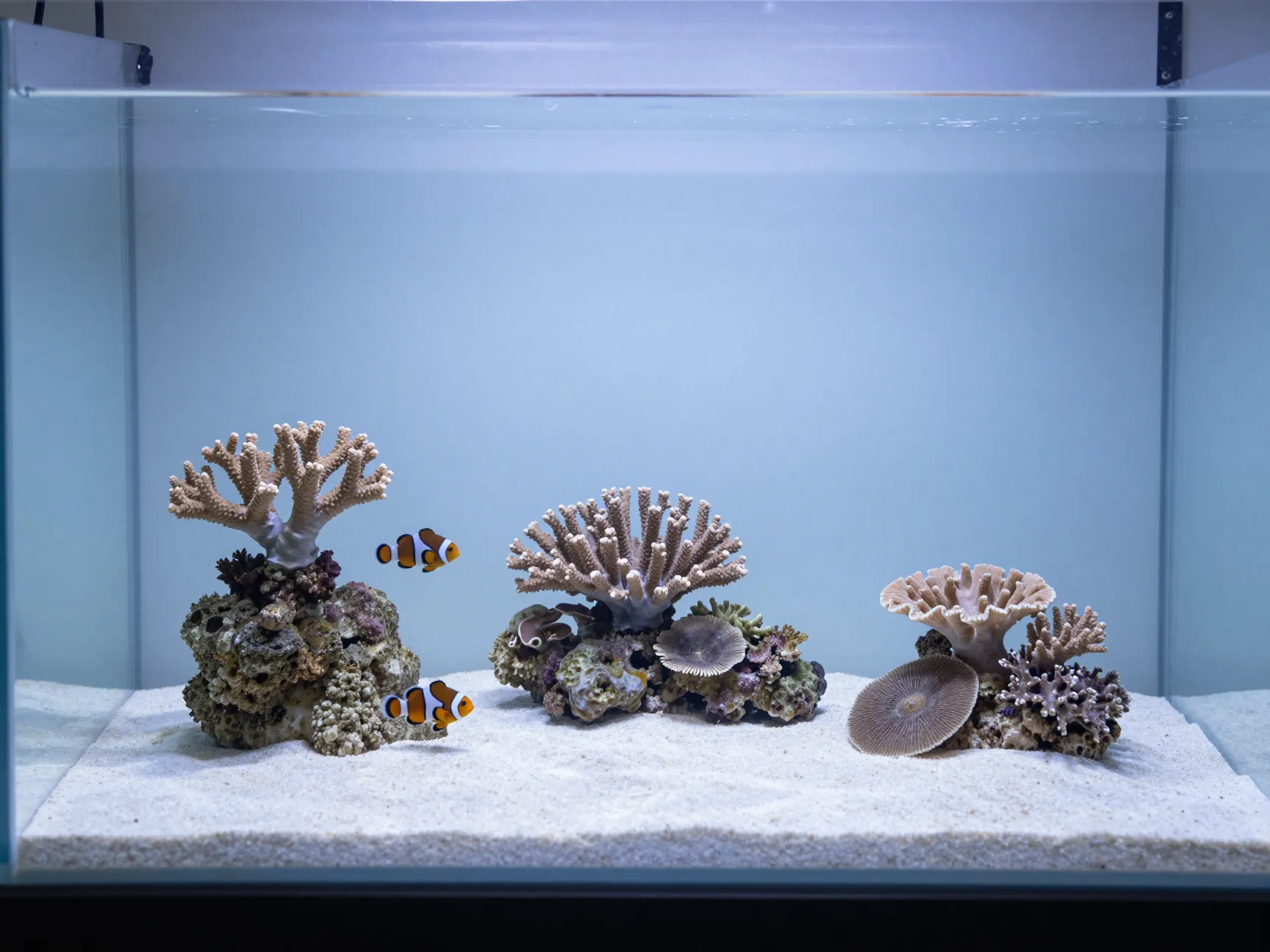
Inspired by Japanese garden design, the minimalist reef uses sparse rockwork, open sand beds, and a small number of carefully selected coral colonies to create a sense of calm and intentional space. Less is genuinely more in this style.
Design elements that define the Zen reef:
| Element | Recommendation |
|---|---|
| Rockwork | 1 to 3 isolated rock formations |
| Substrate | Fine white aragonite sand, 2 to 3 inches deep |
| Coral selection | 3 to 5 species maximum, varied texture |
| Fish | 2 to 4 specimens, peaceful species only |
| Lighting | Gradual dawn-to-dusk cycle, soft blue spectrum |
This style demands patience. The temptation to add more corals or fish must be resisted. The visual impact comes from open water, clean lines, and the natural growth of a few showcase specimens over time.
3. The SPS-Dominated Reef
Best for: Advanced hobbyists with stable water chemistry experience
Recommended tank size: 75 gallons and above
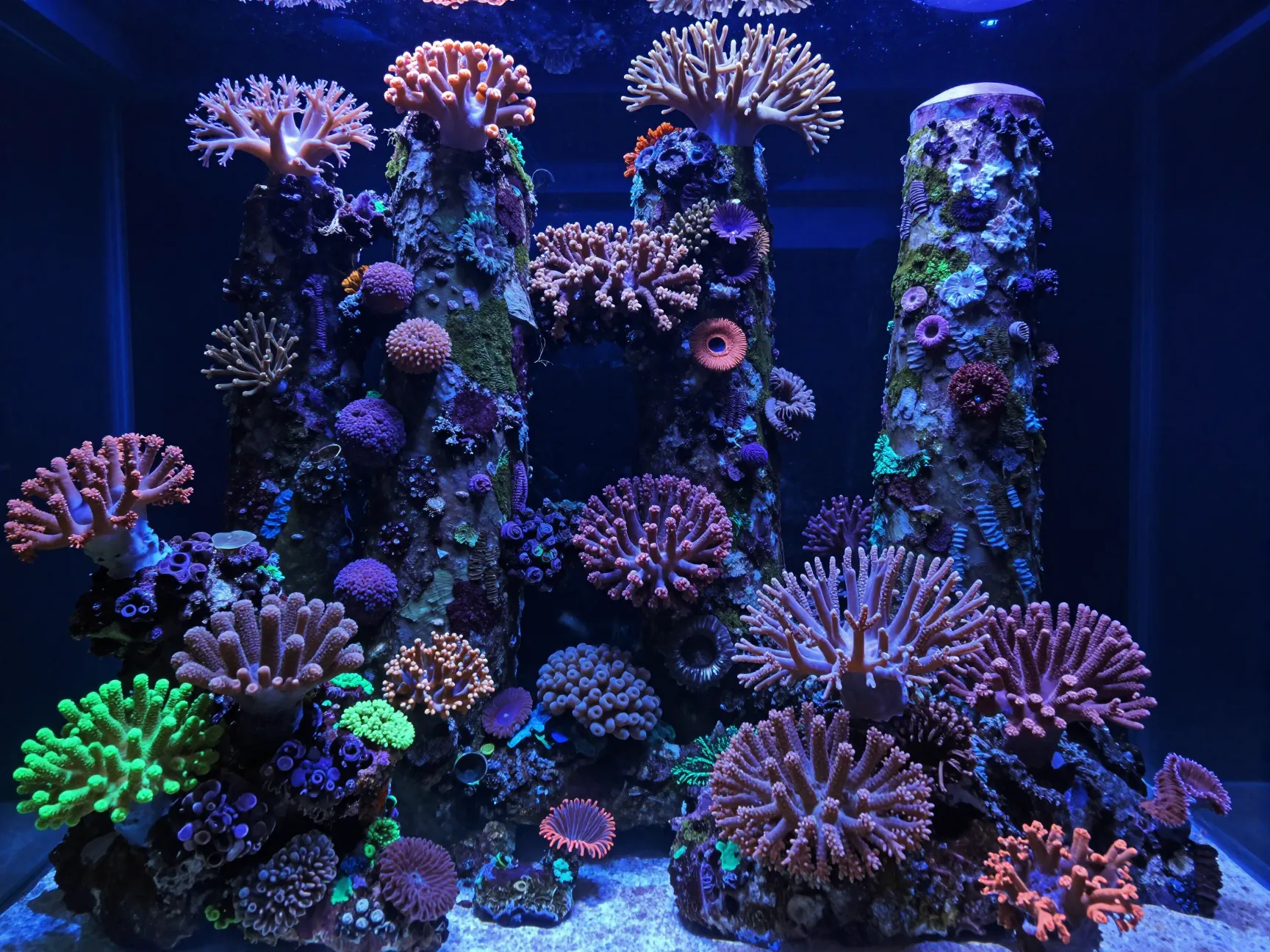
Small Polyp Stony (SPS) corals, including Acropora, Montipora, and Stylophora, are the pinnacle of reef keeping. They require precise calcium, alkalinity, and magnesium levels, intense lighting, and high water flow. In return, they produce the most visually dramatic reef structures available in the hobby.
“An SPS-dominated tank rewards discipline. Every parameter swing is visible in the coral’s color and growth rate within days.”
SPS aquascapes typically feature tall, branching rock structures that allow corals to grow upward and outward without shading each other. Automated dosing systems or calcium reactors are standard equipment for tanks of this type. Expect to invest 12 to 18 months before the aquascape reaches its visual peak.
4. The LPS and Soft Coral Mixed Reef
Best for: Intermediate hobbyists ready to move beyond FOWLR
Recommended tank size: 30 to 100 gallons
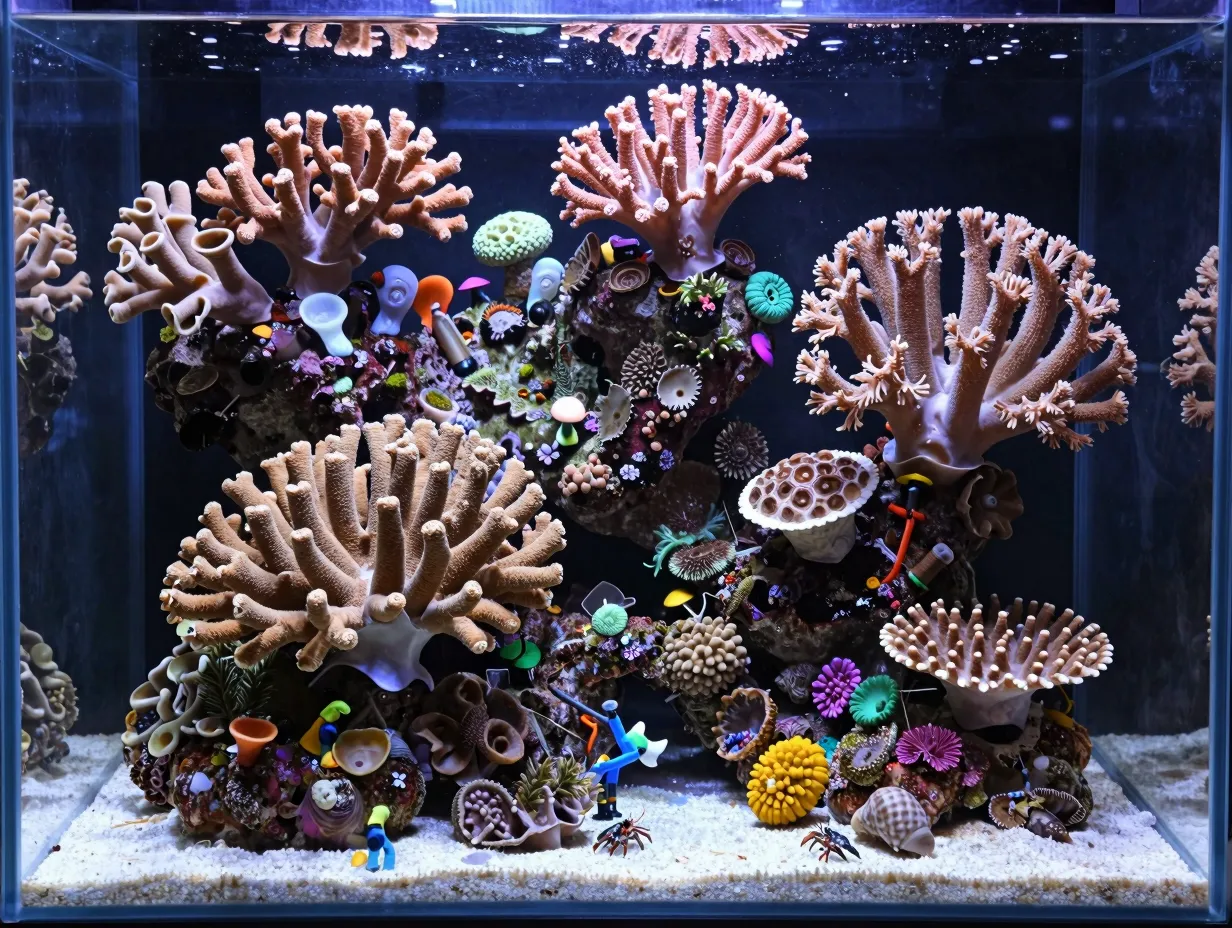
Large Polyp Stony (LPS) corals such as Hammer, Frogspawn, and Torch corals, combined with soft corals like Leather corals and Zoanthids, create a colorful, textured reef that is far more forgiving than an SPS system. This is the most popular reef style among hobbyists in 2026 because it balances visual impact with achievable water chemistry requirements.
Stocking strategy for a mixed LPS/soft coral reef:
- Place LPS corals in the lower and middle zones of the tank where flow is moderate.
- Position soft corals on rock shelves and ledges where they can sway naturally in the current.
- Avoid placing aggressive LPS species (Hammer, Torch) within sweeper tentacle range of neighboring corals, typically 6 inches minimum spacing.
- Add a small cleanup crew of hermit crabs, snails, and a sand-sifting sea star to manage detritus.
5. The Biotope Aquascape
Best for: Hobbyists interested in scientific accuracy and natural behavior
Recommended tank size: 50 gallons and above
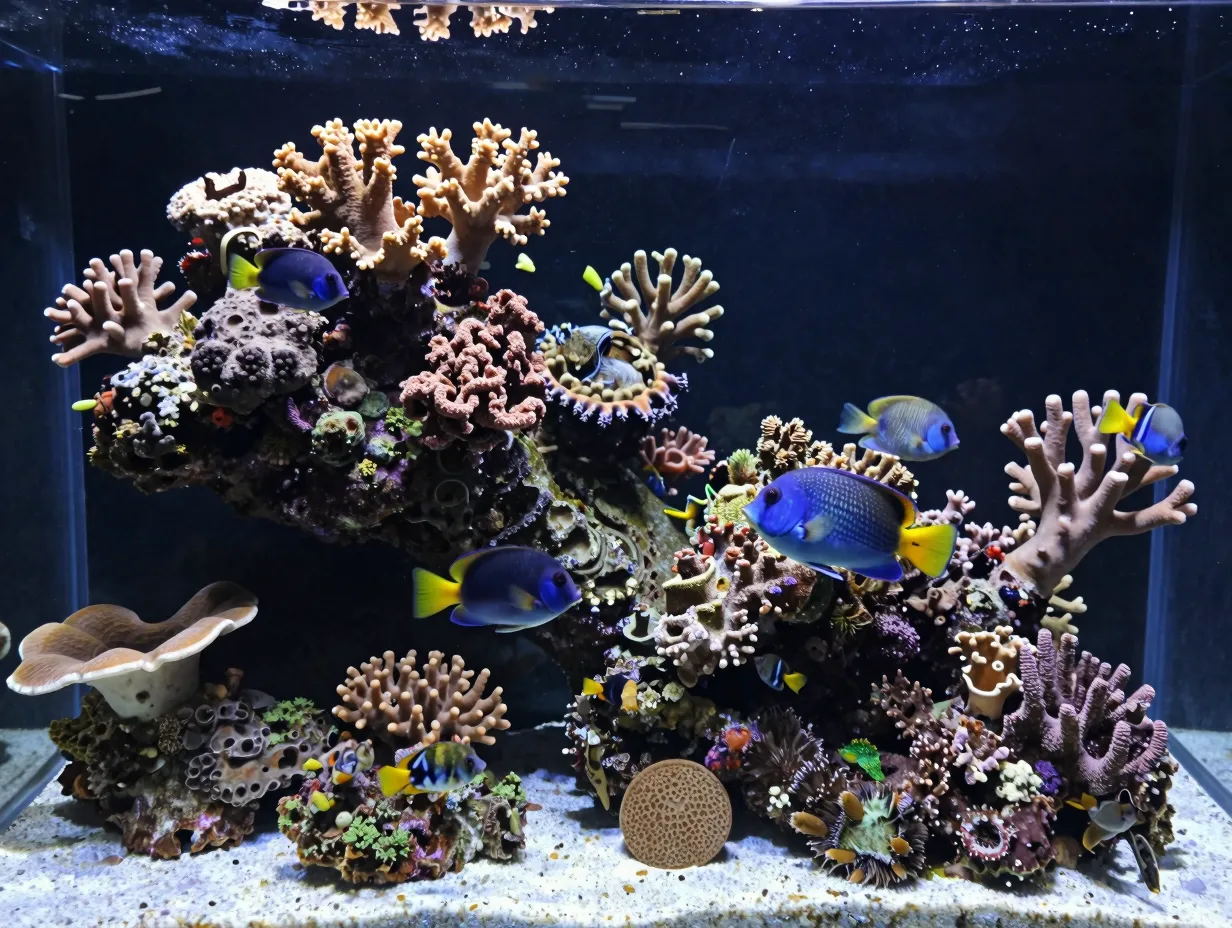
A biotope aquascape replicates a specific geographic location and depth zone, for example, a Red Sea reef flat at 10 meters depth, or a Caribbean back-reef lagoon. Every element, from the rock type and substrate to the fish and coral species, must originate from the same natural habitat.
This style requires research but produces an aquascape with remarkable ecological coherence. Fish behave more naturally when housed with species from the same native environment, and the visual result is a slice of the ocean rather than a curated collection.
Popular biotope themes for saltwater tanks:
- Red Sea reef slope (Anthias, Lyretail Wrasse, Acropora)
- Indo-Pacific lagoon (Clownfish, Anemone, Damselfish)
- Caribbean reef (Queen Angelfish, Gorgonian fans, Porkfish)
- Coral Sea back-reef (Mandarin Dragonet, Hammer Coral, Cleaner Shrimp)
6. The Nano Reef Cube
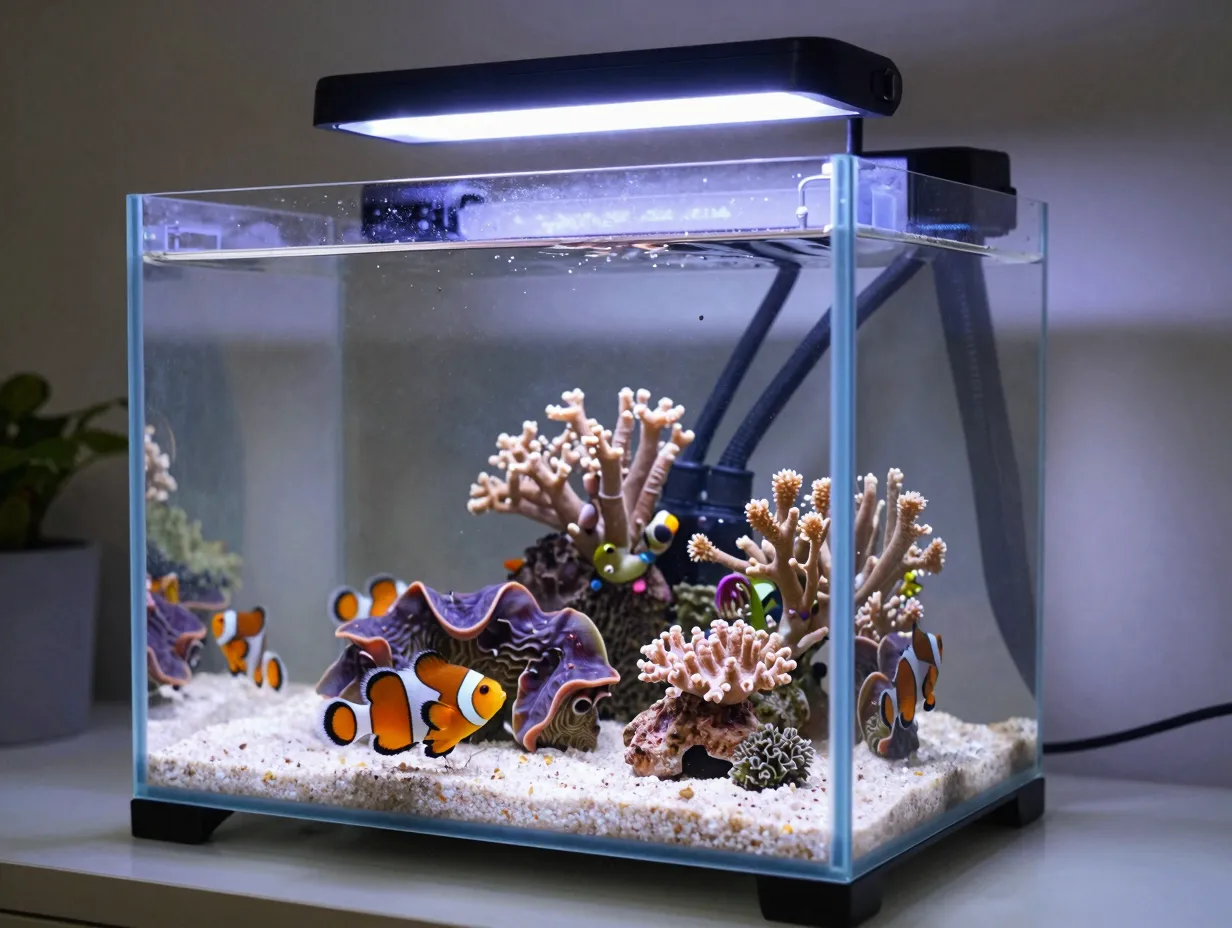
Best for: Hobbyists with limited space or budget
Recommended tank size: 5 to 30 gallons
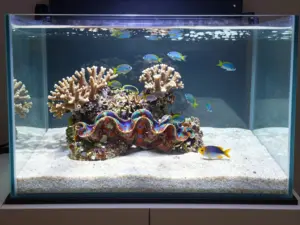
Nano reef tanks have grown dramatically in popularity because modern LED technology and compact protein skimmers have made it possible to maintain stable reef chemistry in very small volumes. A 20-gallon nano cube on a desk or countertop can house a pair of Clownfish, a Clam, and a dozen coral frags in a display that rivals much larger systems.
Critical success factors for nano reefs:
- Water change frequency: Small volumes are destabilized quickly. Weekly water changes of 10 to 15% are essential.
- Stocking restraint: Nano reefs fail most often due to overstocking. One to two small fish species maximum.
- Temperature stability: Small water volumes heat and cool rapidly. A reliable heater and fan or chiller are non-negotiable.
- Lighting: Quality matters more than quantity. A single high-output LED fixture designed for reef use is sufficient.
All-in-one nano reef systems from brands like Innovative Marine, Red Sea, and Waterbox have made this style more accessible than ever, with integrated filtration chambers and pre-drilled overflow systems included in the base unit.
7. The Deep Blue Pelagic Display
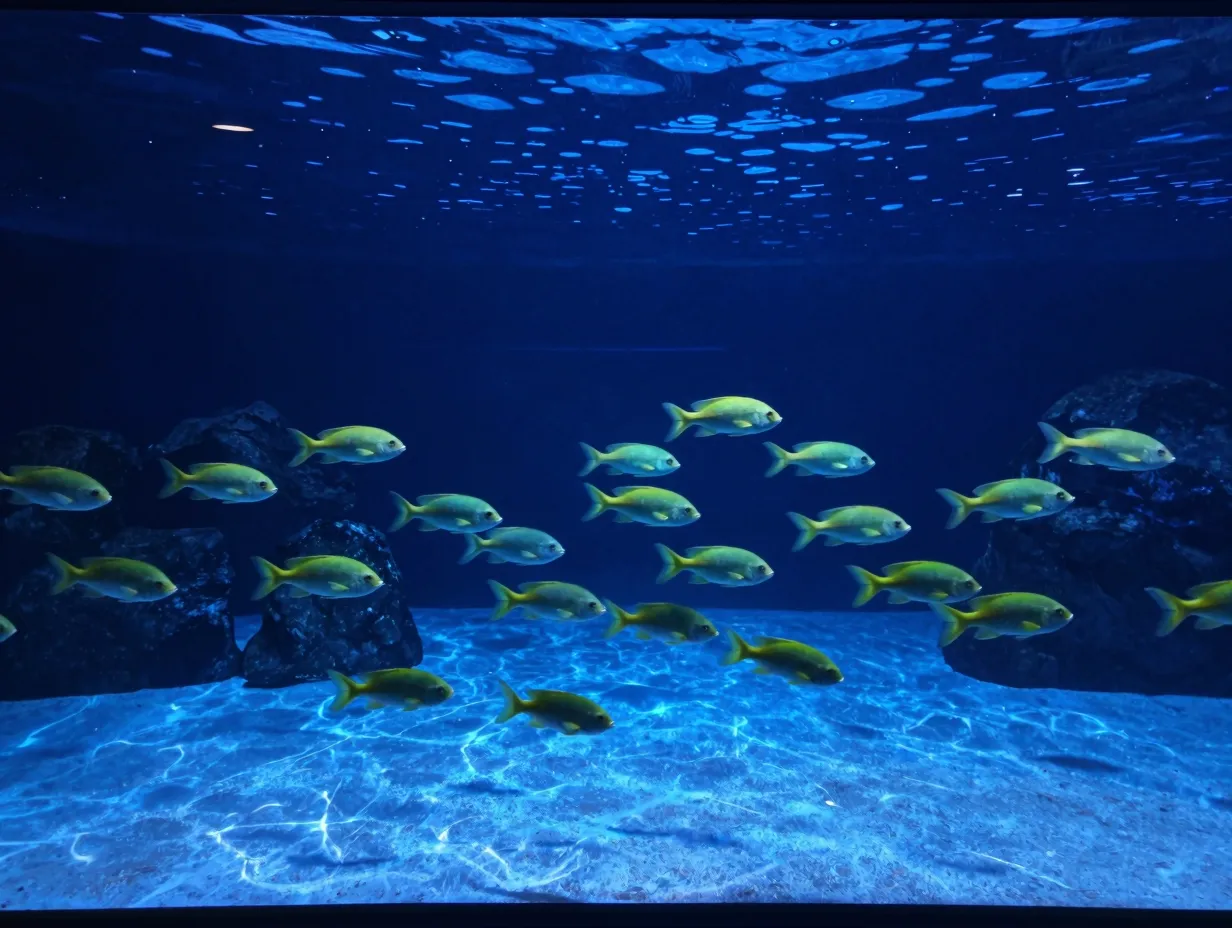
Best for: Hobbyists who prefer fish-focused displays over coral
Recommended tank size: 100 gallons and above
The pelagic display prioritizes open water swimming space over rockwork and coral. It is designed around schooling fish species, Chromis, Anthias, Dartfish, that spend most of their time in the water column rather than near the substrate. The result is a tank that feels like a window into open ocean rather than a reef.
Design principles for the pelagic display:
- Minimize rockwork to the back and sides of the tank, leaving the front two-thirds completely open.
- Use a deep blue LED spectrum to create the impression of depth and open water.
- Select a large, thin-profile tank (a 6-foot long, 18-inch deep tank works better than a cube) to maximize swimming lanes.
- Keep water flow high and consistent, mimicking the constant current of open-water environments.
This style pairs exceptionally well with a large school of Green Chromis (15 to 25 individuals in a 120-gallon tank), which create a mesmerizing synchronized movement pattern throughout the day.
8. The Mangrove and Macroalgae Refugium Display
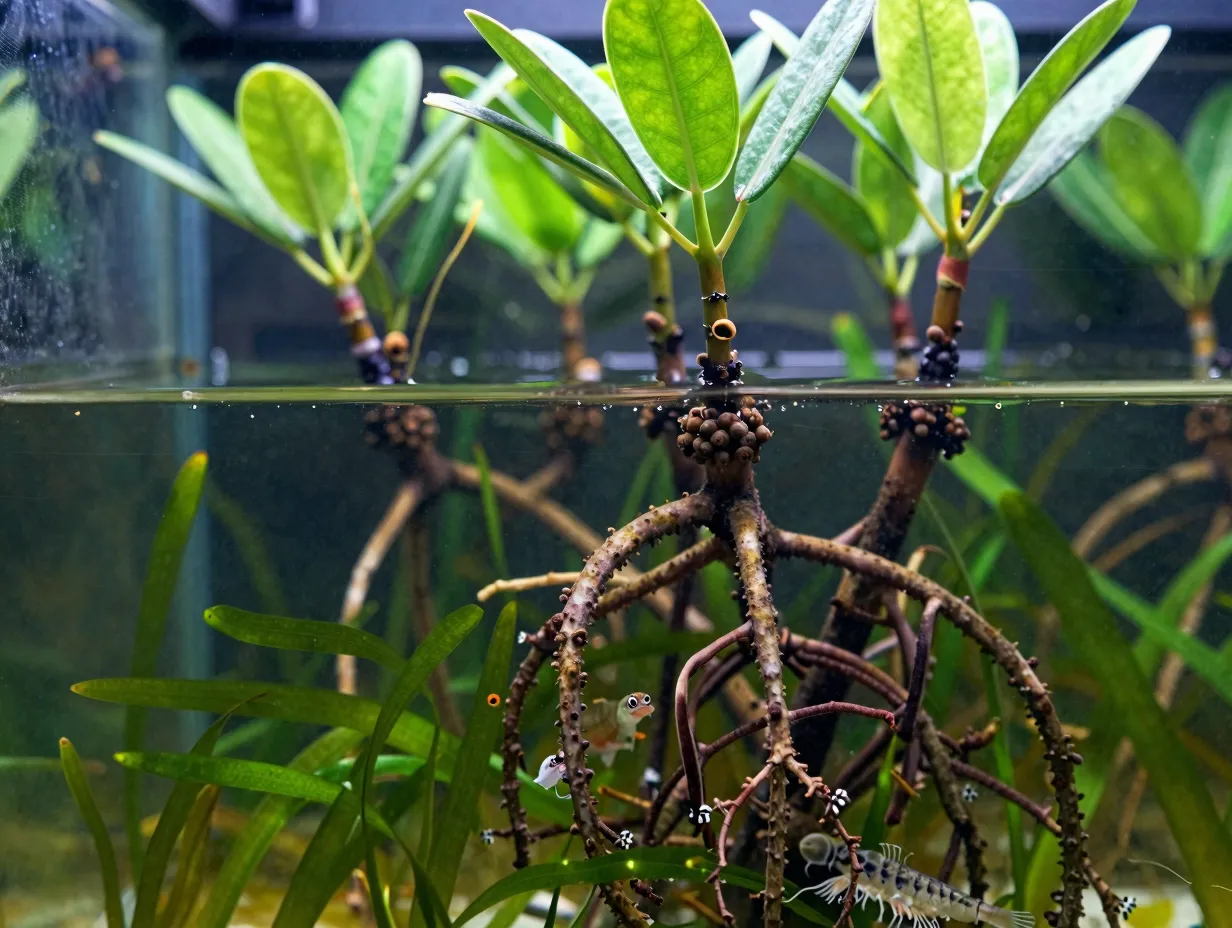
Best for: Hobbyists interested in natural filtration and unique aesthetics
Recommended tank size: 40 gallons and above
Mangrove trees and macroalgae species like Chaeto and Caulerpa are not just for sump refugiums, they can become the central aesthetic feature of a display tank. This style bridges the gap between aquarium and terrarium, with mangrove propagules growing above the waterline while their root systems provide shelter for small fish and invertebrates below.
“Mangrove display tanks are among the most ecologically functional aquascapes available. The plants export nutrients continuously while creating a habitat that no coral-only reef can replicate.”
Compatible livestock for a mangrove display:
- Mudskippers (require a tidal zone setup)
- Fiddler crabs
- Small gobies and blennies
- Seahorses (in low-flow zones)
- Peppermint shrimp
This style requires patience, mangroves grow slowly, but the long-term result is an aquascape that evolves visually year after year as the trees mature.
9. The Statement Wall-Mounted Reef
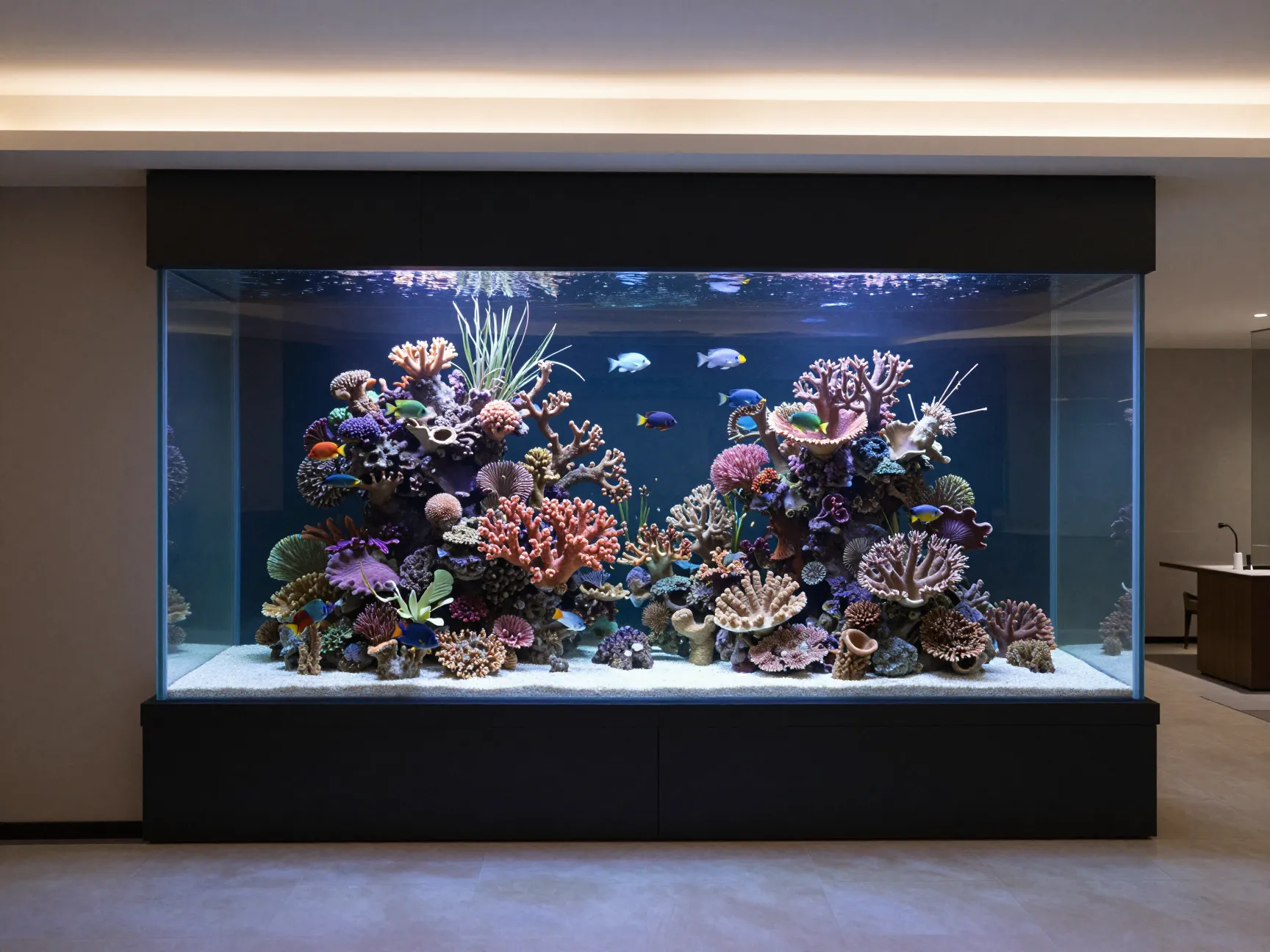
Best for: Hobbyists with structural support and professional installation resources
Recommended tank size: 75 to 300 gallons
Wall-mounted or in-wall reef tanks represent the highest level of integration between aquarium and interior design. The tank is built into or against a wall, with the filtration system hidden in an adjacent cabinet or room. From the front, the viewer sees only a seamless panel of living reef.
Planning requirements for a wall-mounted reef:
- Structural assessment: The floor and wall must support the weight of a filled tank (approximately 10 pounds per gallon, plus equipment).
- Plumbing access: Drain and return lines must be routed through the wall to the sump location.
- Electrical planning: Dedicated circuits for lighting, pumps, heaters, and controllers must be installed before the tank is placed.
- Viewing height: The center of the tank should sit at eye level for the primary viewing position, typically 48 to 54 inches from the floor.
Professional aquarium installation companies in 2026 offer turnkey wall-mounted reef systems with remote monitoring, automated water changes, and smartphone-controlled lighting, making this style more accessible than it was a decade ago.
Choosing the Right Style from These 9 Saltwater Fish Tank Ideas to Inspire Your Next Aquascape
With nine distinct concepts on the table, narrowing down to a single direction requires honest self-assessment across four dimensions:
Experience level: FOWLR and nano reefs suit beginners. SPS-dominated reefs and wall-mounted systems require advanced skills and resources.
Budget: Nano reefs can be started for under $500. Statement wall-mounted reefs with professional installation can exceed $20,000.
Time commitment: Biotope and mangrove displays require significant research upfront. Mixed LPS reefs are forgiving of occasional missed maintenance.
Space available: Pelagic displays need long, wide tanks. Nano cubes fit on a desk.
Beginner + small space: Nano Reef Cube (Style 6)
Beginner + large space: FOWLR Setup (Style 1)
Intermediate + colorful display: Mixed LPS/Soft Coral Reef (Style 4)
Advanced + scientific interest: Biotope Aquascape (Style 5)
Advanced + premium budget: SPS-Dominated Reef (Style 3) or Wall-Mounted Reef (Style 9)
Essential Equipment Considerations Across All Styles
Regardless of which of the 9 saltwater fish tank ideas to inspire your next aquascape resonates most, several equipment categories apply universally.
Lighting: Reef tanks require full-spectrum LED fixtures with programmable intensity and color spectrum. Brands like Radion, Kessil, and AI (Aqua Illumination) dominate the hobbyist market in 2026. FOWLR and pelagic displays can use less expensive options.
Water movement: Powerheads or wavemakers should turn over the total tank volume 20 to 40 times per hour for reef systems. FOWLR tanks can operate at 10 to 15 times per hour.
Protein skimmer: Essential for any saltwater system above 20 gallons. Skimmers remove dissolved organic compounds before they break down into ammonia and nitrate.
Salinity and testing: A reliable refractometer or digital salinity meter is non-negotiable. Target specific gravity of 1.025 to 1.026 for reef systems. Test calcium, alkalinity, magnesium, nitrate, and phosphate weekly during the first six months.
Aquarium controller: Modern controllers from Neptune Systems (Apex) and GHL (Profilux) monitor temperature, pH, salinity, and flow in real time, sending alerts to a smartphone if any parameter drifts outside the set range. For SPS reefs and wall-mounted systems, a controller is not optional, it is essential insurance.
Common Mistakes to Avoid When Executing Saltwater Aquascape Ideas
Even the best-planned aquascape can fail if these common errors are not avoided:
- Rushing the cycle: The nitrogen cycle must complete fully before adding livestock. This takes 4 to 8 weeks minimum. Skipping or shortcutting this step is the single most common cause of early tank failure.
- Overstocking too quickly: Add fish and corals gradually, allowing the biological filtration to adjust between additions.
- Ignoring flow dead spots: Use a powerhead to blow detritus out of low-flow areas during weekly maintenance. Dead spots accumulate organic waste that drives nitrate and phosphate levels up.
- Mismatching coral aggression: Torch and Hammer corals will sting and kill neighboring species if placed too close together. Research allelopathy (chemical warfare between corals) before finalizing placement.
- Neglecting the sump: The sump is the engine of the system. Keeping it clean, checking the protein skimmer cup weekly, and maintaining refugium macroalgae prevents the majority of water quality problems.
Conclusion
The 9 saltwater fish tank ideas to inspire your next aquascape covered in this guide represent a spectrum from approachable beginner setups to advanced, professionally installed display systems. The most important decision is not which equipment to buy first, it is which creative vision to commit to before spending a single dollar.
Actionable next steps:
- Select one of the nine aquascape styles that matches your experience level, budget, and available space.
- Research the specific livestock and coral species associated with that style before purchasing any equipment.
- Build a detailed equipment list based on the tank size and style requirements outlined above.
- Join a local reef club or active online community (Reef2Reef, Nano-Reef.com) to connect with hobbyists who have built the style you are targeting.
- Start the nitrogen cycle before ordering any livestock, and test water parameters daily during the first two weeks.
A saltwater aquascape built on a clear plan and patient execution will outperform any system assembled in haste. The ocean took millions of years to develop its reefs, giving your tank a few extra weeks of preparation is the most valuable investment a hobbyist can make.
References
- Borneman, E. H. (2001). Aquarium Corals: Selection, Husbandry, and Natural History. Microcosm Ltd.
- Calfo, A. (2007). Book of Coral Propagation, Volume 1: Reef Gardening for Aquarists. Reading Trees Publications.
- Delbeek, J. C., & Sprung, J. (1994). The Reef Aquarium, Volume 1. Ricordea Publishing.
- Sprung, J. (2001). Corals: A Quick Reference Guide. Ricordea Publishing.
- Tullock, J. (2001). Natural Reef Aquariums: Simplified Approaches to Creating Living Saltwater Microcosms. Microcosm Ltd.
- Reef2Reef Community Forums. (2023). Aquascape design principles and livestock compatibility guides. https://www.reef2reef.com