8 Best Atlantic Salmon Flies for Saltwater Fly Fishing
Atlantic salmon return to their natal rivers after spending one to four years feeding in the open ocean, yet once they enter freshwater, they stop eating entirely. That biological paradox is exactly why choosing the right fly matters so much. The fish are not hungry, but they will still strike. Understanding what triggers that strike is the foundation of selecting the 8 best Atlantic salmon flies for saltwater fly fishing.
Disclosure: This post contains affiliate links. As an Amazon Associate, we earn from qualifying purchases, and at no extra cost to you.
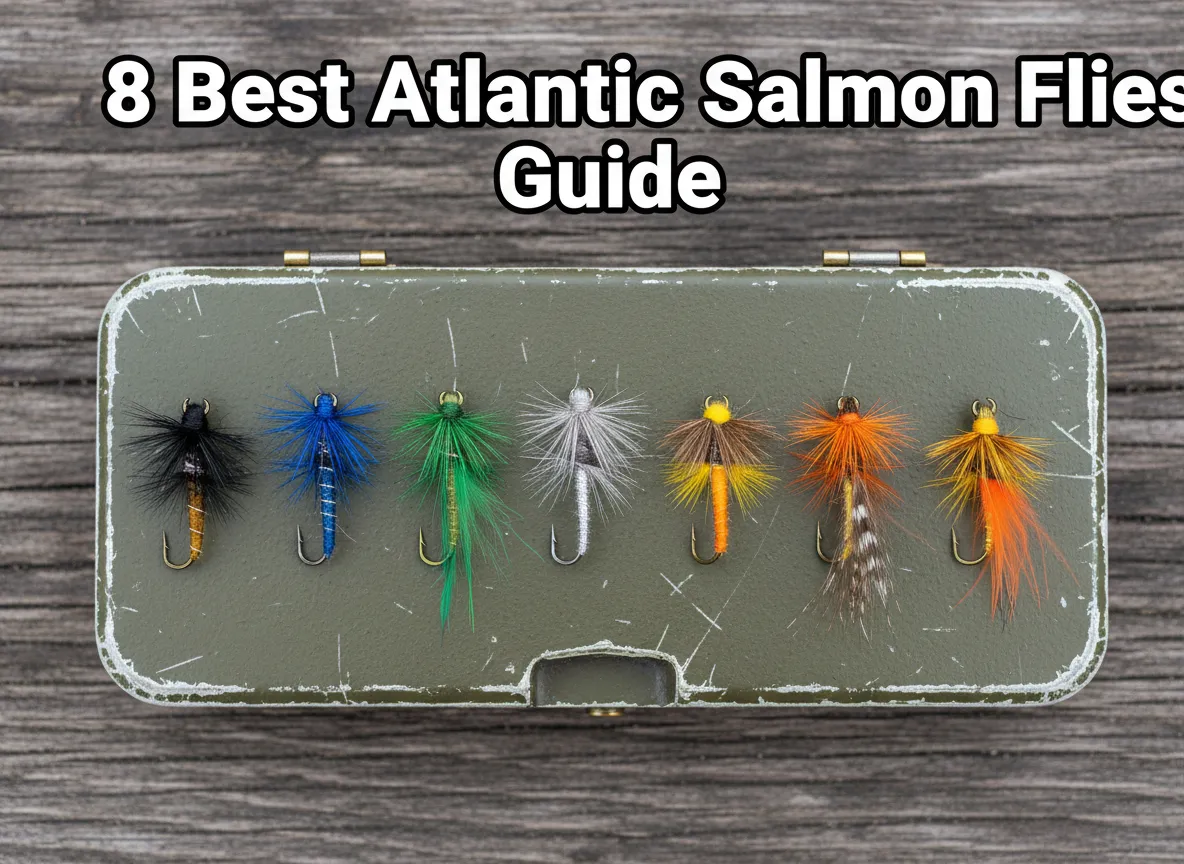
This guide covers the most proven, time-tested patterns used by serious anglers across the North Atlantic. Whether fishing the tidal pools of Nova Scotia, the famous beats of Iceland’s Laxa, or the storied rivers of Norway, these eight flies have earned their place in every well-stocked salmon fly box.
Key Takeaways
- Atlantic salmon do not feed in freshwater, so fly selection targets aggression, curiosity, and territorial instinct rather than hunger.
- Classic fully-dressed wet flies and modern hairwing patterns both produce results, matching the fly to water conditions is more important than tradition alone.
- Hook size, water temperature, and light levels should guide fly selection as much as pattern choice.
- The 8 best Atlantic salmon flies for saltwater fly fishing covered here span classic British, Scandinavian, and North American tying traditions.
- Presentation and swing speed often matter more than the exact pattern, but having the right fly builds angler confidence and increases time fishing effectively.
Why Fly Selection Matters for Atlantic Salmon
Atlantic salmon (Salmo salar) are anadromous fish. They hatch in cold freshwater rivers, migrate to saltwater feeding grounds, primarily the Labrador Sea and waters off Greenland, and return to spawn. During their ocean phase, they grow rapidly on a diet of capelin, sand eels, shrimp, and squid. When they re-enter freshwater, their digestive systems begin to shut down.
So why do they take a fly at all?
Researchers and experienced guides point to several theories:
- Aggressive response: Salmon may strike out of territorial instinct, especially in holding pools.
- Conditioned reflex: Muscle memory from feeding in saltwater may trigger strike responses to familiar silhouettes.
- Curiosity: Salmon are known to follow and inspect flies repeatedly before taking.
- Irritation: A fly swung repeatedly through a pool may simply annoy a fish into striking.
“The salmon takes the fly not because it is hungry, but because the fly is there, moving in a way that demands a response.”, A widely cited principle among Atlantic salmon guides.
Understanding this helps explain why both bright, flashy patterns and sparse, natural-looking flies can work on the same river on the same day. Water clarity, light levels, and fish mood all play a role.
How to Match Fly to Conditions
| Condition | Recommended Fly Style | Hook Size Range |
|---|---|---|
| High, colored water | Bright, heavy dressing | 2/0 to 2 |
| Low, clear water | Sparse, dark patterns | 8 to 14 |
| Cold water (below 50F) | Slow-sinking, large profile | 2/0 to 4 |
| Warm water (above 55F) | Smaller, faster-swinging | 6 to 12 |
| Overcast/low light | Darker, contrast-heavy | 4 to 8 |
| Bright sun | Subdued, natural tones | 8 to 14 |
The 8 Best Atlantic Salmon Flies for Saltwater Fly Fishing
The patterns below represent the consensus picks of professional guides, competitive tiers, and experienced anglers across the Atlantic salmon range. Each has a documented history of producing fish and a logical reason for its effectiveness.
1. Jock Scott
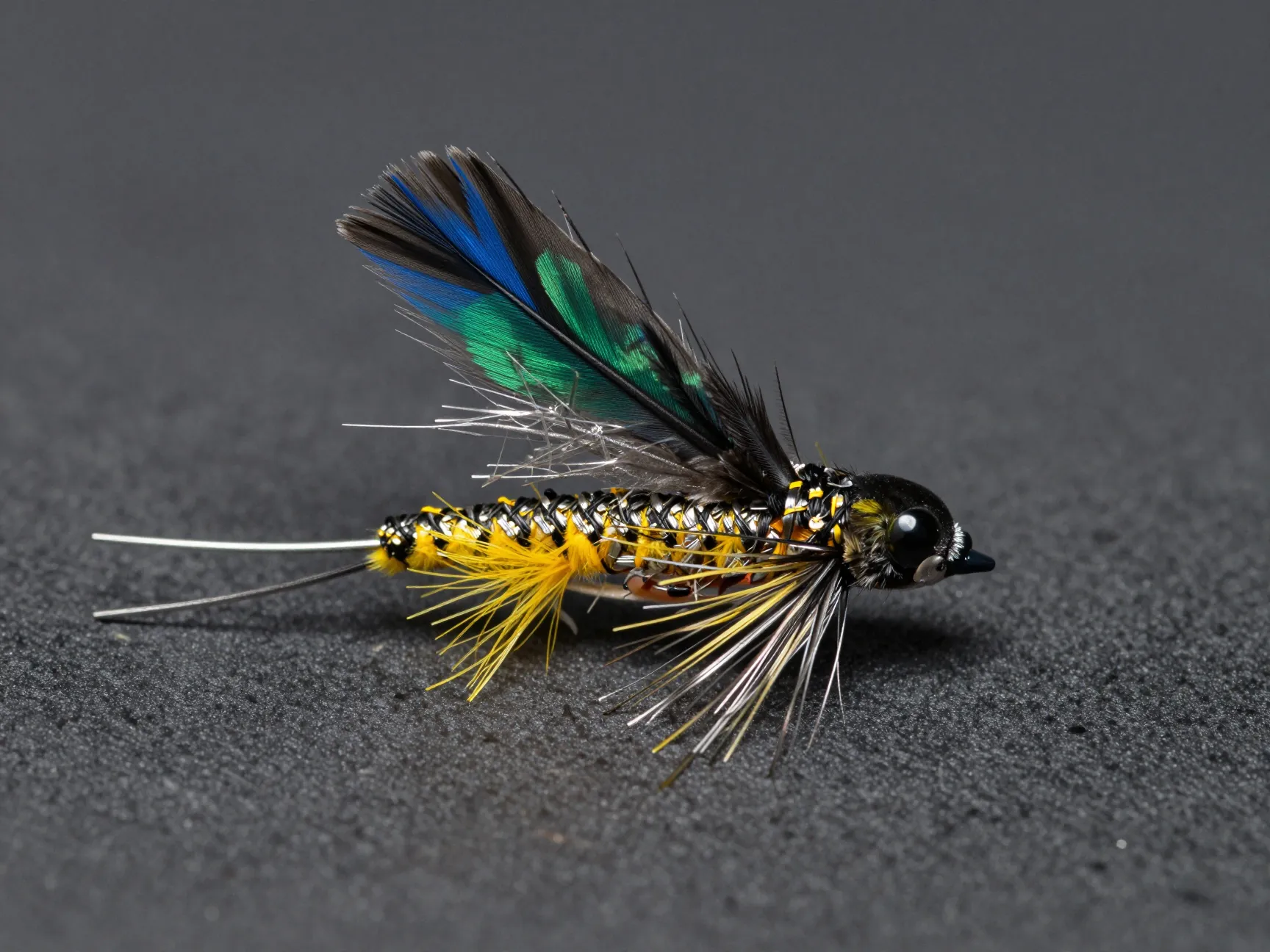
The Jock Scott is arguably the most famous Atlantic salmon fly ever tied. Created in the 1840s by Lord John Scott’s ghillie, this fully-dressed classic features a complex body of black floss and yellow floss separated by a butt of black ostrich herl, with a wing built from multiple exotic feathers including Indian crow, blue chatterer, and teal.
Why it works: The Jock Scott’s dense, multi-layered wing creates a pulsing, lifelike movement in the current. Its dark overall profile with bright accent colors is highly visible in both clear and slightly colored water.
Best conditions: Medium to high water levels, overcast days, spring and fall runs.
Modern note: Most contemporary tiers use substitute feathers to comply with wildlife protection laws. Synthetic Jock Scotts fish just as effectively as the originals.
Key tying details:
- Tag: silver tinsel and yellow floss
- Body: black and yellow floss with black ostrich herl butt
- Rib: silver tinsel
- Wing: mixed feather wing with jungle cock cheeks
2. Blue Charm
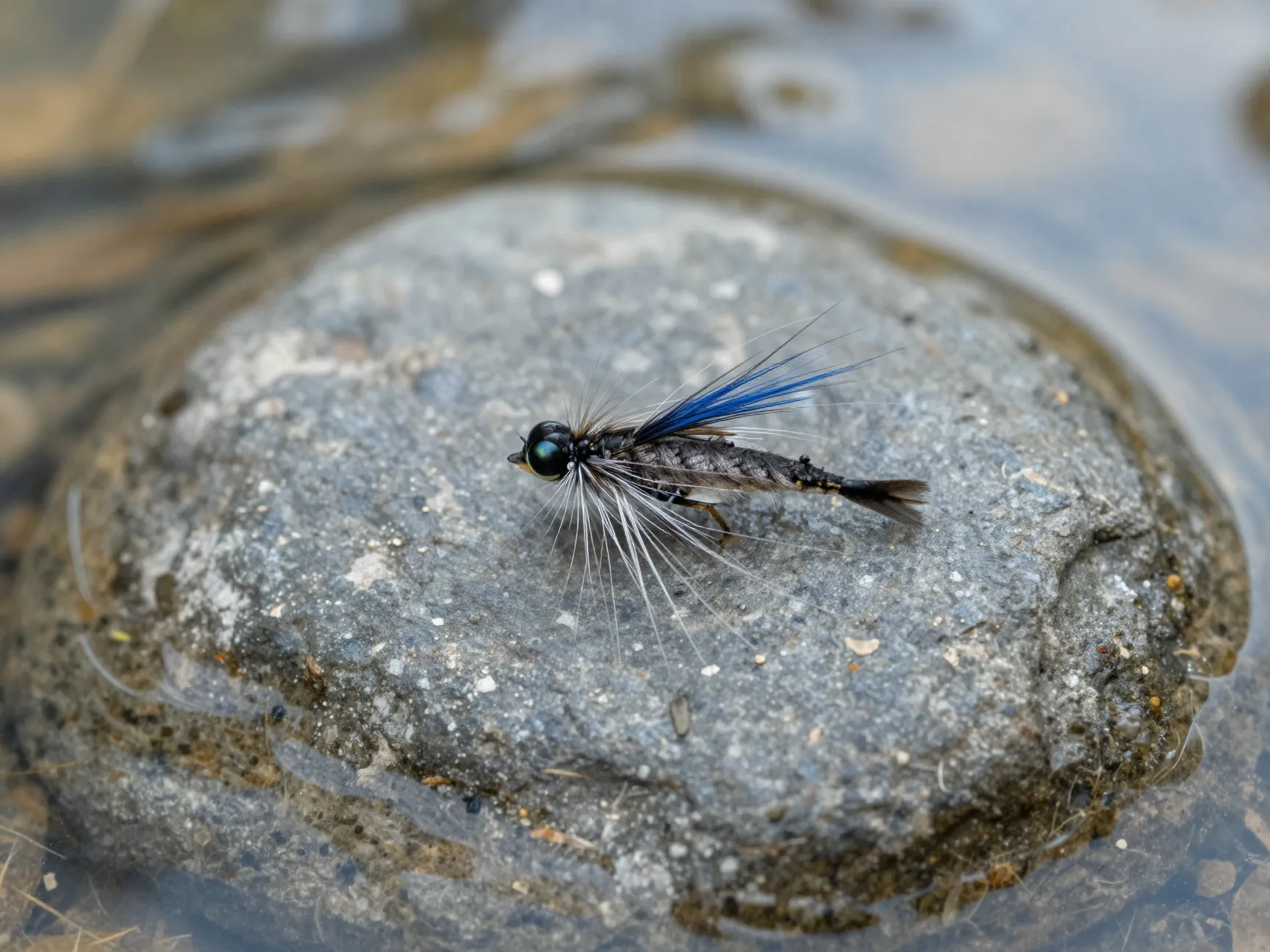
The Blue Charm is a hairwing pattern that has replaced many classic fully-dressed flies on modern salmon rivers. Developed in Scotland, it features a black body with silver rib, a blue squirrel or Arctic fox hairwing, and jungle cock eyes.
Why it works: Blue is one of the most effective colors for Atlantic salmon under a wide range of light conditions. The sparse hairwing breathes and moves naturally in the current, creating a subtle but consistent action.
Best conditions: Low to medium water, clear conditions, summer runs.
Angler tip: The Blue Charm is a go-to pattern when fish are visible but refusing larger or brighter flies. Dropping down two hook sizes often produces a take when nothing else will.
3. Green Highlander
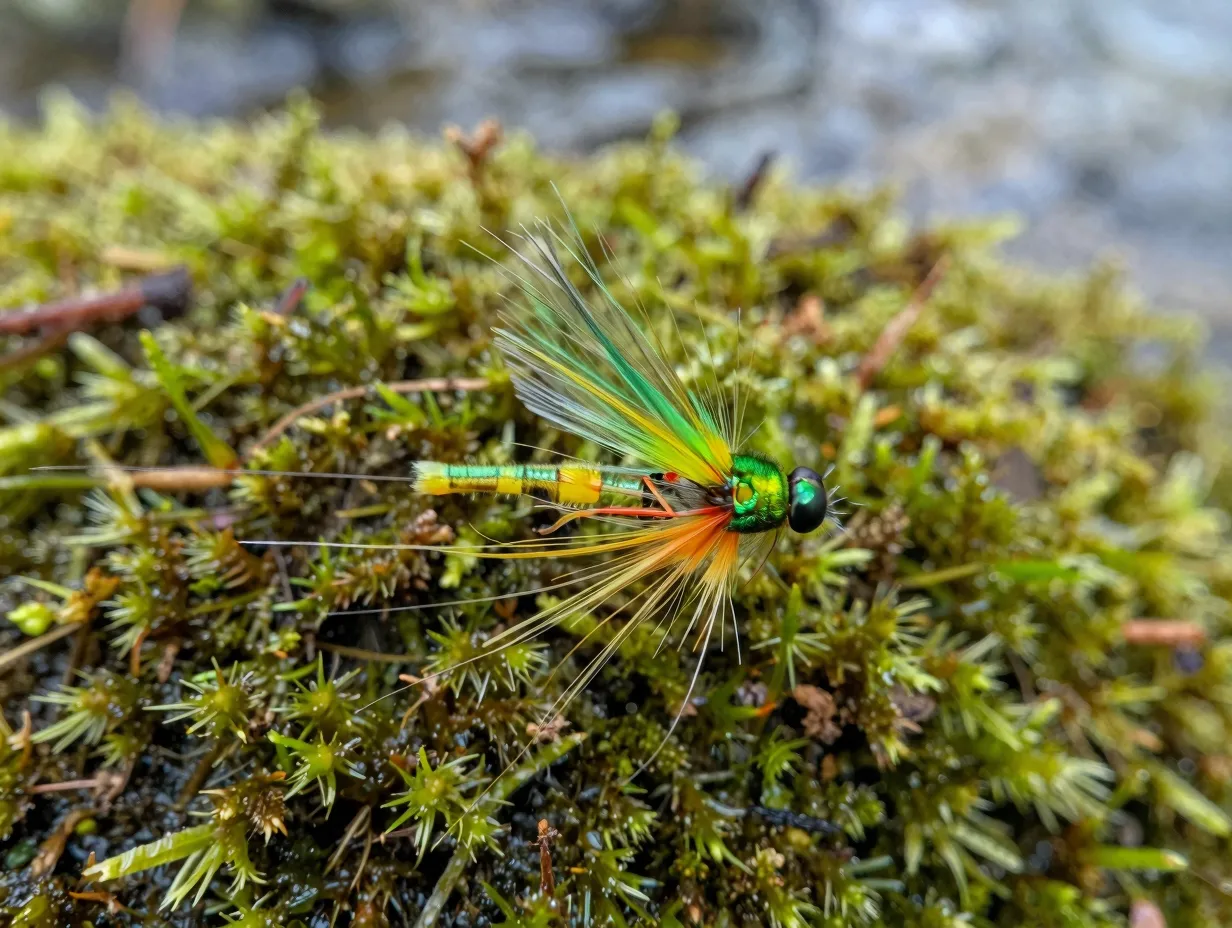
The Green Highlander is one of the oldest and most respected patterns in the Atlantic salmon canon. Its origins trace to the Scottish Highlands in the early 19th century. The fly features a bright green and yellow body with a mixed feather or hairwing that incorporates green, yellow, and orange.
Why it works: Green is a highly effective color in peat-stained or slightly colored water, where it provides contrast without appearing unnatural. The combination of warm and cool tones in the dressing mimics the multi-hued appearance of small baitfish.
Best conditions: Peat-stained rivers, late summer, warm water temperatures.
Tying note: Hairwing versions using green-dyed squirrel tail are widely available and fish exceptionally well. The fully-dressed version is a masterpiece of Victorian fly tying but requires significant skill and time to produce.
4. Silver Doctor
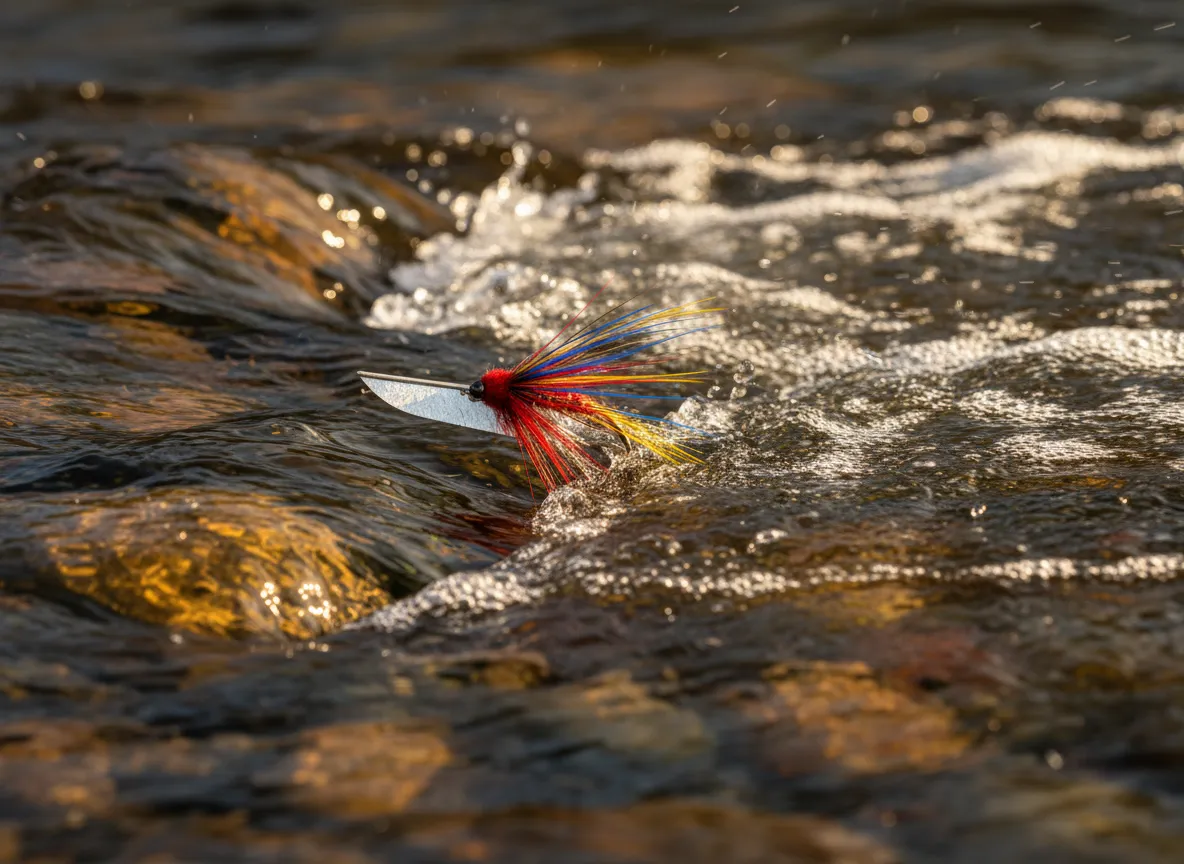
The Silver Doctor is one of the brightest and most visually striking patterns in the 8 best Atlantic salmon flies for saltwater fly fishing. Its body is wrapped in flat silver tinsel, and its wing incorporates red, blue, and yellow feathers or hair, often with a red hackle collar.
Why it works: In high, colored water or low-light conditions, the Silver Doctor’s reflective silver body catches and throws light in a way that attracts fish from a distance. The bright wing colors provide a strong visual target.
Best conditions: High, off-color water, early morning, late evening, overcast days.
Historical note: The Silver Doctor was originally tied in the mid-1800s and was reportedly a favorite of Queen Victoria’s ghillies on the River Dee in Scotland.
5. Thunder and Lightning
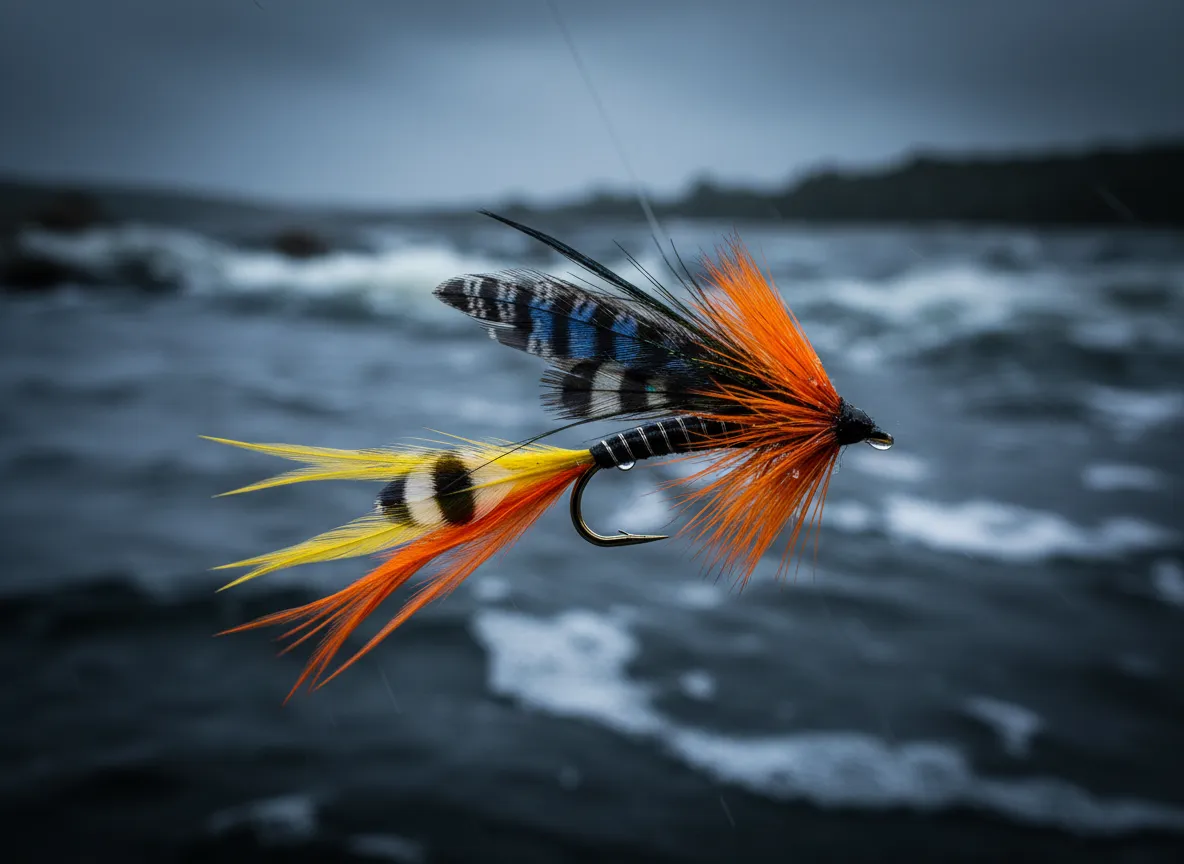
Few salmon flies have a name as evocative as the Thunder and Lightning. This classic pattern features a black body with orange hackle, a mixed wing of dark feathers, and a distinctive yellow and orange tail. The combination of dark and bright elements gives it a dramatic, high-contrast appearance.
Why it works: The Thunder and Lightning is particularly effective in fast, turbulent water where fish have only a fraction of a second to decide whether to take. The high contrast between the dark body and bright orange accents triggers a fast, instinctive response.
Best conditions: Fast runs, pocket water, high water after rain, early season.
Guide tip: Many experienced guides consider the Thunder and Lightning their first choice when fishing fast, broken water in the first few weeks of the season, when water temperatures are still cold and fish are fresh from the sea.
6. Hairy Mary
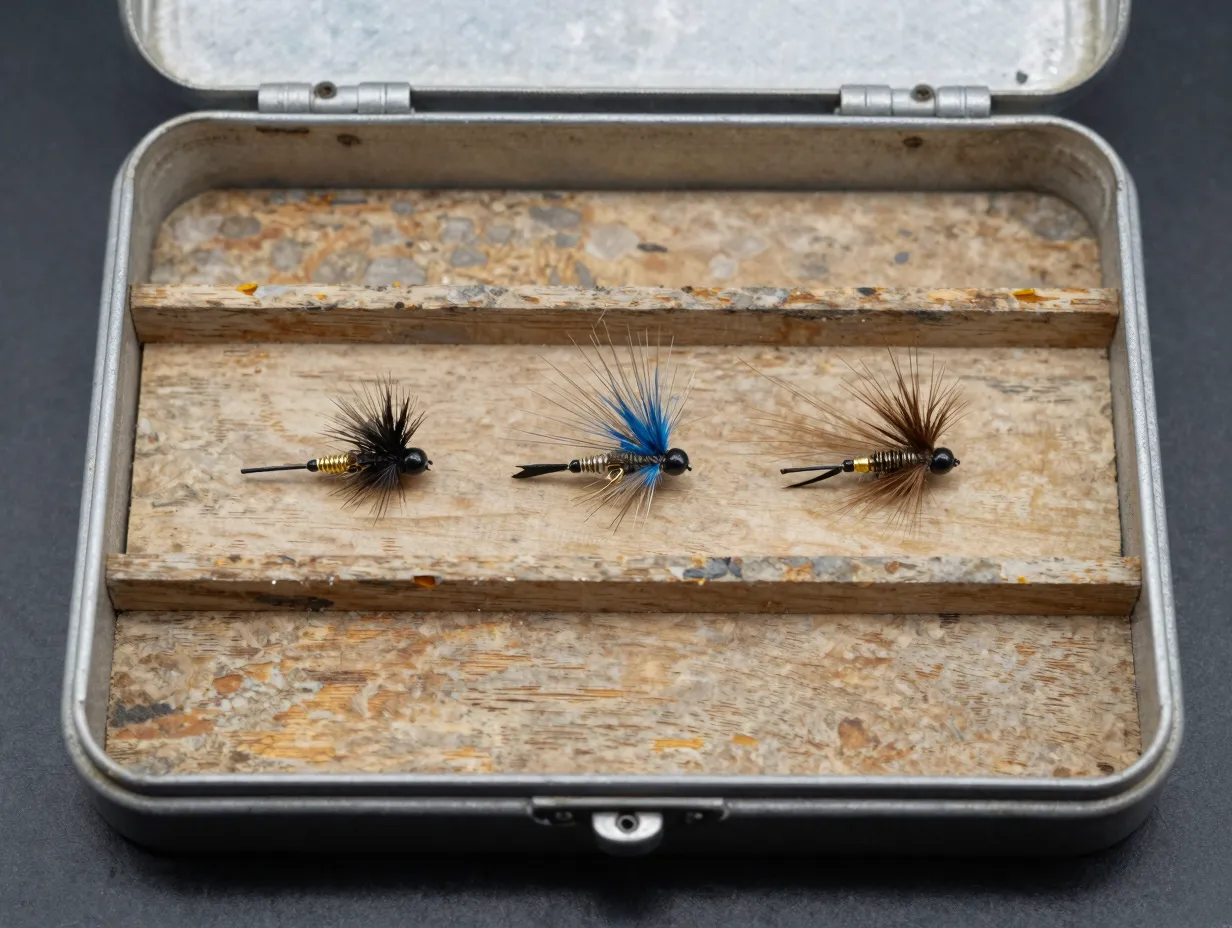
The Hairy Mary is a Scottish hairwing pattern that has become one of the most widely used Atlantic salmon flies in the world. Its simplicity is its strength. The pattern features a black body with a gold rib, a blue hackle, and a brown bucktail or squirrel tail wing.
Why it works: The Hairy Mary’s sparse, mobile wing creates excellent movement in the current. Its natural brown tones make it effective in clear water conditions where flashier patterns may be ignored.
Best conditions: Low, clear water, summer runs, bright conditions.
Versatility note: The Hairy Mary is one of the few patterns that works consistently across multiple river systems and geographic regions. It is equally at home on a Scottish spate river and a Newfoundland salmon pool.
Recommended hook sizes:
- Early season, high water: sizes 4 to 8
- Summer, low water: sizes 10 to 14
- Tidal pools: sizes 6 to 10
7. Munro Killer
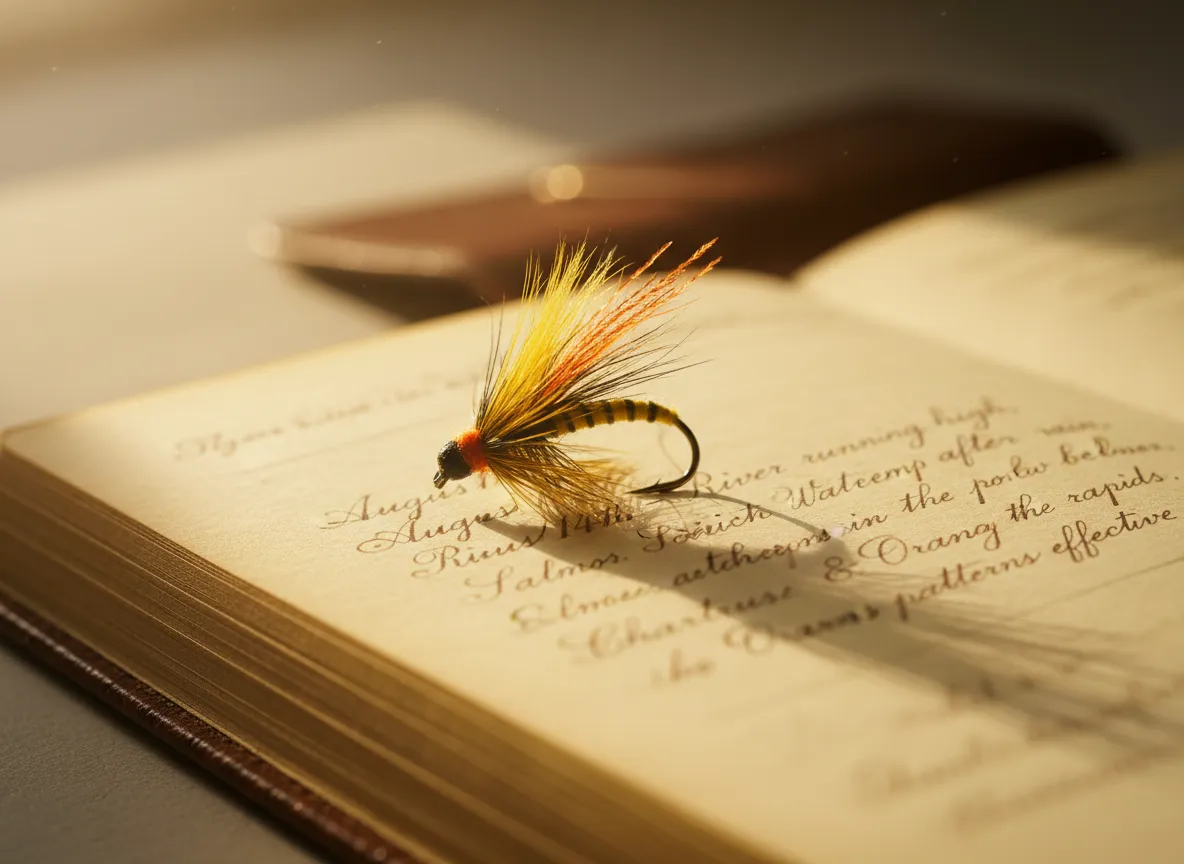
The Munro Killer was developed in Scotland in the 20th century and quickly became a staple on many of the most productive salmon rivers in the British Isles. The pattern features a yellow and black body, an orange hackle, and a wing of black and yellow hair, often with a few strands of orange.
Why it works: The Munro Killer’s warm color palette, yellow, orange, and black, is highly effective in a wide range of water conditions. The contrast between the yellow and black elements provides visibility in both clear and colored water, while the orange hackle adds a warm, pulsing accent.
Best conditions: Medium water, mixed light conditions, all-season use.
Popularity note: The Munro Killer is consistently ranked among the top-selling Atlantic salmon flies in Scotland and Ireland. Its broad effectiveness across conditions makes it an ideal choice for anglers who want one pattern that can handle multiple situations.
8. Cascade
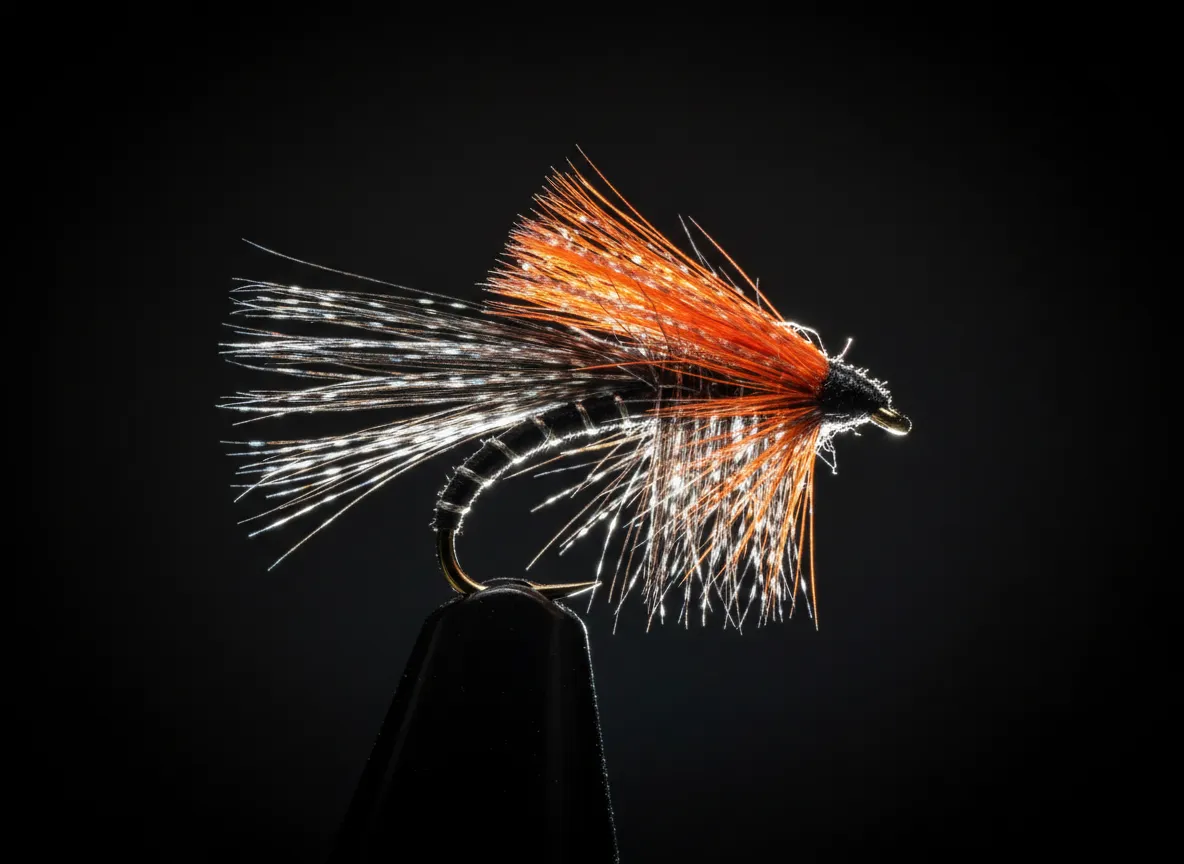
The Cascade is a modern hairwing pattern developed in Scotland in the latter half of the 20th century. It features a black body with a silver rib, a hot orange hackle, and a wing of black and orange hair with a few strands of pearl or silver flash.
Why it works: The Cascade combines the proven effectiveness of dark, high-contrast patterns with the modern addition of synthetic flash material. The flash elements catch light and create micro-movements that are invisible to the naked eye but appear highly attractive to salmon.
Best conditions: All water levels, particularly effective in low light, early morning, and late evening.
Modern design advantage: The Cascade represents the evolution of Atlantic salmon fly design, it takes the best elements of classic patterns (dark body, bright hackle, mobile wing) and enhances them with modern materials. For anglers who want a single pattern that bridges classic and contemporary tying traditions, the Cascade is the logical choice.
Presentation Techniques for Atlantic Salmon Flies
Choosing the right fly is only half the equation. How the fly is presented, its speed, depth, and angle of swing, often determines whether a salmon takes or ignores it.
The Classic Wet Fly Swing
The standard presentation for Atlantic salmon flies is the downstream wet fly swing. The angler casts across and slightly downstream, then allows the current to swing the fly in a wide arc across the river. The fly should be moving at a speed slightly faster than the current, not dragging, but not drifting dead.
Key points for an effective swing:
- Mend the line upstream immediately after the cast to slow the fly’s initial movement
- Use a downstream mend to speed up the swing in slow pools
- Hold the rod at a consistent angle throughout the swing
- Take one or two steps downstream after each cast to cover new water systematically
Depth Control
In cold water (below 50 degrees Fahrenheit), salmon hold deep and are less likely to rise to a surface or near-surface fly. Use a sinking tip or a weighted fly to get the pattern down to the fish’s level. In warm water, salmon are more active and will rise readily, a floating line and an unweighted fly is often the most effective setup.
The Riffling Hitch
The riffling hitch is a technique developed on the rivers of Newfoundland and Labrador in which the leader is hitched to the side of the hook eye, causing the fly to skate across the surface. This creates a distinctive V-shaped wake that can be irresistible to salmon in warm, low water. The Hairy Mary, Blue Charm, and Cascade all work well as riffling hitch flies.
Building a Practical Atlantic Salmon Fly Box
A well-organized fly box for Atlantic salmon fishing does not need to contain dozens of patterns. A focused selection of proven flies in a range of sizes covers the vast majority of situations.
Recommended starting selection:
- Jock Scott: sizes 4, 6, 8
- Blue Charm: sizes 6, 8, 10, 12
- Green Highlander: sizes 4, 6, 8
- Silver Doctor: sizes 2, 4, 6
- Thunder and Lightning: sizes 4, 6, 8
- Hairy Mary: sizes 6, 8, 10, 12
- Munro Killer: sizes 4, 6, 8, 10
- Cascade: sizes 4, 6, 8, 10
Total flies: approximately 32 patterns across 8 sizes. This selection covers high and low water, bright and dark conditions, and early and late season runs.
Hook Style Considerations
Single hooks are now mandatory on many rivers in Europe and Canada due to conservation concerns. Double hooks offer better hooking efficiency in some conditions but are restricted on many beats. Treble hooks are largely banned for Atlantic salmon fishing on conservation rivers.
Recommended hook styles:
- Single low-water hooks for clear, low water
- Single heavy-wire hooks for high, fast water
- Tube flies with single trailing hooks for large patterns in early season
Conservation and the Future of Atlantic Salmon Fly Fishing
Atlantic salmon populations have declined significantly across their range over the past 50 years. The International Union for Conservation of Nature (IUCN) lists the species as vulnerable in many of its key river systems. Catch-and-release fishing has become the standard practice on most productive salmon rivers, and many guides and outfitters now operate exclusively on a release basis.
Anglers who fish for Atlantic salmon in 2026 are participating in a tradition that carries real conservation responsibility. Using barbless hooks, minimizing handling time, and keeping fish in the water during release all contribute to the survival of released fish.
The flies covered in the 8 best Atlantic salmon flies for saltwater fly fishing guide above are all designed with effective hooking and clean release in mind. Barbless versions of all these patterns are readily available from quality fly shops and online tiers.
Conclusion
The 8 best Atlantic salmon flies for saltwater fly fishing, the Jock Scott, Blue Charm, Green Highlander, Silver Doctor, Thunder and Lightning, Hairy Mary, Munro Killer, and Cascade, represent more than two centuries of accumulated knowledge about what moves this extraordinary fish to take a fly. Each pattern has earned its place through consistent performance across diverse rivers, water conditions, and seasons.
Actionable next steps for anglers ready to put this knowledge to work:
- Start with a Blue Charm, Hairy Mary, and Cascade in sizes 6 to 10 as a core working selection for summer runs in low to medium water.
- Add a Silver Doctor and Thunder and Lightning in sizes 4 to 6 for early season, high-water conditions.
- Practice the downstream wet fly swing on a local trout stream before arriving at a salmon river, the mechanics are the same.
- Book at least one guided day on any new river. Local knowledge about holding lies, water levels, and preferred patterns is worth more than any fly box.
- Fish barbless, handle fish minimally, and release every fish quickly, the future of Atlantic salmon fly fishing depends on it.
The fish are out there. The flies are proven. The rest is time on the water.