9 Timeless Bamboo Fishing Rod Options For Traditional Craftsmanship
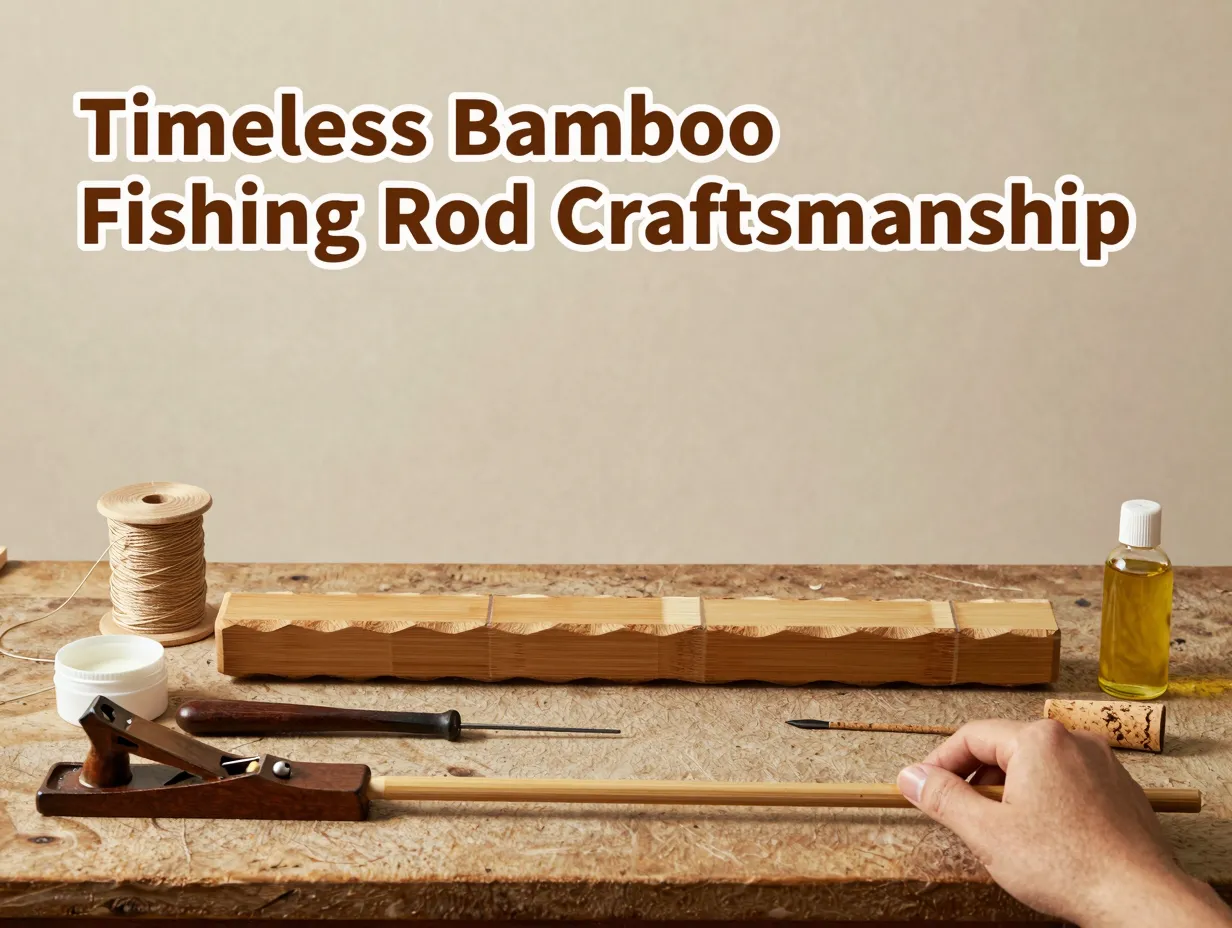
Fewer than 200 master rod makers worldwide still practice the full sequence of hand-splitting, heat-straightening, and lacquer-finishing bamboo into a fishing rod, yet demand for their work has never been stronger. The 9 timeless bamboo fishing rod options for traditional craftsmanship covered in this guide represent the full spectrum of that living tradition, from eighth-generation Japanese workshops to boutique American split-cane ateliers. Whether the goal is a first heirloom rod or a deeper understanding of what separates a handcrafted cane rod from its modern graphite counterpart, this article delivers the detail needed to choose wisely.
Disclosure: This post contains affiliate links. As an Amazon Associate, we earn from qualifying purchases, and at no extra cost to you.
Key Takeaways
- Bamboo rods are not antiques, active makers in Japan, Korea, and North America are producing new heirloom-grade rods in 2026 using centuries-old techniques.
- Split-cane Tonkin bamboo remains the gold standard for fly rods, while whole-cane construction dominates tenkara and traditional Asian styles.
- Premium handcrafted bamboo fly rods typically range from roughly $500 to over $4,000, reflecting the labor intensity of one-at-a-time production.
- Longevity is a defining feature: well-maintained vintage bamboo rods from the mid-20th century are still fishable today, making them genuine long-term investments [4].
- Choosing the right rod depends on fishing style, target species, preferred action, and whether the buyer values pure performance, cultural heritage, or both.
What Makes a Bamboo Rod “Timeless”
Before examining the 9 timeless bamboo fishing rod options for traditional craftsmanship in detail, it helps to understand what earns a rod that label. Three qualities consistently separate timeless bamboo rods from novelty items or mass-produced replicas.
Material integrity. Genuine Tonkin cane (Arundinaria amabilis) and select Asian bamboo species have a dense power-fiber layer just beneath the outer culm wall. When properly harvested, ideally in winter, after four to seven years of growth, those fibers deliver a strength-to-weight ratio that still rivals many modern composites [8].
Process depth. Timeless rods involve multiple heat-straightening passes, hand-planing or careful node-filing, and finish coats applied in controlled humidity. Shortcuts at any stage compromise both action and longevity.
Cultural continuity. The rods listed here connect to documented traditions, Edo-period Japan, Korean lacquer craft, American split-cane fly fishing, rather than being modern inventions styled to look old.
“A well-maintained bamboo rod does not merely survive decades, it improves in the hands of an angler who understands it.” [4]
The 9 Timeless Bamboo Fishing Rod Options For Traditional Craftsmanship
1. Orvis Superfine 703-2 Bamboo Fly Rod
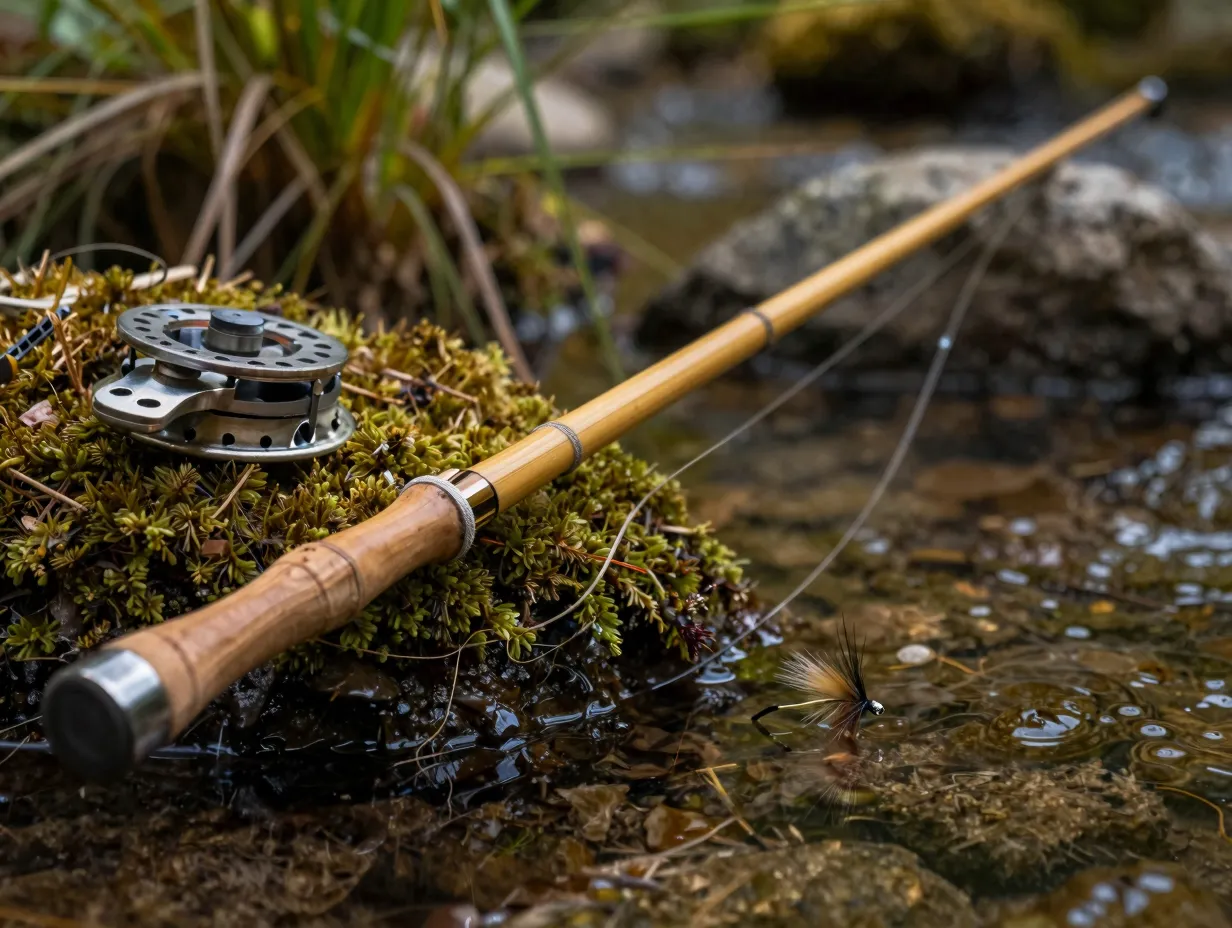
Orvis has been making bamboo fly rods since 1856, and the Superfine 703-2 is the lightest expression of that heritage. Built on hand-split, hand-planed Tonkin cane, the rod is a 7-foot 3-weight designed for delicate dry-fly presentations on small streams. The production process, splitting, gluing, wrapping, and multiple finish coats, mirrors what the company has done for generations [10].
Key specifications:
| Feature | Detail |
|---|---|
| Length | 7’0″ |
| Line weight | 3-weight |
| Pieces | 2 |
| Price range | ~$3,498 USD |
The Superfine 703-2 suits anglers who prioritize feel over distance. Its slow-to-medium action loads at short range, making it ideal for tight, brushy trout streams.
2. Orvis Penn’s Creek Bamboo Fly Rod
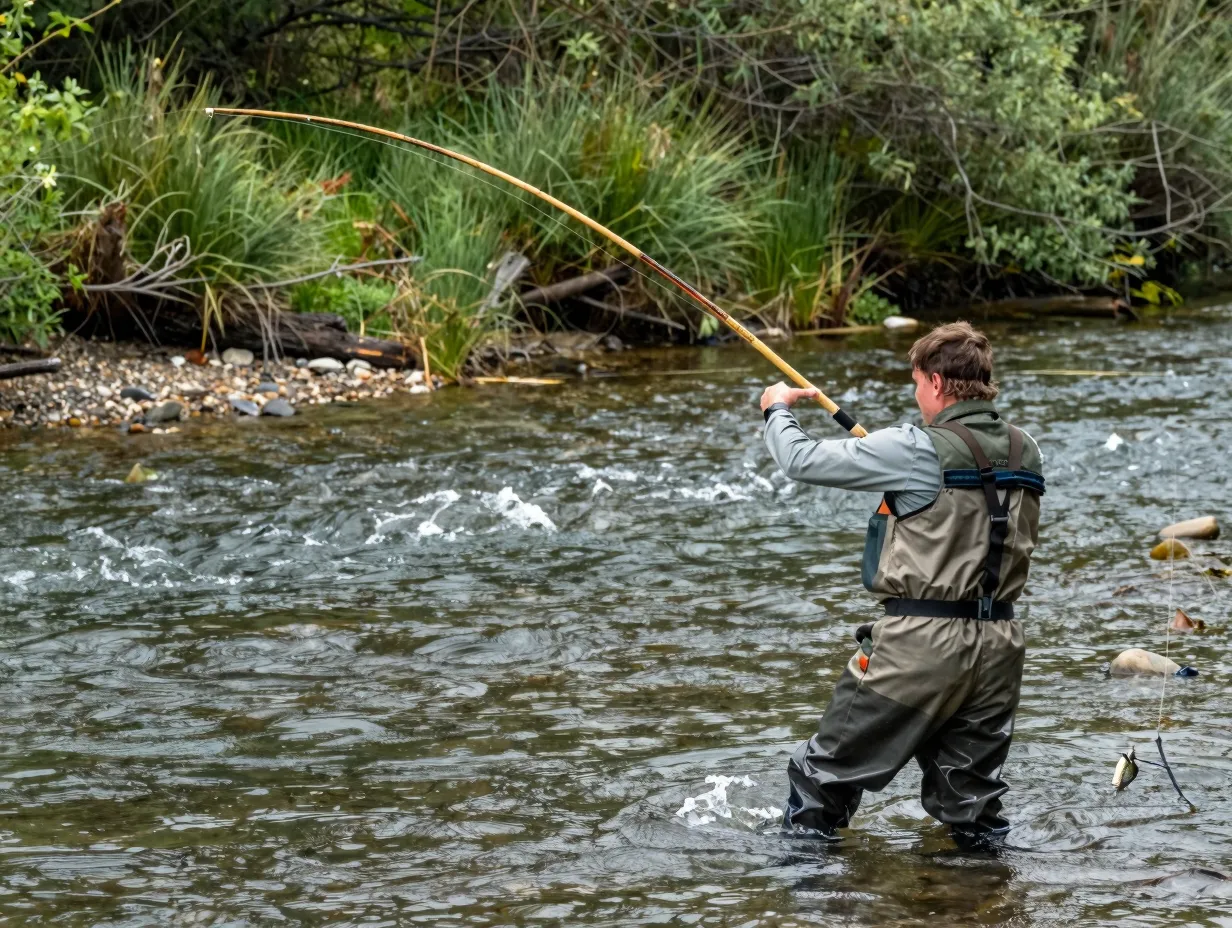
Named after the legendary Pennsylvania limestone stream, the Penn’s Creek is a 4-weight rod built for slightly larger water than the Superfine. Orvis refreshed this catalog entry in July 2026, maintaining the hand-split Tonkin cane construction and adding refined finish details [10].
The Penn’s Creek occupies the middle ground in the Orvis bamboo lineup, versatile enough for both dry flies and light nymphs, yet still carrying the unhurried, progressive action that defines classic bamboo. At approximately $3,498 USD, it represents the entry point into Orvis’s heirloom tier.
3. Orvis Adirondack Full-Flex Bamboo Fly Rod
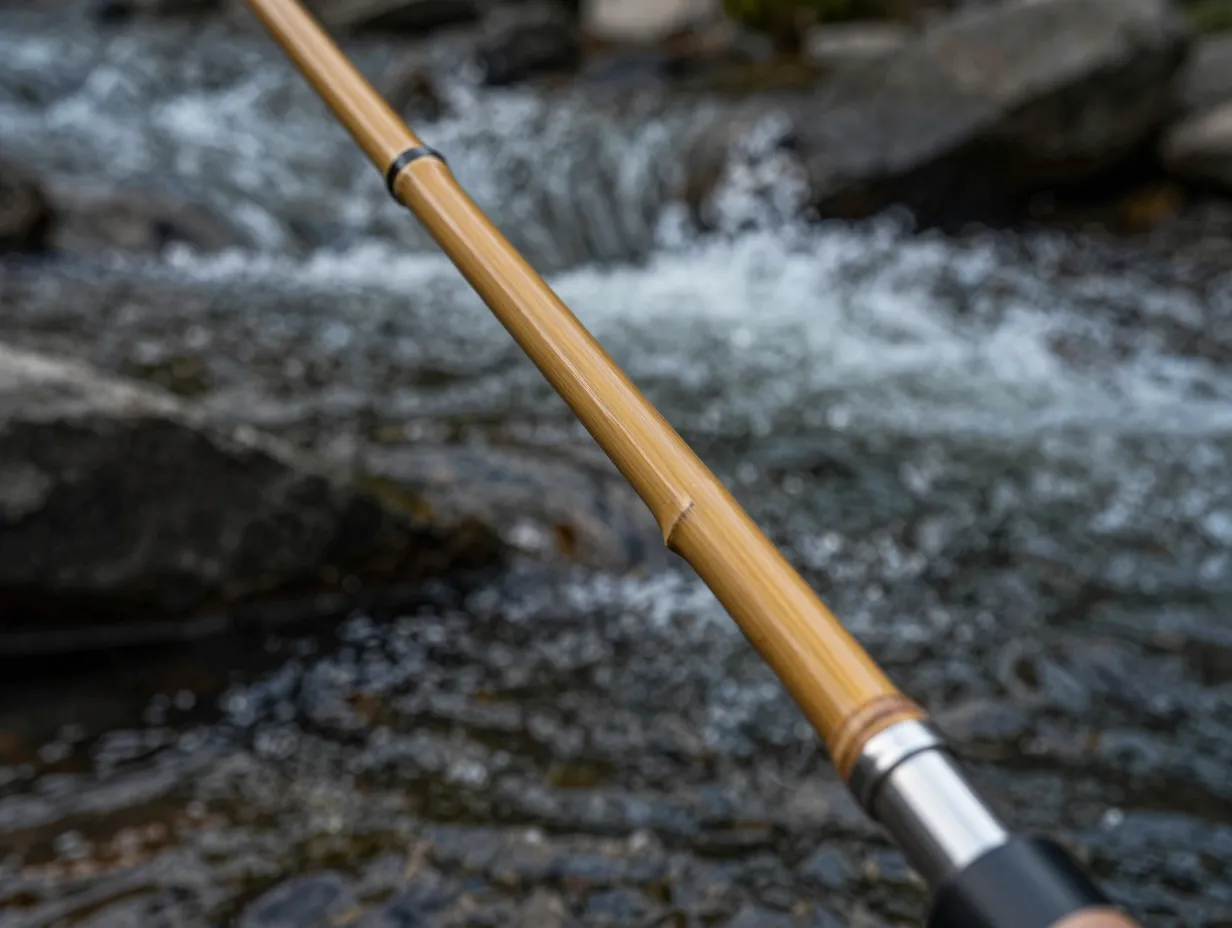
Where the Superfine and Penn’s Creek reward precise short casts, the Adirondack Full-Flex is built for anglers who want the full-body bend that bamboo purists consider the defining sensation of cane fly fishing. The rod flexes deeply into the butt section, slowing the casting stroke and demanding, and rewarding, patience [10].
Line weights extend to 5-weight in this model, broadening its usefulness to larger rivers and heavier flies. The hand-wrapped silk guides and nickel-silver hardware place it firmly in the heirloom category, with pricing in the $3,498,$4,498 range depending on configuration.
4. PJ’s Fine Bamboo Rods Premium Collection Custom Rod
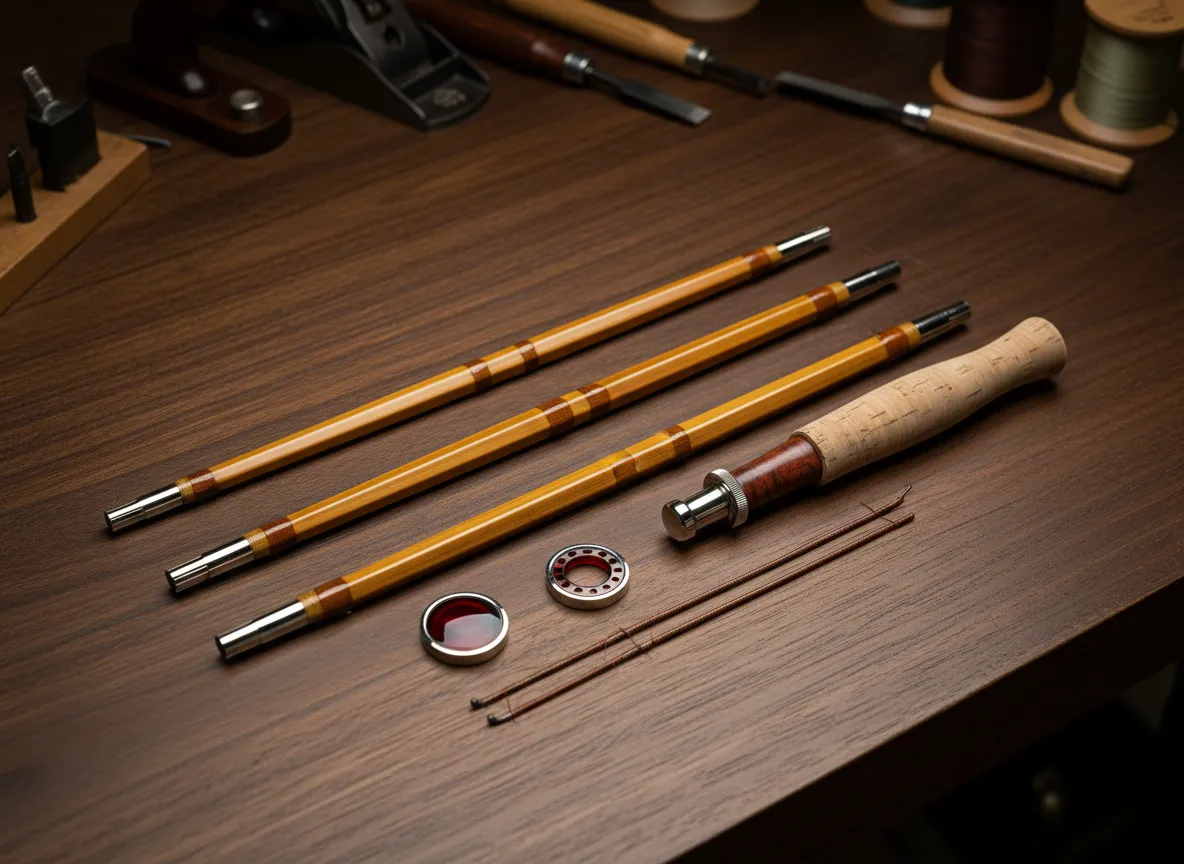
For anglers who want a rod built to their exact specifications, PJ’s Fine Bamboo Rods offers a Premium Collection that exemplifies high-end split-cane craftsmanship. The lineup spans 7’6″ 3-weight to 8’6″ 7-weight configurations, all built on genuine Tonkin cane that is hand-planed to precise hexagonal tapers and silk-wrapped by hand [3].
Standout hardware features:
- Nickel-silver reel seats with hardwood spacers
- Agate stripping guides for reduced line wear
- Two-piece, two-tip design (a spare tip is standard on quality bamboo rods)
- Custom handle options including half-wells and full-wells cork grips
The two-tip standard is worth emphasizing: because bamboo tips are the most vulnerable section of any cane rod, reputable makers include a matched spare. PJ’s updated this product line in March 2026, confirming active production [3].
5. Scott SC Split-Cane Fly Rod (7’7″ 4-Weight)
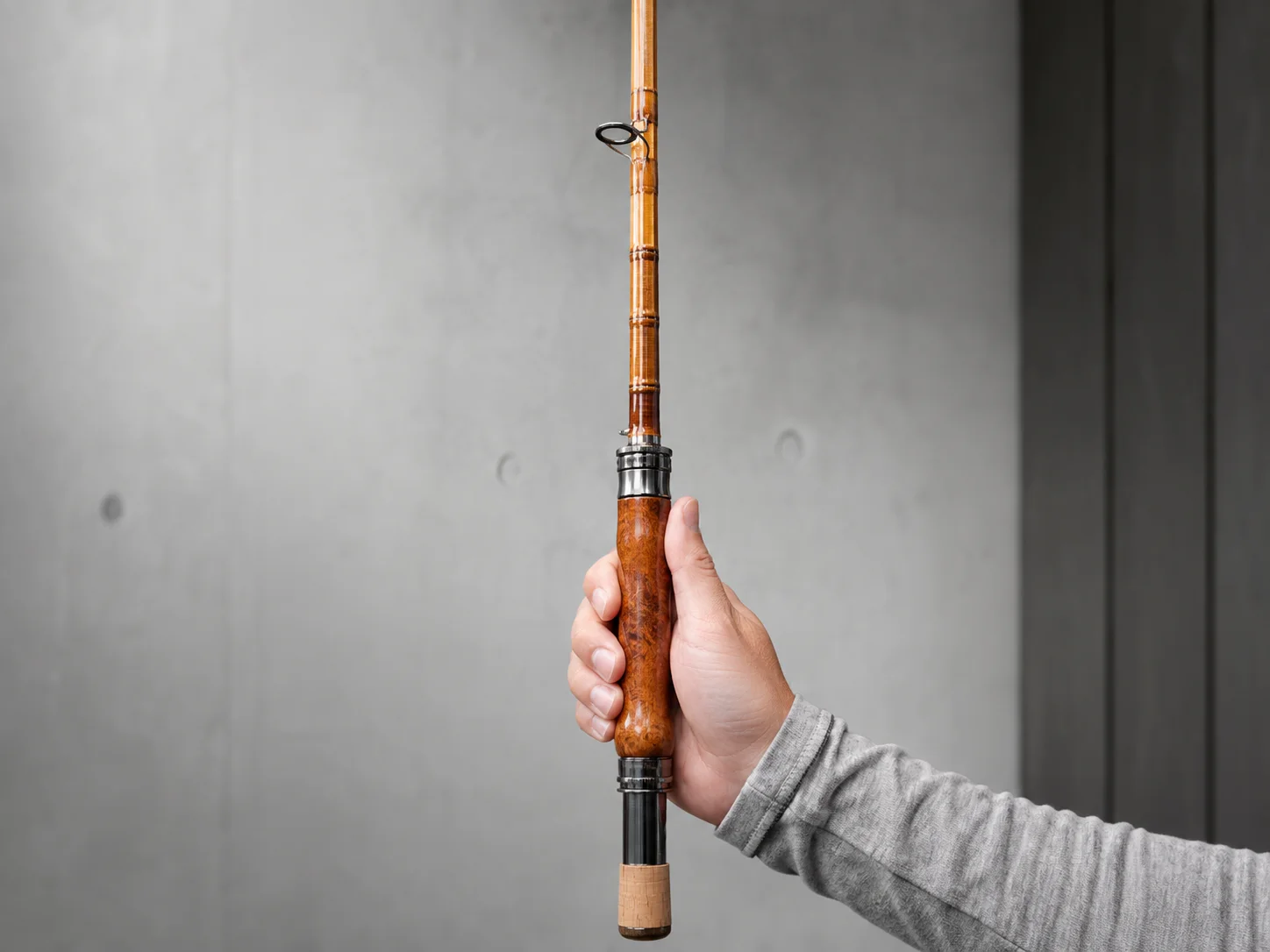
Scott Fly Rod Company’s SC series represents the intersection of traditional craft and modern performance engineering. The 7’7″ 4-weight reviewed by specialist outlets carries a medium-fast action, unusually crisp for a bamboo rod, achieved through precise taper geometry rather than any synthetic reinforcement [5].
Notable construction details:
- Amboyna burl wood reel seat with blued nickel-silver hardware
- Snakebrand guides with agate inserts
- Approximately 5 oz finished weight
- Price point around $3,600 USD [5]
The Scott SC appeals to anglers who have fished graphite their whole lives and want a bamboo rod that does not require a complete recalibration of casting style. The medium-fast action bridges the gap between modern expectations and traditional materials.
6. Oyster Bamboo Fly Rods (Custom Small-Shop Production)
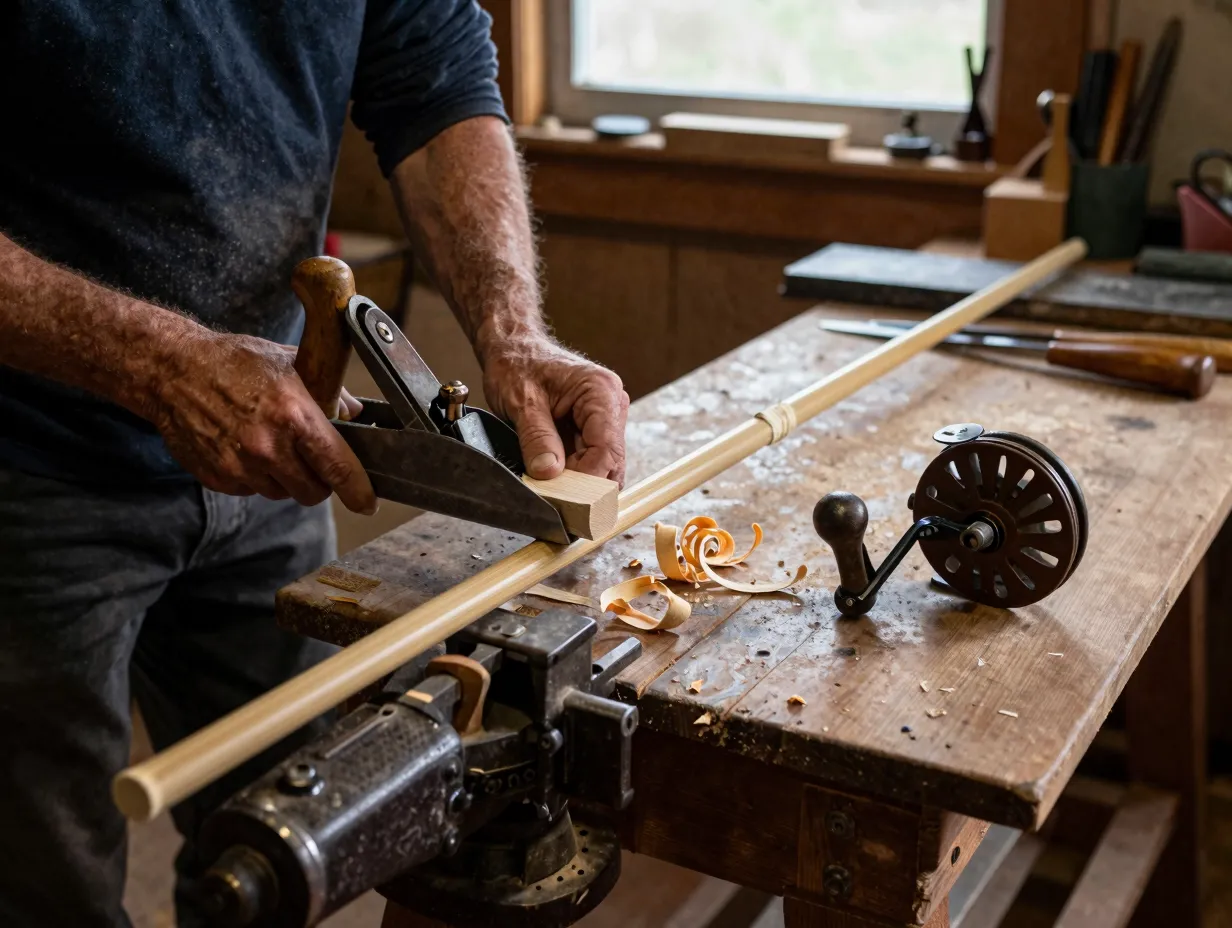
Oyster Bamboo Fly Rods operates as a family business in Blue Ridge, Georgia, producing rods one at a time and offering rod-making classes that allow customers to build their own cane rod under expert guidance [9]. This model, part maker, part school, represents a growing segment of the bamboo rod market where the experience of creation is as valued as the finished product.
Oyster pairs its rods with traditionally styled reels and accessories, reinforcing a complete aesthetic rather than selling an isolated product. The shop updated its class schedule and rod offerings in July 2026, indicating healthy demand [9].
Why Oyster stands out:
- One-at-a-time production ensures individual attention to each blank
- Rod-making classes create an informed customer base
- Family-business ethos prioritizes longevity over volume
7. Edo Wazao Traditional Japanese Bamboo Rods
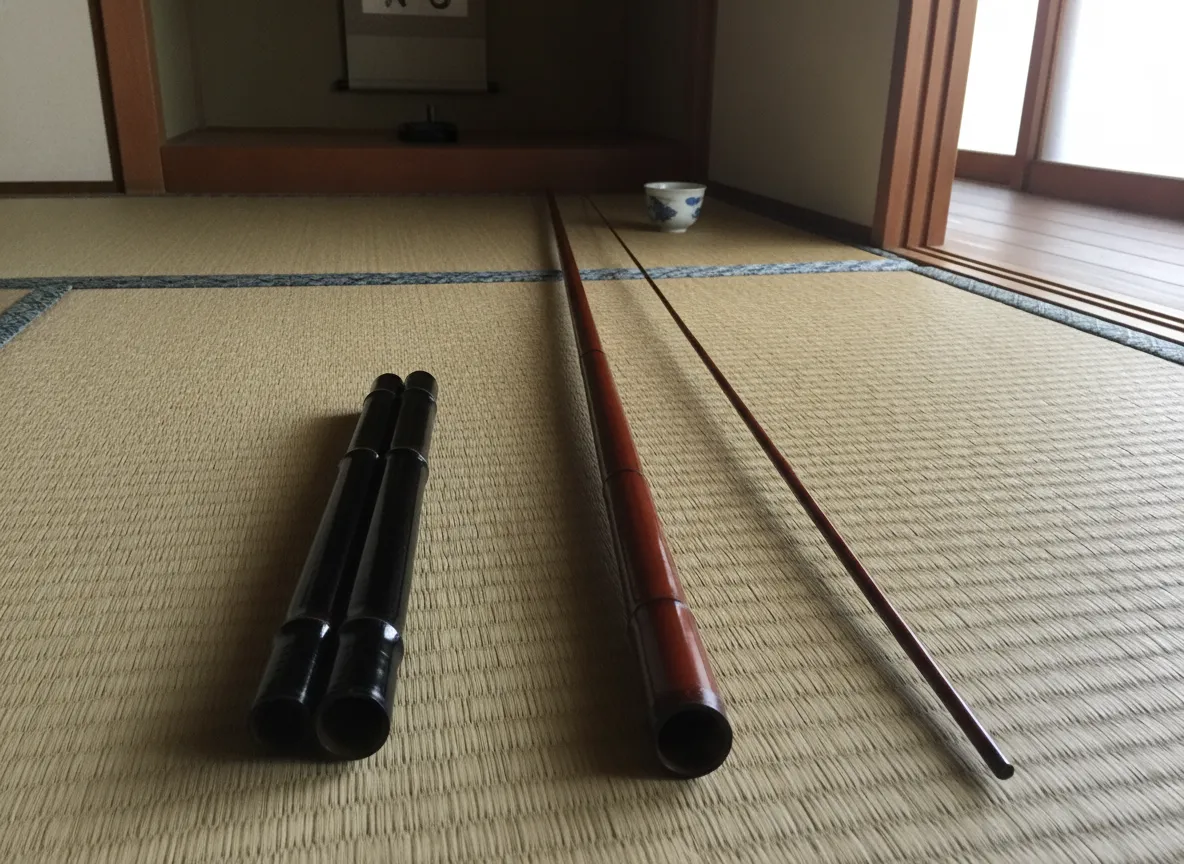
The Edo Wazao tradition dates back over 230 years to Japan’s Edo period. These rods are not split-cane constructions, they use multiple joined pieces of whole bamboo (a technique called tsugizao) assembled so that each section telescopes into the next for compact storage [2]. The result is a rod that collapses to a fraction of its fishing length, a practical innovation from an era before rod tubes and airline travel.
Modern Edo Wazao makers tailor each rod to a specific fishing style and target species, continuing a customization tradition that predates the concept of “custom rod building” in the Western sense. The craft is actively being promoted globally as a living cultural heritage, not a museum artifact [2].
Edo Wazao characteristics:
- Whole-cane construction (not split-cane)
- Telescoping multi-piece design
- Species-specific tapers and actions
- Finished with traditional Japanese lacquers
8. Tosaku Eighth-Generation Whole-Cane Rods
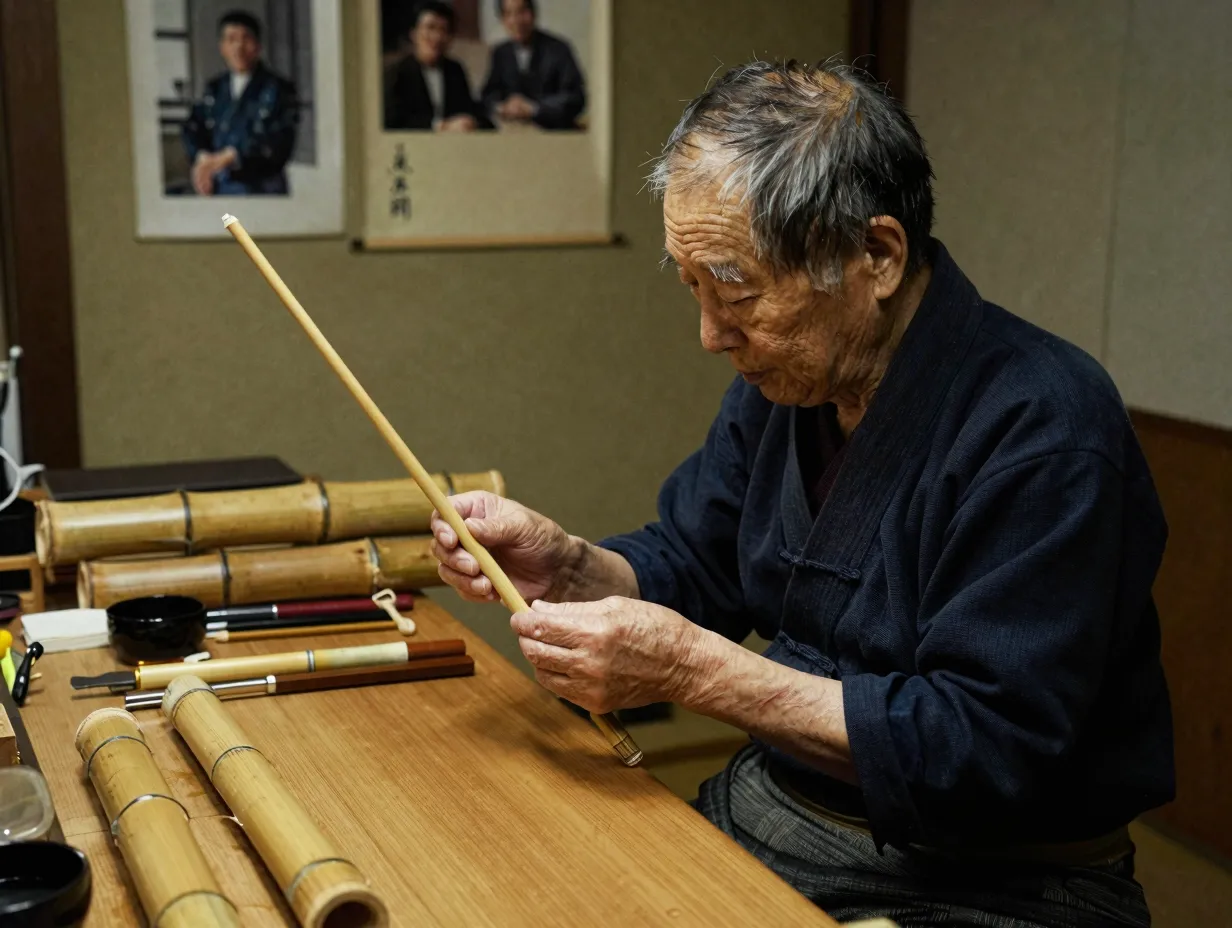
Tosaku is among the most historically significant bamboo rod makers still in active production. Now in its eighth generation of rod making, the Japanese workshop has recently expanded into online sales and international outreach while preserving whole-cane construction methods unchanged from its founding era [7].
The significance of eight generations cannot be overstated. Each generation has passed down not just technique but judgment, the ability to select the right culm, identify the correct node spacing, and feel when a taper is correct. No manual or video can fully replicate that accumulated knowledge [7].
Tosaku rods are primarily built for tenkara and traditional Japanese freshwater fishing. For collectors and serious traditionalists, acquiring a Tosaku rod in 2026 means owning a piece of a living craft lineage that spans centuries.
9. Tonkin Cane Tenkara Rods (Traditional Style)
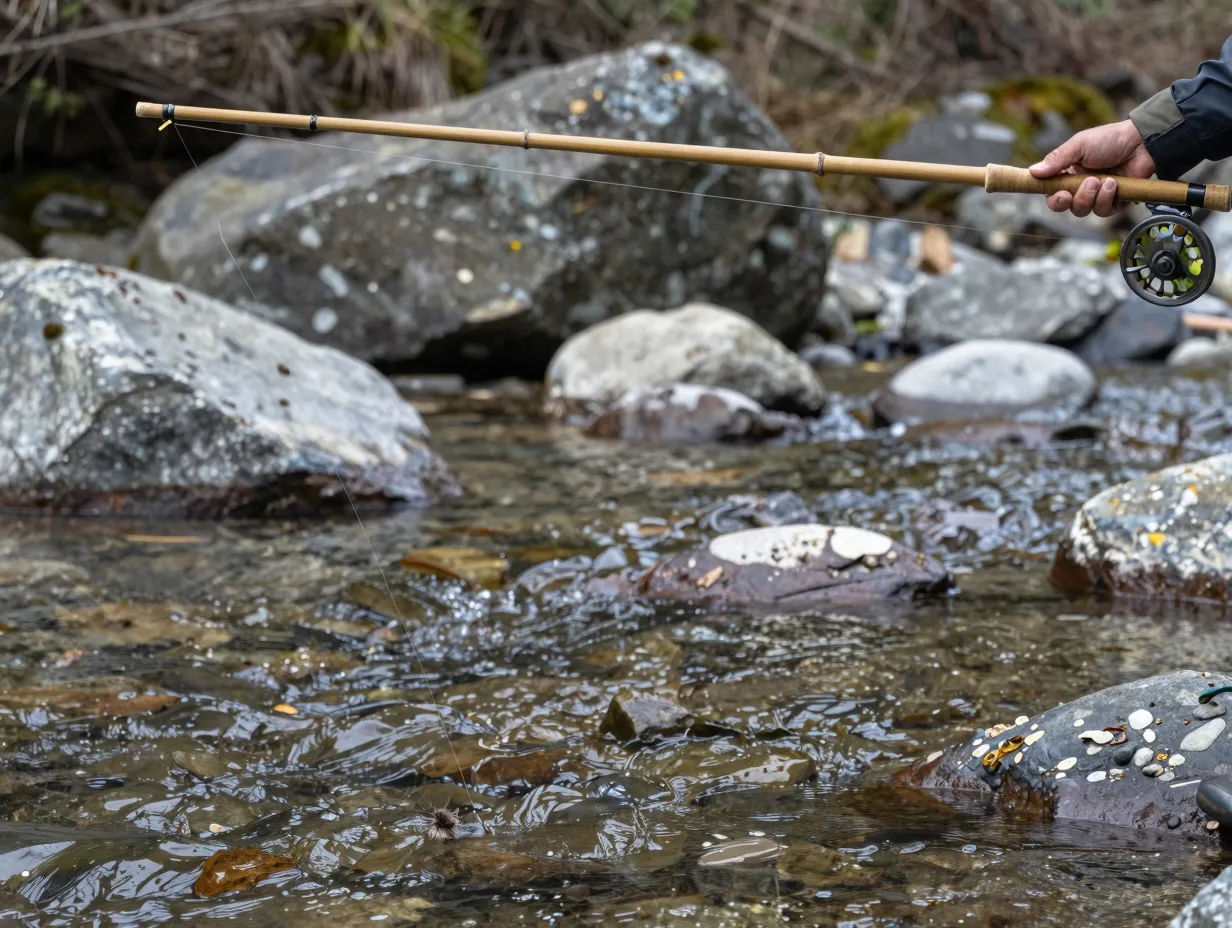
The final category in this list of 9 timeless bamboo fishing rod options for traditional craftsmanship covers the broader market for Tonkin cane tenkara rods made in the traditional style. These rods, typically ranging from 7.8 to 10.8 feet, use bamboo harvested in winter after four to seven years of growth, then subjected to multiple fire-straightening passes and anti-corrosion treatments before being finished with plant-based tung oil [8].
Tenkara bamboo rod specifications at a glance:
| Feature | Typical Range |
|---|---|
| Length | 7.8 ft, 10.8 ft |
| Bamboo age at harvest | 4-7 years |
| Line rating | 0.5-10 lb |
| Finish | Tung oil (plant-based) |
| Handle options | Custom cork, wood, or wrapped |
The tung oil finish deserves attention. Unlike synthetic coatings, tung oil penetrates the culm wall rather than forming a surface film, allowing the bamboo to respond naturally to humidity changes while still providing protection. This approach reflects a broader philosophy: work with the material’s nature rather than against it [8].
Customization options for handles and lure-fishing setups make these rods accessible to anglers who fish both traditional tenkara style and light lure methods, broadening their practical appeal beyond pure fly fishing.
How to Choose Among These 9 Options
With 9 timeless bamboo fishing rod options for traditional craftsmanship now detailed, the practical question becomes: which one fits a specific angler’s needs? The following framework simplifies that decision.
Match Rod Style to Fishing Method
Split-cane fly rods (Orvis, PJ’s, Scott SC, Oyster) are optimized for Western fly fishing, overhead casting, dry flies, nymphs, and streamers on trout water. Their hexagonal cross-section and precise tapers are engineered for loop control and line speed.
Whole-cane tenkara and Japanese-style rods (Edo Wazao, Tosaku, Tonkin tenkara) suit fixed-line fishing where no reel is used. The rod itself becomes the primary casting and fish-fighting tool, demanding different action characteristics, typically softer tips with progressive mid-section flex.
Consider the Role of Heritage
Some buyers want a rod that performs at the highest level within its style. Others want a rod that connects them to a specific cultural or historical tradition. These goals are not mutually exclusive, but they can shift priorities:
- For pure performance within bamboo fly fishing: Scott SC or PJ’s Premium Collection
- For American heritage and brand continuity: Orvis (any model in the lineup)
- For Japanese cultural heritage: Tosaku or Edo Wazao
- For the full craft experience including building: Oyster Bamboo rod-making classes
Factor in Long-Term Value
Expert commentary on fishing with inherited bamboo fly rods consistently highlights their longevity and sentimental value. Well-maintained vintage bamboo rods from the mid-20th century remain fully fishable today [4]. Buying a quality bamboo rod in 2026 is, in a meaningful sense, buying a rod for the next generation as much as for oneself.
Maintenance essentials for bamboo rod longevity:
- Store horizontally or in a rod tube to prevent set
- Dry thoroughly before storage, never put a wet rod in a sealed tube
- Apply a light coat of linseed or tung oil annually to the cane
- Inspect ferrules and wrappings after each season
Korean Handcrafted Bamboo Rods: A Separate Tradition Worth Noting
Korean bamboo rod making represents a distinct tradition that sits alongside, rather than within, the Japanese and Western split-cane lineages. Korean master makers use bamboo aged at least three years, heat-straighten each section up to eight times to achieve a precise taper, and finish rods with urushi lacquer cured at approximately 25-28 degrees Celsius [1].
One of the most distinctive features of Korean bamboo rods is the handle construction: some makers wrap handles with newspaper before applying lacquer, creating a textured grip that is both functional and visually striking. This technique is not a cost-cutting measure, it is a deliberate craft choice with roots in traditional Korean material culture [1].
Prices for Korean handcrafted bamboo rods range from hundreds to thousands of dollars, reflecting the same labor-intensive process found in Japanese and American premium rods. As of 2026, Korean makers are gaining international recognition, and their rods are increasingly sought by collectors who want to represent the full geographic breadth of bamboo rod tradition.
The Commercial Market for Bamboo Rods in 2026
The commercial market for bamboo rods remains small but diverse. Comparison and review platforms list roughly ten leading bamboo fly rods at any given time, covering 2-piece split-cane rods in the 7’6″ to 8’0″ range as the most common configurations [6]. The market is focused almost entirely on premium, traditional-style fly fishing rather than mass-market spin fishing.
This concentration has a practical implication for buyers: there are no budget bamboo fly rods worth recommending. The labor required to produce a quality cane rod, hand-splitting, repeated straightening, hand-planing, silk-wrapping, multiple finish coats, cannot be compressed into a price point that competes with graphite. Rods priced below approximately $300 from unknown makers almost certainly cut corners on materials, process, or both.
Price tier overview:
| Tier | Price Range | Representative Example |
|---|---|---|
| Entry boutique | $300,$800 | Fly-by-Day handcrafted trout rods |
| Mid premium | $800,$2,000 | PJ’s Fine Bamboo Rods Premium Collection |
| High premium | $2,000,$4,500+ | Orvis, Scott SC, Oyster custom |
| Collector/heritage | Variable | Tosaku, Edo Wazao masters |
Conclusion
The 9 timeless bamboo fishing rod options for traditional craftsmanship detailed in this guide span three continents, two fundamentally different construction philosophies, and price points from the accessible to the aspirational. What unites them is a shared commitment to material honesty, using bamboo the way it demands to be used, not forcing it to imitate graphite.
Actionable next steps for prospective buyers:
- Identify the primary fishing method first (Western fly fishing versus tenkara versus traditional Asian styles) before evaluating any specific rod.
- Request a casting demonstration or video from any maker before purchasing a rod above $1,000, reputable makers welcome this.
- Consider a rod-making class at a shop like Oyster Bamboo before buying a finished rod; understanding the construction process transforms the ownership experience.
- Budget for a rod tube and proper storage from day one, the difference between a rod that lasts 20 years and one that lasts 100 years is almost entirely maintenance.
- Research the maker’s lineage and process, not just the finished specifications. The story behind a Tosaku rod or an Edo Wazao master’s work is inseparable from its value.
Bamboo rod making is not a dying art. It is a living one, practiced with increasing sophistication by makers who understand exactly what they are preserving, and why it matters.
References
[1] Watch – https://www.youtube.com/watch?v=1N5gm2965tw
[2] Watch – https://www.youtube.com/watch?v=e82QUQ3tlJA
[3] Premium Collection Custom Bamboo Fly Rod – https://pjsfinebamboo.com/product/premium-collection-custom-bamboo-fly-rod/
[4] A Look At Fishing With Your Grandfathers Fly Fishing Rod – https://www.sungazette.com/news/outdoors/2026/07/a-look-at-fishing-with-your-grandfathers-fly-fishing-rod/
[5] Scott Split Cane Seven Foot Seven Inch Fly Rod – https://www.flylab.fish/reviews/scott-split-cane-seven-foot-seven-inch-fly-rod
[6] Bamboo – https://www.findthisbest.com/best-fly-fishing-rods/bamboo
[7] Tosaku Bamboo Fishing Rods – https://fallfishtenkara.com/tosaku-bamboo-fishing-rods/
[8] Bamboo Tenkara Rod – https://www.discovertenkara.com/knowledge/bamboo-tenkara-rod/
[9] oysterbamboo – https://oysterbamboo.com/
[10] Bamboo Fly Fishing Rods – https://www.orvis.com/fly-fishing/rods-reels-line/fly-rods/bamboo-fly-fishing-rods