9 Blue Marlin Fishing Secrets for Landing Your Trophy Catch
Only about 1 in 10 blue marlin hooked during offshore tournaments ever makes it to the leader, and that ratio has humbled some of the most experienced captains on the water. The gap between a strike and a successful release or weigh-in is filled with decisions made in seconds, gear set up days before departure, and knowledge built over years on the ocean. These 9 Blue Marlin Fishing Secrets for Landing Your Trophy Catch cut through the noise and deliver the strategies that consistently separate trophy anglers from those who return to the dock empty-handed. Whether targeting the blue water off Kona, the Azores, or the Gulf of Mexico, these principles apply across every major blue marlin fishery in 2026.
Disclosure: This post contains affiliate links. As an Amazon Associate, we earn from qualifying purchases, and at no extra cost to you.
Key Takeaways
- Trolling speed and spread geometry are the single biggest controllable factors in triggering blue marlin strikes
- Heavy, properly calibrated tackle with measured drag settings prevents the majority of lost fish
- A disciplined lure and bait mix, not more lines in the water, produces better results
- Reading sea conditions, temperature breaks, and current edges is as important as any piece of gear
- Preparation before the trip, from rigging to crew coordination, determines outcomes more than in-the-moment luck
Understanding Blue Marlin Behavior Before Applying the 9 Blue Marlin Fishing Secrets for Landing Your Trophy Catch
Blue marlin (Makaira nigricans) are apex predators built for speed and power. Adults regularly exceed 400 pounds, and the largest confirmed specimens surpass 1,800 pounds [2]. They are highly migratory, following warm water masses and the baitfish schools that concentrate along temperature breaks and current edges. Understanding this behavior is the foundation on which every tactical secret below is built.
Blue marlin are primarily visual hunters. They use their bill to stun prey before circling back to eat, which explains why so many strikes happen on the short corner lure and why a missed hookup often results in the fish returning for a second pass [8]. They prefer water temperatures between 70°F and 86°F, and they concentrate in areas where the thermocline rises close to the surface [5].
Key behavioral facts:
- Blue marlin feed most aggressively during the early morning and late afternoon windows
- They are drawn to color, motion, and bubble trails, not just scent
- Large fish tend to travel alone or in very small groups, unlike smaller pelagics
- They will investigate a spread for several seconds before committing, giving the crew a reaction window [9]
The 9 Blue Marlin Fishing Secrets for Landing Your Trophy Catch
1. Dial In Trolling Speed to the Sweet Spot
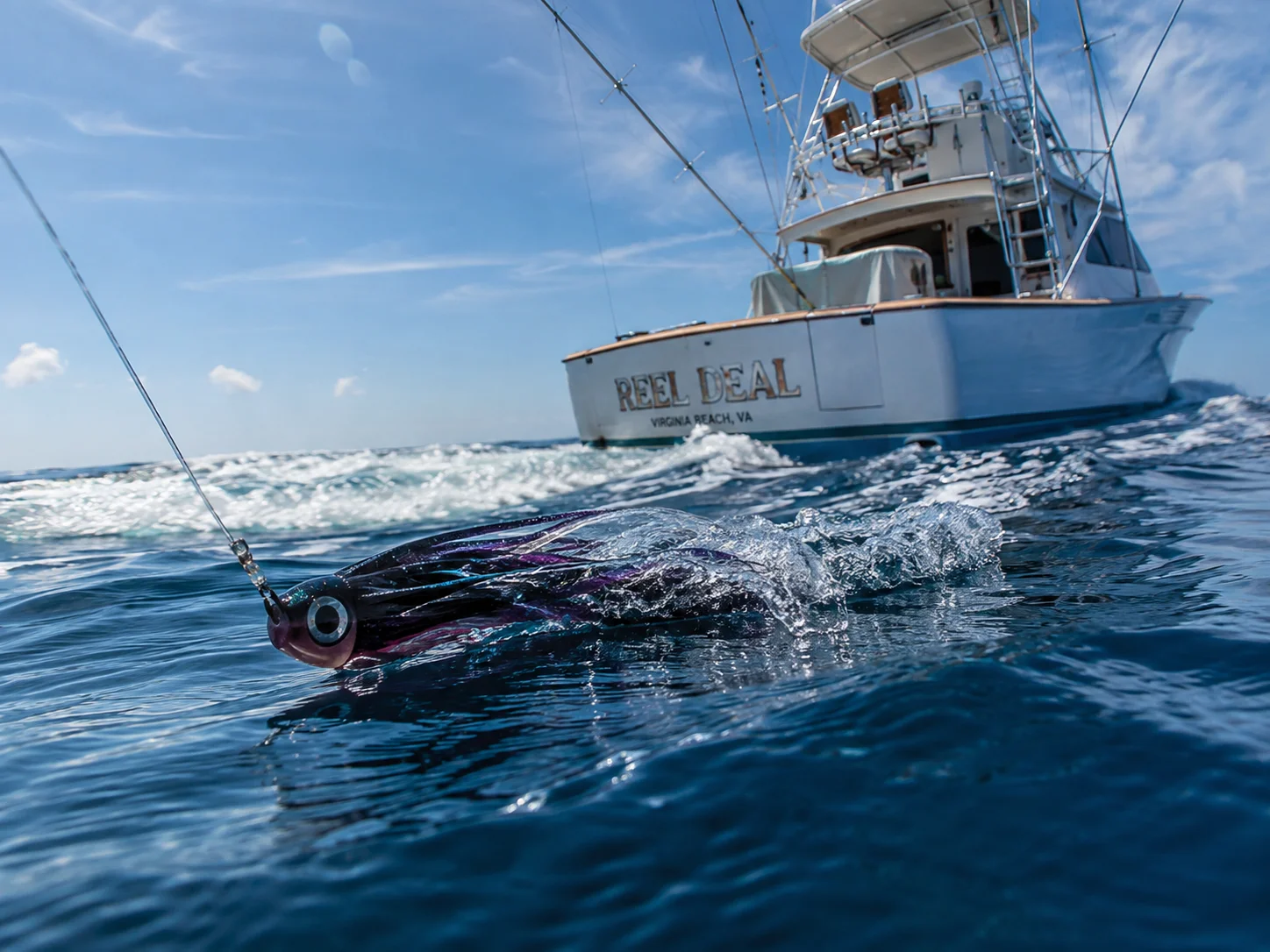
Speed is the most underrated variable in a blue marlin spread. The accepted productive range runs from 7 to 10 knots, but the optimal speed within that window depends on sea state, lure type, and bait rigging [3]. Running too slow causes soft-head lures to spin erratically and dead baits to wash out. Running too fast pulls natural baits out of their action zone and causes hard-head lures to skip uncontrollably.
The standard starting point for most offshore conditions is 8 to 9 knots. In rougher seas, slowing to 7.5 knots keeps the spread cleaner. In flat, calm conditions, pushing toward 9.5 knots adds urgency to the presentation and can trigger reaction strikes from following fish [3].
Speed calibration tips:
- Always verify speed over ground with GPS, not just engine RPM
- Adjust throttle in 0.2-knot increments and observe lure action before committing
- Log productive speeds by sea state in a trip journal for future reference
2. Set a Disciplined W-Pattern Trolling Spread
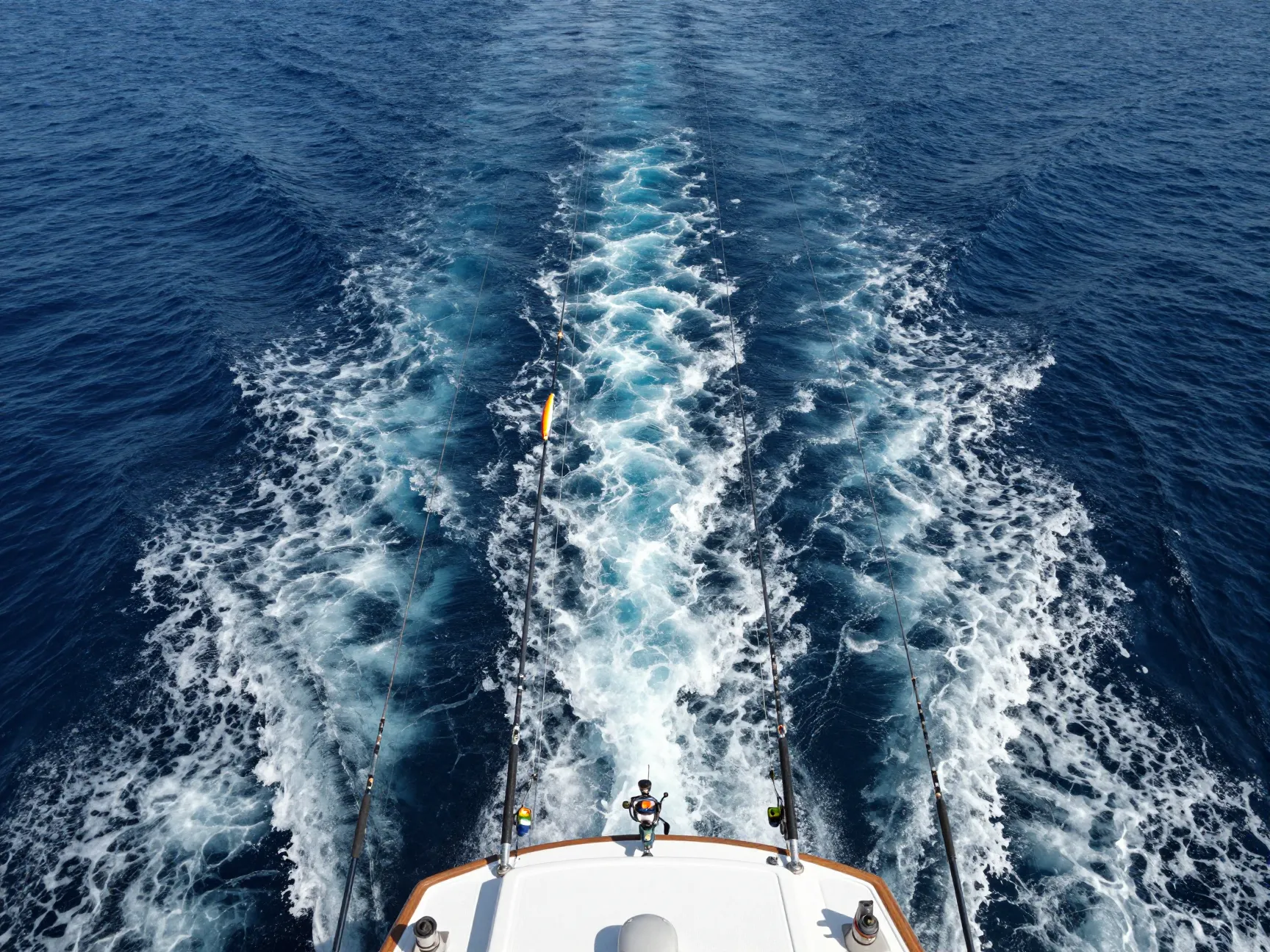
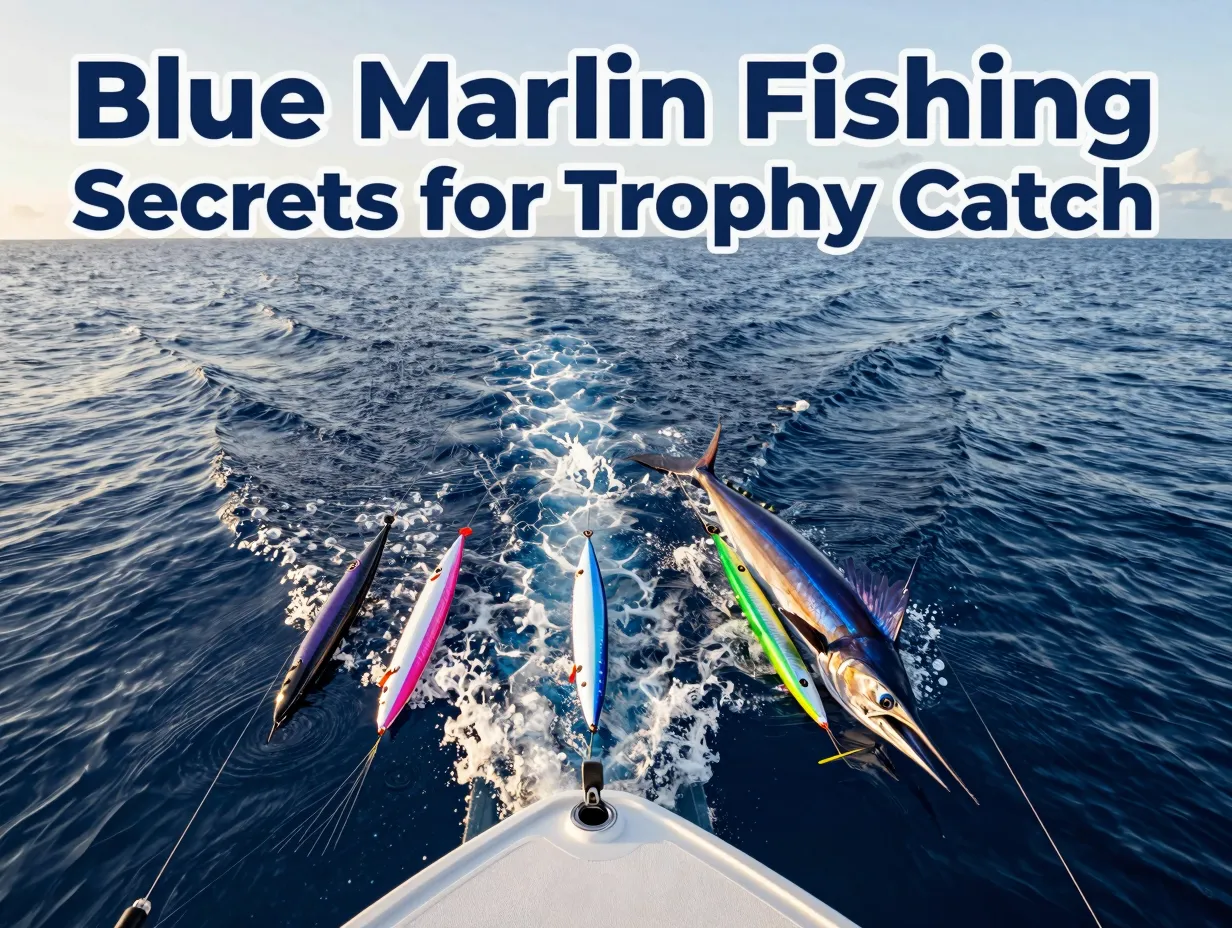
A random arrangement of lines is not a spread, it is a liability. The W-pattern is the industry-standard configuration for blue marlin because it creates a staggered, three-dimensional presentation that mimics a fleeing bait school and keeps lines from tangling during turns [3].
A proven four-lure configuration with teasers:
| Position | Distance from Transom | Lure/Bait Type |
|---|---|---|
| Short rigger | 30-40 feet | Large skirted lure or rigged ballyhoo |
| Long rigger | 60-80 feet | Medium skirted lure |
| Short corner | 15-20 feet | Hookless teaser or small lure |
| Long corner | 45-55 feet | Heavy skirted lure |
| Center flat line | 20-30 feet | Rigged natural bait |
Some captains run up to seven lures, adding a long flat line and a second teaser, but discipline matters more than volume [3]. Every line in the water is a potential tangle, and a tangled spread during a hot bite is a costly mistake.
3. Build a Varied but Disciplined Lure and Bait Mix
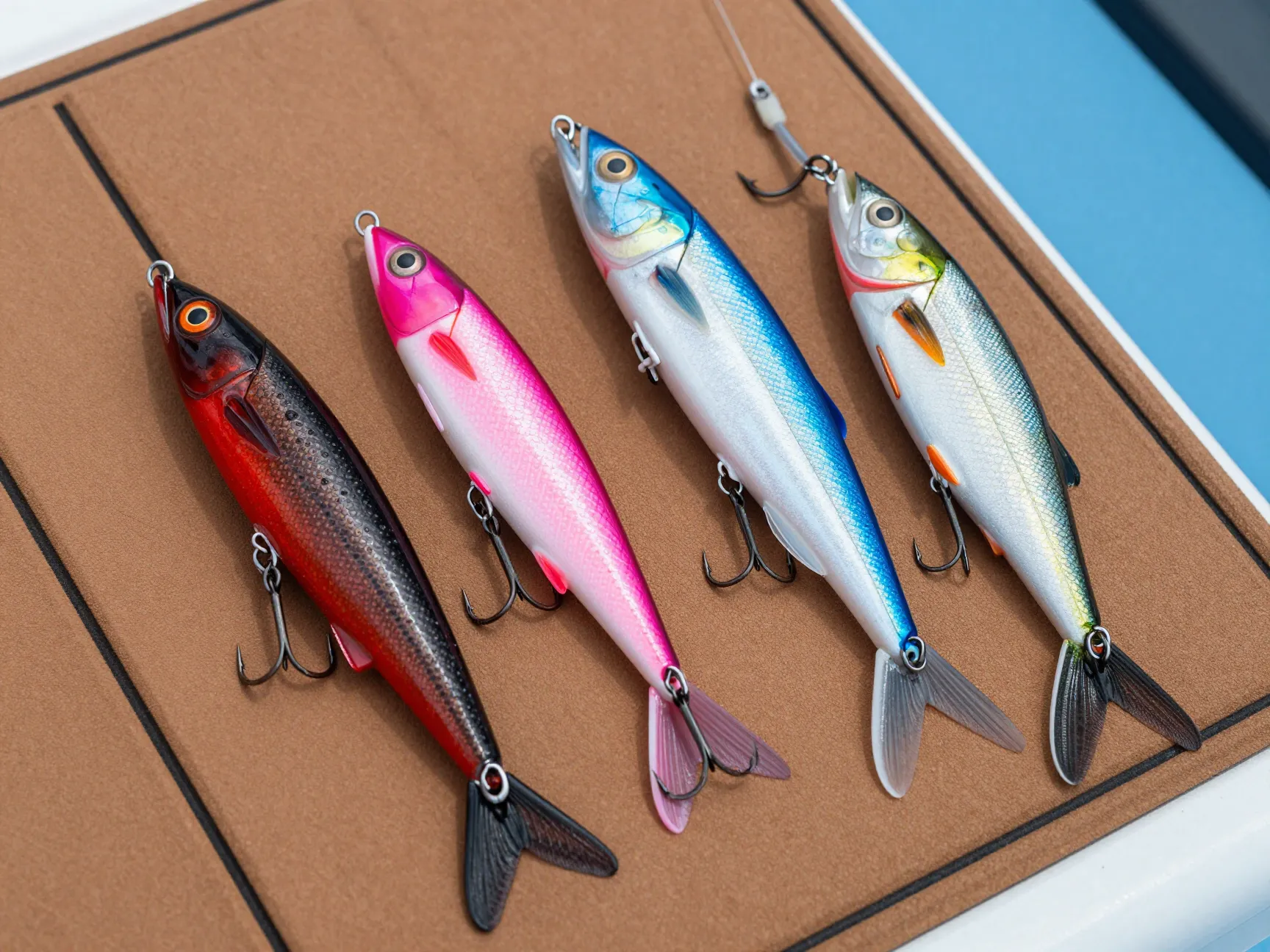
The most productive spreads combine four large skirted lures with one or two teasers, or substitute one lure position for a rigged natural bait [3]. The logic is simple: different lures create different bubble trails, action patterns, and color contrasts, which together simulate a real bait school rather than a uniform parade of identical offerings.
Recommended mix components:
- One large, dark-colored lure (black/purple or black/red) for deep, dark water
- One bright attractor (pink/white or chartreuse) for high-sun midday conditions
- One natural-colored lure (blue/white or green/yellow) as a neutral option
- One rigged ballyhoo or skip bait for scent and natural profile
- One or two hookless teasers to raise fish and draw them into the strike zone [6]
“The teaser is not decoration, it is the most important tool for closing the distance between a curious marlin and a committed strike.”
Rotate colors based on water clarity and cloud cover. Darker, dirtier water favors brighter, high-contrast lures. Clear blue water rewards more natural presentations [5].
4. Rig Natural Baits Correctly for Maximum Action
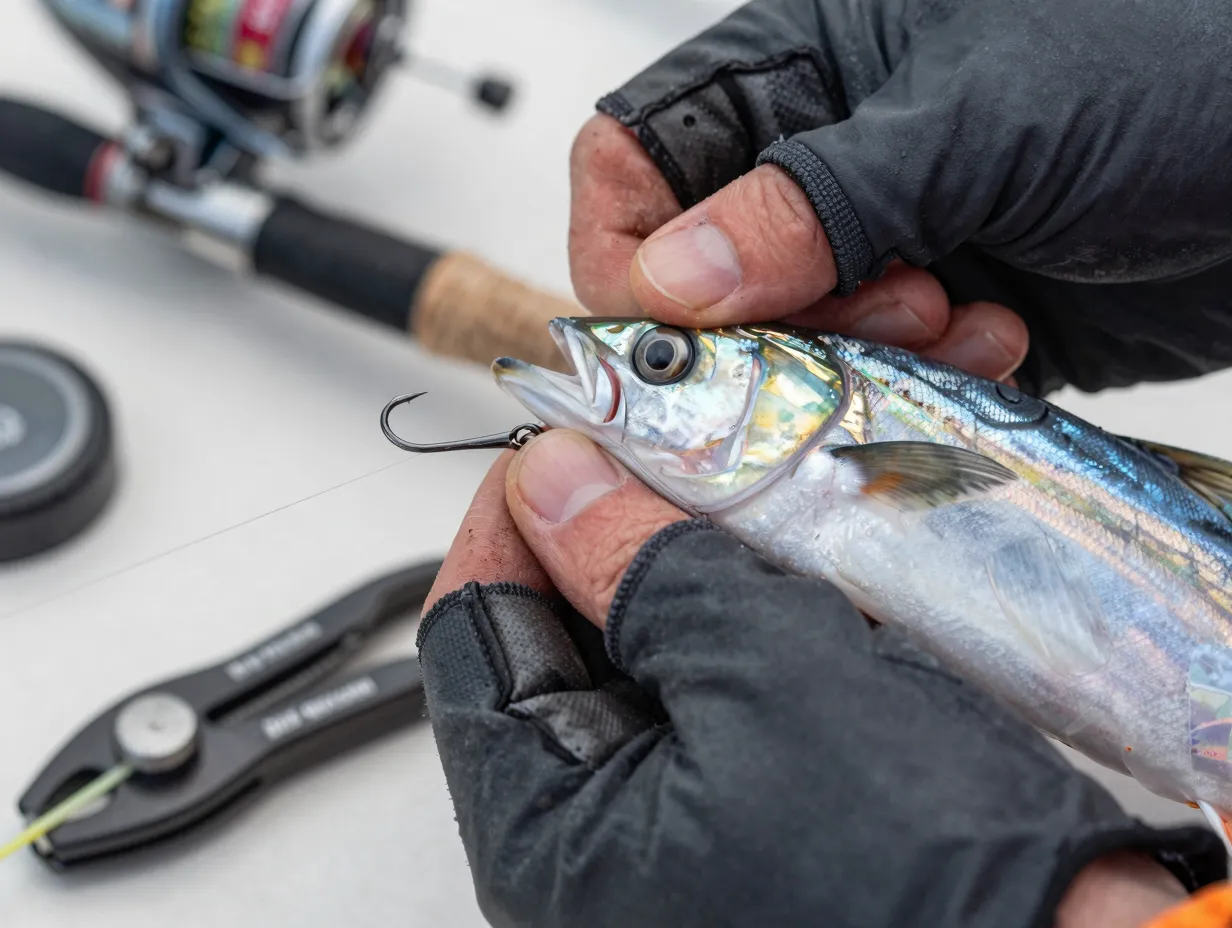
A poorly rigged natural bait catches nothing. The most commonly used natural baits for blue marlin include ballyhoo, mackerel, bonito strips, and squid [1]. Each requires a specific rigging method to achieve the swimming action that triggers strikes.
Ballyhoo rigged on a 9/0 to 12/0 circle hook with a 200- to 400-pound fluorocarbon or cable leader should swim with a slight side-to-side wobble, not spin. Spinning baits are a sign of improper hook placement or a bent bill. Breaking the ballyhoo’s bill before rigging prevents spinning and is a standard technique among experienced mates [6].
Natural bait rigging checklist:
- Use fresh or properly thawed baits, never mushy or discolored bait
- Sew the bait closed after inserting the hook to prevent water pressure from opening it
- Crimp all connections on wire leaders; do not rely on knots alone for heavy leaders
- Check bait action at boat speed before setting the line in the rigger clip
5. Match Tackle Weight to the Target Fish
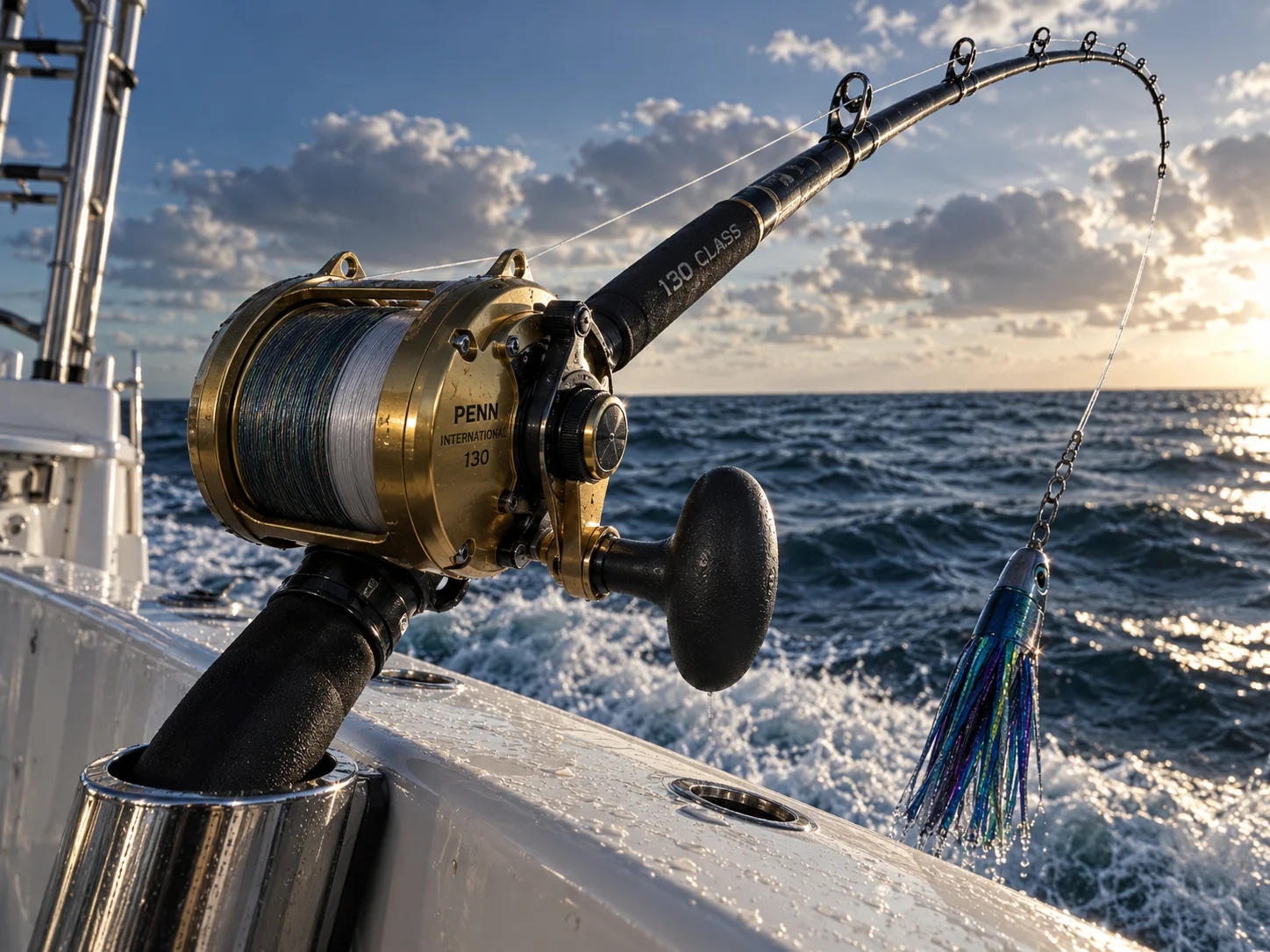
Blue marlin fishing demands heavy, purpose-built tackle. Undersized gear leads to prolonged fights that exhaust fish and increase mortality rates, a serious concern given that most tournaments now operate under catch-and-release rules [7].
The standard setup for targeting large blue marlin:
- Rod: 80- to 130-pound class stand-up or bent-butt trolling rod
- Reel: High-capacity lever-drag reel (Penn International 130, Shimano Tiagra 130, or equivalent)
- Line: 80- to 130-pound monofilament or 65- to 100-pound braided line with a mono topshot
- Leader: 200- to 400-pound fluorocarbon or cable wire, 15 to 30 feet in length [6]
Braided line offers a thinner diameter for the same breaking strength, which reduces drag in the water and allows deeper lure presentation, but it requires careful knot management and a quality mono topshot to absorb shock [8].
6. Set Strike and Bite Drag Precisely
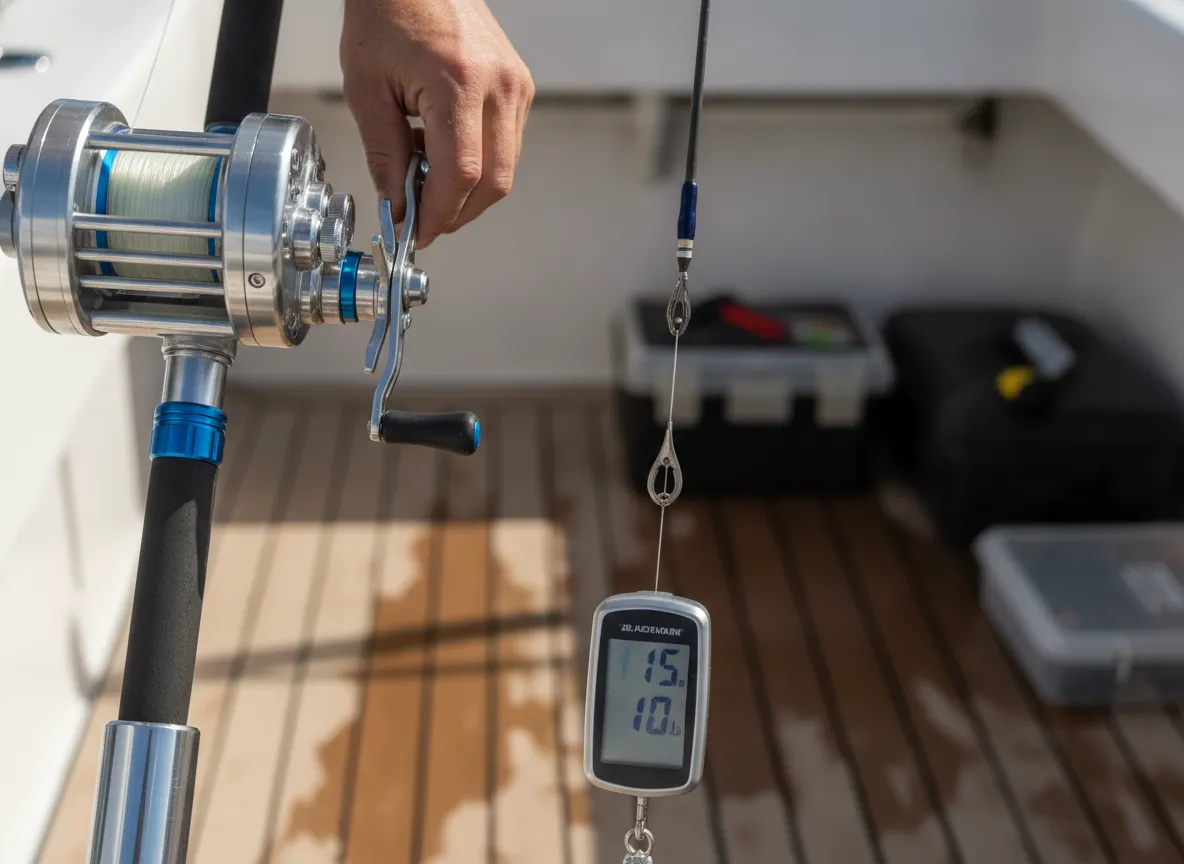
Drag settings are where most trophy fish are lost. Two distinct drag settings are required: the strike drag and the bite drag (also called the fishing drag).
- Bite drag: Set at approximately 10 to 15 percent of line breaking strength. This is the setting used while trolling, light enough to allow a marlin to pull line freely after the initial strike without feeling resistance that causes it to drop the bait [3].
- Strike drag: Set at 25 to 33 percent of line breaking strength. This is engaged after the fish is hooked and the angler is in the fighting chair or standing with a harness [3].
A practical drag calibration method:
- Attach a reliable handheld scale to the line at the rod tip
- Pull the scale while a second person holds the rod at fighting angle
- Adjust the drag lever until the scale reads the target poundage
- Mark the lever position with a paint pen for consistent repeatability
Never guess drag settings. A 130-pound line set at 33 percent requires approximately 43 pounds of drag at strike, a number that must be measured, not estimated [9].
7. Read the Water Before Leaving the Dock
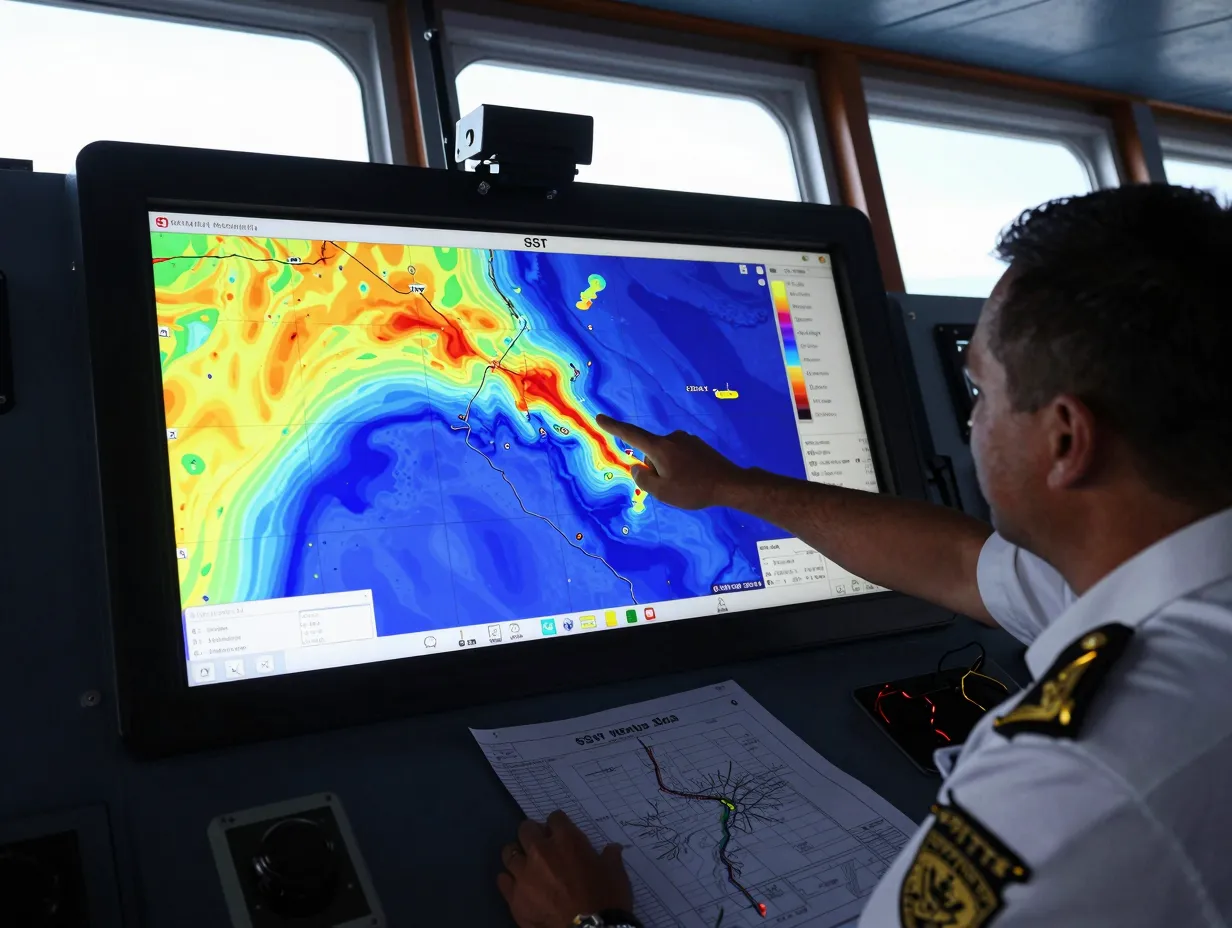
The best captains spend as much time studying sea surface temperature (SST) charts and satellite imagery as they do maintaining their boats. Blue marlin concentrate predictably along temperature breaks, current edges, and underwater structure [4].
Key water-reading indicators:
- SST breaks of 2°F or more over a short distance concentrate baitfish and the marlin that follow them
- Color changes from green or murky water to deep blue signal the edge of the productive offshore zone
- Floating debris, weed lines, and bird activity mark current edges where bait schools stack up
- Underwater seamounts, ridges, and canyon walls create upwellings that bring nutrients and bait to the surface [5]
Free and subscription-based SST tools, including Hilton’s Realtime Navigator, Terrafin, and NOAA satellite composites, allow anglers to identify productive zones before departure and reduce unproductive running time significantly.
8. Master the Hookup and First 60 Seconds
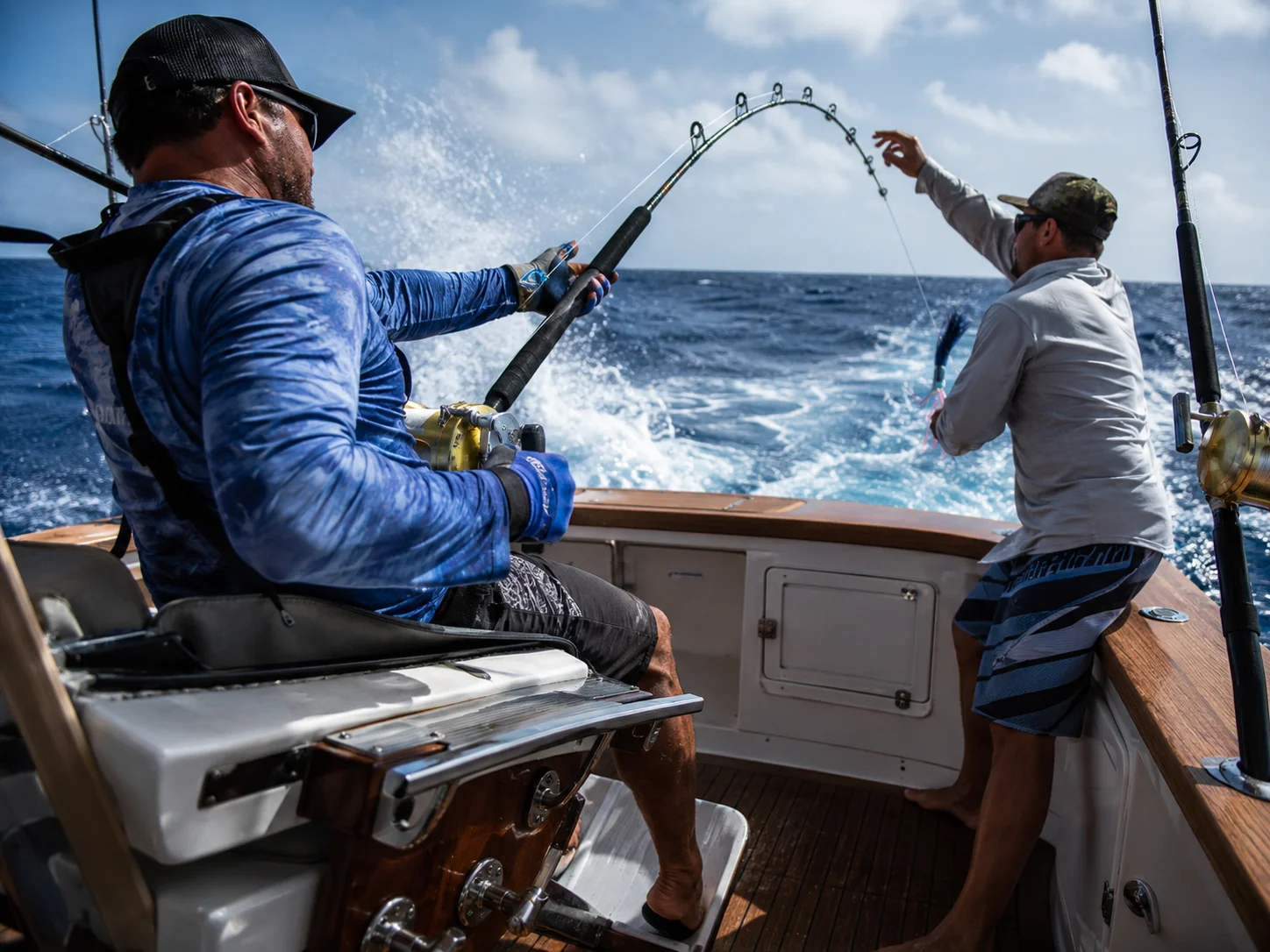
The moment of the strike is the highest-risk phase of the entire encounter. More blue marlin are lost in the first 60 seconds than at any other point in the fight [9]. The sequence of events during this window must be rehearsed until it is automatic.
The hookup sequence:
- When a marlin appears in the spread, do not touch the throttle immediately, let it investigate
- When it strikes, drop back the line (free spool or reduce drag to minimum) for 3 to 5 seconds to allow the fish to turn and swallow or fully commit to the bait
- Engage the drag to strike setting and come tight on the fish with a firm, sweeping rod lift
- Clear all other lines immediately, a tangled second line during the initial run is a fight-ender
- Maintain constant pressure; never allow slack in the line [8]
For lure fishing without a drop-back, the hookup is immediate, the fish hooks itself against the drag. In this case, clearing lines and getting the angler into the fighting chair is the priority within the first 30 seconds.
9. Fight Smart: Boat Handling Determines the Outcome
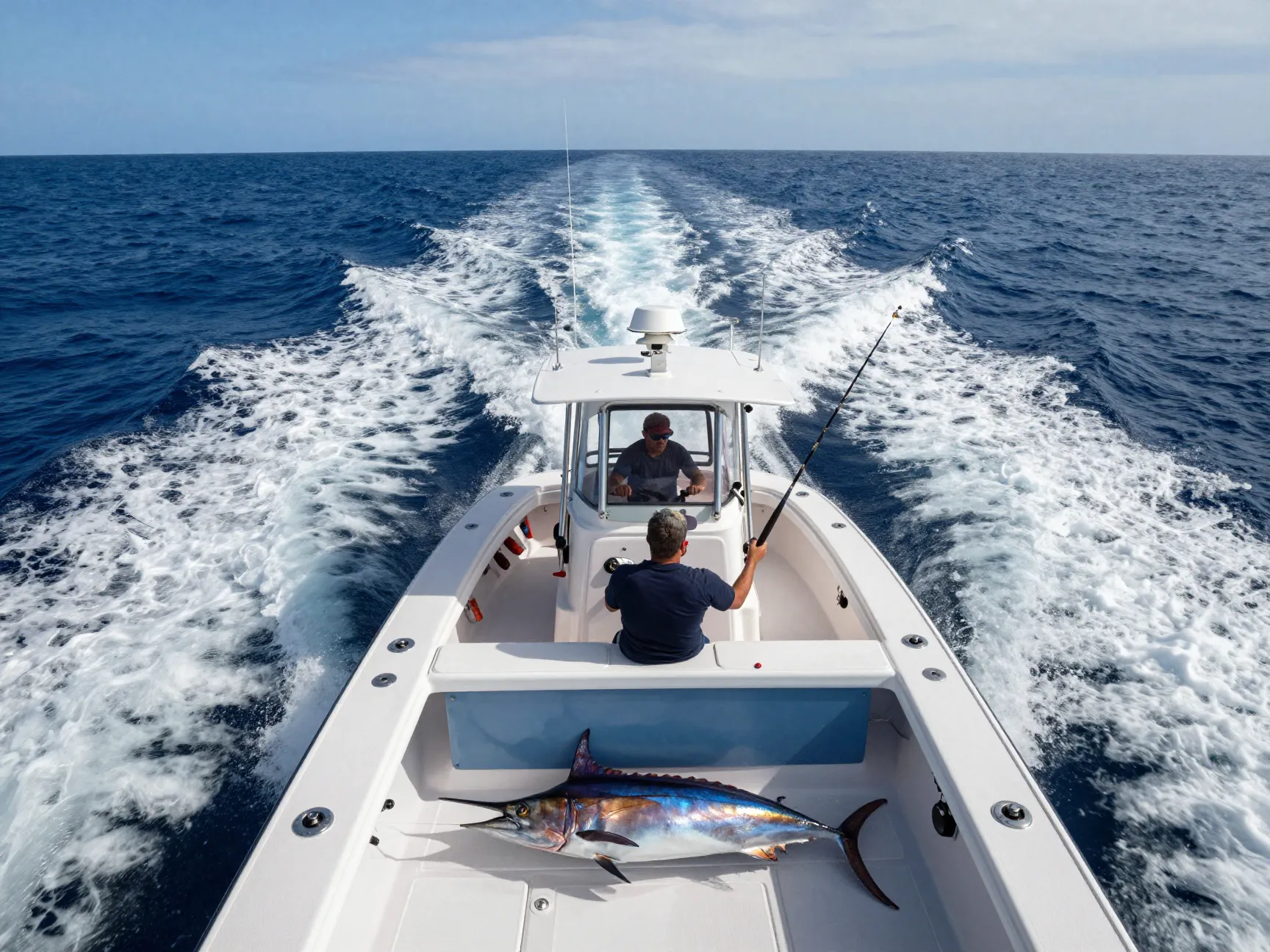
The captain’s role during the fight is as critical as the angler’s. Boat handling, using throttle and steering to maintain optimal line angle and reduce pressure on the angler, is the difference between a 20-minute fight and a two-hour war of attrition [3].
Boat handling principles during the fight:
- Keep the fish at a 45-degree angle off the stern whenever possible
- Back down aggressively when the fish makes long runs to recover line quickly
- Never allow the fish to get directly behind the boat, this creates a straight pull that maximizes stress on all tackle components
- When the fish jumps, bow the rod tip toward the fish (“bowing to the king”) to create slack and prevent the hook from levering out [8]
- Communicate constantly between captain, angler, and mate, call out every move before it happens
“The captain who backs down hard and keeps the angler’s angle tight wins more fish than the one who lets the marlin dictate the geometry of the fight.”
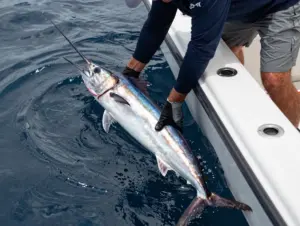
The final stage, bringing the fish to leader, requires the mate to handle the leader with heavy gloves, controlling the fish for either a tag-and-release or a legal boatside weigh-in. Rushing this stage causes more last-minute losses than any other single error [7].
Bonus Considerations: Location, Season, and Conservation
Applying these 9 Blue Marlin Fishing Secrets for Landing Your Trophy Catch is most effective when paired with smart destination and timing choices. The top blue marlin fisheries in 2026 include Kona, Hawaii (year-round with a peak from June through September), the Azores (June through October), Madeira, Cape Verde, the Gulf of Mexico (spring and summer), and the Caribbean coast of Puerto Rico [1][4].
Conservation note: The International Game Fish Association (IGFA) strongly encourages catch-and-release for blue marlin, which are listed as a vulnerable species under international assessments. Proper release technique, keeping the fish in the water, reviving it before release, and avoiding prolonged fights, significantly improves post-release survival rates [7].
Conclusion
Landing a trophy blue marlin is not an accident. It is the result of deliberate preparation, disciplined tackle management, and tactical decision-making executed under pressure. The 9 Blue Marlin Fishing Secrets for Landing Your Trophy Catch outlined here, from dialing in trolling speed and building a proper spread to mastering the hookup sequence and fighting with smart boat handling, represent the core knowledge base that separates consistent producers from occasional lucky anglers.
Actionable next steps for anglers in 2026:
- Audit current tackle and replace any line, leader, or hardware that shows wear before the next trip
- Practice drag calibration with a handheld scale until the process takes less than two minutes per rod
- Subscribe to a real-time SST service and study charts for the target fishery two weeks before departure
- Brief the entire crew, captain, mates, and anglers, on the hookup sequence and boat handling plan before leaving the dock
- Commit to catch-and-release practices and learn proper revival and tagging techniques through IGFA resources [7]
The ocean does not reward complacency. Apply these secrets with consistency, and the trophy catch will follow.
References
[1] Blue Marlin Fishing – https://fishingbooker.com/blog/blue-marlin-fishing/
[2] Blue Marlin – https://www.marlinmag.com/blue-marlin/
[3] Blue Marlin Lure Trolling Spread And How To Tips Fight Billfish With Boat – https://www.marlinmag.com/blue-marlin-lure-trolling-spread-and-how-to-tips-fight-billfish-with-boat/
[4] Marlin Fishing – https://fishingbooker.com/blog/marlin-fishing/
[5] Blue Marlin – https://www.howtocatchanyfish.com/blue-marlin
[6] Blue Marlin Fishing Tips Techniques Gear – https://huk.com/blogs/news/blue-marlin-fishing-tips-techniques-gear
[7] Blue Marlin Dreams – https://igfa.org/2021/01/29/blue-marlin-dreams/
[8] Blue Marlin The Ultimate Game Fish 288 – https://inthespread.com/blog/blue-marlin-the-ultimate-game-fish-288
[9] Blue Marlin Fishing Tips For Success 282 – https://inthespread.com/blog/blue-marlin-fishing-tips-for-success-282