9 Fun & Educational Outdoor Survival Activities for Kids
Only 10 percent of American children spend time outdoors every day, according to research from the Children and Nature Network, a dramatic decline from previous generations who spent afternoons building forts, reading trails, and learning to start fires safely under adult supervision. That gap between kids and the natural world is not just a cultural loss; it is a practical one. The 9 Fun & Educational Outdoor Survival Activities for Kids outlined in this guide are designed to close that gap by turning wilderness skills into engaging, age-appropriate challenges that build confidence, critical thinking, and resilience. Whether a child is six or sixteen, these activities meet them where they are and grow with them.
Disclosure: This post contains affiliate links. As an Amazon Associate, we earn from qualifying purchases, and at no extra cost to you.
Key Takeaways
- Outdoor survival activities teach children practical life skills including navigation, fire safety, shelter building, and first aid.
- These activities are most effective when structured as games or challenges rather than formal lessons.
- Age-appropriate progression keeps children engaged and prevents frustration or unnecessary risk.
- Parental or adult supervision is essential for activities involving fire, sharp tools, or water.
- Regular practice, even in a backyard, reinforces skills and builds lasting outdoor confidence.
Why Outdoor Survival Skills Matter for Children in 2026
Modern childhoods are increasingly screen-centered. The average child in the United States spends more than seven hours per day in front of a screen, while research consistently links time in nature to improved attention, reduced anxiety, and stronger problem-solving abilities. Outdoor survival education offers a rare combination: it is genuinely fun, deeply practical, and academically enriching.
Survival skills also build what educators call “self-efficacy”, the belief that one can handle challenges independently. When a child successfully navigates a trail using only a compass, or filters water through a homemade purifier, that moment of competence is irreplaceable. No classroom worksheet produces the same result.
The activities below are organized to be progressively challenging. Start with the simpler ones for younger children and layer in complexity as confidence grows.
The 9 Fun & Educational Outdoor Survival Activities for Kids, Explained
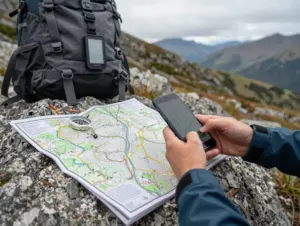
1. Map Reading and Compass Navigation
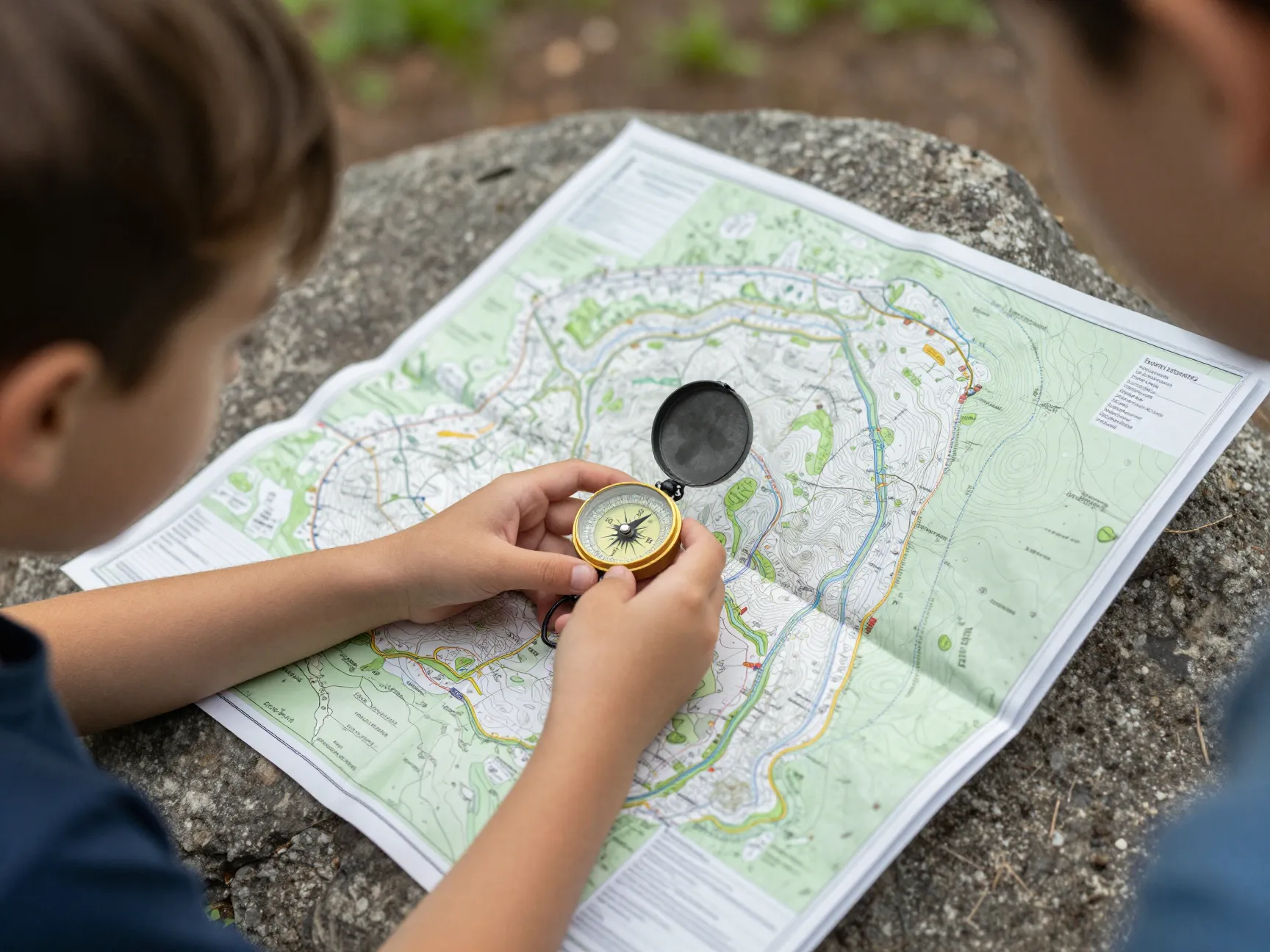
Navigation is one of the most transferable survival skills a child can learn. It blends mathematics, spatial reasoning, and real-world geography into a single hands-on exercise.
How to do it:
Begin with a printed topographic map of a local park or trail system. Teach children to identify landmarks, contour lines, and cardinal directions. Then introduce a baseplate compass and explain how to take a bearing.
Progress to a simple orienteering course, a sport widely practiced in schools across Scandinavia and increasingly popular in North America, where children move between checkpoints using only a map and compass. Many local orienteering clubs offer beginner courses specifically designed for families.
What children learn: Spatial reasoning, patience, decision-making under uncertainty, and basic geometry.
Age range: 7 and up for basic map reading; 10 and up for full orienteering courses.
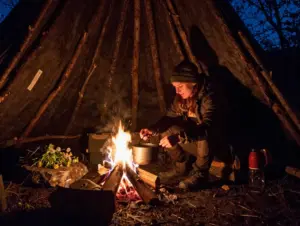
2. Fire Safety and Fire Starting
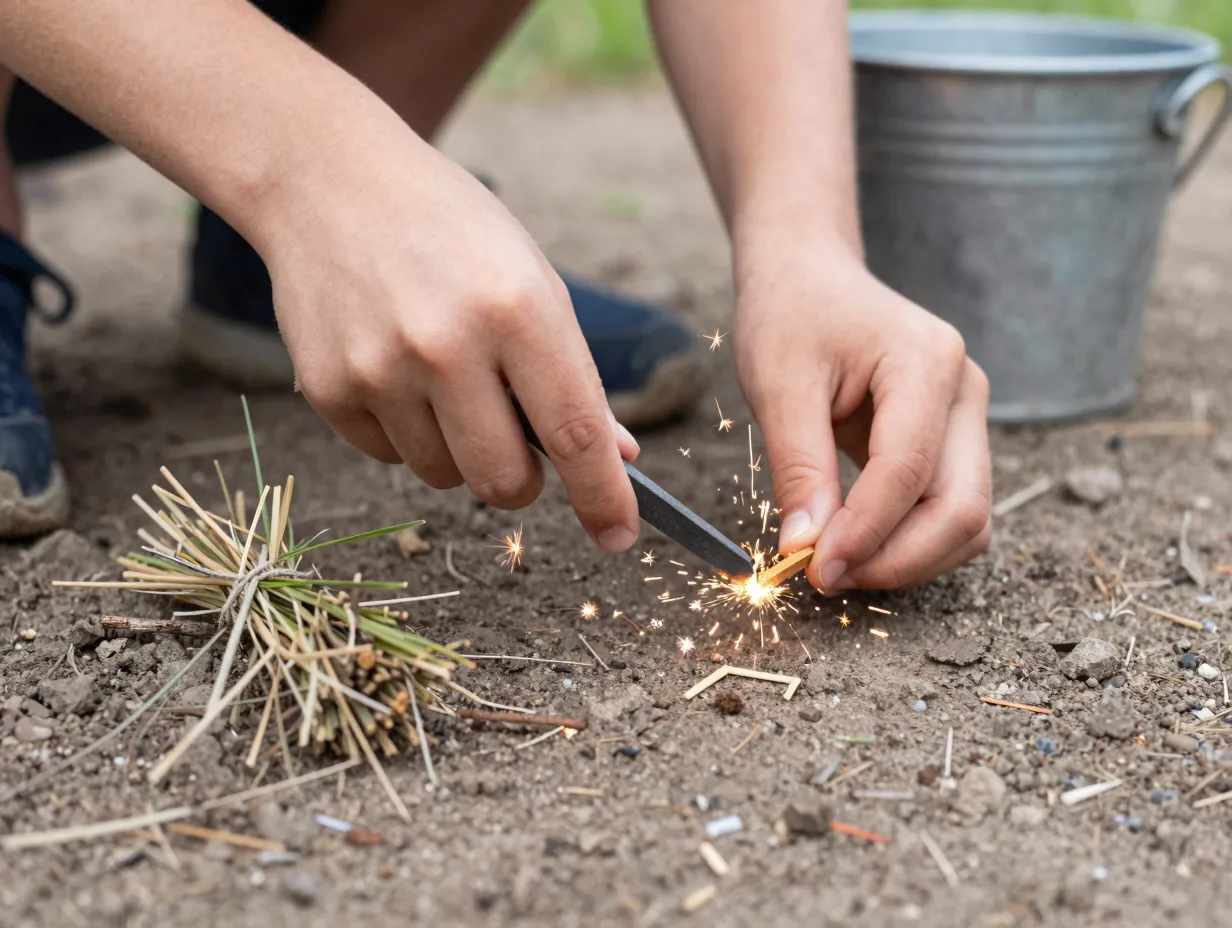
Few activities capture a child’s imagination like learning to start a fire. When taught responsibly, fire starting is one of the most empowering survival skills available.
How to do it:
Start with fire safety rules before anything else. Children should understand the fire triangle (heat, fuel, oxygen), how to extinguish a fire completely, and what to do if clothing catches fire. Only then should they attempt to start one.
For younger children, use waterproof matches or a ferrocerium striker with adult supervision. Older children (12 and up) can attempt a bow drill, a friction-based fire-starting method used by indigenous cultures worldwide. This method requires patience and physical effort, making success genuinely earned.
Always conduct fire activities in a cleared area, away from dry vegetation, with a bucket of water nearby.
What children learn: Respect for fire, basic chemistry, patience, and emergency preparedness.
Age range: 8 and up with adult supervision.
“The moment a child coaxes a flame from a friction drill, something shifts in how they see their own capabilities. It is one of the most powerful confidence-building moments in outdoor education.”, Wilderness educator perspective, widely shared in outdoor education communities.
3. Shelter Building
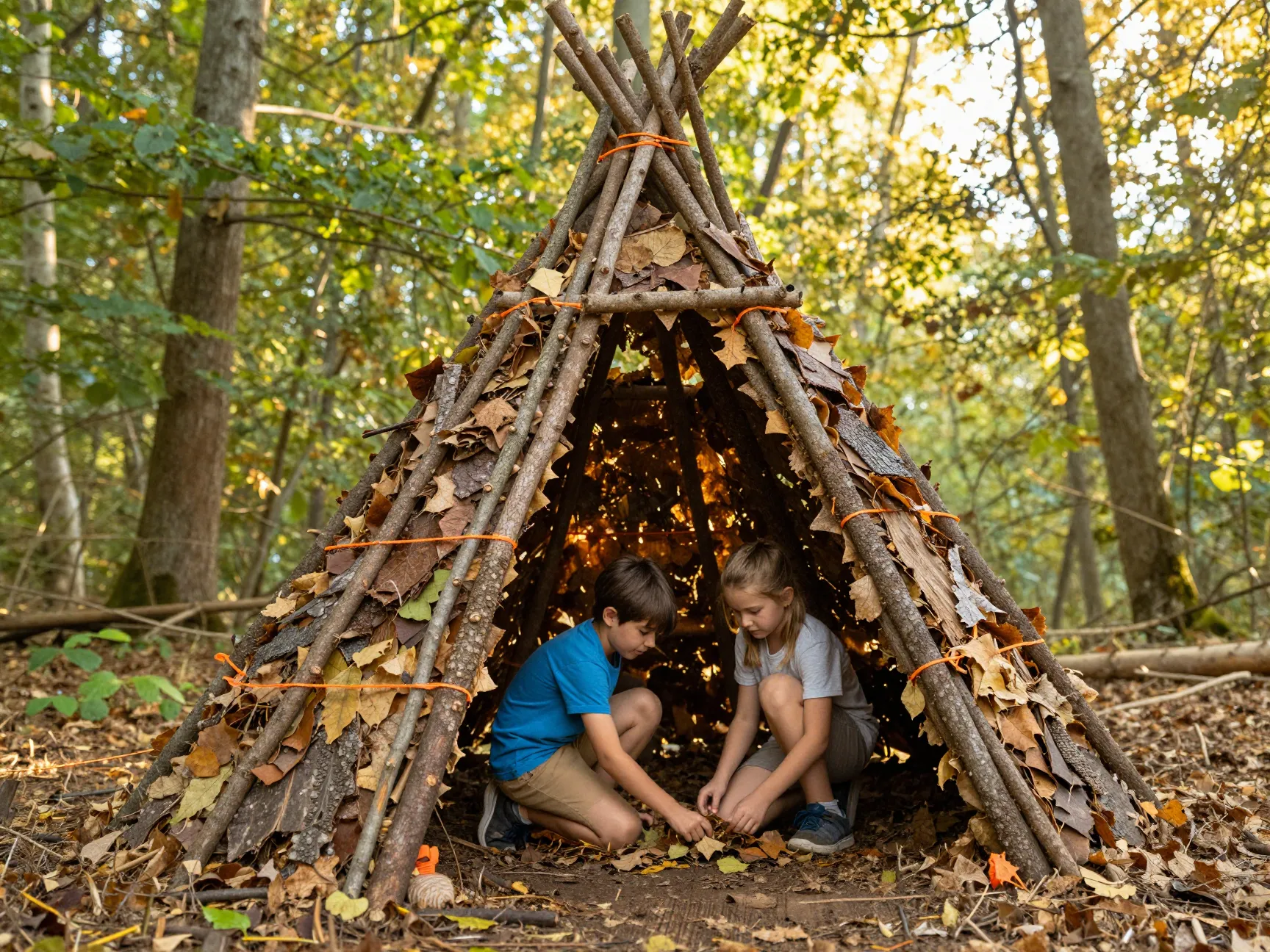
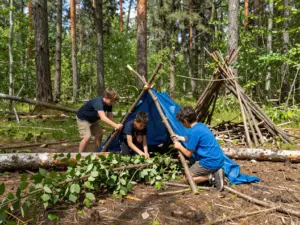
Building a shelter from natural materials is an exercise in engineering, creativity, and teamwork. It also happens to be one of the most enjoyable activities in any outdoor survival curriculum.
How to do it:
Teach children the three priorities of any emergency shelter: insulation from the ground, protection from wind and rain, and concealment from the elements. Then challenge them to build a debris hut, lean-to, or A-frame shelter using only sticks, leaves, bark, and cordage found on-site.
Set a time limit, 45 minutes works well for most groups, and judge shelters on stability, insulation, and size. Children who complete the basic challenge can attempt to spend 15 minutes inside their shelter to test its effectiveness.
What children learn: Structural engineering basics, teamwork, resourcefulness, and environmental awareness.
Age range: 6 and up (with simpler designs for younger children).
4. Water Sourcing and Purification

Access to clean water is the most critical survival priority after shelter. Teaching children how to find, collect, and purify water is both practical and scientifically rich.
How to do it:
Start by discussing natural water sources, streams, springs, and rainwater, and the risks of waterborne pathogens. Then demonstrate three purification methods:
| Method | How It Works | Age Suitability |
|---|---|---|
| Boiling | Heat kills pathogens at 100 degrees Celsius | 8 and up |
| Filtration | Layers of sand, charcoal, and gravel remove particles | 7 and up |
| Chemical tablets | Iodine or chlorine tablets neutralize bacteria | 10 and up |
A popular activity is building a DIY water filter using a plastic bottle, sand, activated charcoal, and gravel. Children pour murky water through the filter and observe how it clears. Note: this demonstrates filtration, not full purification, always combine with boiling or tablets for actual field use.
What children learn: Basic microbiology, chemistry, environmental science, and critical thinking about resources.
Age range: 7 and up.
5. Plant Identification and Foraging
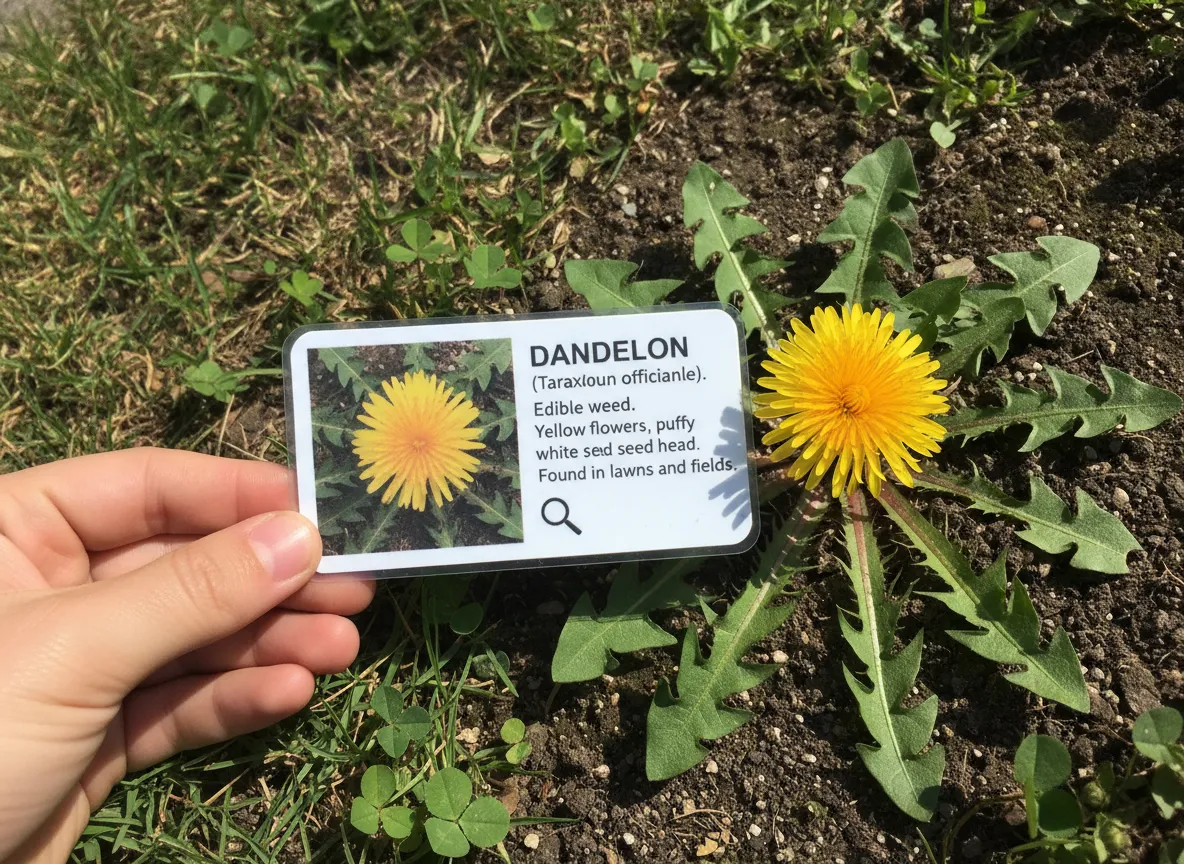
Knowing which plants are edible and which are dangerous is a survival skill with deep roots in human history. It also turns every walk in the woods into a living science lesson.
How to do it:
Begin with a field guide specific to the local region. Focus on three to five easily identifiable edible plants, common examples include dandelions, wood sorrel, and blackberries, and an equal number of dangerous look-alikes to avoid.
The golden rule of foraging: never eat anything that has not been positively identified by an experienced adult. Teach this rule firmly before any foraging activity begins.
For younger children, turn identification into a scavenger hunt. Provide laminated cards with photos and descriptions, and challenge kids to find and photograph (not pick) matching plants.
What children learn: Botany, regional ecology, responsible resource use, and pattern recognition.
Age range: 6 and up for identification games; 12 and up for supervised foraging.
6. Knot Tying
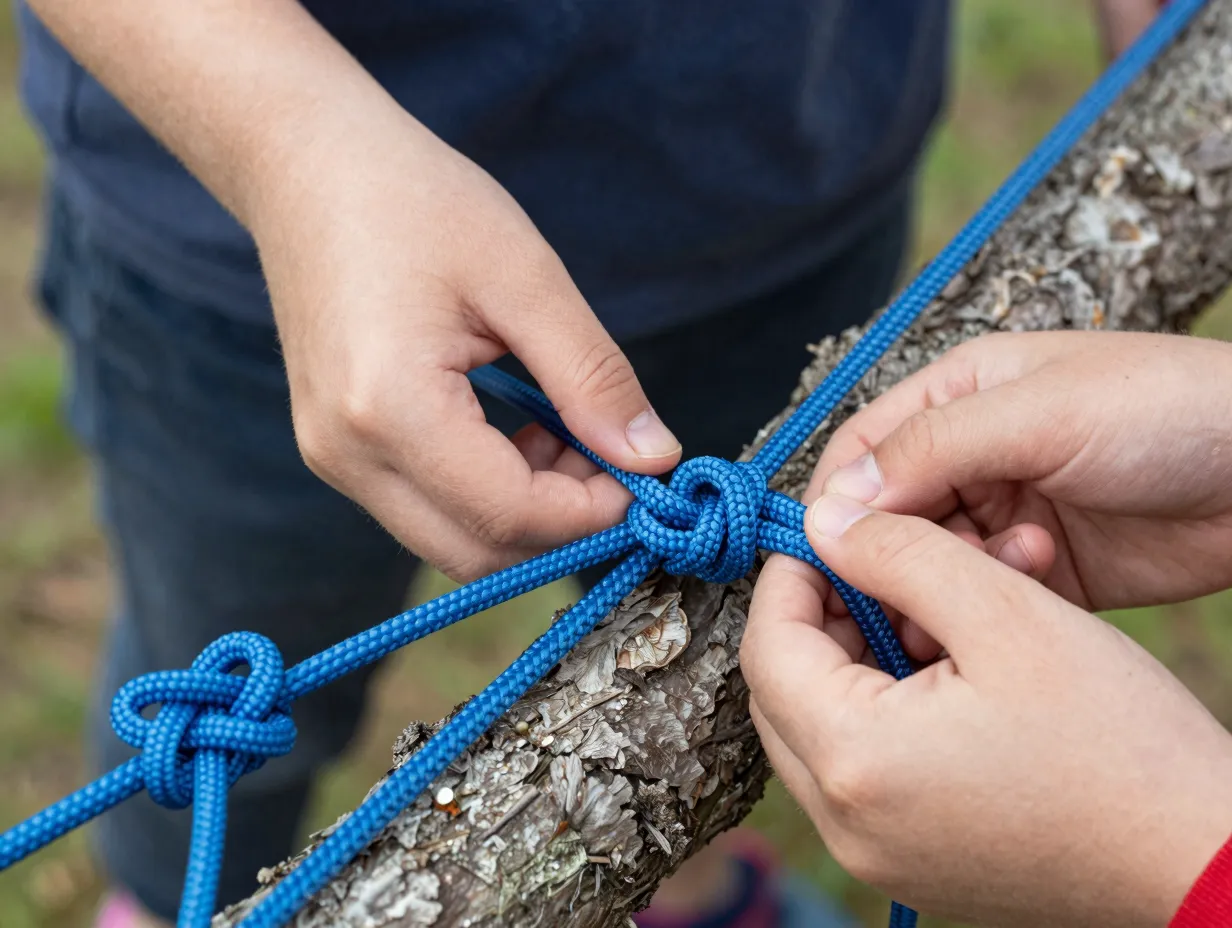
Knot tying is one of the oldest human technologies and one of the most practical survival skills a child can master. It requires fine motor control, sequential thinking, and spatial reasoning.
How to do it:
Start with three foundational knots:
- The Square Knot, for joining two ropes of equal thickness.
- The Bowline, creates a fixed loop that will not slip under load; essential for rescue scenarios.
- The Clove Hitch, for attaching a rope to a post or branch; used in shelter building and camp setup.
Practice sessions work best when tied to a real task. Have children use a bowline to hang a bear bag, or use a clove hitch to lash shelter poles together. Context makes the skill stick.
Rope courses and scouting programs have used knot tying as a core curriculum element for over a century, and for good reason, the skill transfers directly to sailing, climbing, camping, and emergency response.
What children learn: Fine motor skills, sequential logic, geometry, and practical engineering.
Age range: 6 and up.
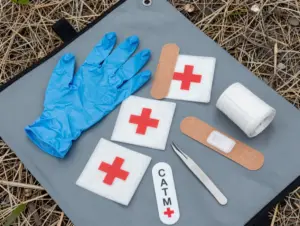
7. First Aid Basics
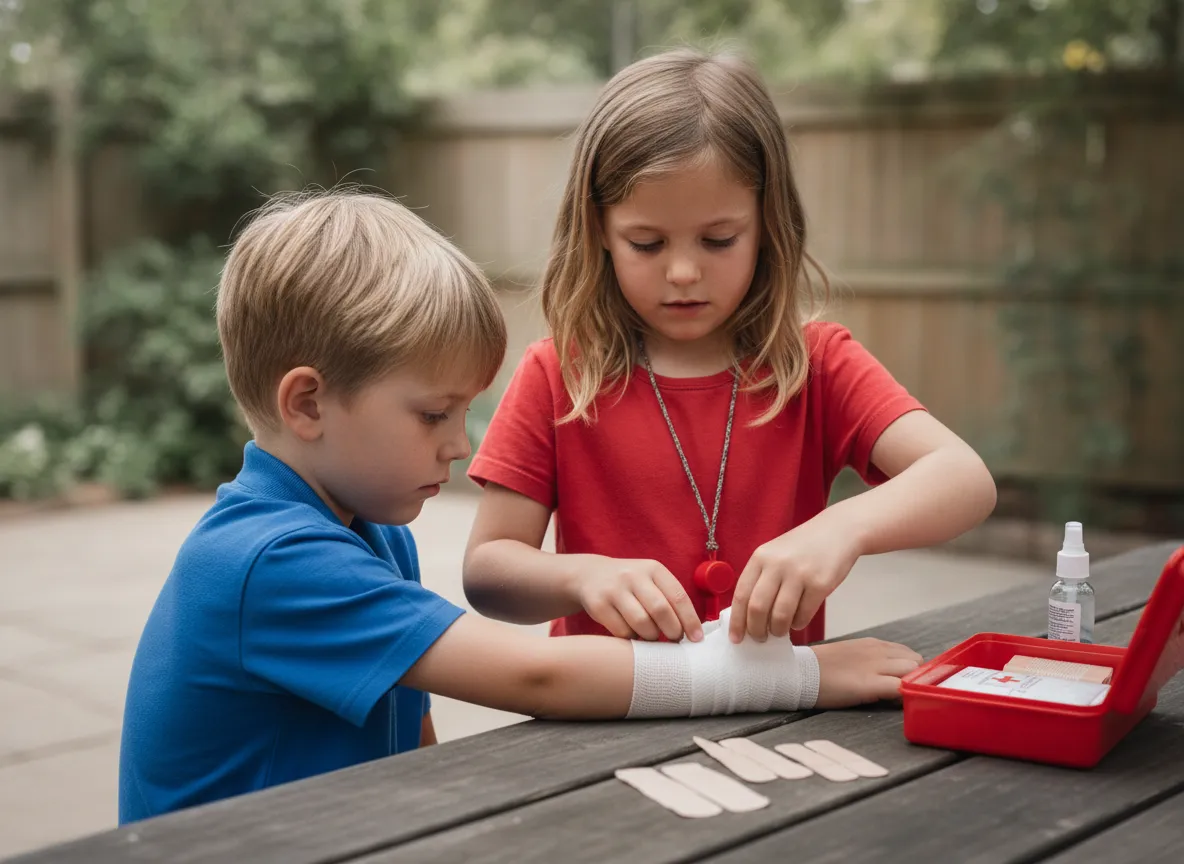
Basic first aid is arguably the most immediately life-saving skill on this list. Children who know how to treat a wound, recognize signs of shock, or perform the Heimlich maneuver are genuinely better equipped to handle emergencies.
How to do it:
Focus on four core skills for children:
- How to clean and bandage a wound.
- How to recognize and respond to signs of dehydration.
- How to signal for help using a whistle (three blasts is the universal distress signal).
- How to apply pressure to a bleeding wound.
The American Red Cross offers junior first aid courses for children as young as six. Many wilderness medicine programs also offer youth-specific curricula that combine outdoor scenarios with practical skill building.
Role-playing emergency scenarios, “your hiking partner twisted their ankle, what do you do?”, is highly effective for retention and builds calm decision-making under simulated stress.
What children learn: Biology, emergency response, empathy, and calm decision-making.
Age range: 6 and up (with age-appropriate complexity).
8. Signaling and Communication
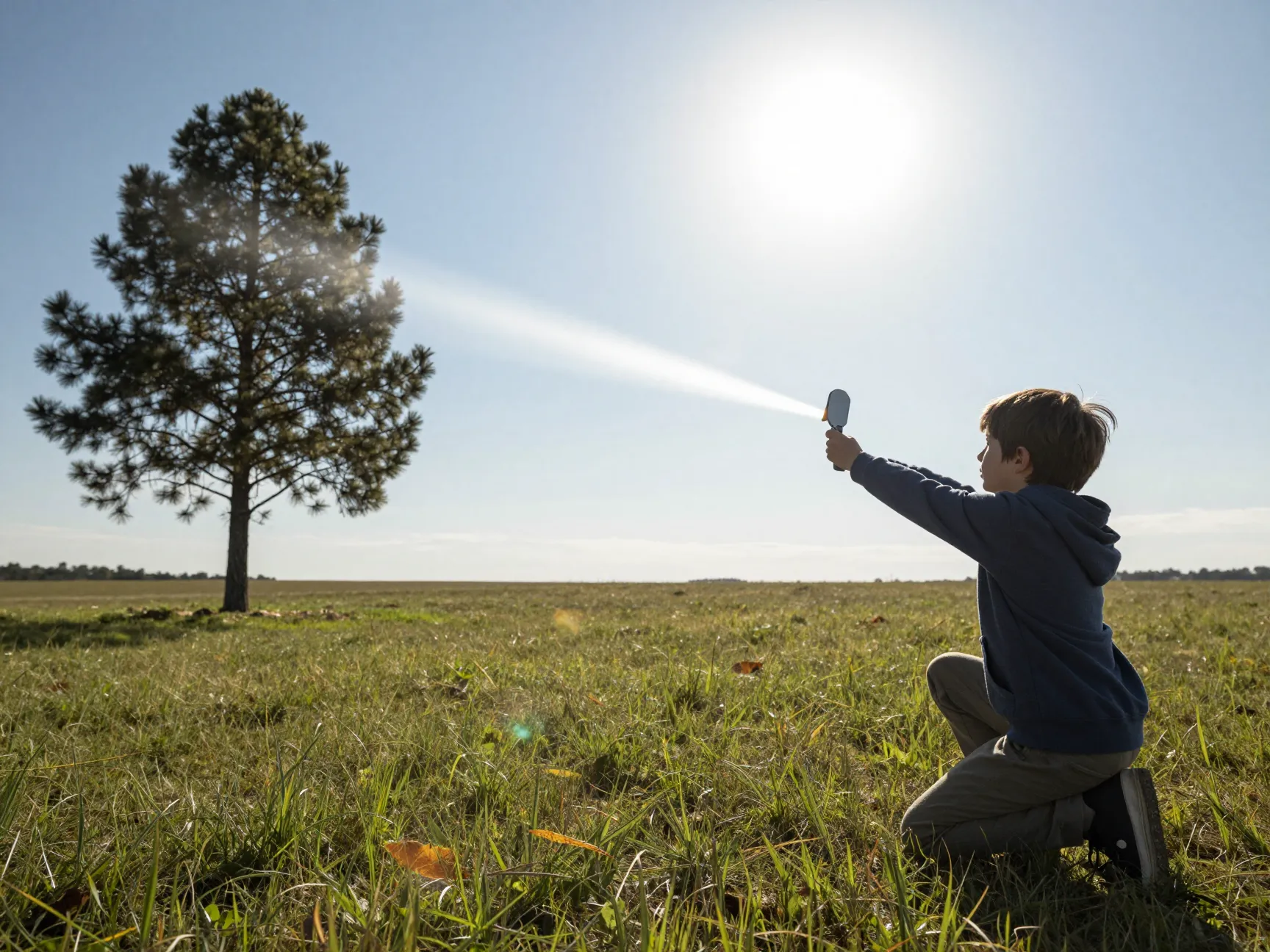
In a survival situation, the ability to signal rescuers can mean the difference between a short ordeal and a prolonged one. Teaching children signaling techniques also introduces them to concepts of visibility, physics, and communication systems.
How to do it:
Cover three primary signaling methods:
- Whistle signals, three blasts repeated at intervals is the universal distress call.
- Mirror signaling, a signal mirror can reflect sunlight visible for miles; practice aiming a reflected beam at a target.
- Ground-to-air signals, teach children to create large symbols (X for help needed, V for assistance required) using rocks, logs, or trampled grass in an open area.
These activities work well as team challenges. Divide children into two groups, one group hides and signals, the other searches and interprets. This game format reinforces the skills while keeping energy levels high.
What children learn: Physics of light and sound, communication systems, teamwork, and spatial awareness.
Age range: 8 and up.
9. Weather Reading and Environmental Awareness
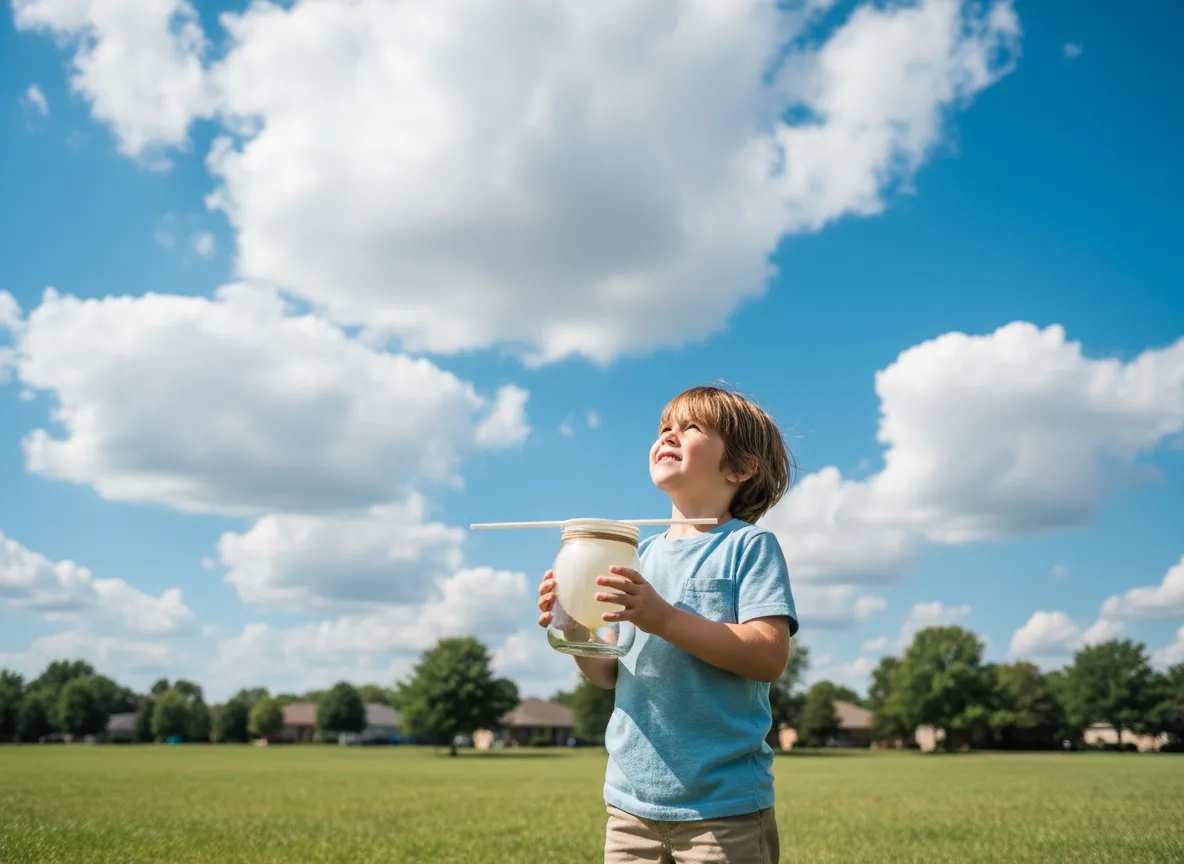
Understanding weather patterns is a foundational survival skill that also connects directly to school science curricula. Children who can read the sky and interpret environmental cues are safer and more confident outdoors.
How to do it:
Teach children to observe and interpret:
- Cloud types: Cumulus clouds indicate fair weather; cumulonimbus clouds signal incoming storms.
- Wind direction: Changes in wind direction often precede weather shifts.
- Animal behavior: Birds flying low, ants building higher mounds, and frogs calling loudly are traditional indicators of incoming rain.
- Barometric pressure: A simple barometer (easily built from a jar, balloon, and straw) demonstrates how pressure changes predict weather.
Challenge children to forecast the next day’s weather using only observation, no apps, no weather reports. Compare their predictions to actual outcomes and discuss the results.
What children learn: Meteorology, environmental science, observation skills, and scientific method.
Age range: 7 and up.
How to Structure These 9 Fun & Educational Outdoor Survival Activities for Kids at Home or School
The activities above are most effective when delivered in a structured progression rather than as isolated events. The following framework works well for families, scout troops, school groups, and summer camps.
A suggested four-week progression:
| Week | Focus Skills | Key Activities |
|---|---|---|
| Week 1 | Awareness and Navigation | Map reading, compass work, weather observation |
| Week 2 | Shelter and Fire | Shelter building, fire safety, knot tying |
| Week 3 | Water and Food | Water filtration, plant identification, foraging basics |
| Week 4 | Emergency Response | First aid, signaling, scenario role-play |
Each session should last between 60 and 90 minutes for school-age children. Shorter sessions with clear goals outperform long, loosely structured days in terms of skill retention.
Equipment checklist for getting started:
- Baseplate compass and printed topographic maps
- Ferrocerium fire starter and waterproof matches
- 550 paracord (at least 30 feet per child)
- Regional plant identification field guide
- Basic first aid kit
- Signal mirror and whistle
- Plastic bottles and filtration materials (sand, charcoal, gravel)
- Notebook and pencil for weather journaling
Most of this equipment costs under $50 in total and is widely available at outdoor retailers or online.
Safety Guidelines Every Parent and Educator Should Follow
No list of outdoor survival activities for kids is complete without a frank discussion of safety. The goal is to build competence and confidence, not to expose children to unnecessary risk.
Core safety principles:
- Adult supervision is non-negotiable for fire, sharp tools, and water activities.
- Always conduct a site assessment before any outdoor activity, check for hazards including unstable ground, poisonous plants, and wildlife.
- Establish clear boundaries and a meeting point before children disperse for any navigation or foraging exercise.
- Carry a fully stocked first aid kit and know how to use it.
- Follow the Leave No Trace principles to protect the environments where these activities take place.
- Check local regulations regarding fire building, foraging, and trail use before beginning.
Children should also understand that survival skills are for genuine emergencies, not for unsupervised experimentation. Frame each activity within a clear context of “this is what you would do if…” rather than encouraging independent practice without adult oversight.
Conclusion
The 9 Fun & Educational Outdoor Survival Activities for Kids described in this guide represent more than a list of weekend projects. They represent a philosophy: that children learn best when they are challenged, trusted, and connected to the natural world. Navigation, fire safety, shelter building, water purification, plant identification, knot tying, first aid, signaling, and weather reading are each independently valuable. Together, they form a comprehensive foundation for outdoor confidence and practical resilience.
Actionable next steps for parents and educators:
- Choose one activity from this list and schedule it for this weekend. Start small, a 60-minute knot-tying session in the backyard counts.
- Invest in a basic equipment kit. A compass, some paracord, and a regional field guide are enough to begin.
- Connect with local resources: orienteering clubs, scout troops, wilderness education programs, and nature centers frequently offer structured programs that complement home-based learning.
- Document progress. Have children keep a survival skills journal where they record what they learned, what worked, and what they want to try next. This builds metacognitive skills alongside practical ones.
- Revisit and repeat. Survival skills degrade without practice. A monthly outdoor challenge keeps skills sharp and keeps children engaged.
The outdoors is the oldest classroom in human history. In 2026, it remains one of the best.