8 Authentic Wild West Outfits That Are Perfect for Survival Reenactments
Fewer than 12 percent of modern survival reenactors use period-accurate clothing, yet historical frontier garments were engineered to handle extreme heat, cold, rain, and physical labor in ways that many synthetic alternatives still struggle to match. The 8 authentic Wild West outfits that are perfect for survival reenactments covered in this guide are not just costumes. They are functional systems built from materials and construction methods that kept frontiersmen, cavalry soldiers, and Indigenous scouts alive in some of North America’s harshest terrain.
Disclosure: This post contains affiliate links. As an Amazon Associate, we earn from qualifying purchases, and at no extra cost to you.
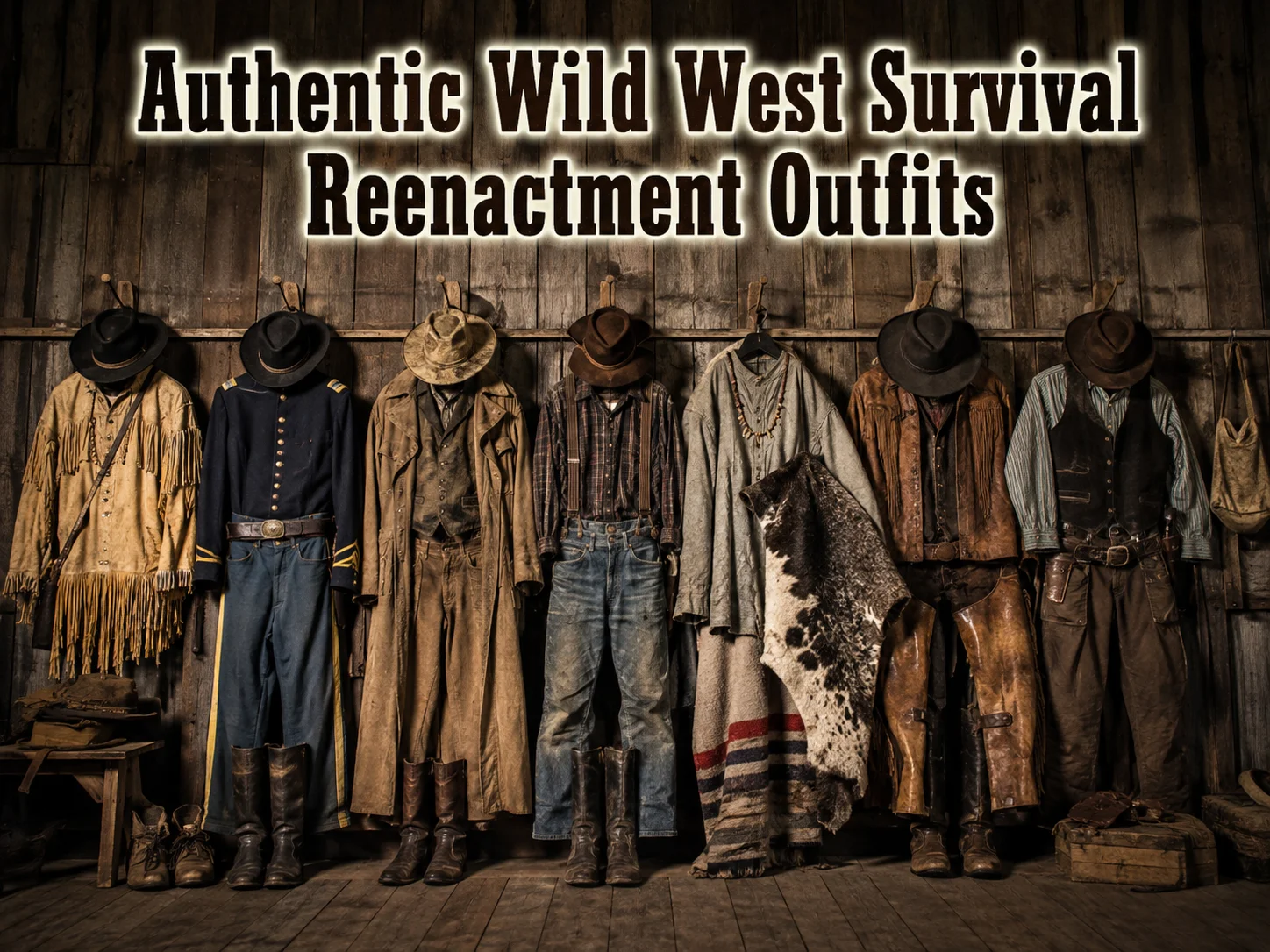
Whether the goal is a historically immersive living history event, a competitive survival reenactment, or a dedicated study of 19th-century frontier life, choosing the right outfit matters, both for authenticity and for real-world performance.
Key Takeaways
- Authentic Wild West garments were functional survival tools, not decorative costumes, built from durable natural fibers and animal hides.
- Each outfit in this guide corresponds to a specific historical role, from cavalry trooper to mountain man, giving reenactors a clear framework for selection.
- Natural materials like wool, buckskin, and canvas outperform many synthetics in temperature regulation and moisture management.
- Accurate layering is the single most important factor in achieving both historical authenticity and real survival comfort.
- Sourcing quality reproductions from certified historical tailors or learning basic hand-stitching techniques dramatically improves outfit longevity in the field.
Why Authentic Wild West Clothing Still Matters for Survival Reenactments
Before examining the 8 authentic Wild West outfits that are perfect for survival reenactments in detail, it helps to understand why authenticity is worth pursuing beyond surface-level appearance.
Frontier clothing from roughly 1850 to 1895 was developed through hard trial and error. Settlers, soldiers, and Indigenous peoples had no synthetic insulation, no Gore-Tex, and no moisture-wicking polyester. What they had was a deep, practical knowledge of natural materials, wool, cotton canvas, leather, and animal hide, and how to layer them effectively.
Three core reasons authenticity matters:
- Performance: Natural fibers breathe, regulate temperature, and resist odor in ways that many modern fabrics do not replicate under sustained field conditions.
- Immersion: Judges and fellow participants at serious living history events evaluate outfit accuracy closely. Inaccurate details break the historical narrative for everyone involved.
- Education: Wearing and using period-accurate clothing builds genuine respect for the ingenuity of frontier people and deepens the educational value of any reenactment.
“The frontier was not survived by luck. It was survived by preparation, and clothing was the first line of that preparation.”
The 8 Authentic Wild West Outfits That Are Perfect for Survival Reenactments
1. The Mountain Man Buckskin Ensemble
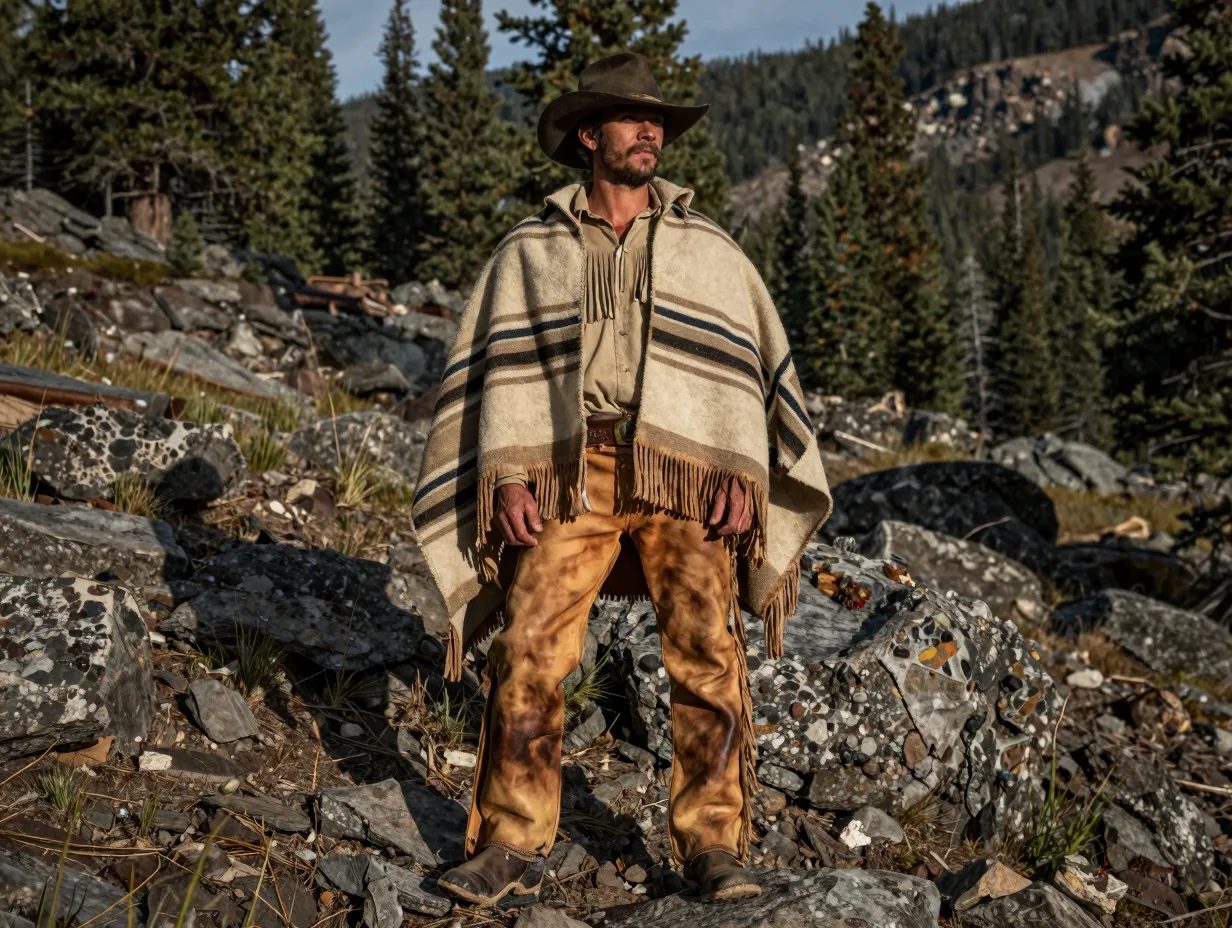
The mountain man outfit is arguably the most iconic of all frontier garments, and for good reason. Fur trappers and explorers operating in the Rocky Mountains between the 1820s and 1860s needed clothing that could handle freezing temperatures, river crossings, and days of hard travel without access to resupply.
Core components:
- Fringed buckskin shirt (brain-tanned deer or elk hide)
- Buckskin leggings or trousers
- Wool trade blanket worn as a capote or poncho
- Moccasins with thick rawhide soles
- Wide-brim felt or beaver-felt hat
The fringe on buckskin garments was not purely decorative. It served a functional purpose: the fringe wicked water away from the garment’s surface and dried faster than a solid hem. Brain-tanned hide remains supple even when wet, a critical advantage over commercially tanned leather.
Survival advantage: The full buckskin ensemble provides excellent wind resistance, reasonable water resistance, and superior durability against brush and rock abrasion.
2. The Cavalry Trooper Uniform
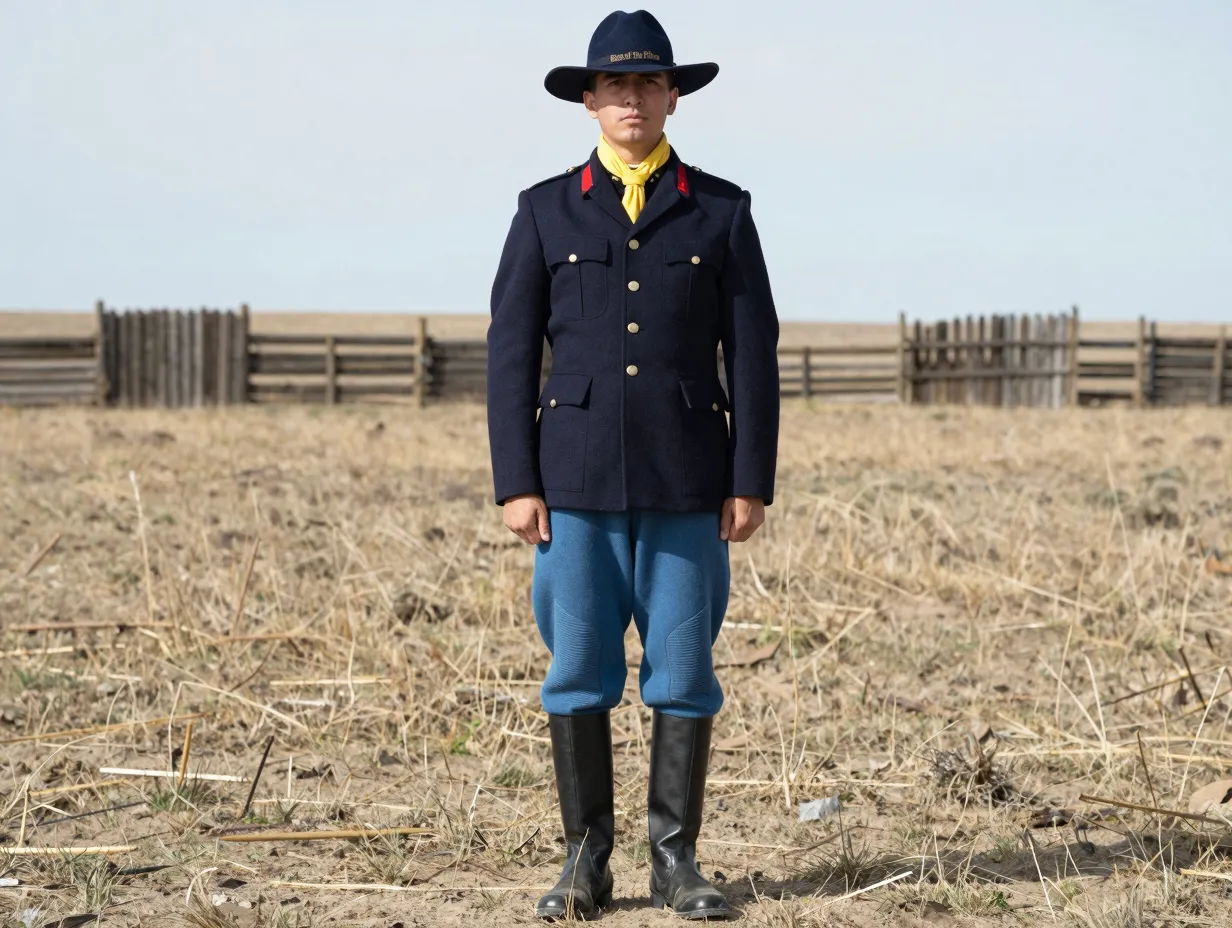
The U.S. Army cavalry uniform of the 1860s through 1890s is one of the most precisely documented Wild West outfits available to reenactors. Official quartermaster records, surviving museum pieces, and period photographs provide a detailed blueprint for accurate reproduction.
Core components:
- Dark blue wool shell jacket or sack coat
- Sky blue wool kersey trousers with reinforced seat
- Brogans (ankle boots) or cavalry boots
- Forage cap or campaign hat (the “Boss of the Plains” style became standard by the 1870s)
- Yellow kerchief or neck scarf
Wool is the defining material here. A well-made wool uniform regulates body temperature across a wide range, it insulates when wet, resists flame, and does not melt against the skin the way synthetics can. Cavalry troopers wore these uniforms through desert summers in the Southwest and blizzard conditions on the Northern Plains.
Survival advantage: The wool construction provides genuine all-season thermal regulation. The reinforced seat and inner thigh panels of cavalry trousers add durability for mounted or heavy ground movement.
3. The Trail Boss Outfit
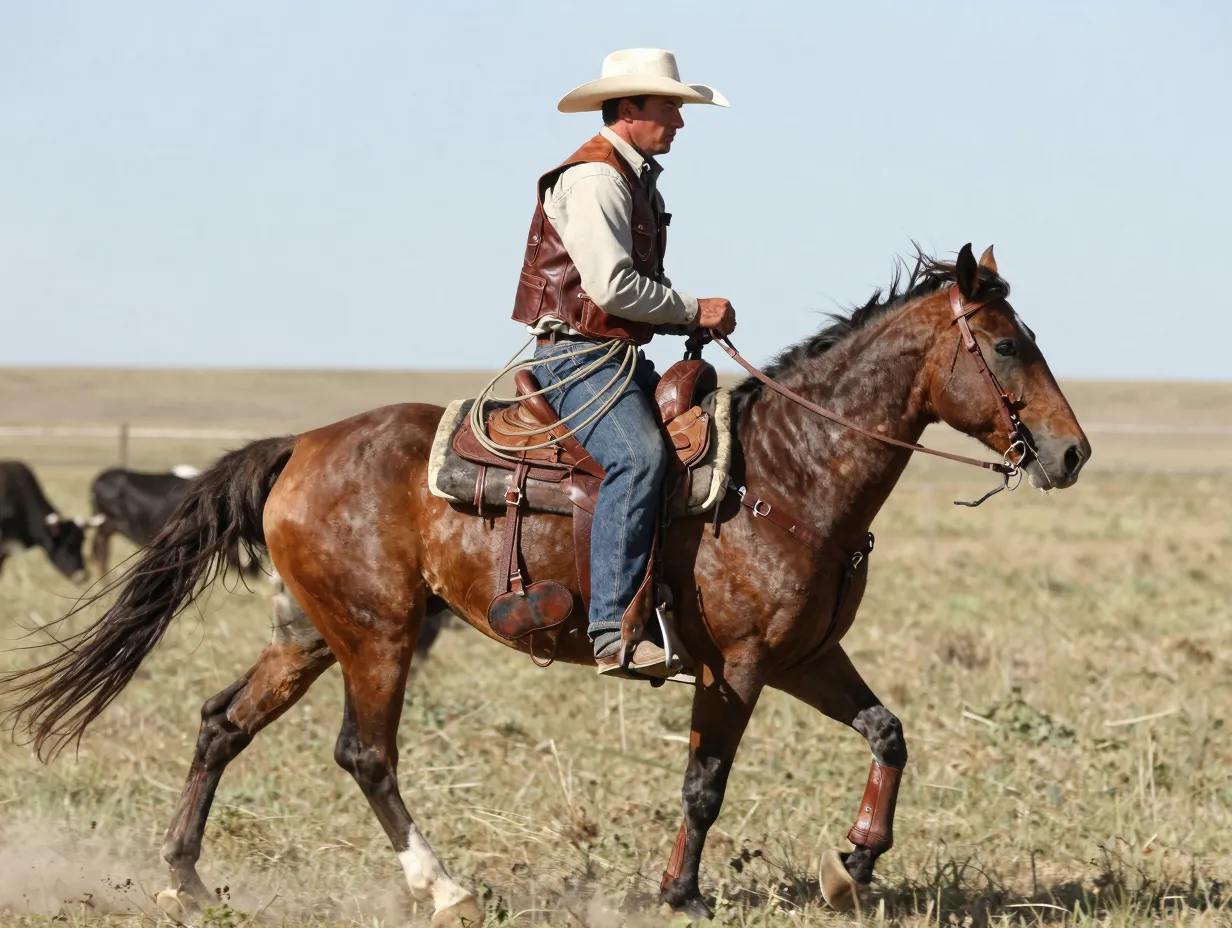
The trail boss was the working foreman of the cattle drive, a figure who needed clothing that was tough, practical, and capable of handling 12-hour days in the saddle across hundreds of miles of open range.
Core components:
- Heavy cotton or wool work shirt
- Denim or canvas trousers (Levi Strauss & Co. introduced riveted denim in 1873)
- Leather vest with multiple pockets
- Wide-brim cowboy hat (4-inch or wider brim for sun protection)
- Leather boots with a heel designed to catch a stirrup
- Leather or canvas chaps (chaparreras) for brush protection
The cowboy hat deserves special attention. A properly shaped wide-brim hat is one of the most effective pieces of survival headgear ever designed. It shades the face and neck, channels rain away from the collar, and can be used to carry water, fan a fire, or signal across distances.
Survival advantage: The layered combination of vest pockets, chaps, and wide-brim hat creates a highly functional system for open-range conditions. The vest allows easy temperature adjustment without removing the shirt layer.
4. The Frontiersman Scout Outfit
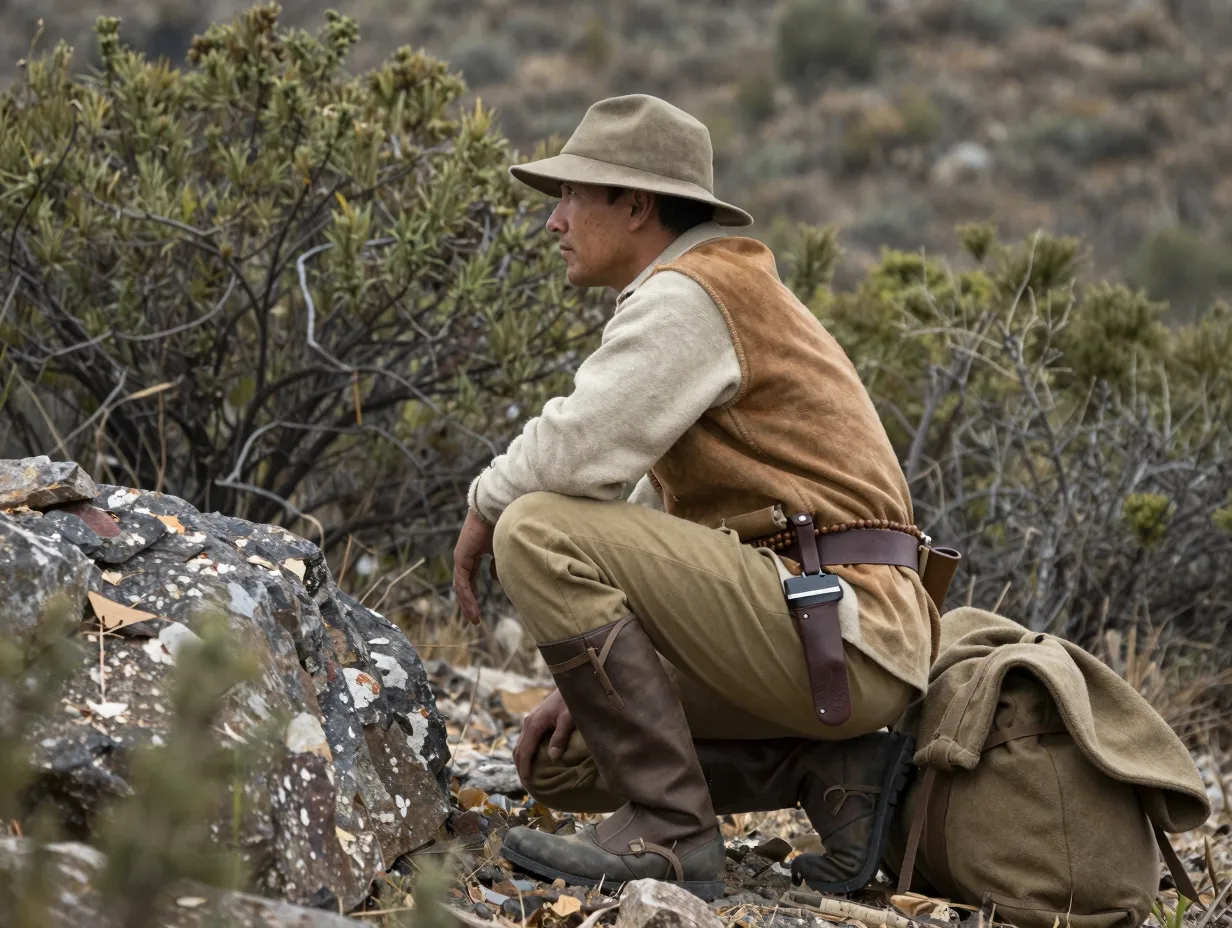
Civilian scouts employed by the Army or hired by wagon trains occupied a unique position on the frontier. Their clothing blended Indigenous practical knowledge with available trade goods, resulting in some of the most adaptable outfits of the era.
Core components:
- Combination buckskin and wool shirt (often a hybrid)
- Canvas or buckskin trousers
- Knee-high moccasins or hybrid moccasin-boot construction
- Slouch hat or wide-brim felt hat
- Beaded or quilled accessories (belt, bag, knife sheath)
- Heavy wool or blanket-lined coat for cold weather
Scouts like Kit Carson and Buffalo Bill Cody were documented wearing exactly this kind of hybrid wardrobe. The mix of materials allowed rapid adaptation, wool for warmth and moisture management, buckskin for durability and quiet movement through brush.
Survival advantage: The hybrid construction philosophy of the scout outfit is directly applicable to modern survival reenactments where conditions change rapidly. Layering options are maximized.
5. The Homesteader Work Outfit
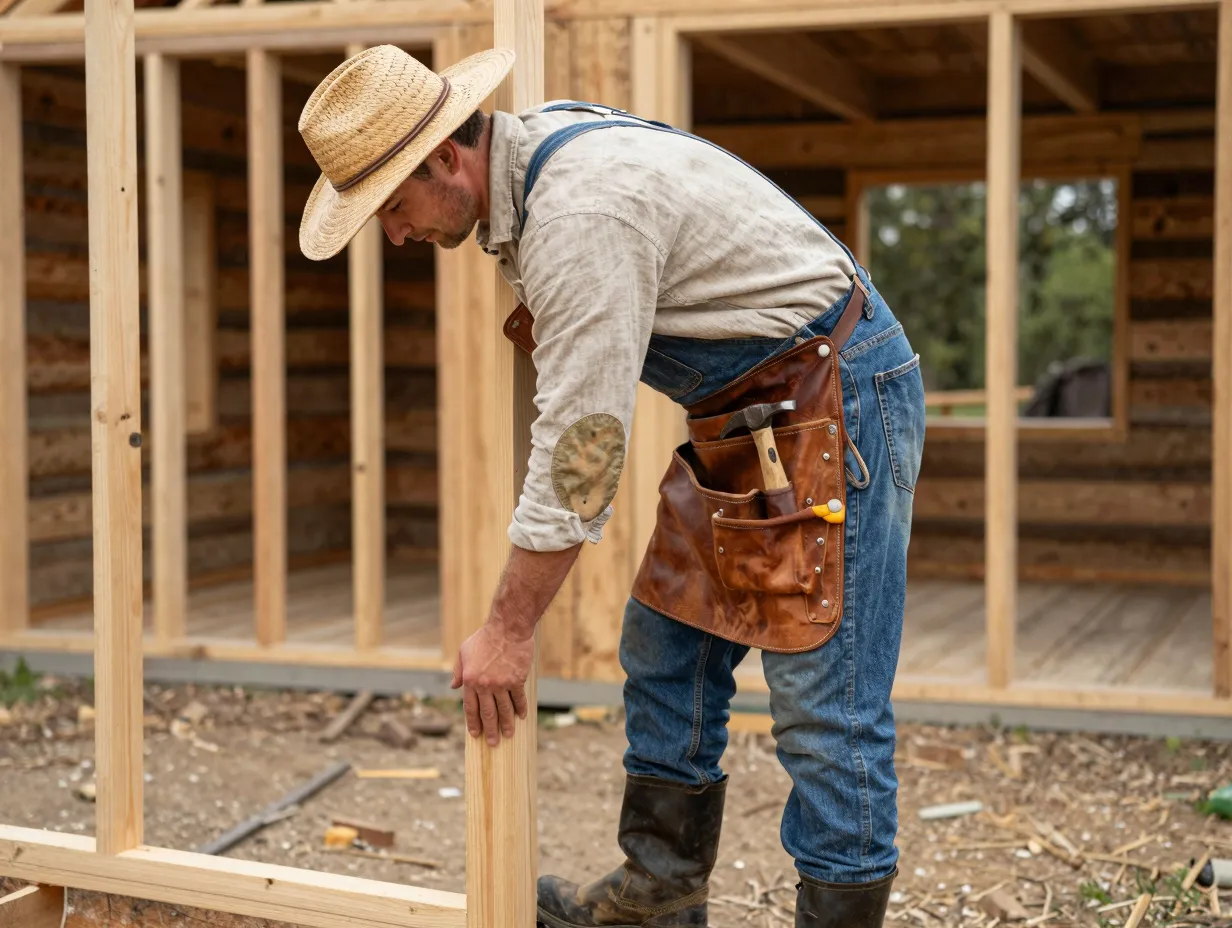
Not every Wild West survival scenario involves gunfighters or cavalry charges. The homesteader, the farmer, the settler, the person building a life from raw land, wore clothing designed for sustained physical labor in variable weather.
Core components:
- Heavy linen or cotton work shirt with reinforced elbows
- Bib overalls or canvas work trousers with suspenders
- Wide-brim straw hat (summer) or wool felt hat (winter/fall)
- Sturdy leather work boots
- Canvas or leather apron for tool work
- Wool or cotton undershirt as a base layer
The homesteader outfit is often underrepresented in survival reenactments, but it is one of the most practically useful. The bib overall design, for example, provides tool storage, protects the chest from sparks and debris, and eliminates the need for a belt, which can bind during heavy lifting.
Survival advantage: Designed for all-day physical labor, this outfit prioritizes freedom of movement, tool access, and durability over aesthetic impact. Ideal for reenactments that involve camp building, fire-starting, and foraging tasks.
6. The Lawman’s Town Outfit
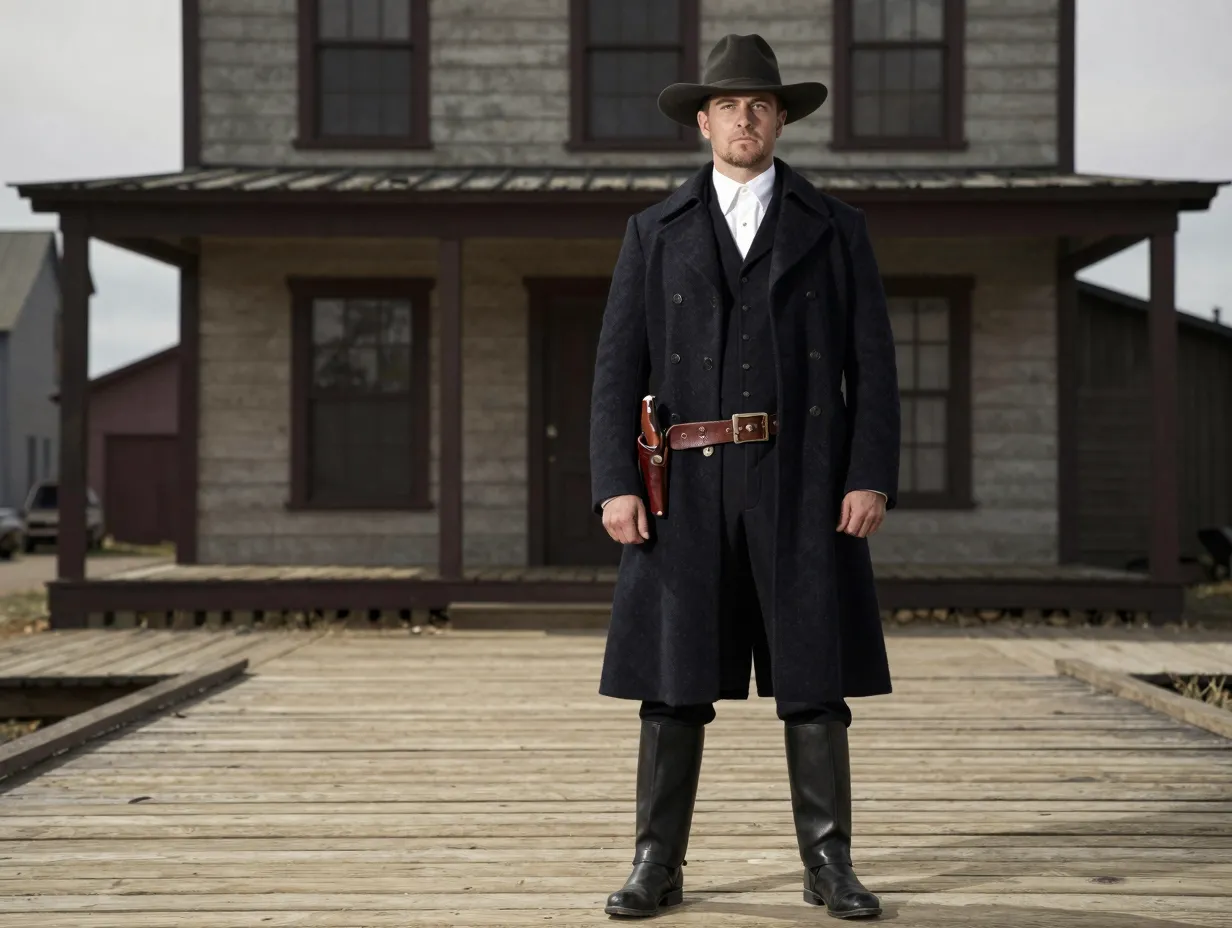
The frontier lawman, marshal, sheriff, or deputy, operated primarily in and around settlements, which meant their clothing needed to balance practicality with a degree of social authority.
Core components:
- Dark wool frock coat or Prince Albert coat
- Matching wool waistcoat (vest)
- White or off-white cotton dress shirt
- Dark wool trousers
- Low-crown, wide-brim hat
- Leather gun belt and holster (period-accurate rig)
- Polished leather boots
The wool frock coat is the defining piece. A well-made frock coat from heavy broadcloth wool provides excellent protection against wind and light rain, conceals a sidearm effectively, and projects the visual authority that a lawman’s role required. Period photographs from Dodge City, Tombstone, and Deadwood confirm this silhouette consistently.
Survival advantage: The layered wool construction of the lawman outfit performs well in cool to cold conditions. The multiple layers also provide a degree of padding and protection during physical confrontations, a practical consideration in reenactment scenarios.
7. The Outlaw Duster Outfit
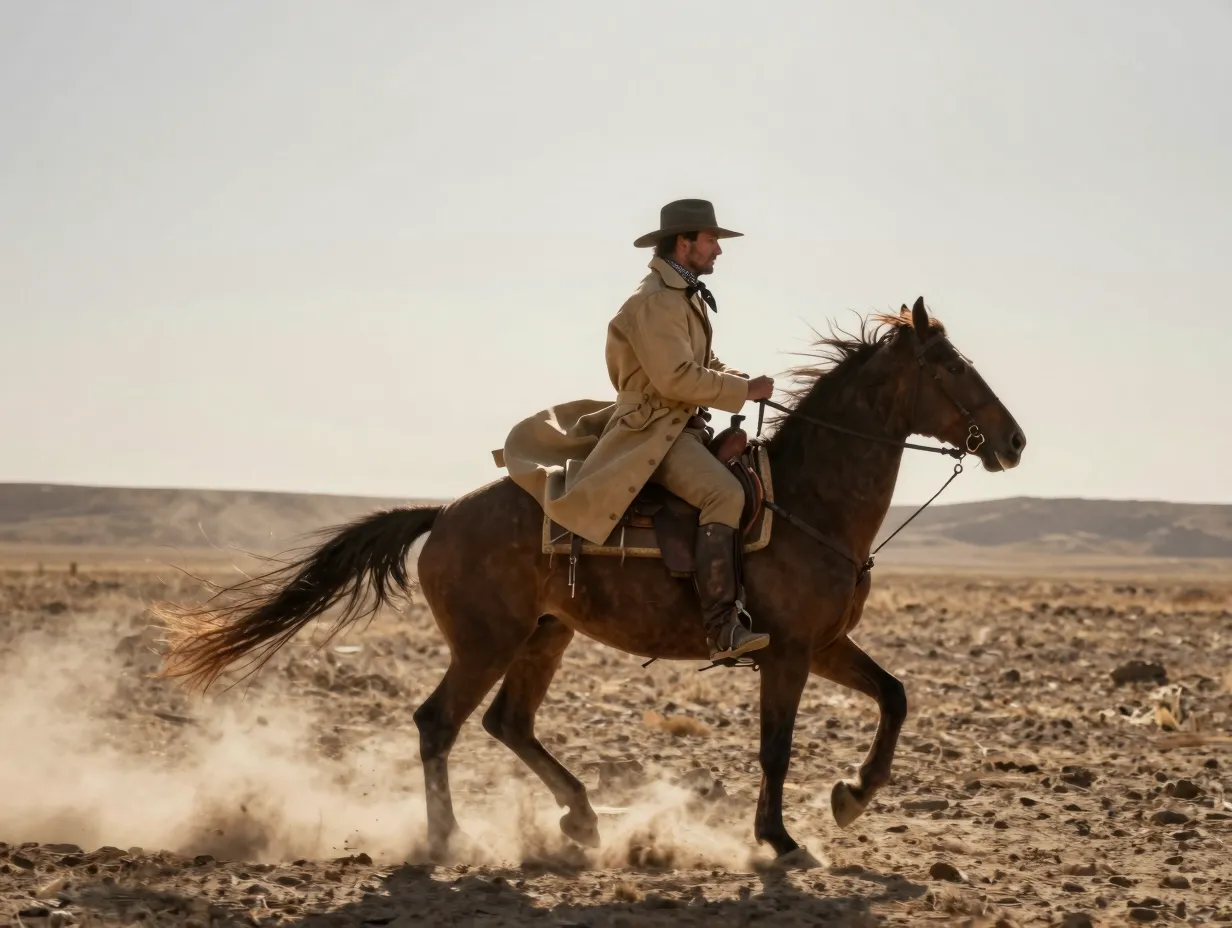
The canvas or linen duster coat is one of the most recognizable garments of the late frontier era, and it earned its place through pure functional merit before it became a cultural icon.
Core components:
- Full-length canvas or linen duster coat (knee to ankle length)
- Wool or denim trousers
- Cotton or wool shirt
- Bandana (worn around the neck or over the face)
- Wide-brim hat
- Leather boots
Duster coats were originally designed to protect riders’ clothing from trail dust, hence the name. A full-length canvas duster is one of the most effective wind and light rain barriers available in natural materials. The length protects the legs during horseback riding and provides full coverage when sleeping rough.
The bandana is equally underrated as a survival tool. A large cotton bandana functions as a dust mask, water pre-filter, wound dressing, fire-starting tinder, pot holder, and signaling flag.
Survival advantage: The duster coat provides unmatched full-body coverage against wind, dust, and light precipitation. Combined with proper layering underneath, it performs across a wide temperature range.
8. The Indigenous Plains Warrior Outfit
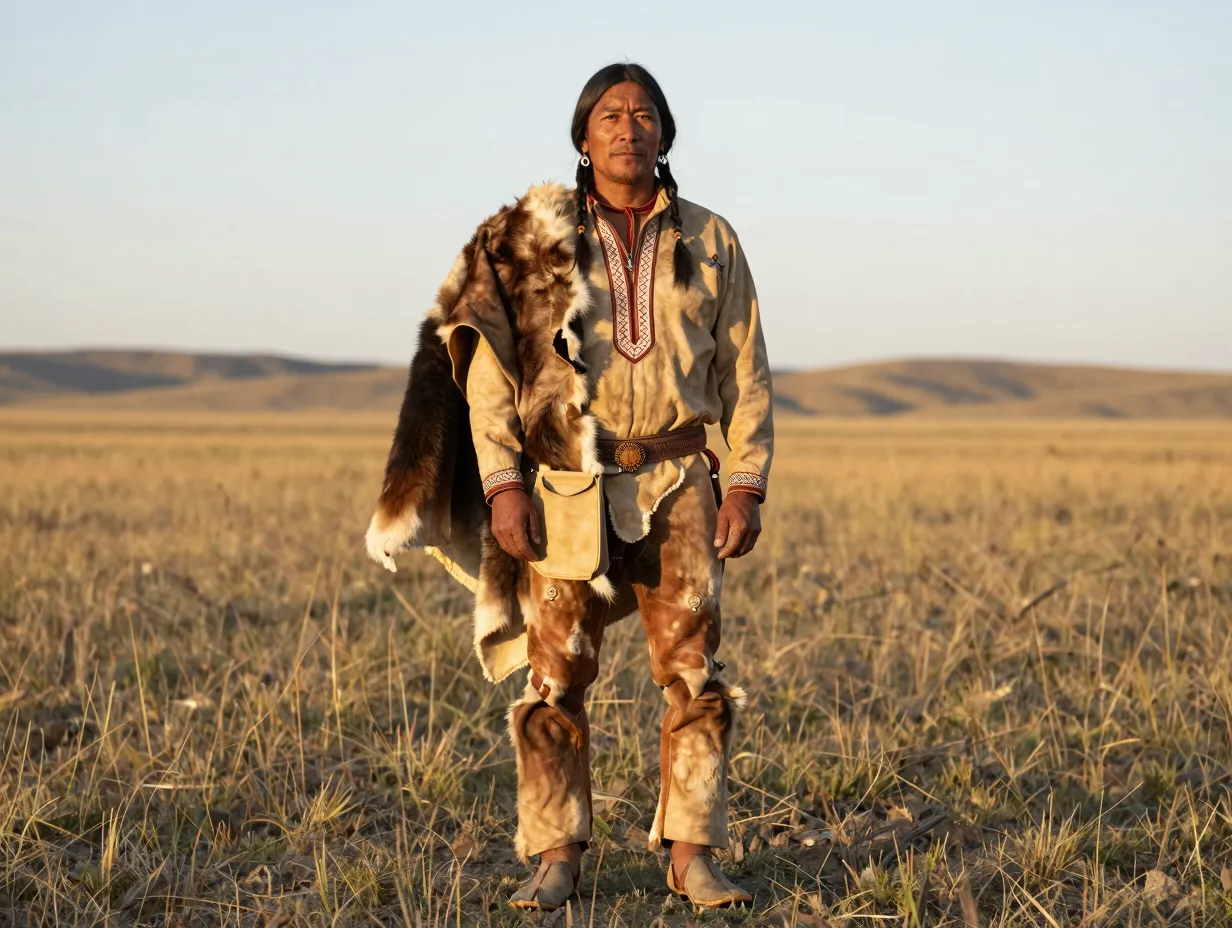
Any serious examination of the 8 authentic Wild West outfits that are perfect for survival reenactments must include the clothing traditions of the Indigenous peoples who inhabited the frontier. Plains warrior garments represent some of the most sophisticated survival clothing ever developed on the North American continent.
Core components:
- Brain-tanned buffalo hide shirt (often decorated with quillwork or beadwork)
- Buffalo hide or elk hide leggings
- Moccasins with hard rawhide soles (often double-soled for rocky terrain)
- Buffalo robe or trade wool blanket
- Roach headdress or eagle feather war bonnet (for ceremonial reenactments)
- Parfleche bag for carrying supplies
A note on cultural respect: Reenacting Indigenous garments requires careful research, cultural sensitivity, and, where possible, direct engagement with tribal cultural representatives. Many specific ceremonial items carry deep spiritual significance and should not be replicated for entertainment purposes. Focus on the functional everyday garments rather than sacred ceremonial pieces.
Buffalo hide clothing is among the warmest natural-material garments ever documented. The combination of brain-tanned hide (supple, wind-resistant) and a buffalo robe (extraordinary insulation) allowed Plains peoples to survive temperatures well below zero Fahrenheit with no synthetic assistance.
Survival advantage: The buffalo hide and robe combination represents the peak of cold-weather survival clothing achievable with pre-industrial materials. The moccasin construction, flexible, quiet, and terrain-adaptive, outperforms rigid boots in many field conditions.
How to Choose the Right Outfit for Your Reenactment Scenario
With the 8 authentic Wild West outfits that are perfect for survival reenactments now outlined, the practical question becomes: how does a reenactor select the right one for a specific event?
The answer depends on four variables:
1. Historical period and region
The frontier era spanned roughly 1820 to 1900 and covered an enormous geographic range. A mountain man outfit is appropriate for a Rocky Mountain trapper scenario in the 1840s but would be anachronistic in an 1880s cattle drive context. Match the outfit to the specific decade and geography of the reenactment.
2. Climate and season
Natural materials perform differently across seasons. Wool is the superior choice for cold, wet conditions. Linen and lightweight cotton canvas excel in summer heat. Buckskin is a strong all-season performer but requires conditioning to maintain suppleness in dry climates.
3. Role and activity level
High-activity scenarios, trail navigation, camp building, fire-starting, favor the homesteader, scout, or mountain man outfits for their freedom of movement. Lower-activity or social scenarios may suit the lawman’s frock coat or trail boss vest ensemble.
4. Authenticity standards of the event
Different reenactment organizations apply different standards. Some require museum-quality reproductions with hand-stitched seams and period-accurate dyes. Others accept high-quality commercial reproductions. Research the specific event’s standards before investing in materials.
| Scenario Type | Best Outfit Choice | Key Material |
|---|---|---|
| Cold wilderness survival | Mountain Man or Plains Warrior | Buckskin, buffalo hide |
| Open range / cattle drive | Trail Boss | Denim, canvas, leather |
| Military scenario | Cavalry Trooper | Wool kersey |
| Settlement / homestead | Homesteader Work | Linen, canvas, cotton |
| Scouting / reconnaissance | Frontiersman Scout | Wool-buckskin hybrid |
| Wind / dust / rain protection | Outlaw Duster | Canvas, linen |
Materials, Sourcing, and Care for Period-Accurate Outfits
Owning an authentic Wild West outfit is only half the challenge. Maintaining it correctly determines how long it performs in the field.
Brain-tanned leather and buckskin
Brain-tanned hide requires periodic conditioning with natural oils, neatsfoot oil, bear grease (or a modern equivalent), or mink oil. Avoid machine washing. Spot-clean with cold water and allow to air dry away from direct heat, which can cause the hide to stiffen permanently.
Wool garments
Period-accurate wool should be hand-washed in cold water with mild soap or dry-cleaned. Hot water causes wool to felt and shrink. Store wool garments with cedar blocks to deter moths. A well-maintained wool coat can last decades with proper care.
Canvas and linen
Canvas duster coats and linen shirts can be machine-washed on a gentle cold cycle but benefit from line drying. Re-waxing a canvas duster annually with beeswax or a period-appropriate wax compound restores water resistance.
Where to source quality reproductions in 2026
- Historical tailors and sutlers who specialize in living history reproductions (search for members of recognized living history associations)
- Auction houses and estate sales for genuine antique pieces (rare and expensive but unmatched for authenticity)
- Craft tanners and hand-sewers who produce custom buckskin and leather garments
- Military surplus dealers for wool cavalry reproductions
A word on hand-stitching: Period-accurate garments used linen thread and hand-stitching techniques. Machine-stitched reproductions are acceptable for most events, but hand-stitched seams are significantly stronger and more repairable in the field, a genuine survival advantage.
Common Mistakes Reenactors Make With Wild West Outfits
Even experienced reenactors fall into predictable errors when assembling frontier outfits. Avoiding these mistakes separates a convincing, functional kit from a theatrical costume.
Mistake 1: Using synthetic base layers under natural outer garments
Synthetic moisture-wicking base layers can trap heat and odor in ways that undermine the thermal regulation of the wool or buckskin outer layer. Period-accurate linen or cotton undershirts perform better in combination with natural outer materials.
Mistake 2: Prioritizing appearance over fit
A buckskin shirt that is too tight restricts arm movement for fire-starting, climbing, or tool use. Period garments were cut generously to allow full range of motion. When ordering reproductions, size up and account for layering.
Mistake 3: Neglecting footwear
Footwear is the most overlooked element of frontier outfits and the most consequential for survival performance. Modern rubber-soled boots under period trousers are immediately visible and functionally different from leather-soled period footwear. Invest in quality period-accurate boots or moccasins.
Mistake 4: Ignoring historical context for accessories
A cavalry trooper would not carry a mountain man’s possible bag. A homesteader would not wear a cavalry forage cap. Accessories must match the specific historical role and period of the outfit.
Conclusion
The 8 authentic Wild West outfits that are perfect for survival reenactments outlined in this guide, from the mountain man’s buckskin ensemble to the Plains warrior’s buffalo hide system, represent more than historical curiosity. They are proven survival technologies developed and refined over decades of hard frontier experience.
Actionable next steps for reenactors in 2026:
- Identify the specific historical role, period, and geographic region of the planned reenactment before purchasing any garments.
- Prioritize natural materials, wool, buckskin, canvas, linen, over synthetic substitutes for both authenticity and field performance.
- Contact a recognized living history association or historical tailor for guidance on reproduction standards specific to the event.
- Practice wearing and moving in the chosen outfit before the reenactment itself. Natural materials behave differently from modern clothing and require a break-in period.
- Learn basic field repair techniques, linen thread stitching, leather patching, and canvas seam sealing, to maintain the outfit during multi-day events.
Authentic frontier clothing was built to be used hard and repaired in the field. Approaching these outfits with that same practical mindset transforms a reenactment from a costume parade into a genuine living history experience.