8 Critical Priorities for Your Deserted Island Survival Plan
Fewer than 72 hours without fresh water is enough to kill a healthy adult. That single fact reframes every romantic notion about island survival and makes one thing clear: surviving a deserted island scenario is not about luck or instinct, it is about knowing the right priorities in the right order. The 8 Critical Priorities for Your Deserted Island Survival Plan covered in this article draw from wilderness survival science, military survival doctrine, and documented real-world castaway cases to give you a framework that works when it matters most.
Disclosure: This post contains affiliate links. As an Amazon Associate, we earn from qualifying purchases, and at no extra cost to you.
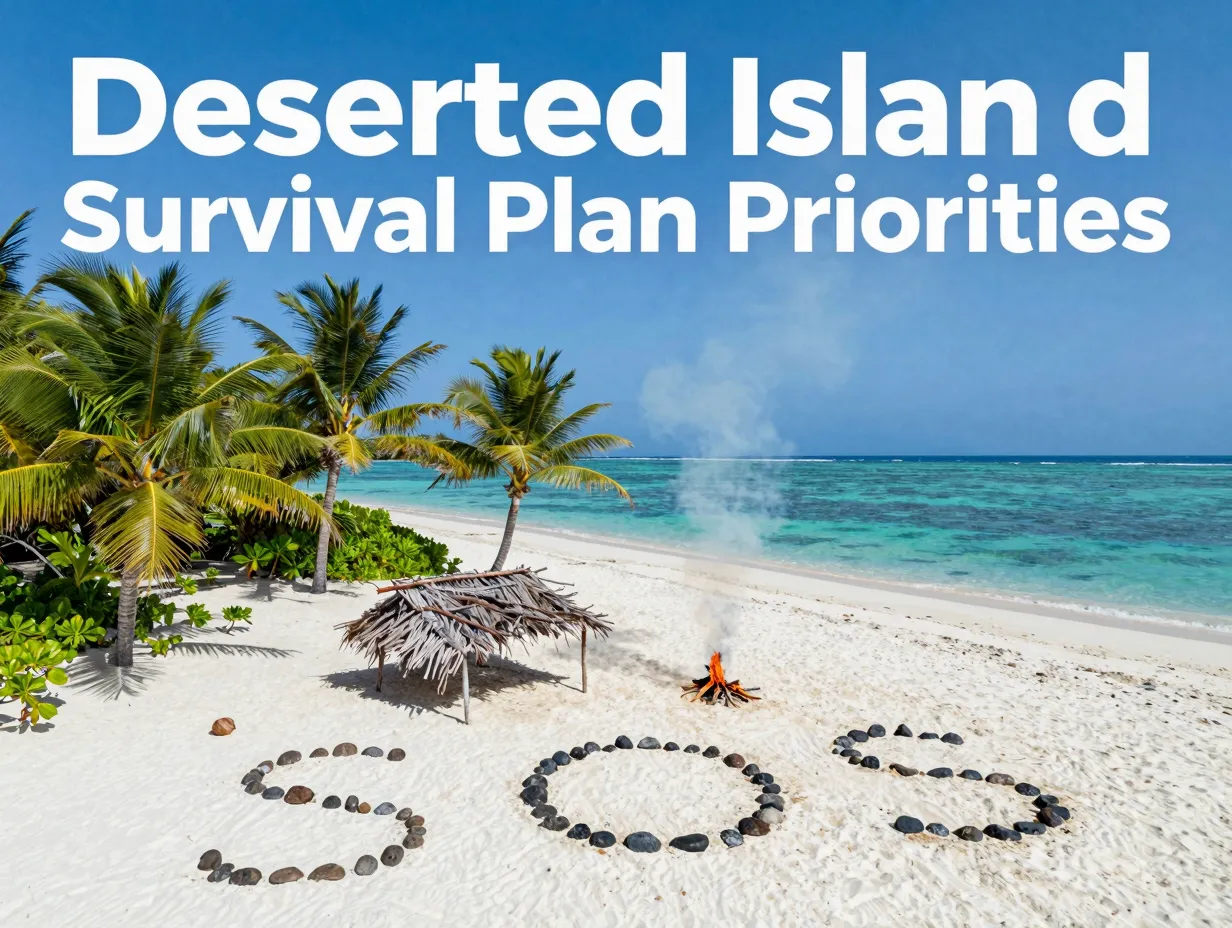
Whether the goal is genuine emergency preparedness, adventure travel planning, or simply building a deeper understanding of human resilience, mastering these priorities could be the difference between rescue and tragedy.
Key Takeaways
- Water is the single most urgent survival need, dehydration kills faster than starvation, exposure, or injury in most island environments.
- The STOP principle (Stop, Think, Observe, Plan) is the foundation of every effective deserted island survival plan.
- Signaling for rescue should begin on day one, not after shelter and food are secured.
- Fire serves multiple survival functions simultaneously: warmth, water purification, food preparation, and signaling.
- Mental resilience is not a soft skill, psychological collapse is one of the leading causes of preventable survival deaths.
Why a Structured Survival Plan Outperforms Instinct
Human instinct under extreme stress is notoriously unreliable. The fight-or-flight response floods the body with cortisol and adrenaline, narrowing focus and impairing rational decision-making. Survivors who have been studied, from the Andes plane crash survivors of 1972 to solo sailors stranded at sea, consistently report that structured thinking saved their lives, not raw instinct.
The military survival community has long used frameworks like the US Army’s SERE (Survival, Evasion, Resistance, and Escape) training to drill ordered priorities into personnel before they ever face a real scenario. The core lesson: panic kills, priority kills panic.
A deserted island presents a specific set of challenges distinct from jungle, desert, or arctic survival. The environment typically offers heat, humidity, saltwater (which cannot be consumed directly), potential food sources, and natural building materials. Understanding these variables is what makes the 8 Critical Priorities for Your Deserted Island Survival Plan uniquely suited to this environment.
“The will to survive is not enough. The knowledge to survive is what keeps people alive.”
>, Common principle across military and wilderness survival training programs
The 8 Critical Priorities for Your Deserted Island Survival Plan
1. Assess the Situation with the STOP Principle
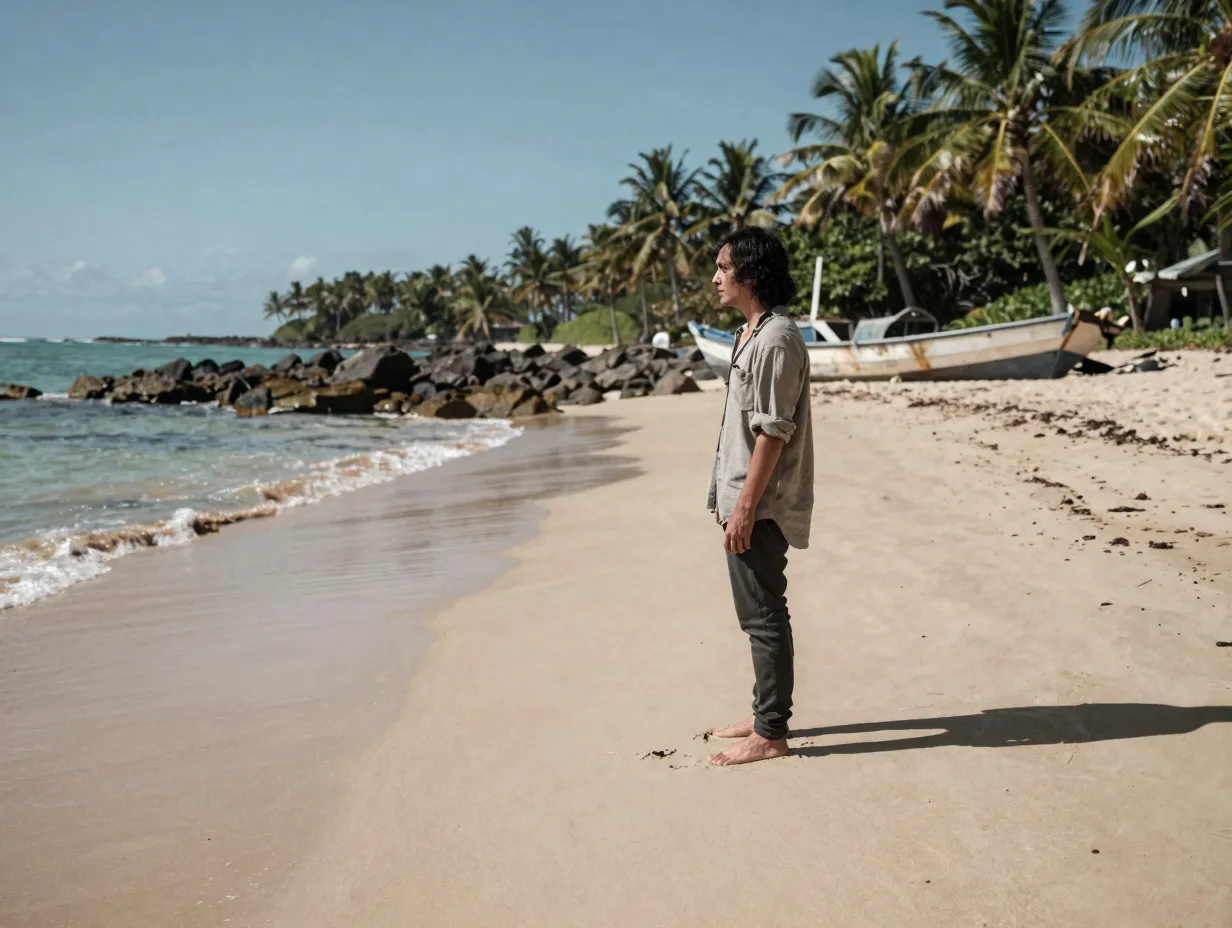
Before touching a single resource, stop moving. The STOP principle, Stop, Think, Observe, Plan, is the first and most important step in any survival scenario.
Why it matters: Survivors who immediately begin frantic activity often waste energy, injure themselves, or make decisions they later regret. A calm five-minute assessment can reveal critical information: proximity to fresh water, available shelter materials, potential hazards (tidal zones, unstable terrain), and the best direction to begin working.
Key assessment questions to answer immediately:
- Is anyone injured and in need of immediate first aid?
- What resources are immediately visible (fresh water, vegetation, wreckage)?
- What is the weather doing, and what is it likely to do in the next few hours?
- What tools or supplies survived with you?
- Are there signs of previous human activity on the island?
This initial assessment sets the foundation for every decision that follows. Skipping it is the single most common mistake documented in survival case studies.
2. Secure Potable Water
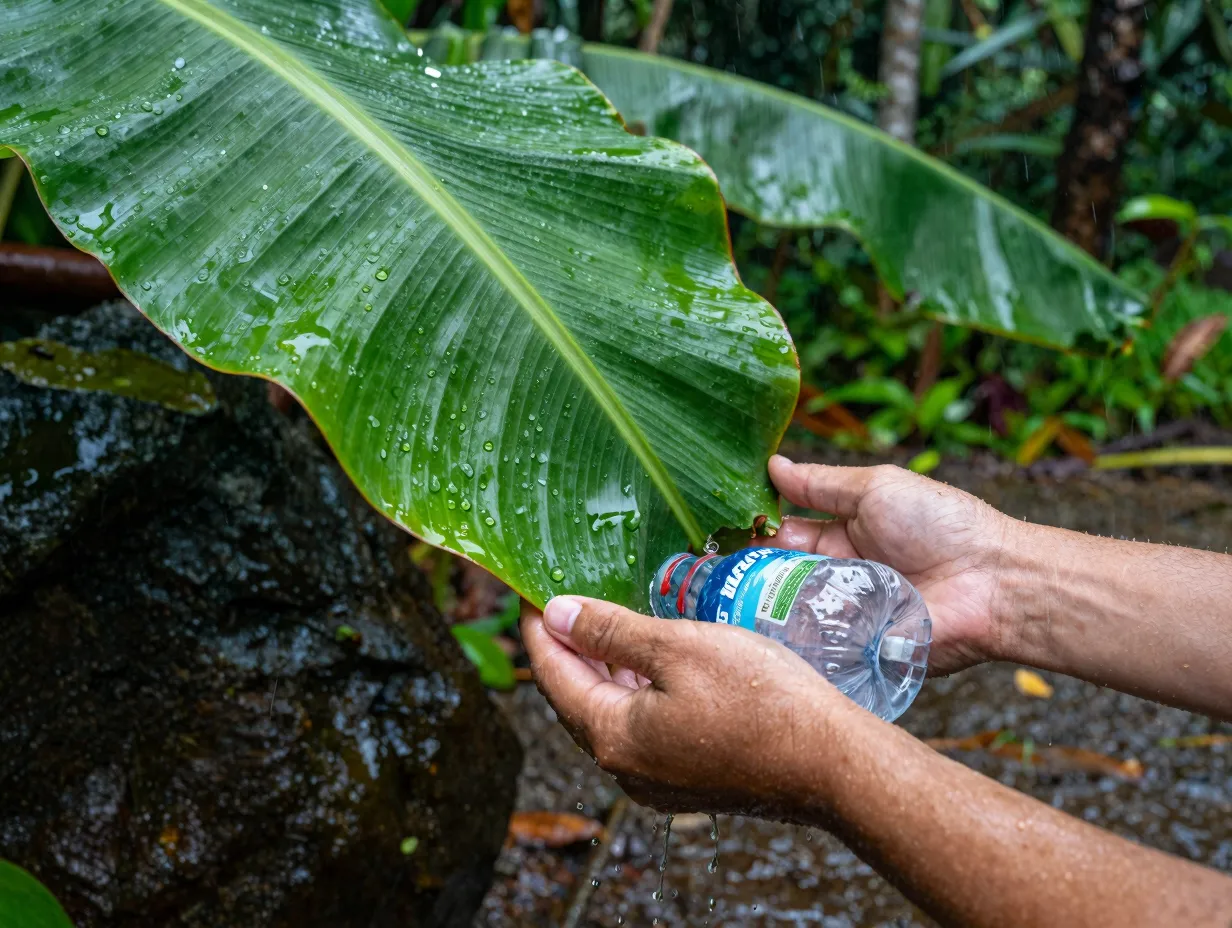
Water is priority number one in terms of biological urgency. The human body can survive roughly three weeks without food but fewer than three days without water, and in a hot, humid island environment with physical exertion, that window shrinks dramatically.
Sources of fresh water on a deserted island:
| Source | Reliability | Risk Level |
|---|---|---|
| Rainwater collection | High (in tropical zones) | Low |
| Inland streams or springs | Moderate | Moderate (filtration needed) |
| Coconut water | Moderate | Low (natural electrolytes) |
| Morning dew collection | Low | Low |
| Solar still (DIY) | Low | Low (labor intensive) |
| Seawater | Never | Extremely High |
Critical warning: Drinking seawater accelerates dehydration through osmotic pressure and will cause kidney failure. This is non-negotiable.
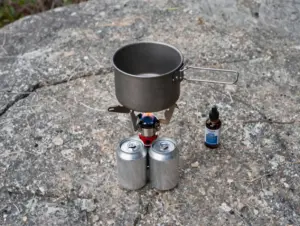
Rainwater is the safest and most abundant source in tropical island environments. Large leaves, tarps, or any waterproof surface can funnel rain into containers. If collecting from streams, boiling for at least one minute (three minutes at altitude) eliminates most biological pathogens.
A solar still, a hole in the ground covered with plastic sheeting weighted at the center, can extract moisture from soil and vegetation through condensation, producing small but life-saving quantities of fresh water.
3. Build or Find Shelter
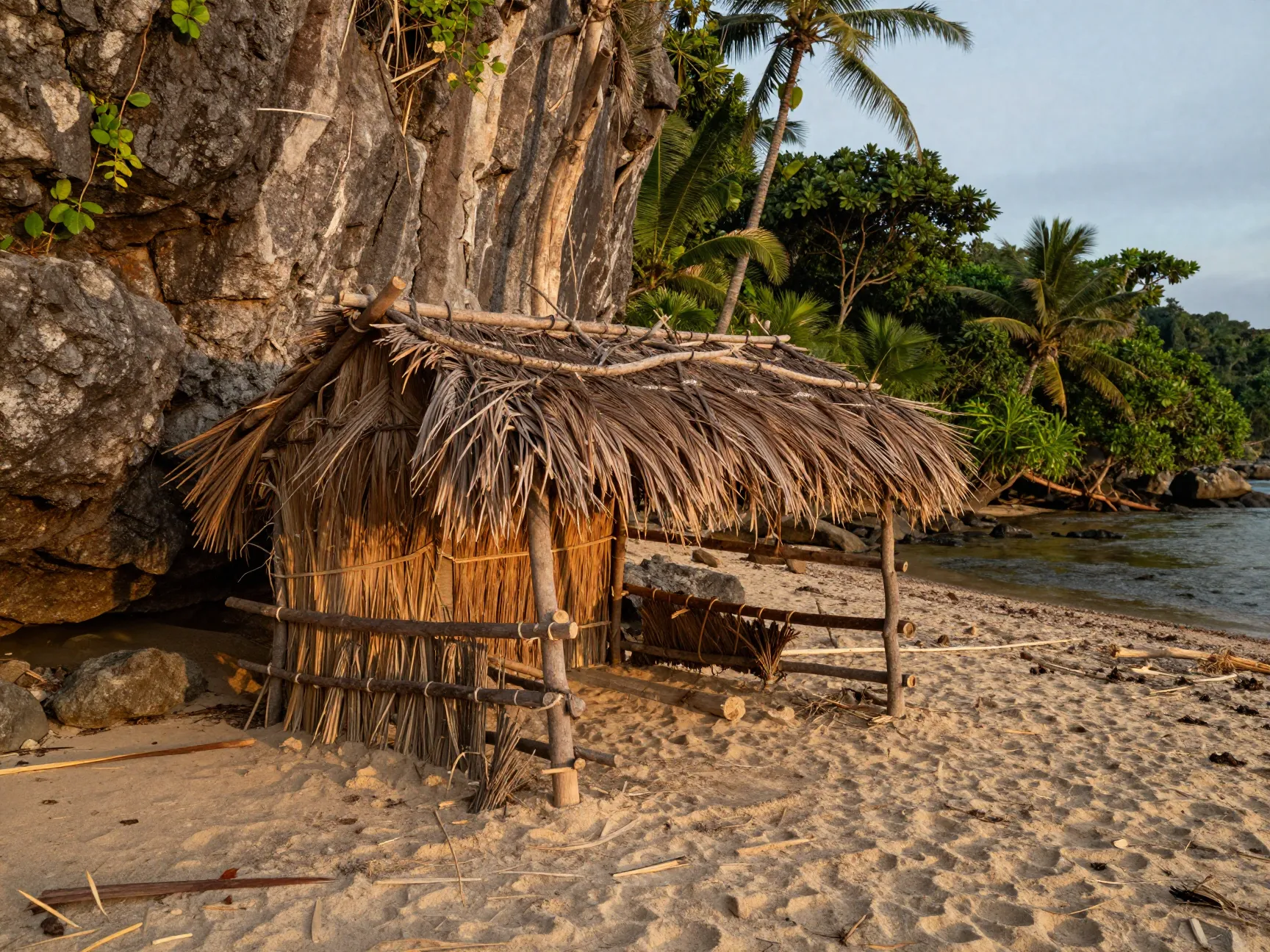
Exposure kills. Even in tropical climates, hypothermia is a real risk after dark or during rain, and direct sun exposure causes heat stroke, severe sunburn, and accelerated dehydration. Shelter is the third priority in the 8 Critical Priorities for Your Deserted Island Survival Plan, but it must be addressed within the first few hours of arrival.
Shelter location criteria:
- Above the high-tide line (check for debris lines on the beach to identify tidal reach)
- Near fresh water but not so close that flooding is a risk
- Protected from prevailing wind
- Visible from the air and sea for rescue purposes
Types of emergency island shelter:
- Natural shelter: Rock overhangs, dense vegetation, or existing caves provide immediate protection with minimal effort.
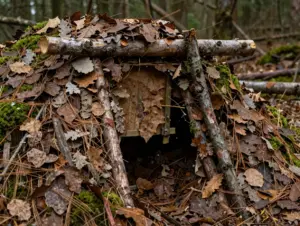
- Lean-to: A simple angled frame of branches covered with palm fronds, large leaves, or bark. Can be built in under two hours with basic materials.
- A-frame: More enclosed than a lean-to, offering better protection from rain and wind. Requires more materials but provides superior insulation.
Prioritize keeping the body dry. Wet clothing against skin dramatically increases heat loss through conduction, making even a 20°C night potentially dangerous.
4. Start a Fire
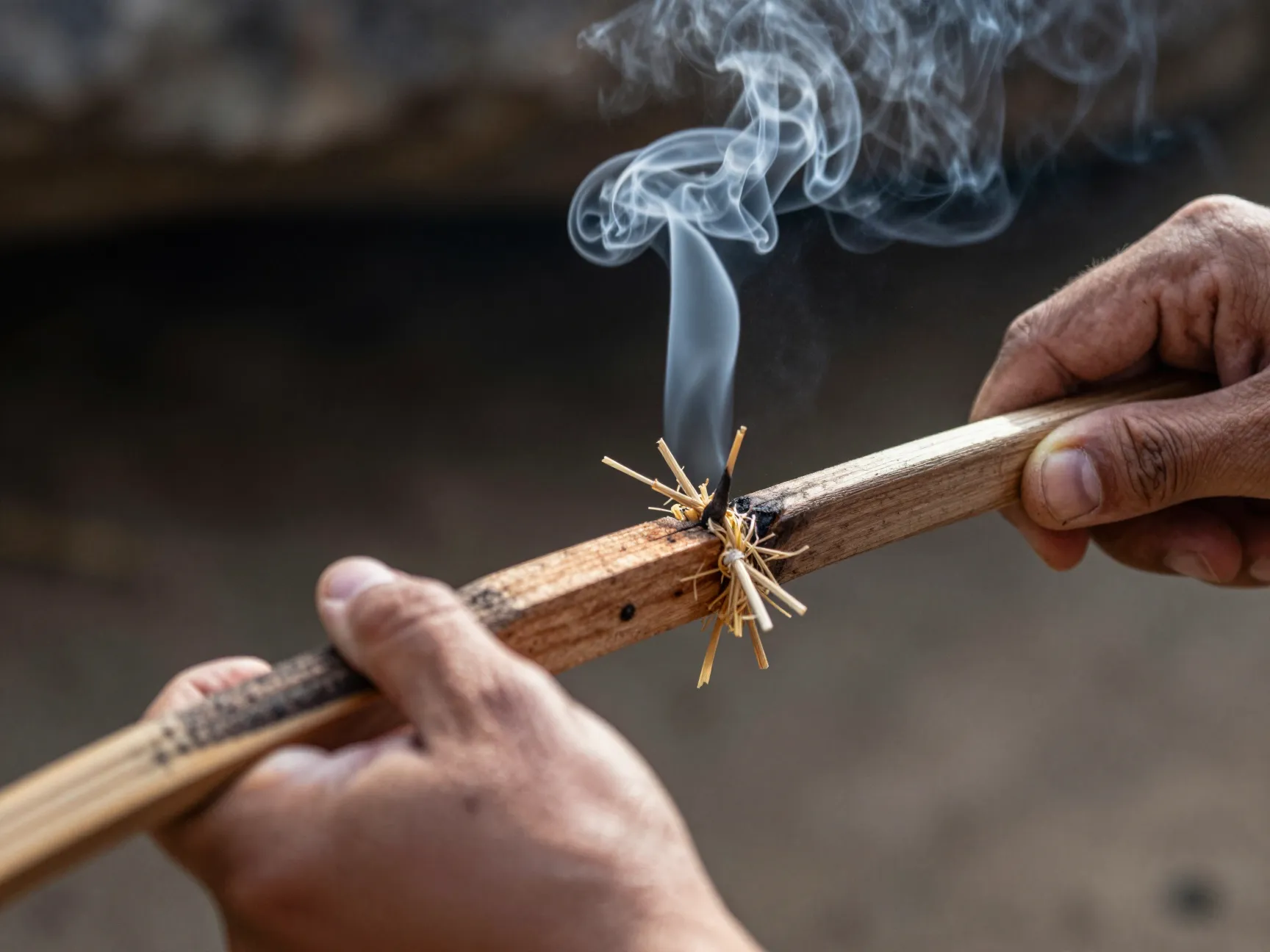
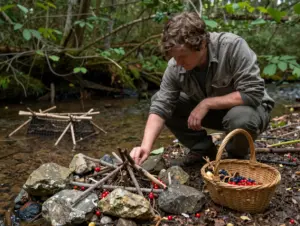
Fire is arguably the most versatile survival tool available. In a deserted island context, fire serves five distinct functions: warmth, water purification, food preparation, insect deterrence, and, critically, signaling for rescue.
Methods for starting fire without modern tools:
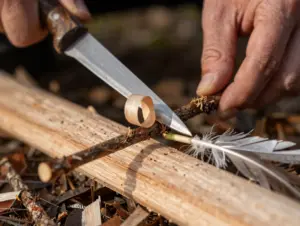
- Friction-based: Bow drill or hand drill using dry hardwood against softwood. Requires practice but is reliable in dry conditions.
- Lens-based: A magnifying glass, eyeglasses lens, or even a water-filled clear plastic bag can focus sunlight onto dry tinder.
- Flint and steel: If flint-like rocks (quartz, chert, obsidian) are available, striking them against high-carbon steel produces sparks.
Fire maintenance tips:
- Keep a coal bed alive rather than relying on restarting from scratch
- Store dry tinder in a waterproof location (inside a container, under bark)
- Build fires in elevated, wind-protected locations to prevent rain extinguishing
A signal fire should be prepared separately from the cooking fire. Use green vegetation, rubber, or plastic on top of a hot fire to produce thick black or white smoke visible for miles.
5. Signal for Rescue
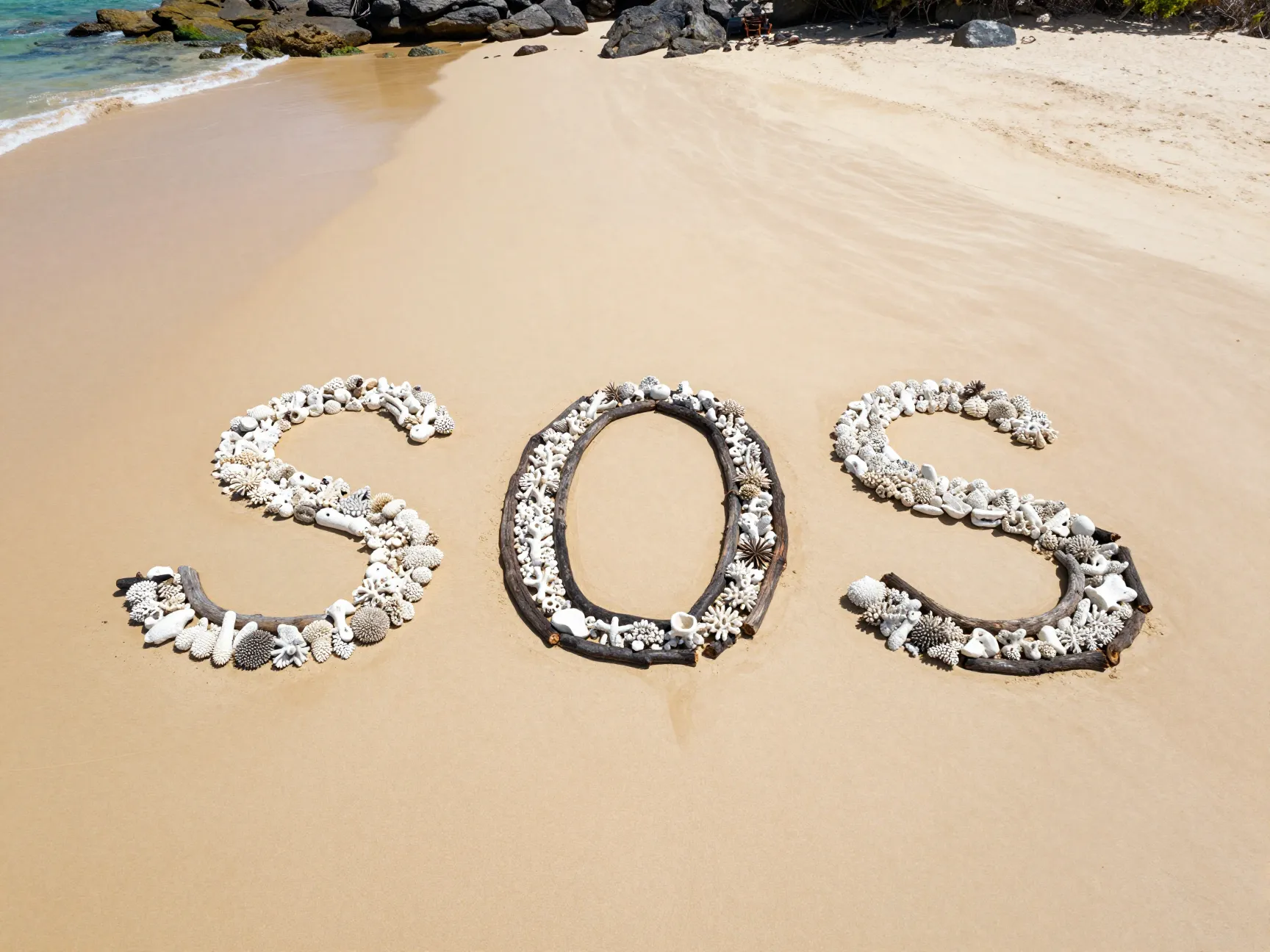
This priority is consistently underestimated. Many survivors wait days or weeks before beginning active signaling, losing critical rescue windows when search teams are most active. Signaling for rescue should begin on day one, even before shelter is fully constructed.
Effective signaling methods:
- Ground-to-air signals: Large SOS or X patterns made from rocks, logs, or debris on open beach or hilltop. Minimum size: 10 meters per character.
- Signal mirror: A reflective surface (mirror, foil, phone screen) can reflect sunlight visible up to 16 kilometers away.
- Smoke signals: Three fires in a triangle pattern is the universal distress signal.
- Whistle or noise: Effective for attracting nearby boats or aircraft.
- Bright colors: Spread any brightly colored material (clothing, tarps) in open areas visible from above.
The rescue window is real. When a person or group goes missing, search and rescue operations are most intensive in the first 24 to 72 hours. Being visible and making noise during this window dramatically increases survival odds.
6. Find and Prepare Food
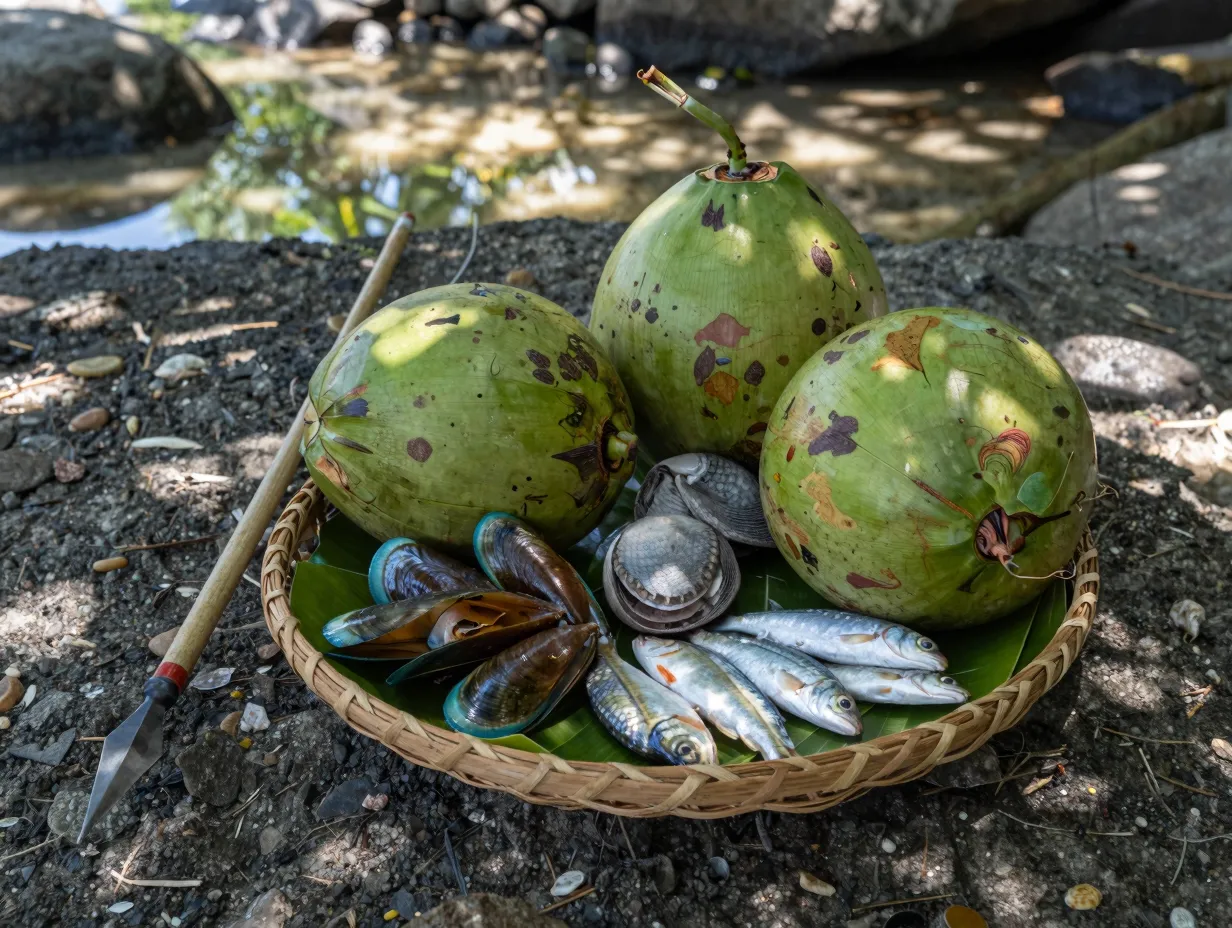
Food is sixth on this list for a reason: the human body can survive weeks without it. However, maintaining caloric intake becomes critical after the first 72 hours to sustain the energy needed for shelter maintenance, water collection, and signaling activities.
Reliable island food sources:
- Coconuts: High in calories, fat, and electrolytes. The water inside young green coconuts is safe to drink.
- Fish and shellfish: Highly reliable protein source. Tidal pools, shallow reefs, and beaches provide crabs, mussels, clams, and small fish.
- Insects: Nutritionally dense and abundant. Grubs, ants, and beetles are safe when cooked.
- Edible plants: Requires careful identification. Avoid any plant with milky sap, bitter taste, or that causes skin irritation on contact.
Universal edibility test for unknown plants:
- Separate the plant into parts (leaves, stem, roots).
- Hold a small piece against the inner wrist for 15 minutes. If no reaction, proceed.
- Place on the lips for 3 minutes. If no burning or tingling, proceed.
- Place on the tongue for 15 minutes without swallowing.
- Chew a small piece and hold in mouth for 15 minutes without swallowing.
- Swallow a small amount and wait 8 hours.
This test is slow but prevents potentially fatal poisoning from unknown vegetation.
7. Provide First Aid and Manage Health
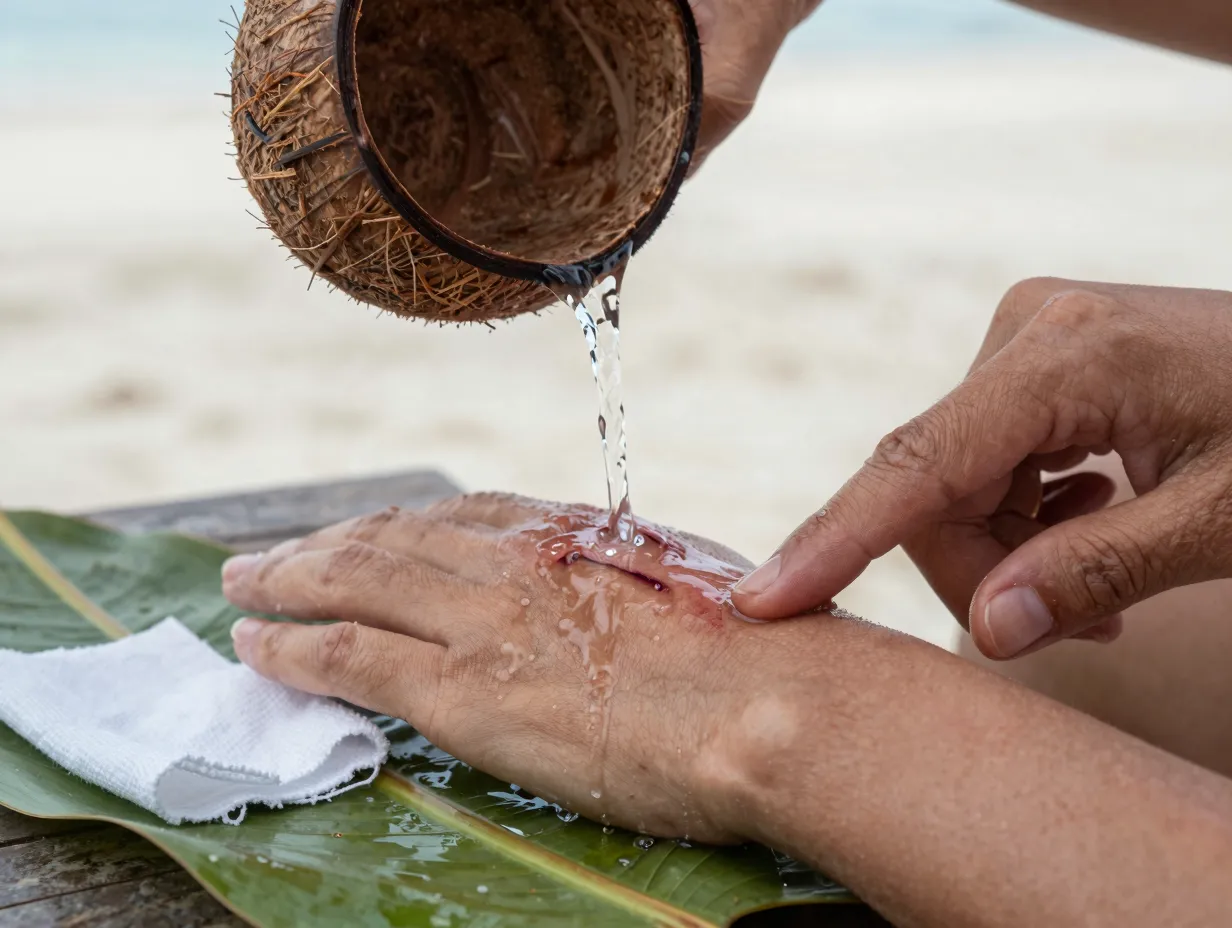
Injuries and illness that would be minor inconveniences in a modern setting become life-threatening in an island survival scenario. A cut that becomes infected, a sprained ankle that prevents water collection, or a fever from contaminated water can rapidly become fatal without medical infrastructure.
Priority health concerns in island survival:
- Wound care: Clean all wounds immediately with boiled water. Use cloth strips as bandages. Change dressings regularly to prevent infection.
- Dehydration monitoring: Dark urine, dizziness, and confusion are warning signs. Increase water intake immediately.
- Sun protection: Sunburn is not cosmetic, severe burns cause fluid loss, fever, and infection risk. Use clothing, shade, and natural barriers.
- Foot care: Cuts on the feet from coral, rocks, or shells are extremely common and prone to rapid infection in tropical environments. Keep feet covered whenever possible.
- Insect-borne illness: Mosquitoes in tropical regions carry malaria, dengue, and other diseases. Sleep elevated and use smoke to deter insects.
Natural first aid resources:
- Aloe vera (if present): Soothes burns and minor wounds
- Clean spider webs: Historically used as wound dressings due to natural antiseptic properties
- Boiled water: The universal cleaning agent for wounds and equipment
8. Maintain Mental Resilience
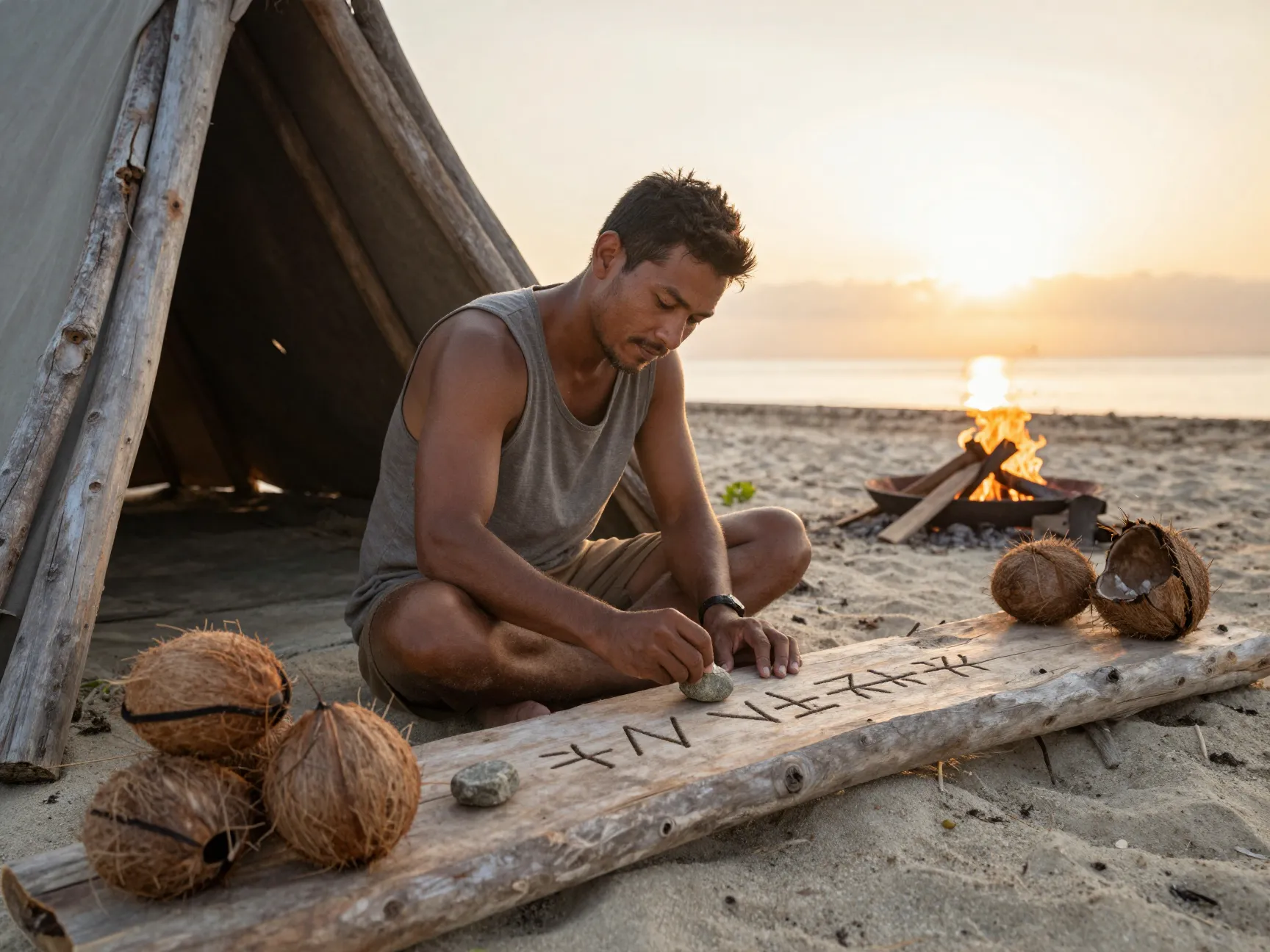
The final priority in the 8 Critical Priorities for Your Deserted Island Survival Plan is the one most often dismissed, and the one that ultimately determines whether survivors make it home. Documented survival cases consistently show that psychological collapse precedes physical collapse. People who give up die not because their body failed, but because their mind did first.
The psychology of survival:
Psychologists studying survival scenarios identify a predictable emotional arc: initial shock, followed by denial, then depression, and finally, for those who survive, acceptance and focused action. Understanding this arc helps survivors recognize when they are in a dangerous psychological state and take corrective action.
Practical mental resilience strategies:
- Establish routine: Daily tasks (water collection, fire maintenance, signaling) create structure that combats despair and maintains a sense of purpose.
- Set small goals: Rather than focusing on the overwhelming uncertainty of rescue, focus on achievable daily objectives.
- Mark time: Carving daily marks into a tree or rock maintains a sense of time passing and provides psychological anchoring.
- Social connection: If surviving with others, maintain communication and mutual support. Isolation within a group is as dangerous as physical isolation.
- Cognitive reframing: Actively replace catastrophic thoughts (“I will never be rescued”) with evidence-based ones (“Search teams are looking, and I am making myself visible”).
“Survivors are not special people. They are ordinary people who refuse to stop.”,
Paraphrased from multiple wilderness survival psychology studies
The will to live is a skill, not a trait. It can be cultivated through preparation, knowledge, and deliberate mental practice long before any emergency occurs.
Putting the 8 Critical Priorities Together: A Day-One Checklist
The power of the 8 Critical Priorities for Your Deserted Island Survival Plan lies in their sequence. Each priority builds on the last, creating a compounding foundation of survival capacity.
Day one action sequence:
- STOP, assess the situation before acting
- Locate or collect fresh water immediately
- Identify shelter location and begin construction
- Start a fire before nightfall
- Lay out visible ground-to-air signals on the beach
- Identify available food sources for the coming days
- Assess and treat any injuries
- Establish a daily routine to support mental health
This checklist is not rigid. Real survival scenarios require adaptation. But having a mental framework prevents the paralysis and chaos that claim lives in the first critical hours.
Common Mistakes That Undermine a Deserted Island Survival Plan
Even with knowledge of the eight priorities, certain behavioral patterns consistently undermine survival outcomes.
Mistake 1: Drinking seawater. Desperation drives people to try it. It accelerates death.
Mistake 2: Overexertion on day one. Energy is a finite resource. Conserve it by working efficiently, resting during peak heat, and prioritizing high-impact tasks.
Mistake 3: Ignoring small injuries. A coral cut ignored for 48 hours in a tropical environment can become a serious infection requiring amputation in a hospital setting, and there is no hospital on a deserted island.
Mistake 4: Waiting to signal. The assumption that rescue is coming without active signaling is a passive death sentence. Be loud, be visible, be persistent.
Mistake 5: Eating unknown plants without testing. Tropical environments contain highly toxic plants that can cause rapid organ failure. The universal edibility test exists for a reason.
Mistake 6: Neglecting mental health. Survivors who dismiss the psychological component of survival often deteriorate rapidly after the first week, even when physical conditions are manageable.
Conclusion
Survival on a deserted island is not a matter of extraordinary ability, it is a matter of extraordinary preparation and disciplined prioritization. The 8 Critical Priorities for Your Deserted Island Survival Plan provide exactly that: a clear, evidence-based sequence that transforms a chaotic emergency into a structured, manageable challenge.
Actionable next steps to take today:
- Learn the STOP principle and practice applying it to stressful non-emergency situations to build the habit.
- Take a wilderness first aid course, many are available online and in person, ranging from one-day to multi-day formats.
- Build a basic survival kit for travel that includes a signal mirror, water purification tablets, a fire starter, and a whistle.
- Practice fire-starting with friction-based methods at least once, reading about it and doing it are vastly different experiences.
- Study the edible plants and marine life of any region being visited before departure.
- Develop a mental resilience practice, mindfulness, stress inoculation training, or even regular exposure to controlled discomfort builds the psychological durability that survival demands.
The ocean does not care about good intentions. But it has no power over a prepared, prioritized, and psychologically resilient survivor.