8 Key Considerations for Your Dream Custom Fishing Rod Design
Custom rod builders report that anglers who fish with a rod built specifically for their technique land measurably more fish per outing than those using off-the-shelf alternatives. That single fact explains why the custom rod building industry has grown steadily for decades and why serious anglers keep returning to the craft. Whether someone is building their first rod or their fiftieth, understanding the 8 key considerations for your dream custom fishing rod design separates a functional tool from a truly exceptional one.
Disclosure: This post contains affiliate links. As an Amazon Associate, we earn from qualifying purchases, and at no extra cost to you.
This guide walks through each consideration in depth, covering materials, action, power, components, and the finer details that define a rod built to perform.
Key Takeaways
- Rod blank material and action are the two most influential factors in how a finished custom rod performs on the water.
- Matching rod power to target species and line weight prevents both lost fish and damaged equipment.
- Guide selection, placement, and wrapping thread are not cosmetic choices, they directly affect casting distance and sensitivity.
- Handle design and reel seat fit affect angler comfort during long sessions and should never be treated as afterthoughts.
- A well-planned custom rod built around these 8 key considerations for your dream custom fishing rod design will outlast and outperform most mass-produced alternatives.
Understanding the Foundation of Custom Rod Building
Before diving into individual components, it helps to understand what makes a custom rod different from a factory rod. Mass-produced rods are built to satisfy the widest possible range of anglers. Custom rods are built to satisfy one angler: the person holding it.
“A custom rod is not just a fishing tool. It is a precision instrument calibrated to a single angler’s style, target species, and physical mechanics.”
Every decision in the build process compounds. A wrong choice in blank selection can undermine an otherwise perfect guide train. A poor grip material can cause fatigue that ruins a long day on the water. The 8 key considerations for your dream custom fishing rod design exist because each one represents a decision point where the builder either gains or loses performance.
The 8 Key Considerations for Your Dream Custom Fishing Rod Design
1. Rod Blank Material
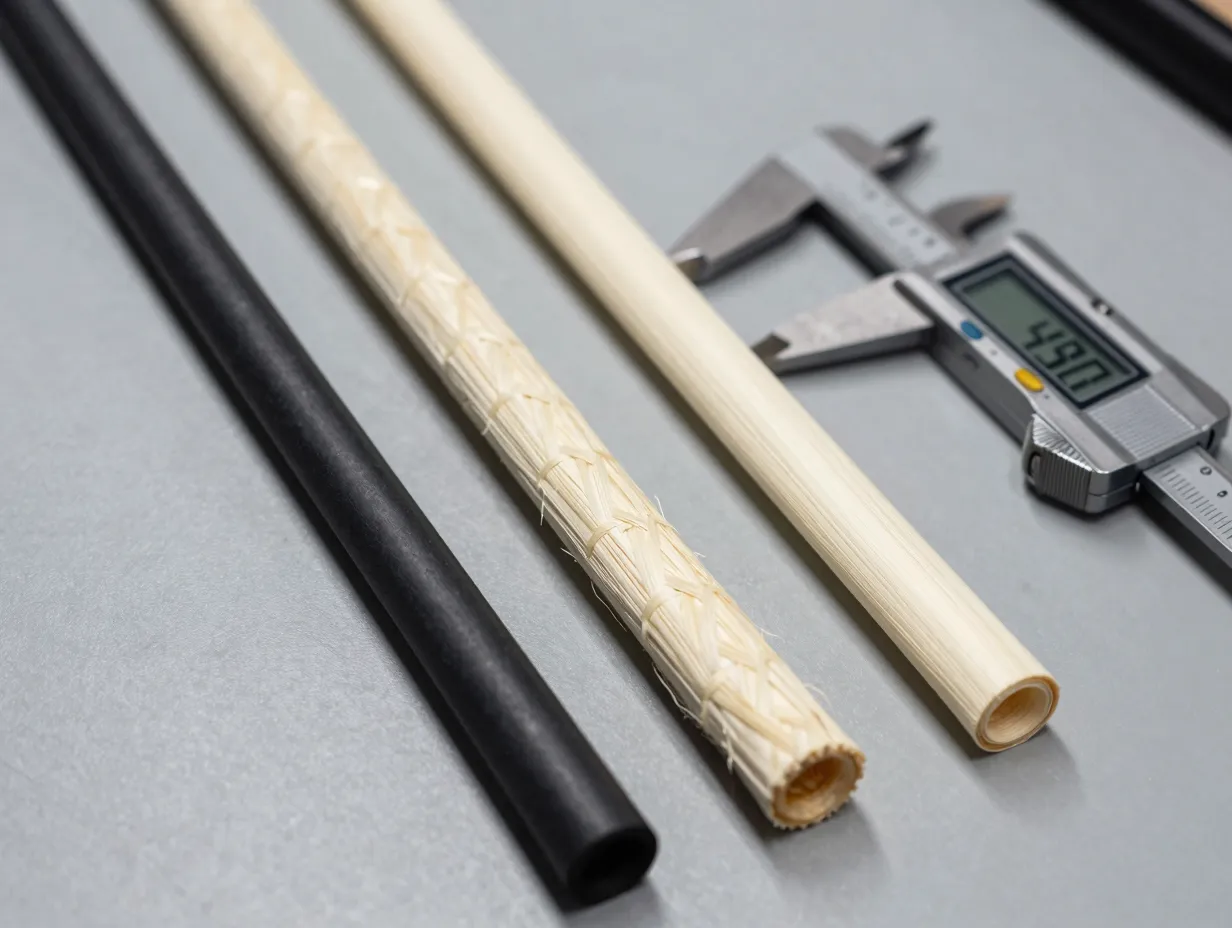
The blank is the spine of the entire rod. Everything else attaches to it, so this is the most consequential choice in the build.
The three primary blank materials are:
- Graphite (carbon fiber): The dominant choice for modern custom rods. Graphite blanks are lightweight, highly sensitive, and available in a wide range of modulus ratings. Higher modulus graphite is stiffer and more sensitive but also more brittle. Lower modulus graphite is more forgiving.
- Fiberglass: Heavier than graphite but nearly indestructible. Fiberglass blanks have a slower, parabolic action that many crankbait and trolling anglers prefer. They absorb shock well, which reduces the chance of pulling hooks on hard-fighting fish.
- Composite (graphite/fiberglass blend): Combines sensitivity from graphite with the durability and forgiveness of fiberglass. Composite blanks are excellent all-around choices for anglers who want versatility.
Modulus ratings are expressed in millions of pounds per square inch (MSI). Common ratings range from 24 MSI (lower modulus, more flexible) to 60 MSI and above (ultra-high modulus, very stiff). For most freshwater applications, 30-40 MSI blanks offer an excellent balance of sensitivity and durability.
| Blank Material | Sensitivity | Durability | Weight | Best Use |
|---|---|---|---|---|
| High-modulus graphite | Excellent | Moderate | Very light | Finesse, jigging |
| Low-modulus graphite | Good | Good | Light | General purpose |
| Fiberglass | Moderate | Excellent | Heavier | Crankbaits, trolling |
| Composite | Good | Very good | Moderate | Versatile applications |
2. Rod Action
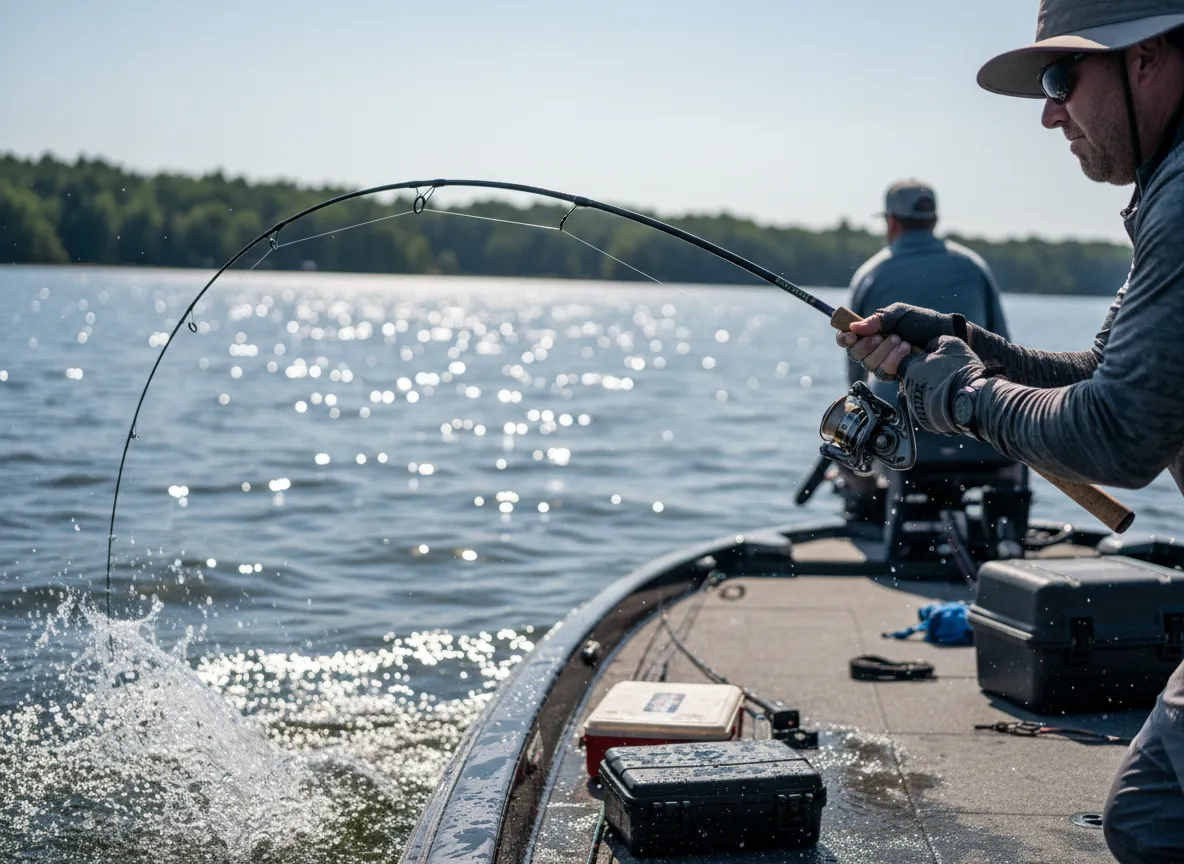
Rod action describes where along the blank the rod begins to bend under load. This is often confused with rod power, but they are distinct characteristics.
- Fast action: Bends primarily in the top third of the blank. Provides excellent sensitivity and quick hooksets. Ideal for single-hook presentations like jigs, Texas-rigged soft plastics, and drop shots.
- Moderate-fast action: Bends in the top third to half of the blank. A versatile option that handles both lures and live bait effectively.
- Moderate action: Bends through the top half of the blank. Excellent for treble-hook lures like crankbaits and topwater baits because the softer tip prevents fish from leveraging off the hooks.
- Slow action: Bends through most of the blank. Rarely used in modern builds except for ultralight panfish applications or certain fly rod designs.
Matching action to technique is non-negotiable. A fast-action rod used with crankbaits will cause anglers to lose fish at the boat. A moderate-action rod used for jigging will mask strikes and reduce hookset efficiency.
3. Rod Power
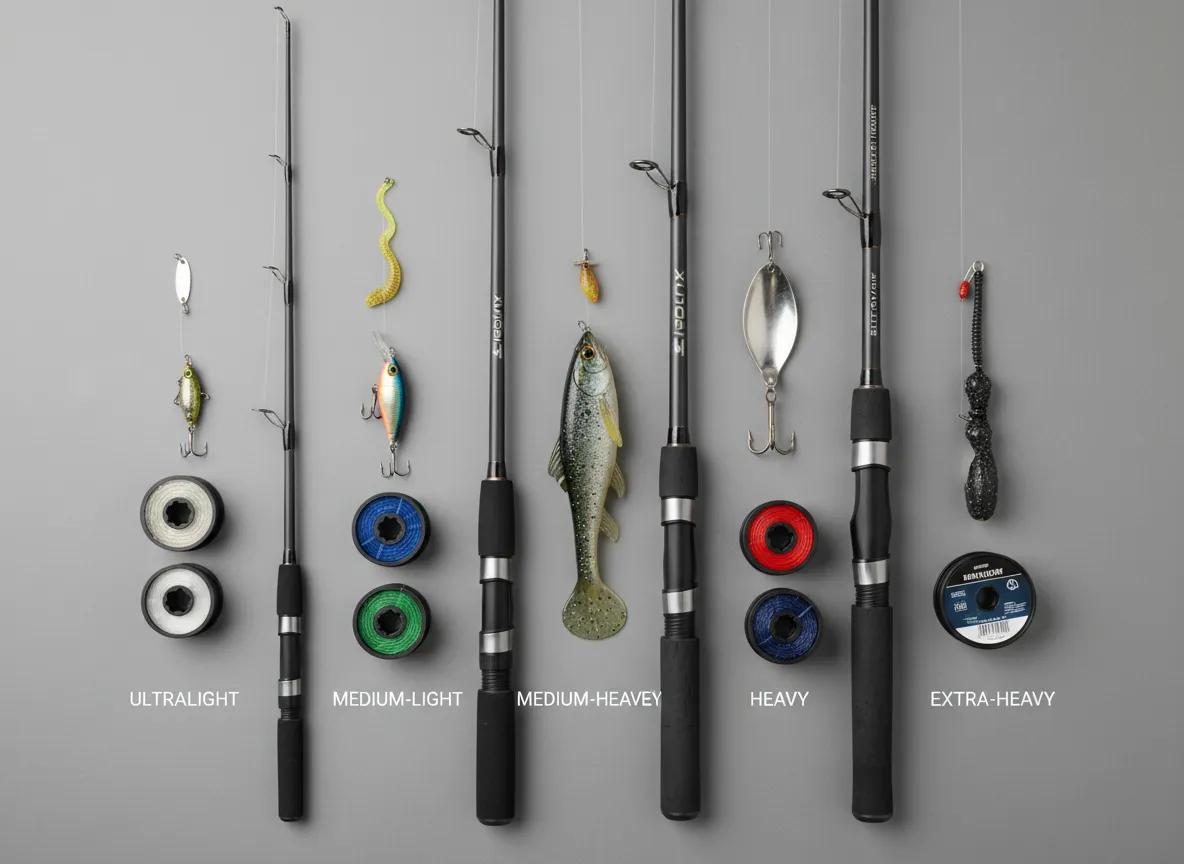
Power refers to the rod’s resistance to bending under load. It is the rod’s overall strength rating and determines what line weights and lure weights the rod handles best.
Standard power ratings from lightest to heaviest:
- Ultralight
- Light
- Medium-light
- Medium
- Medium-heavy
- Heavy
- Extra-heavy
Each power rating corresponds to a range of line weights and lure weights. A medium-heavy rod, for example, typically handles 10-20 lb monofilament and lures in the 3/8 to 3/4 oz range. Using a rod outside its intended range stresses the blank and reduces performance.
Matching power to target species:
- Panfish and trout: Ultralight to light
- Bass (finesse): Light to medium
- Bass (general): Medium-heavy
- Bass (flipping, punching): Heavy to extra-heavy
- Inshore saltwater: Medium-heavy to heavy
- Offshore big game: Heavy to extra-heavy
4. Length and Handle Configuration
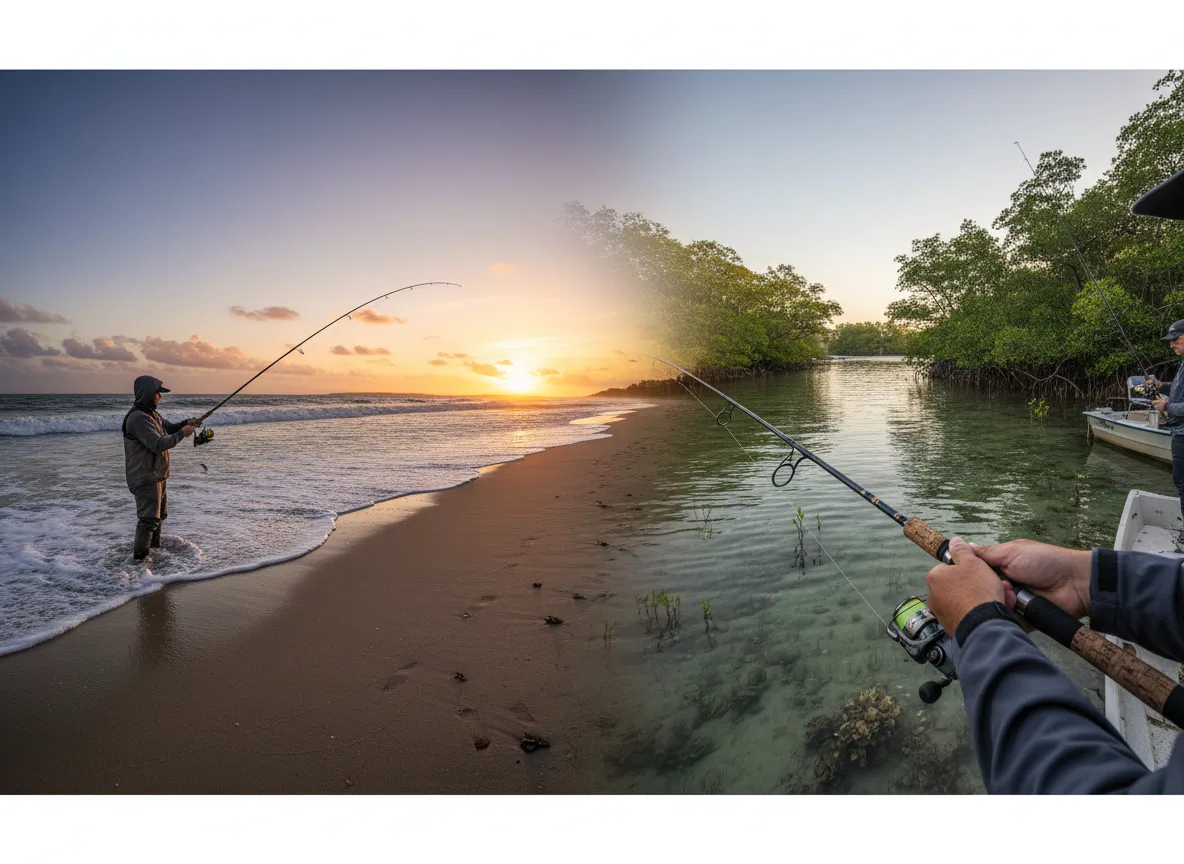
Rod length affects casting distance, leverage, and fish-fighting ability. Longer rods generally cast farther and provide better line control at distance. Shorter rods offer more accuracy in tight quarters and better leverage when fighting fish close to the boat.
Common length ranges by application:
- Ultralight spinning: 5’0″ to 6’6″
- Bass casting: 6’6″ to 7’6″
- Surf casting: 9’0″ to 12’0″
- Fly rods: 7’0″ to 10’0″
Handle configuration includes the split-grip versus full-grip debate. Split-grip handles reduce weight and improve blank sensitivity by exposing more of the blank. Full-grip handles provide more comfort during long sessions and are preferred by many saltwater anglers.
Trigger grip vs. straight grip is another choice. Casting rods use a trigger grip (pistol grip or full trigger) to lock the reel in place during the cast. Spinning rods use a straight grip that allows the reel to hang below the rod.
5. Grip Material
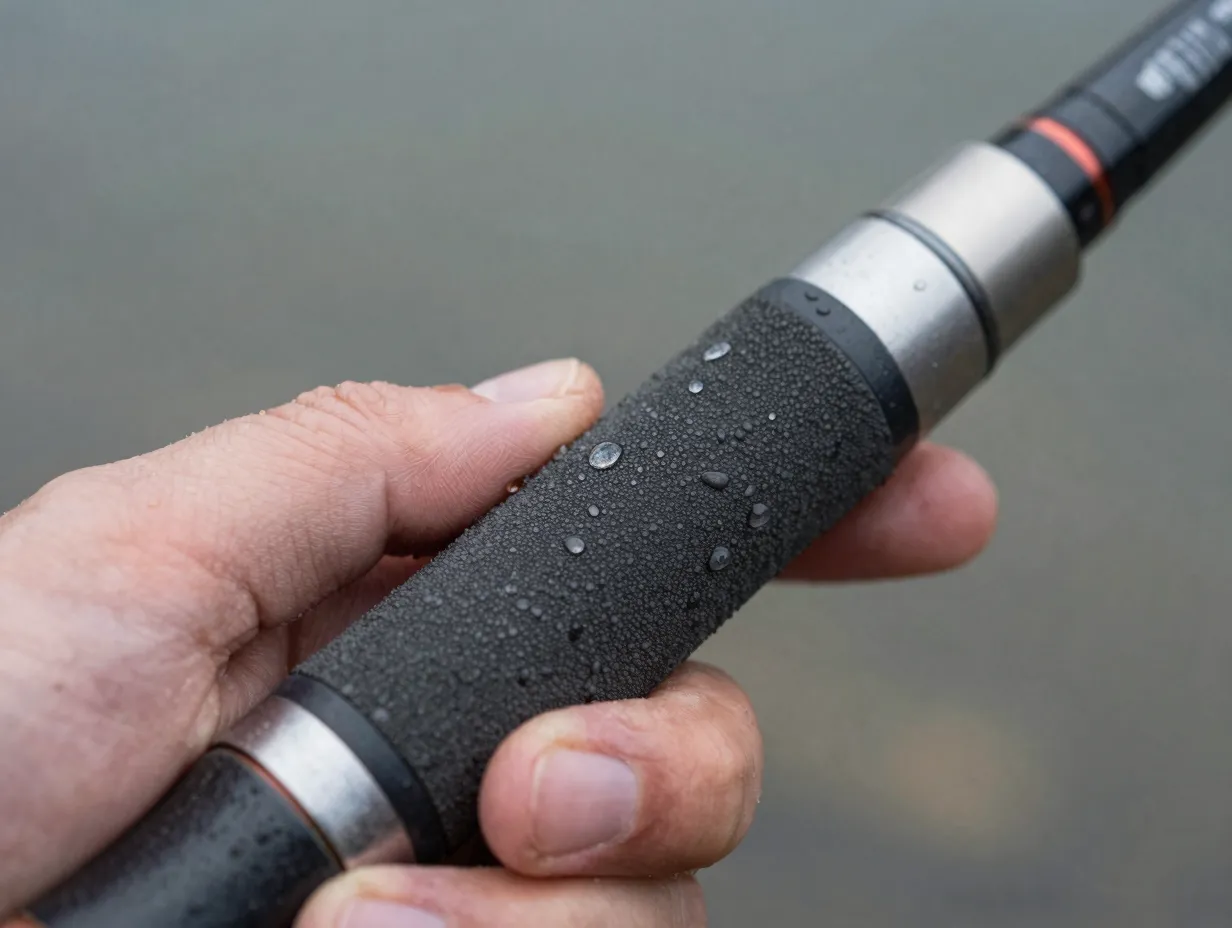
Grip material affects comfort, sensitivity, and aesthetics. The two dominant materials are cork and EVA foam.
Cork:
- Traditional choice with excellent sensitivity
- Transmits vibration from the blank to the angler’s hand
- Requires more maintenance and can crack over time
- Available in different grades (AAA cork is the highest quality with fewest pits)
EVA Foam:
- More durable and water-resistant than cork
- Slightly less sensitive than premium cork
- Available in various densities and textures
- Requires almost no maintenance
Winn Grip and other synthetic materials have also entered the custom market, offering non-slip performance in wet conditions. These are popular for saltwater builds where grip security matters most.
“Grip material is the only part of the rod the angler touches during every single cast and retrieve. It deserves more consideration than it typically receives.”
A poorly fitted grip that is too thick or too thin for an angler’s hand will cause fatigue and reduce casting accuracy over a long day.
6. Guide Selection and Placement
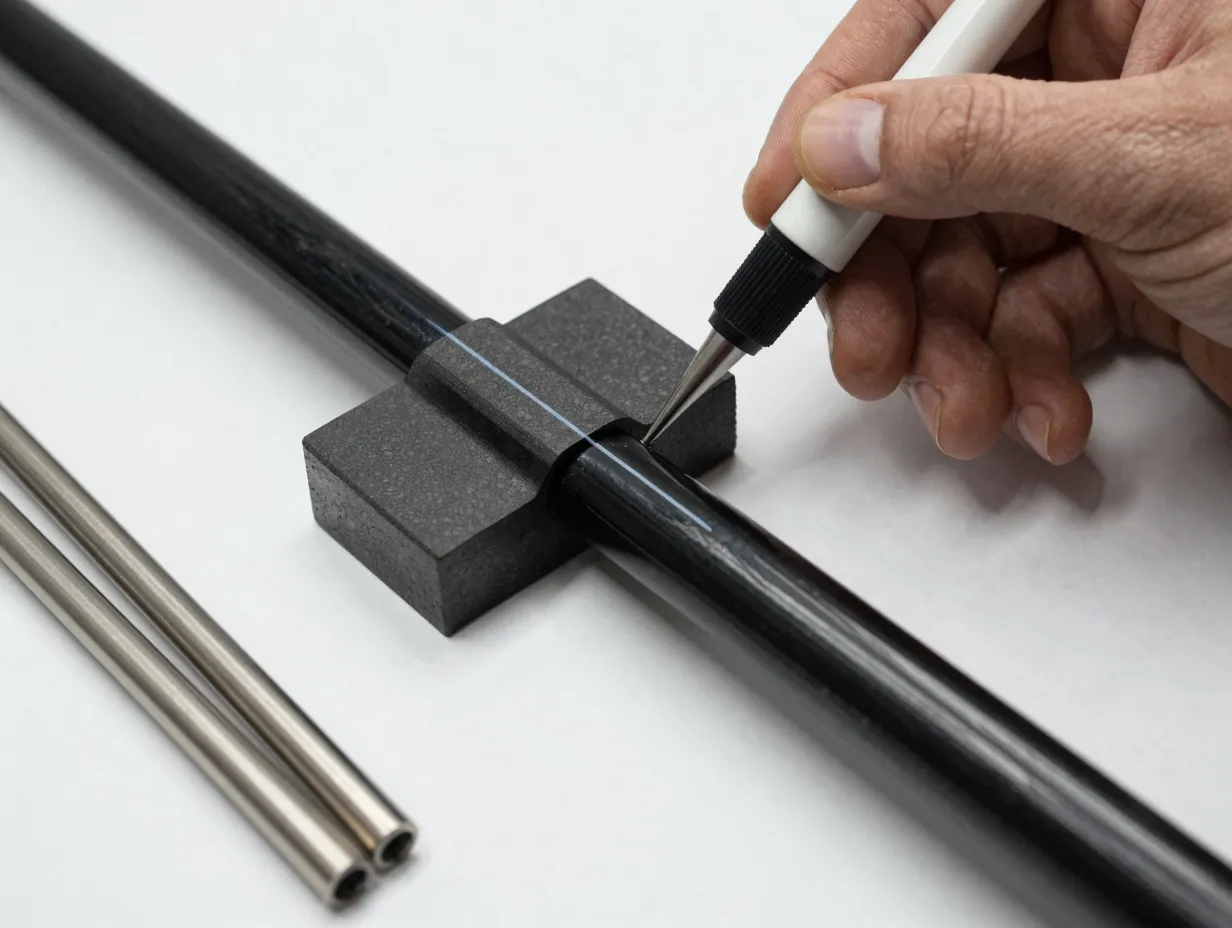
Guides are the rings through which the fishing line travels. They affect casting distance, line management, sensitivity, and durability. Guide selection is one of the most technical aspects of the 8 key considerations for your dream custom fishing rod design.
Guide frame materials:
- Stainless steel: Durable and affordable. Standard choice for many freshwater builds.
- Titanium: Lighter than stainless, highly corrosion-resistant, and able to flex without breaking. Premium choice for saltwater and high-performance builds.
- Fuji Alconite, SiC (Silicon Carbide), and Zirconia inserts: The ring insert inside the guide frame is what the line contacts. SiC is the smoothest and most heat-resistant, making it ideal for braided line. Alconite offers excellent performance at a lower price point.
Guide train configuration:
The number of guides on a rod affects its action and performance. Too few guides create flat spots in the blank’s bend and increase line slap. Too many guides add unnecessary weight. A general rule is one guide per foot of rod length plus the tip top, though many builders use slightly more.
Guide placement is determined using the spine of the blank, the rod’s natural stiffest plane. Guides are typically placed opposite the spine so the blank bends through its most flexible plane under load. Proper spine alignment is a skill that separates experienced builders from beginners.
Stripper guide sizing matters for spinning rods in particular. The first guide (stripper guide) must be large enough to handle the large loops of line coming off a spinning reel. Undersized stripper guides create friction and dramatically reduce casting distance.
7. Thread Wrapping and Finish
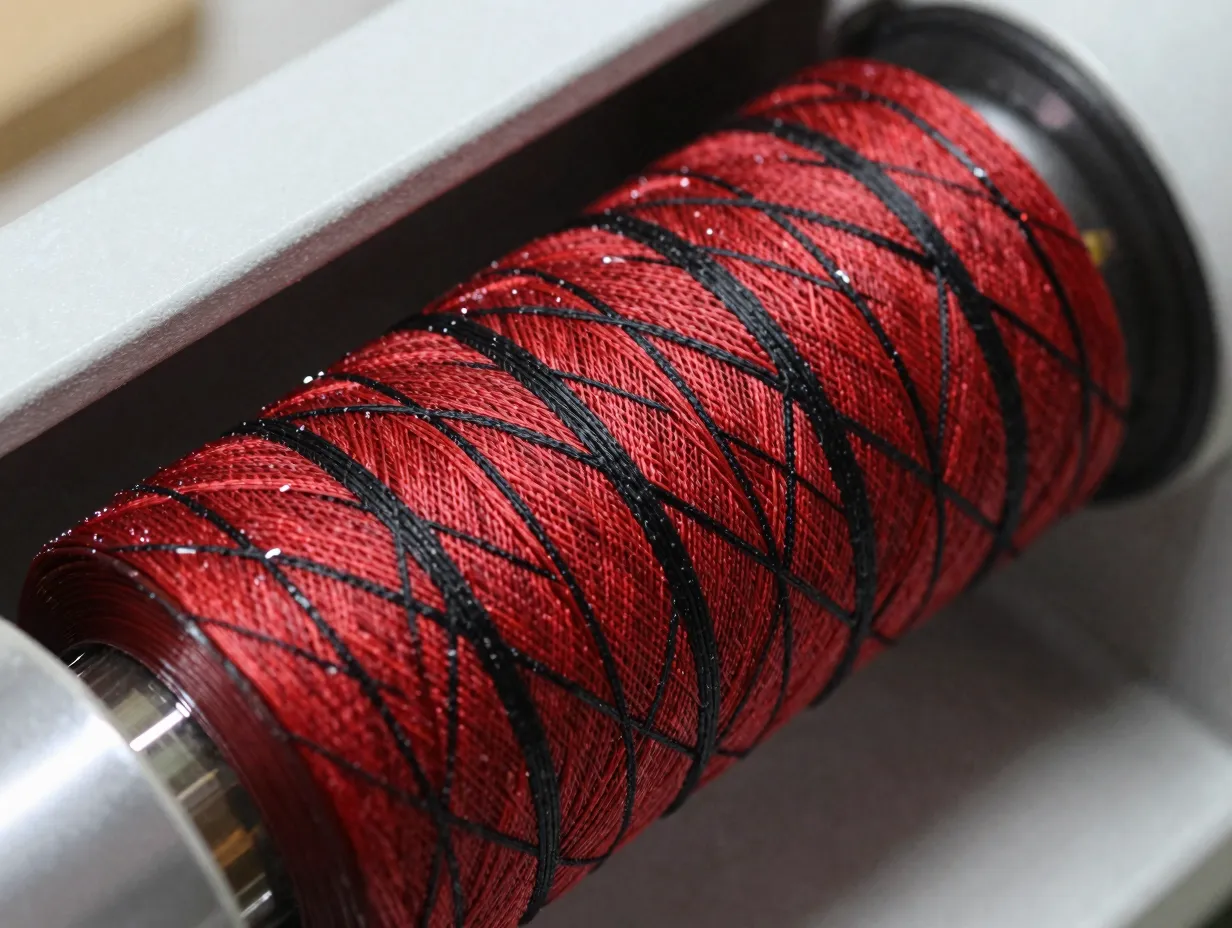
Thread wraps hold the guides to the blank and are the primary visual signature of a custom rod. They also affect durability and, to a minor degree, sensitivity.
Thread types:
- Nylon thread: The most common choice. Available in hundreds of colors and in sizes A (lightest) through E (heaviest). Size A thread is standard for most guide wraps.
- Metallic thread: Used for decorative accents. More brittle than nylon and requires careful application.
- Silk thread: Traditional choice for bamboo fly rods and high-end custom builds. Extremely smooth finish.
Wrap styles:
- Single color solid wraps
- Multi-color diamond wraps
- Chevron and cross-wrap patterns
- Inlay designs using contrasting thread colors
After wrapping, the thread is coated with rod finish, an epoxy-based coating that protects the wraps and locks the guides permanently in place. Two-part epoxy finishes like Flex Coat and ProKote are industry standards. The finish must be applied in thin, even coats and rotated during curing to prevent drips.
Color preservation is an important consideration. Many thread colors darken significantly when epoxy is applied. Color preservative, applied before the finish coat, prevents this color shift and keeps the thread’s original hue.
8. Reel Seat Selection
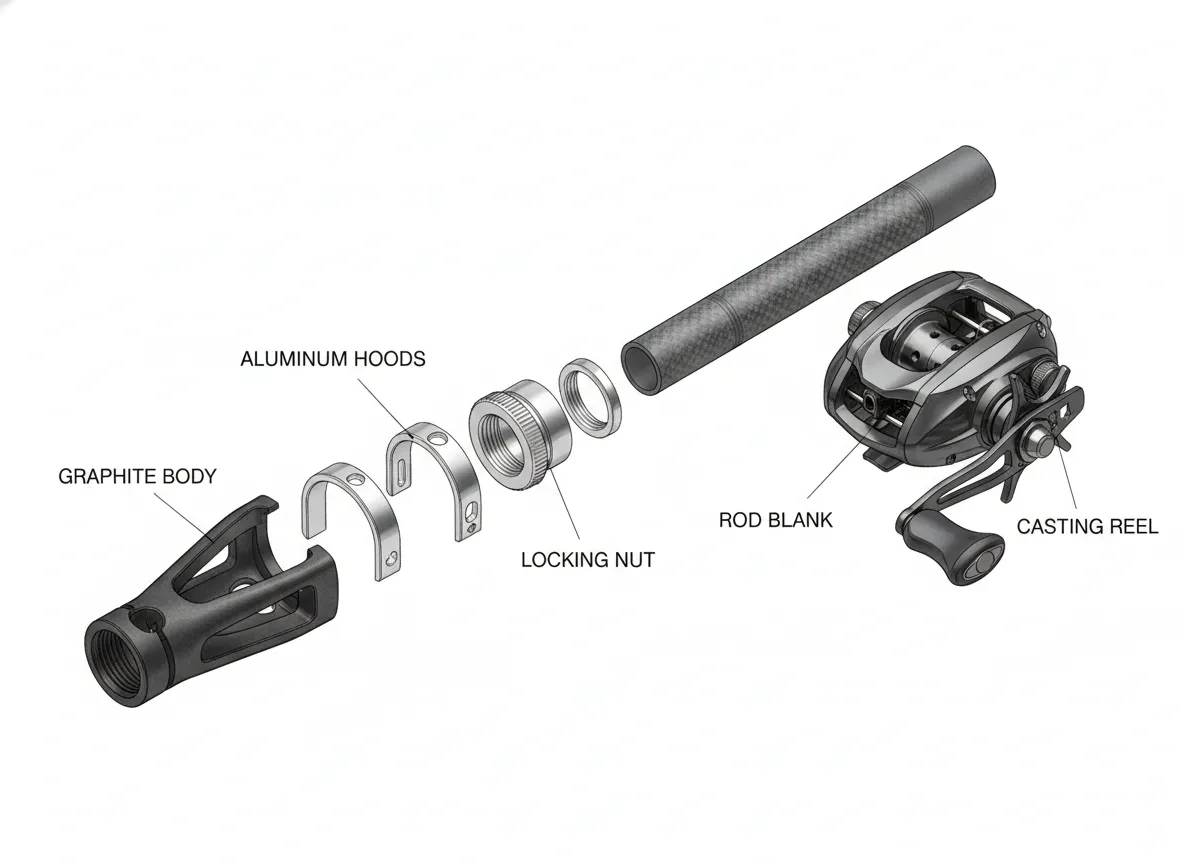
The reel seat is the hardware that locks the reel to the rod. It is a mechanical connection that affects sensitivity, reel security, and overall rod weight.
Reel seat types:
- Spinning reel seats: Feature fixed and sliding hoods that clamp around the reel foot. Graphite spinning seats are lightweight and transmit vibration well. Aluminum seats are more durable for heavy-duty applications.
- Casting reel seats: Use a trigger and locking nut system. Fuji’s ACS and ECS seats are industry standards. Skeletal reel seats expose more of the blank for maximum sensitivity.
- Fly reel seats: Typically use an uplocking or downlocking design. Anodized aluminum and wood insert seats are popular choices.
Fit is critical. A reel seat that is too large for the blank will need to be shimmed with masking tape or thread. A seat that is too small will not fit over the blank at all. Reel seat bore sizes must be matched carefully to blank butt diameter.
Exposed blank designs (also called through-blank or skeletal builds) use minimal hardware to allow the angler’s hand to contact the blank directly. This maximizes sensitivity but requires precise fitting and is more labor-intensive to build.
Bringing All 8 Considerations Together
Understanding each of the 8 key considerations for your dream custom fishing rod design in isolation is valuable, but the real craft lies in how they interact. A high-modulus graphite blank with fast action and a skeletal reel seat creates a supremely sensitive finesse rod. That same blank paired with large SiC guides, a full EVA grip, and a heavy-duty aluminum reel seat becomes a capable inshore saltwater weapon.
A practical planning framework:
- Define the target species and primary technique first.
- Select blank material and action to match that technique.
- Choose power rating based on line and lure weight requirements.
- Determine rod length based on casting environment.
- Select grip material and configuration for comfort and sensitivity balance.
- Choose guides based on line type (especially important for braid vs. mono).
- Plan thread colors and wrap style for aesthetics and durability.
- Match reel seat type and size to the blank and reel being used.
Following this sequence prevents the most common custom rod building mistakes, which typically involve choosing components based on appearance before function.
Common Mistakes to Avoid in Custom Rod Design
Even experienced builders make errors. Being aware of the most common pitfalls saves time, money, and frustration.
Ignoring the blank spine: Failing to find and align the spine results in a rod that twists under load, reducing sensitivity and accuracy.
Undersizing the stripper guide: This single error can reduce casting distance by 20-30% on a spinning rod.
Mismatching power and action: A heavy-power, fast-action rod is not the same as a heavy-power, moderate-action rod. Both the power and action labels must match the intended application.
Rushing the epoxy finish: Epoxy applied too thick in one coat will sag and create uneven, bubbly wraps. Thin coats and proper rotation during curing are non-negotiable.
Skipping the test cast: Every custom rod should be tested before the finish coat is fully cured. Guide placement adjustments are nearly impossible after the epoxy sets.
Tools and Resources for the Custom Rod Builder in 2026
The custom rod building community is more accessible than ever in 2026. Online communities, component suppliers, and instructional resources have lowered the barrier to entry significantly.
Essential tools for a basic build:
- Rod wrapper (motorized or manual)
- Epoxy mixing cups and brushes
- Rod dryer (rotisserie motor)
- Burnisher for thread wraps
- Masking tape and a marker for spine finding
- Calipers for measuring blank and reel seat diameters
Component suppliers stock thousands of blank options, guides, handles, and reel seats. Comparing specifications across suppliers before purchasing ensures the right fit for the planned build.
Rod building forums and clubs offer mentorship, build critiques, and access to experienced builders who have worked through the same challenges. Many local fishing clubs have rod building chapters that hold hands-on workshops.
Conclusion
The 8 key considerations for your dream custom fishing rod design, blank material, rod action, rod power, length and handle configuration, grip material, guide selection and placement, thread wrapping and finish, and reel seat selection, form a complete decision framework for any custom build. Each consideration builds on the others, and every choice either adds or subtracts from the rod’s final performance.
Actionable next steps for anyone ready to start:
- Define the target species and primary fishing technique before purchasing any components.
- Research blank options in the appropriate power and action range and order samples from reputable suppliers.
- Invest in a quality rod dryer before attempting the first epoxy finish, this single tool prevents the most common finishing mistakes.
- Join a rod building community online or locally to access experienced guidance before the first build.
- Build a simple spinning rod for the first project. Spinning rods are more forgiving than casting rods and provide an excellent foundation for learning the fundamentals.
A custom rod built with care and knowledge is not just a fishing tool. It is a direct expression of an angler’s understanding of their craft. The investment in learning these 8 considerations pays dividends on every single cast.